A ‘mutually beneficial agreement’ on Modern Greek Studies at La Trobe University is expected within a week, according to the Greek Community of Melbourne President, Bill Papastergiadis.
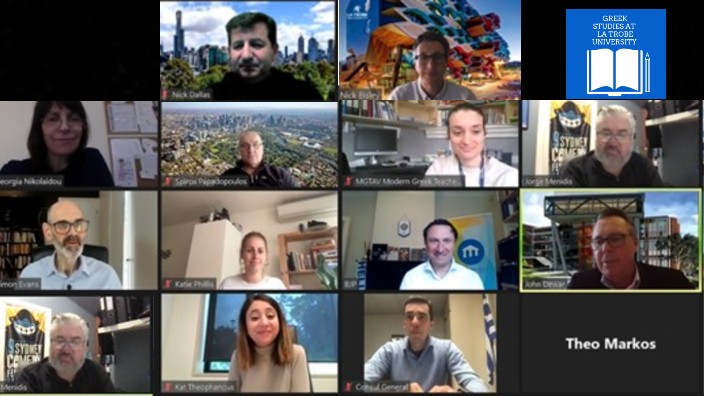
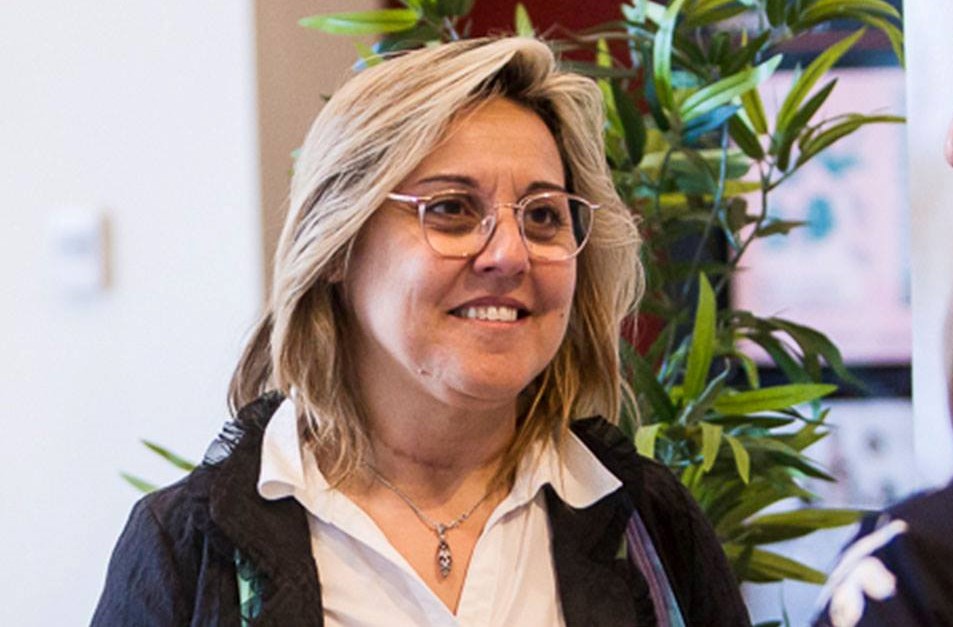
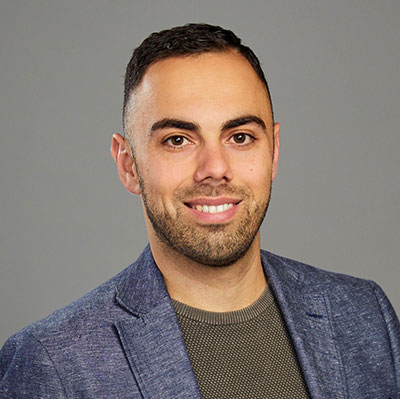
This news comes out of a virtual meeting held today between the University’s Vice Chancellor John Dewar and a delegation from the Greek community, including Mr Papastergiadis, the outgoing Greek Consul General in Melbourne, Dimitrios Michalopoulos, and Victorian Labor MP, Kat Theofanous.
Mr Papastergiadis tells The Greek Herald that all those in attendance at the meeting agreed that the discussion was “highly constructive.”
La Trobe University.
“The Vice Chancellor said to me, ‘We’ve had a highly constructive discussion. The university is confident that we can reach a mutually beneficial outcome within a week’,” Mr Papastergiadis says.
This positive news comes out of weeks of lobbying and petitioning by the Greek community to stop the Modern Greek Studies program at La Trobe University from being discontinued.
Mr Papastergiadis, along with the Greek delegation, also made a strong case during the meeting by presenting the Vice Chancellor with a three page submission detailing what can be done to save the program.
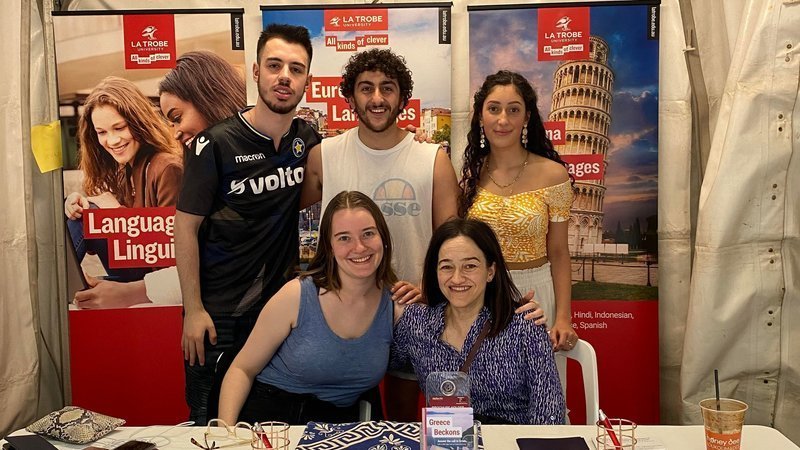
A ‘mutually beneficial agreement’ on La Trobe Greek Studies is expected within one week.
“We prepared a three page submission detailing how to work with increased enrolment, an internship program, links to industry and scholarships,” Mr Papastergiadis says.
“We then discussed what funding is required and what reassurance is needed from the community. We reached an agreement on what those are and we’re now going to try and document it.”
In a statement to The Greek Herald on November 23, La Trobe University wrote that they “will carefully consider the outcomes of staff consultation, as well as representations made from members of the community, regarding the future of the program before making any decision.”
Mr Papastergiadis says that after today’s meeting, he’s feeling “very positive.”
Since the early 1990s, one family has remained the dominant force behind the transformation of Rundle Street in Adelaide’s East End – the Maras family.
In 1993, Theo Maras and then business partner, Bill Manos, won the rights to redevelop a portion of the former Adelaide Fruit and Produce Exchange site into a dining, retail and commercial hub.
The Maras family has since retained control of a swathe of real estate on the southern side of Rundle Street, from East Terrace to Union Street, as well as the shops and bars lining Ebenezer Place and Vardon Ave.
All this information was made clear through analysis undertaken by The Advertiser and international property group JLL, which showed that more than 100 properties on the East End are owned by local families.
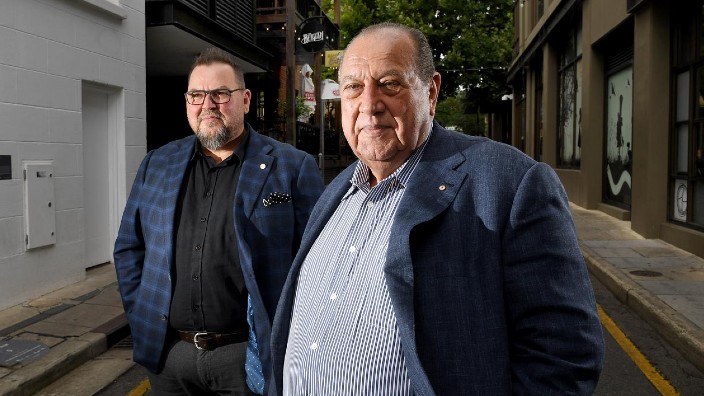
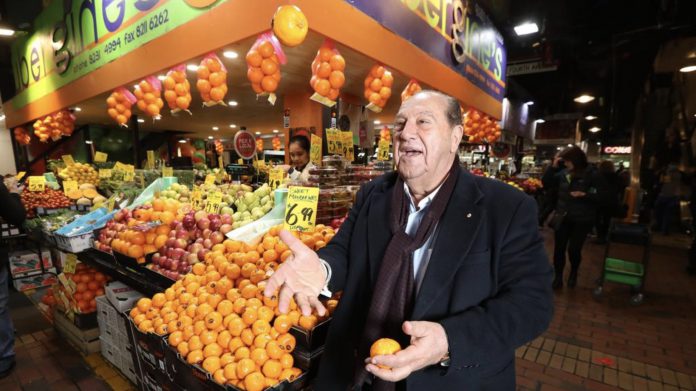
Property heavyweight, Theo Maras, is taking over as boss of the Adelaide Central Market and says he plans to turn it into one of the world’s best. Photo: Tait Schmaal/Adelaide Now.
They include prominent fruit and vegetable wholesalers, the Raschella family, as well as longer term investors such as Alex Siros, who established the Piaf perfumery chain in the 1960s, and has owned the Scout Outdoor Centre building since the early 1990s.
For the Maras family, after initially entering a 99-year ground lease with the State Government for the former produce market site in the East End, they took over the freehold interest in 2007, and now oversee dozens of properties in the precinct.
Mr Maras has played an important role over the years in positioning the East End as the main hub for the Adelaide Fringe, and while disappointed that Supercars have been pulled from the annual calendar, believes major events remain vital for traders in the precinct.
His son Steve, who joined the family business in 2007, agrees, and has continued to promote events in the precinct.
“From the start we wanted to brand this place as a place of living, wining, dining, shopping, entertainment and festivity – we had all of those things and in addition we would have these major events,” Steve told The Advertiser.
“We have the Fringe, WOMAD, we have the Ebenezer night markets during summer, we have Vardon Avenue, Ebenezer Place and Rundle Street shut down to cars for East End Unleashed in February and March, we have Winter Weekends with fire pits and live music – we’re real big on events because events bring people.”
Nikos Gatsos was born on December 8, 1911, in the Peloponnese Peninsula in southern Greece, in the village of Asea in Arcadia. Gatsos would study in both Tripoli and later Athens.
By the time he moved to Athens to study philosophy, he was already fluent in both English and French and familiar with famous Greek poets.
Gatsos was familiar with the work of Kostis Palamas and Dionysios Solomos and was a fan of Greek folk songs, as well as the trends of European poetry at the time.
The knowledge Gatsos gained helped him in his pursuit of becoming a successful poet himself.
While in Athens, Gatsos became life-long friends with poet Odysseas Elytis.
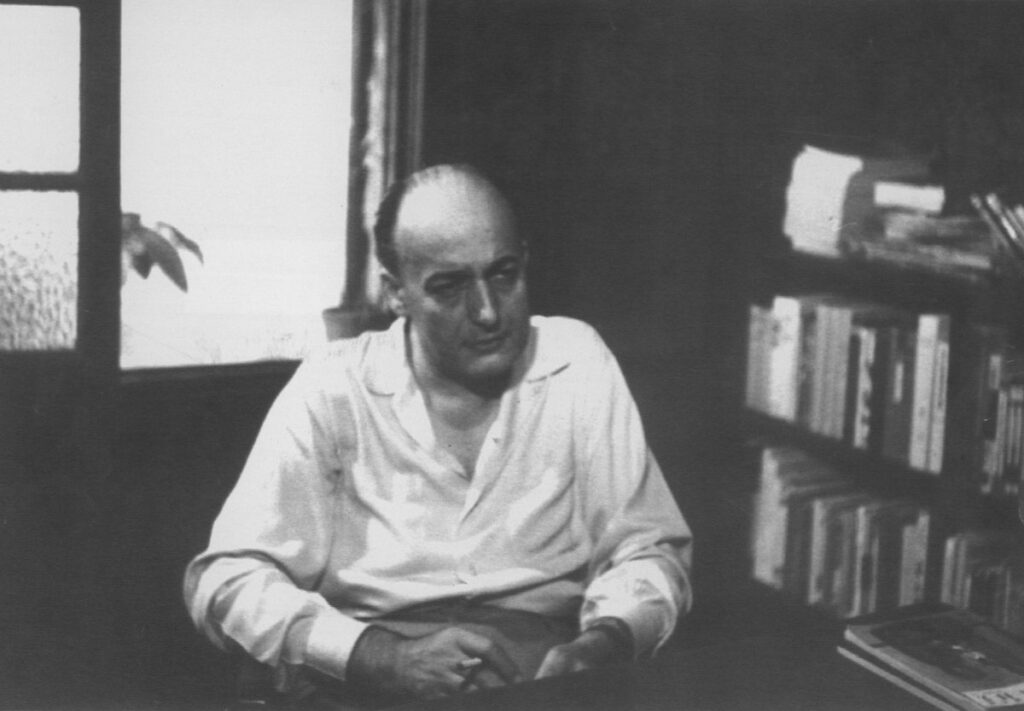
Nikos Gatsos was born on December 8, 1911. Photo: Ellines.com
Gatsos’ earliest published work came in the form of small but classical poems. He published his work in magazines Nea Estia (1931) and Rythmos (1933).
While publishing poems in magazines, Gatsos also enjoyed publishing critics, writing for magazines Makedonikes Imeres, Rythmos and Nea Grammata.
It was during the Nazi occupation of Greece in 1943 when he published his greatest work, Amorgos. It is well known that he wrote the poem in just one night, at a time when Greek citizens were at their most vulnerable to danger during WWII.
Amorgos was named after the island Amorgos, an island Gatsos never actually visited. It is a poem that has two potent themes throughout – loss and hope. Gatsos writes about these two themes in both a celebratory and agitated way.
The poem was a huge success for Gatsos, and the work was revered by Nobel Laureates Odysseas Elytis and George Seferis. Gatsos’ poem became highly inspirational and led to an increase in the post-war generation of Greek poets.
Despite all his success after its publication in 1943, it would become the only book he would publish during his renowned career. But despite this, Gatsos continued to publish poems in magazines, such as Elegya (1946) and The Knight and Death (1947). He also began writing songs.
Manos Hadjidakis, a famous Greek poet, set music to Gatsos’ poem Amorgos. It was highly successful and led to Gatsos becoming an influential figure for Greek composers, as a lyricist. Gatsos would also write for famous composers such as Theodorakis and Xarhakos.
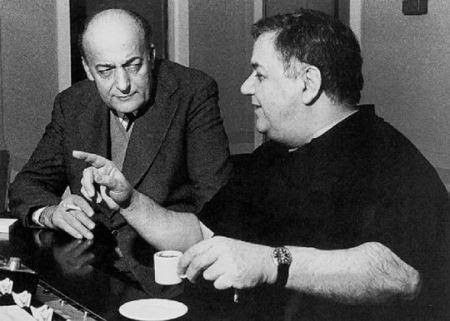
Gatsos and composer Hadjidakis. Source: greeksongstories.wordpress.com.
His writing became revolutionary, as Gatsos’ writing was that of beauty and clarity, themes not often heard in Greek pop music at the time.
Later in his life, Gatsos left the world of songwriting, becoming an inspirational literary figure for Greek poets. He would often hold lectures in Athenian coffee shops, where intellectuals and writers would visit to learn from him.
On May 12, 1992, Nikos Gatsos passed away in Athens and was buried in his village of birth as he wanted.
Gatsos will always be remembered as one of modern-day Greece’s finest poets and lyricists, as his poems inspired a new generation of Greek poets, while his songwriting revolutionised Greek pop music.
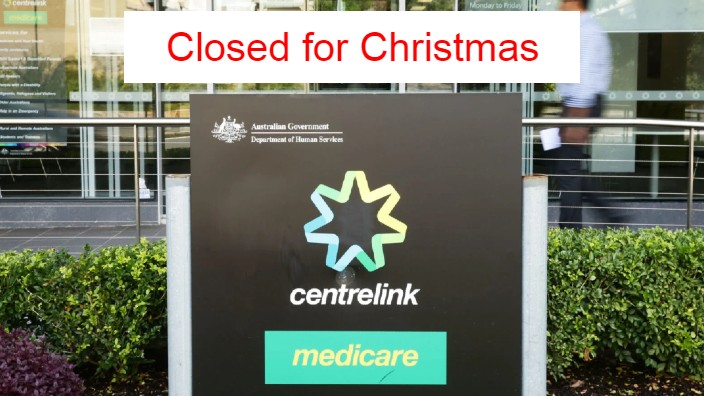
Services Australia, which includes Centrelink, Medicare and Child Support, will close during the Christmas holiday period.
All service centres and most phone lines will close on:
Friday, 25 December 2020
Monday, 28 December 2020
Tuesday, 29 December 2020 and
Friday, 1 January 2021.
If you have to return a form or report your earnings for a Centrelink payment on one of these days, you will be able to report earlier than usual.
Services Australia will let you know if you have to report your earnings earlier.
If you do not need to return a form or report to get a payment, Services Australia may pay you early.
On public holidays, you can get information about your child support payments using the Child Support Info Service and your Child Support online account.
When service centres are closed, you can use your myGov account to access your online accounts, including your Centrelink online account. You can also use the Express Plus mobile apps and phone self service to check your reporting dates, update your details or report your earnings quickly and easily.
You can find out more information about holiday reporting by:
visiting servicesaustralia.gov.au/holidays
calling 131 202* to speak to someone in your language about Centrelink services and payments, or
calling the Translating and Interpreting Service (TIS National) on 131 450* to speak to someone in your language about Medicare and Child Support services.
You can also read, listen to or watch information about Services Australia’s payments and services in other languages by visiting servicesaustralia.gov.au/yourlanguage
*Calls to ’13’ numbers from your home phone anywhere in Australia are charged at a fixed rate. This might differ from the local call rate and between phone providers.
Calls to ‘1800’ numbers from your home phone are free. Calls from public and mobile phones may be timed and charged at a higher rate.
Helena Smith has been The Guardian‘s Greece Correspondent for the last 30 years. In this time, she’s met resistance heroes, been quoted by former US President, Barack Obama, and covered the Golden Dawn era.
In a special interview with The Guardian to mark her 30 years of coverage, Smith left no question unanswered, discussing the highs and lows of her career, as well as the difficulties she’s faced reporting from Athens.
Making Greece her base:
On the question of how she came to be a correspondent in Greece in the first place, Smith says her history with the country began in her 20’s.
“All roads led to this part of the world fairly early on. My history with Greece began in my 20s, although I arrived here via Cyprus, where I spent some of my childhood,” Smith tells The Guardian.
“I initially trained as a cub reporter with the Associated Press, before working as a freelancer for various print media and the BBC. When communism collapsed and it was clear the Balkans were about to go up in flames, I took the decision to make Athens my base.”
The difficulties with reporting from Athens:
Smith goes on to say that she has had to cover a number of challenging Greek issues, and at one stage even received death threats during the Andreas Papandreou era.
“Every country has its challenges: writing about Greeks and Greece comes with its own set of perils. The Macedonian question, issues of identity, and ethnic and religious minorities are especially sensitive, as is the 1946-49 civil war and the tumultuous events that preceded it,” Smith explains.
“I received death threats during the Andreas Papandreou era, which prompted the British embassy to send a protection officer to “sweep” my then home.”
Career highlights:
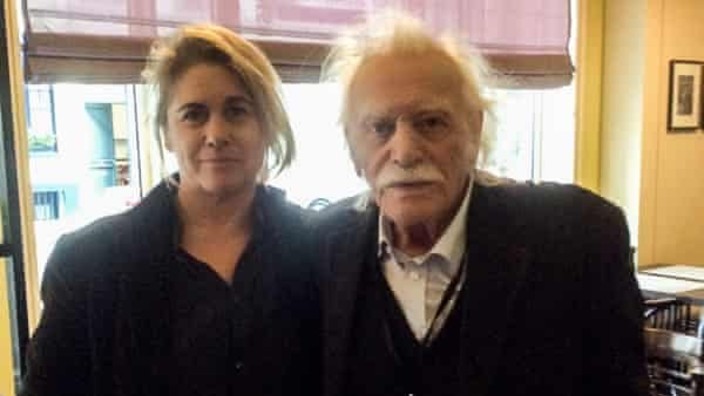
For Smith, two of her biggest career highlights are her meeting with resistance hero, Manolis Glezos, and the moment Pope Francis waved in her direction when he visited Lesvos.
“Being denounced as a “dirty piece of rag” by Jean-Marie Le Pen’s Front National after swimming out to interview him on a floating deck off Corfu was unexpectedly flattering, closely followed by Pope Francis on Lesvos waving in my direction and the hundreds around me as he stepped on to the tarmac at Mytilini airport,” Smith says.
Helena Smith reported on Pope Francis’ visit to Lesvos. Photo: The Guardian.
The Greek correspondent goes on to say that Barack Obama’s reference to a piece she had written on his last international trip as US President, was also “seriously uplifting.”
“It was his final big speech on foreign soil and he chose to repeat the words of Melia Eleftheriadi, an Athens prefecture employee I’d interviewed at the height of the refugee crisis, saying it was women like her who gave him cause for hope,” Smith details.
Reporting on the debt crisis and the Golden Dawn trials:
In her 30 years of reporting, Smith has also covered two important events in the history of Greece – the debt crisis and the Golden Dawn era.
She recalls how the debt crisis began in late 2009 and “no one knew what was around the next bend… with potentially explosive effects for Europe.”
In 2015, she says, “the rollercoaster intensified” and “it was hard to recognise” Greece.
“It had become one big wound. I had friends who were badly affected and that was heartbreaking,” Smith says.
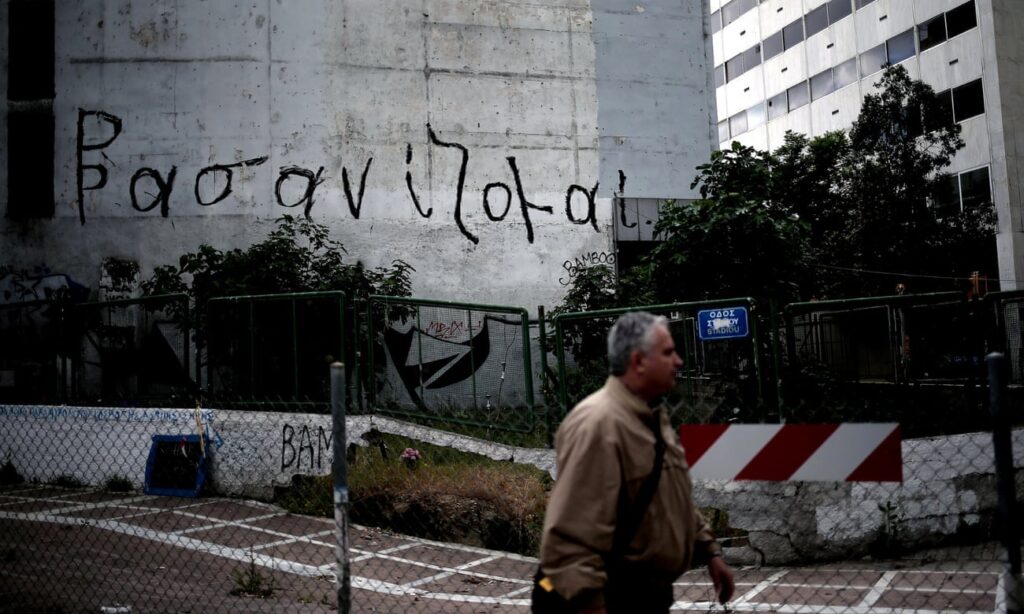
Smith also covered the debt crisis. This photo shows graffiti that says ‘I am suffering’ on a building in Athens. Photo: Angelos Tzortzinis/AFP/Getty Images.
“A decade after the 2004 Athens Olympics, people in middle-class districts beneath the Acropolis were struggling to feed themselves as hunger and malnutrition emerged in tandem with joblessness and homelessness.
“The crisis undoubtedly exposed the flaws of the state. But it also confounded expectations. Although struck by loss in myriad ways, Greeks exhibited admirable fortitude and became a poster child of the resistance and resilience of our age.”
On the Golden Dawn era, Smith recalls the moment when it felt like public sentiment towards the group was shifting.
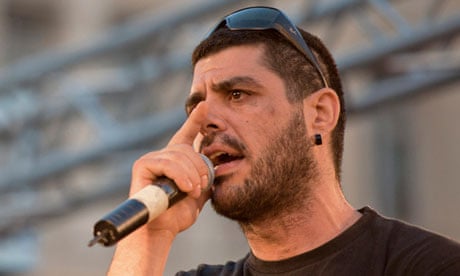
“The murder of the popular anti-fascist musician Pavlos Fyssas in September 2013 was a turning point (for Golden Dawn),” says Smith. Photo: John D Carnessiotis/AP.
“The murder of the popular anti-fascist musician Pavlos Fyssas in September 2013 was a turning point. It took the assassination of a Greek by a professed Golden Dawn operative to galvanise public opinion and re-energise the anti-fascist movement,” she says.
“The era as we have known it is over. Golden Dawn fell victim to its own proclivity for violence. But it will be harder to stamp out the ideas that fuelled its meteoric rise.
“Far-right nationalists will want to regroup and may well be boosted if the pandemic’s corrosive effects are overly felt and migrants and refugees begin landing en masse on Greek shores again.”
A stark warning from a correspondent who has clearly seen and reported on some of the more striking issues in Greece.
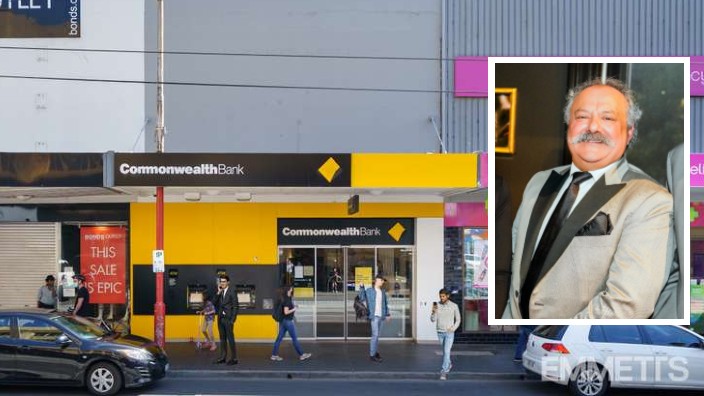
The Commonwealth Bank branch on Chapel Street in Prahran, Victoria, has changed hands for just over $7.5 million, on a record tight yield of 3.3 percent.
Records show hospo entrepreneurs George and Heidi Koumantatakis had owned the property and its neighbour, leased by Priceline, for over 20 years.
Emmetts boss, Charles Emmett, who struck the deal, said he fielded interest in both properties from parties in China, Hong Kong, Taiwan, South Africa and across Australia.
The buyer is a local, as yet undisclosed, investor.
Despite bank’s continuing to shut down branches on suburban shopping strips, investors are attracted to the branches on the major strips, which also hold potential for capital growth.
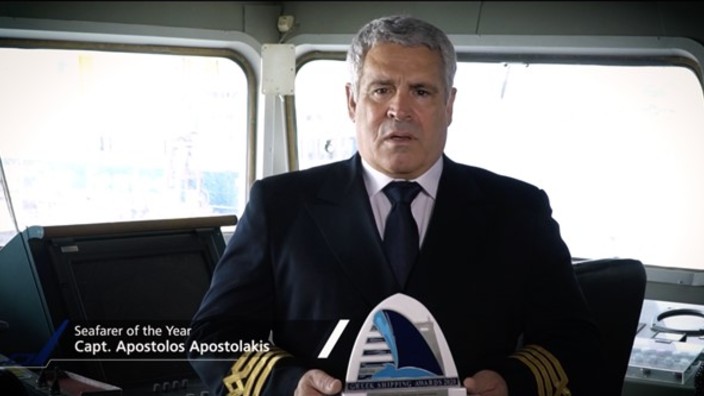
Captain Apostolos Apostolakis was awarded ‘Seafarer of the Year’ at the prestigious Lloyd’s List Greek Shipping Awards on December 4, for his professionalism and expertise in dealing with a coronavirus-related passenger emergency this past Spring.
A total of 260 cases of COVID-19 had been found among the 400 passengers and crew on Apostolakis’ ship, the Eleftherios Venizelos, back in April.
In response, the captain, who had tested positive for the virus himself, was quick to enforce anti-virus measures by isolating sick passengers and docking the ship in the Piraeus port to get those severely ill to emergency treatment.
Apostolakis works for the Greek passenger shipping company, ANEK Lines, one of the largest in the country. Both the company and Apostolakis himself are natives of Crete.
Lloyd’s List Greek Shipping Awards:
The awards, which were hosted virtually by Nigel Lowry of Lloyd’s List and Adriana Paraskevopoulou, news anchor at Greek public broadcaster ERT, also recognised others in 18 further categories of achievement.
For the first time in 16 years, a woman walked off with the Greek Shipping Personality of the Year Award – Anna Angelicoussi of Alpha Bulkers, Alpha Gas and Pantheon Tankers.
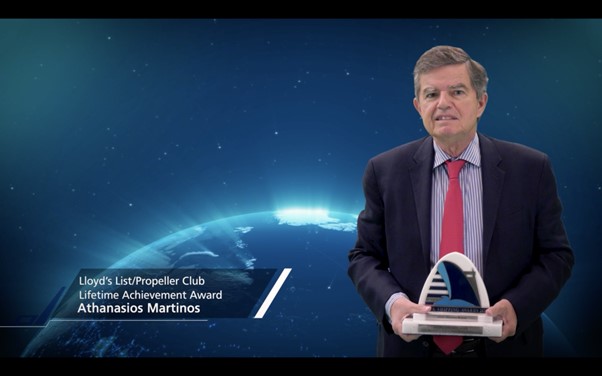
Greek shipping legend Thanassis Martinos, meanwhile, was chosen as the winner of this year’s Lloyd’s List/Propeller Club Lifetime Achievement Award.
Other top personalities recognised were Suzanna Laskaridis, founder of Real Time Graduates and Blue Cycle, who won the Next Generation Shipping Award for personalities under 40, while the president of the Passenger Shipping Companies Union, Michalis Sakellis, was named Newsmaker of the Year.
Greek shipping legend Thanassis Martinos, meanwhile, was chosen as the winner of this year’s Lloyd’s List/Propeller Club Lifetime Achievement Award.
Notable winners of company awards included Atlantic Bulk Carriers, which scooped the Dry Cargo Company of the Year Award, and Okeanis Eco Tankers, named Tanker Company of the Year 2020.
Guy Platten, Secretary General of the International Chamber of Shipping, was elected International Personality of the Year, the only award exclusively for non-Greeks, for his tireless efforts to solve the international crew change crisis.
Other honorees included ONEX Shipyards, owner of the Neorion yard in Syros, for single-handedly reviving the prospects for Greek shipbuilding and ship repair.
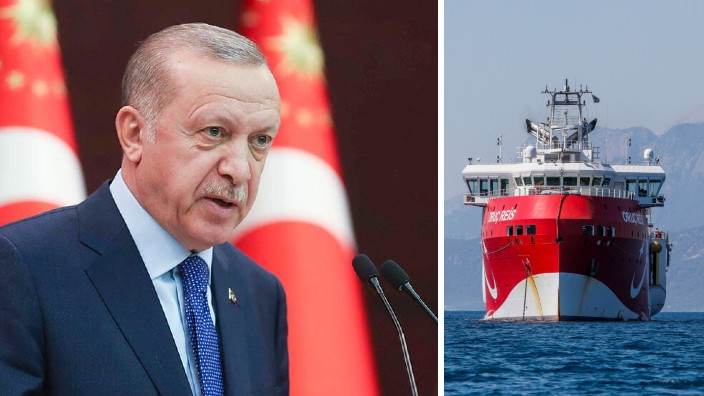
Turkish President, Recep Tayyip Erdogan, on Monday called for negotiations over energy exploration rights in the Eastern Mediterranean, days ahead of a European Union summit where leaders could decide to impose sanctions on Turkey.
“We believe we can solve the problems of the Eastern Mediterranean by not excluding each other, but by bringing all the actors together around the same table,” Erdogan said in a video message to a university forum on the Eastern Mediterranean Sea.
However, he said Turkey would “not accept plans and maps that aim to confine us to the shores of Antalya.”
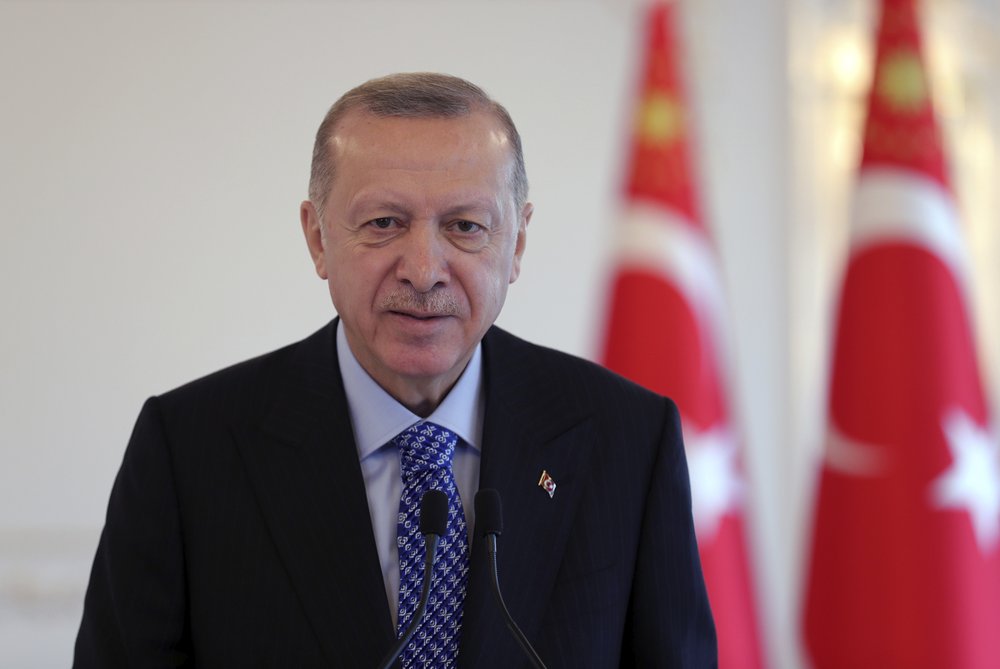
Turkey’s President Recep Tayyip Erdogan speaks in Istanbul, Saturday, December 5, 2020. Photo: Turkish Presidency via AP, Pool.
“We are not after exploiting the rights of anyone but try to take a firm stance against pirates that try to take our rights away,” Erdogan said.
At a summit in October, European leaders warned Turkey to withdraw its energy research ships or face punitive measures.
Late last month, the Turkish seismic survey vessel Oruc Reis returned to port, as it had done before October’s EU meeting. However, another research ship, the Barbaros Hayreddin Pasa, remains off Cyprus’ southwest coast.
EU foreign ministers agreed on Monday that Turkey’s behavior has not improved and that the two-day summit on Thursday is looming as a “crucial” meeting for EU-Turkey ties.
“All of them considered that we have not seen a fundamental change of direction,” EU foreign policy chief, Josep Borrell, told reporters after chairing their talks. “In several aspects, the situation has worsened.”
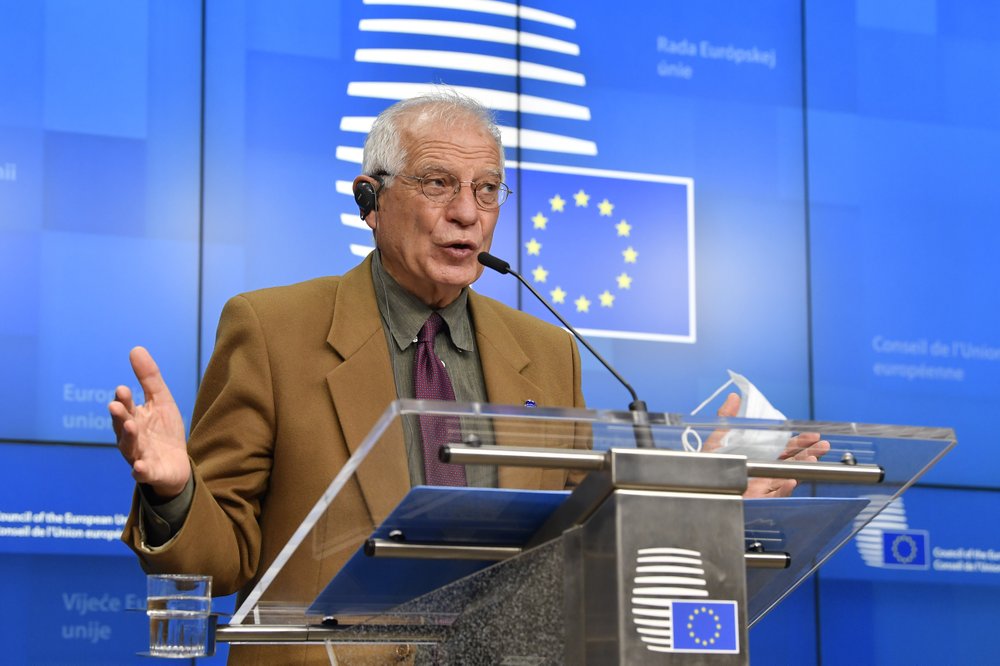
European Union foreign policy chief, Josep Borrell, speaks during a media conference after a meeting of EU Foreign Ministers at the European Council building in Brussels, Monday December 7, 2020. Photo: John Thys, Pool via AP.
Tensions between NATO allies Turkey and Greece escalated over the summer with a military build-up after Turkey sent the Oruc Reis, escorted by navy frigates, into disputed waters. The move prompted Greece to also send its warships, and both countries conducted military exercises to assert their claims.
Turkey says it is standing up for its energy rights, as well as those of breakaway Turkish Cypriots, while Athens and Nicosia call Turkey’s actions a breach of their territorial waters.
Greece on Monday extended its lockdown measures until January 7 to limit the spread of the coronavirus.
In a televised briefing, government spokesman, Stelios Petsas, said the health system was still under enormous pressure and some restrictions should not be lifted until next month, including a night curfew and movement between regions.
Schools, restaurants, bars, courts and ski resorts will also remain closed until that date, Mr Petsas said.
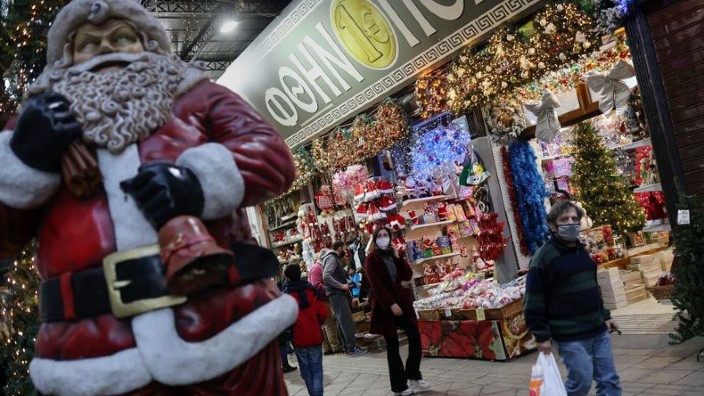
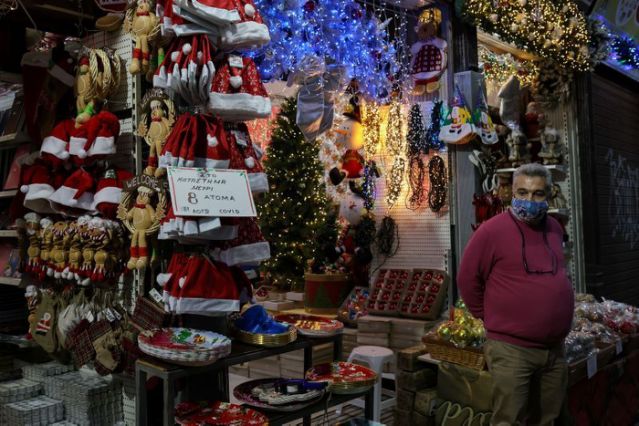
The owner of a shop selling Christmas decoration products wears a protective face mask at the entrance of his shop, during the coronavirus pandemic, in Athens, Greece, December 7, 2020. Photo: Reuters/Alkis Konstantinidis.
By the end of the week, the government will make further decisions on the operation of churches, hair salons and the retail sector.
Greece has registered 115,471 cases of coronavirus and 3,092 deaths in total.
The country had to enforce a nationwide lockdown in November, its second this year, after an aggressive surge in COVID-19 cases. It has extended it twice since then, most recently until December 14.
10-day preventive quarantine for those returning to Greece from abroad:
During the same televised briefing, Mr Petsas confirmed that travelers returning to Greece from abroad will be placed in 10-day preventive quarantine. The measure will be in effect from 18 December 2020 until 7 January 2021.
He stressed that the 10-day quarantine will be an additional measure to the Passenger Location Form (PLF) and the negative molecular COVID-19 test carried out 72 hours before arrival.
This move was made in an attempt to restrict transmission of the coronavirus over the holiday season.
Media Diversity Australia have recently released their ‘Find an expert’ directory to help news media across Australia access diverse multicultural talent and voices for interviews.
The directory proudly features three Greek and Cypriot experts including: Maria Dimopoulos, who is the Chairperson at National Harmony Alliance, Costa Vasili, the Founder and CEO of EthnoLink Language Services, and Elias Diacolabrianos, who is the Chair of publishing house and collective EOTHINON.
The directory comes in the face of a damning report released in August by Media Diversity Australia, showing the Australian population is not equally represented on news and current affairs shows.
The report showed more than 75 percent of presenters, commentators and reporters are Anglo-Celtic, while only 6 percent have an Indigenous or non-European background.
And of the free-to-air networks’ 39 board members, only one, at SBS, has an Indigenous background, and three a non-European background.
Maria Dimopoulos – Chairperson at National Harmony Alliance (Greek):
Expertise:
Multiculturalism.
Human rights.
Gender equality.
Law and justice system.
Intersectionality.
Bio:
Maria Dimopolous was acknowledged in 2020 with an OAM for service to women, to cultural diversity, and to the prevention of domestic violence. In 2017, she received the Migration Council of Australia Lifetime Achievement Award for her contribution to Australian multiculturalism and support for CALD women.
Costa Vasili – Founder and CEO of EthnoLink Language Services (Cypriot):
Expertise:
Communication strategies for CALD audiences.
Translation.
Languages.
Second-generation Australians.
Translators and interpreters.
Entrepreneurship.
Youth issues.
Bio:
Costa Vasili is passionate about using EthnoLink as a vehicle for positive change in Australia. Reflecting on his father George’s migration to Australia at the age of 13 and speaking little English, Costa founded EthnoLink at the age of 20 to effect positive change for multicultural communities.
Elias Diacolabrianos – Chair of publishing house and collective EOTHINON (Greek):
Expertise:
Community politics.
Social issues.
poverty.
Justice.
Discrimination.
Science and engineering.
Health, safety and risk.
Cultural issues.
Bio:
Elias Diacolabrianos is a Greek public broadcaster and community activist who has 40 years’ experience in Safety and Risk Management and participation in international conferences and expert panels. He is a radio producer with ABC’s 3ZZ, community radio 3CR, foundation member of 3ZZZ and currently the coordinator of the 3ZZZ Greek programs as well as a member of the 3ZZZ council.