The EEC gave approval last night for the transfer of Xanthi FC from Christos Panopoulos and Polychronis Siggelidis to Bill Papas, marking a historic day for the club.
Sydney Olympic FC Director Bill Papas reportedly submitted a bid in August to purchase the Greek Super League side, which is currently facing a league demotion.
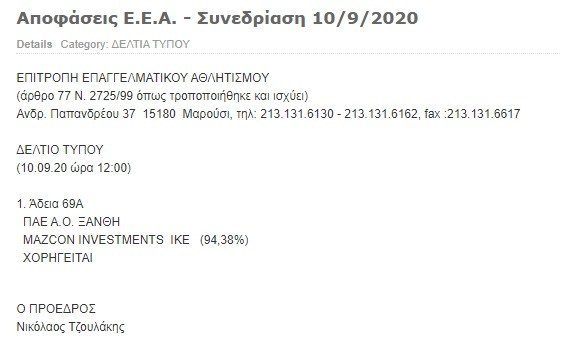
The following is a document of the historic decision of the EEC, leading to the first change in ownership of the club after 29 years:
Former Perth Glory FC coach Tony Popovic and Western Sydney Wanderers Youth coach Arthur Diles were announced as part of the Xanthi FC coaching staff following the announcement of Bill Papas as the new President.
At the time when the announcement of Popovic’s move was made, Papas said he was excited by the future.
“This is a new beginning for the club. I cannot wait for the season to commence and to be with the fans in our stadium. As we navigate challenging times in the global sports industry due to COVID, football will play an even more critical role in society, and we hope to bring pride to our fans,” Papas said.
The link up between Popovic and Diles is set to be an interesting move, especially at a club that has struggled this season and is at risk of relegation. Sources have revealed that Popovic will be given a large reign at the Greek club, assisted by his coaching staff which will be made up of Greek and Australian professionals.
“The opportunity to work with an Australian owner, I think that weighed heavily in the decision,” said Glory chief executive Tony Pignata. “The most interesting aspect was the way he could go and set this club up and coach in Europe.”
The Royal Melbourne Hospital’s Scrub Choir have released a touching tribute to all healthcare workers who have lost their lives during the coronavirus pandemic.
More than 400 Royal Melbourne Hospital Staff came together to release a touching version of The Pretenders hit I’ll Stand By You.
Some highlights of the video include some RMH Doctors in a string quartet, Nurse Kathy who leads the song in AUSLAN, and many interpreters and nurses sharing their native language.
The Scrub Choir previously came together three months ago to perform a rendition of the Bruno Mars hit ‘Count on Me’.
“We chose this song as we all need to continue to ‘Count on’ each other, we want the community to know we are here for them always, and also to show our support for all people working in healthcare worldwide,” RMH Chief Music Therapist Dr Emma O’Brien OAM said.
The choir aims to bring music therapy and a little joy to Melburnians as they battle the second wave of COVID-19.
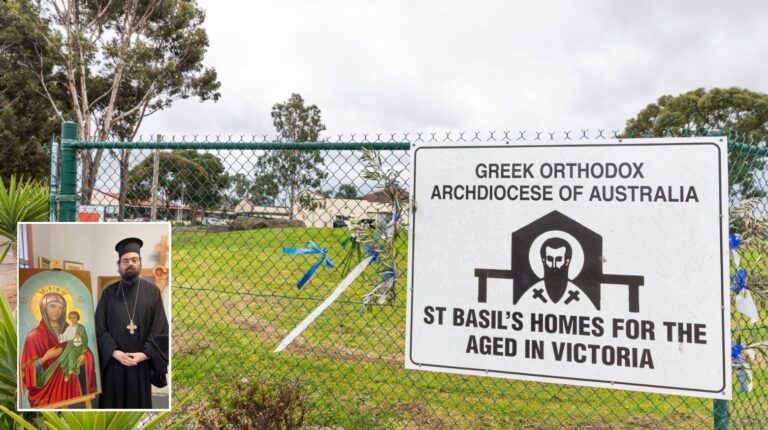
The Greek Orthodox Archdiocese of Australia announced in a statement this morning that the Chairman of St Basil’s in Victoria, Mr Konstantinos Kontis, has resigned from his position.
His Eminence Archbishop Makarios followed by announcing Very Reverend Archimandrite Father Evmenios Vasilopoulos, Archiepiscopal Vicar of Northcote, as the new St Basil’s Victoria Chairman.
His Eminence expressed his “gratitude for the long-standing contribution of Mr Kontis and his co-workers to St Basil’s, accepted his resignation as Chairman of the Board of Directors”.
“He urged Mr Kontis to remain as an ordinary member of the Board of Directors until some practical and legal issues, that were created during the pandemic, are finalised,” the Archdiocese said in a statement.
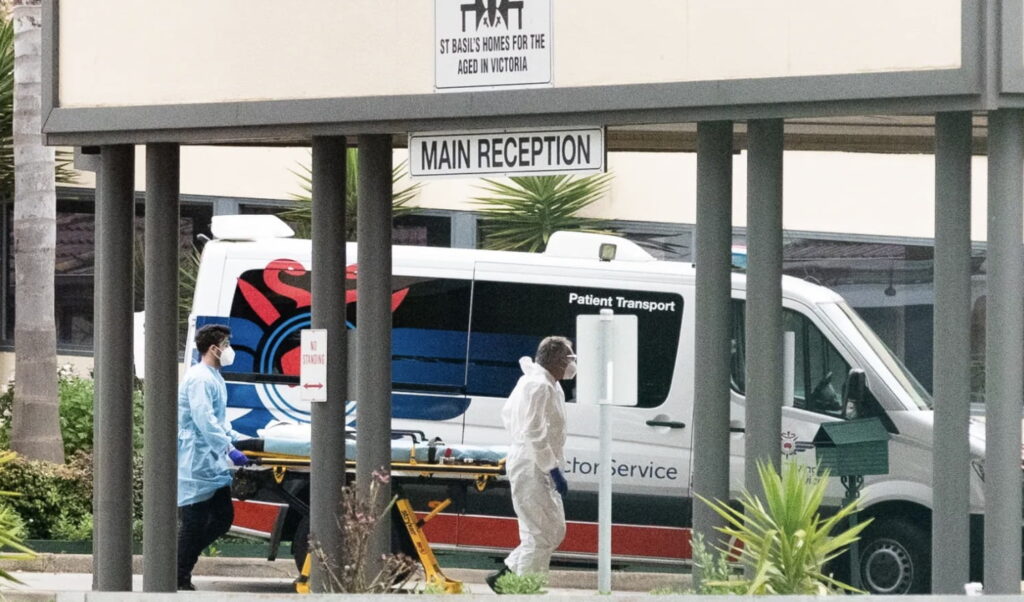
Ambulance workers push a stretcher into the St Basil’s aged care facility in Fawkner on Monday. Photo: Getty Images
“His Eminence also appreciates the expressions of regret from the relevant Ministers, because in part the efforts to stem the pandemic in certain residential aged care services in Victoria, as well as to support them, did not go as well as people had hoped.”
The Archdiocese notes that, from the 6th August 2020, the management of St Basil’s was returned to its own administration.
“His Eminence and the members of the Institution, greet with joy the families who wish and insist that their relatives return to ‘St Basil’s’, recognising the contribution of the Institution to the community and, at the same time, showing trust and respect to the local Church.”
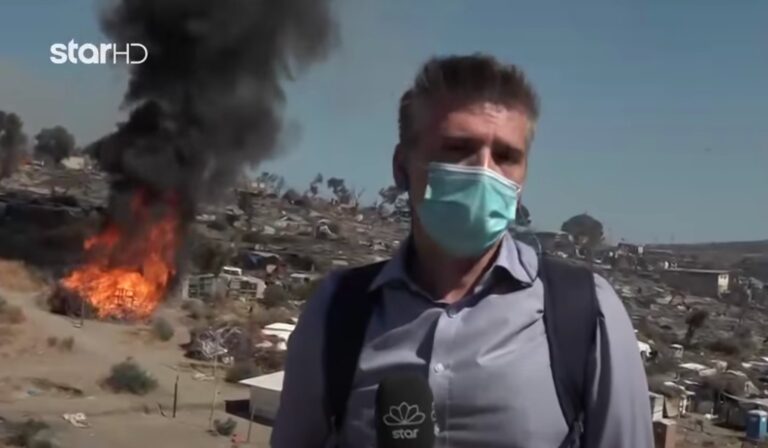
Newly released footage by Greek media has allegedly shown refugees and migrants in Moria starting the devastating bush fire that wiped out the entire camp.
Footage by Star News shows a fire being started in the middle of the camp, with migrants huddled around the blaze.
The fire expands into an out of control bush fire, ultimately leading to Moria being engulfed in flames.
Greek news agency ANA had reported that the fires broke out after some of the 35 coronavirus victims had refused to move into isolation with their families, yet this was unconfirmed.
Greek government spokesman Stelios Petsas later confirmed that the fire at Moria camp was not an accident in interview on Mega TV station.
About 25 firefighters with 10 engines battled the flames as migrants were evacuated. Some suffered injuries from smoke exposure.
A third fire on Thursday afternoon completely destroyed any remains of the former migrant camp on Lesvos.
Greece reported 372 new cases of COVID-19 infections on Thursday, its highest daily tally since the start of the coronavirus outbreak in the country.
The latest jump in cases brought the total number of infections in Greece to 12,452 and 297 deaths since its first case surfaced in late February.
Of the new cases, 114 were due to an outbreak of COVID-19 infections at a food processing plant in northern Greece, with 133 recorded in the greater Athens area, health authorities said.
The increase in infections in recent weeks has prompted Greek authorities to gradually introduce more restrictions during the peak of the tourism season.
Greece has also found at least 35 cases of coronavirus in the overcrowded migrant camp of Moria on the island of Lesbos which burned down on Wednesday, leaving thousands of migrants homeless.
The facility had been placed under quarantine after authorities confirmed that a 40-year-old asylum seeker had tested positive.
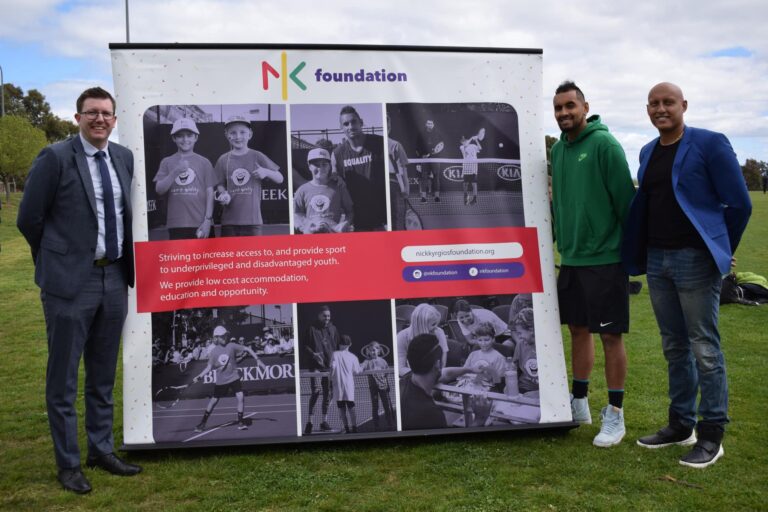
The NK Foundation, founded by Greek-Australian tennis star Nick Kyrgios, has made it’s first steps as a government funded initiative after securing funds to develop a Gungahlin tennis facility in Canberra.
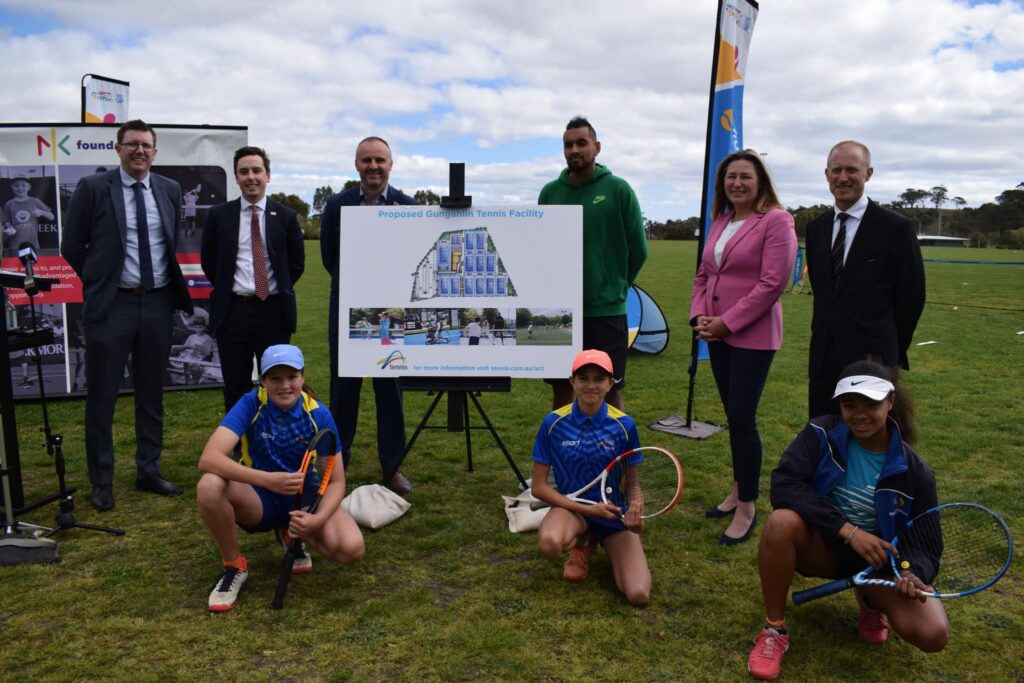
Officially named the ‘NK Foundation – Giving Dreams A Sporting Chance‘, the Foundation announced funding commitment from ACT Chief Minister Andrew Barr and Deputy Chief Minister Yvette Berry on Facebook last night.
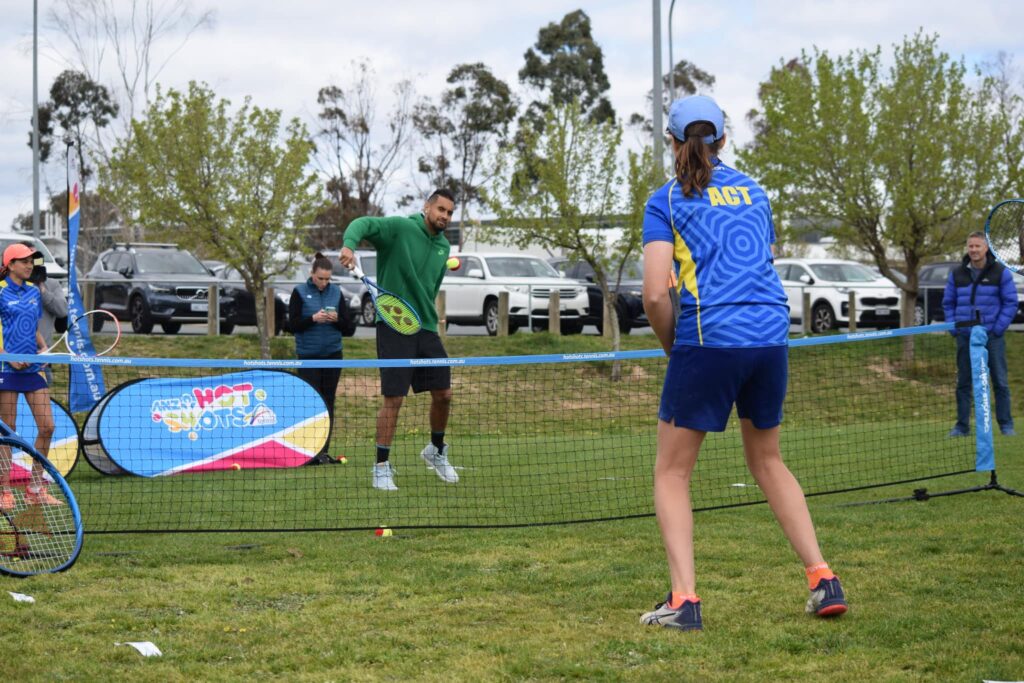
“For all the families in the Gungahlin region, this facility will fill the desperate need for tennis courts in the area,” Nick Kyrgios wrote on Facebook.
Photo: Nick Kyrgios Facebook
“Youth from all walks of life will be encouraged to come and take part in our coaching programs on offer.”
Labor MP Yvette Berry announced that the facility would include:
– 10-12 full sized courts – Hot shots courts – A hitting wall – LED floodlighting – Parking – Pavilion
“Canberra has the highest rates of participation in sport across the country – we really love our sport – and tennis continues to grow with over 32,000 participants in the ACT,” the Deputy Chief Minister added.
Photo: Nick Kyrgios Facebook.
“As Nill said today, sports brings families and the community together and this facility will provide a place for kids to go and for everyone to get involved in local sport.”
The NK Foundation was set up by Greek Australian tennis star Nick Kyrgios to offer sporting opportunities, support services, education & training pathways, low-cost accomodation and solutions for underprivileged youth.
Nick Kyrgios says this important step is only “the start of something great” as the Foundation works to create more tennis facilities in disadvantaged regions in Australia.
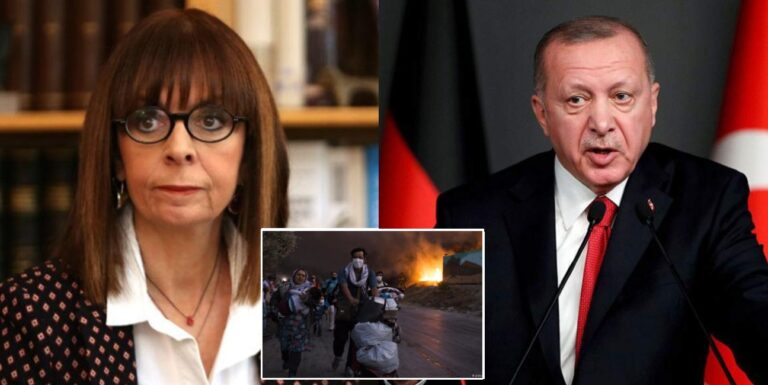
“The events in Moria don’t lend themselves to exploitation by anyone,” President of the Hellenic Republic Katerina Sakellaropoulou said on Thursday in a statement on the latest developments in Lesvos, noting that “the disaster in Moria fills us with pain and concern.”
Approximately 3,500 refugees are left stranded on the streets of Lesvos after the Moria refugee camp went up in flames on Wednesday.
The exact cause of the first blaze is still being investigated, but “what is certain is that the fire was started because of the quarantine by asylum-seekers in the facility,” said Migration Minister, Notis Mitarachi.
Sakellaropoulou pointed out that “the conditions do not permit delays, the refusal or transfer of responsibilities or belligerent cries. And above all, they do not allow Europe to turn a blind eye,” she said, adding that the “refugee and migration issues are primarily a European problem and must be addressed as such.”
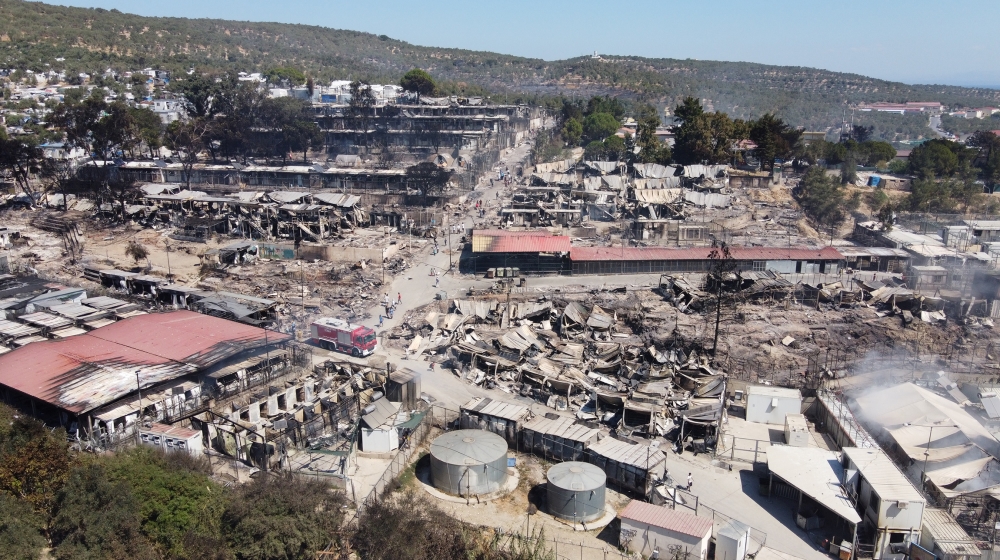
An aerial view of destroyed shelters following the fire at the Moria camp, in a picture taken with a drone. Photo: Alkis Konstantinidis/Reuters.
Referring to Turkey, she said that it was “instrumentalising the tragedy of refugees and migrants, using them as a weapon in negotiations and as a threat to serve its geopolitical interests.”
She also made a special reference to the local community on the island of Lesvos, saying that, although it had shown touching solidarity and humanity and taken on a disproportionate burden, it was watching the spread of tension on the island with fear and concern.
An aerial view of destroyed shelters following the fire at the Moria camp, in a picture taken with a drone. Photo: Alkis Konstantinidis/Reuters.
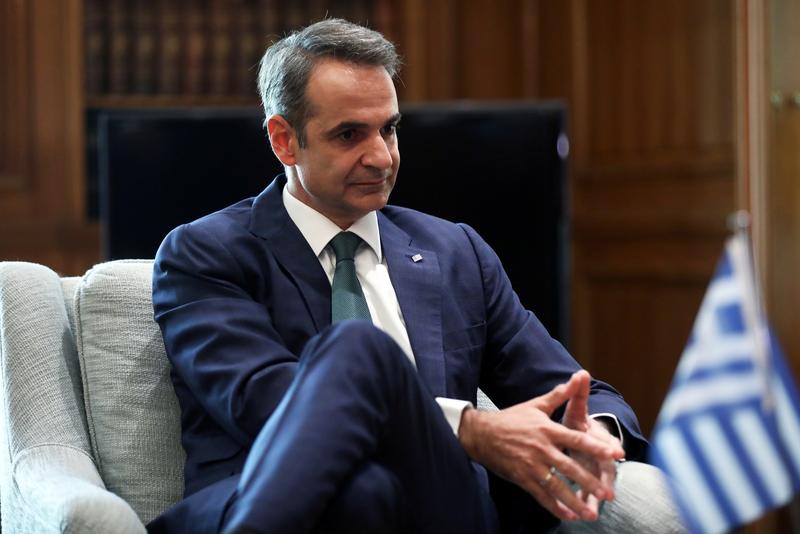
Greek Prime Minister, Kyriakos Mitsotakis, called on the support of it’s EU allies yesterday, who pledged immediate financial support for refugees who have been left stranded.
“It’s a question of public health, of humanity, but also national security,” he said in a statement broadcast by ERT.
“I got to the point where life was way too much for me and I started to have thoughts of suicide like, ‘I don’t belong here so I may as well be dead,’ or ‘I wish this car would just hit me’,” George Laggis tells me as we sit down for our exclusive chat.
In his humble way, George also warns me that if I need to take a break at any point during the retelling of his story, he would understand. Today, I give you the same message.
To mark National Suicide Prevention Week, The Greek Herald has been trying to shine a light on the issue of suicide and mental health within the Greek Australian community. George Laggis’ story is a part of this special mental health series and whilst it will be difficult to read, it deserves to be told.
Warning: The contents of this story may be distressing to some.
George comes from a Greek family with a long history of mental illness. His uncle suffered depression for most of his life and took his own life eight years ago. His mum also suffers from depression and anxiety and has been receiving treatment for close to 40 years.
George comes from a Greek family with a long history of mental illness.
“When they first arrived in Australia, they had the mentality, ‘Oh I’ll just go to the doctor and he will give me a special tablet and I’m going to get better.’ So unfortunately, they were very heavily reliant on medication and that’s it,” George tells The Greek Herald exclusively.
At the same time, George struggled with his own mental health. When he was 13 years old, he realised there was something different about him. He was gay.
This label is something George says he’s come to terms with now after ‘coming out’ at the age of 31, however, it wasn’t easy to accept when he was younger.
“I didn’t know what being gay was at the age of 13 and so I started to believe that I didn’t belong, that I wasn’t worthy, that I was out of place in this world. And that was something that really started to take its toll on me,” George says.
‘I knew how I was going to end my life’:
But the now 50-year-old adds that the point where he really hit ‘rock bottom,’ was when his mum’s anxiety and depression deteriorated and she was put into aged care to get the 24 hour care she needed.
George’s mental health deteriorated when his mum was put into aged care.
“Mum was in and out of hospital for over two years and being from a Greek family… there was that expectation that I needed to step in and I needed to fix everything because I’m the son. There was a lot of that guilt,” George explains.
“So I got to a point where life was just way too much for me and I started to have very active thoughts of suicide. It started to scare the hell out of me because… I knew how I was going to end my life, I just didn’t know when.
“I used to lay awake at night thinking about it and they were thoughts of, ‘I don’t want to be here anymore’ and ‘I feel like the pain needs to stop.’ And the only way to stop the pain was to take my own life.”
The shame that came with needing treatment:
It was at this stage in early March 2016, that George realised he needed to get help. He visited a psychiatrist and was officially diagnosed with major depressive disorder, generalised anxiety disorder and substance use because he had developed a dependency on prescription medication.
Next thing he knew, he was receiving treatment for his conditions in a mental health facility. Something George says he felt ‘embarrassed and ashamed’ about.
“I didn’t want to tell anyone. The only person that knew was my boss and I was even going to lie to him and make up some fake illness. But I didn’t,” George says.
George was ‘ashamed and embarrassed’ to tell people that he needed help. Photo supplied.
“In the end, I was in the facility for five weeks and probably spent the first two weeks crying every day.”
During those five weeks, George remembers taking part in mindfulness sessions, going for walks and being given tools to deal with his mental health. However, he admits that when he was discharged from the facility, he still hadn’t accepted he was actually ill.
“When I was discharged, the doctor needed to sign a discharge form which states what your level of mental health was coming in and going out. So there were seven boxes, with number seven being the ‘worst case’ and number six being ‘severely ill’,” George explains.
“I got number six ‘severely ill.’ I argued with the discharge nurse because I still, at that point, hadn’t accepted how sick I was. I was like ‘no, no, I’m not severely ill. There’s nothing wrong with me’.”
Coming to terms with his mental illness:
George’s moment of acceptance did come however, and it was in the most unexpected way – while he was listening to Greek music in his front yard.
“One day I was sitting at the front of my house listening to old Greek music, which is one of my coping strategies, and I thought, ‘oh wow, the birds can fly and look how green the trees are’,” he says.
“And for the first time I felt like I had been blind for a long time and I felt like I had my sight back. I realised that I had lost the taste of life and that I must have been quite ill.”
Since then, George has been under the care of a psychiatrist, he takes medication for his condition, he follows daily routines and his two puppies, Gracie and Oliver, teach him ‘unconditional love.’ He also has the love of his family even if, as George says, they are sometimes the last people he asks for help.
“We all like to compete with each other. So if I say to them, ‘this is what’s happening to me,’ they’ll go, ‘well you think you’ve got it bad, let me tell you about me’,” George says with a laugh.
“It’s that Greek thing… it’s not that they don’t care. So even though I might let my family know what’s going on… I have other means of getting support.”
And it’s this support which George encourages others who are struggling with their mental health to reach out for as well.
“If you feel you’re struggling, it’s important to reach out and let people know. It’s not a weakness,” he says.
“I actually think living with a mental health condition is resilience in itself because it takes a lot of courage to get up every morning, to put on a mask and pretend to be someone that you’re not. So be vulnerable and ask for some support.”
Wise words from a man who has clearly persevered through pain and heartache to become a man more confident in himself despite still living with a mental illness every day.
If this story has caused any distress The Beyond Blue Support Service is available via phone 24/7 on 1300 22 4636 or via beyondblue.org.au/get-support for online chat (3PM – 12AM AEST or email responses within 24 hours).
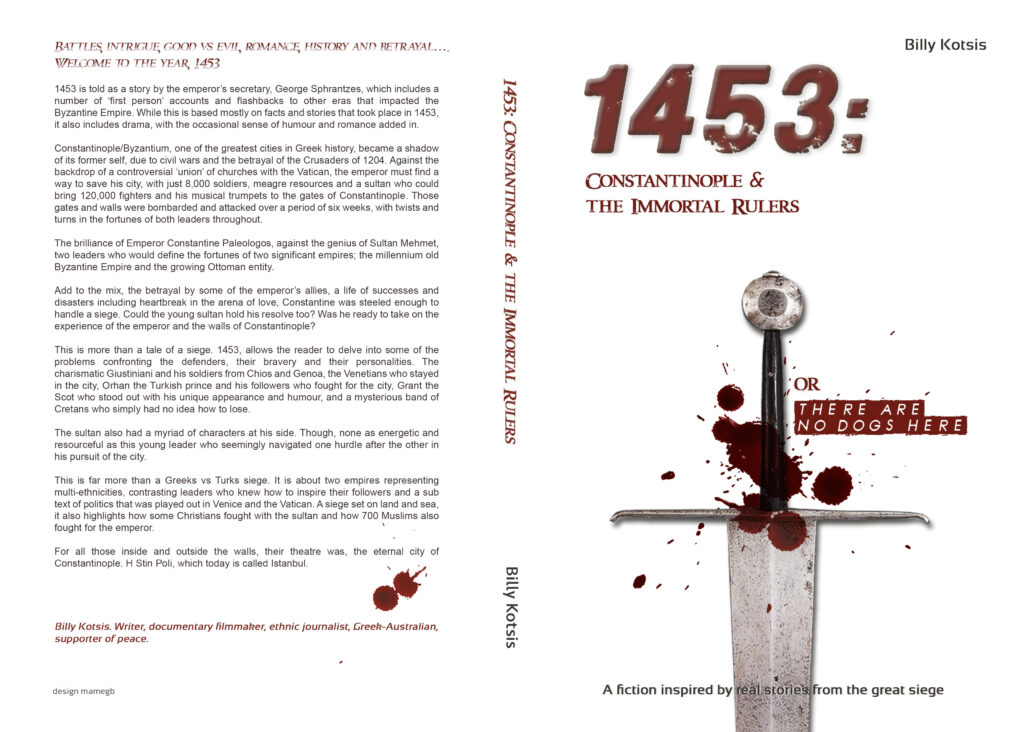
1453: Constantinople and the Immortal Rulers is told as a story by the emperor’s secretary, George Sphrantzes, which includes a number of ‘first person’ accounts and flashbacks to other eras that impacted the Byzantine Empire. While this is based mostly on facts and stories that took place in 1453, it also includes drama, with the occasional sense of humour and romance added in.
This is the fifth book from Billy Cotsis, whose previous efforts include the acclaimed Many Faces of Hellenic Culture and Once upon a time in Crystal Palace. The latter is set to be turned into a film if finance is secured.
Billy has also just completed work on a documentary trilogy, “Magna Graecia” set in Calabria and Apulia about the Greek speaking villages in Italy. Whilst in Italy, he also directed “An Olive Tale,” which takes in the world of olives across the south of Italy, as well as the Peloponnese and Lesvos. Channel 44 Adelaide will be playing this two part series in early October, and Foxtel shortly after. This was a production in conjunction with Mimmo Lubrano, Sandhurst Fine Foods.
Billy Cotsis’ new book. Cover by Magdalena Braconi.
With the recent controversy about converting Hagia Sofia to a mosque, after almost a century as a museum, the book is well timed, though not deliberate.
It was a labor of love.
“I had started writing this as a screenplay when I was in London, years ago, and never finished it. Thanks to Covid, I had time to write this a book. One good aspect of the lockdown!” Cotsis says.
Synopsis:
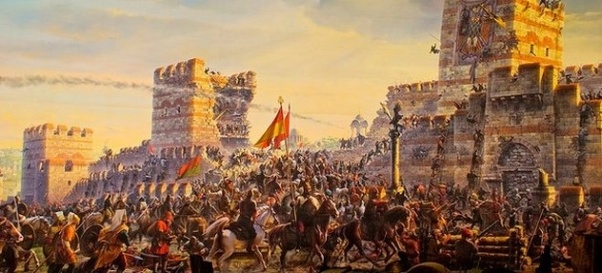
Constantinople/Byzantium, one of the greatest cities in Greek history, became a shadow of its former self, due to civil wars and the betrayal of the Crusaders of 1204. Against the backdrop of a controversial ‘union’ of churches with the Vatican, the emperor must find a way to save his city, with just 8,000 soldiers, meagre resources and a sultan who could bring 120,000 fighters and his musical trumpets to the gates of Constantinople. Those gates and walls were bombarded and attacked over six weeks, with twists and turns in the fortunes of both leaders throughout.
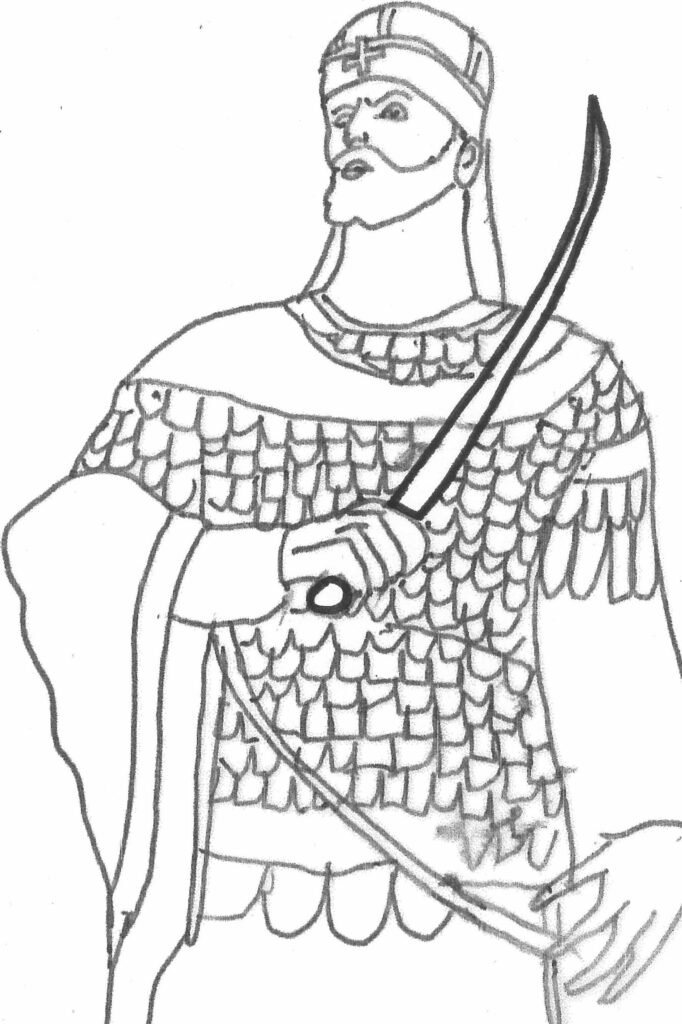
The brilliance of Emperor Constantine Paleologos, against the genius of Sultan Mehmet, two leaders who would define the fortunes of two significant empires; the millennium old Byzantine Empire and the growing Ottoman entity.
Photo by Steve Estvanik.
“This is more than a tale of a siege. 1453, allows the reader to delve into some of the problems confronting the defenders, their bravery and their personalities. The charismatic Giustiniani and his soldiers from Chios and Genoa, the Venetians who stayed in the city, Orhan the Turkish prince and his followers who fought for the city, Grant the Scot who stood out with his unique appearance and humour, and a mysterious band of Cretans who simply had no idea how to lose.”
As the era seems devoid of women and their role, the book sees the entry of four female characters, with each one having an impact on the events that unfold.
“Women, monks, civilians, they were all at the walls helping the 8,000 defenders. The book hopefully shows that it was just male soldiers who defended the great city.”
This is far more than a Greeks vs Turks siege. It is about two empires representing multi-ethnicities, contrasting leaders who knew how to inspire their followers and a sub text of politics that was played out in Venice and the Vatican. Some of the great characters in the siege were Italian. The support of some of the Genoans and Venetians was crucial, yet it was also the lack of support from Venice and to an extent the pope, that proved almost detrimental. “Venice and the pope were slow to respond or responding only in a context that the Greeks must come under the papacy.”
Credit: CC Graphics.
“I hope that I was able to humanise some of the characters/people involved in the siege. It is a fiction based on facts, though I had to create the female characters, as there is very little information on the women in this era. I have told the tale through a main narrator, some flashbacks to golden moments of the empire and of course, the lead up to 29 May, 1453.”
To add some intrigue, there is also an alternative ending, a ‘what-if’ scenario.
As always with a book from Billy, there are proof readers from around the world, the graphic designer is a friend in Argentina, and the two love scenes in the book are written by a Greek speaking Brasilian in Brasil.
1453: Constantinople and the Immortal Rulers is available on Amazon and the Greek Bilingual Bookshop week 2 of September https://bilingualbookshop.com.au/ and wherever a good book may or may not be sold, including Kingsgrove and Belmore newsagents.
Launch by zoom is coming on 28 October, to coincide with Oxi Day.
Billy Cotsis is a writer, documentary filmmaker, ethnic journalist, supporter of peace. His next project is a documentary series called Magna Graecia, which takes us to the Greek villages of Calabria and Apulia in Italy.
The Greek island of Lesvos is facing its biggest hurdle yet. It needs summer tourists for its COVID-19 recovery, but it’s also home to Europe’s biggest refugee camp.
Since the writing of this article, the camp has been ravaged by fire and the locals remain divided between welcoming tourists or helping the refugees who are now without a home.
Australian woman, Melinda McRostie, is very much on the side of the refugees even if it puts her at odds with the locals.
Melinda has been living on Lesvos since she was seven years old, when her mother met and married her stepfather who was a local Greek fisherman. For the last 25 years, she’s been running a restaurant on Molyvos Harbour called ‘The Captains Table,’ as well as a string of holiday rentals which have been closed all year due to coronavirus.
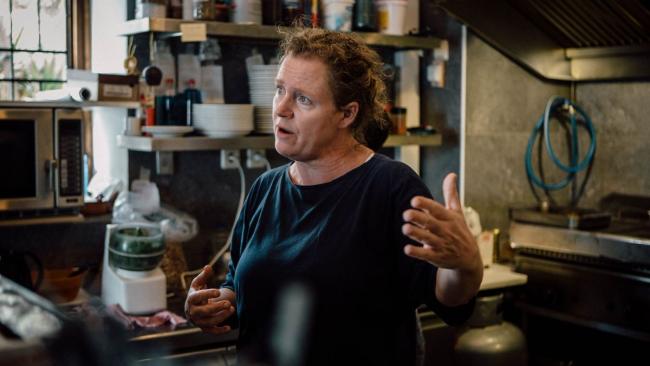
For the last 25 years, Melinda’s been running a restaurant on Molyvos Harbour called ‘The Captains Table.’
At the same time, when the refugee crisis began five years ago and over 15,000 refugees were placed in Moria camp on Lesvos, Melinda felt compelled to do something. She started her own NGO, the Starfish Foundation, which aims to meet the immediate needs of arriving refugees such as food, clothing and hygiene.
With clear expertise in both the tourism and refugee sectors, The Greek Herald spoke exclusively to Melinda after her appearance on SBS Dateline’s special documentary, Welcome to Lesbos.
*Please note: This article was written before the fire at Moria camp.*
What’s the current situation in Moria camp?
Late last night, multiple fires began to engulf most of the infamous Moria Refugee Camp that housed more than 12,800…
2. Are many refugees still arriving by boat on the island?
There have been refugees that have left Turkey and come to Greece but there has been a lot of push backs, and the government here was very proud in announcing that they’ve not had refugees for so many weeks etc. So there’s been no cases of people who have landed but then they seem to be back in Turkey themselves. This is highly illegal and the Greek government is saying this is not happening. We did have two boats that arrived yesterday on the island, but whoever arrives is now immediately put into quarantine and tested for the virus before they get taken to Moria.
3. Can you describe to us a typical day in the camp?
A lot of them wake up at 4am in the morning to start queueing for breakfast. Then they take the food home to eat, then they start queueing for lunch. Then they take the food back and start queueing for dinner. All that in between their appointments for asylum and their appointments for the doctor which has long queues every day. It’s just one load of queueing.
Now with the lockdown, since March most of the NGOs who operate inside the camp have been asked to stop doing the activities they were doing. We, the Starfish Foundation, had a container inside, doing self-defence for women, yoga for women to empower them and also giving Greek lessons. We’ve had to stop all of that since March.
4. Tell me about the locals. What is their stance towards the refugees?
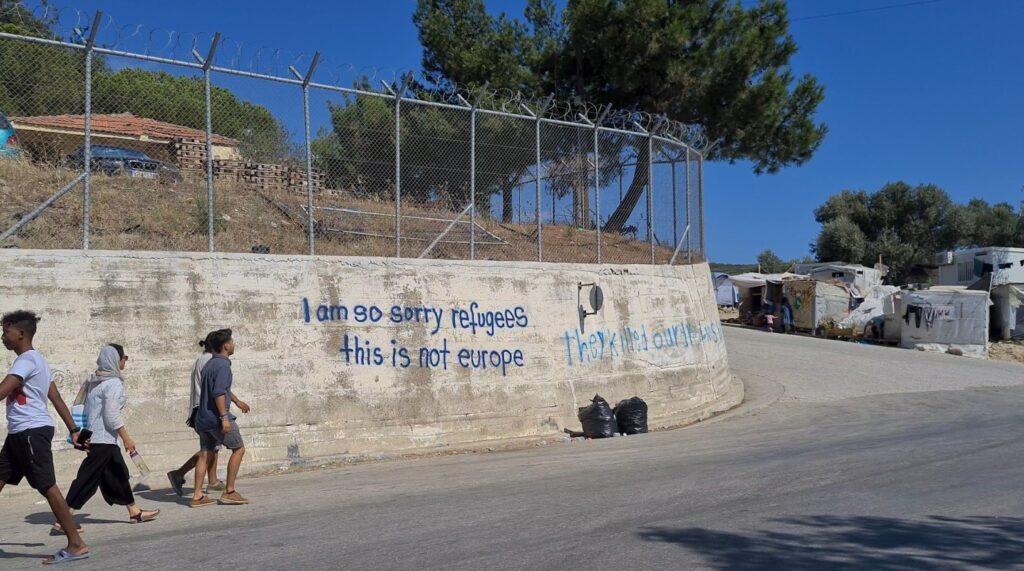
Refugees walk past a sign at the Moria refugee camp. Photo: SBS Dateline.
Originally when all the refugees started coming through, many locals did help. But because of people who are not refugee friendly, a lot of the locals who originally helped have now stopped because they’re too scared they will also be victimised.
The ones that are hostile to the refugees are becoming even worse now because everybody is feeling more and more sorry for themselves. First, we had the economic crisis, then we had the refugees that came through which affected our tourism. The argument is also made that the refugees wouldn’t have come here if we weren’t helping, so they do target the people who are helping refugees.
The same people who are hostile don’t believe we have volunteers who travel here on their own money, their own pocket and pay for themselves. This helps the economy as they rent houses, cars and put money back into the island. The hostile people think they must be taking money for their work and they wouldn’t do it for free. I think it’s very difficult now as there are so many people who are so angry, and it’s very hard to get through to them so they can understand that there are benefits that everyone can gain from this situation.
5. Has tourism dropped due to the situation?
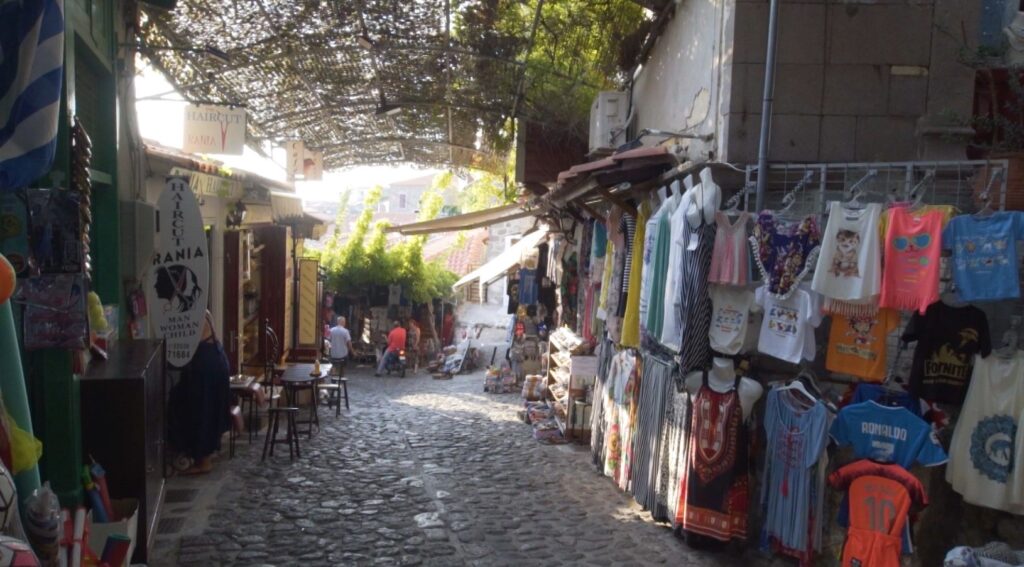
The beautiful tourist town of Molyvos, on the north of Lesvos island, without tourists due to the COVID-19 pandemic. Photo: SBS Dateline.
Yes. In 2016, we were 80 percent down on tourism from 2015 when we had the massive influx of refugees. This year it’s the worst it’s ever been. There’s also the village of Moria right next to the camp. These people have gone through so much because the refugees have been coming through and they’re hungry, so of course they’re stealing things, and these poor people are being robbed all the time and not being compensated for anything.
6. What impact has the crisis on Lesvos had on your own life and family?
I married a Greek person. But I’m here because of my mother. My husband who is Greek, is here because of me. He’s actually from Peres. Everybody is hurting from the crisis – first we had the economic crisis, then the refugees and now we have the virus.
This year we’ve opened our restaurant and I’m sitting here just trying to make some rent for the restaurant. The properties we have that we rent out to people, they’re empty. We’re all suffering in this together. Unfortunately, instead of all this making us come together, it’s tearing us apart.
It’s very sad. I feel like my three children have suffered quite a lot, but it’s also made them grow stronger. It’s made them become better human beings. They’ve suffered from me being victimised because I help refugees. They’ve also had their friends talk behind their backs. Basically, they want to leave the island and never come back.
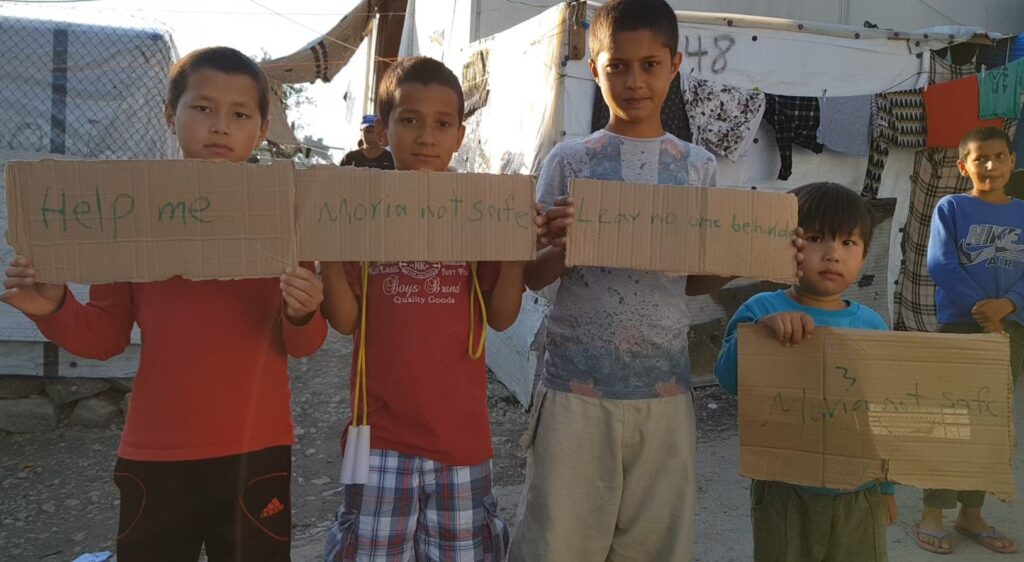
Refugees hold up signs at Moria refugee camp. Photo: SBS Dateline.
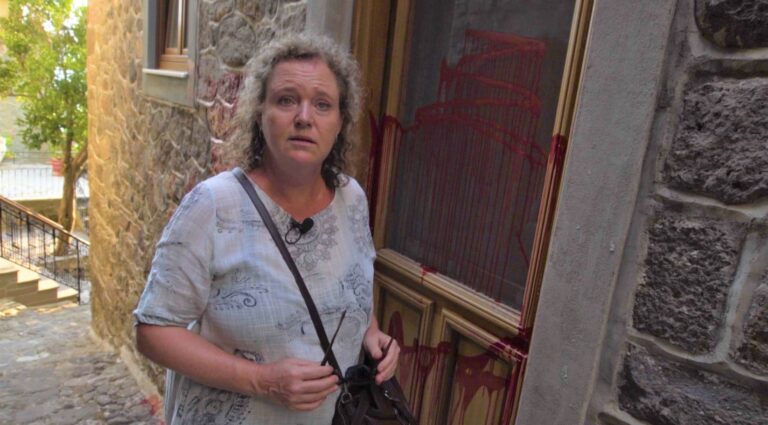
Yes, I’ve been victimised. Yes, I’ve been bullied on Facebook, I’ve had red paint thrown on our houses, a letter thrown under the door with a matchstick and lost a lot of friends. What’s really hurt me more than anything else is they’ve pulled my family apart because I had to be here. I have a restaurant and rental properties and we couldn’t get rid of them and leave. Now my children don’t want to visit the island– they only want me to go and see them. That hurts. That’s more painful than anything.
7. How can the rest of the world help?
The world has to care and understand it could be them tomorrow. Imagine if a war suddenly broke out in Australia, wouldn’t you want people to care about you and help you? We need to care and we need to be there for other people.
Originally when I first started doing Starfish we were very quiet, we never shouted or screamed. We just did what we did. We do that most of the time. We’re not being political, it’s not like left or right. We’re just caring for people. Not all the people who’ve come through here have been OK, we’ve had some bad eggs. But how can we stop helping just because some bad eggs have come through? We need to keep helping people. One day you never know, it might be us. We might need help one day.