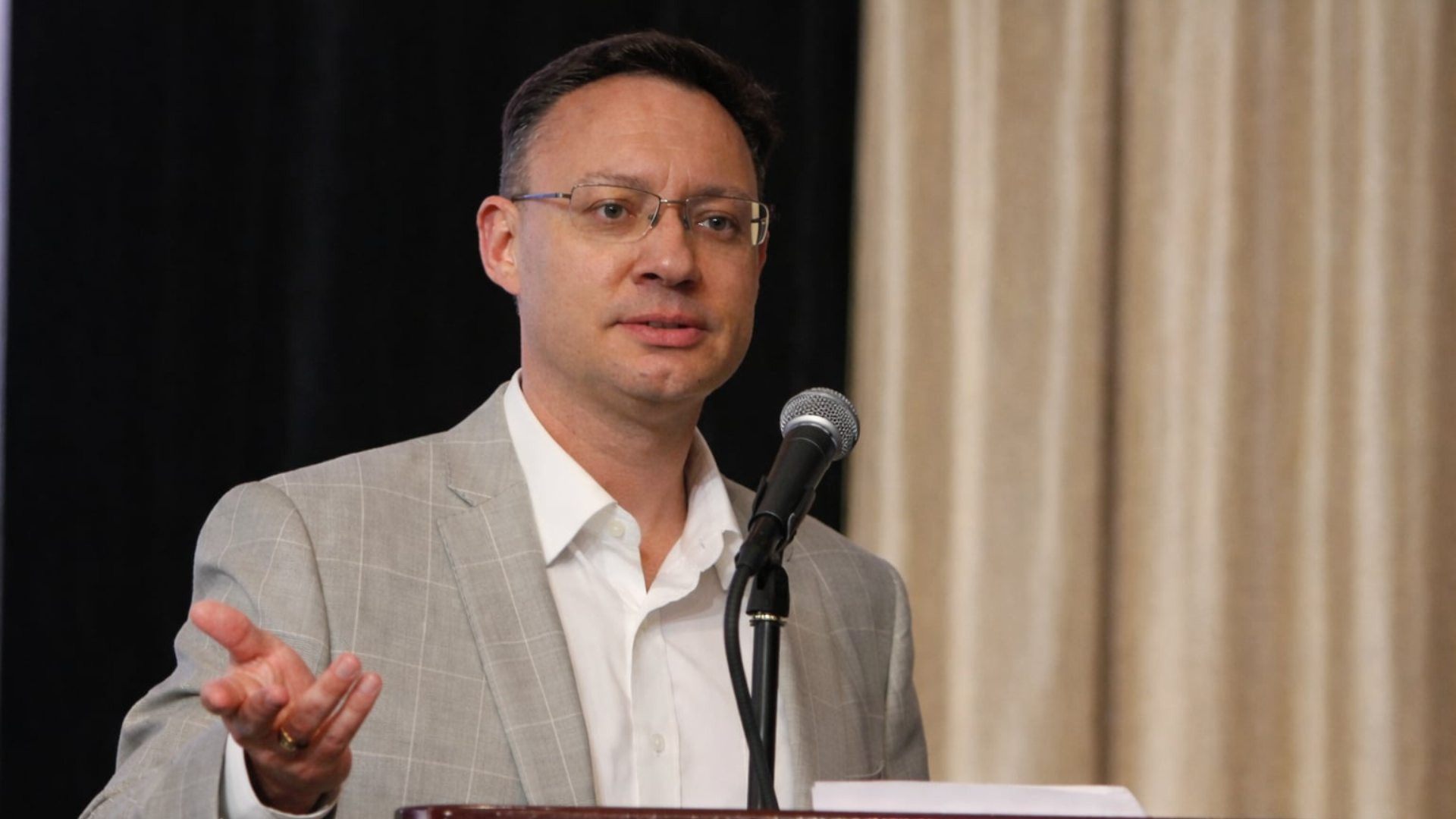
Melbourne lawyer and writer Dean Kalimniou, Secretary of the Jewish Hellenic Association of Victoria (JHAV), has announced that the organisation has lodged a substantial submission with the Royal Commission on Antisemitism and Social Cohesion warning that rising antisemitism poses a serious threat to Australia’s democratic culture, multicultural stability, and long term civic cohesion.
Founded in Melbourne in 2021, JHAV was established to foster dialogue, friendship, and cultural understanding between Victoria’s Greek and Jewish communities through lectures, commemorations, educational initiatives, artistic collaborations, and public cultural events.
In its submission, the organisation argues that the historical experiences of Greeks and Jews as diasporic peoples shaped by migration, persecution, displacement, survival, and cultural continuity place both communities in a unique position to contribute to national discussions surrounding social cohesion and extremism.
Mr Kalimniou stated that the Greek Australian community occupied a particularly important position within contemporary discussions concerning antisemitism and social cohesion because of its own historical experiences of migration, occupation, dictatorship, displacement, and democratic struggle.
“The Greek Australian community possesses a long memory of the consequences of extremism, authoritarianism, racial hatred, and political violence,” he said.
“Our community’s historical experiences, together with its longstanding commitment to democratic institutions, pluralism, civic participation, and social cohesion within Australia, place it in a strong position to contribute constructively to national efforts aimed at resisting antisemitism and strengthening intercommunal trust.”
The submission states that Australia’s multicultural model has historically encouraged coexistence between communities, though comparatively less attention has been directed toward cultivating enduring relationships and reciprocal historical understanding between them.
According to JHAV, this has contributed to the emergence of what it describes as “parallel communities” existing beside one another physically while remaining socially, historically, and emotionally unfamiliar with each other.
The organisation warns that such conditions create vulnerabilities during periods of international tension, particularly where overseas conflicts become imported into Australian civic life through digitally amplified ideological narratives and identity based polarisation.
JHAV expresses concern about increasing social fragmentation and the role of online ecosystems in intensifying communal hostility. The submission argues that contemporary digital platforms increasingly reward outrage, emotional intensity, conspiracy theories, and ideological absolutism, resulting in communities encountering one another through slogans, algorithmically curated imagery, and conflict driven narratives rather than through direct human relationships and shared civic participation.
According to the submission, these conditions weaken social trust and create fertile ground for antisemitism, extremism, and social alienation.
The organisation also raises concerns regarding declining historical literacy within broader society. JHAV argues that younger generations are frequently exposed to complex historical subjects through fragmented social media content rather than sustained historical education, weakening society’s ability to recognise recurring patterns of scapegoating, dehumanisation, conspiratorial thinking, and ideological extremism.
The submission further criticises the growing tendency within contemporary public discourse to reduce historically complex peoples into simplistic ideological categories. JHAV argues that Eastern Mediterranean communities such as Jews, Greeks, Armenians, and Assyrians possess layered historical experiences shaped simultaneously by migration, persecution, displacement, empire, commercial mobility, and survival across centuries, realities that resist simplistic binaries of oppressor and oppressed or coloniser and colonised.
Mr Kalimniou stated that the organisation believed responses to antisemitism must extend beyond policing and security measures alone.
“Protective security remains essential, particularly following the horrifying Bondi terrorist attack and the legitimate fears experienced by Jewish Australians,” he said.
“Long term social resilience depends equally upon the strength of civic relationships between communities, the cultivation of historical literacy, and the existence of institutions capable of fostering meaningful intercommunal engagement.”
Among its principal recommendations, JHAV has called for the establishment of a federally funded National Intercommunal Civic Partnership Program designed to support collaborative initiatives between ethnic, religious, and cultural communities.
The proposed program would fund:
- youth exchanges;
- school partnerships;
- shared commemorations;
- artistic collaborations;
- local historical projects;
- interfaith educational initiatives;
- sporting and civic programs; and
- multicultural public forums.
The organisation argues that Australia invests significant resources into reactive security responses while comparatively limited funding exists for preventative civic relationship building capable of strengthening long term intercommunal trust.
The submission also proposes:
- a National Multicultural Historical Literacy Framework integrating Holocaust education with broader studies of genocide, migration, racial persecution, propaganda, and totalitarianism;
- a Multicultural Media Literacy and Ethics Initiative aimed at strengthening historical literacy and countering misinformation and online extremism within CALD media environments;
- community based civic resilience and deradicalisation programs delivered through cultural organisations, faith communities, sporting clubs, and youth institutions;
- a National Shared Histories Initiative promoting collaborative commemorations and historical projects between communities;
- increased research into online radicalisation within multilingual digital ecosystems; and
- the establishment of a National Social Cohesion Index to measure intercommunal trust, civic participation, social fragmentation, and hate related incidents.
JHAV also argues that social cohesion should be treated as a measurable civic priority rather than as an abstract aspiration discussed only during moments of crisis.
Mr Kalimniou stated that multicultural societies remain strongest where communities possess meaningful opportunities to encounter one another directly and participate together in civic life.
“Social cohesion cannot be sustained solely through surveillance, enforcement, or crisis response,” he said.
“Democratic societies endure where citizens continue to recognise one another as participants within a shared civic inheritance despite differences of history, religion, language, and political outlook.”
