The Greek and Turkish Foreign Ministers exchanged tweets over the weekend about the future of their countries’ bilateral relations in an unusual case of diplomacy through social media.
Greek Foreign Minister, Nikos Dendias, shared on his Twitter account on Saturday his interview with the local Parapolitika daily claiming that recent EU Council decisions against Turkey were not “enough” and that the US imposed sanctions on Turkey for “threatening the NATO alliance.”
In response, Turkish Foreign Minister, Mevlut Cavusoglu, provided some unsolicited advice to his Greek counterpart on his own Twitter account.
Dear Niko, here's some friendly advice for the new year- stop asking for help from others and injuring the Greek people’s dignity. May 2021 be the year when we settle our differences equitably by talking directly, sincerely, and earnestly. @NikosDendiashttps://t.co/ui3hyO8iYi
“Dear Niko, here’s some friendly advice for the new year,” Cavusoglu said. “Stop asking for help from others and injuring the Greek people’s dignity. May 2021 be the year when we settle our differences equitably by talking directly, sincerely, and earnestly.”
Dendias “hit back” by thanking his counterpart for the wishes and calling on Turkey to adhere to “three A’s,” as he said. Abandon threats against Greece, Aspire to become more European andAbstain from provocations.
“After all,” the Greek FM added, “we live in the 21st century.”
Thank you my dear friend Mevlut. As we exchange wishes and advice, may 2021 be the year of the three “A”s for Turkey to: 1. Abandon its threats of war against Greece should we exercise our legitimate rights. After all we live in the 21st century. @MevlutCavusoglu
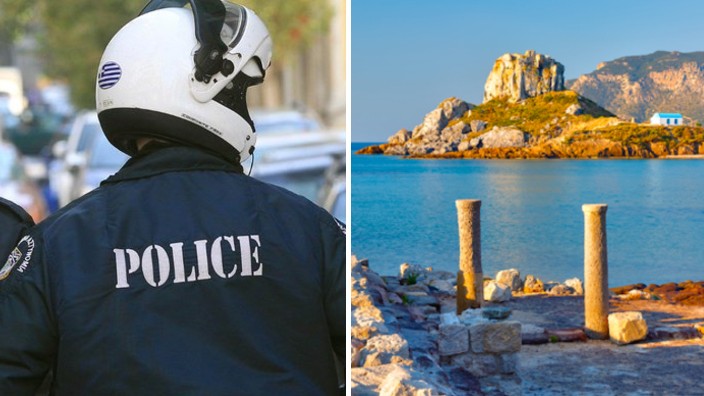
A recent coast guard investigation into migrant trafficking has led to the unveiling of yet another espionage network involving more than 15 suspects, according to Ekathimerini.
Four of the suspects, which include Greek, Turkish and Lebanese nationals, were allegedly gathering information on the movement of Hellenic Navy and Coast Guard vessels, and sharing it with people in Turkey.
The operation, involving police, coast guard and secret service (EYP) officials, was carried out in two phases on November 6 and 15.
EYP initially acted on intelligence concerning a trafficking network using high-speed boats to smuggle migrants – including people of potential security interest – from Turkey to Kos.
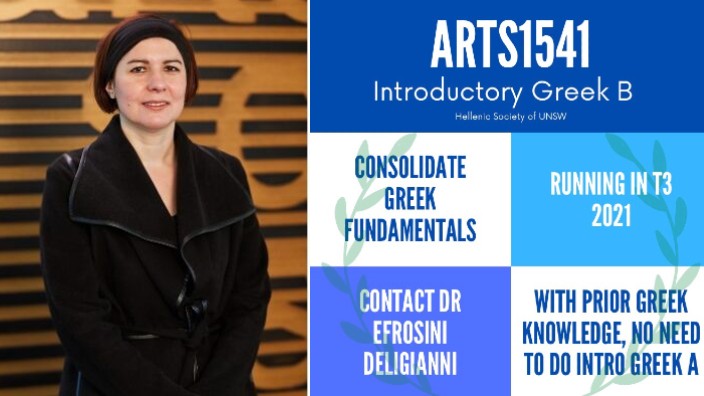
The School of Humanities and Languages at the University of New South Wales (UNSW) will “seriously consider” discontinuing the ARTS1541-Introductory Greek B course at the university if enrolments don’t increase in 2021, according to UNSW Lecturer of Greek Studies, Efrosini Deligianni.
Ms Deligianni tells The Greek Herald exclusively that the School has informed her “that if we don’t reach 15 enrolments in 2021, they might seriously consider discontinuing it.”
“The ones I’ve talked to in the Greek community though, who are closely involved with the program, have told me that the university is bound by legal agreements and they don’t have the right to do so. Even if this is just a vacuous threat though, we cannot take any chances here,” Ms Deligianni says.
What is ARTS1541 and how does it work?
ARTS1541 is an introductory to intermediate level program in Greek language study and culture offered in Term 3 at UNSW.
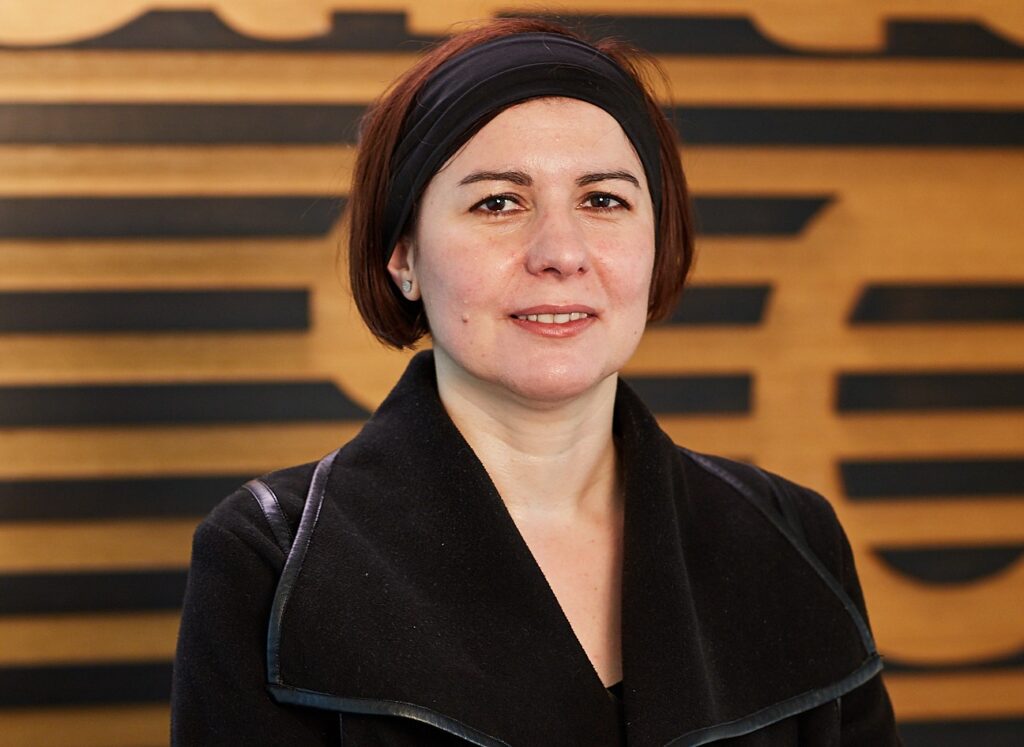
UNSW Lecturer of Greek Studies, Efrosini Deligianni.
Students not only have a unique opportunity to improve their Greek language skills, irrespective of their language level, but they can also get acquainted with Greek history, literature, music, cinema, popular culture and current affairs.
Students who successfully complete ARTS1541 are also eligible to attend a 6-week In-Country Study Programme at the University of Athens, which typically runs from early January until mid-February.
According to Ms Deligianni, the enrolment numbers for the course are steady and slightly increasing, with 12 being the average number. But to reach the 15 students necessary to save the course, the enrolment process needs to be clearer.
“ARTS1541 is predominantly for students who have completed Introductory Greek A and for whom this is a prerequisite, but it is also for students who have otherwise acquired a basic knowledge of reading, writing and speaking Modern Greek,” Ms Deligianni says.
“Now, the major issue that we are faced with, is that students who have completed Introductory Greek A can directly enrol into Introductory Greek B without any further fuss. The ones who haven’t attended it though are not allowed to enrol in ARTS1541 electronically.
“They need to get in contact with me first and seek my approval. Then, they will have to be manually enrolled in the course. Moreover, students need to know that no formal language placement test is required for enrolment.”
Growing enrolment for 2021:
Acting President of the Hellenic Society of UNSW, Antigone Sarlas, tells The Greek Herald that although Greek students are worried about the discontinuation of the course, the society will try whatever they can to help grow enrolments.
“When Efrosini reached out to us we wanted to build a bit more traction, so we sent out emails to all our members with details of the course and shared the course on our social media as well,” Antigone says.
“We’ve been monitoring the course enrolments since then and they seem to be increasing slowly. We will try everything we can to help.”
Ms Deligianni adds that she encourages UNSW students, especially those of Greek heritage, to take Introductory Greek B as their general education (GenEd) or elective course.
“They will not only improve their Greek language skills, but they will learn a lot about the Greek culture, both ancient and modern, presented to them through the eyes of a native speaker of the language, who is also a specialist in Greek Historical Linguistics,” she explains.
“Besides, the distinct language and unique culture of Greece, the cradle of western civilisation, can decisively contribute to a better understanding of the multicultural and globalised world that we live in.”
The Greek Herald have reached out to the UNSW School of Humanities and Languages for a comment.
After undergoing 13 years of schooling, the moment it ends can be very confronting, exciting and also nerve-racking. Every student, regardless of their result, should be proud of dedicating so much of their life to their education.
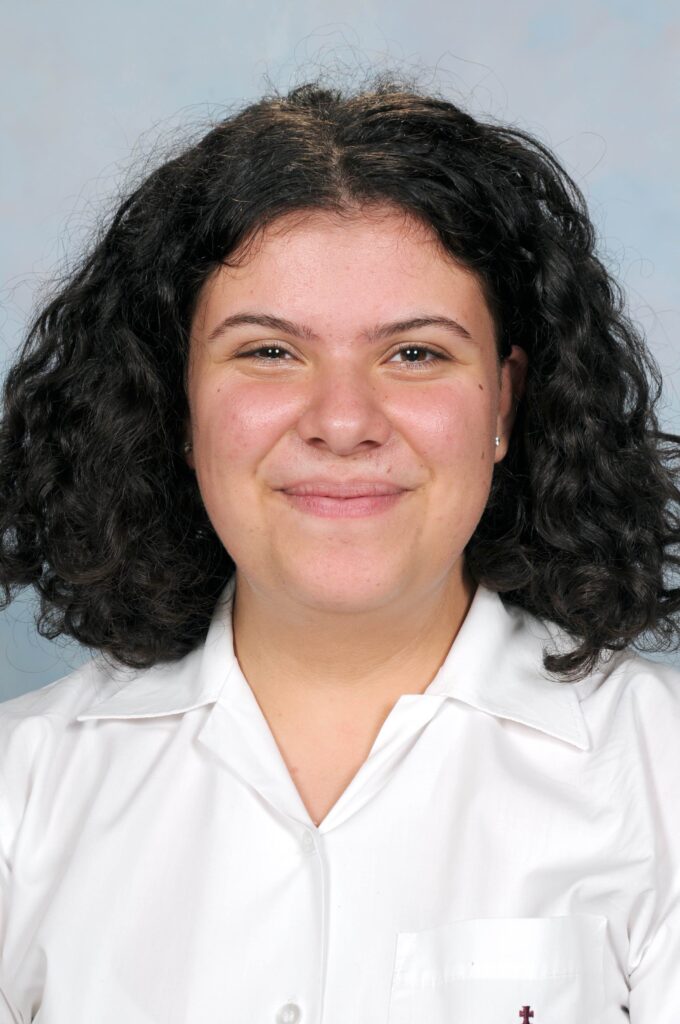
For students like Maria Kontou and Yianna Nikos, the moment it ends is even more gratifying after finding out you beat thousands of students to place 1st in the State.
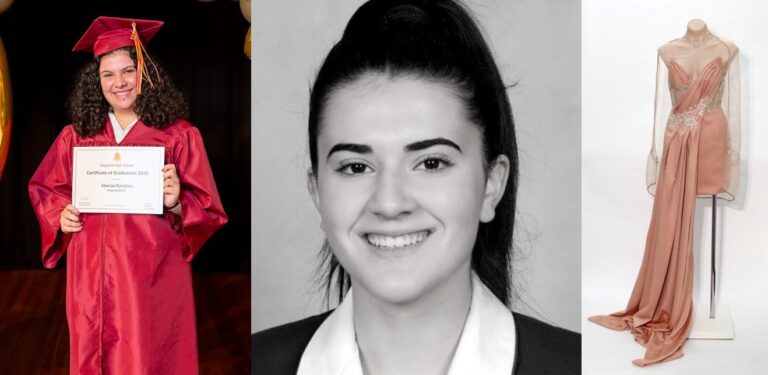
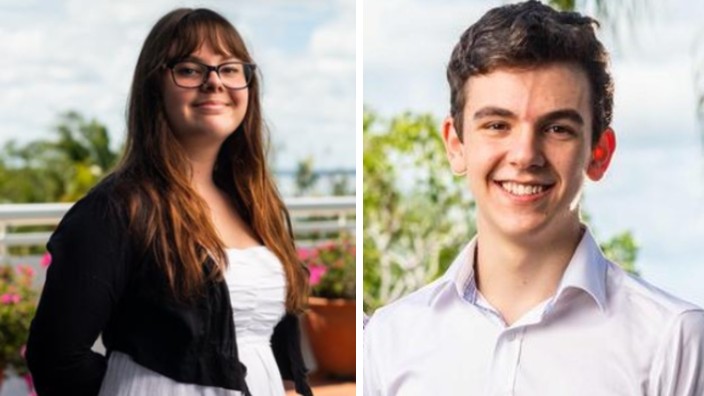
Maria Kontou. Photo: Supplied
“I was happy to see that my dedication was rewarded,” Maria Kontou said to The Greek Herald.
Maria Kontou, from the Saturday School of Community Languages Kogarah HS Centre, topped the class in New South Wales for both Modern Greek Continuers and Modern Greek Extension.
“I migrated to Sydney from the island of Rhodes in 2013, and so even though Greek is my first language, I had to put in a lot of hard work to receive the results that I did,” Maria said.
“Along with the challenges of 2020, doing the HSC has been extremely stressful and arduous, and waking up at 6am on Saturdays to go to Greek school did not help, but I have to say that my Saturday school classmates and our wonderful Greek teacher made all the lessons fun.”
Maria’s parents and grandparents were proud that she continued to embrace her Greek cultural heritage and, “engage with the Greek language through formal education.”
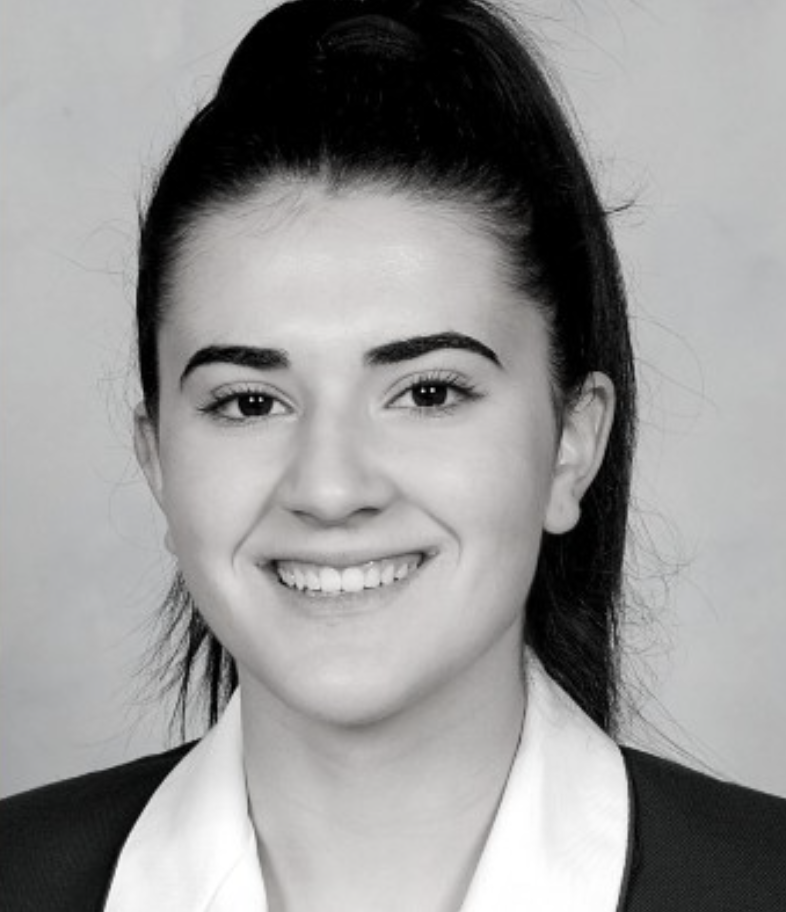
Yianna Nikos. Photo: Facebook
“As migrants themselves, my parents recognise the challenges that I faced while adapting to a different country and learning a new language, and the hard work and perseverance that was required to overcome them,” Maria added.
Yianna Nikos, from Presbyterian Ladies’ College Sydney in Croydon, received first in course honours for Textiles and Design. Like Maria, she was “shocked and extremely excited” to find out she had placed 1st in NSW for the subject.
“I was thankful for such a rewarding result and felt that it ended my HSC experience on a high note, adding some positivity to the stress that 2020 has brought,” Yianna said to The Greek Herald.
“Textiles has always played a role in both of my Yiayias’ lives, as well as my mother’s. Thus, my first place achievement really hit home and even brought my grandparents to tears.”
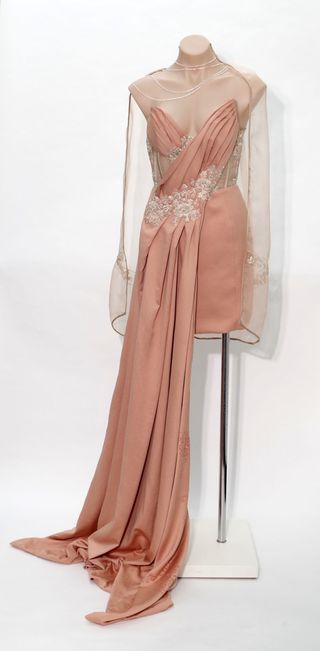
Yianna’s final Textiles and Design work. Photo: Supplied
Yianna designed a beautiful evening apparel gown with a strapless corset, straight skirt and traditionally smocked cape. She drew inspiration from 1940s figure-hugging, asymmetrical silhouettes and luxurious fabrics.
“I am beyond thankful to have had so many loving and supportive relatives around me, especially over the HSC year,” Yianna added.
Year 12 students in Tasmania and the Northern Territory all received their final exam results over the last few days and Greek Australian students have excelled.
Here’s a list of who reached the top 100 in each state and territory:
Northern Territory:
A record number of Year 12 students in the Northern Territory received their NT Certificate of Education and Training (NTCET) this year, despite the challenges of coronavirus.
A total of 1610 students will be awarded their NTCET this year, up 156 on last year, and among the top 20 students are three Greek Australians.
Georgia Kyranis and Andrew Savvas from the Northern Territory were both listed in the top 20 students. Photo: Che Chorley.
Top Aboriginal student, Georgia Kyranis, from Darwin High School, recorded an ATAR of 96.30 and a university aggregate of 82.45.
Andrew Savvas, also from Darwin High School, and Kieran Lelis from St Phillip’s College, also reached the top 20.
Tasmania:
More than 11,350 students received their long-awaited ATAR scores on December 17, with many Greek Australians getting results over 90.
Panayiota Antypas, from Scotch Oakburn College, was one of three top scoring students in Tasmania’s north.
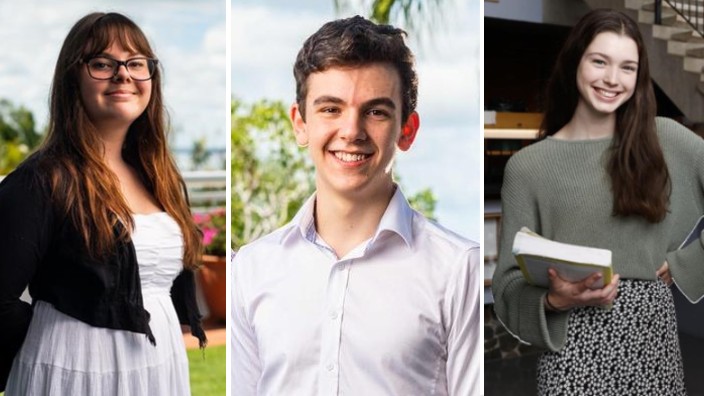
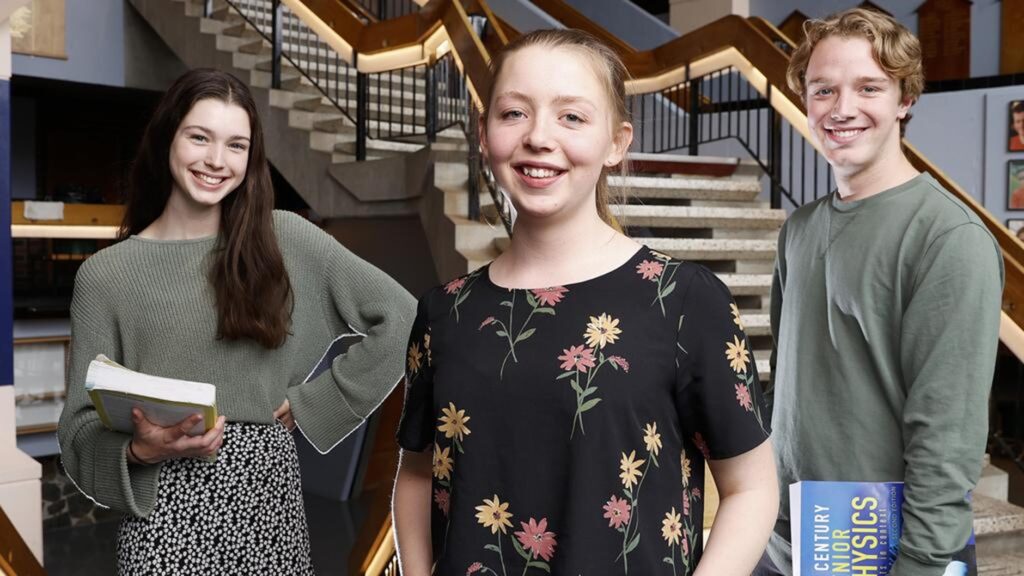
Nina Kahles, 17, from Hobart College was one of 15 students from her school in the top 100 in ATARs. Centre is Sophie Janes, 18 and (right) Henry Hurd, 18. Picture: Zak Simmonds.
Nina Maya Kahles, 17, from Hobart College was also one of 15 students from her school to make it into the state’s top 100 ATARs.
Lucy Katerina Aras from St Patrick’s College was also listed in the top 100.
With only four days left until Christmas Day, the Greek community in Sydney and Adelaide got into the festive spirit over the weekend with a number of Christmas kalanda events.
Some events were held virtually over Facebook and Youtube, while others involved visiting people’s homes to sing and bring Christmas cheer to their lives.
Here’s a list of what happened over the weekend:
Sydney:
In Sydney, the main kalanta event was held virtually by the Greek Orthodox Archdiocese of Australia.
Starting at 6pm, the Australian Byzantine Choir sang Christmas hymns and carols in front of His Eminence Archbishop Makarios and others priests, including His Grace Bishop Emilianos and Archepiscopal Vicar of Canberra and Tasmania, Father Prochoros.
The program was split into two sections, with the first focusing on six liturgical hymns and the singing of Christmas carols, followed by His Eminence giving a small speech.
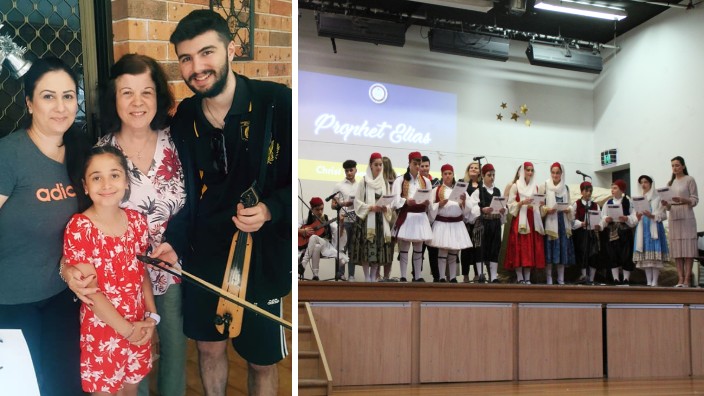
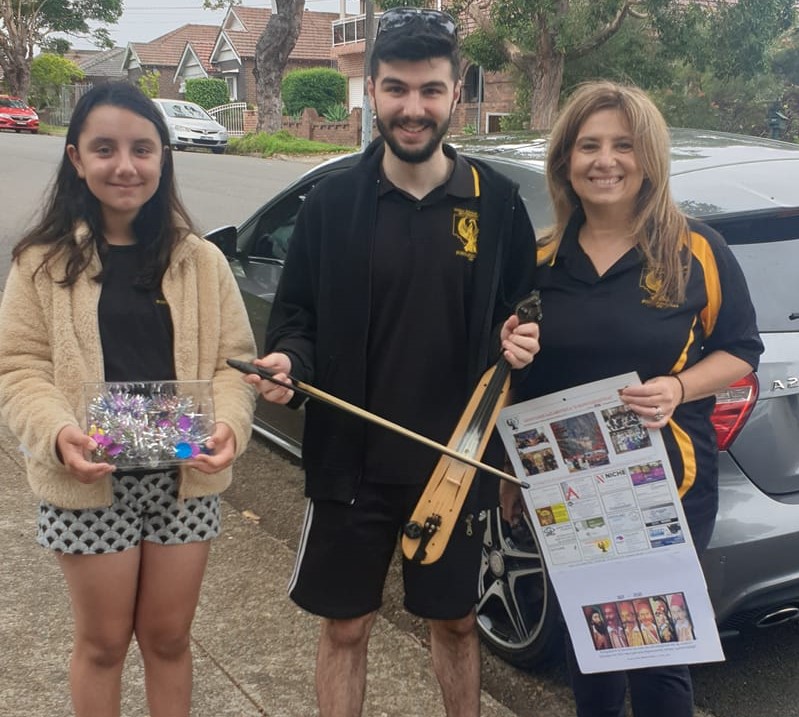
Elsewhere in Sydney, Pontian youth volunteers from Pontoxeniteas Sydney visited the homes of members to sing Pontian kalanda.
Ismini, Ioanna, Thomas and Kosta, who played the Lyra, brought smiles to the faces of people with their melodic singing and sweet instrumental playing.
Pontian youth volunteers from Pontoxeniteas Sydney visited the homes of members to sing Pontian kalanda.
This was followed by St Nectarios Greek Orthodox Church in Burwood, where Christmas carols filled the church as Sunday school students celebrated the end of the year.
The students received a Christmas card from His Eminence and Santa Clause also made a special appearance to present gifts to the children.
Nativity Concert, Saint George College, Adelaide:
Christmas carols in Adelaide. Photos: The Greek Herald / Argyro Vourdoumpa.
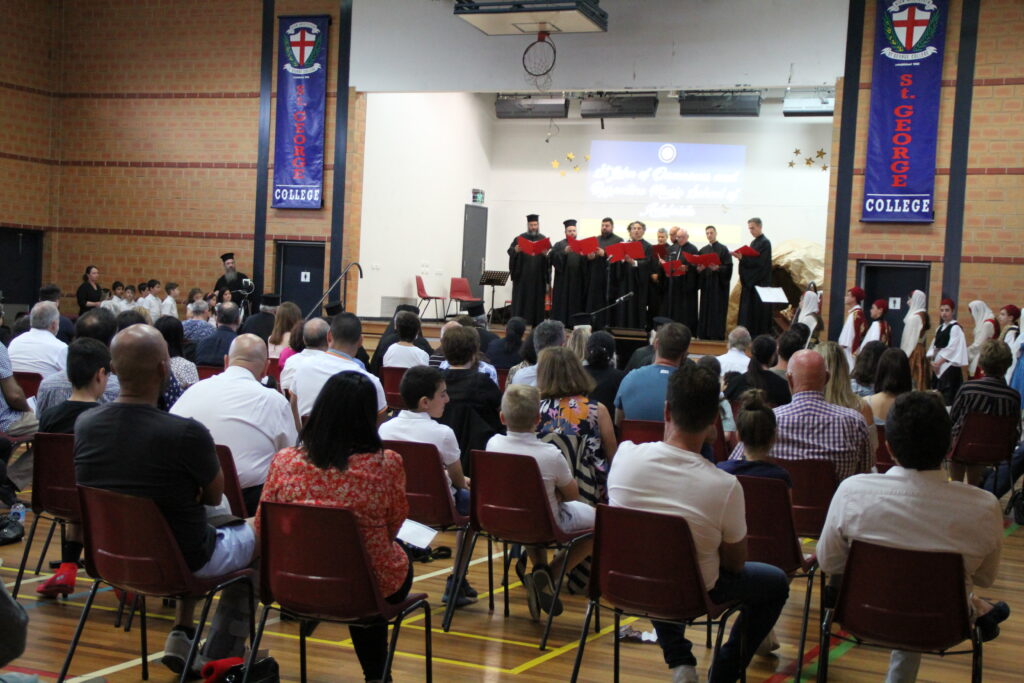
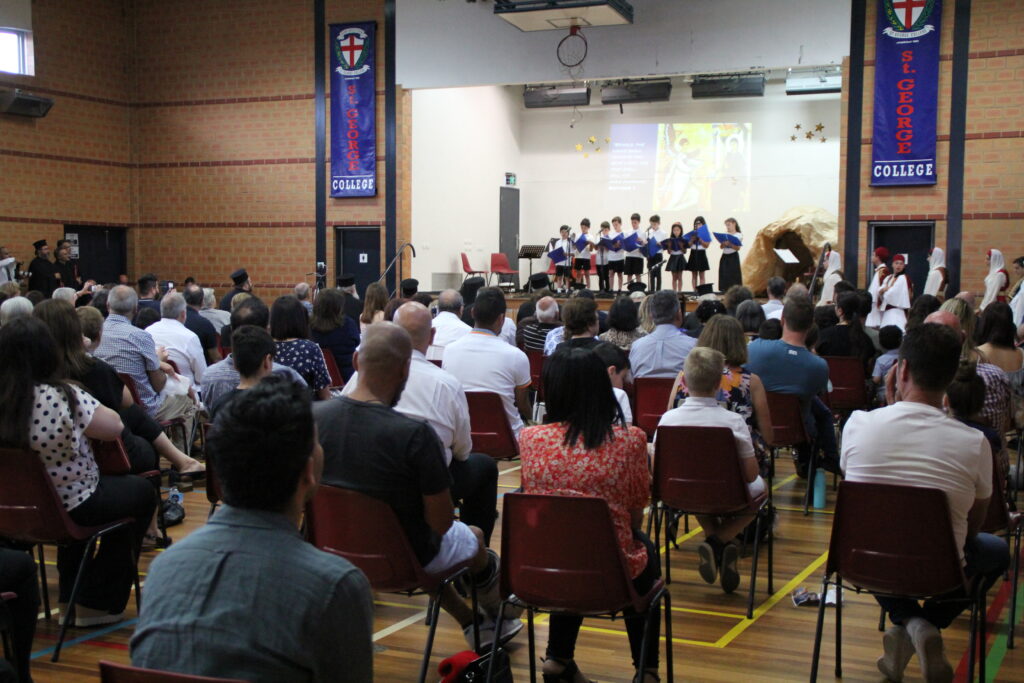
“It’s such a blessing to be here,” His Grace Bishop Silouan of Sinope said, addressing in English, the children and youth of South Australia’s Parishes who participated in the Christmas Carols (Kalanda) state wide event held on Sunday evening at the St George College Sport and Performing Arts Centre in Mile End, Adelaide.
His Grace went on to welcome the attendees in Greek and talked about the meaning of Christmas through the words of Christian Monk and Priest John of Damascus.
The concert in Adelaide lasted over an hour. Photos: The Greek Herald / Argyro Vourdoumpa.
The concert that lasted over an hour, featured performances from parishes across Adelaide and Greek schools, as well as hymns from students of the local branch of the Byzantine Music School of Australia.
“I am honoured to convey the wishes and blessings of the Head of our Church, the Archbishop Makarios of Australia, who always thinks and cares for us and is pleased with the work of the local church,” said His Grace Bishop Silouan of Sinope before he wished everyone a blessed Christmas.
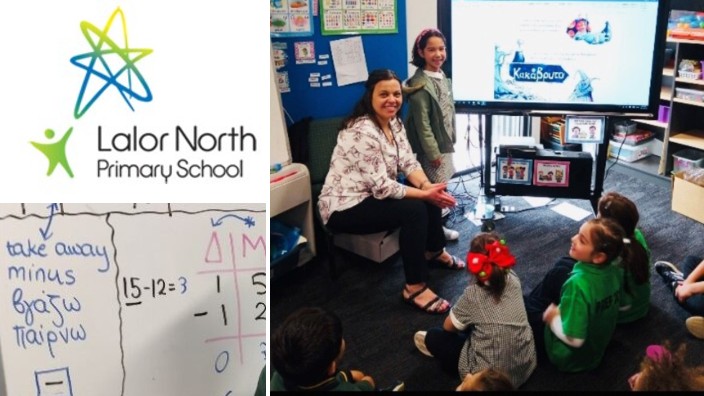
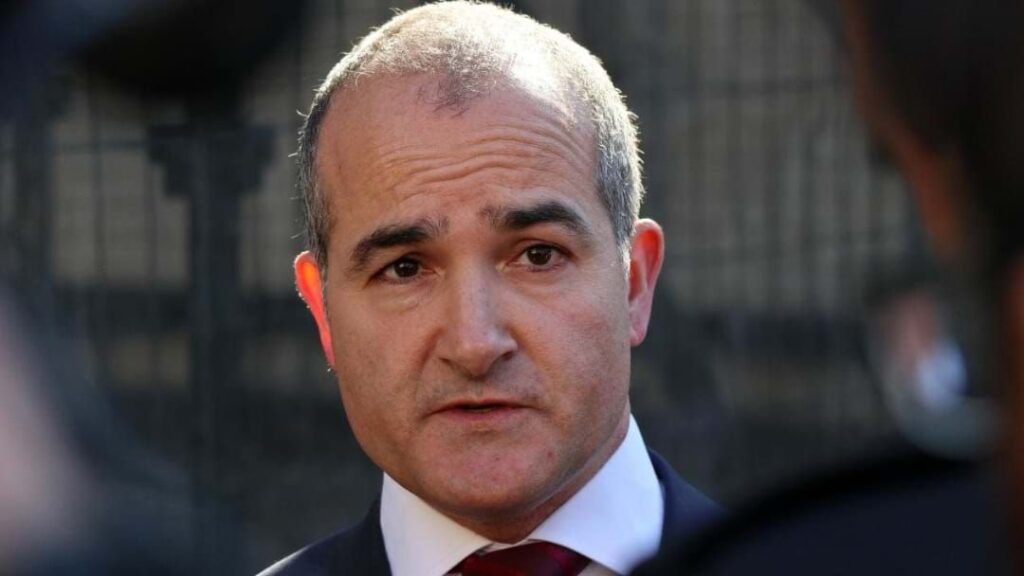
The parents of Greek students from Lalor North Primary School have sent an open letter to Victoria’s Education Minister, James Merlino, asking him to reinstate the Greek Bilingual Program’s “three classroom model.”
The school’s management have announced a two-classroom system will continue to be used in 2021, instead of the three-classroom one that operated until 2019, due to a fall in student numbers.
But parents, as well as the Greek Community of Melbourne (GCM) and other representatives from local Greek community education groups, argue that the two classrooms model could lead to the loss of a bilingual program which has been running for over 43 years.
The parents of the Greek Bilingual Program at Lalor North Primary School have written to Victoria’s Education Minister, James Merlino.
“If the Program is to continue to grow and prosper, it needs to meet the educational, developmental and social needs of its students,” the open letter to Mr Merlino states.
“Parents and students unanimously seek to reinstate the three classroom model as the only meaningful way to strengthen the program and meet student needs.”
The parents go on to say that they are “willing to work together with all stakeholders to promote the merits of this fantastic program which has a proud 45 year history.”
At the end, 21 parents signed the open letter, as well as a number of prominent members of Melbourne’s Greek community, including the Vice President of the Greek Community of Melbourne, Theo Markos, the Greek Studies Program Coordinator at La Trobe University, Dr Stavroula Nikoloudis, and the Greek Orthodox Archdiocesan Vicar of the District of Northcote, Very Reverend Father Evmenios Vasilopoulos.
One of the parents, Chris Pappas, expresses his anger to The Greek Herald that representatives from Victoria’s Department of Education and the school principal haven’t added their own names to the open letter.
“Why don’t the School Principal and Education Department endorse the letter if they tell us they’re so support of the bilingual program?” Pappas says.
“We’re fighting a losing battle because they (the Principal, Education Department and the Education Minister) don’t want to see the importance of the program.”
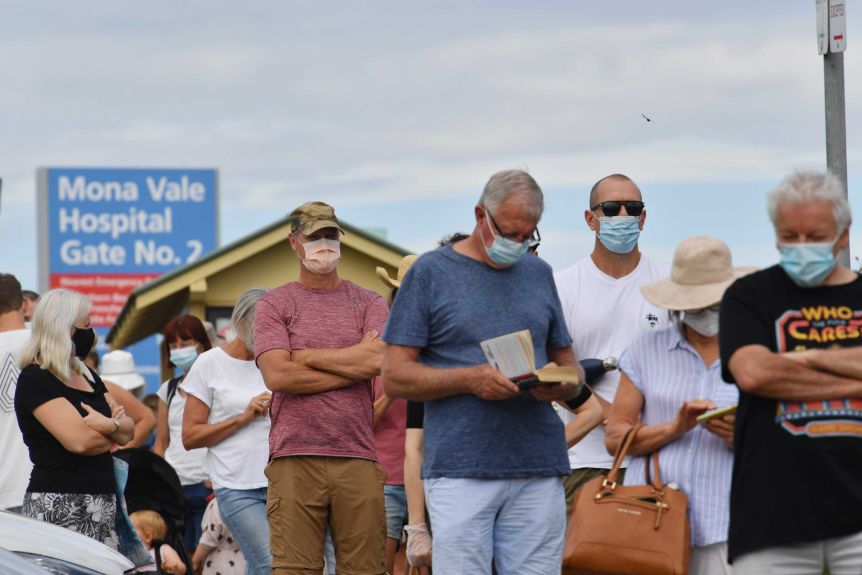
The coronavirus cluster on Sydney’s northern beaches has grown to 83 cases, as record numbers of people come forward for testing in NSW.
More than 38,000 people were swabbed for the virus in the 24 hours to 8pm yesterday, and 15 new infections were recorded.
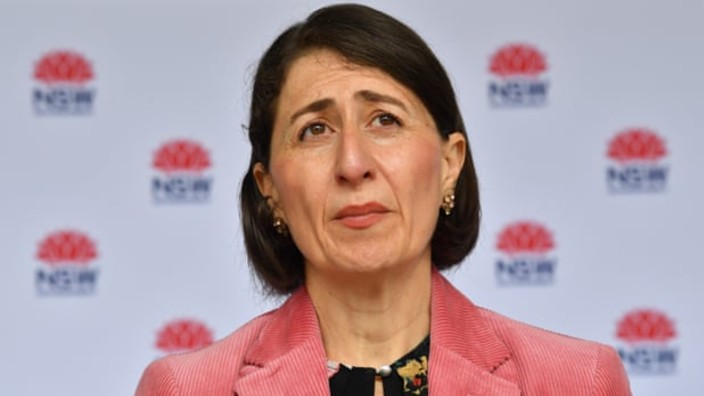
While the number of new cases is significantly lower than the 30 found yesterday, NSW Premier Gladys Berejiklian said: “Unfortunately, one day’s results doesn’t tell us it’s a trend.”
People were lining up to get a COVID-19 test at the Mona Vale clinic on Thursday morning. Photo: AAP / Dean Lewins.
She said authorities were monitoring the situation “on an hourly basis” and that on Wednesday morning they would provide an update as to what restrictions would be in place for Christmas.
“I would love to be able to tell everybody today what Christmas might look like in New South Wales or the northern beaches, but we’re not in a position to do that yet,” she said.
Despite the drop in case numbers, Ms Berejiklian warned the community to stay across continuing alerts on venues as more would be added to the already extensive list today.
Chief Health Officer, Kerry Chant, said the source of the outbreak remained unknown but the seeding event is believed to have been December 11 at the Avalon RSL, which then transferred to the Avalon Bowling Club.
She said one of the venues that had been alerted was the Salon for Hair in Turramurra on Sydney’s north shore — and is now linked to five cases.
Anyone who attended the salon between December 15 and 18 needs to be tested and self-isolate for 14 days.
“We believe we have contacted the vast majority of people, but some people had incorrect or eligible contact details,” she said.
“Please prompt your friends and relatives to check whether they attended on those days, follow the advice and get tested immediately and self-isolate if you’re one or two people who we haven’t managed to track down.”
The National Committee for the Commemoration of the 200th Anniversary of the Greek Revolution has released its preliminary program of events for 2021.
The Committee, chaired by His Eminence Archbishop Makarios of Australia, have planned over 250 events to mark the important bicentenary anniversary, with some already taking place.
There will also be a total of seven multi-priest Divine Liturgies across Australia to highlight the ecclesiastical character of the National struggle.
The National Committee for the Commemoration of the 200th Anniversary of the Greek Revolution was set up back in early July and is made up of representatives from across Australia, including Victoria, New South Wales, Queensland, South Australia and the Australian Capital Territory.
As far as the eye can see, thousands of olive trees stretch to the sea in the Peloponnese’s Messinia peninsula. Olive oil, also called Greece’s “green gold,” fetched 790 million euros in 2019, according to data from EU agency Eurostat. A fall to around 650 million euros is expected this year.
Why? Because although most Greek olive producers are family businesses, they rely on migrant seasonal workers to harvest the crop. But with the coronavirus lockdown and closed borders this year, that isn’t possible.
In fact, Ioannis Andriopoulos, who works at a local agricultural cooperative, adds that using seasonal workers is also not possible because these workers are often undeclared and as a result, they steer clear of COVID-19 tests to avoid deportation.
“It’s hard to trust undocumented workers. They haven’t been tested for fear of being arrested, but what if you’re infected?” the 50-year-old told The Kuwait Times.
Instead, Greek olive growers are having to call on extended family and local residents for help.
“There are no workers to harvest the olives,” olive producer, Panagiotis Outsikas, told euronews. “We can’t pick them all. We will do it on our own. We are four siblings.”
One grower had to ask his sister and elderly mother for help to harvest his 1,000 trees.
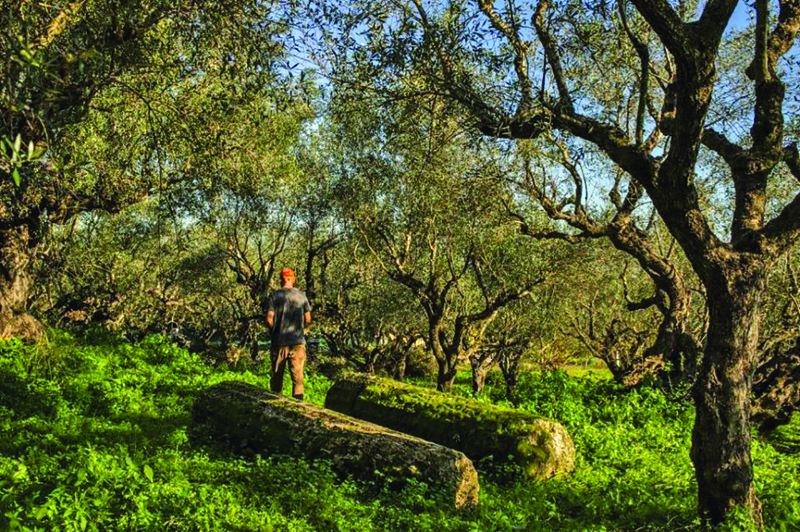
Nikos Argirakis walks in his olive grove in village Aghios Andreas, about 300 kilometers from Athens, on December 16, 2020. Photo: Angelos Tzortzinis / AFP.
“It’s how our grandparents used to do it,” olive grower, Nikos Argirakis, says. “The harvest was always a family affair.”
“In previous years we had at least 100 to 120 foreign labourers that would come for work in our village. This year, no more than fifteen.”
Usually completed at the end of November, the harvest will now drag on until the end of December.
With Greece being the fourth biggest olive oil producer in the world behind Spain, Italy and Tunisia, it looks like villagers have a busy few weeks ahead.