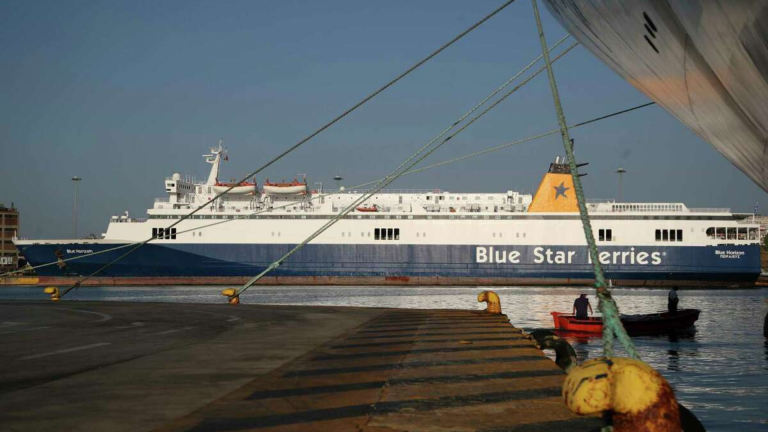
The Panhellenic Seamen’s Federation (PNO) declared a 24-hour strike on Friday, September 8, set to immobilise all ships across Greece on Wednesday, September 13.
Travelers to island destinations are expected to face major disruptions next week due to the 24-hour strike.
The PNO union said the decision was made “on the occasion of the repulsive incident”.
The PNO emphasized that Greek seamen are dedicated professionals who tirelessly safeguard human lives at sea on a daily basis. They urged that the recent unfortunate event at the port of Piraeus should not cast a shadow over the entire seafaring community.
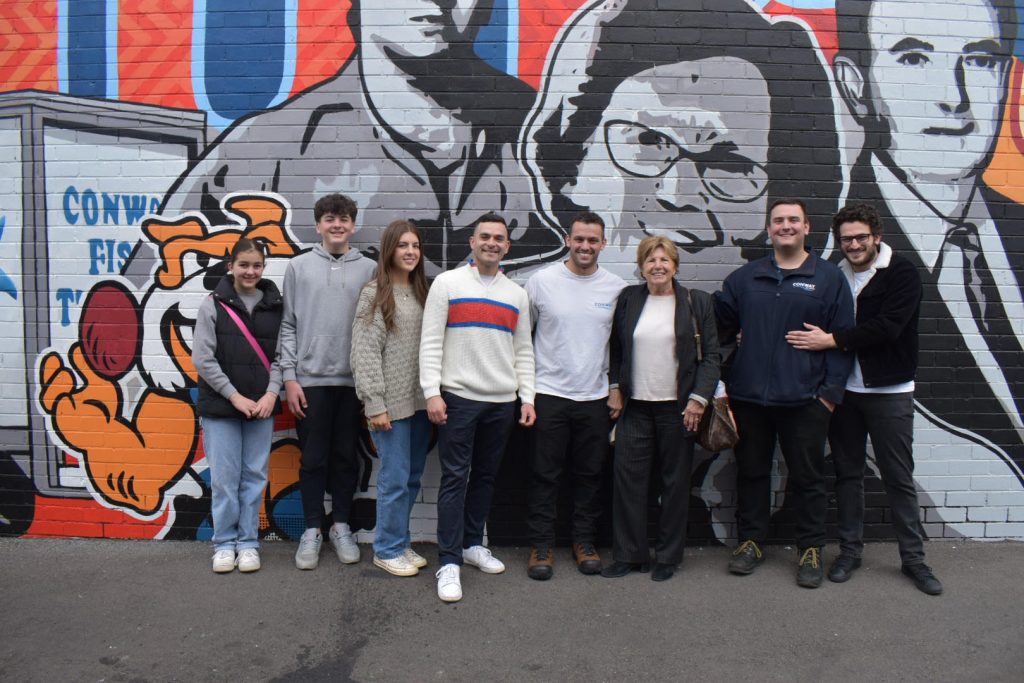
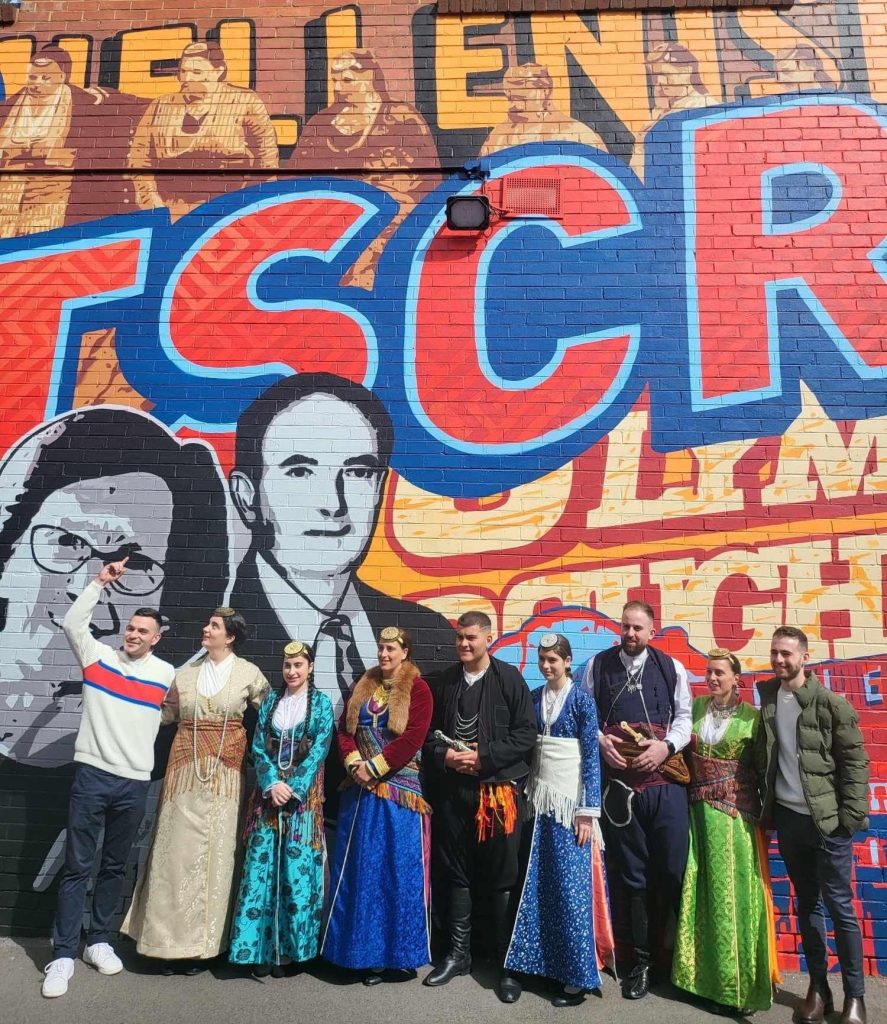
The very first Greeks to have settled in Footscray early last century may be forgotten in time. They were mainly working-class people in search of a better life, helping each other adjust to their new home. By post-war, the suburb was bustling with Greekness, and this is the focus of the suburb’s latest mural, Hidden Hellenism, unveiled on Yewers Street on Saturday, September 9, thanks to the efforts of the Greek Youth Generator (GYG) who used graffiti art to pay homage to the early Greeks of the once gritty, now gentrified, inner city suburb of Melbourne.
The Greek Youth Generator used graffiti art to pay homage to the early Greeks of Footscray.
Bouzouki player Thomas Papadopoulos – one of the faces of Footscray depicted in the mural – told The Greek Herald, that Hellenism once thrived here. “There were around 80 Greek-Australian businesses in the area. But the kids grew up, got educated and left the businesses of their parents,” he said, remembering his own restaurant-reception hall which he ran with his brother Lazaros and brother-in-law George in the 1980s.
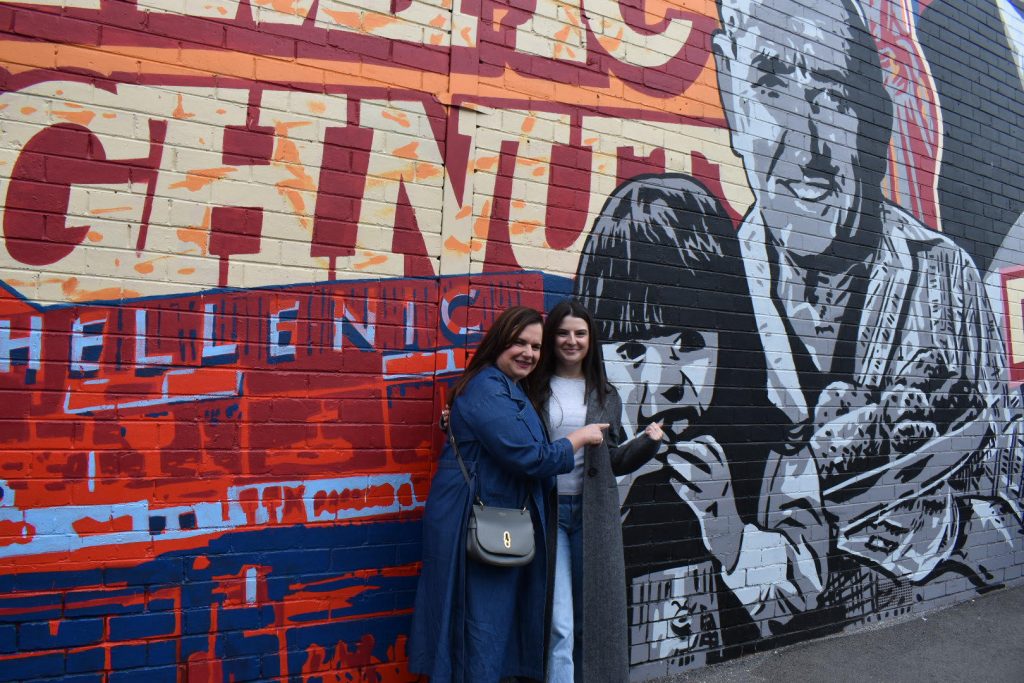
Gina Hasapis, daughter of Olympic Hot Doughnuts van owner Nick Tsiligiris, said her father was very focused on his children getting an education, going to university, progressing. He is featured with his grand-daughter, lawyer Anthea Hasapis, on his lap, as he holds a tray of doughnuts. GYG’s Peter Giasoumis approached Anthea to have her grandfather featured on the mural, and the family agreed.
Thomas Papadopoulos and Chris Sokolis under the mural featuring the well-known local bouzouki player.Gina and Anthea Hasapis point to the famous doughnuts. The mural depicts a young Anthea with her grandfather Nick Tsiligiris who operated Olympic Doughnuts.
Many locals remember Nick’s van operating outside Footscray station for 40 years. It was so popular that when the Regional Rail Link project caused many shops to be demolished, public outcry from local residents ensured that the van would remain open. Gina remembered visiting her father in Footscray on a Friday night with friends and family. “Who wouldn’t want to be the daughter of the doughnut van owner? There were always free doughnuts, especially for the children.”
She told The Greek Herald she felt “emotional” seeing her father featured on the wall two years after his passing.
Passing the baton
The mural of the well-known faces of Footscray during the suburb’s height of Hellenism is aptly featured on the wall of Conway’s Fishing Trading, a business handed down from Con Goulas to his son Dimitris. “When we heard Dean (Kotsianis) wanted to create a mural in Footscray but was having trouble getting permission, we offered our wall,” Dimitris told The Greek Herald.
“I’m the young fellow at the back, behind my mother who passed in June, with my father beside her. I was 21 at the time, and my son looks just like me on that wall. I’d come here every Saturday and during school holidays to help my father and two uncles, and gradually, as the business got larger, I started working here full time in 1979 after I left school.”
Dimitris Goulas points to his 21-year-old self.
In the 1980s, the business expanded, and the family bought other buildings around Yewers Street, a popular Footscray thoroughfare. “Now there are bars here, and Footscray is experiencing gentrification. We’re the last business in an area that was once all industrial. In the past, undesirable people would gather here at night, but now we no longer have break-ins as there are people all over the place. And I live in a high-rise down the road.”
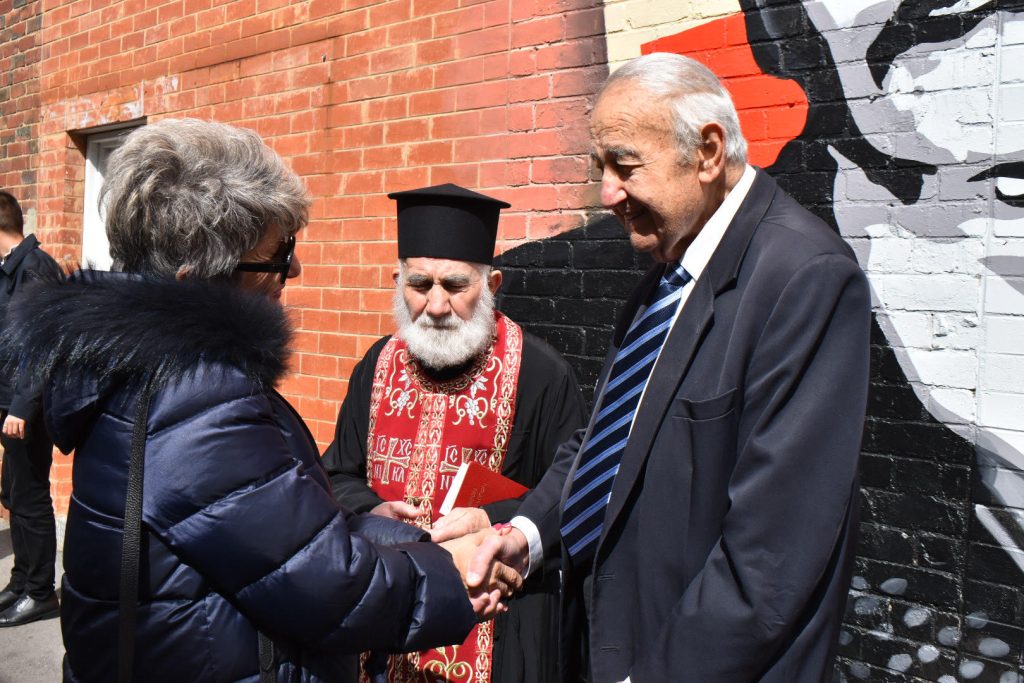
Con Goulas, the founder of the business, was moved to see the work, a tribute to Greeks like himself. He told The Greek Herald that it wasn’t always easy and there was a lot of hard work put into the business. “We worked from morning until night, six days a week. The seventh was for God,” he said.
Father Stergios Patsouris from Holy Trinity Greek Orthodox Church in Footscray offered his blessing at the official unveiling. He said that these days the parish is not as full as it once was. Built in 1952, the church is frequented by the remaining Greeks and Father Stelios is happy that young Greeks were keeping the faith, language and traditions. He rushed from the blessing of the mural to take his grandchildren to their dance classes.
Litsa Anastasiadis, Father Stergios and Con Goulas in front of the mural.Dancers from Pontiaki Estia Melbourne in traditional costume in front of the mural.
Pontiaki Estia’s dancers were present to pay homage to the Club’s years in Footscray. Chris Kanteler remembers learning Pontian dances at the Club in Footscray when he was just five, a passion that continues to this day. His love affair with his wife, Connie, also blossomed at the Pontiaki Estia after they met nine years ago. She is now the group’s treasurer.
Litsa Athanasiadis pointed to the dancers depicted in the mural. “My girls!” she says, before introducing me to her daughter Madeleine.
Relationships and perspectives
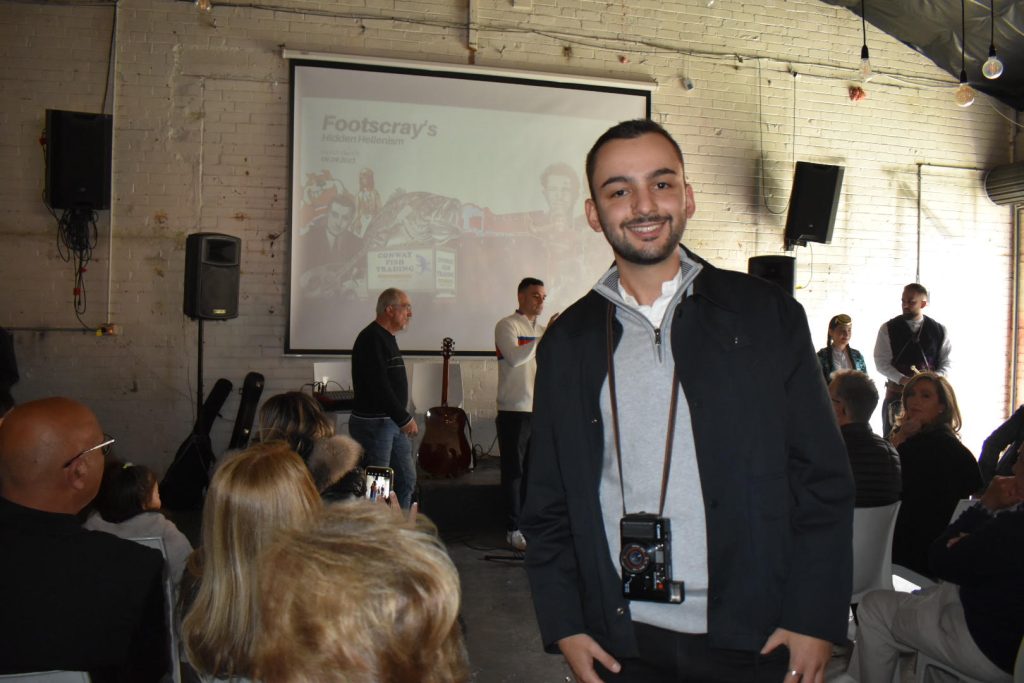
Young and old gathered at the launch, sharing a banter, revelling in camaraderie.
Dean Kotsianis, who heads the GYG, said it took two years to create the project. “You couldn’t rush the friendships we created, you couldn’t rush the arrival and good conversations that we had and ultimately the shared vision. Deep community consultation and the hands-on involvement that we offered were the cornerstone of success of what we’ve done,” he said.
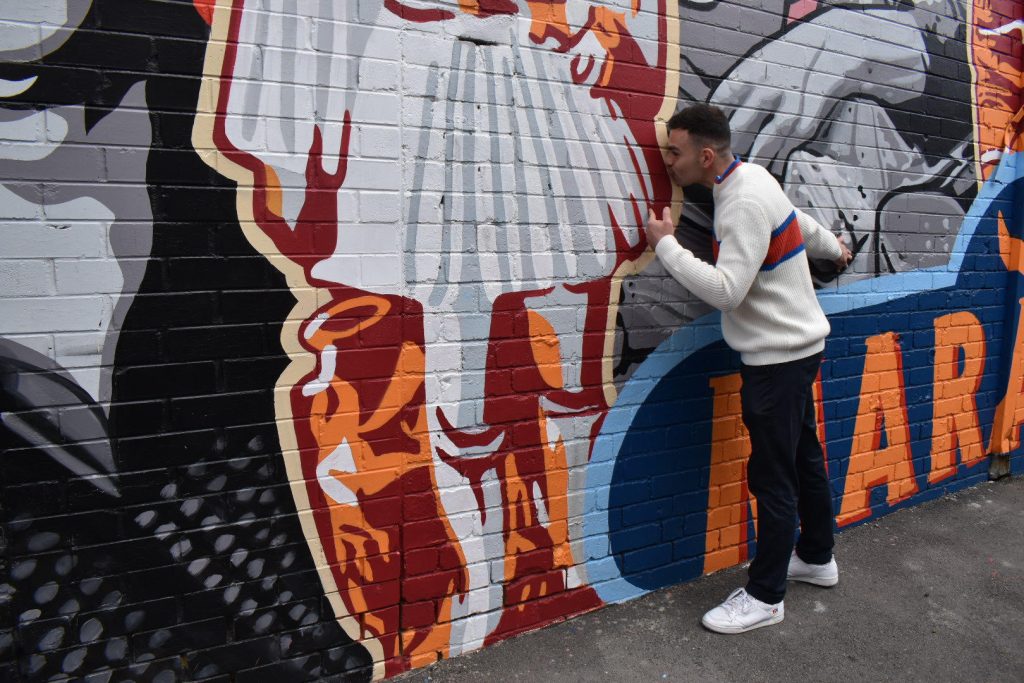
Dean Kotsianis from the GYG kisses the mural, a labour of love.
For urban planner George Mellos, also a GYG member, the work is particularly interesting in the way it “changes people’s perspective of the laneway”. He said that working with other members of the GYG, each coming from different spheres, was particularly exciting. “It’s really great that we have common interests and passions so when we come together, we can present projects like this. This wouldn’t have been possible without community engagement.”
The generations mingled at the laneway, but not resting on their laurels. Already discussions are underway for another mural, known as the Oakleigh Project, featuring the history of Hellenism from Oakleigh station. Stay tuned!
George Mellos from the GYG is happy to be working with other youth on projects such as the Footscray mural.The mural was unveiled on Saturday, September 9.
South Melbourne FC have been crowned National Premier Leagues Victoria Women’s Champions for 2023 after defeating Bulleen Lions 4-2 at the Home of the Matildas on Saturday, September 9.
Senior Head Coach, George Georgiadis, led the South Melbourne Senior Women’s team to victory. Image: Bill Roumeliotis.
Hellas Melbourne won the title after an excellent game by both teams, but the team lead by Senior Head Coach, George Georgiadis, proved more effective scoring four impressive goals. The first two goals came from direct corners in the 14th minute by Tayla Christensen and in the 28th minute by Akeisha Sandhu, while the other two goals were scored in the 70th minute by Danielle Wise and in the 87th minute by Zoe Lambi. Bulleen’s goals were scored in 22′ and 90+4′ by Maja Markovski.
Hellas Melbourne, who were the underdogs of the season, managed to close the year victorious.
This triumph will be added to their WPL wins in 2011, 2014 and 2015 and their maiden NPLW triumph in 2017.
Akeisha Sandhu scored a goal for South Melbourne is the 28th minute. Image: Bill Roumeliotis.
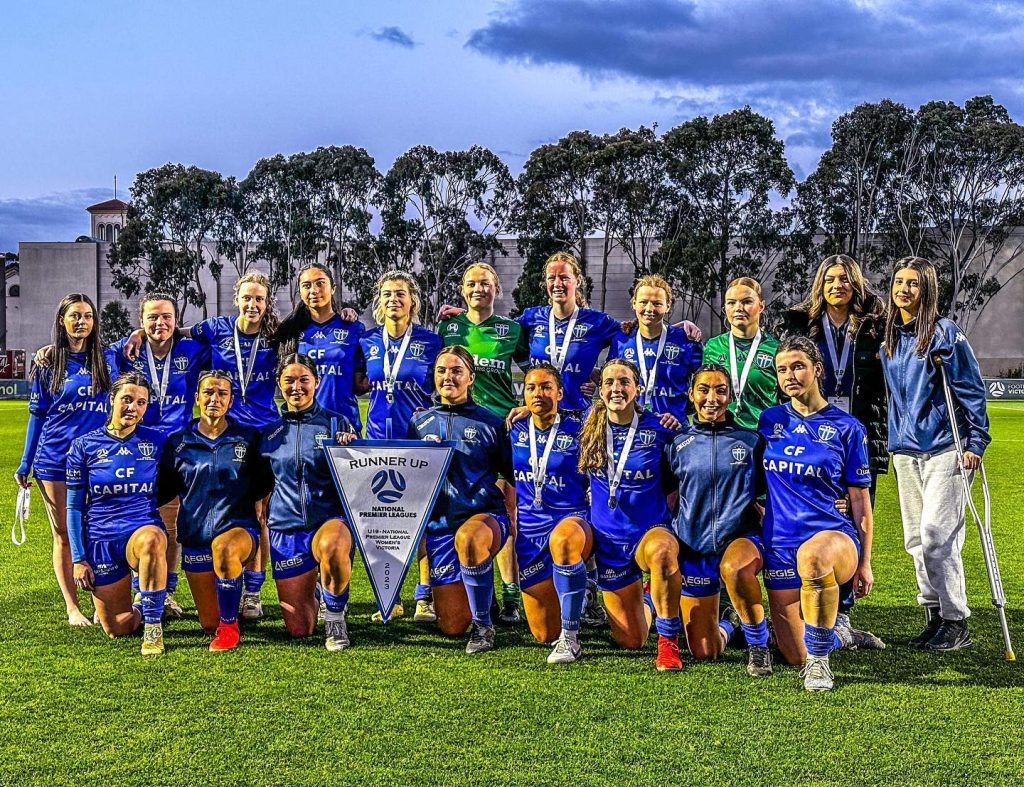
Also on Saturday, in the Under-19 Women’s Grand Final, Hellas Melbourne was defeated by Heidelberg United FC 2-3.
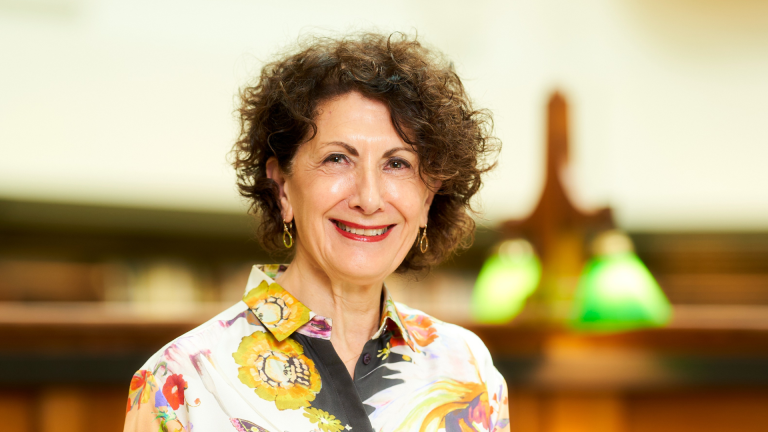
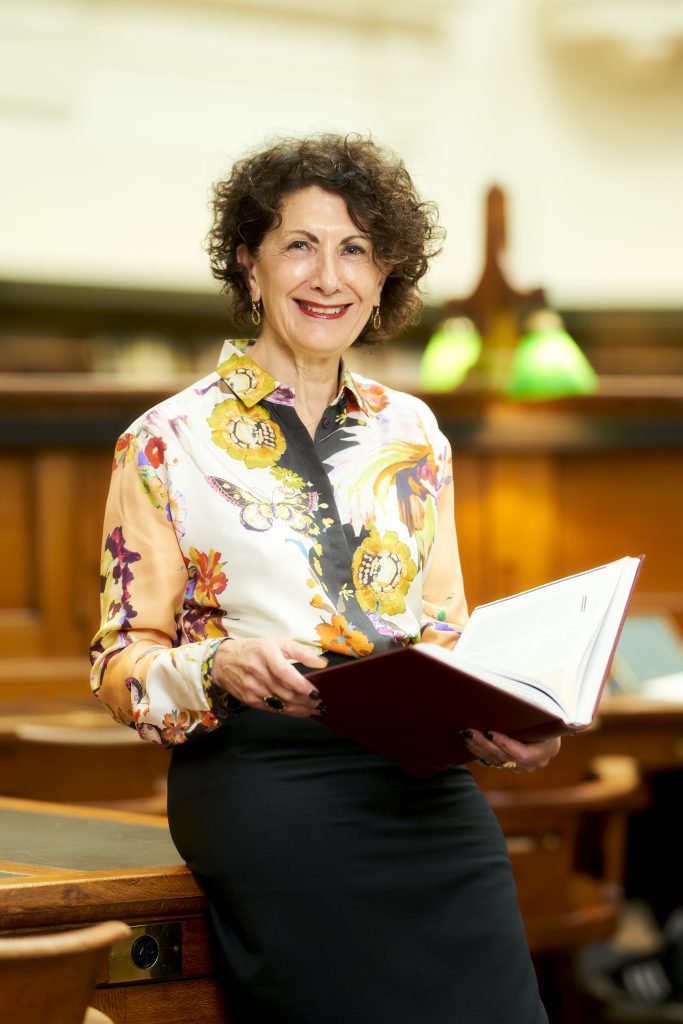
With more than 37 years of experience in financial, investment, government, digital media and many other fields in Australia and overseas, the career of Christine Christian has been “quite a journey,” as she describes it herself.
Ms Christian was appointed Officer in the General Division of the Order of Australia in 2020 for her contribution to women in business, emerging entrepreneurs and for her services to the financial and investment sectors. In 2021, she became the first female President of the State Library of Victoria in its 165-year history.
The Greek Herald spoke with Ms Christian about her Greek heritage and the role of modern libraries today.
Tell us about your Greek heritage.
My mother is a proud Greek woman who always positions her faith and her homeland at the heart of her own identity.
Growing up, she would often share stories of ancient Greek folklore and lessons around their relevance to the world we live in today. I was left in no doubt which civilisation had given the world democracy, logic, theatre and the Olympic Games – how Greece led major innovations in mathematics, engineering, architecture and astronomy.
As I am half-Greek, I never felt I had the right to describe myself entirely as ‘Greek,’ but when I was taken back to Corinth to visit my mother’s ancestral home, I couldn’t help but feel part of something exceptional – a direct connection to a culture stretching back centuries.
Today, I feel fortunate to have had a direct grounding into the passage of my relatives – and to have some link to a community so rich in heritage and legacy.
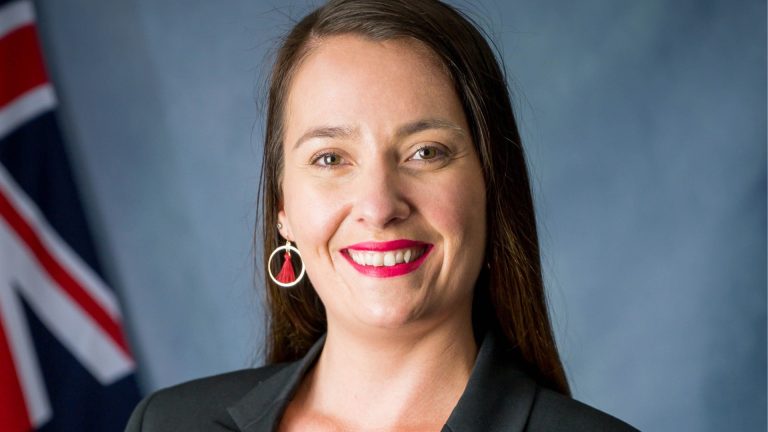
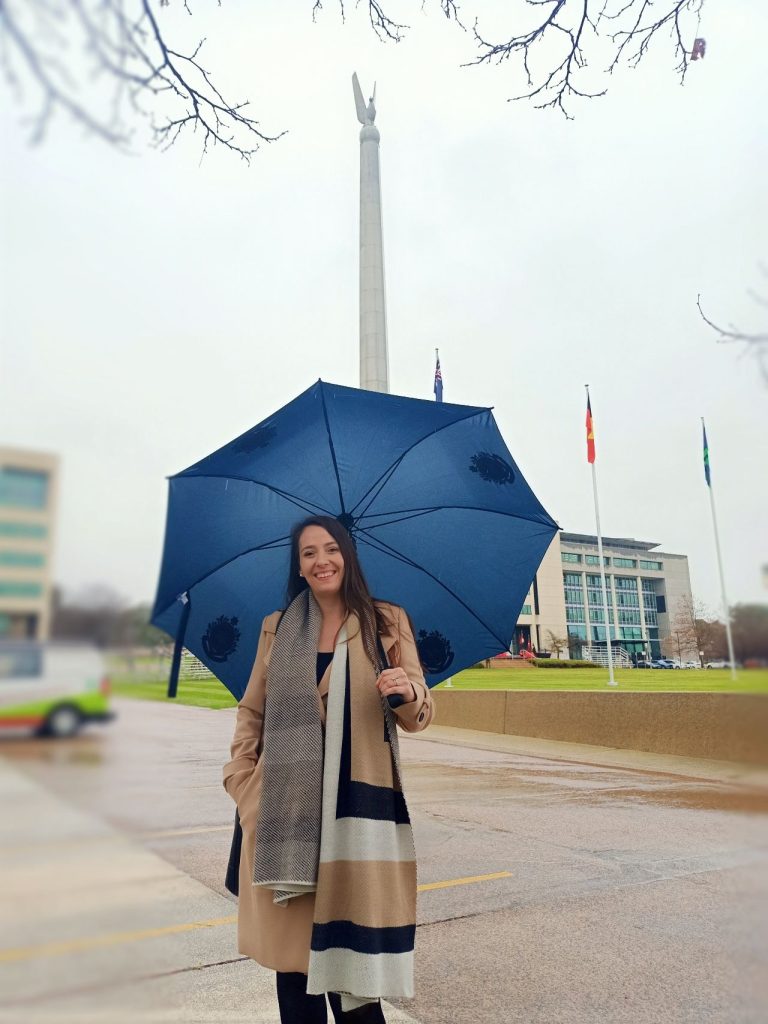
President of Library Board Christine Christian AO
How would you describe your working career in various fields over the last 37 years?
It’s been quite a journey so far and I have been fortunate. I’ve worked in a variety of sectors over the years – from financial services and private equity through to credit risk and digital media, and now the arts and cultural spaces. I can tell you that every day presents its own challenges, but at least I have always enjoyed the pace of change.
A number of executive and advisory roles have given me the chance to work all across Australia, China, the United States, India and New Zealand – while the chance to lead boards has let me be part of shaping organisations’ futures by driving growth and through significant corporate M&A transactions. It is this experience that I can now draw on as the Library Board of Victoria’s President and as a Council Member for La Trobe University. These jobs allow me to indulge my creative side, use more of the right side of the brain and get out of my comfort zone.
From a personal point of view, I’m most proud of having played a role in ‘firsts’ for Australian women – having been the first woman to lead a management buyout in Australia in 2001 and then being the first female appointed to the role of President of the Library Board of Victoria.
I’m a big believer in helping young people realise their potential and feel fortunate that I’m now in a position to help steer and challenge a number of them to pursue roles they might otherwise deem out of reach. That’s why I was so determined to support the StartSpace program at the State Library – to help kickstart the careers of the next generation of Victorian ‘go-getters.’
You are the first woman to be appointed to the position of President since the Library opened. How do you feel about that and what do you think of the situation today when it comes to women taking over leading, decision-making positions in Australia?
I am conscious that a library must reflect the community it represents, and as Victoria has grown and modernised so too has this institution. I look at the contribution of the men who proceeded me and have nothing but admiration and gratitude – but it is inescapable that they were all men. Much like the architecture through our unique public spaces or the breathtaking scope of our State Collection, that list tells a little of the story of our state’s journey.
It is a point of personal pride that I can be part of a twist in that journey, and I am under no doubt that fantastic women will follow me in this office and make exceptional contributions to State Library Victoria’s future over the years to come.
Through experience of being a woman in positions of influence across corporate Australia, what I believe most important is that we make the most of these opportunities and deliver the results that make such appointments routine and uncontroversial.
We are well on the way, and there is a wealth of excellent female leaders out there ready to take on challenging roles. The boulder is rolling, it’s momentum we need to continue to provide.
How do libraries have a major impact on society today? Are there ways to grow their influence further?
State Library Victoria was established in 1856 as ‘the People’s University’ – a free service built around the egalitarian principle that culture is a human right. The foresight of Sir Redmond Barry and his contemporaries was breathtaking. All those years ago, they were clear that the arts are not discretionary – the arts are what nourish a nation.
Today we look at libraries as catalysts for creativity, innovation and endeavour at the heart of a community’s efforts to enrich the lives of those around such institutions. If you ask people about State Library Victoria, many people will talk about the Dome, or our collection, or our buildings. But across Victoria, there are others who will talk about our role at the centre of a network of 281 public libraries delivering community health and wellbeing programs – critical social infrastructure that improves lives.
Are there ways to increase the influence of libraries? Certainly. Much of that will come through the adoption of technology and the opportunities that it will bring to speed up the exchange of information. We had a record year in terms of onsite visitation last year, but it was our website that saw a 60% increase in audience reach from the previous year.
The Government’s National Cultural Policy has promised new synergies, increased funding options and clear pathways forward for the arts and cultural sectors. That ambition, combined with game changers such as data aggregation and shared digital collections, means that libraries are entering a period of enormous opportunity.
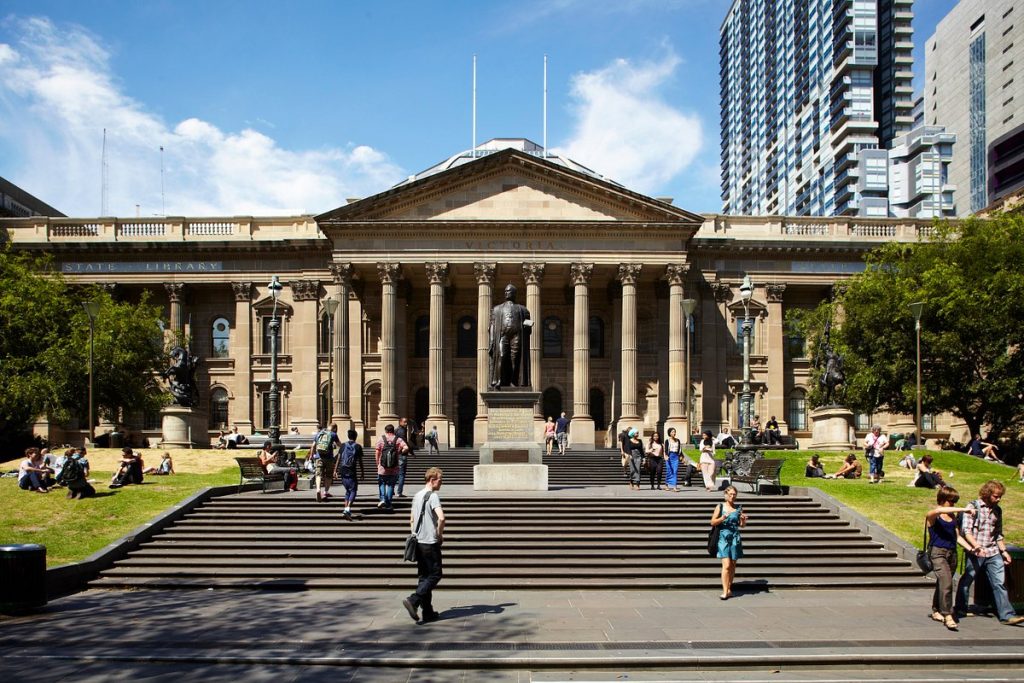
The State Library of Victoria.
Tell us about the State Library of Victoria and its role in Melbourne’s cultural community?
There are five million items held within State Library Victoria’s collection. Each one tells a little piece of Victoria’s story, a little piece of its journey.
The opportunities these treasures provide are endless – and it is incumbent on the Library to find new ways to use them to represent and reflect the lives of Victorians from every corner of our community. For example, our exhibition MIRROR: New views on photography showcases 141 photographs from within the State Collection, alongside new works by Victorian storytellers that tell fascinating tales of life through a contemporary lens.
The State Government charges this institution with nurturing a rich creative culture that underpins Victoria’s future resilience and prosperity. Melbourne is Australia’s cultural capital, a UNESCO City of Literature, and at the centre of the Education State.
To my eye, State Library Victoria sits at the heart of all that – the guardian of Victoria’s identity and the spark driving new and exciting innovation.
How important is it that libraries evolve their services to ensure they are compatible with technological (digitalisation) and social progress so that they remain an important part of people’s lives today?
The world is changing and advancements in tech are happening every day. The only way a 167-year-old institution such as State Library Victoria can stay relevant is by harnessing the power of the most potent developments. This is not a case of importance, this is essential.
We exist to deliver greater creative experiences to Victorians not just in Melbourne, but across regional and remote communities too. Technical innovation sits at the heart of the Library’s strategy to achieve that. Recently we hosted the first ever Book Bash, streaming Andy Griffiths and other children’s authors into classrooms around the state. We had 60,000 students participating over three days – many from regional Victoria.
Tech will broaden our accessibility, which is a central tenet of our strategic vision for the coming years. It will allow our visitors to experience the treasures within our collection in a whole new way and protect the most fragile materials within our collections so that they are preserved for future generations yet unborn.
Even some of the less fragile – and most famous – elements within our collection will be at the centre of this advance in how technology drives interaction, although I am not allowed to say anything more about that just yet.
What is your experience of your role in the library and are there challenges you have had to face and special moments that stand out for you?
If we are talking about my time as a member of the Library Board of Victoria, that stretches back to 2013. Personally, I believe there is a duty that rests on your shoulders when you are entrusted with responsibility for an institution like State Library Victoria.
It has served the people of Victoria through wars, several pandemics and many, many different governments. It has supported people from across the world as they study for their future and provided a safe haven for local residents who seek a welcoming place to gather and collaborate. It is also served by a team of motivated and passionate people who possess an expertise that is not replicable anywhere else in the world.
Ensuring everything is in place to protect each and every part of this institution is no small task, and it is a different type of pressure to being a CEO in a big company somewhere. Making sure the Library’s case for public funding is watertight takes care and effort. Balancing the needs of different community groups is precarious. But it is also energising and exciting – and that is what I enjoy most.
Two moments jump out at me as particularly notable – the first was when I first glanced into the Dome after being named President. It was then that the opportunity, and the challenge, really came home.
The second was when StartSpace first opened its doors. I was thrilled to have the chance to back a free support service for early-stage new business founders as it provided the type of help that I had lacked early in my own entrepreneurial career. In terms of driving progress and change, that meant a lot to me.
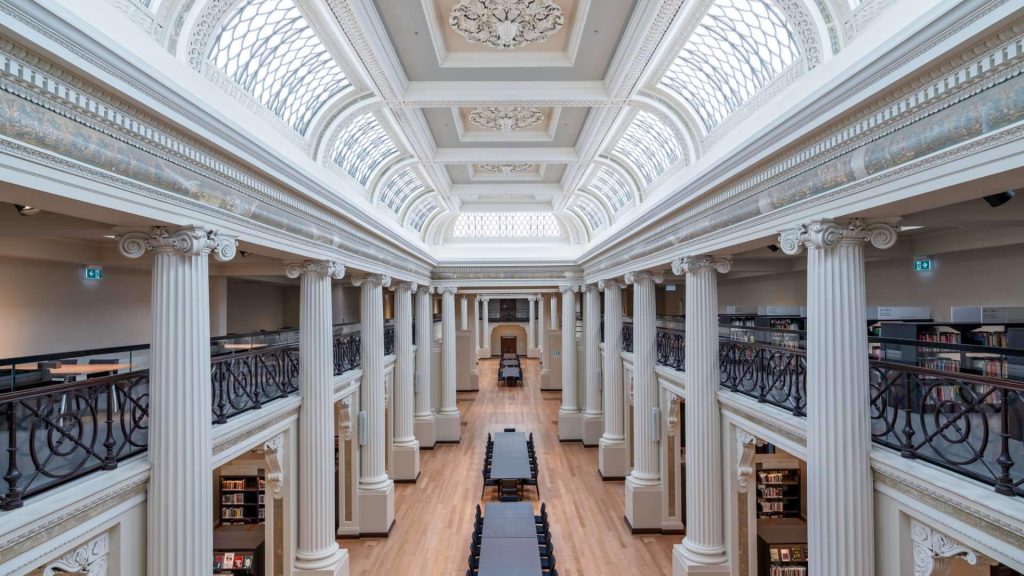
Inside the State Library of Victoria.
How much has COVID-19 affected the way libraries offer their services and the way people choose to use them?
Like every business and industry sector, the COVID-19 pandemic has proven a cause for a radical reassessment of the way libraries operate.
When the lockdowns forced the closure of our doors, we worked hard to strengthen our online offering, we launched an online ‘Ask a Librarian’ chat service, we rolled out more than 400 digital programs and content pieces and created a virtual tour of exhibitions to engage with those people unable to travel. We adapted – the key to State Library Victoria’s ongoing relevance over its years in existence.
What I have found most incredible is that there appears to have been a boom in demand for our services after the disruption that the pandemic caused. People are hungry for community interaction, and they have returned to us in record numbers.
This year marked the busiest year for the Library in 167 years, and we are looking to build on that every year moving forward. By 2026, we are targeting three million onsite visits. There are few libraries in the world that can aim at such targets.
Is Melbourne’s Greek community engaging with the Library and its activities? Do you think that there is space to improve this relationship?
There is certainly space to improve the way the Greek community engages with State Library Victoria. It is a library for all, and if I am not pushing for people to have a greater connection with the institution, I am not doing my job properly.
A library has to reflect and represent the people that form the society around it – and the State Library already has strong connections to the Greek community. Within the Library’s Genealogy Collection there are a wealth of materials and records reflecting Melbourne’s Greek population. For any Victorian Certificate of Education student wanting to learn more about Ancient Greece, our State Collection is one of the finest starting points available. Even our walls and the ceilings speak to ancient Greek architecture – with our recent Vision 2020 redevelopment project focusing great resources in restoring many of the Library’s finest ancient Greek inspired features.
This connection is being recognised not just at home, but across the world. Just a few weeks ago we hosted a Greek production company who were in Melbourne to film a documentary about migrants based in Australia from the island of Crete.
State Library Victoria has just come off the back of a record-breaking year in terms of drawing in visitors, and we have ambitious targets to continue to grow our reach and impact. To do this, we need to ramp up our relevance to all communities across Victoria. Any idea and opportunity to do this within Melbourne’s Greek community is one I would jump at the chance to deliver.
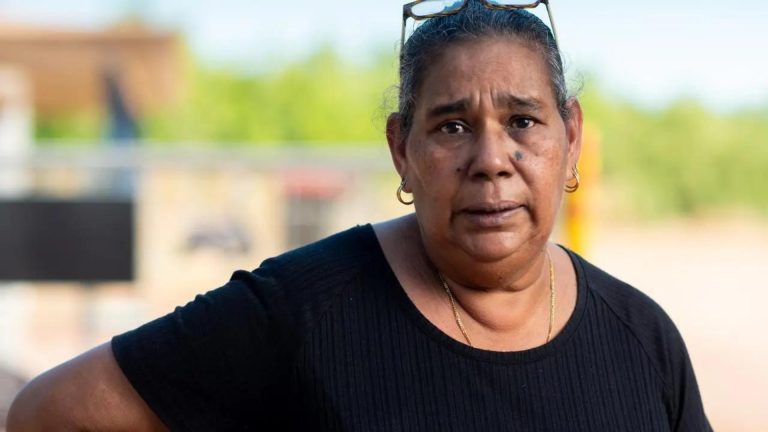
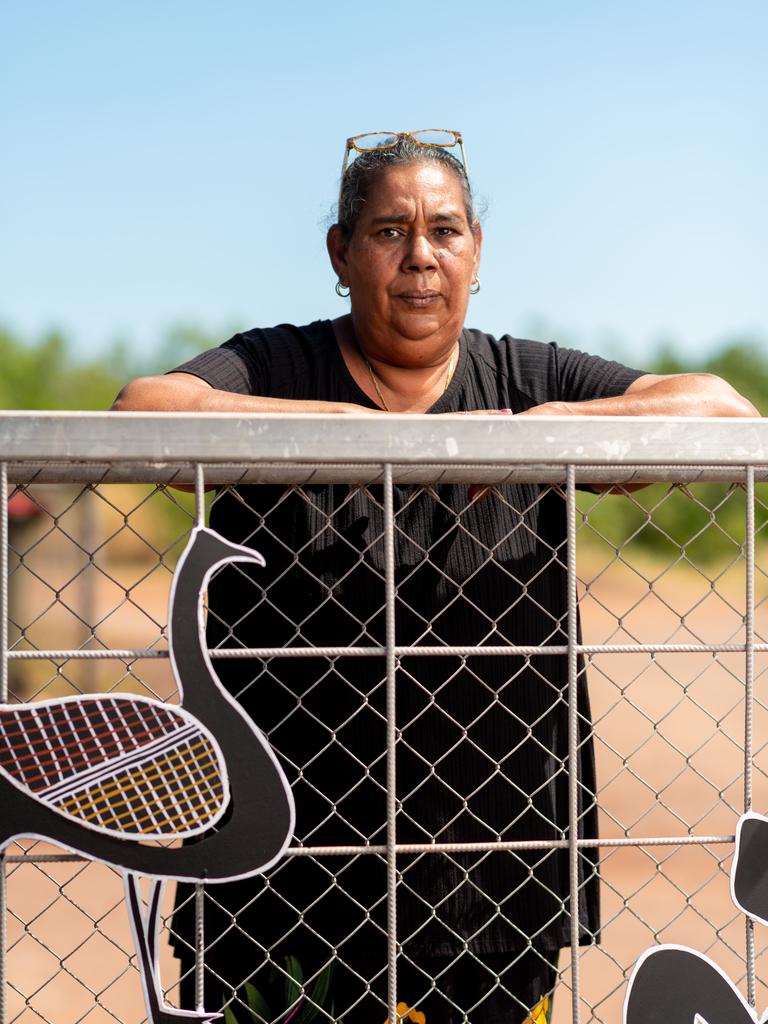
Ms Secretary, whose father was a Greek immigrant, is the Gwalwa Dariniki Association chair of the small coastal Kulaluk community in Darwin. She believes the Voice referendum will “divide the nation” and it would be impossible for a national Voice to represent hundreds of different clan groups.
In an interview with Sky News, Ms Secretary said, “We should be a proud country, a multicultural country and be proud as Australians, not divide.”
“We already have senators and Indigenous parliamentarians from the Territory that have been sitting in Parliament that are supposed to be our voice.”
The Gwalwa Dariniki Association chairwoman says most Aboriginal people from the NT know little about the Voice to Parliament and are unlikely to support the ‘Yes’ vote.
The Association has made positive changes of their own in the Kulaluk community. In 1972, the organisation drafted the Larrakia petition for a crown lease in perpetuity over the Kulaluk and Minmarama communities in Darwin’s northern suburbs. Northern Territory Chief Minister, Paul Everingham, later granted the crown lease in 1979.
“We have created housing, nursing home and licence interest on our land to move forward instead of asking for government handouts,” Ms Secretary reports, explaining why she will be voting No in the referendum.
Helen Secretary. Photo: NT News.
Ms Secretary says it would be impossible for a national Voice to represent hundreds of different clan groups, as no one tribe could speak for another.
Rejecting Albanese’s claims that 80 per cent of Aboriginal-Australians support the Yes Voice, Ms Secretary said “That’s their views but I can tell you a majority of Indigenous people (don’t support it) and that’s why they don’t really want to include the Northern Territory, because a lot of them don’t understand this and they are continuing to ask for a Treaty.”
“Why should we have a voice that’s in parliament, a new voice, with this referendum to say ‘this is what all Indigenous people want because they’re disadvantaged—well we’re not.”
“I think it’s wrong.”
Leaders who advocate for a Treaty, including Independent Senator Lidia Thorpe, want to see reparations paid, but Ms Secretary said she is not interested in financial compensation.
“My kids work for their money,” she said. “They don’t say because I’m Indigenous I want rent, I want compensation. We work for our money.”
The land rights pioneer proclaims if the Federal Government wants a voice, “talk to the different tribes that live on country on what their dreams [are] of creating economic development, work with them, give them a Treaty.”
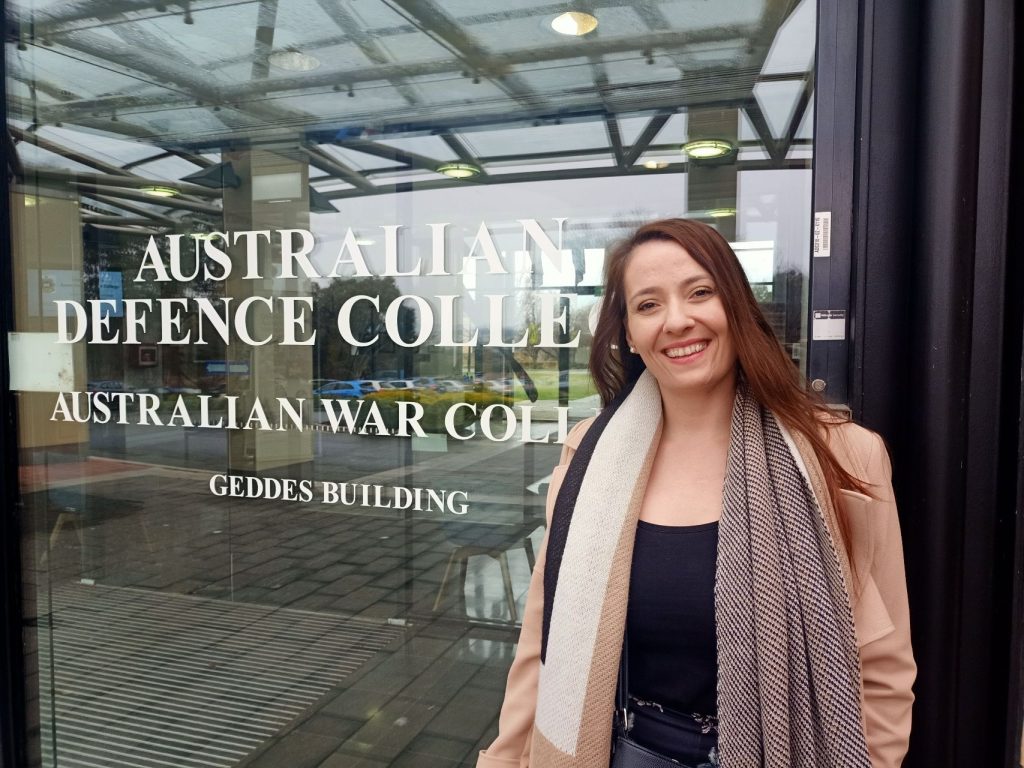
Perth’s Edith Cowan University graduate, Athanassia Iosifidou Lima, was featured in the ‘Alumni Spotlight’ showcasing her remarkable journey of learning English to now teaching the language to foreign military in Melbourne.
Arriving in WA from Greece at the age of 13 with her parents, Athanassia has held tight to her Greek roots, yet her love for learning multiple languages has carved a rewarding career of teaching in Australia.
Athanassia heads the Training Support Section at the Defence International Training Centre in Melbourne which teaches English to foreign military.
At one point, however, Athanassia was at a crossroads in her career.
In an interview with ECU, the Greek born graduate tells of her journey of studying to almost leaving teaching entirely. In 2016, Athanassia completed a Master of Education and her “career has gone from strength to strength.”
“After four years of theory and research in Psychology and Education, I entered the language teaching sector feeling unprepared and struggling to deal with everyday student issues, the teaching load and how to best work with management,” Athanassia said.
Athanassia Iosifidou Lima. Photo: LinkedIn.
“I almost left teaching entirely before I decided to look for a practical Educational Leadership degree and give it one last go.”
Athanassia decided to study the Master of Education at ECU where she completed a research project which would lead her to present on the topic nationally and internationally.
“I was initially dreading the research project but with the support of ECU lecturers, I did not only complete it successfully, but it became my focus and the basis of a project I presented at educational conferences nationally and internationally in subsequent years.”
In her journey in education and teaching, Athanassia empowers the community and her students to always “have a go” in learning new languages.
A three part public forum held at the State Library of Western Australia as part of the Languages in the Mainstream project – a partnership between the MLTAWA and OMI – invited Athanassia to speak about her experience learning English as a second language.
With a rich background in learning different languages and cultures, Athanassia shares the mixed feelings language learners often experience. However, she says, “you have nothing to lose except your accent and an old mindset”.
As she concludes her speech to the audience, Athanassia proudly says, “Is it really me, the 13 year old girl from Greece who is speaking to you about learning languages in English? Yes! It is me.
“You can do it to—you can learn a new language.”
Athanassia Iosifidou Lima in Canberra in 2022. Photo: LinkedIn.
Athanassia tells ECU she has always needed a role with a higher purpose where she can make a difference. While she is no longer in the classroom, her current position has allowed her to do exactly that.
Teaching English to foreign military, Athanassia manages a “team of education support staff such as Moodle experts, multimedia and publishing gurus, testing and evaluation professionals, an IT specialist and a librarian.”
“Even though I’ve left the classroom, my team and I make a direct positive impact to the students’ experiences before, during and after class time which is what I always strived for, but more than I could ever fully achieve as a classroom teacher.”
The Creten salad Dakos has recently taken first place in TasteAtlas’s list of 100 best-rated salads in the world.
A delicious specialty from the island of Crete, the salad consists of a dry barely rusk called paximadi, topped with crumbled mizithra cheese, chopped ripe tomatoes, olives, capers, oregano and good quality olive oil.
According to TasteAtlas, the salad was recognised for its fresh ingredients and for the culinary passion the Greek people have towards producing some of the best salads in the world.
This year, the list also included four other salad recipes from Greece, including the traditional Horiatiki salad, which came in 5th place, Horta salad, Patatosalata and Pantzarosalata.
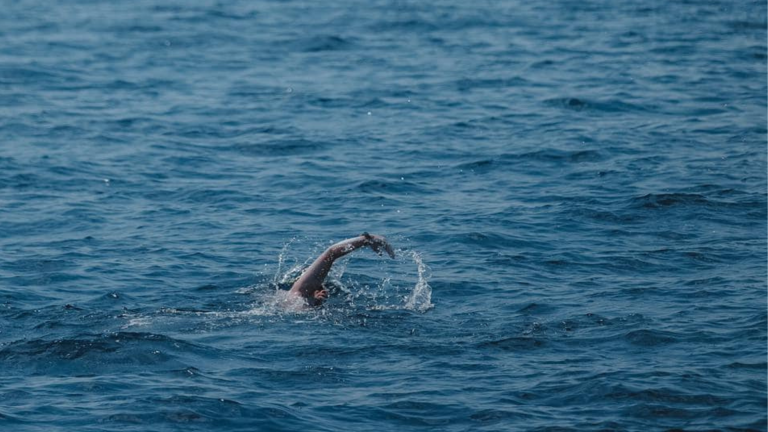
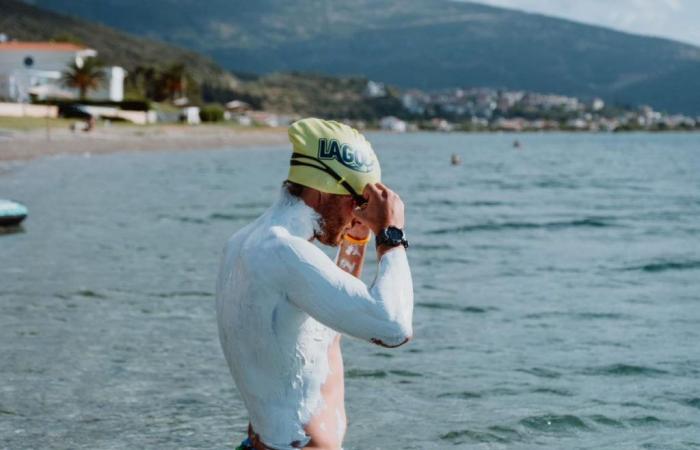
A Belgian athlete has broken the universal open water swimming record by swimming 131km in the Gulf of Corinth.
Belgian man Mathieu Bon swam in the sea without interruption, taking him 60 hours and 55 minutes to break the record.
With the original date to complete the record being on Wednesday 30th August, the strong winds and high waves in the Corinthian meant that swimming in the ocean needed to be delayed by one day.
Belgian Athlete Mathieu Bon. Photo: Hellas Post
According to Bon, his goal was to break the current record which stood at 125.7 km and to continue swimming as much as he could, that is if Poseidon favoured him to do it.
His choice to swim in the Gulf of Corinth was because he could swim more than 100 kilometres in a straight line, making it an ideal location for the challenge.
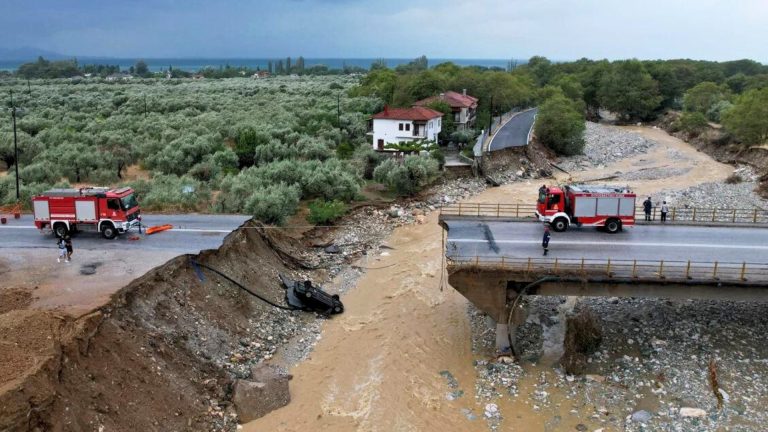
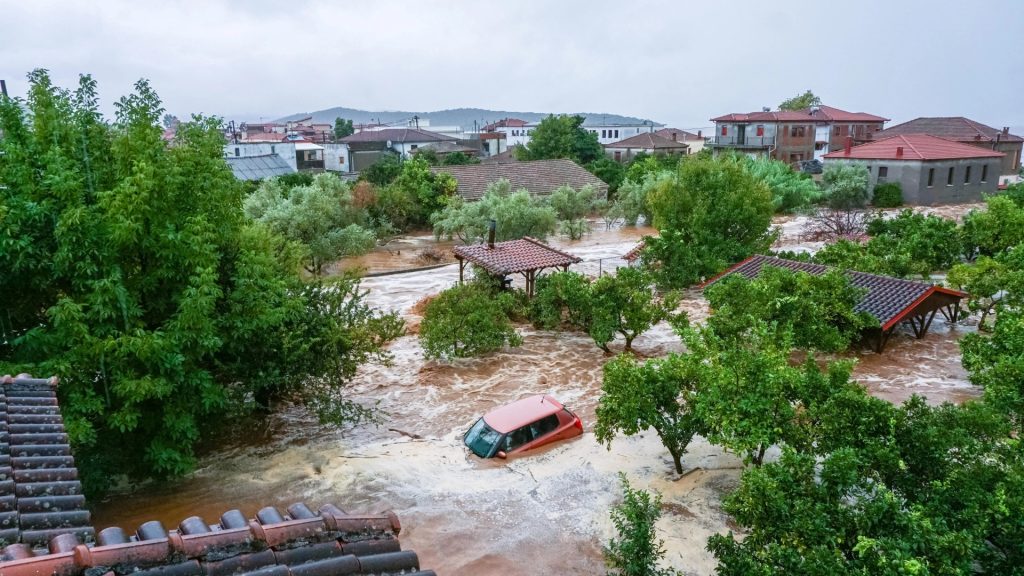
Over 150 Greek and foreign tourists were evacuated at the Mikros community of Platanias, in South Mt. Pilio on tourist vessel on Thursday as the roads were destroyed from the floods.
The road leading into the community was completely destroyed, trapping Greek and foreign tourists in the area, reported amna.gr.
A large operation successfully evacuated the group of people to safety. Evacuating them by land was impossible after torrential rain and floods destroyed the only road access to the coastal community.
South Pilio Mayor Michalis Mitzikos contacted the Central Port Authority of Volos to send a tourist vessel (‘Tarzan’) to pick up a total of 105 Greeks and foreigners who had been without power, water or food for three days after hotels and inns ran out of supplies.
A second evacuation effort was ongoing as of 17:00 to evacuate hundreds of residents and foreign tourists from Platanias proper, with the help of Mayor Mitzikos and Civil Protection. Also trapped at Platanias are Serbian buses that had transported the tourists from the neighboring country.
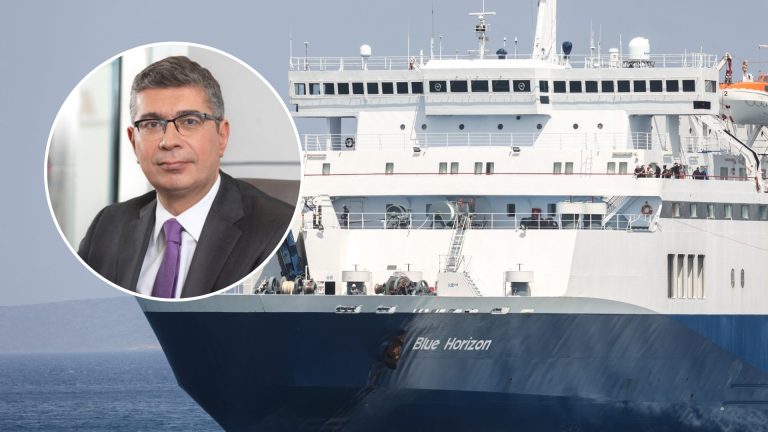
CEO Spyros Paschalis announced his resignation from the Attica Group following the drowning of Antonis Karyotis at the Piraeus port.
This comes after the recent homicide charges were filed against the ferry’s captain and three crew members in connection with the tragic demise of a passenger, 36-year-old Antonis, who met his end after being forcibly ejected from the departing vessel at the Greek port.
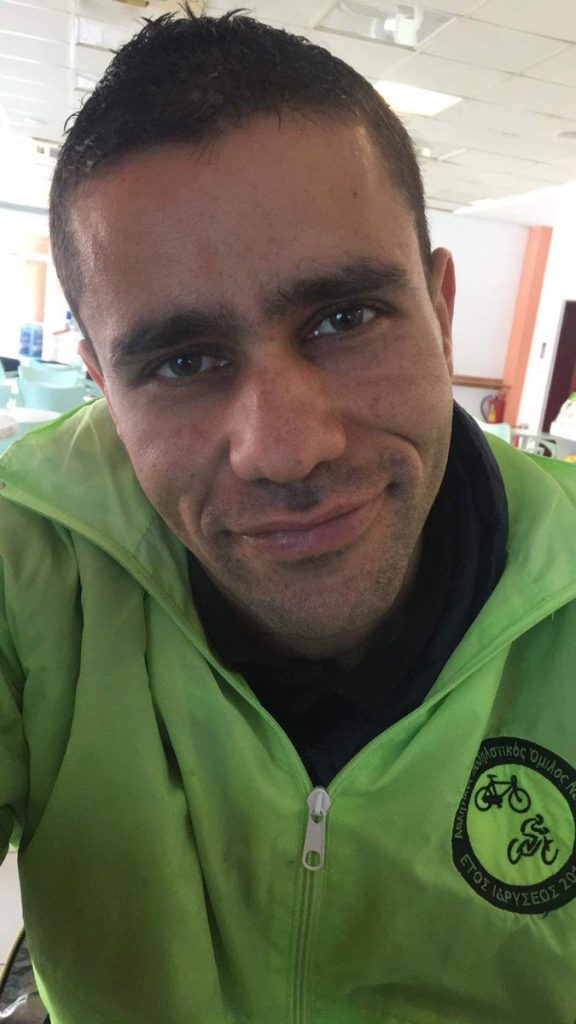
Antonis Karyotis was a labourer on Crete and held a ticket to board.
In a statement, Attica Group said it would carry out a “wide-ranging and in-depth” investigation with the assistance of independent external consultants and have officially accepted Mr Paschalis resignation, reported Ekathimerini.
The captain, the first mate, the deck officer and the boatswain had requested a deadline to appear before the Piraeus Prosecutor’s Office on Saturday.
Varvitsiotis revealed that the passenger had a valid ticket and had boarded the ship shortly before the incident unfolded. He inexplicably dashed off the ferry and then attempted to reboard.
A formal administrative inquiry into the actions of the Piraeus Port Authority during the incident is being conducted. Port authority sources have disclosed that an official was in the vicinity but not stationed at the boarding ramp. They also confirmed that the ramp should have been raised before the ship’s engines were activated, and the Port Authority has recorded this violation.