Home Blog Page 956

Decline in Anthropocentric Arts and Classical Studies impacts learning of Greek

By Anastasios M. Tamis*

With this article, I wish to highlight the contribution of the Greek Diaspora as a permanent and consistent focus power for the cultivation of global philhellenism in their host countries. Also, I would like to suggest that the Diaspora and Philhellenism are the two main and fighting pillars, the two main belts for the revival of anthropocentric arts and humanities in general and Hellenic Studies in particular, which led from the mid-1960s to a decline and reduction in the field of teaching, but more catalytic in the field of learning.

Of course, it would be impossible to justify such a comprehensive topic in a short article, so I will limit myself to a few observations that largely concern the course of decline and depreciation of the humanities and suggest that through the organized Diaspora and the cultivation of philhellenism, Greek language learning can be developed as a subject of the humanities through a systematic cultural attack (cultural offensive). I will argue that the Metropolis, Greece, with its two national centers (Athens and Nicosia), do not sufficiently cultivate education and culture (they simply manage it), do not invest apostolically in attracting individuals and institutes (Philhellenes) who would cultivate the humanities (and by extension the knowledge of Greek). For tourism, the economy, foreign policy, the Metropolis rightly and prudently invests billions in money and it works tirelessly to win over investors, tourists, markets and allies. Therefore, a cultural offensive is needed, in the form of aggressive cultural investment in partnership with the Greek Diaspora and the Philhellenes, to gain the learning of our culture globally, in order to enhance the knowledge of Greek.

Let’s take a brief look at the rise and decline of the humanities and Greek studies, which have had a qualitative and quantitative impact on the attainment of Greek:

In 1764, the greatest Hellenist in Europe, the prophet of the Neoclassical Movement, the father of Art History and one of the founders of modern scientific archaeology Johann Joachim Winckelmann (1717-1768) published the book entitled History of Ancient Art. His fundamental views on ancient Greek and Greco-Roman  art influenced the multipliers of European intellect, art, poetry, philosophy, and history, including Gotthold Ephraim Lessing, Johann Gottfried von Herder, Johann Wolfgang von Goethe, Johann Christian Friedrich Hölderling, Christian Johann Heinrich Heine, Friedrich Wilhelm Nietzsche, Stefan Anton George, and finally, Oswald Arnold Gottfried Spengler, who characterized the Greek influence on education and arts in Germany as “Tyranny of Greece over Germany”. Winckelmann’s writings not only created the two branches of study, archaeology, and art history, but also drastically influenced Greek aesthetics, painting, sculpture, literature and philosophy, leading the whole of Europe, America and Oceania to a state of “Grecomania” and “Grecophilia”.

In the mid-1960s, as we will examine, two hundred years later, the two fields of study and learning, Archaeology and Art History founded by Winckelmann, were the first along with music departments to be expelled from tertiary institutions in Western countries. Over the next sixty years the disciplines of learning related to the humanities and arts,  the so-called “qualitative academic disciplines” (Qualitative Academia), have experienced progressive uprooting, mutation or shrinkage. In terms of learning, in the period 2012-2022, in 24 out of 37 Economic Development and Cooperation countries, the number of successfully completed master’s and doctoral studies decreased by 10%. In terms of teaching in the US alone, the number of universities offering majors in humanities at BA level between 1998 and 2020 in Languages, Philosophy, Theology, History and English fell from 20 to 50 percent. From an optimistic approach, there are some data that point to a more positive picture, if they do not turn out to be ephemeral. For example, on January 10, 2023, UC Berkeley announced that after several decades of continuous decline in the Humanities, the university experienced an increase in the number of students enrolled in history, philosophy, and language courses.

The period of Grecomania and Grecophilia (1764-1964) that began with Johann Joachim Winckelmann and the humanist intellectuals Edward Gibbon, William Leake, Sir William Gell, Carl Humann, Thomas Bruce, Percy Shelley and George Gordon Byron, whose philhellenic enthusiasm once went beyond the study of literature, art, and philosophy to include the removal and movement of works of art from Greece,  was cultivated, matured and flourished over the next two hundred years. With the national rebirth, philhellenism and the study of classical philhellenism and humanities continued with the establishment of archaeological schools in Athens by France (1886), Germany (1874), USA (1881), Britain (1886) and many others later. At the same time, from the mid-18th century, dozens of Atheneums were founded in the major cities of the USA, the United Kingdom, Australia, Canada and Latin American countries, as centers of reading, study, discussion and intellect of Greek culture and Latin writers. Through the innumerable excavations and publications that resulted, the necessary knowledge was challenged as a product of learning in hundreds of chairs and fields of humanities and armies of philhellenes emerged in all Monuments, statues, squares, streets, cities and villages, mountains and rivers received ancient Greek names, transforming the Arcadian Ideal into a way of life.

In the universities of Europe and the Eastern Hemisphere, Greek Studies (the fundamental element of classical studies) already played a leading role since the late 18th century. At the University of Oxford, a leading exponent of classical education, according to Prof.  M. J.  Osborne there were in 1870 no fewer than 140 professors of classics (as opposed to a handful in the natural sciences). Such dominance was strongly criticized by the great self-taught scientist of biology and anatomy, Thomas Huxley, at the end of the 19th century, but it is important to appreciate that, unlike modern critics of the Classical Sciences,  He was in favor of continuing their presence and simply advocated greater diversity so that the natural and social sciences would not be neglected. His hopes were fulfilled long ago, and only in the 1960s did a transformation begin, and it did not take the form that Huxley preferred, and the result was detrimental to the humanities.

Huxley’s expanded range of education courses appeared slowly in universities, since even in 1960 classical studies retained their prestige and popularity and were an integral scientific part of the new universities (for example Monash in Melbourne (1958) and Lancaster in England (1947)). But the dominant role of the classics and humanities was not to be maintained for much longer.  The first signs of academic change appeared from where Grecomania and Grecophilia began, from Germany, in 1946. The Rector of the Ludwig Maximilians University in Munich, Albert Rehm, who had been expelled primarily in 1936 because of his opposition to Hitler’s policies, after being reinstated and reappointed in 1946, was again dismissed from his post because this time he harshly criticized the German authorities for not recognizing the importance of classical and Greek studies in higher education. Ten years later the decline of classics and humanities took place in Britain, twenty years later in Oceania and since the 1990s in the Eastern Hemisphere.

Next week, I will refer to the main factors of the decline of the humanities.

*Professor Anastasios M. Tamis taught at Universities in Australia and abroad, was the creator and founding director of the Dardalis Archives of the Hellenic Diaspora and is currently the President of the Australian Institute of Macedonian Studies (AIMS).

An emotion-filled Dardalis Archives event for radio legend Rena Frangioudaki in Melbourne

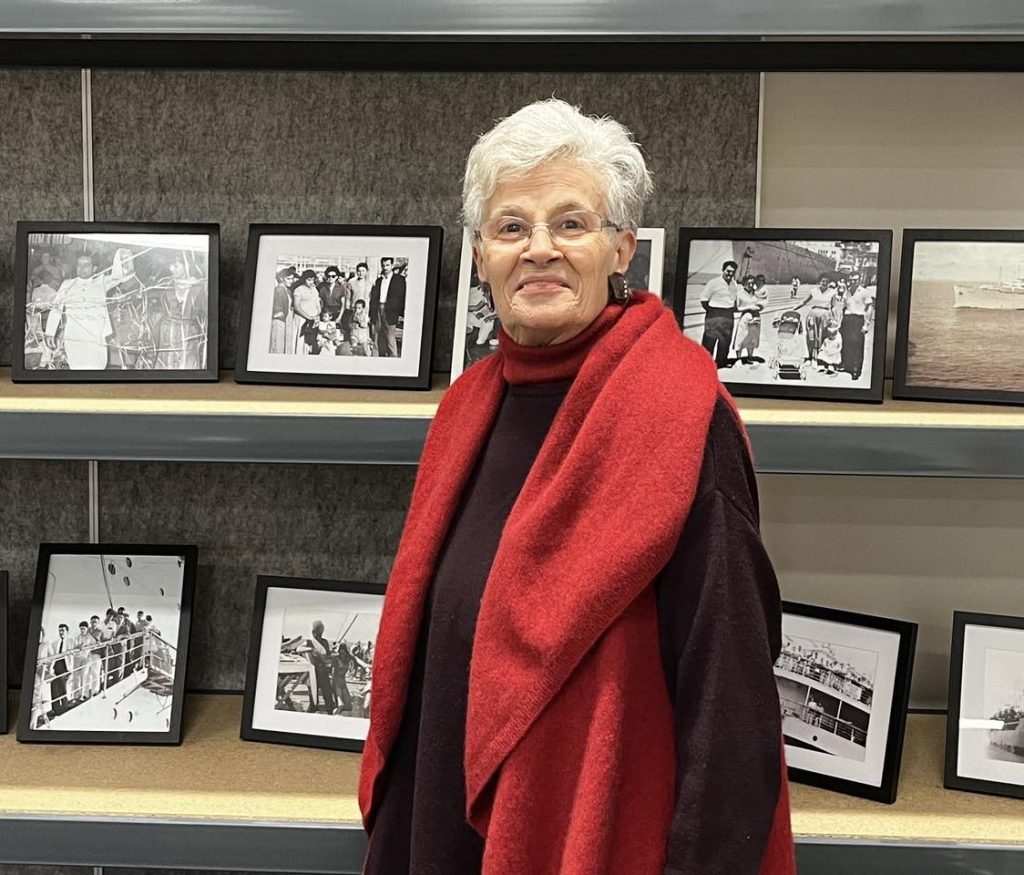
Friends, acquaintances, and fans of legendary radio producer Rena Frangioudaki attended the event on Wednesday, September 13 at the Greek Centre of the Greek Community of Melbourne.

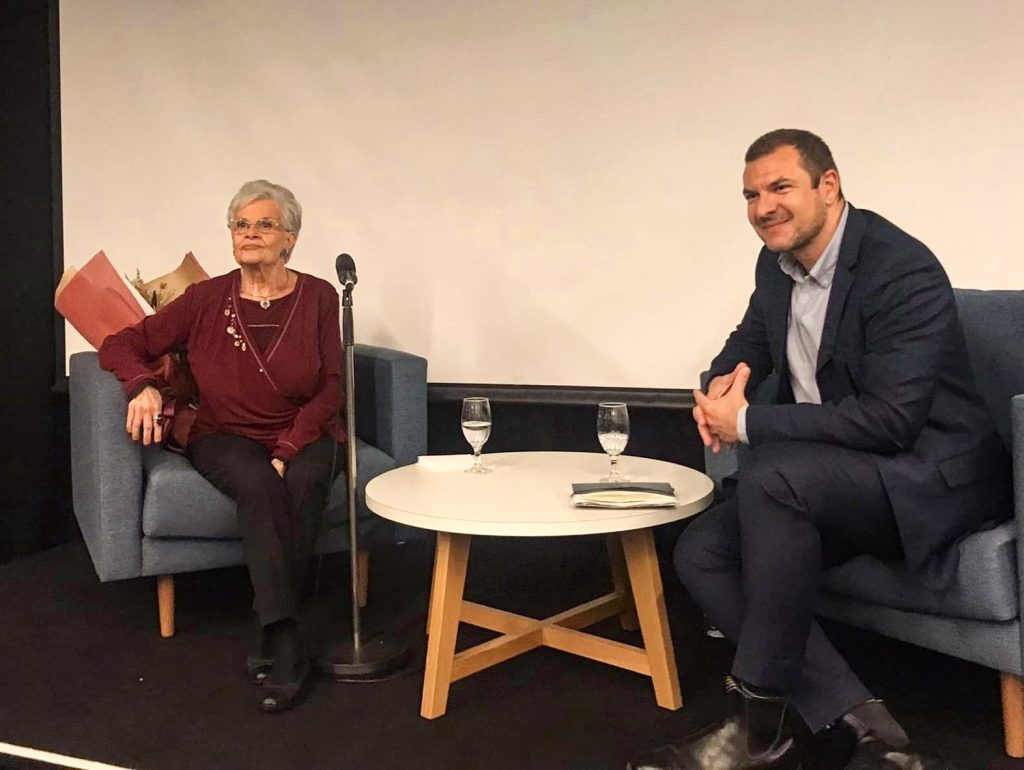
The event was part of a series of lectures and presentations on the Dardalis Archives of the Hellenic Diaspora, and Ms Frangioudaki held a conversation with her colleague, producer of the Greek Language Program of SBS Radio, Panos Apostolou.

Rena Frangioudaki OAM and Panos Apostolou.

Ms Frangioudaki, spoke of her decision to immigrate to Australia and her first years in the country.

She elaborated on her first working experiences in Melbourne as well her voluntary efforts within the Greek community and how she managed to find herself in a radio booth in 1966.

She reflected on her radio days, her interviews, and her tense but balanced professional relations with politicians.

This year marks forty years since 1983, when the then-federal prime minister of Australia, Bob Hawke, selected her as the representative on the government’s Immigration Advisory Committee in Canberra.

While, twenty years ago, in 2003, the Government of Victoria and Victorian Governor John Landy honored her with the Multiculturalism Award​ and the Order of Australia Medal​ (OAM).​

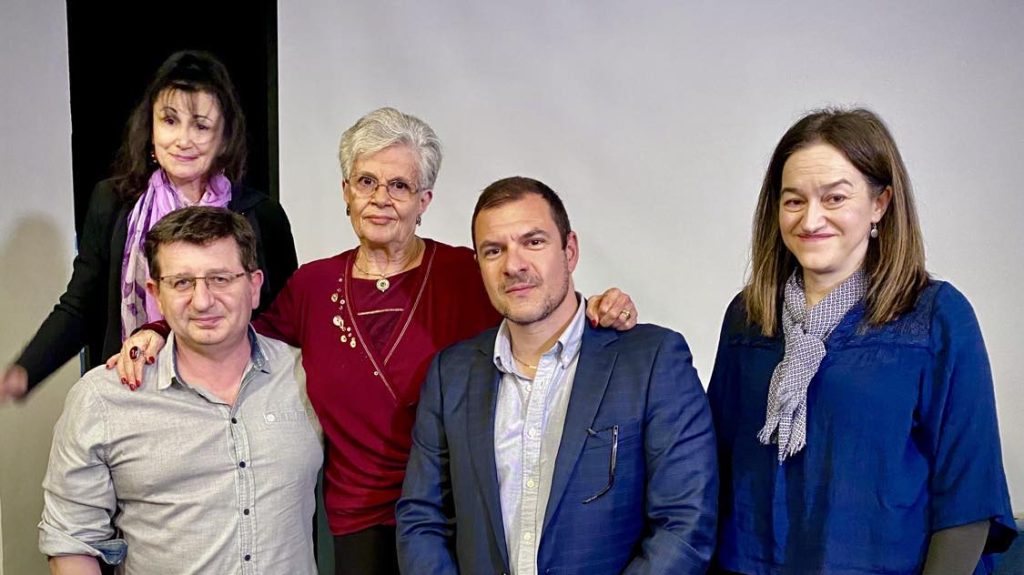
L-R: Anthea Sidiropoulos, Dr Nick Dallas, Rena Frangioudaki OAM, Panos Apostolou, Dr Stephie Nikoloudi.

She referred to her efforts to keep the Cyprus tragedy at the forefront of current affairs​ and to her love for her special homeland, Chania, Crete.

Ms Frangioudaki offered a heartfelt plea to the younger Australian Greeks present to preserve and pass down the Greek language to future generations, even as they reside in the diaspora.

In fact, that evening, students from La Trobe University’s Modern Greek Studies program were in the audience, because they were asked to prepare an assignment based on that night’s conversation between the two journalists.

The conversation on the radio career of Rena Frangioudaki was co-organized by the Greek Studies Program of the Department of Languages and Cultures at La Trobe University, the Dardalis Archives, and the Greek Orthodox Community of Melbourne and Victoria.

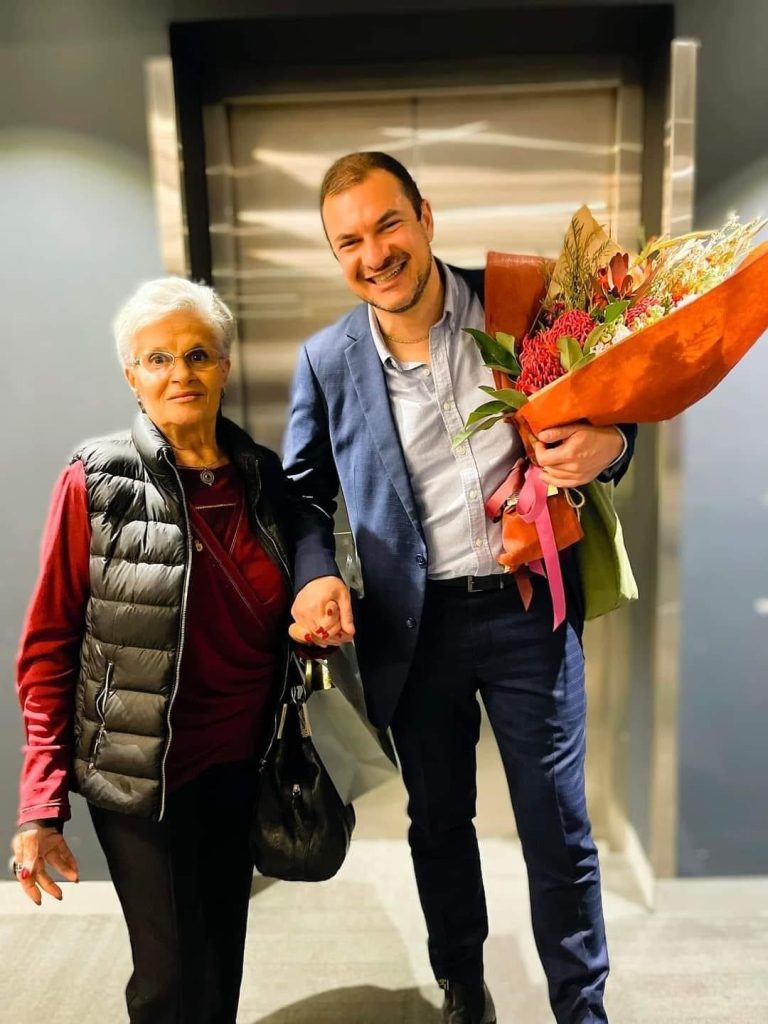
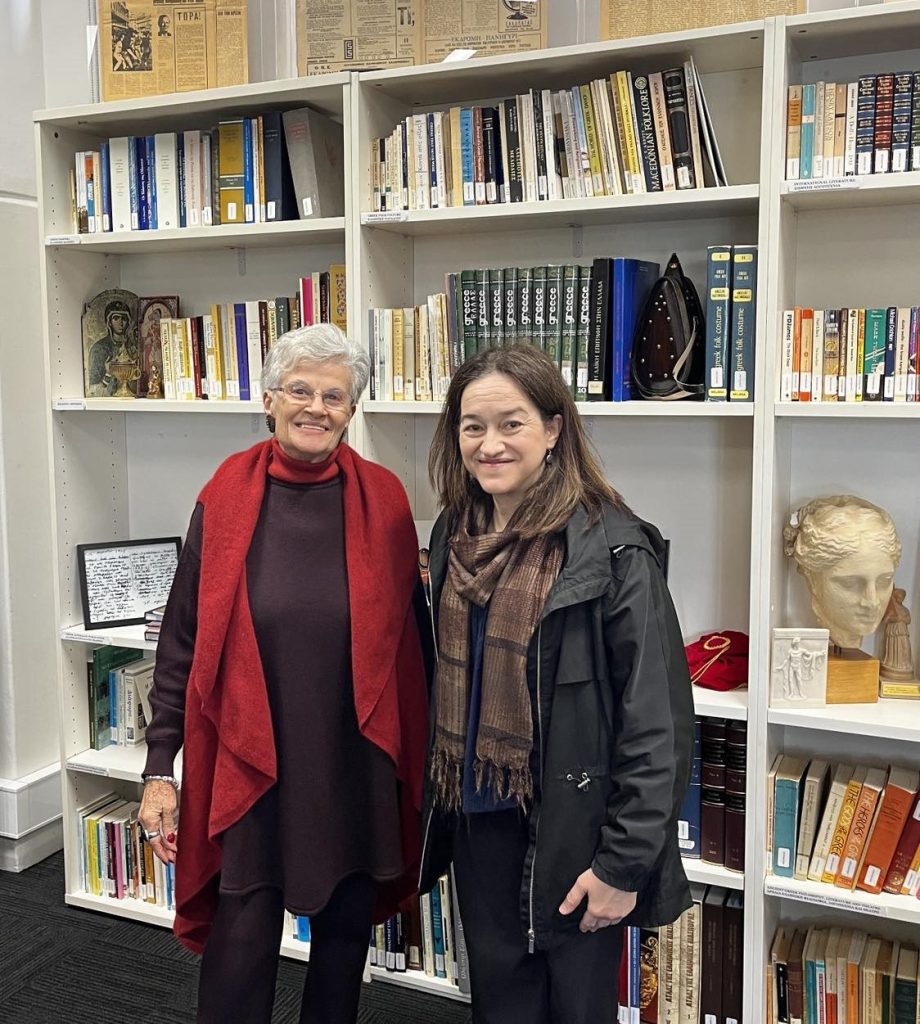
Ms Frangioudaki recently visited the building where part of the Dardalis Archives is exhibited and was informed about the work being carried out there.

The presentation will be posted on the YouTube Channel of the Greek Community of Melbourne.

The series of thematic lectures of the Dardalis Archives entitled: ‘The History of the Greeks in Australia based on the contents of the collection’:

The next presentation will be held on Wednesday, October 4 featuring Panagiotis (Peter) Giannoudis OAM, one of the pioneers of Greek Cinema in Australia and New Zealand, who will talk on the topic: ‘The lobbying power of the united Greek Cypriot community and Greek communities in Australia’.

On Wednesday, November 8, Dr. Alexandra Delliou, a historian working mainly with the post-war immigrant and refugee communities in Australia, will give a lecture in English entitled: ‘Migrant Activism and Debates in Welfare’.

The entire initiative belongs to the Coordinator of the Greek Studies Program, Dr Stephie Nikoloudis.

Crete and Pontus: Two aspects of Modern Greek culture through their traditional songs

The Consulate General of Greece in Sydney, in collaboration with the Pontian Association of NSW “Pontoxeniteas” and the Cretan Association of Sydney and NSW, will hold an event dedicated to two emblematic aspects of Modern Greek culture, Crete and Pontus, through their traditional songs and music.

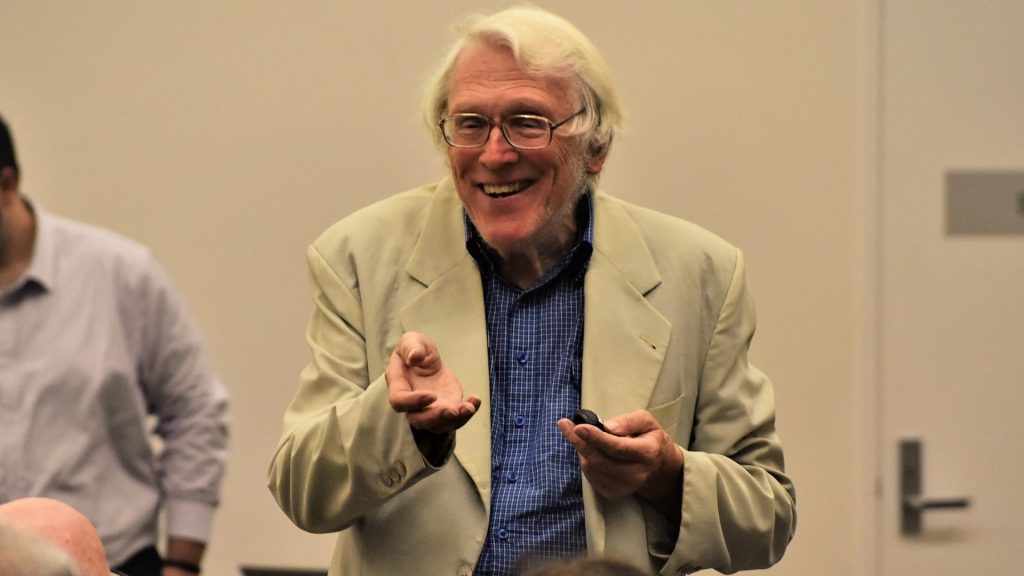
Honorary Associate at the University of Sydney, Dr. Alfred Vincent, the keynote speaker, will explore the historical context that shaped the particular traditions of these two frontier societies of the Greek world, with an emphasis on their similarities and “meeting points” from a linguistic, cultural and musical point of view.

The talk will be followed by traditional music, highlighting the common elements of the two traditions, “illustrating” acoustically this special “meeting” between Crete and Pontus.

The talk will be in Greek with English subtitles.

Dr. Alfred Vincent speaking March 2021. Photo: Vasilios Vasilas.

About the Speaker:

Dr. Alfred Vincent taught for 25 years at the University of Sydney, specialising in Modern Greek Studies. His scholarly interests include the history, society, language and literature of Crete under Venetian rule (1211-1669); comedy in Europe in the 16th and 17th centuries; Greek music; the works of Nikos Kazantzakis. He continues in retirement to research on the society and culture of the Greek world.

Event details:

The free event will be held at 3.00-5.00pm on Sunday October 15 at 58/76 Stanmore Rd, Stanmore NSW 2042, Cyprus Community Club of NSW. More information: MFA

Sakkari beats Australia’s Hunter at Guadalajara Open Akron in Mexico

Maria Sakkari beat Australian Storm Hunter 6-2, 6-4 to reach the last 16 of the Guadalajara Open Akron WTA 1000-level professional women’s tennis tournament in Mexico on Wednesday night.

Sakkari’s attacking style was on full display, demonstrating her speed and agility to claim victory over her opponent Hunter ranked 157th, at the WTA tournament taking place September 18 to 23.

Reflecting on her triumph, Sakkari expressed her gratitude for the opportunity to overcome her fears and doubts, stating, “I couldn’t ask for a better place to conquer my tough emotions.”

“I felt like before the match I was excited to come back out on the court,” she said in an interview with WTA.

Maria Sakkari at the Guadalajara Open Akron in Mexico. Photo: Francisco Guasco.

The No 9 in the world Greek tennis player said she was excited to return to the court, feeling a strong connection to the tournament.

“I feel like this is my home tournament. I’m not joking,” she exclaimed, eliciting an enthusiastic response from the crowd.

In a lighthearted moment, Sakkari playfully suggested, “Maybe I can get a citizenship, I can become Greek and Mexican.”

Sakkari’s win sets the stage for an exciting clash with Italian player, Camila Giorgi, on Thursday September 21 as both players strive to advance further in the tournament and showcase their tennis prowess.

Adelaide 19-year-old Aristides Tselekidis buys first property after family hardship

Full-time team leader at Foodland Albert Park, 19-year-old Aristides Tselekidis, purchased his first investment property in Adelaide, South Australia and preparing to buy his next in a couple of months.

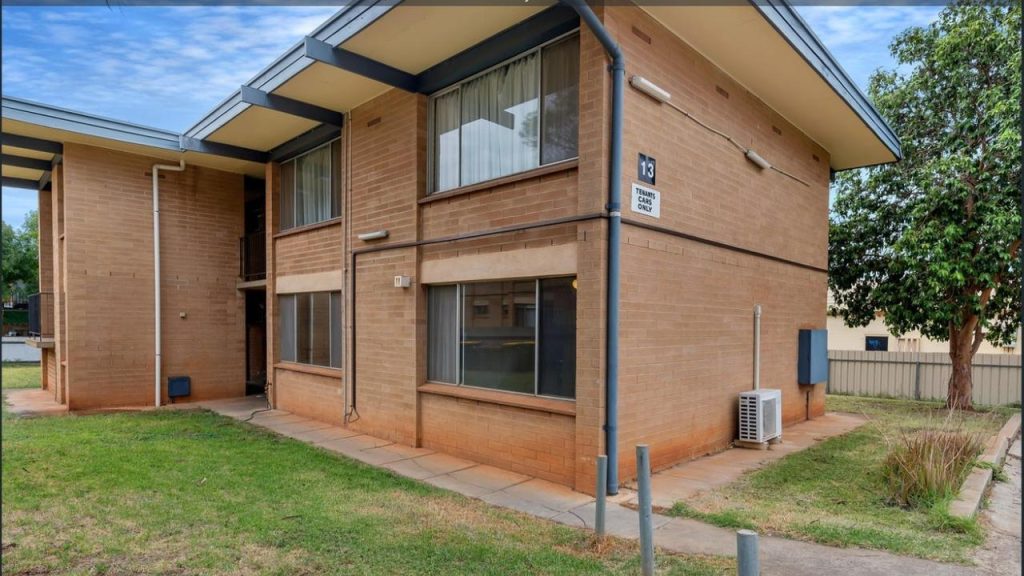
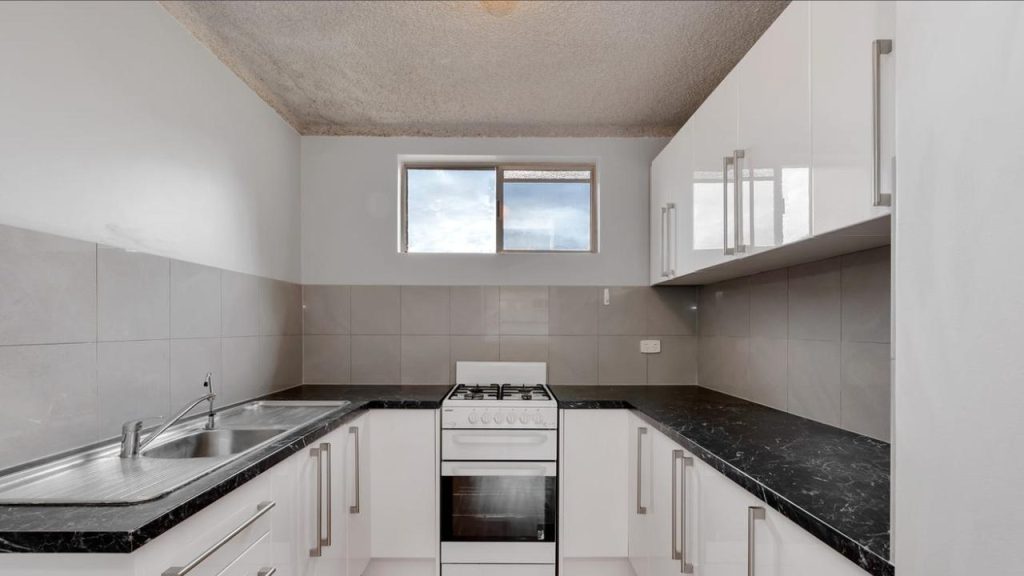
In the midst of increasing interest rates and the rising cost of living, the determined 19-year-old has achieved a significant milestone by purchasing a $205,000 unit in Salisbury East in May of this year.

This accomplishment came from four years of diligent saving after Mr Tselekidis life took an unexpected turn. His parents faced financial difficulties due to an unsuccessful business venture, which eventually led to bankruptcy and divorce.

Investment property of a 19-year-old Aristides Tselekidis, in Salisbury East. Photo: Real Estate.

At the age of nine, he moved into a new home with his single mother, Vicky Tselekidis, 52, and his younger brother Dimitri, 14.

“It was difficult at first because my mother had to work three jobs to provide for the family [after] we lost our house,” Mr. Tselekidis shared with The Advertiser. “Luckily things started getting better. She’s obviously more comfortable now, but it was a struggle.”

Observing his mother’s unwavering dedication and hard work ignited Mr. Tselekidis’s determination to acquire his own investment property once he reached adulthood. At the age of 15, he secured a part-time position at Foodland and began saving diligently.

“I was just saving in general then became a full-time [worker] at 17, and had more money coming in,” he explained.

While working full-time, Mr. Tselekidis managed to obtain his Stage 2 (Year 12) SACE certificate by attending school one day a week for four hours.

During this period, Mr. Tselekidis saved approximately half of his income, amounting to around $500 per week. Remarkably, within two years, he accumulated a $20,000 deposit, with the assistance of Credit Union SA, which provided a $5,000 grant.

“I only put a 5 per cent deposit down and I went with Credit Union SA,” he said. “Even for people who are first- time buyers and they’re buying as investors, they have a $5000 grant that enabled it be $20,000.”

Looking ahead, Mr. Tselekidis plans to purchase another property, potentially in the southern suburbs, by the end of the year.

Investment property of a 19-year-old Aristides Tselekidis, in Salisbury East. Photo: Real Estate.

For young individuals concerned about entering the housing market, Mr. Tselekidis offers valuable tips to help them take the first step.

“Work hard and save. Save at least half your income for a deposit by having a simple and modest lifestyle”, he said. 

Mr. Tselekidis emphasises the importance of not complaining about the property market, as it is likely to continue rising. He suggests that young prospective buyers should remain living with their parents until they are financially capable of purchasing their own home or entering the market.

Furthermore, for those ready to make a purchase, he recommends considering properties that are priced well below their maximum borrowing power.

Read more: Sarah Ramantanis on Gen Z cost of living pressures in Australia

Source: The Advertiser

Gerapetritis rebuts Erdogan’s ‘two-state solution’ in Cyprus

0

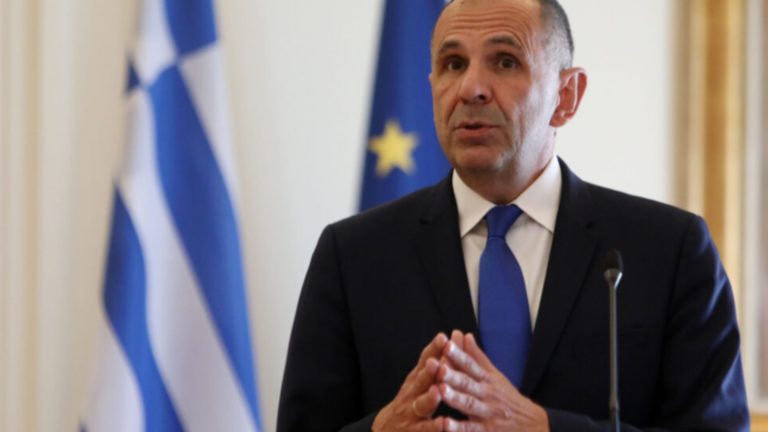
Foreign Minister George Gerapetritis firmly stated that any plans for a two-state solution are “are out of the (negotiations) agenda” in New York on Tuesday.

This statement was made in response to Turkish President Recep Tayyip Erdogan’s call for international recognition of the breakaway Turkish-occupied northern part of Cyprus.

Read more: Erdogan calls for international recognition of Turkish Cypriot entity

Foreign Minister George Gerapetritis firmly stated that any plans for a two-state solution are out of the agenda.

It is important to note that Turkey remains the only country to have recognised the self-proclaimed ‘Turkish Republic of Northern Cyprus’ throughout its 40-year existence, reported Ekathimerini.

Gerapetritis emphasized that Greece fully supports the Cypriot government’s efforts to promote a unified Cyprus, in accordance with the UN Security Council resolutions.

“We obviously support a single state based on a bi-zonal, bi-communal federation,” Gerapetritis said.

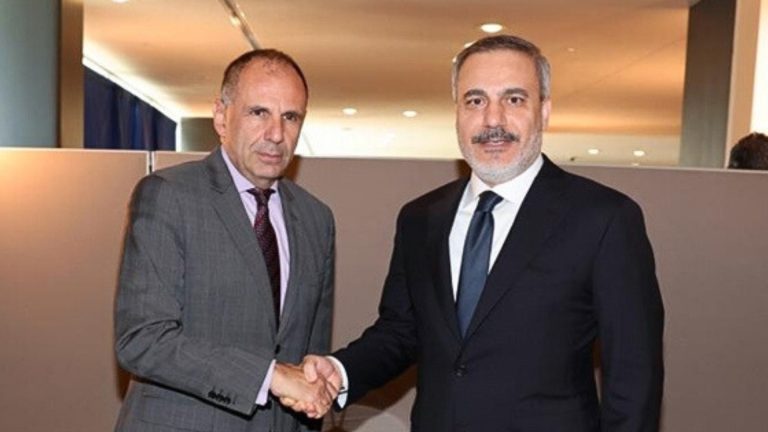
Earlier on Tuesday, Gerapetritis held a meeting with his Turkish counterpart, Hakan Fidan, to prepare for the upcoming meeting between Erdogan and Prime Minister Kyriakos Mitsotakis, scheduled to take place on the sidelines of the United Nations’ annual General Assembly on Wednesday.

Read more: Turkey’s President repeats call for ‘two-state solution’ to Cyprus problem

Source: Ekathimerini

Erdogan calls for international recognition of Turkish Cypriot entity

0

During his address to the UN General Assembly, Turkish President Recep Tayyip Erdogan called upon the international community to acknowledge the Turkish-administered northern region of Cyprus as an independent state.

“We appeal to the international community to acknowledge the TRNC’s [sic] sovereignty and establish diplomatic, political, and economic relations with this nation,” he stated, using an abbreviation for the breakaway entity recognised solely by Turkey, reported Ekathimerini.

Read more: Turkey’s President repeats call for ‘two-state solution’ to Cyprus problem

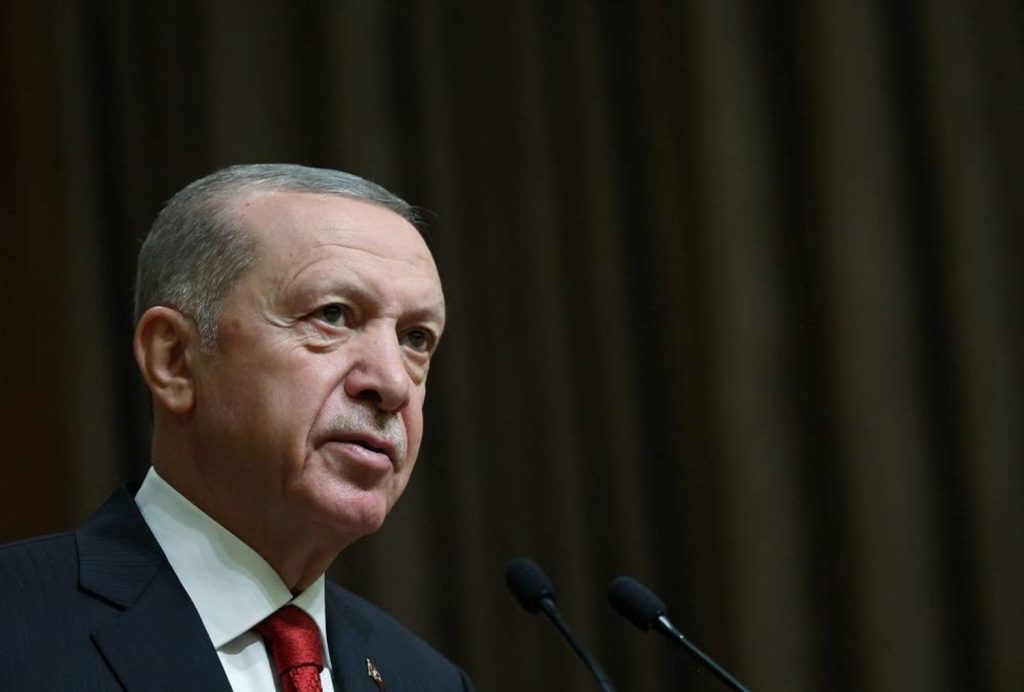
Turkish President Recep Tayyip Erdogan. Photo: Anadolu Ajansı.

In reference to the United Nations Peacekeeping Force in Cyprus, Erdogan also conveyed that Turkey expects impartiality from the UN peacekeeping mission on the island. He emphasized the need to safeguard the reputation of the UN body, which has faced previous reputational challenges in Cyprus.

Erdogan articulated a firm stance on Azerbaijan’s military action in the contested Nagorno-Karabakh region.

“Karabakh rightfully belongs to Azerbaijan,” he declared, accusing Armenia of not seizing historic opportunities. “We stand by Azerbaijan and support their efforts to protect territorial integrity, as we operate under the principle of one nation, two states.”

The Turkish president also emphasized the necessity for the European Union to promptly fulfill its commitments to Turkey, underscoring that hesitancy towards Turkey must come to an end.

Source: Ekathimerini

Greek and Turkish leaders meet ahead premier talks in New York

0

Ahead of a scheduled meeting between Greek Prime Minister Kyriakos Mitsotakis and Turkish President Recep Tayyip Erdogan on Wednesday morning, Greek Foreign Affairs Minister George Gerapetritis and his Turkish counterpart, Hakan Fidan, convened in New York on Tuesday.

Leaders and ministers from Greece and Turkey are presently in attendance at the High-Level Week of the 78th session of the United Nations General Assembly, with the premier meetings of the two nations scheduled for Wednesday morning, reported amna.gr.

Read more: Mitsotakis to meet Erdogan on September 20 in New York

Greek Minister for Migration and Asylum, Dimitris Kairidis. Photo: amna.gr.

On Tuesday, Greek Minister for Migration and Asylum, Dimitris Kairidis, held a telephonic discussion with Türkiye’s Interior Minister, Ali Yerlikay.

According to sources within the Greek government, Kairidis emphasized the mutual benefits of substantial cooperation at both the bilateral and European levels in combatting illegal migration routes.

Initiating the conversation, Yerlikay affirmed Türkiye’s stance against illegal migration and concurred with his Greek counterpart on the imperative need for enhanced collaboration and heightened communication between the two ministries.

Expressing condolences for the recent tragic loss of five members from the Greek humanitarian mission in a road accident in Libya, the Turkish minister extended an invitation to Kairidis to visit Ankara at his earliest convenience.

Source: amna.gr

Mytilenian community comes together to celebrate annual Sardella Day in Sydney

On Sunday, 17 September, the Mytilenian Brotherhood of Sydney and New South Wales came together at the Mytilenian House in Sydney to celebrate Sardella Day.

Sardella Day is a traditional event that ties the sea and fisherman together and is organised annually by the Mytilenian Brotherhood of Sydney and NSW.

Held in the Sydney suburb of Canterbury, the family-friendly event was full of plenty of food including mezethes, BBQ sardelles, fried sardelles and oven-baked sardelles.

The Sardella Day celebrations showcased plenty of entertainment throughout the day, with live music by OPA OPA band, staring Ioannis Kelligianis, Thanasis Pylarinos and Sofiklis Christodoudoulidis.

The Mytilenian Brotherhood’s Dance Group also dressed up in traditional costumes and performed various Lesvian and North-Eastern Aegean/Asia Minor dances for all to enjoy.

Lady Erica: Jamaican deejay from Melbourne ‘adopted’ by a Greek family on Poros

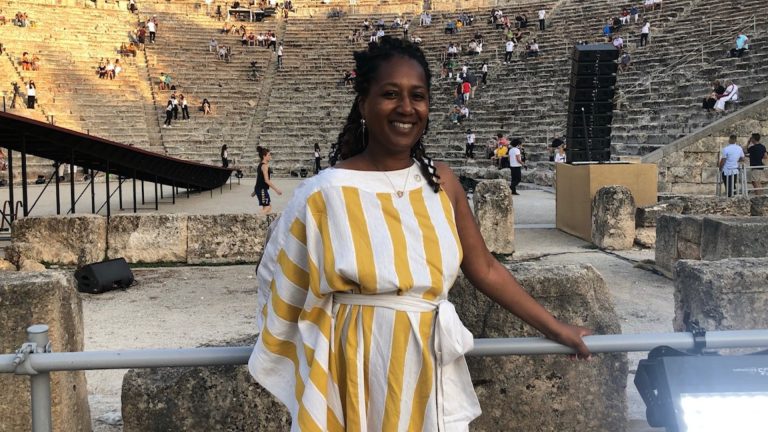
From the United Kingdom to Melbourne, Australia, and later finding herself on a small island in Greece during the COVID-19 restrictions, a two-week break turned into a three-year affair for Dr Erica Myers-Davis, also known as Lady Erica. 

In 1995, Erica moved to Australia and was one of the first deejays to play ‘Jungle’ music in Western Australia. Before relocating to Greece, she was based in Melbourne establishing herself as an artist in Australia’s music scene. 

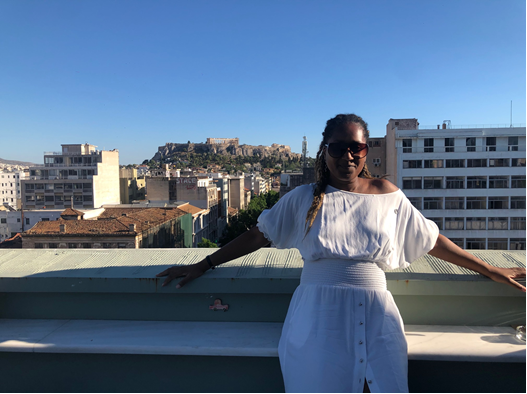
Lady Erica at Olimpias Rooftop Bar overlooking the Parthenon where she DJ’s.

Lady Erica founded Show Pony Music, distributing UK Garage, Grime and Dubstep vinyl, CDs and DVDs across Australia from 2000 to 2008. 

After years of playing in Melbourne’s laneway joints and hidden basements in the city, the Jamaican artist would land a permanent slot with her own show called, ‘Underground Flavas,’ broadcast on Saturday nights on Triple R 102.7FM, reaching millions of listens. 

Erica is also cousins with Jamaican runner Usain Bolt.

With Jamaican roots, an English accent, and an epic story of how she landed on Poros island, The Greek Herald spoke with Erica about embracing an entirely new culture and learning the Greek language. 

Unable to return to Australia during COVID-19, after visiting her sick father in the UK, Erica decided to visit Athens and figure out her next move. It was by chance she would find the island of Poros by randomly pointing on a map to decipher where she would head next. 

Planning to explore Santorini after visiting Poros, Erica wouldn’t know it at the time, but life had other plans. Within three hours of setting foot on Poros, she was ‘adopted’ by a local family who housed, fed and entertained her. 

Lady Erica founded Show Pony Music, distributing UK Garage, Grime and Dubstep vinyl, CDs and DVDs across Australia from 2000 to 2008. 

Within a short time, Erica was exploring the island by foot with new friends, watching football with the family and pappou, and learning how to make Greek food.  

“It was so much fun,” Erica says about when she first arrived, “and it was a distraction from what was going on with my dad.”

During this time, her father was still very sick and encouraged her to stay on the island instead of returning to the UK. So, Erica would create little videos of her adventures to send to her dad, inviting him to share the experience with her. 

Sadly, Erica’s father passed away and the stark reality set in. 

“I couldn’t go back to Melbourne at this point. I was stranded, so I had to think about what I was going to do long-term,” Erica explains.

She decided to explore the idea of staying on the island permanently.  

“I called on future Erica… she comes from the future and tells me, ‘Erica, just do this thing! Just apply for residency!” she says.

And that’s exactly what she did. Erica was granted residency by the Greek government within two months of applying, giving her the right to work and live in Greece. 

“My family heritage is Jamaican; if Jamaica was in Europe, it would be Greece, which is one of the reasons I like it. There’s a lot of similarities; it’s loose, everyone is loud, it has amazing beaches,” Erica says.

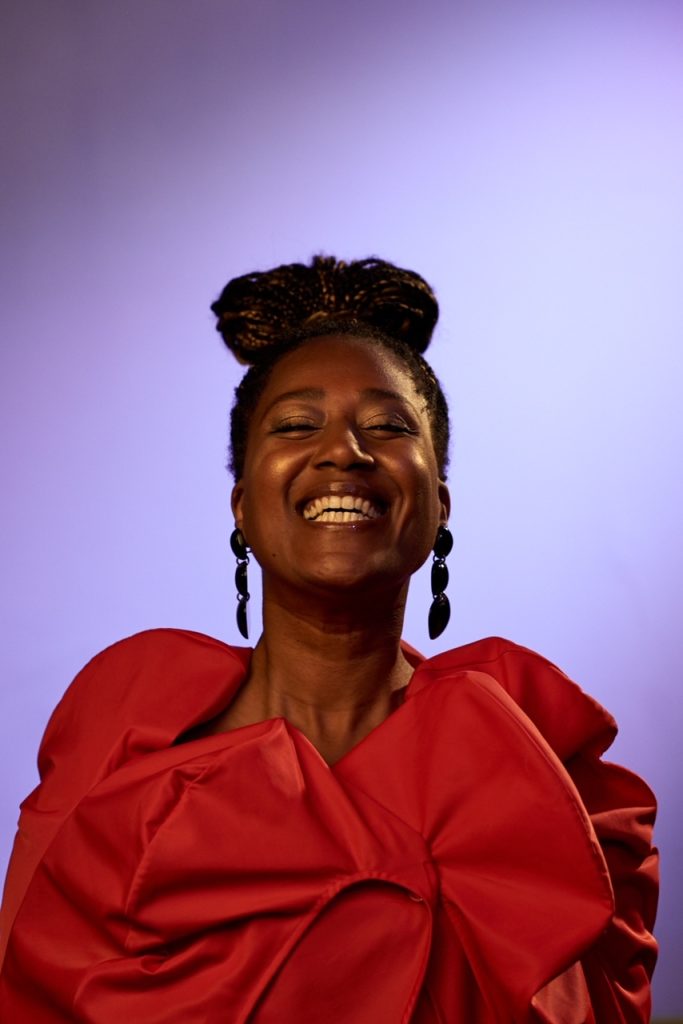
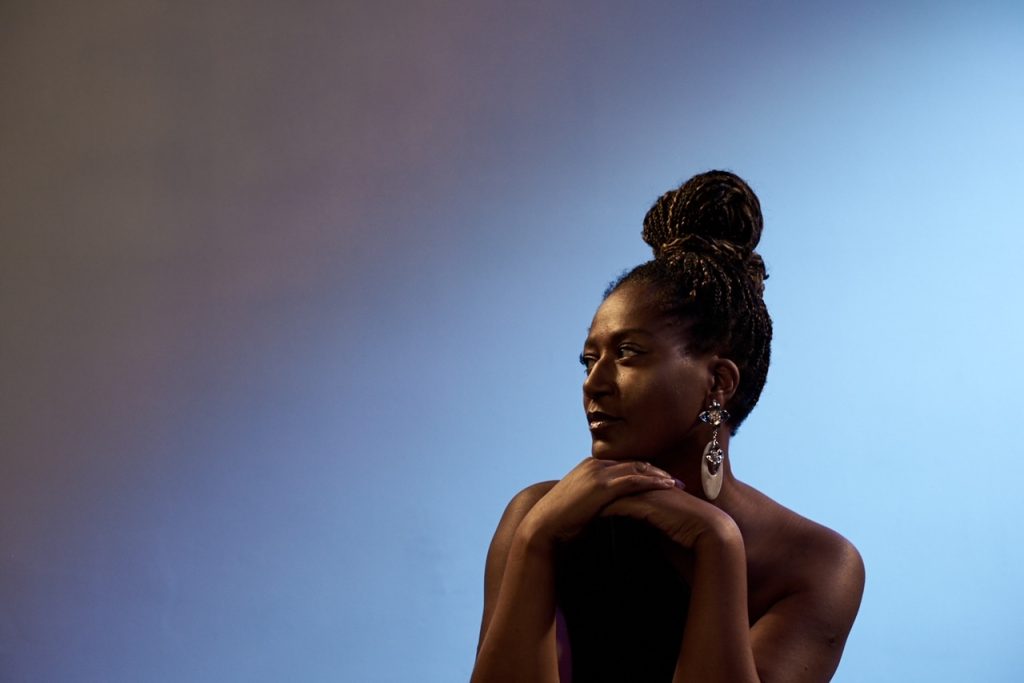
A shoot by Paris Valtadoros in Athens in 2023 inspired by the goddess Astraea.

“Some people think it’s a bit backwards here. In some ways it is, but in other ways it’s not. It’s all about family, food, singing, dancing – and that’s Jamaica!” Erica says.

While the family who took her in spoke English well, Erica felt embarrassed that she was unable to speak Greek, especially with the older relatives who don’t speak English. Almost immediately, she began learning the Greek language online with an app and a local teacher. 

The family were amused by her commitment to learning as they looked around her apartment and saw it covered in post-it notes describing each item and room in Greek. 

Last year, Erica was able to return to Melbourne and decided she would do six months in each country. She continued learning Greek through the Greek Community of Melbourne’s (GCM) language school. Learning the language deepened her love for and of Greece. 

The in-person and online classes by the GCM gave Erica the confidence to speak Greek. While she finds the pronunciation of words with more than four syllables challenging, people often say her accent is very good. 

Erica now works on Poros island remotely and deejay’s in Athens, whilst also travelling back to Australia during the summer months. Her end game is to retire in Greece. 

Read more: ‘Deepened my love for Greece’: Why students in Melbourne learn Greek