During the COP28 conference in Dubai, Kyriakos Mitostakis announced that Poros will become the third ‘green’ island of Greece.
As part of the governments GR-eco islands national initiative, Poros will transform into a green island which is inspired by its pilot examples of Astypalea and Halki.
The project will see the installation of a photovoltaic park covering a significant part of the islands annual energy needs, with the addition of electrifying public transportation including ferry connections between Poros and the mainland.
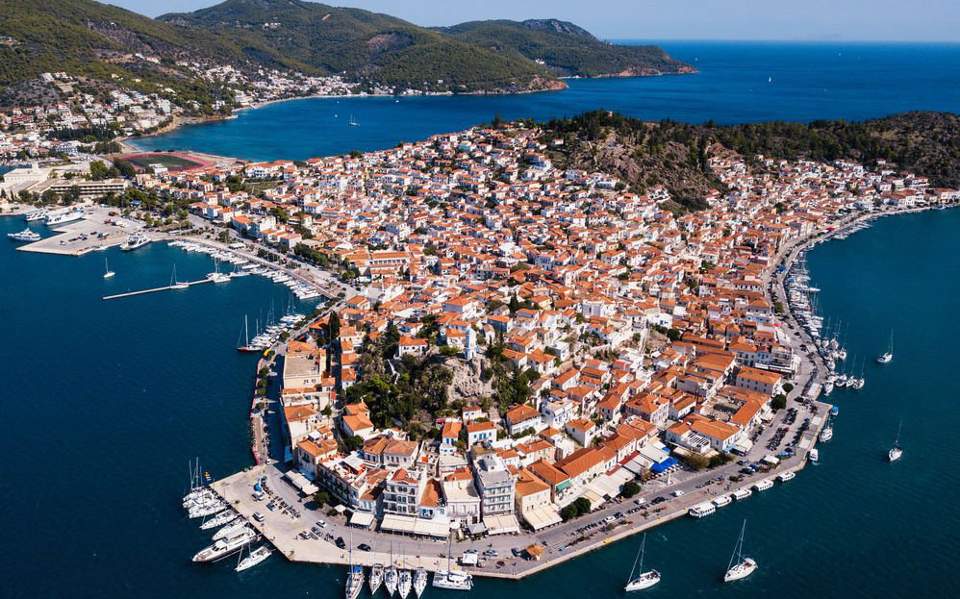
The island of Poros. Photo: Ekathimerini.
At present, the project will take place in collaboration with the United Arab Emirate state owned green energy company Masdar, who are known for being world leaders in renewable energy.
At the conference, Prime Minister Mitostakis said the initiative will aim to highlight the impact technology can have when trying to reach climate neutrality and seeing how well local communities can engage in making green transitions.
Boasting an 18 percent recycling rate, Greece has been ranked first in the European Union for recycling smartphones.
On average, the European Union only sees 10 percent of Europeans recycling their old mobile phones, with Greece, Austria, and the Czech Republic the leaders for recycling technology.
In terms of the Eurostat data, it found that 17 percent of Europeans opt to give or sell their old smartphones to individuals outside of their household, whilst 2 percent discard their phones without considering recycling.
Recycling Smartphones. Photo: Business Insider
With Greece being considered first in recycling, the country also demonstrated commendable performance in recycling old laptops and tablets, securing a 16.5 percent rate.
Addressing the results, Eurostat notes that with the escalating use of information and communication technology, Greece’s recycling procedures will inspire many other European countries to follow in their footsteps.
The webinar with Minister Kerameus touched on a range of important issues, including her priorities in her current portfolio, her views on the not-for-profit landscape in Greece, and the announcement of reforms to the public service sector in Greece.
Greece’s government spokesman Pavlos Marinakis confirmed on December 1 that the diaspora will be able to vote in European elections via postal vote, however there may be a “different procedure” for Greek national elections.
During the THI Australia event, Minister Kerameus commented on this historical news and said the government wanted to remove all barriers to the diaspora participating in Greece’s democratic system.
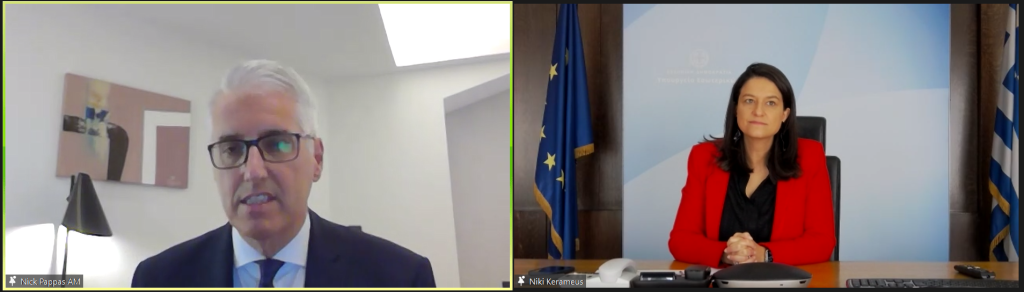
Niki Kerameus (right) being questioned by Nicholas Papas from The Hellenic Initiative Australia.
“In July 2023, we lifted all legal barriers regarding Greeks living abroad who want to vote. During the past elections, in order to vote you had to prove you had lived in Greece for a certain period of time, you had to file a tax declaration, etc. We thought it was extremely important to lift all such barriers and that’s what we did,” the Minister said.
“But truth be told, there were some practical impediments. We had lifted legal barriers but at the same time, as you know, during the past elections if you wanted to vote you had to travel for instance from Perth to Melbourne. So that was a huge impediment… and that’s why we have been striving to lift all practical burdens as well.”
Minister Kerameus said the postal voting system now “removed all legal and practical barriers” for the diaspora, and encouraged them to spread the word to the Greek Australian community.
“The role of the diaspora is crucial and we are grateful for all that you do. You are ambassadors of our country abroad and that’s why we are so adamant also about lifting all barriers for Greece’s voice to be heard as strong as possible across the globe,” she said.
“The law is expected to be voted on in January 2024 so five months ahead of the next European elections.
“We depend on you to get the message across for every single Greek living in Australia to become aware of this most important change that he or she will be able to vote through postal vote during the next European elections.”
Σε συζήτηση σήμερα με Έλληνες πολίτες που κατοικούν στην Αυστραλία, με πρωτοβουλία του @THI_OneGreece Australia, μεταξύ άλλων αναφέρθηκα στο ιστορικό βήμα που ετοιμάζει η χώρα μας, αυτό της επιστολικής ψήφου για τις επερχόμενες Ευρωεκλογές. Η εξάλειψη των νομικών περιορισμών για… pic.twitter.com/OvX8XRVDPJ
Greek language maintenance and potential visit to Australia:
Following on from this topic, the Chairman of THI Australia, Nicholas G Pappas, asked the Minister for her thoughts on maintaining the Greek language in Australia.
The Interior Minister, who was also Greece’s former Minister for Education and Religious Affairs between 2015 and 2023, said although there are many ways to enhance the Greek language, there are also difficulties when it comes to recruitment of teachers.
“There are many ways to maintain and enhance the teaching of the Greek language – one has to do with school and the other has to do with universities,” she said.
“As far as the schools are concerned, I know that the Ministry of Education is working very hard in terms of securing the necessary personnel – it’s not always easy, I must tell you. It’s not always easy to find teachers who are willing to travel and to live abroad given also the high living expenses.”
To conclude the webinar, Mr Pappas asked the Minister when we could expect to see her in Australia to discuss these topics with the local Greek community in person.
She replied, “With these recent changes, both the Alternate Minister Thodoris Livanis and myself, we are looking at conveying the message and getting in touch with Greeks abroad and in Australia as well.”
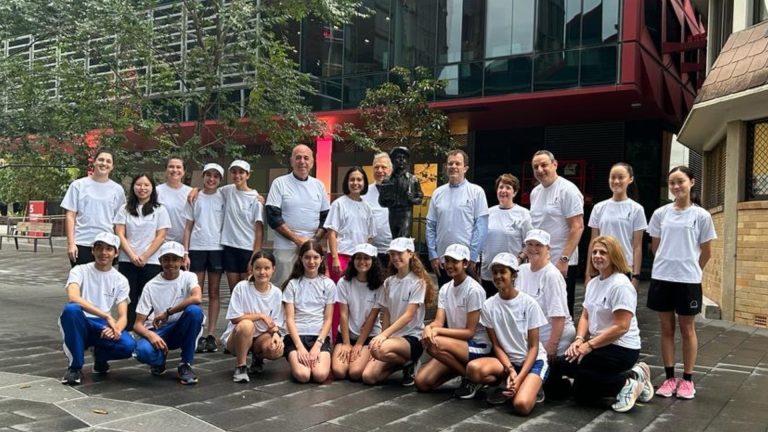
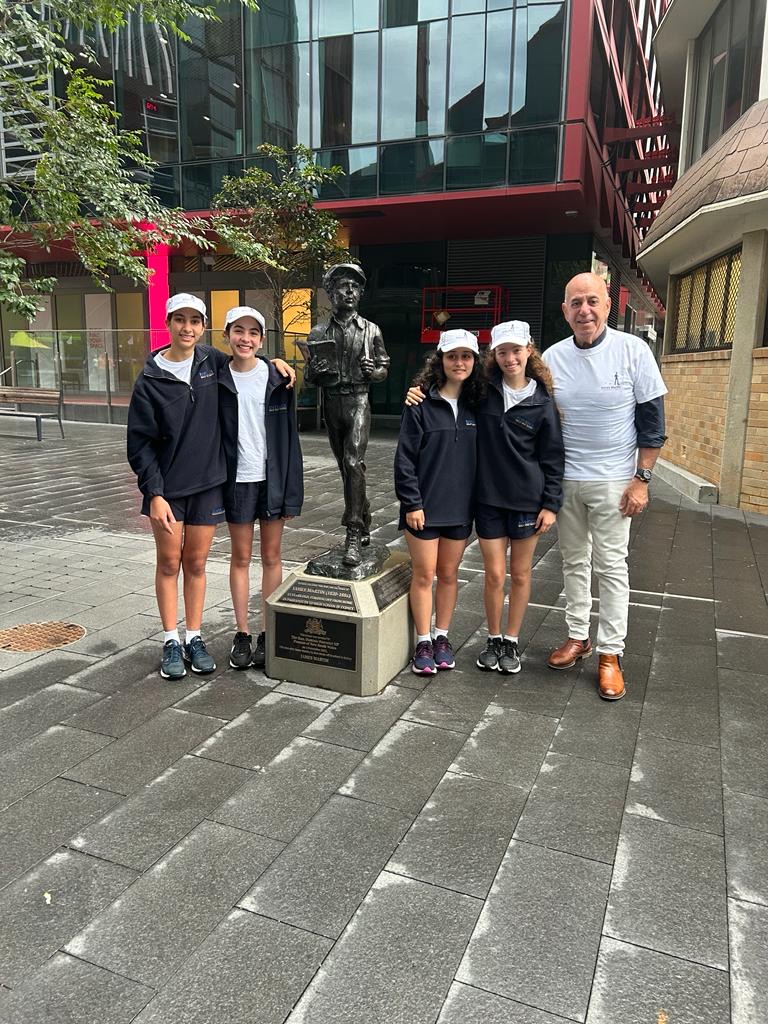
Fifteen kids from five schools across Sydney today retraced the steps of one of Parramatta’s greatest success stories, Sir James Martin, walking from Parramatta Square to Sydney’s Martin Place.
The students – from Parramatta High School, Riverside Girls High School, Marsden High School, Sydney Secondary College Balmain, and Conservatorium High School – replicated the journey of Martin who in the 1830s used to walk from his home in Parramatta to Sydney so he could go to high school.
A penniless Irish boy, Martin went on to become Premier of NSW, Chief Justice and was a key architect of the country’s first system of public education.
City of Parramatta Lord Mayor Cr Pierre Esber, who farewelled the group on their journey alongside Deputy Premier Prue Car and Opposition leader Mark Speakman, said James Martin’s story was a continued source of pride and inspiration for the City.
City of Parramatta Lord Mayor, Cr Pierre Esber with students at Parramatta Square. Photo: Supplied.
“We should never forget that one of Sydney’s most recognised boulevards is named after a kid from Parramatta,” Cr Esber said.
“James Martin rose from the humblest of beginnings to the highest ranks of the State government – all because of his determination and love of learning, traits that are part of our City’s DNA.”
Dr Patricia Azarias, co-founder of The Lysicrates Foundation which partnered with the NSW Department of Education to host the walk, said the event aimed to inspire a new generation of kids from Western Sydney.
“Everyone needs a hero they can look up to,” Dr Azarias said.
“This is about every kid in Western Sydney realising they too can grow up to be Premier or Chief Justice and make their mark on the State or achieve whatever it is they want to do.”
Moray & Agnew was recently recognised by the International Guide to Law Firms as one of the leading insurance firms in Australia.
Doyle’s Guide, an independent annual directory, ranked Moray & Agnew’s Melbourne Public & Product Liability practice in the top two firms in Victoria (First Tier).
Equally, Moray & Agnew’s Professional Indemnity was ranked in the top five firms in Victoria.
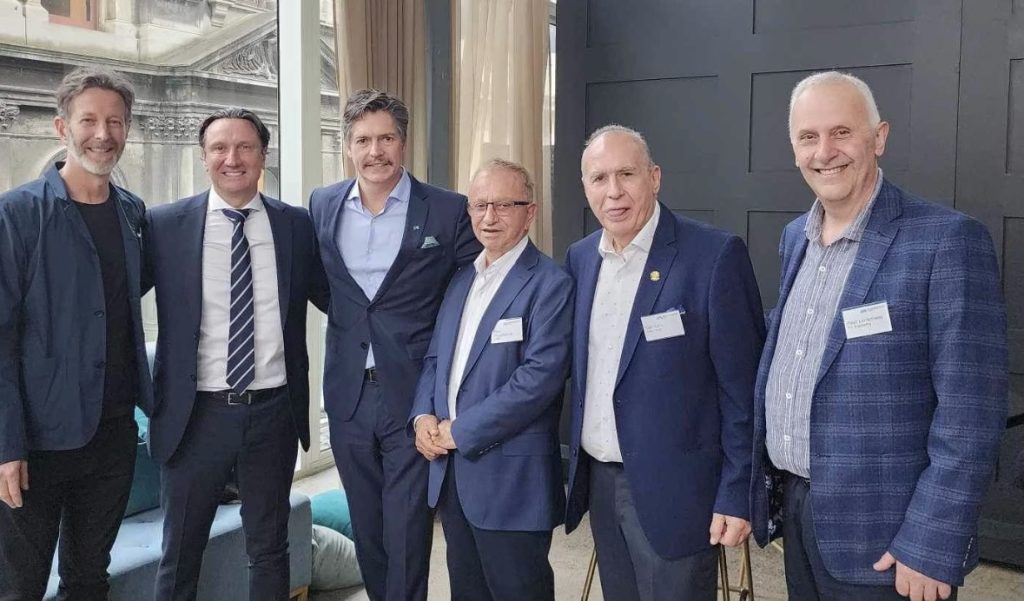
Melbourne Deputy Lord Mayor Nicholas Reece (third from left) was keynote speaker at a Moray & Agnew event earlier this year.
Melbourne Managing Partner, Bill Papastergiadis OAM said this was a remarkable achievement for the firm and highlights the exceptional standard and diligence of Moray & Agnew’s lawyers.
“Our insurance practice continues to grow and excel as shown by this recognition and we proud of the work our team does in this practice area,” Mr Papastergiadis said.
“Being acknowledged by Global International Bodies for our excellence and expertise reflects well on the many lawyers who work in our firm. Our lawyers are amongst the best litigators in Victoria and our firm continues to excel in a number of areas of law.”
A recent event by Moray & Agnew where Melbourne Deputy Lord Mayor Nicholas Reece was the key note speaker.
Mr Papastergiadis also noted that this recognition arises from “our firm acting for practically all professionals when they are sued including lawyers, engineers, accountants, doctors, surveyors, councils in some of the largest litigation matters in Australia.”
Partner Emily Daffy said “this recognition is not just a sign of our standing in Public and Product Liability and Professional Indemnity, but also our commitment to ensure our client’s needs are met.”
The President of the Greek Community of Melbourne (GCM), Bill Papastergiadis OAM, and the GCM Board of Management, sent an official letter to ABC Channel to express their deep concern and disappointment regarding the recent coverage of the Parthenon Marbles, where they were consistently referred to as the “Elgin” Marbles.
GCM has addressed this misrepresentation and has requested a correction to ensure the accurate portrayal of these significant cultural artifacts, along with a formal apology by ABC Channel.
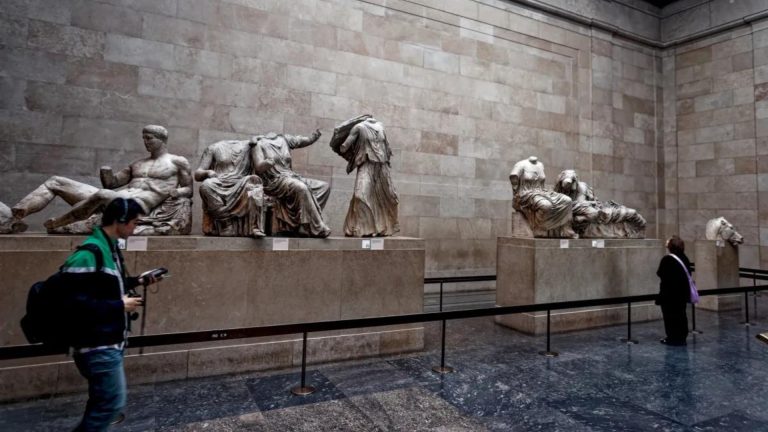
The Parthenon Marbles, known colloquially as the “Elgin” Marbles due to their removal by Thomas Bruce, the 7th Earl of Elgin, from the Parthenon in Athens during the early 19th century, hold immense importance for the Greek community worldwide.
In a press release, the GCM said it is crucial to recognise that the use of the term “Elgin” Marbles can contribute to a biased narrative, overshadowing the broader historical and cultural context.
“It inadvertently perpetuates the narrative of their removal rather than acknowledging their intrinsic connection to the Parthenon and the broader cultural context,” the release adds.
The Greek Community of Melbourne sends letter to ABC over recent Parthenon Marbles coverage.
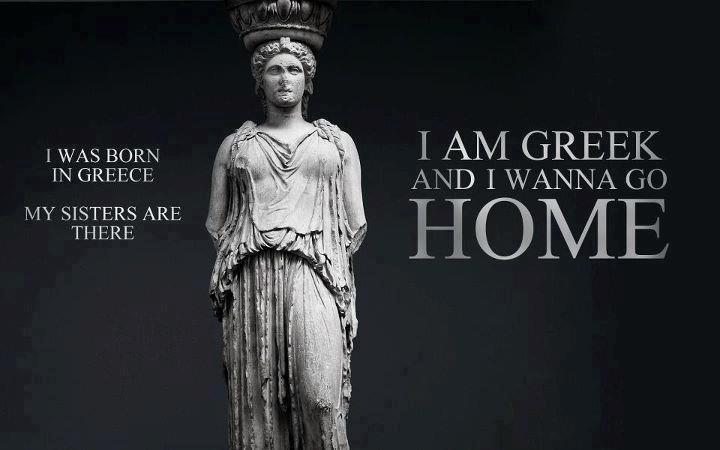
“These artifacts represent the pinnacle of ancient Greek art and architecture and are integral to Greece’s cultural heritage. Referring to them solely by the name of the individual responsible for their removal may inadvertently diminish their significance and sidestep the ongoing discussions about their repatriation to Greece.”
GCM Secretary, Nick Koukouvitakis, added, “A more neutral and accurate terminology, such as “Parthenon Marbles,” would better reflect the broader cultural and historical context of these artifacts.”
Mr Papastergiadis stated, “The return of the Parthenon Marbles, is not merely a matter of national pride, but a universal call to honour the integrity of cultural heritage. It is a gesture that transcends national boundaries, promoting a shared commitment to safeguarding the world’s cultural heritage.”
“Their return to Greece signifies the restoration of a fragmented narrative, allowing these masterpieces to be appreciated within the cultural and historical landscape that gave them life. Let them breathe again on the soil that birthed their significance,” Mr Papastergiadis said.
GCM Vice President, Anthea Sidiropoulos, said, “Understanding our history is the thread that weaves resilience into our future. Without it, we risk losing the map to our progress, for history is not just a record, but a compass guiding us forward. Together, we can ensure that these treasures are returned to their home and continue to inspire generations to come.”
As part of the 42nd Greek Festival of Sydney that will take place between February and May 2024, the Festival Committee is planning many events that will involve the Greek and Greek-at-heart Youth of NSW with the ‘1st Greek Youth Creative Competition’ being the highlight of the festivities.
The Competition expands into three creative categories – art, writing and music – and is open to three youth groups: 12-15 years, 16-18 years and 19-24 years of age.
With the relevant theme for 2024 being “Greece within me,” young audiences are encouraged to submit their applications by March 15, 2024.
Participants on each category will be able to showcase their work in a gallery set-up exhibition (art category), booklet distribution (writing category), social media coverage (music category) and the winners will receive substantial monetary awards. A special award ceremony will be held on the April 28, 2024.
To apply under the Art Category participants must submit a photo of an artwork across any of the following sub-categories: painting, drawing, photography, sculpture, digital artwork, collage, graffiti, 3D Modelling.
To apply under the Writing Category participants must submit a piece of writing in Greek or English language (maximum 1000 words) across any of the following sub-categories: short story, fan fiction, poetry, review, theatrical, piece of prose.
Lastly, to apply under the Music Category participants must submit an MP4 video of maximum three minutes with an original music work (song, instrumental, acapella) across any of the following sub-categories: solo performance, band ensemble, duet or group performance, instrumental performance, DJ Performance.
Harry Danalis, President of the Greek Orthodox Community of New South Wales (GOCNSW), states, “The Greek Festival of Sydney has supported and cultivated the extended Greek Community of NSW through cultural avenues for an astounding 42 years.”
“Our efforts to promote, preserve and enhance the Greek culture as a community must continue through our youth and this is exactly what we try to achieve through projects like the ‘1st Greek Youth Creative Arts Competition’,” Mr Danalis added.
“We want our children to know who we are, were we came from and how we continue to grow along with them through our unique cultural identity as Greeks abroad.”
Chair of the Greek Festival of Sydney Nia Karteris says, “With the Greek youth being so talented, productive and engaging in all aspects of social life, we couldn’t but support the idea of expanding the Greek Festival’s cultural umbrella to include and showcase the work of our youngsters.”
The Competition is open to all NSW Greek and Greek-at-heart youth aged 12-24 and aims to become an annual event that will express creativity while strengthening and empowering the Greek Culture in younger generations of Greek descent.
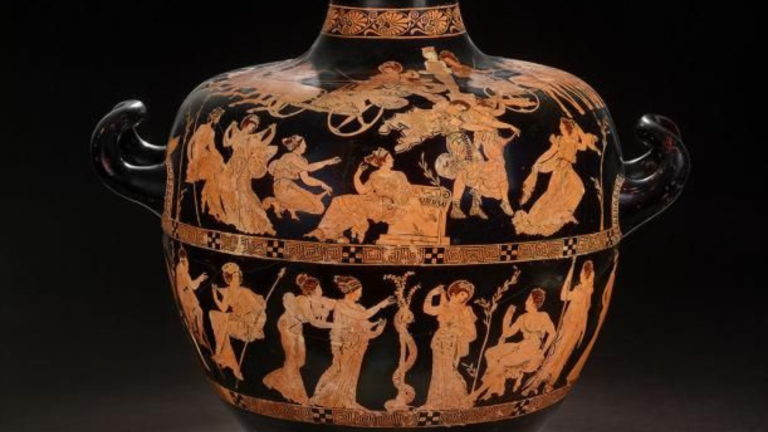
The British Museum has loaned Greece a valuable painted Meidias Hydria vase dating to 420BC.
Originally excavated in Italy, the vase is approximately 50 centimeters in length and is considered a masterpiece by the well-known ancient vase painter Meidia who often depicted mythological scenes on ceramics.
The vase was previously on display in the British Museum and the loan is the very first time in 250 years that the artefact has left Britain.
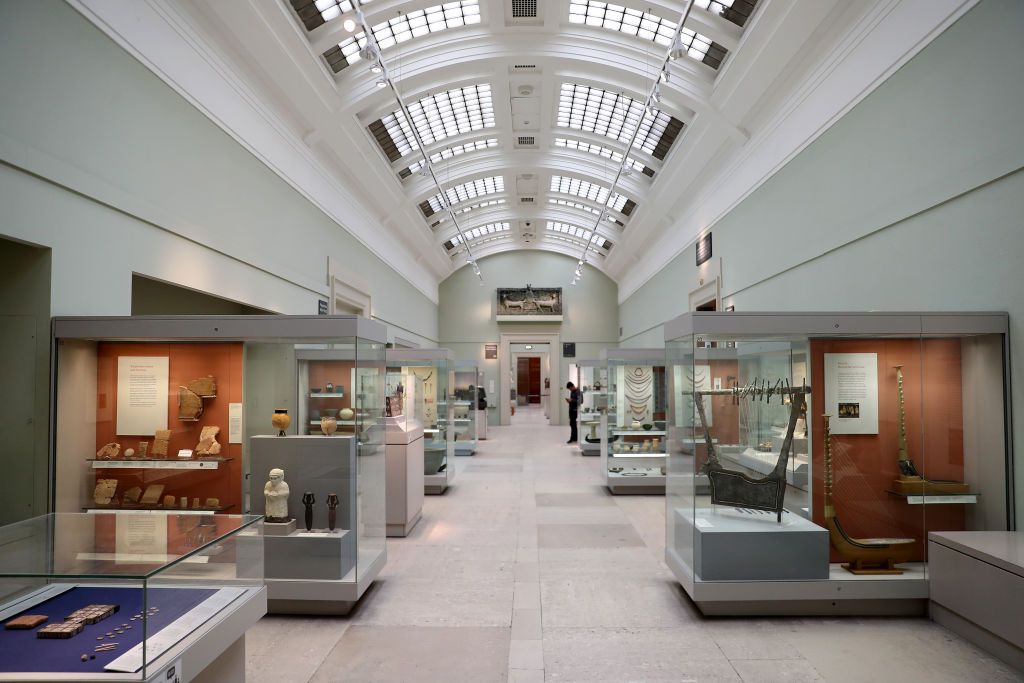
The inside of the British Museum. Photo:TripSavvy.
The artefact will form part of an exhibition held at the Acropolis Museum which focuses on the meanings of certain visual images which are often depicted on ceramics.
According to a British Museum spokesperson, this loan is part of the ongoing partnership with the Greek museum and is not to be considered a peace offering in the face of the current conflict regarding the Parthenon Marbles.
The Athens exhibition will open to the general public on Thursday the 7th.
The head of Catholic education in Tasmania has spoken out against mandatory sexual consent education being rolled out in school curriculums across Australia.
In a recently published article on the Archdiocese of Hobart’s website, the Head of Catholic Education Tasmania, Gerard Gaskin, took issue with this update and said the new curriculum includes “highly sensitive, amoral and potentially harmful information.”
Chanel Contos.
In response, the founder of Teach Us Consent, Chanel Contos, said consent education should not be made a political or religious issue.
“Sexual relationships can and do occur outside of marriage. Abstinence is a choice, sexual assault is not,” Ms Contos said.
“Marital rape is also illegal in Australia. Teaching consent education to the whole of Australia would only increase an individual’s ability to only have sex within marriage if that is their desire.
“Whilst I do not personally agree with teaching abstinence, consent education can always be taught in conjunction with religious values.”