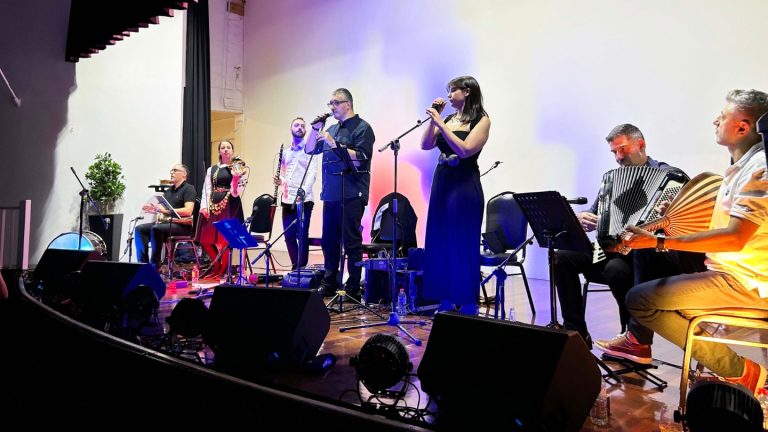
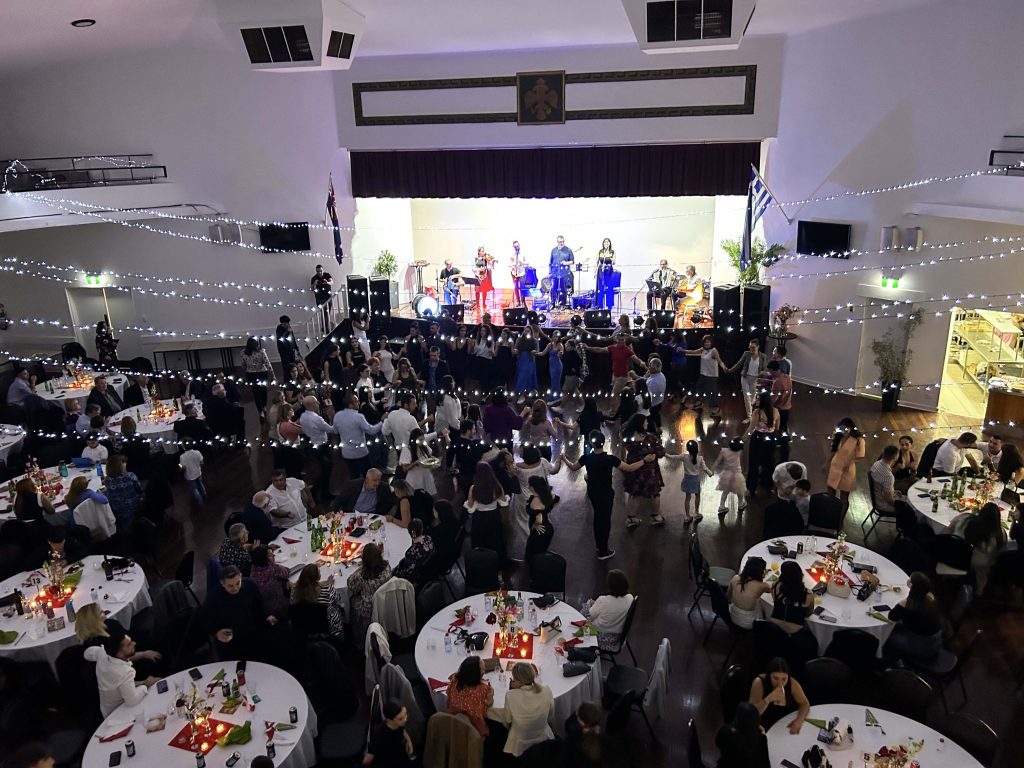
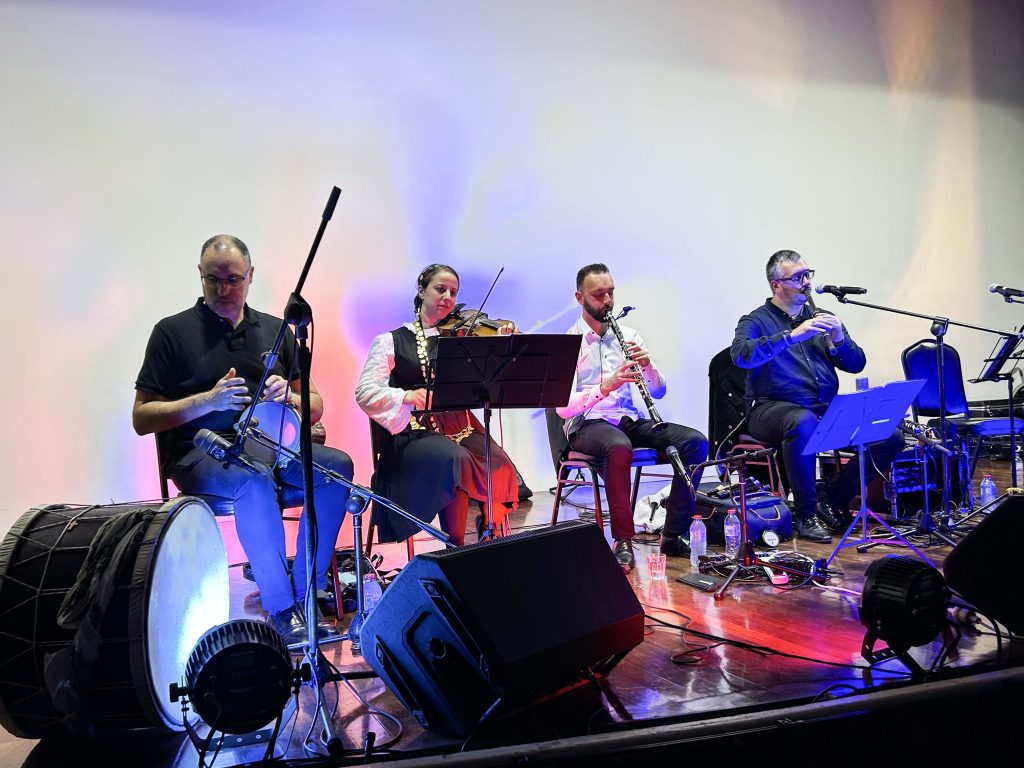
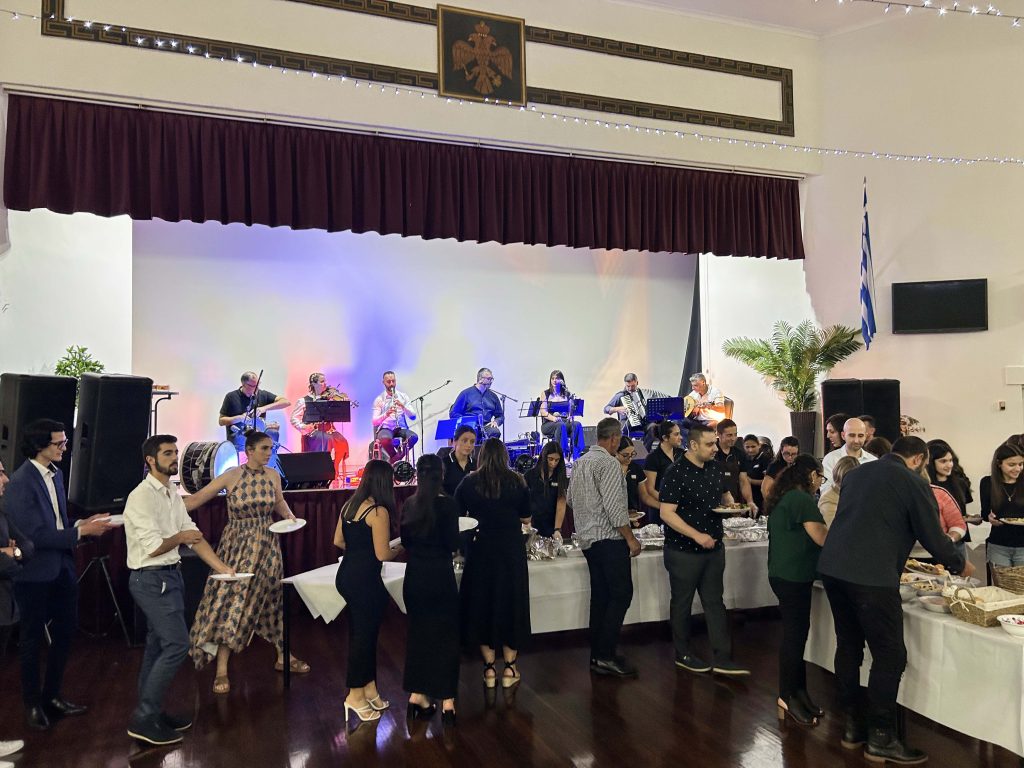
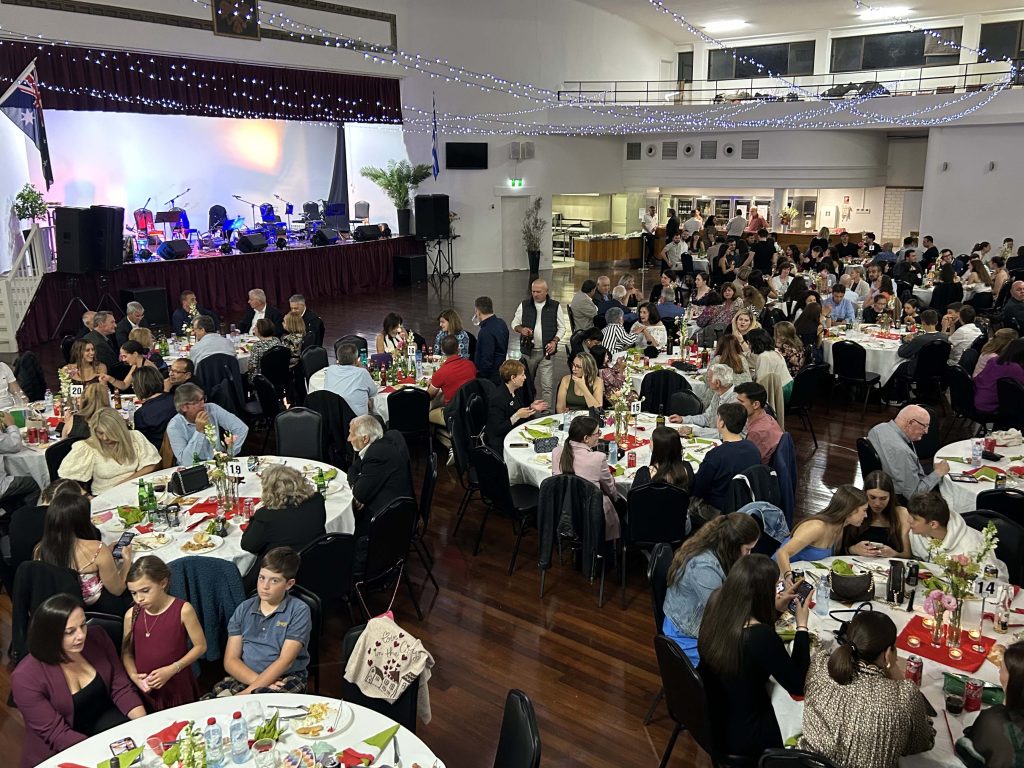
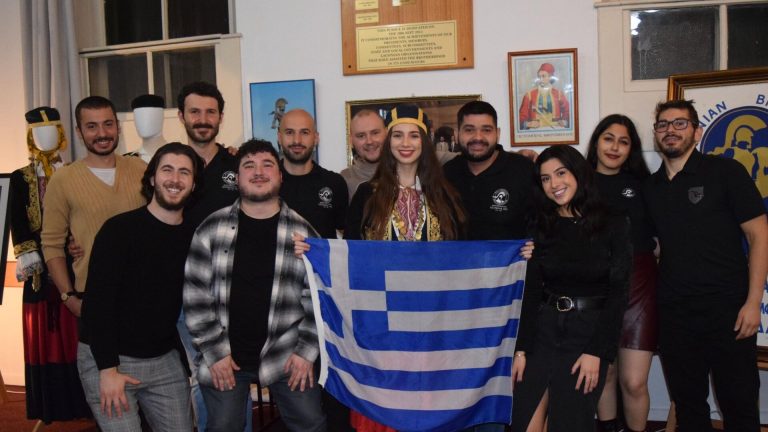
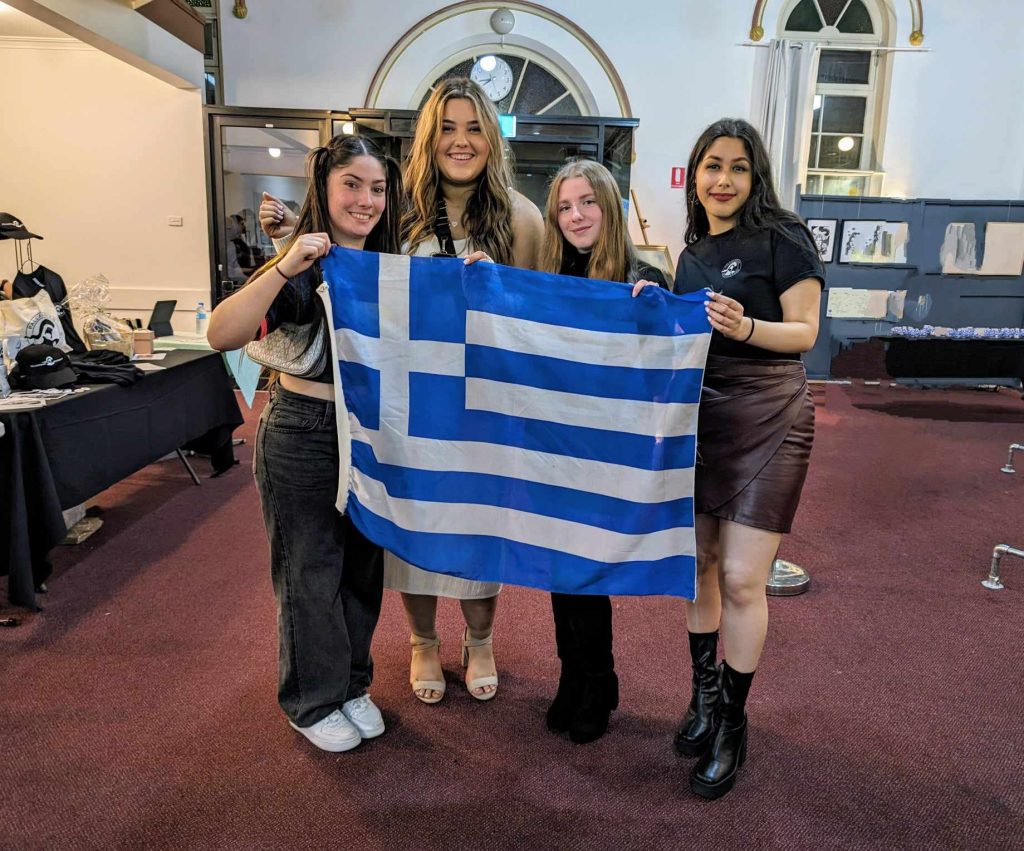
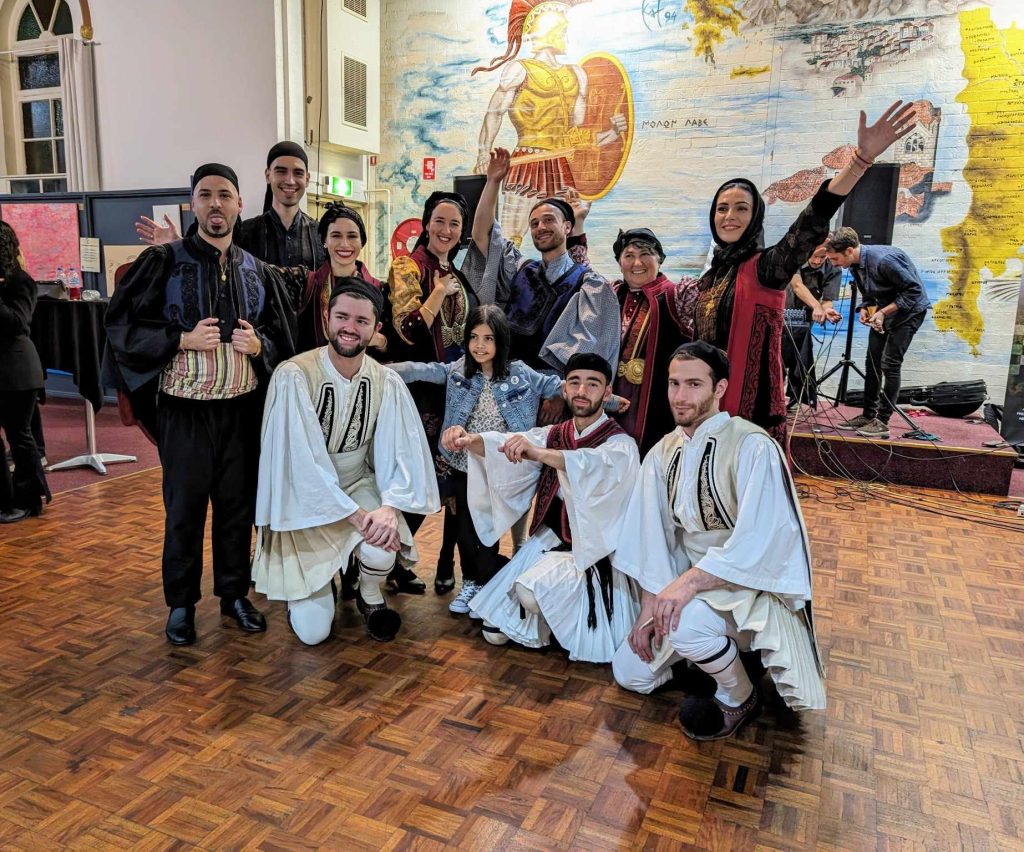
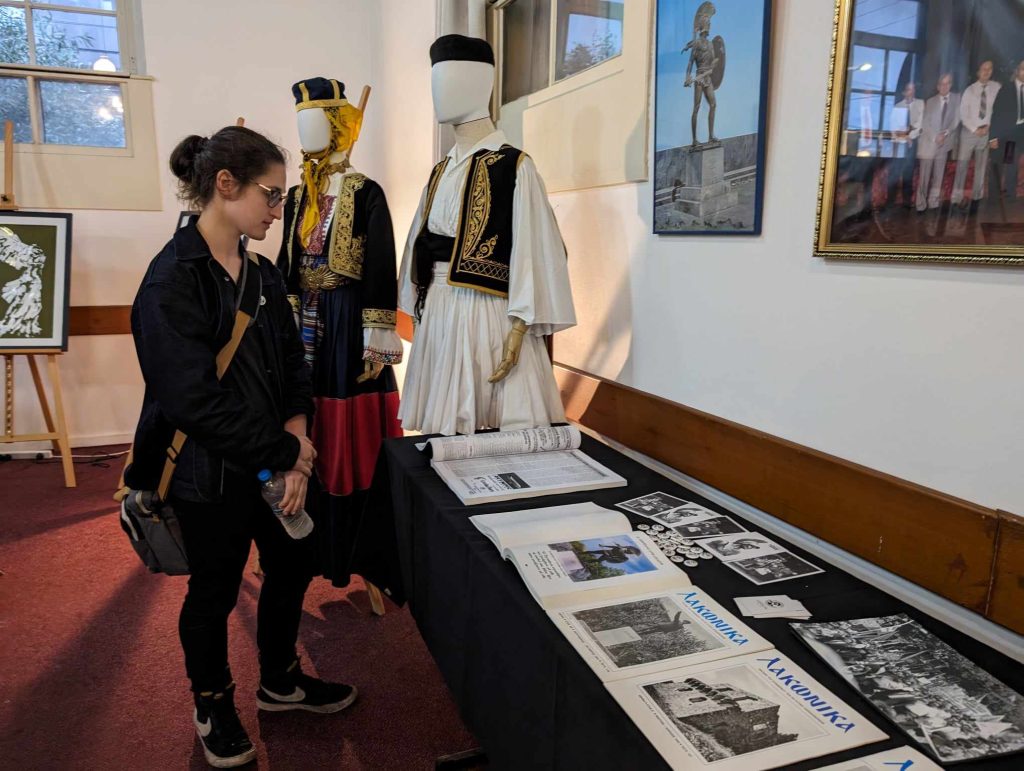
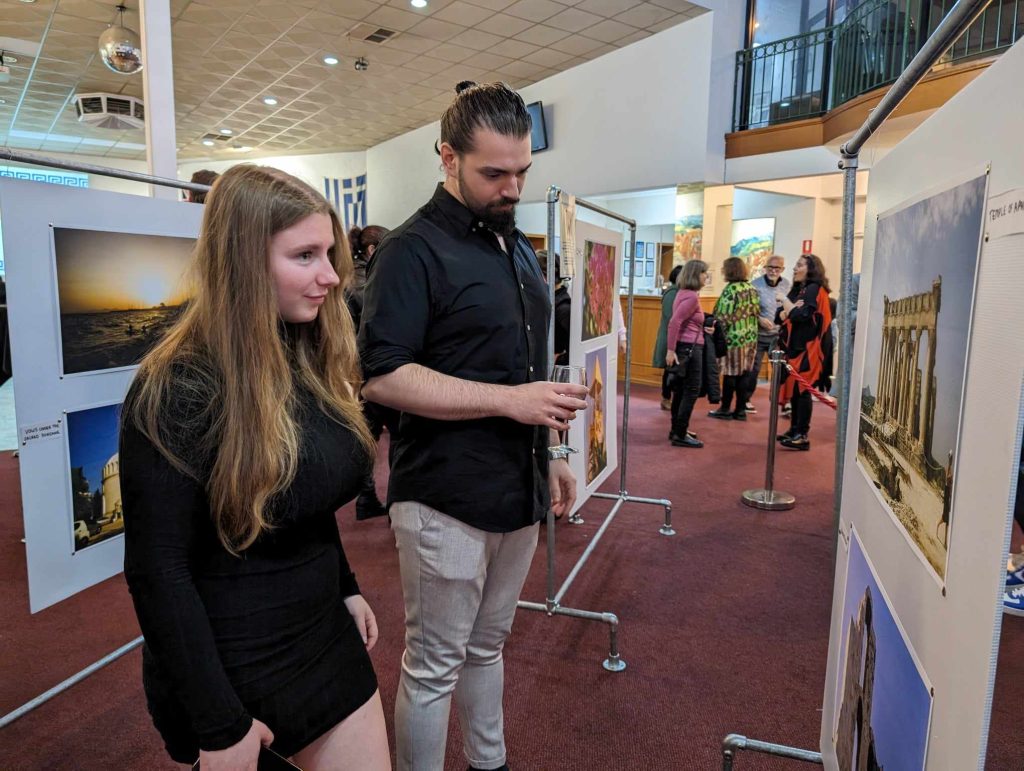
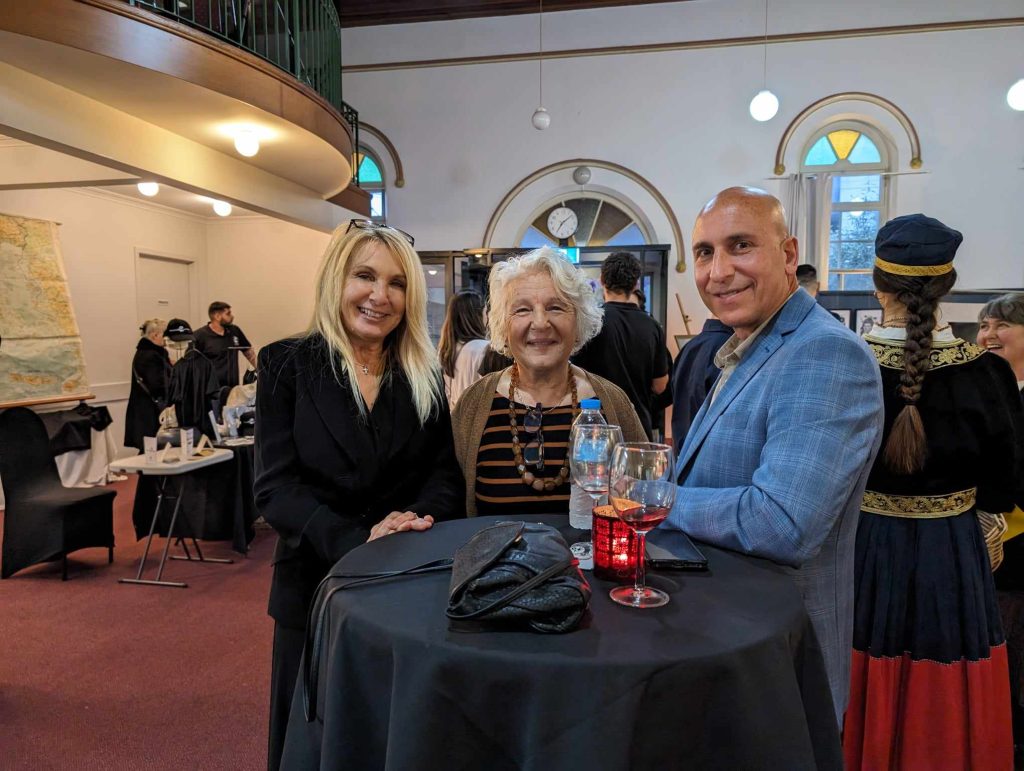
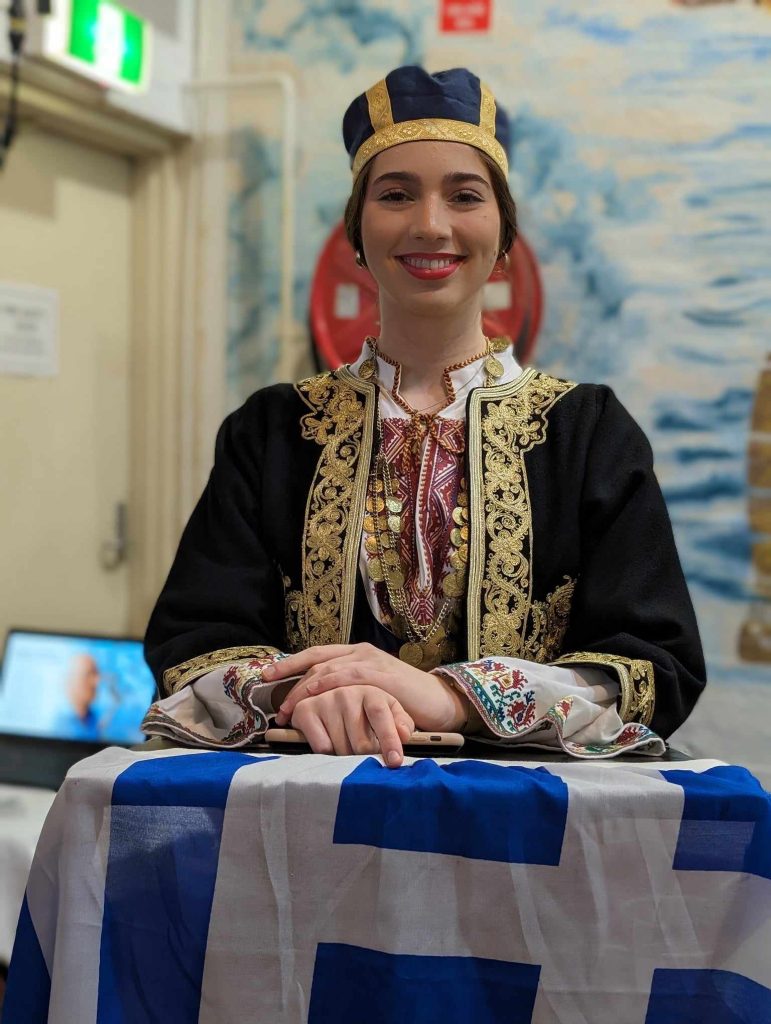
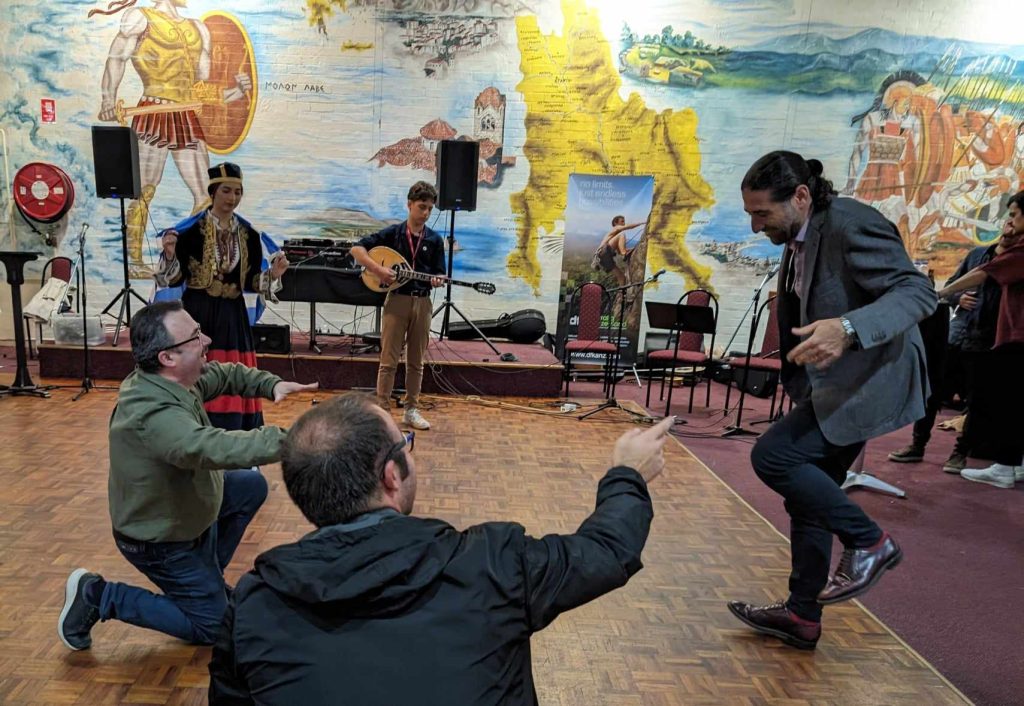
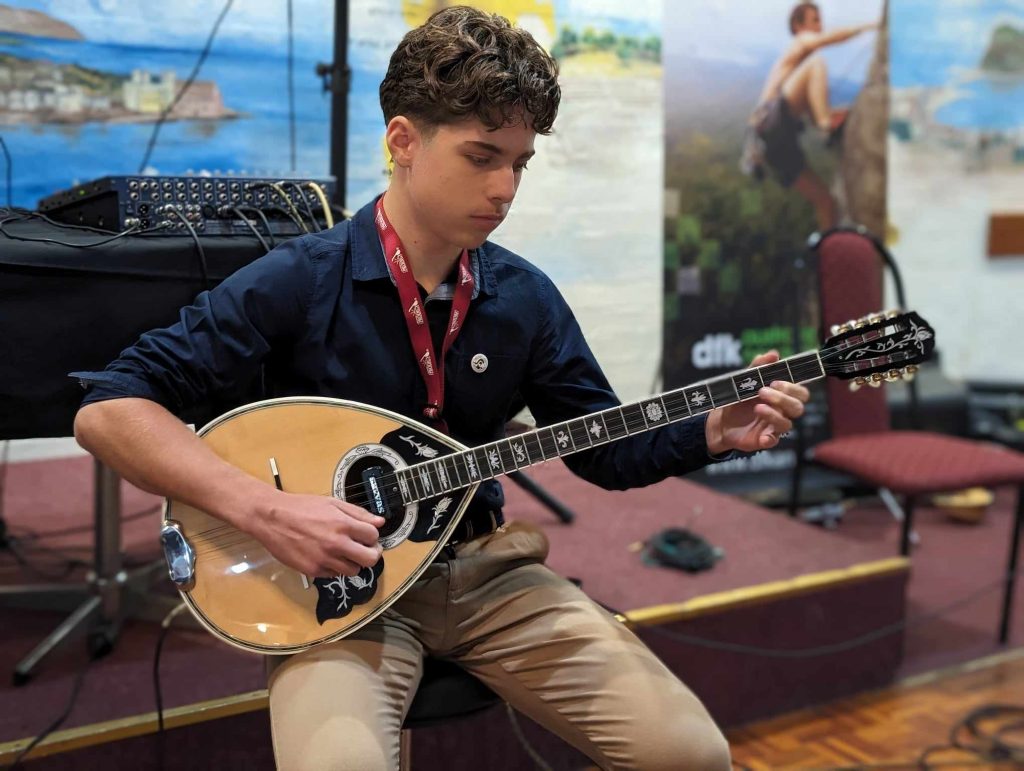
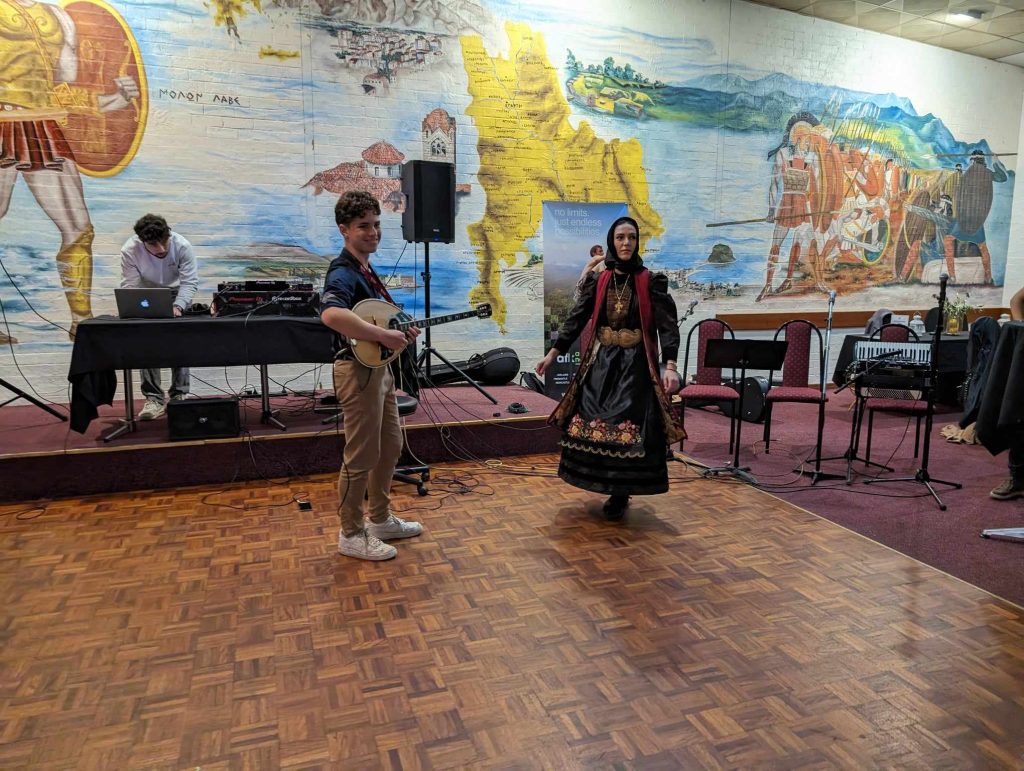
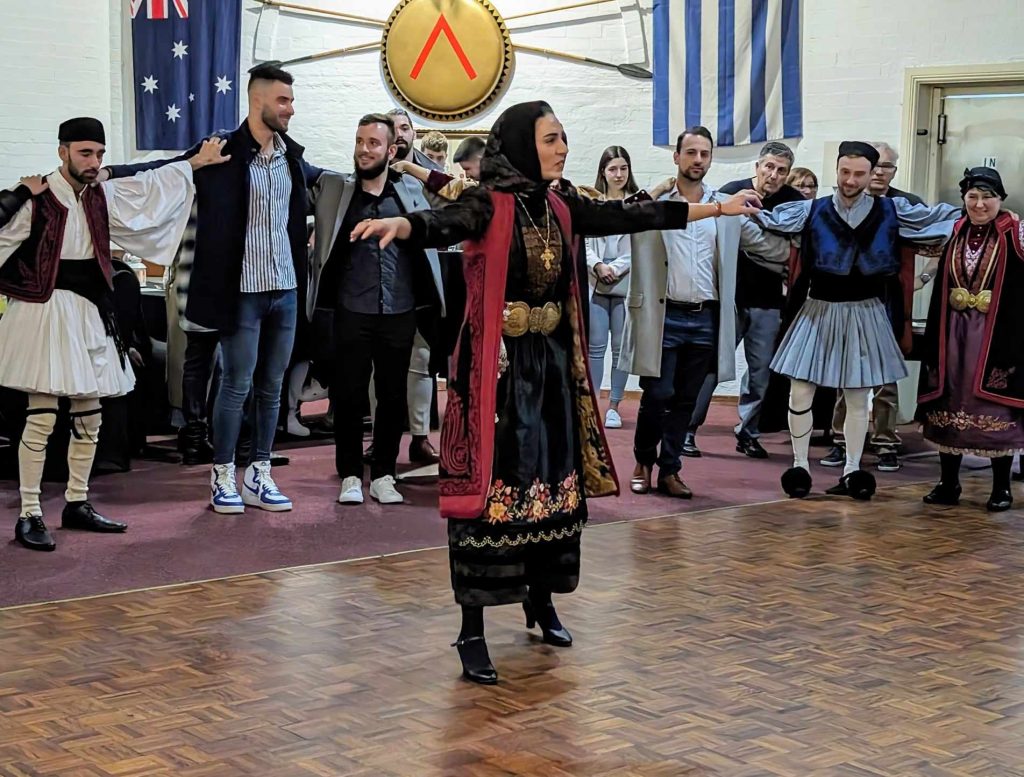
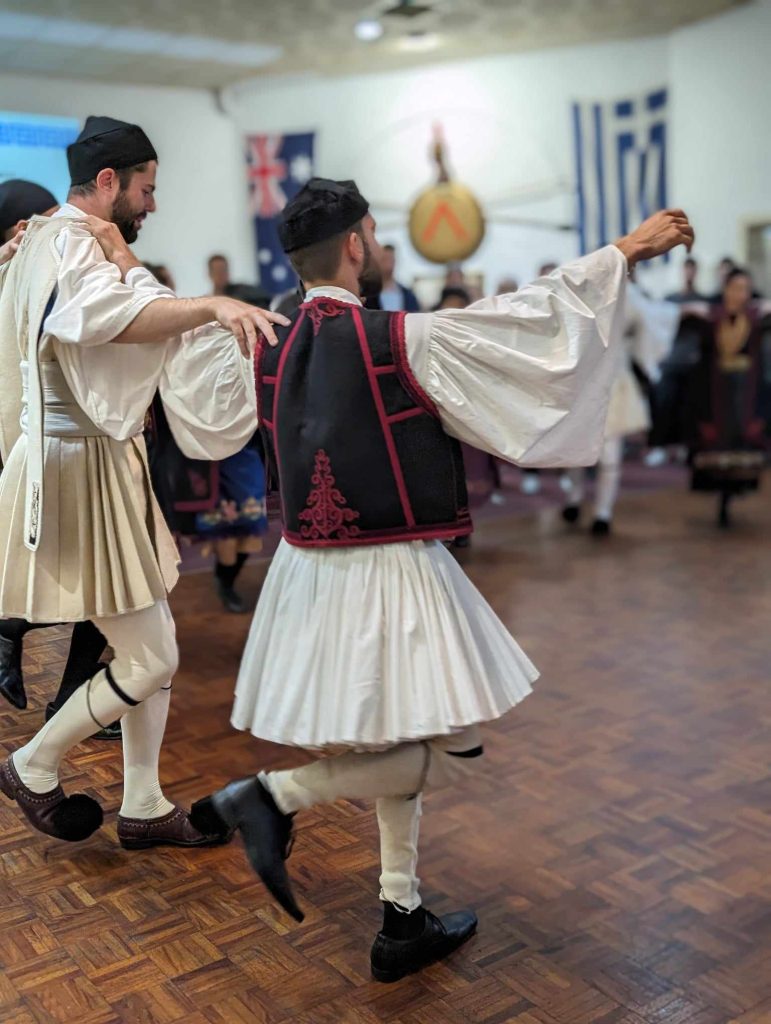
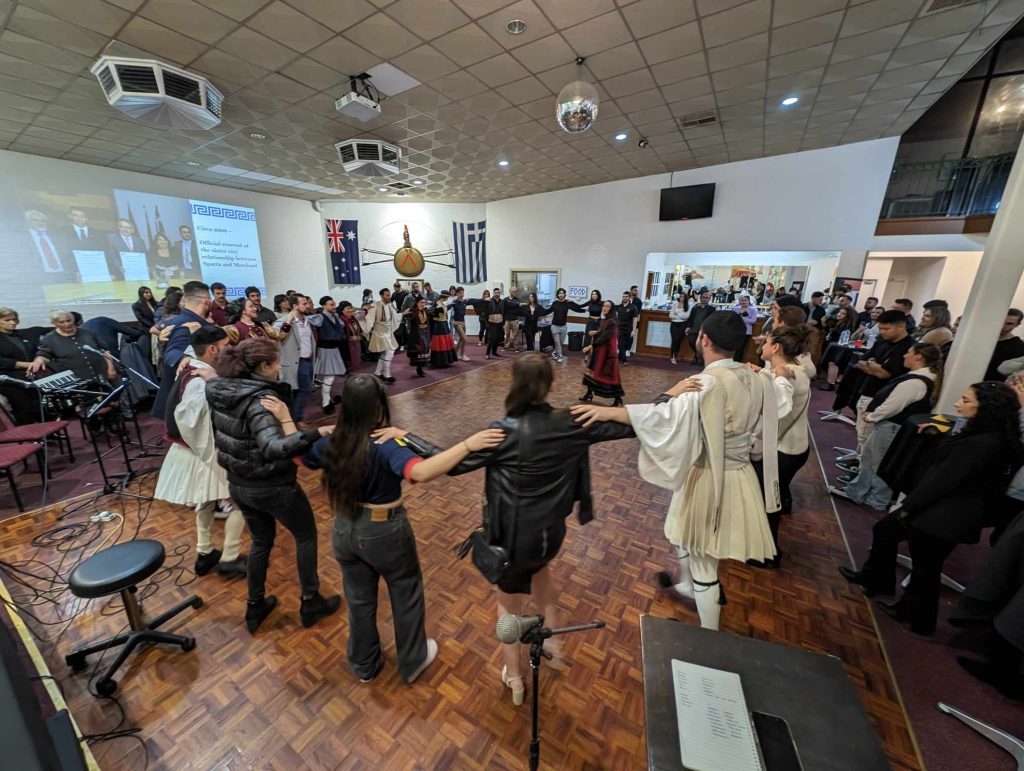
The sold-out event, titled “ΣΤΗΝ ΥΓΕΙΑ ΣΑΣ – A Traditional Glendi,” was a traditional paniyiri style event providing attendees an edifying night of traditional Greek music and cultural richness.
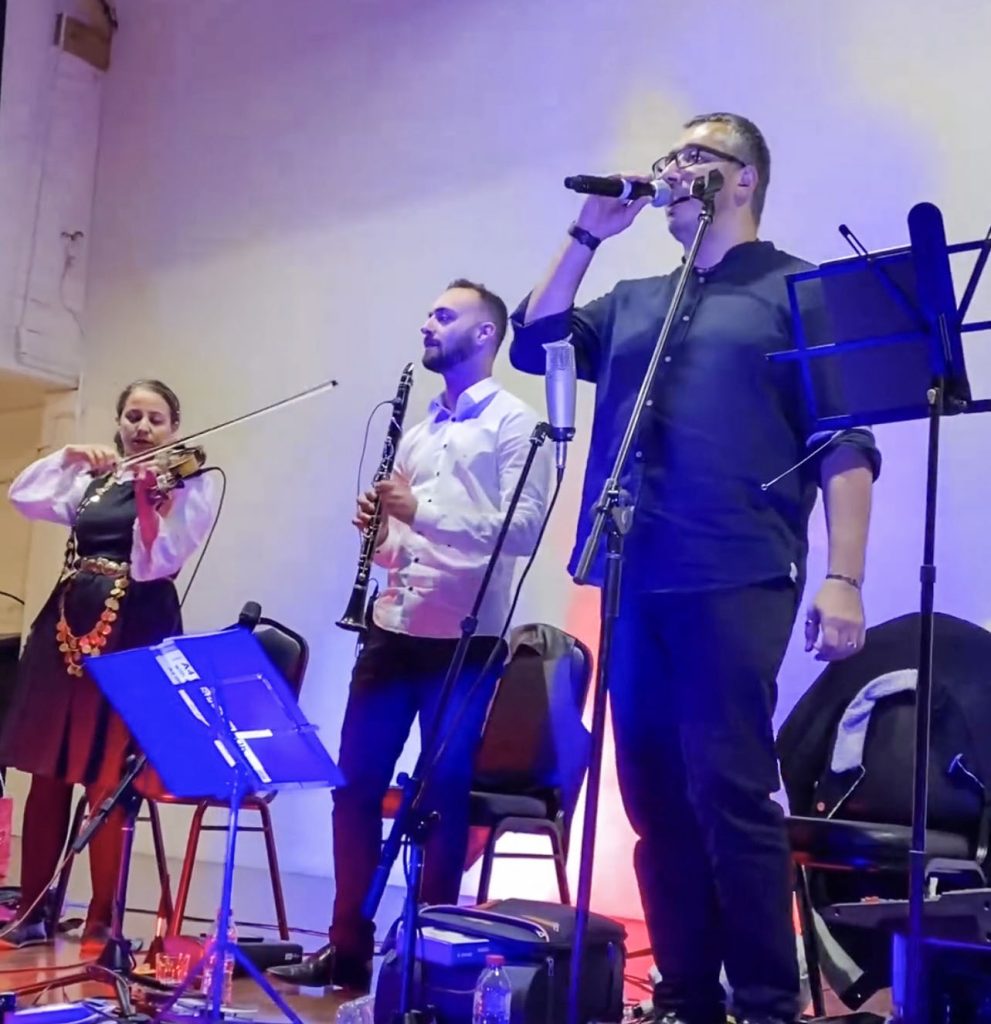
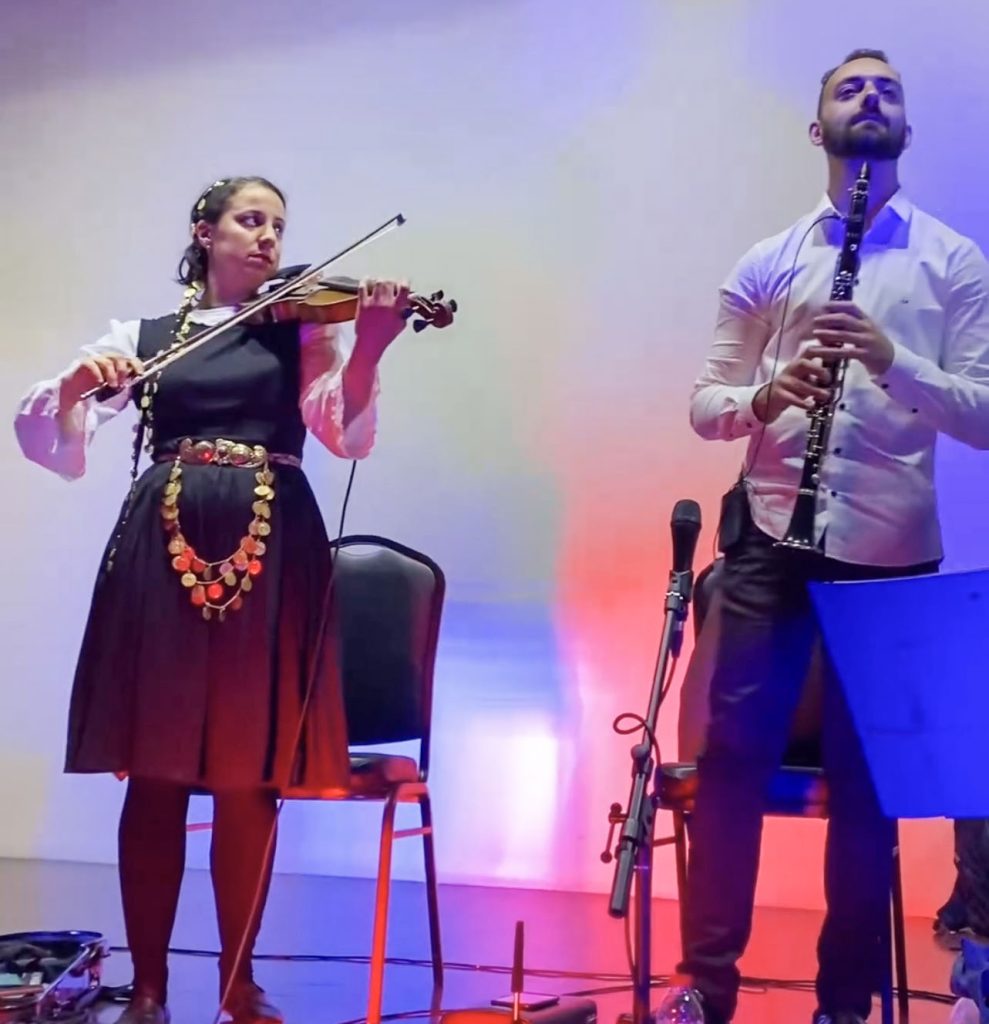
The main highlight of the evening was the traditional band, featuring an ensemble of accomplished Greek musicians from Melbourne.
All photos copyright The Greek Herald / Peter Tantalos.
This included Zois Tzikas (Percussion, Davul), Katerina Stevens (Violin), George Athanasakos (Clarinet), Joseph Tsombanopoulos (Gaida, Kavali, Vocals), Stav Thomopoulos (Vocals), George Kiriakidis (Trumpet, Accordion), and Tony Iliou (Laouto).
The cultural repertoire of the interstate band was vast, embracing the essence of traditional Hellenistic culture, spanning from mainland Greece, through to the Greek islands and onto the coast of Asia Minor.
The GOCSA Academy, established in 1980, enjoys the reputation as one of the longest running and successful dance schools in Australia. The academy focuses on training students in the traditional folk style dancing, preserving the Greek culture for past, current and future generations of Australian Greeks.
During the event, GOCSA Dance Academy Coordinator, Hellas Lucas, expressed gratitude to everyone in contributing to the preservation of Greek culture through the academy – from the students, parents, teachers, and the artistic director of the academy, Yianni Oikonomou.
In the spirit of commemorating the dance academy’s growth and success in 2023, the younger members of the academy were presented with achievement certificates. These certificates recognised their dedication to pursuing their cultural connection and their commitment to learning Greek dances and customs.
Following the awards ceremony, the young students, brimming with cultural pride, showcased a selection of their learnings from the year and performed three cultural dances supported by the live band.
Reflecting on GOCSA’s strong youth foundation, Hellas remarked that, “Our events always attract a lot of young people and it is pleasing to see that second, third and even fourth generation of Greek Australians [are] still maintaining Greek traditions and culture through dancing.”
Once formalities concluded, the lights dimmed and the band sprung to life, inviting attendees to the embrace their cultural tradition and engage in a night of dancing and celebration.
The prevailing sentiment of the evening was one of deep enchantment, not only for the immersive cultural experience of live music and dancing but also for the joyous coming together of family and friends to celebrate 2023 and the successes of GOCSA’s dance academy.
If you would like to enquire about the GOCSA Dance Academy please follow the link here or contact Hellas Lucas at 0407 617 967.
*All photos copyright The Greek Herald / Peter Tantalos.
Australian World War II veterans who fought in Greece have long since passed away, and even their children are reaching an advanced age. Without firsthand accounts, their stories fade into the pages of history books.
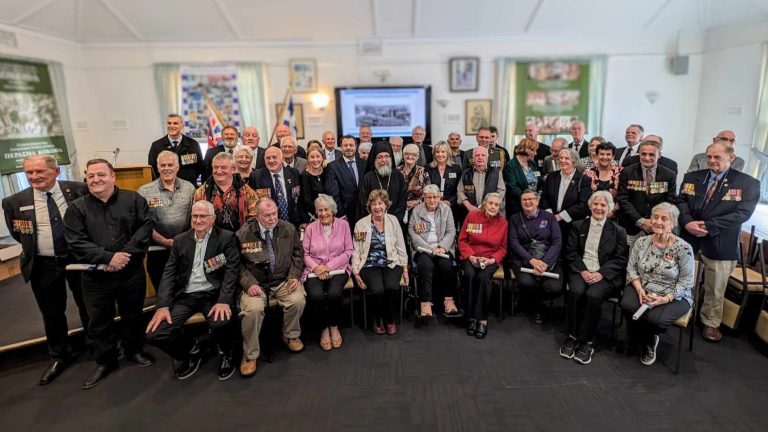
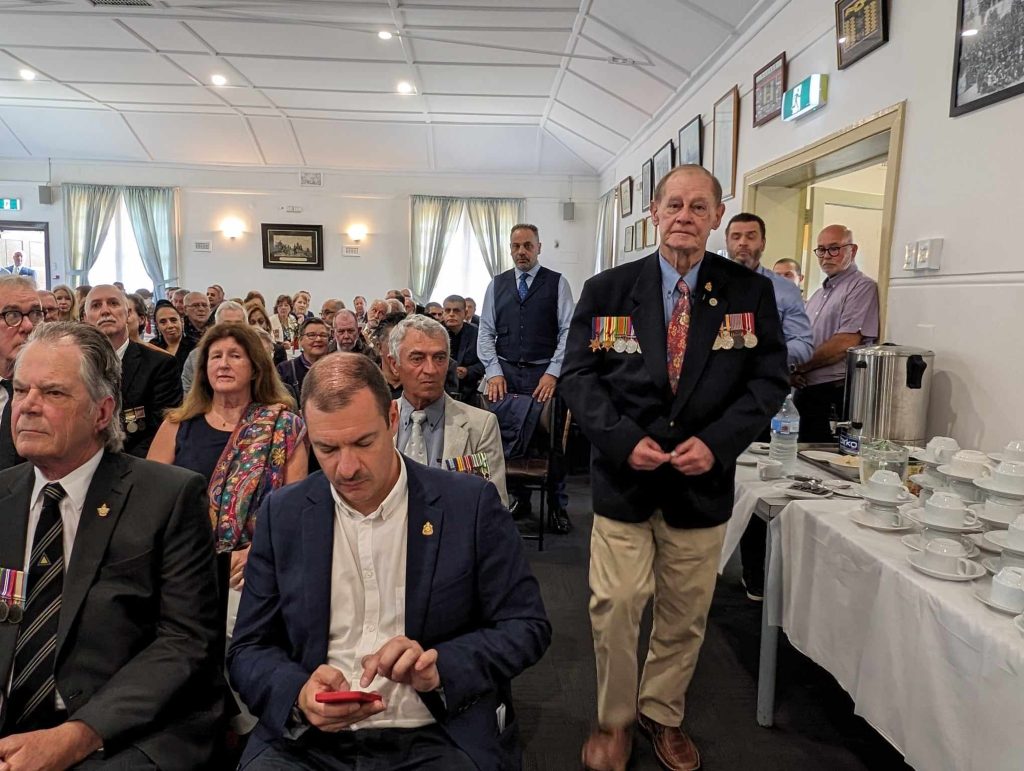
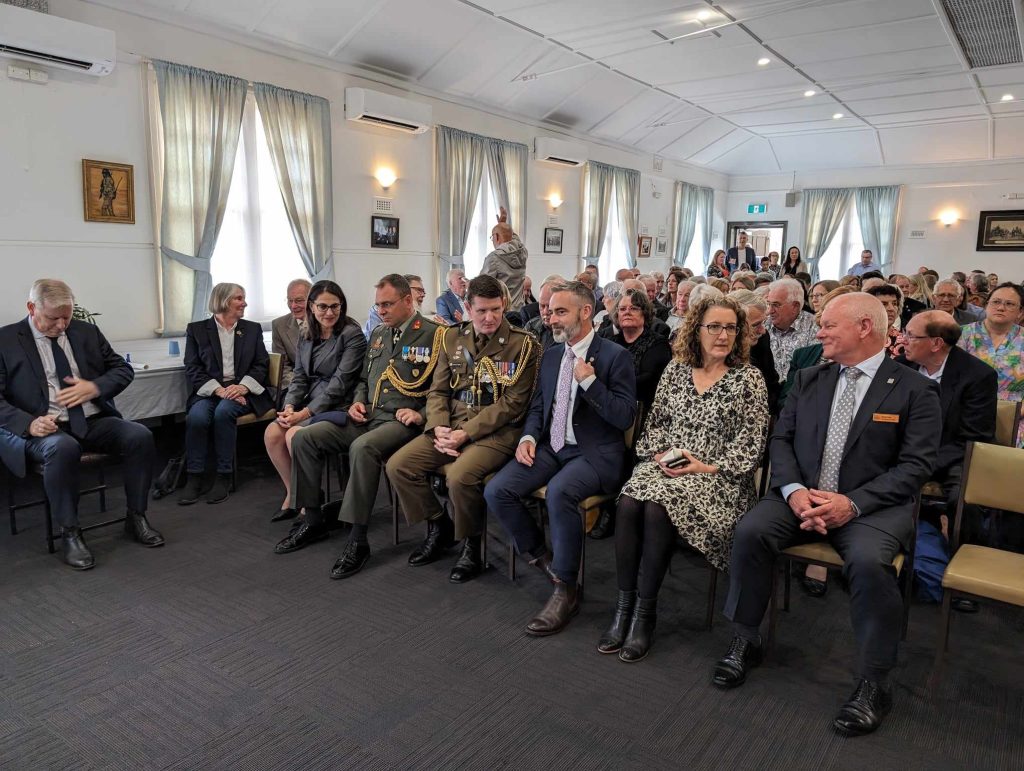
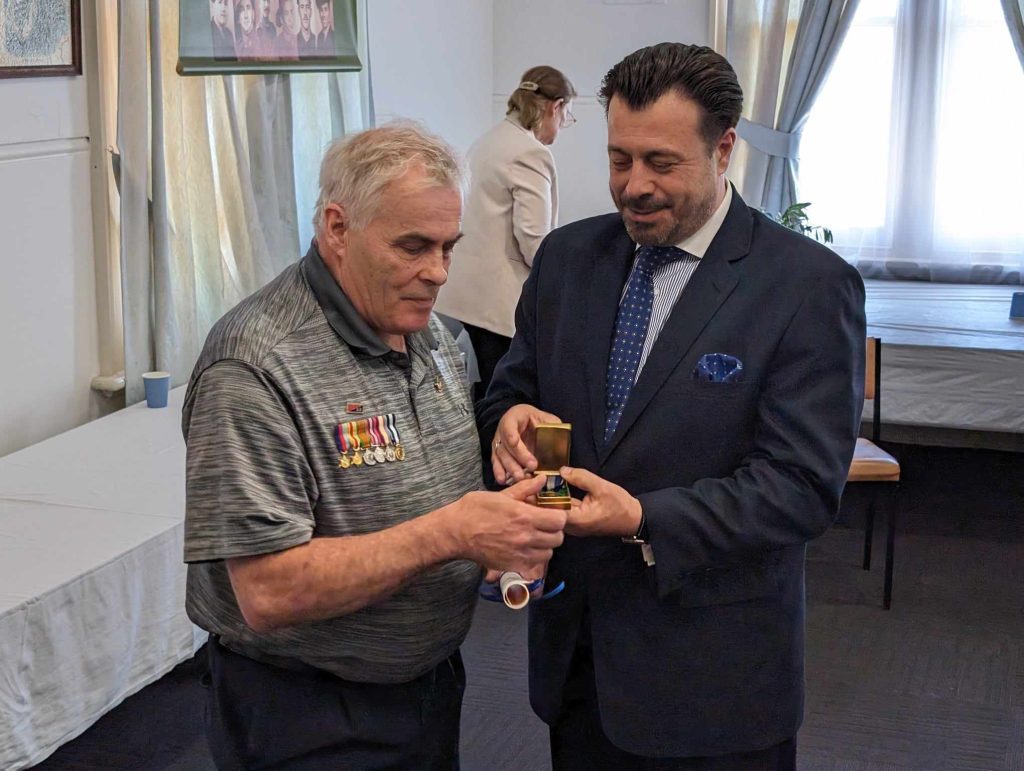
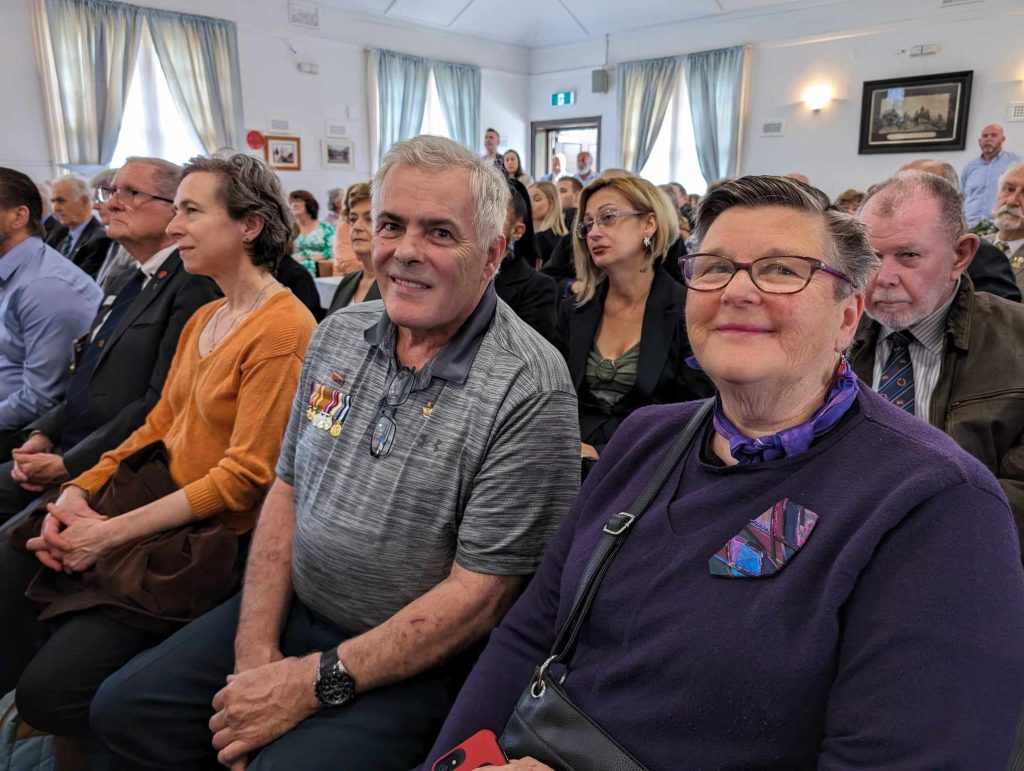
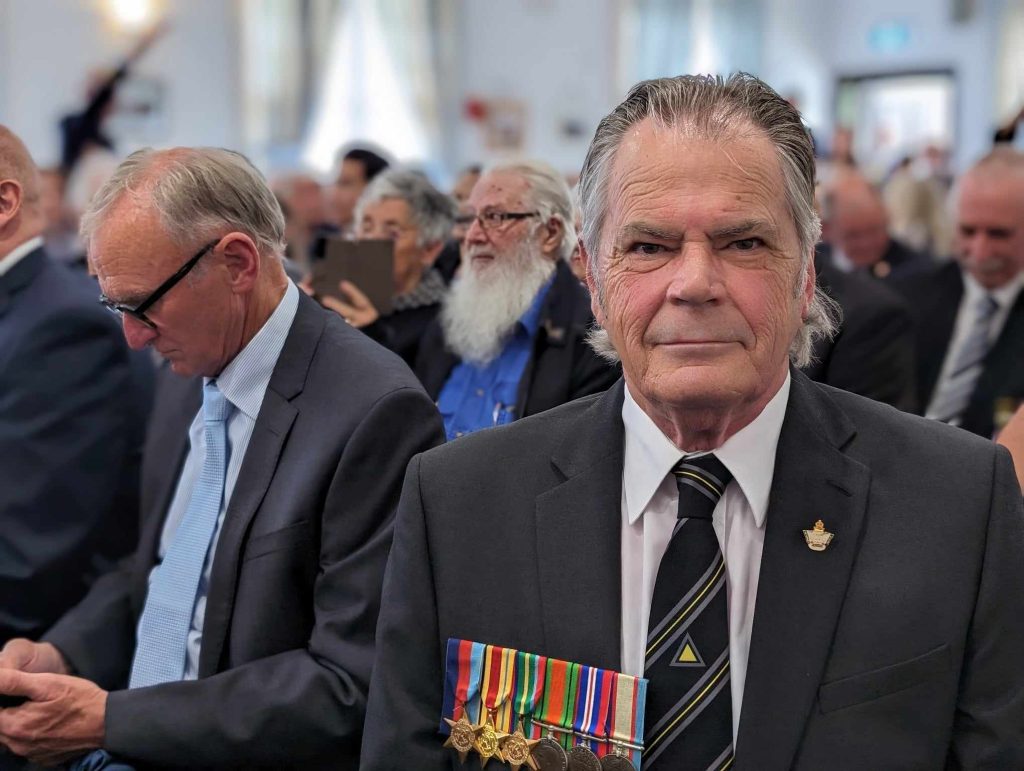
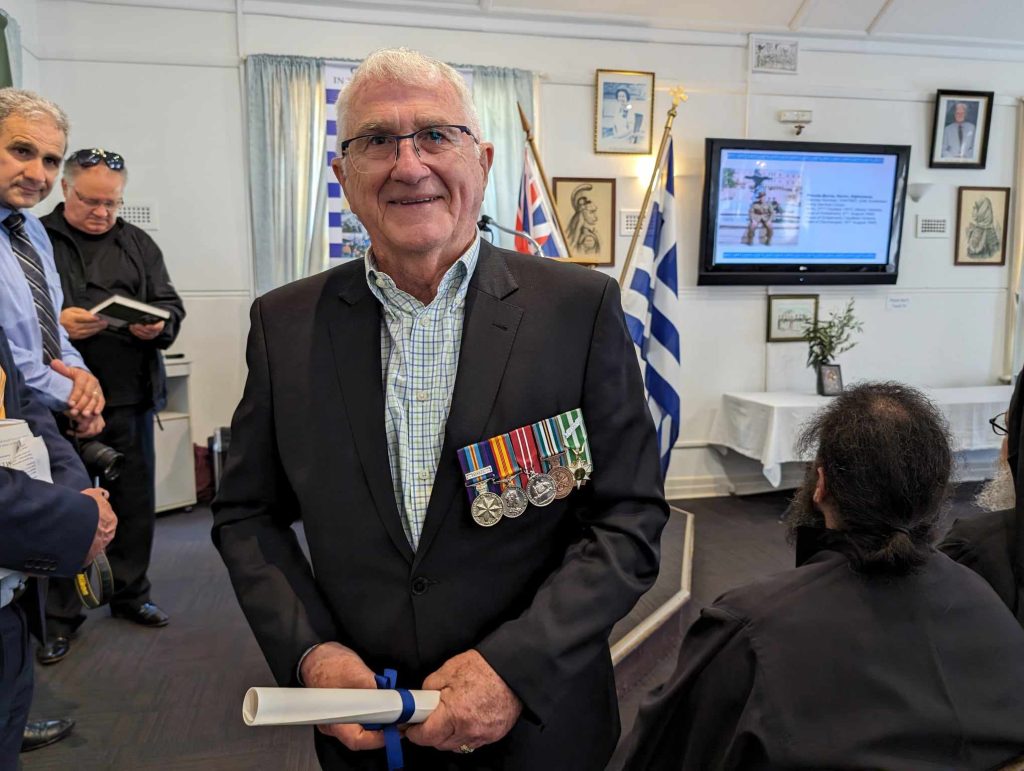
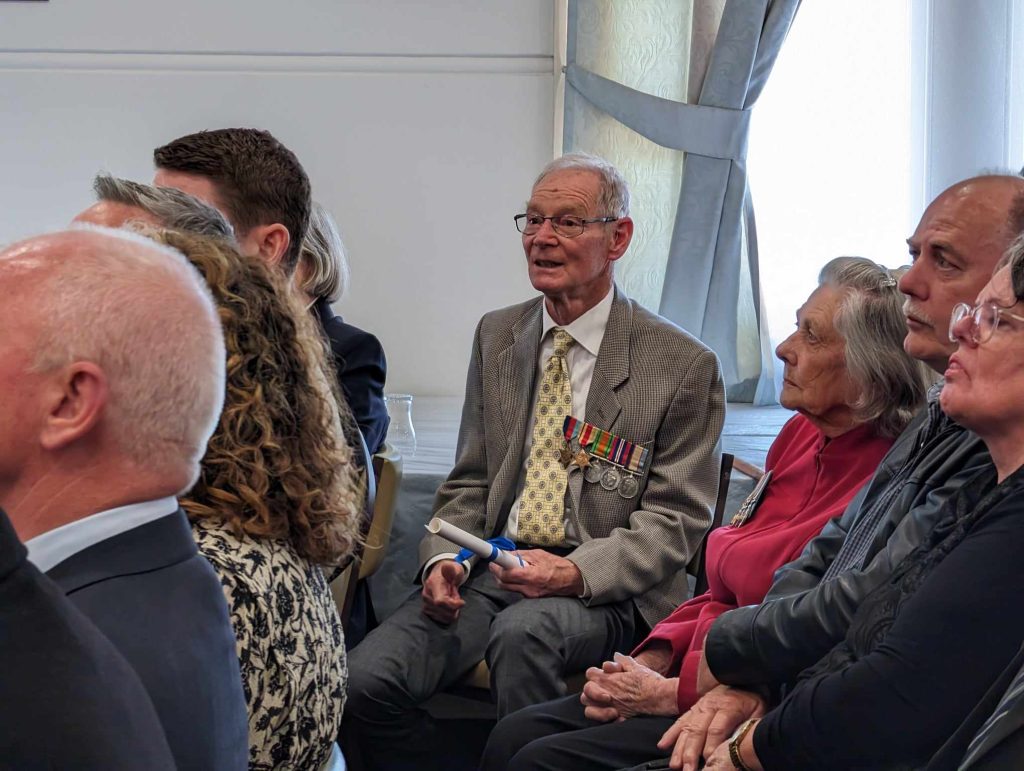
Yet, the bonds forged between Greece and Australian soldiers endure, as evidenced when 40 families gathered at the Hellenic RSL to receive the final Greek Campaign Medals awarded to the 17,000 soldiers who bravely served in Greece.
The children and grandchildren of these fallen soldiers shared with The Greek Herald the profound impact the Greek campaign had on their parents, shaping their values and instilling a deep respect for Greece.
The families were honoured to pick up medals for their parents.It was a full house at the Hellenic RSL.
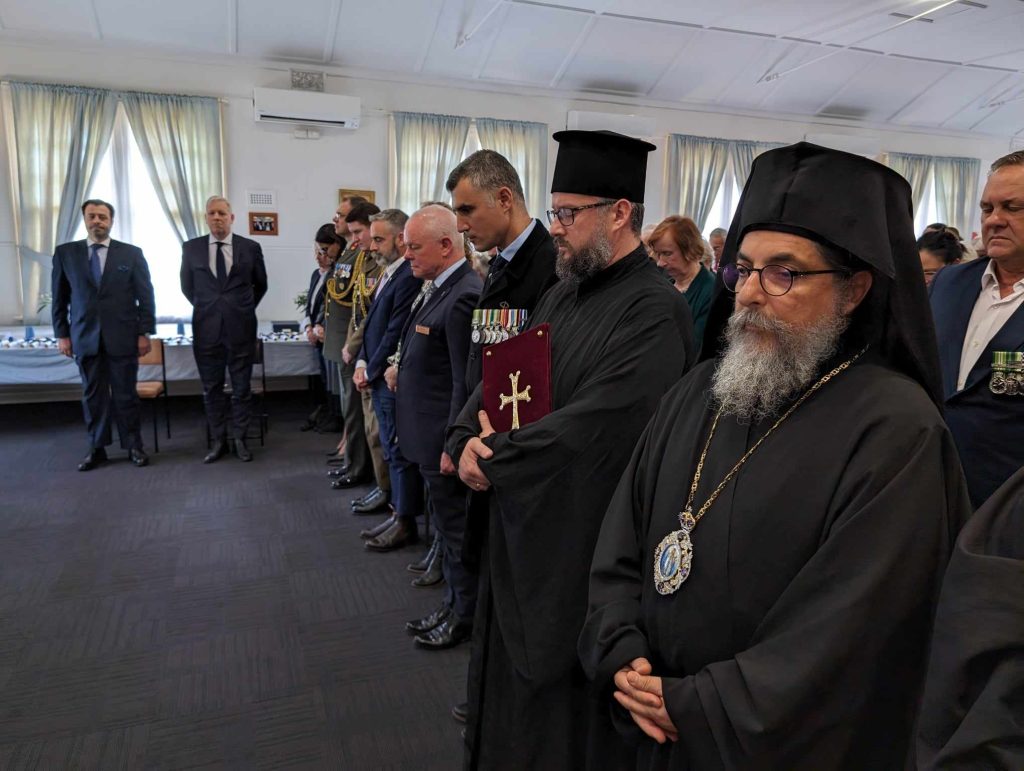
At the Hellenic RSL in South Melbourne, they collected their war medals amidst a backdrop of shared war stories, tears, and expressions of their enduring love for Greece, born from sacrifice, camaraderie, and heroism.
Memories linger on:
Andrew Merlo shared that his father, Henry Merlo, volunteered for service on the day enlistments opened, earning the designation of a ‘39er.’
Andrew Merlo received the medal in honour of his father, Henry Merlo.
“It wasn’t for king and country,” Andrew clarified. “Unemployment was tough, and he thought he’d go for the adventure. Queuing up alphabetically, he and another volunteer agreed to join the artillery which the other man mentioned was all horse-drawn. They both liked horses and became mates for the next 70 years.”
Once Andrew turned 18, his father finally openly up about his time in Greece.
“It was my idea to take him back to the battlefields in 1994, though my father was reluctant at first, until we started travelling,” Andrew revealed.
Andrew Merlo still remembers his father’s service number and has fond memories of visiting Greece with him. Kate Boltoun collected a medal for Thomas Osbourne.
“Crete and all of Greece was magnificent. Throughout our journey, we stayed with Greek families who invited us into their homes upon learning that my father fought there. The hospitality was unbelievable.”
At the time, the Russia-Athens pipeline was under construction, making it challenging to visit the Brallos Pass.
“All I had to do was pull out dad’s service papers and they moved multimillion equipment and waved us through,” Andrew explained.
Retracing footsteps:
Recently retired horticulturalist Jeffrey Rowell is embarking on a journey to Greece in the coming months. Armed with his father Norman Rowell’s meticulously documented war logs, he aims to retrace the former soldier’s footsteps during World War II. He will delve into his father’s experiences before he was captured as a prisoner of war in Nafplion, transported by cattle train to Salonica, and eventually sent to Germany as a prisoner of war via Hungary.
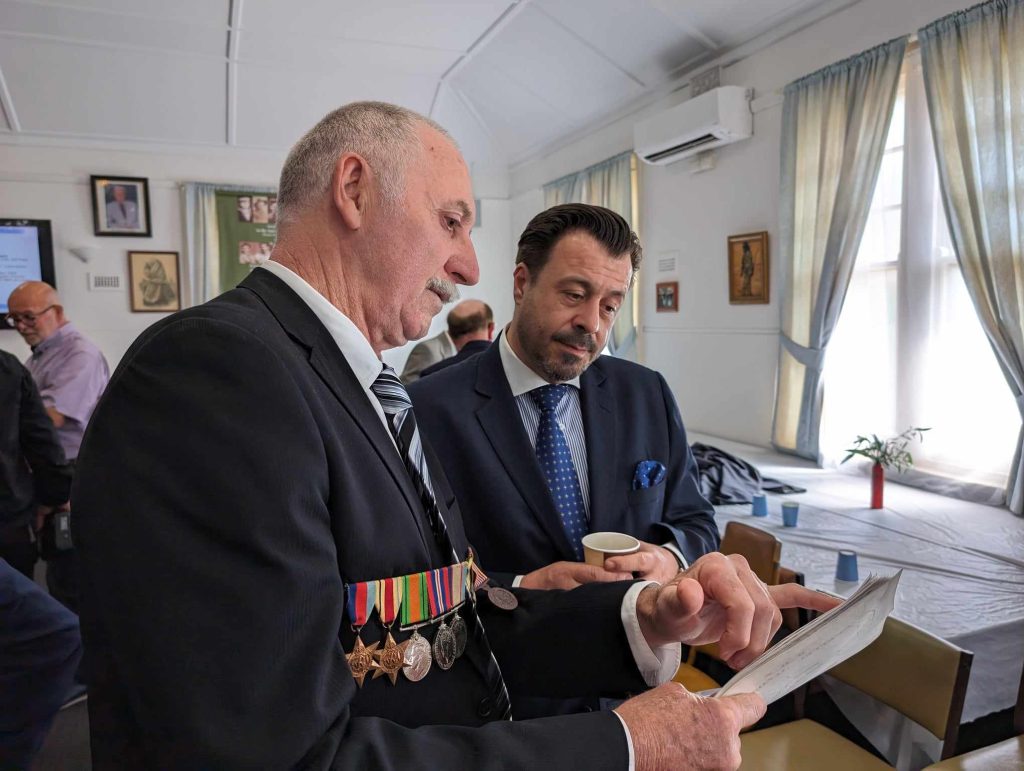
Jeffrey Rowell shares his father’s war logs with Greek Consul General Emmanuel Kakavelakis.
“My father documented every piece of information,” Jeffrey shared with The Greek Herald, pointing to logs kept by his father as an invaluable resource.
The same logs helped right a mistake in army records that erroneously indicated Norman’s discharge on January 10, 1940. However, Jeffrey points out his father served as an officer until he retired in 1970.
“When I initially reached out to former Hellenic RSL president Steve Kyritsis regarding my father’s entitlement to this medal, I was told that this was not the case. And so, I had to go to the Australian Archives to set the record straight,” Jeffrey explained.
Medals were given to 40 Australian veterans who fought in Greece during WWII.
“My father had continued his military career after the war, following our family tradition. My sister and I were raised as ‘army brats’. This meant that we could do no wrong because we had a father who was an officer. If we did something silly, the enlisted men wouldn’t lag on us. We were the sacred cows.”
He meticulously points to the dates, locations, weather conditions, personal equipment, and other war details recorded in his father’s neat handwriting.
“My dad deserved this medal,” he said.
Learning Greek:
Retired engineer Peter Ford has been to Greece many times since 1996 to retrace his father Frank Ford’s war journey, including once with his father.
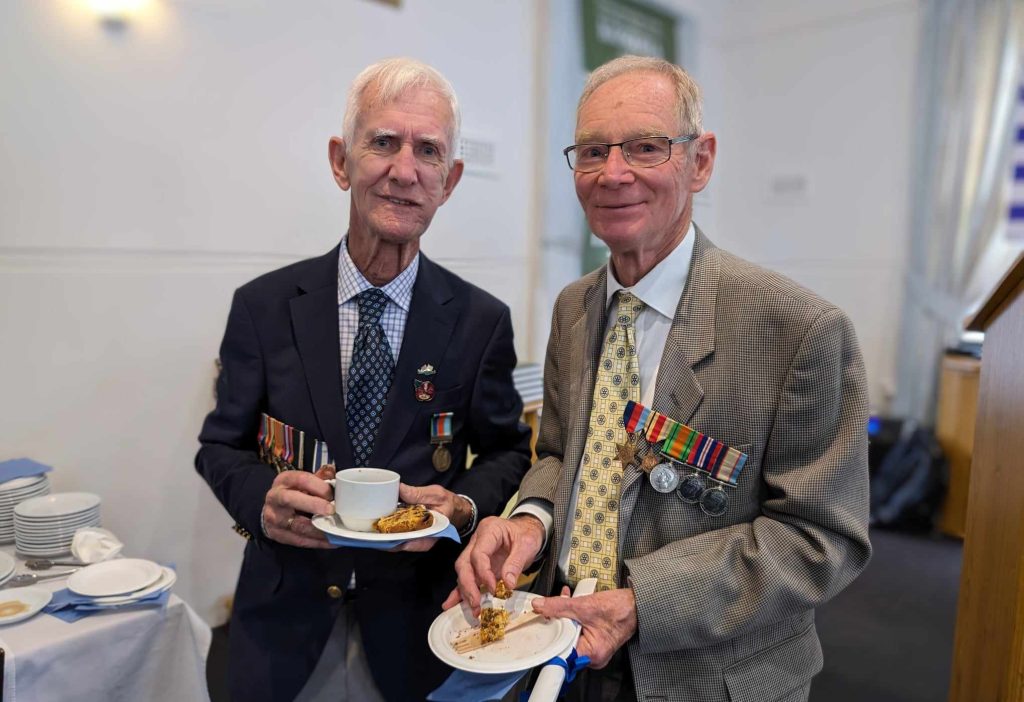
Peter Ford and John Barke, whose mother Mena Freeman served as a nurse in Greece.
“We walked the same land and I found out that he wasn’t lying at all!” Peter said, adding that he had even learnt to speak Greek since that first trip though he complains that he doesn’t practice enough.
“But feel free to call me Panagiotis,” he joked.
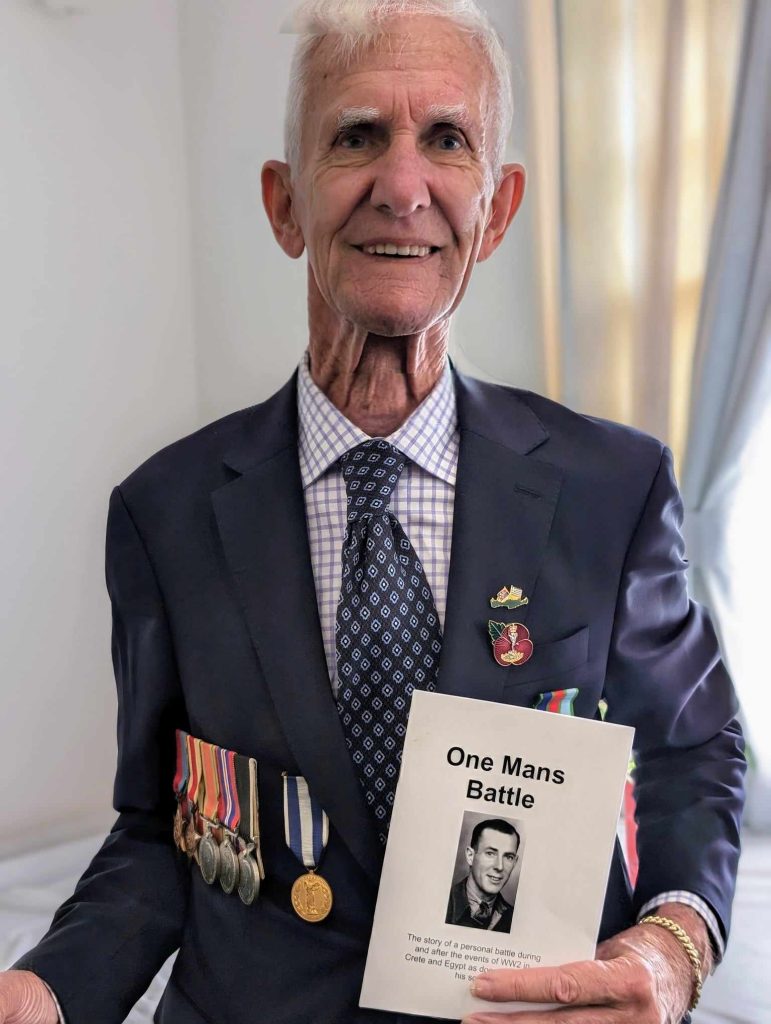
He offers me his booklet, “One Man’s Battle”, written to trace his father’s experiences in Crete and Egypt. A labour of love, Peter has hand-delivered hundreds of these booklets on trips to Greece, shipped them off to the UK and offered them to people around the world. I ask him why.
“Lest we forget!” he said, aware that even in his own family not everyone cares to remember.
Peter Ford wrote about his father Frank’s experiences during the war. He urges people not to forget these stories.
Peter urges us to document the stories of veterans and their families.
“Time is running out,” he said. “A lot of history has already been lost. When vets or their families mention something to you, write it down!”
For some families, other people’s writings from the war are all they have.
Greg Spice said he spent a lot of time researching his father’s time at war from other sources because, like many returned servicemen, Sergeant Clifford Robert Spice did not like to talk about his experiences on the battlefield. Instead, Spice found him mentioned three times in Philip Hocking’s “The Long Carry”.
“It is a great honour for the recognition of the service given because it was a defeat, and judged by the allies, there are no medals for defeats,” Greg said.
Greg Splice, the son of Sergeant Clifford Robert Splice, has spent a lot of time looking for information about his father who rarely spoke about the war.
A family reunion:
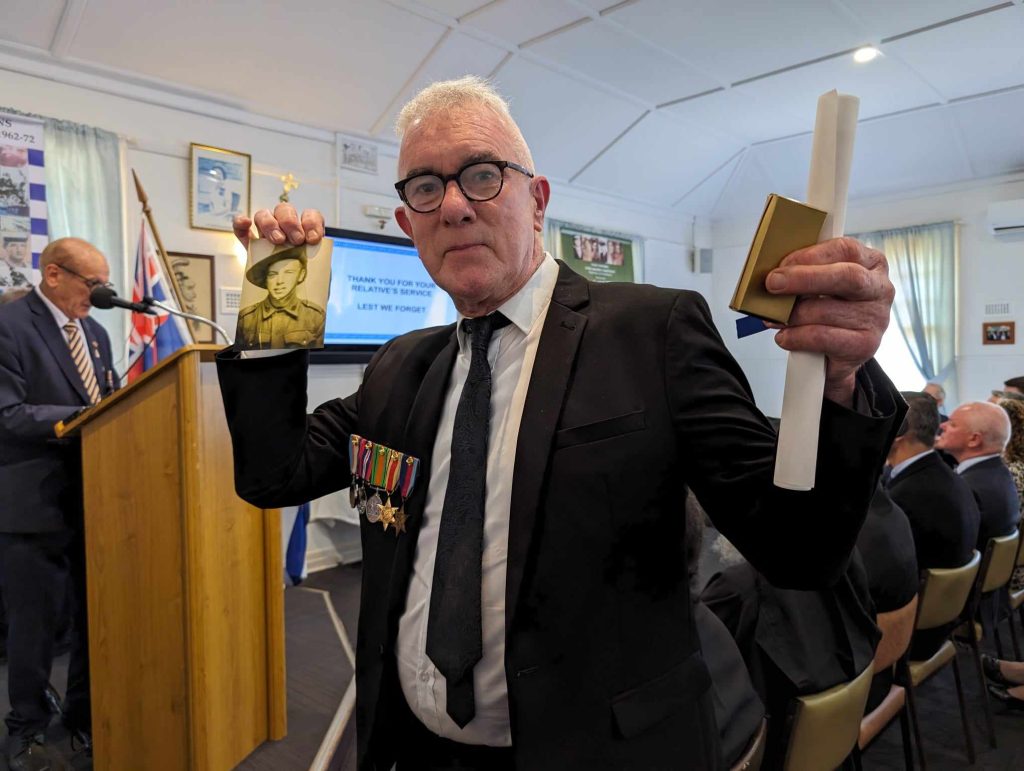
Michael Byrne, the son of Private Kevin Byrne, recalls his dad going to the Glen shopping area to seek out Greek men sitting on benches waiting for their wives.
“Of course, he’d chat with them about Greece,” Michael said.
“If he found one from Kalamata, where he fought during World War II, he would call me straight away,” he added, chuckling that his father might as well have been called ‘Byrnopoulos.’
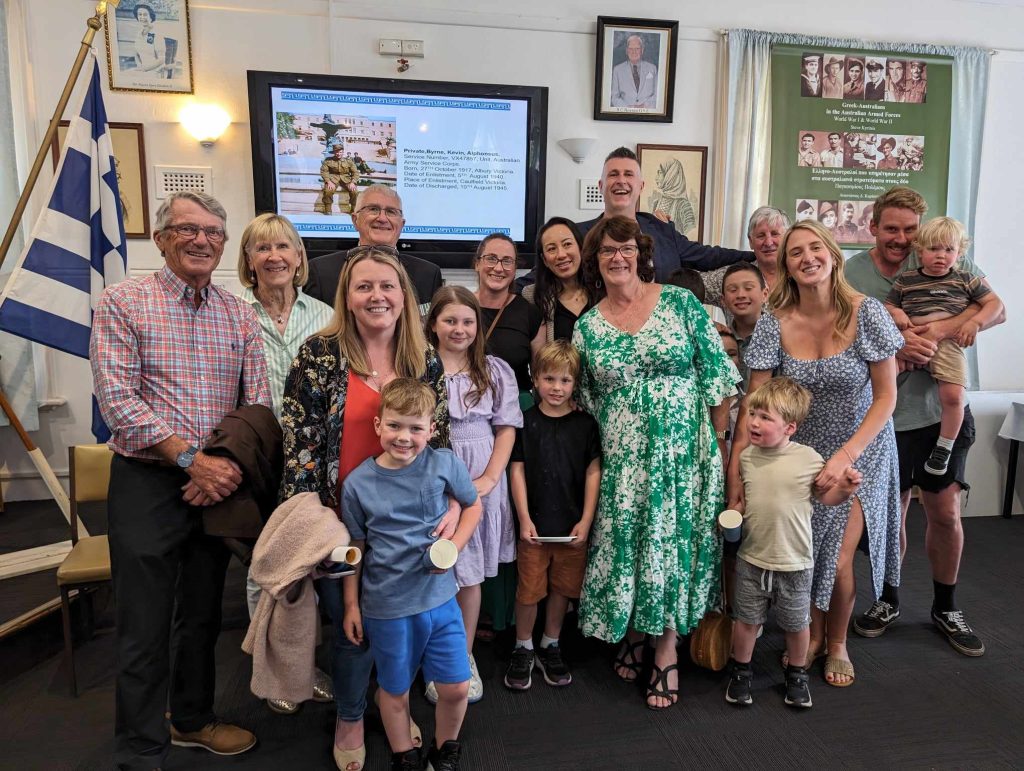
Michael Byrne came with his extended family to honour his father, Kevin Byrne.Kevin Byrne’s family members all showed up to commemorate his war efforts. Their father had such a fondness for Greece that they say he should have been called Byrnopoulos.
At the Hellenic RSL to receive his late father’s war medal, he is accompanied by his siblings Brian and Annette, their children, grandchildren, even great-grandchildren.
“When we heard Dad would be awarded a medal, we knew we had to come together from Geelong and around Melbourne,” Michael explained.
“It was a good chance for a family reunion, but I hadn’t expected all the little ones to be here in such a formal setting. They were fantastic, though. Brian, my brother, told me his five-year-old grandson clapped at every opportunity.”
His sister, Annette, chimed in, saying the children are all familiar with their grandfather’s history in Greece.
Picking up a medal in honour of his father.
“Michael has written wonderful books about it,” she said, mentioning that their father was involved in the evacuation of soldiers but ended up being left behind along with thousands of others.
Michael added, “He’d tell me stories about how the local Greeks would sneak food into the POW camps, doing everything they could to help prisoners. My father always spoke very positively and appreciatively of the Greek people.”
Private Byrne spent six weeks in Greece before being shipped off to Austria with 6,000 other POWs, later transported to war camps in Germany and Slovenia.
The trauma:
John Barke’s mother Nina Freeman was a nurse in Greece, whereas his father’s unit went to Egypt and Libya.
John Barke was there to honour his mother, nurse Mena Freeman.
“They came home from war almost on the same ship and married in Perth in 1943 before having children. It was hard for them, and I believe they were both affected by aspects of war neurosis,” John said.
“If you crouch down behind a sand dune with bombs flying past and machine gun fire, it will affect you.”
He owes the return of his mother to Sir Edward Dunlop who helped extract the nurses from Greece because the English did not intend to.
“Some of them were picked up by a destroyer from Piraeus and they went to Crete and were quickly taken back to Egypt. That was my mother’s story,” he said.
The legacy children:
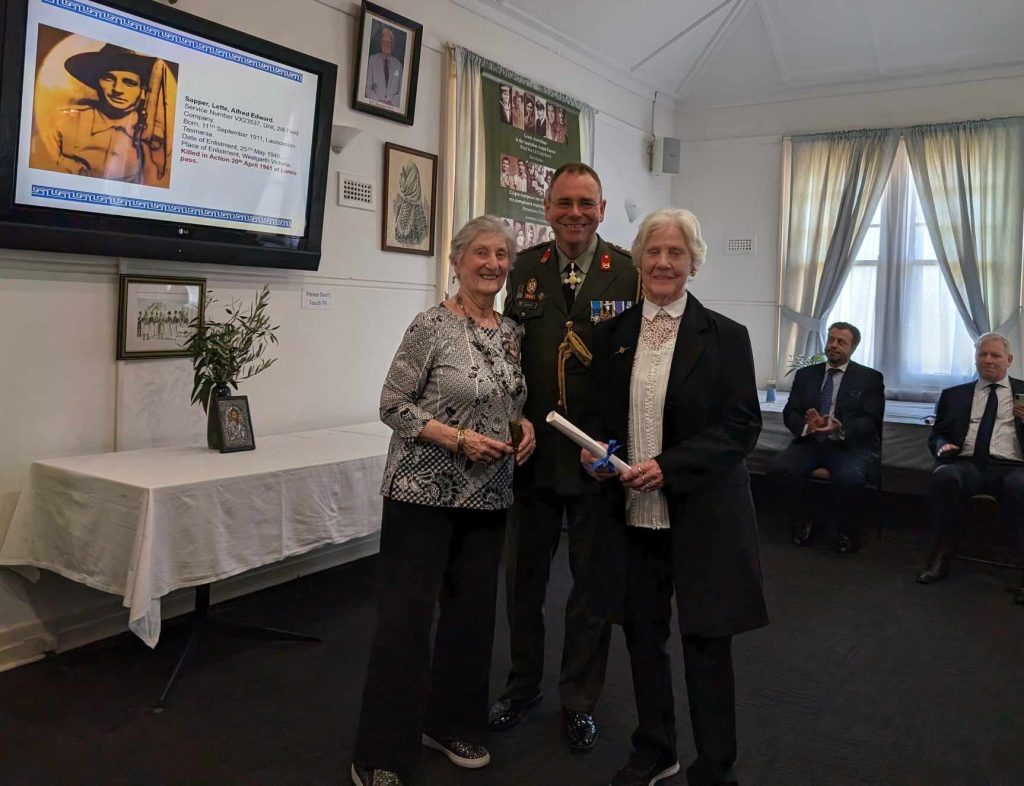
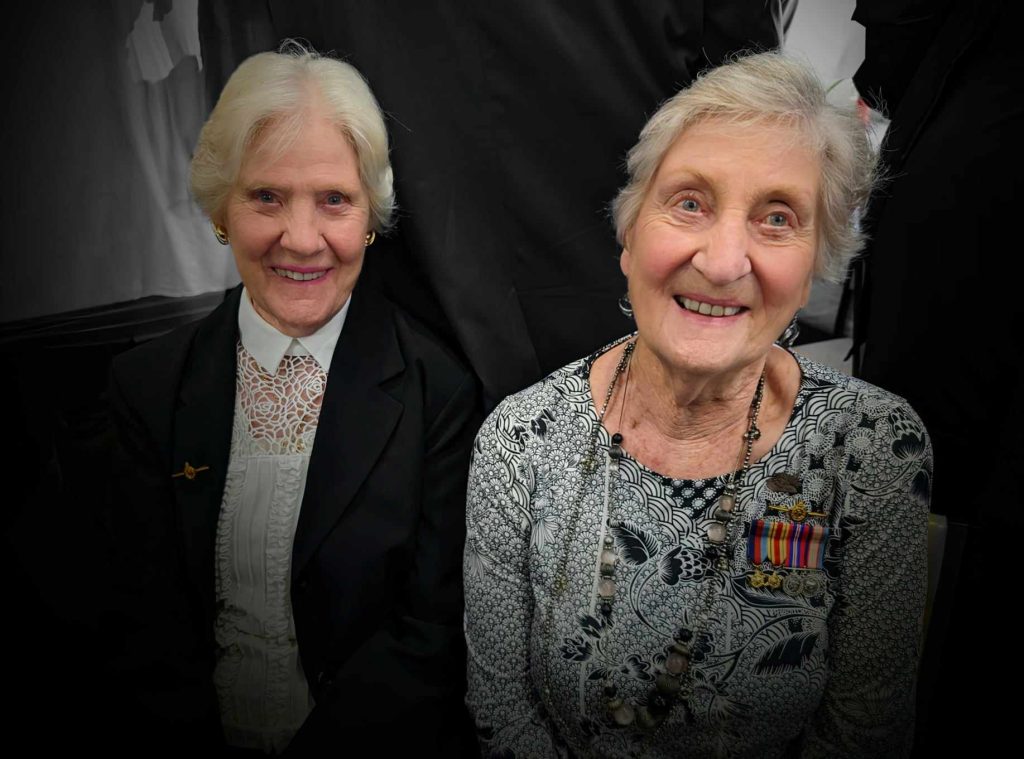
Some children were not so lucky to grow up with their fathers. Sisters Judith Self and Margaret Davenport lost their father Alfred Edward Lette, who died in action.
Sisters Judith Self and Margaret Davenport lost their father, Alfred Edward Lette, in WWII and still have the telegram their mother received telling her he was killed in action.Sisters Judith Self and Margaret Davenport have few memories of their father who died in Greece when they were very young.
“It was six months before my mother found out that our father had died,” Margaret said.
Her sister added, “We still have the telegram with the news that he had died in action.”
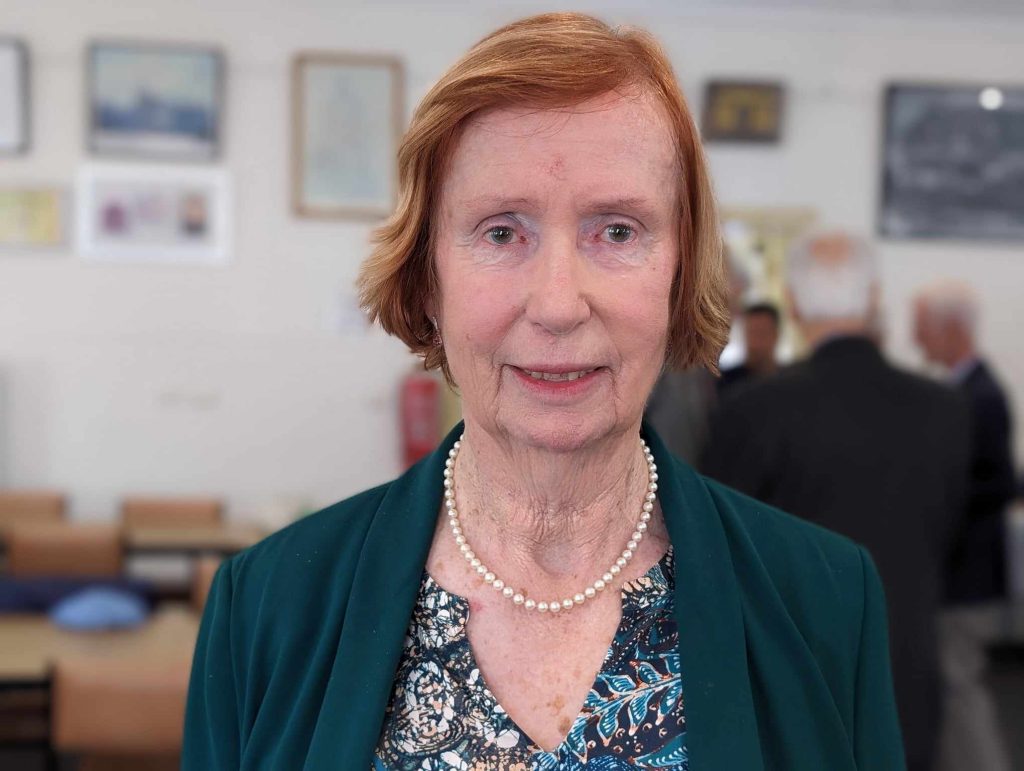
Legacy child Sue Foley is happy her son-in-law is Greek and she took Greek language lessons during the pandemic.
“My grandchildren speak Greek and they like to correct me when I make a mistake,” Sue said.
For her, Greekness is a connection to her dad Alan Pitts who was in Crete, Northern Africa and New Guinea. She lost him when she was four, and though he came back from war his death was attributed to his war service.
“This medal is special,” she said, adding that it was yet another connection with a man she barely got to know and vaguely remembers.
“I can only remember that he was very quick in his movements and would leave a wooshing as he passed. I remember having a green stick fracture and my father cutting it up.”
Teacher Sue Foley says her father did not die at war but shortly after but that his condition was very much linked to his time at war. She remembers him as a ‘woosh’ through her life.
Following his death, Sue’s mother was left with three children.
“There were three of us under the age of six, and this was not easy for our mother,” she said.
Even more stories were shared as children collected medals for their parents.
For Steve Kyritsis, former president of the Hellenic RSL and former Vietnam veteran, it was the end of a circle that began a few years ago following meetings with former Greek Consul General to Melbourne, Christina Simantiraki. Since then, Steve and his team have scoured war records, newspaper clippings and social media.
Former Hellenic RSL President Steve Kyritsis has sought for families whose relatives served in Greece.
“There were a few hiccups along the way, but the end result is perfect,” Steve said, happy that the medals are now where they belong.
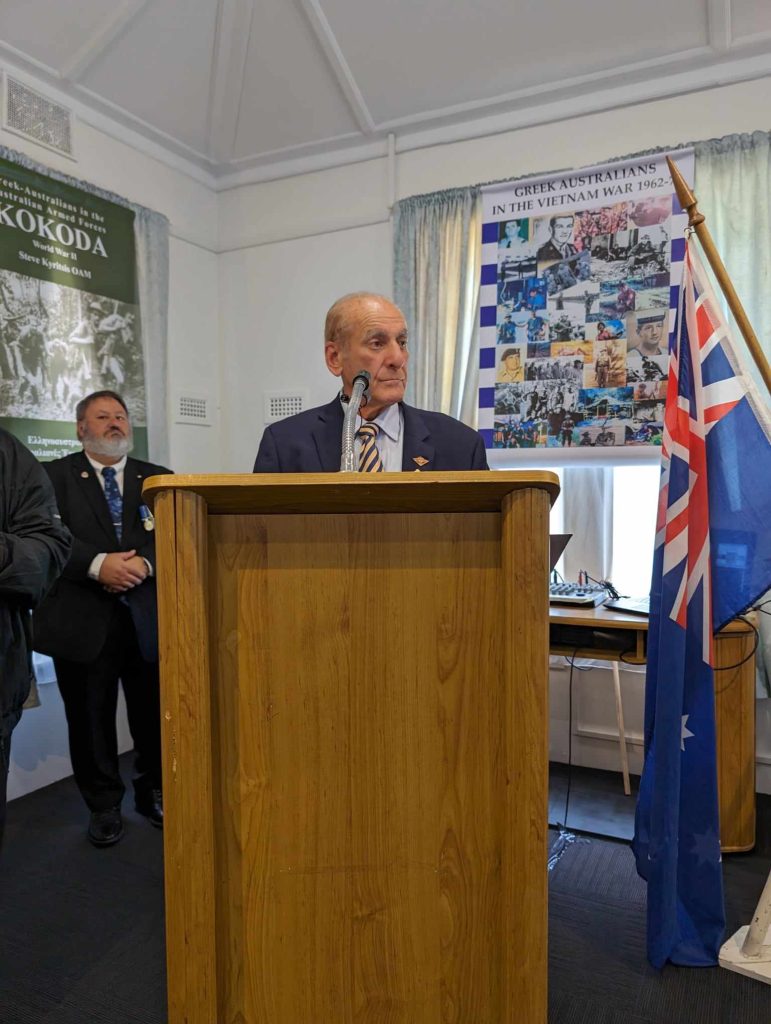
Greek Consul General of Melbourne Emmanuel Kakavelakis said, “It is a moral duty of my country to recognise every last veteran who fought so far away from his motherland. It is also an opportunity to celebrate and reflect upon the relationships between Australia and Greece, especially the relationship and alliance that was fought mainly in the trenches of warfare.”
A medal received for William Stanley McGreevy.
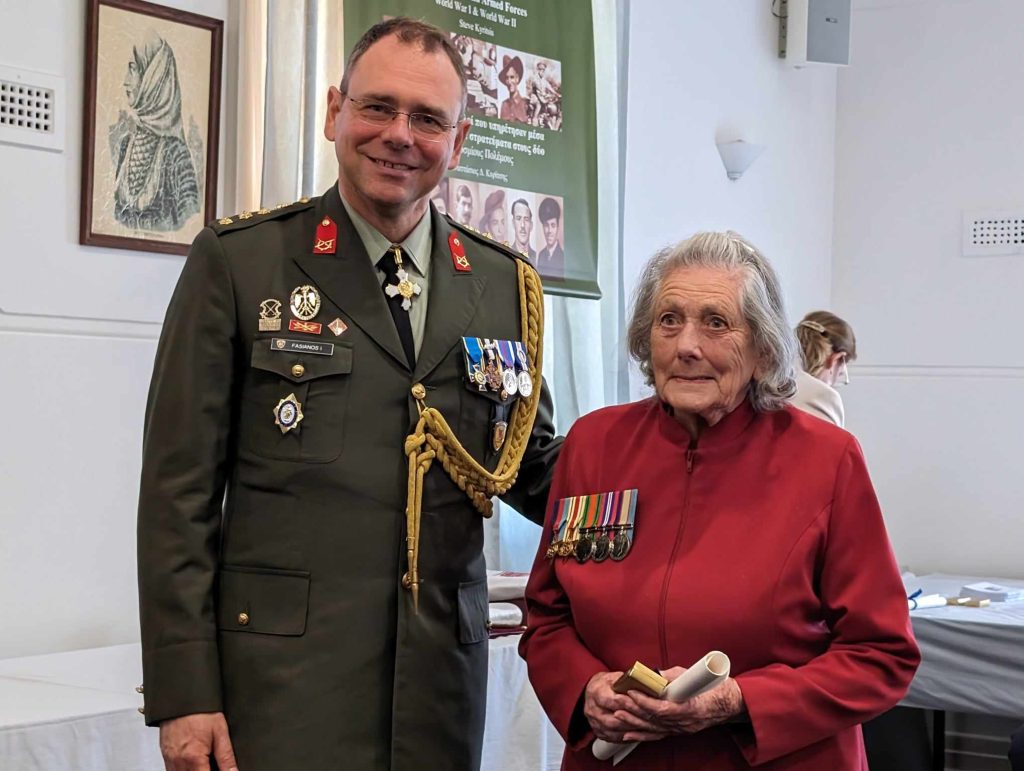
A soldier himself, Colonel Ioannis Fasianos said, “It took some time for Greece to find them, but it finally happened.”
Mr Kyritsis said that there are at least another 60 families out there who have yet to receive their medals. And for them, he will not stop.
*All photos copyright The Greek Herald / Mary Sinanidis.
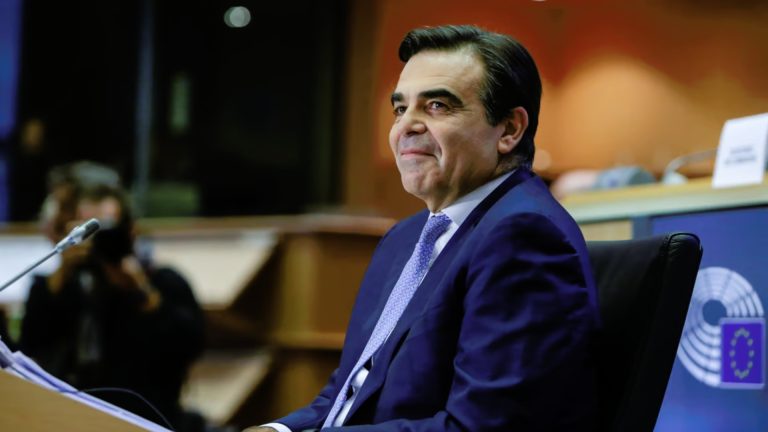
During his week-long visit to Australia, the Vice President of the European Commission, Margaritis Schinas, held a number of high-level meetings with business and political leaders and discussed topics ranging from migration to the deadlocked trade deal between Australia and the European Union (EU), and the fight against antisemitism.
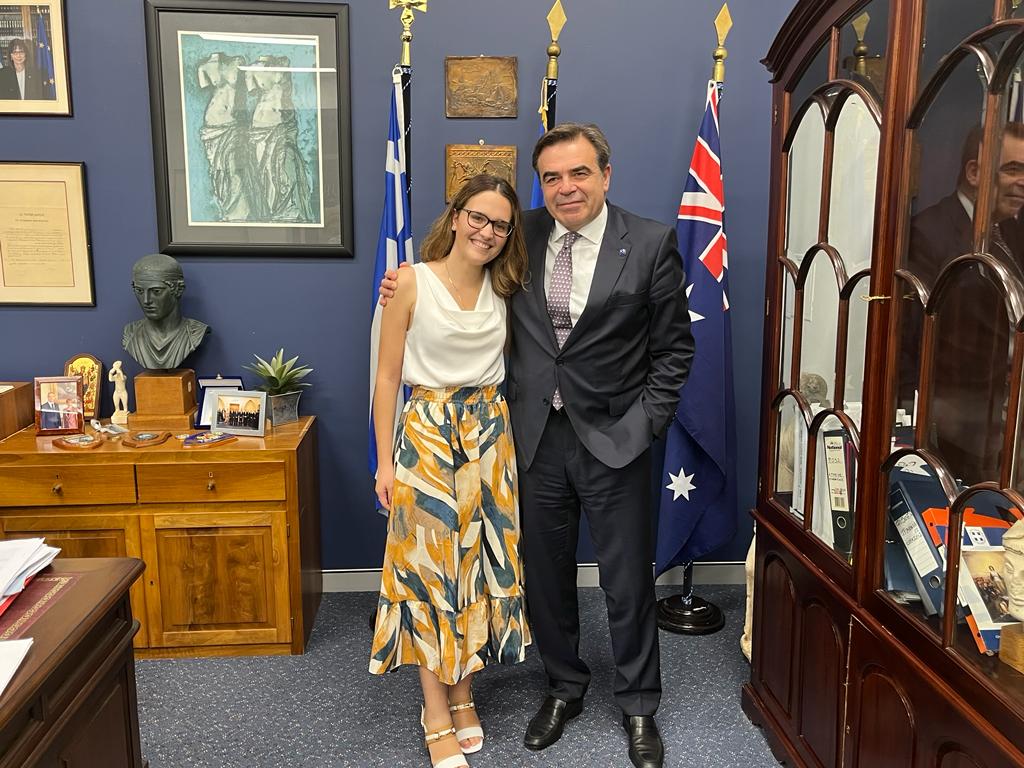
Along his travels, the Greek politician also made time to connect with the local Greek communities in Melbourne, Canberra and Sydney to discuss how the diaspora are keeping Hellenism alive Down Under.
In an interview with The Greek Herald, Mr Schinas said he was “impressed” with what he saw throughout his trip, and encouraged the Greek community to continue their contributions to Australia and more broadly, Europe.
“I already knew before coming here that the Greek diaspora in this country is one of the most noticeable, powerful, relevant groups, but I must say I was very much impressed by what I saw,” Mr Schinas said.
“It’s not only a question of numbers. It’s also a question of clout, of gravitas, of leverage. I told them ‘I am proud of you,’ because they are successful, relevant, and very well positioned in Australian society.
“I take this opportunity to ask them to be not only a bridge between Australia and Greece but also Europe and Australia because they are also, as Greeks, they are European, so they carry with them this double-head quality that is crucial to promote this country.”
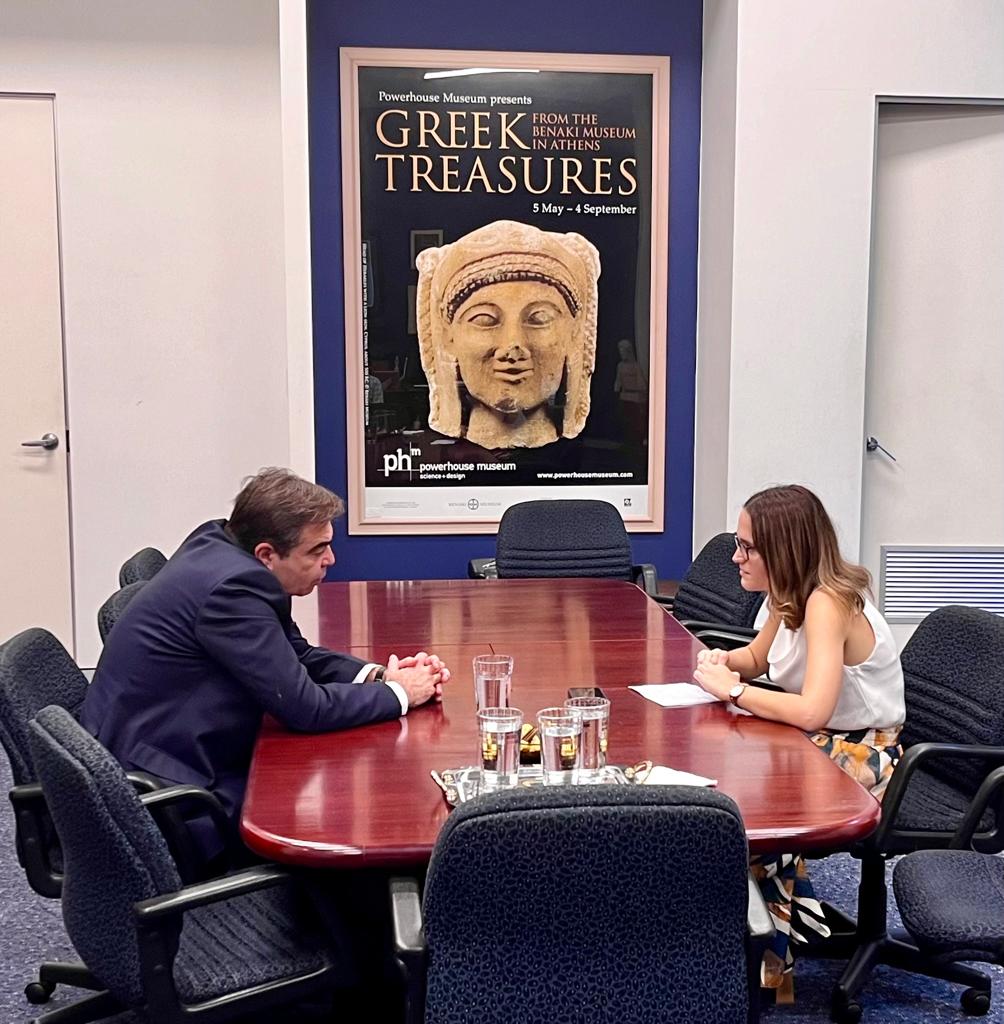
Margaritis Schinas (right) met on Friday with The Greek Herald’s Digital Editor Andriana Simos at the offices of the Consulate of Greece in Sydney.
‘Great news for Greek democracy’:
On the topic of links between Australia and Greece, I asked Mr Schinas for his thoughts on the recent news that Greece would enable postal voting for Greek diaspora in the upcoming European Parliament elections.
The European Commissioner said he thought the announcement was fantastic.
“It’s great news for the quality of the Greek democracy and great news for the Greek diaspora worldwide,” Mr Schinas said.
“The law that, for the first time, allowed diaspora Greeks to vote in elections was important but it was at the same time conditional on many requirements. This is different. There are no requirements. Everybody will be able to vote freely for a postal system and I think this will be a huge boost for the democratic participation of the Hellenes across the world.”
‘Integration is a two-way street’:
As the European Commissioner for Promoting the European Way of Life, Mr Schinas knows all about protecting the best ideals and products of Europe. From dealing with EU policies that pertain to migration, security, public health, education, culture and the youth, Mr Schinas’ portfolio covers it all.
Currently though, one of his main focuses is coordinating the Commission’s work on a common and holistic EU pact on Migration and Asylum. He said Australia’s immigration regime could be influential on any European policies.
In Canberra, good meetings with @ausgov Ministers for Migration and Skills.
“The debate is somehow different between Australia and Europe because here in Australia, you do have a migration policy and you’re now discussing how better to apply it whereas in Europe, we’ve failed for years to have a migration policy,” he explained.
“Finally, after many, many years of trial and error, we are getting there. We are, I think, weeks away from a big European agreement on the EU Pact on Migration and Asylum – of which I was one of the main architects.
“This is a model that combines elements of border management, relations with countries of original transit and solidarity amongst our member states. We are confident that we will get it right.”
As for how established migrant communities such as the Greeks and Italians in Europe and abroad can help promote and support inclusion and integration of new and emerging migrant communities, Mr Schinas said integration was “a two-way street.”
“We have set aside a considerable amount of financial resources to precisely ensure that integration and inclusion of these, let’s call them ‘new Europeans’ happens in a way that suits their prospects in our society but also safeguards our model of society. So it’s a two-track approach,” the European Commissioner said.
“We will do everything we can to provide them opportunities in the job market and education and health, giving them an opportunity to thrive in our environment. But they should also accept, respect and abide by the principles and values that underpin our societies – the role of women, religious tolerance, peaceful coexistence. This is how it goes.”
Margaritis Schinas spoke with Miss Simos about all things of interest to Australia and the Greek diaspora.
EU-Australia trade deal deadlock:
To conclude our interview, Mr Schinas also spoke openly about the recent negotiations between Australia and the EU for a free trade deal.
The deal is currently at a standstill with one of the major sticking points being the EU demands for Australia to give up naming rights to products such as feta and prosecco to protect so-called “geographical indicators.”
Mr Schinas said he hopes to see a constructive solution to this trade dilemma soon.
“My presence in this country is precisely an attempt to pick up all the broken glass and try to recompose,” he said.
“For two blocs like Europe and Australia that share so much in common – we are the second highest investor here, the third highest trading partner, we are so close in geopolitics and international politics – it’s mind blowing that we fail to agree on a trade agreement.
“I think that beef and cheese should not big a bigger problem than democracy. So if we agree on democracy and geopolitics, we have to agree on the rest. We will get there.”
A few years ago, the Pallaconian Youth Club was languishing, much like several other Greek clubs, witnessing the younger generation getting absorbed in mainstream culture and losing interest.
However, on Saturday, December 2, those concerns became a distant memory as the club buzzed with vibrant energy during an Arts & Culture night.
Newly elected Pallaconian Youth President Angelica Spiliopoulos-Angsiting expressed her perspective on the challenges of attracting youth to the club. She emphasised the need for a fresh approach.
“We should create a new space, and not necessary follow the same rigid and structured methods,” she noted.
Four female presidents revive their clubs – Joanna Angeletos (Lemnos), Eleni Tzimas (Papaflessas), Argyro Pollakis (Kefalonian) and Angelica Spiliopoulos (Pallaconian).
The GCM dance troupe entertained guests with an interactive performance. All photos copyright The Greek Herald / Mary Sinanidis.
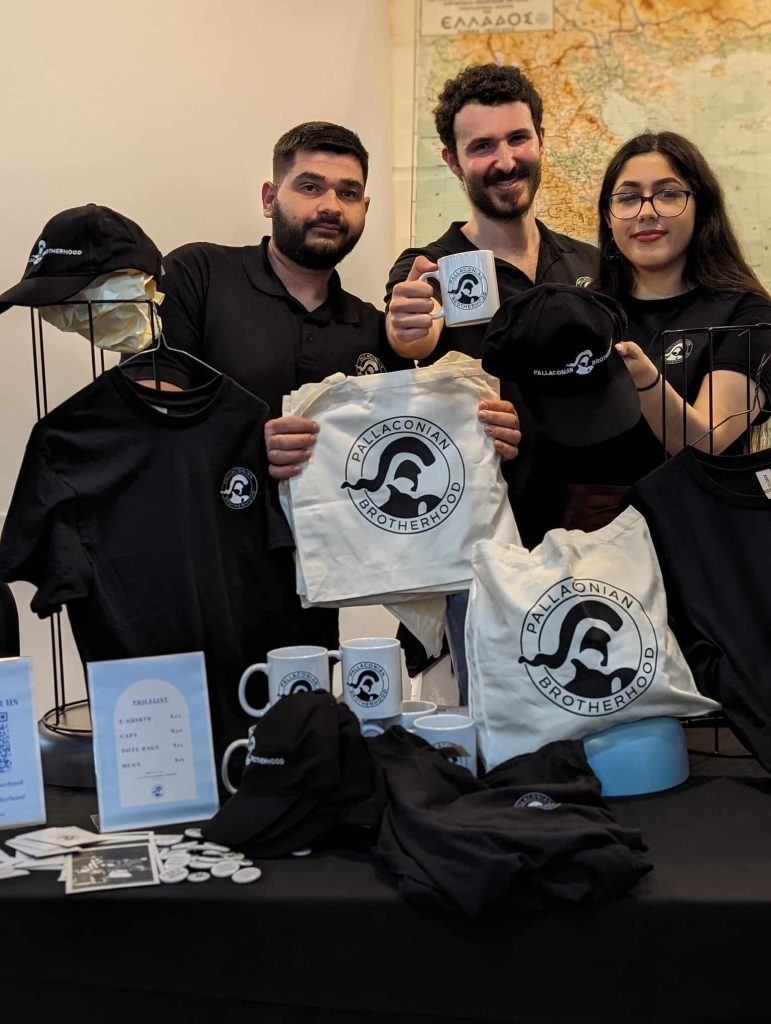
The merch of Pallaconian Youth is simple and minimalistic, a true tribute to the Laconian lifestyle.
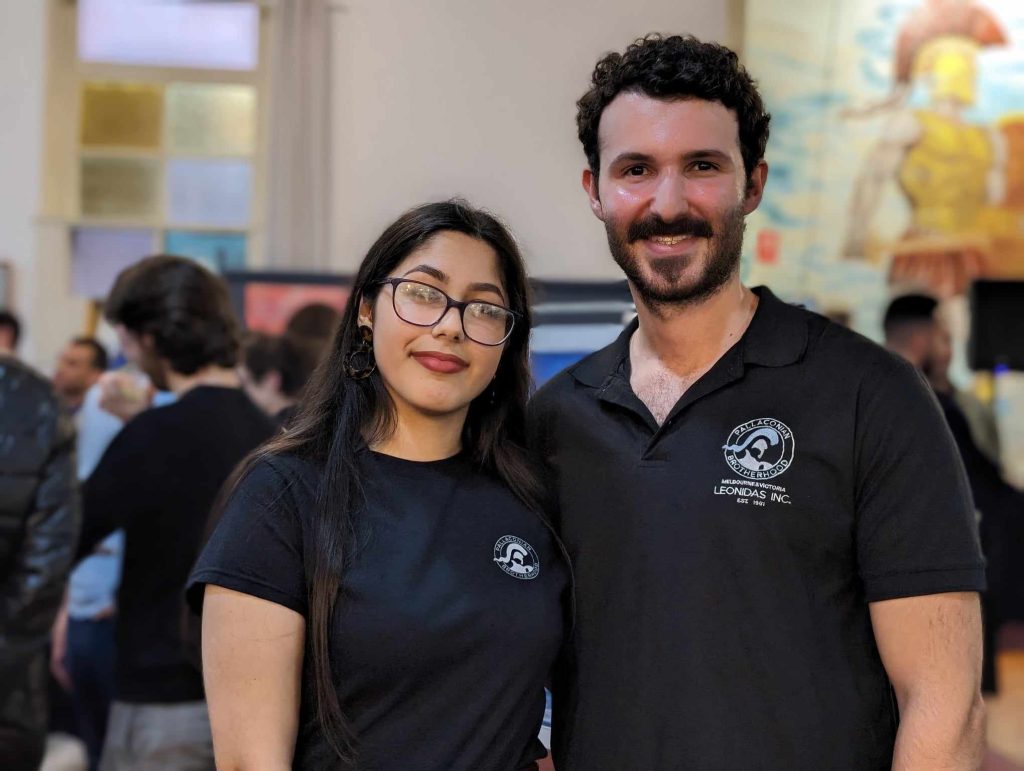
Angelica and Miltiadis, the current and former President of Pallaconian Youth.
Angelica, a member of NUGAS and head of La Trobe University’s Greek Club, where she studies social work, is well-connected with other young Greeks who share her passion for their heritage.
“You have to move with the times and consider the diverse intersectional identity that the younger diaspora embodies,” she added.
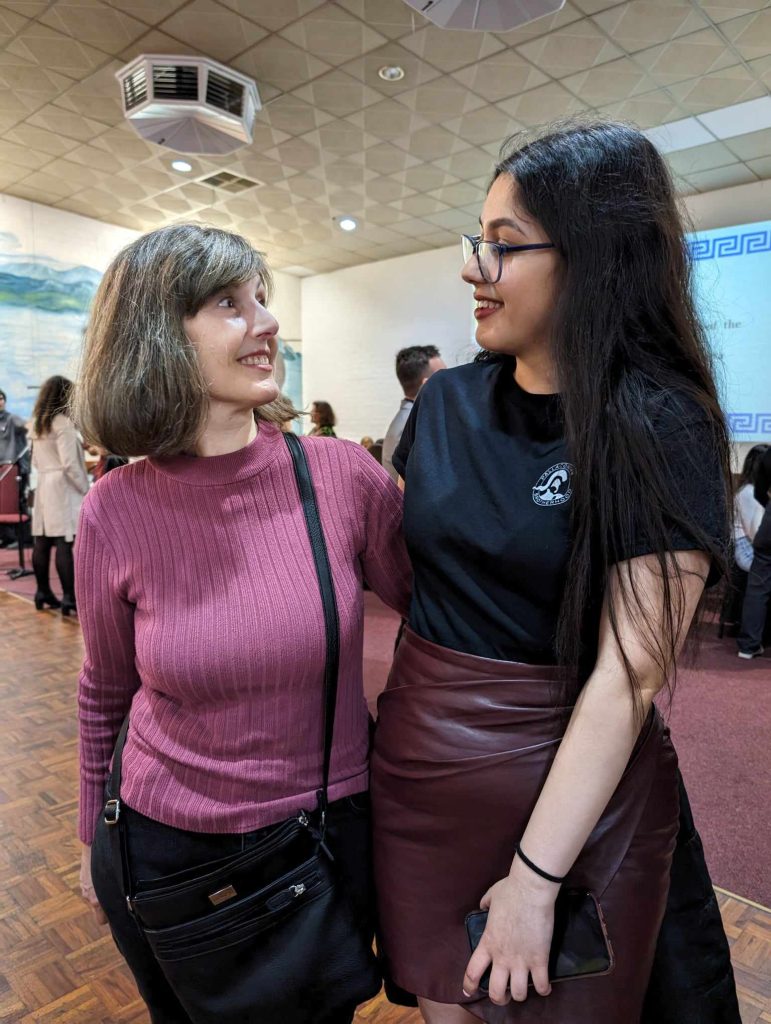
Helen Angsiting, Angelica’s mother, supports her daughter’s commitment to Greek events, humorously acknowledging that Angelica did not get this dedication from her.
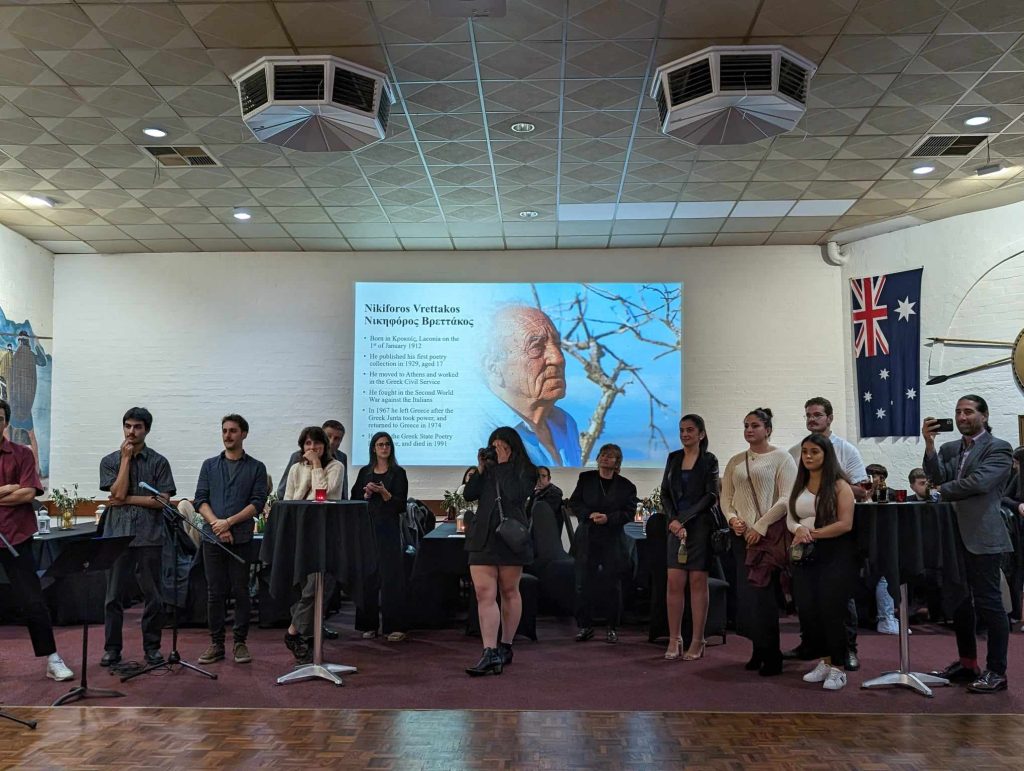
The young people paid tribute to Nikiforos Vrettakos by reading out one of his poems on the importance of the Greek language.Helen proudly supports her daughter Angelica, the new President of Pallaconian Youth.
“I avoided Greek events when I was Angelica’s age. Perhaps she’s acting in the opposite way as a form of rebellion,” she jokes.
Former Pallaconian Youth president Miltiadis Paikopoulos expressed confidence in Angelika’s leadership.
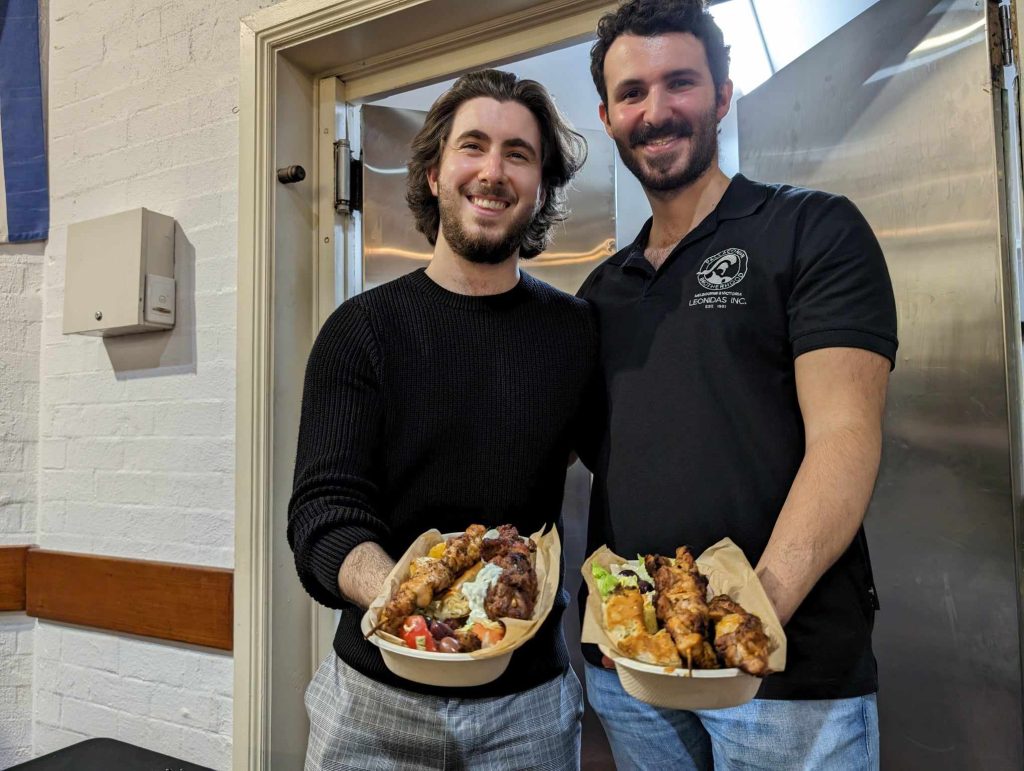
Former president Miltiadis and his friend offered guests a delicious souvlaki meal.
“For four years I wanted to see who the next person to succeed me would be. Angelica is very switched on and she’ll be able to bring more of the new generation to the club as people age out,” Miltiadis said.
Angelica highlighted the collaborative efforts of the Pallaconian committees.
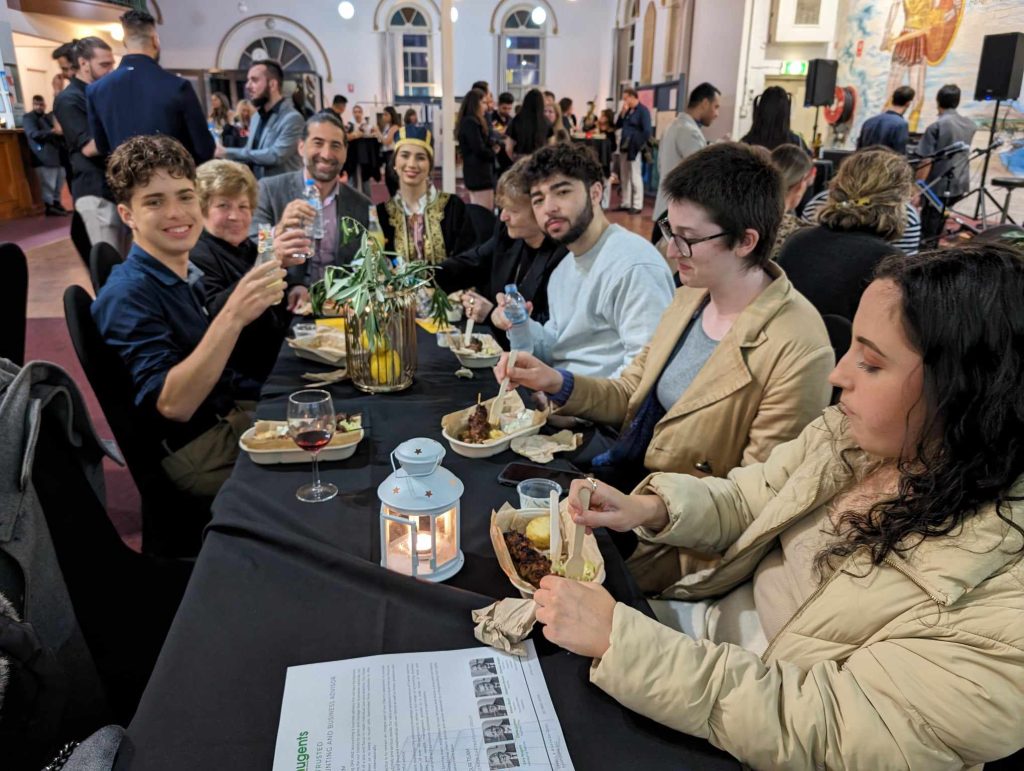
A delicious traditional meal was enjoyed by all.
“Our main president is in the kitchen right now,” she says walking me to the kitchen where Pallaconian President Chris Paikopoulos, Miltiadis’ uncle, is cooking up a storm.
“Get out of my kitchen,” he yelled at us like Chef Ramsey on heat. The food looks great, but no pictures please.
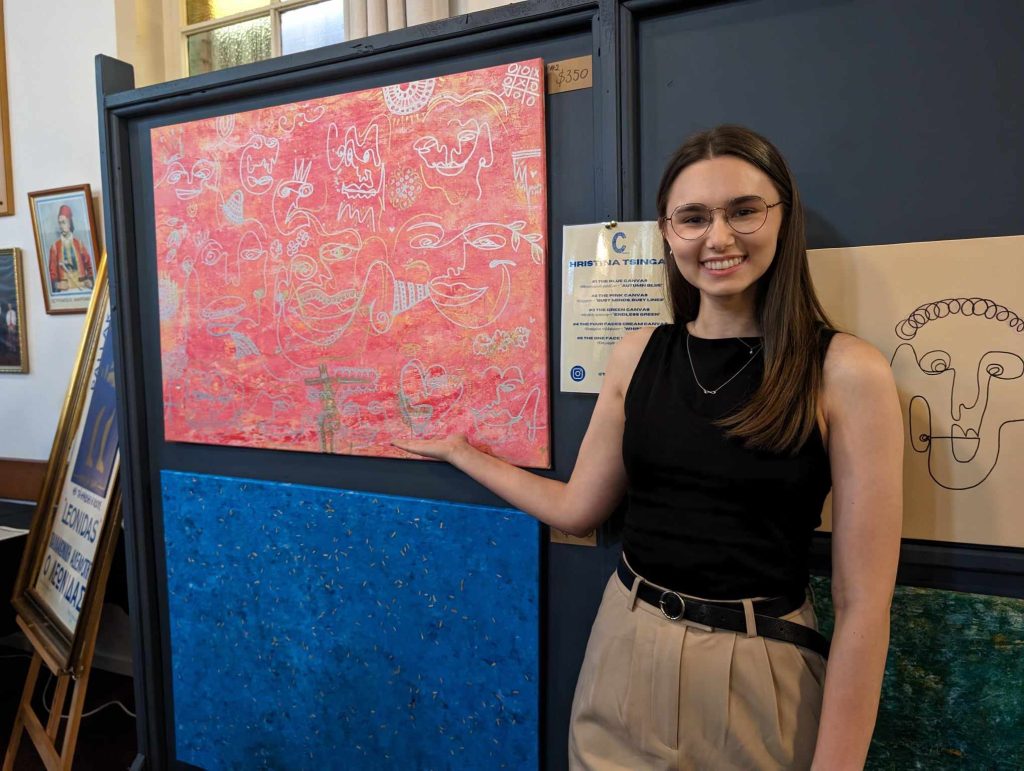
Hristina Tsingas in front of her line drawings.
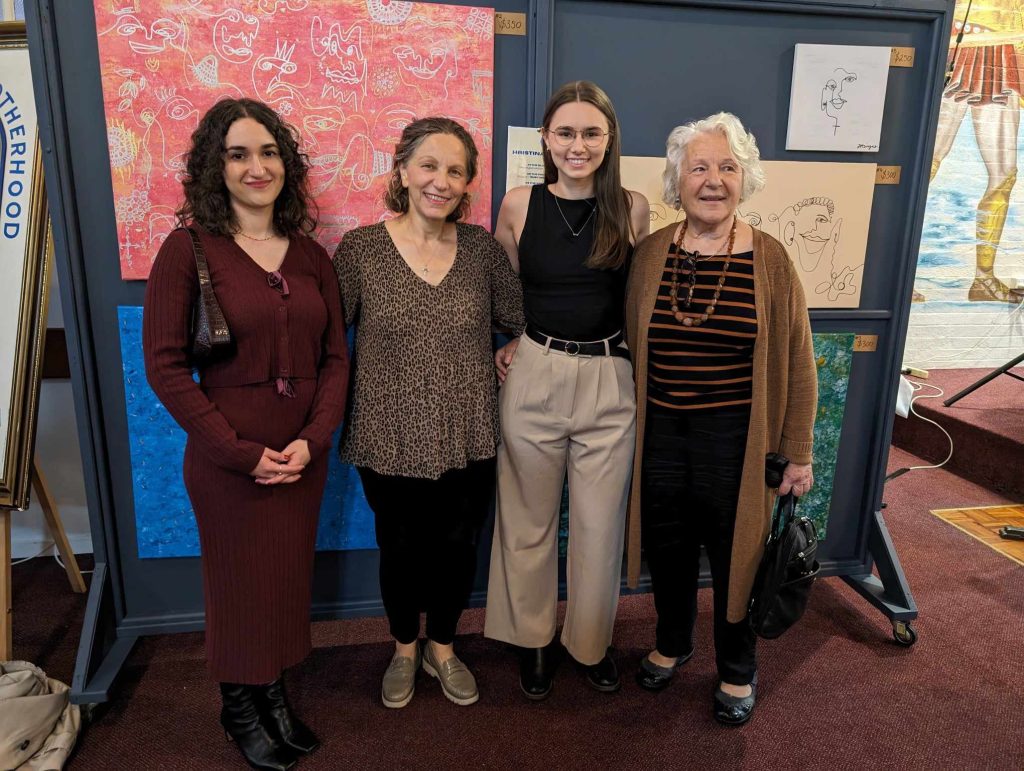
Sophia Avramoudas, Paraskevi Tsingas, Hristina Tsingas and Cathy Alexopoulos.
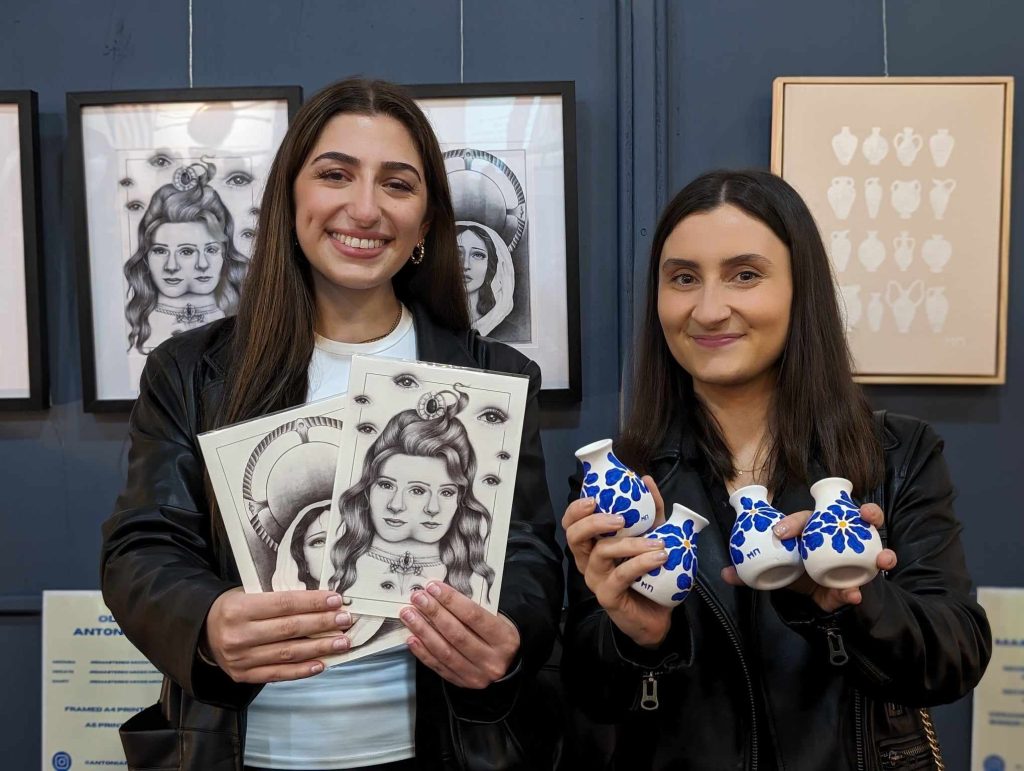
Out of the kitchen, attendees glide among an array of artworks by Marie Petridis, Stephanie Dellaportas, Thanos Matanis, Hristina Tsingas and Olga Antoniadis.
Serres-born Hristina, a psychology student, started her line drawings as a form of mindfulness during lockdown. Pontian Olga is inspired by the divine feminine form, whereas art teacher Marie, whose heritage is from Crete and Laconia, is inspired by the Greek islands.
Guests enjoyed a display of old memorabilia.
Enjoying the photography.
Olga Antoniadis and Marie Petratos.
The club, which was started in 1961 for immigrants from Laconia, is now all-encompassing and embracing of all youth.
Greek-Australian Cultural League (GACL) President Cathy Alexopoulos is present to scout for local talent.
“I’ve encouraged a few of the artists to submit works for the Antipodean Palette,” she confided.
Betty Dimitropoulos, Cathy Alexopoulos and George Kotsirilos
Panarcadian Club President George Kotsirilos and Vice President Betty Dimitropoulos are also present.
“We don’t have a youth club,” Betty said.
“We are the young ones,” George joked.
Betty said, “We shouldn’t force it. I only came back to being part of a Greek club later on in life.”
Katerina Tsarouhas paid tribute to Nikiforos Vrettakos by reciting his poem, ‘The Greek Language’, in Greek.
A family affair. Katerina and Chris watch their dad give his all on the dance floor.
Pallaconian Youth Club member Katerina Tsarouhas recited a poem underlying the significance of preserving Greek language by Laconian Poet Nikiforos Vrettakos.
“I chose this poem because keeping the Greek culture and language is important to me. I’ve noticed it is dying out,” she said.
Chris Tsarouhas entertained guests with some mean bouzouki-playing.
Chris on the bouzouki and Evelyn Darzanos from the GCM dancers.
Her brother, Chris, showcased his musical talents with the bouzouki, while Greek Community of Melbourne (GCM) dancers kept guests entertained with four lively dances, including two interactive festive carnival dances.
The organic preservation of culture was palpable, momentarily transporting attendees from Australia to the heart of Greek traditions.
Evelyn Darzanos taught those present how to dance the Koukia.
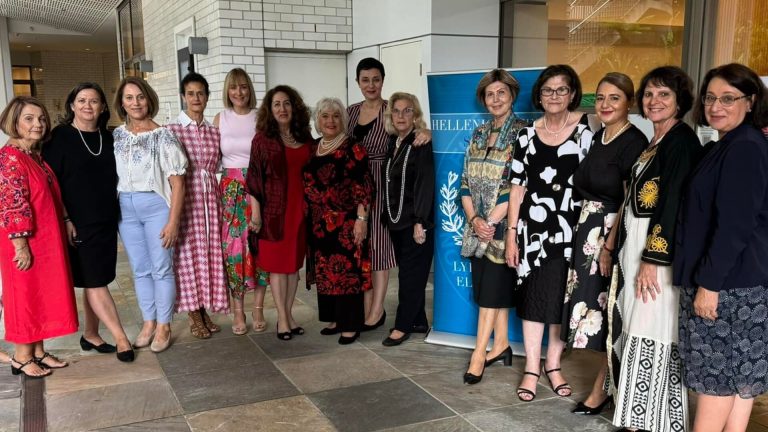
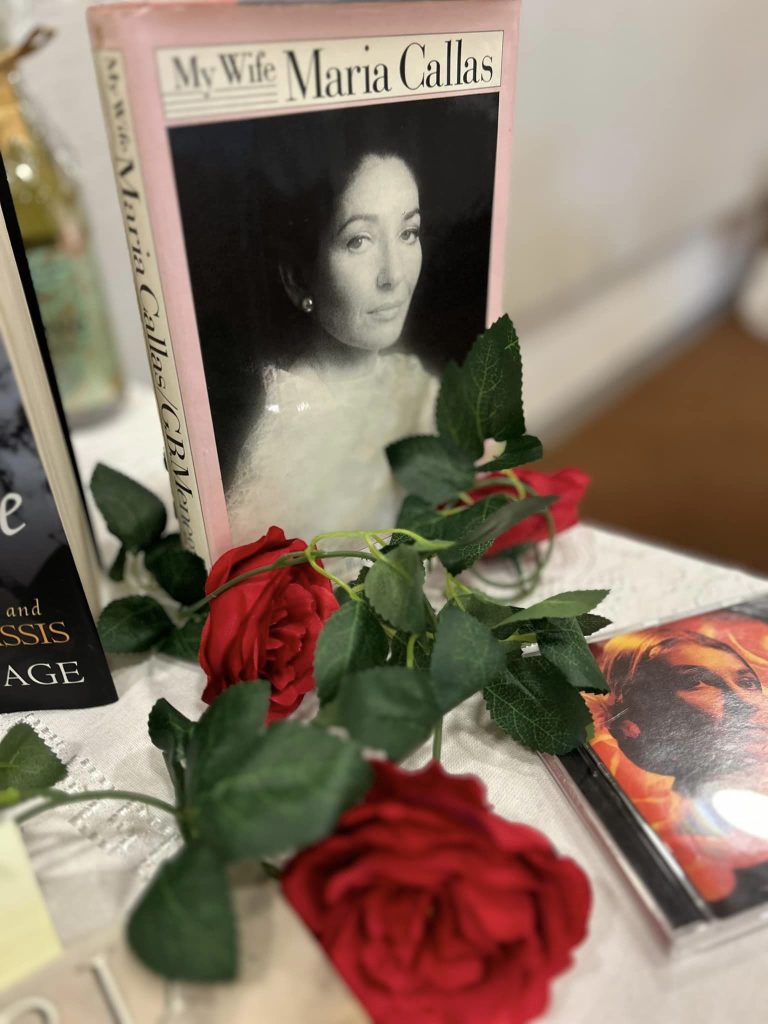
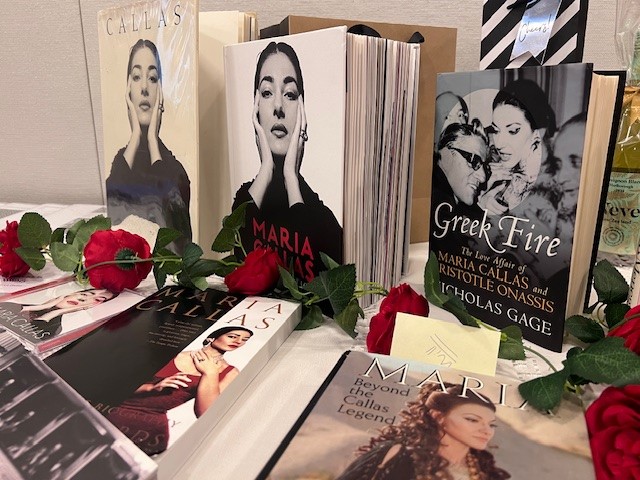
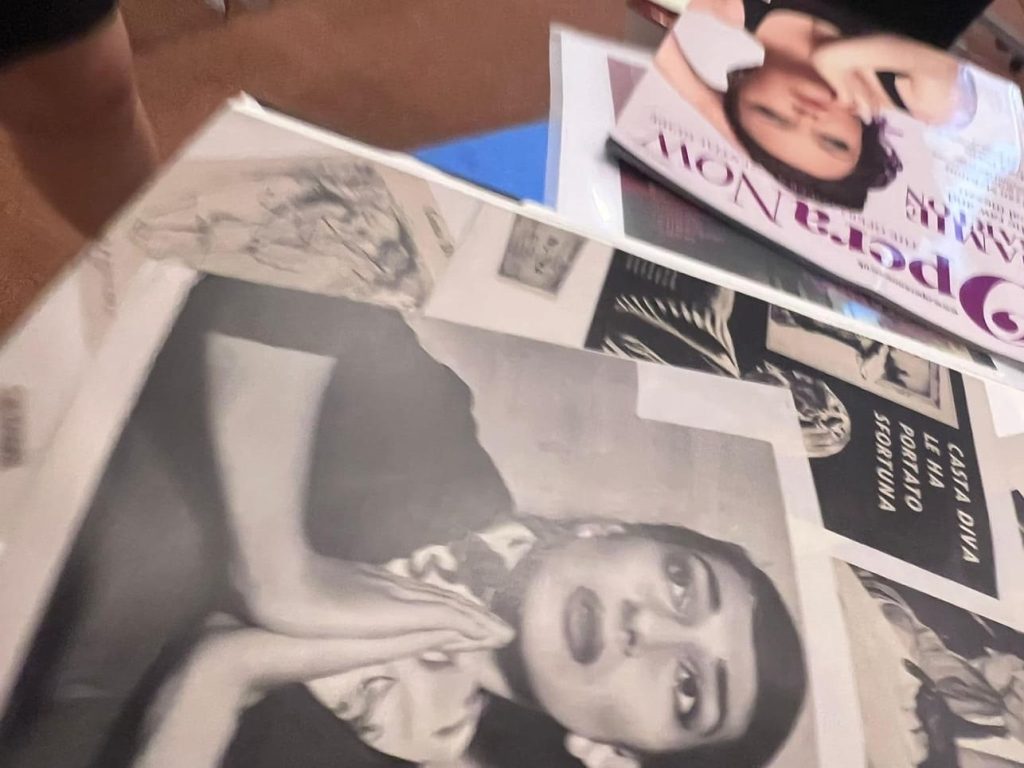
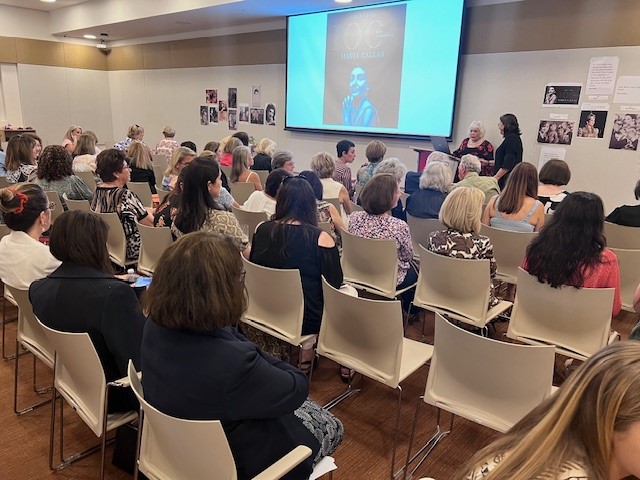
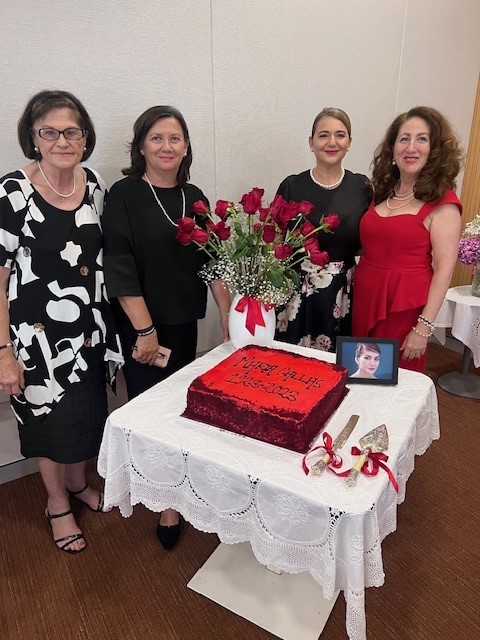
The Hellenic Lyceum of Sydney’s Book Club decided to honour the centenary of Maria Callas’ birth on Saturday, December 2 with a High Tea Presentation.
Callas was an American-born Greek that lived in America, Greece, Italy and finally in Paris where she died in 1977, aged 53.
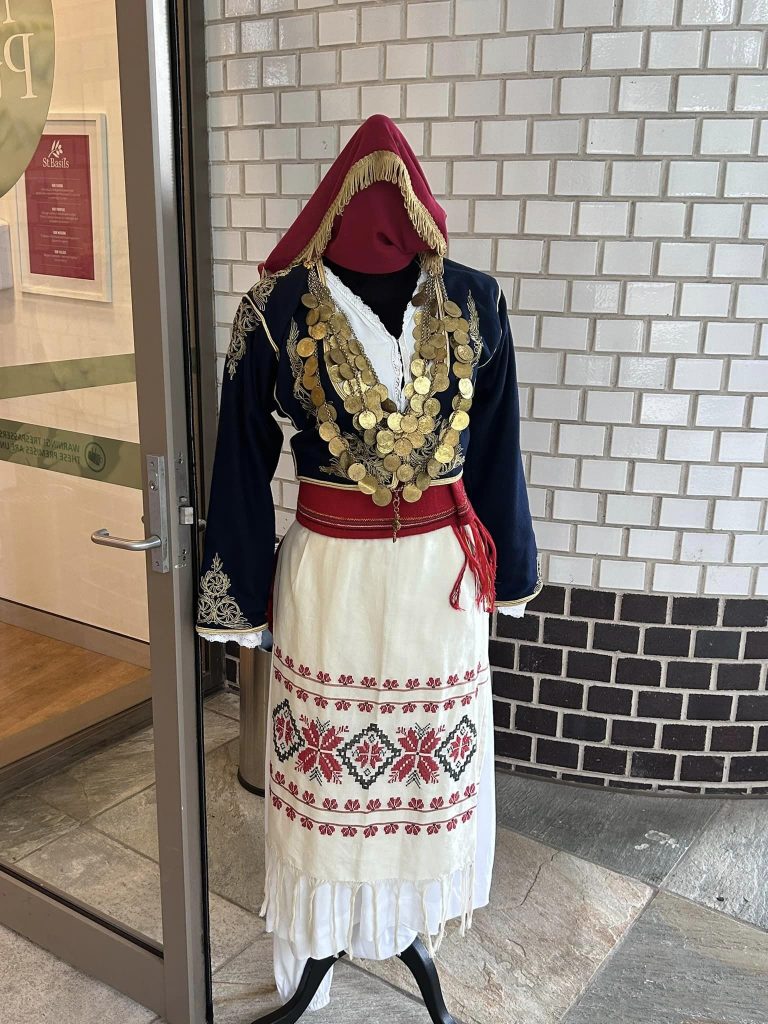
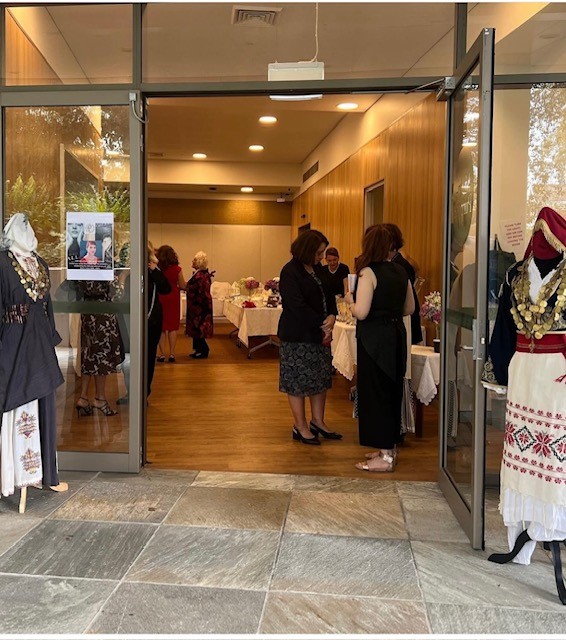
The High Tea event was held at St. Basil’s in Randwick, Sydney and was attended by over 90 people including the First Secretary for Public Diplomacy at the Consulate of Greece in Sydney, Anastasia Christofilopoulou.
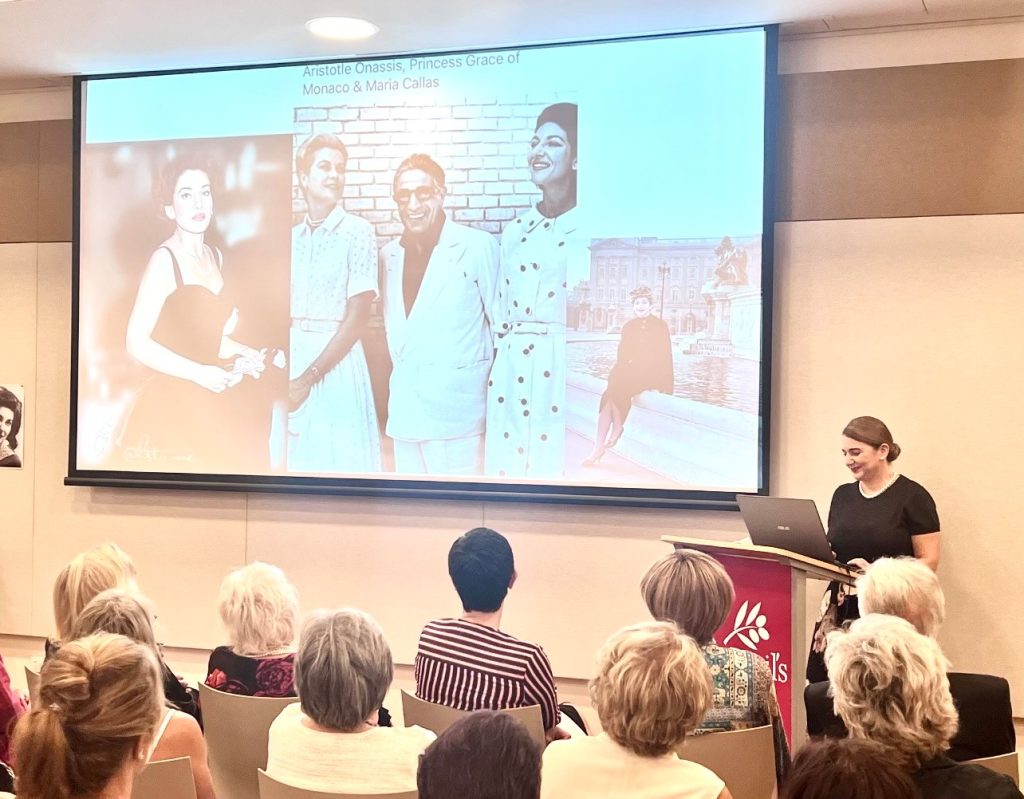
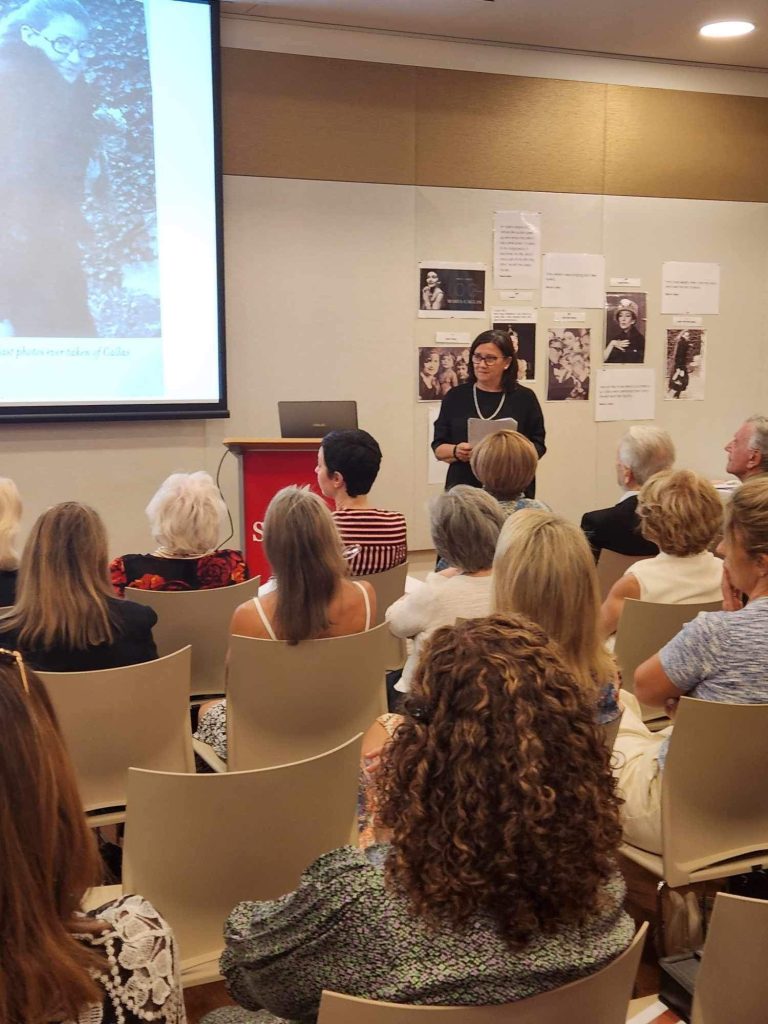
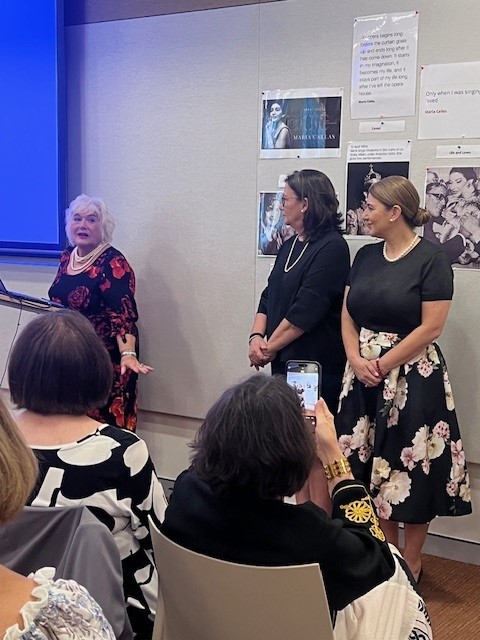
On the day, Tina Contos and Eleni Kandylas-Mallios gave a PowerPoint presentation centred around five sections of Callas’ life – Early Years, Career, Life and Loves, Fashion Icons and Later Life and Legacy.
Each section started with a quote from Callas related to the topic so that the audience could reflect on that quote after hearing the talk and understand what made her say it and why.
The Book Club also discussed Callas’ legacy, mentioning UNESCO’s recognition of her centenary this year which included exhibitions and concerts around Greece and the world.
The presentation also touched on the impact Callas had on opera internationally, the new movies centred around the last years of her life, the large number of biographies written about her and of course, her personal life, including her 10-year affair with Aristotle Onassis, and her impact on the fashion world.
Callas mixed with the rich and famous in the 50s and 60s and even sang at President John F. Kennedy’s birthday in 1962 but was upstaged by Marilyn Monroe, who also sang.
The presentation further entertained guests with recordings of Callas singing Casta Diva from Norma in Paris in 1958, an interview in Greek while she was in Athens in 1957 before her performance there, and an interview in English with Barbara Walters in New York in 1974.
On the day, Ms Contos shared her favourite quote from Callas, which focused on her understanding of what an opera truly is.
Callas once said, “An opera begins long before the curtain goes up and ends long after it has come down. It starts in my imagination; it becomes my life and it stays part of my life long after I’ve left the opera.”
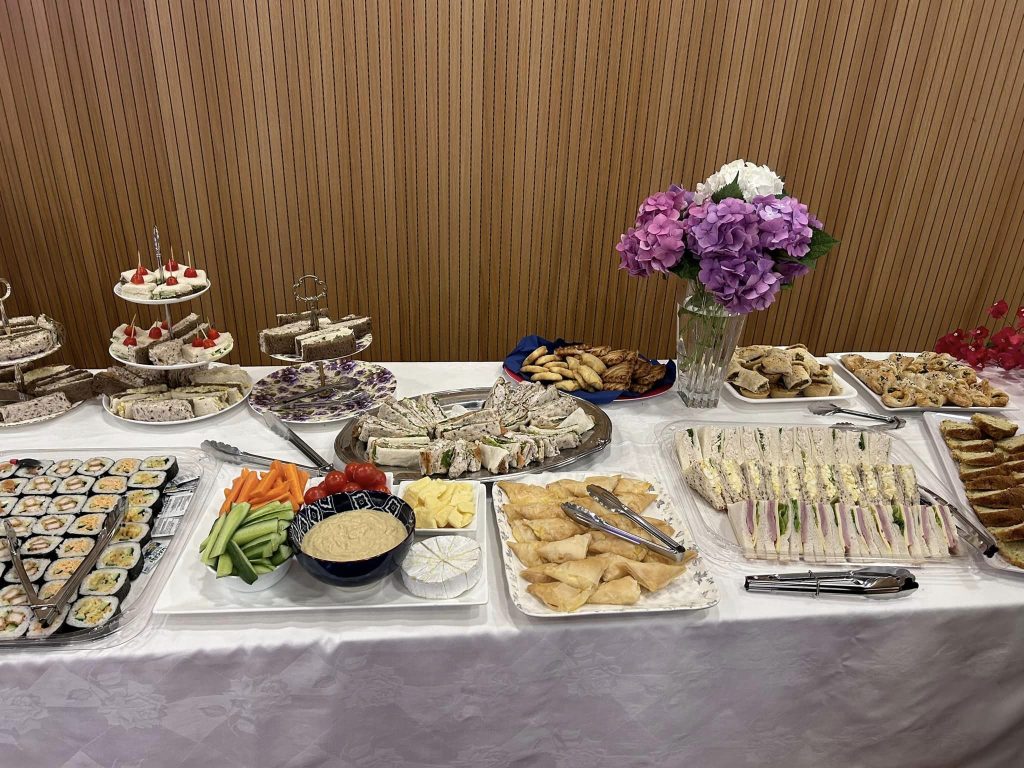
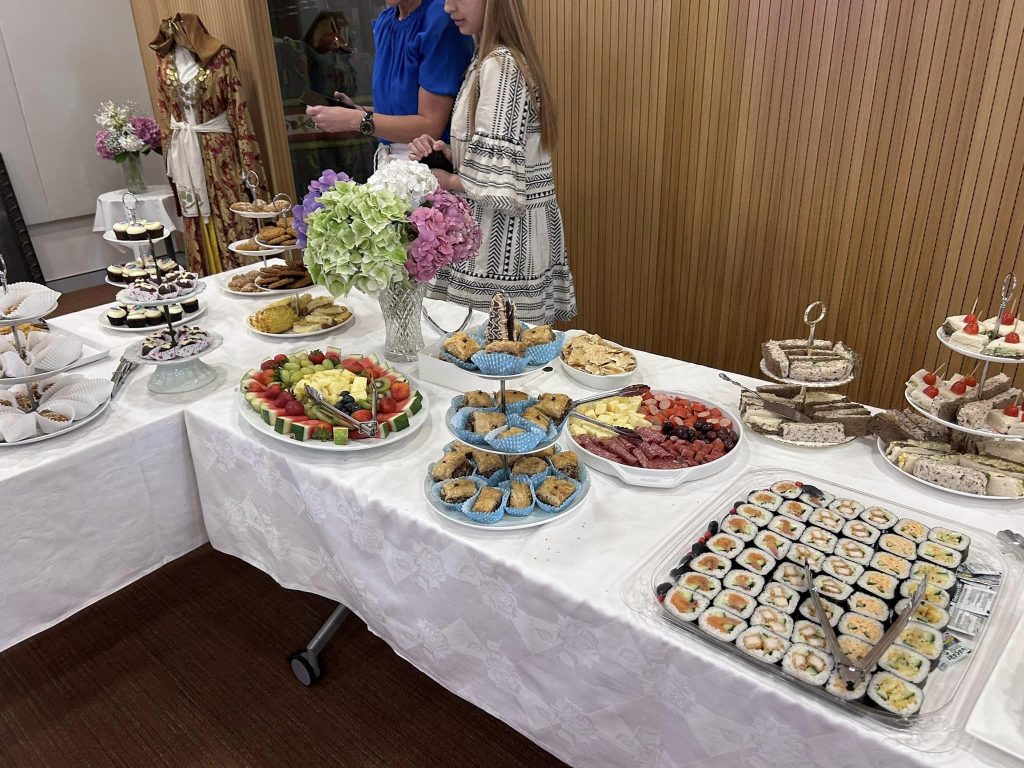
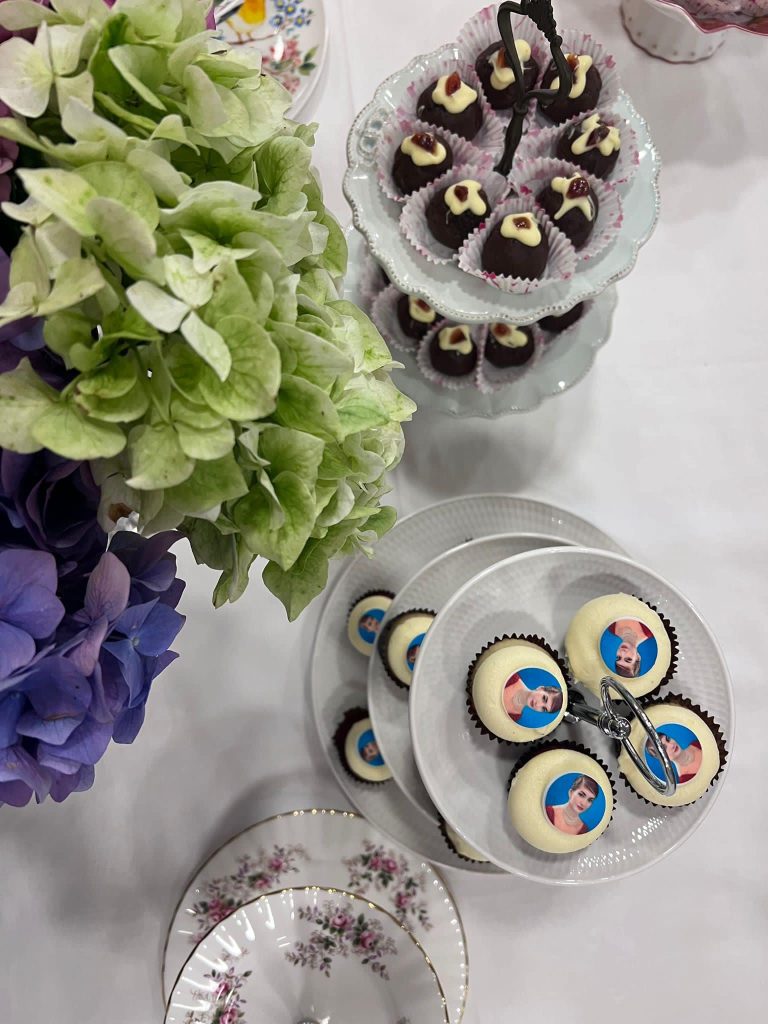
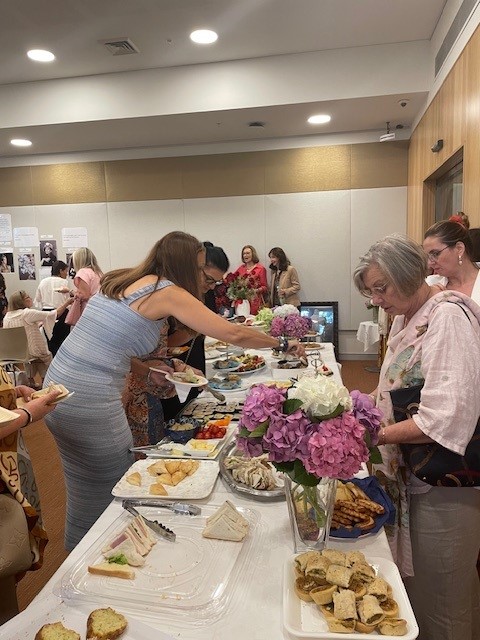
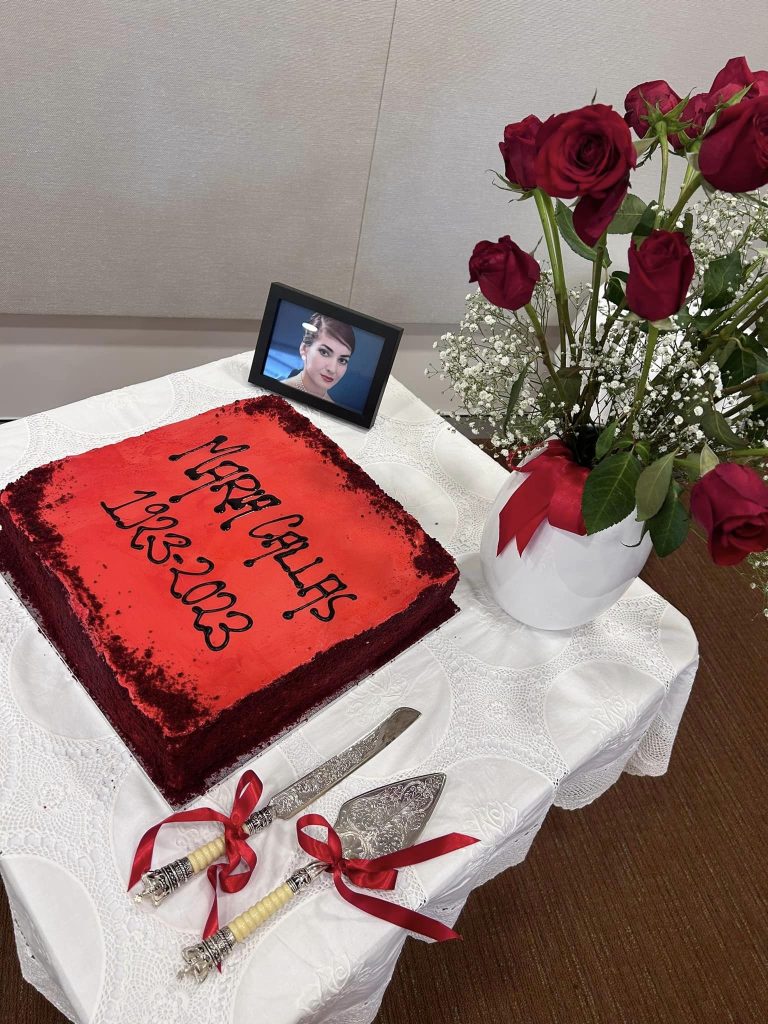
The event concluded with a beautiful high tea for guests to enjoy and a birthday cake in Callas’ honour.
People are communicating incessantly with the past and the preservation of old customs and habits mean that a need coming from the past, is still relevant in the present.
As for the material and the culinary customs, those seem to be embedded in societies’ lives, becoming a natural part of everyday life.
Varvara is an Orthodox custom to honour Saint Barbara, celebrated on December 4 and which is tied to the region of Thrace.
Here follows a brief history of St. Βarbara’s life and the meaning of the custom to this day.
The courageous Saint that saved the lives of Christians:
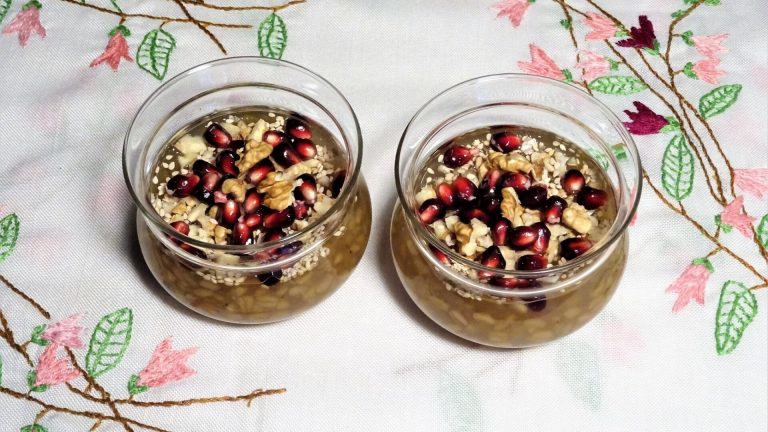
St. Barbara is the patron of Hellenic artillery of the armed forces and of the children. On this day, people would prepare honey pies and the Varvara dessert, as it is called and cooked in Thrace, to honour her.
This custom dates to the antiquity and the seeds, its fundamental ingredient, alludes to fertility.
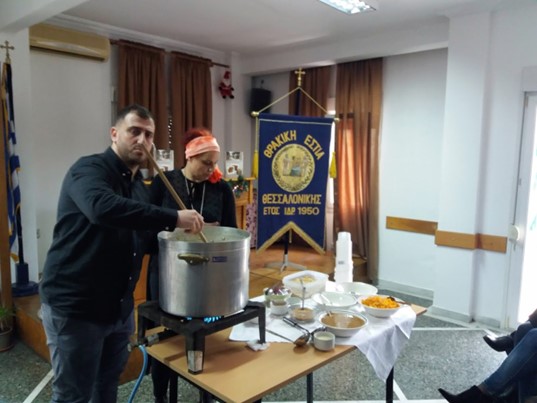
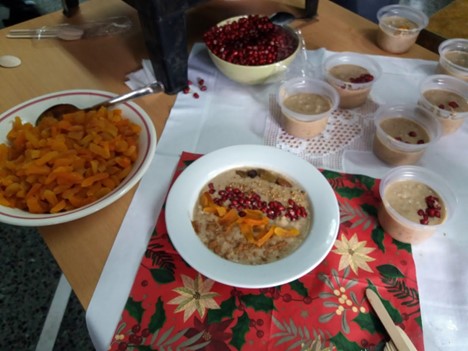
Honoring the Varvara in the Thracian cultural association of Thessaloniki (ΘΕΘ), December 2022. Photo by Marina Siskos.
In the 3rd century, Dioscurus, St. Barbara’s father and cruel idolater, was plotting against the Christians. He dictated every baker to poison the food the Christians were about to buy. St. Barbara learnt about the plot and communicated her father’s scheme, so that no one would buy anything edible for the following days. Therefore, people had to eat from the stored goods of the household, and wheat was one staple commonly kept at this time of the year. Yet, wheat alone wouldn’t be enough to saturate people’s hunger. The Christians mixed it with other, miscellaneous ingredients, such as dry nuts, beans, and raisins to enrich the dish.
People were saved thanks to St. Barbara’s courageous intervention, but she was doomed to her father’s ire and punishment. She was decapitated by Dioscurus himself and turned to a martyr.
Protection of the Earth and its produce:
Varvara, a culinary custom, is tied to the earth and its produce. It heralds the beginning of the long and hard period of winter in the rural areas and, with its seeds and nuts, it is a wish for fertility, health and abundance.
As nutrition promotes good health and staves off disease and frailty, St. Barbara is also the patron of children’s health.
Varvara is a significant celebration in Thrace, where every household reverently prepares the dessert and share it with the community, wishing for a healthy and thriving winter. It is an ancient custom, variations of which are traced with the use and consumption of the products of the earth, even before its connection to the Christianity. Varvara is celebrated collectively, thus sealing the solidarity of the community, making a silent promise for support and offer, so vital for the preservation and prosperity of the society.
What follows is the recipe, as taken from the book of distinguished food journalist, Eleni Psychouli. Eleni suggests the consumption of this nutritional dessert for breakfast:
Honouring the Varvara, in the Thracian cultural association of Thessaloniki (ΘΕΘ), December 2022. Photo by Marina Siskos.
From the night before, dip the wheat into a bowl of water and let it soak.
The next morning, boil the wheat in a pan full of water with the laurel leaf in it and a pinch of salt-just on the tip of the spoon. The aim is to soften the wheat, with care not to break its seeds.
Fully drain the wheat. You might save the drained water to make the asure.
Place a non-stick pan on medium heat and roast the nuts. You might roast each serving of nuts separately, but they become just as delicious roasted together-apart from the sesame. The sesame is extra sensitive, so make sure you roast it separately, either at the beginning or at the end. As the nuts roast, mix them until they turn red and they start giving off the characteristic, pleasant smell of warmed-up nuts.
Pour the wheat into a bowl and mix it with the sugar, the raisins, the chickpeas and the spices.
Grind the nuts. Press the blender button once or twice, as you don’t want to the nuts to be milled, only ground.
Pour the spice mix into the wheat, add the pomegranate and the parsley, until the ingredients homogenize. Then, cover the bowl using plastic wrap and cool it down into the fridge.
Tips
The Varvara mix is tastier the next day.
Traditionally, the housewives would dry the wheat using table napkins for hours, but this is redundant, as the little water that remains, helps the sugar melt down and, homogenizes the spices.
You can skip the pomegranate if you don’t have one.
You might replace the parsley with fresh spearmint.
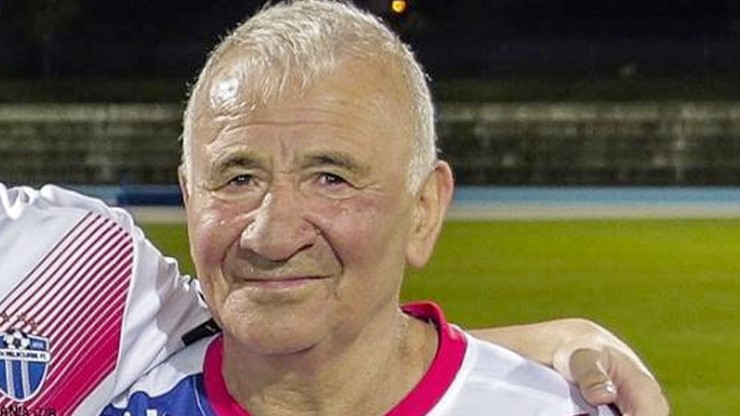
“We send our love to his family and many friends in the football community during this tough time,” the Club wrote in the post.
“We’ll miss you Taki, Rest in Peace.”
In four seasons as a South Melbourne Hellas player, Xanthopoulos was an outstanding centre-half that was part of two State League Championships in 1962 and 1964.
To this day, he would still attend most of South Melbourne’s matches throughout the season.
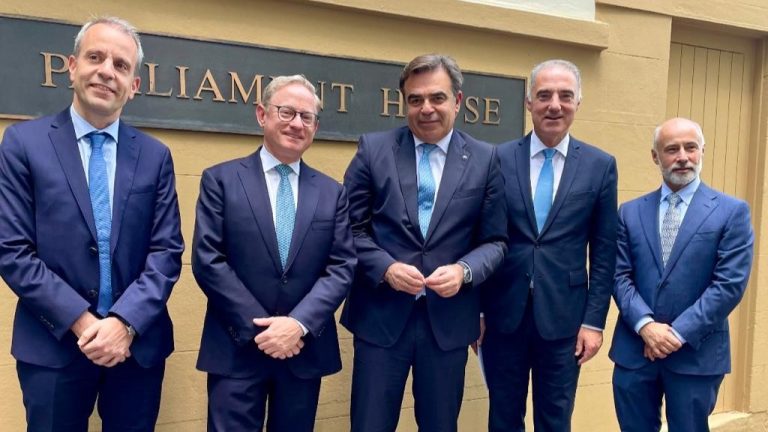
The Vice President of the European Commission, Margaritis Schinas, met with senior Sydney business leaders at a lunch held in the NSW Parliament House on Friday, December 1.
Mr Schinas has responsibilities for migration, asylum and the EU’s fight against antisemitism, and he is visiting Sydney with the aim of strengthening EU-Australia cooperation from a people-centric perspective, particularly in the areas of security, skills, innovation, trade and culture.
During the European Australian Business Council lunch hosted by the Chief Executive Officer Jason Collins and held in the President’s Dining Room of the NSW Parliament, Mr Schinas had the opportunity to meet with representatives of the diaspora, Sydney business community and engage in conversations with them.
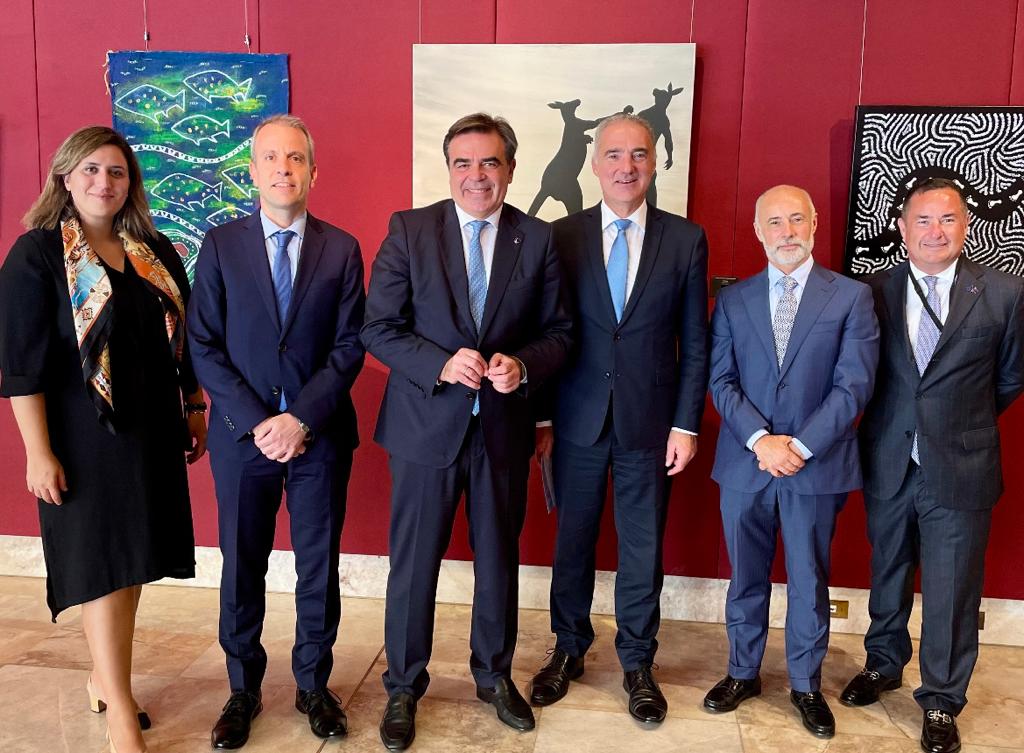
(L-R) Maria Kanellopoulou, Greek Consul General, Margaritis Schinas, Paul Nicolaou, His Excellency Gabriele Visentin and Jason Collins.
Mr Schinas is in Australia after negotiations for a free trade agreement between Australia and the European Union broke down.
He said debates and arguments varied about why an agreement couldn’t be reached, but the two parties needed to look ahead for areas of co-operation.”
“No agricultural products, no cheese, no beef would be enough of a reason for Australia and the European Union not to work together in the future,” Mr Schinas said.
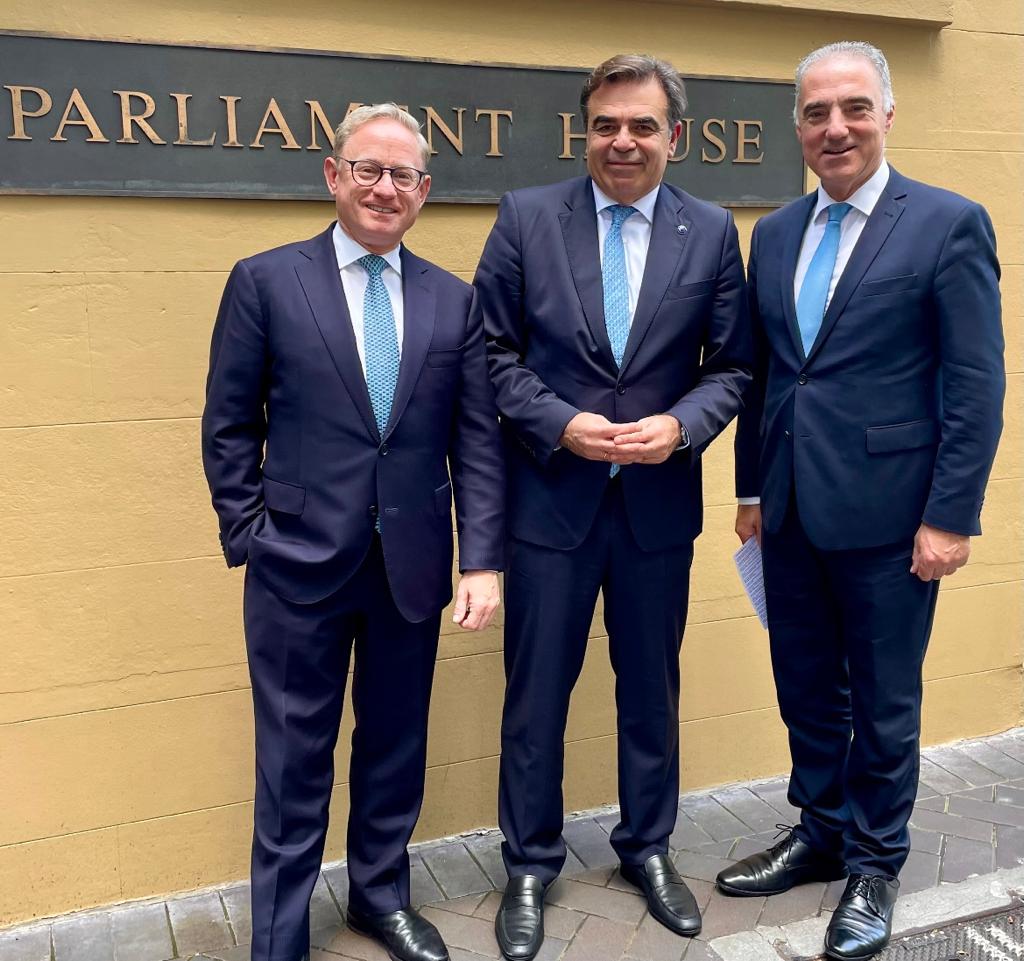
(L-R) Ben Franklin MLC, President of the NSW Parliament Legislative Council, Mr Schinas and Paul Nicolaou.
He flagged Australia’s participation in Europe’s flagship research and innovation funding program, Horizon, which has a budget of some $160 billion.
“Europe, the European Union and Australia, they have so much in common… they are on the same wavelength on everything that concerns global governance, we defend the same model of society,” he said.
The following business and community leaders were in attendance at the lunch:
Graham Bradley AM, Chair of Infrastructure NSW.
Dr Stephanie Fahey, Chair of the Australian Design Council.
Professor Allan Fels AO from The University of Melbourne.
Ioannis Mallikourtis, Greek Consul General of Greece in Sydney.
His Excellency Gabriele Visentin, European Union Ambassador in Australia.
John Weber, Chair of Airservices Australia.
Paul Nicolaou, Executive Director of Business Sydney.
Maria Kanellopoulou, Member of Cabinet of the European Commission.
Greg Medcraft, former Chair of ASIC and Director of the Directorate for Financial and Enterprise Affairs of the OECD
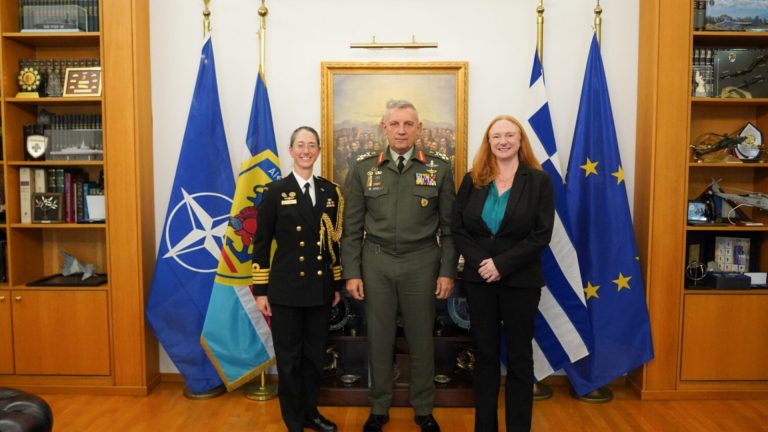
The Chief of the Hellenic National Defence General Staff (GEETHA), Konstantinos Floros met with the Ambassador of Australia in Greece, Ms Alison Duncan, on Friday, December 1.
This was the second meeting between Ms Duncan and Mr Floros, following the 20th anniversary of the operation of the GEETHA War College event.
Συναντήθηκα με την Πρέσβη της Αυστραλίας 🇦🇺 στην Ελλάδα 🇬🇷 κ. Αlison Duncan.
Συζητήσαμε για:
✔Τις άριστες σχέσεις & τους ιστορικούς δεσμούς 🇬🇷 🇦🇺 ✔Την διαχρονική στρατιωτική συνεργασία. ✔Την φιλοξενία μελών της 🇬🇷 ομογένειας σε υποδομές των #ΕΔ ✔Τις τρέχουσες διεθνείς… pic.twitter.com/uCRzZLcMbo
The two discussed the current developments in Ukraine and Israel, as well as the instability in Syria, Libya, Lebanon, Northern Kosovo, and the Sahel region. They also spoke about migration and refugees.
The Chief of GEETHA further highlighted the strong and historic bilateral ties between Australia and Greece.
Mr Floros also made a special mention to Greece’s positive response to the requests of many countries, including Australia, for providing an aircraft to help during the evacuations from the Middle East.
A doctor from Sydney’s south-west has been arrested and charged with watching and downloading child abuse videos on the internet, according to The Daily Telegraph.
The GP, Thrasivoulos Triantopoulos, was charged after having his home in Rouse Hill raided by detectives on September 6.
Police allege he was caught using the Peer 2 Peer app in June earlier this year to watch and download the child abuse material.
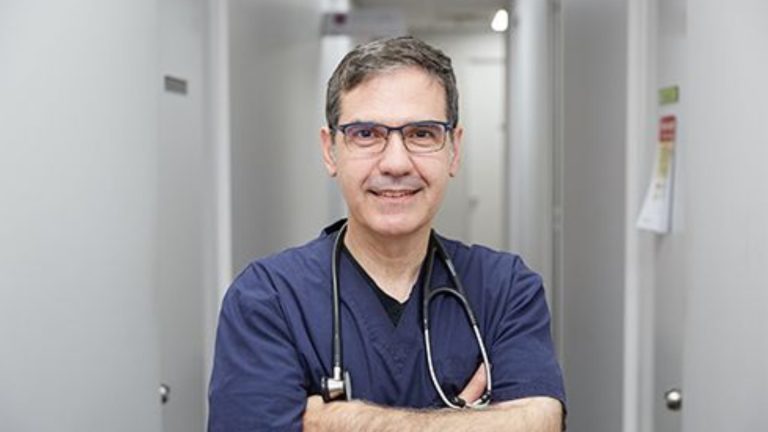
Dr Triantopoulos has now been banned from practicing as a doctor. Photo: Health Engine.
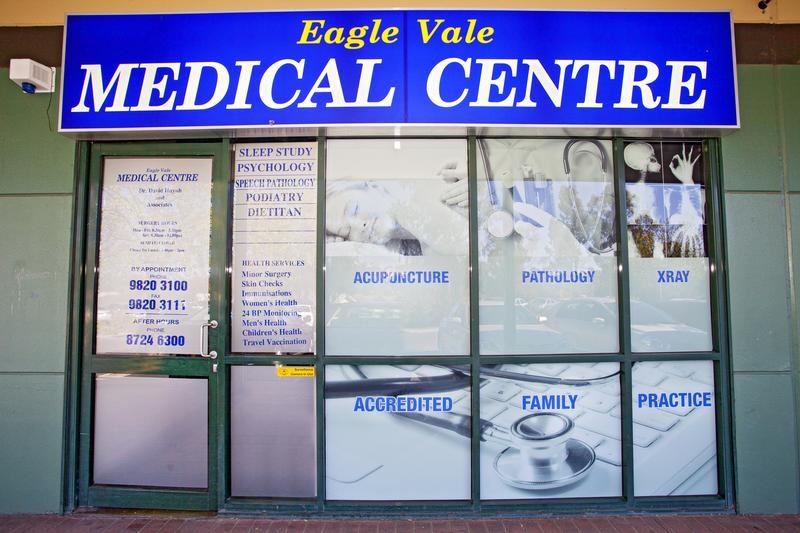
The Daily Telegraph said the 54-year-old worked at Eagle Vale Medical Centre prior to being arrested and was remanded in custody for two months before being granted strict bail in the Supreme Court last week.
Dr Triantopoulos is now required to live at a specific address, report to police four times a week and has a curfew between 10 pm and 6 am.
The former Eagle Vale Medical Centre doctor has also been banned from practicing as a doctor, is not allowed to work or volunteer anywhere involving children and cannot approach or go within 50 metres of any school, childcare facility or playground.
Dr Triantopoulos’ case will return to the Penrith Local Court on December 8.