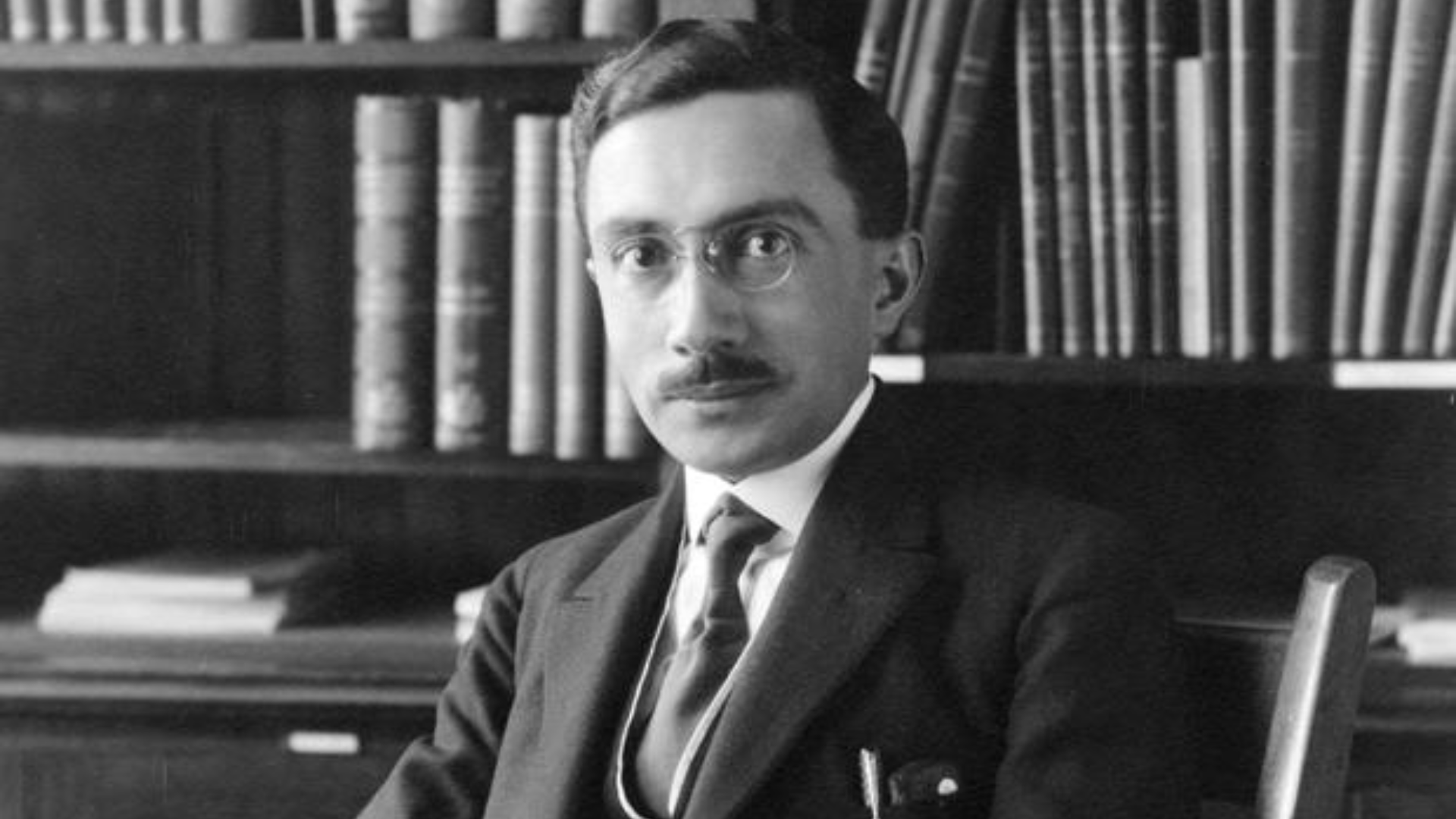
Ioannis Paraskevopoulos was a Greek astronomer best known for his work in South Africa and for having a crater on the far side of the Moon named after him, known as the ‘Paraskevopoulos Crater’.
In international academic circles he was referred to as John S. Paraskevopoulos, while colleagues often called him “Dr Paras”.
He was born in Piraeus on 20 June 1889 and studied physics and mathematics at the University of Athens. Early in his career he worked as an assistant in university physics and chemistry laboratories, but his scientific progress was delayed by military service during the Balkan Wars and the First World War, during which he served in the military for nine years.
After being discharged in 1919, he went to the United States on a scholarship to further his studies in astronomy and to investigate the purchase of a large telescope for the National Observatory of Athens. He spent two years at Yerkes Observatory, part of the University of Chicago, where he met and later married American astronomer Dorothy Block. He returned to Athens in 1921 and became head of the astronomy department at the National Observatory.
Limited funding for advanced equipment led him to move abroad again in 1923, when he joined Harvard University’s astronomical station in Arequipa, Peru. In 1927, the station was relocated to South Africa, and Paraskevopoulos continued as its director until his death.
His research focused mainly on comets, and he co-discovered two of them with colleagues. The Harvard archive preserves more than 100,000 photographic plates from his observational work. In recognition of his contributions, a 94-kilometre-wide crater on the Moon’s far side was named Paraskevopoulos Crater.
Paraskevopoulos became an important figure in the Greek community of South Africa and received wide academic recognition, including an honorary doctorate from Harvard University. He was also a member of several astronomical societies in the United States, Britain, France and South Africa, and was awarded the rank of Commander of the Order of the Phoenix by Greece. He was an associate member of the Academy of Athens.
Paraskevopoulos died in Bloemfontein, South Africa, on 15 March 1951 after a short illness.
Source: San Simera
