Home Blog Page 1895

EU is “determined” to protect Greek borders and sovereignty, says top EU diplomat

0

The European Union’s High Representative for Foreign Affairs, Josep Borrell, said on Wednesday that the bloc is “determined” to protect its external borders and the territorial integrity of Greece.

Borrell, who was visiting the Kastanies crossing on the Greek-Turkish border, was accompanied on his visit there by Greek Foreign Minister Nikos Dendias.

The two officials walked together up to the border crossing, where the last Greek soldiers are stationed before one comes to the border with Turkey.

“Greek concerns identify with the concerns of the EU… It is clear that we are determined to protect the EU’s external borders and to strongly support Greece’s sovereignty,” Borrell said, adding that Greece’s borders are also the borders of the European Union.
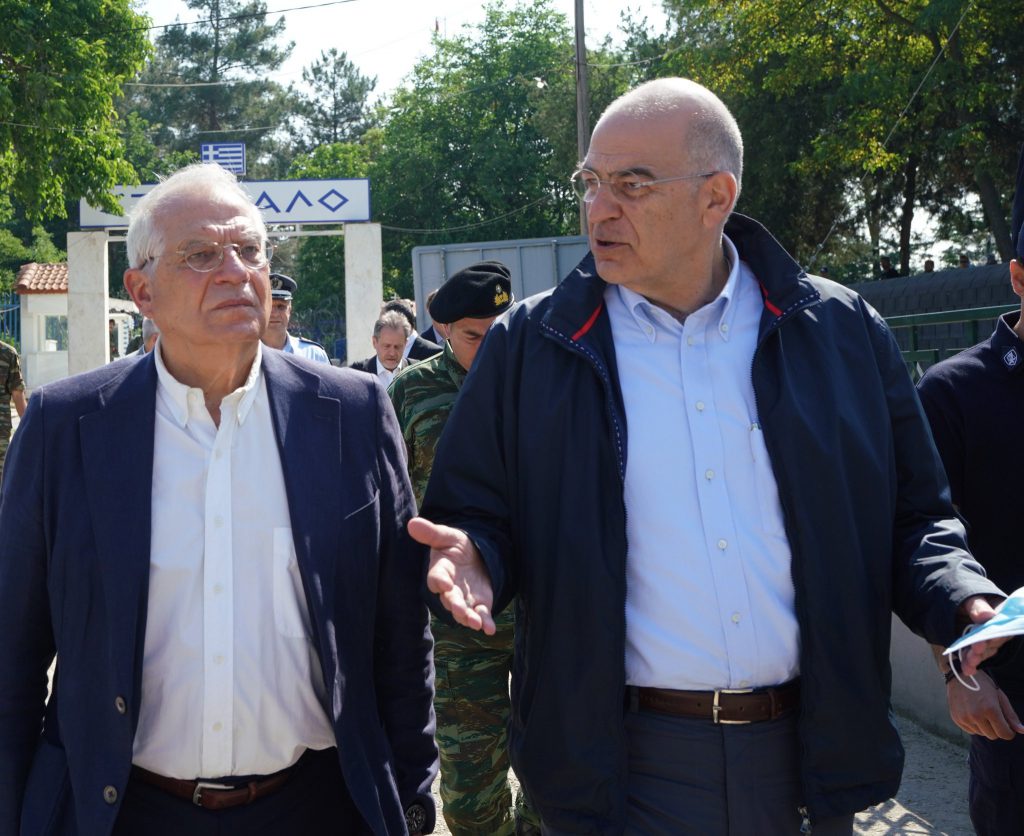
Greek Foreign Minister Nikos Dendias (right) briefs the EU’s High Representative Josep Borrell (left) on Wednesday. Photo: Ministry of Foreign Affairs.

READ MORE: TGH Exclusive: Evros border guards empowered by support of Greek diaspora.

For his part, Greek Foreign Minister Dendias said that Greece is “always open to dialogue but will not enter into talks under duress nor assist the legalisation of continuous violations of legality on Turkey’s part.”

He also referred to recent reports at the Greek-Turkish border of a possible attempt by Turkey to once again push migrants into Europe through Greece.

“Today, after a short interval due to the pandemic, Turkey has once again stated that its land borders with Europe are open, its coast guard is escorting boats loaded with migrants heading toward the Greek islands and it insists on undermining security, stability and peace in the Eastern Mediterranean,” Dendias said.

Borrell replied that his visit to the Greek-Turkish border allowed him to better understand the situation that Greece faced and may face again in the future.

“100 staff from 20 different countries will remain here to demonstrate the EU’s support,” Borrell stressed.

READ MORE: Greece strengthens defence of Evros border with blade wire fence and 400 new guards.

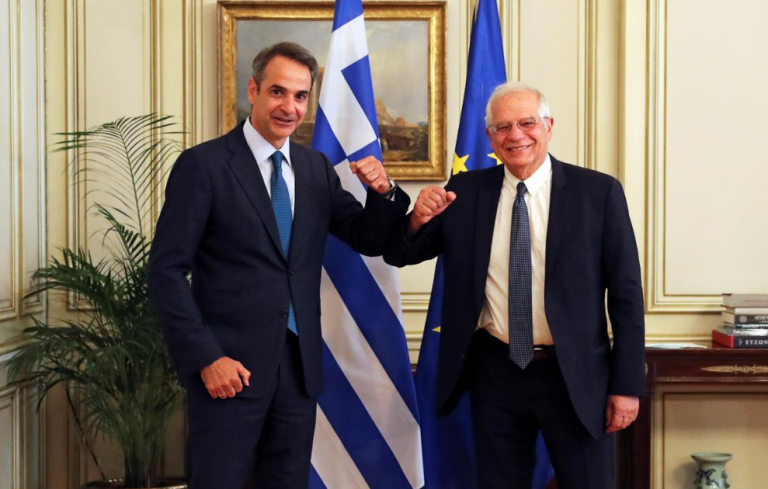
The EU foreign policy chief also met with the Prime Minister of Greece, Kyriakos Mitsotakis, on Wednesday afternoon, where they worked towards “developing a common agenda to strengthen co-operation on these issues of common interest.”

“We encourage you to establish a minimum level of trust and dialogue with Turkey to stop this escalation,” Borrell said during his meeting with the PM.
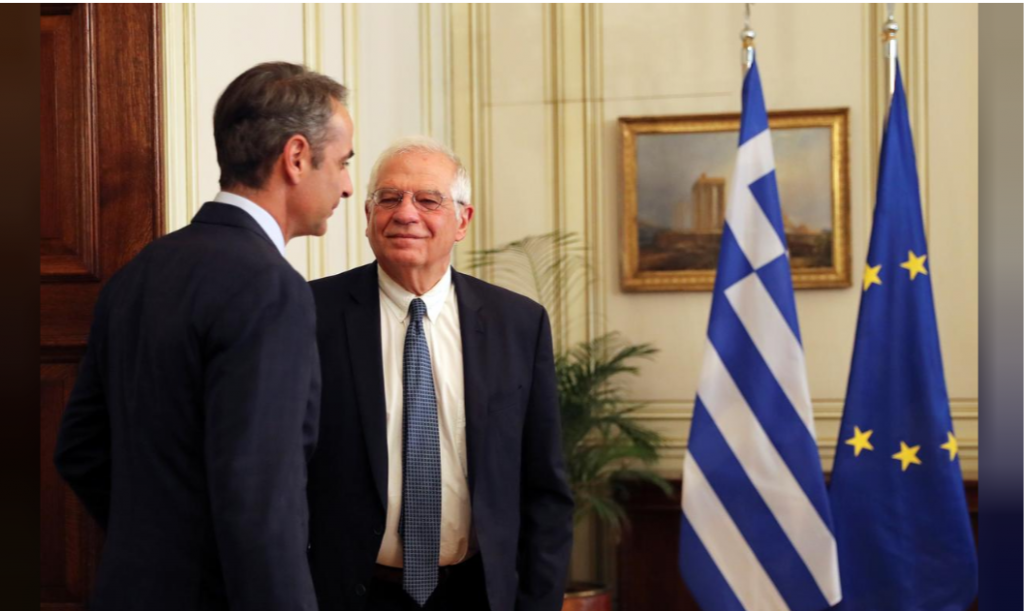
Greek Prime Minister Kyriakos Mitsotakis (left) meets the EU’s High Representative Josep Borrell. Photo: REUTERS/Alkis Konstantinidis.

“Greece is perhaps the EU member state which has the greatest interest of any good relations with Turkey, and I believe that we must work together to achieve this goal and return to a new normalcy.”

To which Mitsotakis replied: “We are always looking for a constructive relationship with our neighbors, especially Turkey.” 

“But trust needs two and in order to start building trust, it is important for Turkey to stop the provocative actions, which clearly violate the sovereign rights of Greece, as well as the sovereign rights of Cyprus.”
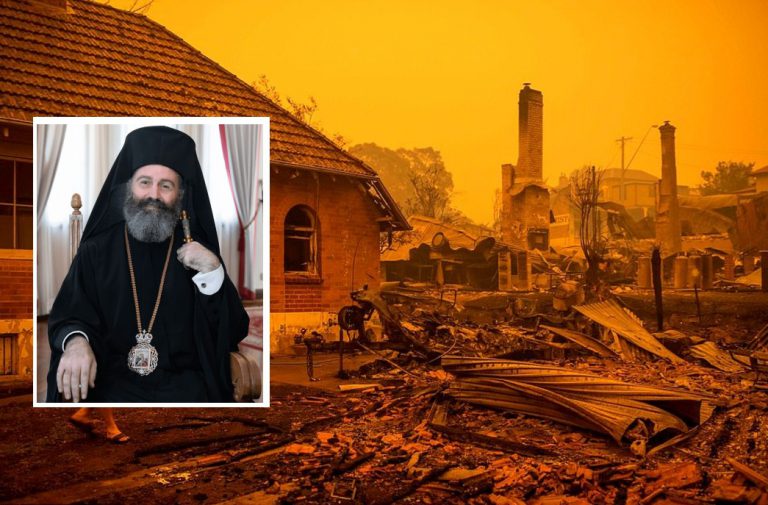
Greek Orthodox Archdiocese donates $325,000 for Bega Valley bushfire recovery

The Greek Orthodox Archdiocese of Australia has donated $325,000 to the Bega Valley Community Disaster Relief Fund to be used “for the relief of human suffering.”

Mayor and Co-chair of the Fund, Sharon Tapscott, said they were “overwhelmed and extremely grateful to the Greek Orthodox people and the Archdiocese of Australia for their substantial donation.”

“The bushfires impacted more than 60 percent of the Bega Valley, destroyed 466 homes and damaged so much more,” Ms Tapscott said.

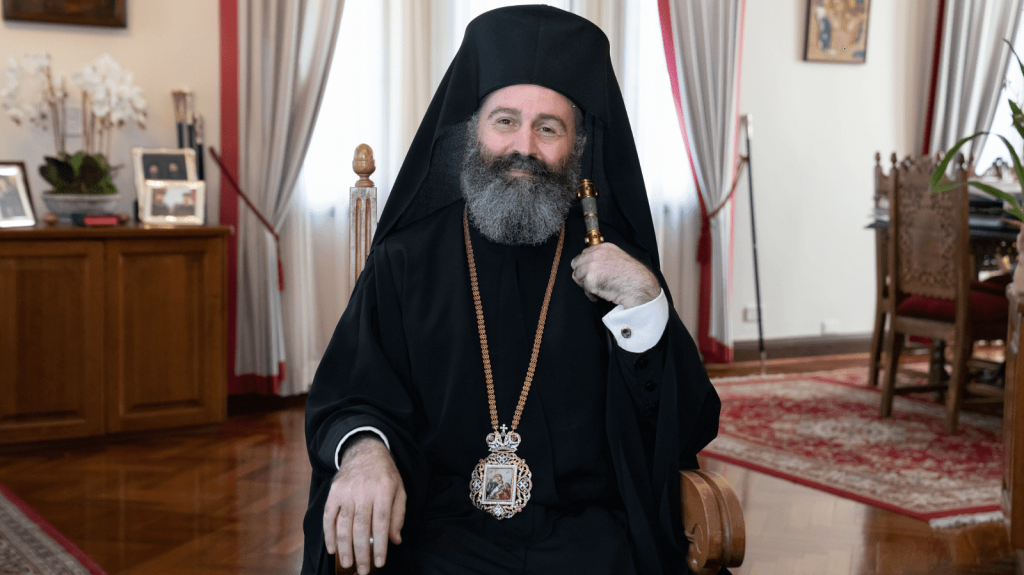
“We thank Archbishop Makarios of Australia for choosing to support the Bega Valley from the funds raised through their Bushfire Appeal and assure the Greek Orthodox people that it will be put to good use.”

The Bega Valley community have thanked His Eminence Archbishop Makarios and the Greek Orthodox community for their support.

The Greek Orthodox Archdiocese of Australia donated $148,000 and its Charitable Foundation a further $177,000.

“We are proud of the generosity and spirit of compassion shown by our Greek Orthodox faithful, who immediately responded to the call of the Church for donations as a practical expression of our solidarity with the people of this nation and their suffering during the devastating summer bushfires,” His Eminence Archbishop Makarios of Australia said in a statement.

Co-chair of the Bega Valley Community Disaster Relief Fund and Chair of the Social Justice Advocates of the Sapphire Coast, Mick Brosnan, said although the Fund is perpetual, its main focus for now will be the Bega Valley bushfires.

“At the moment we are trialling an efficient application, approval and delivery process for grants with the Cobargo community,” Mr Brosnan said.

“Once we have the grant application and distribution process established, we plan on rolling out support more widely from July 2020.”

The Bega Valley Community Disaster Relief Fund will focus on unmet needs and aims not to duplicate the provisions being met by other agencies and charities.

It will also seek to address everyday health and wellbeing issues to meet critical and acute needs such as fuel, firewood, household appliances, clothing and more.

The Fund is jointly managed by Council and the Social Justice Advocates. A webpage is being established as a point for further information.

School principal, Angela Lyris, empowers her students to ‘dream, believe and achieve’

0

“As a principal I need to make sure that all my students believe in themselves. That once they leave school, they can stand on their own two feet,” Angela Lyris tells The Greek Herald as she details her teaching ethos. “There’s going to be challenges but there’s always a lesson to be learnt and something positive will definitely come out of their journey.”

The same can be said for Angela herself. Angela’s life looks very different to the one she would have had if she’d chosen to study law like she initially wanted to. Luckily for her however, the well-meaning advice of her Greek parents steered her on the path to being a teacher and she’s never looked back.

She’s now a well-renowned Principal at Strathfield Girls High School and Supervisor at the Kogarah Saturday School of Community Languages. More recently, she was also recognised for her work in education in the Queen’s Birthday Honours List for 2020 and this is something she says her parents, who have both passed away, would be very proud of.

“After I graduated from high school, I visited family in Greece and my uncle said I could get a job with him at Olympic Airways. I was so excited. But then I got my high school results and my grades were high enough to get into law,” Angela explains.

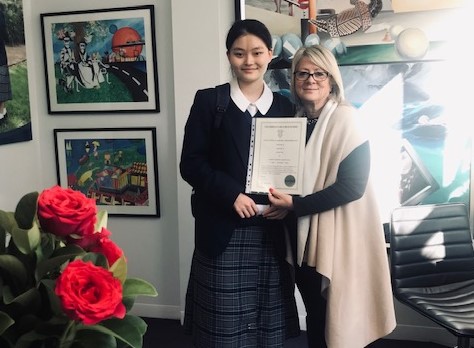
Angela Lyris is a proud School Principal at Strathfield Girls High School. Supplied by Angela Lyris.

“So I returned to Australia and when my dad picked me up at the airport he said to me: ‘I’m proud you got into law but you’re a shy girl. Teaching would suit you better. You’ll be able to have a family and holidays.’ I’ll never forget it. But he was right and so I decided to study teaching instead and here I am today. I just know that if my mum and dad were still alive, they would’ve been so proud to see me recognised for something they encouraged me to do.”

Angela’s mum, who was from Kalavryta, and her dad, who was from Akrata, migrated to Australia in the 1950’s and worked hard to ensure their children had the best of everything. In fact, Angela says that her parents came from poor families with limited opportunities and that’s why her education and the teaching profession was so important to them.

“My parents, as well as many other migrants, came to Australia for their children and because they came from poorer families, they really valued education and teachers. I mean we’re educating young people to be the leaders of our world today. That’s pretty important,” Angela says.

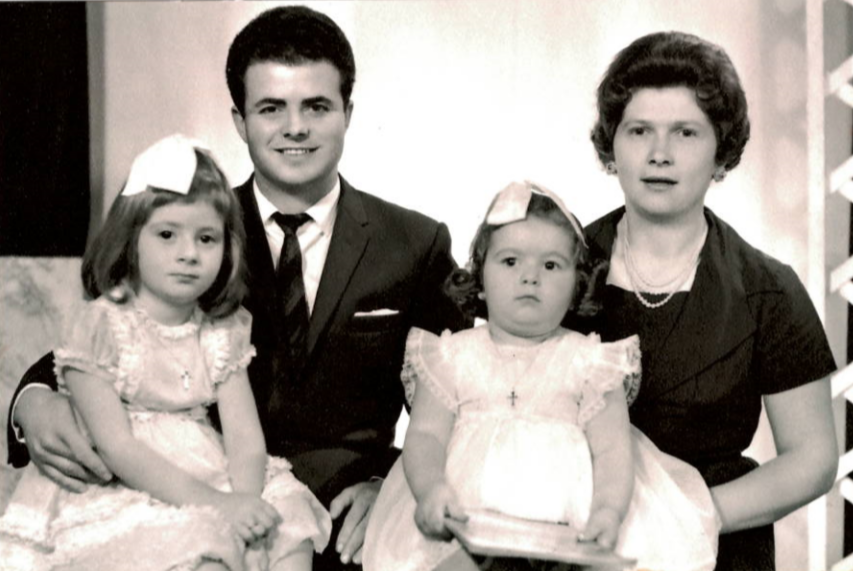
Angela Lyris (left) with her loving parents and sister. Supplied by Angela Lyris.

It’s this message of the value of a good education which has stuck with Angela almost 40 years later. She says that in her many years as a teacher and now principal, the most satisfying aspect of her role has been working with young people and teaching them the importance of believing in themselves.

“Sometimes young people don’t always focus on the important things and that’s where I come in as a leader. I have a big responsibility in educating young people to be confident, compassionate and accepting of others,” Angela says seriously.  

“My motto is ‘Dream, Believe, Achieve and Inspire’ and if I can make sure that every student is able to confidently stand on their own two feet when they leave school, then I’ll know that I’ve done a good job. I can be happy with that.”

Greek-Australian lawyer sentenced to 6 years for stealing $1.7m from clients

The solicitor in this story, John James Kotsifas of Northcote law firm J Kotsifas & Associates, is in no way professionally related to Melbourne solicitor John Andrew Kotsifas of JK Legal Barristers and Solicitors.

Greek Australian lawyer John Kotsifas has been dealt a large punishment after he was caught stealing $1.7 million worth of clients’ cash for personal use.

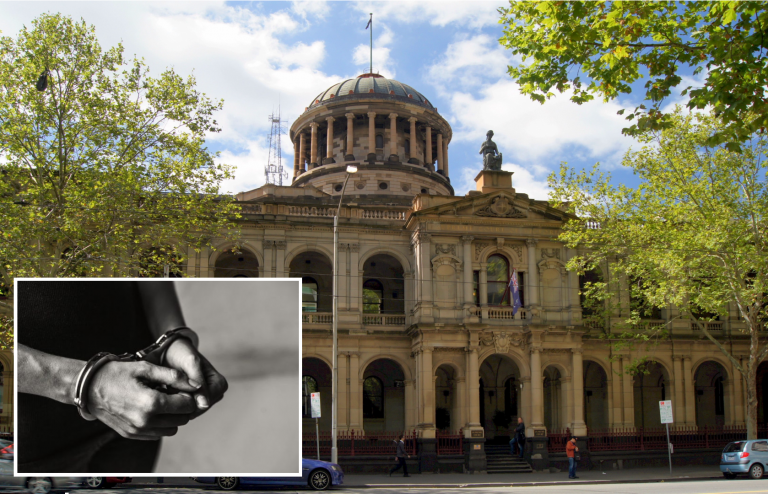
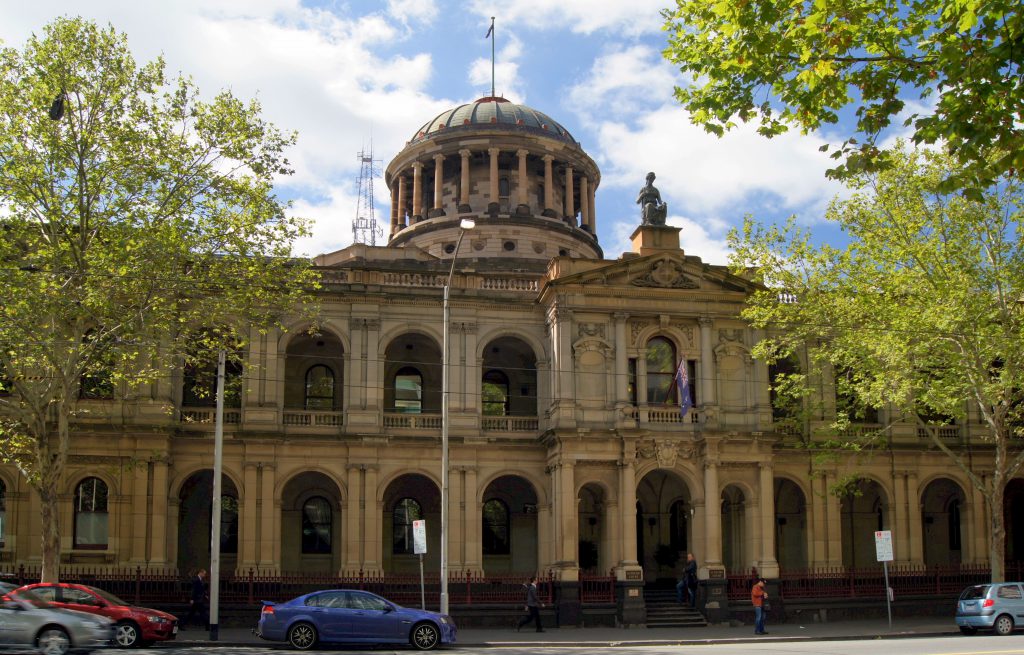
The owner of the Northcote firm J Kotsifas & Associate Lawyers was last week sentenced by the Supreme Court to six years’ imprisonment after earlier pleading guilty to theft and causing deficiencies in clients’ trust accounts. 

The offences related to transactions ranging from thousands to hundreds of thousands of dollars each between January 2013 and October 2015.

Justice John Champion told the court one client was left “on the brink of homelessness” as a result of Mr Kotsifas’ deceit, according to her victim impact statement tendered to the court.

Another told the court her late husband, Mr Kotsifas’ long-term client of 20 years, felt “gutted” by his actions, which he discovered while he was gravely ill and shortly before his death.

“She describes how sometimes you would visit their home with your children and that you invited them to your birthday party,” Justice Champion said. 

“Some of your clients regarded you as a friend… these actions result in your conduct being all the more reprehensible.”

Claiming Mr Kostifas had brought the legal profession into disrepute, Justice Champion said he had caused nothing but pain and loss to his victims.

“Your actions have caused pain and misery to your clients, the people who trusted you. As a result of your offending, your career as a practising lawyer is finished and you are in disgrace,” Justice Champion said.

According to court documents, the money stolen was used to purchase multimillion-dollar homes in Balwyn, pricey renovations and a golf club membership.

He also used the money to service ballooning credit card debts and out-of-control loan repayments for his luxury Porsche, the court heard.

Kotsifas said he was under financial pressure when he committed his crimes, blaming pressure from his second wife to sustain a certain lifestyle.

Mr Kotsifas was convicted of 23 charges, including the theft of $267,000 from clients and another $1.49 million he was supposed to have held on trust for them. Furthermore, helped himself to more than $400,000 he held on trust for one client.

Kotsifas must serve four years’ jail before becoming eligible for parole.

Seminar series on Greek history and culture to resume online this week

The Greek Community of Melbourne’s Greek History and Culture Public Seminar Series, which was suspended due to COVID-19, will resume on June 25 with a special lecture by Professor Louise Hitchcock.

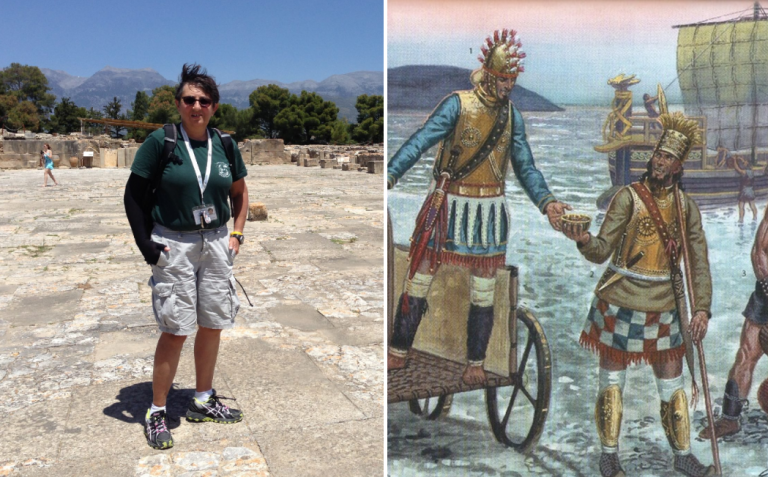
Professor Hitchcock, who is an expert of Aegean Bronze Age Archaeology at the University of Melbourne, will present a lecture entitled ‘What the Covid-19 Pandemic Can Tell Us About the Bronze Age (12th cent) Collapse in Greece‘ to kickstart the seminar series, which has been running for ten consecutive years.

The aim of the talk is to re-examine theories of events and mythologies surrounding the end of the Bronze Age in the Mediterranean, which resulted in collapse, depopulation in Greece and the destruction of the Mycenaean civilisation as well as of many sites around the Mediterranean.

The seminar will be broadcast from 7pm via the video-conferencing platform Zoom and streamed on the Community’s Facebook and YouTube channels.

SYNOPSIS:

The once popular Dorian invasion of Greece from the north, which is found in older books, is largely dismissed nowadays by scholars as an Aryan fantasy. Plague, climate change, famine and earthquakes are other proposed causes for the end of the Bronze Age. In the past, such proposals have been difficult to accept as drivers of destruction as it might indicate that people were too sick or hungry to destroy cities. Thus, events like plague or famine were seen as unable to account for destruction or for the appearance of new forms of weaponry including the Naue II or cut and thrust sword, the Perstosa Italian dagger, and the socketed spear, followed by the appearance of iron weaponry. The destructions and these new weapons could only result from human agency.

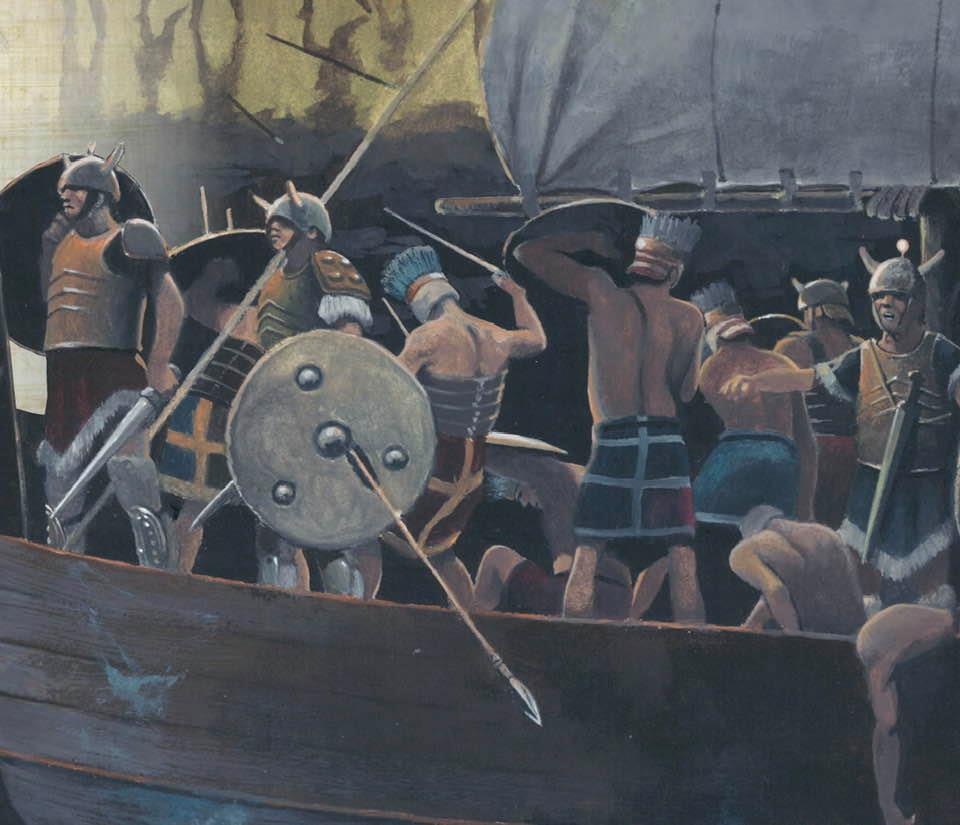
It will be suggested in this lecture that observations of the social and economic effects of the coronavirus pandemic can provide us with a more nuanced understanding of the way social breakdown caused by pandemic might have contributed to creating an opportunity for military action by non-state actors including a dissatisfied rural population as well as the so-called Sea People, known from Egyptian records as well as from Old Testament accounts of the Philistines.

The lecture will look at the so-called Sea People.

ABOUT PROFESSOR HITCHCOCK:

Louise Hitchcock is Professor of Aegean Bronze Age Archaeology in the Classics and Archaeology Program at the University of Melbourne. She is the author of Minoan Architecture: A Contextual Analysis, Theory for Classics, Aegean Art and Architecture (co-authored with Donald Preziosi), and is the co-editor of DAIS: The Aegean Feast, Aegaeum 29 and of the Festschrift for Aren Maeir, as well as the author of over 90 articles dealing with Aegean, Cypriot, and Philistine archaeology, architecture, theory, gender, and space.

Her current research is engaged with architecture, piracy, Aegean, Cypriot, and Philistine identities, interconnections and entanglements. She has done fieldwork in California, Cyprus, Crete, Egypt, Greece, and Syria.

The Australian Research Council and INSTAP has funded her recent excavations at the Philistine site of Tell es-Safi/Gath, where she was an area supervisor. She also directed the Vapheio-Palaiopyrgi Survey Project in Laconia. She has also been awarded multiple competitive fellowships including a Fulbright and National Endowment for the Humanities.

Novak Djokovic testing positive for coronavirus ‘takes the cake’, Kyrgios says

0

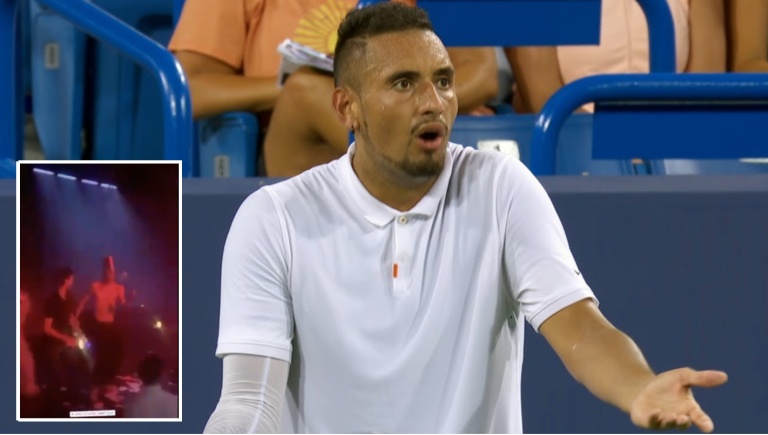
Nick Kyrgios has once again reacted to the the continuation of tennis during COVID-19, this time expressing outrage towards World No. 1 Novak Djokovic for testing positive after holding a charity tennis tournament.

Djokovic has been criticised for organising the tournament and bringing in players from other countries amid the coronavirus pandemic, issuing an apology to those affected on Tuesday.

Kyrgios had already said going ahead with the tournament was a “boneheaded decision” in a tweet on Monday. 

Nick Kyrgios proceeded to release footage on Twitter of Djokovic dancing in a nightclub with other tournament players.

“Prayers up to all the players that have contracted Covid- 19,” Kyrgios said, retweeting a video of the players dancing shirtless in Belgrade.

Read More: Stefanos Tsitsipas wishes Nick Kyrgios a happy birthday with hilarious phone prank

“Don’t @ me for anything I’ve done that has been ‘irresponsible’ or classified as ‘stupidity’ – this takes the cake.” 

Djokovic now admits he was wrong to organise the Adria Tour events. In a tweeted statement, Djokovic said he and his wife are currently asymptomatic and will self-isolate.

Novak Djokovic during the Adria Tour charity exhibition on June 13, 2020 in Belgrade, Serbia.Srdjan Stevanovic / Getty Images

“I am so deeply sorry our tournament has caused harm,” he said. 

“Everything the organisers and I did the past month, we did with a pure heart and sincere intentions.

“We believed the tournament met all health protocols and the health of our region seemed in good conditions to finally unite people for philanthropic reasons.

“We were wrong and it was too soon. I can’t express enough how sorry I am for this and every case of infection.”

Nick Kyrgios expressed similar disappointment exactly one week ago upon the reveal that the US Open is to go ahead with no spectators.

Labelling the decision as ‘selfish’, the Greek-Australian expressed that it wasn’t fair that Australian players will be forced to undergo a two-week quarantine period.

Read More: Nick Kyrgios says decision to let Grand Slam tournament go ahead is ‘selfish’

Nick Kyrgios also recently expressed his doubts over sport carrying on as a whole, responding to the new Ultimate Tennis Showdown tournament.

“I’m just not on board with new tennis events and sport going on in general with everything that’s going on at the moment,” Kyrgios said in a public reply to the UTS Showdown Twitter.

Greece orders Muslim prayer hall to shut down near Athens

0

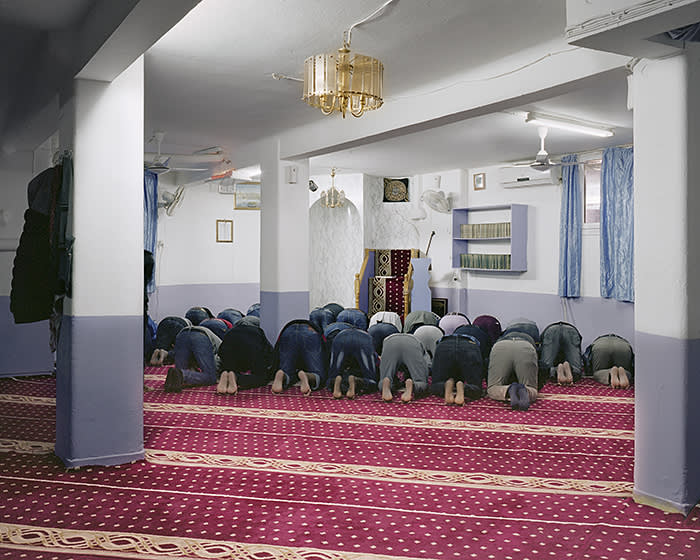
Greece has ordered one of the oldest Muslim prayer halls in the greater Athens metropolitan area to shut down.

Saying the facility lacks a license to operate, the Education and Religious Affairs Ministry gave a 15-day notice to clear the premises in Piraeus, a port city just 12 kilometres from the Athens city centre.

“We are sad to announce that we received a closure order for one of the oldest prayer halls of the capital … without any chance of negotiating with the ministry,” said the Muslim Association of Greece in a press release.

eng/ελλ/عربيToday's Press Release concerning the immediate closing of a historic prayer hall in Athens after 31 years…

Posted by Muslim Association of Greece(MAG) Μουσουλμανική Ένωση Ελλάδος (ΜΕΕ) on Tuesday, 23 June 2020

The Al Andalus prayer hall has been operating since 1989, according to the association.

“We believe that acceptance and recognition is evolving in society,” said the press release. “That is why we consider this unexpected closing a symbolic act on behalf of the government that wants to suppress religious expression when it is not coming from the predominant religion.”

Greece has a sizeable Muslim population, including a quarter-million Muslims in metropolitan Athens.

Last June, after years of delays, a new mosque nominally opened in Athens, but so far it lacks an imam, so it is not yet open for worship, leaving Athens the only capital in Europe without an official mosque.

In December, state officials said three more months were needed to appoint new personnel and make necessary arrangements for the mosque, set to accommodate 350 worshippers.

Sourced By: AA

Mitsotakis holds teleconference with Greek-Australian children learning Greek with ‘Sta Ellinika’

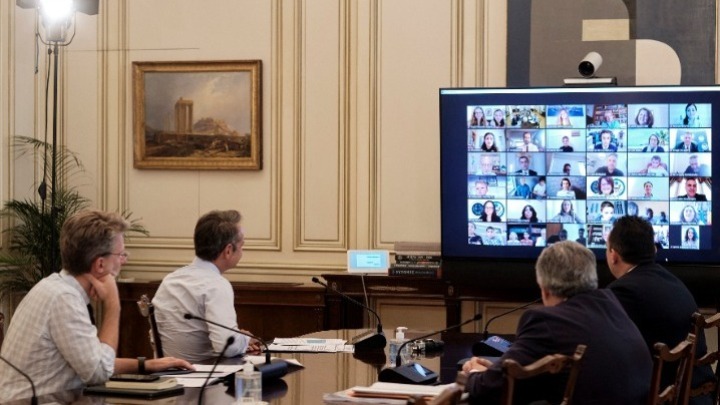
Prime Minister Kyriakos Mitsotakis participated in a video conference with Greek children all over the world, including children of Greek heritage in Australia.

The conference sealed the success of the digital learning platform ‘staellinika.com‘, which proved a valuable tool for learning the Greek language, mythology and culture.

Mitsotakis spoke with students and teachers from 16 schools located in every corner of the world: From Buenos Aires or Argentina to Los Angeles, USA and Vancouver, Canada, and from Europe and Balkans to Kinshasa in Congo and Australia.

StaEllinika, which is an initiative of the Stavros Niarchos Foundation Center for Hellenic Studies at Simon Fraser University, is a collaboration with the General Secretariat for Greeks Abroad at the Ministry of Foreign Affairs, also supported by the Stavros Niarchos Foundation (SNF).

“Some people that attend this video conference may remember my visit to Simon Fraser University, it must have been eight years ago, if I remember correctly, that I had visited the headquarters and (there was then there) a great man – unfortunately he is not here with us today – who also put his own stamp on the running of this project,” Mitsotakis said.

“It is very important for me, Your Excellency, to be able to have a tool for learning the Greek language, which uses the internet, possesses a digital infrastructure, is easy to use, but also exploits the richness of Greek history and mythology to make the learning of Greek language exciting and enjoyable.”

Prime Minister Mitsotakis invited all the children who participated in the teleconference to visit Greece for two weeks in the summer of 2021, to give them an immersive experience into Greek language and culture.

“Today we have many more possibilities through technology to be able to make this contact with the Greek language more accessible for children all over the world, whether they are in America or in Kinshasa in Africa or in Australia, whether they are in Asia or whether they are children who have Greek roots or children who do not have Greek roots but are interested in learning the Greek language, to be able to take their first steps and become acquainted with the beauty and richness of our language,” Mitsotakis added.

Having begun our own #KeepItGreek campaign, The Greek Herald encouraged all our readers to download the app to ensure our Greek language and culture is maintained during this uncertain time.

Sourced By: ANA-MPA

Tassos Isaac and Solomos Solomou: The ‘hero martyrs’ who protested against Turkey’s occupation in Cyprus

The families of Cypriot’s Tassos Isaac and Solomos Solomou received justice on 24 June, 2008, following the European Court of Human Rights finding Turkey guilty of the murders committed by Turkish protestors.

On August 11, 1996, Tassos Isaac was joined by 200 other motorcyclists from 12 European countries to protest against Turkey’s occupation of Northern Cyprus.

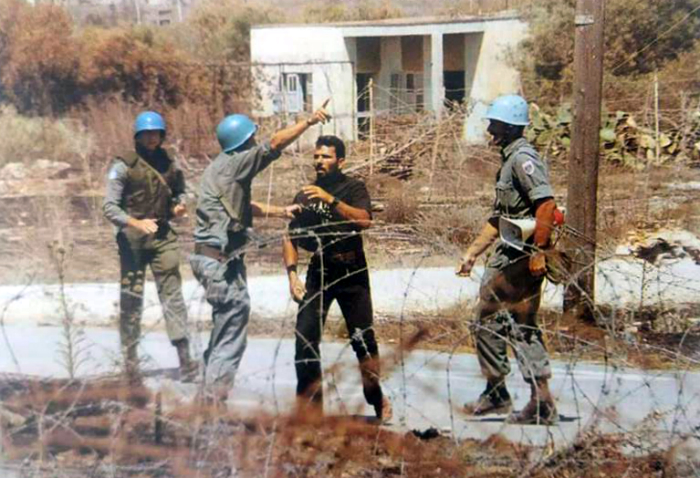
The 24-year-old, along with the other protestors, entered the dead zone of the UN, labelled the “Green Line” , as the Cypriot Police failed to stop them. Met on the other side were over 1,000 Turkish Cypriots, including many followers of the “Grey Wolves”, a far-right Turkish political group.

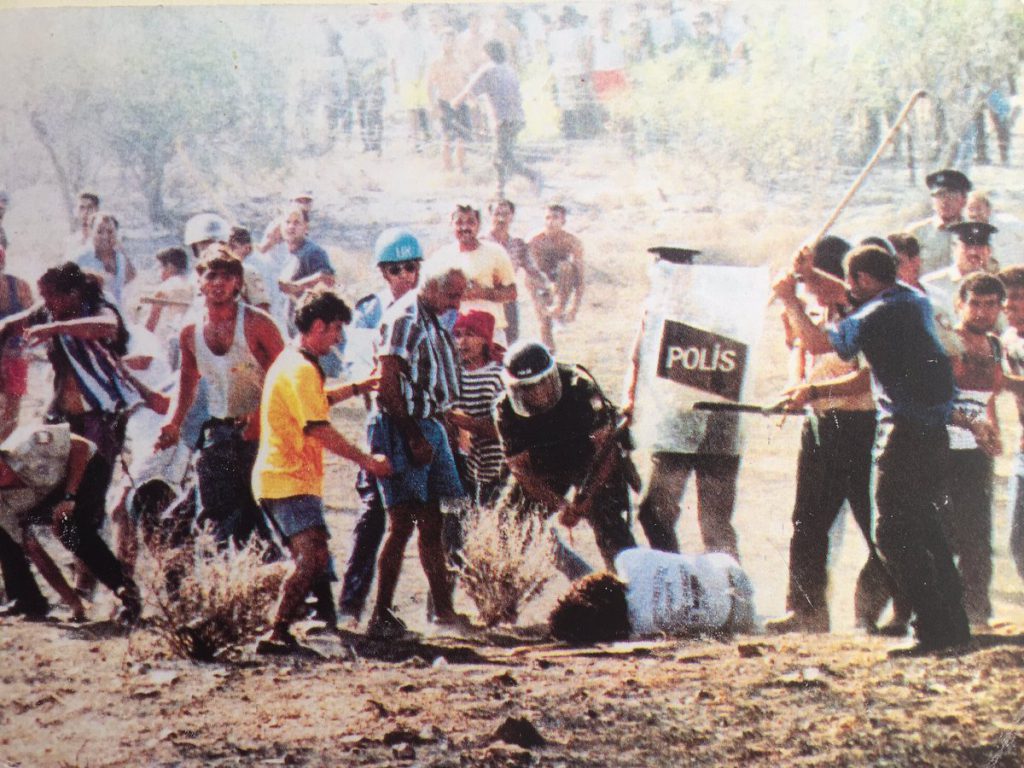
Turkish Cypriots entered the dead zone and proceeded to beat the Greek Cypriot protesters with bats and iron rods.

At 4 pm, a group of Turkish Cypriots entered the dead zone and proceeded to beat the Greek Cypriot protesters with bats and iron rods. Tassos Isaac, in an attempt to help a persecuted friend, was trapped and beaten to death by citizens and police.

Tasos Isaac breathed his last breath 95 meters from the Greek Cypriot side, according to the OHE report. A total of 54 Greek Cypriots, 17 Turkish Cypriots and 12 members of the peacekeeping force were injured in the general clash in the dead zone.

Following the funeral of Tassos, his 26-year-old cousin Solomos Solomos attempted to remove a Turkish flag from a Green Line outpost in outrage.

14 August 1996. Solomos solomou moments before he attempts to bring down the turkish flag while on a protest against turkish sovereignty over cyprus. He gets gunned down while on the pole. [Colorized]

In the process, he was surrounded by Turkish authorities and Grey Wolf protestors. As he climbed the flag pole, three shots were fired by occupiers and the young man fell dead. 

On August 17, former Greek Prime Minister Costas Simitis visited Cyprus, describing Solomos’ assassins as common criminals. At the same time, Turkish Prime Minister Tansu Çiller fully justified the operation, claiming the Turks would cut off the hands of anyone who insulted the national symbol.

On 24 June 2008, the European Court of Human Rights ruled in favour of Solomou’s family in the case of Solomou and others v. Turkey. His family was awarded monetary compensation.

Solomou is considered a national hero in Greece and Cyprus, where he is often referred to as a “hero-martyr”. Dionysis Savvopoulos dedicated an older song to him, “Ode to Georgios Karaiskakis”, while the lyricist Alkis Alkaios sang the song “Panda Gelastoi”.

Tassos Isaac’s child, who was left without a father following his death, was christened by Greek Minister of Foreign Affairs Theodoros Pangalos. The Greek government, as a token of gratitude for his services to Greece, decided to be the godparent of his beautiful daughter Anastasia.

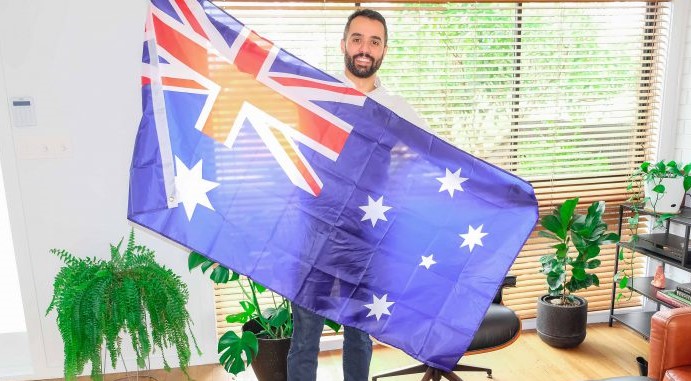
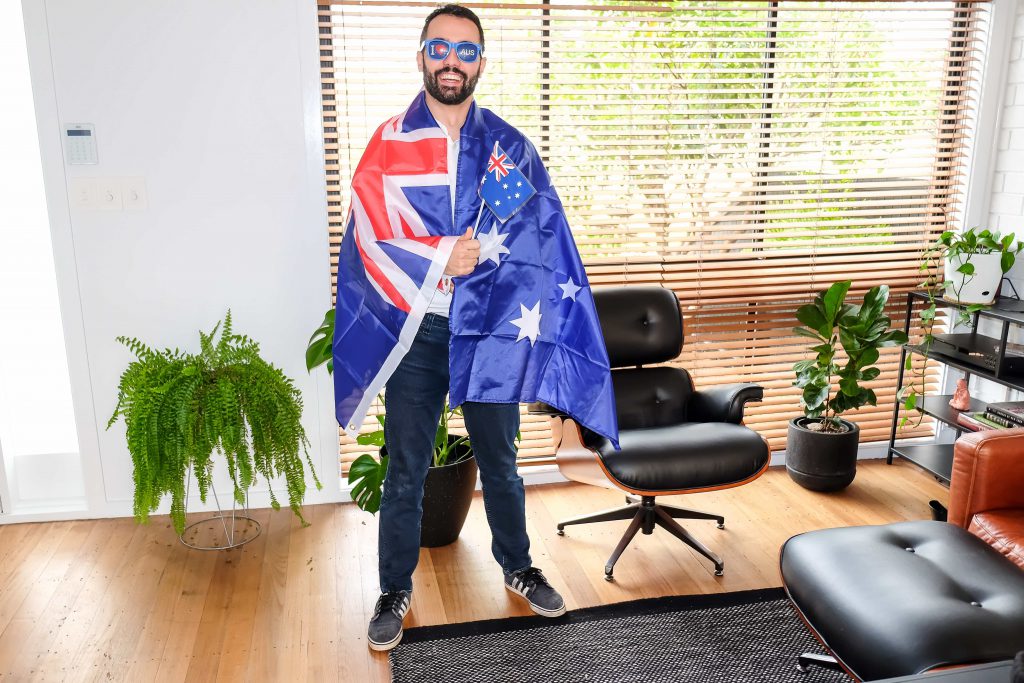
TGH Exclusive: George Gounaris’ journey of becoming an Australian citizen ends with online ceremony

The journey to becoming an Australian citizen is a process that Greek migrants remember well. Often filled with excitement, migrants remember the day they get presented with their certificate of citizenship.

For George Gounaris, this process was significantly different, conducting his special citizenship ceremony online in the comfort of his home on Wednesday.

The Greek Herald spoke with George to discuss the special ceremony, his journey to Australia and the difficult visa process encountered along the way.

The less than ‘flamboyant’ celebration desired

Taking the citizenship test almost 7 months ago, Gounaris was ecstatic to finally become an official Australian citizen. Yet, unknown to him at the time of taking the test, the prestigious citizenship ceremony was to be conducted through the camera on his computer.

“It was quicker than I expected,” Gounaris said, speaking about the online ceremony.

“Very efficient, obviously it wasn’t as flamboyant as it would’ve been in person, but overall good.”

The online ceremony process was announced by the federal government in April, claiming that it will see “up to 750 people per day having their citizenship conferred”. As of April, there were 85,000 people awaiting a ceremony.

George Gounaris celebrating on the day of his online citizenship ceremony. Photo: Supplied

With COVID-19 restrictions in place, George’s grand celebration was conducted a bit closer to home than usual.

“Because of the lockdown, we were planning on going out but everything seems to still be very limited in terms of options,” Gounaris said.

“So we just celebrated in the house.”

Moving from Athens in 2012, he came to Australia for its relaxed lifestyle and family connection but stayed to make a new family of his own.

“I guess I liked the lifestyle in a way, and the fact I had some family here helped a bit as well in the beginning,” Gounaris revealed.

“I then started working here on a sponsored Visa, eventually meeting my partner.”

George’s partner, Erin, posted a photo to Reddit following his citizenship ceremony, reaching 10.9k upvotes on the discussion website. Receiving hundreds of comments, George was shocked to hear about the positive response.

“When my partner posted the photo, I didn’t even know. Someone messaged me through Facebook and said, ‘is this you?’ So I didn’t even know that she posted the photo.”

The difficult journey of a Greek migrant

Like many other Greeks who first journeyed to Australia, the first few years require hard work and persistence.

“Initially I was employed in hospitality, where I got the Visa from, but obviously after a while…. it becomes too much to work late at night,” Gounaris said.

“I had a degree in social sciences and used the qualifications to start a day job, eventually working for Pronia.”

George with his partner Erin. Photo: Supplied

George began working for the non-for-profit Greek organisation, Pronia, three years ago. Running for over 46 years, they deliver services such as early childhood education and aged care to the Greek community.

Now working to help a community close to his heart, George is extremely thankful for his partner Erin for helping him on his difficult journey, recognising that many aren’t so lucky.

“I was lucky because I met Erin, my partner, and she was able to assist with most of the Visa process that we went through,” George exclaimed thankfully.

George with his partner Erin. Photo: Supplied

“And if it wasn’t for her, it could’ve been really difficult to get the visa, so my partner put a lot of effort. More effort than an immigration agent would have put in.”

George hopes that the public recognises how unreliable and expensive the immigration process ultimately becomes.

“Generally the whole immigration process is very intense and slow. There are multiple steps you need to go through, and it is obviously expensive. It could be very expensive for some people. But eventually, after 8 years, I got there.

“People might want to come from overseas or people may not understand how difficult it is to actually achieve the outcome that I was lucky enough to achieve.”