Dr Antonios Meimaris will present an online lecture entitled ‘A Brief History of Randomness: From divination and gambling to modern Probability Theory & Statistics,’from the Greek Centre on Thursday, 9 July 2020 at 7pm.
The lecture is part of the Greek History and Culture Seminars offered by the Greek Community of Melbourne.
SYNOPSIS:
Mythology is filled with stories in which the outcome of a game of chance determined the course of events. Zeus, Poseidon and Hades split the universe through a game of dice.
King Nala, as depicted in the Mahabharata, played a game of dice and gambled away his wealth and kingdom, and Thoth, the ancient Egyptian god of science, gambled with the Moon and won some moonlight in a game of dice.
Humans create gods in their image. Thus, gambling dominated people’s minds from the first years of their existence on Earth.
However, it is only in the late 15th century that the science of randomness begins to develop. This seminar focuses on the history of randomness and the first attempts for its rigorous mathematisation that led to the current theory of probability and statistics which is now used in most scientific fields.
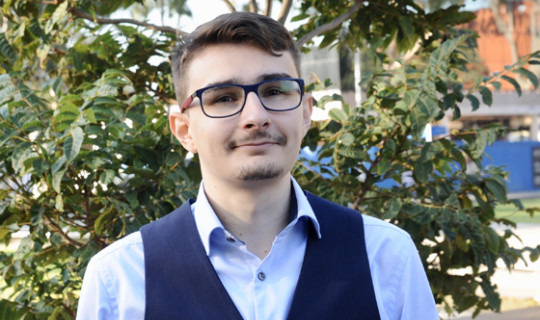
Antonios is a final year PhD Candidate & Teaching Associate in the Department of Econometrics & Business Statistics at Monash University, and a member of the Stochastic Engineering Dynamics Lab at Columbia University, USA.
His research involves working on stochastic problems with applications covering a wide array of disciplines ranging from the physical-mechanical spectrum to fields such as chemistry, biochemistry and ecology with clear connections with Quantitative Finance.
He has been awarded the Postgraduate Publications Award (PPA) for his doctoral research and subsequently, the Teaching Excellence Award (Best Ph.D. Teaching Associate) for his teaching.
More details about the lecture will be announced soon.
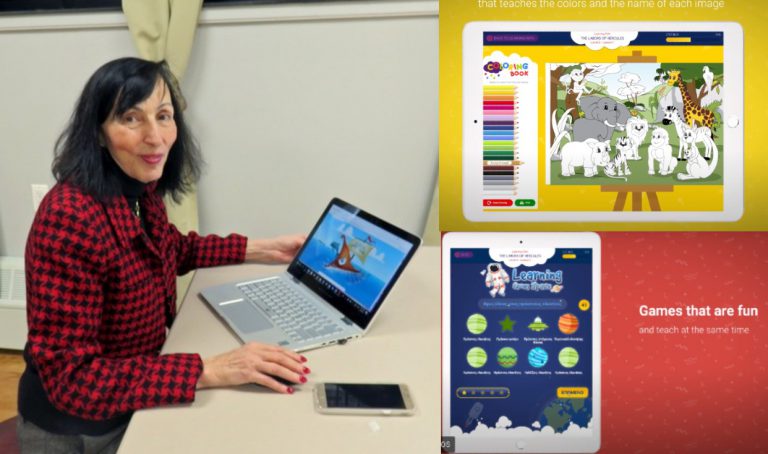
The judges at the 5th Annual Education Leaders Awards in Athens have awarded the Greek language e-learning platform for kids, “Ellinopoula.com,” with the Gold Award for Best Online & Distance Learning Platform.
CEO of Ellinopoula.com, Ms. Anna Sakkis, says she is “humbled” by the response of parents and schools for choosing Ellinopoula to support Greek learning all over the world.
“It is a great honour for us to win the Gold Award for Best Online & Distance Learning Platform for Kids Learning Greek.
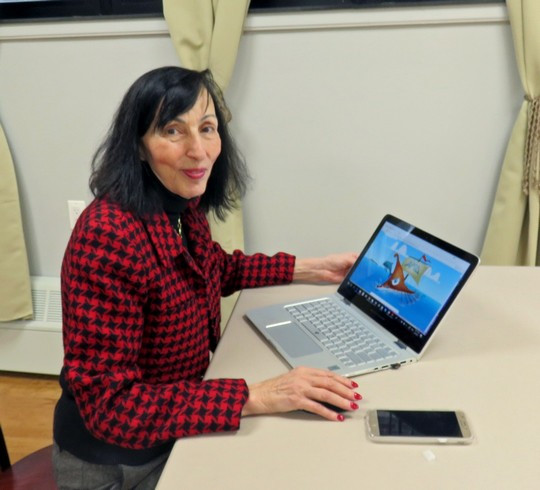
CEO of Ellinopoula, Anna Sakis. Photo: Supplied
“It is an honour we do not take lightly; we are thankful for the Awards Committee placing Ellinopoula.com at the top spot and we are thankful to all parents, schools, teachers, students, and partners who trust and support Ellinopoula.”
The Awards Committee composed of teachers, experts, academics, and representatives of educational institutions and is headed by Ms. Anna Diamantopoulou, Chairperson of the Reform Network in Greece and Europe, former EU Commissioner and former Minister of the Hellenic Republic.
The Greek learning platform’s CEO said she is inspired to remain committed to supporting Greek children in their education journey.
Ellinopoula is promoted as a more “fun” way of learning Greek, offering over 5000 interactive activities and over 400 “classroom” videos that “teach kids Greek as though they are actually in a classroom”. The website contains games, videos, and thousands of interactive educational activities for students and a range of management tools for schools and teachers.
Speaking to The Greek Herald in April, Ms Sakkis revealed she was excited for the growing expansion across Australia.
“We have many individual subscribers in Australia and currently, many Australian schools have requested a trial of Ellinopoula,” Anna reveals to The Greek Herald.
In Australia, the Ellinopoula platform is currently used by three schools:
Thousands of Greek protesters rallied in central Athens on Thursday against government plans to regulate frequent street demonstrations which often cause disruption in the city.
Street protests are the main form of opposition against government policies in Greece, a country still recovering from a deep socioeconomic crisis that erupted in late 2009 and led to three international bailouts on tough austerity terms.
As many as 3,500 members and supporters of Greece’s communist party gathered in central Syntagma square to protest legislation now pending in parliament and which is expected to be put to the vote next week.
Members of the Greek Communist Party (KKE) take part in a demonstration against government plans to regulate street protests, in front of the parliament building in Athens, Greece, July 2, 2020. REUTERS/Alkis Konstantinidis
Demonstrators held banners calling for the bill to be withdrawn, and others calling it an ‘abomination’.
The bill mandates the appointment of a rally organiser who will liaise with police and imposes restrictions on a demonstration if the number of participants is low. It also imposes penalties on people displaying violent behaviour, holding organisers legally responsible for any harm or damage caused by protesters.
“The aim of the bill is to put an end to the chaos created,” government spokesman Stelios Petsas told reporters earlier on Thursday, adding that there were 80 rallies in Athens in May.
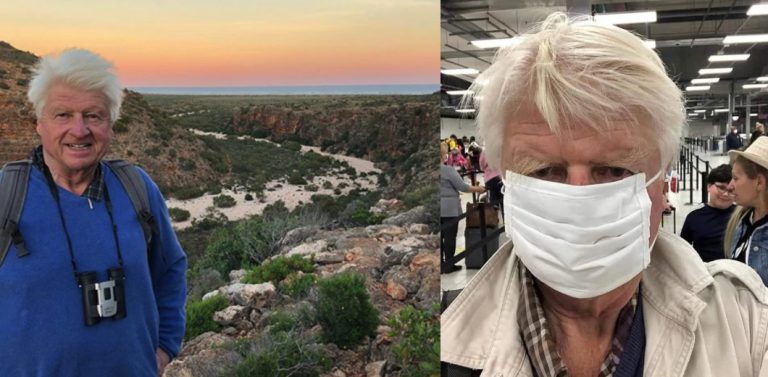
The father of British Prime Minister Boris Johnson is facing criticism for travelling to Greece despite U.K. government advice against international travel and a Greek ban on flights from Britain.
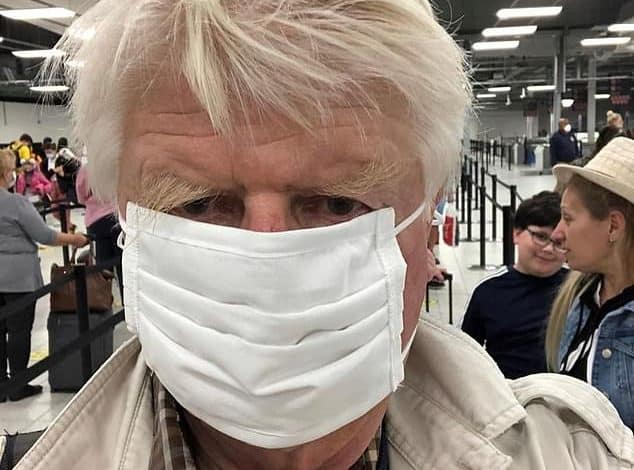
Stanley Johnson posted videos on Instagram taken from a plane with the words “Arriving in Athens this evening!” as well as a photo of himself in a mask in what appeared to be an airport. The elder Johnson, 79, has a villa in Greece.
Greece has banned flights from the U.K. until at least July 15. The Daily Mail reported that Stanley Johnson flew to Athens via Bulgaria. He told the newspaper he was visiting Greece on “essential business trying to COVID-proof my property.”
Opposition politicians accused the prime minister’s father of flouting lockdown rules.
There have been a number of reports that the UK will form “air bridge” agreements with certain countries to allow people to travel there and not isolate on their return – but a list has yet to be published.
Lib Dem MP Alistair Carmichael raised concerns about Mr Johnson’s travel in the Commons, when discussing the expected announcement on air bridges.
He said: “It might be an announcement that could be made by the prime minister, who could then explain his views on the fact that apparently his own father has jetted off in defiance of the guidance to Greece.”
One of the most dynamic and successful entrepreneurs of the 20th century, Stavros Niarchos had international recognition for his great business ventures. One of the founders of the post-war Greek miracle in shipping, his personal and business life fed the columns of newspapers around the world and shaped his legend status.
Stavros Niarchos was born on July 3, 1909 in Athens. His parents, originally from Laconia, had just returned home from the United States, where they ran a department store in Buffalo, New York.
Stavros Niarchos graduated from Varvakeio and Athens Law and in 1929 began working in his uncles’ flour mill. Realising the high cost of importing wheat from Argentina and the Soviet Union, he convinced his uncles that it would be better to have their own ships. During the Great Depression, they bought six ships for $120,000.
During World War II, he enlisted and served as a Flagship in the Navy, also being involved in allied operations in Normandy. With $2,000,000 in compensation from his sunken ships, Niarchos began recovering financially and investing in large tankers.
This proved to be one of the leading causes of his success in becoming one of the largest shipowners in the world. For many years he owned the world’s largest private fleet. He was labelled the “Golden Greek” and featured on the cover for Time magazine against the backdrop of its tankers (issue 6, August 1956).
On May 4, 1970, Niarchos once again occupied the front pages of newspapers around the world. The Greek businessman’s wife, Eugenia, was found dead in Spetsopoulo, under mysterious circumstances.
After the 1973 oil crisis, Niarchos sold some of his shipping companies and expanded into the diamond and finance trade, reaching 2% of the world’s largest bank, Citybank.
Niarchos was included in the list of the 100 richest people in the world, according to the list of “Fortune” magazine. In the early 1990s he retired to his sanctuary in St. Moritz, where he died on April 16, 1996, from a rare disease that had paralysed his immune system.
Niarchos’ legacy is carried out by the Stavros Niarchos Foundation, which was established with his will. The foundation actively provides donations in the fields of education, social welfare, health, arts and culture.
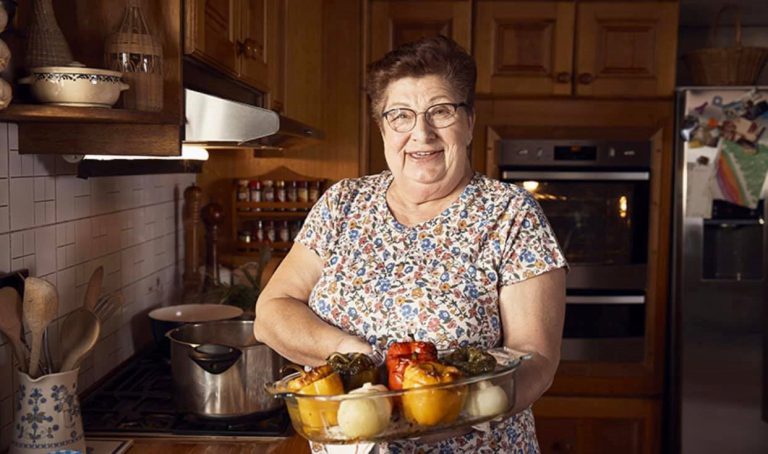
One would recognise her from AGL’s latest TV campaign or YiaYia’s Greek Kitchen page on social media. But Helen Dedes, now 72, does not consider herself a celebrity. She is the YiaYia next door, just with abundant humour and positive energy.
“I love cooking. I don’t think I remember
one day without cooking,” she says in the AGL advertisement.
Cooking and family are the two things she has kept close to her heart, all the way from her home country to the other side of the globe.
“My mother inspired my love of food,” says Dedes,
who migrated to Australia from the island of Lesvos, in 1967 with her husband,
Stavro.
“We came to Australia for a better life. To find the pot of gold. My husband was the one who wanted to come. I wanted to stay in Greece and study. I was aspiring to become a fitness instructor, but we loved each other so I followed him,” she tells The Greek Herald.
“The first years were
hard. We didn’t have money and my husband had to learn the language. He was a
police officer in Greece, but here he had to do different jobs to provide for
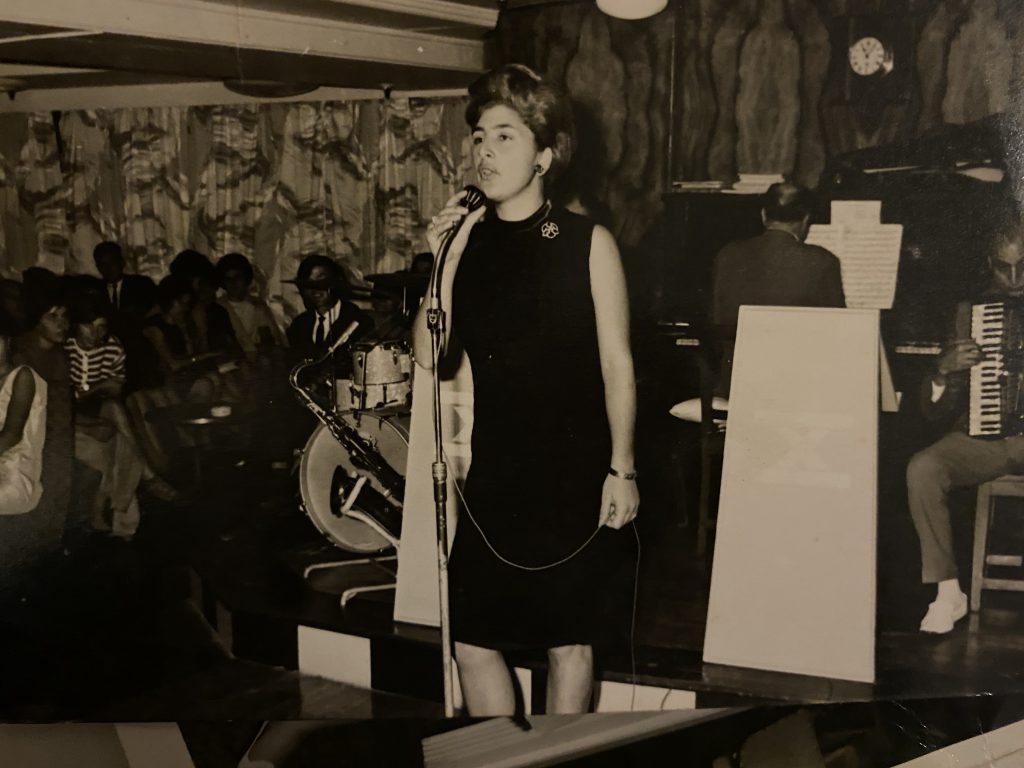
us,” Mrs Dedes says. In the meantime, she started singing.
I ask if they ended up finding this pot of gold and how soon they felt Australia home. ‘Όπου γης και πατρίς’ she says in Greek, meaning that ‘Home is where the heart is.’
With her positive attitude towards life, her resilience and the belief that there is a solution to every problem, Helen Dedes and her late husband, set the foundations for one of Sydney’s most renowned restaurant chains, the Dedes Waterfront Group.
A few years ago, she retired and handed over the reins of the Dedes Group to her son, Con. “That was my proudest moment. Family is everything to us. I’m just so happy to see him taking on my passion for food and making people smile and be happy.”
But what motivates her and where does she draw her energy from?
“Think positive. This is my secret. I get
my energy from my positive thinking. Positive, positive, positive,” YiaYia
Dedes says.
I ask her to convey her message to the future generation of Greek Australians, through The Greek Herald, as she has been reading the paper for more than 20 years.
“Know yourself and preserve our Greek traditions
and culture,” she says and continues, “grandparents, talk to your
grandchildren. Help them think positive, work hard and love whatever they decide to do in life,” she says
affectionately.
Ok YiaYia, we got this. Positive, positive, positive…
The year is 2015 and new tech developers are becoming app millionaires, with apps like Trivia Crack and Crossy Road reaching millions of downloads on the Google and Apple app stores.
Greek Australian Fotios Tsiouklas decided he wanted to join
them, teaching himself how to create mobile games in the 2015/2016 summer
school holidays. Aged 15, he developed his first app ‘Downtown Fire’. Yet, it
was only once it was released, he realised the piece he was missing to create a
successful app.
“I spent about 6 to 8 months building that game, and I ended up making about 2 bucks out of it,” Fotios Tsiouklas said to The Greek Herald.
“And that’s when I first found out the importance of
marketing because I thought you could just upload an app and become rich.
“I didn’t realise every app is like its own business, it needs proper nurturing and proper marketing to succeed.”
Fotios started off selling digital products on the marketplace website ‘Ebay’. Photo: Supplied
Determined not to give up, he continued making apps. All of
them failed.
It wasn’t until he discovered the website ‘Flippa’, that Fotios realised he had another product to offer to the world.
“I came across a website called Flippa and then I
realised I could actually sell these apps. Because I actually knew how to
market them, I just didn’t have the money to do it,” Fotios said.
“So I studied all the apps that were successful, I took the marketing campaigns that were behind them and I wrote it all down in a course. So I created a course, then I started selling my apps on Flippa and actually teaching people, that have money, how to make the apps go big and how they can use them as investments.”
And so, the dream of becoming a young business genius became true. Fotios went on to sell over 100 apps in just over 2 years, making over $500,00 in revenue.
Fotios Tsiouklas and his business partner, Alan Gokoglu. Photo: Supplied
“Most of the apps I sold were during the Donald Trump
campaign, so I was making apps based around Donald Trump…. so I was selling
them for $4000 – $5000 each. I even sold an education suite of apps for $40,000
when I was 16.”
But Fotios didn’t stop there. Using the knowledge he had collected and was teaching people for years, he decided to “practice what I’ve been preaching” and make his own app, Clout – The Game.
“I had just turned 18, I got in touch with some famous
artists around the world… we launched
that and it went to the top of the app store in 24 hours with 250,000
downloads.”
Fotios’ current joint-business venture ‘Kickspan’ has already kicked off into a multi-million dollar business, with Fotios revealing the company has a $5,000,000 valuation.
Starting the business in 2018, Fotios is working in collaboration with childhood friend Alan Gokoglu. The business creates an online infrastructure for companies, working on website development, Google SEO’s and Facebook advertising.
Self-education – The path to success
University is commonly considered the greatest tool for success; To earn a place in a prestigious university and graduate with a degree for your field of interest.
While Fotios currently studies a Bachelor of Business at the
University of Melbourne, he doesn’t credit university education for fuelling
his business success.
“University is quite ancient in that it’s not really
teaching you things that are in the modern world and to be honest, it actually
can’t,” Fotios said.
“When you’re working in the world of tech and social media, everything changes every single day.
“The only way to keep up is to figure it out yourself. Figure out the algorithm changes, go on YouTube and actually really be in touch with what’s going on in the digital world.”
https://www.instagram.com/p/B85v5fBgwcj/?hl=en
Fotios acknowledges that universities do still provide essential
skills, yet to unearth that “hidden gem” to becoming a millionaire, people will
never find it being stuck in a classroom.
“The world is changing so much and self-education is really
the only way to find those gems that exist on the internet.
“Because the people that are at university, if they knew those gems themselves, they’d be multi-millionaires.”
From business wiz to movie producer
At only 19-years-old, Fotios has accomplished more than some would in a lifetime. One of his most satisfying business ventures was the launch of his own Melbourne Nightclub ‘Mango Club’.
While the Greek Australian says Mango Club isn’t his most profitable investment, it’s the one he’s enjoyed the most.
“You’re seeing thousands of people attending a party that you organised every weekend and you get to meet hundreds of people every week, engage in interesting conversations, and just meet a bunch of different people.”
https://www.instagram.com/p/B9lYDiNgHGe/?hl=en
“I’ve really got to experience all of my city, and I really
love that.”
With a bright future ahead, Fotios has been thankful for all
the opportunities presented in front of him. Although with such a creative
mind, he does one day hope to put his love into a different kind of project.
“I’ve always wanted to be a film producer. That is what I
want to do one day. I love being creative, and that carries in the way I do
business. I’m always trying to create new things and I think film is the best
way to express my creativity.”
Imagine the last time you had a night out at a Greek Taverna. Did you have a few more drinks than usual? Dance like there was no one watching?
Director Alkinos Tsilimidos’ new film, The Taverna, has all that and more, and we are all lucky enough to be able to watch it in specific cinemas across Australia from today.
The self-proclaimed black comedy is set in a real family-run Greek restaurant in Melbourne’s East and according to Tsilimidos, it is his ‘most personal film yet.’
“I grew up the son of Greek immigrants and went to school with a whole bunch of second generation Australians. I never really got caught up in issues around identity and being between cultures,” the director writes in a statement.
“From my earliest recollections, the experience of eating in Greek restaurants in Melbourne made me feel Greek. The food, the drama, the language and the fun led to an overwhelming feeling of belonging. This is what The Taverna means to me – that we can be who we are when gifted a place to belong.”
These universal themes of belonging, love and migration are clear throughout the comedy and actually help audiences experience a more personal relationship with the characters as if they were the subjects of a documentary.
“These people were in danger. They had to either face certain realities in their lives to enact change or be destined to live in some sort of delusion,” Tsilimidos said.
“The only rule was to keep it all within the confines of the restaurant. My goal was for the audience to experience one night in the taverna and to leave wondering what the next night could possibly bring.”
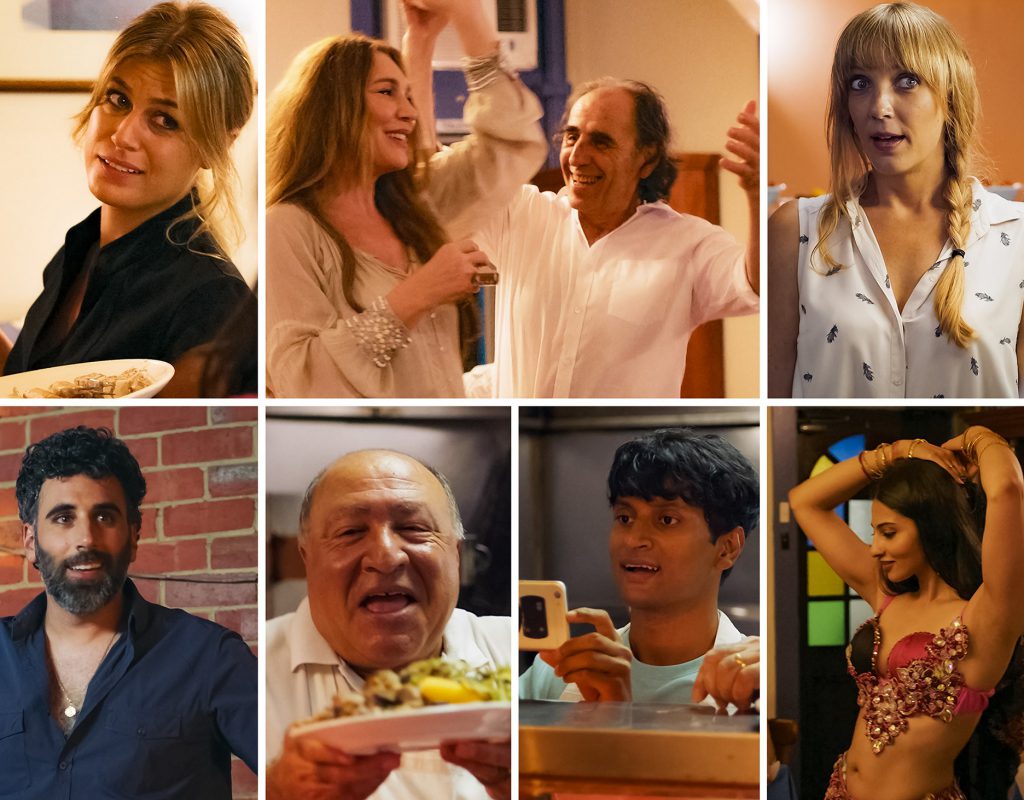
(Top row, left to right) Emmanuela Costaras, Tottie Goldsmith, Vangelis Mourikis, Emily O’Brien-Brown. (Bottom row, left to right) Peter Paltos, Senol Mat, Salman Arif and Rachel Kamath, The cast of The Taverna. Photo supplied.
And what an incredible taverna experience they are given. Viewers see taverna owner, Kostas, get more than he bargained for when his popular belly dancer refuses to work to avoid her ex-husband and his new girlfriend, and is replaced at the last minute by one of his eager waitresses.
Matters are further complicated by a kidnapping, a scooter accident involving Kostas’ son, a well-meaning chef who cooks up rare treat and a sleazy customer who doesn’t know his limits.
It all adds up to a darkly comic ride into the wild side of life, love, food and cultural differences.
If you want to watchThe Taverna, it debuts in Australia today (July 2) in Palace Cinemas around the country and Classic Cinemas, Lido, Cameo (MEL) and Ritz (SYD), as well as Palace Nova (ADL).
For the businesses operating in postcode 3055, which takes in the inner suburb of Brunswick West, this week wasn’t supposed to be a return to March lockdowns.
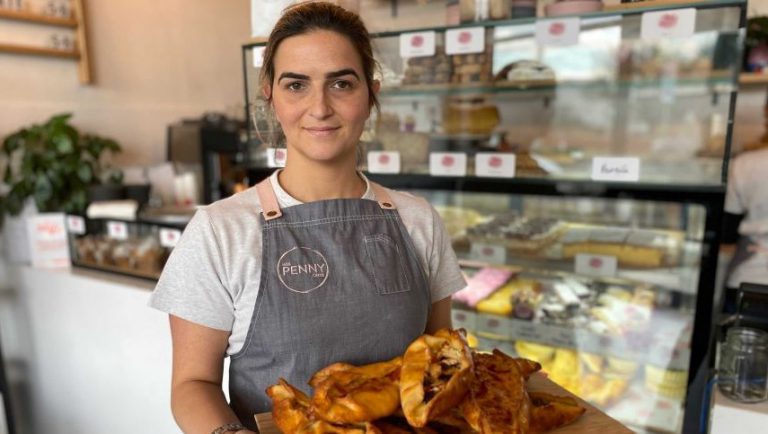
Penny Kerasiotis runs a cake shop in Brunswick West called Miss Penny Cakes, and she says the impact of the latest lockdown will be “devastating.”
“Any shutdown is loss of income for us,” Penny told ABC News. “We’ve all got families to feed, businesses to run, the bills don’t stop coming in.”
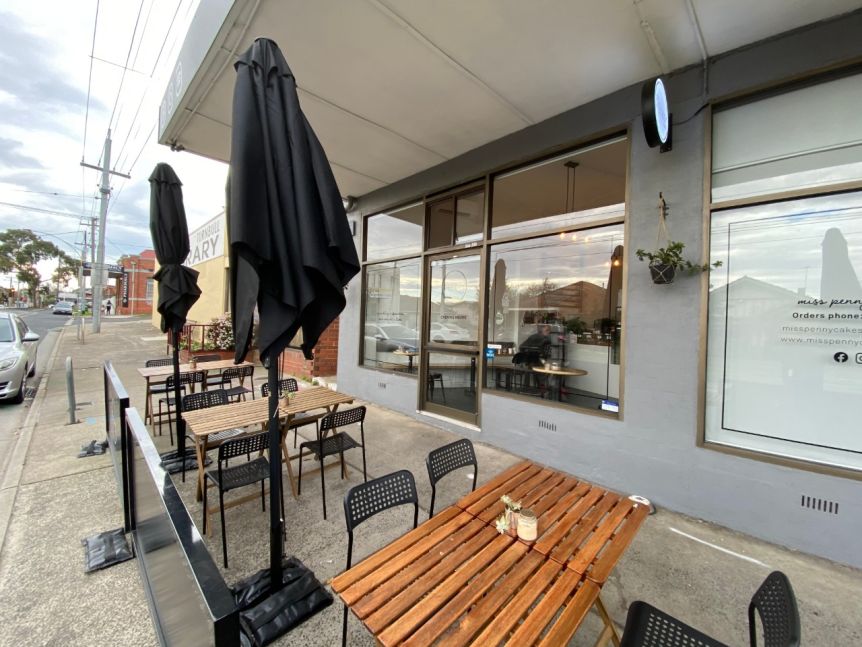
Miss Penny Cakes. Photo: ABC News / Darryl Torpy.
Penny bakes cakes daily on premises for birthday parties and christenings and she also runs a dine-in cafe alongside the shop.
She says while cake orders for celebrations had dropped off, her dine-in business had just started picking up again over the past few weeks as restrictions eased.
“We’ve had great support from the community,” she said. “But there’s always someone doing the wrong thing, with the numbers now going up, unfortunately.”
In her view, shutting down individual suburbs is not the best strategy.
“Doing it suburb by suburb, it’s going to be too difficult to monitor and confusing,” Penny said.
“There’s a lot of mixed messages. From our Prime Minister. From our Premier. If you’re going to lockdown, you lock down the whole state. I think it’s going to be hard to lock down certain parts of the state.”
Across Victoria there are more than 5,700 small cafes and 6,000 small restaurants that have already felt the harsh impact of shutdowns imposed to fight the coronavirus pandemic.
Only time will tell what the true significant impact of a second lockdown will have on small business owners such as Penny.
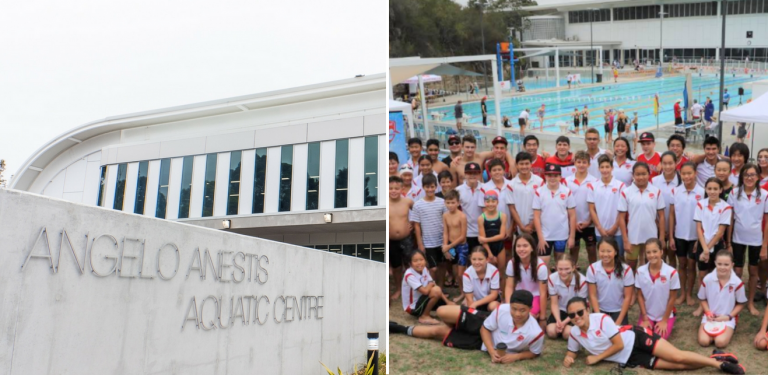
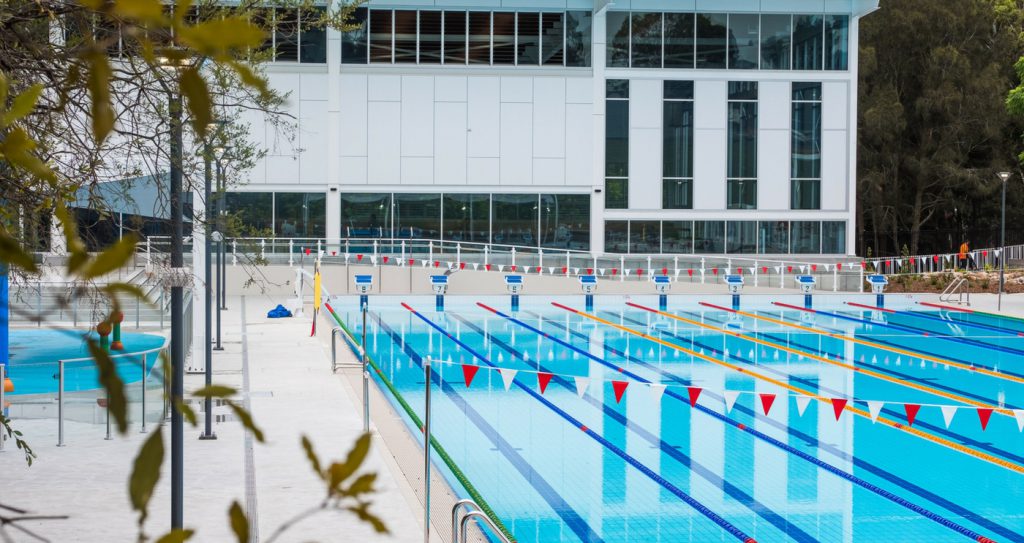
The St George Swim Club is petitioning Bayside Council to reopen the Angelo Anestis Aquatic Centre (AAAC) at Bexley to allow its young swimmers to recommence training.
The AAAC is owned by Bayside Council and operated by BlueFit but neither had given the club any indication of when the pool would reopen until Tuesday morning.
“At this stage, BlueFit has chosen to open the Gymnasium under strict conditions and keep the pools closed until 1 July 2020, at which time this arrangement will be reviewed in accordance with Public Health Order requirements,” Scott Field, Manager for Sports and Recreation at Bayside Council, wrote in the statement.
The Angelo Anestis Aquatic Centre (AAAC) at Bexley is very popular.
The Greek Herald can confirm though from our sources that the Aquatic Centre remains closed today, one day after the scheduled reopening.
“As community sport and other public pools across Sydney and Australia are opening, Bexley’s pool remains shut and not accessible to the St George Swim Club, or other community groups and the general public,” a St George Swim Club spokesperson said in an official statement.
“We are very disappointed at the lack of interest nor support from the council who have not been keen to encourage the opening of the pool for our squads, as well as the general community and learn to swim program.”
The club has 120 swimmers and an estimated 300 people taking part in its swim squads at the pool. There are fears that their young swimmers are missing out on training to be able to compete in regional competitions next year.
“These children have worked extremely hard to compete and represent their club in local, metro, state and national competitions,” the club secretary, Karen Esposito, told the St George and Sutherland Shire Leader.
“It has been a big interruption to their training and fitness to have this facility closed, which is necessary under COVID-19 restrictions.”
One of the club’s senior swimmers, Lauren, 17, also told the Leader: “It’s a mental and physical challenge for us now the pool is closed. It’s been very hard not to be together as a team to try and achieve our goals.”
The petition to Bayside Council to reopen Angelo Anestis Aquatic Centre, Bexley, can be found here: http://chng.it/kJ4qCjR5Wh.