“I feel so stupid” were some of the only words to come out of a British tourists mouth after he and seven others were diagnosed with coronavirus.
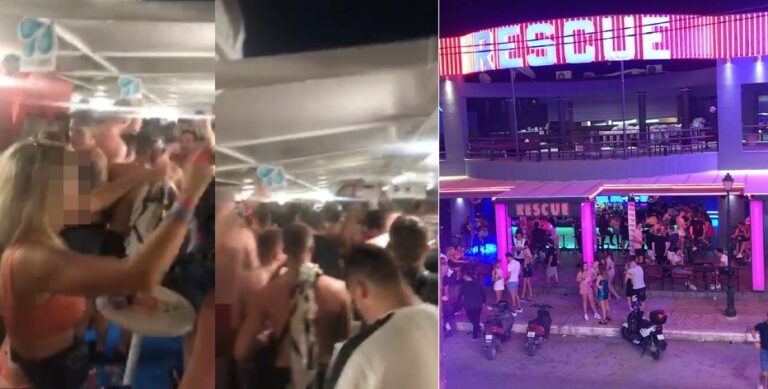
Exclusive footage emerged from the Daily Mail of hundreds of British tourists crowded together on a boat, ignoring social distancing measures. Now, the worst possible senario has taken place, which involves eight of those party goers being diagnosed with coronavirus.
Jamie Raine tested positive after returning home from a four-day trip to Zakynthos. The 20-year-old, from Shildon in County Durham, is now self-isolating in his bedroom at home because he lives with his 77-year-old grandmother Maureen.
Image: Daily Mail
“It was stupid,” he told MailOnline. “It really wasn’t worth it – I feel dead guilty.
“It’s really bad out there. Something like this could start a second wave of coronavirus. I don’t think people should go.
“I guess the message is, don’t go on holiday and if you have to, have a more chilled out holiday with no night clubs.”
His advice is far too late however, with thousands of tourists still crowded on the Greek party islands of Zakynthos, Mykonos and Ios.
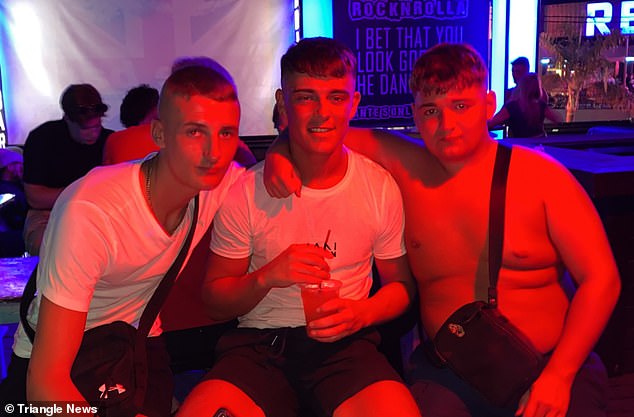
Despite government advice to avoid large gatherings and maintain social distancing, Jamie and Adam Scott (right), also 20, and Adam Pybus (left), 19, behaved as if it were business as usual. Of the three, Jamie was the only one to test positive but seven other friends who went the week before also caught coronavirus
Jamie explains that while Greek authorities put new ‘no-standing’ rules in clubs, “there were people standing and the clubs were getting fined so they started shutting earlier.”
“It wasn’t that strict. The clubs were packed. People go to the beach afterwards because they want something to do and there are hundreds and hundreds of people.
“There was no enforcement, nothing. Looking back now I wish I’d been more careful.
Despite government advice to avoid large gatherings and maintain social distancing, Jamie and Adam Scott (right), also 20, and Adam Pybus (left), 19, behaved as if it were business as usual. Of the three, Jamie was the only one to test positive but seven other friends who went the week before also caught coronavirus
“I didn’t think it was that bad over there, you didn’t have to quarantine, it looked as though there weren’t that many cases, so I thought it would be fine, but obviously not. It’s not safe.”
Hundreds of holidaymakers from Wales were told to quarantine after several groups returned from Zakynthos with the virus on a Tui flight to Cardiff on August 25.
Another 30 tourists from Plymouth were found to be infected after returning from Zakynthos in August.
With Father’s Day this weekend, many NSW families would be wondering if they are able to visit their elderly father’s in aged care homes.
NSW Health confirmed on Friday that families in some areas of New South Wales have been advised to stay home after announcing eight new cases of COVID-19 in the state.
“NSW Health confirms the advice for residents of the Sydney Metropolitan, Nepean Blue Mountains and Central Coast regions to not visit friends and family in aged care facilities will continue through this weekend,” health authorities said.
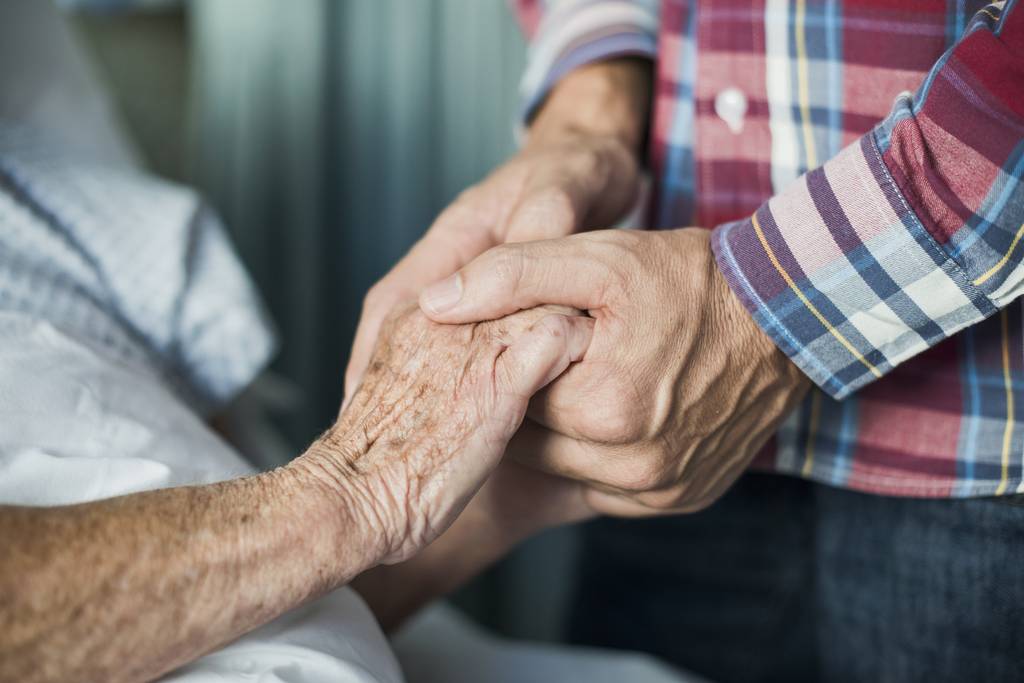
NSW residents have been advised not to visit aged care centres for Father’s Day. Credit: Portra Images/Getty Images
“This decision has been reached after careful consideration of the risks of COVID-19 being introduced into an aged care facility while the CBD cluster is brought under control.
“While we understand and acknowledge this will be difficult for many families on Father’s Day, our priority is to prevent the spread of the virus to the most vulnerable people in the community.
“We encourage people to make the best of the COVID safe measures the aged care sector has put in place to make contact with their loved ones, including through audiovisual links and window visits.”
NSW Health did not recommend for people to isolate from elderly grandparents if they are not from the regions listed above. People are still being advised, however, to maintain social distancing as much as possible to reduce potential spread of contamination.
Of the eight new cases, three are linked to the Sydney CBD cluster.
The total number of cases in that outbreak is now 57.
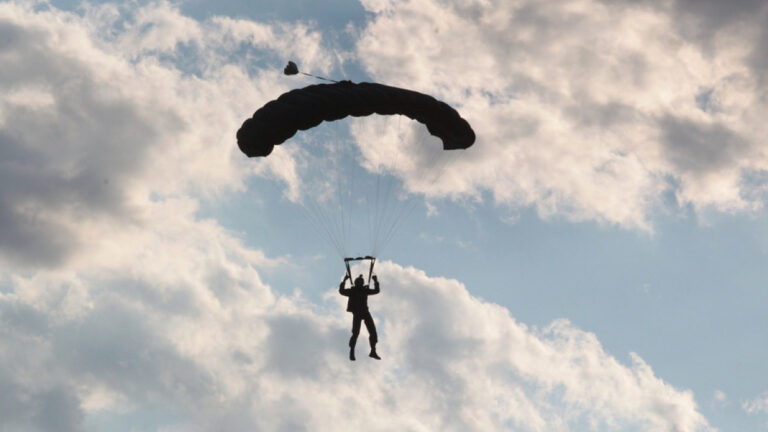
A paratrooper tragically died last night after he was swept away by strong winds during a night free fall, as officially announced by the General Staff of National Defence.
During the exercise, the paratrooper went out of the drop zone – signalling an alarm to the Armed Forces. A large operation was immediately launched to locate the man.
The causes and conditions of the tragedy are being investigated. The announcement of the General Staff of National Defence is as follows:
“The General Staff of National Defense announces that, on the night of 3 to 4 September 2020, the EPOP Sergeant (PZ) K.M.
“GEETHA expresses its heartfelt condolences to his family. The causes and circumstances of the accident are being duly investigated.”
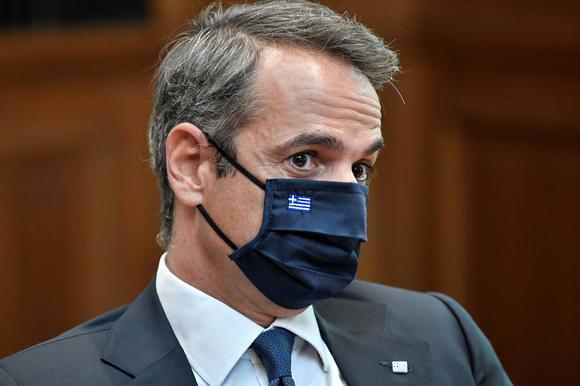
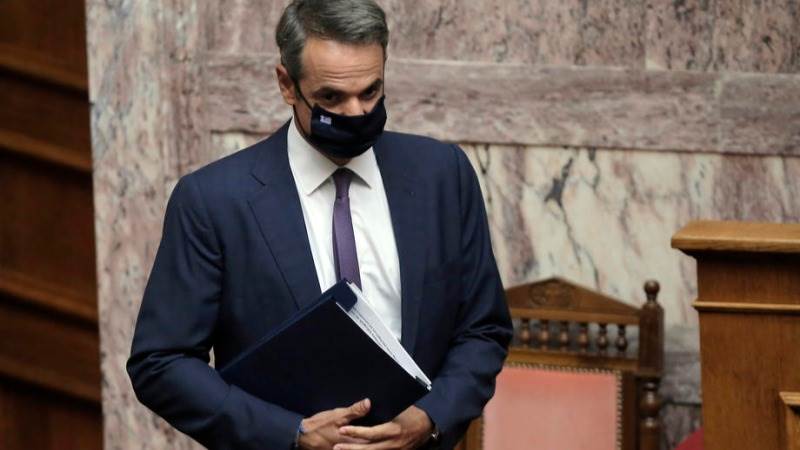
Prime Minister Kyriakos Mitsotakis also expressed his condolences to the family of the drill sergeant on Friday, noting that he “fell in the line of duty.”
“I am well aware of the efforts of our uniformed personnel to avoid accidents by employing strict safety measures in the units. But training is laborious to keep the army effective in battle. And, unfortunately, that is where danger lurks,” he said.
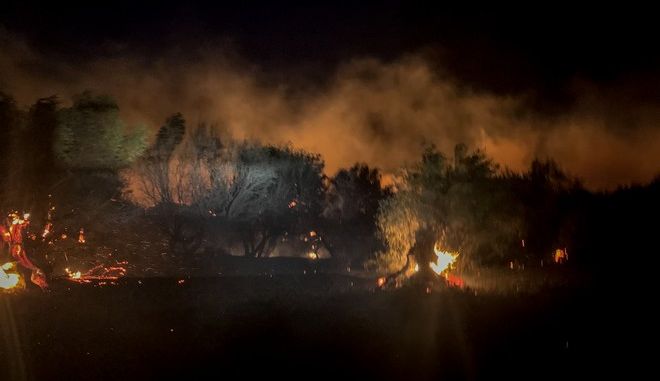
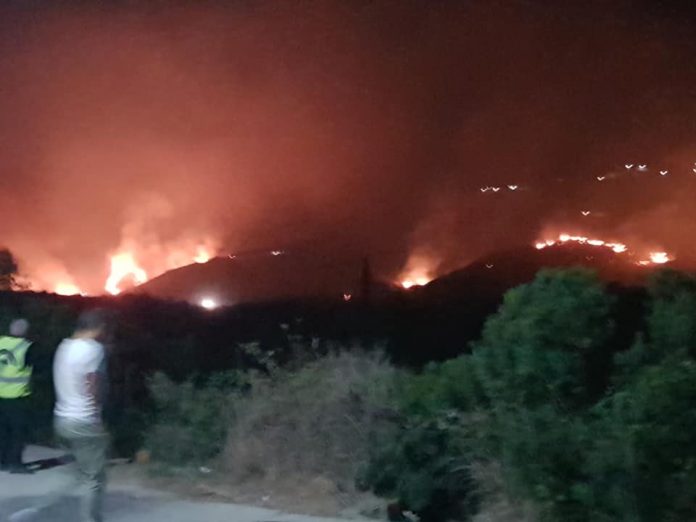
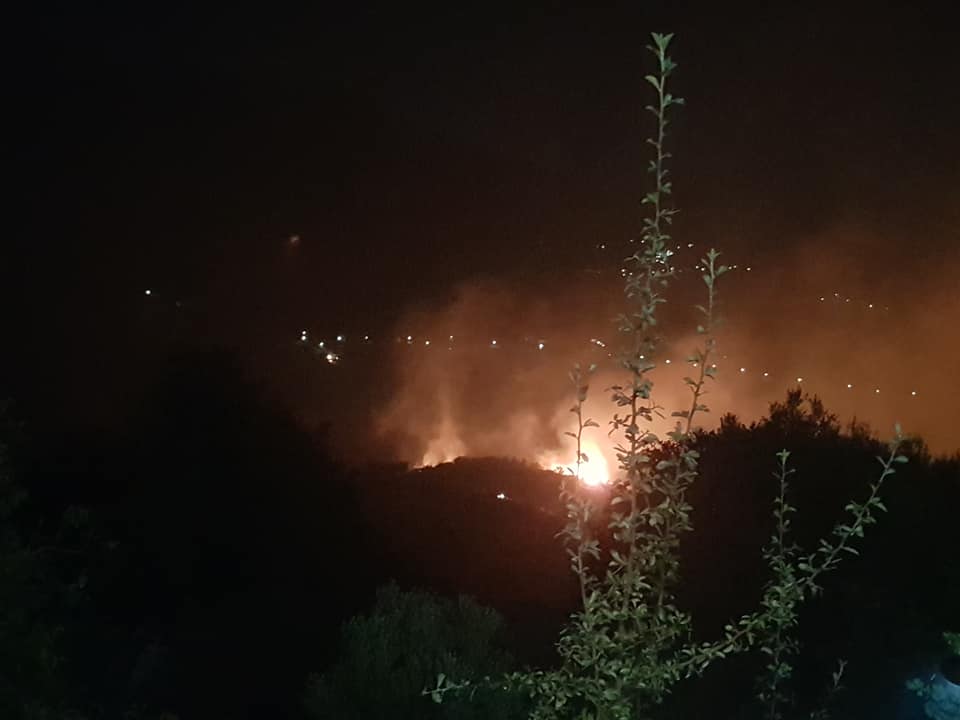
Kefalonia Mayor Theofilos Michalatos made an announcement regarding fires that have sparked havoc in the late hours of Friday night, forcing many people to desperately try and save their homes.
Drawing attention of Kefalonia residents, the mayor emphasised that “some people are trying to burn down our houses”. The mayor then went on to claim that many of these fires have started as a result of arson attacks.
Photo: Kefalonia Press
“We would like to draw the attention of all residents and visitors of our Municipality to be on alert because we have received multiple arson attacks.
“Some are trying to take advantage of bad weather and burn our property and homes.
“We are on constant alert and immediately inform the Fire Department and the Police.”
Photo: Kefalonia Press
The mayor has asked all residents of Kapandriti and surrounding areas to evacuate to the nearby town of St George with a wet towel, small container of water, medicine and basic personal items.
Members of the Attica Security will be arriving on the island for investigations, along with a huge reinforcements from the Athens Fire Brigade.
“We are all on the streets and protecting our property,” the mayor said in a statement.
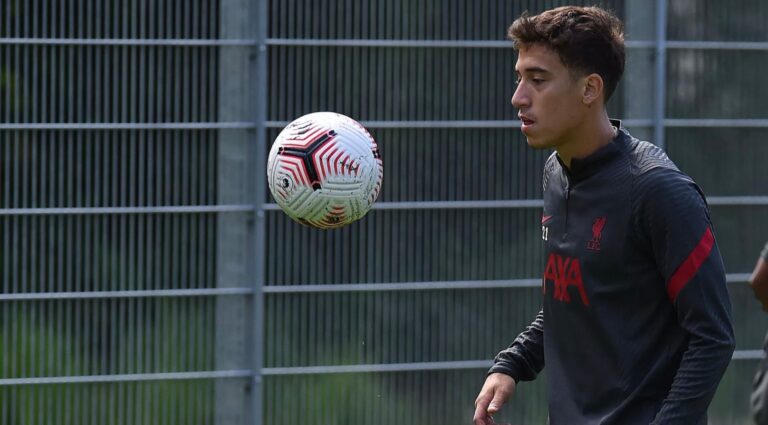
The lack of appearance from new Liverpool signing Kostas Tsimikas in the UEFA Nations League yesterday puzzled many Greek fans. It was later revealed however that the Greek left back had shown signs of illness on Thursday afternoon and remained at the team hotel as a precautionary measure.
Greece’s Sport 24 are claiming that the 24-year-old has been diagnosed with coronavirus, based on reports from sources within the federation.
“The Greek Football Federation was informed today of a positive sample Covid-19,” read a statement from the federation. “The member of the squad who had a positive sample was isolated for the last 36 hours for precautionary reasons.
Kosta Tsimikas. Photo: Twitter
“[He] leaves the mission tomorrow morning, while the preparation of the Greek team continues. The other members of the squad underwent a new test today and the results will be announced tomorrow.”
It was believed that either Tsimikas and Greek teammate Vassilis Lambropoulos were diagnosed with the virus, with both players being left out of the UEFA Nations League match versus Slovenia. Lambropoulos has now been identified training with the Greece squad, meaning Tsimikas is likely the Covid-19 positive player.
Both Tsimikas and Lambropoulos’ initial tests, performed when they joined up with the national team, were negative.
Kostas Tsimikas signed for Premier League champions Liverpool during the summer transfer window, moving from Olympiacos where he was a key player for the Greek club.
Prime Minister Kyriakos Mitsotakis said on Friday Greece would start talks with Turkey to resolve conflicting claims over maritime boundaries in the Eastern Mediterranean once Turkish “provocations” ceased.
Tensions escalated last month after Turkey dispatched a seismic survey vessel to a disputed area for energy exploration following a maritime deal between Greece and Egypt. Turkey says the pact infringes on its own continental shelf.
“(Our country) can and wants to discuss the demarcation of maritimes zones in the Aegean Sea, in the eastern Mediterranean, based on international law. But not under threats,” Mitsotakis said during a meeting with China’s top diplomat Yang Jiechi who is visiting Athens. “Let the threats go for talks to begin.
“Once the provocations end, discussions will begin,” he said, adding that Greece’s foreign minister would deliver a letter from him outlining Athens’ case to U.N. Secretary General Antonio Guterres when the two meet in New York on Friday.
Photo: EPA-EFE/KOSTAS TSIRONIS
Mitsotakis spoke a day after NATO Secretary-General Jens Stoltenberg said that Greece and Turkey, both members of the Western alliance, had agreed to talks to avoid accidental clashes in the Eastern Mediterranean.
Turkey said it supported NATO’s initiative and that the talks were not about solving bilateral problems but about measures so far handled by the two countries’ militaries. It added that it expected Greece to do the same.
Commenting on NATO’s announcement on Thursday, Greek diplomats said a condition for dialogue was that Turkey de-escalated its activity in the region.
Permanent residency should be considered for migrants working on the COVID-19 frontline in essential sectors such as aged care, says Mary Patetsos, chairwoman of the Federation of Ethnic Communities’ Councils of Australia.
But the government’s list of preferred migrant skills does not include aged-care work.
More than 1900 Australian COVID-19 cases have been in residential aged care, mostly in Victoria. And 460 of the nation’s 663 coronavirus deaths have been connected with aged-care centres.
Speaking to The Advertiser, Ms Patetsos said public trust eroded by quality and safety failures would be regained only by ensuring staff, many of whom were casually employed migrants, were well trained in stable and secure employment.
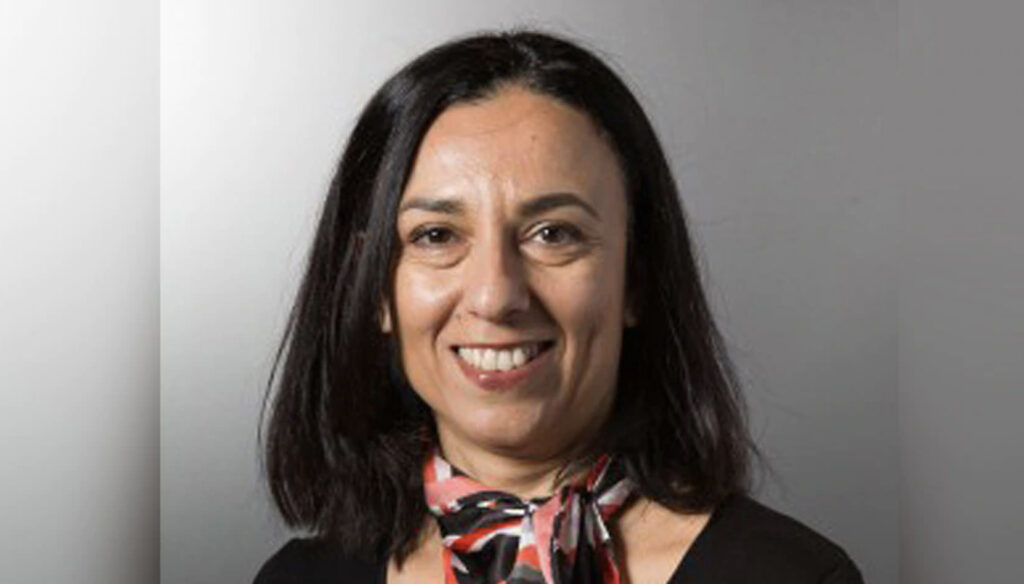
FECCA chair Mary Patetsos. Photo: SBS News
“It is shortsighted to leave the responsibility of caring for vulnerable older persons to migrant workers who are themselves vulnerable without a clear pathway to permanent residency or citizenship,” said Ms Patetsos, who is also chairwoman of Adelaide-based aged-care provider ACH Group.
“Canada has just announced it will offer permanent residency to asylum seekers who have worked on that country’s coronavirus healthcare frontline, including aged care,” she said.
“The Australian Government should consider offering permanent residency to our frontline workers with a requirement that they work in essential sectors such as health, aged and disability (care) for a minimum of three years as a condition.”
The pandemic’s impact on overseas-born older people has been devastating, Ms Patetsos said, citing the example of the Greek Orthodox Church-run St Basil’s in Melbourne.
Ms Patetsos said Australia would experience a spike in the number of overseas-born people needing care in the next decade, some in their homes and some in residential care. Between 30 to 40 per cent of older Australians arrived after World War II.
A Home Affairs Department spokeswoman said on Wednesday they had announced a priority list to give precedence to people with critical skills who could come to Australia on employer-sponsored programs
The list names 17 occupations, such as nurses, engineers and midwives –but it does not include aged-care workers.
“The government will continue to review the immigration settings to ensure they are best placed to support Australia’s economic recovery,” the spokeswoman said.
As the fight against COVID-19 rages on in Australia and worldwide, we caught up with Infectious Disease Physician, Associate Professor* at the University of Wollongong, Spiros Miyakis, who answered our questions with regards to the challenges frontline workers face during this time and the role we can all play in the elimination of the spread of the virus.
What is the role of an infectious disease physician during a pandemic?
Many roles: To look after patients who need hospital admission. To diagnose patients with the disease and differentiate from patients who have similar symptoms due to another disease (i.e flu, other respiratory or gastrointestinal infections, etc) to treat those appropriately. To advise on the hospital response and protocols during the pandemic, to offer advice to the personnel as needed, etc.
What are some challenges you are facing during this time?
The anxiety among the healthcare workers (see recent transmissions in Victoria) and the general population alike: they need to be reassured and counselled on the real risks (versus myths spread) and be advised against complacency at the same time.
We need to keep up-to-date with the volume of new information that come to light for this –new- disease and to keep our colleagues healthcare workers informed in turn. Also maintaining personal well-being: “keep well yourself, in order to be able to look after others”. The need to keep protected from transmission, since we are at the front-line.
To keep the balance between the increased workload and some necessary personal and family time and the necessary rest (and to find time for it!). Finally, as Medical Academics, we are challenged with maintaining students teaching during pandemic, having into mind that disruption of teaching risks compromising the healthcare workforce of tomorrow!
Victoria is going through a second deadly wave of coronavirus at the moment and new cases are being recorded across Australia. Is this going to be the new normal?
No one can be certain at this point of time. Worst case scenario that the virus will circulate on a yearly basis, in parallel with flu (something like “a second flu”) by changing slightly every year (same as flu does) or even overtake the flu, as they are competing for the same hosts (interesting how much less flu we have seen this year worldwide).
There is also the possibility that the virus is eliminated, if an effective vaccine is found to increase population immunity and at the same time the virus doesn’t have advantageous mutations (these are the genetic changes that all viruses of this kind undergo, as mentioned before).
Virus elimination is the best scenario, but there is no clear certainty at this moment that this will be eventually the case; until then we will have to live with this new reality.
Why are some areas, even within the same country, hit so much harder than others?
It is a combination of geography and efficiency of control measures. To give you an example, Australia is a huge country, in terms of land size, therefore a pandemic in Melbourne cannot be easily spread to other States once measures are taken (i.e. borders closed) – the second wave was almost spread in NSW (due to continuous travel activity between the two neighbouring states) but once borders were closed and with intense testing and contact tracing, the spread in NSW was contained in large part.
Can one get coronavirus more than once? Shouldn’t people be immune after they contract the virus?
As we said before, if the virus changes successfully, then you can. It is too early to tell (this is a new virus) but there is substantial possibility. Rare cases in other countries have already been described. That’s what happens with flu also.
Let’s at least hope that, if the coronavirus “came to stay”, those with subsequent infections have a milder clinical course; this is the case with many viral diseases, but it is not always the case.
Are we close to the development of a coronavirus vaccine at all?
It looks like we are. But vaccine production is a very complex process and if one step does not work things can go backwards, so we have to “see it to believe it”. In the case of the coronavirus vaccine the clinical trials have been expedited, so the process of checking safety and efficiency (that normally takes many years) was sped up.
This, of course, does not mean a drop in quality and standards, so this is all a complex process. The big question is not if we will have a vaccine, but how effective this is going to be.
If we have a vaccine who will be vaccinated first?
As with all vaccines, those are first tested in healthy volunteers to establish safety and efficacy. Once those two are established, vaccines will be first given to two priority groups:
1. People who are at highest risk for death and complications once they catch the virus (i.e. those with chronic underlying conditions ie heart failure, lung diseases, diabetics, immunosuppressed, elderly etc), and
2. People most at risk of contracting the virus (i.e health care workers, aged care workers, living in nursing homes, institutions, boarding houses, etc).
Can Australia eliminate the virus in your opinion?
I think the current approach to eliminate the transmission of the virus into the community is more realistic. Eliminating the virus itself is not only in Australia’s hands, it is in the Global community’s hands. Even if we “eliminated” the virus, if this keeps circulating in other countries it can always return, unless you seal the borders.
For how long can the borders stay closed, us remaining isolated from the rest of the world? New Zealand has claimed virus elimination, but they have now again cases, even if limited.
We have to live with the new reality, the virus present, as long as we keep it under control without giving it opportunities to expand. For this is important to follow some principles:
• social distancing (1.5 metres);
• wearing masks when appropriate (closed spaces, gatherings, public transport, etc);
• paying particular attention to personal hygiene (hand sanitization, cough or sneeze etiquette, etc);
• getting tested when we are sick and self-isolating (instead of going to work or into the society) until the symptoms resolve and the results are back; and
• following the advice given by Public Health.
• Herd immunity or an effective vaccine?
The toll in deaths of herd immunity via the disease makes an effective vaccine imperative. The vaccine experts also argue that the immunity offered by a successful vaccine is more efficient than this offered by past disease; of course this can be specific to the pathogen targeted, and remains to be proven for SARS-CoV-2. I hope it is.
• How do you think we will be reminiscing COVID-19 in ten years’ time?
It might still be around, in waves and clusters. More likely –and I hope- it is eliminated, but it still gave us some opportunities, in order to prepare ourselves against another pandemic threat (no one exactly knows what that will be, but chances are that it will occur).
Lessons learnt from COVID-19 that we have to keep include among else:
• the importance of hand hygiene and personal cleanliness;
• taking advantage of the technology (for contact tracing, launching messages to the society, etc);
• showing flexibility in working conditions (i.e. working from home when possible, video-linking into meetings and avoid unnecessary travel time);
• co-ordinating efforts at Country level globally with appropriate leadership;
• emphasizing the importance of vaccinations; and
• paying attention to (and trust) the enormously important work of Public Health and Infection Prevention and Control practitioners.
*Spiros Miyakis is Associate Professor and Director of Teaching Hospitals, School of Medicine, University of Wollongong and Co-Director Division of Medicine and Head of Infectious Diseases and of General Medicine, Illawarra Shoalhaven Local Health District.
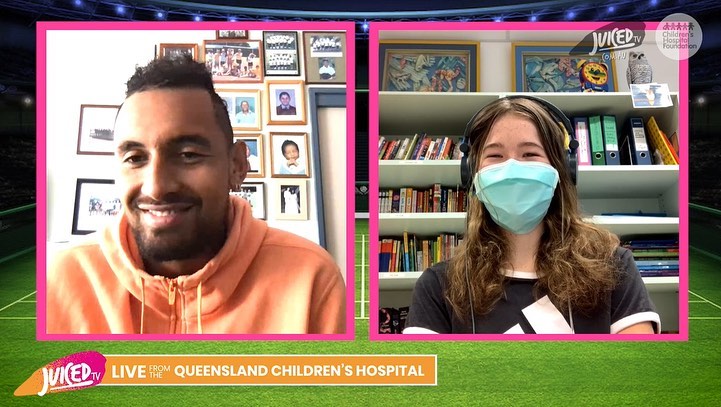
While Nick Kyrgios decided not to go to this year’s US Open from coronavirus worries, the Cypriot Australian tennis star has used his time more valuably, paying a virtual visit to the Queensland Children’s Hospital.
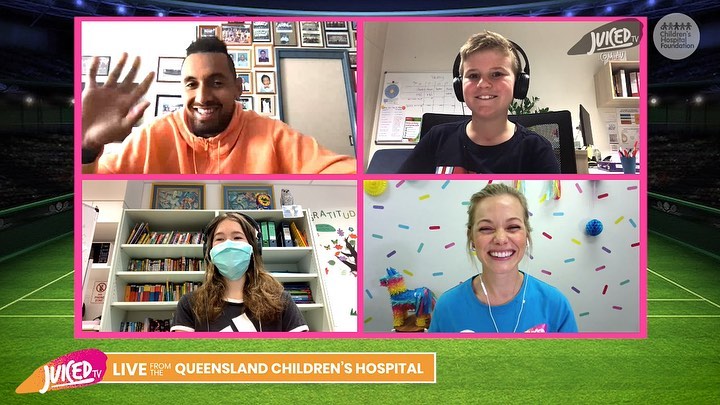
Hosted by Juiced TV on Thursday morning, the 25-year-old tennis player spoke with die-hard tennis fans Hayden, who was in hospital in Brisbane, and Claire at the Gold Coast University Hospital.
“I just want to say all you guys are amazing, you’re incredibly strong and I’m always thinking of you,” Kyrgios said from his Canberra home at the end of the visit.
“Stay strong, stay happy. I’d love to come back. I’d love to talk to more kids and also some of the workers.”
During the interview he promised to send Hayden some autographs, accepted a challenge from patient Rezwan to play a tennis match against him and his brother, and sent a message to Emily, who is beginning treatment for leukaemia.
“Stay strong and I’ll be waiting for you when the treatment’s finished,” he said.
Nick Kyrgios chats with fans Claire and Hayden and Juiced TV host Pip Forbes during a virtual visit to the Queensland Children’s Hospital on Wednesday. Picture: Juiced TV/Instagram
Not shy of adding to the media-driven feud between himself and some of the court’s best, Kyrgios said his favourite player to face off against is Roger Federer and his biggest rivals are Rafael Nadal and Novak Djokovic.
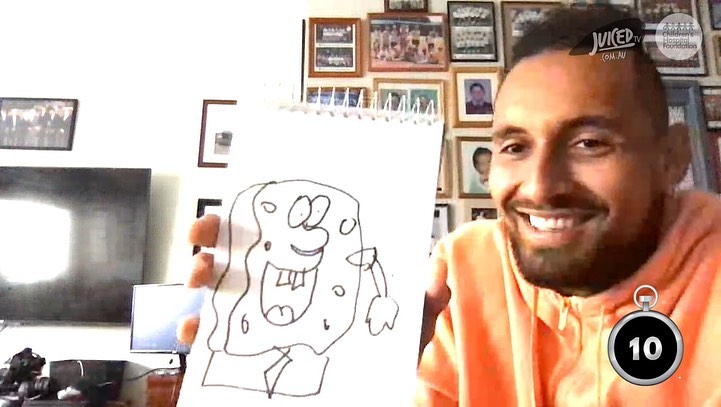
The highlight of the interview though was when Kyrgios played a game of Pictionary with Hayden and Claire, laughing along as he seemed to mistake SpongeBob SquarePants for SpongeBob RoundPants.
He is the latest in a long list of celebrities, including Chris Hemsworth, Margot Robbie, and Johnny Depp, to visit the Queensland’s Children Hospital virtually since COVID-19 lockdown began.
Nick Kyrgios showed his artistic talent on Thursday morning, speaking with the children of Queensland Children’s Hospital. Picture: Juiced TV/Instagram.
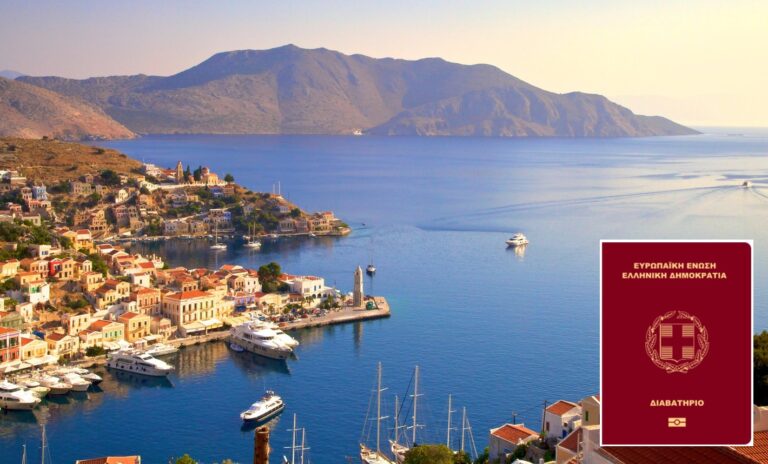
Are you looking to get dual Greece-Australia citizenship? According to an Interior Ministry bill that has been submitted for public consultation until September 10, foreign nationals will now be required to sit and pass written examinations to receive Greek citizenship.
The new examinations, called the “Panhellenics,” will be held twice a year. The questions will focus on the Greek language, while also touching on the geography and history of the nation as well.
According to the proposed legislation, the exams must be passed with a score of 80% before they receive a “Certificate of Adequacy of Knowledge for naturalisation” and only then will they be eligible to apply for citizenship.
Crete. Photo:Milan Gonda / Alamy Stock Photo
There are currently 30,000 pending applications for Greek citizenship, with this new system set to bring a much more organised granting structure.
Greece’s Secretary General of Citizenship, Athanasios Balerbas, stated to interviewers from Ta Nea that it was of extreme importance to change how individuals acquire Greek citizenship.
“When we took over the Ministry,” he relates, “we noticed the extremely long delays in the naturalisation of foreigners, who have the legal conditions to acquire citizenship, if, of course, they wish to do so.”
Acropolis, Athens. Photo: Peter Oglos/The Greek Herald
For those aged over 67 or who have diagnosed writing difficulties, the program will offer oral exams instead.
While this test will speed up the citizenship process, diaspora Greeks will still be required to have an interview with two officials from the ministry’s general secretariat for citizenship, along with an administrative fee of 550 euros, before citizenship is granted.