Home Blog Page 1832

Bulgarian brothers deny killing Greek-Australian John Macris in court testimony

Two Bulgarian nationals charged with the murder of 46-year-old Greek-Australian businessman John Macris denied any involvement in the case after completing their testimony in court on Thursday.

Yuliyanov J Raychev Serafim was accused of killing the Greek Australian in the southern Athenian suburb of Voula in October 2018, where Macris was shot at close-range outside his home.

READ MORE: ‘I’m devastated’: John Macris’ widow breaks silence as alleged killers front court in Greece
READ MORE: Widow of murder victim John Macris thankful his accused killers were arrested

Serafim’s brother Milen Raychev is accused of driving the Nissan Pulsar getaway car, after allegedly stalking Macris for 19 days before the shooting.

The brothers have denied the charges saying they came to Greece in October 2018 on a business trip.

“We are accused of killing a man we did not know, neither him nor his family. My brother and I are not capable of committing such a crime,” one of the defendants told the judges.

CCTV footage of the shooting shows a man wearing clothes similar to those found in Serafim’s hotel room, along with a receipt.

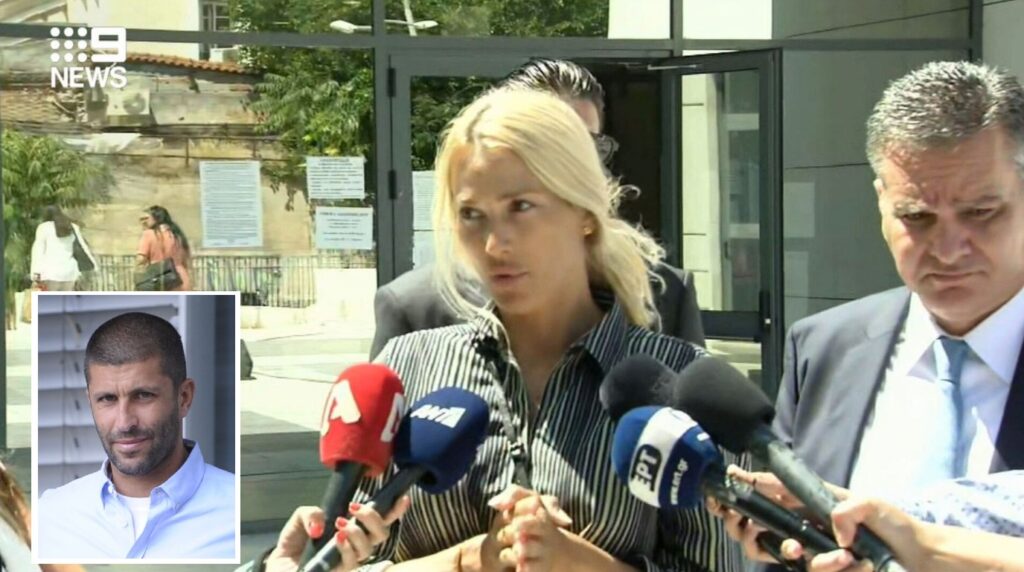
Viktoria Karida, the widow of slain Sydney businessman John Macris, gave evidence at an Athens court at her husband’s murder trial. Photo: Nine News

The court adjourned until next Tuesday, when the prosecutor will recommend a guilty or not guilty verdict.

Viktoria Karida, the mother of two of Macris’ children, attended the court proceeding at Athens court in July, saying:

“I have nothing to say to them … My children are crying and asking for their father.”

The former Playboy model has also stated that her children Alexandra and Achilles had found out how their father was killed by watching it on YouTube.

Sakkari through to US Open third round after defeating Croatian-born American Bernarda Pera

0

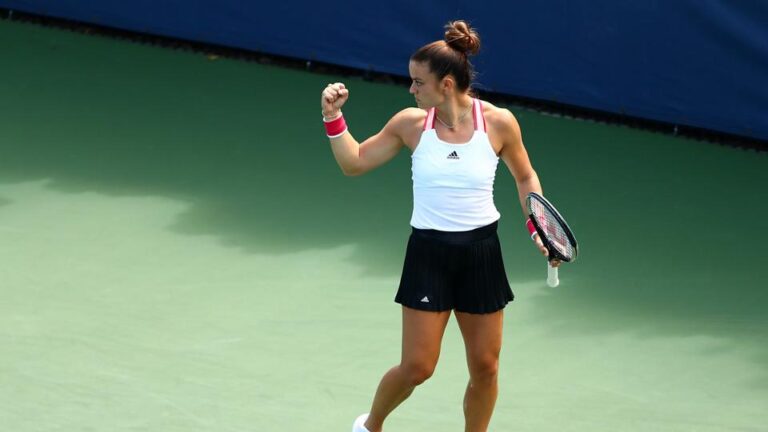
Greek tennis player Maria Sakkari continues her good run of form after defeating Bernarda Pera 2-6, 6-3, 6-2 on the American’s home court.

Sakkari came off the back of a close victory against Stefanie Vögele, defeating the Swiss only two days ago in the first round. Similar to that match, it was Sakkari’s unbreakable set streaks that saw her proceed to the third round.

Pera outmatched the Greek in the first set, using her powerful left-hand serve and catching Sakkari off guard multiple times. In the second set, the tides turned as Sakkari imposed her powerful backcourt game and finished the set victorious with an ace.

Down to the third and final set, the victory didn’t come easy for the Greek, with Pera leading 0-40 during Sakkari’s 2-1 serve. Similar to her impressive display agaonst Vögele, Sakkari managed to pull the rabbit out of the hat and deliver three break-point chances against the Swiss.

Down to the third and final set, the victory didn’t come easy for the Greek, with Pera leading 0-40 during Sakkari’s 2-1 serve. Similar to her impressive display agaonst Vögele, Sakkari managed to pull the rabbit out of the hat and deliver three break-point chances against the Swiss.

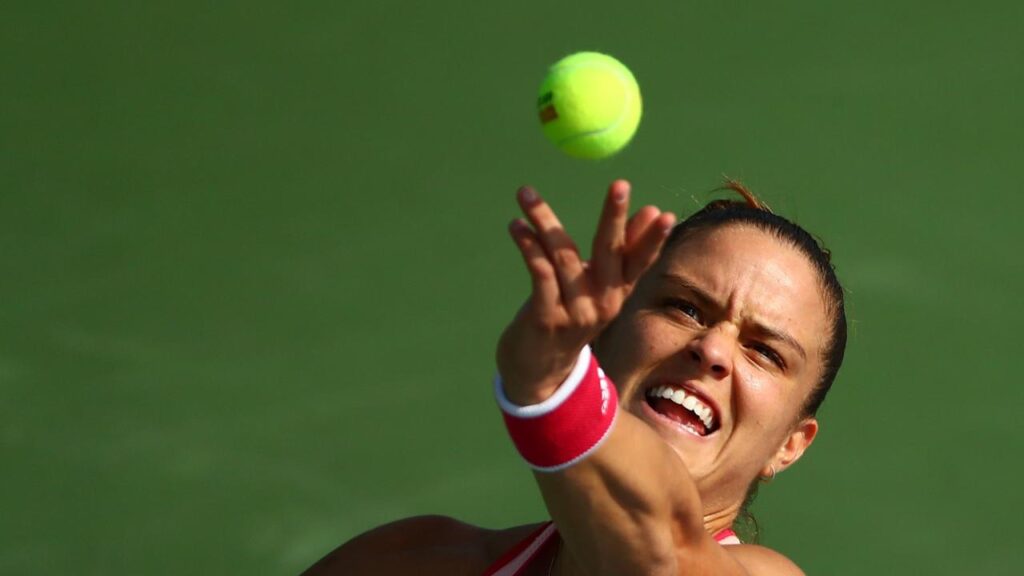
Maria Sakkari of Greece in action against American Bernarda Pera during a Day 4 match. (Photo by Adam Glanzman/USTA)

From there it was all over as Sakkari then broke the American’s serve in the next game to go up, 3-2, and ultimately finish the game victorious.

Maria Sakkari has shown good focus in the States, defeating former world champion Serena Williams last week and now outplaying Croatian-born American Bernarda Pera. The Greek international will now have to prove her talent again against world No. 22 Amanda Anisimova.

Turkey announces Russia will hold live-fire exercises in Mediterranean

0

Turkey has announced that Russia will hold live-fire naval exercises in the eastern Mediterranean, amid escalating tensions between Turkey and its coastal neighbours Greece and Cyprus over rights to search for energy resources in the region.

The navigational notice issued late Wednesday said the Russian exercises will take place Sept. 8-22 and Sept. 17-25 in areas of the Mediterranean where Turkish seismic research vessels are operating.

There was no immediate comment from Russia on the exercises, which Turkey announced after the United States said it was partially lifting a 33-year-old arms embargo against ethnically divided Cyprus.

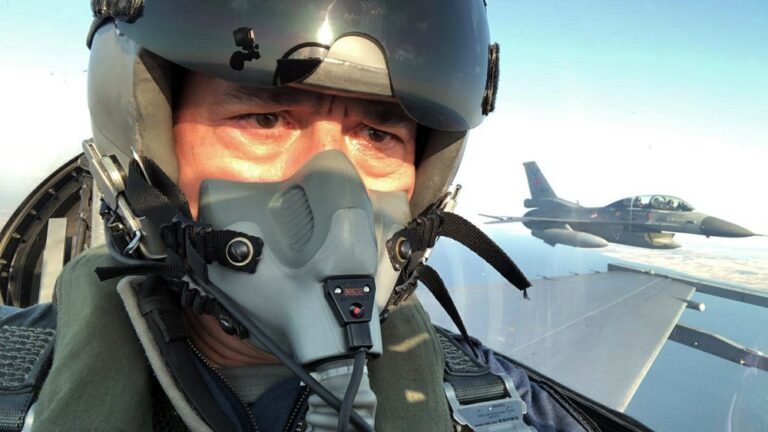
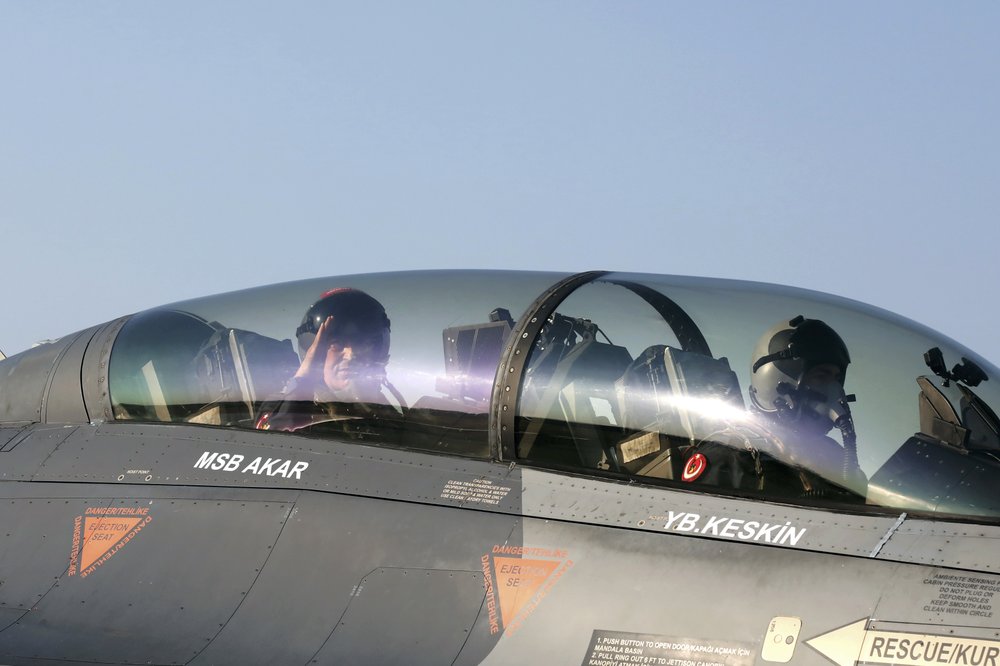
Turkey’s Defense Minister Hulusi Akar, left, salutes from inside an F-16 jet fighter at a military air base in western city of Eskisehir, Turkey, Wednesday, Sep. 2, 2020. (Turkish Defense Ministry via AP, Pool)

It’s unclear why NATO-member Turkey would announce such drills on Moscow’s behalf, but the two countries have in recent years significantly strengthened their military, political and economic ties.

Turkey reacted angrily to the U.S. move that it said went against the “spirit of alliance” between Washington and Ankara. It also warned that it would harm efforts to reunify Cyprus, which is split between Turkish Cypriot and Greek Cypriot communities.

Warships from Greece and Turkey have been shadowing each other in recent weeks as Turkish survey vessels and drill ships continue to prospect for hydrocarbons in waters where Greece and Cyprus claim exclusive economic rights.

In Athens, Greek government spokesman Stelios Petsas said the planned Russian exercises were being “monitored by all the countries in the region, as well as our NATO allies and European Union partners.”

Sourced By: Associated Press

The Jewish family that was saved during the Holocaust by brave Greeks

Tragedy, kindness and bravery. Three words that perfectly describe how the Holocaust impacted the large Jewish community on the Greek island of Corfu.

The Germans took control of the island in 1943 after the fall of Italy and implemented antisemitic laws. At the time, there were 2,000 Corfu Jews. But in early June 1944, 1,800 of these Jews were forced out of their homes and deported to Auschwitz-Birkenau. The remaining 200 found sanctuary with Greek families.

The Savvas family was one of the lucky ones.

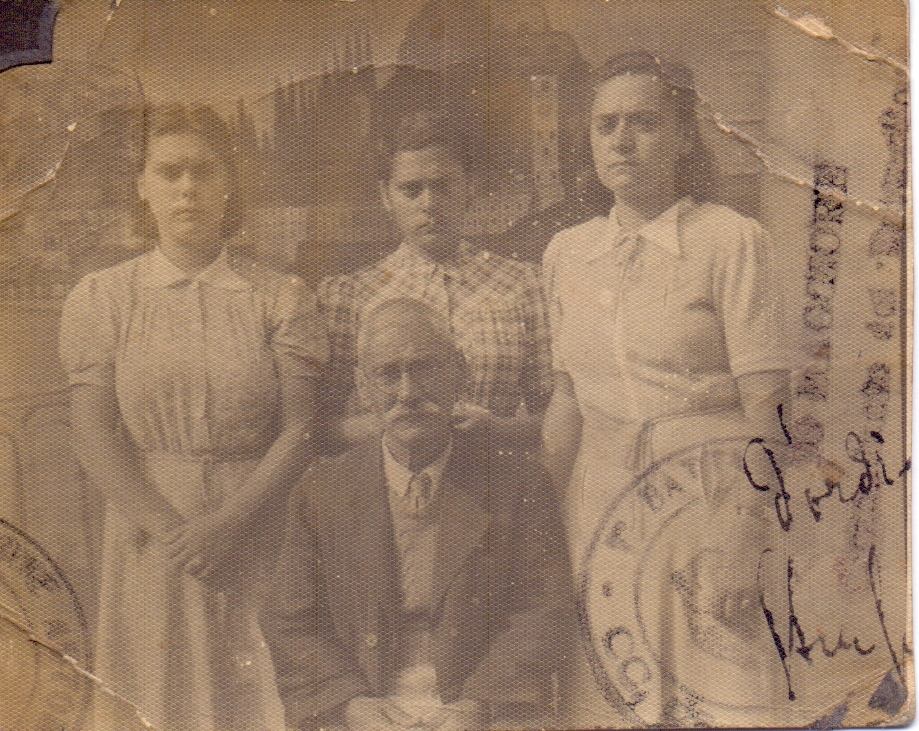
Savvas Israel with his three daughters, Nina, Spera and Julia. Photo Supplied.

Savvas Israel managed to escape Corfu with his three daughters, Nina, Spera and Julia, and their cousin, Rosa, to a nearby Greek island called Erikousa. Having done business with the locals for many years as a tailor, Savvas was well respected and the Greek people worked together to hide him and his family from the Germans.

In fact, one person who played a particular role in their protection was the grandmother of Greek American Yvette Manessis Corporon.

“My grandmother was always talking about her life back in Greece. Among the many stories she told me… was how the Jewish family hid in the priest’s house and everyone worked together to keep the secret safe from the Nazi’s,” Yvette tells The Greek Herald exclusively.

“Every night, the Savvas girls would come to her house and she would feed them. My grandmother loved them.”

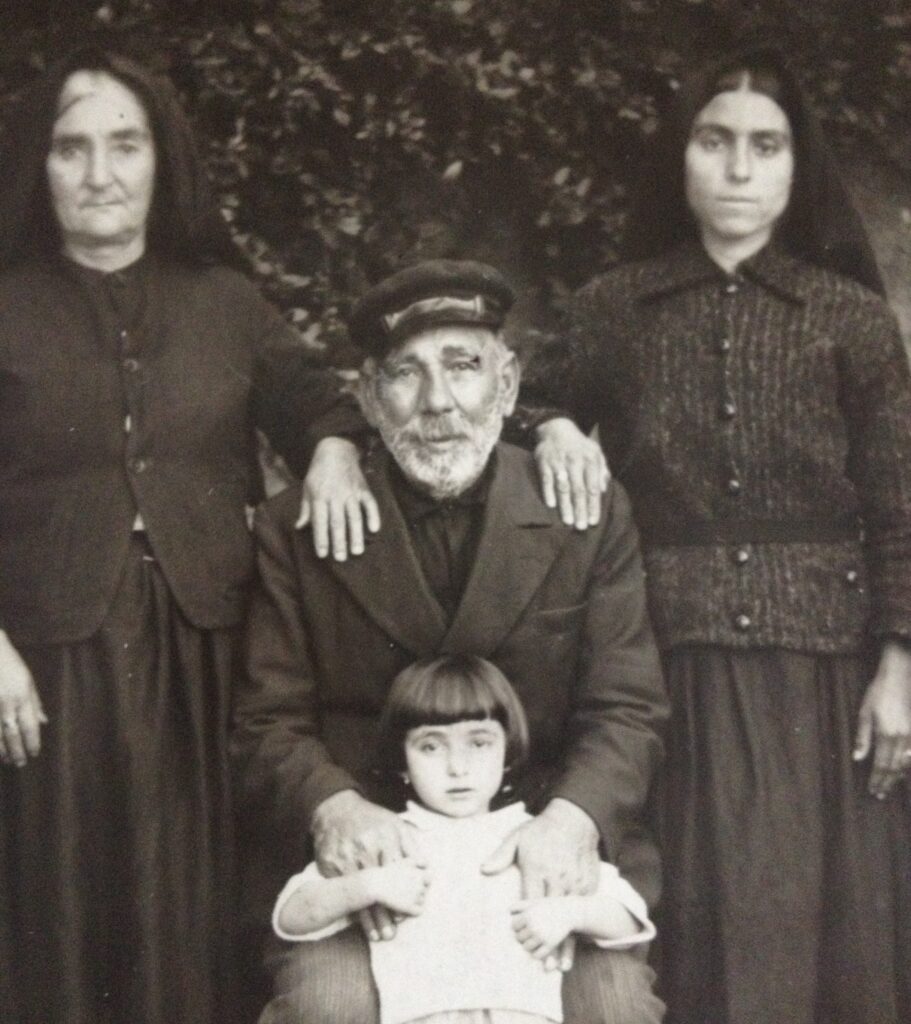
Yvette’s grandmother (top right), great grandparents and aunt, around time of Nazi occupation. Photo supplied.

Tracking down their descendants:

When Yvette became a journalist, she took it upon herself to expose this story of survival and courage in her second book, Something Beautiful Happened.

“Everyone on the island was a hero, everyone had a part in saving the family. That’s why I realised this story was history and that the story deserved and needed to be told,” Yvette says.

It was this realisation which led to Yvette’s frantic search for the descendants of the Savvas family. Despite many people telling her that she wouldn’t find anyone, Yvette says she never gave up.

Yvette tracked down the descendants of the Savvas family for her book, Something Beautiful Happened.

“I decided to go to Corfu. I first asked any family members what they remembered. I went and knocked on doors in the Jewish quarter of Corfu, searched through archives in Corfu and any documents I could find online,” Yvette says.

“Finally, with the help of Yad Vashem (the Holocaust Museum in Jerusalem), the researchers at MyHeritage in Israel and by interviewing Corfu Holocaust survivors, we found them! An entire global village came together to help me find them and it was incredible.”

The “life changing” reunion:

From the information that Yvette gathered, she discovered that Savvas himself died after the war and was buried on Erikousa until his body was later moved to a Jewish cemetery on Corfu.

Of the girls, Rosa and Spera went to Israel after spending two years in a refugee camp on Cyprus. Nina and Julia went to Athens. Julia died of cancer and Nina eventually went to Israel as well. Only Rosa had biological children.

“But there are still five people alive today because of what happened on Erikousa. Rosa’s two sons and three granddaughters,” Yvette explains.

A few years ago, Yvette met with these descendants in Corfu and she says the reunion was so emotional as ‘we all immediately felt as if we’d all grown up together.’

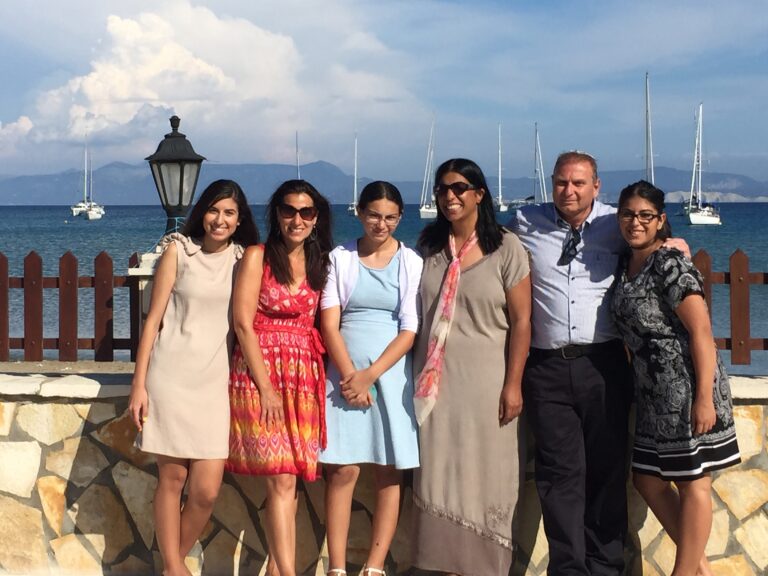
The descendants of the Savvas family met with Yvette Manessis Corporon in Corfu. Photo Supplied.

“Meeting the family in Corfu and Erikousa was amazing and life changing. It was so powerful for all of us,” Yvette says.

“The incredible thing was that they had never even heard the story. The Savvas girls had never spoken of what happened and how they survived the Holocaust.”

Fortunately, Yvette was able to share the story with Rosa’s descendants and in turn, this solidified their friendship.

“We are still very much in touch and we consider ourselves a family. We have even met again several times since then – in Los Angeles, NY and Israel a few times.”

A strong bond that has clearly passed from one generation to the next and is living proof that evil doesn’t always win in the end.

Greek Community of Melbourne announces its Greece 1821 bicentenary celebrations

2021 will see the 200th Anniversary of the commencement of the Greek War of Independence and by extension, the Bicentenary of the Modern Greek State.

Along with celebrations being planned all around the world, the Greek Community of Melbourne (GCM) is busy working on its detailed and multifaceted program.

In the collaborative spirit of the bicentenary, the GCM is partnering with a number of key organisations to present its program.

Key amongst these includes The Victorian Government, The Greek Orthodox Archdiocese of Australia, The Greek Consul to Victoria, The Greek Orthodox Community of NSW, The Cyprus Community of Melbourne and Victoria and The Organising Committee of the National Day Celebrations.

The multi-disciplined year long celebration is being organised by a special committee bringing together a range of interests and experience. It is led by Assoc. Prof. Marinis Pirpiris and Michael Karamitos and includes Dr Jim Bossinakis, Betty Dimitropoulos, Chrissa Kanatas, Dean Kotsianis, Nick Koukouvitakis, Victoria Kyriakopoulos, Dr Stephie Nikoloudis, Stella Patras, Denise Serdenes, Tass Sgardelis, Chris Sikavitsas and is supported by Greek Community staff led by Greek Centre Director, Jorge Menidis.

Whilst the program’s detail has been worked on over the past 4 months and is still being finalised, a
snapshot of its content promises a range of events and activities anchored by the GCM’s annual program of festivals and programs and embellished with a unique, contemporary and cosmopolitan offering.

A teaser of the work in progress program includes:

182! – The Graphic Short Story Collection

An adaptation of stories from the 1821 Greek Revolution presented as a Graphic Short Story collection (aka comic book).

Antipodes 2021 | Commemorating The Greek Bicentenary
27+28 February | Lonsdale Street Greek Precinct Melbourne

The award winning festival celebrates the Greek Bicentenary through themed performances, dance and musical productions.

The Inaugural Grecian Ball

A commemorative Ball to be held as a feature event of the year long celebrations.

The Greek Language & Culture Seminars: Greek Bicentenary Series
Featuring leading academics and speakers.

The Annunciation Of Our Lady Feast Day
A Celebration of the raising of the Revolutionary banner in 1821 at Agia Lavra by Patriarch Germanos and the official re-opening of Victoria’s oldest church on its feast day.

Death Of A Romantic: Lord Byron – The Influence Of Romanticism On The Greek War Of Independence

An ensemble of actors, & musicians will present an evening that will include readings of Byron and his fellow European Romantics such as Keats, Shelley, Hugo, Dumas and Palamas.

R-EVOLUTION-200

A re-telling of the contemporary Greek State through the minds of street (graffiti and stencil) artists.

Musical Odyssey: 200 Years of Triumphant Greek music

A symphonic tribute to the grand Greek composers and musicians who influenced Greek music for 200years.

(Super)Heroes of 1821: The Heroes of the Revolution = The Good, The Bad + The Gory

Designed for children, the event will be a multimedia presentation telling the stories of the heroes of the revolution.

The Greek Writers Festival: Mythologising Context + Identity

A celebration of 200 years of Greek and Greek Australian Writers.

200 years of Flavour. The 2021 Flavours of Greece

A celebration of Greek cuisine through food events.

Youth Summit 21

Bringing together young Greek Australians to discuss matters that are pertinent to their understanding of place, identity and a sense of belonging.

The 27th Greek Film Festival

The annual celebration of Greek film will be a celebration of the Greek bicentenary.

Antipodes: The Concert : A celebration of Greek music, dance + life

Featuring leading Greek performers, a live music concert celebration of Greek culture and life.
Top Greek chefs feature in Prahran Market’s ‘Say Cheese’ Festival

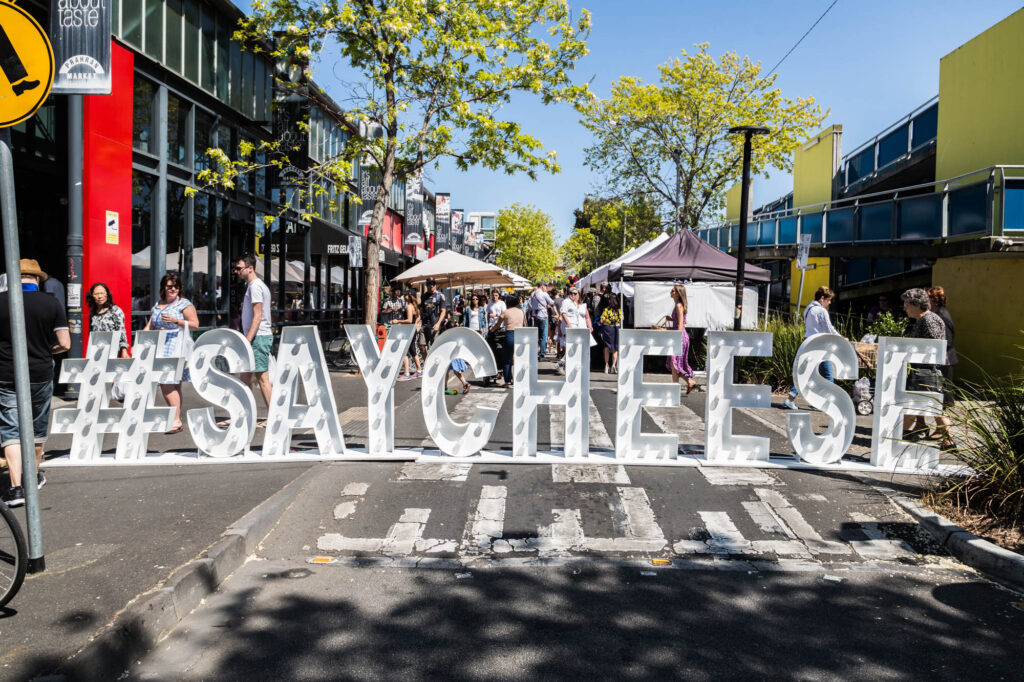
Greeks and cheese go together like butter and bread. Which is why this year’s Prahran Market ‘Say Cheese’ Festival will feature multiple Greek chefs preparing some of the most delicious cheese-related foods.

The festival will take place virtually on the 10th-12th of September with three free events, featuring guests like Gary Mehigan, Jerry Mai, Philip Vakos, Darren Purchese, Raph Rashid and Tobie Puttock. 

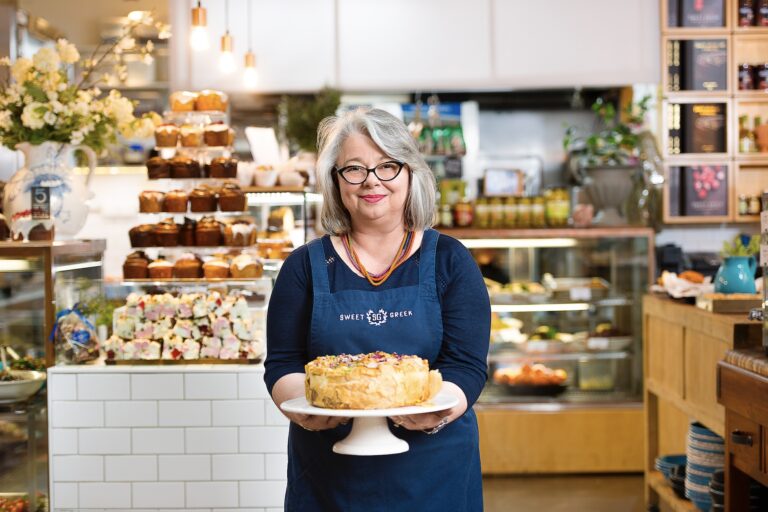
The event prepared to sweep Greeks off their feet however will be on Friday, 11th September, as Kathy Tsaples of ‘Sweet Greek’ will be cooking a three course Greek feast.

Kathy will take people to the Mediterranean and guide them through preparing a delicious three-course Greek meal. Each of the dishes will champion cheese and is to be perfect for a Friday evening dinner. 

Photo: Supplied

“I’ll be making a beautiful Greek meal from entre to main to dessert and people will be able to participate online,” Kathy says to The Greek Herald.

“We’re also encouraging people in the Prahran Market delivery area to purchase the kit and cook along with me as they’re watching on Friday night.”

The recipe kit box is considered perfect for families or couples who love leftovers, and available from Food Lover’s.

Born in Richmond, Melbourne, of Greek parents, Kathy grew up learning to cook traditional Greek cuisine from her mother. The Greek Australian has written two cookbooks, Sweet Greek and Sweet Greek Life, and in 2016 was named a HACCI Award winner for business excellence. 

People can register for watch the cook-a-long with Kathy HERE.

The Grilled Cheese Invitational also returns for its third year with Greek chef Philip Vakos competing against Raph Rashid and Jerry Mai. Meanwhile, Masterchef and Plate of Origin judge Gary Meghan, alongside Anthony Femia and last year’s winner Darren Purchese will judge the competition.

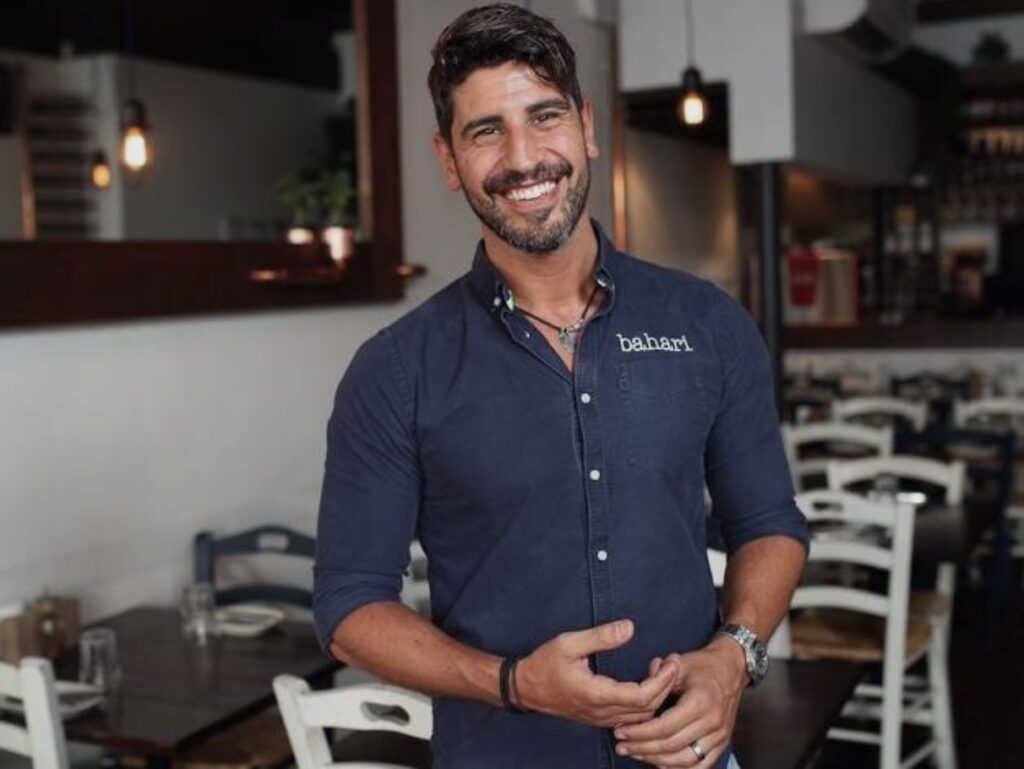
Philip Vakos grew up with two Cretan grandmothers and he was surrounded by food from a young age. After a stint on Masterchef, Philip moved to Melbourne to follow his food dream, and most recently opened Bahari | The Hellenic Palate. Greeks will surely be rallying behind the Melbourne chef as he takes on the two other competitors in the Grilled Cheese invitational!

Family of first Greek man to die from COVID in New Zealand speak out

0

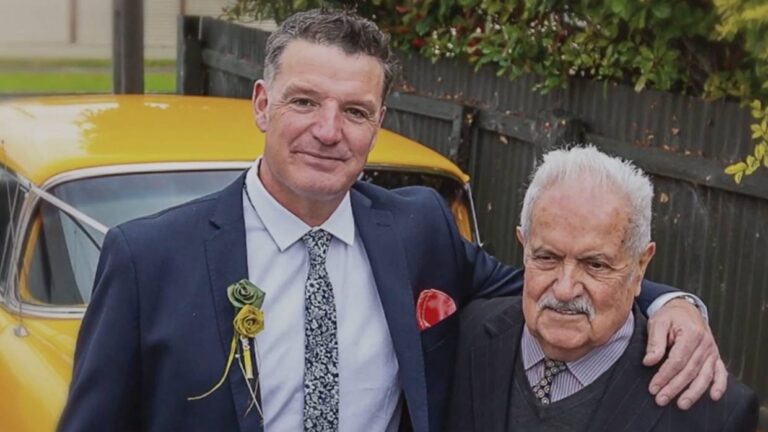
Manoli Tzanoudakis and his bride Betty were at the centre of an infamous wedding in Bluff, New Zealand, where as many as 98 people contracted COVID-19.

One of the 98 people was Manoli’s 87-year-old father, Chrisanthos Tzanoudakis, who later became the first Greek man to die in NZ from the virus.

READ MORE: Greek man becomes the fourth victim of coronavirus in New Zealand.

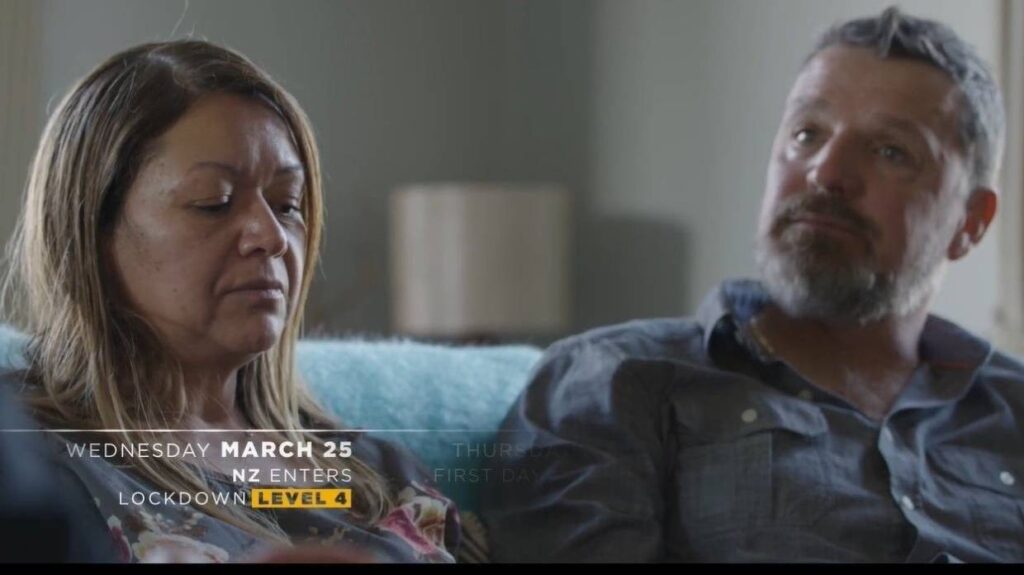
”It was an amazing day with all our family around us. Then it all changed,” Betty told NZ Newshub national correspondent Patrick Gower in his documentary, Patrick Gower: On Lockdown.

Betty and Manoli’s wedding was the centre of the Bluff cluster. Photo: Mediaworks.

Betty had proposed to husband Manoli on a Stewart Island hunting trip. They spent months planning their wedding reception which was held at Oyster Cove Restaurant in Bluff on March 21.

In the days following the wedding, a guest tested positive for COVID-19. Then the bride and groom tested positive.

“One of the guests rang me to ask how we were,” Betty said. “He said that he was unwell and had been tested for COVID-19 and was positive. Then it was like, ‘wow’.”

Manoli’s father, originally from Greece, had lived in Wellington for more than 50 years. He worked on the wharves and owned a fish and chip shop. He planned to move back to Greece after the wedding.

But on the Thursday after the wedding his father was very sick, Manoli said.

“He got rushed to hospital. He was going up and down, and then he started deteriorating.”

His father was put on an oxygen mask but was pulling it off because he was in so much pain.

Speaking in Greek, Manoli told him to “be strong, and we will get through it.”

It was the last thing he said to his father, who died on April 10.

One of their guests, a flight attendant, was identified as bringing the virus into the country.

But Manoli said he wouldn’t blame his father’s death on anyone. He blames the virus.

Stefanos Tsitsipas is on to round three of the US Open

0

Greek tennis player, Stefanos Tsitsipas, eliminated wild card Maxime Cressy 7-6(2), 6-3, 6-4 on Wednesday evening to reach the third round of a Grand Slam for the fifth time.

Tsitsipas had only won one US Open match entering this year’s event. But the fourth seed has looked impressive en route to the third round at Flushing Meadows. 

“It’s very unusual to be playing a player who is hitting both serves [that hard],” Tsitsipas said on court.

“He’s a player who can play very well in the future. His game is very difficult to read and he has a very good serve-and-volley game. You don’t get to play against players like this very often.”

It was a fun match-up inside Arthur Ashe Stadium. Cressy, an old-school player, charged the net 92 times, winning 52 of those points. The former UCLA Bruin struck 21 aces to only 10 double faults despite his extreme aggression, forcing Tsitsipas to be sharp.

Cressy also showed great hands at the net, sticking his volleys well in the early going. The American held a set point on Tsitsipas’ serve at 5-4 in the opening set, but the fourth seed wiped out the chance with a big body serve.

A sloppy tie-break in the first set proved pivotal for Cressy’s chances. Once Tsitsipas took the opener thanks to unforced errors from his opponent, he loosened up with his groundstrokes and started to find more holes with his passing shots, advancing after two hours and 23 minutes.

“His game is very unorthodox to be honest with you. You don’t have players like this on Tour,” Tsitsipas said. “He’s a rare species of a tennis player, that’s what he is.”

This was World No. 168 Cressy’s first tour-level event. Tsitsipas has played a lot of big servers since the ATP Tour returned at the Western & Southern Open.

At that event he defeated 6’8 Kevin Anderson, 6’10 John Isner and 6’11 Reilly Opelka before losing against 6’5 Milos Raonic in the semi-finals. The Greek has won all six of his sets in this US Open.

Tsitsipas will face a totally different stylistic match in the next round against 27th seed Borna Coric. The Croatian rallied to oust Argentine Juan Ignacio Londero 7-5, 4-6, 6-7(5), 6-2, 6-3 after four hours and 19 minutes.

Turkish town sends message of peace to Greece

0

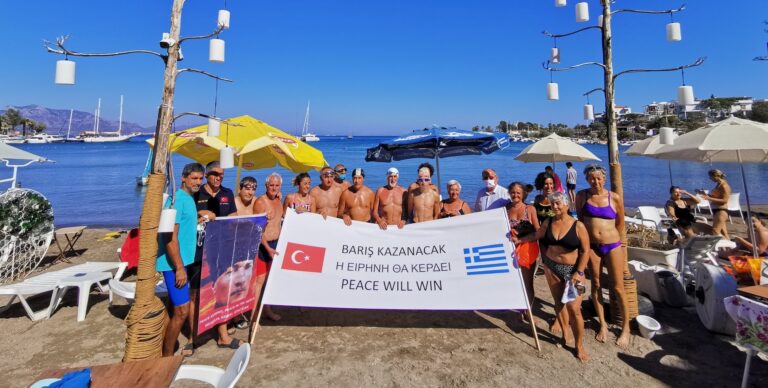
Every year, athletes from the Turkish town of Datça participate in a swimming contest with their Greek neighbors from the island of Symi.

Swimmers from both countries start off at their respective ports and meet in the middle.

The tradition began nearly 20 years ago but because of COVID-19 and strained relations between Greece and Turkey, local leaders in Symi decided not to participate in the event this year.

The Mayor of Datça considered the competition an important tradition for the town, and chose to put it on anyway despite the absence of Greek swimmers.

“We are not on the side of war,” the Mayor said at the beginning of the event.

This was followed by Turkish swimmers, who had decided to still participate in the event, unfurling a banner which read ‘Peace will win’ in Turkish, Greek and English.

No response yet from the Greek side.

On This Day in 1974: PASOK was established

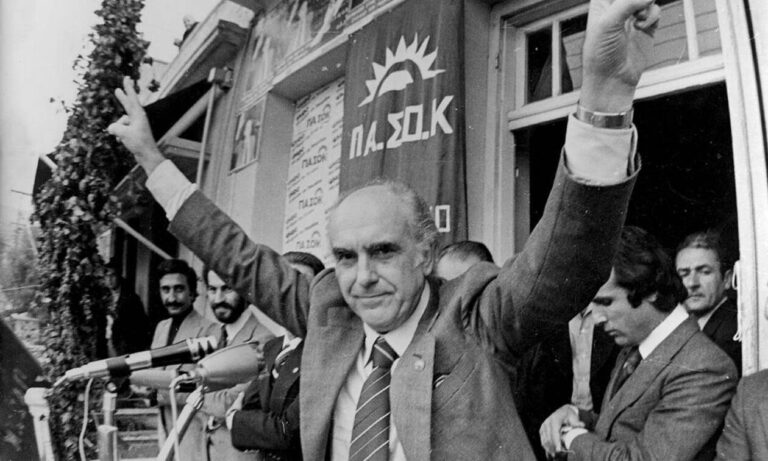
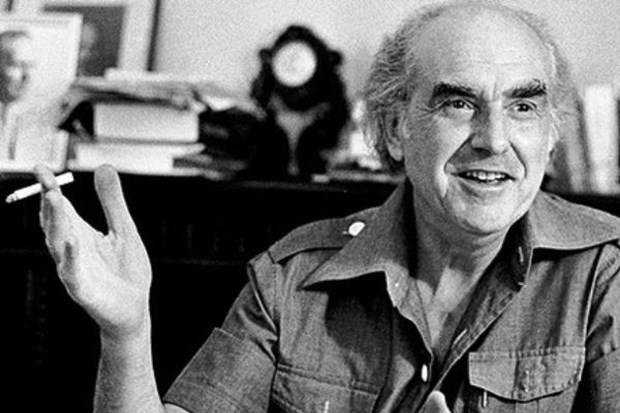
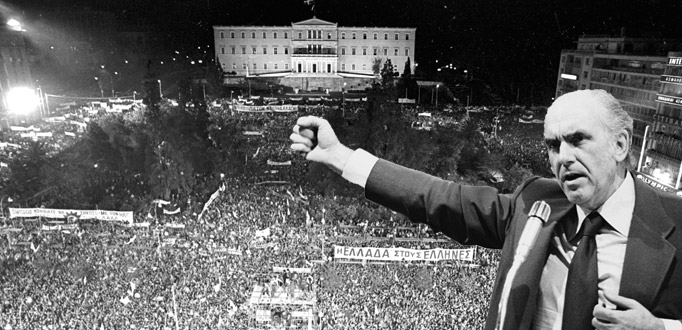
On September 3, 1974, Andreas Papandreou announced the establishment of the Panhellenic Socialist Movement (PASOK), a political faction that would dominate post-colonial Greece politically.

We take a look at how the historic occasion played out.

Establishment:

The fall of the junta in Greece on July 24, 1974, found Andreas Papandreou in exile in Canada. 

During this time, he had founded the resistance organisation known as the Panhellenic Liberation Movement (PAK). On August 6, PAK held a conference in Winterthur, Switzerland, where it was decided that the party would be dissolved and turned into a socialist party.

Andreas Papandreou announced the establishment of PASOK on September 3, 1974.

A committee was tasked with drafting a “declaration of principles” for the new political formation.

READ MORE: July 23, 1974: Greek military rule gives in to democracy.

On August 16, Papandreou returned to Greece and was warmly welcomed by his political friends and thousands of people at the Hellinikon airport.

One of the first problems he faced with the establishment of this new party was its name. Papandreou proposed the ‘Panhellenic Socialist Movement for the Renaissance of Greece,’ but the term “Renaissance” was considered obsolete by most of his interlocutors, while others said it looked like a junta slogan. 

Eventually, the name ‘Panhellenic Socialist Movement’ was chosen.

Party Announcement:

PASOK had a socialist agenda that was anti-European Union and anti-NATO.

The official presentation of the new party took place on September 3, 1974 at the King Palace Hotel in Athens, in the presence of 150 people, who formed its founding core. 

Papandreou appeared late in the event hall. He read the entire ‘Declaration of Principles’ and then distributed it to the journalists present, printed on a small green booklet.

The four defining the principles of PASOK were: national independence, people’s rule, social liberation and democracy.

As Papandreou stressed, “the main dominant goal of the movement is to create a state free from foreign control or interference, a state free from the control or influence of the economic oligarchy.”

Party Politics:

PASOK won the elections in 1981 based on a socialist agenda that was anti-European Union and anti-NATO. Papandreou never fulfilled his promises to pull Greece out of the EU or NATO.

Papandreou ruled from 1981-1989 and from 1993 until his death in 1996. PASOK remained in power from 1996 until 2004 with Costas Simitis at the helm.

Ironically, the man who put Greece in the European common currency bloc in 2001 was PASOK Prime Minister Simitis.

It was equally ironic that George Papandreou, Andreas’ son, led Greece to the austerity bailout deal in 2010 during his brief stint as prime minister from the end of 2009 until 2011.

The once mighty party is now a political entity that in 2018 merged into a new political alliance of centre-left parties called the Movement for Change, becoming the third largest party in the Hellenic Parliament in the 2019 election.

New party leader Fofi Gennimata, daughter of PASOK founding member and former minister Giorgos Gennimatas, is trying to restore the party’s credibility.