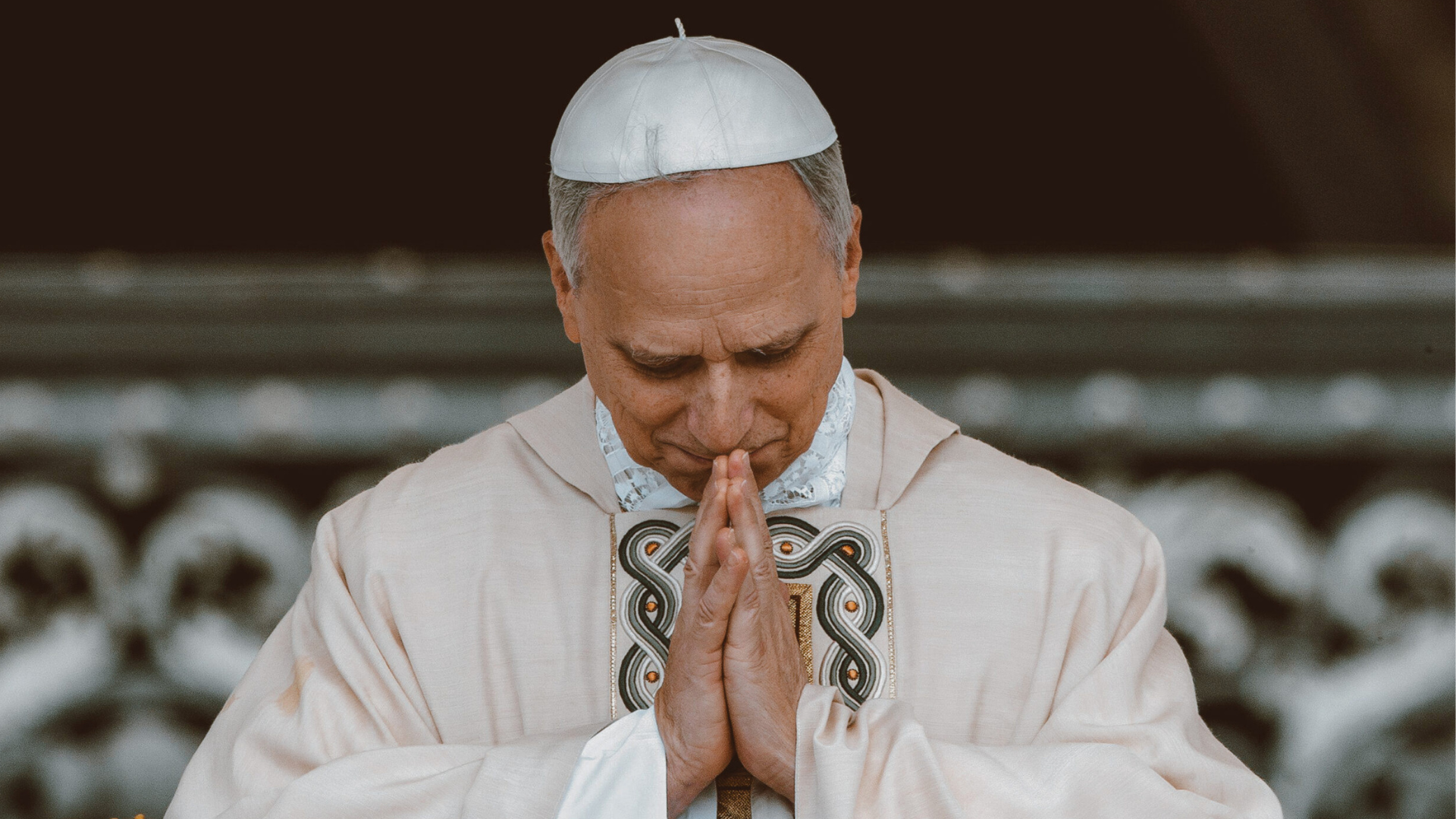
By Dean Kalimniou
Most discussions of artificial intelligence begin with machines. Pope Leo XIV begins with humanity.
At first glance, Magnifica Humanitas appears to be an encyclical about technology. It addresses artificial intelligence, automation, machine learning and the growing influence of digital systems upon contemporary life. Yet beneath these concerns lies a far older question, one that has occupied philosophers, theologians and saints for centuries: what does it mean to be human?
The significance of the encyclical lies precisely here. Pope Leo is less concerned with what machines can do than with what humanity may become in a civilisation increasingly tempted to understand itself according to the logic of its own creations. The danger he identifies is not that computers will suddenly acquire souls or consciousness. Rather, it is that human beings may gradually come to regard themselves as sophisticated mechanisms whose value is measured according to productivity, efficiency and performance.
Such concerns resonate deeply within Orthodox Christianity. Yet the Orthodox response begins from a somewhat different place. Before asking what artificial intelligence can accomplish, Orthodoxy asks what the human person is and what the human person is for. The question is not technological but theological.
Running throughout Magnifica Humanitas is a sustained defence of Christian humanism. Humanity, in this vision, is neither self-creating nor self-sufficient. Human dignity derives from a relationship with God, while fulfilment is discovered in communion rather than autonomy. Orthodox theology encounters little difficulty in recognising this language, although it tends to express the same insight through the scriptural language of image and likeness.
The opening chapters of Genesis describe humanity as being created in the image and likeness of God. Generations of Orthodox theologians have reflected upon those words. The image signifies a gift bestowed at creation, an indelible mark that remains even amidst sin and alienation. The likeness points towards a destiny, a movement towards fulfilment through communion with God. Human existence therefore possesses both an inherent dignity and a future vocation. Every person enters the world bearing a sacred inheritance and a calling that extends beyond the limits of biological existence.
Here Orthodoxy introduces an important nuance into the discussion initiated by Pope Leo. Human dignity is not merely something that requires protection. It is also something that is called towards fulfilment.
Saint Athanasius the Great expressed this vocation in one of the most famous statements in Christian theology: “For He was made man that we might be made God.”
The phrase encapsulates the Orthodox doctrine of deification. Humanity is neither a biological accident nor merely the highest expression of nature. Created in the image of God, the human person is called towards communion with God. Any account of human existence that neglects this transcendent horizon inevitably diminishes humanity, regardless of how sophisticated its language of rights, autonomy or dignity may appear.
A similar insight appears in the theology of Saint Gregory the Theologian. Defending the full reality of Christ’s humanity, he insisted that: “That which He has not assumed He has not healed.”
Human nature matters because God has entered into it. The Incarnation sanctifies the whole person and reveals a vision of humanity that cannot be reduced to cognition, information processing or measurable capability.
The question raised by artificial intelligence therefore reaches beyond technology itself. At stake is a particular understanding of human fulfilment. Increasingly, contemporary culture presents technology as a means of overcoming the limitations of the human condition. Longevity, intelligence, memory and even consciousness are often described as problems awaiting technical solutions. Transhumanist movements openly advocate the enhancement of human capacities through technological means, imagining a future in which humanity gradually transcends its biological limitations.
Pope Leo identifies this aspiration as one of the defining challenges of the present age. Orthodox Christianity recognises the same impulse, yet interprets it very differently.
In one sense, Christianity and transhumanism begin from a similar observation. Both recognise that humanity is unfinished. Both acknowledge that human beings experience limitation, suffering and mortality. Their disagreement concerns the path by which fulfilment is sought.
Repeatedly, Magnifica Humanitas contrasts enhancement with grace. Contemporary technological culture frequently imagines salvation in terms of optimisation, whether through increased intelligence, longevity or capability. Christian tradition has always envisioned transformation differently. Grace does not operate as a technological upgrade. Healing, restoration and perfection occur through communion with God.
Orthodox theology has explored this mystery for centuries through its doctrine of deification. Transformation remains possible. Indeed, it stands at the very centre of Christian life. Yet it is received as gift rather than manufactured as product. Humanity’s destiny is neither self-engineering nor self-transcendence achieved through technology. Fulfilment emerges through participation in divine life.
Saint Gregory of Nyssa offers a particularly illuminating perspective in this regard. Reflecting upon humanity’s relationship with God, he understood spiritual growth as an endless journey into the inexhaustible life of the Creator. Because God is infinite, growth in holiness possesses no final limit. Here one encounters a profound alternative to transhumanism. Christian transcendence concerns ever deeper communion with the divine rather than the continual enhancement of human faculties.
Questions of enhancement inevitably lead to questions of personhood. Artificial intelligence can already perform tasks that once appeared uniquely human. It can converse, compose poetry, generate images and imitate patterns of reasoning. Such developments have led some commentators to speculate about machine consciousness and even machine personhood.
Orthodox theology approaches the matter from a different angle. The decisive question is not whether machines can imitate human behaviour. The question is whether imitation and personhood are the same thing.
Few modern Orthodox thinkers explored this issue more profoundly than Metropolitan John Zizioulas. Human existence, he argued, is fundamentally relational. Personhood is characterised by what he described as “otherness in communion and communion in otherness.” A person exists through relationship.
Artificial intelligence may simulate aspects of human interaction with increasing sophistication. Simulation, however, remains distinct from communion. A machine can reproduce language. It cannot love. It can imitate empathy. It cannot enter into self-sacrifice. It can generate conversation. It cannot freely offer itself to another in communion. Intelligence and personhood are not synonymous.
For this reason, the Orthodox response to artificial intelligence is not rooted in fear of technology. The issue lies elsewhere. Humanity risks forgetting what constitutes personhood in the first place.
The encyclical’s discussion of Babel points towards another dimension of the problem. Pope Leo invokes the Tower of Babel as a symbol of humanity’s attempt to secure fulfilment through its own ingenuity. Such imagery possesses obvious relevance in an age increasingly inclined to seek salvation through technological means.
Ancient monastic writers recognised pride as the root of spiritual illness because it obscures humanity’s dependence upon God. From Eden onwards, Scripture presents the temptation to become one’s own god as one of the defining features of the human condition. Artificial intelligence has not created this temptation. New instruments have merely given it fresh expression.
Father Alexander Schmemann observed that modern societies increasingly seek fulfilment through systems, institutions and techniques while neglecting humanity’s deeper spiritual vocation. His observations possess an undeniable relevance today. Technological progress offers remarkable possibilities. Yet no system, however sophisticated, can answer questions that are ultimately spiritual in nature.
At the same time, Orthodoxy does not regard technology as evil. Churches themselves are filled with matter transformed into vehicles of grace: wood, stone, paint, gold, incense and music. Creation remains fundamentally good.
Saint Maximus the Confessor provides an important framework for understanding this distinction. Every created thing, he taught, possesses its own logos, its inner principle and purpose, finding coherence within the eternal Logos. Distortion arises not from creation itself but from its misuse.
The danger therefore lies not within technology but within humanity’s relationship to it. Artificial intelligence is neither humanity’s saviour nor its destroyer. Its consequences depend largely upon the spiritual condition of those who wield it.
One of the most distinctive Orthodox contributions to the contemporary discussion concerns the role of struggle in human flourishing. Prayer is difficult. Fasting is difficult. Forgiveness is difficult. Spiritual growth has always been associated with effort, perseverance and sacrifice.
Contemporary culture increasingly seeks technologies capable of removing effort from human activity. Efficiency becomes a supreme value. Friction appears as a problem to be eliminated. Yet one may reasonably ask whether a humanity relieved of every burden risks being relieved of those disciplines through which character is formed.
Artificial intelligence can undoubtedly perform many tasks more efficiently than human beings. Whether efficiency constitutes the highest good remains another question entirely. Ascetic tradition has long recognised that patience, perseverance and struggle play an indispensable role in human flourishing. A civilisation determined to eliminate every form of difficulty may eventually discover that it has weakened some of the very capacities required for genuine freedom.
Orthodox spirituality has never understood freedom as the absence of constraint. Freedom emerges through self-mastery. The monk who fasts, the penitent who forgives and the believer who persists in prayer are not diminishing themselves. They are being formed. A culture increasingly shaped by technologies designed to remove inconvenience may therefore face an unexpected danger. In seeking to spare itself every struggle, it may gradually lose appreciation for the formative power of discipline, patience and sacrifice.
The Fathers understood that every tool carries within it a pedagogy. Human beings are shaped by what they repeatedly do. A civilisation accustomed to immediate answers may gradually lose patience for contemplation. Where memory is routinely outsourced, tradition itself may become attenuated. Should creativity increasingly be delegated to machines, imagination risks being reconceived as a commodity rather than a gift. Technologies do not remain external to those who use them. They become teachers. The question is what lessons they impart.
Ultimately, the discussion returns to the question of human dignity. Saint John Chrysostom repeatedly challenged attempts to evaluate persons according to wealth, influence, status or utility. The poor person, the widow, the stranger and the outcast possessed precisely the same dignity as the emperor because each bore the image of God.
Such a perspective acquires renewed significance in a culture increasingly tempted to evaluate persons according to economic usefulness and measurable output. Human worth cannot be calculated according to productivity. Were capability to become the foundation of dignity, the weak, the elderly, the disabled and the unborn would always remain vulnerable.
Saint Isaac the Syrian expressed the Christian alternative with characteristic simplicity: “What is a merciful heart? It is a heart burning for the sake of the whole creation.”
Love remains the ultimate criterion. No algorithm can teach repentance. No machine can cultivate humility. No technological innovation can replace prayer, sacrificial love or communion with God.
Pope Leo’s encyclical serves as a timely reminder that technological capability and moral progress are not synonymous. Systems created to serve humanity must never be permitted to define it.
One of the more striking images employed by Pope Leo is that of Nehemiah rebuilding the walls of Jerusalem. The choice is significant. Nehemiah’s task was not merely architectural. The restoration of the city was inseparable from the restoration of a people whose identity had been fractured by exile. Walls alone could not save Jerusalem. A renewed understanding of covenant, community and purpose was also required.
The image acquires a particular resonance in an age increasingly preoccupied with technological construction. Humanity is building at a remarkable pace. Digital networks, artificial intelligence systems and vast technological infrastructures continue to reshape everyday life. The question posed by Magnifica Humanitas is whether these achievements are accompanied by a corresponding renewal of moral and spiritual vision.
Orthodox Christianity has always understood renewal as an inward as well as an outward work. Churches may be built, institutions established and societies organised, yet the Fathers consistently insisted that the true rebuilding of Jerusalem begins within the human heart. The ascetic tradition repeatedly returns to this theme. Before walls are rebuilt, the image of God within humanity must be renewed and brought ever closer to its likeness.
Towards the conclusion of Magnifica Humanitas, Pope Leo frames the contemporary moment as a choice between two visions of civilisation. One places its confidence in technological mastery and increasingly seeks fulfilment through systems of its own creation. The other understands human flourishing as inseparable from relationship with God. Readers will recognise echoes of Saint Augustine’s distinction between two cities founded upon different loves.
Orthodox theology approaches the same question through a somewhat different lens. The Fathers repeatedly observed that cultures are ultimately shaped by the object of their worship. Civilisations become reflections of their deepest desires. A society devoted to power will organise itself accordingly. A society devoted to wealth will eventually mirror its priorities. Questions raised by artificial intelligence therefore concern more than technology alone. They concern the kind of civilisation humanity wishes to become and the ultimate source from which it seeks meaning.
The Fathers never imagined a world of algorithms, neural networks and artificial intelligence. Nonetheless, they understood with remarkable clarity the temptation accompanying every age: the inclination to place one’s trust in the works of one’s own hands.
Whether fashioned from cedar, bronze, marble or algorithm, idols remain identifiable by the promises they make. Power without wisdom, mastery without transformation and transcendence without God constitute their perennial offer.
The question confronting the age of artificial intelligence is therefore not whether machines can become more human. The more urgent question is whether human beings, captivated by their own creations, will remember what it means to be human at all.
