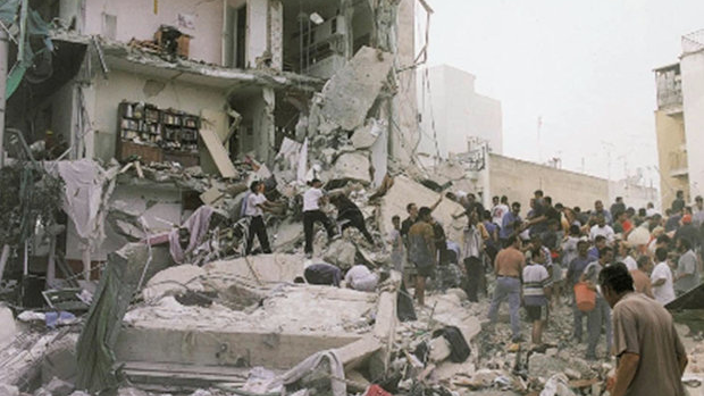
On September 7, 1999, Athens was struck by a devastating earthquake, measuring 5.9 on the Richter scale. It led to the death of 143 people, more than 700 were injured, 50,000 were homeless and there was damage to 70,000 buildings.
Damage:
The earthquake struck unexpectedly at 2:56:50 pm local time and lasted approximately 15 seconds near Mount Parnitha in Greece.
The proximity to the Athens metropolitan area resulted in widespread structural damage, mainly to the nearby suburbs of Ano Liosia, Acharnes, Fyli, Kifissia, Kamatero and Metamorfosi.
The Acropolis of Athens and the rest of the city’s famous ancient monuments escaped the disaster either totally unharmed or suffering only minor damage.
A landslide as well as several fissures were reported along the road leading to the peak of Mount Parnitha. Minor damage was also reported to water and waste networks close to the epicenter.
Response:
Rescue teams sifted through the rubble in Athens in an effort to find any survivors. Local residents joined in, contributing garden tools and hammers to the work of the cranes which moved large chunks of damaged concrete.
People yelled into narrow crevices in the rubble, desperately trying to communicate with anyone who might still be alive beneath the damage.
Dust-covered and shocked victims were pulled from the rubble and quickly whisked off in ambulances to the nearest hospital.
The quake was the most costly natural disaster to hit Greece in nearly 20 years.
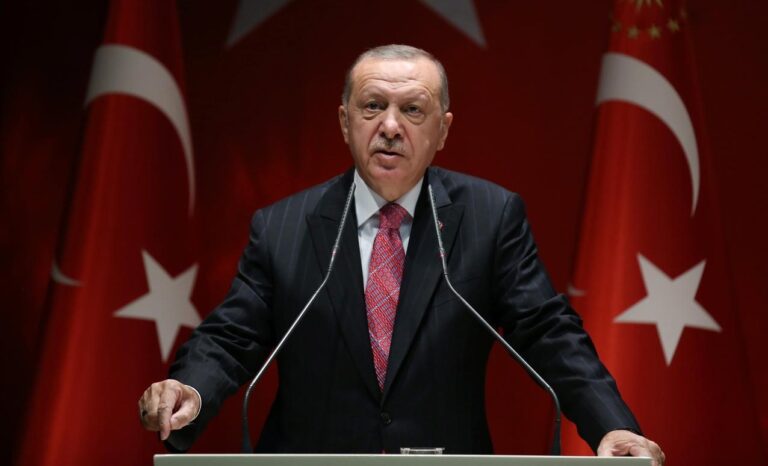
President Tayyip Erdogan told European Council President, Charles Michel, on Sunday the EU’s stance towards the East Mediterranean would be a test of its sincerity, calling on it to take an impartial stance in Turkey’s row with Greece.
NATO allies Turkey and Greece have been locked in a dispute over hydrocarbon exploration in the sea’s disputed waters and the extent of their continental shelves.
Provocative comments and steps by European politicians on regional matters would not help achieve a solution, Erdogan was cited as saying by his office.
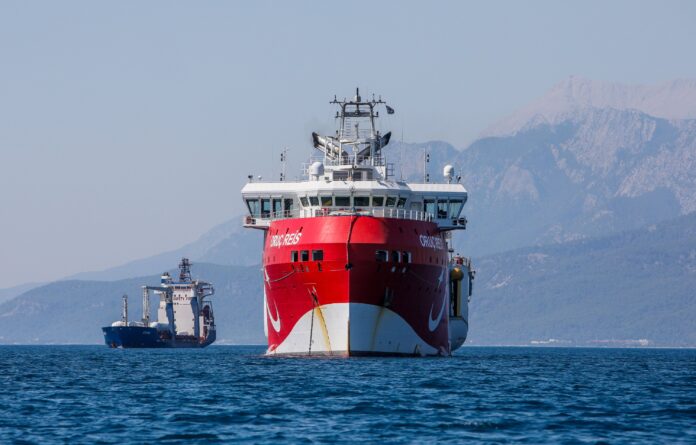
Last month, Turkey sent a seismic survey vessel for hydrocarbon exploration in the east Med.
“President Erdogan said the attitude shown by the EU in the Eastern Mediterranean will be a test of sincerity from the perspective of international law and regional peace,” the statement said.
“President Erdogan called on EU institutions and member countries to behave responsibly and remain just, impartial and objective on all regional issues, notably the Eastern Mediterranean,” it added.
Michel had said on Friday that European Union leaders will decide on a “carrot and stick” approach to Turkey when they meet on September 24-25, proposing a conference to defuse tensions in the Eastern Mediterranean.
Last month Turkey sent a seismic survey vessel for hydrocarbon exploration in disputed waters in the region after a maritime deal between Greece and Egypt.
On Thursday, NATO Secretary-General, Jens Stoltenberg, said Greece and Turkey had agreed to start technical talks to avoid accidental clashes in the region.
The following day, Prime Minister Kyriakos Mitsotakis said Greece would start talks with Turkey to resolve a dispute in the Eastern Mediterranean once Turkish “provocations” ceased.
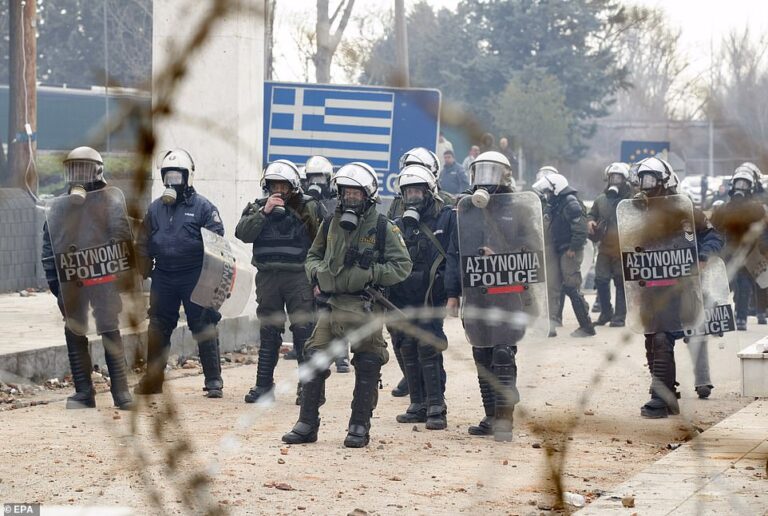
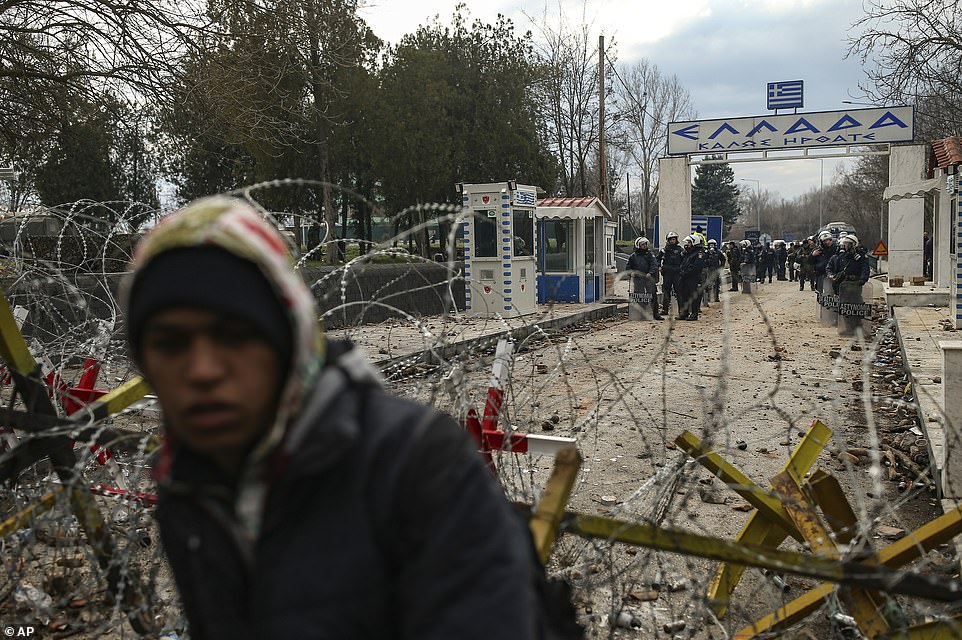
Two new quick response units of 30 men each will patrol the Greek-Turkish border along Evros river, SKAI television reported on Sunday night.
The two new units will be patrolling the Evros borderline to stem a rising tide of illegal migrants trickling in from neighboring Turkey and dismantle migrant-trafficking rings.
At the same time, the island’s border guard will be strengthened, with 530 new border guards already recruited. Of these, 240 will be stationed on Lesvos, 100 on Kos, 98 on Chios, 40 on Leros, 30 on Samos, 20 on Symi and 12 on Kastellorizo.
746 new border guards are also expected to be hired in the next recruiting period, of which 480 will be distributed in five Pre-Departure Detention Centers and another 266 will strengthen the guard of the islands.
United Nations statistics show that illegal land entries into Greece from Turkey have doubled in the last month alone, stoking concerns of a new migration crisis as tensions between the feuding countries have flared over energy rights in the East Med.
Greek Migration Minister, Notis Mitarachis, has explained the thinking behind the decision to fortify the border.
“We want Turkey to conform to agreements it has signed to stem the flow of illegal immigration,” he said recently. “Any attempt to weaponise the suffering of refugees for geopolitical interests will not be tolerated.”
The border reinforcement also comes amid a flurry of media reports saying that Turkey was withdrawing 40 tanks from Syria, moving them instead to the Greek-Turkish border.
Turkey has not explained the deployment but Kostas Lavdas, a professor of international relations at Panteon University in Athens, told VOA that Greece must be ready for war.
It may be a simple rotation of forces, he said, because Turkey has several military fronts open. But he added that regardless the reason, Turkey has repeatedly shown that it wants to be ready for all scenarios relating to Greece, including war.
Greece, he said, may want to avoid that but it also needs to be prepared for it.
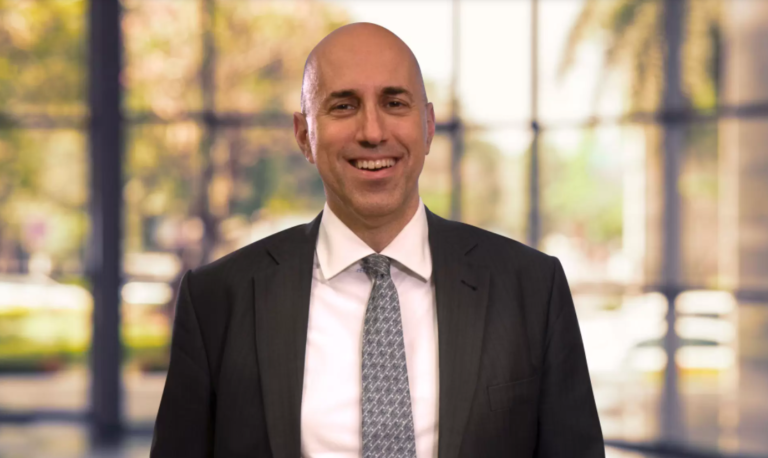
On September 9, 2020, Georgios Filiopoulos, the CEO of Enterprise Greece, will be holding a video conference via Zoom focusing on Greece’s economy and how Greek Australian business leaders can consider investing in Greece.
The event is sponsored by the Australian Chamber of Commerce & Industry and Katia Gkikiza the Trade Commissioner (Australia) Office for Economic and Commercial Affairs, Consulate General of Greece in Sydney.
Starting at 5.30pm, Mr Filiopoulos will give participants the opportunity to be informed about the course of the Greek economy and to evaluate the possibilities of commercial cooperation with Greek companies, as well as the possibilities of investment activity in Greece.
Following his presentation, there will be an opportunity to ask Mr Filiopoulos a question in the Q&A session.
If you would like to RSVP, please reply to Paul.Nicolaou@australianchamber.com.au as soon as possible to secure your place on the video conference. A Zoom link will be sent to you afterwards.
SYNOPSIS:
Greece is changing and it is changing fast. More important, it is on the verge of a significant growth path, as the economy becomes more extrovert/outward looking based on Foreign Direct Investment and Export Trade.
Businesses around the world are in a position to benefit from an environment that welcomes new enterprises, fully supports investment, and promotes Greek products and services to a global marketplace.
Enterprise Greece is designed to promote and support Greece’s substantial investment opportunities and to engage the global business community with (first-class) high end export products—goods and services made in Greece.
Enterprise Greece’s united effort allows them to effectively promote entrepreneurship in Greece, showcase trade opportunities to global buyers, and successfully lead to more holistic business partnerships.
Mr Filiopoulos will brief attendees at this session on how Greece is doing economically, how it is managing COVID and how Greek Australian business leaders can consider investing in Greece.
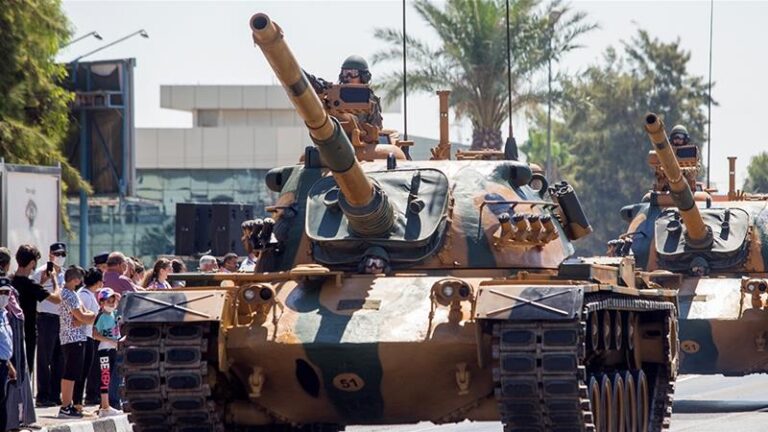
Turkey’s armed forces on Sunday began annual exercises in the breakaway republic of Northern Cyprus – an entity recognised only by Ankara – as tensions continue to rise with Greece in the Eastern Mediterranean.
Turkey’s hunt for gas and oil reserves in waters claimed by Greece has put a huge strain on the relationship between the two NATO members.
Turkish President Recep Tayyip Erdogan on Saturday raised the stakes by warning Greece: “They will either understand the language of politics and diplomacy, or on the field through bitter experiences.”
As tensions run high, the Turkish military began its exercises called “Mediterranean Storm” with the Turkish Cypriot Security Command, Vice President Fuat Oktay said on Twitter.
1️⃣ Türk Silahlı Kuvvetlerimiz ile KKTC Güvenlik Komutanlığı’nın katılımıyla gerçekleştirilen “Akdeniz Fırtınası” tatbikatı bugün itibariyle KKTC’de başlamıştır. Doğu Akdeniz‘de diplomatik çözüm yollarıyla birlikte Ülkemizin ve KKTC'nin güvenlik öncelikleri vazgeçilmezimizdir.
“The security priorities of our country and the TRNC [Turkish Republic of Northern Cyprus] are indispensable, along with diplomatic solutions in the Eastern Mediterranean,” Oktay wrote.
The Turkish defence ministry also tweeted the military exercises, which last until Thursday, continued “successfully.”
Cyprus is divided between the Greek Cypriot-run south – an EU member state – and the Turkish Cypriot north.
Erdogan and European Council President Charles Michel discussed developments in the Eastern Mediterranean on Sunday, CNN Turk reported.
Michel said on Friday that European Union leaders will decide on a “carrot and stick” approach to Turkey when they meet on September 24-25, proposing a conference to defuse tensions.
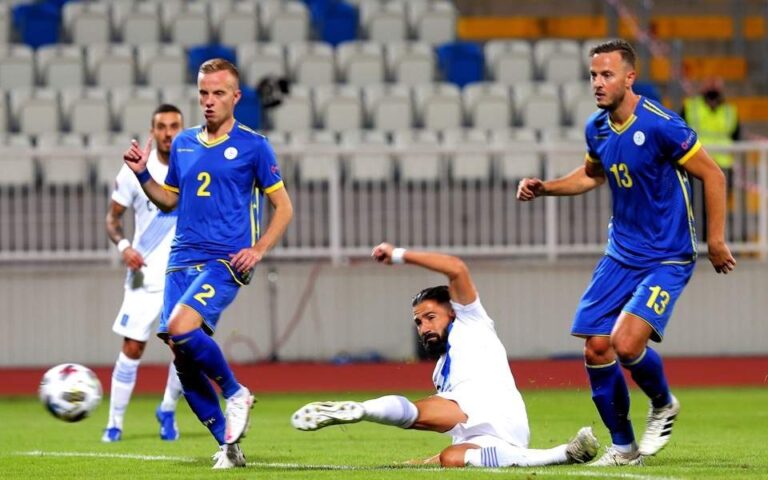
Greece scored its first win in the new Nations League beating Kosovo 2-1 on the road on Sunday, thanks to strikes at the start of each half. It now has four points from two games.
Playing against a depleted Kosovo in Prishtina, Greece created several chances and this time found the target too, while being solid enough at the back despite the absence of coronavirus-stricken Liverpool defender Kostas Tsimikas.
The presence of Kostas Fortounis in midfield and of Efthymis Koulouris in attack improved Greece’s creativity, while Dimitris Limnios gave it some more speed at the flanks.
With barely two minutes on the clock Fortounis sliced the ball across the box to Limnios and the PAOK striker scored with his second effort, after his first was palmed away by the Kosovo keeper.
Then five minutes after the interval the ball fell from the sky (from a Dimitris Giannoulis high ball) to the Kosovo box and the path of substitute Dimitris Siovas and he controlled the ball before unleashing a left-foot volley for 2-0.
Bernard Berisha scored Kosovo’s consolation goal eight minutes from time with a sideways bicycle kick.
Greece’s next game is at home against Moldova in October.
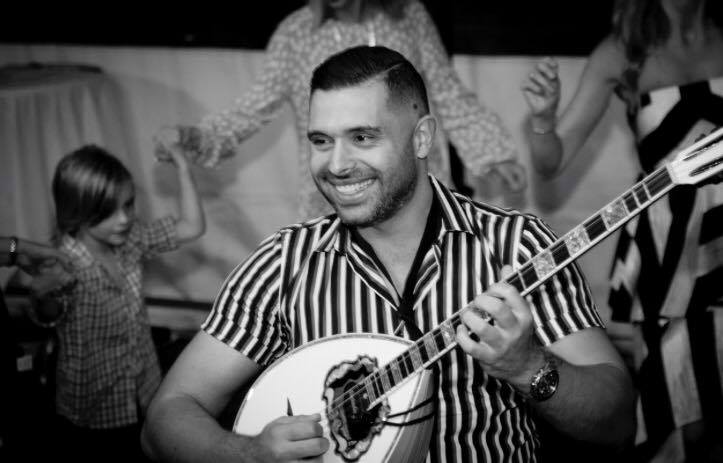
One of Australia’s best bouzouki performers, Tommy Tsonis is now offering lessons for people to learn how to play the Greek beautiful instrument.
Tommy has been playing the bouzouki since he was 7 years old. His passion for this Greek instrument is unprecedented and his music has reached the hearts and souls of all of his listeners. Bringing unforgettable moments in the lives of many people, Tommy is now giving people a chance to learn the secrets behind his techniques.
Bouzouki jamming with George Nikolopoulos on guitar and Evan Kalfayan on Keyboard 🎶🇬🇷#greekband #weddingentertainment…
Typically a three or four course instrument, the bouzouki is one of the most difficult instruments to master. Now a centrepiece of modern Greek music, the instrument graces the ears of all Greeks, also being used in rebetiko performances.
With limited spots available for private lessons, Tommy will be teaching from beginner level up to advanced level.
For all enquiries, contact Tommy on Ph: 0438 279 547 Email: tommy@bouzoukiplayersydney.com.au
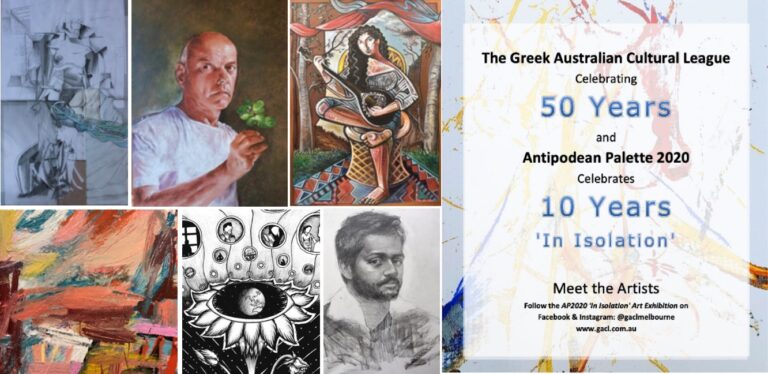
Celebrating it’s 10th anniversary, the Antipodean Palette responded to the COVID-19 pandemic by creating a virtual gallery for art lovers to witness this years ‘In Isolation’ artists.
After the devastating pandemic shook the world, the Greek Australian Cultural League sent a call out to all Greek Australian artists, asking them to take part in the AP2020 ‘In Isolation’ exhibition.
These incredible works can now be viewed online as a ‘walk through’ gallery, which continues until the end of October 2020.
The work of the 15 Greek Australian artists taking part in the AP2020 ‘In Isolation’ exhibition, can now be viewed online as a ‘walk through’ gallery, which continues until the end of October 2020.
Greek-Australian Cultural League President Cathy Alexopoulos has been overwhelmed at the response of the exhibition since it’s launch 10 years ago.
Prior to COVID-19 restrictions, the Antipodean Palette 2020 was to involve the collaboration of Indigenous, Greek Australian artists and performers in a unique exhibition titled ‘CONNECTION’.
Changing the theme, Ms Alexopoulos and the event organisers decided to acknowledge the profound impact the virus has had on artists and the Arts industry.
The Antipodean Palette was re-branded into a virtual exhibition, titled ‘IN ISOLATION’, with the Cultural League asking artists to send in a piece of isolation-themed work.
As a result, 15 Greek Australian artists sent in a variety of pieces, along with a statement, proving that artistic expression and innovation can arise from any challenge.
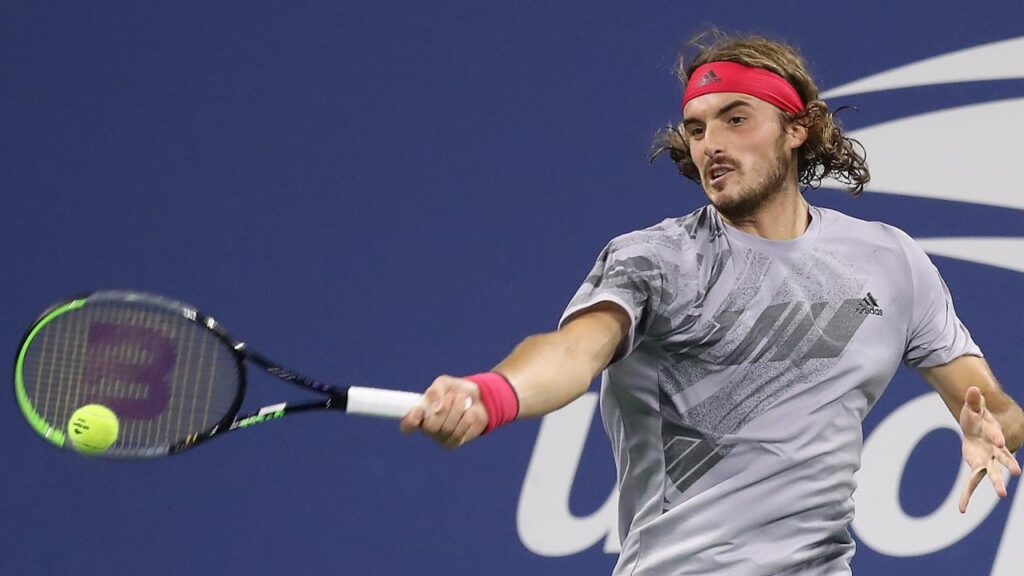
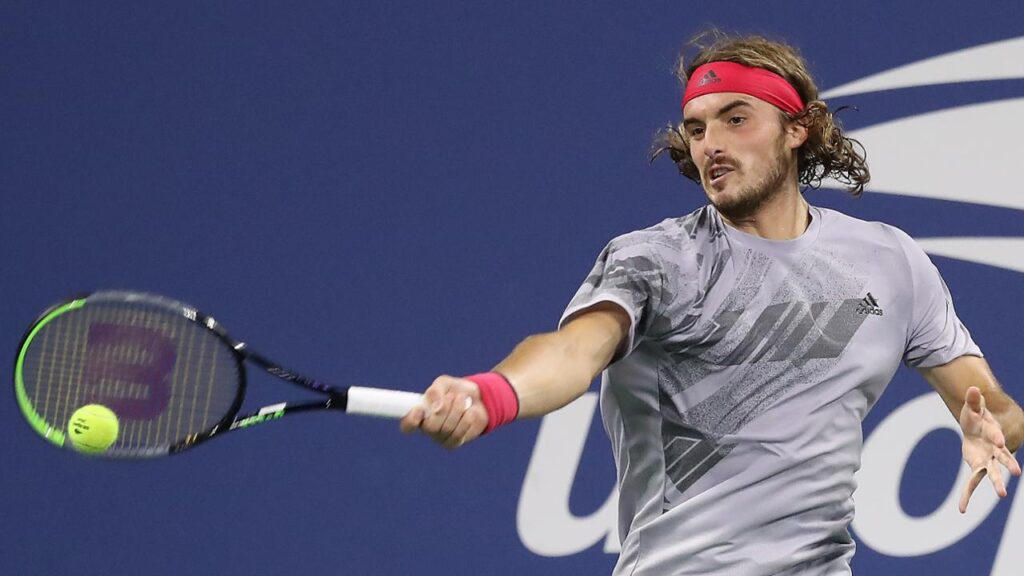
“This is probably the saddest and funniest at the same time thing that has ever happened in my career,” is what Tsitsipas wrote on Twitter soon after finishing his match, and he couldn’t have been more right.
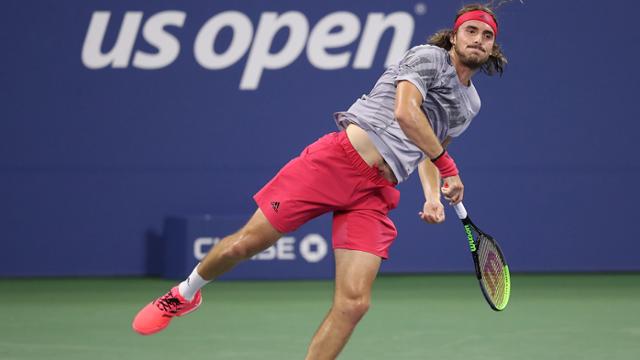
Greek tennis star Stefanos Tsitsipas has bowed out of the US Open after losing to Borna Coric in a five set thriller this afternoon.
The first three sets were an intense dual between two well-respected players. Tsitsipas went into cruise control in the fourth set, with Coric trailing 1-5, 0-30. Tsitsipas was only two points away from proceeding to the next round.
Borna Coric in action against Stefanos Tsitsipas during a men’s singles match at the 2020 US Open. (Photo by Brad Penner/USTA)
That was until Coric managed to break Tsitsipas in the next game. Tsitsipas managed to pull it back, taking the next game, with only one more expected game in sight.
Coric managed to recover from an incredible 0-40 deficit, saving two match points. Then saving four match points. Then saving five match points. It was at this point, a shocked Tsitsipas was forced to hold out and try and break the Croatian.
Photo by Brad Penner/USTA
Managing to break the Greeks nerve, the match went on into a fifth set.
The fifth set managed to go to a tie-breaker, with neither players giving out. Unfortunately, it was Tsitsipas who couldn’t use his serves to his advantage, losing a 4 hour and 36 minute game to Coric.
A title contender for the Open, the Greek will surely be disappointed with the result.
Australian actress, writer and comedy icon Mary Coustas, has lent her voice to a new children’s audio book called Where Happiness Hides written by Anthony Bertini and illustrated by Jennifer Goldsmith.
We all know happiness can be found in little things, but sometimes we simply forget. We forget because life gets in the way. The weather changes, things don’t go to plan, a global health pandemic takes over our news cycle and our lives, our borders are closed down … and we forget what really matters.
Through humble dialogue and stellar drawings, Where Happiness Hides is an extraordinary tale in an extraordinary time that reminds adults and children across the world that happiness is free and that it exists eternally in the little things around us.
It is this child-like love in the discovery for happiness in the simply things that attracted Coustas to volunteers like many others to the project, and narrate the audio book version in her native Greek.
“As adults we can forget what happiness is. We way too often choose ambition over discovery. But looking at the world through a child’s eyes we see that curiosity, adventure and playfulness bring the greatest joy. Letting awe and gratitude dance hand in hand over the simplest things is where happiness lives. This book is a beautiful reminder of this,” adds Mary Coustas.
Inspired by the brevity and preciousness of life, Anthony Bertini spins a tale of endearing observations. At the heart of Where Happiness Hides, two children find pleasure in the little things: a bowl of soup, beetles, sunshine and shadows, but also in disappointment and in hope. Meditative, inspiring and filled with soulful warmth, Where Happiness Hides invites children and the child in us all to savour the moment and find joy in the little things.
“This has been the most exciting project I have been involved in. I have to thank Dirt Lane Press for sharing my vision and making everything happen. To imagine millions of children reading Where Happiness Hides during this difficult time is just wonderful,” says Bertini.
Published by Dirt Lane Press, this beautifully illustrated picture-book encourages children to find magic in everyday moments and happiness in little things.
“This is possibly the most inspiring adventure of my publishing career. It aligns perfectly with the aims of Dirt Lane Press, which is to reach out to audiences who don’t always have access to books, and to inspire and delight with meaningful fables. Sharing a book freely with the widest range of readers possible – in this case, by offering it in 35 or more languages – is what Dirt Lane Press is all about,” says publisher Margrete Lamond.
As Coustas narrates in Greek, children in Greece and here in Australia can listen to the tale in Where Happiness Hides in their ancestral language as they flick through beautiful illustrations.
Illustrator Jennifer Goldsmith said that the project gave her “the opportunity to remember the moments of joy with which life gifts us, often when we least expect them. It was a chance to look back on memories of my children’s childhoods and re-imagine the characters finding similar happiness. The story’s message of appreciating little things isn’t unique to any one nation or culture. It’s humbling to know that it can be enjoyed in so many languages at a time when it’s never been so important to think of and include others.”
The book is currently available online for free and is offered in up to 30 languages including English, Greek, Swahili, Dinka, Telugu, French, Castilian, Catalan, Italian, German, Marathi, Japanese, Russian and more. Where Happiness Hides also comes in an English audible version narrated by the adored Italian-Australian actress, Greta Scacchi.