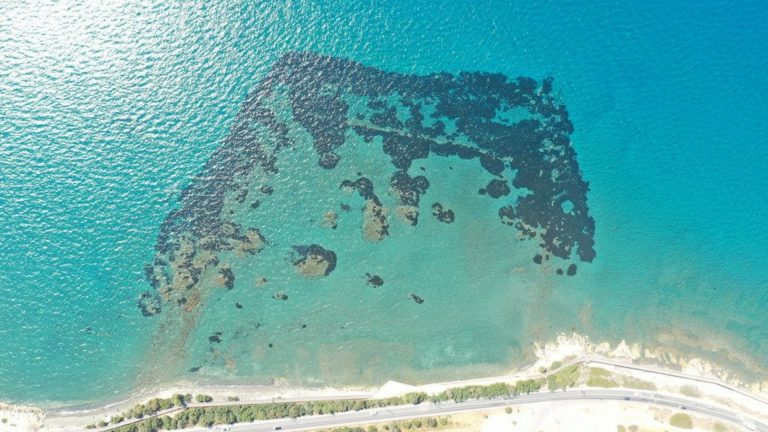
One of the eastern Mediterranean’s best preserved ancient harbours is now available to see as Cyprus has opened its first underwater archeological park, giving visitors the opportunity to look at history right below their feet.
The now submerged harbour was constructed between 311 and 312 BC, while Cyprus was the focus of conflict between the two successors of Alexander the Great, and lies off the ancient city-kingdom of Amathus.
The city was probably constructed as a naval base because of its narrow entrance, though experts have said that the possibility of its use for commercial purposes cannot be dismissed.
Over the centuries, and due to natural water levels rising, the old city has developed into a natural reef where an ecosystem exists and marine life thrives.
For the first time, Cyprus has opened up this part of history through the creation of an underwater archaeological park.
— Yiannis Karousos (@yianniskarousos) July 9, 2022
Minister for Transport, Yiannis Karousos said that the opening of this park was an amazing opportunity for the public to see ancient history and to see the marine environment.
“The surviving architectural remains and the special biodiversity of the marine area makes for a unique place to visit,” Karousos said.
“Where the public have the opportunity to join the ancient history and get acquainted with the amazing marine environment.”
This special project was carried out within the framework of the European Cross-Border Cooperation (CBC) program in conjunction with the Andikat project.
The Andikat project oversees diving routes in marine protected areas of the eastern Mediterranean Sea and the development of diving tourism in the region.
“Too many,” Giota Hrissis says with a laugh when I ask her how many students she has privately tutored in the Greek language over the years.
“Over 200 students at least.”
Among the list are people as wide-ranging as Australia’s Ambassador to Greece, Arthur Spyrou, and even the Vice President of the Hellenic Club of Sydney, Bill Kritharas.
In a touching move, Mr Kritharas, along with other past students, Tina Koutsogiannis and Betty Ivanoff, decided to register Giota’s name on the National Monument to Migration at the Australian National Maritime Museum.
Now, as I sit down with Giota and hear her incredible migration story and her defiance of old-school Greek expectations, I can see exactly why her past students decided to register her on the Monument.
‘He wanted girls to be educated’:
Born in 1939 in the village of Kalavryta in southern Greece, Giota was the eldest daughter of ten children. She says her parents paid a lot of attention to her education.
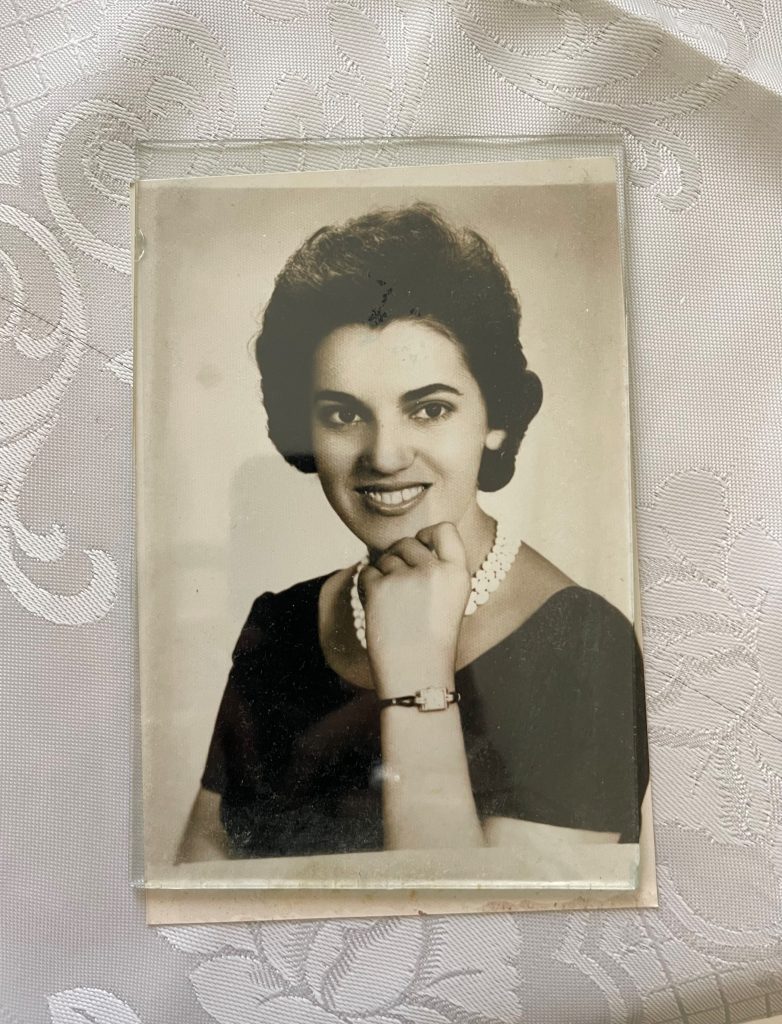
Giota as a young woman.
“My mother and my father, they never separated the boys and girls,” Giota explains.
“My father especially, he wanted girls to be educated because he thought boys can go to the forest and cut wood but with women, you didn’t know the future. You didn’t know if they would get married and to who. They would have to make their own living.”
In Giota’s case, she began to secretly communicate via letter with Stelios Hrissis – a Greek migrant in Australia who she became interested in after he sent her a photo of himself.
Eventually, she decided to leave her family behind and joined Stelios in Australia. They married in 1961.
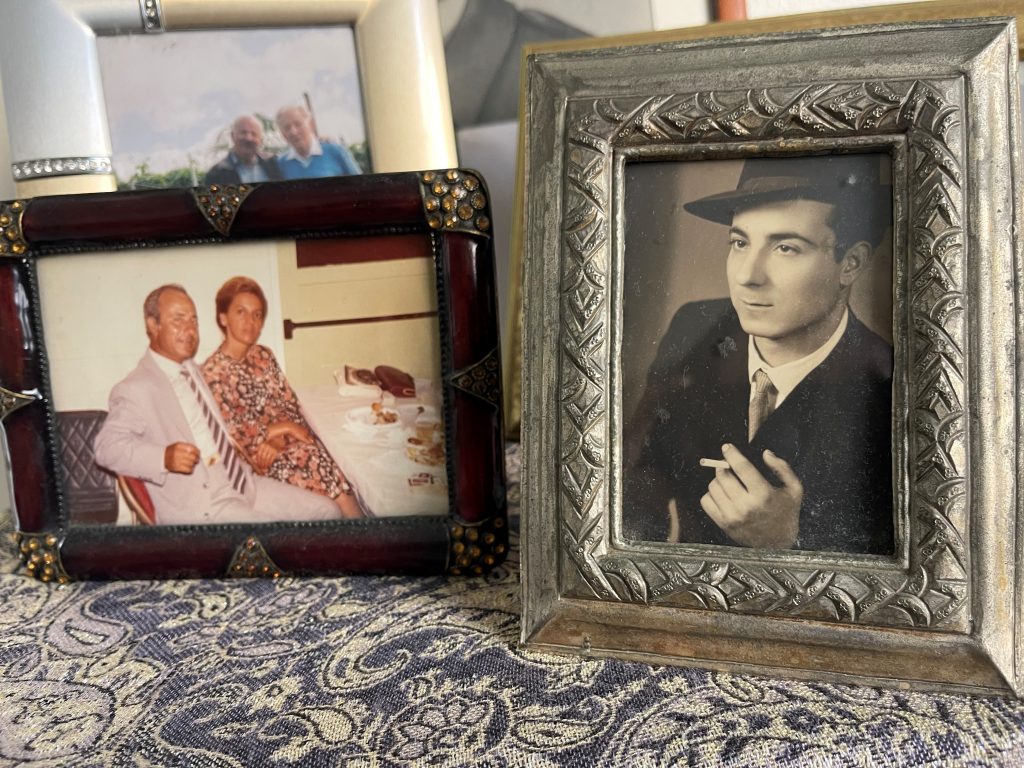
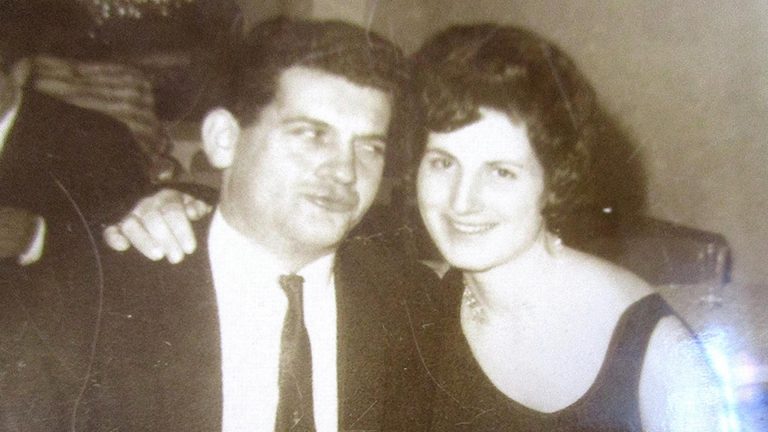
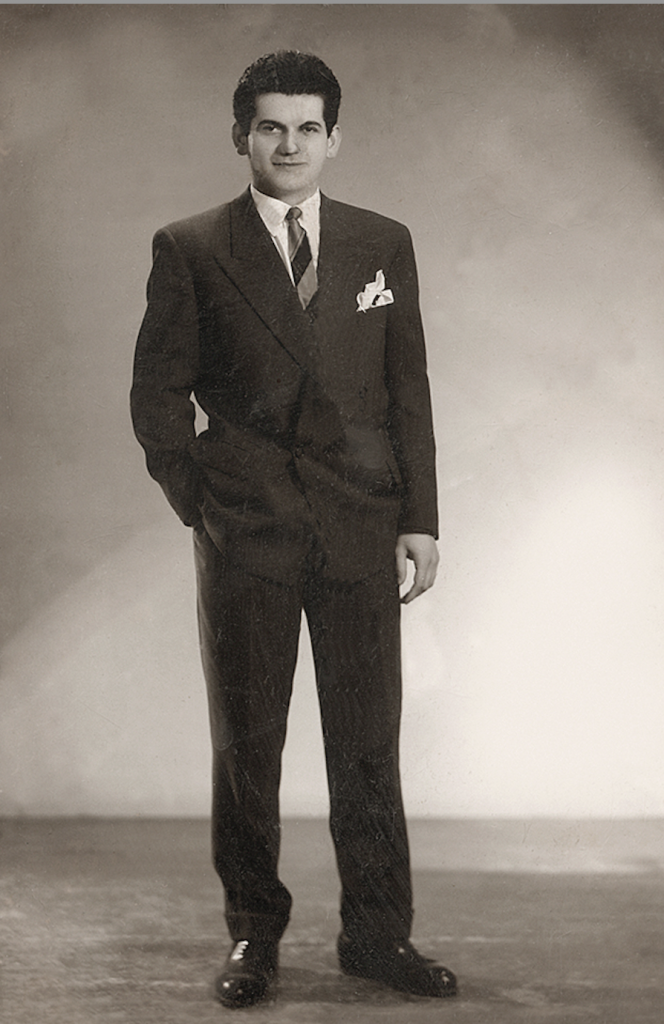
(Left) Giota and Stelios. (Right) The photo Stelios sent Giota when they were courting.
Stelios worked as a painter whilst Giota was a dressmaker at Nobel Fashion on Oxford Street in Sydney. In the afternoons, she helped teach Greek to children at the local Greek Community Schools.
Her social and work life were thriving, but Giota says married life wasn’t always as idyllic.
“When I first arrived in Australia, I loved it. Stelios was a quiet and good man, but the truth is we had a lot of problems,” Giota says solemnly.
A warrior for education:
Like many Greek men at the time, Stelios told Giota she wasn’t allowed to drive. She defied him and learnt to drive in secret.
Later, at the age of 42 and when their only daughter Marcia was 20, Giota defied her husband a second time and decided to get a degree in teaching from the University of New England.
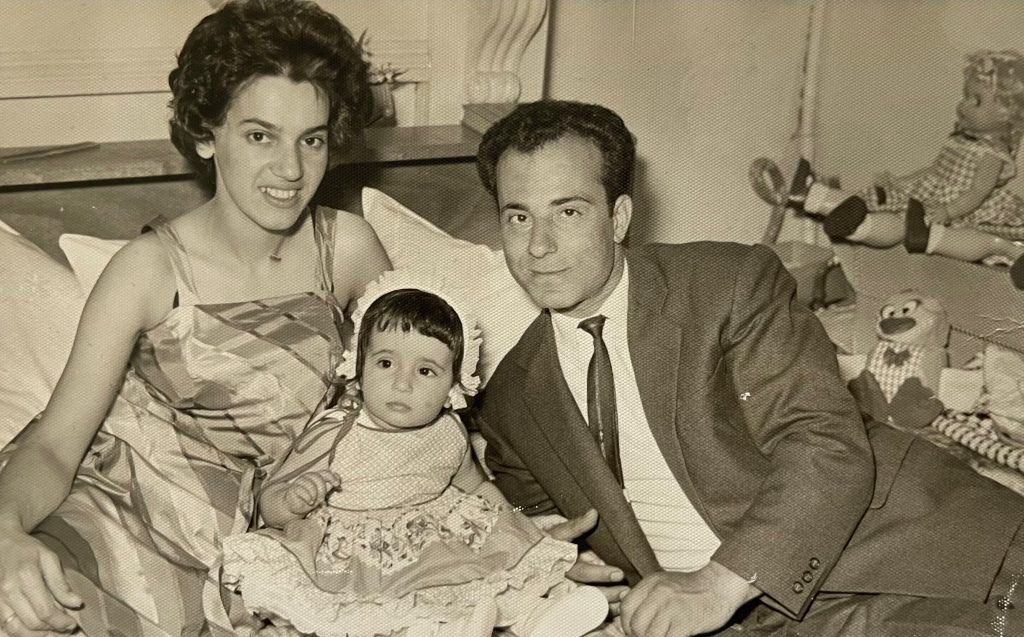
Giota and Stelios with their only daughter, Marcia.
“Stelios said, ‘if you go to university, we will separate.’ My daughter told me to go but he moved into another house,” Giota explains.
“I asked him to come back but he said, ‘if you don’t burn your books, I’m not coming back’ and I said to him, ‘only Hitler burns books’.”
The couple ended up living in separate houses for over 20 years, but this didn’t stop Giota from achieving her dream. She went on to complete her degree and become a private tutor to help children keep the Greek language alive.
Giota with her university degree.
“Learning a second language, doesn’t matter what, is like exercising the brain. You broaden your knowledge and conceptions. It’s very, very important,” Giota says.
“I try to inspire the kids to pay attention to education because to me, education is freedom.”
‘If you save one child, you save many’:
Education is so important to Giota that even now, at 84 years of age, she continues to privately tutor Greek even if it’s only for a handful of students.
“People who I used to tutor… I’m teaching their children now as well. I used to get them in trouble all the time and now I’m teaching Greek to their children. It’s really amazing,” she says with pride in her voice.
When I ask Giota why she keeps doing it, her answer is simple.
“If I stop, I consider myself dead,” she says.
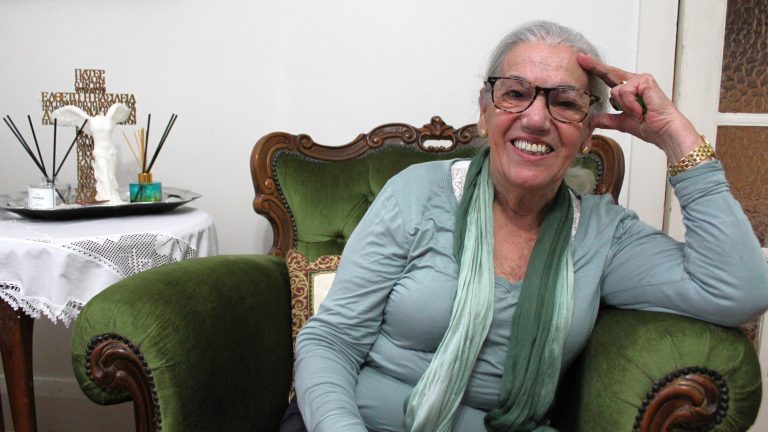
Giota today at her home filled with books. Photo: The Greek Herald / Andriana Simos.
“I mean I have very few people to communicate with beyond ‘what I’m going to cook’ or ‘how to make moussaka.’ I want to talk with people philosophically.
“I still have a few things to sort out and I don’t want to reach a stage in my life where I wonder ‘what have I done with my life?’
“For now, I focus on knowing that if I can save one child, I save many.”
Wise words from a Greek migrant who clearly continues to fight for education, for equality and for fairness in Australian society.
Honour our Greek immigrants on Australia’s National Monument to Migration at the Australian National Maritime Museum. Register by 29 July 2022 (date extended by popular demand) to be part of the next ceremony in October. To register please visit https://bit.ly/3Pwax38 or call 02 9298 3777.
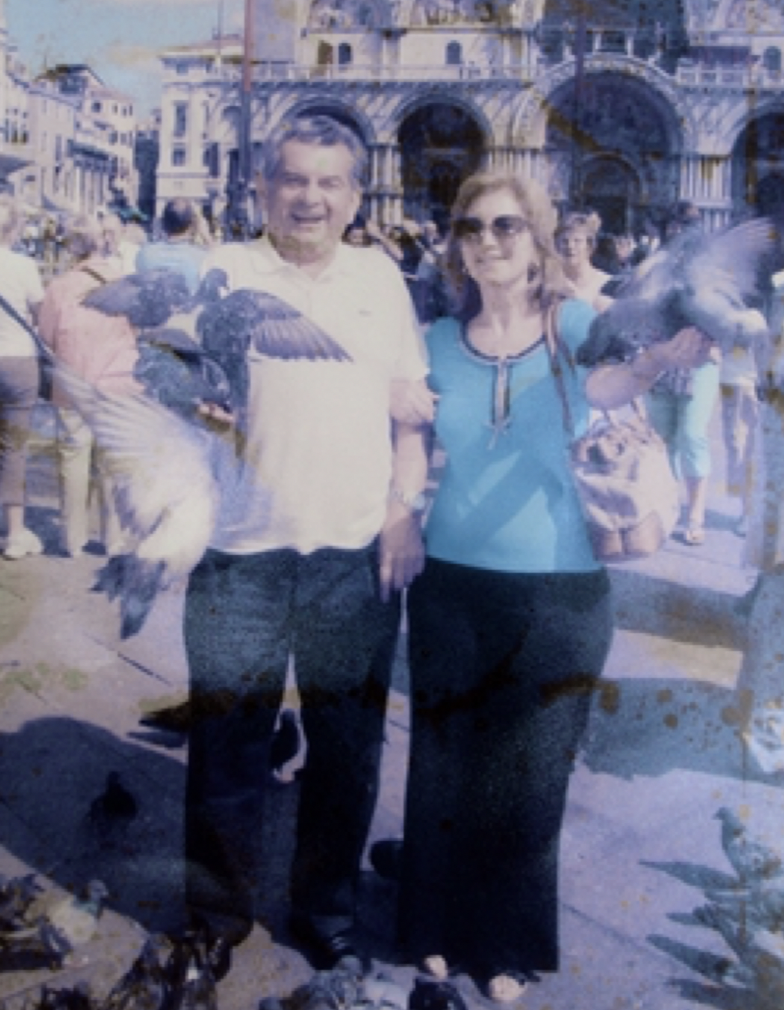
I couldn’t resist but to write about my father. I couldn’t resist back then on his birthday, as the above poem shows, and I can’t suppress the urge now – even though it’s not his birthday.
Perhaps I just miss my Dad, as I live faraway in Greece, and saw him last time, in 2018 for four weeks when I was visiting Australia. Though, I think there’s more to it than that. Perhaps I’m biased, but even if he wasn’t my father, I’d want to write about this man who I consider to be a great man; a role model; a hero.
I always sensed that Dad was somewhat different to most Greeks of his generation in Australia. He didn’t care much for money and material things. He was, and still is, into learning, singing, conversing, life! He was born in 1933 in Patras, Greece and came to Australia in the 1960s to escort his 6 year old nephew to the latter’s parents who had been working in Australia.
My Dad had no intention of staying in Australia, as he had a job back in Greece that he enjoyed, waiting for him. Alas, he met my mother and stayed on in Australia, had a family (me and brother) and worked hard – night shift, to pay off a house and provide for his new family, but also feeling responsible for his unmarried sister back in Greece and hence sending her money.
What is more, he refusing to let my mother work as he wanted her to have a stress free life. Dad is still in Australia, apart from a few trips to Greece. I moved to Greece in 2000 with my husband and then 2 young sons hoping Dad and mum would move here soon after…
In Australia, my Dad worked as a baker at large industrial type bakeries. and we’re not talking hot bread shops. We’re talking big factories producing tons of bread where the noise was deafening – hence my father’s hearing problems now. But Dad abhorred being part of a subculture of worker’s compensation claims and so worked on until the age of 75.
As a child, I’d visit Dad at work sometimes. I remember him with his loose white work pants on and bare chest lifting long, wooden paddles into huge ovens and almost simultaneously manually adjusting the large, circular dough mixing machines.
He’d be singing, and sweating, and as cheesy as it may sound … be further imprinting his heroic status in my mind. Not to mention at home, with images of him, back turned while he was shaving in his white singlet. I was fascinated, and if he’d catch me staring at him, he’d turn smiling with shaving foam still on his face, and lift me in his arms and spin me around. I know it sounds cliché, but I swear it’s true!
Back to his much consuming work though, whereby my Dad in fact began learning the bakery business at the age of 8, in Patras. Yes, that’s right, he went out to work, to provide for his mum and sisters at that tender age because his father died.
This was during WW11 when both the Germans and Italians bombed Patras, and my dad recalls seeing people hung in the Psila Alonia Square close to his house, not to mention seeing dead people on the way to school and work in Trion Navarhon Street, now a trendy paved walkway with cafes and restaurants.
My Dad’s sisters would tell me how they came to despise the “horiates”, the villagers because they felt that they took advantage of the city people, including Patras (Greece’s 3 rd largest city incidentally).
They related to me that they would sell ornate, wooden furniture from generations back to them, “for a handful of sultanas”. My father did not mention a word about this. As was his way, he just gave a good natured, half laugh, indicating with a hand gesture “that’s all passed”.
His sisters also told me that he would have to go down to the local cemetery and pick weeds amongst the graves. These weeds would be boiled, constituting many meals for the family, as starvation was rife back then due to war.
My aunts would also relate how they shudder to this day when they hear our Greek Easter fireworks, as it reminds them of the bomber planes that used to fly down low and bomb their nearby (again, Trion Navarhon) street. They would often spend days and nights in the bomb shelters close to their house too, which can still be seen today, under the stairs of Psila Alonia.
And yet, with all these early childhood hardships and traumas – I have never heard my Dad complain.
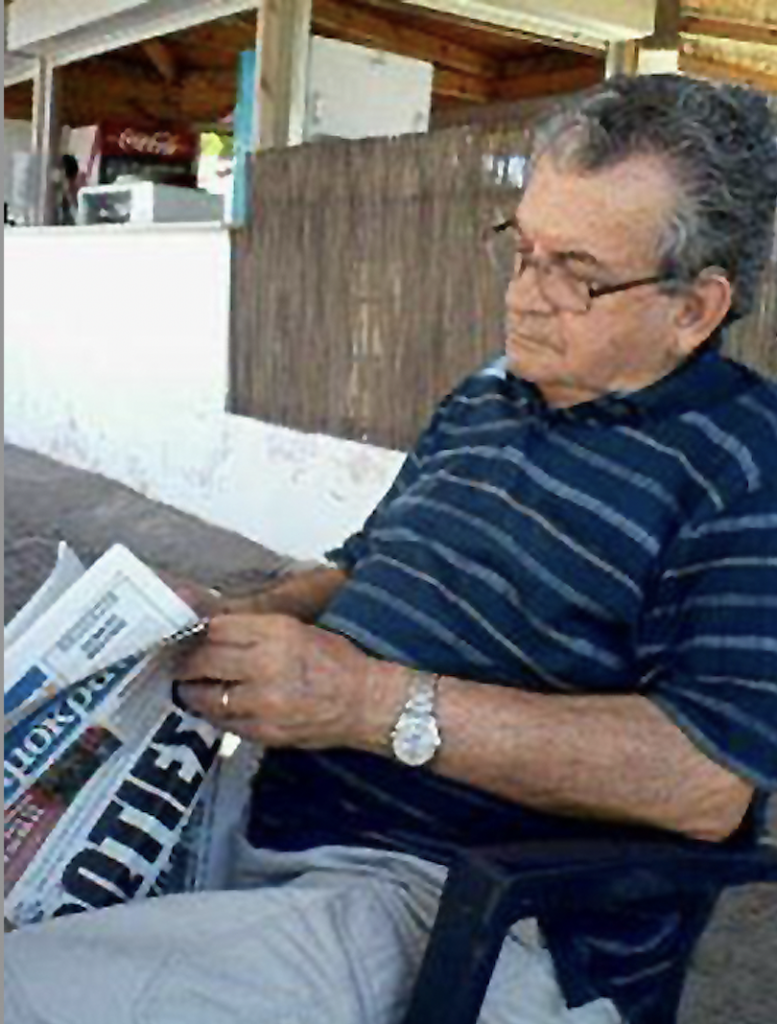
He is always positive, with a great sense of humour – an intellect that betrays his leaving school early due to war invoked poverty back then. He has read and re-read and I’m sure memorised the World Book Encyclopedias, apart from reading both English and Greek newspapers every day, and borrowing to this day, many books from the local Northcote library.
His mind is still curious, and he is and has been my true teacher. He has brought me up, gently and humbly, stressing to me the love there was amongst his mother and sisters and himself in their poverty stricken house, and that where there’s love even a shack is paradise, thus not to care much for material things.
He’d also discuss history with me, and tell me adventure stories when I was a young child. Due to his night shift work I’d lie beside him to spend some time together, and even in his tiredness, he would always take me in his arms and tell me how much he loved me and succumb to my demands for “the stories about the wolves, baba”. Even though I knew they were perhaps imaginary, I not only loved hearing his voice, but also his mind.
Every Sunday, on his day off, he would take me, sometimes accompanied by my god brother and two god sisters of my age, to the port at Port Melbourne.
We would look at the ships, and sometimes board them (this was in the 1970’s) and I even once boarded a submarine with him. And we’d buy hot, crinkle cut chips in a cup, from a food van there and feed the seagulls. As a return treat, I took my now elderly Dad to see the Averof ship moored at Paleo Faliro in Athens, on his last visit to Greece with my mum in 2010.
So much more to say about my dad, so little word space, so much life, so much feeling, so not knowing where to start and end.
My Dad’s final wish is to come back to Greece, but alas my mother doesn’t want to, and being a good family man who loves her dearly, will have to wait – for her to perhaps change her mind.
I hope he makes it here. Regardless, he lives with me forever.
Now, in some exciting news, Maneas is back with a fifth series of My Greek Odyssey and this time he’s taking viewers on a journey through the southern and central Cycladic.
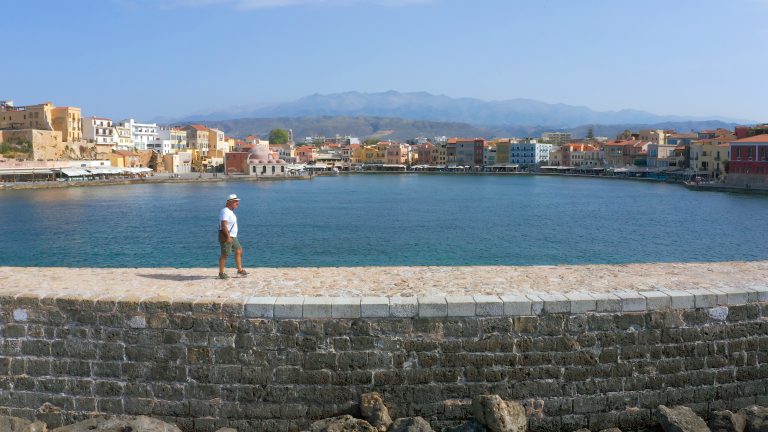
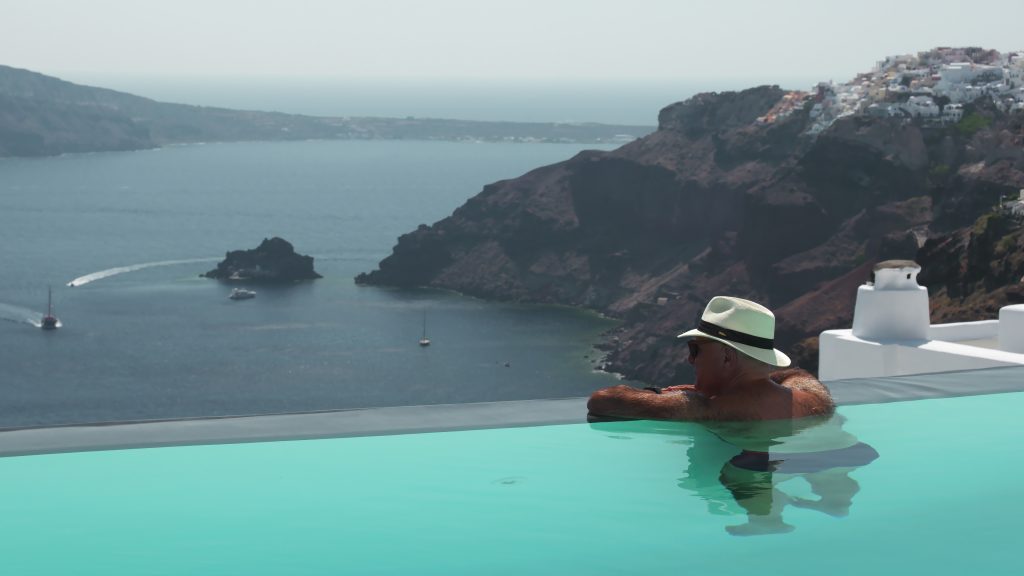
In an interview with The Greek Herald, Maneas describes how he can’t wait for viewers to see the series as he travels to little-known islands such as Anafi, Donousa and Folegandros, as well as popular islands such as Santorini and Crete.
“This series for me was a very special experience because it’s the first time we’ve done multiple episodes on one island and that island is Crete,” the TV host says.
“There’s just so much to see and do. We met best-selling author, Victoria Hislop, and she took us through Spinalonga and the old leper colony there. We also saw a lot of the beaches and we did a lot of stuff on Crete that you don’t normally see – like visiting a number of the smaller islands nearby.”
In a happy turn of events, Captain Yianni and Chef Kyriako are also back and make sure Maneas doesn’t miss any of the regional highlights and local delicacies.
“Something that was out of the mix across the water from Santorini was an island of Thirasia and it is probably the exact diametric opposite of Santorini,” Maneas explains.
“Thirasia is a small island, very few people go to it and it’s almost untouched. So that was very, very special and we met so many special people.”
When I ask why Maneas chose to showcase these little-known islands in the TV series, he says it’s all about getting ‘behind the canvas’ of the Cyclades.
“The history of some of these islands goes back to the Minoan times…” the Kytherian Australian stresses.
“So we put this volume of information that we gather together to bring to the surface things that will interest people and things that will raise people’s awareness to parts of Greece that they never knew about.”
With such an important job to do, does this mean Maneas plans on releasing a sixth series sometime soon as well?
“Be ready for series six and seven because when they come up, they’re very, very special islands. We’re working on the post production at the moment and we’ll get them out as soon as we can,” he concludes.
Details:
The new series of My Greek Odyssey will launch at 7am Sydney time via Vimeo On Demand here.
For Australian viewers who are happy to wait for a free-to-air broadcast, the series will start airing on Sunday and Wednesday afternoons on 7TWO in early September.
For American viewers, the first four series are available via Curiosity Stream.
For Greek viewers, the series is currently airing on Cosmote and ERT will soon be showing series 1 to 4.
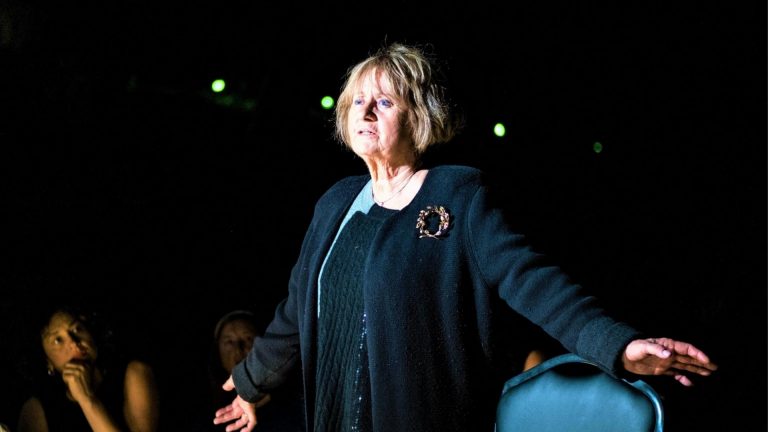
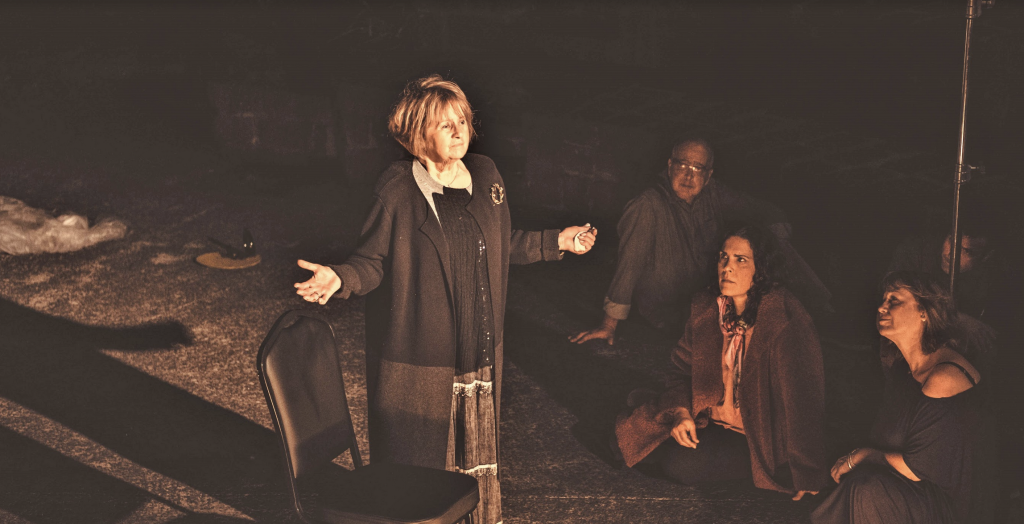
“My role is a small part of ‘The Moonlight Sonata’ by my beloved poet and writer Yannis Ritsos,” says Lemonia Shoina about her participation in the third instalment of Greek Community of Melbourne’s Creative Drama and Arts Theatre performance, titled ‘MόNοι’ (Alone).
Based on a compilation of monologues and poems from Greek and global authors, “MόNοι” is adapted for the stage by Australian born director of Greek background Jeremy Artis and is centered around the idea of belonging.
“When I initially performed in February, I enjoyed every moment of it. It was like coming out of the chaos that COVID-19 created. It really felt good,” says Shoina, a non-professional actress and only first generation Greek Australian participating in the play.
Lemonia Shoina. Photo: Stav Lampropoulos
The pre presentation of the creative drama, held in February, was the first event that took place at the Fairfield Amphitheatresince it was granted Heritage Protection status and the community response was overwhelming.
But this was only a reflection of the good atmosphere backstage, between the tight-knit cast of 10 and GCM’s coordinator Katerina Poutachidou – all braving the challenges brought-on by the pandemic in order to make art.
“All theatre stage productions by Creative Drama & Arts (GCM) are deed and meaningful and they have opened new horizons in my life. Now, I observe simple things and situations in my daily routine, from a different, critical, clearer view and perspective,” says Shoina.
“I am a very optimistic person. If there is a wall painted black, and there is a small white dot, I will follow that white dot, unconditionally and unreservedly.”
Asked to share a message with the audience Shoina says that although the arts should be an important part of the Australian lifestyle “festivals and theatre plays are great, but they are not always of good quality”.
“This play is like discovering a new meaning in life,” she says.
One more question comes to mind before we wrap up;
-I know you spend time every year in Greece. Do you feel like you belong in Greece or in Australia?
“I love both countries. The old one and the new one. They both have treated me well,” Shoina replies.
*Don’t miss the performance ‘ΜόNοι’ on Sunday, 24 July, on the mezzanine floor of the Greek Centre. Click here for more information and tickets.
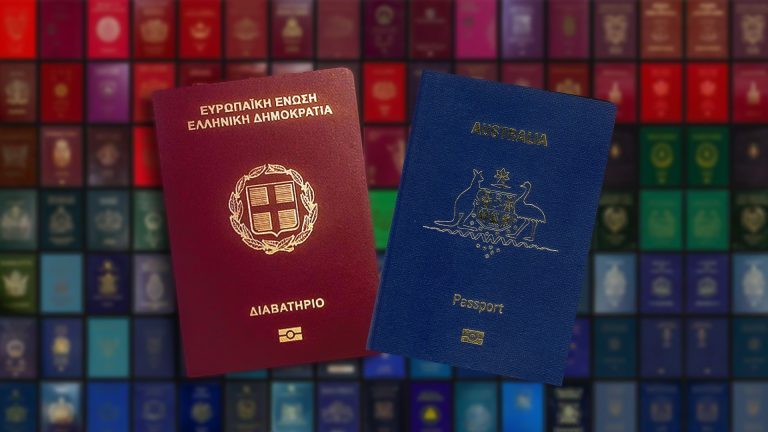
Greece and Australia have been ranked equally in eighth place as the best passports to hold in July 2022 according to a new quarterly report released by London-based global citizenship and residence advisory firm Henley & Partners.
Henley & Partner’s list is one of several indexes created by financial firms to rank global passports according to the access they provide to their citizens.
Greece and Australia both provide access to 185 destinations, tying with Canada, Czech Republic and Malta.
The eighth-ranking nations have outperformed Hungary (186 destinations) as well as Lithuania, Poland and Slovakia (182 destinations).
In first place is Japan who offers its citizens visa-free or visa-on-demand access to a record 193 destinations around the world, followed by Singapore and South Korea who offer 192.
Afghanistan remains at the bottom of the list, ranking in 112th place with access only to 27 destinations.
The quarterly report just as the Minister of Citizen Protection, Takis Theodorikakos, announced on Thursday that the validity of Greek passports will double to ten years.
According to the minister, Greece was one of a handful of countries in the EU and the world whose passports were valid for just five years.
Increasing their validity to ten years will result in substantial financial and administrative savings, he said.
“It will mean less bureaucracy for Greek citizens, especially Greeks abroad. It will free up police time. Both the state and citizens will benefit,” he added.
The 10-year validity will apply to all new passports issued to people aged 14 and above.
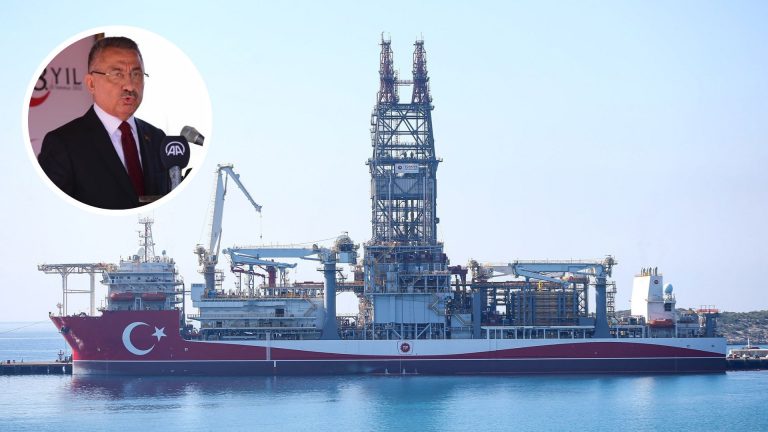
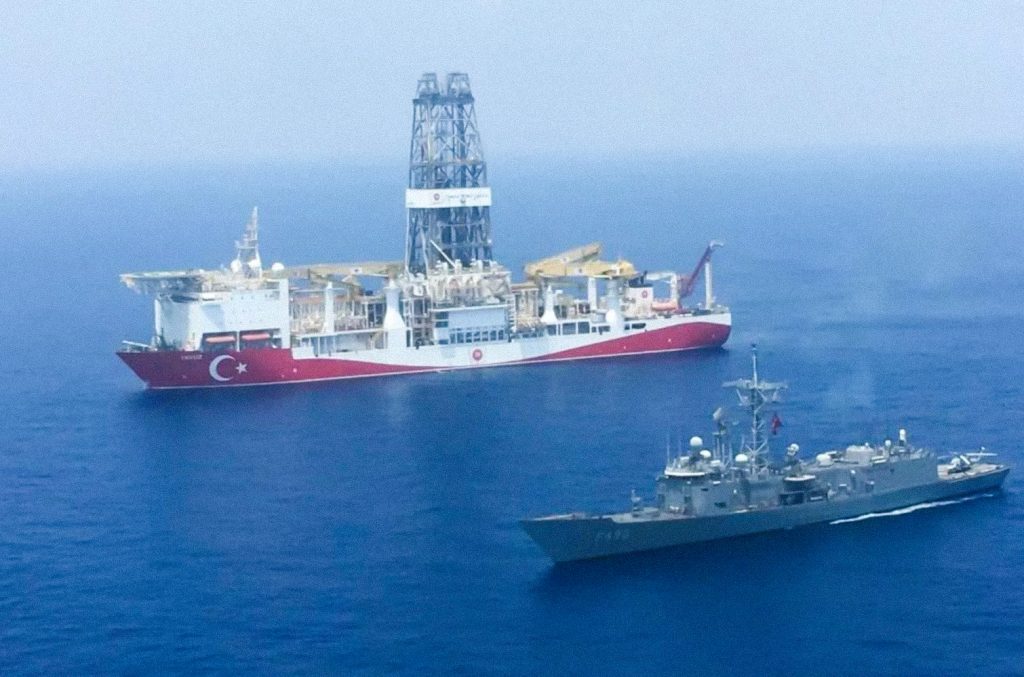
Political and military tensions with Greece and Cyprus over exploration rights are set to be inflamed with Turkish Vice President, Fuat Oktay announcing that Turkey is planning to drill for natural gas in the Eastern Mediterranean next month.
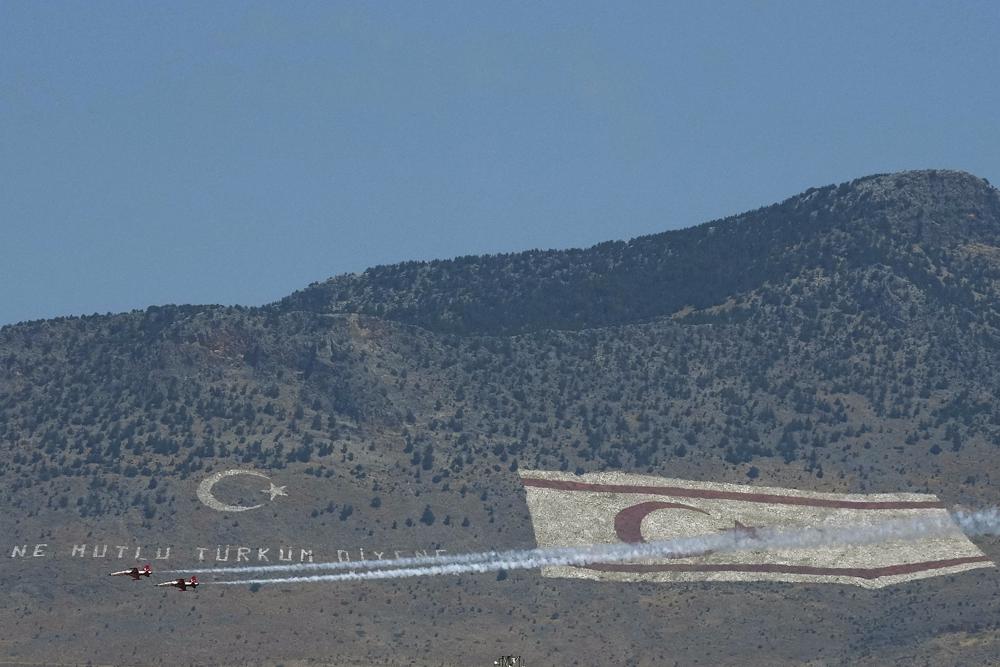
During his speech at a military parade marking the anniversary of the 1974 Turkish invasion of Cyprus in Nicosia, Oktay said that the nation’s newly purchased and fourth drilling ship, Abdülhamid Han, will start operations, saying this is well within Ankara’s rights.
Turkey’s acrobatic aircrafts fly in front of the giant Turkish flag reading in Turkish “How Happy is the one who says I am Turk” during the military parade in the Turkish-occupied area of the divided capital Nicosia, Cyprus on Wednesday. Photo: AP / Petros Karadjias.
“We are resolutely defending our rights, as well as the rights and interests of our Turkish Cypriot brothers and sisters in the Eastern Mediterranean against any provocation and illegal actions,” he said.
“Hydrocarbon resources in the Mediterranean are not the toys of Greek Cypriots.”
Ankara maintains that the area is part of its continental shelf and the self-declared Turkish Republic of Northern Cyprus (TRNC) has a right to a share in the hydrocarbon reserves off Cyprus.
The Turkish Vice President said “international law is clear” and that any attempt to exclude Turkey and the TRNC in the eastern Mediterranean “has not and will not succeed.”
Turkish-flagged drill ship carrying on offshore drilling operations in Cyprus in the Mediterranean Sea on 11 July 2019. Photo: Turkish National Defence Ministry.
The Greek government has announced twelve relief measures for residents affected by the wildfires raging across the nation.
With 44 new fires breaking between Wednesday and Thursday, the Deputy Minister to the Prime Minister for State Aid and Natural Disaster Recovery, Christos Triantopoulos, announced the measures last night.
Affected residents will receive a six-month suspension of tax obligations, compensation for home damages, housing assistance, cash first aid for housing expenses, a three-year exemption from property tax and a six-month suspension of enforceable decisions concerning damaged property.
Subsidies are available to farmers, renters, and fire-damaged businesses and upon application to local authorities. Fire-stricken people in Attica hotels will also receive accommodation.
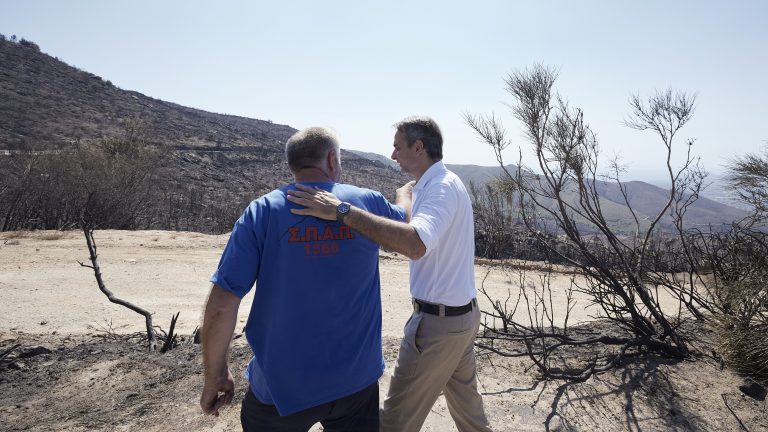
After visiting affected areas of Athousa, Drafi, Dioni, Pikermi and Penteli, Prime Minister Kyriakos Mitsotakis said: “I want to assure all our fellow citizens who have been affected, that the State is on your side.”
“The State machinery will move with great speed and efficiency to rehabilitate those who lost their homes or suffered damage.”
Θέλω να διαβεβαιώσω όλους τους συμπολίτες μας, οι οποίοι έχουν πληγεί, ότι η πολιτεία θα είναι στο πλευρό τους. Ο κρατικός μηχανισμός θα κινηθεί με μεγάλη ταχύτητα και αποτελεσματικότητα, για να αποκαταστήσει αυτούς οι οποίοι έχασαν τα σπίτια τους ή υπέστησαν ζημιές. pic.twitter.com/s1IRLdyba0
— Prime Minister GR (@PrimeministerGR) July 20, 2022
Currently, there are wildfires burning in the western Peloponnese region of Ilia in Agnata, Tragano and Varda.
According to the region’s Vice-Governor, Vassilis Giannopoulos, the fires in Agnata and Tragano are “becoming more manageable” whilst the Varda fire is “still full-fledged”, he told AMNA.
In Varda, 32 firefighters with 13 fire engines and 2 helicopters are battling the flames. Two firefighters sustained burn injuries in the field at Ilia on Thursday and have both been hospitalised.
At Agnanta, some 115 firefighters with 36 fire engines and 4 ground teams were assisted by 6 water-dowsing aircraft and 2 helicopters.
In northeastern Greece, 102 firefighters with 29 engines and 4 ground teams assisted by 6 water-bombing aircraft and 4 helicopters are battling a wildfire at the Lyra dam in Soufli.
Head of Soufli’s Forestry Department, Gianna Diagaki, told AMNA that the 2km fire front is moving southwardly, and it includes 4 large fire pockets set apart from one another by 500 metres.
The prosecutor will seek to establish whether specific criminal acts, such as arson, burning of forests and violation of environmental protection laws have been committed.
In other second qualifying round matches played on Wednesday, Ukraine’s Dynamo Kyiv were held goalless by Fenerbahce of Turkey; Dynamo Zagreb of Croatia was held 2-2 by Shkupi of North Macedonia and HJK of Finland lost to Plzen of Czech Republic 1-2.
The Greeks held the lead since the seventh minute after a shot by Tiquinho Soares hit the post, and Philip Zinckernagel easily turned the rebound into the opening goal.
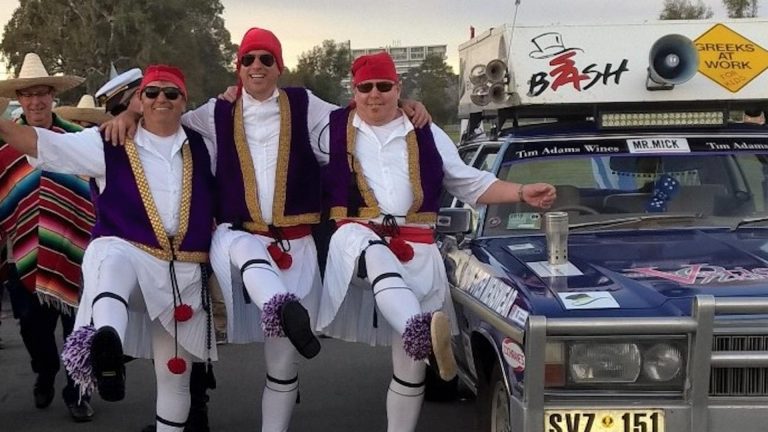
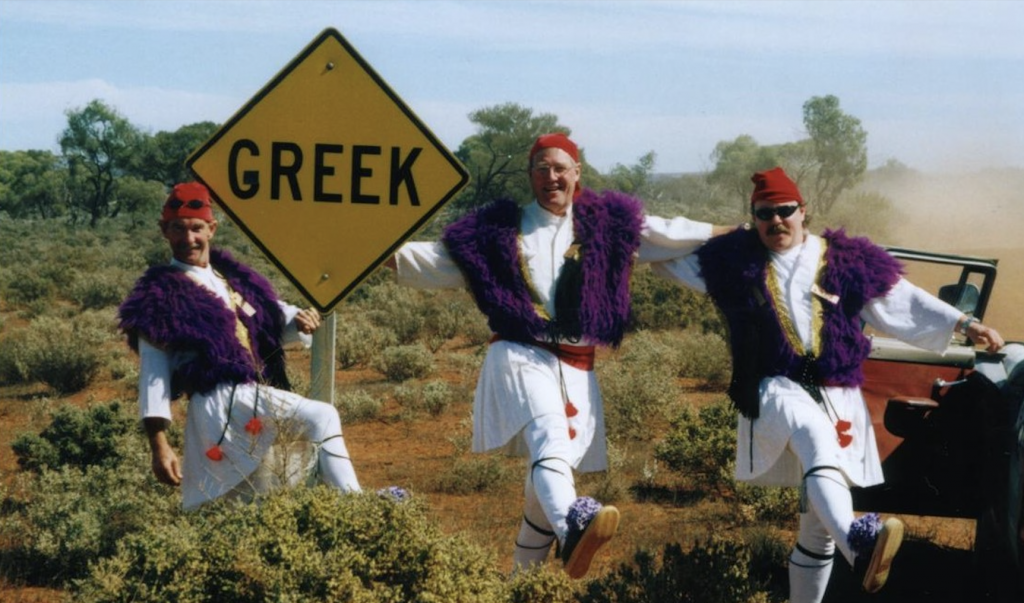
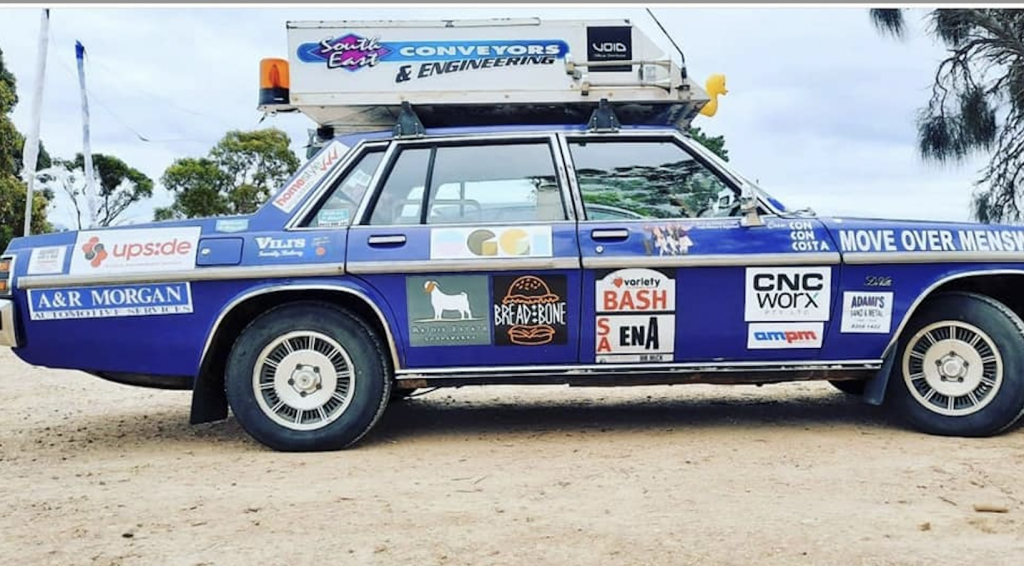
It’s another year, another SA Variety Bash for Craig Phillips, Chris Carypidis and Andrew Glastonbury who are set to hit the road from 13-20 August dressed as Evzones to raise funds for South Australian kids in need.
In its thirty-fourth year, the week-long event will see more than 250 crazily costumed entrants and 72 colourful vehicles travel through regional towns such as Roxby Downs, Glendambo, Ceduna, and Whyalla and ‘Team CAR ENA – The Greeks’ will be among them.
“My family was involved in The Spastic Centre (now SCOSA) going back to the early 1960s. I witnessed first-hand the struggles of children with special needs and the imbalance of resource and opportunity,” CAR ENA owner, Craig Phillips, tells The Greek Herald.
An ‘adopted Greek’ as he calls himself, due to his involvement with the Greek community and South Australia’s Evian Society where his wife is a President, Craig Phillips and his team have raised more than $500,000 for the charity in the last twenty years.
“I feel proud to be associated with a wonderful group of individuals who work to give children a better life. Egos are abandoned and we work as a team without regard for status or wealth. I have always felt welcomed and part of a great cause. It is truly humbling,”Phillips says.
With this year’s event, Variety SA is hoping to raise more than $1.5 million for kids in regional South Australia and ‘Team CAR ENA – The Greeks’ will make sure to once again attract crowds.
“Each team has its own theme as an identity with the mandate to entertain. Who could do it better than Greeks?” Phillips says.
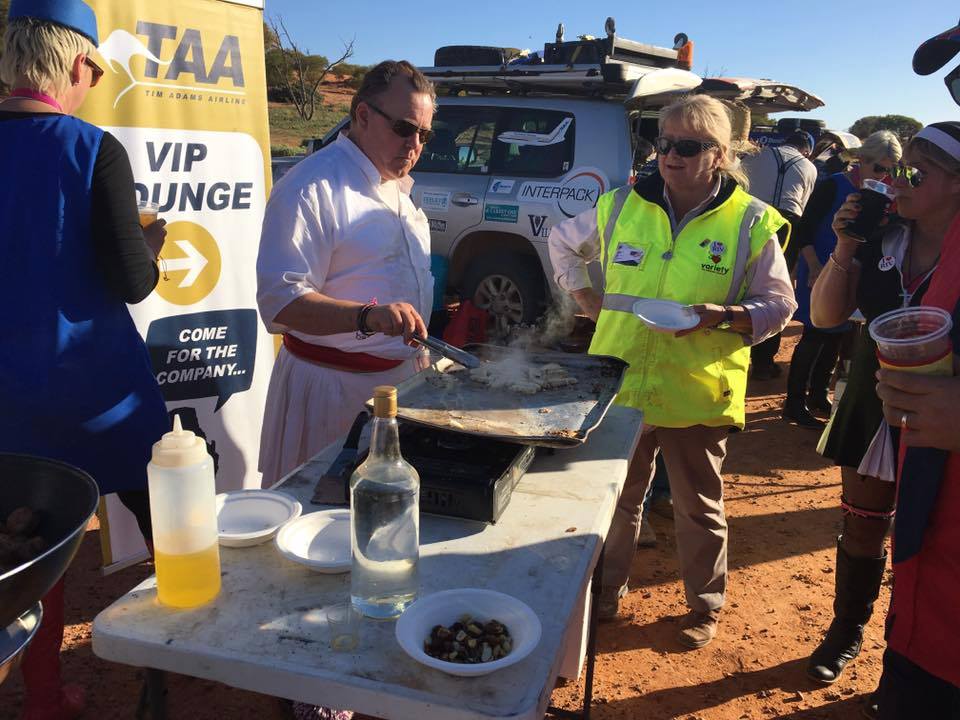
“Dressed as Evzones, well theatrical versions really, we serve olives, Haloumi, Calamari, dolmades and many more foods in very remote places. When the Greek car stops, so does everyone else.
“We rely heavily on our corporate sponsors who despite harsh economic times remember that kids are our future and generously donate.
“All of our expenses in building, maintaining and running our car as well as meals, accommodation and any other expenses are out of our own pocket. This means every dollar donated goes to the kids in need.”
Asked to share a funny story from his Bash adventures, Craig Phillips shares memories from a few years back when the team visited the town of Wudinna in central Eyre Peninsula.
“During a conversation with the publican and his staff, a voice spoke out and said she was looking forward to not being the only Greek in a remote town. In order to entertain the bashers and locals we decided to make the evening meal our Big Fat Greek Wedding!” he says.
“There is a team out of Port Lincoln who theme as the Runaway Brides so add them and a few Yiayias and Groomsmen and we had a wedding party. The entire town got behind making the wedding cakes and decorations. We brought in plates for breaking, sugared almonds and made name cards.
“The food was Greek style; tables were set in line with the Grecian key on the tablecloths. A night everyone remembered. Oopa!”
Over the past 33 years, the SA Bash has raised in excess of $47 million for South Australian children who are sick, disadvantaged or living with disability.
*You can follow ‘CAR ENA-The Greeks’ and their trip on Facebook