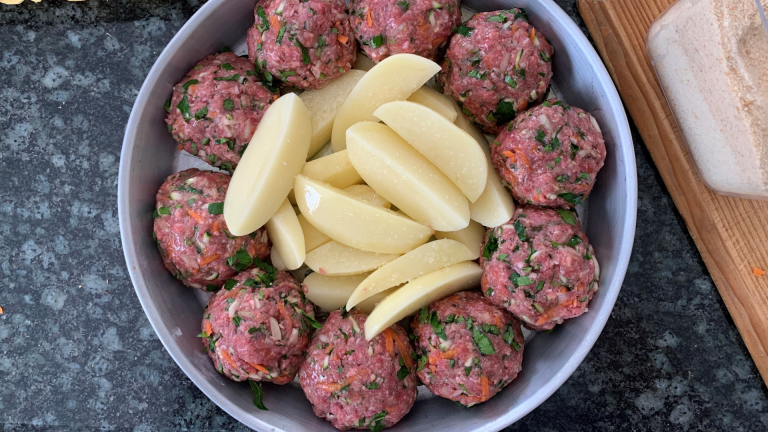
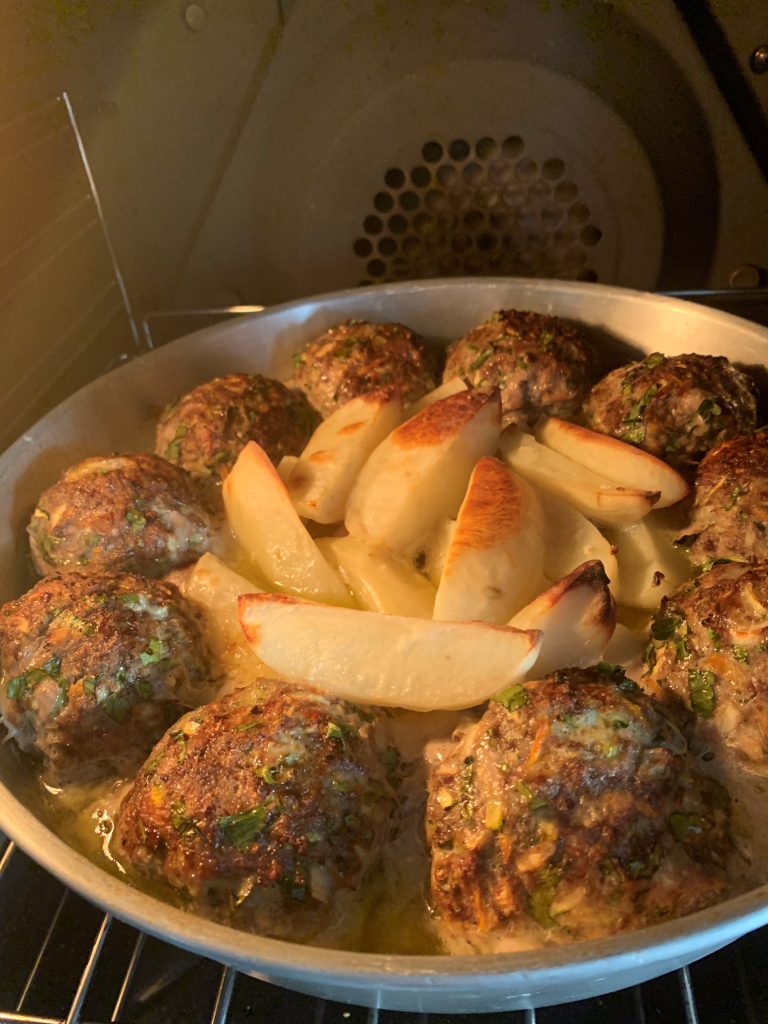
Who else is craving some meatballs with crispy, oven potatoes? Niki Louca from My Greek Kitchen shares her favourite recipe with The Greek Herald. You can follow her on Instagram @mygreekkitchen for more!
Ingredients:
1 kg beef mince (or half pork, half beef).
1 large onion finely diced.
1 large carrot grated.
1 cup finely diced cabbage.
1/2 bunch parsley finely chopped.
1 tbsp dried mint.
1 tbsp dried oregano.
Salt to taste.
½ tsp black pepper.
1/2 cup bread crumbs.
4 capfuls of whiskey or Scotch.
2 eggs.
½ cup olive oil.
Extra 1 cup olive oil.
Passata sauce – approx 1-2 cups.
6 large roasting potatoes
Meatballs with crispy oven potatoes.
Method:
Preheat your oven to 180C fan force. Grease a baking tray with half of the extra olive oil.
Combine all of the above ingredients except for the extra olive oil, Passata sauce and potatoes.
Mix the biftekia mixture well and form into 6-8 equal balls. Squash them slightly and put in the baking dish.
Peel your potatoes and cut them into quarters lengthwise. Place them in a bowl, add 1 tsp of salt and ½ cup of the extra olive oil. Toss them in the bowl till all potatoes are well coated with the salt and oil.
Arrange the biftekia around your baking dish and put the potatoes in the centre.
Add spoonfuls of the Passata sauce on top of each meat ball, covering it well.
Cook for approximately 35-40 mins till tops of meat balls and potatoes are browned. Turn them over and cook for a further 30 or so minutes till golden brown on the other side as well.
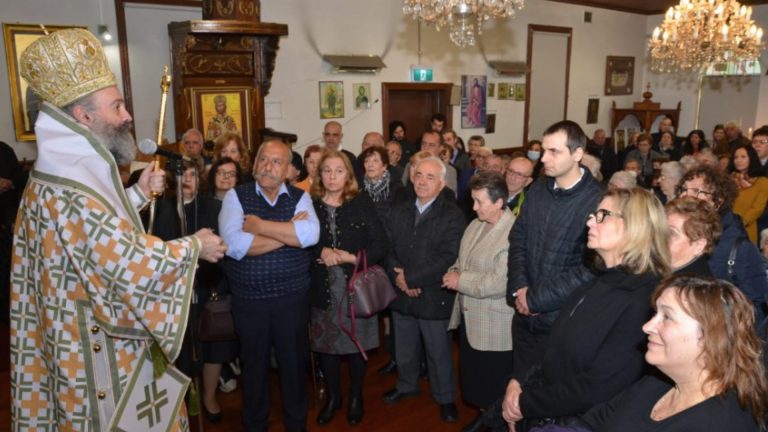
Archbishop Makarios of Australia visited the Church of the Dormition of Our Lady, on Saturday morning August 12 in the city of Bendigo, Victoria.
This was the first time an Archbishop of Australia visited the small historic Greek Orthodox church in Bendigo, a historical monument dedicated to the Dormition of the Virgin Mary.
For many decades, the church was a refuge of comfort and hope for Greek immigrants who were new to the city of Bendigo, many of which arrived from the island of Lemnos.
Each year during the Dormition of the Virgin Mary, the church welcomes pilgrims from around Australia.
This year, Archbishop Makarios visited to officiate at the Greek Orthodox Church of Bendigo, as the first Archbishop of Australia in history.
Archbishop Makarios said in his address the great honour it was for him to visit and officiate at the Church. In reflection of history, Archbishop Makarios commemorated the Greek community who settled in Bendigo, dating back to the late 19th century.
Archbishop Makarios expressed the importance of remembering those who laboured and struggled as migrants as they worked to make the city their new home.
“This is why I decided to come here today,” Archbishop Makarios said, “for all those who worked and toiled here, whom we do not wish to be forgotten to history.”
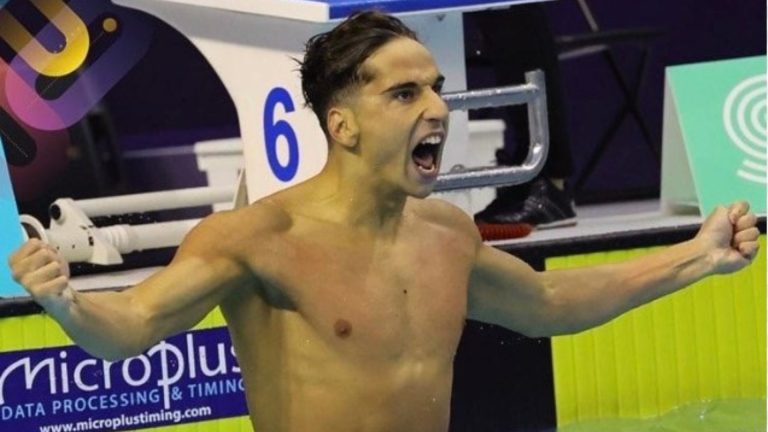
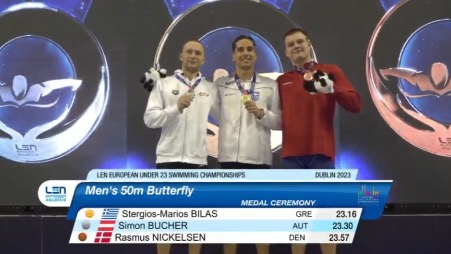
After Stergios-Marios Bilas’s gold medal win in the 50m freestyle, the Greek swimmer also took first place in the 50m butterfly with a new record, becoming one of the main protagonists of the event.
He also conquered this peak with the fantastic performance of 23.16 which is a new Pan-Hellenic record, breaking the record of Kristian Golomeev which was 23.19 in 2018 at the European championship.
“My only goal was the gold medal. I had a clear mind, I wanted to finish first and I succeeded. Now it’s time for a vacation” Bilas said.
Austrian swimmer Bucher with 23.30 and Danish swimmer Nikkelsen with 23.57 followed Greek champion who brought the third gold for Greece and the sixth overall medal in the event. Greece won six medals in the event, three gold, two bronze and one silver.
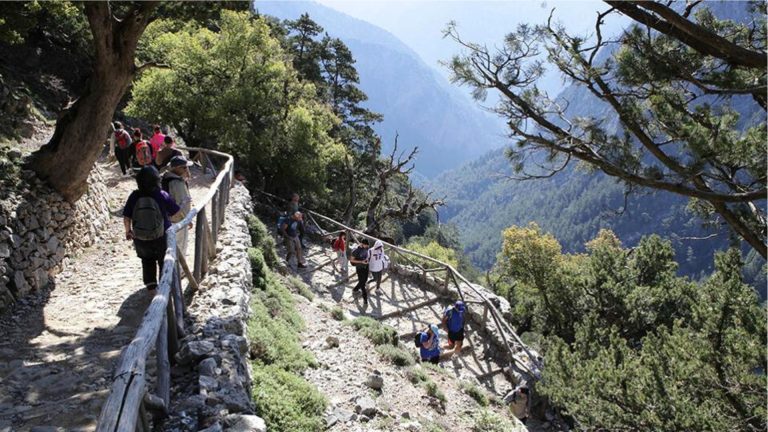
In response to an earthquake that triggered a hazardous rockslide, local officials on the Greek island of Crete have issued a temporary closure order for renowned mountain gorges frequented by hikers and tourists.
The rockslide caused significant harm to a Spanish tourist, prompting authorities to take action.
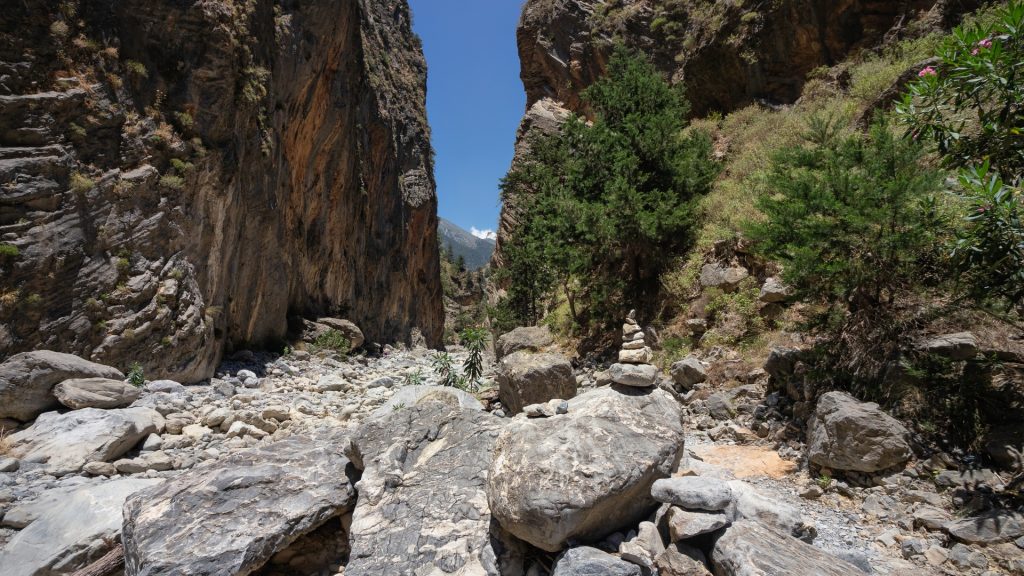
The decision to close the Samaria gorge, situated in the southwestern region of Crete, as well as several other gorges within the White Mountain range, was made on Monday, according to Ekathimerini.
This measure was taken following a magnitude 4.9 earthquake that jolted the area the day prior.
As a result of the tremor, over 600 individuals were evacuated from the 16-kilometer (10-mile) Samaria hiking trail on Sunday.
Samaria gorge, Crete.
A Spanish hiker, aged 45, sustained serious injuries and was airlifted to a state hospital in Chania, a port city. Medical professionals disclosed that the hiker’s right leg had to be amputated, and he remains in critical condition.
Authorities of the regional government, headquartered in Chania, are set to determine later on Monday whether the closure should be extended until Wednesday, which is a public holiday.
The Samaria Gorge, encompassing a part of a natural reserve, is accessible to tourists for a span of six months each year, starting from May, and is shut down during adverse weather conditions.
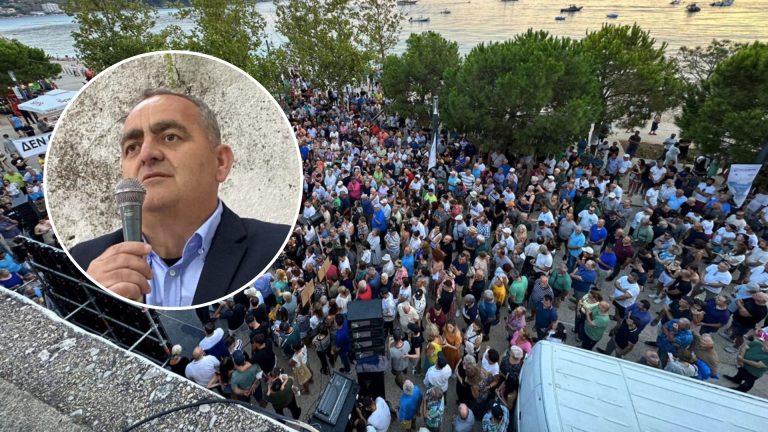
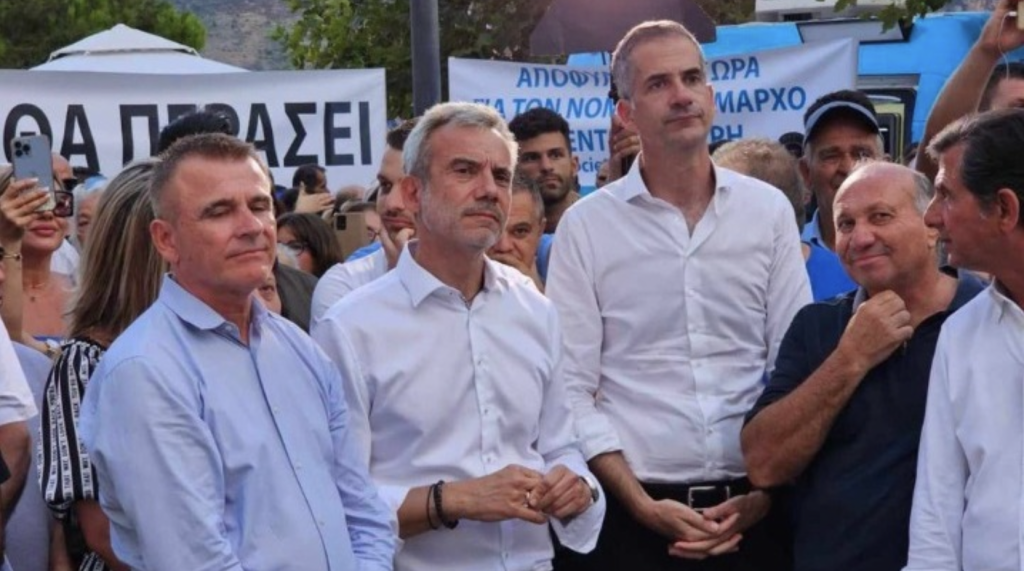
The ethnic Greek association Omonoia held a rally in Himare, a southern Albanian city with the aim of calling for the immediate release of Fredi Beleri, the elected mayor of the city, on Monday evening.
Beleri was apprehended on May 12 on allegations of voter bribery, a charge he vehemently denies. Despite this, he was democratically elected as the mayor of Himare on May 14.
Ethnic Greek, Mr Beleri, was elected mayor of Himare on May 14 after being jailed on May 12 on suspicion of buying votes, reported Ekathimerini.
According to Albanian electoral regulations, a mayor must take the oath of office within three months from the date of their election. In Beleri’s instance, the deadline was on August 14.
Despite his repeated appeals to the Tirana courts, they have consistently rejected his pleas. Greece has consistently voiced its protest against his prolonged incarceration.
Athens Mayor Bakoyannis in Himare for Beleri support rally. Photo: Athens News Agency.
The protest commenced at 6pm along Spilaion, a pedestrian street on Monday evening. The timing was selected as it coincides with the expiration of the deadline for Beleri’s swearing-in ceremony.
The organisers have a goal of galvanizing the international community into advocating for his liberation.
Kostas Bakoyannis, the Mayor of Athens, travelled to Himare to connect with members of the ethnic-Greek community and deliver a speech at the rally.
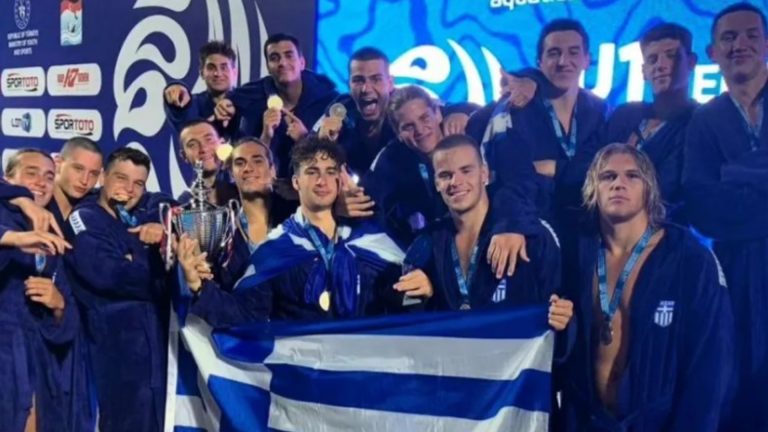
Greece have made water polo history and won their first ever gold medal at the European U17 Championships in Manisa.
The Greeks managed to beat Serbia, 9-8, to clinch their first ever title in this competition.
The first two quarters were crucial for the outcome of the final game. After Serbia scored the first goal of the final in the fourth minute of the game, the Greek team then hit three in a span of 88 seconds to take them to 3-1.
Greece maintained its lead despite the hard battle and reached halftime commanding 6-1.
Serbia came close to equalizing at the finish, but Greece held its victory by one goal.
Greece won the gold with six wins in as many matches and defeated Serbia twice in the tournament.
Two years ago, Greece finished 2nd at the U17 Europeans in Malta, after Serbia defeated them in the final.
On the night, the Director General of the Foundation, Nikolaos Papadakis, explained how “the process of awarding honours to leading Greeks of the diaspora who provide important services to the Foundation and also to the historical memory of Eleftherios Venizelos” began in 2004.
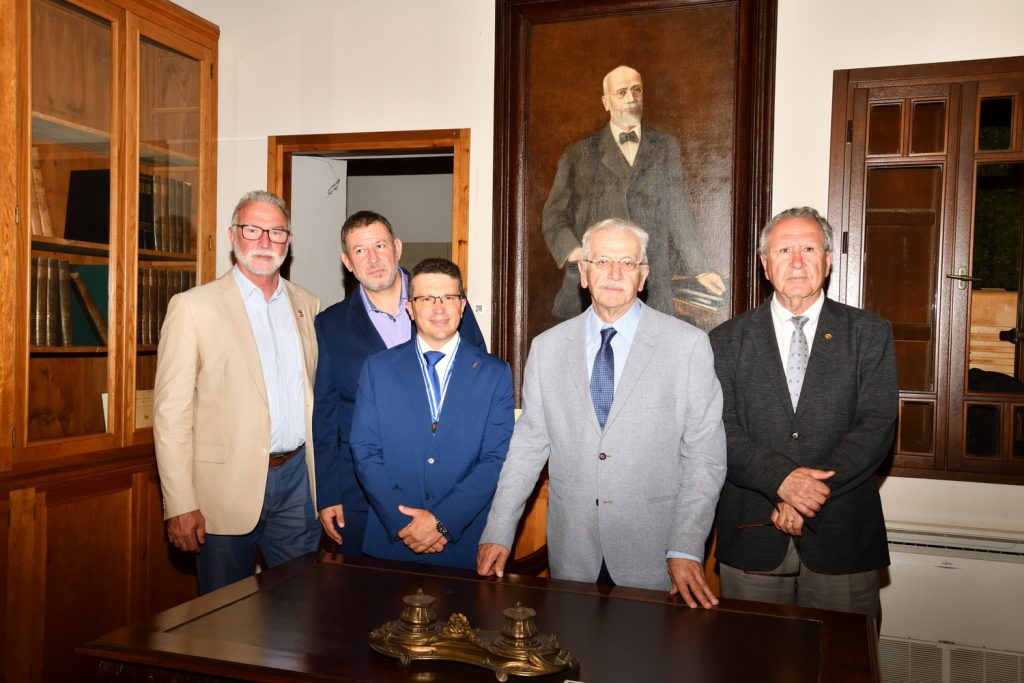
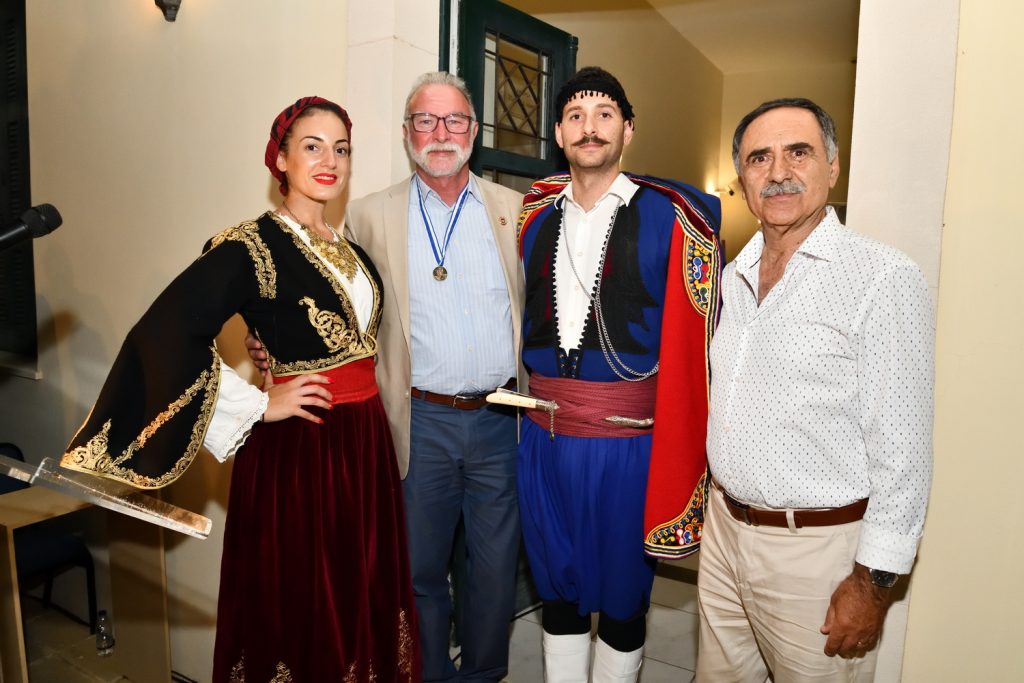
The awardees.
“Their work and contribution must be recognised and connects the Foundation with the Greek community, while the most important thing of all is that it highlights and brings back to the fore the great work of Eleftherios Venizelos in the international arena,” Mr Papadakis said.
Athens International Airport “Eleftherios Venizelos” was declared a Major Benefactor and Partner of the Foundation on the night. The distinction was received by the President of the Airport, Richards Lampiris, who pointed out that: “the cooperation with the ‘Eleftherios K. Venizelos’ Foundation has existed since the beginning of the airport and is of great value to us.”
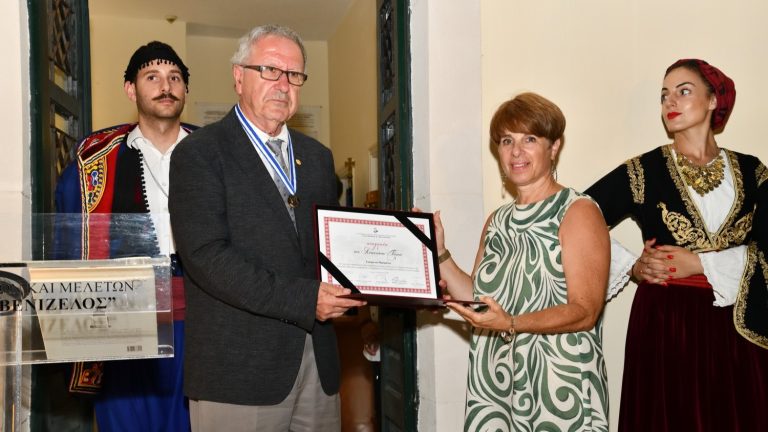
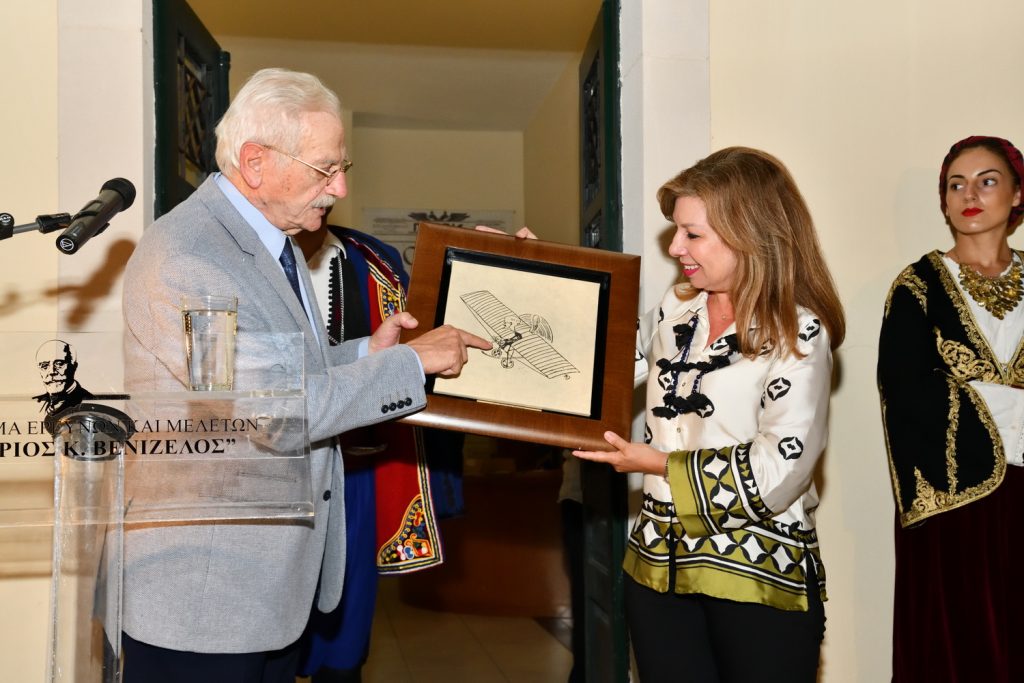
Awards were presented on the night.
Also recognised on the night was Nikolaos Kastrinakis, General Supervisor of the Pancretan Association of America (PAA); as well as former PAA President, James Boutzoukas.
In his speech, Mr Boutzoukas emphasised the shared responsibility of Pancretan Associations around the world and the ‘Eleftherios K. Venizelos’ Foundation to hand over Cretan culture and traditions to second, third and fourth generation expatriates.
Proud Cretan culture on display.
Professor Tamis, who is Director of the Australian Institute of Macedonian Studies (AIMS) and a member of the Board of Directors at the Australian branch of the Foundation, who also honoured on the night.
In his speech, Professor Tamis said: “For Greeks of the diaspora, Venizelos is a universal man, whose aim was not only to expand the borders of our country but above all to teach, to convey his vision of Greece and the Greeks.”
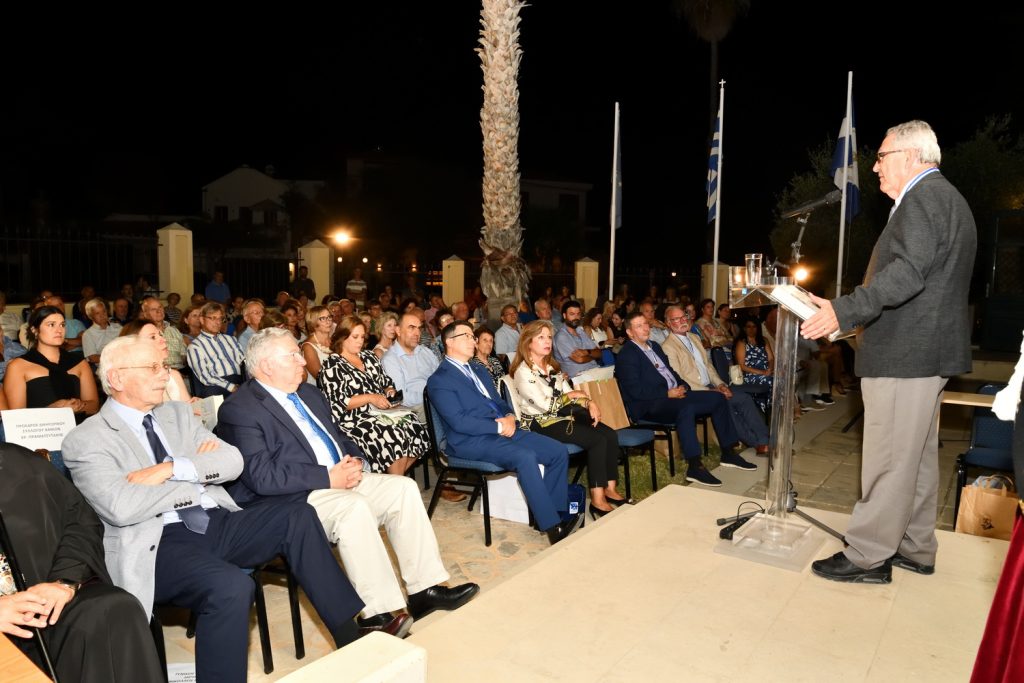
Professor Anastasios Tamis giving his speech after being honoured.
“The work carried out by the ‘Eleftherios K. Venizelos’ Foundation, Mr Papadakis and his colleagues is very important, because they were able to identify, evaluate, document and spread this vision of the memory of Eleftherios Venizelos not only in Greece but also to the diaspora.”
The government and Prime Minister of Greece was represented on the night by Greece’s Secretary General for Greeks Abroad, John Chrysoulakis.
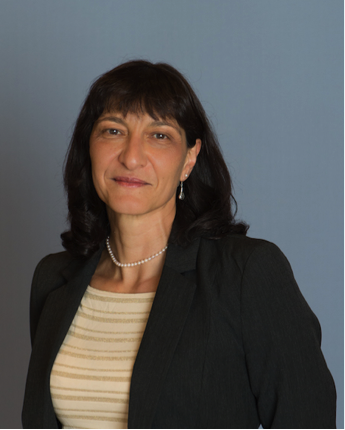
Finalists in the 2023 Australian Museum Eureka Prizes have been announced and among the list is Greek Australian Professor Maria Forsyth.
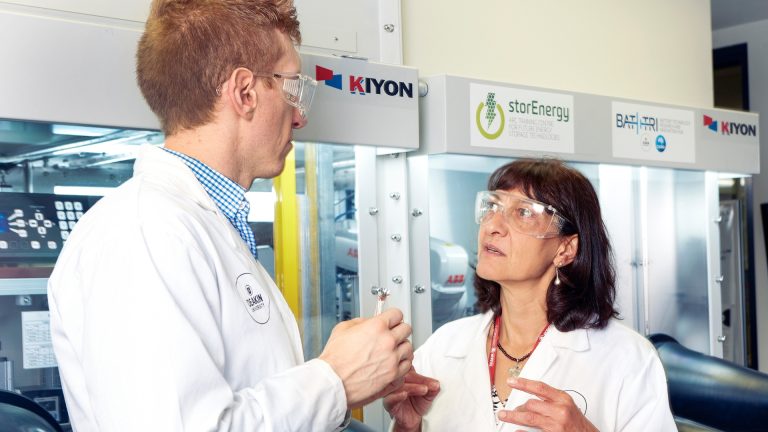
Professor Forsyth is a finalist in the University of Technology Sydney Eureka Prize for Outstanding Mentor of Young Researchers. She is being recognised for her commitment to developing Australia’s capability in materials science and engineering through mentoring students, postdoctoral fellows and early career researchers.
Ahead of the Eureka Prizes awards night on Wednesday, August 23, The Greek Herald sat down with Professor Forsyth to hear about her career and the influence of her Greek heritage on her life.
Professor Maria Forsyth with her mum and dad.
Congratulations on being named a finalist in the University of Technology Sydney Eureka Prize for Outstanding Mentor of Young Researchers. How does it feel to be recognised?
I am incredibly grateful and honoured to be recognised for essentially doing what I love – working with young researchers, helping to fuel their passion for doing meaningful science, and constantly learning from them as well.
Tell us a little bit about your Greek heritage / upbringing.
I was born in Samos, Greece, and spent my first couple of years in a village called Paleokastron not too far from the main port, Vathy. My family name is Fragoulis. We migrated to Melbourne, Victoria, when I was two-and-a-half years old. My father came in 1966 and my mother and my older brother came by ship in 1967. Neither of my parents had much of a formal education but, like most immigrants, they were very determined that my brother and I would do well at school.
My upbringing in Melbourne mainly revolved around Greek social and family circles, spending my early primary school years in Richmond, which in the 1960s and 1970s had a very large Greek population. I remember Type Street in Richmond was almost entirely Greek and we had freedom to be out on the street (not so many cars then) and play with the other children. There was a real sense of Greek community. We lived around the corner from Agia Triada on Burnley Street and went to Greek school there.
My mum and dad worked really hard – mum in the weaving factory working most weekends and doing overtime, and dad doing several jobs including as an oyster opener and cleaner. Eventually we moved to the eastern suburbs, mum and dad started their own wholesale seafood business back in Richmond and I spent every summer working in the ‘fish shop’ – a tradition I continued into my adulthood, every Christmas week until fairly recently. Even my own kids went to help during Christmas rush.
I went to Blackburn High School which was a really good public school with excellent caring teachers. I was really encouraged and inspired in particular by the maths and chemistry teachers but also my VCE English teacher. I was always good at school and loved reading and learning in general. A bit of a geek. It gave me a sense of identity and purpose.
Being a girl raised in a traditional Greek family back then, it wasn’t really expected that I would go to university. But when I received my marks in VCE and made my decision to study science and engineering my parents, eventually, were ok with it. I think the choice to study engineering was a challenge for my parents – they could understand studying medicine but why engineering? As I wasn’t interested in biological sciences back then, I resisted the push to do medicine. I think the decision to study for so many years was also a challenge for my parents. For them, security for a young woman was to get married into a good family. But I did go to university to do a double degree in engineering and science, eventually swapping to straight science (as I found it more fascinating) and doing a PhD in Chemistry.
Professor Maria Forsyth.
You work primarily in the field of materials science and engineering. How did you come to be interested in this field?
I loved chemistry and maths at school and I actually thought I wanted to do computer programming or mathematics – our school received the first Apple computers with 5-inch floppy disks which we were all fascinated with. But I had an amazingly awesome chemistry teacher in Year 12 – Janet Forster – and she really encouraged and inspired us in the subject.
Back then, the marks to get into a science degree at university were lower than what you needed to get into engineering and so you were encouraged to go for the ‘harder’ discipline. This is not advice I would give younger students now!
I went to university to do a double Engineering/Science degree with the intention of specialising in Chemical Engineering and Mathematics. In first year, after taking the chemical engineering unit one semester and the materials engineering unit in the other semester, I realised that there was more chemistry in Materials Engineering and so I swapped my engineering major. This meant that in second year of my double degree I studied Materials Science and Chemistry, both of which I really enjoyed – especially understanding how atoms and molecules came together to make useful materials for real world applications.
At the end of second year, one of my chemistry lecturers, Dr Ivan Wilson, offered me a research assistant role over the Christmas holidays. I fell in love with research and decided then and there (at the age of 19) that I wanted to do a PhD. I then had the dilemma of what to do since I was enrolled in a 5-year double degree program. Luckily, I had some great mentors who advised me that maybe it was best to focus on Chemistry as that was what I was enjoying most, and so I swapped to a straight science degree. My research always had a materials focus and always had a purpose – for example understanding behaviour and properties of materials used for optical fibres or energy technologies.
As a female, what advantages and/or disadvantages do you face in your field of expertise?
When I came back to Melbourne after a two-year postdoctoral position in Chicago, I went to work in the Defence Science and Technology Organisation (or DSTO as it was called then). In all honesty, I found this very, very challenging, male dominated environment and I had very few if any role models. I know this has changed in recent times, but back in the early 1990s it was not a pleasant experience and I had to move on.
I was lucky to get a lecturer position back in my old university, Monash Uni and ironically, teaching in the Materials Engineering department. Materials engineering mostly had academics who were either chemists, physicists or metallurgists so I fitted in just fine despite not having finished my actual engineering degree. I had done the undergraduate subjects that I was asked to teach so I dusted off my old notes initially and then I just dived into learning whatever I needed to learn to be able to teach my students.
So, the challenges here were that there were literally only two or three female academics in the entire faculty of engineering at any given time in the early 1990s. This has changed now thank goodness. Again, no real role models but wonderful, caring male mentors who encouraged and supported my career so to be honest I didn’t feel out of place in the early days.
It wasn’t really until I started to get promoted and became more senior that I began to notice differences in style and opportunities. Most women don’t put themselves forward – ambition for me was a dirty word! Yet that clearly wasn’t the case for others around me. But if the definition for ‘ambition’ is to strive to do your best and succeed then you could say I was ambitious- but I didn’t like the label.
As I said, I had some wonderful mentors across the university and also CSIRO in Clayton, and they encouraged and supported me, so that helped enormously despite sometimes feeling out of place. Often I would be the only female in a meeting or at a conference. I just didn’t think about it too much or I ignored it and just got on with my work. There were some inappropriate comments about dress codes occasionally but I laughed it off. During my career I have also had some inappropriate comments about being too forthright as well – and while that hurt at the time, I just realised I had to be who I was.
For the most part, I don’t think being a female has hindered my career- in a large part because of the people around me who believed in me and encouraged me, who tapped me on the shoulder for promotion or awards. So, I guess I was incredibly lucky!
I think being a female had its advantages when people were looking to invite a female keynote speaker in the early days (and even now) when the majority of scientists were male in my field. So maybe that gave me some opportunities that my male equivalent may not have received. But once you get a chance you have to make sure you excel at it so you get asked back again.
The downside of being female in the field of engineering in particular was the feeling you needed to constantly prove yourself. That meant working extra hard and never quite being sure you were ‘good enough.’ I think the work ethic impressed on me by my Greek parents, watching how hard they worked, certainly helped me keep going.
You have been pivotal in mentoring students, post-doctor fellows and early career researchers. What does this role involve and why are you passionate about teaching the next generation of science leaders?
One of my mentors once described being an academic – lecturer or research supervisor – was a bit like being a ‘master’ of apprentices, where the apprentice (student, postdoc, ECR) watched you and learnt ‘the trade’. For me, mentoring means sharing my knowledge, my experience and supporting the independent growth of the younger researcher.
No two people are alike so that means for me, where possible, connecting at a deeper level with the person and understanding their strengths and weaknesses, understanding their ambitions. For example, learning from them what they want to achieve, where they see themselves in their future career – academia, industry, government, entrepreneur – and talking to them honestly about their goals, giving them opportunities that support their ambitions whenever possible or giving them opportunities to try something different.
The best part of my job without any doubt is watching my people grow and succeed. Watching the lightbulb moments. Watching their excitement when a great science result presents itself, seeing their delight in getting their first paper published. But it also comes with down side when things just don’t work, when the research is a struggle, when papers are rejected or reviews seem harsh and unfair. Then mentoring means picking them up and dusting them off and making sure they don’t lose their confidence.
For me, mentoring is very personal. I am proud of each and every one of my students and younger researchers. At the heart of what we do is wanting to make a difference in the world through our research – they all aspire to make a difference.
How has your Greek upbringing influenced your work?
As I said above, the feeling of not being ‘good enough’ combined with watching how hard my parents worked, their strong work ethic influenced how I approached my career. I also desperately wanted my parents to be proud even though I knew they didn’t really understand my work or why it was so important to me.
My family were also amazingly generous with their time and their resources with people around them and I think that has also indirectly influenced my style of interacting with others – hopefully a collaborative and caring approach.
What advice would you give to other young people and particularly women who want to get involved in the medical field?
The STEMM disciplines are still very underrepresented by females, and in particular engineering and the so-called ‘hard sciences’ (I never understood so-called hard and soft science subjects). If you have a curious nature, enjoy learning about how things work, problem solving and creating new ideas and new solutions, then you might find that science or engineering is a great fit.
Don’t be scared to try new things. Never underestimate yourself and what you are capable of – gender really doesn’t stop you from achieving, unless you let it. Diverse teams are much more successful than homogeneous ones. My team at Deakin has at least 40 per cent females and over 20 nationalities. Science and engineering disciplines allow you to work in diverse groups and, in the research arena, there is the added bonus of travelling and meeting many different interesting people. All of these shape who you become.
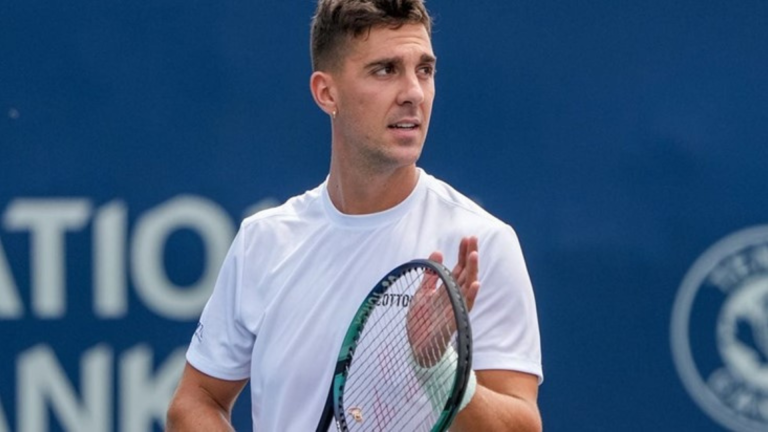
Thanasi Kokkinakis has qualified for the Cincinnati Masters, after erasing 3 consecutive match points.
A week after his good run in Toronto, where he made it all the way from the qualifiers to the 2nd round, Kokkinakis took another main board qualification through the qualifiers in Cincinnati.
The 27-year-old Greek-Australian, No.86 in the world, beat Daniel Elahi Galan after 3 hours and 7 minutes of match, 5-7, 7-6 (7), 6-2 .
In the tie-break of the 2nd set, Kokkinakis was losing 1-5 and 3-6, but erased all of Galan’s match points and finally prevailed 9-7, to send the match to a 3rd set. There he broke early and never lost the upper hand again, to complete the upset with another break shortly after the 3 hour mark.
The “marathon” battle with Galan, No.68 in the world, came less than 24 hours after Kokkinakis’ yet another tough victory over Laslo Djere, No.35 in the world, 3-6, 6-3, 7 -5.
Continuing his good performances in the American tournaments, Kokkinakis will wait for the draw of the qualifiers to find out his next opponent in Cincinnati. Possible opponents are Hubert Hurkacz, Lorenzo Sonego, Francisco Cerundolo, Emil Ruusuvuori, Lloyd Harris, Ugo Humbert and John Isner.
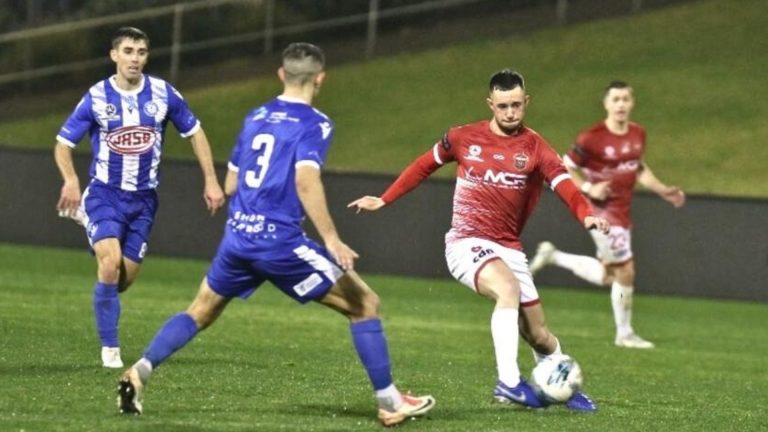
The Wollongong Wolves threw away a two-goal lead and settled for a point following a 2-2 draw against Sydney Olympic at WIN Stadium on Sunday.
Jake Trew sent Wollongong into the break with the lead before he added his second on the hour mark.
Substitute Oliver Puflett changed the game for Olympic scoring a crucial brace to snatch his team a point.
It was a spirited start to the match with both teams trading shots early on.
In the 10th minute, Wollongong’s Marcus Beattie received the ball in the right of the box and fired goalwards, but Olympic goalkeeper Christopher Parsons held onto the ball.
Five minutes later, Olympic’s Peter Politis took on a well-struck volley from the edge of the box that flew just past the left post.
Wolves’ captain Lachlan Scott lined one up in the 17th minute, but the ball rolled straight to Parsons.
The hosts bagged the opener through Trew just after the half’s midway point.
The striker raced in on goal down the left and scuffed a finish that rolled under Parsons and into the goal.
The Wolves found some rhythm after getting in front, holding the ball high up the pitch.
Just after the half-hour mark, Christopher McStay’s powerful drive from outside the box was saved again by Parsons.
Alex Masciovecchio took aim after finding space outside the box 36 minutes in, but the ball skipped past the left post.
A solid first-half performance saw the home side take their slender lead into halftime.
Olympic came out strongly for the second period with halftime substitute Fabio Ferreira causing the Wolves problems with his movement.
However, Wollongong had a great chance to double their advantage an hour in.
Trew won a tussle on the left corner of the box with goalkeeper Parsons, but his left-footed shot bounced agonisingly past the right post.
The in-form forward wouldn’t be denied though, firing in the Wolves’ second just four minutes later.
McStay’s left-sided cross rolling to Trew in the middle, who rifled the ball into the top right corner.
Wollongong should have had their third in the 76th minute when Trew motored down the right and clipped the ball in for Lachlan Scott, who inexplicably cleared the crossbar.
The side would be left to rue this missed chance as Sydney Olympic halved the deficit with Puflett running in on goal and finishing past Tomas Butkovic.
Olympic nearly equalised with four minutes to play when Sam McIllhatton latched onto a ball over the top but shanked it wide.
As it’s been on many occasions this season, there was a cruel twist in the tail for the hosts conceding right at the death of stoppage time.
Puflett guiding a header into the left side of the goal following Ferreira’s left-sided cross that saw Olympic go home with a point.
Olympic coach Labinot Haliti credited his team for coming back while also giving credit to the Wolves for their performance.
“We took the two chances that came. To be fair, in the second half, after fifteen minutes, they had the better of the play,” Haliti said.
“I’ve been saying all year it’s a process, but sometimes it doesn’t look like a process because you’re losing games.
“It tells you that by coming back like that that we are heading in the right direction.”
Wollongong Wolves captain Lachlan Scott said that seeing two points slip away the way it did felt like a loss.
“It was a pretty frustrating one. We dominated for probably 95% of the game and to come away 2-2 is disheartening,” Scott explained.
“Obviously there were a lot of positives in it, I think the second half of the season we’ve been coming along nicely, and I just think if we keep performing like that we’re going to win a lot of games.”