Home Blog Page 983

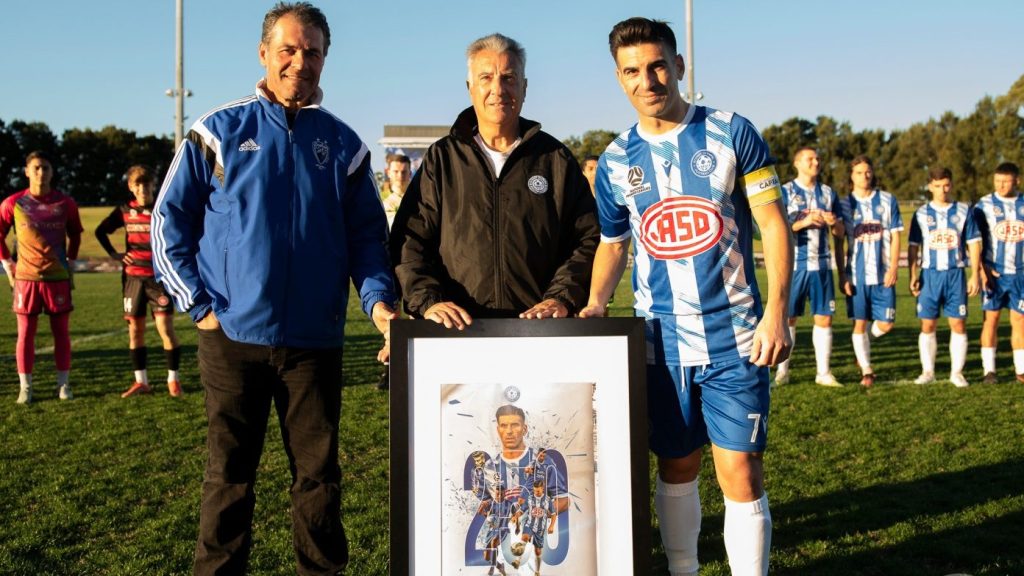
Sydney Olympic player Will Angel to retire from football after 20 years

After 20 years, Sydney Olympic player, Will Angel, announced his retirement from playing football at the end of the 2023 season.

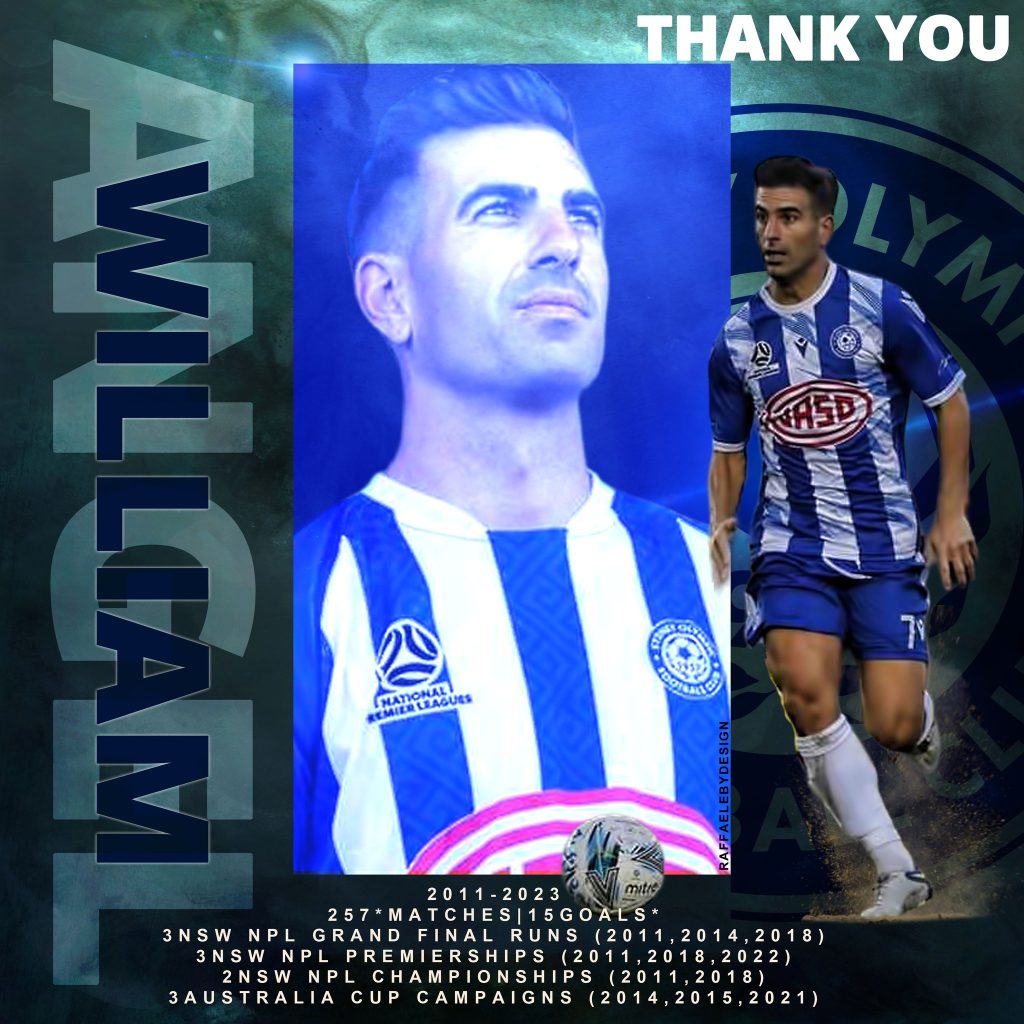
The Sydney Olympic club wrote in a Facebook post, one of the club’s favourite sons will retire with “257* games, 15 goals, Three Minor Premierships and Two Championship Doubles.”

Among his accolades over the decades, Will recently celebrated his 250th match for Sydney Olympic, the 6th player in the history of the club to achieve this milestone.

“His [Will’s] landmark 250th appearance for Olympic is a testament to his determination, juggling football with full-time work commitments,” the club wrote about the player who has been with the team since 2011.

Sydney Olympic FC held a special presentation for Will Angel. Photo: Facebook / Sydney Olympic.

“For a generation of Olympic fans, Will’s surname is synonymous with the No.7 jersey.”

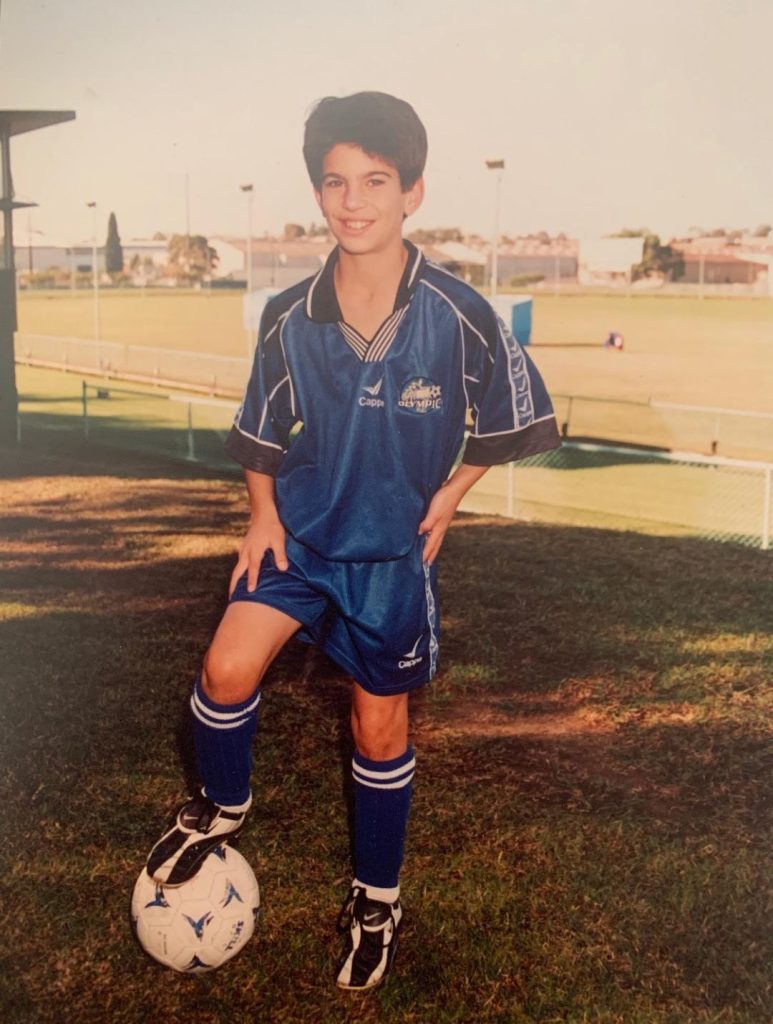
“He [Will] remains one of the last links to the club’s National Soccer League history, beginning his career as an 11 year-old in Olympic’s youth system in 2000 under the tutelage of Peter Katholos.”

Will Angel began his career as an 11 year-old in Olympic’s youth system in 2000 under the tutelage of Peter Katholos. Photo: Supplied.

The club boasted Angel’s “professionalism, persistence and humility” consistently throughout “uncertain periods for both the club and the game”.

Will Angel has played with Sydney Olympic from 2011 to 2023. Photo: Sydney Olympic FC.

Will came through the junior ranks at Olympic before making his 1st grade debut in 2011 against Wollongong Wolves.

“The club wishes to thank Will and his family for his unwavering service to Sydney Olympic, as a player, ambassador and most importantly: as a fan,” the announcement concluded.

Read more: Will Angel celebrates 250th match for Sydney Olympic as club secures victory

Panathinaikos eliminate Marseille from the Champions League

Panathinaikos stunned Marseille on penalties to reach the Champions League play-off round on Tuesday.

The game did not start well for Panathinaikos, as they conceded a goal in just the 2nd minute. Pierre-Emerick Aubameyang wiped out Panathinaikos’ 1-0 first-leg lead in the third qualifying round with his first Marseille goal at the Stade Velodrome.

The former Arsenal and Barcelona striker completed the turnaround in first-half added time by turning home his second goal from Jonathan Clauss’ low cross.

Panathinaikos versed Marseille in the Champions League.

But there was a late twist, as just seconds after Matteo Guendouzi had seen a strong penalty appeal waved away, the Marseille midfielder was penalised for handball by VAR and Fotis Ioannidis dispatched the resulting 99th-minute spot-kick to force extra time.

Vitinha had a goal ruled out by VAR for an offside against Ismaila Sarr in the build-up as the Greeks held on for penalties.

Filip Mladenovic stroked home the winning penalty as Panathinaikos won the shoot-out 5-3, with goalkeeper Alberto Brignoli’s earlier save from Guendouzi proving crucial.

Panathinaikos will next face Braga, with the winners to secure their first group-stage appearance in over a decade.

Marseille – Panathinaikos 2-1

Goals: 2′ Aubameyang (Marseille), 45’+1 Aubameyang (Marseille), 90’+9 pen. Ioannidis (Panathinaikos)

The penalty shootout:

0-1 goal by Ioannidis (Panathinaikos)

0-1 Brignoli took Geduzzi’s penalty

0-2 goals Bernard (Panathinaikos)

1-2 goals for Veretou (Marseille)

1-3 goals by Kleinheisler (Panathinaikos)

Sarr 2-3 goals (Marseille)

2-4 goals Palasios (Panathinaikos)

Bithynia (Marseille) 3-4 goals

Mladenovic (Panathinaikos) 3-5 goals

Yellow cards: Aubameyang, Veretou – Gedvai, Brignoli, Vaiannidis, Mancini, Ruben, Cerin

Red Cards: –

Marseille (Marthelino): Pau Lopez (120’+3 Blanco), Clos, Zigo, Beba, Lodi, Ronzier, Verretou, Char, Ediage (68′ Guedouzi), Unahi (59′ Arit), Aubameyang (80′ Vitinia).

Panathinaikos (Ivan Jovanovic): Brignoli, Vagiannidis, Gedvai, Magnusson, Huancar (70′ Mladenovic), Ruben, Vilena (70′ Cerin), Djuricic (63′ Bernard), Mancini (106′ Kleinheisler), Verbic (46′ Palacios). , Sporar (63′ Ioannidis).

Kyriakos Mitsotakis attends Dormition ceremonies on Tinos

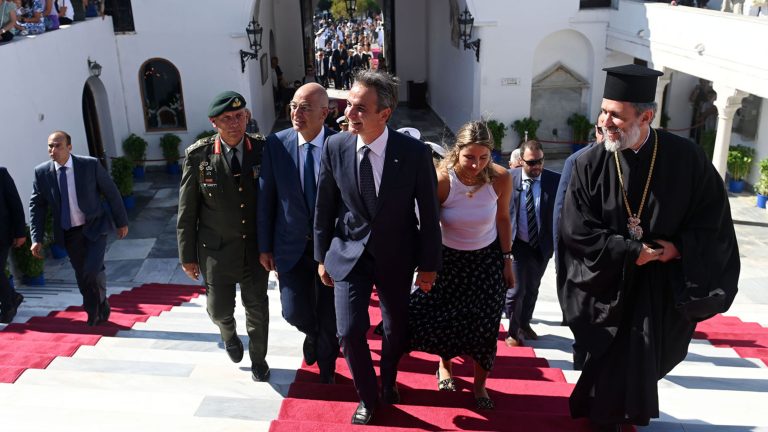
Greek Prime Minister Kyriakos Mitsotakis has taken part in religious observances marking the Dormition of the Virgin Mary on Tinos island on Tuesday.

Accompanying him were Defense Minister Nikos Dendias and Chief of the General Staff General Konstantinos Floros, according to Ekathimerini.

As a tribute to the crew of the cruiser “Elli,” which was sunk by an Italian submarine on August 15, 1940, just weeks before the outbreak of war between the two countries, the prime minister laid a wreath at sea in their memory.


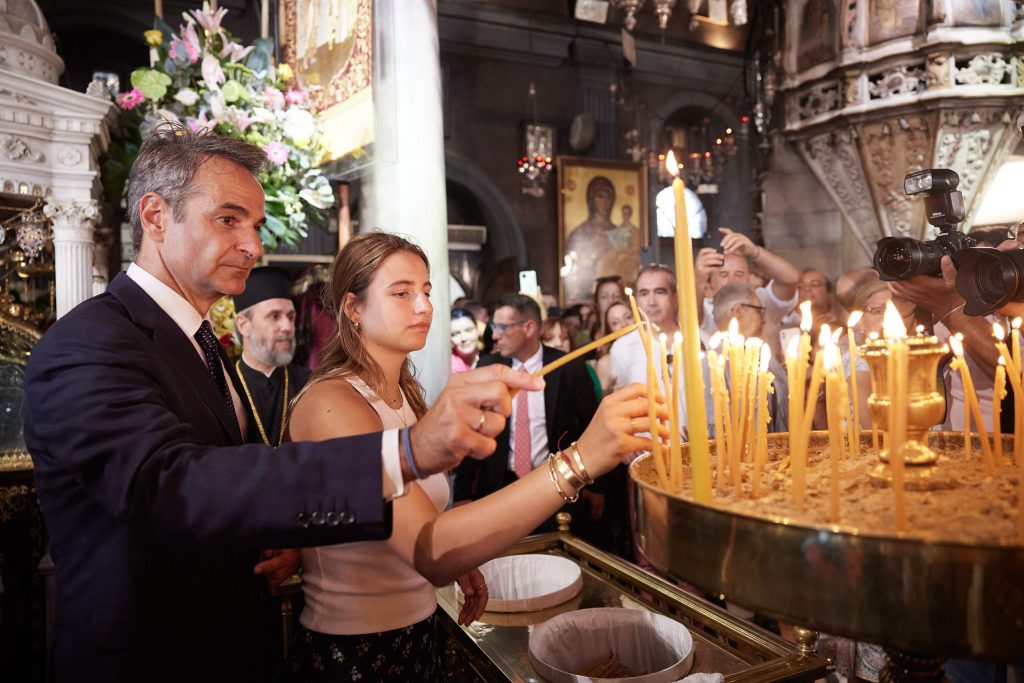
Subsequently, Mitsotakis attended a celebratory divine liturgy at the island’s cathedral. The liturgy was presided over by Metropolitan Dorotheos of Syros and Tinos.

Acknowledging that this day holds associations with hope and optimism, Mitsotakis emphasized that Greeks have ample reason to view the future with increased optimism.

Prime Minister Kyriakos Mitsotakis. Photo: Dimitris Papamitsos/Prime Minister’s Press Office.

“Despite the challenges we have confronted, our nation has successfully navigated a decade-long crisis and possesses every justification to approach the future with heightened hope and optimism,” said Mitsotakis.

Source: Ekathimerini

Greece celebrates the Dormition of the Virgin Mary

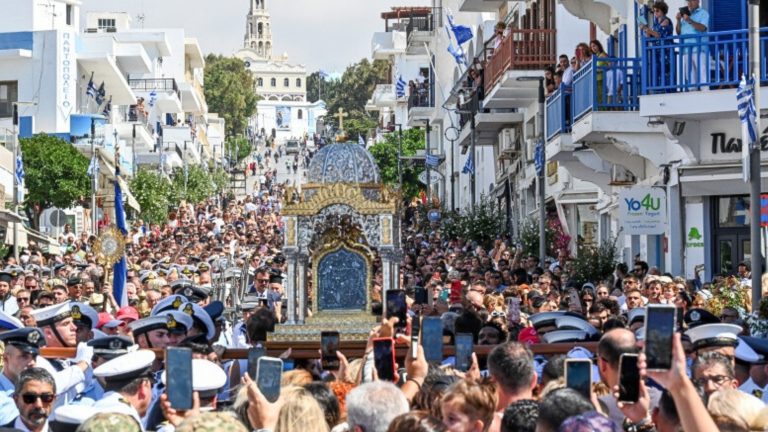
Greece observed the Dormition of the Virgin Mary with magnificence and devotion, marked by liturgical ceremonies and processions featuring the Virgin’s icon, on Tuesday.

This day, often referred to as the “Summer Easter” of Greek Orthodoxy, pays tribute to the mother of Jesus Christ, acknowledged as a sublime maternal figure for humanity. She is believed to intercede on behalf of the faithful and provide genuine solace during personal trials, according to amna.gr.

For Greeks, the Virgin Mary holds deep ties to the nation’s historical struggles, a sentiment evident in the numerous epithets attributed to her name across towns and villages throughout Greece.

Celebrations in Greece for the Dormition of the Virgin Mary. Photo: amna.gr

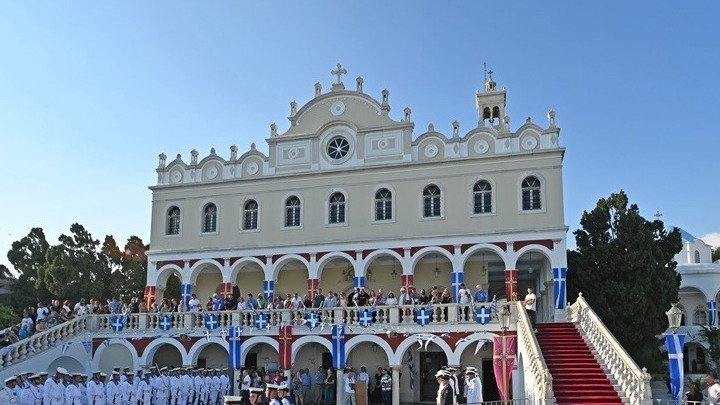
The island of Tinos traditionally takes center stage in the celebrations of the Dormition feast. Devotees embark on pilgrimages to the grand Church of the Virgin Mary of Tinos.

The church’s iconic image was discovered in January 1823 by a nun from the historical Monastery of the Dormition of the Virgin/”Lady of the Angels” on the island, who received divine guidance leading her to its location.

In 1836, a royal decree established an eight-day observance of the Virgin Mary on Tinos, lasting until August 23 (nine days following her dormition).

During this period, both an epitaphios (a ceremonial funerary bier, typically associated with Christ) and her icon are venerated.

Coinciding with the annual liturgy is the remembrance of the sinking of the Greek cruiser ‘Elli’ at the island’s port by the Italians on Dormition Day in 1940. Each year, top government and Armed Forces leaders partake in both events.

Source: amna.gr

Five miscarriages and a baby after an Orthodox convert’s pilgrimage to Tinos

By Mary Sinanidis

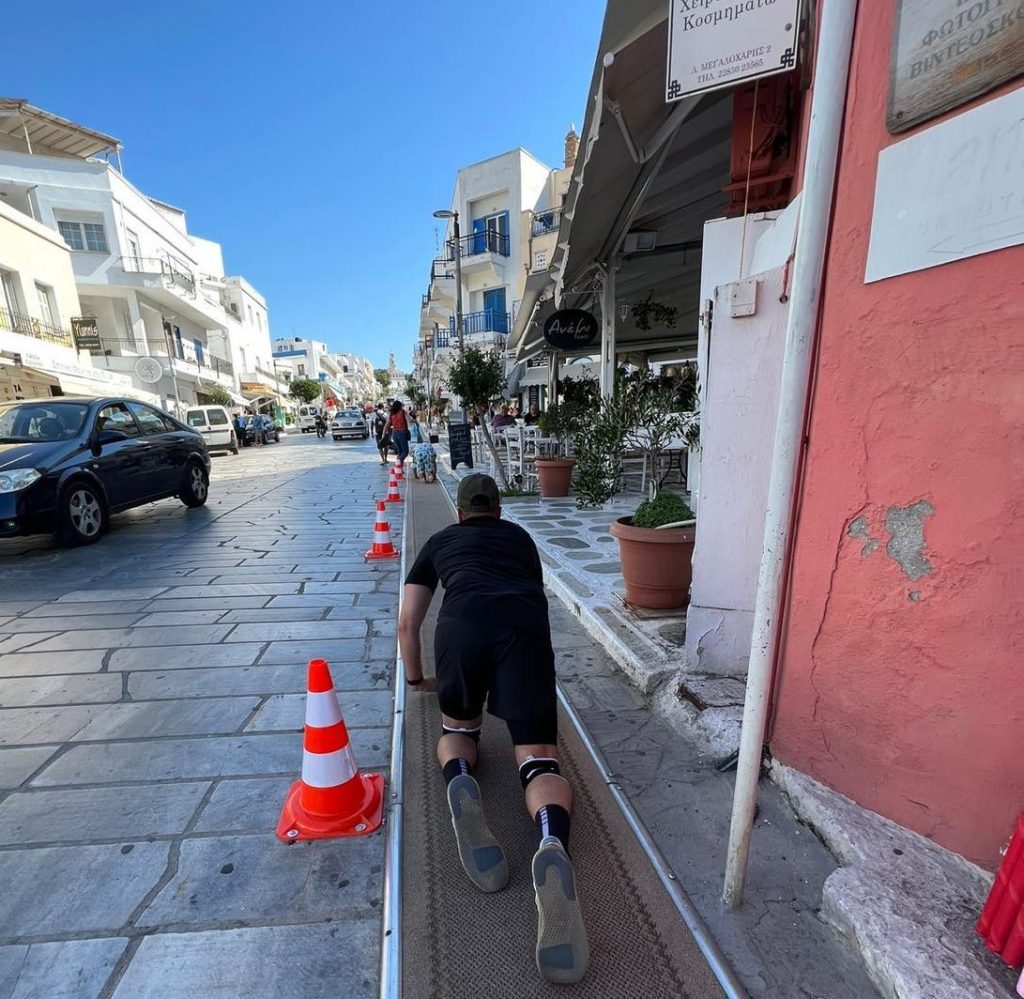
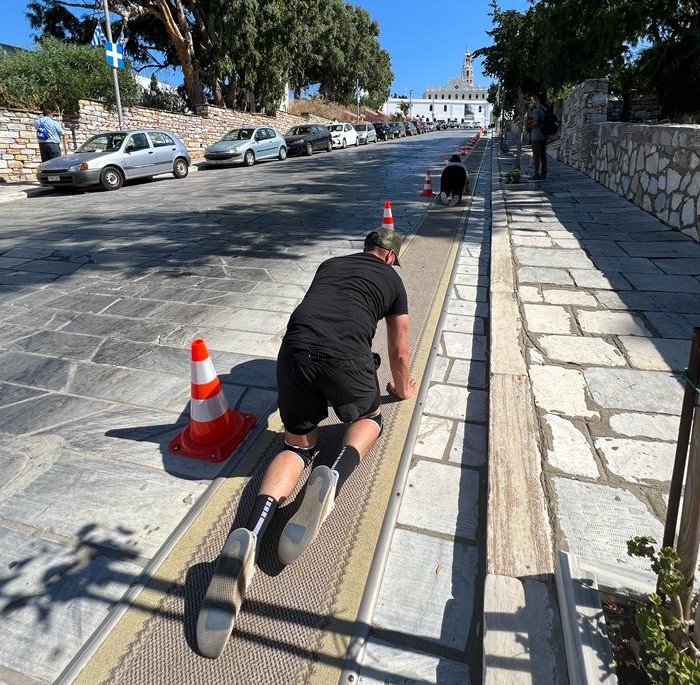
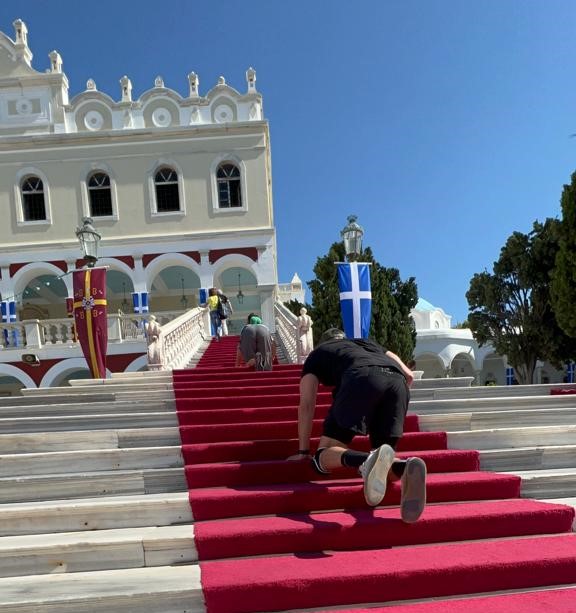
After several miscarriages, Will and Artemis Greenwood visited the Greek island of Tinos to worship at the Holy Church of Panagia Evangelistria (Our Lady of Tinos). Will crawled on his hands and knees from the ferry up the Avenue of Megalohari, the slope leading to the entrance of the church where the icon of the Annunciation of the Virgin Mary is held. Beside him, Artemis walked solemnly.

The crawl took 45 minutes to complete, though Will said it felt much longer as he lost sense of time. While crawling, he thought of the miscarriages his wife had and prayed for her.

“I wasn’t necessarily praying for a miracle,” Will, who is a Greek Orthodox convert from the Anglican faith, told The Greek Herald.

“I was drawn to Tinos for a long time before finally making the pilgrimage.”

Will Greenwood on the Tinos crawl.

Years earlier, his wife’s aunt visited Tinos to pray for Will’s sister who had ovarian cancer and is now fine. He had always wanted to experience the pilgrimage as part of his spiritual journey.

“I was totally focused, and it was almost like an out-of-body experience. You’re just going into a flow state, going hand and knee in front of each other and you just keep going. You pray for others, but you also ask yourself, ‘What am I trying to get out of it as well?’ And while feeling a pebble as you crawl may hurt physically; it is harder mentally. You’re reflecting a lot of the time,” he said.

He added that having his high school sweetheart wife, Artemis, slowly walking beside him was meaningful.

Will approaching the famous church of Panagia Evangelistria.

“Emotions flooded through me as I thought of the insurmountable pain of what she has had to go through with the miscarriages, and yeah, the tears came,” he said.

“The top of the stairs were crowded, but there’s something quite nice about getting there and crawling through a special entrance reserved for those who crawl as worshippers part to make way, almost like cattle. And there’s respect for you who crawled all this way and everybody moves out of the way for you to kiss the icons.”

A miraculous icon

Discovered in 1823, the icon of the Annunciation of the Virgin Mary was considered a sacred omen in the Greek War of Independence when it was discovered by Sister Pelagia, a nun who had a vision and called on villagers to start digging. Since then, the icon has drawn droves of pilgrims, and there are numerous recorded miracles attributed to it: healings, deliverances from dangers, and even the restoration of lost sight.

Its origin is unknown, though some believe it was painted by St Luke the Evangelist, and others say it is much older. Venerated from the start, the church was built to house it.

Even before the church was built, pilgrims came to pray, sealing the Cycladic island’s religious reputation, and has ensured that it draws a different type of traveller to those who choose to visit the neighbouring party islands of Mykonos and Santorini.

Despite the beautiful beaches, haute cuisine, uniquely crafted hinterlands, preserved villages and dovecotes, Tinos draws the traveller who craves meaning.

Will and Artemis came specifically for the spiritual journey, circumventing all other sights and staying on the island for just three hours. They left behind a tama in the church, hanging it beside the hundreds of other small metal plaques, each a symbol of prayer and reminder of the petitioners’ needs.

Will at the church of Panagia Evangelistria.

A year onwards

It is now a year since the pilgrimage and Will and Artemis are once again expecting a child (due date August 23). This is the longest term a pregnancy has run since the five prior miscarriages and the couple could not be happier that their prayer may finally be answered at around the time of the Dekapentavgousto.

For Tinos, August 15 is a special celebration which celebrates the Assumption while also marking the anniversary of the torpedoing of the warship Elli in 1940.

Back in Sydney, this Dekapentavgousto, Will and Artemis have every reason to be over the moon as the dream of holding a baby in their arms is closer than ever. Rather than lose their faith, it is stronger than ever.

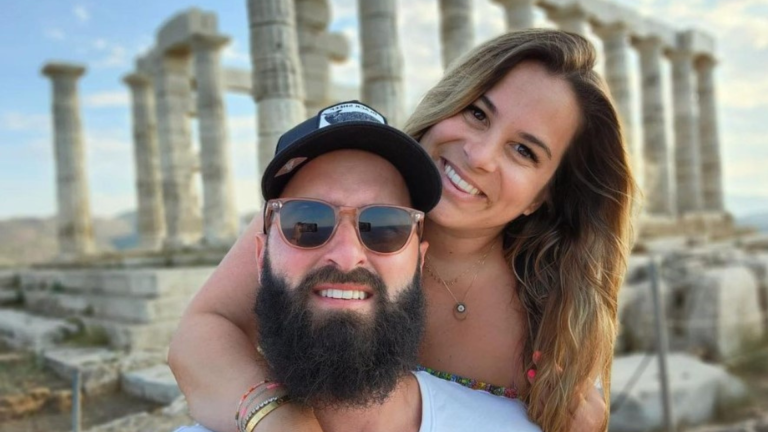
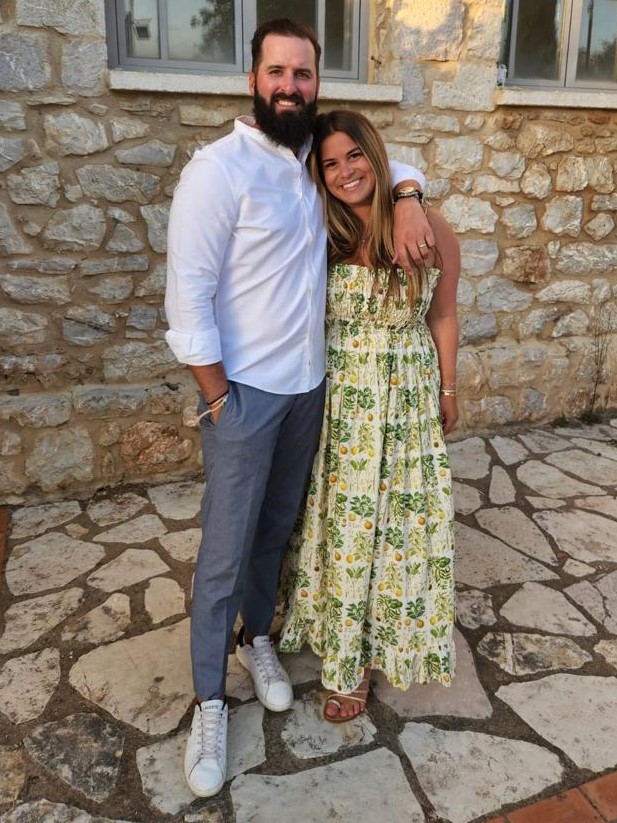
Will and Artemis Greenwood.

“Experiences such as the pain of miscarriage can force a wedge in people’s relationships with each other as well as their faith,” Will said, but in his case it “solidified” things.

The miscarriages caused him to seek spirituality, which is why he converted to Orthodoxy, and he left a corporate career to be a landscape gardener with more flexibility and time to be with his family.

“There was a catalyst moment for me while going through the miscarriages and trying to find meaning in everything,” he said, adding that he found solace in faith.

“When you go into the Greek Orthodox Church, I think it hits all the senses and even the smell, incense, for example, surrounds you. It is like you walk in there and your heart rate just plummets and goes into a calm state.”

Will added that when he first announced he wanted to convert, his wife thought he was joking. It only struck home when he proceeded to take catachysm classes.

He spoke glowingly of Father Sotiris at St Paraskevi Church in Blacktown, Sydney, who has helped him on the journey. And it’s a journey that is far from over as Will looks forward to creating a warm family with bonds of love.

As for Tinos, he hopes to visit again once his baby is born, and the couple is even considering christening the baby on the island.

Remembering the legacy of Sergios Argyrou from the Cyprus Community of NSW

By Michael Kyriakou

In 1985, the Cyprus Community of NSW was located on the corner of Druitt and Kent St in the heart of Sydney, boasting thousands of members but with an uncertain future.

Without parking, large debt, paying 18 per cent interest, occupying a building that could not be redeveloped, and bruised after a painful split, it was the perfect storm.

The Community’s membership was dynamic, the legendary women’s and youth committees were active, the soccer club was strong, and Justice for Cyprus (SEKA NSW) led by its patron Gough Whitlam alongside Kipros Iordanou, Jim David and Nick Angelos amongst others, put the Cyprus issue firmly on the agenda. But the fact was that the Community could not meet its financial obligations, its revenue was poor compared to its expenses and the value of the property was not going up.

Sergios Argyrou – a young Cyprus-born member, smartly dressed, Bachelor of Commerce graduate, manager of a joinery – stepped up to the challenge.

Taking the treasury, Sergios – with the support of his fellow directors Sam Demetriou, Steven  Stephanou, Con Koulouros, Themis Maxis, Philip Adamou, George Nicolaou, Lakis Ioannou, Michael Kyriacou and President Andreas Petrou – did what seemed impossible, kept the doors open, the bank and creditors happy, and the Community together.

Sergios kept working tirelessly in the background to convince everyone that the Community is bigger than the egos, the politics, ideology and agenda of the few.

Sergios, along with Philip Adamou, were instrumental in finding the Newtown Leagues Club at Stanmore for the Community to buy. Selling the city building, paying off the debt and buying this large Club was ambitious, but critical.

At the Extraordinary General Meeting, the members voted not to sell, only to sell a year or so later under a new board and pay a higher price for the Stanmore property. Luckily, a prominent Community member bought the city building far above market value and even donated a sizeable amount back to the Community!

Sergios may have been disappointed, but he did not show it. He, like his fellow directors Con Koulouros, Philip Adamou and others, did not abandon or attack the Community or its new Board. Sergios stood by his Community.

Thirty-five years later in 2019, the Community now in Stanmore was once again in familiar territory, with growing debt, poor revenue, falling membership, a rundown building and virtually no money to keep the doors open.

The only difference this time was that the Community was paying under 5 per cent interest and was sitting on almost 9,500 square metres of inner-city land. If rezoned, this would propel the Community to one of the wealthiest in the nation if not in the diaspora.

In March 2019, members voted not to sell, to stay at the Stanmore property, but the members did not consider how to keep the doors open, or how to keep the bank and creditors happy.

In November 2019, the members did just that. At an Extraordinary General Meeting, the members decided to fund their Community by setting up Cyprus Capital Limited, a member only entity with one herculean task – raise money from the members to keep the doors open, deliver the rezoning, keep the creditors and the banks happy and the loan sharks and other opportunists at bay.

At first, the founding board of Cyprus Capital Ltd, all volunteers with virtually no experience, found the task enormous. This had never been done before by any club or community. Soon there was no Board of Cyprus Capital Ltd and the situation seemed even more dire.

Again Sergios stepped up and with no fanfare he quietly spent what would have been hundreds of hours talking to members, visiting them and seeking their support to preserve the identity and language of his ancestral home, and his Community.

Despite COVID-19, Cyprus Capital Ltd attracted Community members to place often their modest savings to the cause, to save the Community and preserve its mission, a commitment that raised $6 million.

Sergios was highly regarded throughout the Greek and Jewish communities and many other segments of the great Australian family, as a successful businessman, a philanthropist, and dedicated treasurer to the Rose Bay Greek Orthodox Church.

Sergios’s legacy is not known to most. That is exactly how he wanted it to be. 

The result of his legacy is there for all to see. The Club is open, the rezoning has been achieved and the members will make an informed reasoned decision about the Community’s next chapter without any looming fire sale or other pressure.

Sergios’ crusade to heal the late 1970s Cypriot community split, was relentless. He quietly pursued the sacred mission to unite all Greeks of Cypriot ancestry.

The Cyprus Community has lost a giant.

The fact many do not know of Sergios and his achievements speaks volumes for a man who did it all for the Community without the accolades.

It is a measure of the man – to do good deeds, recognise others worth and contribution, help those in need, step up and steer the great Cyprus Community through stormy weather – without expecting or wanting anything in return.

It is the least any Community, any member of the Community can do, in memory of Sergios. As Sergios would often say, “do it for the Community.”

Cretan Association of Sydney & NSW hold Annual General Meeting

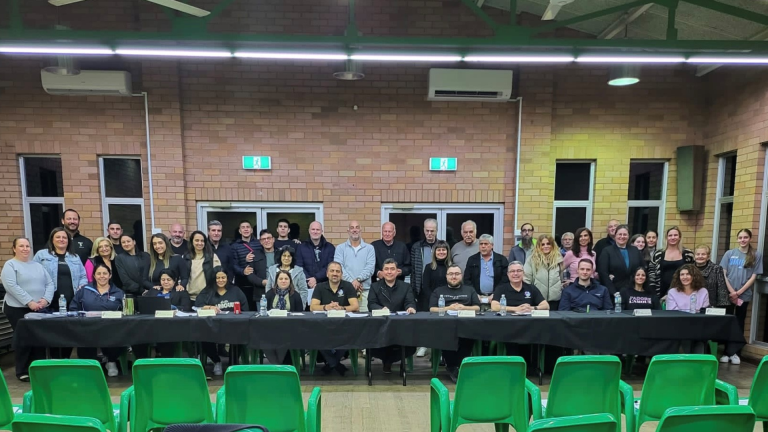
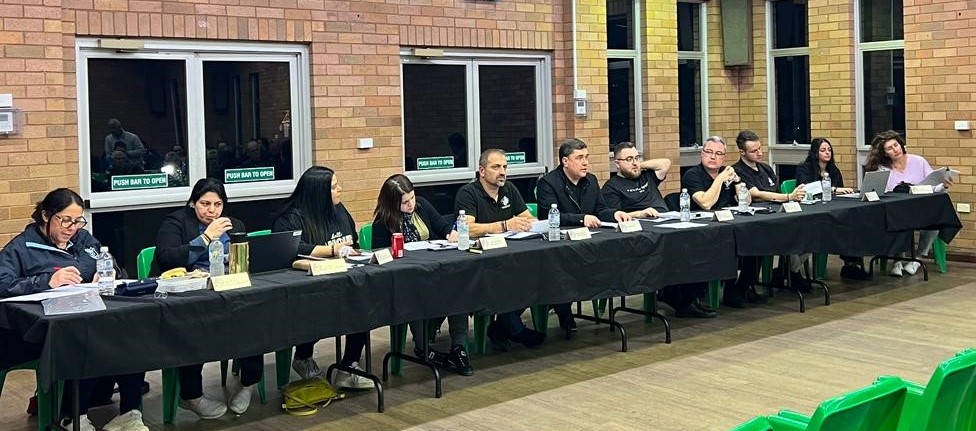
The Cretan Association on Sydney & NSW held its Annual General Meeting (AGM) on Friday, August 11.

Approximately 50 members attended the AGM that was held at Ashbury Senior Citizen’s Centre.

President of the Cretan Association, Emmanuel Vitetzakis, opened the meeting with a minutes silence for all the members that have passed away over the last year and gave a report of the events held over the last year, including the recent youth excursion to Crete and World Cretan Council conference. 

The Cretan Association of NSW Annual General Meeting.

Following the results of the previous Extraordinary General Meeting, the Committee was proud to announce that the Cretan Association is now registered as a charity. 

The Committee also announced to members that it had made an application to Bayside Council to lease and operate a former clubhouse in the Botany area. The application was still being processed and the committee will keep members informed with any updates as they develop. 

The elections for the next Executive Committee will take place on Friday, August 25 at Ashbury Senior Citizen’s Centre. 

St George Greek Orthodox Church at Rose Bay to be heritage listed

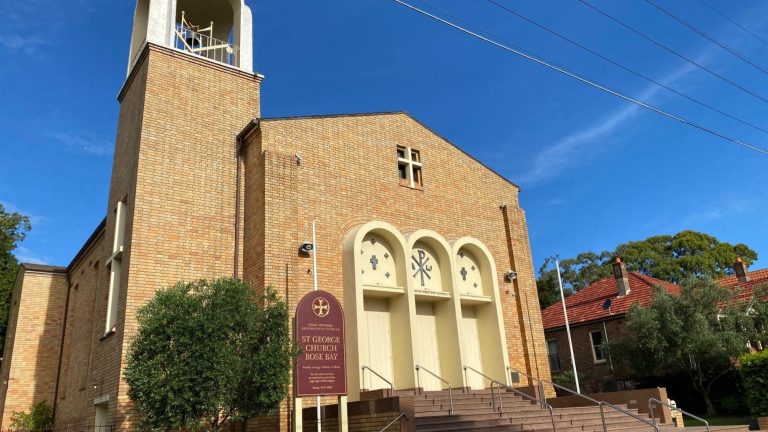
A proposal by Woollahra Council to list the St George Greek Orthodox Church and war memorial complex and setting, including interiors and moveable heritage at 90-92 Newcastle Street, Rose Bay, as a local heritage item was finally approved by the Council on Monday, August 14, after an extended community consultation process, including a site visit.

On 19 July, 11 (of 15) councillors attended the church, together with Council staff, and were shown around the church and the grounds by Father Gerasimos Koutsouras and six members of the Parish Board.   

In the heritage officers’ report to council following the site visit, it was stated that the orientation provided an informative update as to how the Church building has changed and evolved over time to positively respond to the community’s changing needs (both internally and externally). Indeed, it was noted that the alterations and modifications made to the Church building had responded to the changing needs of the congregation and were sympathetic in nature and did not appear to have obscured original elements of the building.

In response to the community feedback regarding moveable heritage, Council staff did however recommend that a Moveable Heritage Schedule be prepared for the site containing an assessment and inventory of moveable items within the Church such as the iconoclasts, furniture, altar elements, and entombed relics, which were identified as important religious elements.

As the report also noted, some members of the Church had expressed a desire to be free to adapt and expand the building as required by the congregation and were concerned that the proposed heritage listing would serve as an obstacle. In response, Council staff presented the planning and approval pathways that are inherent with local heritage listing and explained that development is a necessary part of heritage conservation but that with a local heritage listing there is an additional “lens” of consideration that must be applied to ensure that the proposed impact to significant elements can be managed and applied sensitively.

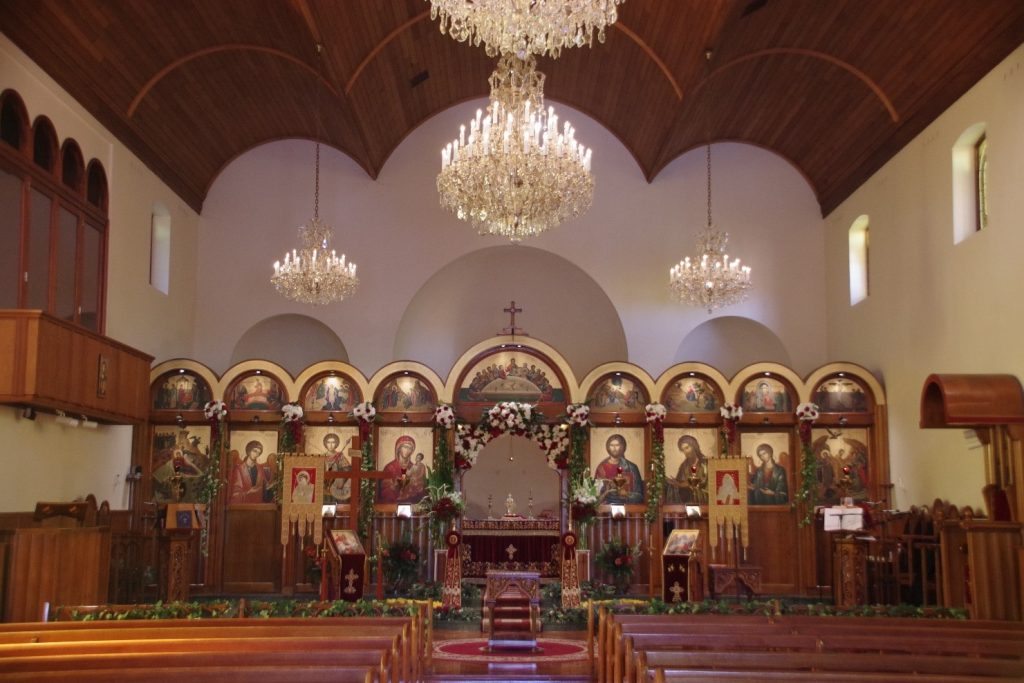
St George Interiors – Iconoclasts

These sentiments were echoed by Councillor Lucinda Regan at the Council meeting when she moved for the proposal to be carried (with the support of Councillor Nicola Grieve). Councillor Regan noted that there was a lot of support from the wider community for the proposed heritage listing and that a heritage listing will not stop future development applications. She also emphasised that the historical significance of the building is tied with the Greek migration and the wider recognition of the important contribution of the Greek community.

Councillor Toni Zeltzer spoke against the proposal, claiming that the community did not want the heritage listing.

In general discussion the point was made that the council’s own detailed heritage report had identified that the church satisfied six of the seven mandatory heritage criteria, but that no actual planning issues were raised by those who oppose the heritage listing. 

Those heritage considerations were identified as follows:

Historical Significance – a church built as a war memorial commemorating Australian soldiers of Greek heritage, as well as Australian soldiers who have died on Greek soil.

Associative significance – associations with Australia’s migrant communities, as well as its association with Australia’s defence history.

Aesthetic significance – the church is a fine example of the work of the prominent Inter-War architectural firm Fowell, Mansfield & Maclurcan. Joseph Charles Fowell is recognised as a prominent twentieth-century Australian architect, particularly renowned for his ecclesiastical architecture. It incorporates elements of the Byzantine style typically associated with ANZAC memorials, with the traditional Greek Orthodox Church style. Within its residential setting, the church has landmark qualities.

Social significance – although social significance has not been formally assessed, it is assumed the St George Greek Orthodox Church is held in high esteem by members of the Parish and the broader Greek Orthodox community of Sydney. It also has social significance as a war memorial specifically recognising members of the Greek community in Australia that served in WWI and WWII, as well as Australians that served and died on military campaigns in Greece.

Rarity – is a rare example of a Greek Orthodox Church that is also a war memorial (there is only one other in Sydney – St Spyridon, Randwick).

Representativeness – the St George Greek Orthodox Church is a fine and representative example of the ecclesiastical buildings designed by architectural practice Fowell, Mansfield & Maclurcan.

It was further noted that there was no correspondence received from the church after the site meeting and according to at least one of the councillors it appeared that there had been a warming to the idea of the heritage listing of the St George Church.

It was noted in the report to Council that in response to the community engagement, Council had received 17 individual submissions, with 12 submissions (70 per cent) in support of the heritage listing.

One of those who made an individual submission was Nick Andriotakis, a parishioner and prominent member of the local Greek community and Secretary of the Joint Committee for the Commemoration of the Battle of Crete and the Greek Campaign. 

In a further written submission tabled before the Council on the night, Mr Andriotakis noted that in his experience many parishioners were actually supportive of the proposal to heritage list the church and submitted that an online petition initiated by the church which had attracted over a thousand signatures should be ignored because it was negatively framed and the church did not present both sides of the argument when urging petitioners to sign. 

As Mr Andriotakis commented: “The heritage listing will protect the integrity of the vision of the founding members of the parish and would ensure its continuance and respectful way should any future modifications, alterations, additions be proposed.”

When the vote was finally called, the motion to endorse the preparation of a planning proposal to list the St George Greek Orthodox Church and war memorial complex and setting as a local heritage item was narrowly carried by 7 votes to 6, with a couple of councillors abstaining.

As the Greek Herald’s opinion piece in April this year declared, the St George Greek Orthodox Church provides a sense of place that is worth preserving and now, as a result of the Council vote, this heritage item will be preserved.

Greek Community of Melbourne explores education opportunities during talks with Greek Ministers

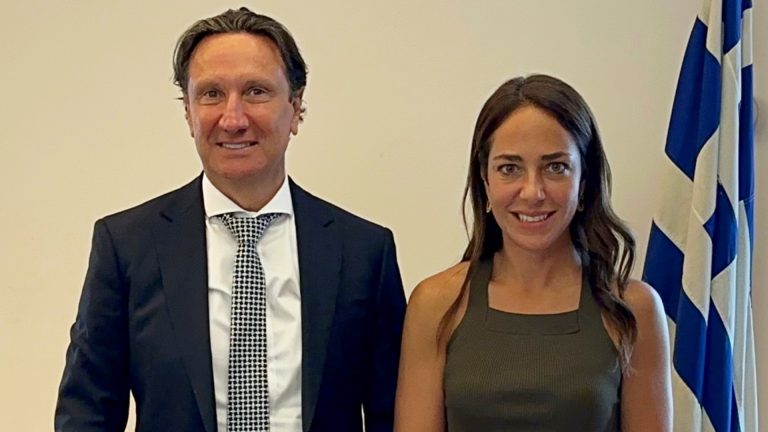
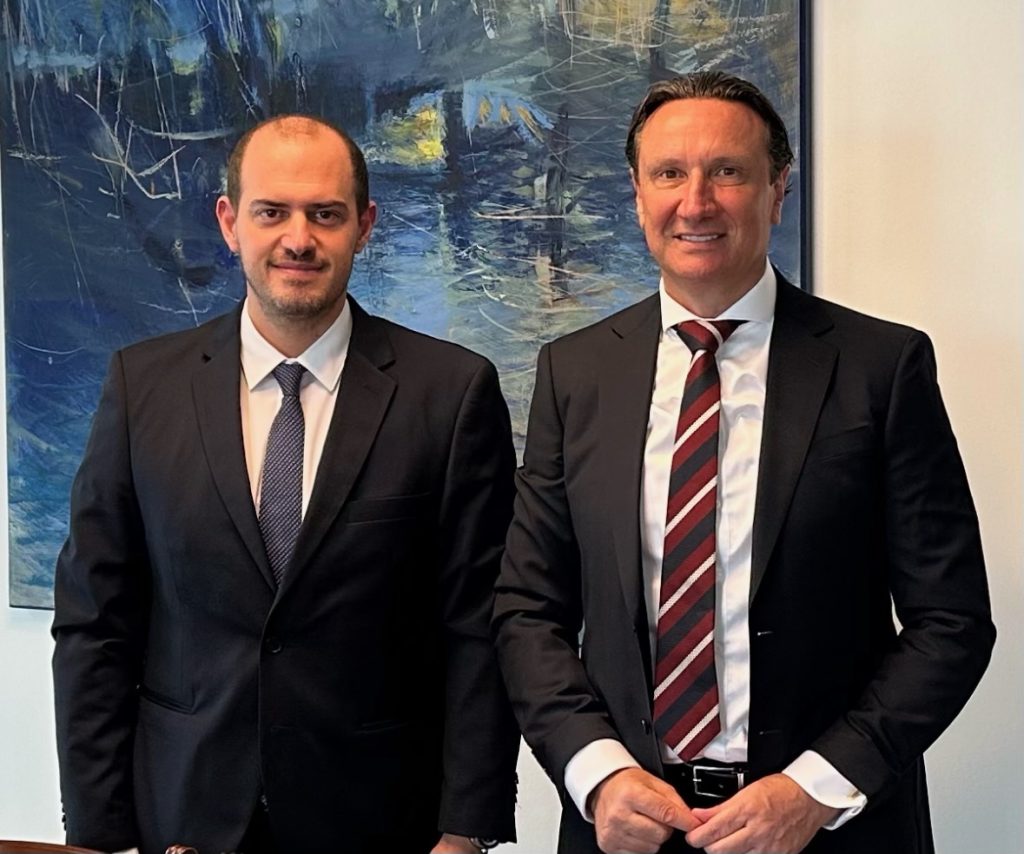
President of the Greek Community of Melbourne, Bill Papastergiadis, undertook numerous meetings with various ministers while on a working holiday in Greece. One of those meetings involved discussions with Domna Michailidou, Deputy Minister of Education, and Giorgos Kotsiras, Deputy Minister of Foreign Affairs.

A number of matters were discussed including facilitating the joint recognition by both Greece and Australia of degrees obtained in either country and the exchange of university students whereby a semester enrolment in a Greek University is counted towards attainment of a degree in Australia and vice versa.

Mr Kotsiras (left) with Bill Papastergiadis.

Bill Papastergiadis noted that “the facilitation of getting more Greek-Australian students to visit and spend time in Greece, will naturally lead to these students evolving into future ambassadors. Papastergiadis highlighted that ‘Education is something that Australia does well, in particular the State of Victoria which attracts international students who mainly attend public universities. This is an area Greece should focus on with the aim of attracting more multi-year undergraduate students, not just those doing post-graduate courses. 

Furthermore, it is unlikely an Australian student will consider spending a semester in Greece unless there’s some sort of reciprocal recognition. More must be done in this space as many Australian students study in so many diverse European countries but only a handful choose Greece. It’s important that the necessary groundwork and bilateral arrangements are in place to facilitate this process.

These matters were further explored in a recent telephone meeting involving Dr Nick Dallas (Chair of Education at the GCM) and Bill Papastergiadis with Deputy Minister Kotsiras.  Minister Kotsiras was keen to advance the issues raised above with the Deputy Education Minister as he had a forthcoming meeting planned with the Minister of Education Mr Pierrakis.

In our meeting with the Deputy Foreign Minister, Dr Nick Dallas emphasised how better relations with Universities in our respective countries would enhance the experience of Australian students.  Bill Papastergiadis made particular mention of the recent MOU executed by the Medical Faculties of the  Universities of Melbourne, Athens and Patras which had already resulted in medical students from Australia attending the medical school of Patras.  This was a program facilitated by the GCM, Professor Pirpiris with the Australian Hellenic Medical Society, and Dr Patoulis. 

Dr Nick Dallas also noted that Australia would benefit from a program that involved Greek educational specialists conducting professional development workshops for Greek language teachers in Australia. The GCM in conjunction with the Modern Greek Teachers Association could easily coordinate such an initiative by making facilities available and encouraging all school providers to participate.

It was agreed that another meeting would be arranged in a month or so to develop this framework of collaboration.

Finally, it should be noted that following these meetings, Mr. Papastergiadis has already initiated relevant discussions with the University of Melbourne.

Constantinos Emmanuelle and his Tales of Cyprus

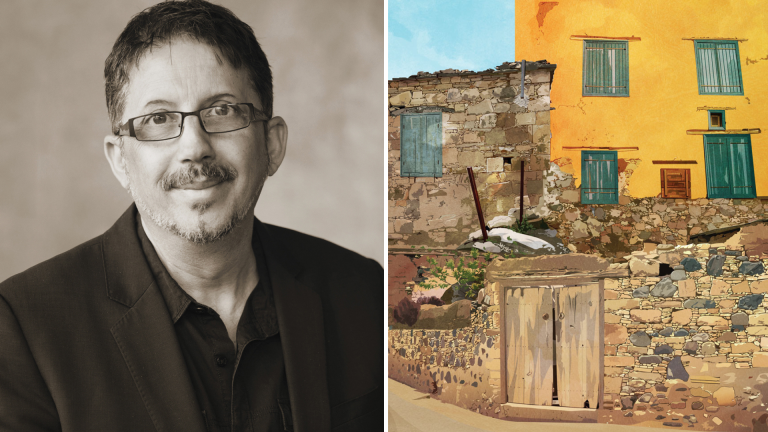
An ardent explorer of his ancestral homeland Cyprus, Constantinos Emmanuelle has devoted years to delving into its cultural heritage. Following the passing of his father, he embarked on a quest to preserve the living memories of his parents’ generation – elderly Cypriots who held invaluable recollections of a bygone era brimming with tradition and customs.

Constantinos has undertaken a personal crusade to investigate the Cyprus of yesteryear, specifically before 1950. He has met and interviewed over 200 elderly Cypriots, most of them born in the 1920s and early 1930s for his recent project, ‘Tales of Cyprus.’ Through a captivating blend of original drawings, interviews, stories, and photo reproductions, he endeavours to unveil a way of life steeped in rich traditions and cultural identity.

The Cyprus that existed before 1950 was characterised by harmonious coexistence between Muslims and Christians, robust family bonds, and vibrant community engagement. Children played freely outdoors, people led active lives, and sustenance came from what they produced. Contentment and gratitude prevailed, even with limited resources. Constantinos realised that his parents’ generation held the last remnants of this authentic cultural landscape and lifestyle, which he was determined to capture and preserve.

His Tales of Cyprus cultural heritage project has earned an acknowledgement award from the President of Cyprus. Additionally, his two hardcover books for ‘Tales of Cyprus’ saw brisk sales within months of their release, prompting him to work on a third book currently.

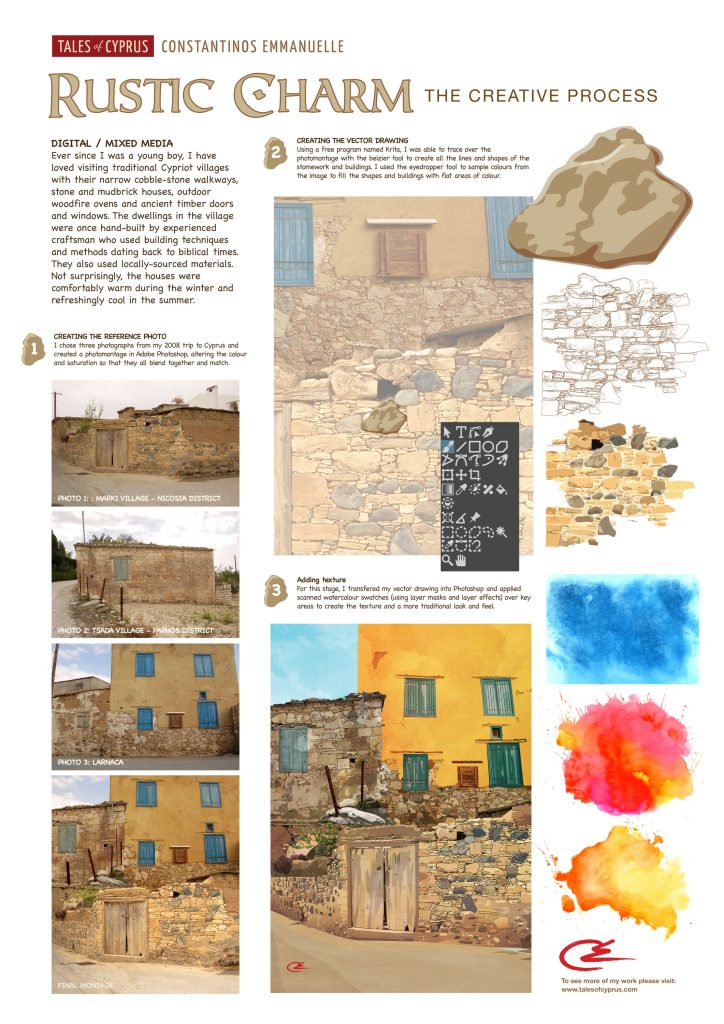
Rustic Charm: The creative process.

In his latest artwork for Tales of Cyprus, titled ‘Rustic Charm,’ Constantinos pays homage to the magnificent rustic old buildings that once housed the simple dwellings of his parents, grandparents, and ancestors. Since he was a young, Constantinos had been captivated by these beautiful old buildings, featuring ancient timber doors and windows. Houses were skillfully constructed by experienced craftsmen using locally sourced materials and building techniques that dated back to biblical times. As a result, these houses provided comfortable warmth during the winter and a refreshing coolness in the summer.

To create his unique digital/mixed media illustrations, Constantinos used his own photographs as references. One of the houses depicted in the creative process for ‘Rustic Charm’ (pictured) held special significance, as it was his paternal grandparents’ house located in the village of Tsada, Paphos. It was the very place where his father was born in 1921. Having spent considerable time in Tsada as a young teenage boy, the memories remained vivid in his mind – the aroma of his Yiayia frying potatoes and eggs, while his Papou sat in the doorway, savouring his zivania.

Beyond his passion for cultural heritage, Constantinos is a professional artist, designer, and teacher at the Melbourne Polytechnic Creative Arts department. By blending his impressive 27 years of teaching experience at tertiary level with his private art practice, he imparts “real-world” skills and techniques to his students.

To delve deeper into the world of Constantinos Emmanuelle and his creative projects, you can visit his website and Facebook page, where he shares the captivating tales of Cyprus’ rich heritage. http://www.talesofcyprus.com or http://www.facebook.com/talesofcyprus

Constantinos Emmanuelle is amongst many Greek Australian artists who have taken part in the GAAD (Greek Australian Artist Directory). An initiative by the Greek Australian Cultural League (GACL), the GAAD celebrates Greek Australian visual and performing artists by showcasing their works and contributions to the Australian arts landscape. By preserving and promoting the artistic legacy of Greek Australian artists, the directory ensures that their talents are duly acknowledged and cherished, cementing their place in Australia’s artistic narrative.

Interested artists can register their profiles by visiting www.gacl.com.au and clicking on the dedicated GAAD section. For any inquiries related to the GAAD, individuals can reach out to GACL President Cathy Alexopoulos at 0428 968 715 or GAAD Co-ordinator Vasy Petros at 0412 242 557.

*Written by Vasy Petros. This is a Greek Australian Cultural League Initiative supported by The Greek Herald.