Home Blog Page 1729

Urgent meeting held to discuss future of Modern Greek Studies at La Trobe University

By Andriana Simos and Argyro Vourdoumpa.

An urgent meeting was held tonight to discuss the future of the Modern Greek Studies program at La Trobe University, after it was revealed the program is at risk of being discontinued because it is “no longer financially viable.”

The meeting, organised on behalf of the Greek Community of Melbourne and chaired by President Bill Papastergiadis, established a coordinating committee of about 13 people from across a broad spectrum of community, politics and academia.

Victorian MP’s Kat Theophanous and Emily Dimitriadis will be among the members of the committee, after they threw their full support behind the Greek community’s push to save Modern Greek Studies at La Trobe.

The committee’s role will be to broaden the conversation beyond the Greek Australian community and they will also write a number of letters to the Dean and Vice Chancellor of La Trobe University asking them to reconsider their proposal to discontinue Modern Greek Studies.

READ MORE: Modern Greek Studies at La Trobe University at risk of being discontinued.

During the meeting, Coordinator of the Modern Greek Studies program at La Trobe University, Stephie Nikoloudis, thanked the Greek community for all their support so far and expressed her frustration at recent events.

“Over the last three years there has been a study increase in student numbers in the program. In March 2018, we had 28 students. 40 students the next year and 48 this year before the pandemic,” Ms Nikoloudis said.

“We are also trying to save the university money by continuing to offer subjects online, producing career-ready graduates and developing internships with industries within the community.”
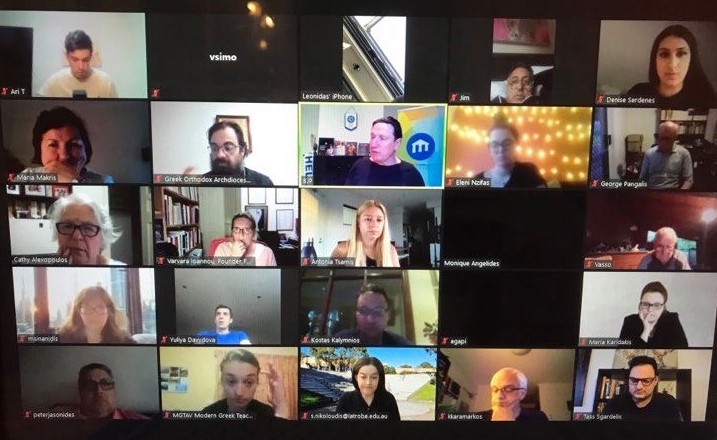
Prominent members of the Greek Australian community attended the urgent meeting. Photo: The Greek Herald.

In response to this community outrage, The Greek Herald has received an exclusive statement from a spokesperson for La Trobe University.

In the statement, the spokeswoman says the proposed changes are part of “the University’s response to the profound financial impact of the COVID-19 pandemic on the University.”

“Market demand and student enrolments for Greek Studies have been consistently low for many years. While we have appreciated some external funding support, it is important that our courses and subjects are self-sustaining and respond to student demand,” the statement reads.

“Accordingly, a change proposal has been released which, subject to the outcomes of staff consultation, may regrettably result in La Trobe closing the teaching of our Greek Studies program from 2022.”

Full statement can be found here.

Chaniotaki: ‘Language and culture cannot be erased’

Sophia Chaniotaki is the Vice President of the Modern Greek Teachers’ Association of Victoria (MGTAV) and since January, a postgraduate student with The Greek Studies Program at La Trobe.

Speaking to The Greek Herald about the university’s intention to discontinue the Greek Studies Program, she explains that La Trobe’s announcement did not give the students the opportunity to intensify their efforts in order to keep the program alive.

“There are students who wish to continue their studies, both at undergraduate and postgraduate levels, while there is research in the department that is ongoing. The University gave us a period of very few days to organize and coordinate our efforts to support the program. The consultation period will last until Wednesday 25 November and we need everyone’s support,” Ms Chaniotaki said.

Sophia Chaniotaki is the Vice President of the Modern Greek Teachers’ Association of Victoria (MGTAV).

Commenting on the petition the National Union of Greek Australian Students of Victoria (NUGAS) initiated late last week, she said the students remain hopeful that Australia’s Greek Community will “realize the value of the program before it’s too late”.

“There are thousands of Greeks living in Victoria and this is the only Greek program we have on a tertiary level. Is this the future we envision for our rich and valuable culture and language?”

“Australia is a multicultural country and Greeks have proved that language and culture cannot be erased,” said Chaniotaki.

Papastergiadis: ‘A broad subcommittee will be formed to lead further action’

After hearing the news of the cancelation, the Greek Orthodox Community of Melbourne and Victoria (GOCMV) immediately wrote to the University’s Vice Chancellor expressing their concerns and seeking an immediate meeting.

“Given the efforts that so many organisations -including the Greek Community of Melbourne- put on maintaining the language through primary and secondary school, the opportunity to continue at a tertiary level is equally important. We don’t want the door shut on our students,” GOCMV’s President, Bill Papastergiadis told The Greek Herald on Monday.
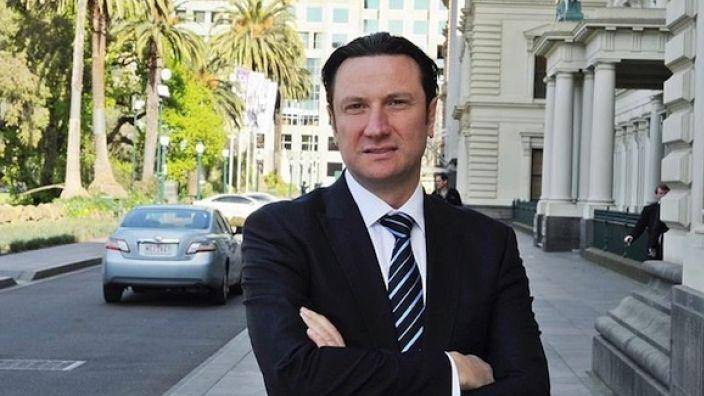
“From our perspective culture and language are intertwined….People can identify with their background, their ethnicity and their culture through language,” he explained.

READ MORE: Greek Community of Melbourne calls for immediate intervention in La Trobe University’s threat to Greek Studies.

“A broad subcommittee will be formed with members from La Trobe, the Archdiocese, the Student Union, The Consulate and other community groups and this subcommittee will formulate the strategy and lead further actions.

“Part of what we are going to do is continue with the petition, send letters to the university and we’ve also reached out to members of Parliament of Greek background on a Federal and State level,” Papastergiadis concluded.

* You can sign the petition here to save Modern Greek Studies at La Trobe University. An information session will be held by ‘Greek Studies at La Trobe University‘ this Wednesday, November 18 at 6.30pm.
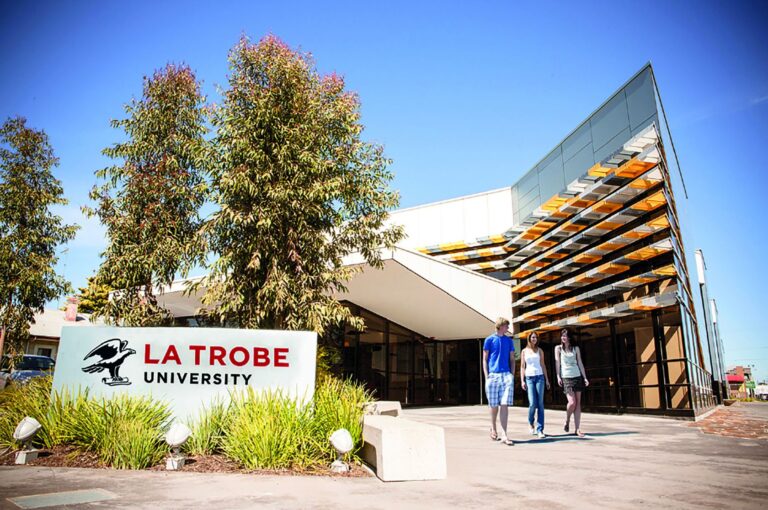
Response from La Trobe University about Modern Greek Studies

0

On 11 November, La Trobe University shared a change program for consultation with staff in the School of Humanities and Social Sciences (HUSS).

These changes are part of the University’s response to the profound financial impact of the COVID-19 pandemic on the University. The University faces a significant revenue loss, largely caused by the significant drop in international student enrolment because of international border closures. The University’s two-year (2020 and 2021) revenue shortfall forecast is between $265m – $335m.

All areas of the University have been required to deliver business plans outlining how they will implement the University’s new Strategic Plan, while contributing to the savings required to deliver a balanced budget for the University in 2020 and 2021 and return it to growth in 2022.

The School of HUSS has reviewed its course and subject portfolios as part of this business planning process and, where courses and subjects have experienced consistently low enrolments and are financially unsustainable, a small number are proposed for closure.

Market demand and student enrolments for Greek Studies have been consistently low for many years. While we have appreciated some external funding support, it is important that our courses and subjects are self-sustaining and respond to student demand.

Accordingly, a change proposal has been released which, subject to the outcomes of staff consultation, may regrettably result in La Trobe closing the teaching of our Greek Studies program from 2022.

All current students on the program will have the opportunity to complete their degrees and will be supported in the transition.

The La Trobe University Library will continue to house and maintain the Dardalis Archives of the Hellenic Diaspora.

The University also remains committed to the A.D Trendall Research Centre for Ancient Mediterranean Studies.

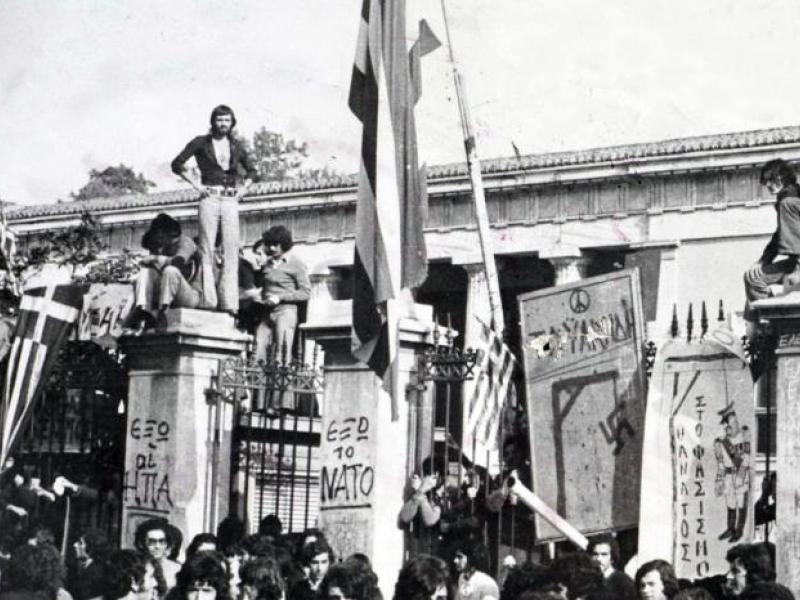
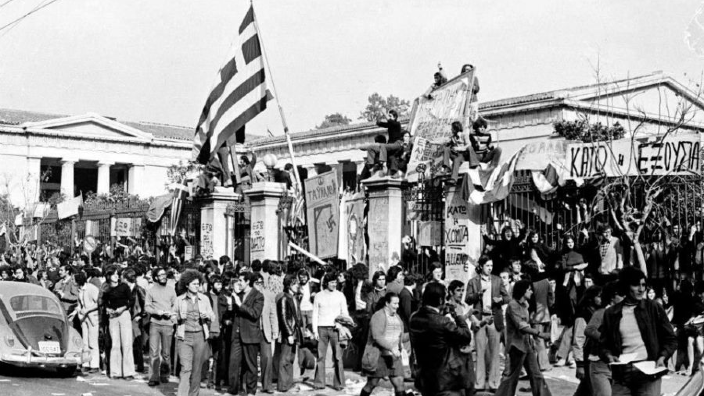
Polytechnic Uprising: Spark of the revolution against the Greek Junta

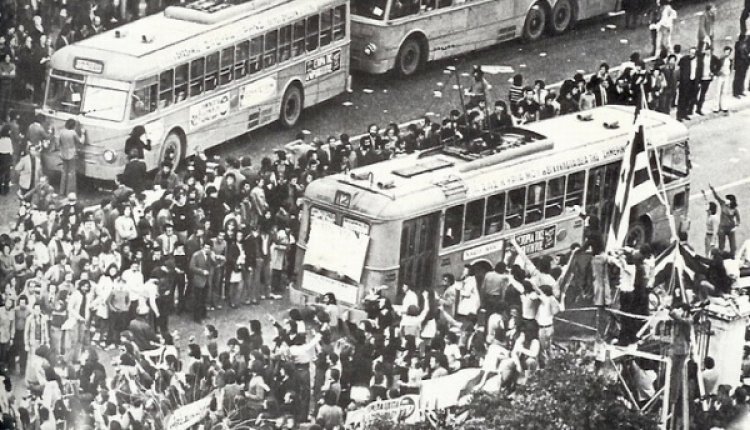
The Polytechnic Uprising in November 1973 took place six years after the Greek Junta had imposed a brutal dictatorship on the country. The protest, while started by a group of university students, ultimately heralded the fall of the Junta and brought a spark of revolution to the people of Greece.

The events of November 1973 were brewed from the increased tension witnessed on February 14 in the same year. On this day, students of Athens gathered at the Polytechnic to protest Law 1347, which dictated compulsory conscription of those who underwent trade union activity during their studies.  The police, violating the university asylum, entered the Polytechnic and arrested 11 students.

On the morning of November 14, 1973, students gathered in the courtyard of the Polytechnic and decided to abstain from classes. Together, they protested and issued a resolution, calling for the revocation of the Junta’s decisions to hold student elections, an increase in education spending to 20 percent of the budget, and the revocation of Law 1347.

Students put up slogans and graffiti comparing the Greek junta with Nazi Germany. Once police realised they were incapable of stopping the mass-growing crowd, the decision was made to occupy the Polytechnic.

The next day, a committee was set up, comprising of 22 students and 2 workers, helping lead the struggle. A radio station was set up, with speakers Maria Damanaki and Dimitris Papachristou helping inform students and the rest of the world about the decisions of the Coordinating Committee and the student assemblies. This day is known commonly as ‘celebration day’.

On November 16, 1973, chaos ensued. For the first time since the Junta took over, Molotov cocktails were thrown and fires erupted across the city. Central roads were closed as demonstrations and attacks against neighbouring ministries took place.

The radio broadcast proclaimed: “Polytechneion here! Polytechneion here! People of Greece, the Polytechneion is the flag bearer of our struggle and your struggle, our common struggle against the dictatorship and for democracy!”

At this point, dictator Papadopoulos realised the police would not be able to enter the Polytechnic, deciding to call in the Greek army.

Three LOC squads and one paratrooper squadron from Thessaloniki gathered, along with three tanks which descended from Goudis to the Polytechnic. Two were parked on Tositsa and Stournara streets, blocking the side gates of the institution and the other took a position opposite the main gate. The Student Coordinating Committee requested negotiations, but their request was rejected.

At 3 a.m. on November 17, the tank opposite the main gate smashed through the Polytechnic University fence. LOC squads bursted in, together with police officer groups, invaded the Polytechnic and chased students who tried to escape to the surrounding streets. Initial reports by police stated that 840 people were arrested, along with 24 civilian deaths.

Later, it was revealed that arrest counts exceeded 2400 people. More recent data, shows that at least 40 civilians were killed, 24 identified and at least 16 unidentified.

Dictator George Papadopoulos had declared martial law, but was overthrown in a coup on November 25 by brigadier Dimitrios Ioannidis. Ioannidis had imposed a harsher regime than that of Papadopoulos, yet collapsed on July 23, 1974, after the Turkish invasion of Cyprus.

Helen Kapalos on her Greek heritage and ‘undignified’ sacking from Channel 10

Journalist and former TV presenter, Helen Kapalos is proud of her Greek heritage. So when a TV boss asked her to tone down her ethnicity by changing her surname, she found the encounter “jarring.”

“Early on in my career, I did have a news editor who wanted me to change my name from Kapalos to Smith. That was at Channel 9, but I won’t mention who it was,” Kapalos told the Herald Sun’s ‘Sacked: Showbiz’ podcast.

“It was really jarring to have that happen.”

Kapalos says the suggestion to switch surnames followed a conversation with her parents on the topic.

“I remember telling them, ‘I know you want me to change my name if I’m married, or have a family and so on, but I’m very attached to my name’,” Kapalos explains.

“It’s a really important part of my cultural identity and that heritage is something I’m proud of. I made a decision… in my teenage years that I’d always have my name.”

Fortunately for Kapalos, she says that although she did face resistance to her Greek heritage early in her career, things changed for the better after moving to Melbourne.

“My Greek surname was more of a problem early in my career, (and) maybe it was part of that cycle of time. In Melbourne, it was much more accepted because I could identify with a Greek audience.”

Helen Kapalos. Picture: David Caird.

Kapalos details her ‘undignified’ sacking from Channel 10:

Kapalos started her career on radio before taking jobs at Channel 9 as a reporter, and Channel 7 as host of Today Tonight and a senior correspondent on Sunday Night.

Working at Channel 10 for six years, Kapalos also helmed the nightly news bulletin with Mal Walden. She was sacked on a Friday evening, a day before she was due to jet off to New York for a holiday.

“I had a couple of weeks of what I thought had been really successful work. I was doing a lot of fundraising (and) I’d finished a marathon bike ride for Channel 10,” Kapalos says on the podcast.

Helen Kapalos and Mal Walden at Channel 10.

“I didn’t know anything like this was in the wings, other than there was some talk of Mal possibly retiring. That was all really.”

After wrapping the bulletin one night, Kapalos was called to an office.

“I walked into the room and there was the news editor and beside him was the head of HR. They got straight into it and said, ‘We’re going to a single reader news next year and it won’t be you’.”

Kapalos was blindsided. “Can you give me a reason?” she asked. “Has it been a performance issue?”

“The conversation degenerated in a way because there wasn’t anything solid they could point to. It was, ‘No this is a change of direction for the network, thank you for your service. There is no real need to come back after your holidays,’ which was a massive blow. I thought, ‘Wow, I’m not even going to get to say goodbye to the viewers’.”

Kapalos says management told her to come back for her belongings after her vacation.

“I said, ‘No, I want to leave. I want this to be absolutely over. You don’t want me back, so I’m going.’ I was in shock,” Kapalos remembers.

“I think what was disappointing for me was it felt like a very undignified way to be treated after such hard work and loyal service. It was quite devastating to be farewelled in that way.”

After her stints with the TV networks, Kapalos wrote, directed and executive produced the doco, A Life Of Its Own, based on a series of stories about medical marijuana she did for Sunday Night. She also served as Chair of the Victorian Multicultural Commission for four years.

Construction workers unearth ancient Greek sculpture in downtown Athens

Α spectacular ancient Greek sculpture was unearthed in the downtown Agia Irini (St Irene) Square of Athens on Saturday during construction work.

The news was shared on Facebook by the Mayor of Athens, Kostas Bakoyannis.

“It was found just one and a half meters below the ground, during the infrastructure upgrade works on Aeolos Street on Agia Irini Square… Unique Athens!” Mr Bakoyannis wrote.

In a statement, the Greek Culture Ministry said the finding is in good condition and has been transferred to an Antiquities Ephorate warehouse.

Archaeologists there will study the statue to determine its approximate date and decipher the person, real or imaginary, it depicts.

Some speculate the marble head belongs to an ancient Greek God, probably Zeus, others say it depicts a prominent ancient Athenian.

Others claim that the sculpture represents Hermes Propylaeus of Alkamenos and it is believed to date back to the 4th or 3rd century AD.

Only time will tell which person the head depicts.

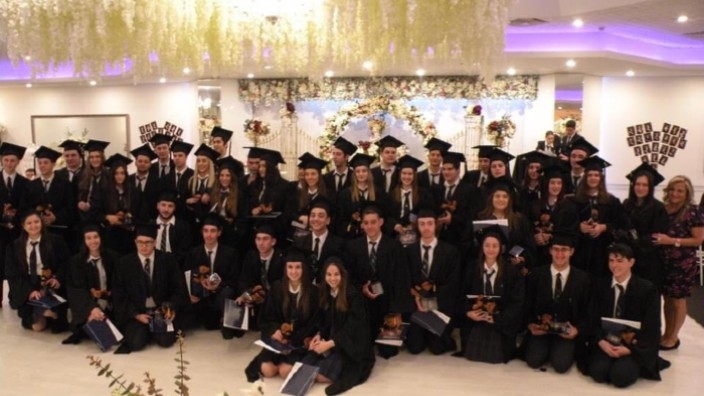
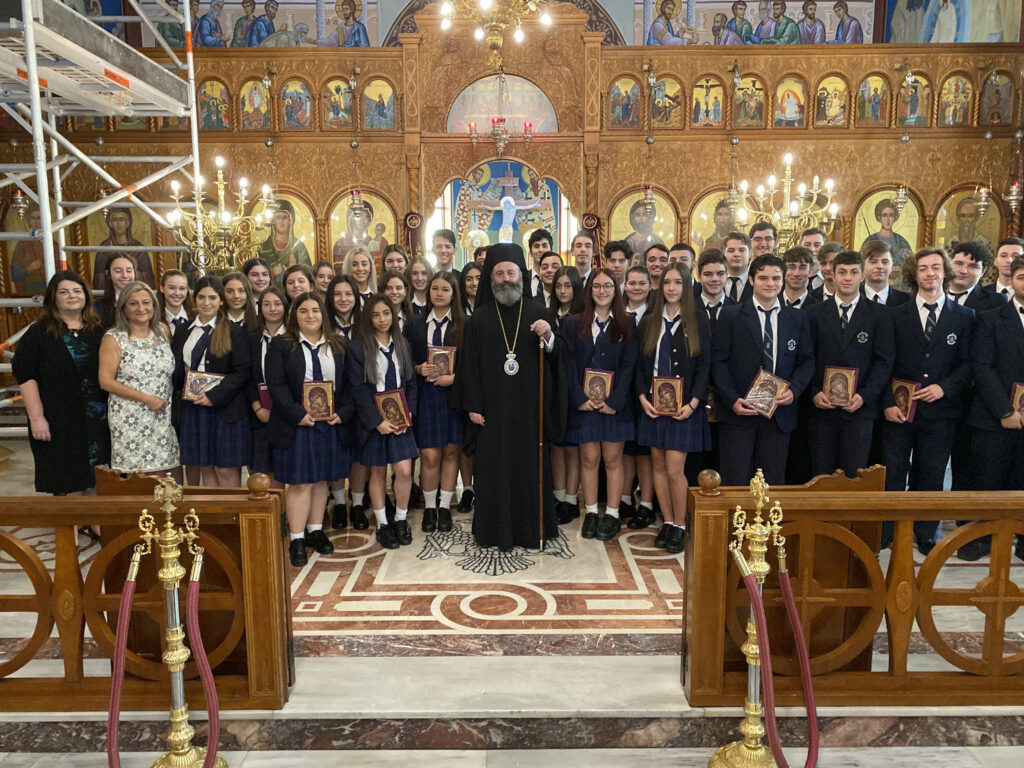
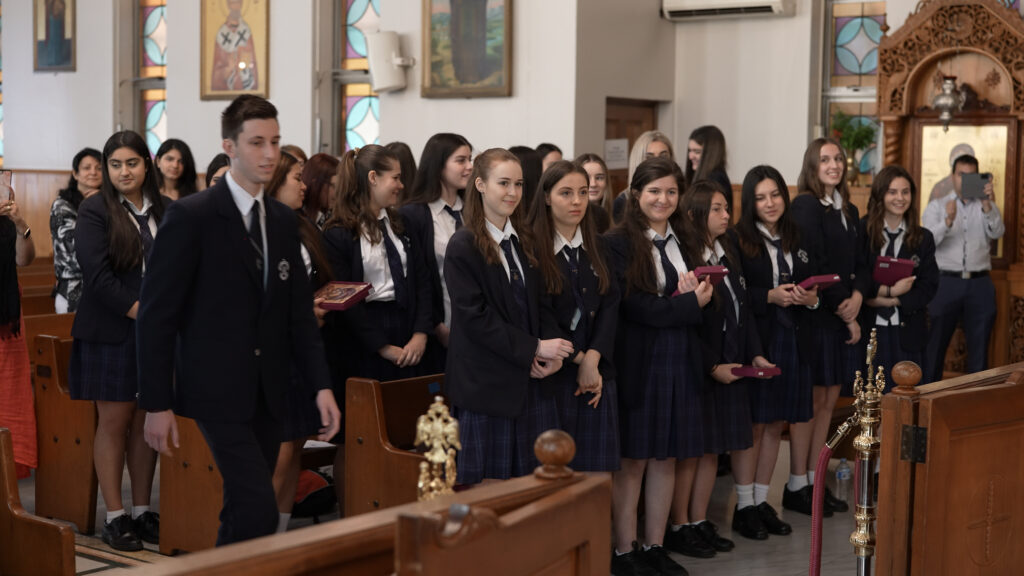
St Euphemia College’s Year 12 cohort given touching graduation ceremony

Year 12 students from St Euphemia College marked the end of their HSC exams with a touching graduation ceremony, which included a church service and graduation dinner.

The church service was held in the early morning of November 12 at St Euphemia Greek Orthodox Church and was presided over by His Eminence Archbishop Makarios.

During the service, Archbishop Makarios addressed the Year 12 students, congratulating them on reaching the end of their high school education despite the challenges they faced due to the coronavirus pandemic.

“Despite the difficulties you encountered, you persevered without losing courage or hope…” Archbishop Makarios said in his speech.

“With young people like you entering and participating actively in society, I am convinced that we have a bright future.”

Archbishop Makarios then concluded the service by offering the graduates an icon of the Virgin Mary with Christ.

The church service was followed by a graduation dinner held at the Himalaya Emporium Function Centre in Bankstown.

The dinner was attended by the School Principal, Father Peter Mavrommatis, Father Panagiotis Protopsaltis, members of the board, teachers, parents and students.

Pastoral Care coordinator, Mrs Papastamatis, farewelled her Year 12 cohort with a heartfelt speech and students later received a mug and graduation teddy bear from the school and a cross necklace from Mrs Papastamatis.

Sophie Cotsis MP hosts ‘Multicultural Mental Health Roundtable’ in Canterbury

Sophie Cotsis, Member for Canterbury, has hosted a “Multicultural Mental Health Roundtable” with Shadow Minister for Mental Health, The Hon. Tara Moriarty MLC.

Together they met with key organisations that provide mental health services, and other stakeholders, to discuss the challenges in mental health and the impact of COVID-19.

One study conducted by the Black Dog Institute and University of New South Wales, found 78 percent of respondents reported their mental health had worsened since the COVID-19 outbreak. Additionally, 64 percent of respondents experienced elevated depression, anxiety and stress levels.

“Mental health has always been an important issue, however, COVID-19 has had an unprecedented impact on our community’s mental health, particularly for residents from multicultural backgrounds where mental health is a taboo topic,” Ms Cotsis says.

Key findings of the roundtable include:

  • 20 psychologist sessions, up from 10 before the pandemic, that are subsidised by Medicare need to remain as a permanent number.
  • More funding needed for mental health workers, particularly case workers.
  • More funding is required to employ bi-lingual workers for those from CALD communities.
  • Online mental health services have neglected the elderly who may have difficulties with technology.
  • Need for greater focus on enhancing the capabilities of existing community organisations to provide greater services.

Ms Cotsis stressed: “Many mental health service providers receive no funding or support from Government. Demand for these services are severely greater than the resources allocated to our community to help with mental health.”

Sydney Women’s Counselling Centre highlighted they have had to reject 212 people from their services due to a lack of funding and resources to assist local residents in their time of need.

Ms Cotsis added: “I want to thank our community organisations for sharing their experiences and highlighting systemic issues due to lack of funding from State and Federal Governments.”

“Thank you to The Hon. Tara Moriarty for chairing the meeting and listening to the concerns of our multicultural communities.”

Organisations that participated in the roundtable include:

  • Greek Orthodox Community.
  • Settlement Services International.
  • Chinese Australian Services Society.
  • Greek Welfare Centre.
  • Lebanese Muslim Association.
  • Muslim Care.
  • Sydney Women’s Counselling Centre.
  • Metro Assist.
  • Barnardo’s.
  • Candalepas Psychologist.
  • Kogarah Community Services.
  • City of Canterbury Bankstown Council.

Victims of Arkadi holocaust commemorated with church service and wreath laying ceremony

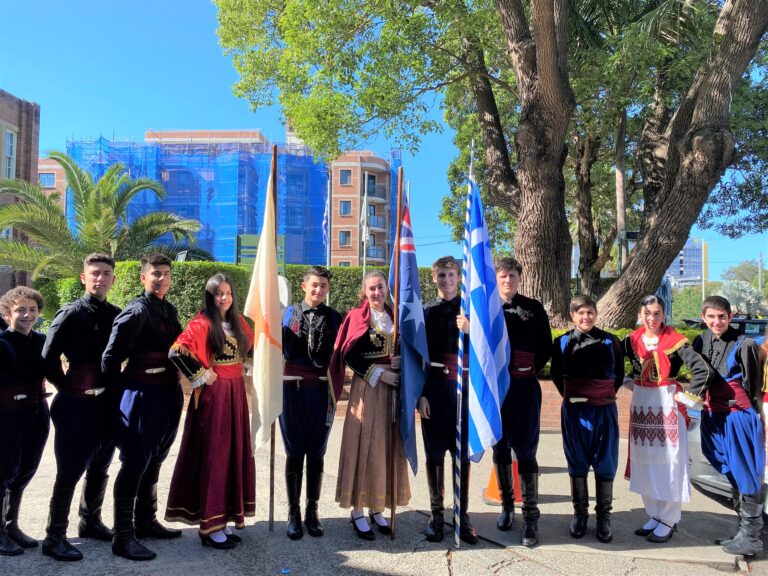
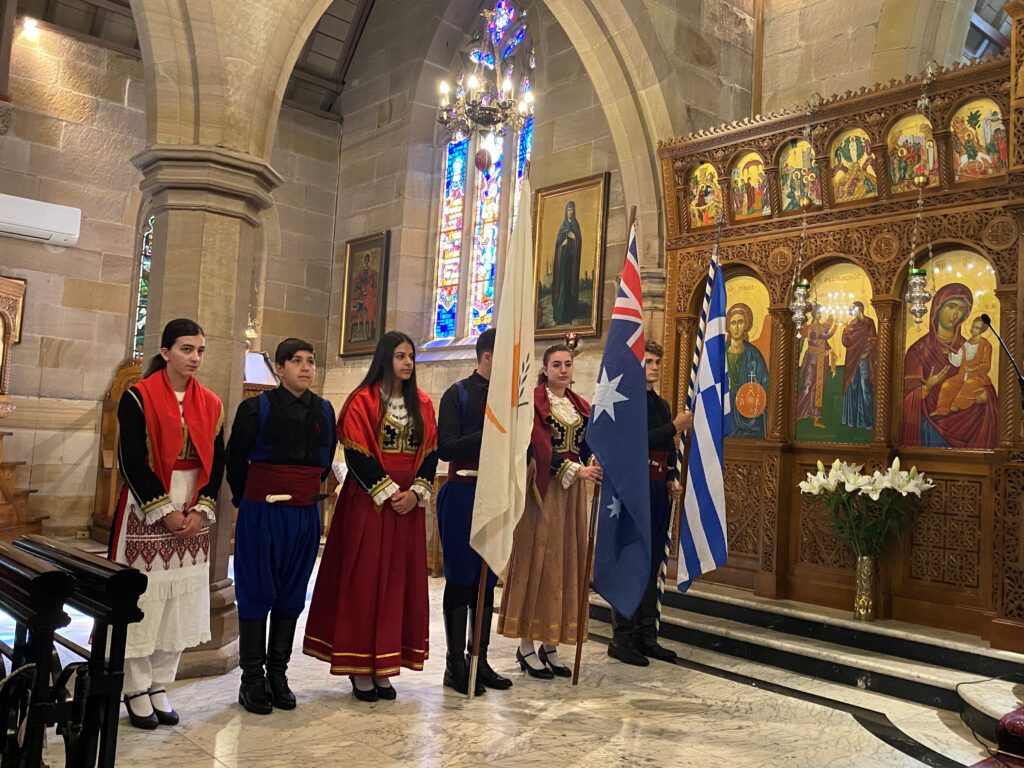
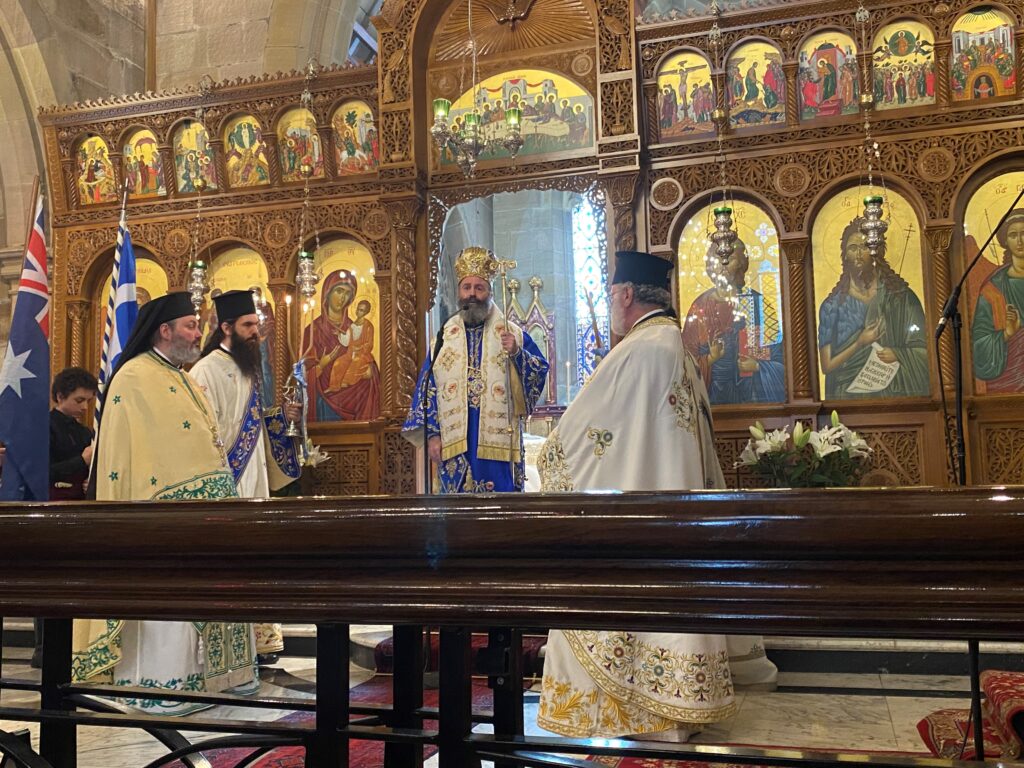
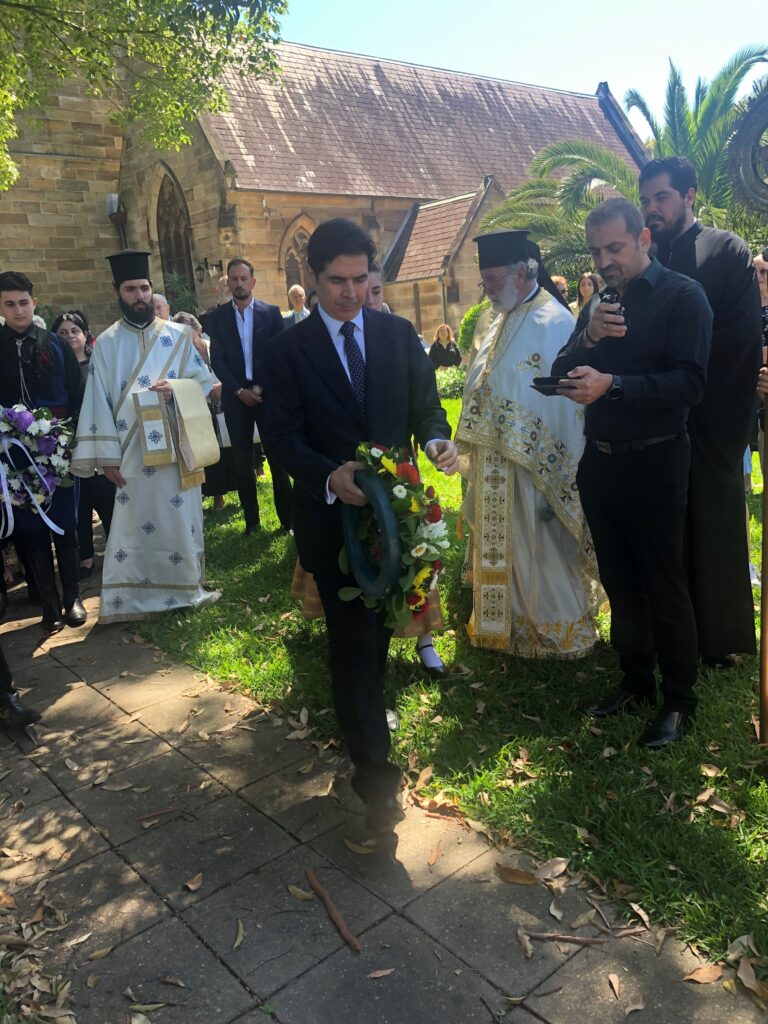
A special church service and wreath laying ceremony was held at the Greek Orthodox Cathedral of The Annunciation of Our Lady in Redfern on Sunday to commemorate the victims of the Arkadi Monastery holocaust.

Organised by the Cretan Association of Sydney and New South Wales, the commemoration events are held annually to remember the Cretans who fought tirelessly for the independence and freedom of Crete, including those who paid the ultimate sacrifice at the Monastery of Arkadi in 1866. 

READ MORE: On This Day: The holocaust of the Arkadi Monastery in Crete.

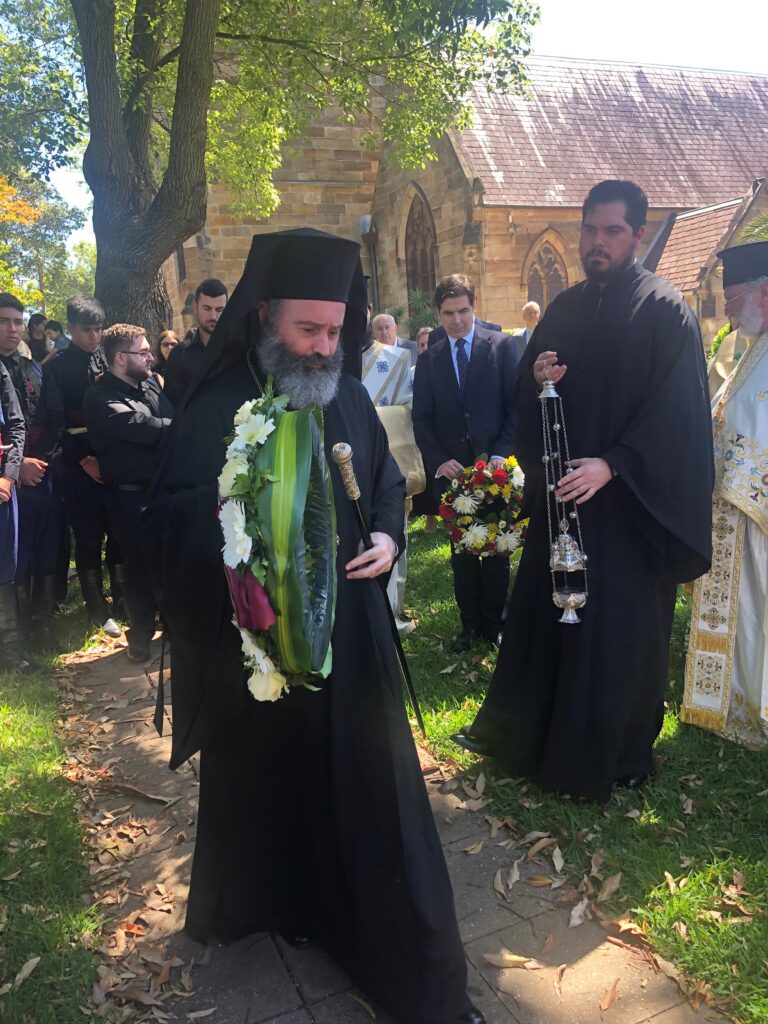
The church service was presided by His Eminence Archbishop Makarios, who was accompanied by Very Reverend, Archmandrite Christodoulos Economou, Very Reverend, Father Nicholas Bozikis and Archdeacon Athenagoras Karakonstandakis. 

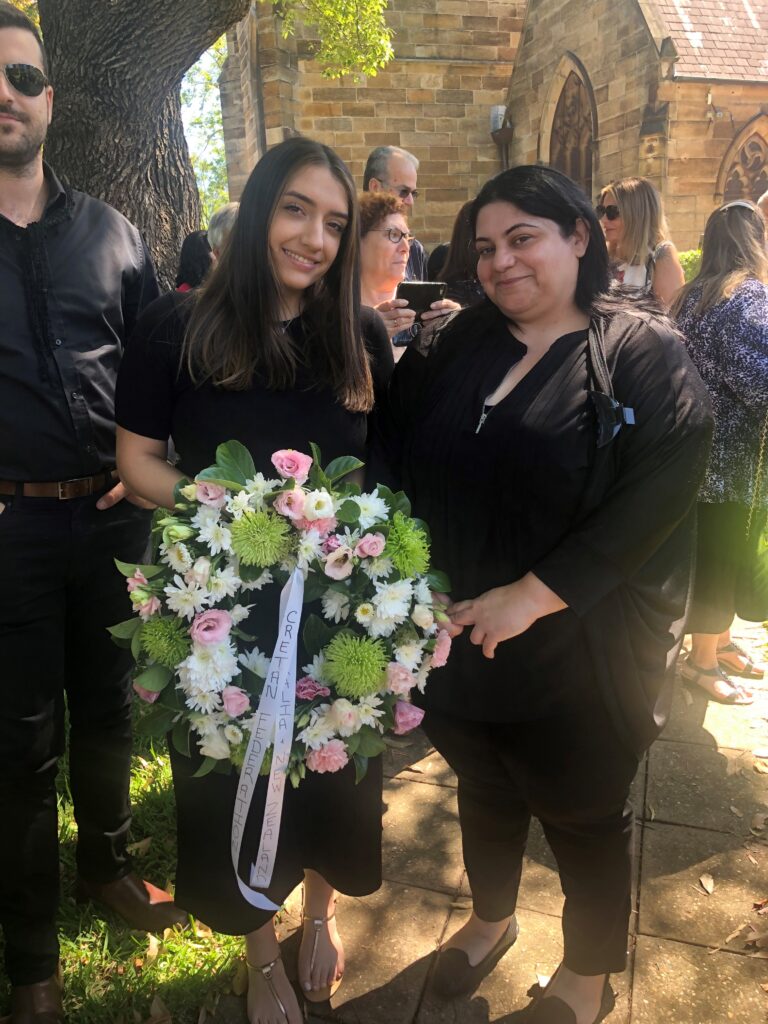
Also present on the day were the Consul General of Greece in Sydney, Mr Christos Karras, President of the Cretan Association of Sydney and NSW, Mr Terry Saviolakis, President of the Cretan Youth of Sydney and NSW, Mr Alexander Mountakis, Vice President of the Cretan Federation of Australia and New Zealand, Ms Maria Lagoudakis, and Ms Hara Lavdioti, representing Cretan Youth of Australia and NZ.

In a short speech after the Divine Liturgy, Archbishop Makarios said the courage of the Cretans in the Arkadi monastery made an impact globally and “strengthened the Philhellenic spirit and movement.”

“We must not forget where we started and we must not forget the courage of our ancestors,” Archbishop Makarios said.

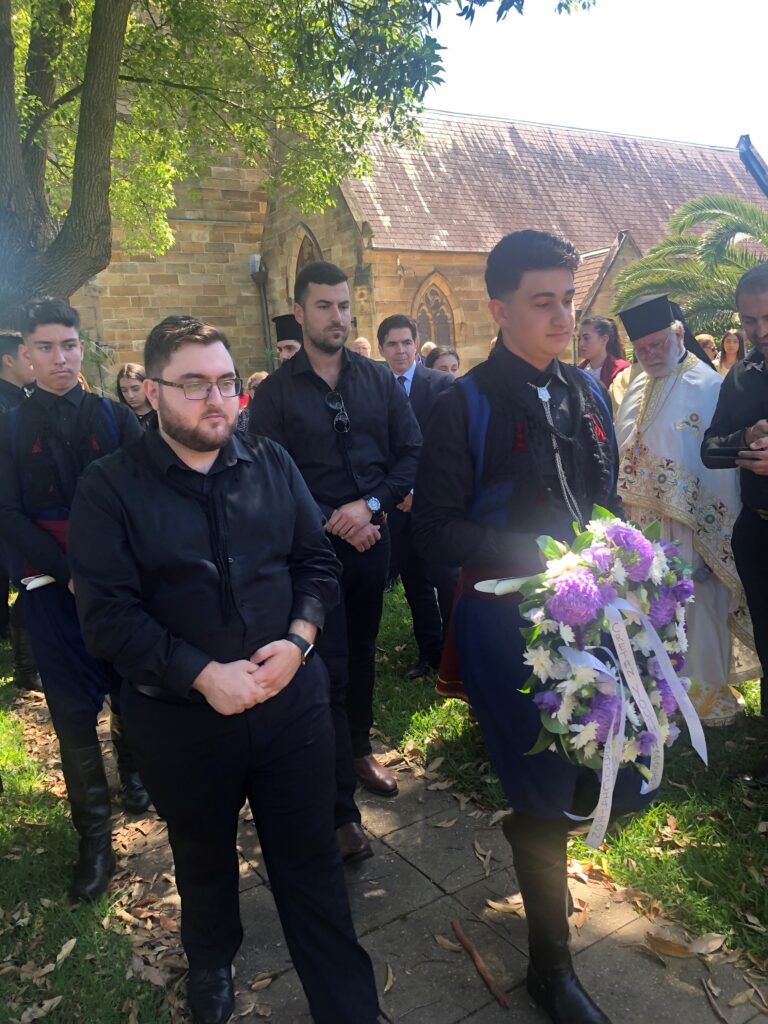
The liturgy was followed by a memorial service at the Archdiocese’s Cenotaph Monument, where wreaths were laid by guests, surrounded by the dancing groups and members of the Cretan Association. 

READ MORE: Cretan community of Sydney commemorates the holocaust of Arkadi.

Greece wins at Moldova to set up Nations League decider with Slovenia

Greece saw off Moldova 2-0 at Chisinau on Sunday to set up a Nations League group decider against leader Slovenia, where Greece must take all three points to finish first and get promotion to League B of the tournament, as well as maintaining some chances for qualifying to the 2022 World Cup through this route.

Enjoying possession of more than 75% in the first half, Greece increased the pressure as the game went along, as Moldova was reduced to defending.

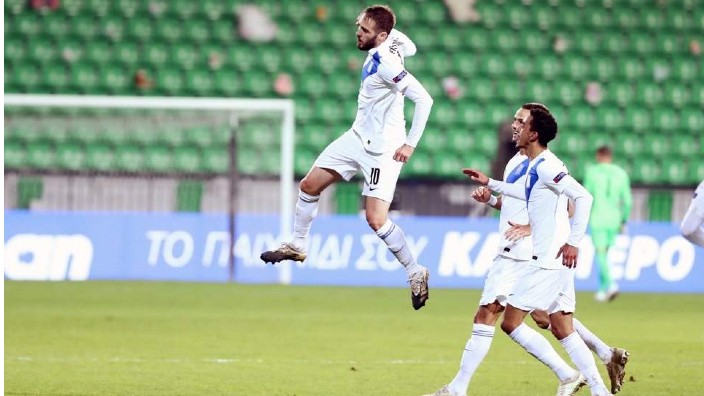
It took the Greeks more than half an hour to break the deadlock, but they did so in style on 32nd minute with a powerful volley from 25 meters out by Kostas Fortounis.

Barely 10 minutes later captain Tasos Bakasetas doubled Greece’s lead with a shot from within the box.

In the second half Moldova raised its game a little but could not really threaten the Greeks, who kept up the pressure for long spells and had some decent chances for a third goal.

All in all it was a good enough performance for the Greek national team that will boost its confidence for the final match of the group.

The decisive game against Slovenia is taking place on Wednesday in Athens, at the Georgios Kamaras stadium at Rizoupoli.

Source: Ekathimerini.

Greek police ban public gatherings ahead of Polytechnic Uprising anniversary

0

A four-day ban throughout Greece was put into effect on Sunday for all public gatherings of more than four people, according to the Greek police.

The ban, which runs from Sunday, November 15, to Wednesday, November 18, comes as Greece prepares to celebrate the 47th anniversary of the Athens Polytechnic Uprising on November 17.

The uprising was a youth revolt that ultimately led to the collapse of the military junta a few months later and the death of at least 24 people.

Every year, a traditional march from the Polytechnic School to the US Embassy takes place to mark the anniversary but there has been widespread political controversy recently about whether the march should take place due to the coronavirus pandemic.

READ MORE: Stelios Petsas: Annual Athens Polytechnic Uprising march unlikely to go ahead.

The Greek government has urged people not to participate and has threatened with heavy fines those who do not obey the extraordinary rules.

Specifically, organisations which prepare and execute any protest will be fined 5,000 euro, individuals who organise gatherings face fines of 3,000 euro each, and individuals who choose to attend such gatherings face a penalty of 300 euro.

But the Secretary-General of the Greek Communist Party KKE, Dimitris Koutsoumbas, said that the march to the US Embassy will have to take place, even under strict social distancing measures.

“All the measures will be strictly observed with the use of face masks and antiseptics, keeping the necessary distances and of course, we urge people belonging to vulnerable groups or those who are ill to stay at home,” Mr Koutsoumbas said on Saturday when speaking with the public broadcaster ERT.

READ MORE: Tensions at Athens University rise as anniversary of ‘Athens Polytechnic Uprising’ approaches.