Home Blog Page 1640

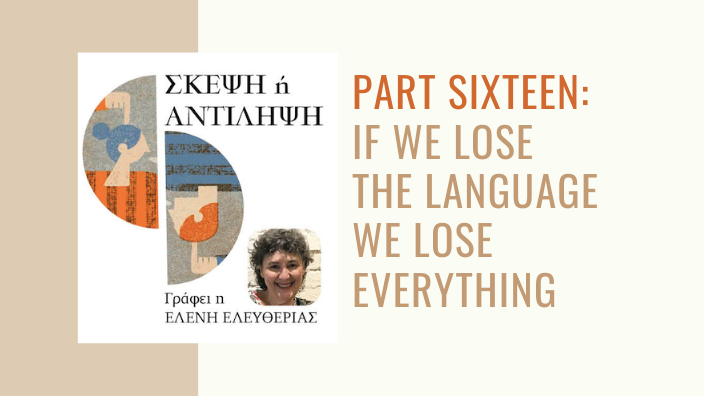
Insight or Perspective: How can associations help the continuation of the Greek language?

By Eleni Elefterias

Many Greek associations have buildings lying empty or underused. Others rent out their buildings and have amassed wealth and continue to add properties to their portfolio.

In some strange way it seems they want to leave a legacy that is equated to buildings.

However, an empty building or a rented one that does not offer anything to the culture is not a real asset. I understand. Many associations are made up of good people, who worked hard to create the club they have.

Some however, are not so transparent, they promote nepotism within their committees. It is all about control and the unfortunate consequences is the deciphering of funds from the association’s coffers whether it is for bad business decisions or outright corruption. 

The elderly members may have lost faith in the younger generation and want to protect their assets.

The younger generation may not be that dedicated to the continuation of their culture and language or their interests vary greatly to the original goals of their association’s constitution.

In any case there is a lack of vision for the future of many of these associations.

A simple solution may be to amalgamate, but most will not consider this option for the simple reason of mistrust and with good cause, I am sad to say.

There is plenty of money and assets around to save the Greek language and support many Greek schools and universities and even to support initiatives such as the publication of bilingual educational resources, but those who hold the keys to making this a reality lack the vision or trust to enable it to occur. 

What do you think is the problem with Greek language learning in Australia and do you have a solution?

I will quote respondents’ answers in a future column. Email your answers to eleni@elenielefterias.com.au

READ MORE: Insight or Perspective: A solution for the continuation of Modern Greek Studies in Sydney

*Eleni Elefterias-Kostakidis is a teacher of Modern Greek and University lecturer. 

Read Eleni Elefterias’ column ‘Insight or Perspective’ in Greek, every Saturday in The Greek Herald’s print edition or get your subscription here.
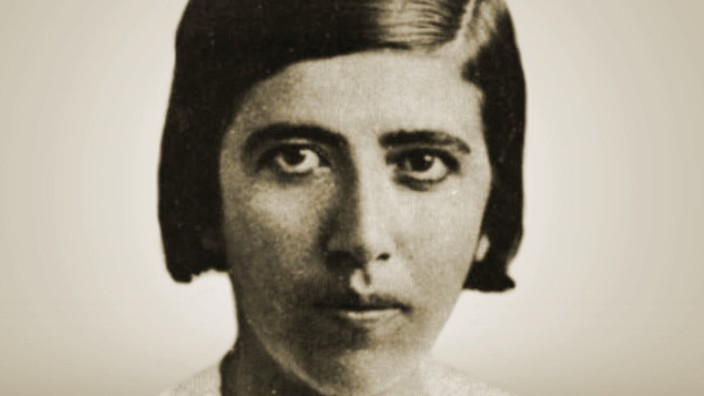
On This Day: Greek heroine of the resistance, Ilektra Apostolou, was born

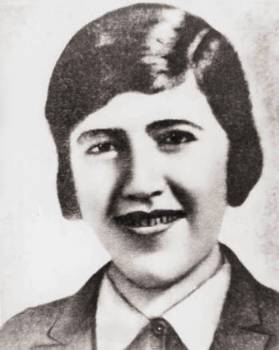
On this day in 1911, little-known Greek heroine of the resistance, Ilektra Apostolou, was born. To mark the occasion of her birth, we take a look back at her incredible life.

Early Life:

Ilektra Apostolou was born in 1911 in Iraklion-Attikis, a suburb of Athens. She received her secondary education in a German-language school in Athens.

At age 13, she became a passionate Communist and joined the Greek Communist Youth League, a decision that shocked her middle-class parents.

Revolutionary sentiments were strong in her generation, and her brother Lefteris Apostolou (1903–1981) became an important Communist leader at the same time.

Ilektra formed a small group that sent financial assistance to exiled Communists and their families.

Greek Communist Leader:

From 1931 to 1933, Ilektra gained organisational experience as director of a factory workers’ club. Remaining a Communist, she devoted virtually all her time to revolutionary political activity.

Ilektra Apostolou was born in 1911 in Iraklion-Attikis, Athens.

In 1935, she represented the Greek Communist movement as a delegate for Greek women at the International Conference against Fascism held in Paris. She traveled to several European countries to meet with Communists and other anti-Fascist youth leaders.

Back in Greece, she spread the message that the growing threat of Fascism was an enemy all working men and women must fight.

In 1936, General Metaxas established a Fascist dictatorship in Greece, promising its conservative supporters to crack down hard on the Marxist menace. The anti-Communist intelligence office in Athens regarded Ilektra one of the most potentially dangerous leaders of the younger generation of Communists.

Shortly after Metaxas came to power, she was arrested and sentenced to two years’ imprisonment for disseminating subversive “anti-Greek” literature.

Unbroken in captivity, she gave lectures to her fellow inmates. Ilektra had newspapers smuggled into her cell so that she could remain informed of the worsening political situation in Greece and the world at large.

After a short period of freedom, she was arrested again in 1939 and sent to the distant town of Anaphi. She had been married briefly to a doctor who renounced his Communist beliefs after arrest, ending their marriage.

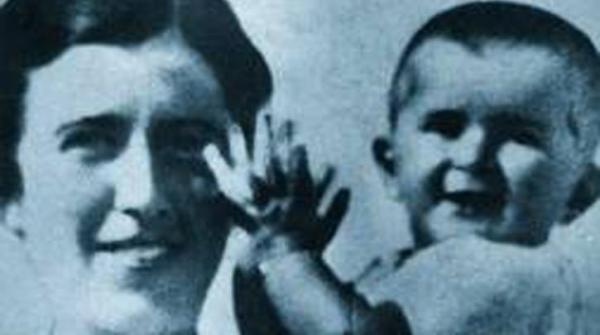
Ilektra with her daughter Agni in exile in Anafi.

Her daughter Agni was born in Anaphi during the end of that relationship. The harsh conditions of her imprisonment exacerbated her deteriorating health, and Electra was eventually transported to a prison hospital in Athens. In 1941, she made a bold escape from this hospital.

Actions during the Greek Revolution and Death:

By this time, German forces occupied Greece, and it was difficult for Ilektra to evade capture. In the spring of 1941, patriotic Greeks—incensed by their harsh treatment at the Nazis’ hands—began to actively resist.

From June 1942 to February 1943, Ilektra led a resistance organisation of young Greek anti-Fascists who called themselves the “New Freedom” group. A militant Marxist revolutionary, one of her tasks was to weed out individuals likely to succumb to Fascist blandishments or torture.

In 1943, Ilektra was instrumental in founding EPON, the youth movement of EAM or National Liberation Front. The Communist Party created this liberation organisation to lead Greeks of all political sides in a broad-based struggle against Nazi occupiers and their Greek stooges.

In 1944, Ilektra’s luck ran out and she was arrested by the Greek version of the Gestapo. Despite horrendous torture, she revealed nothing about her organisation or its members.

When it became obvious that she would never provide intelligence of any value, Ilektra was executed on July 26, 1944.

Her brother Lefteris, himself a leader in the Communist resistance movement, was also arrested by the Germans. He escaped and was never recaptured, living until his death in Athens in November 1981 at the age of 78. In honour of his martyred sister, Lefteris Apostolou named his daughter Electra.

Source: encyclopedia.com.

Greece extends lockdown to more areas to stem spread of pandemic

0

Greece on Friday extended lockdown restrictions to more areas of the country to stem the spread of COVID-19 infections but lifted it in others where infections receded, its deputy civil protection minister said.

Effective on Saturday the islands of Kalymnos, Cephalonia and Thassos, the city of Heraklion in Crete, Corinth, Nemea and Argos in the Peloponnese and the municipality of Evosmos in the north will be in lockdown until March 1, authorities said.

This means schools, hair salons and non-essential retail shops will close.

“The epidemiological load in the community remains stable. The British variant shows wide dispersion with more than 760 infections,” said Vana Papaevangelou, a member of the committee of infectious disease experts advising the government.

She said health authorities were quite concerned with the spread of the South African variant of the virus in Evosmos, a suburb of the Thessaloniki urban area in northern Greece.

COVID-19 related hospital admissions had risen to an average of 218 daily and the occupancy rate at COVID-19 intensive care units in Athens hospitals stood at 83%.

But the picture in other areas of the country had improved with infections receding and authorities lifted lockdown restrictions in the islands of Santorini and Zakynthos, in Sparta and the town of Agios Nikolaos in Crete.

Greece, which has fared relatively better than others in Europe during the pandemic, was forced to impose a partial lockdown in November after infections began climbing, threatening to overwhelm a health system weakened by a decade-long financial crisis.

Earlier this month the government announced a full lockdown in metropolitan Athens to curb a resurgence in coronavirus cases until Feb. 28.

On Friday, health authorities reported 1,460 new coronavirus cases and 28 deaths, bringing total infections to 177,494 since the first case was detected in February last year and COVID-related deaths to 6,249.

Source: Reuters

Stefanos Tsitsipas bows out of Australian Open despite incredible tournament run

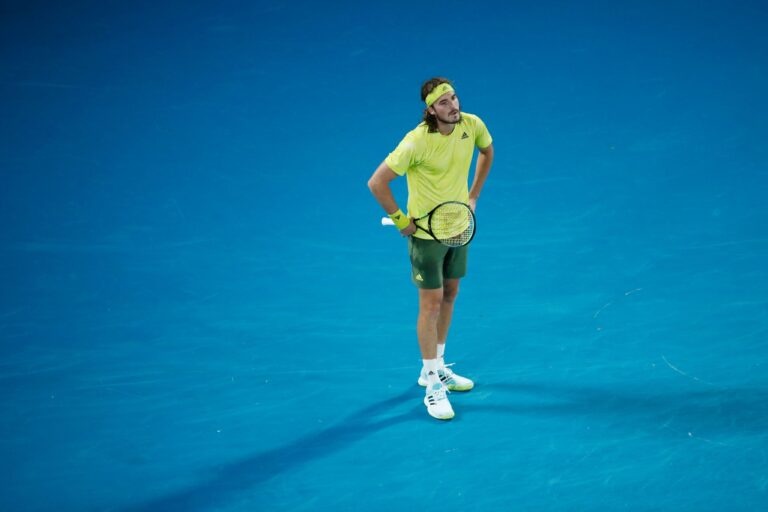
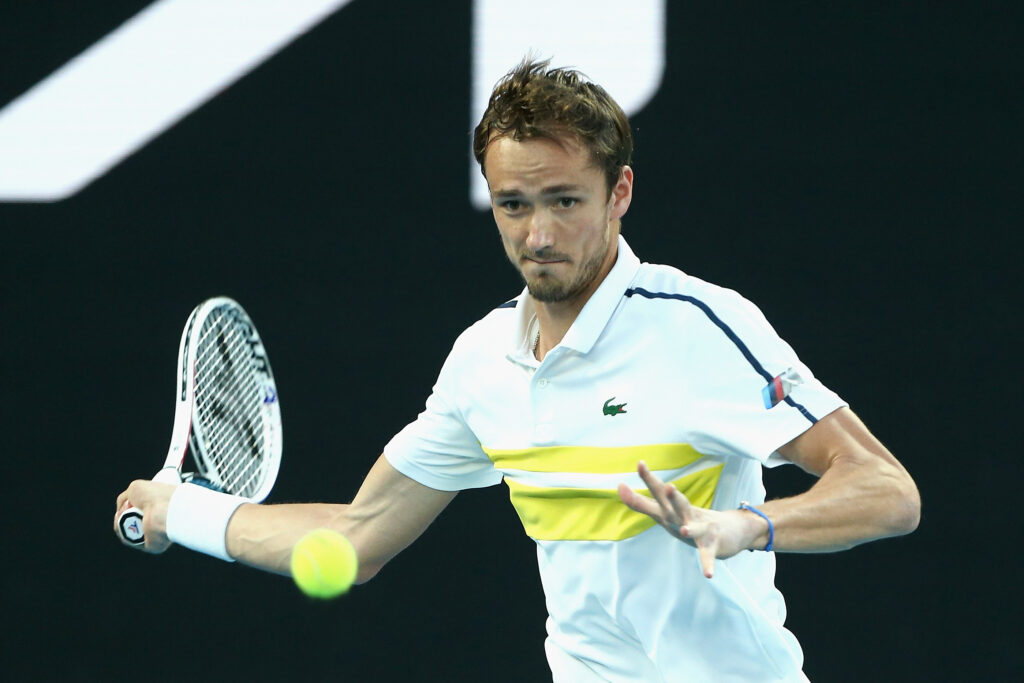
Stefanos Tsitsipas has bowed of the Australian Open after suffering a disappointing three-set loss to Daniil Medvedev, losing 6-4 6-2 7-5.

Stefanos Tsitsipas entered the match looking for his first-ever Grand Slam grand final participation. His incredible display of tennis in his match against Rafael Nadal, where he came back from two sets down, showed that the Greek was finally ready to go all the way in this year’s tournament.

Tsitsipas was lucky to have a one way ticket to the quarter-finals from a walkover, yet still holds more time on the court by 1 hour and 32 minutes. Much of this would surely be from his five-set matches against Greek Australian Thanasi Kokkinakis and World No. 2 Rafael Nadal.

“I got the opportunity to play longer, feel the court, understand the environment that I’m in, so that could probably be seen as something positive,” Tsitsipas said after his win over Nadal. 

Photo: Getty Images.

Tsitsipas was down by a game midway through the first set. Tsitsipas occasionally went for bolder hits in an effort to throw his opponent off, yet Medvedev’s court positioning was in peak performance.

The Russian was clearly the more dominant player in the first set, rarely giving Tsitsipas room to breathe let alone challenge a break point. The set finished in Medvedev’s way, 6-4.

Entering the second set, Tsitsipas continued to struggle against the Russian. Holding back from conceding a break point in his first service game, Medvedev eventually got his wish in the following two games, pushing Tsitsipas to an eventual deuce and game lead.

Tsitsipas at this point began to release some frustration, smashing a water bottle against the ground. The bottle exploded to thousands of tiny water droplets, with the ball kids forced to dry the court. Tsitsipas didn’t receive a warning, yet received a stern talking to by the umpire.

Photo: Reuters

“Stefanos… TSITSIPAS, Stefanos… TSITSIPAS”, began to echo in the Rod Laver Arena as Greek supporters rallied behind their favourite tennis player.

These cheers unfortunately couldn’t help the Greek, however, with Tsitsipas conceding another break point, eventually losing the second set 6-2.

Tsitsipas’ unlucky fortune moved into the third set, with Medvedev gaining another break point early on. Coming in surprise to Medvedev however, similar to Tsitsipas’ match against Nadal, the Greek switched the energy from the game to earn a break point and level the game again.

This positive energy continued through to his next few games, benefiting the Greek. However, the Russian came out in Tsitsipas’ final service game, defeating Tsitsipas 7-5 and completing his dominant victory.

Jane Harris: “My mother taught Greek migrants English on their journey to Australia”

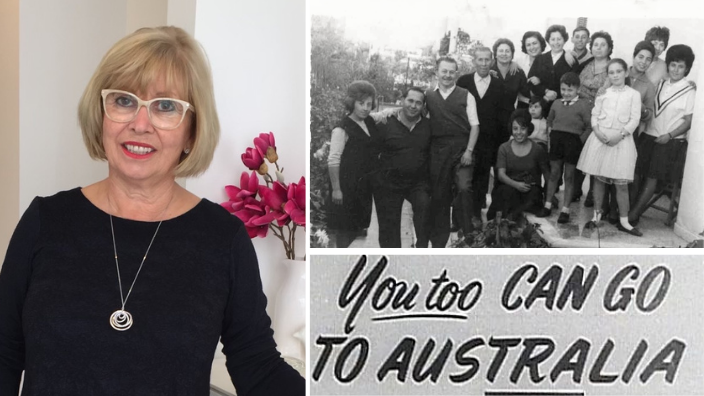
Jane Elizabeth Harris (nee Still) was 10 years old when her family decided to emigrate to Sydney from London, in November 1962. 

Almost six decades later, she reminisces parts of the six-week voyage aboard the English immigrant ship ‘Orion’ and remembers how her mother was tirelessly volunteering her time to teach English to Greeks who were migrating to Australia in search for a better life. 

A story of love and migration

“Mum, Despina Kakitsis, was born and raised in Athens and during the war met dad, Donald Still, who was in the British Airforce. After the war, Dad returned to Greece and asked for her hand in marriage. They lived in Kent, England where my sister, Irene and I were born,” Jane Harris, 69, tells The Greek Herald.

“My mum did not like the cold weather and when advertisements came on TV about Australia, she convinced my father that we should go. At the time, Australia wanted females and tradespeople and as dad was an electric welder and they had two daughters, we had priority to travel.

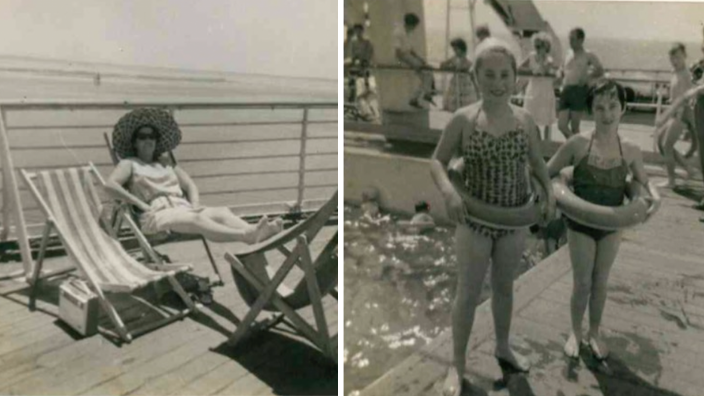
PHOTO (L): Jane’s mother, Despina sunning herself on the deck, PHOTO (R): Jane on the left and a friend she met on the ship on the right

“We were part of the Australian Assisted Passage Migration Scheme -we were Ten Pound Poms. If we left the country earlier than two years, we would have to refund the cost for the passage,” says Mrs Harris.

The Migration Scheme, created in 1945 was intended to increase the population of Australia and to supply workers for the country’s booming industries. 

In return for subsidising the cost of travelling to Australia the Government promised employment prospects, affordable housing and a generally more optimistic lifestyle.

From 1945 to 1972, over a million United Kingdom migrants travelled to their new Australian homeland.

The voyage to the land Down Under  

The Still family was very excited and grateful for the opportunity afforded to travel to the new promised land and despite some challenges, the journey was mostly enjoyable for them all.

“We had two cabins on Deck C. There were two sittings for meals, one for children and one for adults. As I was the only young child, Mum requested that I eat with them,” Mrs Harris remembers.

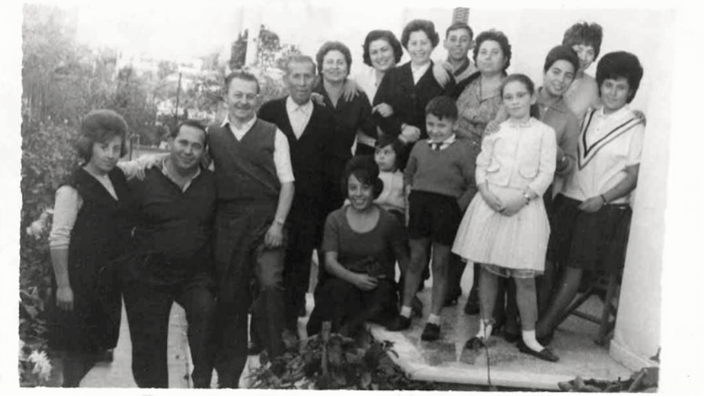
Nearly two weeks after they departed from Tilbury Docks in London, the Still family stopped in the port of Pireaus in Athens and met with Despina’s family in Palaio Faliro.

The family in Athens Jane and her family said goodbye to, Photo Supplied

“We had some rough seas but overall, the sailing was smooth. We had school on the ship and we played lots of games like quoits and shuttlecock. There was also a swimming pool and it was like a holiday. Our parents met lots of other people.

“At our stop in Colombo we ate pineapples and coconuts. We saw the sights and a snake charmer. Next stop was Fremantle after a very long and rough journey. One of the first things we saw was kangaroos in a pen at the port-obviously put there for our benefit. It was very hot and dry”.

Next stop was Adelaide and then Melbourne, where Mrs Harris says that many Greeks disembarked.

“We made friends with George and Irene and mum kept in touch with them for many years,” she says

The immigration ship ‘Orion’ and a Ten Pound Pom ad 

The arrival in Sydney and a legacy that lives on

Next stop was Sydney, where the Stills finally arrived almost a week before the Christmas of 1962. 

“Mum’s first cousins, Katina and Fanis Pavlidis were there to meet us and took us home to their place in Petersham where we stayed for three months until our parents bought a house,” says Mrs Harris, talking about her Greek mother’s impact to the Greek passengers of one of Orion’s final immigration journeys before it decommissioned in 1963.

“Mum volunteered to teach English, daytime for children and night time for adults. We are very proud of her achievements. She was a mover and shaker anyway in her life. 

“She wanted us to have a better life and we are so pleased that we came here,” Mrs Harris says.

Greek Australian Mathew Economides among Blacktown and Mount Druitt Doctors of the Year

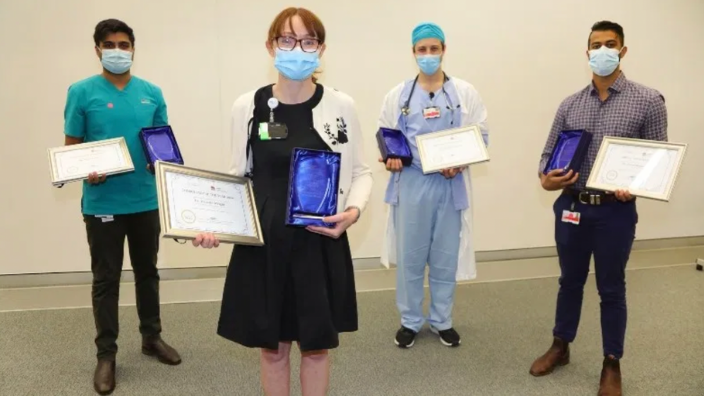
Mentorship, clinical excellence, wellbeing, and support for education were some of the key attributes of four Blacktown and Mount Druitt hospitals (BMDH) 2020 Doctors of the Year, among them Greek Australian Mathew Economides.

More than 200 votes were received in the categories of intern, resident, registrar and consultant of the year.

BMDH acting general manager Bobbi Henao Urrego congratulated all staff for their tireless efforts in what was a challenging year.

“We have so many talented, driven and passionate medical staff and I commend all our staff who go above and beyond each and every day,” Bobbi said.

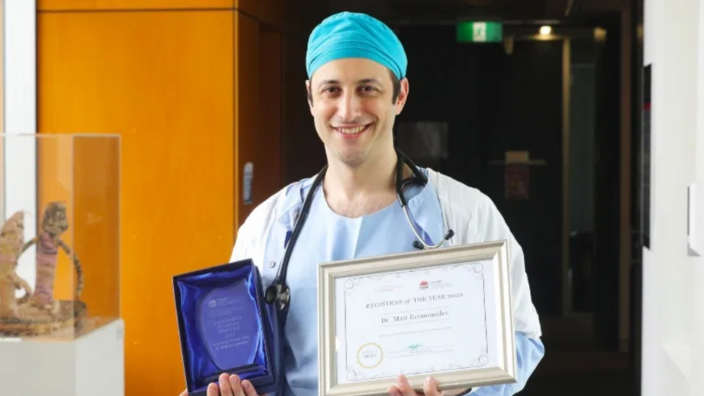
Blacktown and Mount Druitt hospitals 2020 Doctors of the Year (left to right) Dr Vedant Dave, Dr Danette Wright, Dr Mathew Economides and Dr Arun Ahulwalia, Source: The Pulse

The BMDH Doctors of the Year 2020 winners are:

Intern of the Year 2020 – Dr Vedant Dave

Resident of the Year 2020 – Dr Arun Ahulwalia

Registrar of the Year 2020 – Dr Mathew Economides

Consultant of the Year 2020 – Dr Danette Wright 

Mathew Economides: ‘Very unexpected and humbling to be nominated’

A dual anaesthetic and intensive care trainee, Dr Economides is -according to his colleagues- a welcome sight at any clinical emergency and has shown strong leadership and outstanding clinical performance.

“It was very unexpected and humbling to be nominated, let alone win,” Dr Economides said told The Pulse.

“I’ve always been very self-conscious about whether I’ve been doing a good job, so to learn that I hold the esteem of so many of my colleagues is a real honour.

“The credit from my clinical skill to my professional standards are things I inherited from innumerable supervisors and mentors, who were kind enough to teach and lead by example. I really hope I can pay that forward to the same degree,” he concluded.

Canberra’s Cypriot Community host welcome dinner for Archiepiscopal Vicar of ACT

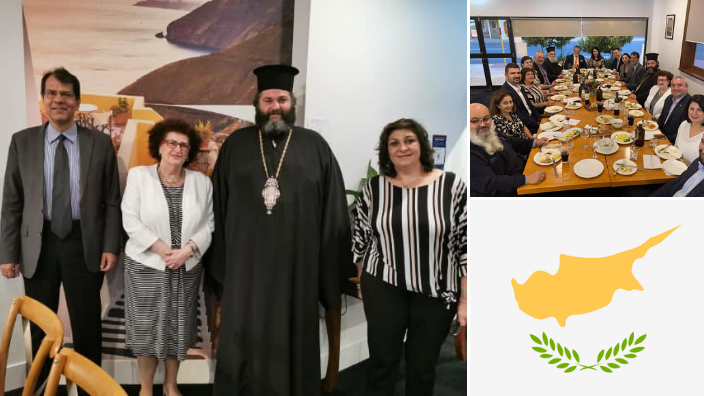
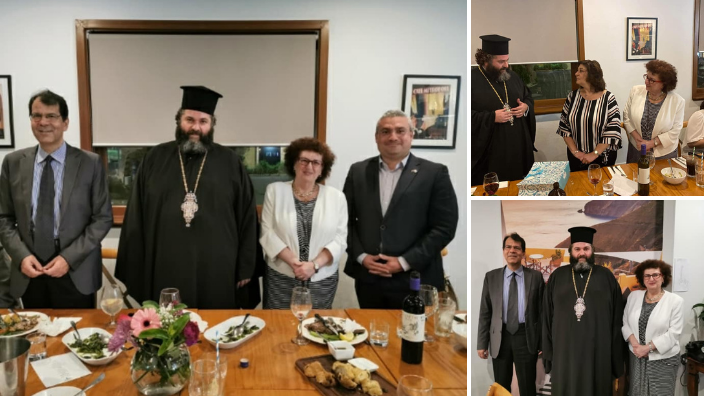
With a welcome dinner, held last night in Canberra, the Australian capital’s Cypriot Community officially welcomed Father Prochoros Anastasiadis, who was recently appointed the new Archiepiscopal Vicar of the Archdiocesan District of the Australian Capital Territory (ACT).

Present at the dinner were Rev Fathers Petros Kipouros and Iakovos Siriotis, His Excellency Ambassador of Greece Mr Papakostas , High Commissioner of Cyprus Mrs Mavrommati, Representatives of the Hellenic Club, the President of the Parish Community of St Nicholas, the Vice President of Parish of St Demetrios and the Executive Committee of the Cypriot Community.

Photo Source: Greek Orthodox Archdiocese of Australia – Archdiocesan District of Canberra

President of the Cypriot Community of Canberra, Mrs Alexandrou, welcomed Father Prochoros to Canberra and talked about the importance of fighting for Cypriot justice. Mrs Alexandrοu also presented Father Prochoros with two books on the Religious Monuments in Turkish-Occupied Cyprus.

Father Prochoros thanked everyone for their hospitality and conveyed the Blessings of His Eminence Archbishop Makarios.

Source: Greek Orthodox Archdiocese of Australia-Archdiocesan District of Canberra

Former travel agent Arthur Zacharias will await sentencing behind bars

A former travel agent who operated a Ponzi scheme which defrauded the owners, clients and a former Hells Angel bikie boss has had his bail revoked ahead of sentencing, according to The Advertiser.

Arthur Zacharias appeared in Adelaide’s District Court on Thursday where victims delivered impact statements describing his deceit as cruel and morally reprehensible.

The 49-year-old of Parkside previously pleaded guilty to multiple dishonesty and deception offences including 19 counts of dishonestly dealing with property without consent between December 2014 and May 2016 at Fullarton.

He committed the offences while contracted to Axis Travel Centre, which he later sought to part purchase from owner Max Najar – using a silent partner – for $385,000.

Max Najar, owner of Axis Travel, said Zacharias used the company’s name to defraud clients, Photo: Travel Weekly

The silent partner, former interstate Hells Angels member Peter Sidirourgos, had paid the money to Zacharias in instalments, but the court heard Zacharias spent “nearly all” of that money and only about $100,000 was passed on to Mr Najar.

Mr Najar, the main victim of the offences, told the court how Zacharias’ “orchestrated and cruel” deceit had stolen almost five years of his life and ruined his proud company.

He said Zacharias had repeatedly begged to be employed and he gave him a second chance, employing him as a contractor.

Mr Najar told the court he felt humiliated and embarrassed by Zacharias’ crimes which resulted in significant financial trauma amounting to more than $596,894 as well as lost time and health issues.

Judge Simon Stretton will sentence Zacharias next month.

Source: The Advertiser

Kimon Taliadoros appointed Chief Executive of Football Victoria

The Board of Football Victoria (FV) announced the appointment of Kimon Taliadoros as the organisation’s CEO, effective 22 February 2021.

Mr Taliadoros has served as interim CEO over the past six months in an honorary capacity. Prior to that, he was President for six years where he led the revitalisation of the state’s governing body and oversaw the implementation of FootbALLways – Football Victoria’s ambitious growth strategy to inspire and enable all Victorians to live and love football for life.
 
“Over the past six years, it has been my privilege to serve the 365 Victorian Clubs and their communities as FV President. I am proud to have led an empowered Board in pursuit of brave reforms for Australian football governance, championing women’s football with the Home of the Matildas in Melbourne, and putting Clubs first in our thinking and actions.” said Mr Taliadoros.
 
“While football is the leading global sport, Victoria boasts the world’s most competitive sports market, with four out of five of Australia’s leading codes headquartered in Melbourne. Despite FV being on track for record growth across key revenue, participation and strategic KPIs at the start of 2020, COVID-19 has devastated the entire Victorian football economy. Together with our Clubs, our task now is to stabilise the industry and lay plans to resume our growth platform.”

Mr Taliadoros brings extensive experience as a strategic and commercial leader across sports, media, finance and SME markets, together with his well-documented history in the game as an NSL player over some 15 years, Socceroo, PFA co-founder, media analyst, coach and referee.

Acting FV President, Antonella Care, said that Mr Taliadoros’ extensive industry knowledge and commercial acumen would be invaluable in guiding Victorian football at this time.
 
“Kimon’s appointment has been made with our Clubs and participants top of mind”, Ms Care said. “His resilience and unwavering sense of duty, together with his strong leadership qualities and deep knowledge of football at all levels, gives us confidence that through FV we can put Victorian football back on the path to prosperity”, she said.

Football Australia CEO, James Johnson, said the appointment would bring a sense of renewed confidence and continuity to the game in Victoria as it looks to rebound post-COVID.

“We welcome Kimon’s appointment. Victoria has been on an exciting growth trajectory under its FootbALLways strategic agenda and has led the way on many initiatives over the past few years, particularly with its success in unlocking crucial funds from governments at all levels to provide football’s ever-increasing participation base with much needed facilities and infrastructure”, he said.
 
“The past year was particularly challenging for Victoria as the hardest hit state on the back of COVID-19, and we look forward to the reinvigoration of its growth plans under Kimon’s stewardship. A key part of this will be Victoria’s contribution towards Football Australia’s XI Principles, designed to shape the game’s future over the next 15 years”, Mr Johnson said.
 
Ms Care said FV was focused on working with its member Clubs and stakeholders to navigate the legacy and impacts of the pandemic, with a view to restoring the game’s growth ambitions.
 
“As an organisation, we’re focused on continuing to grow participation numbers at all levels and formats of the game, across all ages, cultures and abilities, and among girls and women where interest has never been stronger. Importantly, this also means providing the facilities so people across Victoria can enjoy the game they love”, she said.

“Football Clubs – big and small – are an integral part of our social fabric. They bring people together, they shape local communities, and they play a critical role in promoting a healthy, cohesive society”, Ms Care said.

In accepting the role of CEO, Mr Taliadoros will formally resign from his position as President. Ms Care will continue in her capacity as Acting President pending the outcome of elections to be held at Football Victoria’s AGM in May 2021.

Source: Football Victoria

It’s Naomi Moussaka! Japan’s Osaka says eating Greek food is an omen

Naomi Osaka was left wondering whether a decision to eat Greek food foretold her win over Serena Williams after she reached the Australian Open final on Thursday.

Osaka, who has previously revealed a mystical side, said she switched from Japanese to Greek food on Wednesday — before Greece’s Stefanos Tsitsipas stunned 20-time Grand Slam winner Rafael Nadal.

“It’s super-weird. For the past three weeks I’ve been eating Japanese food on the day before my match,” she said, after her 6-3, 6-4 semi-final win.

“And yesterday, I decided to eat Greek food. So I went to sleep, and I wake up, and Tsitsi had beaten Nadal.

“I’m like, ooh, maybe this is a sign.”

Japan’s Osaka, 23, said earlier in the tournament that her dreams are “very telling of the future” after she woke up fearful of defeat to Caroline Garcia.

However, the dream turned out to be inaccurate as she swept past the Frenchwoman 6-2, 6-3 victory in just 61 minutes in the second round.

Osaka continues to cut an unusual figure in the tennis world, and gave American great Williams a quick bow of respect at the net after their match.

She then wrote “Mari, stop sending weird messages in the groupchat!” on a courtside camera, a barb directed at her elder sister.

*Stefanos Tsitsipas is versing Daniil Medveded tonight at 7:30 pm

READ MORE: Stefanos Tsitsipas pulls off comeback of the tournament in epic clash with Rafael Nadal