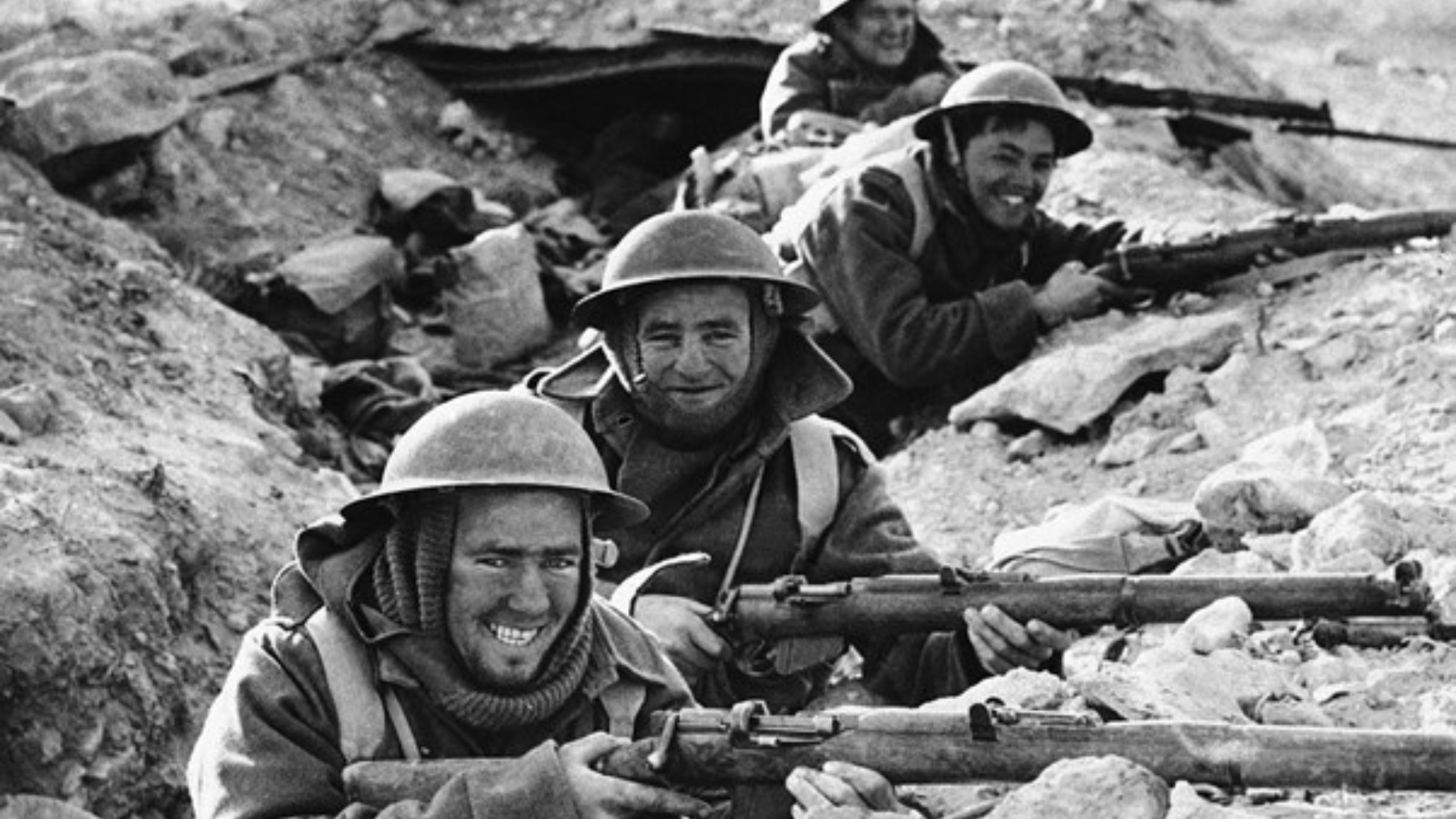
From Greece and Crete to North Africa and Rome, Cypriots fought alongside Australians — and their descendants will march again this ANZAC Day.
The Cyprus Regiment in the field
Every Anzac Day, Australians gather to honour sacrifice.
For Australians of Cypriot descent, that sacrifice is not distant. It is personal. It is inherited. And it is shared with the Anzac story itself.
From the mountains of Greece to the deserts of North Africa and the battlefields of Italy, the Cyprus Regiment fought across the major theatres of the Second World War—often alongside Australian and New Zealand forces. Their story is one of endurance, courage, and a contribution that deserves its place in Australia’s commemorative tradition.
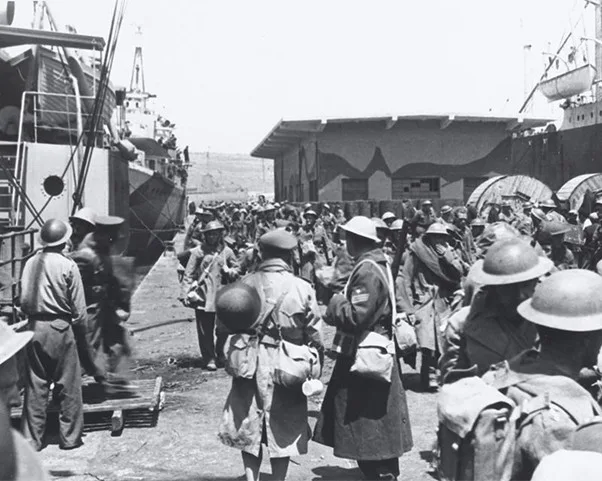
A Regiment across many battlefields
Formed in 1940, the Cyprus Regiment was made up of volunteers from across Cyprus—Greek Cypriots, Turkish Cypriots, Armenians, Maronites and others—serving within the British Army.
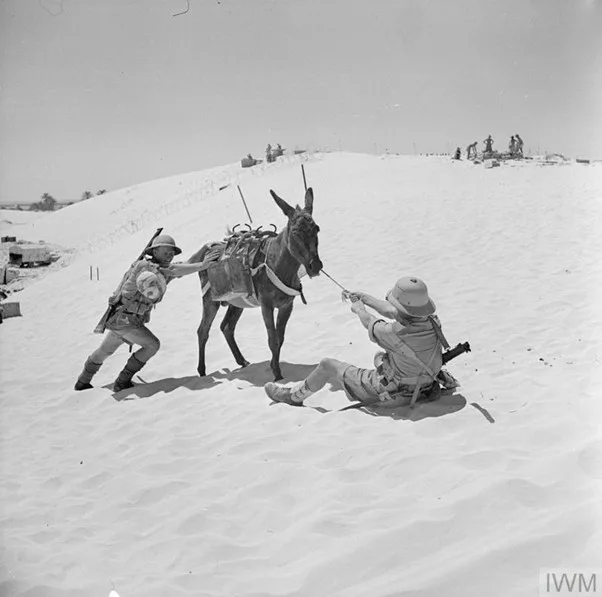
More than 30,000 Cypriots contributed to the war effort. Many served in transport and logistics units, using mule trains to carry ammunition, food and supplies across terrain where no vehicles could pass. In some of the harshest conditions of the war, these units were essential to keeping Allied forces alive and fighting.
They served in:
- France (1940) – among the early deployments of colonial forces into Europe;
- Greece (1941) – alongside Australian and New Zealand troops during the Allied campaign;
- Crete (1941) – in one of the most dramatic battles of the war;
- North Africa & Egypt – supporting operations across the desert campaigns; and
- Italy (1943–45) – including the brutal fighting at Monte Cassino.
At Kalamata, during the collapse of the Greek campaign, hundreds of Cypriot soldiers were captured alongside thousands of Allied troops, including Australians. It was a shared moment of hardship—one that binds the Cyprus Regiment directly to the Anzac experience.
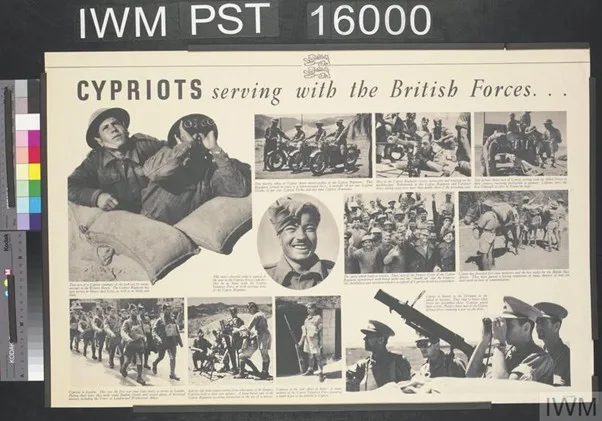
Fighting alongside the Anzacs
Greece, Crete and the shared ANZAC experience
In 1941, Australian, New Zealand and Cypriot troops found themselves fighting in the same theatre during the defence of Greece.
They retreated along the same roads. They waited at the same ports. They endured the same air attacks.
At Kalamata, where evacuation failed, Cypriots and Anzacs were captured together. In Crete, they fought side by side again, resisting overwhelming German forces before many were killed, captured, or forced into escape and resistance.
This is not parallel history. It is shared history.
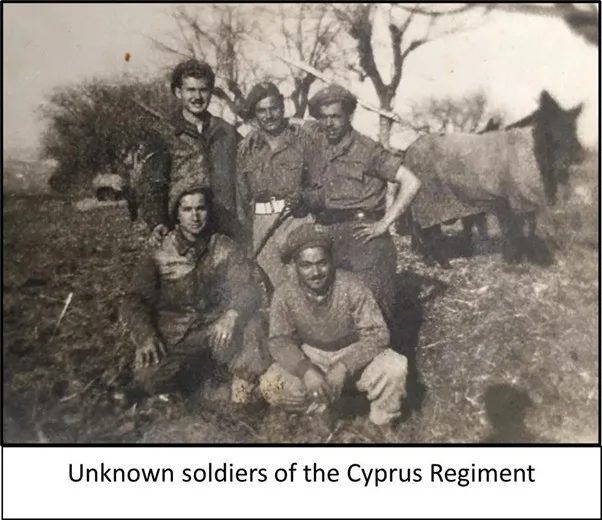
North Africa to Italy: Sustaining the Allied advance
From desert to Rome
In North Africa, Cypriot units supported Allied operations that included Australian campaigns such as Tobruk and El Alamein.
In Italy, their contribution became even more critical.
At Monte Cassino, one of the most difficult battles of the war, Cypriot muleteers carried vital supplies through mountainous terrain under constant threat. Without them, frontline troops could not be sustained.
Cypriot veterans are also remembered as among the first Allied troops into Rome, part of the liberation that marked a turning point in the Italian campaign.
From World War to Independence
The experience of war did not end in 1945.
Thousands of Cypriots returned home having fought for freedom abroad, only to find their own country still under colonial rule. The discipline, organisation and political awareness gained during the war contributed to a growing national movement.
Within a decade, Cyprus entered the War of Independence (1955–1959). Those who fought fascism abroad helped shape the struggle for self-determination at home.
A unique place in the ANZAC story
As Honorary President of the Cyprus Community of NSW and a member of the Cypriots for ANZACs Committee, Michael Peters Kyriacou stated: “Of all the communities in Australia, the Cyprus Community is uniquely placed in the Anzac story. The bulk of our members, and Australians of Cypriot descent more broadly, are entitled to march because of their direct family links to volunteers who served in both the First and Second World Wars.”
“This is not borrowed history. It is our history—and we have a duty to honour it. It is about the sons and daughters, the grandchildren and great-grandchildren, stepping forward to ensure that the story of the Cyprus Regiment is not forgotten,” Mr Kyriacou added.
Join the commemoration
All Australians of Cypriot descent are invited to register for the ANZAC DAY march in Sydney this year. Register online at https://thecyprusclub.org.au/anzac-day/
“Walk in honour of those who carried the war across continents, and ensure that the Cyprus Regiment takes its rightful place in the Anzac tradition,” says George Philips, Chair of the Cypriots for ANZACs Committee.
