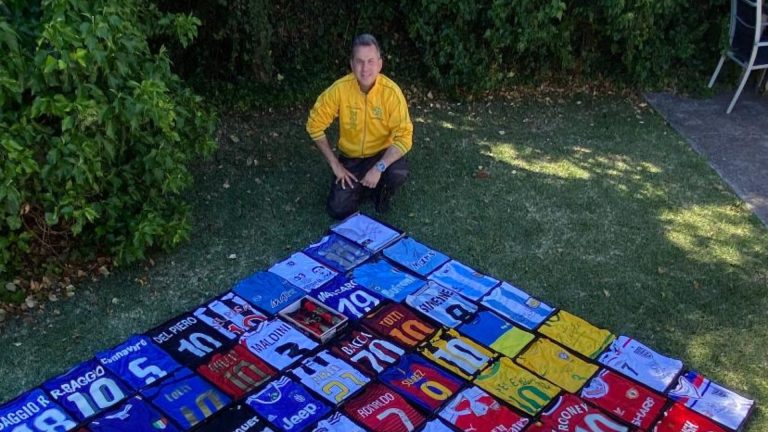
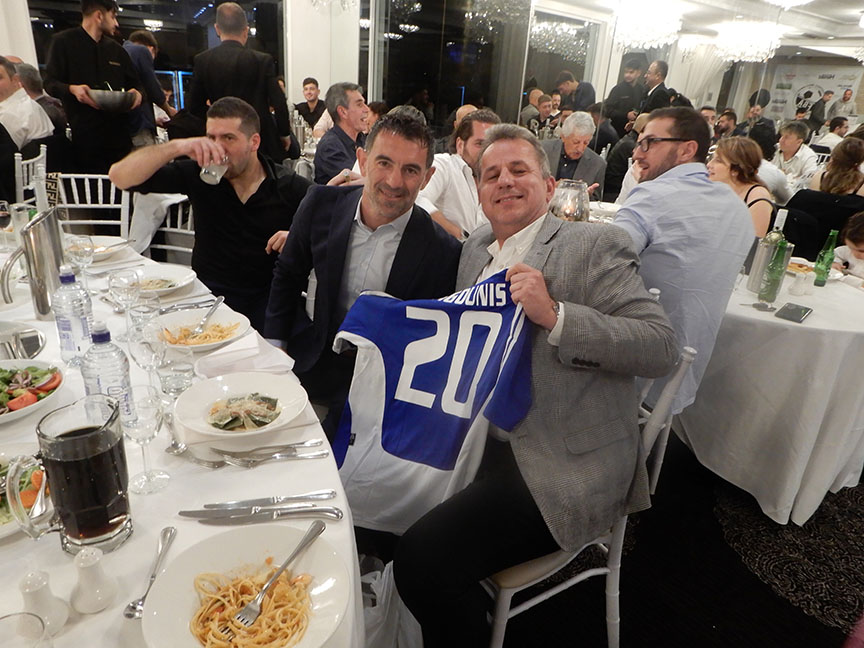
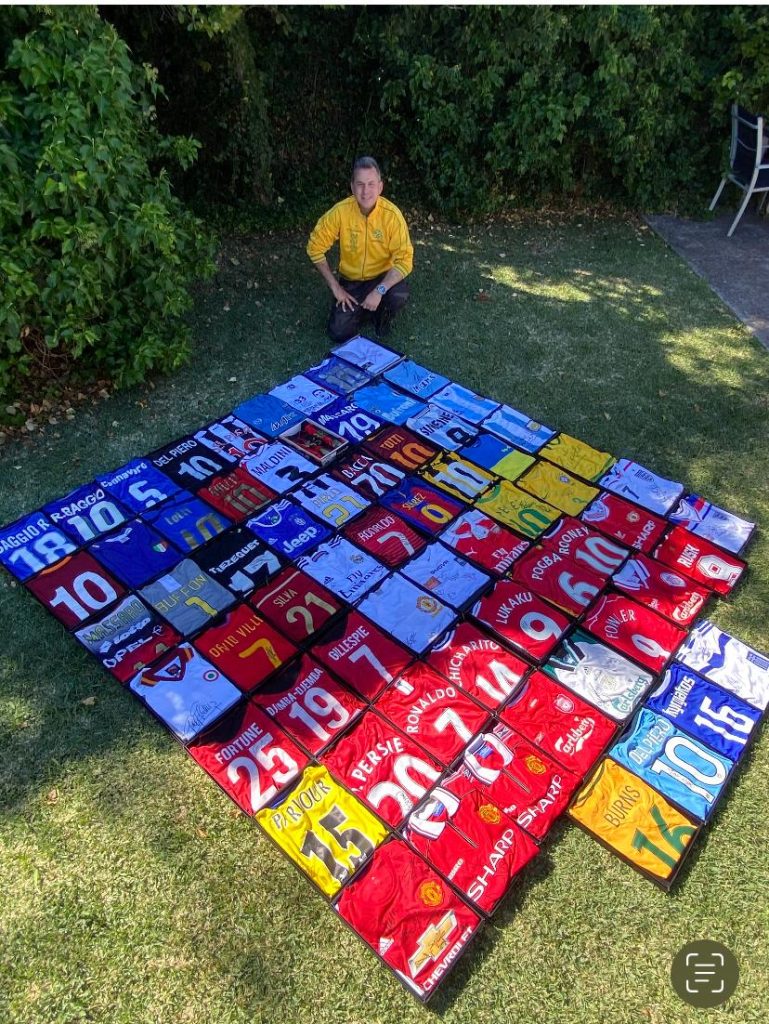
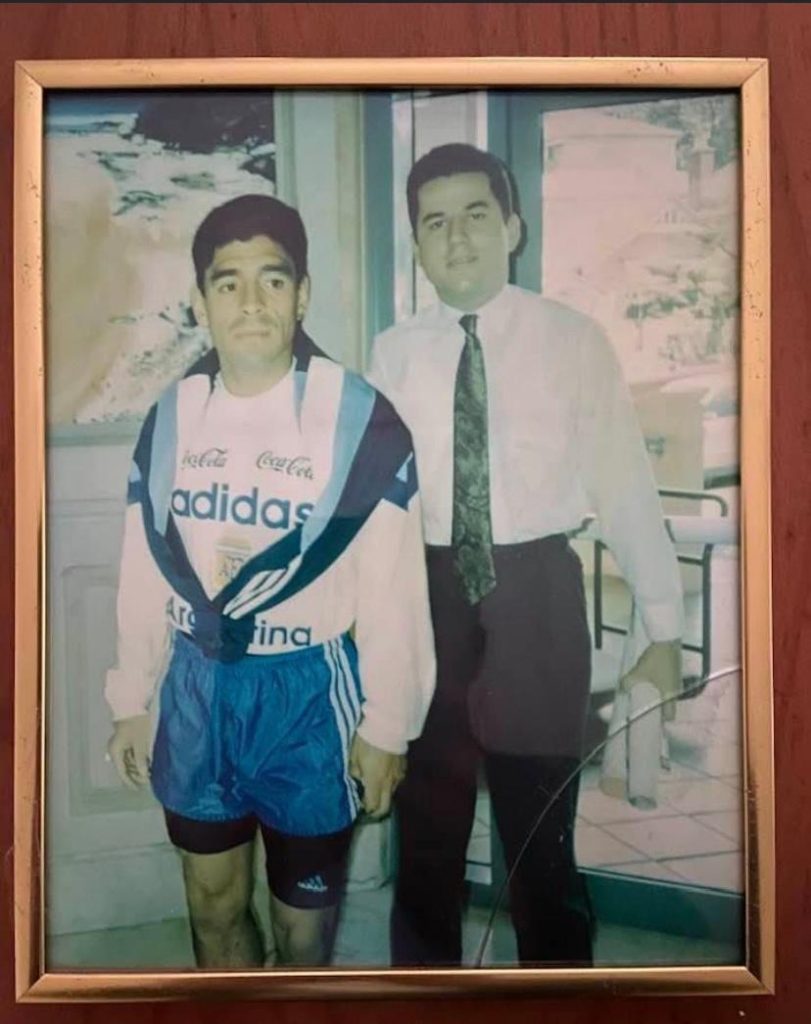
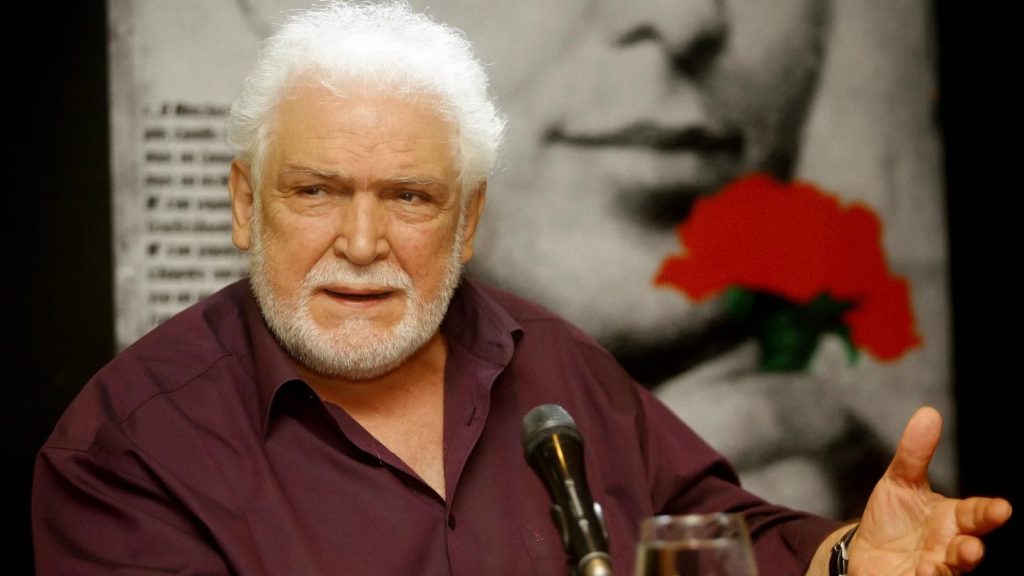
Greek Australian Tassos Evgeniou (Sir Tass) has collected not one, not two, not three, but over 400 jerseys and autographs and it doesn’t stop there.
A loyal fan of Sydney Olympic FC and a close friend of Australian football legend Peter Katholos, Tassos is an avid collector of sports jerseys and autographs.
He has collected jerseys from around Australia and internationally that each have their own story. There are also jerseys of national teams that participate every four years in the biggest celebration of football – the World Cup.
Tassos was born in Liverpool, Sydney on 9 March 1970. His parents Takis and Eleni, are originally from Aigio in the Peloponnese, Greece. He also has two sisters Effie and Alexandra. His wife’s name is Rose and his children are Alexander and Victoria.
We spoke to him about his jersey collection and when his passion for collecting began.
When and how did you start your collection?
I started at the age of 12 in 1989 with the World Cup won by Italy and since then it has become a passion, a cult and a need. I estimate that I have over 400 jerseys and autographs from all the international football players and coaches.
Did you play any football at all?
Very little at Liverpool Olympics and at school but it really didn’t pull me to get fully involved. My father often took me to Sydney Olympic from the age of five.
What is the rarest jersey you have in your collection?
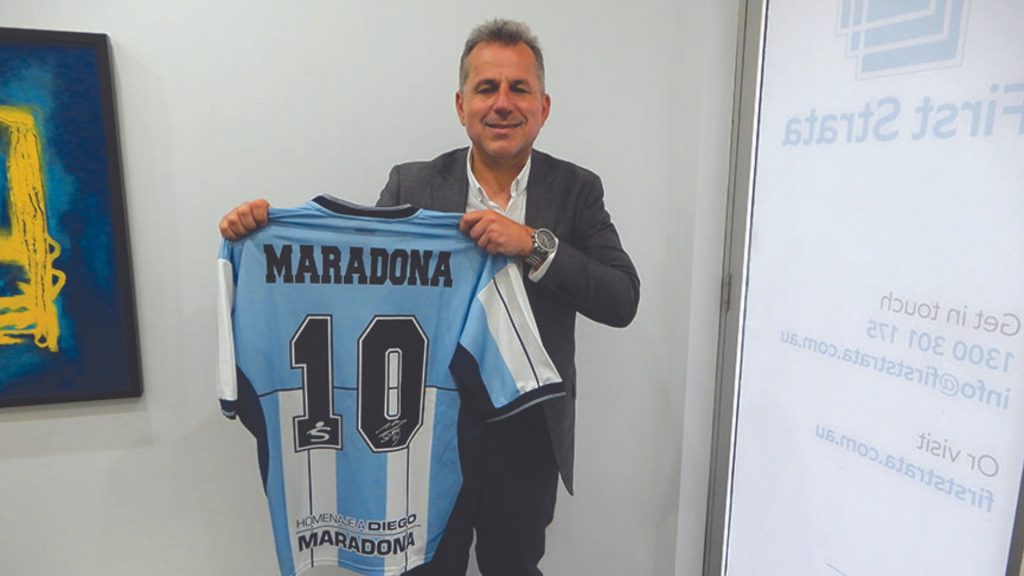
I have one of the Great Maradona.
Which jersey is missing from your collection?
Eric Cantona and I hope to meet him either here or in Europe.
Which coaches have you met?
Otto Rehhagel in Melbourne in 2007. He signed a book for me and at the same time we took photographs. Also, when he came to Melbourne again with the national team, Katholos and I had problems with security when we tried to meet him. But when Otto saw us, and of course remembered me from our previous meeting, he demanded the men leave us and we found ourselves in the presence of greatness.
I recently also met Sir Alex Ferguson who had come to Sydney and from official information they gave me I met him at the hotel wherehe was staying. He signed a biography I brought which he had published 15 years ago. That was important to me.
The vote of the citizens of a country-state in theory, at least, is a prerequisite of democracy. The participation of the people in the emergence of a government characterizes democracy and parliamentarism. The people theoretically elect those who wish to govern them. However, whether the citizen’s vote has the power to determine the will of the people must be interpreted cautiously as a fair and proper procedure. The mosaic of the “democratic” regimes of the planet generally shows that the citizen’s vote, where there is a citizen’s vote, is distinguished by its epiphatic and phenomenal character. In other words, it is often used as a cover to have in practice, in essence, authoritarian, totalitarian regimes such as in Turkey, Russia, Belarus, Hungary, etc. In these countries the citizen’s vote is used to establish curious coalitions and strange party alliances, and partnerships on which the voter has usually no say or opinion. If to these political alchemy we add the fact that in the Government that will emerge essentially only the Prime Minister governs (who government Minister or MP dares to ever resist, disagree or differentiate his position from his Prime Minister or even worse, what decision of the Prime Minister had the ratification of the people before it was implemented), then we have a government of parliamentary autocracy, and therefore the phenomenology of the citizen’s vote does not matter much.
Historically, at least, diasporic democratic countries-states, Italy, Greece, Israel, etc. in their effort to utilize in their favour their human potential, had the foresight and thoughtfulness to include their brothers, their expatriates in the electoral process. In their Constitutions they imposed specific articles, but also in their Parliaments they often-densely hosted debates (sometimes stormy), to find a way and method, in order to “exploit” or “ill-use” or “colonize” the vote of their expatriate compatriots. In Greece, lately, the vote of the expatriates occupied the party palaestras, various schools and theories emerged, even conspiracy theories, somewhere party gangs appeared and even chose the representatives they would promote on the various continents, to represent them in the Greek Parliament.
The Constitution of Greece expressly enshrines in Article 51 para. 4 the possibility of providing by law for the exercise of the right to vote by voters outside the Greek territory. The adoption of this law has occupied the public debate persistently and continuously since the late 1970s, without, of course, finally coming to fruition. However, the Constitution talks about “voters” outside the territory, or citizens-voters who for some reason are residing outside the sovereign territory.
The Constitution, as well as the substance of the electoral laws that followed, as well as the debates in the Greek Parliament and its galleries, as well as in the halls of the party gangs, nowhere rightly refer to the expatriate body of Greeks who have been living outside the Metropolis-Greece for 3,000 years and essentially constitute about 40 percent of the total number of people who make up the entire nationhood of Greeks. The ostensibly electoral laws do not have relation to what we call and identify tautologically as the Greek Diaspora. They do not refer to the 4,500,000 people of Greek descent who have been living in all neighborhoods of the world for hundreds of years now and identify themselves as Greeks in ancestry and culture.
The legislators also decided to have specific restrictions, specific prohibitive safeguards that in essence alienate the legislation from the body of the Greek Diaspora. For the expatriate to have the right to vote, he/she must make a declaration of change of his/her constituency, from the county in which he/ she votes, to the special constituency abroad. Also, the beneficiary must have a residence of at least two years in Greece during the last 35 years, with appropriate public evidence such as a certificate of attendance a school of any level, or a document certifying certain contributions and insurance payments and finally a proper certificate of military service fulfillment). Also, to submit a document confirming that within the last two years, he/she had submitted in Greece any category of tax return to any Tax Office. Dependents are exempted if they have not reached the age of thirty and if they have submitted a tax return of a first-degree relative.
In response, I call on our Ministers, Mr. Dendias and Mr. Voridis, and of course our Prime Minister and the leaders of the Greek Parties, to establish and legislate (a) a Ministry for Hellenes Abroad, as this operates in Cyprus, Israel, Armenia and even in totalitarian regimes; (b) to establish Departments and Chairs for the Study of Greeks Abroad in the main Universities of Greece; (c) To establish and operate within the Ministry of Hellenes Abroad, Directorates and Secretariats of Investments, Education, Culture and Inter-Hellenic Cooperation.
Metropolitan Greece must and has a duty to respect the Greeks abroad. To keep him intact and away from any political conflict that characterizes Grecian Greece, to let expatriate Greeks and their children keep their Greek consciousness in their hearts, without party identity, only national and panhellenic.
*Professor Anastasios M. Tamis taught at Universities in Australia and abroad, was the creator and founding director of the Dardalis Archives of the Hellenic Diaspora and is currently the President of the Australian Institute of Macedonian Studies (AIMS).
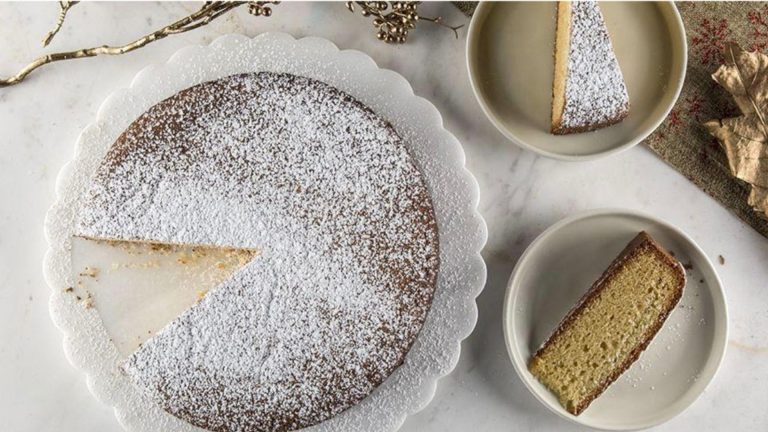
Vasilopita is a Greek household favourite, and the perfect dish to celebrate and enjoy the new year.
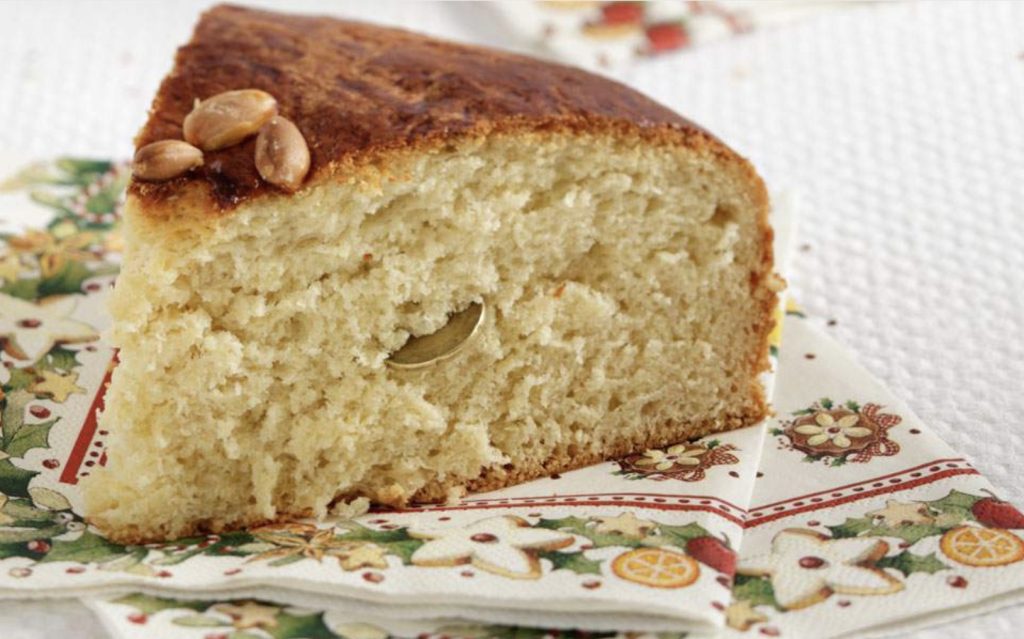
Hidden inside the Greek dessert is a gold coin wrapped in foil, and the family member who is fortunate enough to receive the coin in their slice is said to have good luck for the rest of the year.
The Vasilopita is cut and served to share and enjoy with the family, serving up to 10 people. In total, it only takes 15 minutes to prep and 45 minutes to cook. Let’s take a deep look into the recipe below to see how to cook this tasty treat to bring in the new year!
vasilopita
To make the vasilopita, follow the recipe below. Check out our Instagram reel for a visual guide too @thegreekherald.
INGREDIENTS
250g unsalted butter, softened
220g sugar
1 tsp vanilla extract
3 eggs
450g plain flour
1 tsp baking powder
1 pinch of salt
250ml freshly squeezed orange juice
Icing sugar and chopped or flaked almonds, to decorate (optional)
METHOD
Preheat the oven to 175˚C and line and lightly grease a 25 cm round cake tin.
Using an electric mixer, cream the butter and sugar and vanilla together in a mixing bowl until pale, light and fluffy, about 5 minutes. Add eggs one at a time, beating after each addition.
Sift flour, baking powder and salt together then add to mix alternately with orange juice, finishing with flour.
Make sure all the ingredients are incorporated well and form a thick cake batter, but be careful not to over mix or the vasilopita will lose its light, fluffy texture.
Pour half the cake batter into the greased tin.
Wrap a gold coin in foil ($2 usually works best as it is smaller) and drop it into the cake tin. Cover with the remaining cake batter and spread evenly with a knife or spatula. This will ensure you don’t know where the lucky coin is hidden once it’s baked! Bake for 40-45 minutes or until a toothpick inserted into the centre of the cake comes out clean.
Allow the cake to sit and cool for 20 minutes. The cake should be warm when you remove it from the tin but not hot to the touch.
Place a large flat plate on top of the cake tin and flip so the cake falls upside down onto the plate.
Decorate the vasilopita how you like but it is tradition to dust the cake with icing sugar and chopped or flaked almonds. One way to decorate the cake is to put the numbers of the new year, which can be written on with cake frosting/icing, or made by cutting out paper in the shape of the numbers, placing the paper cut-outs onto the cake, and then dusting with icing sugar. You can also use flaked or chopped almonds to write out the numbers too if you prefer.
Oscar-winning Greek composer, Vangelis Papathanassiou, known globally as Vangelis, died in Paris at the age of 79 on May 17.
Greek Prime Minister, Kyriakos Mitsotakis, and other government officials expressed their condolences when the news of Vangelis’ death emerged.
“Vangelis Papathanassiou is no longer among us,” Mitsotakis tweeted and later added in a statement that Vangelis “has set off on his great voyage” from where he will always “send us his music.”
Iconic Greek pop singer, Dakis, died at the age of 79 on May 29 following a long battle with cancer.
Dakis, who’s full name is Vrassidas Haralambidis, was born in Alexandria, Egypt in 1943. He came to Greece in 1963 and a year later, he started singing in clubs.
Among his most popular songs were ‘Monsieur Cannibal,’ ‘Tu veux out tu veus pas’ and other songs in Greek.
Prominent Greek actor, director and politician Kostas Kazakos passed away in Athens at the age of 87 on September 13.
Throughout his early career, he worked with several theatre companies and booked supporting roles in films before his big break in 1967 when he earned the lead role in the movie ‘Kontserto gia Polyvola’, starring Tzeni Karezi.
He had been suffering from a chronic respiratory condition and had been a patient at Evangelismos Hospital in the Greek capital from July this year. His passing was attributed to multi-organ failure.
Legendary Greek actress Irene Papas passed away at the age of 96 on September 14.
The actress starred in over 70 films in a career spanning more than 50 years. In 1961, Pappas starred in The Guns of Navarone and in 1964 in Cacoyannis’ Zorba the Greek, which catapulted her into international stardom. One of her last film appearances was in Captain Corelli’s Mandolin in 2001.
In 2018, it was announced that she had been suffering from Alzheimer’s disease for five years.
“Sweet papa… John Anthony Aniston. You were one of the most beautiful humans I ever knew. I am so grateful that you went soaring into the heavens in peace – and without pain,” she wrote.
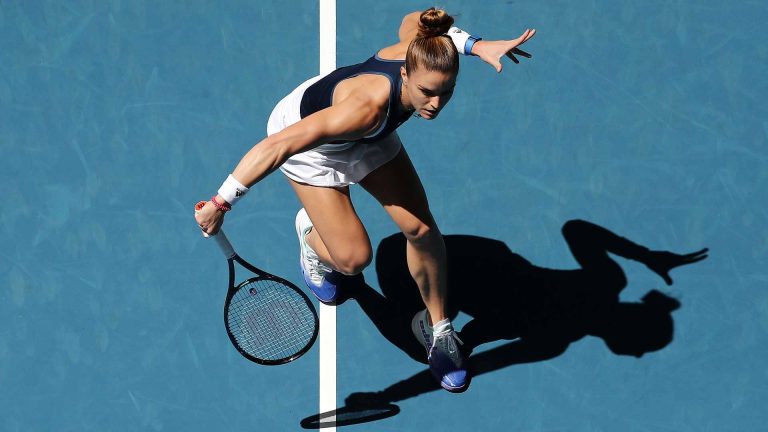
Maria Sakkari has sealed Greece’s first Group A win at the United Cup in Perth, Western Australia after defeating Viktoriya Tomova 6-3, 6-2 in an hour and 27 minutes to give her side an unassailable 3-0 lead over Team Bulgaria.
The first half of the opening set was hard fought, with Tomova’s defensive skills and change of pace engaging Sakkari in a series of extended slugfests.
Greek cuisine has been ranked second in the world, according to the 2022 Best Cuisines in the World list by online food guide Taste Atlas.
Users of the platform voted on a poll consisting of 100 different countries for the whole year. Greece scored a total of 4.68/5 points, while the poll’s winner, Italy, scored 4.72/5 points.
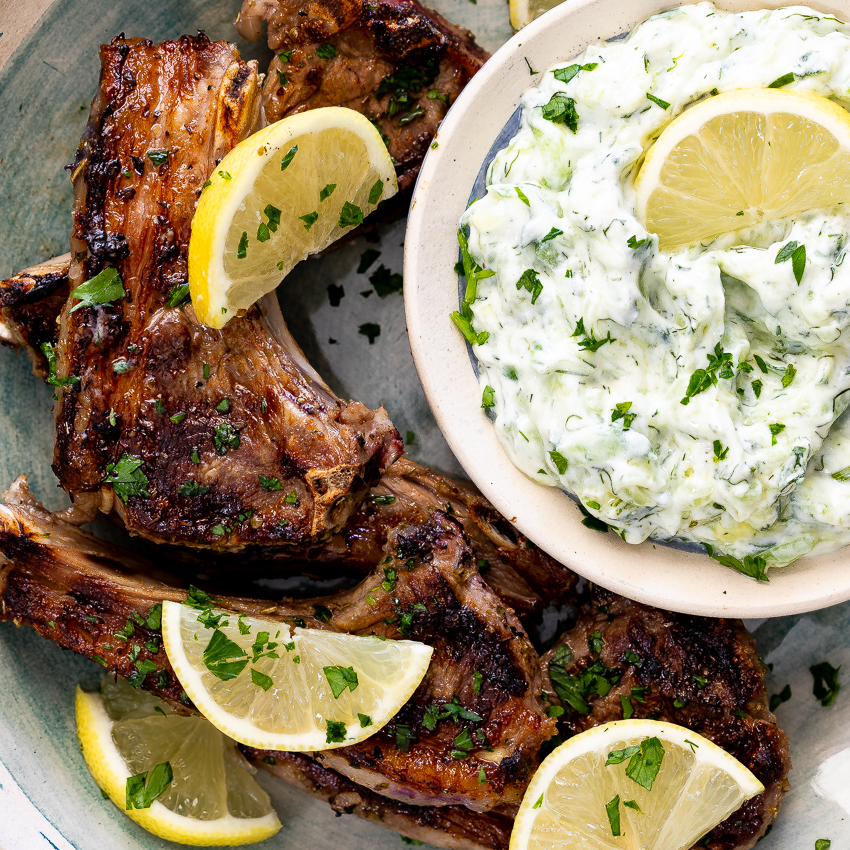
Lamb chops with tzatziki. Photo: Simply Delicious.
In the list of 2022 Best Dishes of the World, Greece ranked 15th with the popular delicacy, lamb chops, scoring a total of 4.69/5 points.
Gyros, Giouvetsi and Bakaliaros (fried cod) also made the list of top 50 dishes in the world.
As we close off 2022, we may find mental health strategies that worked and some that were a complete disaster.
Below are five radical self-care tips I’ve embraced as we navigate a new world underpinned by growing social media influence, complex personal relationships and business or job choices into 2023.
These tips may assist you (as they’ve assisted me) to curb the need for external validation and co-dependence while embracing a new feeling of self-worth and self-reliance.
1.Don’t feel guilty for saying no
Radical self-care begins with knowing that only you know if you have capacity to do something. Getting better at saying no (hopefully without needing explanations) is a mental health strategy that can assist you recharge, repair and reset your mental state to keep being of value.
2. Quit seeking validation once you’ve made a personal choice
Despite many cultures, traditions and family dynamics insisting they know what’s best – no one actually is you, but you. Take advice from trusted sources but once you’ve made a decision – go with it and see where it leads.
3.Control the control-ables and forget the worry
I often feel I inherited a predisposition to worry. I’ve since attempted to recognise this worry and identify things that are out of my control and place the energy into forward moving projects I can control.
Most of us have heard of the renewed call of kindness in the world. What’s not so much mentioned is being kind to self. That means forgiving yourself first, so you can then give it away to others as a genuine act of love. It’s difficult to keep giving away an attribute you feel unworthy of yourself.
5.Accept guilt-free assistance when it is offered
All of us will need assistance at some point in our lives. When we pray and ask for assistance, don’t close off to thinking it must happen the way you think it should. Take the assistance and blessing the way it comes.
While we don’t know what 2023 will bring us in terms of challenges, the best thing we can do is fortify our belief in ourselves, our loyalty to what matters most and the courage to make personal decisions that best align with our chosen direction.
Stay healthy but more importantly, stay inspired.
Barry Nicolaou has a new book coming out Move The Mountain on 7 February, 2023.
The wait is over. The third season of Netflix series, Emily in Paris, is now streaming and it has come with a surprising Greek twist, the Newsweekreports.
The newest addition to the cast is Greek American actress Melia Kreiling, who plays artist Sofia Sideris and brings changes to the life of main character Emily.
Who is Melia? We find out.
Melia Kreiling as Sofia Sideris and Camille Razat as Camille in ‘Emily in Paris.’ Photo: Netflix.
Melia Kreiling’s acting past
Melia Kreiling is an actress and dancer with Greek roots from her mother. After growing up in Athens, Greece, she moved to the United Kingdom to pursue her studies, where she later joined the London School of Dramatic Art.
In the past, she acted in popular series’ such as the Guardians of the Galaxy and The Borgias, acting next to Jeremy Irons.
She also appeared in The Bible, a History Channel miniseries, as well as the CBS series Salvation and Filthy Rich and the FX televistion series, Tyrant.
In an interview with Glamour, Melia admitted that even though everyone assumes she can speak Greek fluently, she had to figure out how to do a Greek accent.
“A Greek accent is actually the hardest accent for me to do. So I’m sitting there training my mouth to roll the R’s and all that stuff. But it was a really fun process for me,” she said.
One of her biggest dreams is to open a shelter for strays in Greece and she plans to raise money or find funding to make this dream come true.
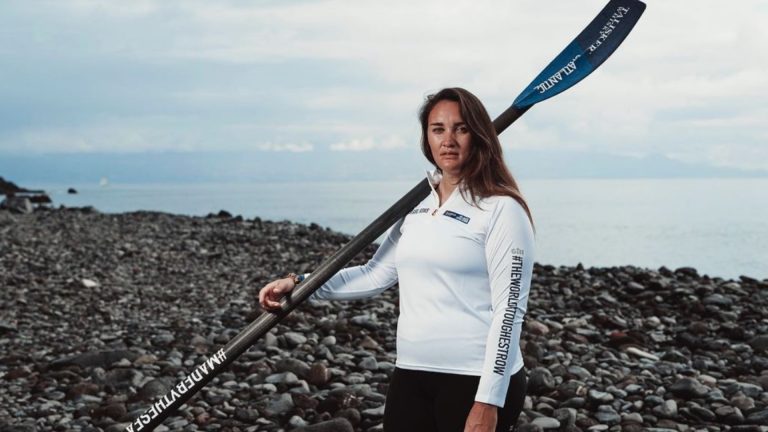
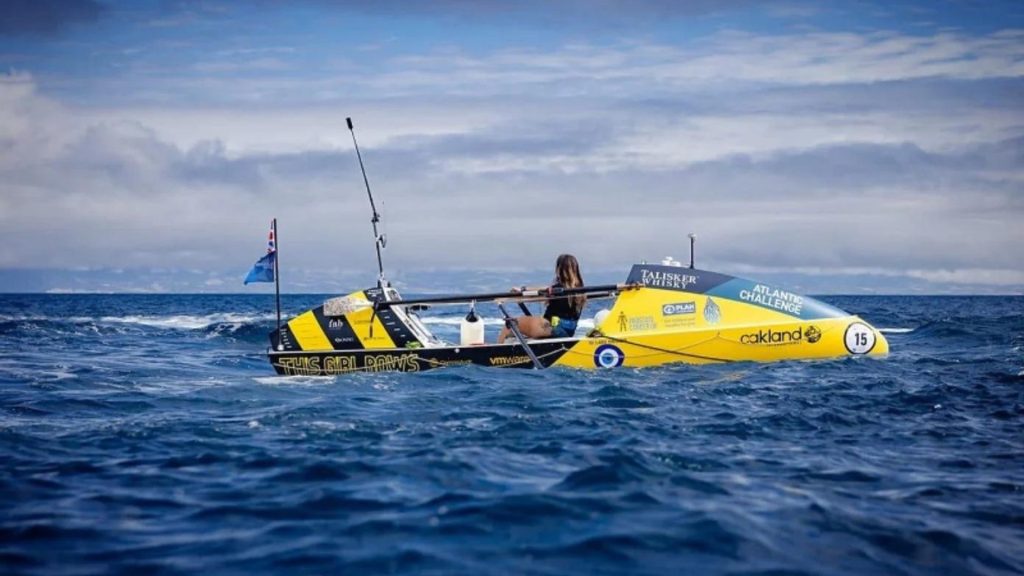
Greek British woman Lara Vafiadis is rowing across the Atlantic Ocean solo in honour of her father who recently passed away.
Lara is currently rowing more than 4,000 kilometers in the Talisker Whiskey Atlantic Challenge to raise funds for charity.
Seeing her father suffer from cancer inspired her to take on the challenge as he taught her to “aim high.”
“He won’t get to see me finish but I know he’ll be with me with every oar stroke to Antigua,” she says on her website, This Girl Rows.
Lara Vafiadis is determined to finish the race in honour of her father. Credit: Instagram.
Lara has had a rough start to the voyage as she was struck down with acute seasickness less than 12 hours in. She was unable to eat and row for three days, but is now feeling better and making up for lost time.
She currently works as a Regional Sales Manager for a cyber security company and is also a Yacht-Master with years of experience in the industry.
Only 21 women have ever successfully rowed across the Atlantic Ocean solo and Lara aims to be the fastest.
2022 has been a year rich with archaeological discoveries for many parts of Greece. As we get ready to welcome the new year, The Greek Herald take a look back at the top five ancient finds of 2022.
1.Statue of Hercules discovered in Northern Greece
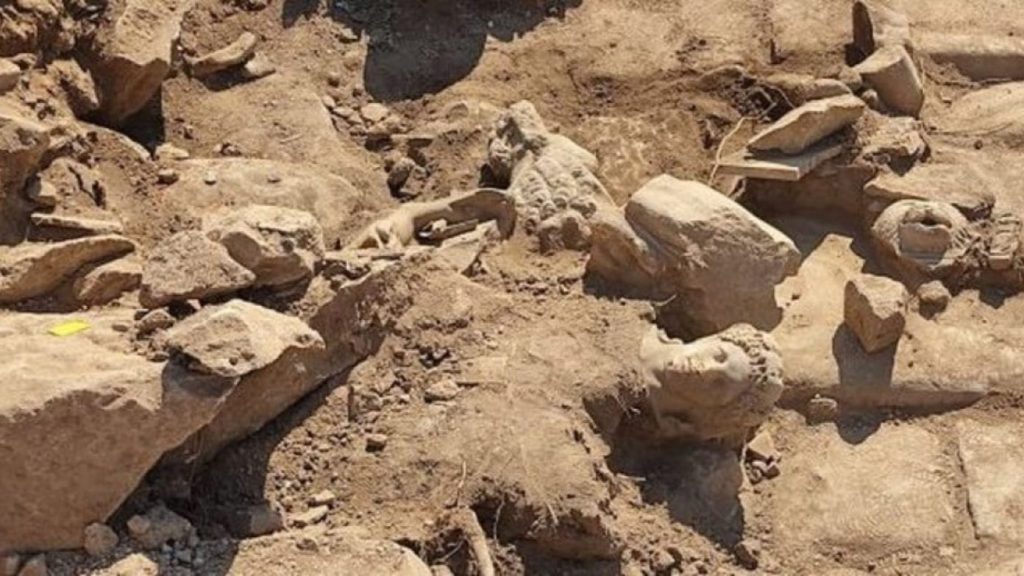
At the ancient location of Philippi in Northern Greece, a statue of Hercules dating back to Roman times was found, along with a lavishly constructed building, thought to be a fountain.
2. Female Roman statue discovered in Epidavros
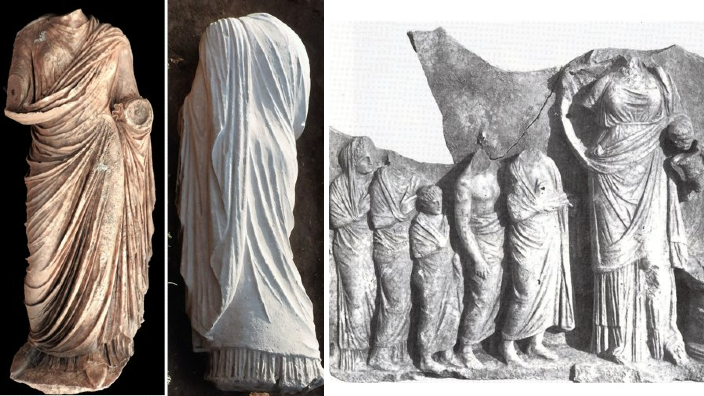
A life-size marble statue was accidentally discovered in the excavation area of ancient Epidavros in Greece. The statue was found after heavy rain hit the area, revealing a small part of the back of the statue.
3. Ancient ceramics uncovered at Byzantine shipwreck in Aegean
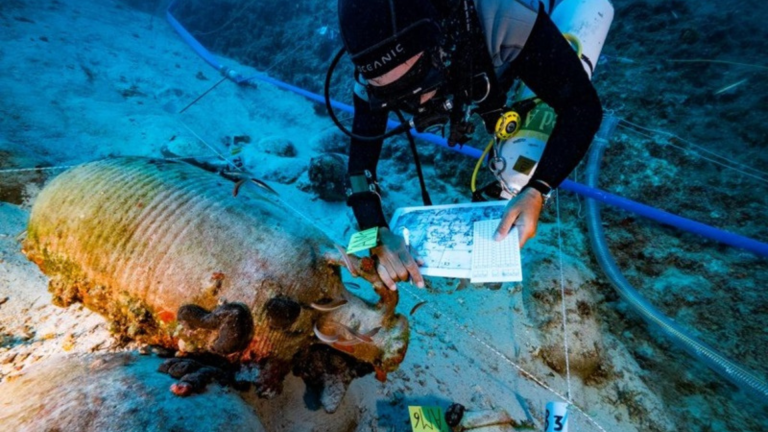
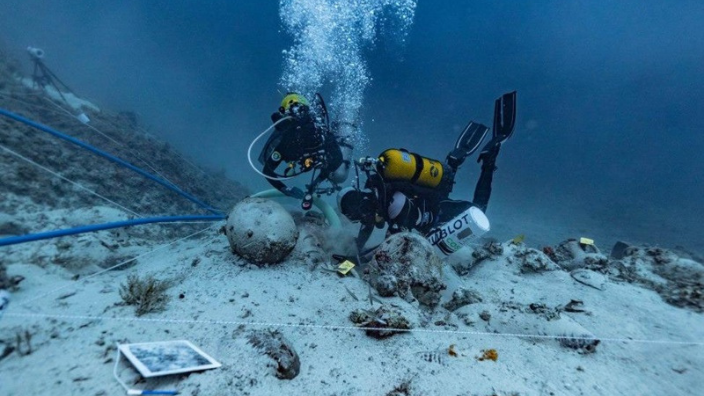
A number of ancient artefacts have been found in Greece’s Fourni islands complex, southwest of the island of Samos. Almost fifteen ‘amphorae’ were found buried in sand among ceramics and wooden parts of a Byzantine shipwreck.
4. Late Roman antiquities revealed during excavations at Athens Theatre Square
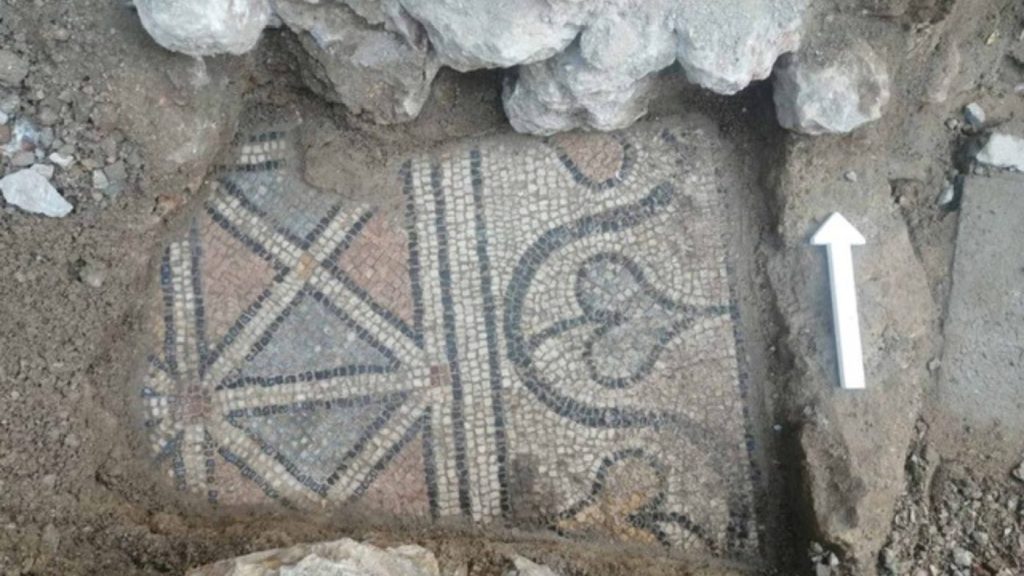
The remains of a building complex and a mosaic floor were found during excavations at the Plateia Theatrou (Theater Square) in Athens, Greece. Earlier excavations revealed similar architectural components suggesting they belonged to the same complex.
5. Ancient marble lintel discovered in Lesvos
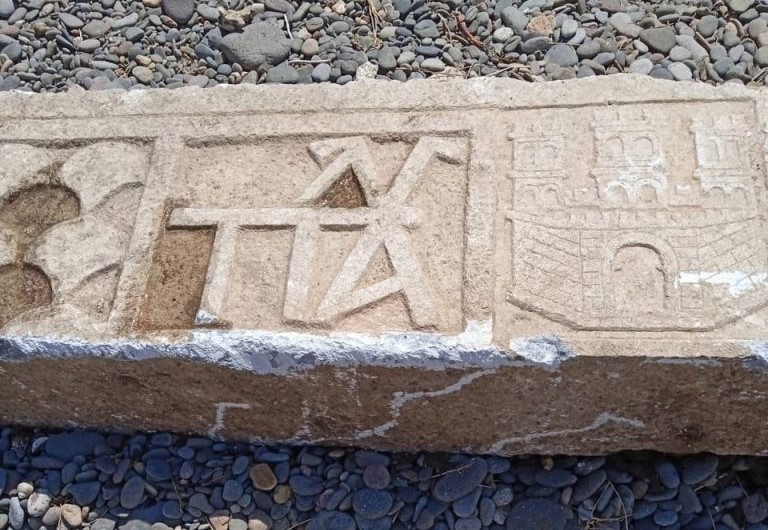
During an excavation of the south-eastern part of the mediaeval sea wall of the castle of Agioi Theodoroi in Lesvos, Greece, a 3.5 metre long marble lintel was found. Its discovery has been the cause of revision to the islands late Byzantine history.