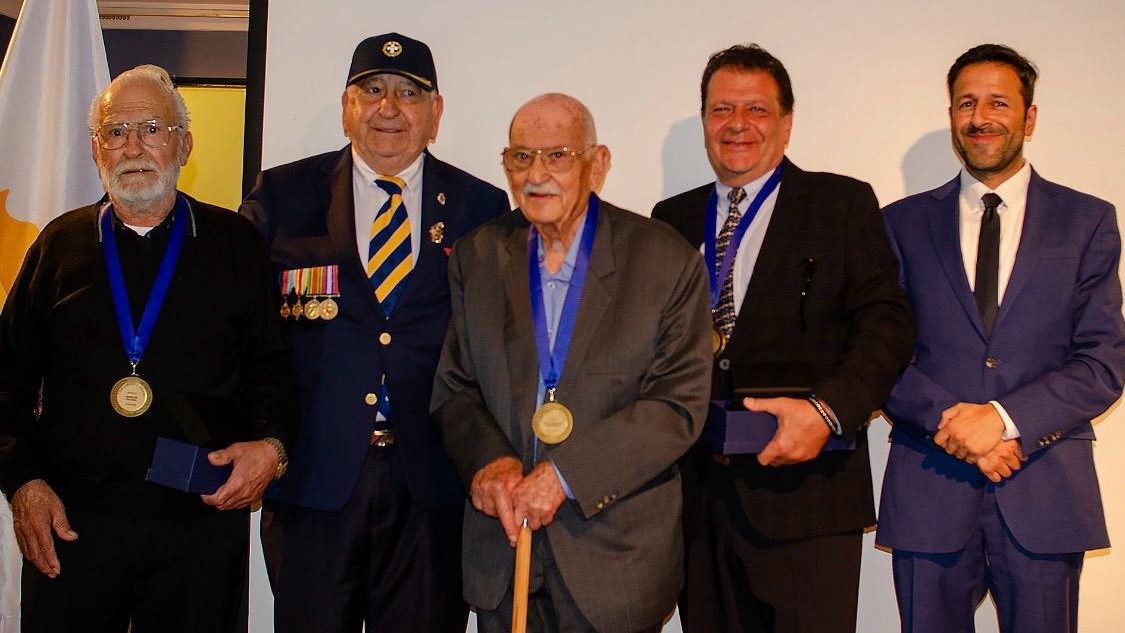
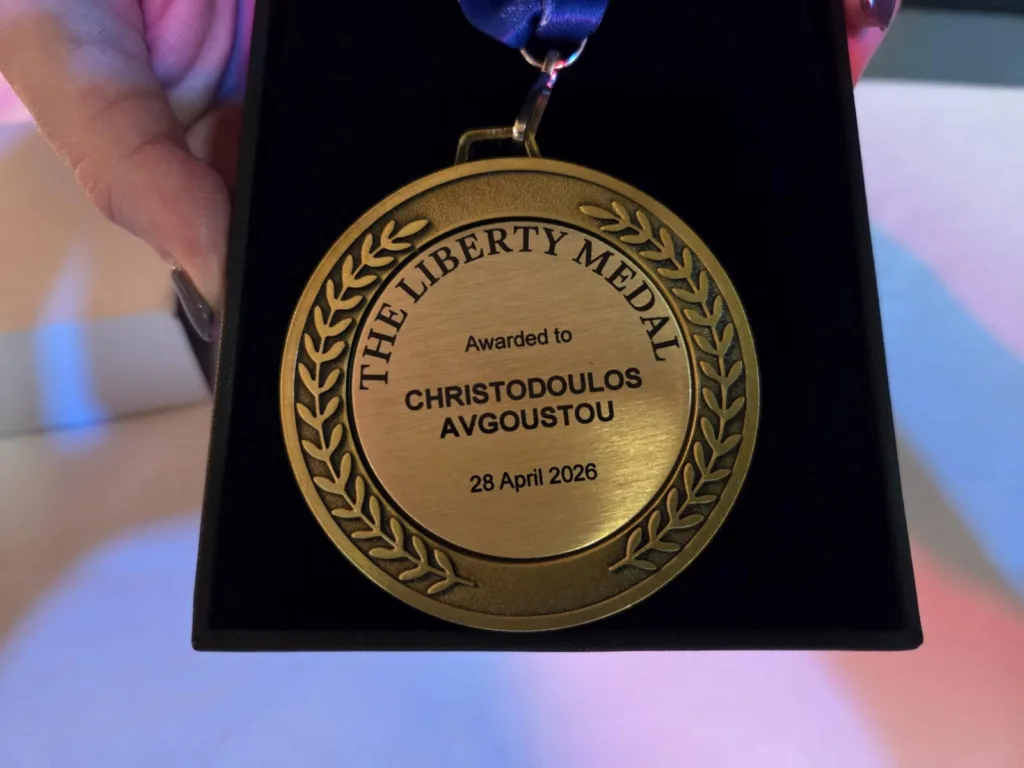
The Cyprus Community of New South Wales launched its inaugural Liberty Medal, recognising EOKA fighters in Australia as part of an event marking the legacy of the Cypriot liberation struggle.
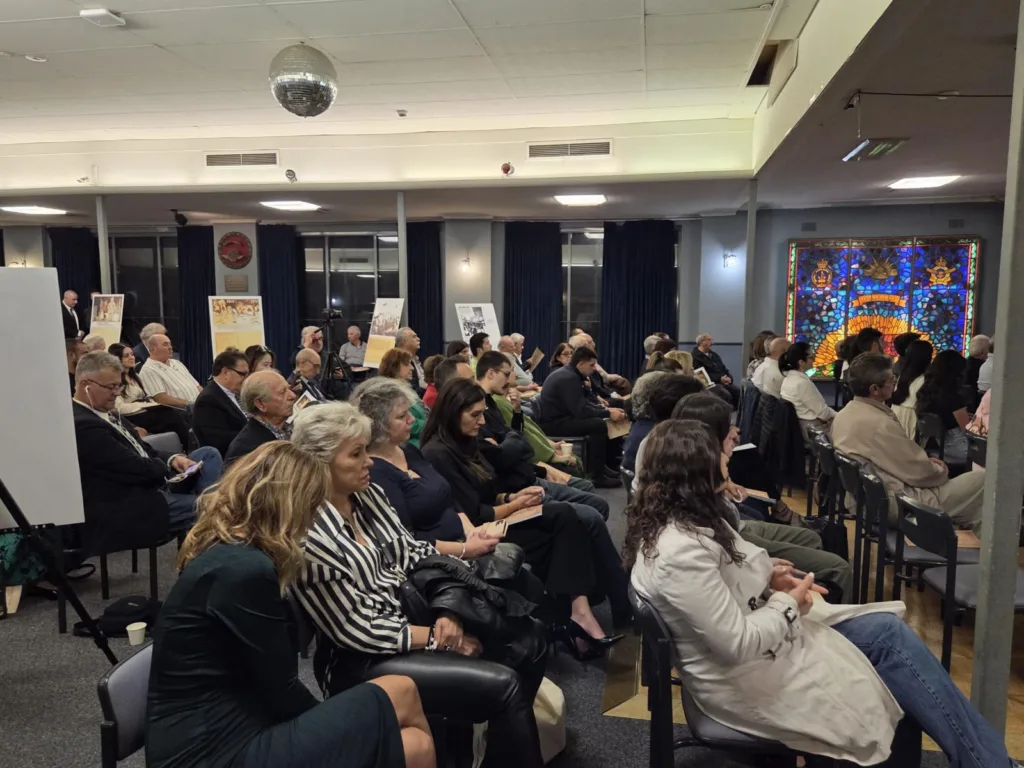
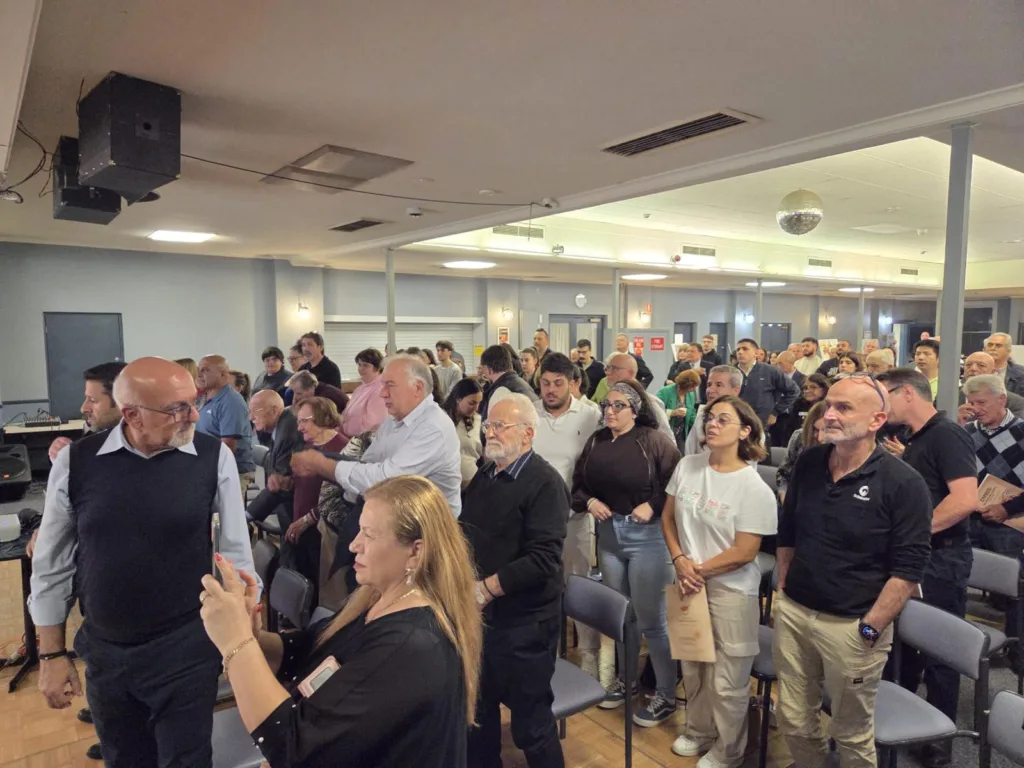
Held on April 28 at the Cyprus Community Club in Lakemba, the evening also saw the opening of the Struggle for Liberty Exhibition, bringing together community members, historians and dignitaries.
The presentation of the inaugural recipients formed the central focus of the event, with many in attendance viewing the recognition as a significant step in formally acknowledging the contribution of EOKA fighters in Australia.
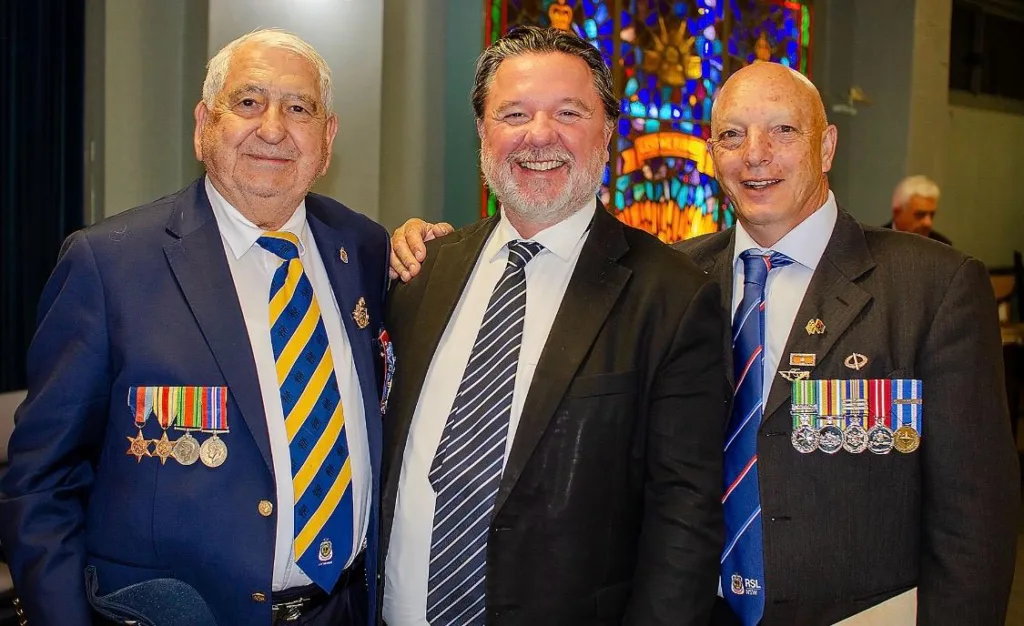
The Liberty Medal recipients were announced and honoured during the ceremony, with each recognised for their role in the struggle for Cyprus and their contribution to the community in Australia.
Christodoulos (Takis) Avgoustou was recognised for exceptional courage during the struggle for the liberation of Cyprus. After sustaining severe injuries in the line of duty, he returned to the fight, reflecting a sustained commitment to the cause of freedom. In the years since, he has been regarded within the community as a figure of quiet strength and service.
Angelos Fotiou was honoured for a life shaped by resilience across defining periods of Cypriot history. As a teenager, he experienced the EOKA struggle, later serving again during the events of 1974. Migrating to Australia in 1975, he rebuilt his life through perseverance and hard work, contributing to both his family and the broader community.
The late Demetrios Theoharous (1936–2022) was recognised posthumously for a life defined by patriotism, enterprise and community contribution. Having participated in the independence struggle before migrating to Sydney, he built a successful business and family life, becoming an example of the migrant experience in Australia.
For many in attendance, the recognition marked a meaningful moment, with the contribution of EOKA fighters formally acknowledged beyond Cyprus.
A historic first and future initiative
The presentation took place in the presence of the Deputy High Commissioner of the Republic of Cyprus, while messages of congratulations were conveyed from international guest Dr Emilios A. Solomou, from the University of Nicosia, a recognised authority on the Cyprus struggle. Family members, friends, and representatives of the Cypriot and broader Greek-Australian community were also in attendance.
For more than seven decades, the contribution of EOKA fighters has remained largely unrecognised in formal settings beyond Cyprus. This ceremony marked a significant step in formally acknowledging that history within Australia.
In a further announcement, Dr Diamadis confirmed that the Community, in collaboration with the Government of Cyprus, is working toward the establishment of a formal register of the heroes of the struggle. The initiative aims to ensure that their names and service are properly recorded and preserved.
He described the initiative as a milestone that extends beyond traditional commemorations, establishing a permanent record of service and recognition of a chapter of history that has taken more than 70 years to be formally acknowledged.
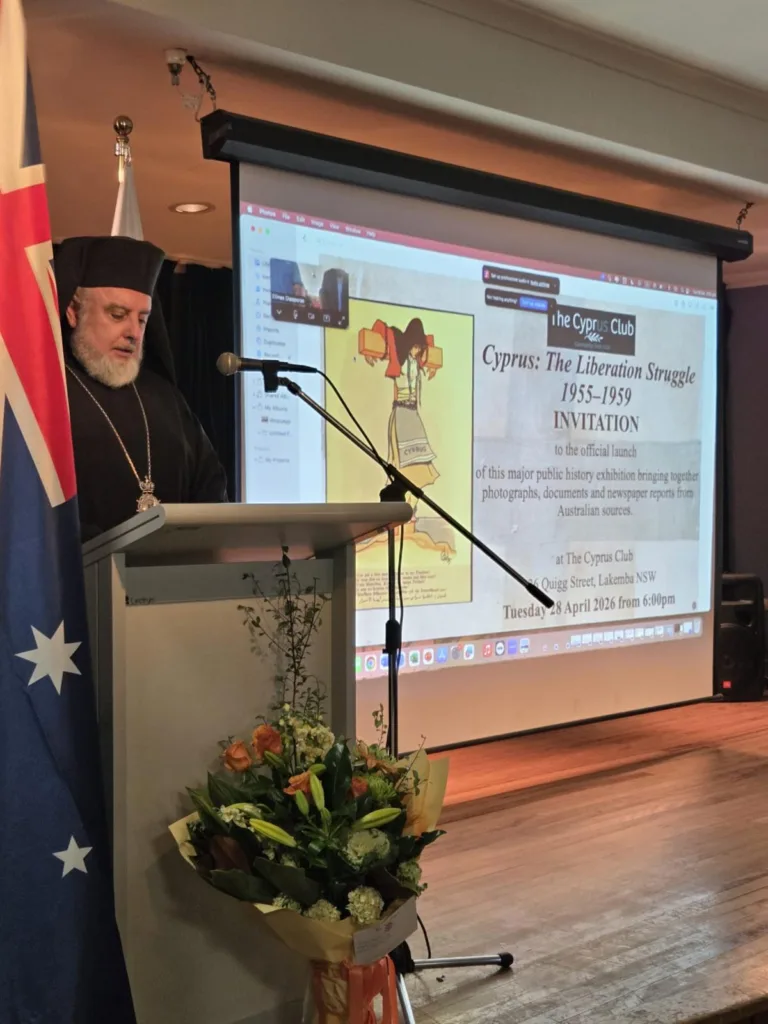
Bishop Iakovos, representing Archbishop Makarios, spoke eloquently about the historic significance of the evening. He reflected on the importance of recognising a people’s struggle for self-determination and justice, and their enduring efforts to reclaim their homeland. He thanked the organisers, noting that the community is now on a path of educating future generations and reminding all of the courage, determination, and unwavering commitment of the people of Cyprus.
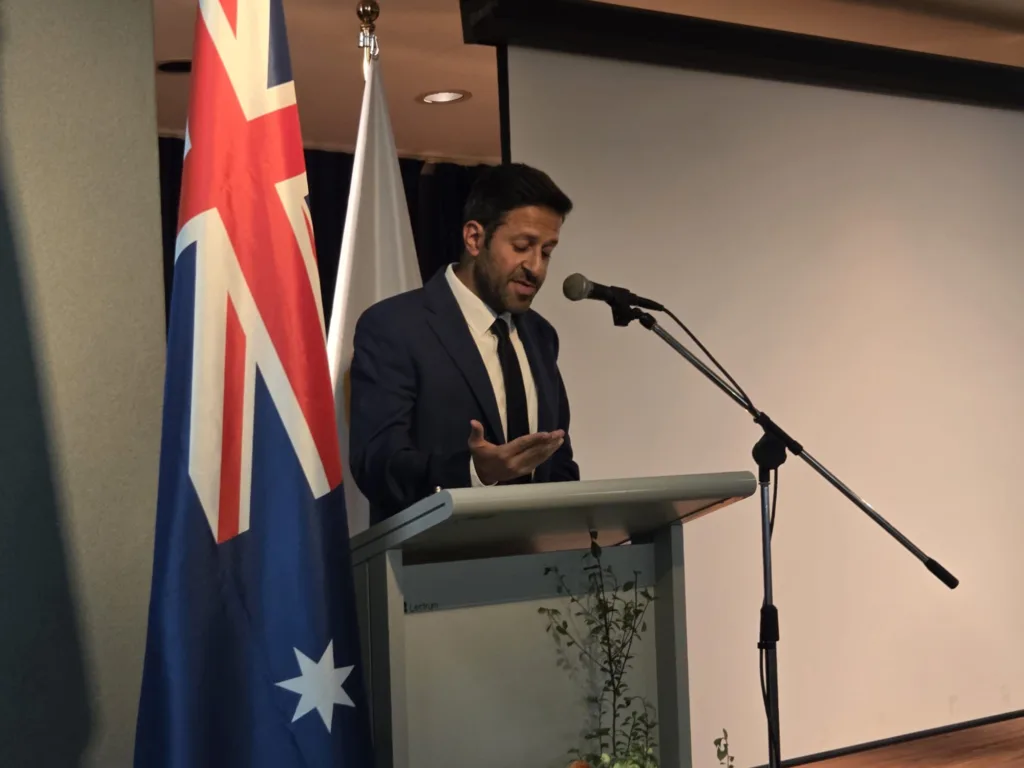
Deputy High Commissioner of Cyprus in Canberra, Mr Nikolaos Varellas, spoke of the trauma of occupation and what it has meant for so many. He emphasised that the desire for freedom and liberty was so powerful that ordinary people were driven to do extraordinary things—without fear, and with faith in justice as their guiding principle.
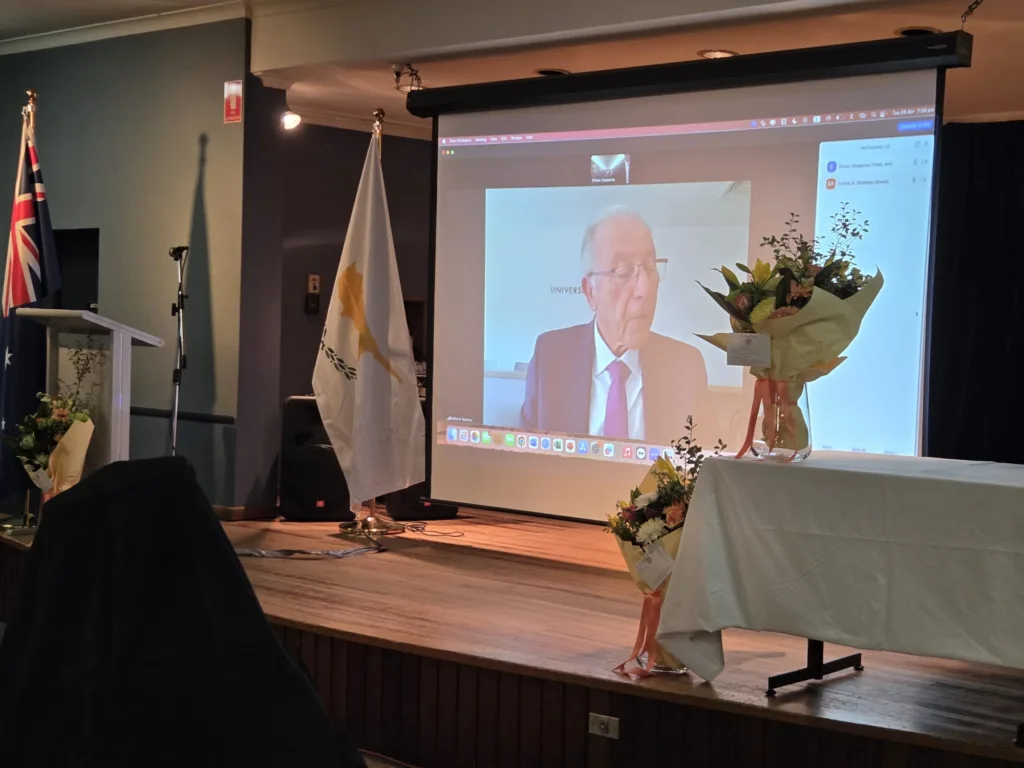
The highlight of the evening was the address by the eminent scholar Dr Solomou, who officially opened the exhibition and delivered the keynote lecture. The audience listened in silence and deep reflection, absorbing every word as the academic carefully outlined the history of occupation and the struggle for self-determination. He congratulated the organisers and the community for taking meaningful steps to educate others about what occurred, why it happened, and why the heroes of the struggle must never be forgotten. He described it as a just and profound struggle.
It was a truly historic and solemn occasion. Never before has an Australian organisation hosted such a formal recognition of this chapter of history. Families and friends of the recipients were deeply moved by the ceremony, as each citation was read by the Master of Ceremonies, Ms Roula Christodoulides.
Mr Harry Andrew, Co-Chair of the Cyprus Memorial Committee of the Community and a former member of the Cypriot Armed Forces, bestowed upon each recipient the EOKA salute as a mark of comradeship and honour, before placing the ribbon of the medal upon them.
Mr Varellas also presented a European Union crystal award, specially commissioned to commemorate the occasion and to honour the deeds and sacrifices of each recipient, as part of the Cyprus EU Presidency Programme in partnership with the Cyprus Community of NSW.
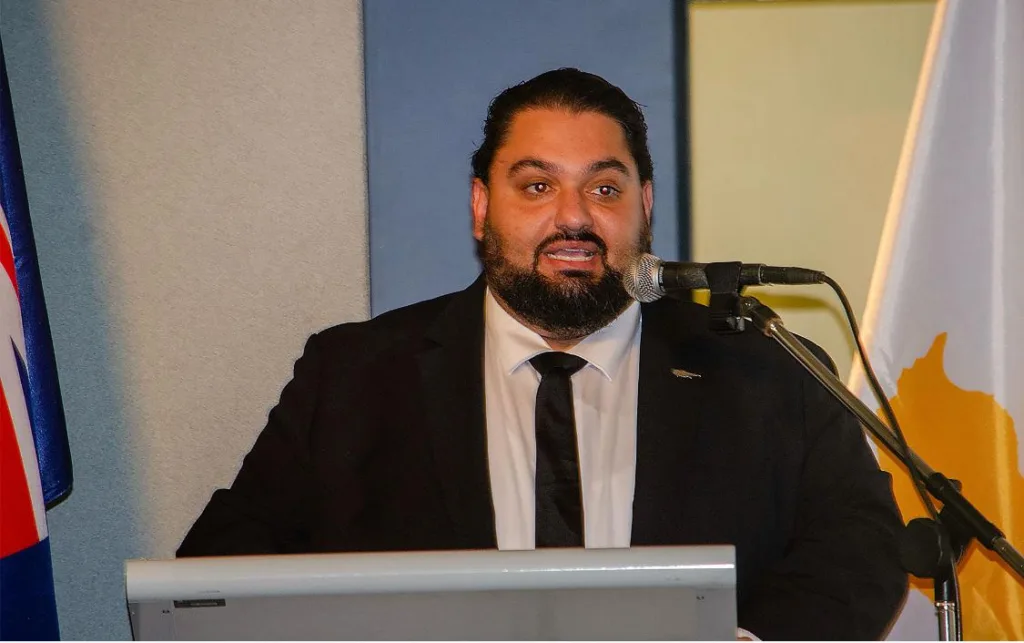
Addressing attendees, Vasilis Panayi, President of the Cyprus Community Youth of NSW, said the initiative formed part of a broader effort to connect the history of Cyprus with contemporary values.
“Tonight, we gather not only as a community, but as custodians of a history that has shaped who we are,” he said.
“With the launch of the Liberty Medal, we honour individuals and institutions who have advanced liberty, dignity and human rights, connecting the legacy of Cyprus with the universal values we share today.”
The accompanying Struggle for Liberty Exhibition, presented as part of the evening’s program, offered a detailed account of the EOKA liberation struggle and its wider historical context. Titled Cyprus: The Liberation Struggle 1955–1959, the exhibition was developed by the Cyprus Community of NSW as a major public history initiative documenting one of the defining periods in modern Cypriot history.
Drawing extensively on Australian archival material, the exhibition explored not only the events of the liberation struggle itself, but also how they were understood and interpreted through Australian eyes.
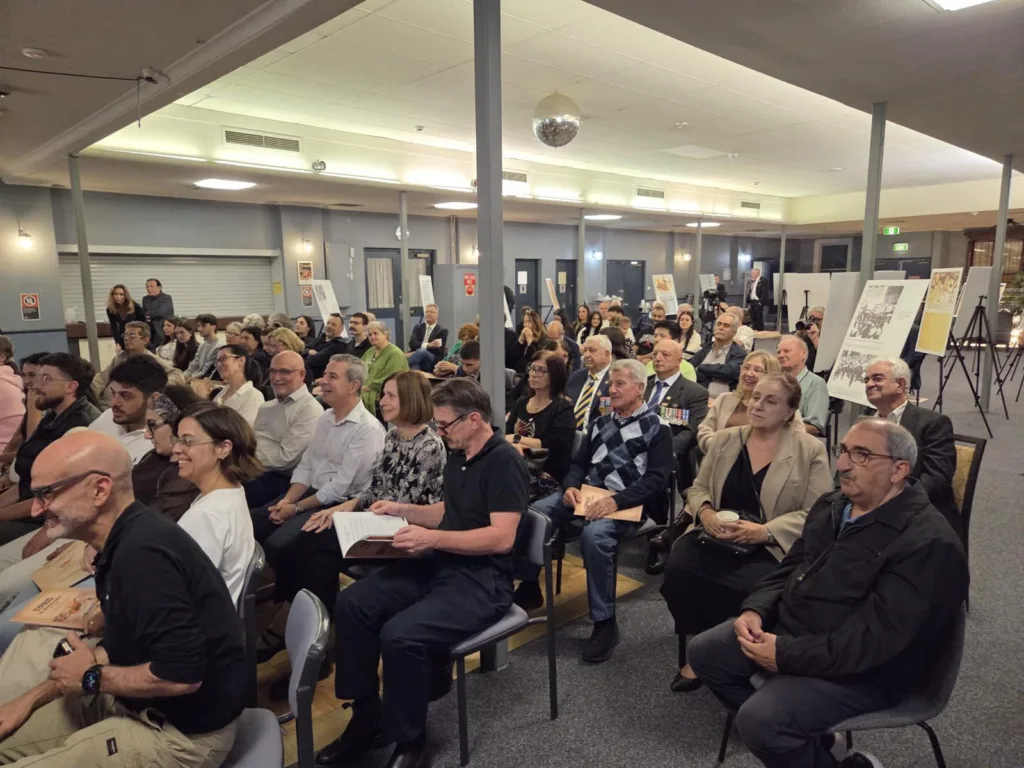
Curated by Dr Panayiotis Diamadis, the Community’s Director of Archives and Heritage, the exhibition featured photographs, historical documents and newspaper reports spanning the years 1950 to 1974, with a strong emphasis on Australian sources.
“It’s an important exhibition, for the Cyprus community, for all Greeks, for all Australians, to re-discover the struggle for freedom, the people’s aspiration for independence, and their right to self-government, identity, culture and history,” Dr Diamadis said.
Earlier in the evening, a student poetry performance on the theme of liberty formed part of the program.
In closing remarks, organisers outlined a broader program of cultural and community initiatives to follow, with the exhibition remaining open to the public, including for school and educational visits across New South Wales.
To attend any of the scheduled lectures, or organise school, church or community group tours – including guided experiences with lunch or dinner – visit: www.thecyprusclub.org.au/exhibition
