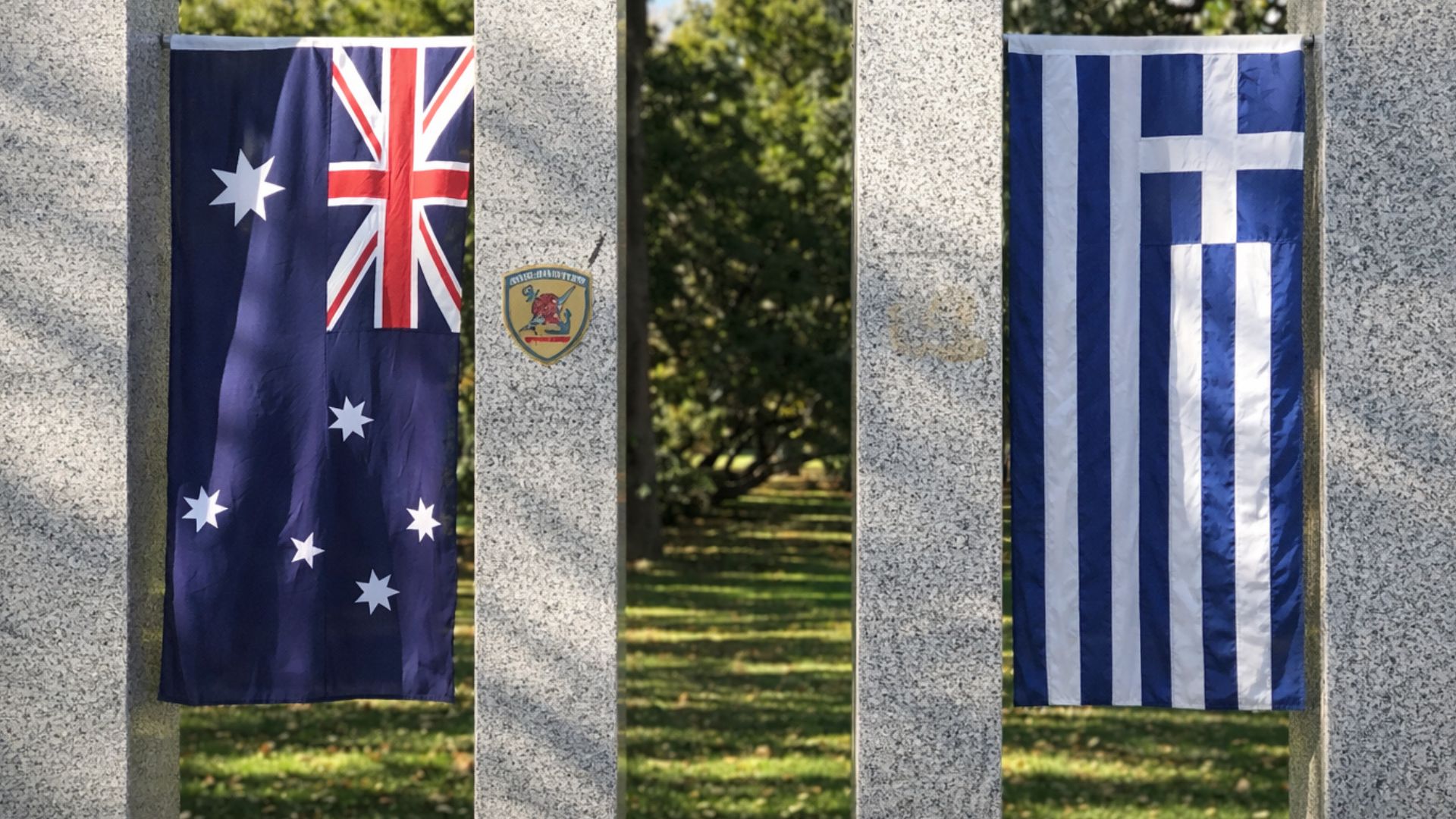
By Dr Themistocles Kritikakos
Each April, Australians gather to commemorate Anzac Day and remember over 11,000 Australian and New Zealand soldiers who lost their lives in the Gallipoli campaign in 1915. More than a century later, the campaign occupies a central place in Australia’s national narrative. It is widely understood as a moment of sacrifice, endurance, and shared hardship that helped shape a distinct national identity. Dawn services, commemorative rituals, and public narratives continue to reinforce the emotional and symbolic power of Gallipoli in Australian historical consciousness.
The name Gallipoli derives from the Greek Kallipolis, meaning “beautiful city.” Before the campaign, the peninsula was home to long-established Greek communities who formed a visible and enduring presence in the region’s social and economic life, with tens of thousands of Greeks living across the area prior to 1915.
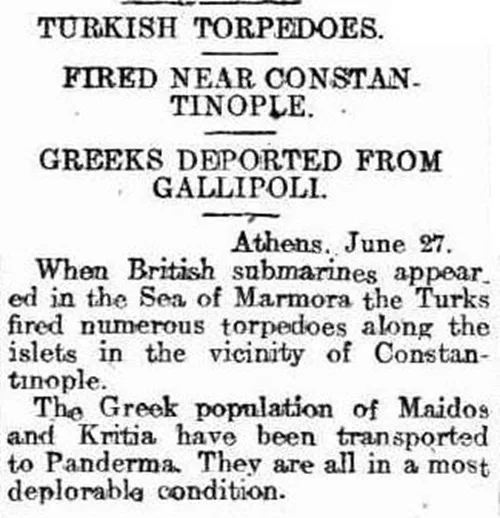
Many of these communities had already experienced displacement and deportation in the lead-up to the Anzac landings and during the campaign under the Young Turk authorities. The peninsula also formed part of a wider wartime landscape in which Christian civilian populations across the Ottoman Empire experienced mass violence, deportation, and displacement.
War and genocide in parallel
For Armenians, Greeks, and Assyrians, the same historical period remembered in Australia through the language of reconciliation with Turkey is also remembered as a time of horror and trauma due to the Ottoman genocidal campaign, which resulted in the deaths of around 2.5 to 3 million Christians between 1914 and 1923 across Eastern Thrace, Anatolia, and surrounding regions.
During the First World War (1914-1918), Armenian populations within the Ottoman Empire were subjected to systematic deportations, death marches into the Syrian desert, mass killings, and the destruction of community leadership structures. Assyrian communities in eastern Anatolia and north-western Persia faced attacks on villages, forced displacement, enslavement, and mass flight as Ottoman forces and irregular units advanced through the region.
Greek populations across Anatolia, Pontus, and Eastern Thrace, including coastal zones such as the Gallipoli peninsula, experienced deportations, violence, imprisonment, forced labour battalions, and the confiscation of property, often justified through accusations of collaboration with Allied forces or framed as wartime security measures and evacuations. While the experiences of each community differed in form and intensity, they were shaped by a broader environment in which Christian minorities were increasingly treated as internal enemies and as unassimilable within a weakening empire marked by political instability and territorial losses.
Australians as witnesses and responders
These processes were unfolding at precisely the moment that Australian and New Zealand soldiers were fighting against the Ottoman Empire on the very same territory. The nearby Greek island of Lemnos served as a key base for the Allied campaign. From Lemnos, many Anzac troops embarked for the Gallipoli landings, while Australian nurses worked in military hospitals on the island, caring for the wounded evacuated from the front.
The arrest of more than 250 Armenian intellectuals and leaders in Constantinople on 24 April 1915, marking the beginning of the Armenian Genocide, occurred just one day before the Anzac landings at Gallipoli. Prior to the Anzac landing, over 30,000 Greeks lived in Gallipoli, and by 1919 very few remained. Australian newspapers reported on the persecution of Christian civilians in the region. On 16 July 1915, The Age described how more than 30,000 Greeks had been forced to abandon their homes and were dispersed into the interior, with many imprisoned under accusations of assisting Allied submarines. Such reporting indicates that awareness of civilian suffering accompanied the military conflict and circulated within the Australian press at the time.
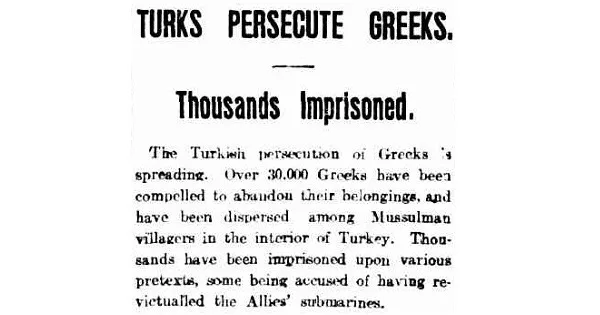
Gallipoli exists not only as a symbol of military sacrifice but also as part of a wider humanitarian crisis that Australians witnessed and responded to in real time. Australian soldiers also encountered aspects of this humanitarian crisis directly. Prisoners of war later described witnessing the suffering of Christian populations during forced marches and detention. Lieutenant Leslie Henry Luscombe wrote of Armenian women and children being forced into livestock wagons under guard at Eskişehir, while Captain Thomas White of the Australian Flying Corps documented mass graves, devastated towns, and the disappearance of Armenian men during his captivity across Mesopotamia and Anatolia. These encounters formed part of a wartime experience that extended far beyond warfare and shaped how some Australians later understood the human consequences of mass violence.
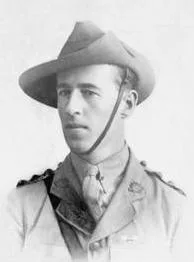
In the final phase of the war, Anzac Captain Stanley Savige, part of the British mission Operation Dunsterforce, assisted in July 1918 in the evacuation and protection of tens of thousands of Assyrian refugees in north-western Persia. The rescue at Urmia became a significant historical connection between Assyrian communities and Anzac service, illustrating how military duty could intersect with humanitarian intervention. Australian engagement did not end with the armistice. The refugee crisis that followed the collapse of the Ottoman Empire prompted international relief efforts in which Australians played important roles. Major George Devine Treloar, working within League of Nations refugee resettlement efforts after the Greco-Turkish War, assisted over 100,000 Greeks in northern Greece from 1922.
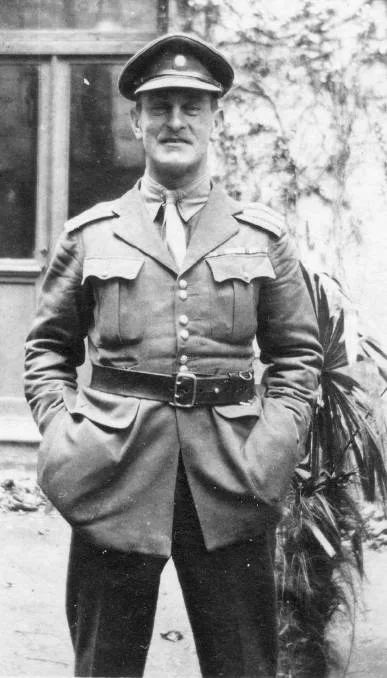
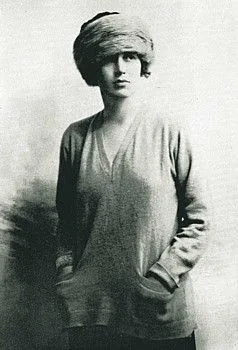
Many Australian humanitarians also mobilised public support for survivors and refugees. Women such as Edith Glanville and Cecilia John became associated with relief efforts to support Armenian refugees, while Joice Nankivell Loch later played an important role in humanitarian work among Greek refugees.
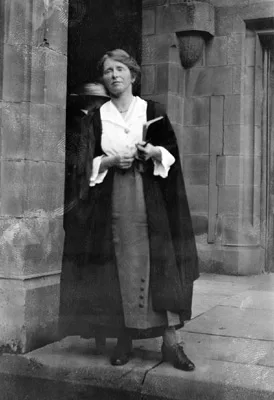
Australian historian Jessie Webb supported rescue initiatives involving Christian women who had been enslaved and spoke publicly in Australia about the horrors she had witnessed.
Australian humanitarian initiatives, organised through civic groups, churches, and broader community networks, raised funds and mobilised public support for relief efforts assisting displaced populations. Much of this aid was channelled through international organisations and contributed to the provision of food, clothing, and medical assistance, as well as the support of orphanages and refugee care institutions.
Between 1915 and 1930, these initiatives reflected an emerging conception of Australia as a participant in global relief efforts. These efforts are now remembered by the descendants of genocide survivors in Australia through commemorative events, storytelling, and advocacy for national recognition. Australian humanitarian figures are often remembered as heroes and saviours, and their actions continue to shape the Australian identity of descendants.
Memory in the shadow of history
Despite this historical involvement, the dominant commemorative framework through which Gallipoli has been remembered in Australia has tended to emphasise reconciliation between Australia and Turkey. Central to this narrative has been the symbolic figure of Mustafa Kemal Atatürk, the founding father of modern Turkey, and the widely circulated words expressing compassion for the mothers of fallen Anzac soldiers. The repeated use of these alleged words in ceremonies and public rhetoric helped construct a dual mythology that shaped bilateral relations and reinforced parallel national stories about the birth of modern Australia and modern Turkey through the shared experience of Gallipoli. Historians have noted that the authorship and authenticity of these widely attributed words remain disputed, yet their repetition has allowed a reconciliatory narrative to become central to Anzac commemoration.
The Gallipoli narrative represents a story of mateship, sacrifice, and of former enemies finding common humanity through shared suffering. It has served diplomatic purposes in reinforcing peaceful relations between Australia and Turkey, sustaining annual Gallipoli commemorations, ensuring access to Anzac graves, and reinforcing parallel stories about the birth of two modern nations. Yet this narrative has also come at a cost, particularly in overlooking the complete Australian experience and the Australian response to genocidal violence, as well as the trauma inherited by the descendants of survivors living in Australia. For Armenian, Greek, and Assyrian communities whose histories are inseparable from the persecution and displacement of the same period and closely tied to the Australian humanitarian response, the prominence of this commemorative mythology can produce a sense of exclusion and omission. It does not tell the full story of Australia’s experience and response at the time.
Each year, genocide commemorations for these communities occur almost simultaneously with Anzac Day, particularly the Armenian Genocide, which is commemorated the day before. Descendants of survivors often confront dominant public narratives that celebrate reconciliation and nation-building while leaving limited space for recognition of the genocides and the humanitarian response by Australians.
Recognising these histories does not diminish the significance of Anzac Day. It acknowledges that Australians were not only participants in military conflict but also witnesses to mass violence. It also recognises that Australians later played significant roles in relief efforts that supported survivors.
The long-term consequences of these events extend into the present. The loss of family members, forced displacement, dispossession, and the destruction of communal networks left enduring trauma and cultural scars that persist across generations. For many families who later migrated to Australia, memory became central to identity formation. Stories of suffering, survival, and resilience were transmitted across generations, while silence, fragmented narratives, and the absence of coherent accounts also shaped diaspora memory.
The transmission of these histories has become a means through which Armenian, Greek, and Assyrian Australians affirm their sense of belonging and understand their place in Australian society, a country they have helped build and shape. For many descendants of survivors, sharing these experiences is not simply an act of mourning but an assertion of presence: a claim that their families were not merely bystanders to history but an integral part of the broader Australian story.
In my own research, I interviewed Greek Australians descended from the villages of Gallipoli and eastern Thrace who carry what might be described as a dual inheritance: the pride of Anzac commemoration and the grief of displacement from the same soil. One interviewee reflected on the village of Krithia on the Gallipoli peninsula, the birthplace of her grandparents, reminding us that these were not abstract populations but communities with deep historical roots. The name Krithia appears in the Australian War Memorial in reference to the Battle of Krithia during the Gallipoli Campaign. It was this reference that prompted a process of family discovery of the loss and violence they had endured. Another interviewee, born in Sydney to grandparents from Gallipoli, only discovered this connection in adulthood, through an indirect scene in a film depicting the uprooting of Greek populations in the late Ottoman Empire. It was then that his mother revealed their origins and the loss of family members. He reflected that acknowledging the experiences of the peninsula’s Greek population would allow Greek Australians to feel more Australian. These perspectives suggest that recognition does not fragment national belonging but deepens it.
Toward responsibility
More than a century after the Gallipoli landings, Anzac Day remains one of Australia’s most significant commemorative days. Its meaning has evolved over time and will continue to do so. As Australia reflects on its multicultural reality and humanitarian traditions, there is increasing opportunity to engage more honestly with the full historical context of the First World War and its aftermath.
Acknowledging the Armenian, Greek, and Assyrian dimensions of that history completes the Australian story. The Anzac prisoners who witnessed atrocities, the officers who rescued refugees, and the humanitarians who saved lives are all part of a single, complete account of who Australians were during one of history’s most horrific periods. Armenian, Greek, and Assyrian Australians are not peripheral to that story. They are part of its fabric.
To understand Gallipoli fully is to situate it within the broader Australian experience at the time, including those who witnessed and responded to civilian suffering, as part of a more complete Australian story. Over the years, scholars, researchers, and community activists have demonstrated that these histories are not external to Australia but are embedded within its own historical experience and should be understood as an Australian matter.
The Australian Government has yet to formally recognise the genocides. Australia’s culture of remembrance continues to grapple with how to address traumatic pasts, including the violence, marginalisation, and dispossession experienced by Indigenous Australians. These discussions are not separate but are connected to a broader question of how societies remember honestly and responsibly.
The Armenian, Greek, and Assyrian genocides unfolded amid political failure and international indifference. Understanding how they happened, and how some Australians responded with courage and humanitarian conviction, offers lessons that remain urgently relevant. History, when remembered honestly, not only honours the dead. It also instructs the living.
In this sense, recognition of the Armenian, Greek, and Assyrian genocides can shape a more meaningful way of remembering, one that helps heal wounds, affirms humanitarian values, and strengthens a shared sense of belonging. It recognises the full human cost of war, persecution, and displacement, honours Australian humanitarians who helped save lives, and creates space for histories that have too often been overlooked or denied.
*Dr Themistocles Kritikakos is a Greek Australian historian and writer. He holds a PhD in History from the University of Melbourne. He is the author of Armenian, Greek, and Assyrian Genocide Recognition in Twenty-First Century Australia: Memory, Identity, and Cooperation (Palgrave Macmillan, 2026).
