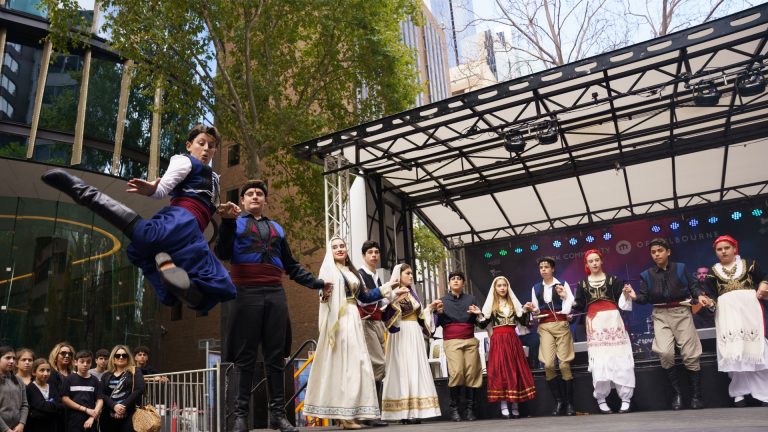
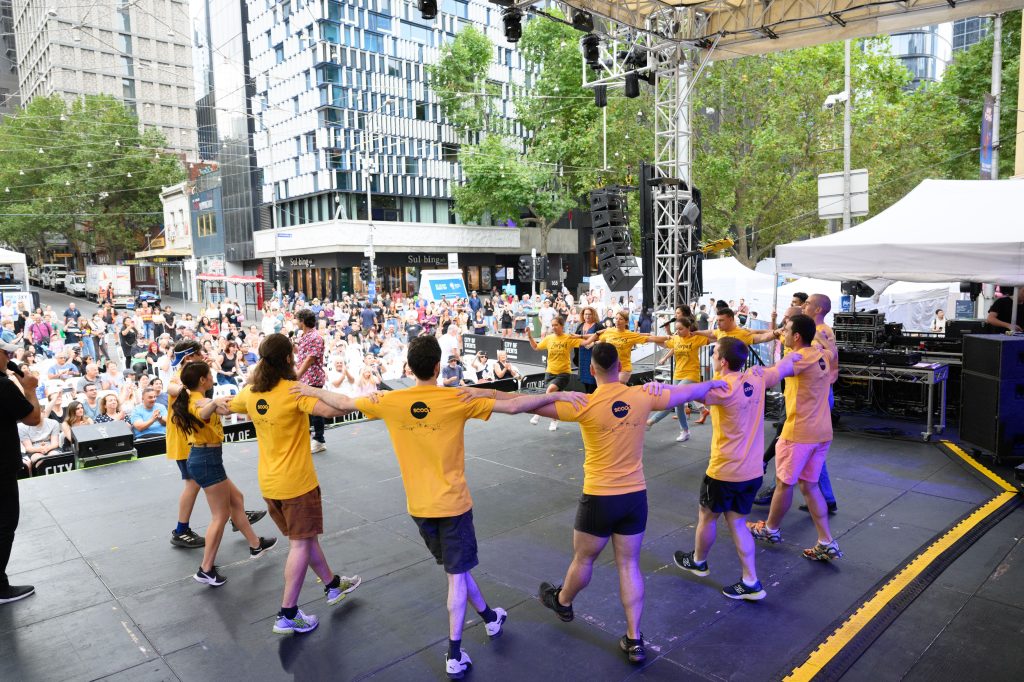
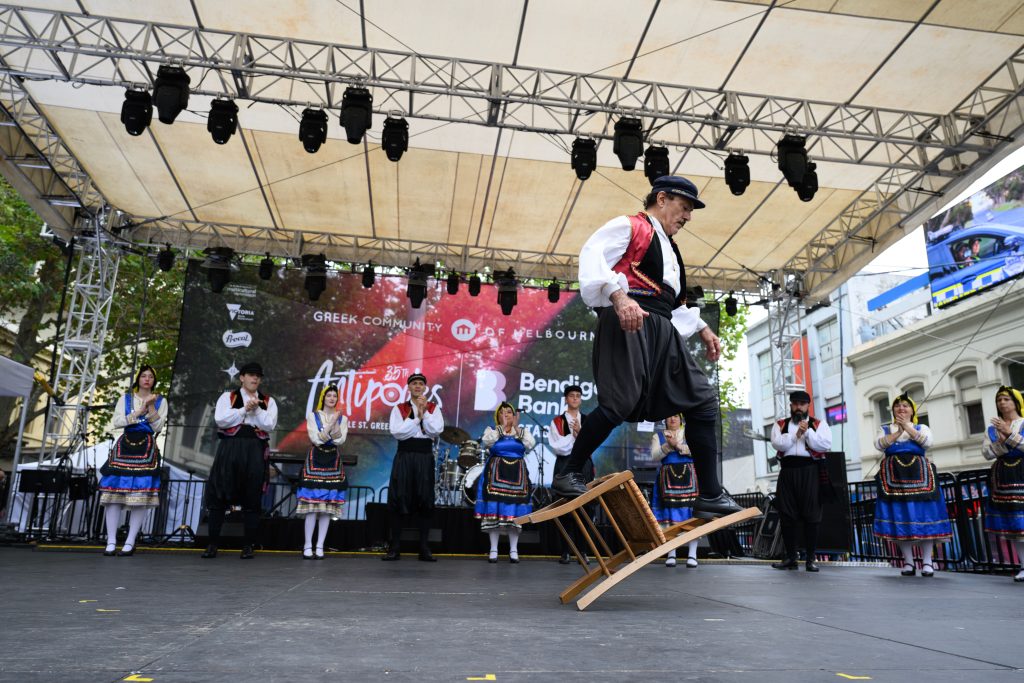
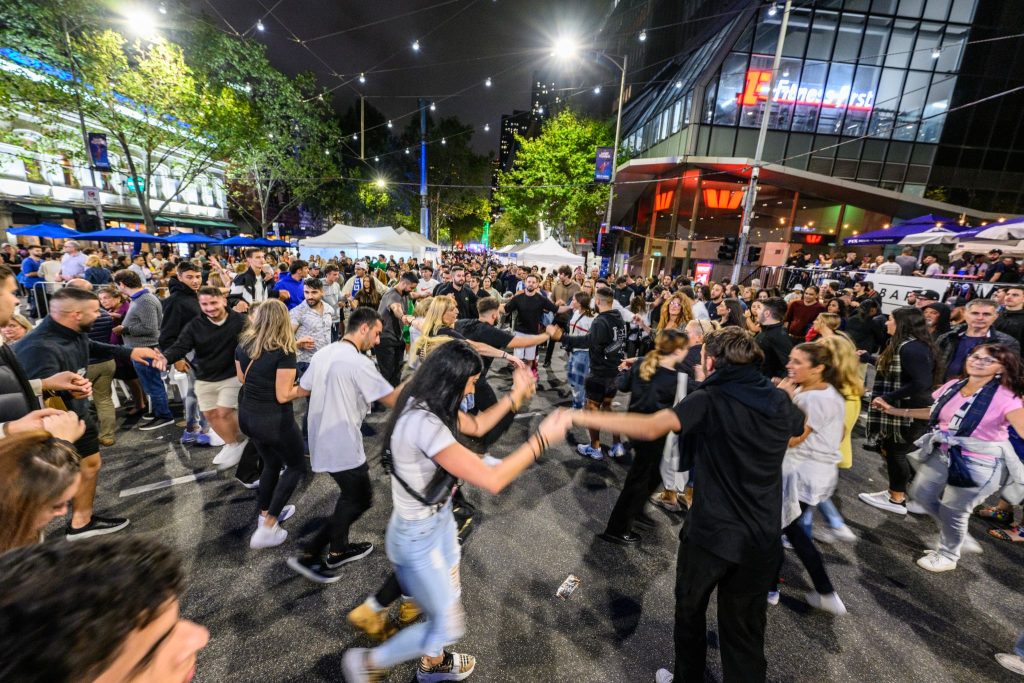
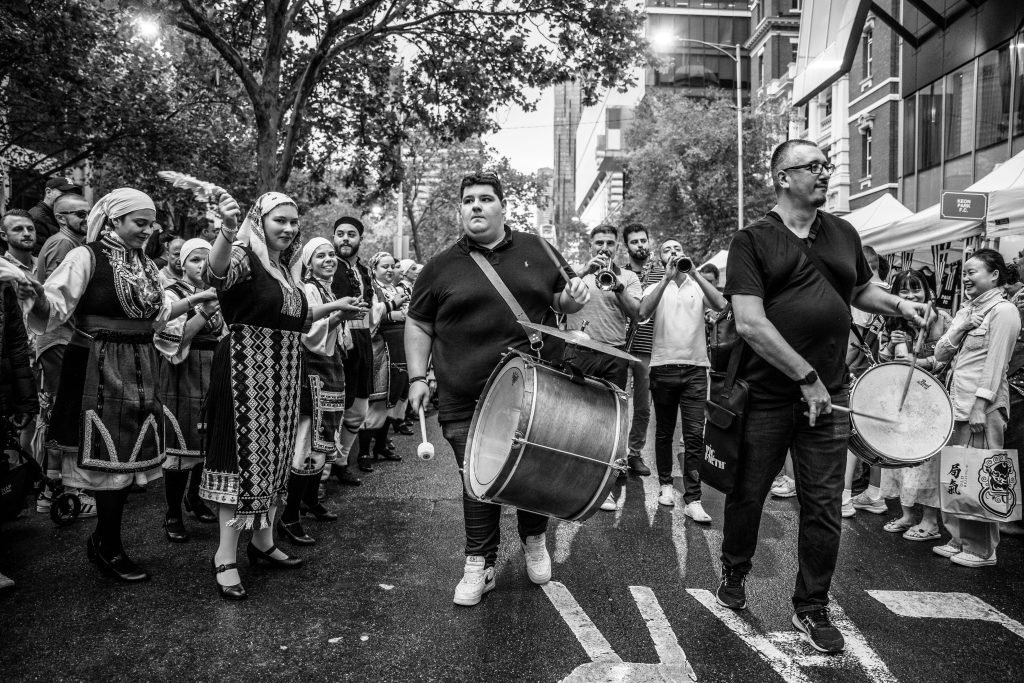
In just 11 days, the festival will unveil 90 pop-up stalls, an array of delectable Greek food vendors, exhilarating competitions, thrilling rides, and three stages showcasing the talents of over 700 performers.
Over 700 performers are expected at this year’s festival. Photo: Constantly Flashing.
The festival’s stages include the Main Stage, the A&A Holdings Stage, and the #LoveLonsdale Stage, each offering a unique lineup of performances to delight attendees.
They will range from traditional to contemporary dancing. Photo: Constantly Flashing.
From traditional dances to contemporary beats, the Antipodes Festival promises a feast for the senses that has become a cherished cornerstone of Melbourne’s cultural calendar.
This event invites all Greeks and philhellenes to come along. Photo: Constantly Flashing.
Central to the success of the Antipodes Festival are its valued partners and sponsors, whose unwavering support has been instrumental in bringing this spectacular event to life.
From presenting sponsors to Festival partners, media sponsors, and beyond, the Greek Community of Melbourne is truly grateful for the continued support.
It’s set to be an unforgettable weekend. Photo: Constantly Flashing.
Stay tuned for more exciting announcements as people gear up for an unforgettable weekend of festivities at the 2024 Antipodes Festival!
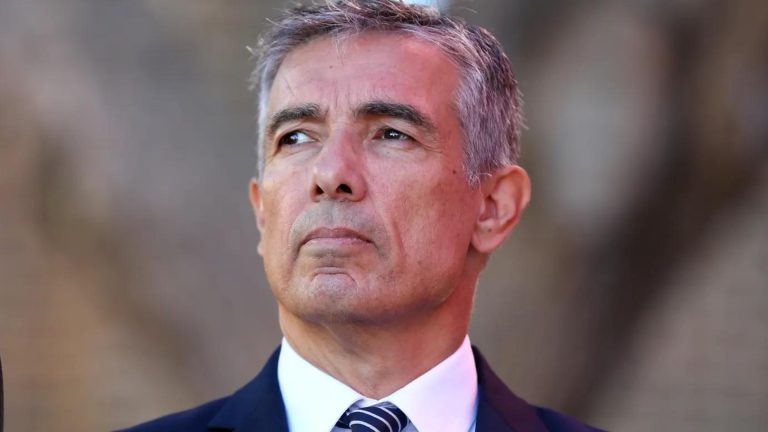
CEO of the state-owned workers’ compensation insurer, icare, Richard Harding, earned $1,053,000 in 2022-23 and was the highest-paid person in the NSW bureaucracy.
John Hatzistergos. Photo: Renee Nowytarger.
The Minns government passed legislation in 2023 to freeze pay for the top executives for two years, but it is now under pressure to deliver on a key election pledge to cut the number of public sector senior executives by 15 per cent.
A spokesman for the NSW Government said agencies are “currently in the process of implementing this policy.”
The plan to freeze pay and reduce executive numbers was predicted to save $745 million over four years.
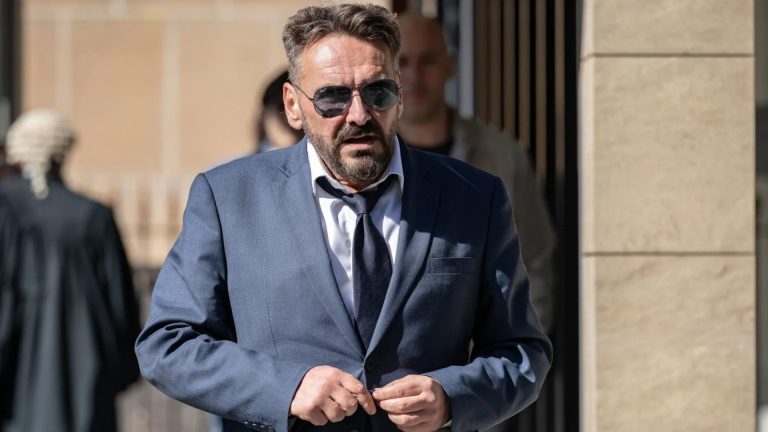
Jurors in the court trial involving construction boss George Alex and five others who were charged with embezzling over $13 million in unpaid taxes, have received a warning that any information found beyond the courts could have “disastrous” consequences.
On Monday, February 12, eighty prospective jurors were transported by bus to the NSW Supreme Court in Darlinghurst, Sydney for the commencement of the fraud trial.
According toThe Sydney Morning Herald, the trial is expected to span across six months or longer, as suggested by Justice Desmond Fagan.
Prosecutors claim that George Alex, along with his son Arthur Alex, Mark Ronald Bryers, Gordon McAndrew, Lindsay John Kirschberg, and Pasquale Loccisano, worked together to take millions of dollars in pay-as-you-go (PAYG) withholding tax from the wages and salaries of labour hire workers.
They allegedly used a complicated network of businesses, causing the Australian Taxation Office to lose money.
File photo: Arthur Alex (left) and his father George Alex (right) outside the NSW Supreme Court. Photo: Kate Geraghty.
On Monday, the Judge told the 15 jurors selected to preside over the trial, which will eventually become 12, that they were “absolutely forbidden” to research the matter online.
The Judge made reference to the sexual assault trial of Bruce Lehrmann in the ACT, where a juror was found to have researched “crimes of a nature that were alleged against the accused.”
“The consequence was that trial was aborted, and for other reasons, it’s never been resumed,” Judge Fagan told the jury of 11 men and four women.
The judge described the potential consequence of the juror’s researching information for the George Alex trial as “disastrous.”
Judge Fagan said the accused men of the case were each entitled to the presumption of innocence, and it was for the Crown to prove its case beyond reasonable doubt.
The trial is set to continue, with the Crown prosecutor’s opening address is expected to run for four days.
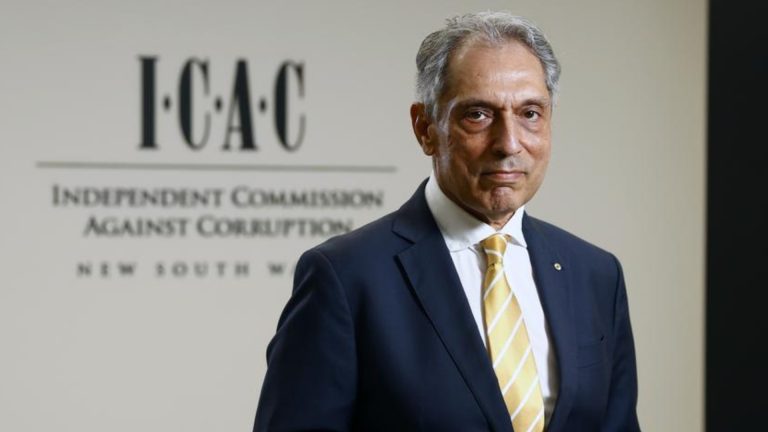
Angelo Tsirekas, the former mayor of Canada Bay Council in Sydney, has formally launched a legal challenge in the NSW Supreme Court against findings of corruption by the Independence Commission Against Corruption (ICAC) last year.
In November 2023, the ICAC found that Mr Tsirekas had engaged in “serious corrupt conduct” with planning decisions.
He was found to have accepted overseas flights, trips and accommodation – to the tune of almost $20,000 – from developer I-Prosperity and its agent Joseph Chidiac, as a “reward” for favouring the group’s property interests in the Local Government Area.
In response to these findings, NSW Local Government Minister Ron Hoenig dismissed Mr Tsirekas from Council and he was disqualified from civic office for a period of five years.
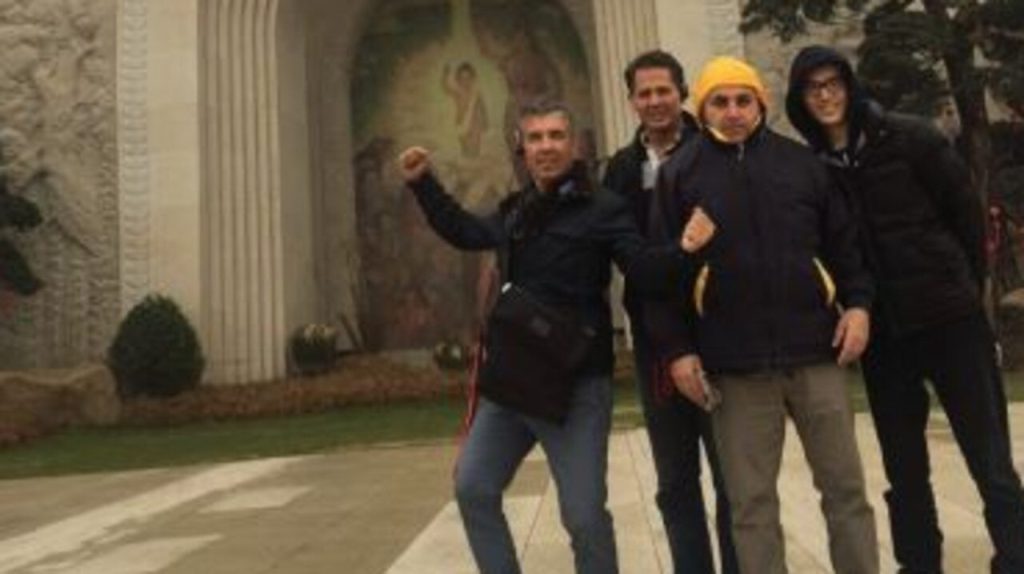
ICAC revealed this image of Mr Angelo Tsirekas and Mr Joseph Chidiac in China. Photo: ICAC.
Mr Tsirekas claimed the “key adverse findings” had been based on “errors of fact and law.”
According to The Australian, Mr Tsirekas’ legal team have now officially commenced legal proceedings against ICAC in the NSW Supreme Court.
The matter is expected to be discussed in court on March 6 where parties will determine the course of action for the case.
A City of Canada Bay Council spokesman told The Australian it was not aware its former mayor had lodged legal papers against ICAC with the Supreme Court.
2024 is indeed a very special year for Alphington Grammar School. It has been 35 years since the school opened its doors in 1989.
In its initial years, Alphington Grammar was a small school catering largely for students and families of Greek Australian origin. The Greek Community of Melbourne (GCM) had the vision of establishing a non-denominational school not only to embrace Hellenic values alongside the teaching of the Greek language, culture and history, but also to encourage families of other cultural backgrounds, who would themselves become passionate Philhellenes.
From its modest beginnings the school was, for the GCM, a project of passion and love. Many people in the extended Greek community helped get it started. While the school hasn’t been without its establishment challenges, it has grown exponentially since its beginnings, and this has never been clearer than the growth the school has strategically undertaken in the last ten years.
President of the GCM, Bill Papastergiadis OAM said Alphington Grammar School will continue to expand.
With a newly elected School Council led at the time by the current President of the GCM, Bill Papastergiadis OAM,the desire was to build a school that could cater for the changing make up of Greek Australian families, which saw many more mixed marriages, and for families of other cultures seeking a more intimate learning environment for their children.
“Education is at the heart of the strategic direction of the Greek Community. Looking into the future, Alphington Grammar School will continue to expand and meet the community demands for a quality independent school education that sets students up for success. We are appreciative of the efforts of the previous boards which had the courage to proceed with the setup of the school, and their support at every juncture,” Mr Papastergiadis OAM said.
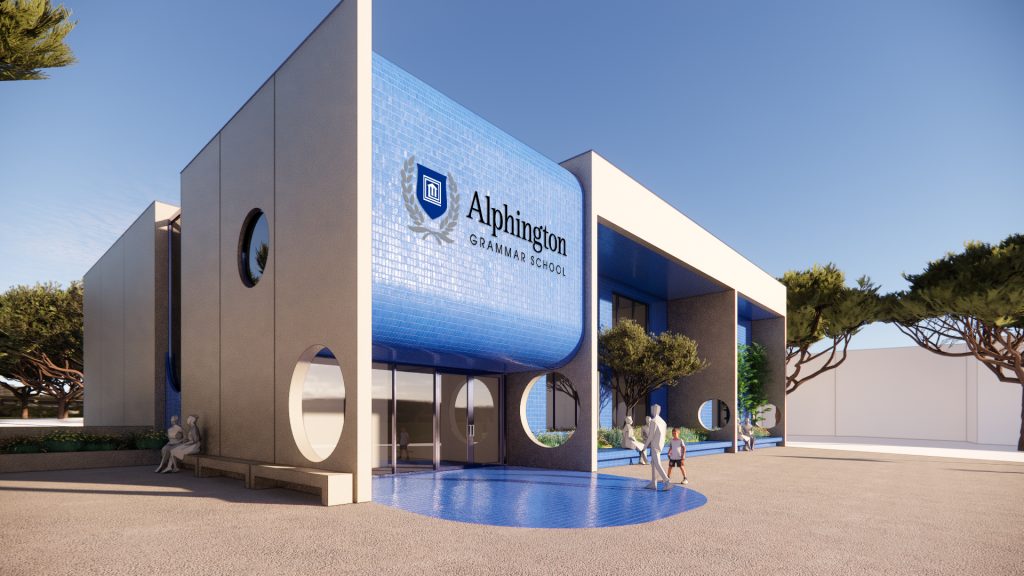
The school will receive major upgrades.
In 2013, the current Principal Dr Vivianne Nikou was appointed the first female Principal. This ushered in a new era of growth and development.
During Dr Nikou’s time as Principal, the school can boast major building projects such as the Lyceum Centre, a conference space and staff room; the renovation and expansion of the administration wing and student amenities block; a state-of-the-art Science, Technology, Engineering and Maths (STEM) wing; as well as additional music rooms and a dance and drama studio. Most recently, the school has built a new Library for Primary and Secondary students that provides a dynamic learning hub for students and staff to collaborate, study, undertake research and pursue academic excellence. It also houses an extensive collection of Greek texts and music resources.
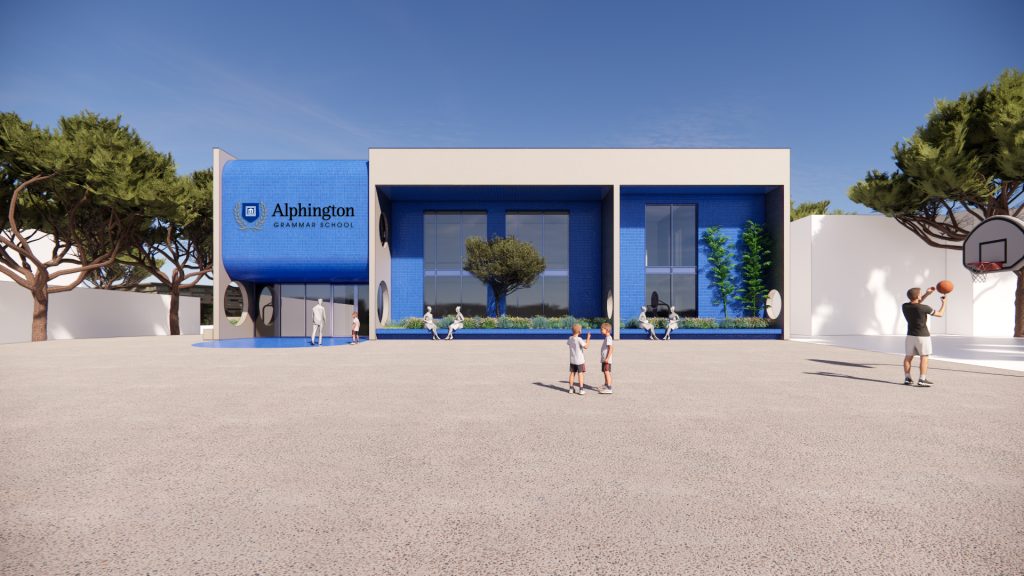
The new look of Alphington Grammar School.
A wealth of learning opportunities and programs both in the school and beyond ear marks Alphington Grammar School as the “jewel in the crown” of the GCM. With its focus on lifelong learning and ensuring a legacy underpinned by Hellenic values remains for the Greek Community and multiple generations of students to come, the school is going from strength to strength.
Alphington Grammar School is one of the most successful multicultural schools in Australia.
“We embrace our rich cultural heritage in the most innovative ways,” Principal Dr Nikou said.
“We provide the students with the opportunity to explore their own cultural heritage more deeply while also opening up the world beyond our shores.
“We recently had over 115 students travel to iconic locations in London, Italy, Sicily and Greece undertaking their learning in an open classroom in Athens, Crete, Nafpilo, Lefkada, Delphi and the monasteries of Meteora… an experience and personal growth no classroom can duplicate.”
The school’s track record in achieving academic results that rivals its much larger and affluent competitor schools, now sees enrolments increase to over 650 students and many more on waiting lists. Alphington Grammar is now ready to roll out its next strategic plan.
An additional 4 purpose-built classrooms are to open in April this year. As the school grows and waiting lists expand, the School Council has also endorsed the planning stage for a custom built 6-classroom block designed by the school’s Architect, Billy Kavellaris and his team at KUD. The new facility will operate as a Wellness Centre with access to programs that support students’ social and emotional development.
Alphington Grammar School sports facilities.
The project will also include an underground car park as well as new sports facilities that embrace its idyllic setting alongside the Darebin Creek. Given the complexity of this plan, the school is rolling out the project in stages to ensure minimal disruption to classes.
“Continuing to focus on building culture and meaningful relationships while honouring our past and the unique journey of this school is an exciting period to be part of,” Co-Chair of School Council, Michael Karamitos, said.
“The new building project will ensure we provide a vibrant learning environment that respects and celebrates academic excellence and personal development while catering for the increased demand for places in our school.”
For those interested in hearing more about initiatives endorsed by the GCM, the Annual General Meeting will be held at 12 noon on Sunday 17 February at Alphington Grammar School. Families interested in enrolling or finding out about Scholarships at Alphington Grammar should contact the School’s Registrar and register to attend the monthly tour mornings. The School’s Family Festival on Friday 1 March at 4.00 to 9.00pm is open to the wider community, and its Open Day will be held on Saturday 16 March from 10.00am to 1.00pm.
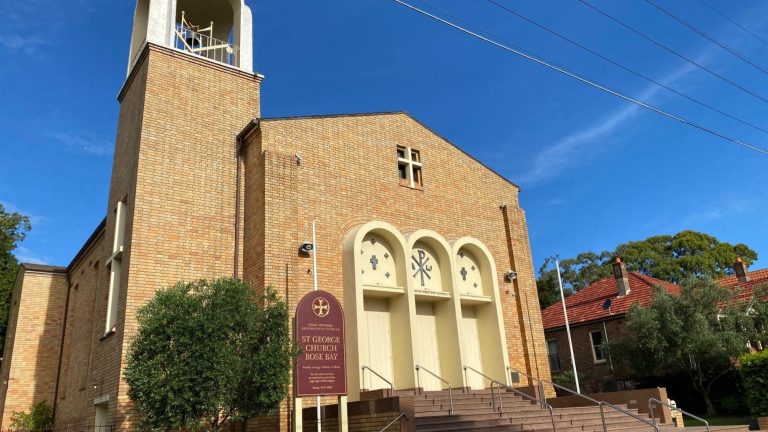
St George Greek Orthodox Church at Rose Bay in Sydney’s leafy Eastern Suburbs is now officially to be heritage listed after a planning proposal, which was recently endorsed by Woollahra Council’s Environmental Planning Committee following extensive public consultation, was finally approved by the full Council at its meeting held on 12 February.
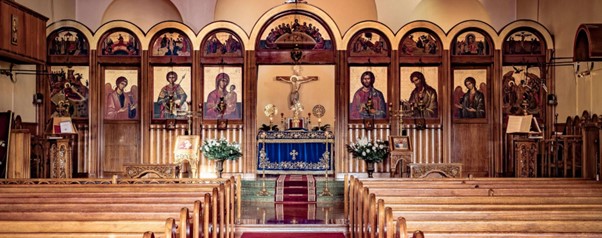
By 10 votes to 4, Woollahra Councillors overwhelmingly voted to adopt the Planning Proposal to list the St George Greek Orthodox Church and war memorial complex and setting, including interiors and moveable relics at 90-92 Newcastle Street, Rose Bay, as a local heritage item in Schedule 5 and on the Heritage Maps of the Woollahra Local Environmental Plan 2014.
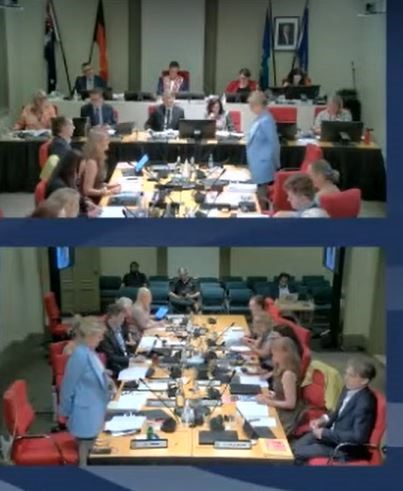
Woollahra Council Deputy Mayor, Councillor Sarah Swan, rises to move for adoption of the Planning Proposal (image courtesy of Woollahra Council zoom broadcast)
The motion to adopt the proposal was moved by the Deputy Mayor, Councillor Sarah Swan, and seconded by Councillor Susan Wynne (the immediate past Mayor). It received strong cross-party support from some members of the Liberal Party, the Greens, the Residents First group and a local Independent.
The significance of this decision cannot be overstated. The church, which was built in 1962, has played a pivotal role in the lives of the local Greek community as a place of worship and as a war memorial complex.
This means that the church complex, including Orthodox moveable relics, will be registered as a local heritage item on the NSW State Heritage Register.
The church’s statement of heritage significance will officially read:
The St George Greek Orthodox Church and war memorial is of local heritage significance for its historical, associative, aesthetic, social, rarity and representative values. The church reflects the rapid pattern of development of Rose Bay in the post-World War I era and the growing presence of migrant communities that settled in the area during this time. Since its construction and consecration in 1962, the church building has supported the continuity and celebration of Greek customs and traditions in Sydney’s Eastern suburbs for generations of that community. Designed by prominent Inter-War architectural firm Fowell, Mansfield & Maclurcan, the St George Greek Orthodox Church is considered to be a fine and representative example of their ecclesiastical buildings. The church building is an interesting example of a Greek Orthodox War Memorial Church, which combines elements of the Byzantine style typically associated with ANZAC memorials with the traditional Greek Orthodox Church style. As a Greek Orthodox war memorial church, the St George Greek Orthodox Church has significance for its associations with Australia’s defence history, commemorating members of Australia’s Greek community who served and lost their lives in during World War I and World War II, and Australian soldiers who fought in Greece during World War I. There is only one other known example of this type of Greek Orthodox war memorial church remaining in Sydney.
The St George Church at Rose Bay is a “magnificent sacred edifice”, to quote Father Militiadis Chryssavgis who conducted the first ever liturgy at the church and went on to serve the parish dutifully for almost fifty years.
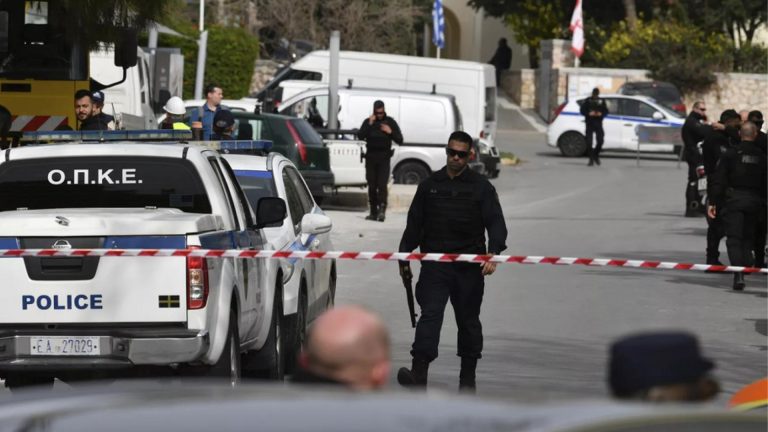
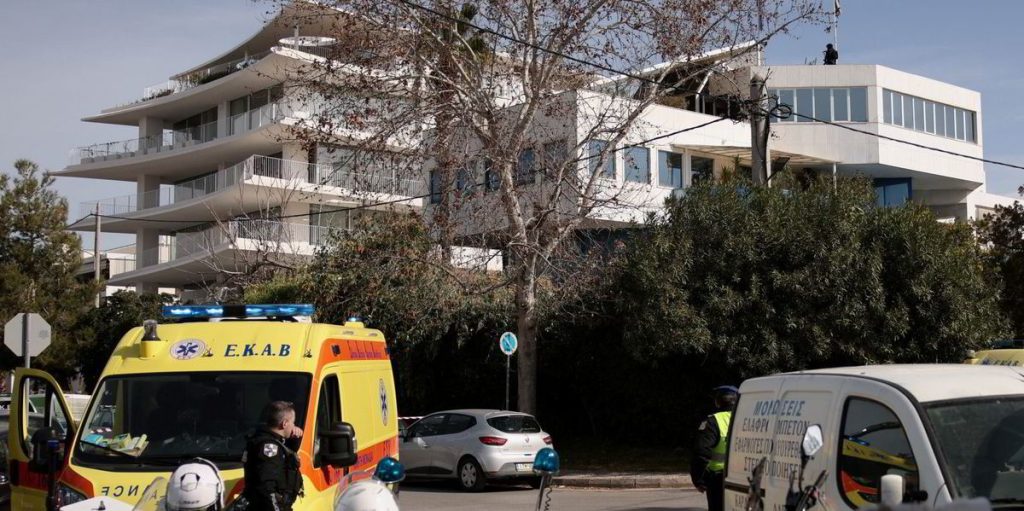
On Monday, February 12 in Athens, police reported that a former employee of a Greek shipping company fatally shot three people, including the company’s owner, before taking his own life.
News.com.au reported that the 70-year-old shooter allegedly broke into the company’s premises in Glyfada, where he killed two men and a woman on the first floor before barricading himself inside.
“We heard gunshots, and I hid under my desk before police officers helped us out of the building,” an employee of the company, told radio station Skai.
Additional to shooting the owner, the gunman also killed the owner’s son-in-law, a co-director of the company, European Product Carriers, which maintains an average fleet of 35 vessels, including oil tankers, as indicated on its website.
At 10:11 am, local police were notified by an employee inside the building.
Police and emergency services surrounded the area in Athens. Photo: Trade Wind News.
The gunman was later found dead in the basement with his weapon next to him, having “likely shot himself in the head”, police spokesperson Konstantina Dimoglidou said.
Dimoglidou added that the gunman worked for the owner’s family, however further details were not provided.
According to a video shared by News247, an employee of the company confirmed that the assailant was “of Egyptian descent” and “had specifically targeted the company’s executives in an act of revenge.”
He “ordered us to leave so the employees would not be harmed”, she added.
Authorities stated that police officers had entered the building and safely evacuated two women who had been locked in the toilets by the gunman.
Nearby roads were also shut down, and many police officers surrounded the premises.
Greek-born George Karlaftis won his second Super Bowl in as many seasons on Sunday as a defensive end for the Kansas City Chiefs.
The Chiefs staged a comeback to defeat the San Francisco 49ers 25-22 in overtime, securing their third Super Bowl victory in five years on Sunday in Las Vegas.
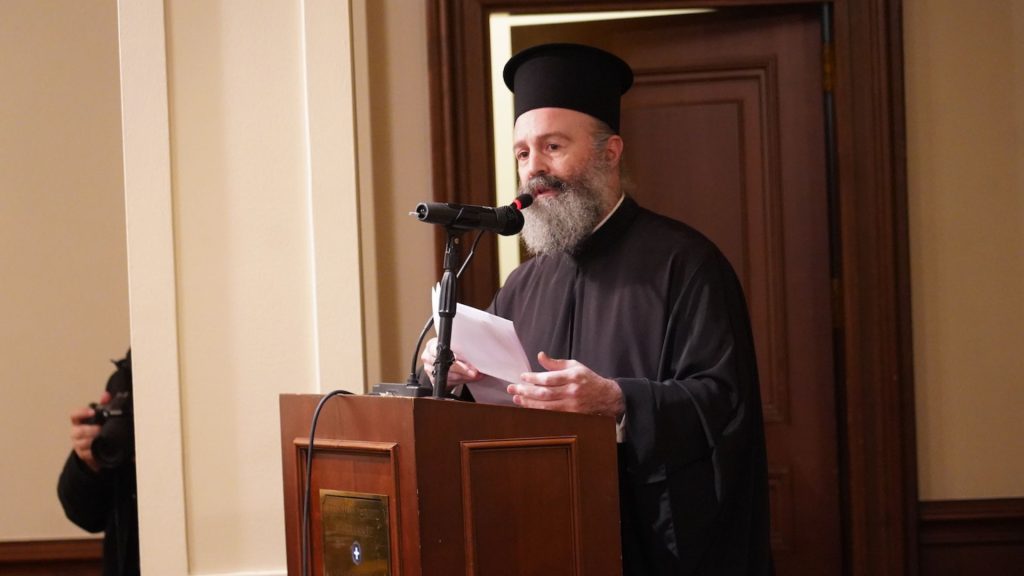
The legal dispute in the case (4726/2023) between Archbishop Makarios of Australia and the Greek newspaper, Orthodoxos Typos, was recently finalised in the Greek courts.
Following the final verdict, both Orthodoxos Typos and the Greek Orthodox Archdiocese of Australia released their version of events. In an era where the credibility of media worldwide is being eroded, The Greek Herald has since accessed the court decision and explored the case to present its own factual analysis for readers.
Defamation dispute begins:
The case began with publications by Orthodoxos Typos about four years ago. The reports were directed against Archbishop Makarios and led to the filing of a lawsuit against the newspaper.
In the court of first instance, Orthodoxos Typos was convicted and ordered to pay 10,000 euros in damages. An appeal was filled, which was heard in July 2023 in Greece’s Court of Appeal, with the decision not being handed down until January 2024.
The Greek Herald gained access to the appeal court’s decision.
The legal dispute in the case (4726/2023) between Archbishop Makarios of Australia and the Greek newspaper, Orthodoxos Typos, was recently finalised in the Greek courts.
The content published in both the printed and online versions of Orthodoxos Typos were considered to go beyond what is objectively necessary to protect legitimate interest and constitute an insult to the personality of the plaintiff Archbishop Makarios.
In more detail, the appellate court initially determined that the statements contained in the publications lacked the essential elements of the offence of defamation, since they are based on true facts.
Also included in the same publications are sharp criticisms, which are inherent in the press’s mission, but also anticipated given the plaintiff’s status as Archbishop.
Subsequently, however, the court pointed out that within the publications, there are judgments and expressions that were unnecessary to convey the criticism. These elements are what suggest that Archbishop Makarios was insulted, and his personality was diminished by Orthodoxos Typos.
The court found the use of vulgar and highly derogatory expressions and parallels against Archbishop Makarios – which were not objectively necessary – were chosen deliberately to insult the honour and reputation of the Archbishop. This was evident in the mocking style adopted by the author of the relevant publications. The court said they were not appropriate for an ecclesiastical, non-satirical newspaper whose purpose is the spiritual edification of its readers and not to ridicule and insult.
Moreover, it was determined that the publications, known to an unspecified but substantial audience, predominantly comprising readers of the mentioned newspaper, both in Greece and internationally, insulted the Archbishop’s character.
These publications caused significant distress and anxiety to the Archbishop, prompting him to become wary even of his simple statements, for fear they might be deliberately misinterpreted and used to degrade and insult him.
Considering the circumstances outlined, the court awarded an amount of EUR 5,000 to compensate the non-pecuniary harm endured by the Archbishop due to the aforementioned violation of his character. Archbishop Makarios had initially sought an amount of 260,000 euros.
Archbishop Makarios of Australia was seeking 260,000 euros in compensation.
The payment:
Looking deeper at the topic of financial compensation by the Orthodoxos Typos to Archbishop Makarios, the court of first instance originally awarded 10,000 euros. This decision was overturned by the appeals court and instead awarded the Archbishop 5,000 euros.
“In order to compensate for the non-pecuniary damage suffered by the applicant as a result of the abovementioned infringement of his personality, he must be awarded the sum of 5,000 euros,” the judgment said.
What did the Archbishop gain?
In addition to the 5,000 euros for compensation, Archbishop Makarios, through his legal action, managed to have Orthodoxos Typos remove the articles against him published on 3 February 2020, 14 February 2020, 21 February 2020, 2 March 2020, 13 March 2020, 3 April 2020 and 8 April 2020.
The newspaper was mandated to include a summary of the court’s ruling in the location where the articles were originally published. If it did not publish the decision summary, there was a penalty payment in favour of the applicant of EUR 100 for each day of delay.
Finally, the Orthodoxos Typos was ordered to partially pay Archbishop Makarios’ legal costs of both instances, which were set at 1,000 euros.
What’s next?
This is not the first and won’t be the last defamation case Archbishop Makarios is taking to the courts. The Archbishop has also filed lawsuits in Greece and Australia against:
The ecclesiastical website Exapsalmos/exapsalmos.gr and its head Sotiris Tzoumas, also for “defamation” and “insult to personality” with a claim for compensation amounting to 250,000 euros.
The Greek Australian journalist Vasso Morali for posts on her personal Facebook profile with a claim for compensation amounting to one million euros.
Athens lawyer (and nephew of the late Archbishop Stylianos of Australia) Nikolaos D. Kalliouris, also for “defamation,” with a claim for compensation amounting to 300,000 euros.
Greek journalist Alkis Morelas for a series of publications about the works Archbishop Makarios and his associates.
Same-sex marriage in a civil, rather than religious context, is a bill due to be passed – or perhaps rejected – by Greek Parliament on February 15 this year.
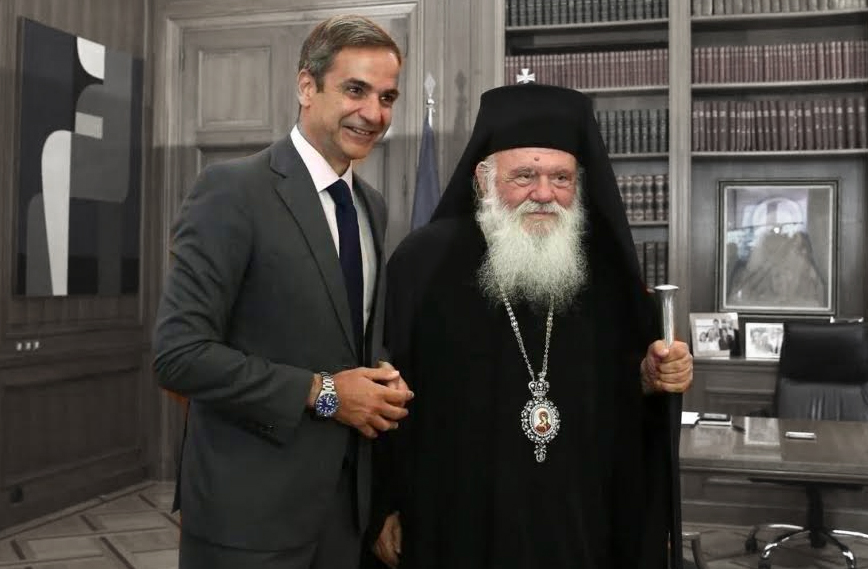
‘New Democracy,’ Greece’s current ruling party, holds 158 of the 300 parliamentary seats. Prime Minister Kyriakos Mitsotakis is counting on pro same-sex marriage votes from much of his centre-right party, and from parties of the Left. And although the Greek Orthodox Church is vehemently opposed to the bill, it looks like Greece will be one of the first majority Orthodox Christian countries to adopt same-sex marriage.
Kyriakos Mitsotakis. Photo: Supplied.
Greece’s Prime Minister has stressed that same-sex marriage is a human rights issue. That is his reasoning in terms of not following Australia’s 2017 lead for example, on holding a referendum regarding this issue in Greece. He has subsequently stated that passing the bill is not a revolutionary act, believing Greece should be aligned with the other European Union countries who have legalised same-sex marriage, in accordance with 2020-2025 policy goals on LGBTIQA+ (which stands for Lesbian, Gay, Bisexual, Transgender, Intersex, Queer/Questioning, Asexual) rights.
Many LGBTIQA+ advocates see Greece as pursuing a conservative path insofar as children in same-sex marriage are concerned, as the pending legislation will allow adoption but not surrogacy and IVF means of pursuing parenthood.
Notwithstanding the stated, adamant perspectives of the LGBTIQA+ community, the Greek Government and the Greek Orthodox Church, what do the Greek people think of legislating same-sex marriage?
A plethora of latest polls suggest a roughly equal percentage of pro or against same-sex marriage. I spoke to a few people ‘on the ground’ in Greece, to gauge their opinions and views on this issue.
Education is key:
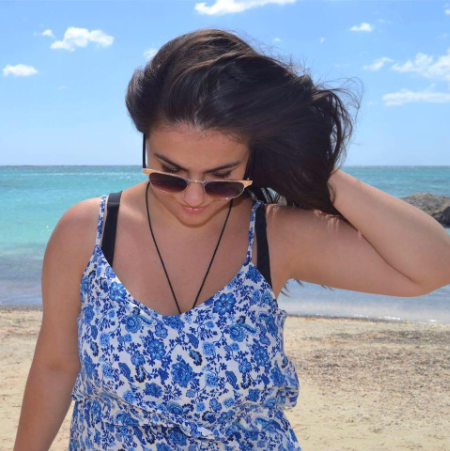
Maria E.A., a Masters student of International Relations who is in her late 20’s, is pro same-sex marriage.
Her scope is that a healthy same-sex marriage and family life is preferable to an unhappy heterosexual marriage.
Maria is pro same-sex marriage. Photo: Supplied.
She posits, “if only all those heterosexual families with abusive parents were replaced with healthy same-sex couples, how much better would that turn out for children?”
Maria adds that qualified and experienced counsellors, such as child psychologists for example, should be involved in educating same-sex couples if they want to raise children.
Maria stressed the importance in educating people on same-sex couples. Photo: Supplied.
Attesting to a belief in the balance of dualities of “male/female, yin yang energies of the universe” for a harmonious life, Maria purports, “I believe both parents can encapsulate and portray to the child both male and female energies in a healthy way.”
“I’ve met many gay and bisexual men who value women, understand them and have portrayed ‘masculine’ energy more than some ‘men’ out there… Behaviour, education and empathy matter, regardless of which gender you prefer to lay down in bed with at night,” she adds.
‘The bill shouldn’t be passed’:
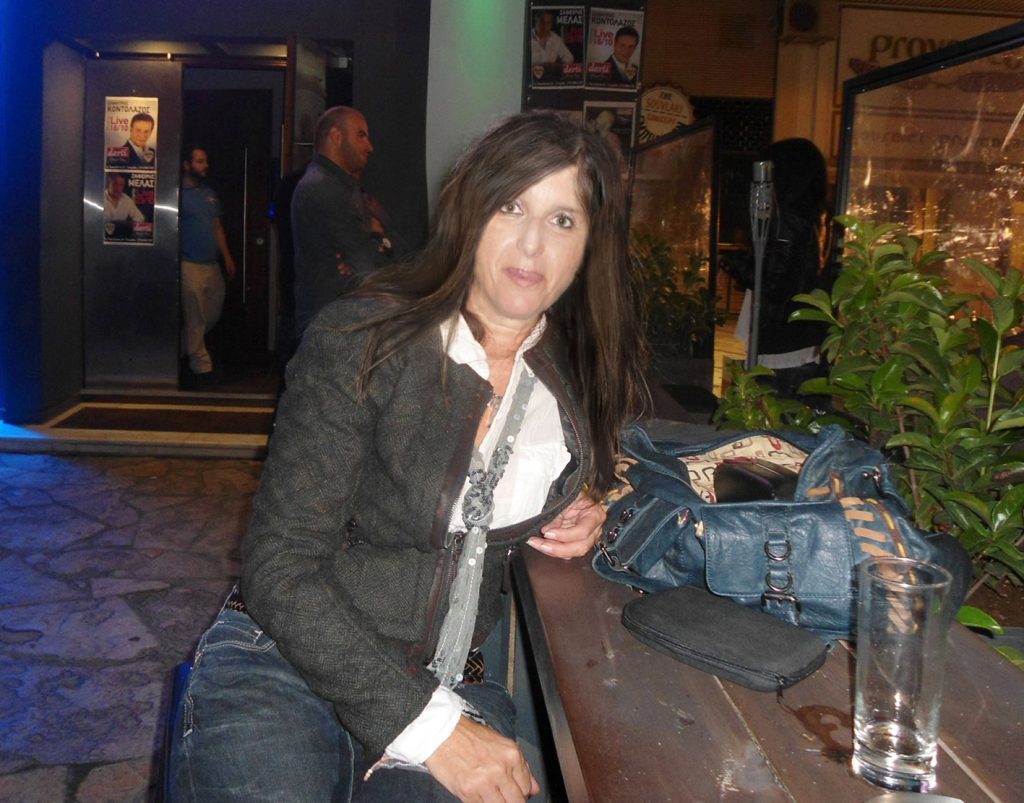
Vasiliki M. is in her 50’s, single, and employed as a Customer Service, Greek representative for an international company. She told me she is against same-sex marriage.
“It shouldn’t be passed anywhere – worldwide. It seems like same-sex relationships are going to be the norm, like heterosexual relationships were 20 years ago,” she states.
“I don’t care what they do in their bedroom. But what I do care about is the example they’re giving future generations.”
Vasiliki is against same-sex marriage. Photo: Supplied.
Asking her to elaborate, Vasiliki adds, “It’s the 2030 agenda – eat bugs and be happy, have no money of your own and be happy, marry the same-sex and be happy! Same-sex marriage leads to the breaking up of family values. It’s not OK even if they don’t have kids. Look, God created Adam and Eve, not Adam and Steve.”
“I’m not particularly pro-marriage in general, as it’s just a piece of paper at the end of the day, and I do understand that some people are born gay, but these days it seems to be becoming a trend,” she continues.
“Why do they want our ‘straight’ people’s institutions anyway, since they reject our way of life? Why don’t they just make their own ‘commitment’ ceremonies instead of mimicking our marriage event?”
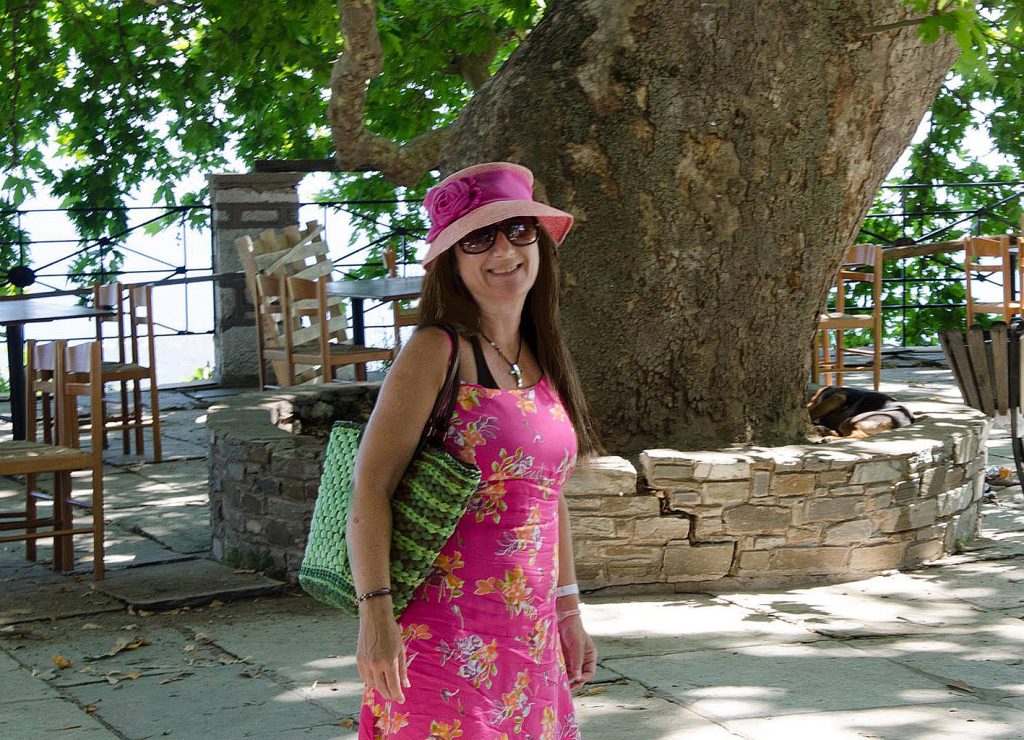
Vasiliki attests to having many gay friends, “but I wouldn’t attend their weddings if they decided on this. They should not be accepted by the Orthodox Church or any church because these are ‘our’ values.”
Vasiliki shared she has many gay friends. Photo: Supplied.
I put it to Vasiliki as to whether she’d prefer a referendum, but she immediately responds with a firm “No,” adding, “we had a referendum on leaving the EU a few years back in 2015, when our ‘Yes’ was turned to ‘No.’ What a joke! I wouldn’t trust our government…”
Children and same-sex marriage:
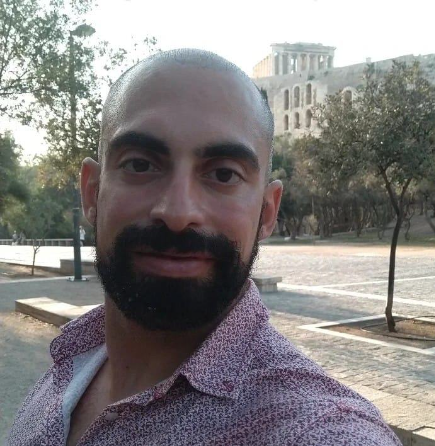
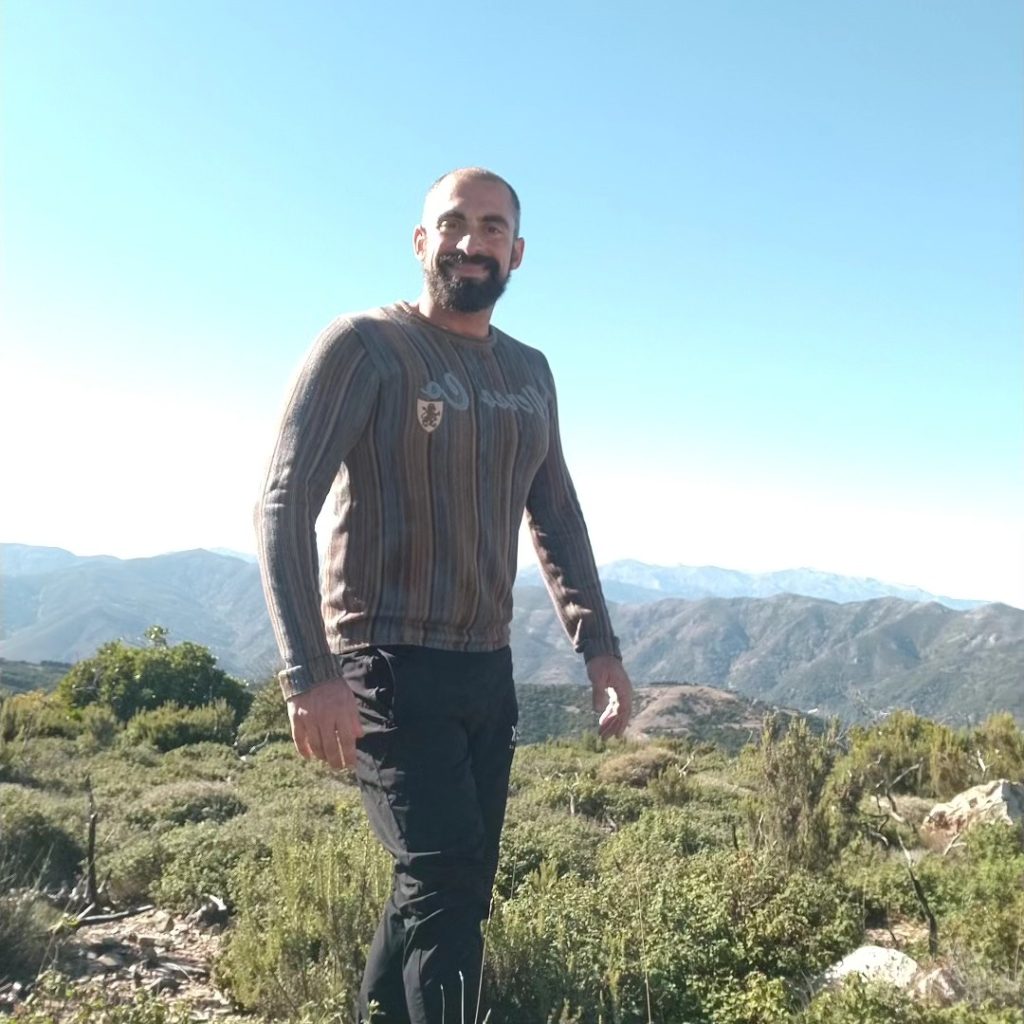
Yiannis Thomadakis is a 36-year-old Law graduate and writer in Greece, living and working currently in Crete as a tour guide, in collaboration with local travel agencies. He is pro same-sex marriage, mainly in the context of its importance in having the choice to be a parent and raise children.
He states from the onset that although civil cohabitational agreements between same-sex couples have been legal in Greece since 2015, the current proposed bill regarding same-sex marriage is important because “it also solves an acute social demand by the LGBTIQA+ community and a complex legal issue for the recognition of the rights of same-sex families’ children, in order for them to be able to obtain benefits from both parents and in case something happens, to be recognised as their legitimate family and descendants.”
Yiannis Thomadakis is pro same-sex marriage. Photo: Supplied.
Yiannis stresses that same-sex couples follow the same process as heterosexual couples in terms of adopting children. Their “aptness” as parents is “assessed by specialised psychologists and social workers,” while he emphatically adds “the scientists agree that, in general, same sex families are equally able to raise children and the sexual orientation of their parents does not influence their own.”
As to the main objectors of this bill, Yiannis emphasises that the Church and “far right political entities” acted in a similar way towards a 1982 Greek government bill that did pass. This bill legislated women’s rights in Greece, such as “their liberation from the dowry, the establishment of their right to divorce, their right to abortion, the establishment of the civil (non-religious) marriage, as well as the decriminalisation of adultery.”
He is totally opposed to a same-sex marriage referendum, seeing it as an irrational thing to debate.
“It is a bill dealing with constitutionally recognised and strictly protected human rights of personal freedom, and freedom to make a family (as freedom of expression),” he said.
Yiannis said introducing same-sex marriage would benefit Greece. Photo: Supplied.
Yiannis concludes by stating his belief that the same-sex marriage law will also be of benefit to the Greek public.
“It will spread the message of an open, just, sensitive, progressive society, that includes everyone and teaches that what matters the most for a healthy family is love towards the children and not the private lives of their parents,” he said.
Traditional family unit:
Lefteris K. is a married 66-year-old Law Clerk. He and his wife have two adult children and also grandchildren. Lefteris is adamantly against same-sex marriage.
“God gave women a womb,” he says, continuing, “I don’t care what gays do, but don’t be an example of ‘family’ to my grandkids. No to civil marriage as well for homosexuals, and definitely no to them having children.”
He mentions the “2030 plan” and spiritedly continues, “…the WHO (World Health Organisation) want to destroy the family, to bring in the new order of things. It’s Bill Gates’ globalist plan to reduce the world’s population. That way, the powers that be have more control, as it’s easier to control less people. So this same-sex marriage agenda is to further reduce Greece’s already low birthrates.”
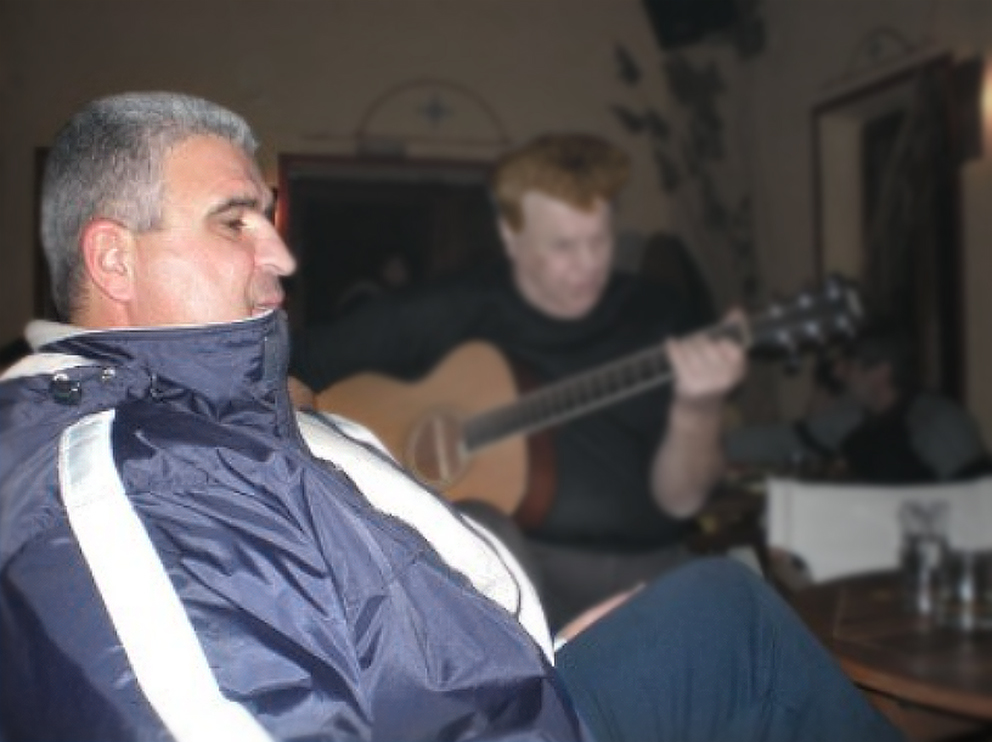
Lefteris K is also against same-sex marriage. Photo: Supplied.
He claims that the only salvation towards a dignified life is found within the traditional family unit.
“Don’t expect the schools to help, when here in Greece too they are referring to mothers or fathers as Parent 1 or Parent 2. What do you expect from a government who doesn’t really govern – who are a joke,” he said.
Lefteris K. Photo: Supplied.
In closing, he excitedly asserts, “I’m not a Marxist, nor a capitalist. I’m a patriot. If people don’t wake up to these new world order ideas – such as gay marriage – it’ll be too late. People should stay close to their families, converse with others, seek alternative forms of news and education online, and read books – like Orwell’s, 1984.”
Agree or disagree with same-sex marriage, there are also those here in Greece who state that they just don’t care about it, expressing that they see it as a diversion from the ‘real’ issues – such a waning quality of life due to economic hardship.