Home Blog Page 218

Philanthropy and fellowship shine at Hellenic Medical Society Gala Ball in Melbourne

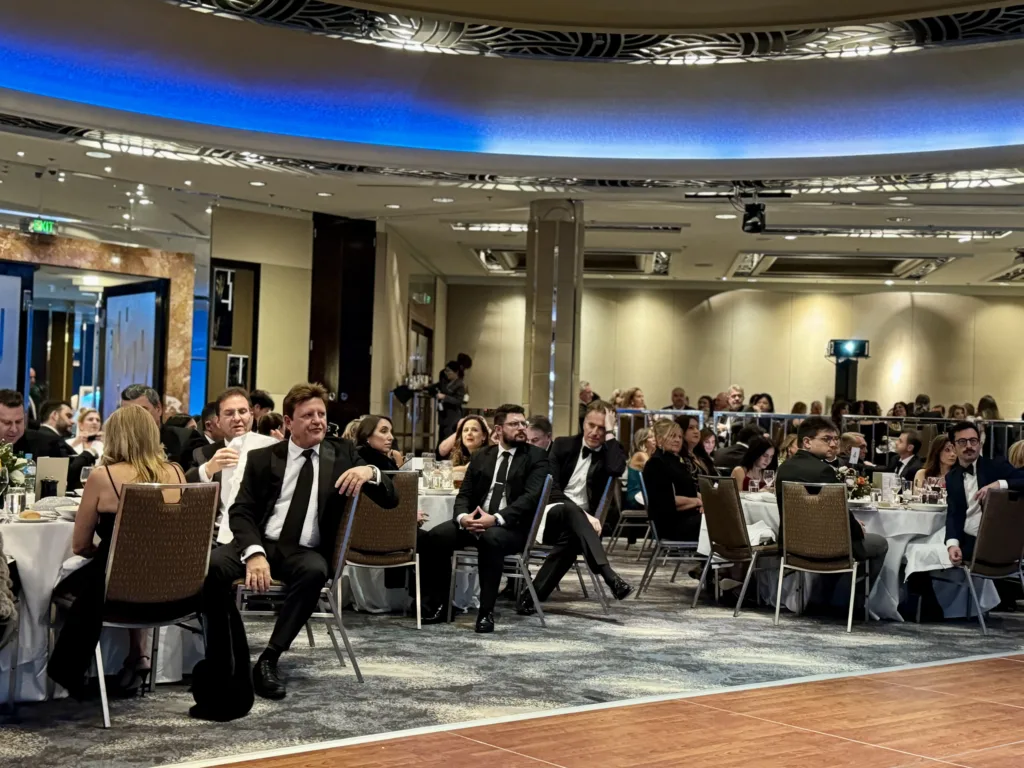
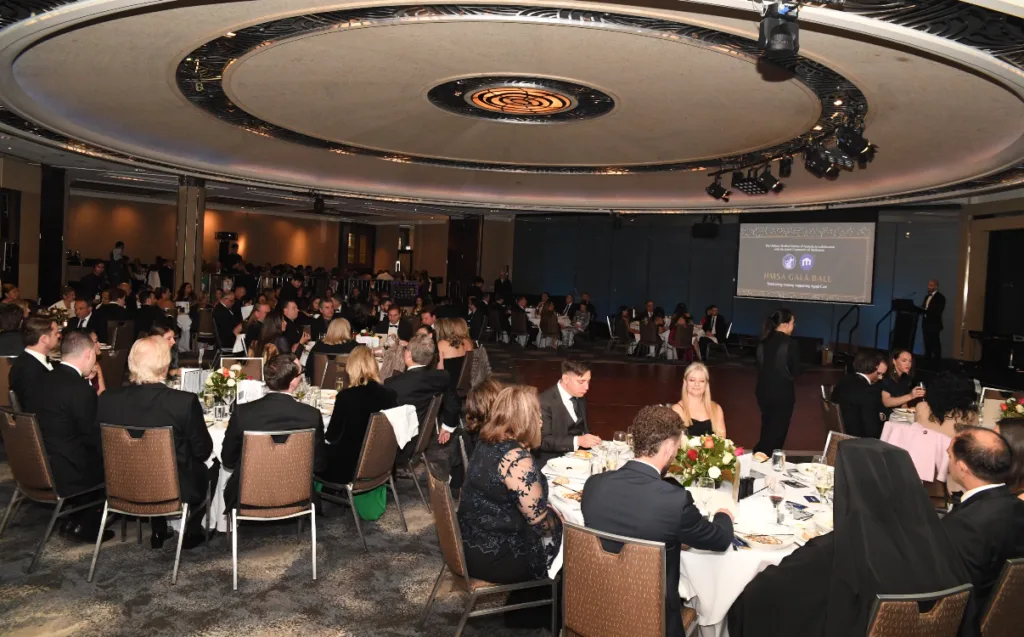
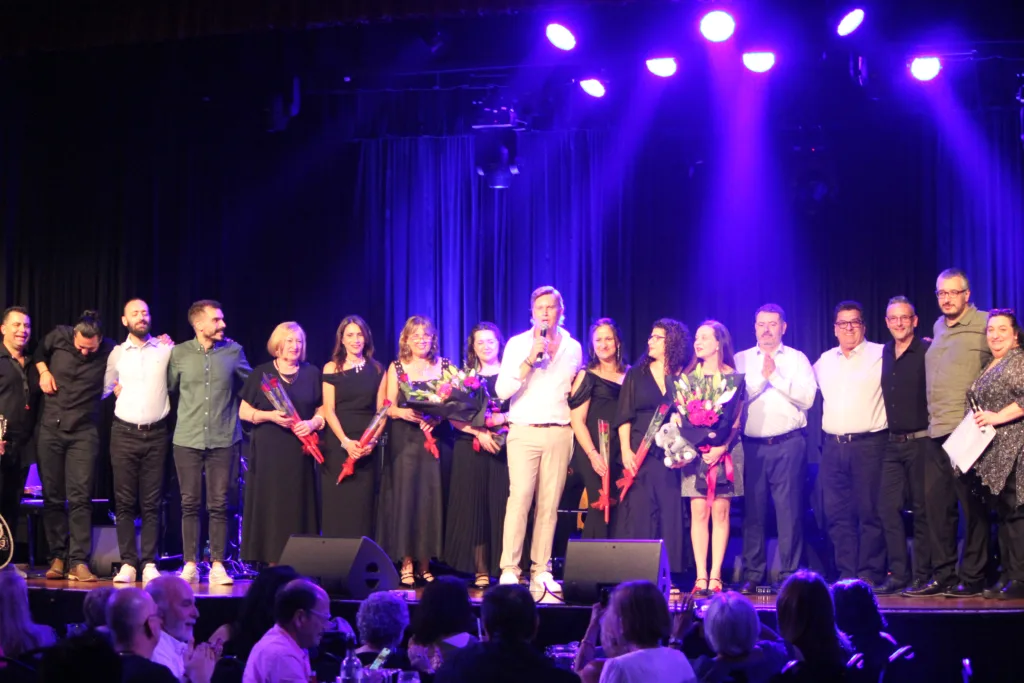
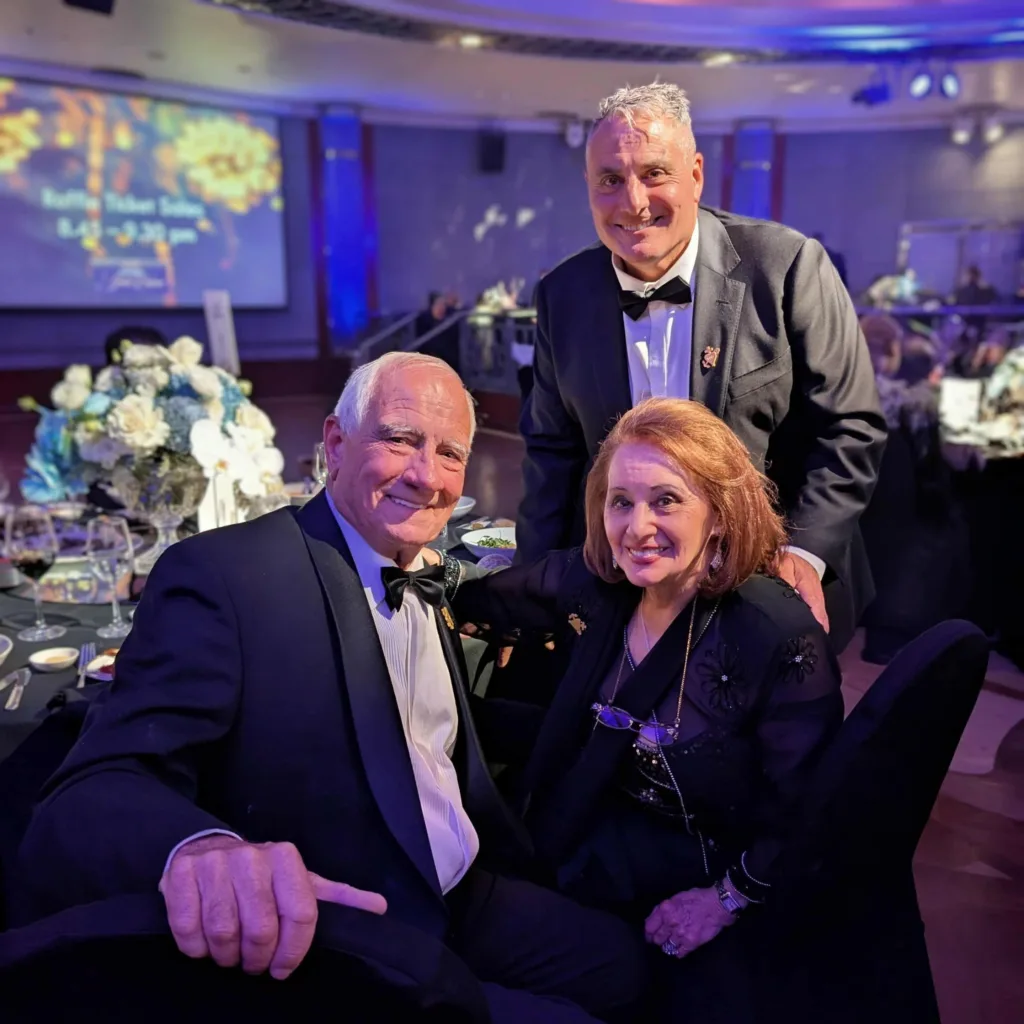
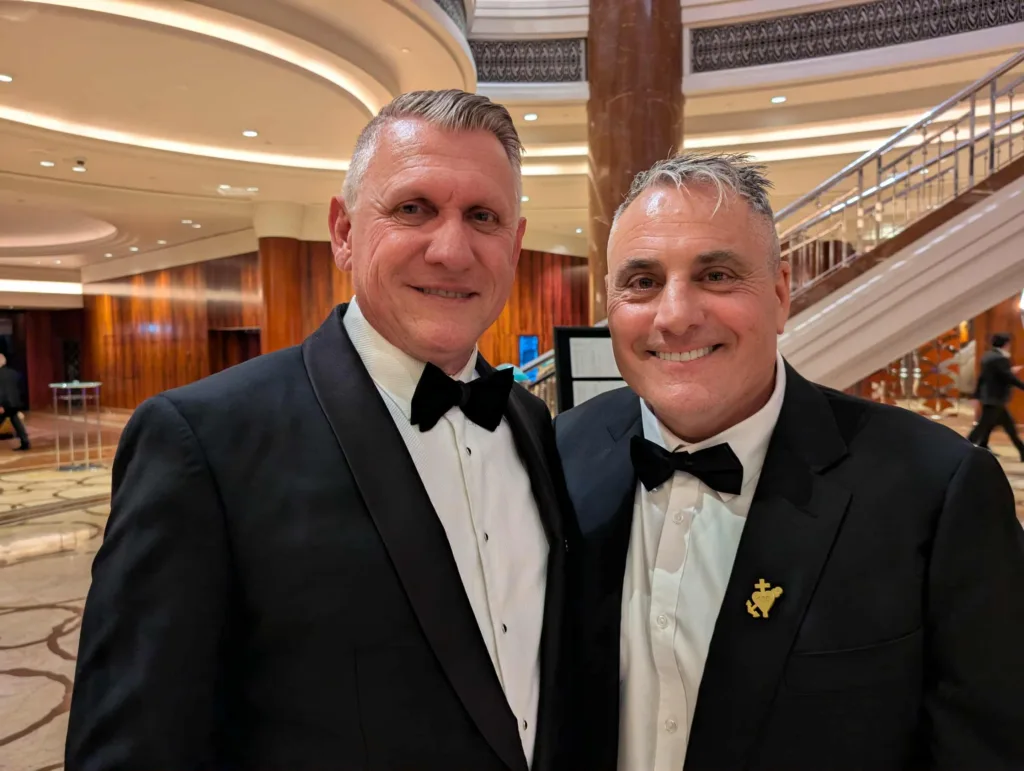
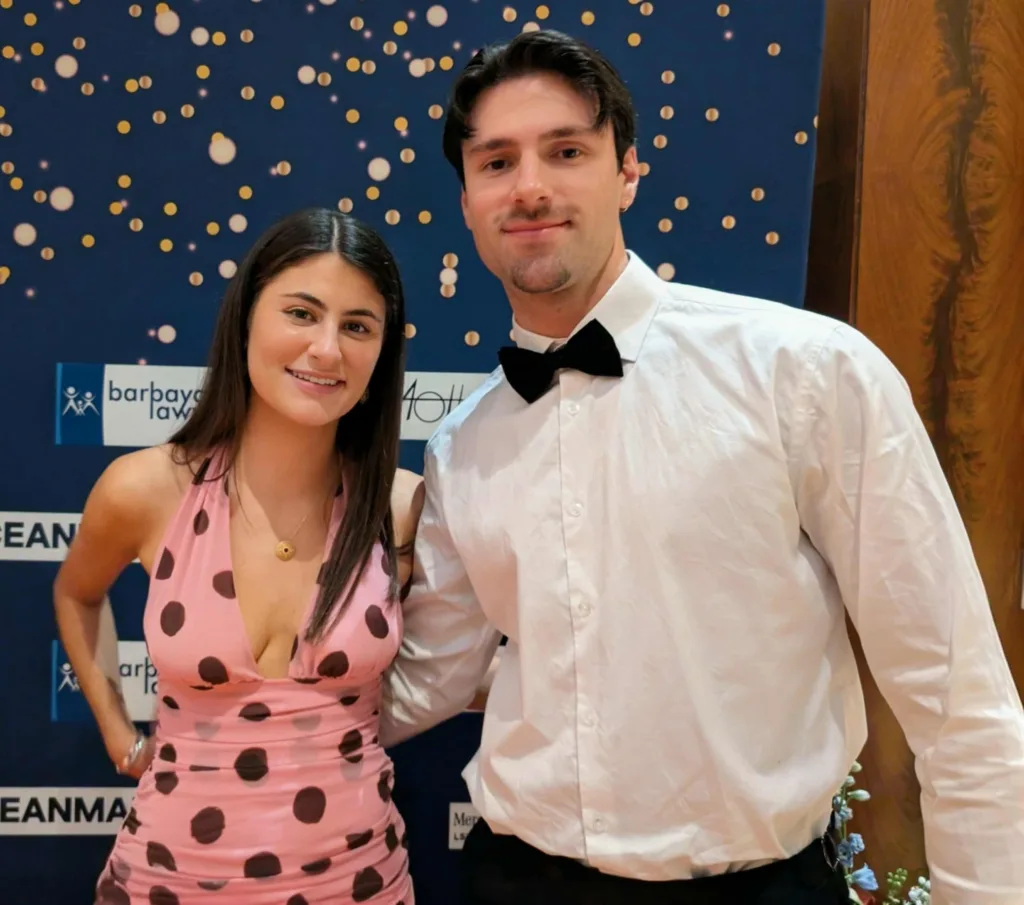
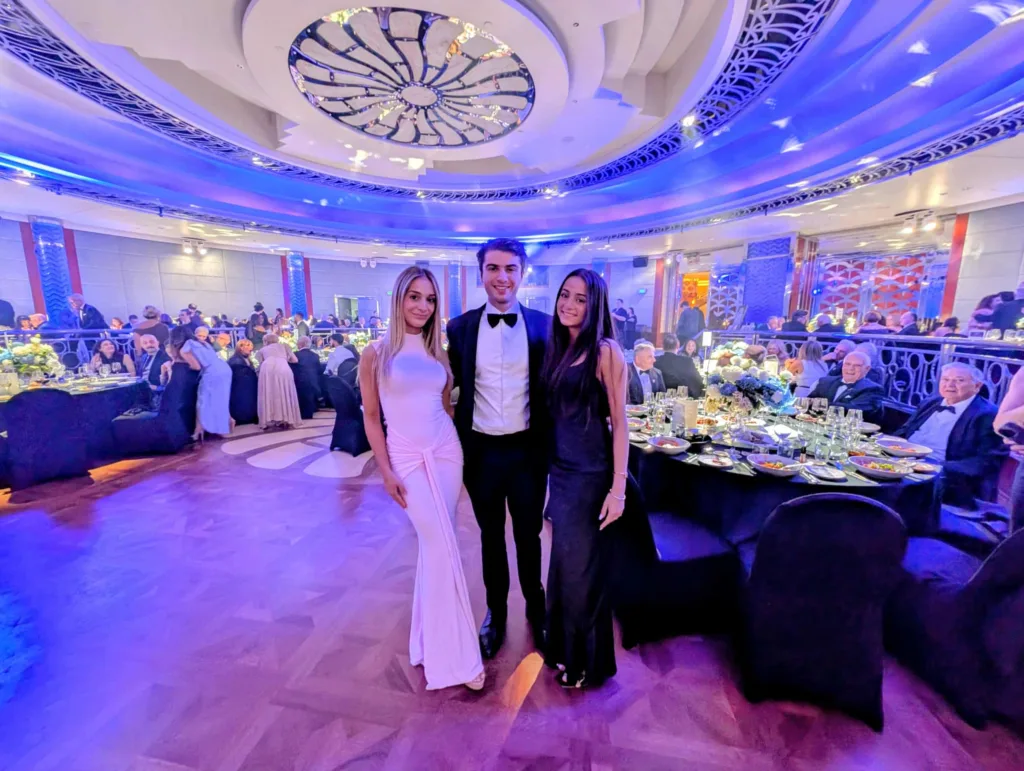
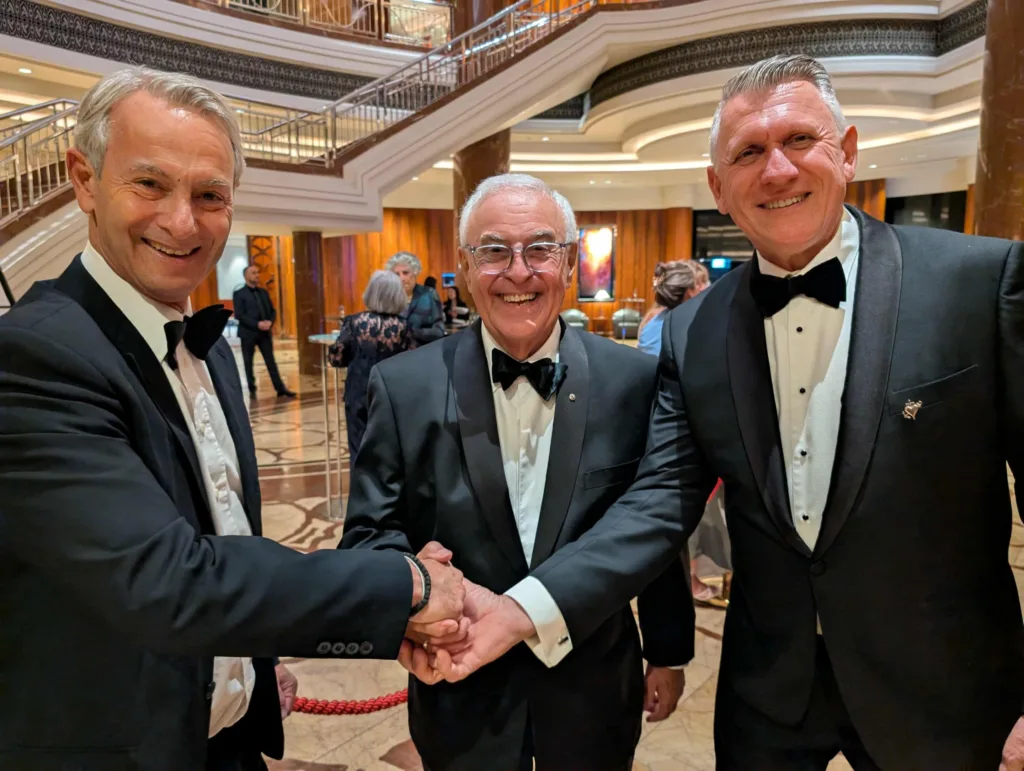
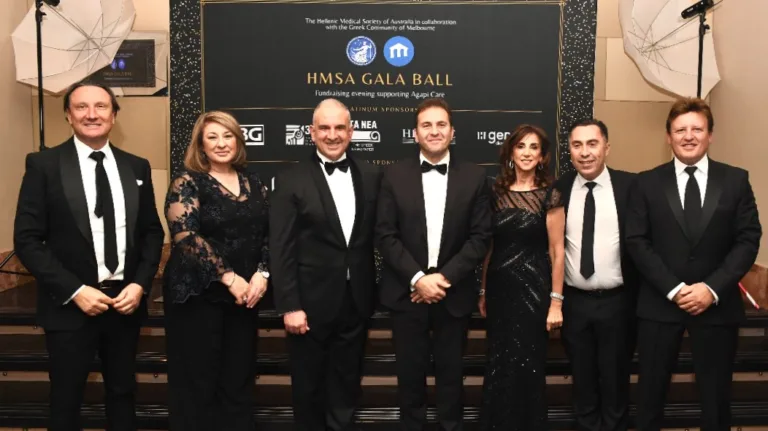
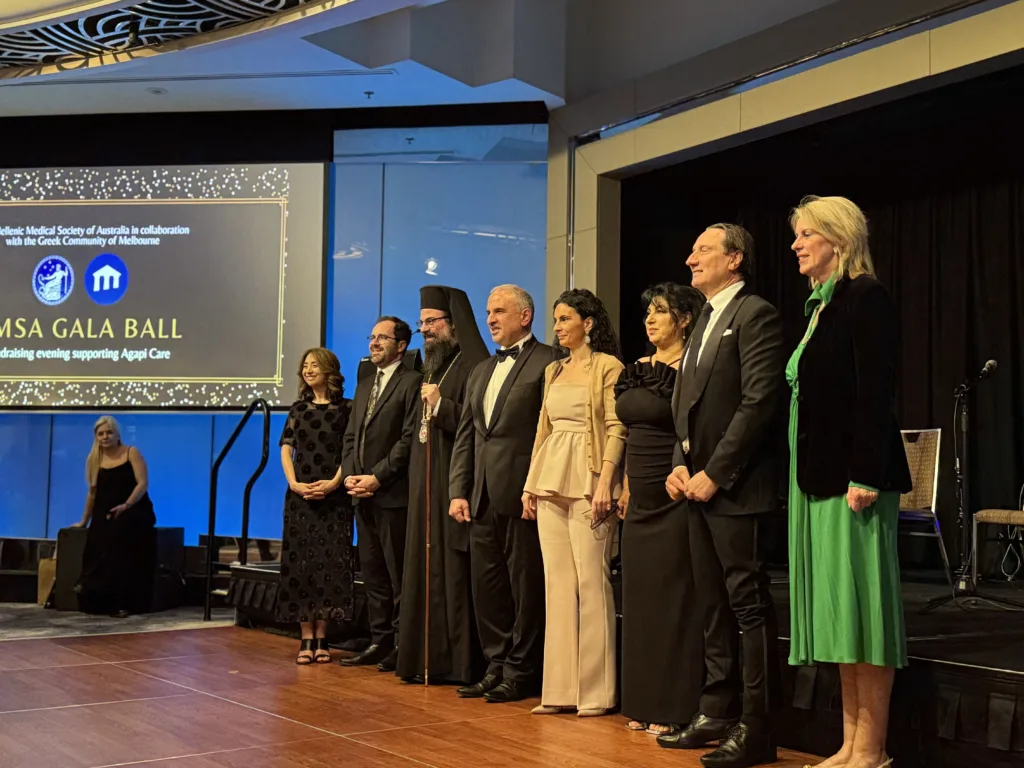
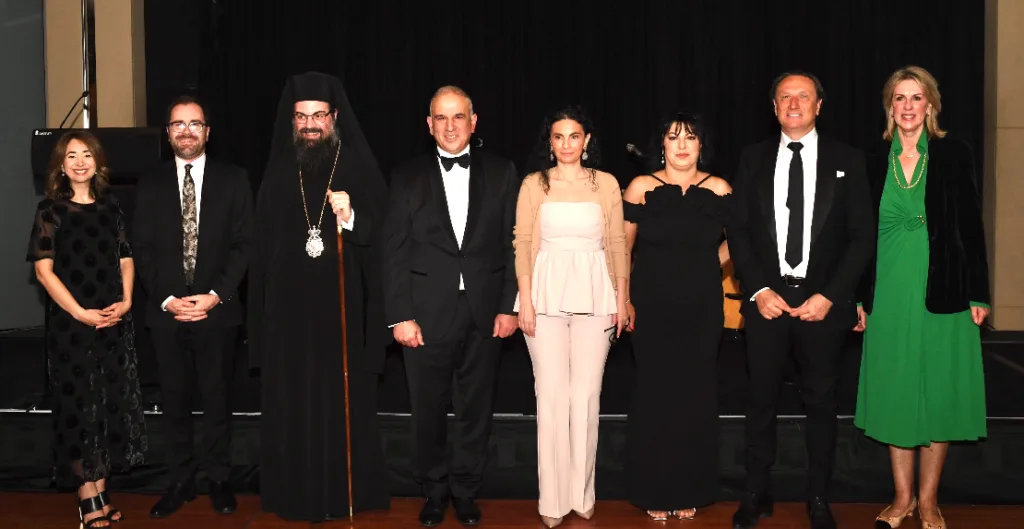
The Hellenic Medical Society of Australia (HMSA), in collaboration with the Greek Community of Melbourne (GCM), hosted its annual Gala Ball on Saturday, October 11, at the Grand Hyatt Melbourne – a glittering evening of philanthropy, culture and community in support of Agapi Care, a long-standing not-for-profit organisation in Victoria that provides services for people living with disabilities.

Guests enjoyed a vibrant program of speeches, a live auction, traditional dance performances and live music, all in celebration of compassion, unity, and Hellenic spirit. The evening was emceed by Dr Billy Stoupas, Specialist General Practitioner and long-time advocate for community health.
HELLENIC MEDICAL SOCIETY AUSTRALIA

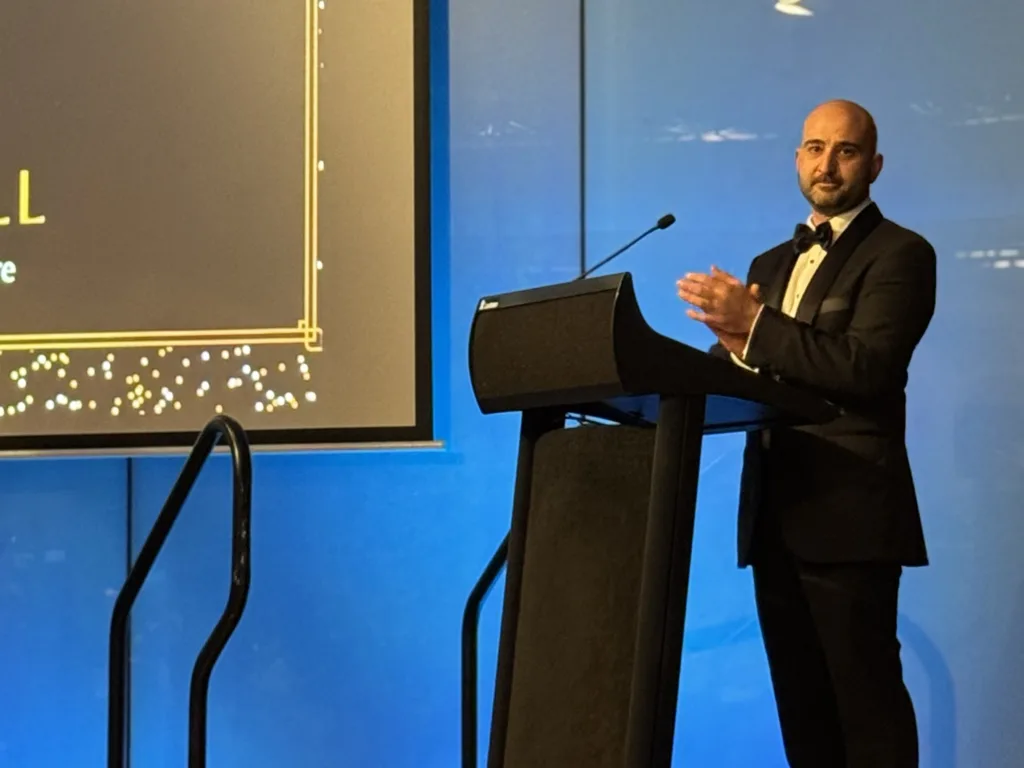
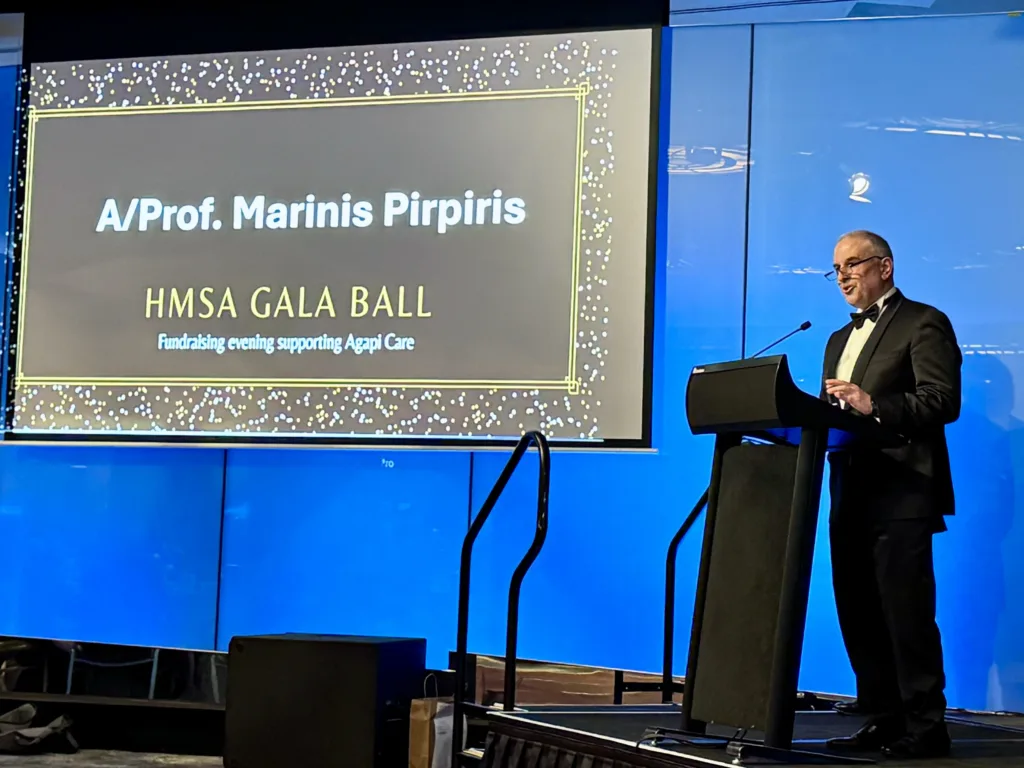
Opening the evening, HMSA President Professor Marinis Pirpiris reflected on the Society’s mission to bring the medical community together for the common good.

“Our service extends beyond our hospitals and clinics – it flowers into the Hellenic diaspora. Every donation, every gesture of care, is who we are: people united and generous, driven by filotimo and filoxenia,” he said.

Professor Pirpiris also spoke movingly of his late brother, who had special needs, praising Agapi Care’s work as “a vital part of our community, allowing people to rise, be heard and be included.”
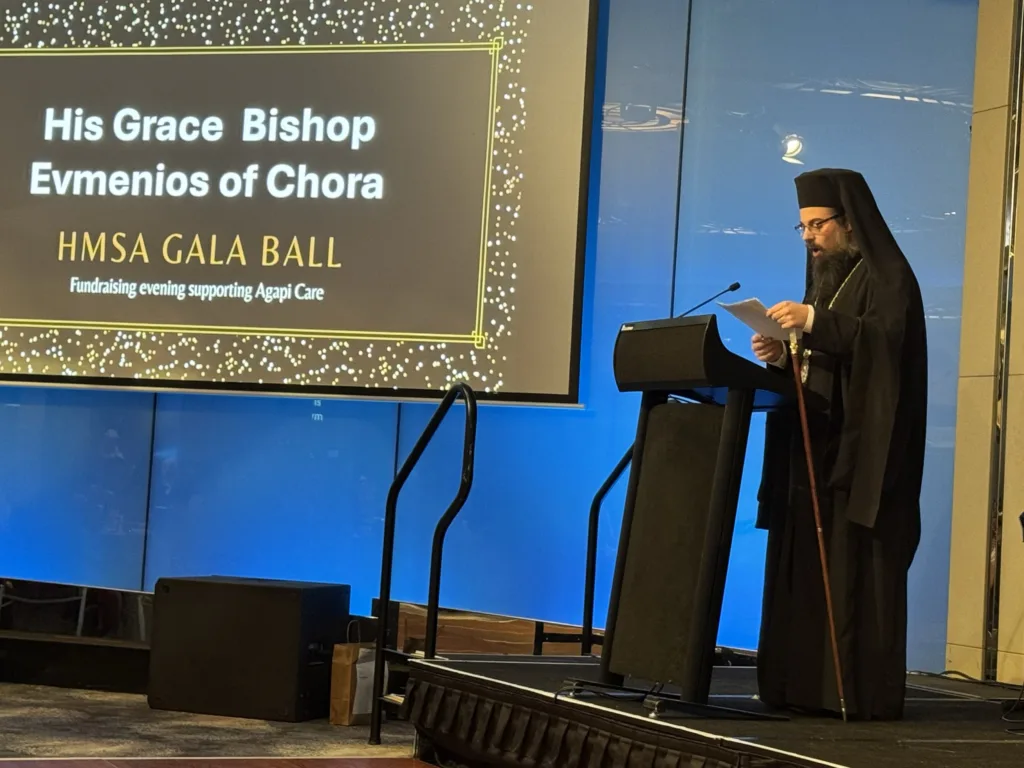
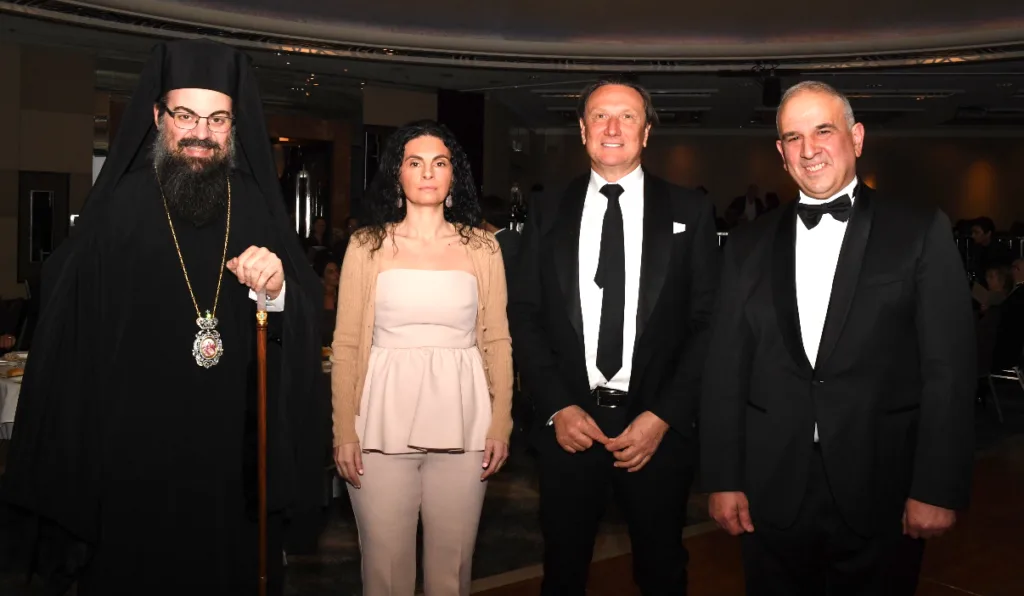
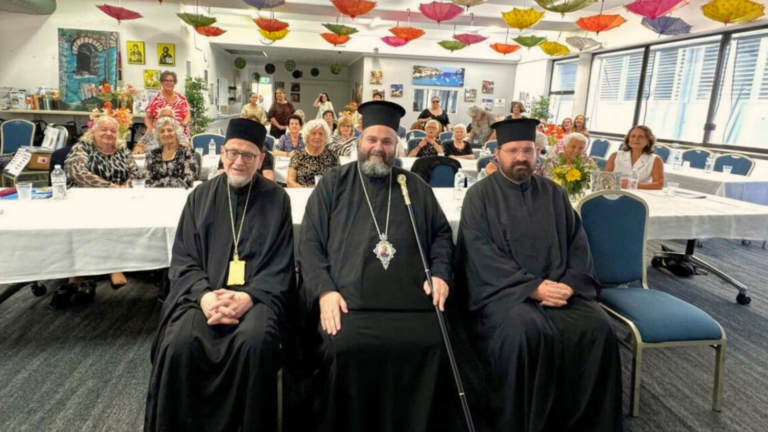
Representing the Greek Orthodox Archdiocese of Australia, His Grace Bishop Evmenios of Kerasounta delivered a spiritual message on healing and dignity, reminding guests that “true greatness is not measured by what we build or own, but by what we give and how we serve others.”

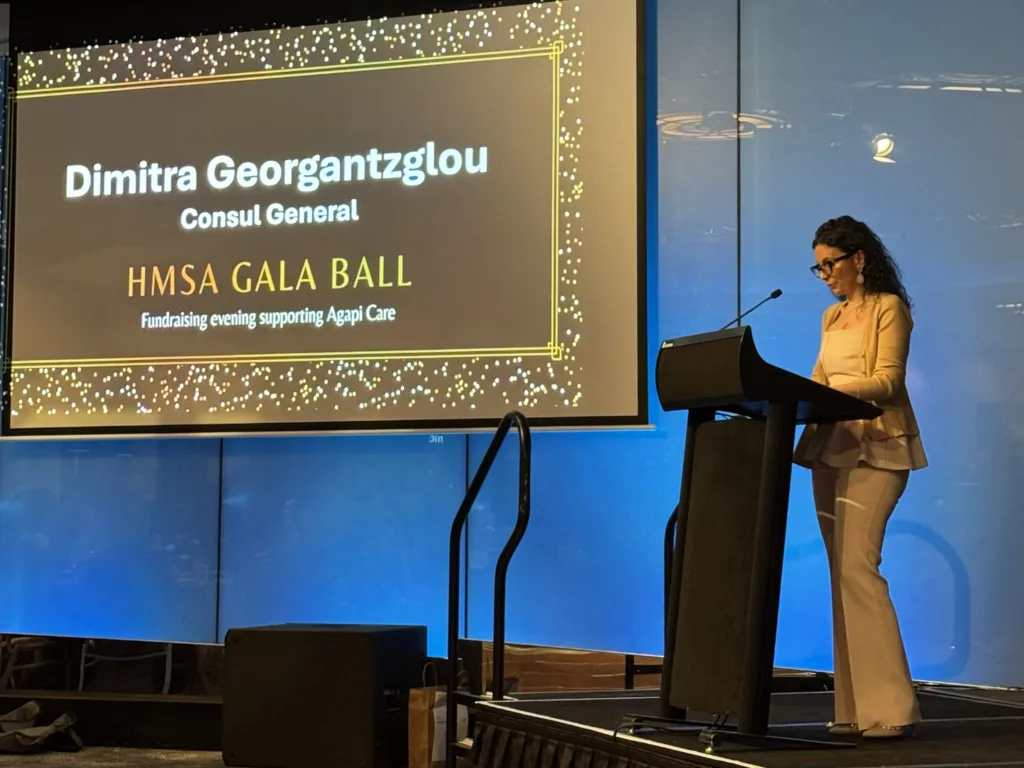
Consul General of Greece in Melbourne, Dimitra Georgantzoglou, congratulated organisers for “showcasing the pivotal role of Agapi Care” and praised its “humane approach to those in need,” describing it as a model of care that should be celebrated and supported.

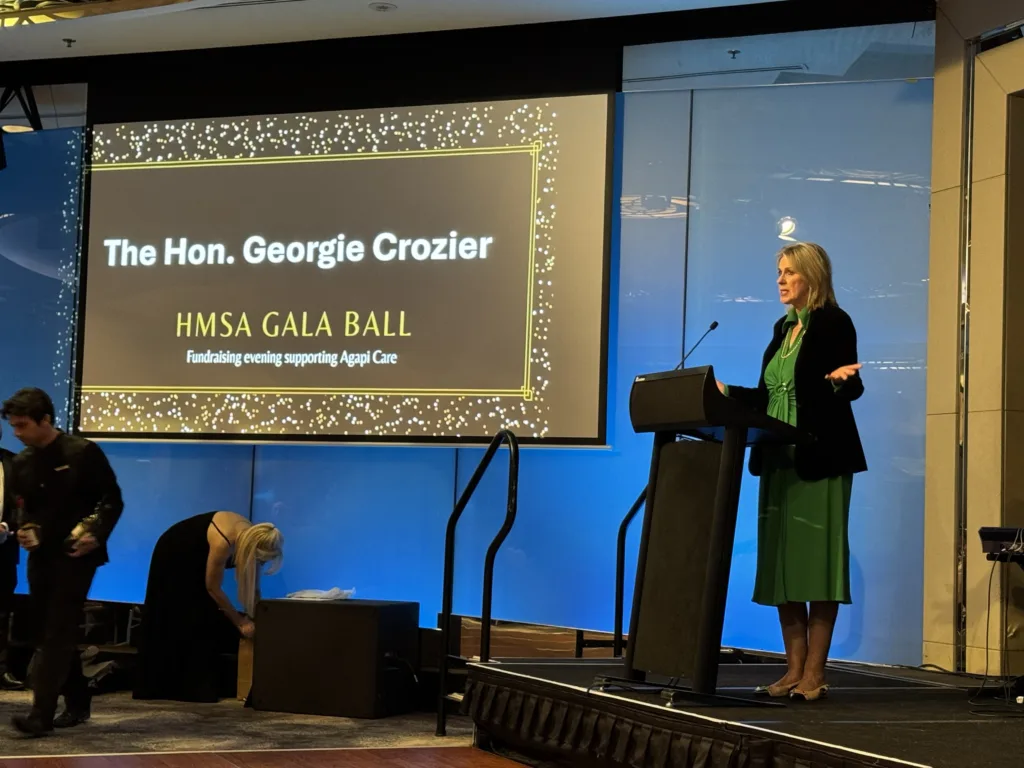
Parliamentarians Nick Staikos MP and Georgie Crozier MP also addressed guests, acknowledging the community’s enduring legacy of service and collaboration, with Ms Crozier calling the evening “a powerful example of generosity of heart and spirit.”
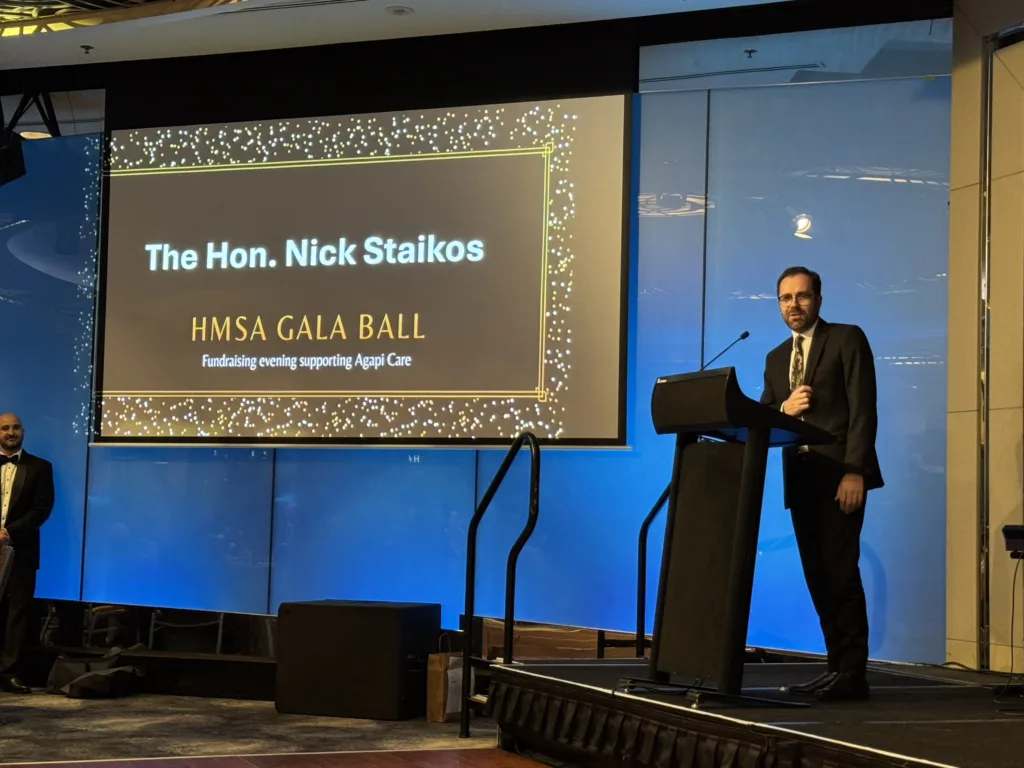
hellenic medical society of australia
Consul General of Greece in Melbourne, Dimitra Georgantzoglou.

Agapi, Caritas, Charity – The Greek roots of giving

President of the GCM, Bill Papastergiadis OAM, drew on classical philosophy to explain the deep Hellenic origins of compassion and charity.

“The word Agapi – selfless, sacrificial love – was translated centuries ago into Latin as Caritas, from which the English word charity comes. So Agapi, Caritas and Charity are one and the same, all stemming from Greek. Tonight’s fundraising embodies that ancient ideal – that true virtue lies in giving, not for recognition, but because it’s right,” Papastergiadis said.
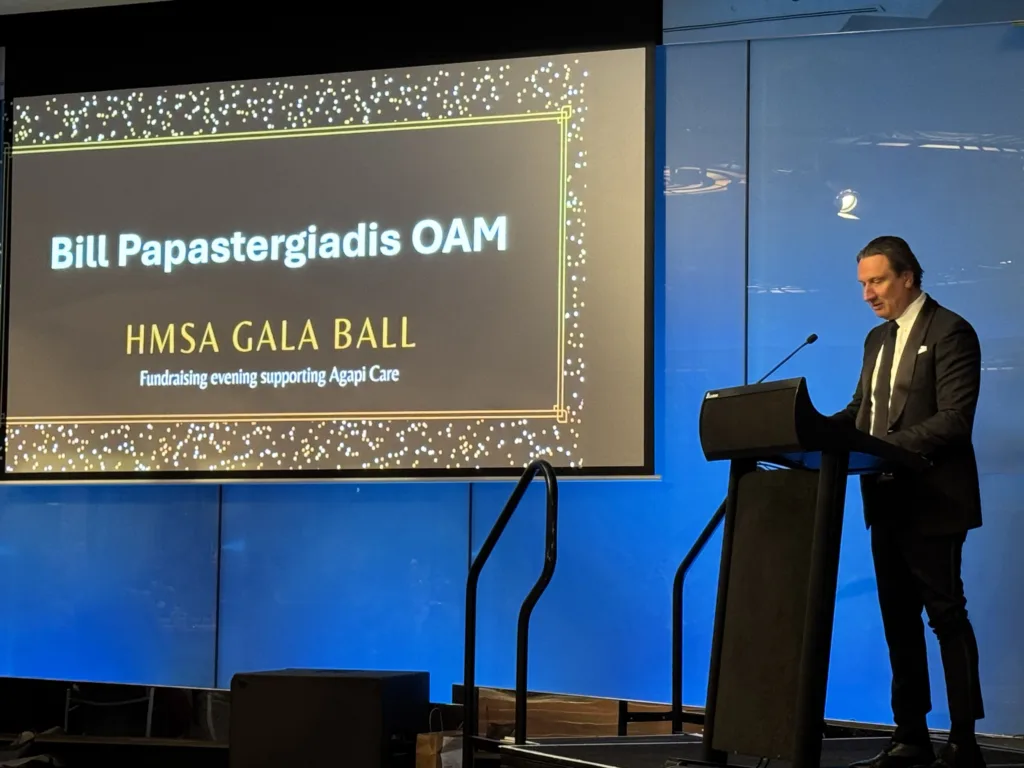
hellenic medical society of australia
Bill Papastergiadis OAM.

He commended the collaboration between the HMSA, the GCM and Agapi Care as “a contemporary example of an ancient Greek perspective on helping others.”

In a heartfelt address, Agapi Care CEO Mary Gakopoulos outlined the organisation’s 37-year legacy of providing culturally responsive support to people with disabilities and their families.

Founded in 1987 by a group of Greek Australian parents who believed their children deserved equal rights and community inclusion, Agapi Care has since supported over 3,000 individuals and 1,500 families through programs ranging from disability services to emergency food relief, domestic violence support, and mental health care.
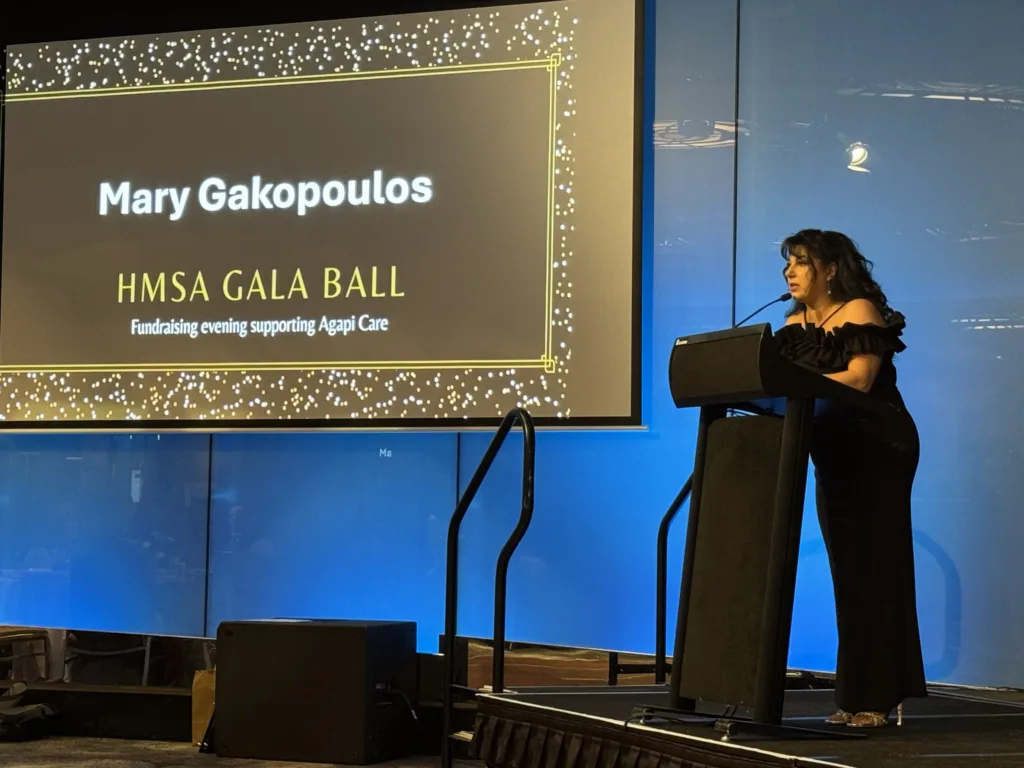
hellenic medical society of australia
Agapi Care CEO Mary Gakopoulos.

“We believe a person is not defined by their disability,” Ms Gakopoulos said. “We look at each individual first — at their abilities and what they can offer to their community. Not all disabilities are visible, and our role is to help people find belonging and independence.”

She added that community-led fundraising had enabled Agapi Care to deliver non-government-funded programs that promote education, trust-building and culturally appropriate outreach for those often at the margins of mainstream support systems.

“What we do is not just translation,” she concluded. “It’s about transformation.”
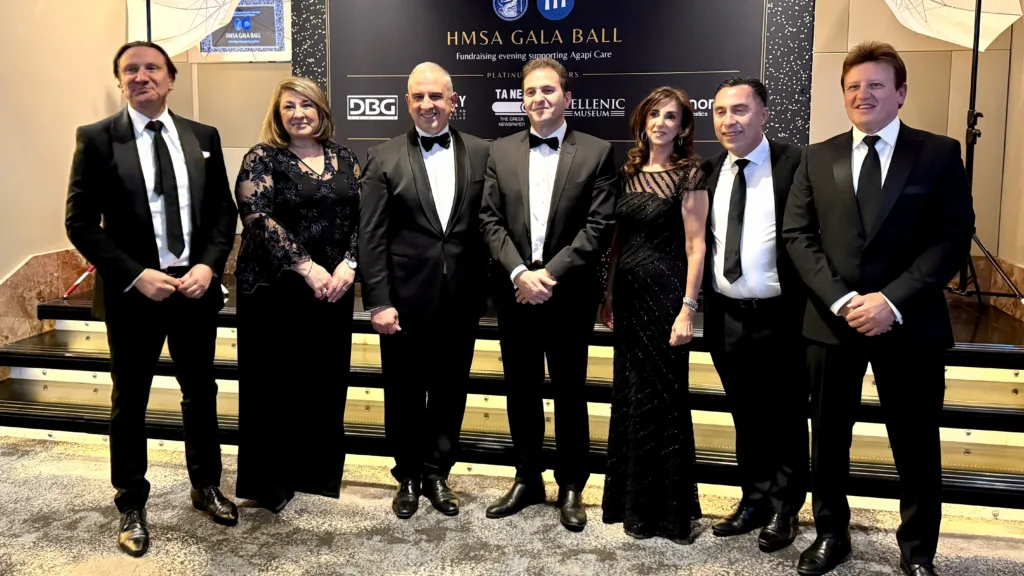
Hellenic Medical Society Australia

Two leading members of Australia’s medical community were recognised on the night for their outstanding service.

A/Prof. Magdalena Simonis AM and A/Prof. Vicki Kotsirilos AM both received awards “in recognition and appreciation of their dedication and valued contribution to community service, advocacy and public health.”
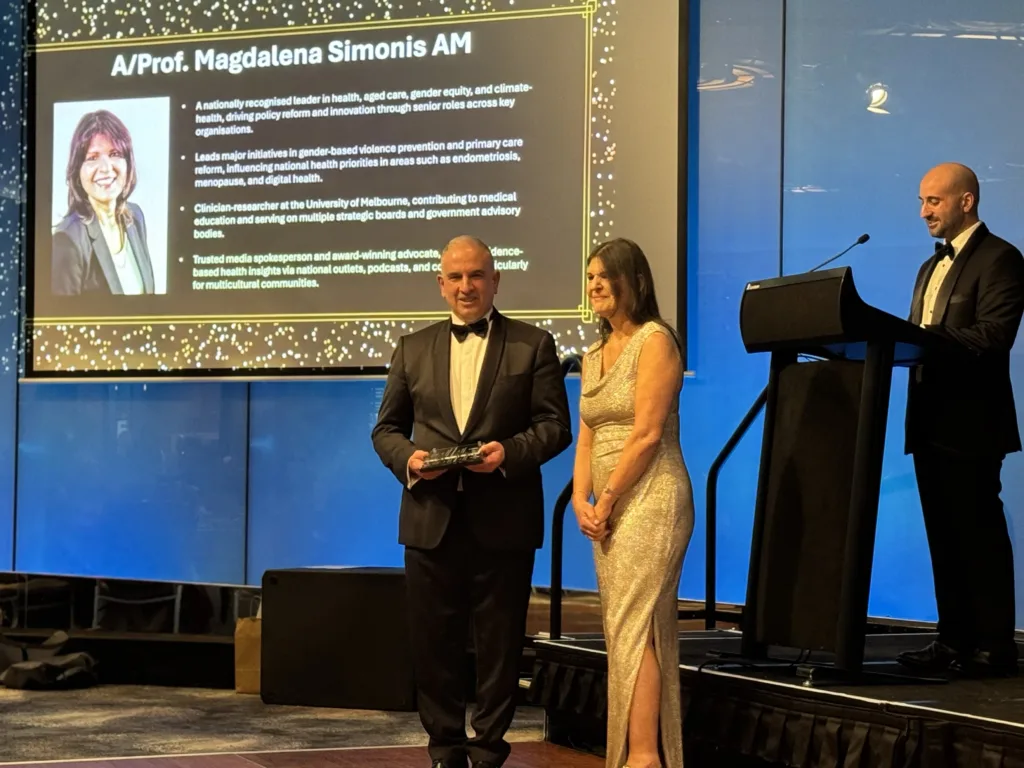
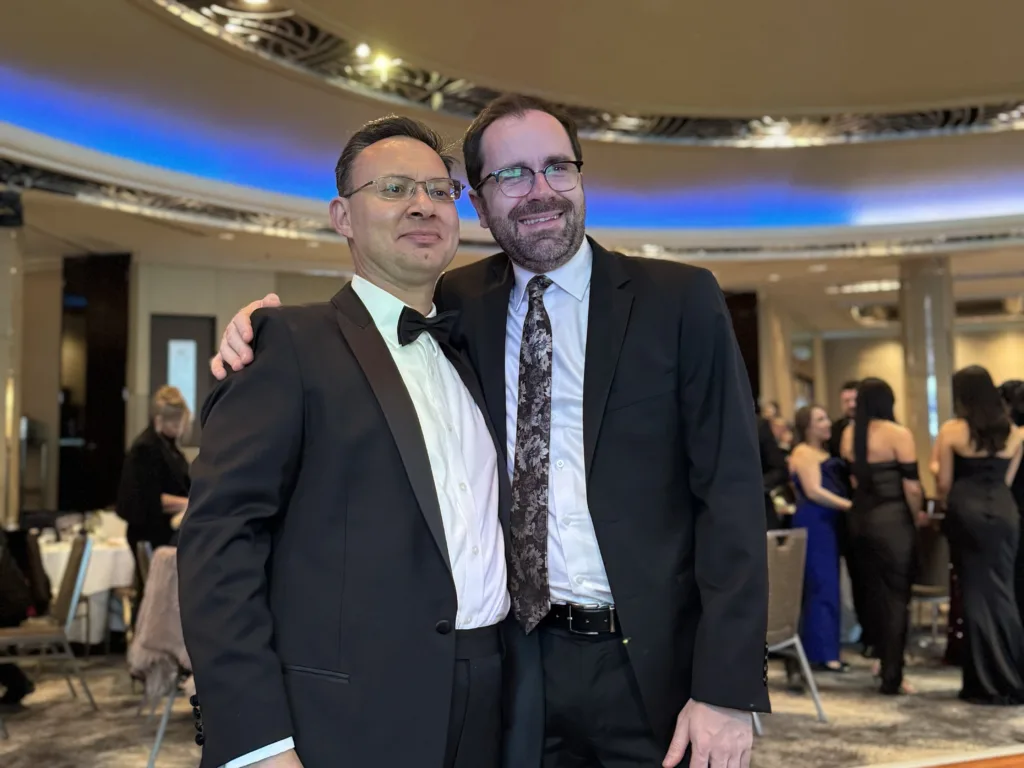
Hellenic Medical Society Australia
A/Prof. Magdalena Simonis AM received an award.

Their achievements – spanning decades of leadership in clinical practice, education, gender equity, environmental health and public advocacy – embody the core mission of the HMSA to merge professional excellence with community service.

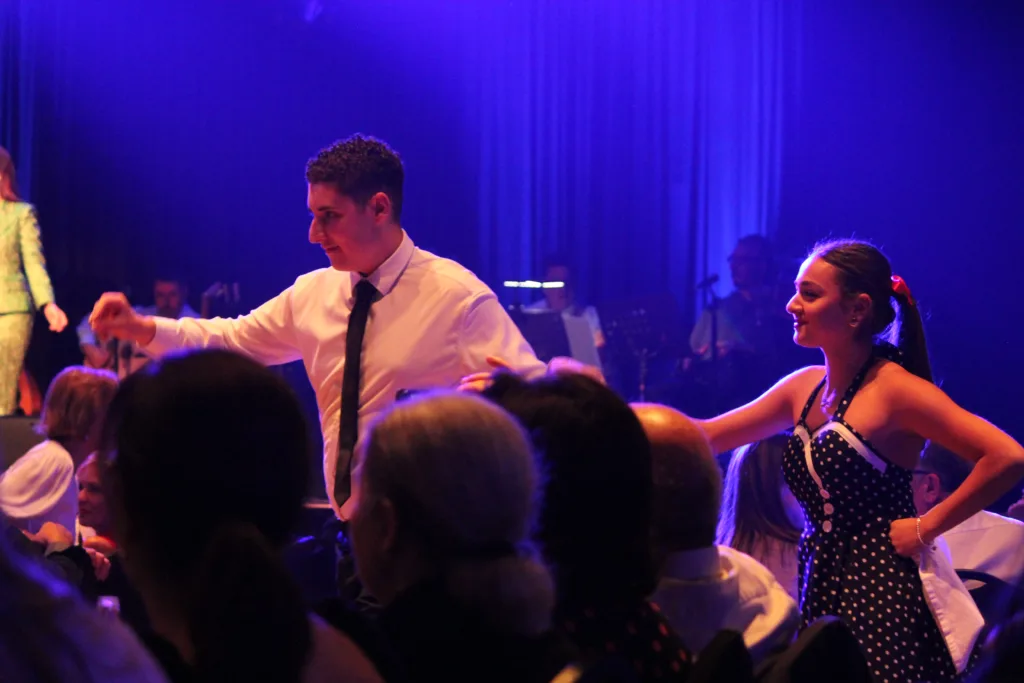
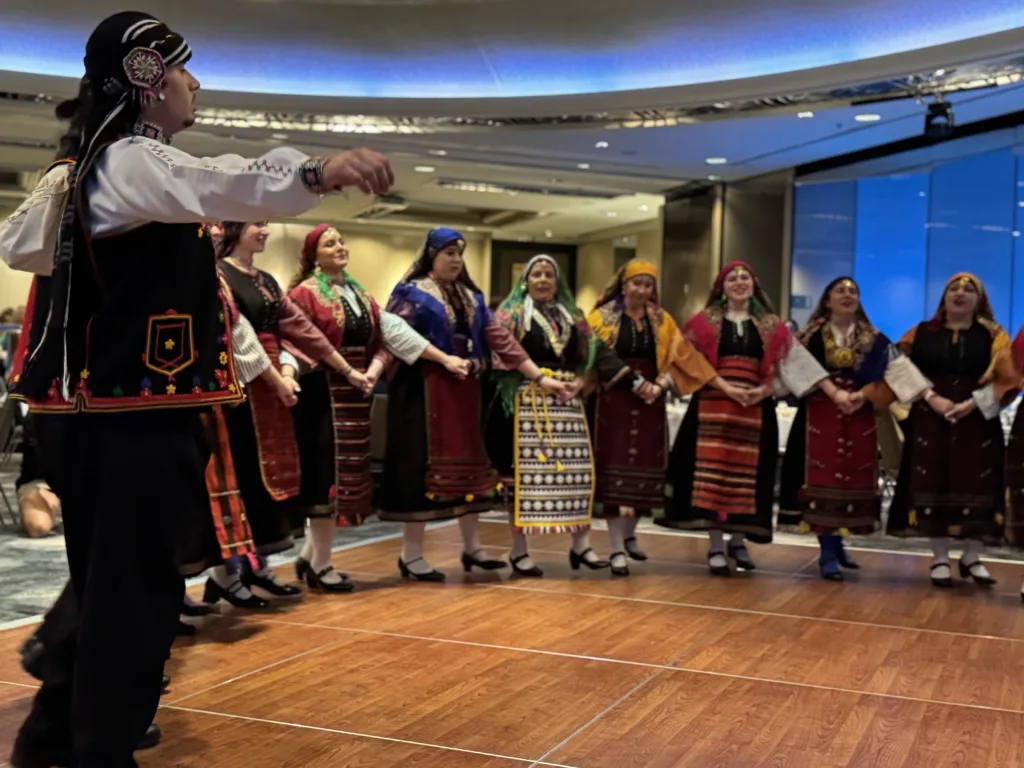
As the night continued, guests took to the dance floor to the sounds of Anagennisi Band and enjoyed performances in traditional costume by O Periklis Dance Group.
hellenic medical society of australia

The evening’s live auction, conducted by Dimitri Damanios, Sales Consultant and Auctioneer at Buxton Real Estate, helped raise vital funds to expand Agapi Care’s services – a testament to the enduring generosity and unity of Melbourne’s Hellenic community.
hellenic medical society of australia

About the Hellenic Medical Society of Australia

Founded in 2016, the HMSA brings together medical and health professionals of Hellenic heritage to promote collaboration, education, mentorship and philanthropy. Through its events and outreach, HMSA fosters excellence in medicine while championing community wellbeing and cultural connection.

For more information visit: www.hellenicmedicalsociety.com.au.

The Greek Herald was proud to be a media partner of the Hellenic Medical Society Gala Ball 2025.
Victoria Haralabidou on love, loss and legacy: Revisiting ‘Brides’ at the Greek Film Festival

As the Greek Film Festival of Sydney celebrates 30 years of cinematic excellence, one of Greece’s most internationally acclaimed films – Brides – returns to the big screen, bringing with it a story of love, exile, and resilience that continues to resonate two decades on.

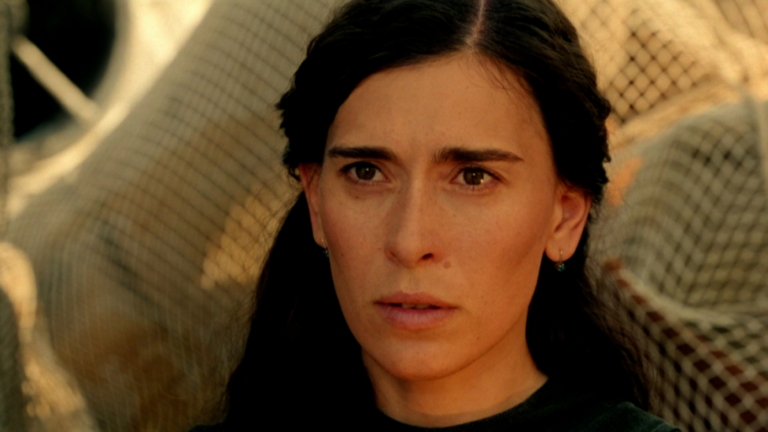
At the heart of the film is Victoria Haralabidou, whose moving portrayal of Niki, a mail-order bride journeying from Greece to America in the 1920s, earned her critical acclaim and the admiration of audiences worldwide.

Born in Leningrad, raised in Greece, and now based between Sydney and Athens, Haralabidou’s own life mirrors the film’s themes of migration and identity. With a career spanning over 20 years and more than 20 credits in film, television, and theatre, she brings depth and humanity to every role she inhabits.

Speaking with The Greek Herald ahead of Brides’ screening at this year’s festival, Haralabidou reflects on her multicultural journey, her collaboration with legendary director Pantelis Voulgaris, and the enduring emotional connection Brides continues to hold for diaspora audiences around the world.

Victoria Haralabidou
Victoria Haralabidou.

Tell us a bit about yourself, your upbringing and your career.

I recently read about the term ‘third culture individual’. I was born in the Soviet Union in Leningrad, later in life immigrated to Greece, and then Australia. I have performed in all three languages and have more than 20 credits in film, television and live performance under my belt.

Having studied and worked across Russia, Greece and Australia, how do these three cultural traditions influence your craft?

I think that anyone who moves to another country and starts all over to achieve anything in their carrier can do anything. I am determined and dedicated. Resilient and flexible. Curious and firm.

You’ve spoken before about being “a Greek who lost a country” – the descendant of Asia Minor refugees. How has that sense of displacement informed your art?

Everything in our life shapes who we are as humans and as artists. I love telling the stories of complexity, resilience and strength.

Brides features at this year’s Greek Film Festival in Sydney. The film remains one of the most internationally acclaimed Greek films of the early 2000s. How did that role come to you, and what first drew you to the story of a mail-order bride?

Laat year of drama school in Athens the casting people from Brides came to our presentation. They invited us all to attend the general audition. Thousands of drama school students responded to the call. We all had about 10 minutes on camera. My whole year went that day. When it was my turn to go in Pantelis Voulgaris (director) stepped out to have a snack or a cigarette. I did my audition without him in the room. But when I stepped out Pantelis came back and something pushed me to give him my hand and say ‘I love your work. I just wanted to introduce myself’. Pantelis looked at me and invited me back into the audition room. The year was 1998. Filming started five years later. 

Victoria Haralabidou
Brides’ features at this year’s Greek Film Festival in Sydney.

The film captures themes of exile, longing, and love across continents. What personal or cultural resonances did you find in the story?

Ioanna Karistiani (screenwriter) wrote a beautiful love story. Ultimately every Voulgaris film is a film about love, longing and heartbreak. I grew up in listening to stories from both my families. Stories from Asia Minor and Greece. Stories of revolution, displacement, civil war, executions and exiles. I’ve immigrated twice in my life. The stories live in me I’m sure, but being an internal optimist or pragmatist if you like, my motto always is to keep on swimming.

What was it like working with director Pantelis Voulgaris, and how did his vision shape your performance?

Pantelis has incredible patience and humour. He is open to offers, but also knows exactly what he wants to see on screen. He sees both the small and the big pictures. He trusted me and made me trust myself and my choices.

Many Greek Australians still remember Brides as a story of migration and identity. What kind of reactions do you receive from diaspora audiences?

I was on tour with Belvoir Street Theatre in Melbourne when Brides was screening at the GFF in 2005. I will never forget all the women and men that came to hug and kiss and cry and share their stories. Most of them came to Australia in the 50’s and 60’s but they saw themselves in those 700 women on their way to America in Brides.
You divide your time between Sydney and Greece – how does each place feed your artistic and personal life?

Every time I go back to Greece to see my family and friends I recharge my batteries. I have called Australia home for the past 20 years.  I read, or heard, someone discussing dreams where they started having dreams in a different language. Not me. I see images. I see colour. I guess my subconscious has given up, it now feeds me stories beyond a linguistic barrier, just in case I decide to move again!

Looking back on your journey from Brides to Blessed and beyond, what stories do you feel most compelled to tell now?

Last year I was lucky and privileged to work on Black Snow (a Stan TV series). Once again, I couldn’t believe the warm and loving reaction from the public. Australian audiences are different to those in Greece. They are more reserved, if you like. Men and women would stop me on the street and tell me how much they loved my character and the truth I brought to it. People would tell me they don’t do it very often. And I would reply “you should”. It means a lot to us as artists to know we have an impact.

Finally, what message would you like to send to the Greek diaspora in Australia ahead of the opening of the Greek Film Festival?

I wish them many more inspiring, personal, funny, devastating, thought provoking stories on big screen to come. And for the Brides (once more) Καλη Προβολη.


Areti Ketime mesmerises Sydney at the Zeibekiko Festival Australia

The soulful sounds of Greece filled the Canterbury-Hurlstone Park RSL on Friday, 10 October, as Areti Ketime took centre stage for an unforgettable evening of music as part of the Zeibekiko Festival Australia.

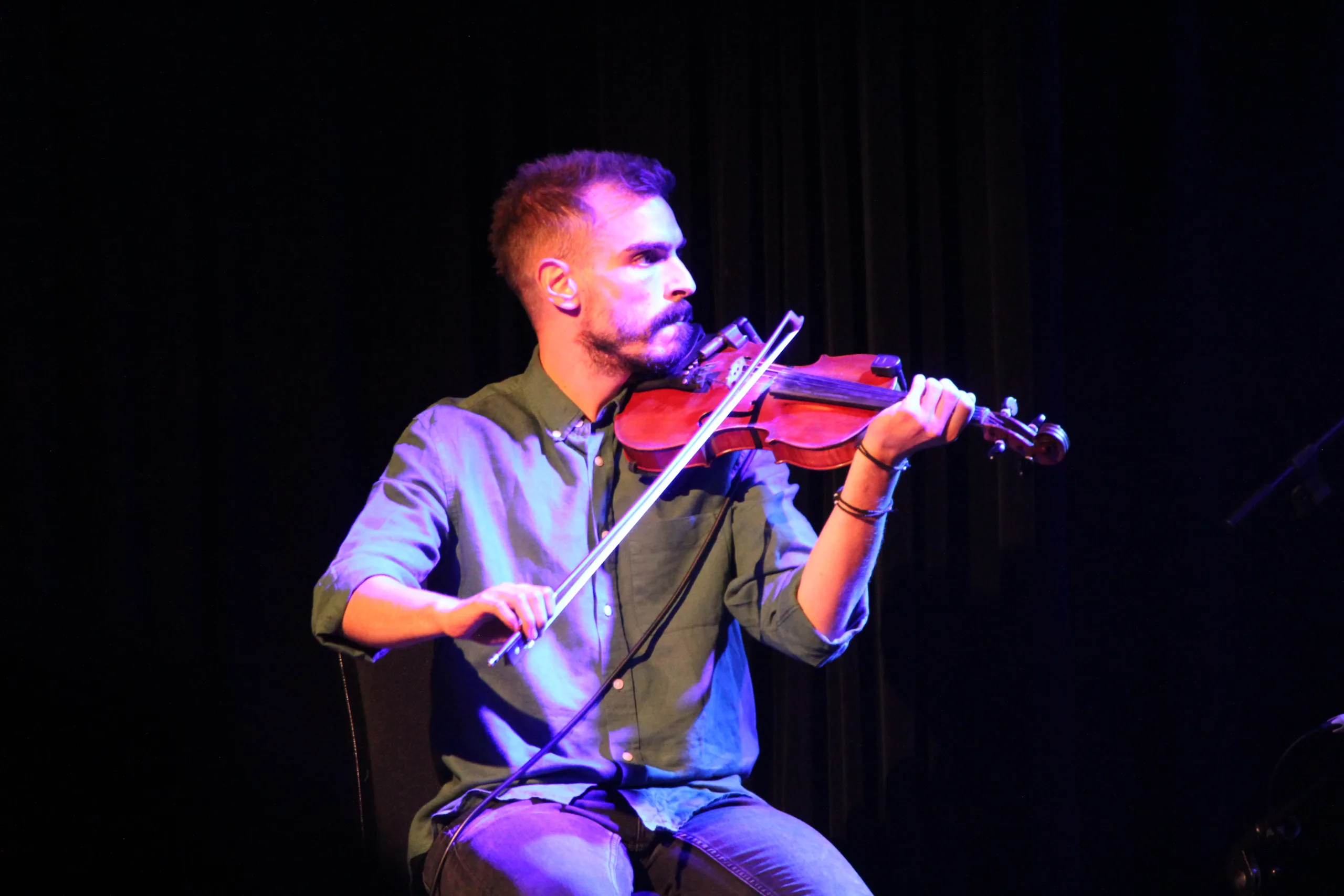
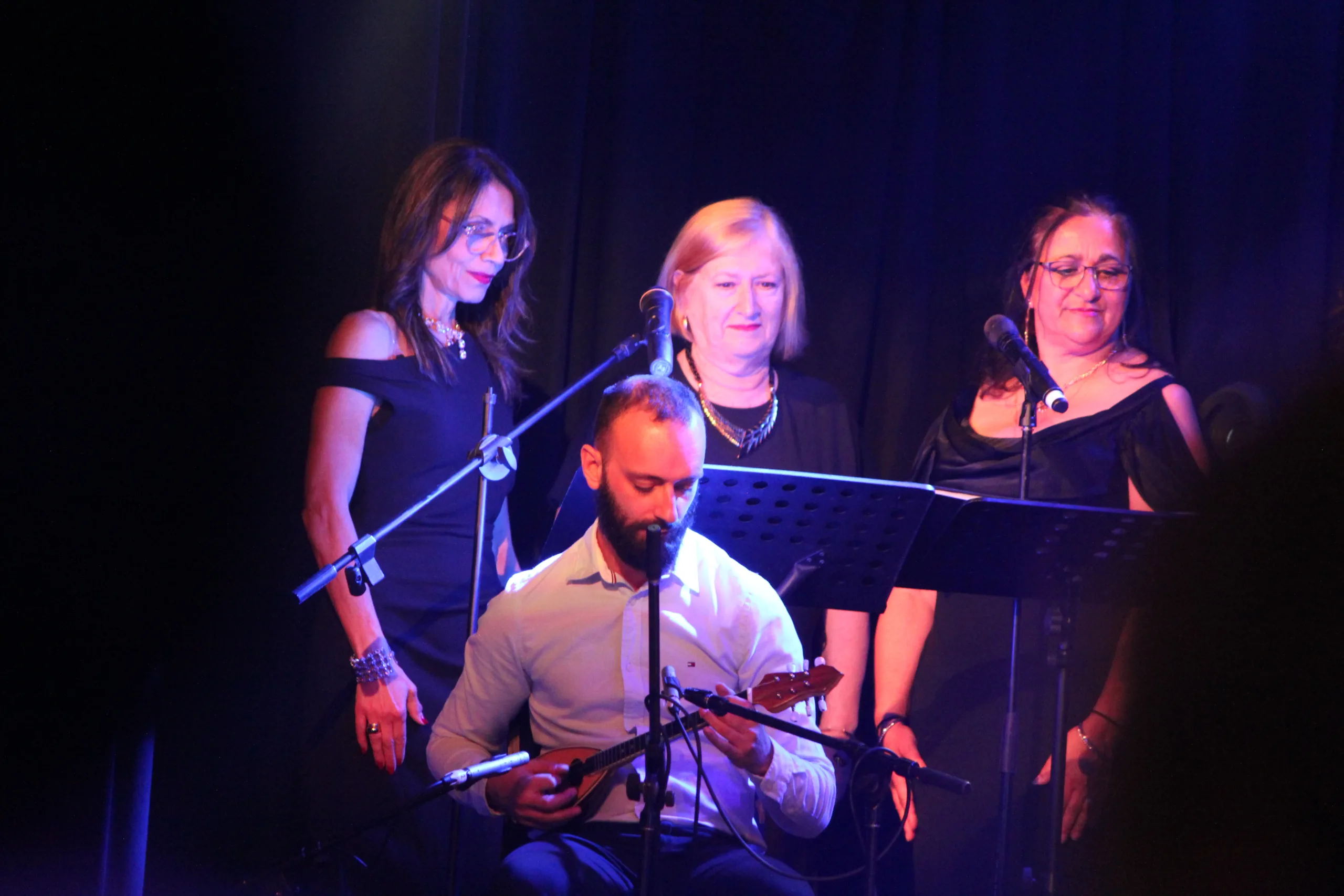
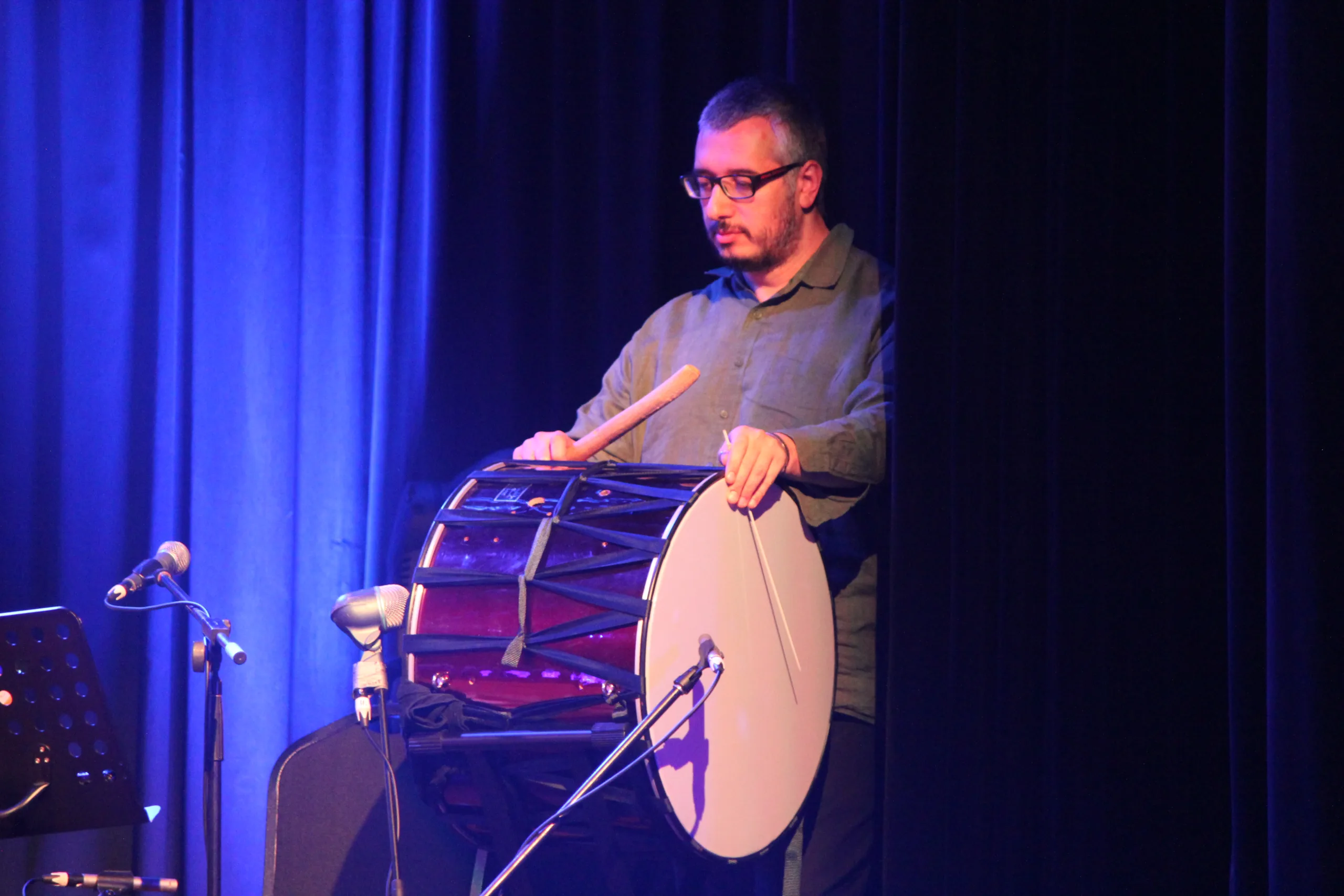
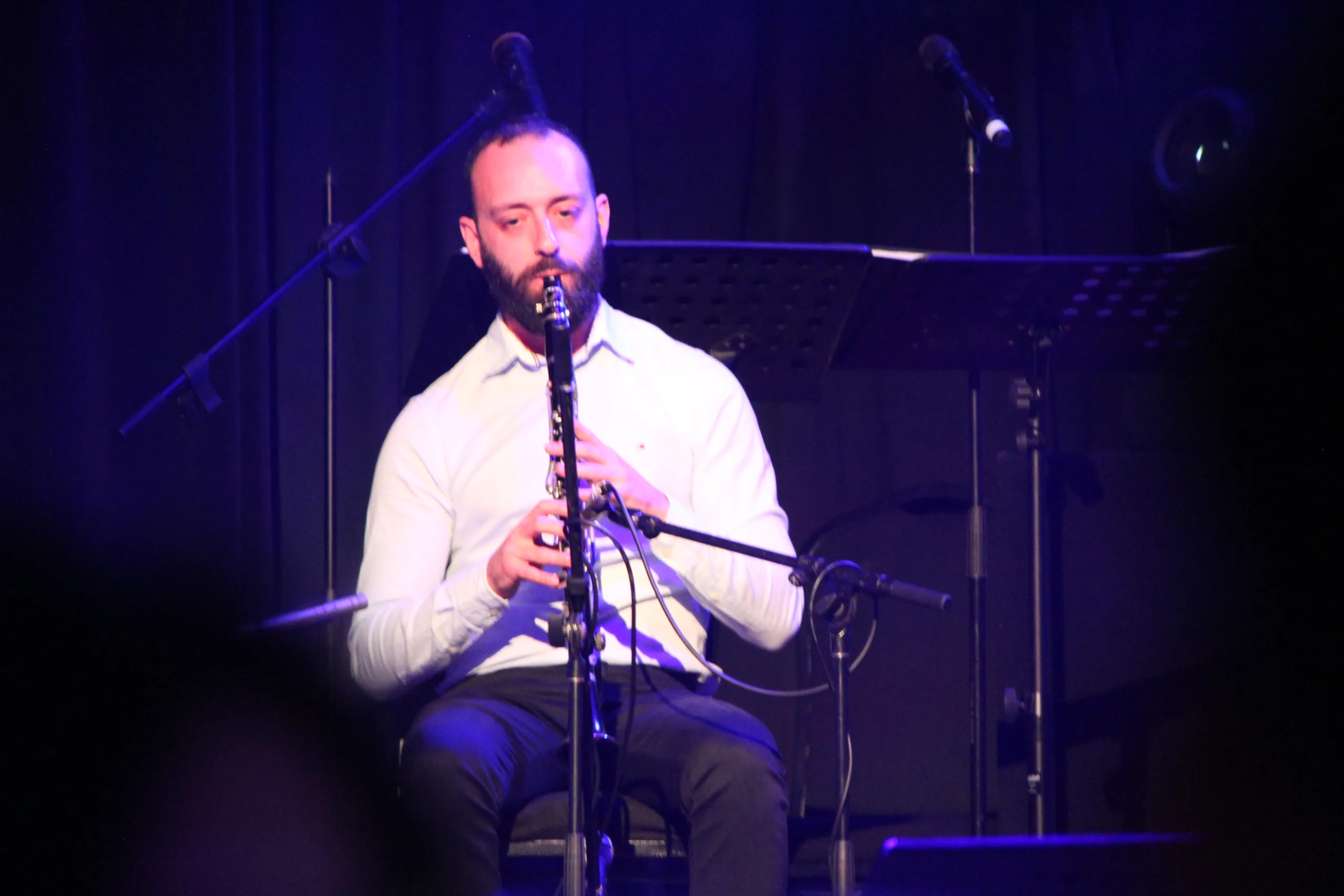
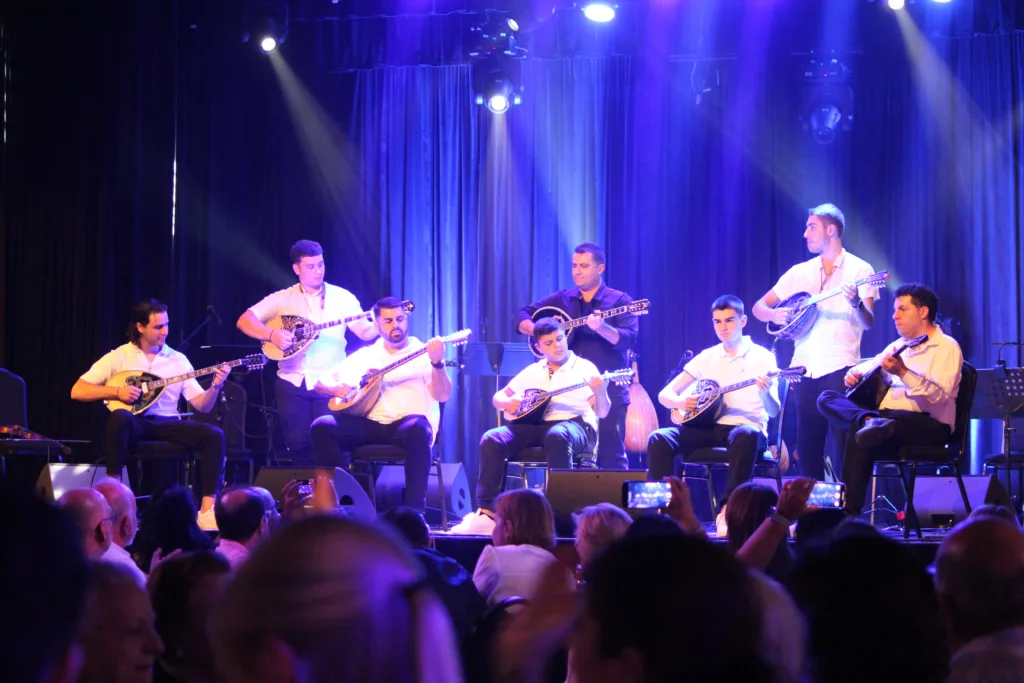
Backed by her renowned violinist Dimitris Stefopoulos and local Greek Australian musicians such as Michael Platyrrahos, Areti’s angelic voice and mastery of the santouri transported the audience through a journey of Smyrneika, rebetika, and folk songs that spoke straight to the heart.

Areti Ketime was backed by her renowned violinist Dimitris Stefopoulos. All photos copyright The Greek Herald / Andriana Simos.
areti ketime sydney concert zeibekiko festival australia

Her connection with the audience was immediate and profound – every note rich with emotion, every silence heavy with meaning.

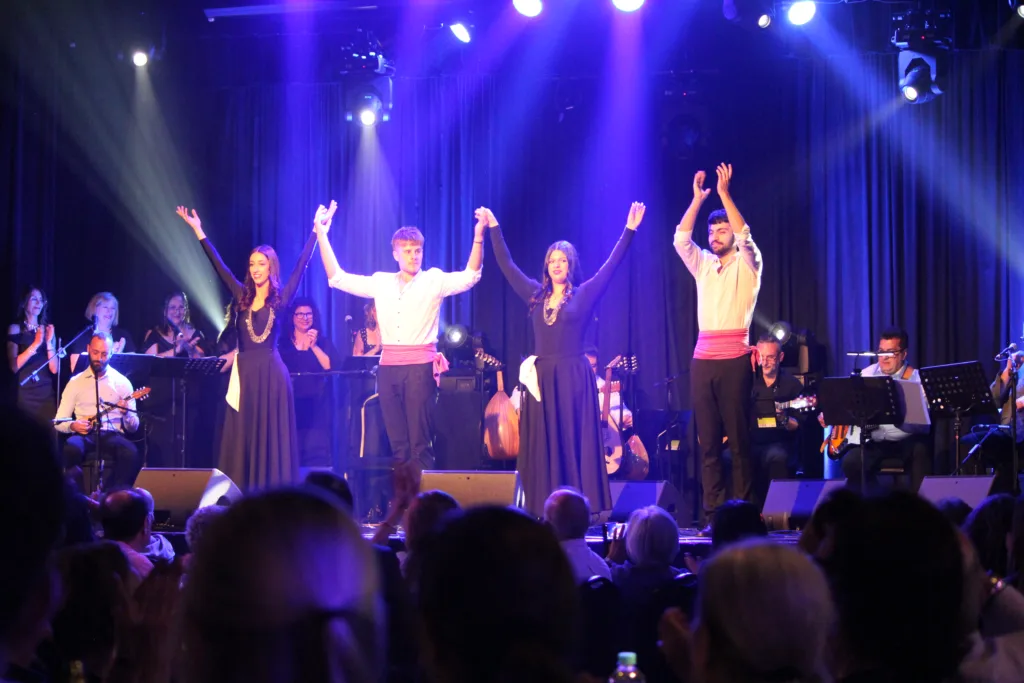
The concert also featured a bouzouki spectacular by Tassos Lambrou’s students, as well as dancing performances by dancers from the Sophia Ventouris School of Greek Dance and RSGDSYD Rallis School of Greek Dance.

areti ketime sydney concert zeibekiko festival australia

Among those in attendance was Vicky, who described the concert as “a truly moving night – Areti’s voice has this rare ability to touch your soul. You could feel the energy of Greece in the room; it was emotional, joyful, and unforgettable.”

Areti’s concert not only showcased her immense talent but reaffirmed the Zeibekiko Festival’s mission – to honour Greek culture through music, memory, and shared emotion.

*All photos copyright The Greek Herald / Andriana Simos

Kazzies in Victoria celebrate 100 years with $3 million investment to secure legacy

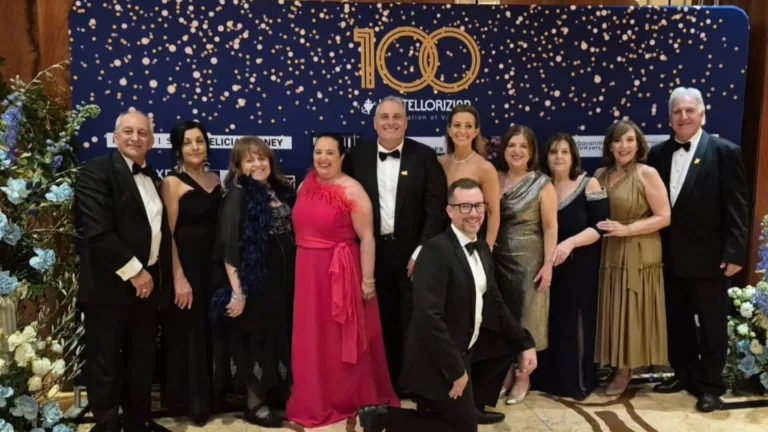
They came from Melbourne, Sydney, Adelaide, Perth, and even as far as Athens to celebrate 100 years since the founding of the Kastellorizian Association of Victoria (KAV).

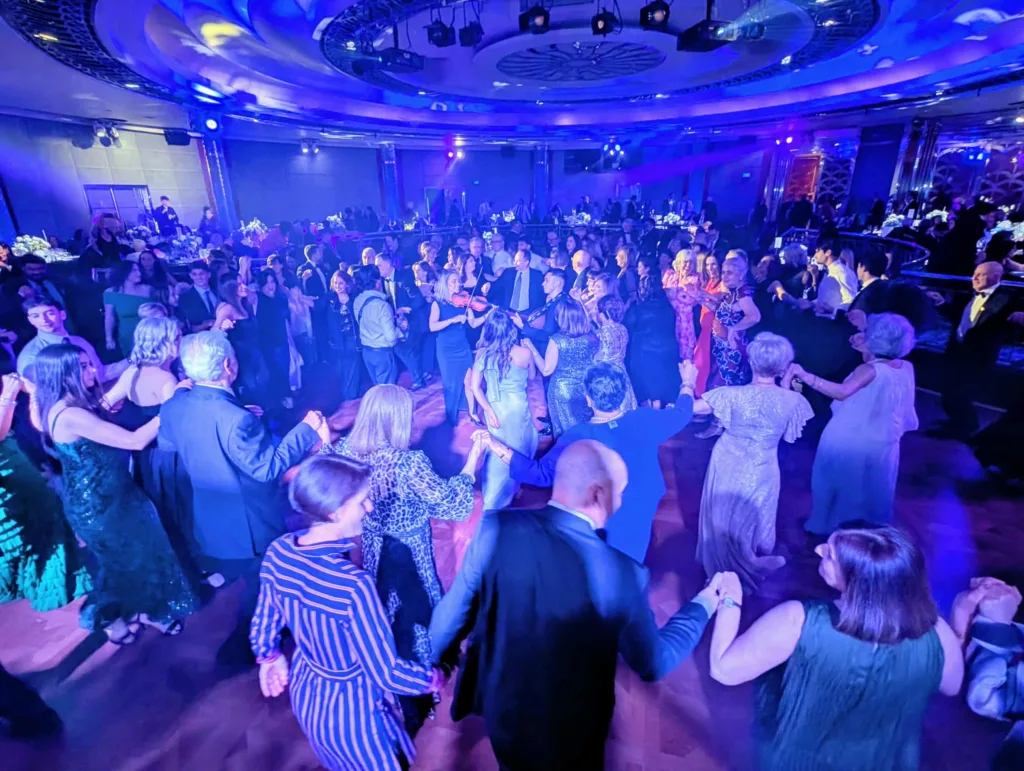
The Park Hyatt ballroom shimmered with sequins, laughter, Greek dancing, and pride as generations of Kazzies gathered to mark the milestone in a night of celebration, reflection, and vision for the future.

kastellorizian association of victoria 100 years

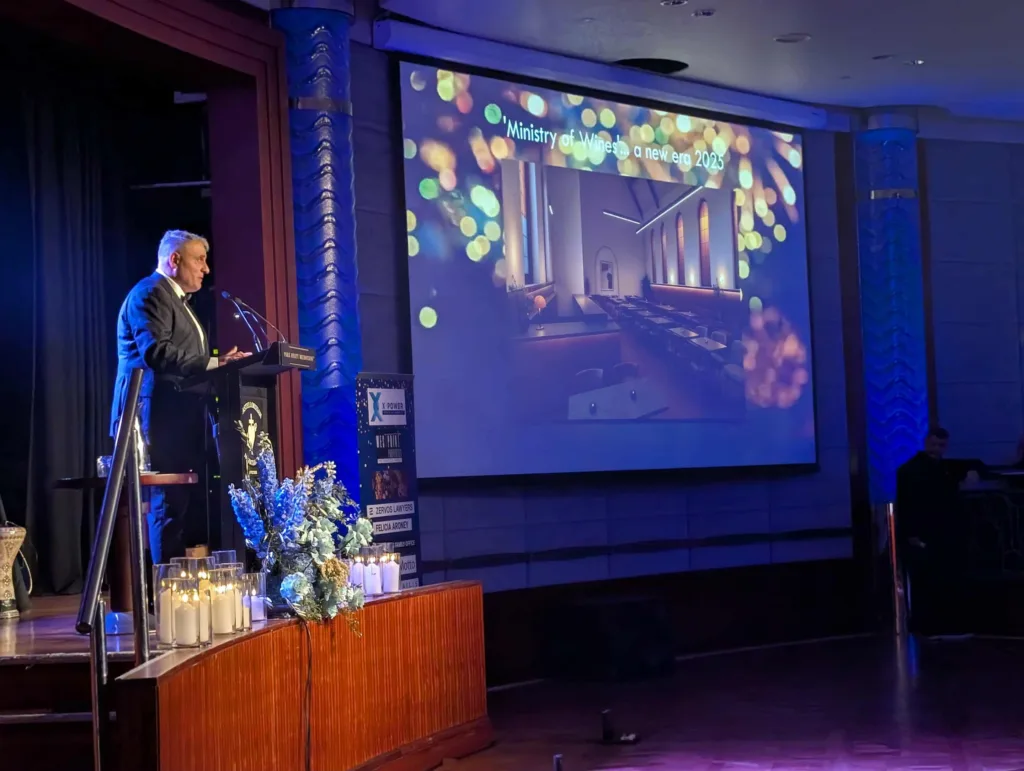
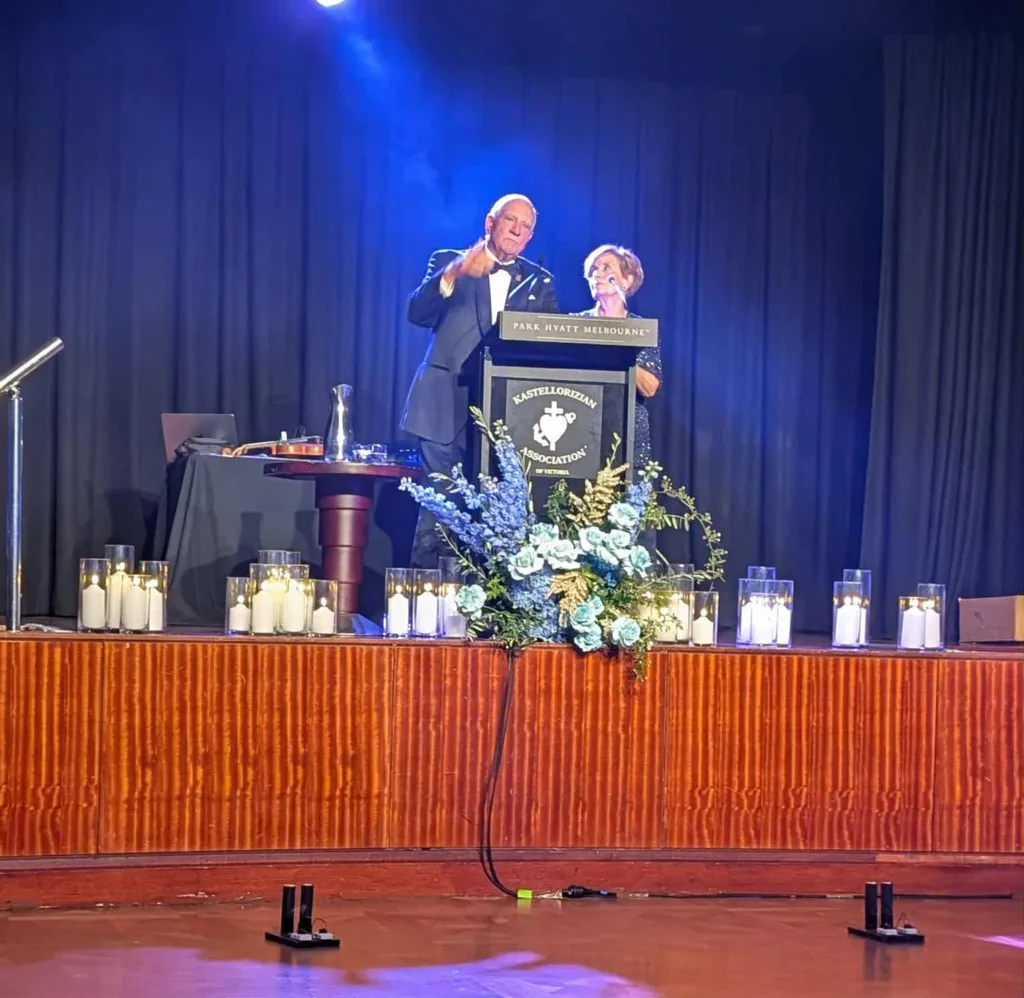
Then came the biggest announcement of all. KAV President Nik Spartels took to the stage to loud cheers: “We’ve just signed a 21-year lease with the Ministry of Wine, bringing more than $3 million in revenue to secure our future. After a planned extensive fit-out into the building, we’ll have a full license and a vibrant new life for our club.”

Nik Spartels shows off what the Kazzie Club will look like following a fancy refurbishment
Nik Spartels shows off what the Kazzie Club will look like following a fancy refurbishment.

The crowd erupted, raising glasses “to the next 100 years of friendship, family, and filotimo.”

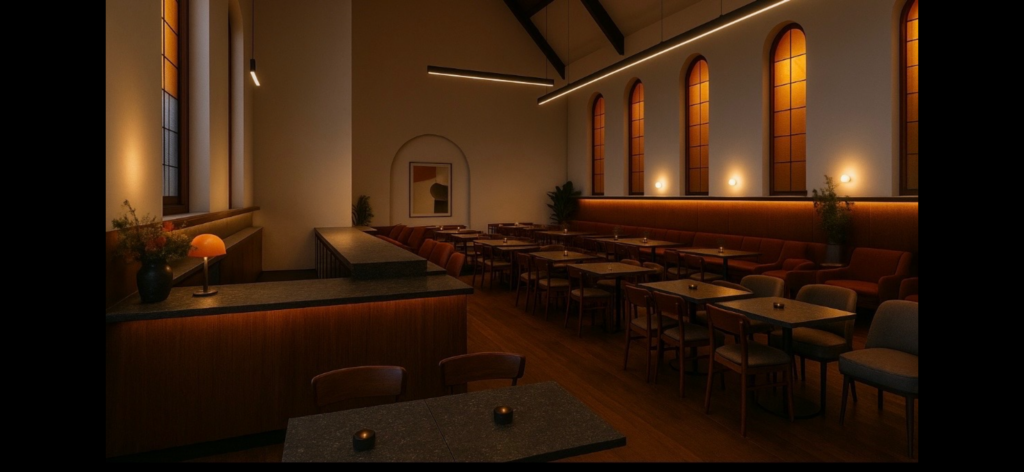
Speaking later to The Greek Herald, Spartels explained: “Last month we signed the papers. Our new tenant, Ministry of Wine, is led by young entrepreneur Kieren East, who also runs another two restaurants. He’ll transform our space into a Mediterranean-style wine bar and restaurant. It’s an iconic spot, a restaurant in a church, and the name ‘ministry’ suits that. Work will start soon.”

With a smile, he hinted that a few Kastellorizian delicacies might make the menu.

Ministry of Wine, a render of refurbished club
Ministry of Wine, a render of refurbished club.

Younger members Stasi Agdemis and Kristin Vrahnas welcomed the news.

“What a surprise we all received tonight!” Agdemis said. “Knowing the financial security of our club is well and truly looked after is something we’ve all been desiring. Let’s take a moment to congratulate Nik Spartels.”

Vrahnas added: “This marks a new and exciting chapter for the Kazzie Club. We’ll enjoy a fresh and vibrant space while maintaining our traditional home. It’s the perfect blend of old and new, a future that honours our heritage while securing our place for future generations.”

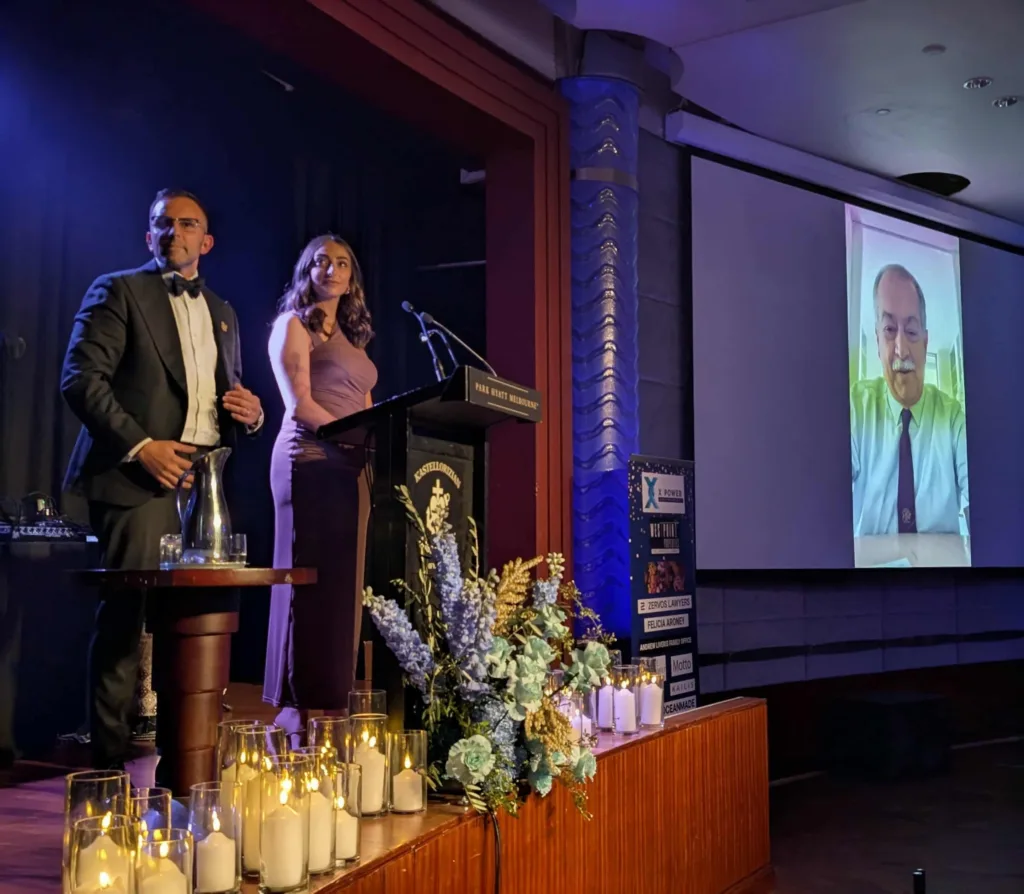
Stasi Agdemis and Kristin Vrahnas listen to a speech by Andrew Liveris
Stasi Agdemis and Kristin Vrahnas listen to a speech by Andrew Liveris.

They reflected on two decades of renewal, from the revival of social events and the “Kazzie of the Year” Award to Kazzie Connect during COVID, the launch of the Seniors Club, and cultural exhibitions.

“Our Kazzie dancing on Sundays brings together children of all ages,” Vrahnas said. “The annual Christmas party has become one of our biggest family traditions. Last year, over 100 people came along. It’s about connection, belonging, and keeping the story alive.”

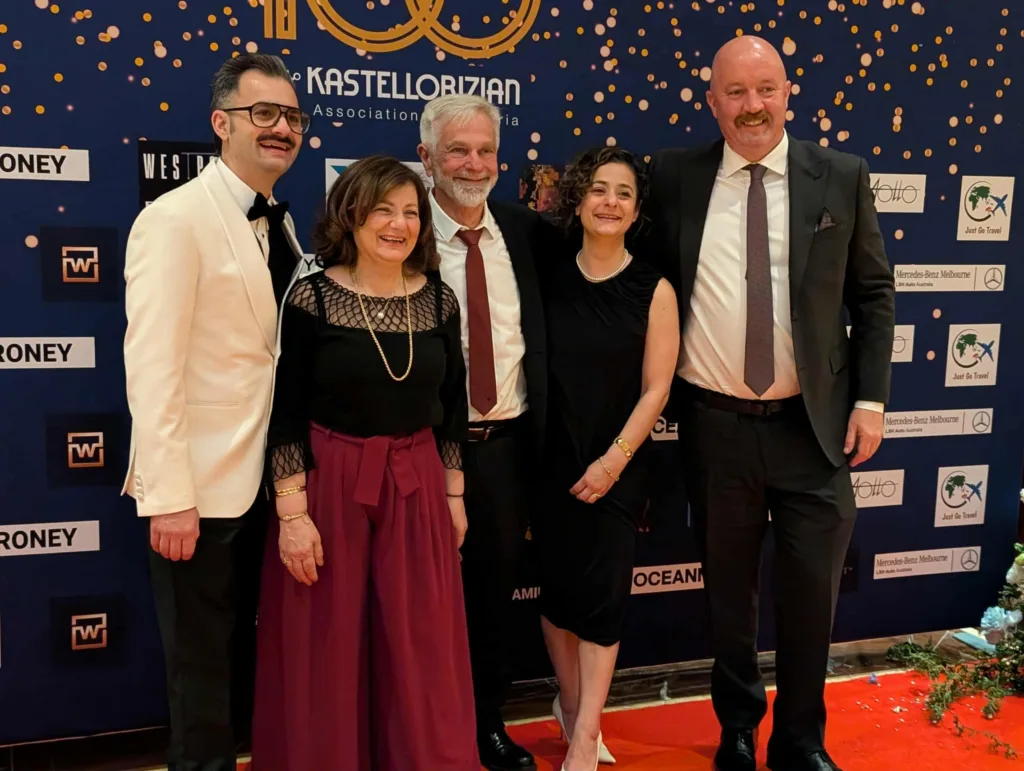
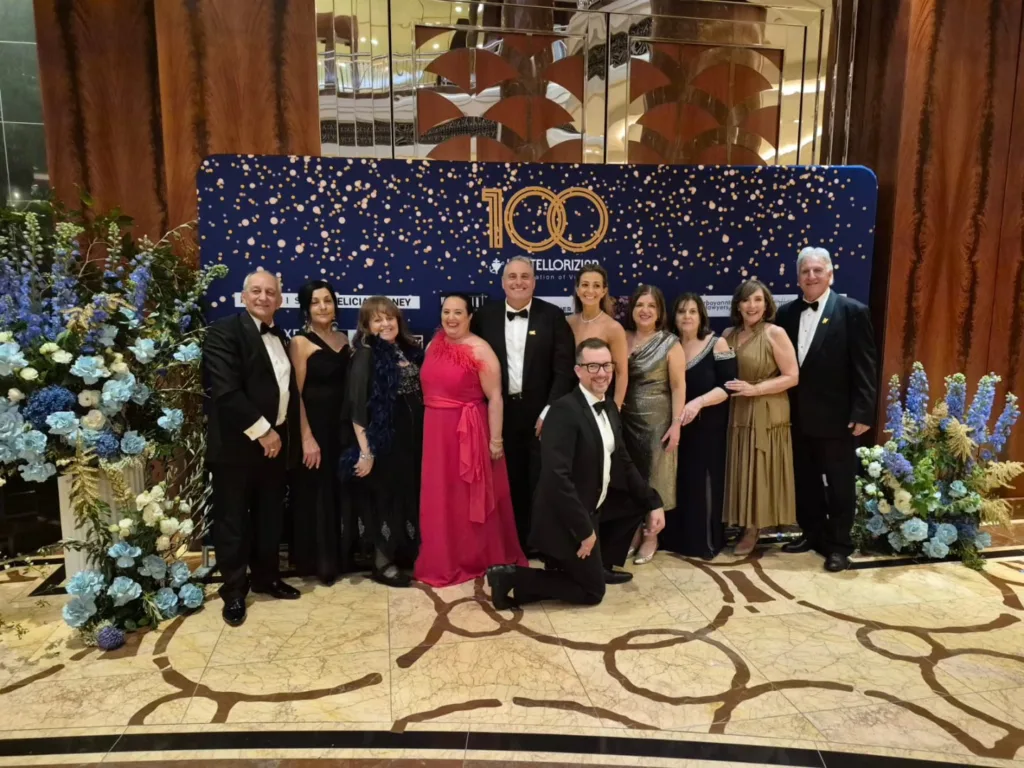
The Kastellorizian Association of Victoria Committee. Photo Supplied
The Kastellorizian Association of Victoria Committee. Photo supplied.

Looking ahead, both saw opportunities for business networking and intergenerational mentoring.

There were no dignitaries in attendance, but none were needed. In his video message, Australian Prime Minister Anthony Albanese captured the mood perfectly, calling the celebration one for “the people whose hard work, aspiration, and devotion to family, faith, and community shaped modern Australia.”

No one knows that hard work better than former president Michael Spartels, Nik’s father. He cast the spotlight on the first Kastellorizian gathering in 1925 at Melbourne’s Amonia Café on Lonsdale Street, when only 150 Kazzies lived in Victoria, many escaping hardship, famine, and war.

Michael Spartels and Christine Dimer
Michael Spartels and Christine Dimer.

“Those men had foresight,” he said. “They left their families behind to build a new life. If they could see us tonight, they’d be proud. To me, it’s more than a brotherhood, it’s an institution. We were raised with filotimo, helping others without expecting anything in return.”

Through picnics, dances, and fundraisers for the homeland, the association flourished and, in 1967, purchased its now-iconic home at 250 Dorcas Street, South Melbourne.

“We put in so much work on that building,” Michael grinned. “Some people thought we’d bought the Taj Mahal.”

While Melbourne’s mood was triumphant, Sydney’s story offered a cautionary tale. Sydney President George Pizanis related to the challenges. Once a hub of nightlife, the Kingsford Kazzie Club introduced him to his “disco years,” but “ego,” he said, “killed all the great work,” leading to the sale of its iconic building.

Both Pizanis and Spartels, professionals in the building industry, became presidents during difficult times, inspired by the passion of their parents and united by a desire to rebuild. They first met a decade ago to draft the constitution for the National Kastellorizian Council of Australia, bringing Kazzies nationwide together.

Two Kazzie presidents, NSW President George Pizanis and Victoria's President Nik Spartels.
Two Kazzie presidents, NSW President George Pizanis and Victoria’s President Nik Spartels.

“We were the youngest in our clubs,” Pizanis said. “Now we’ve got people in their 30s and 40s stepping up. The youth are coming through.”

That next generation includes siblings Lavinia and Jack Mangos, who lead the NSW Cazzie Youth group.

Lavinia and Jack are at the helm of NSW Kazzie Youth
Lavinia and Jack are at the helm of NSW Kazzie Youth.

“Whenever we come together, we feel that connection,” Lavinia said. “You may lose the language, but you never lose your cultural identity. Everyone knows someone on the island.”

Jack agreed, “Kastellorizo has always faced struggles, different rulers, wars, yet it’s held onto its identity. That’s something special.”

Joined by their Melbourne cousins and another who’d flown in from Athens, the family embodied that enduring diaspora bond.

“This might sound a little weird,” Spartels joked, “but I think we’re all related somehow. Young people, I appreciate you being here. I know you’d rather be on TikTok or whatever you do, but you’re in this position because of your forefathers, those who worked hard so you could now walk around with an iPhone.”

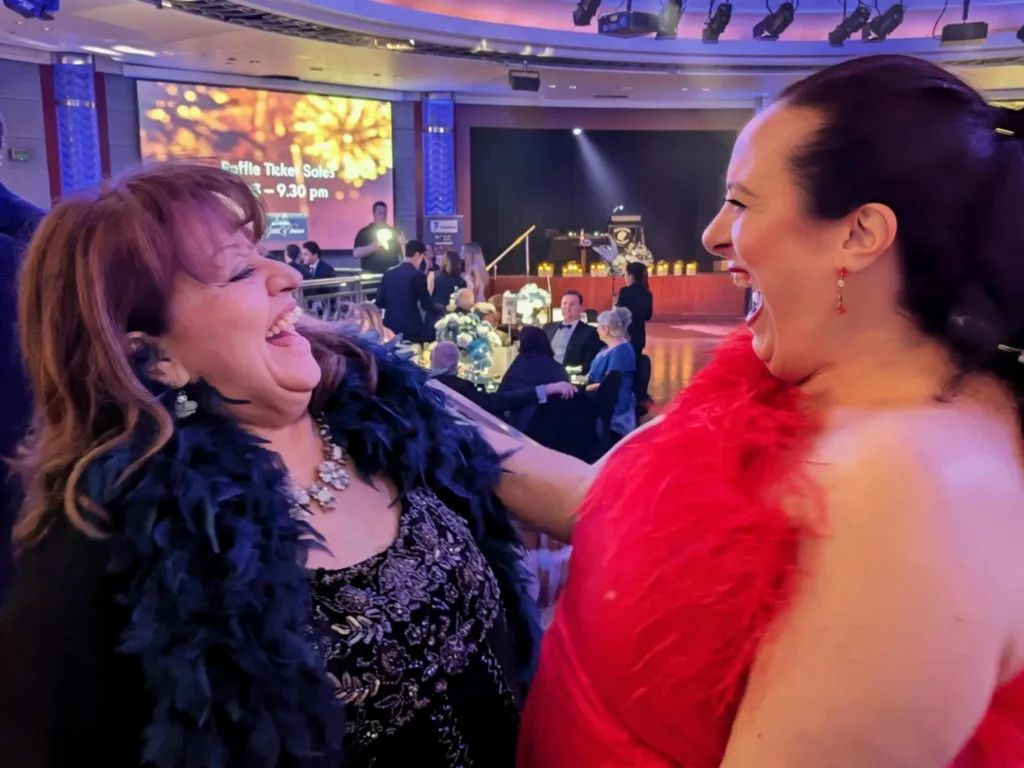
Truth be told, the youth were too busy dancing to hold up phones, however older Kazzies, Gina Gekas and Yvette Salvaris, lit up social media with their Titanic-style staircase videos.

Gina Gekas and Yvette Salvaris launched their influencer era at the gala
Gina Gekas and Yvette Salvaris launched their influencer era at the gala.

“We just wanted to make people smile,” Gina laughed. “We didn’t even plan it. We both turned up in feathers today and leopard print yesterday!”

Their antics went viral among the Kazzie crowd. “Who knows,” Yvette joked, “maybe our influencer era starts now!”

Beneath the laughter and playful posts ran a deeper current: pride and continuity, the spirit that’s defined the Kazzie story for over a century.

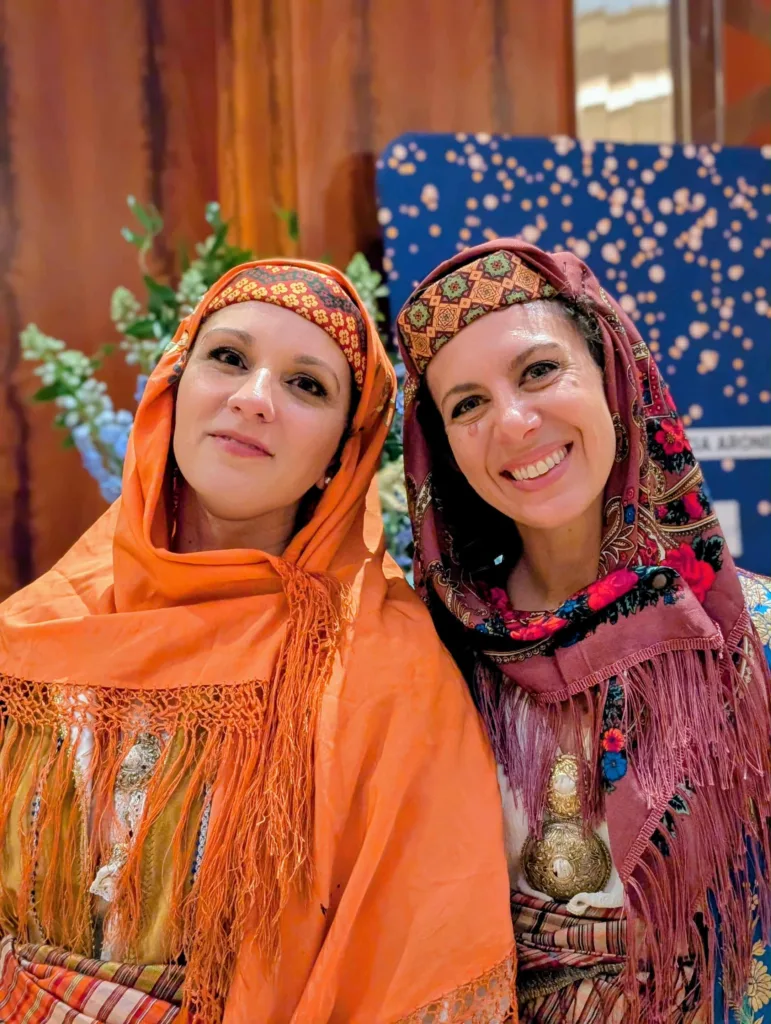
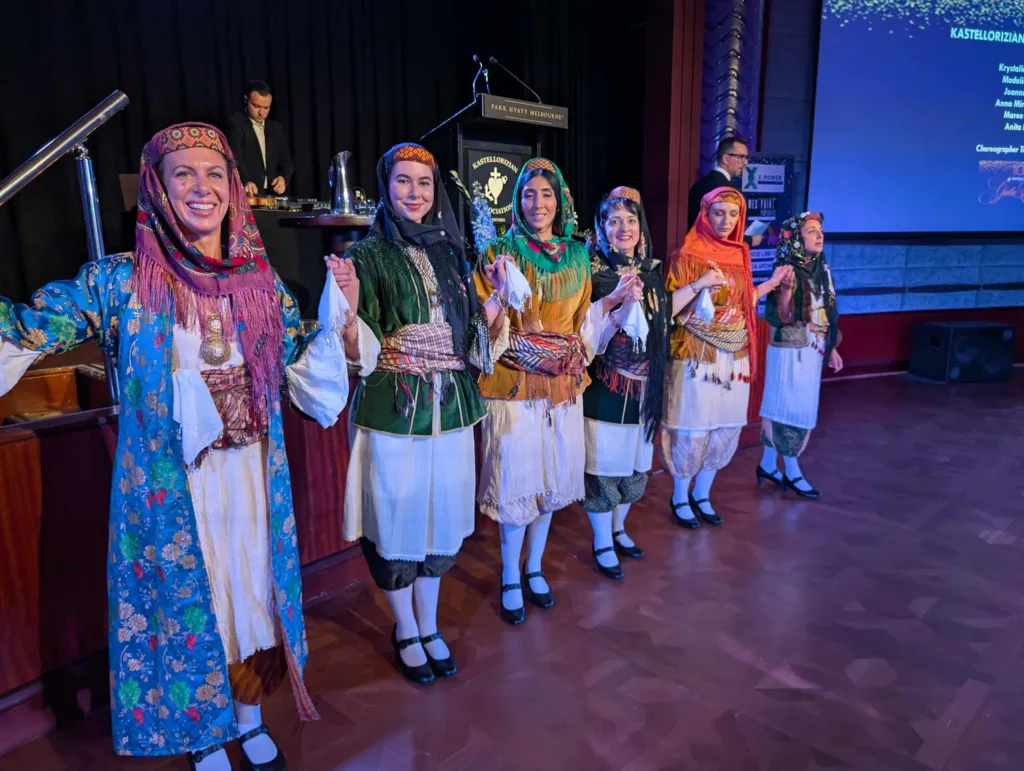
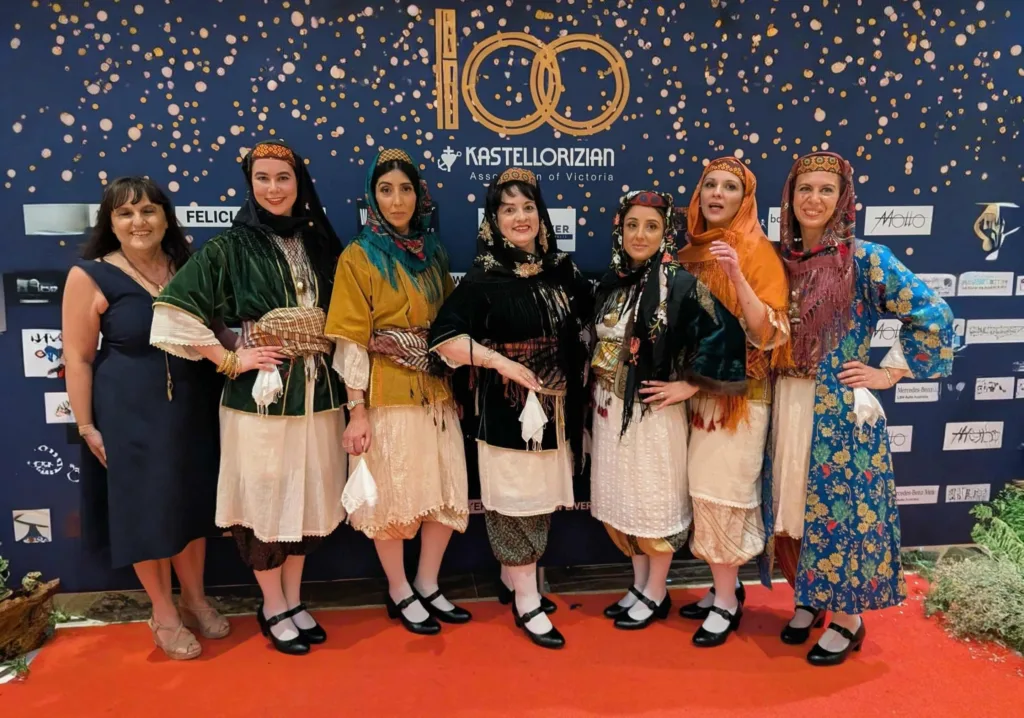
The iconic and opulent dresses of Kastellorizian dancers reflect the island’s history, economy, geography and culture.

Sydney-based lawyer Angelo Hatsatouris summed it up best: “The first Kazzie, Arthur Auguste (Athanasios Avgoustis), became an Australian citizen in 1896, before Federation. I wouldn’t be surprised if there are even sixth-generation Kazzies around. My grandfather came in 1911 with French papers, followed by my grandmother with Italian because Kastellorizo didn’t join Greece until 1948. But ethnically and culturally, we were always Greek. The island preserved its culture and faith through Ottoman, French, and Italian rule. They kept their identity even in hostile environments. That tenacity still lives in us today.”

And as laughter filled the ballroom, a final message from Andrew Liveris, one of the world’s most successful Kastellorizians, echoed through the room: “I’m proud to be a Kastellorizian, proud of all of you. Never forget where you came from.”

*All photos copyright The Greek Herald / Mary Sinanidis

WA’s Greek community honours victims of SS Empire Patrol shipwreck

0

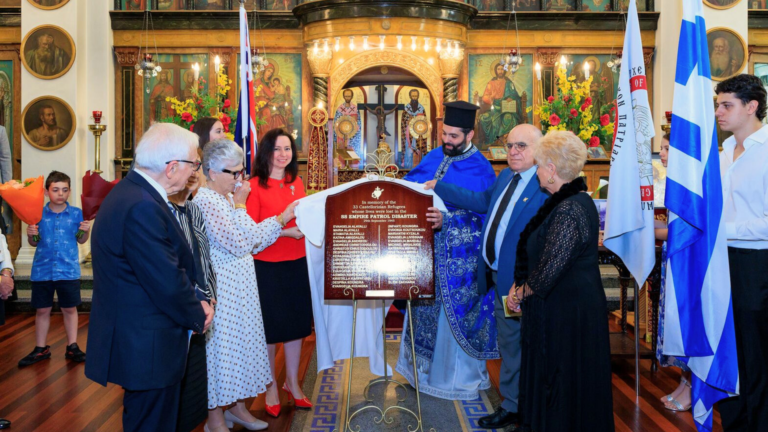
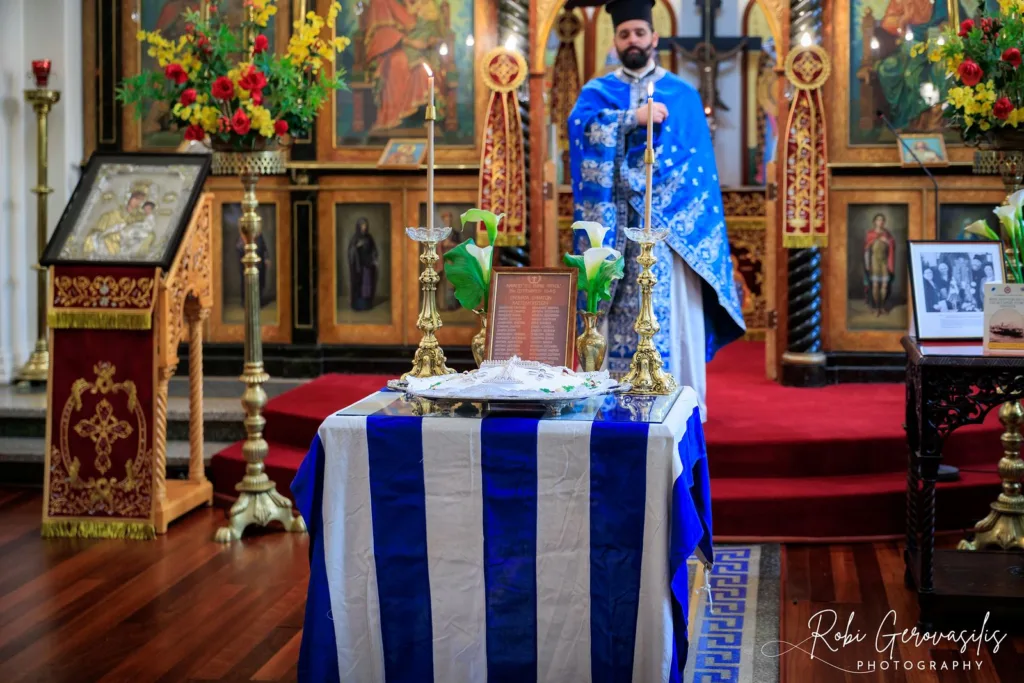
An emotional memorial was held at the Church of Saints Constantine and Helen in Northbridge, Perth, last week commemorating the victims of the SS Empire Patrol shipwreck on September 29, 1945.

The event was organised in collaboration with the Kastellorizo Brotherhood of Western Australia.

The ceremony was attended by Eleni Georgopoulou, Consul of Greece in Perth; Pavlos Afkos, President of the Greek Community of Western Australia; and Kevin Kannis, President of the Kastellorizo Brotherhood.

Four survivors of the tragedy were also present, adding a deeply personal dimension to the occasion.

The SS Empire Patrol, a British merchant ship, caught fire while returning from Port Said, Egypt, to Kastellorizo, carrying 497 Greek refugees.

Thirty-three refugees and two crew members died, and survivors returned to a homeland devastated by war.

His Eminence Archbishop Makarios of Australia sent a message read by Fr Eleftherios Gerovasilis, stating: “The story of the SS Empire Patrol is not just a chapter in the history of Kastellorizo, but a moving narrative of endurance, sacrifice, uprooting and the pain that war causes to the innocent.”

A commemorative plaque bearing the names of the 33 refugees was unveiled and will be displayed at Kastellorizo House in Mount Hawthorn. Around 250 people attended a luncheon following the service.

The Parish thanked volunteers for their support, particularly survivor Dr Pavlos Boyatzis, who contributed to historical research and the preservation of the shipwreck’s memory.

The event highlighted the resilience of the Kastellorizo community in Perth and their commitment to honouring the legacy of the SS Empire Patrol.

GVIP Storage director Chris Georgopoulos pleads not guilty over truck driver’s death

GVIP Storage Pty Ltd director Chris Georgopoulos has pleaded not guilty as the company prepares to stand trial over the 2023 death of truck driver Mario Scapin, 50, who was found unresponsive in a low-oxygen coolroom in Shepparton.

WorkSafe charged the northern Victoria fruit-growing company with two offences under the Occupational Health and Safety Act, citing failure to maintain a safe workplace.

A two-day hearing at Shepparton Magistrates’ Court heard that the company leased the coolrooms from Rendevski Transport, and that staff and contractors were warned the rooms were unsafe. Scapin was reportedly found inside with a shopping bag.

Magistrate Amina Bhai committed GVIP Storage to stand trial, saying there was sufficient evidence for a conviction. The matter will continue in November at Melbourne’s County Court.

Family members, including Scapin’s sister Angela Lanza and daughter Jessica Scapin, attended the hearing.

Lanza described it as “a very difficult day” with “lots of tears,” while Jessica said it was “very hard to comprehend” and “surreal” to learn of her father’s death.

She added the family hopes “it doesn’t happen to anyone else and no other family has to go through it.”

Source: ABC.

Bishop Themistocles’ visit to Brisbane strengthens faith and fellowship

The Parish–Community of Saint George in South Brisbane welcomed the visit of Bishop Themistocles of Nicopolis from the Patriarchate of Alexandria, who is currently in Brisbane under the pastoral care of His Grace Bishop Bartholomew of Brisbane.

Bishop Themistocles delivered a special lecture on “The Last Times,” attended by Bishop Bartholomew and Father Athanasios Athanasiadis.

During his address, Bishop Themistocles encouraged the faithful to remain steadfast in their faith and love for Christ during difficult times, reminding them that Christians should live not in fear but in hope, keeping their focus on salvation.

He expressed heartfelt thanks to His Eminence Archbishop Makarios of Australia for his blessing to visit Queensland and to Bishop Bartholomew for hosting the event.

Concluding the evening, Bishop Bartholomew thanked Bishop Themistocles for his uplifting message and urging the congregation “not to focus on the ‘last times,’ but rather on our relationship with Christ and with our fellow human beings.”

Contemporary Australian art finds a home among ancient ruins in Cyprus

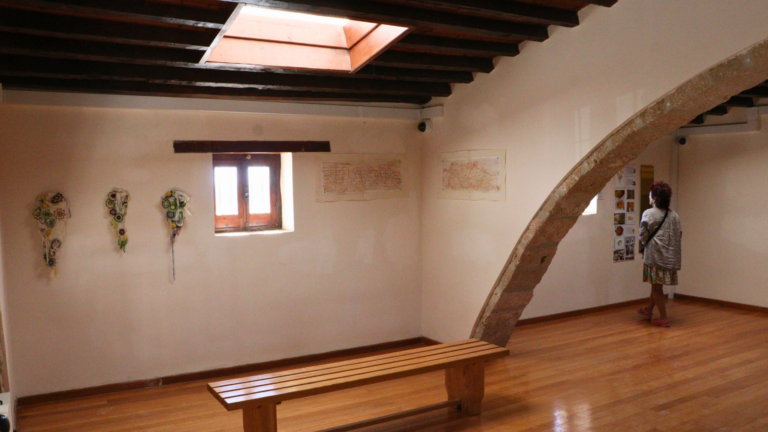
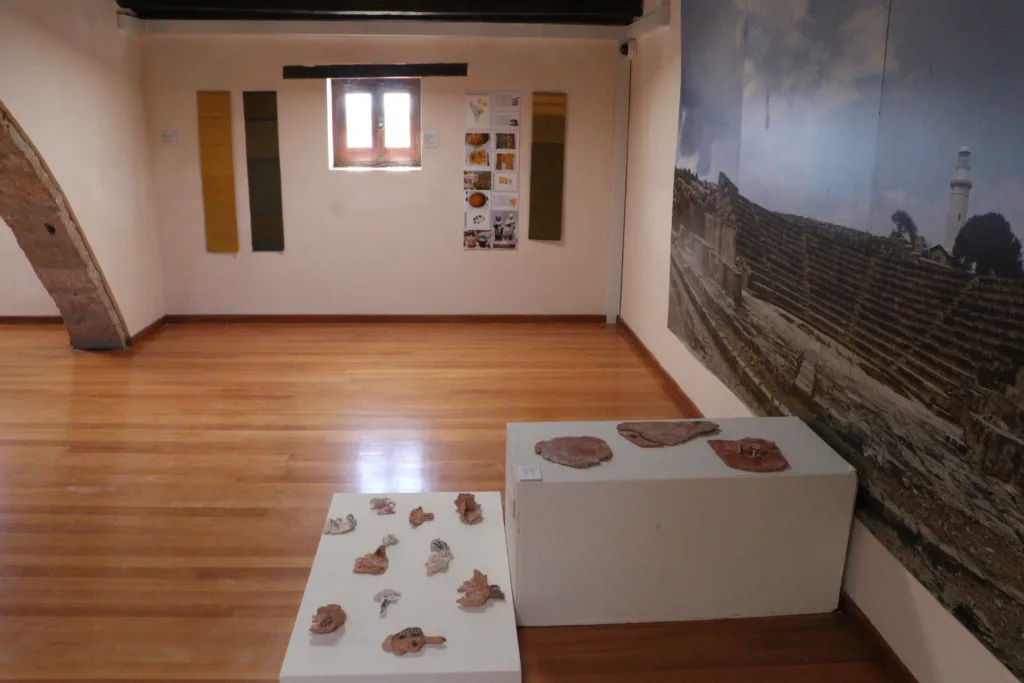
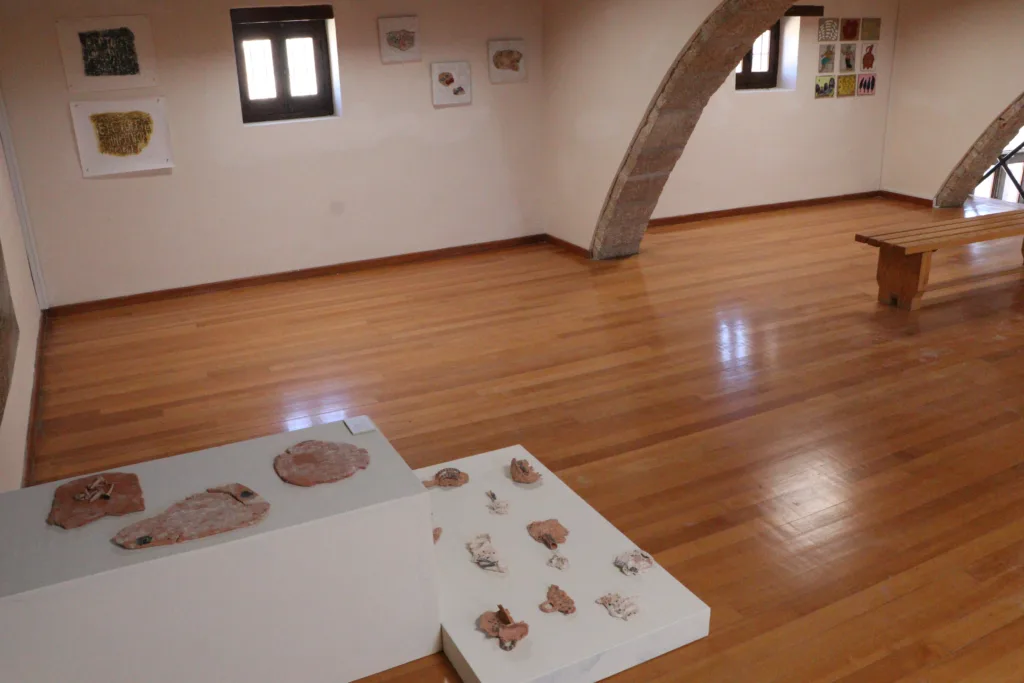
The visitors centre at the Archaeological Park at Paphos in Cyprus is swarming with tourists. It sits within a converted carob warehouse of the 18th century; and it is the last place you would expect to see contemporary art. Especially art from Australia. But it is currently home for works by nine Australian artists.

The exhibition Journeys to Cyprus is on in Paphos in October and is presented on behalf of the Australian High Commission in Nicosia and the Department of Antiquities of Cyprus. 

The exhibition presents creations by Australian artists who worked in 2023 at the archaeological site of the ancient theatre of Nea Paphos in Cyprus, part of the World Heritage listed Archaeological Park of Paphos. 

Archaeologists from the University of Sydney have been excavating at the site for three decades painstakingly reconstructing the way the ancient Hellenistic and Roman theatre was used for more than 600 years in antiquity as well as the complex legacy of medieval farms and buildings over the site. 

In that time, Australian artists have worked alongside archaeologists to find creative ways of engaging with Cyprus’ rich archaeological past. 

The idea of Professor Diana Wood Conroy, formerly of the University of Wollongong, on the integration of artists into the archaeological work has successfully resulted in exhibitions in Sydney, Canberra and Wollongong, as well as Cyprus.

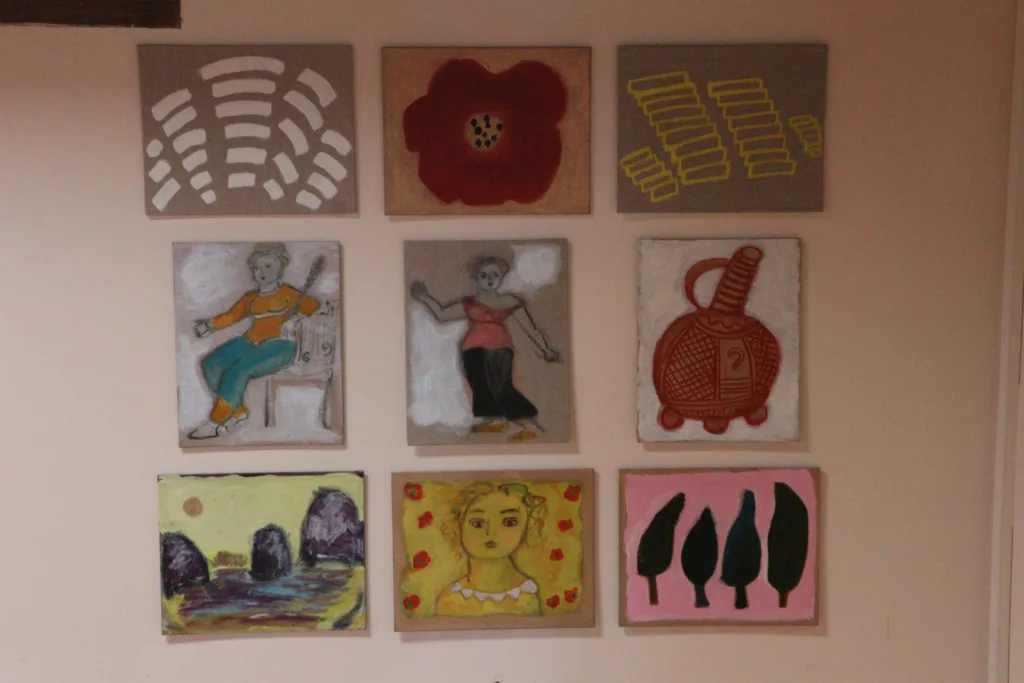
Journeys to Cyprus features works in ceramic, on paper and canvas, tapestries, figurines and video installations. 

It includes works by Madeline Kelly and Angela Brennan, both recent finalists in the 2025 Archibald Prize, as well as beautiful woven and dyed tapestries by Kay Lawrence; a collage work by Janis Jefferies; a ceramic installation by Penny Harris and wool and textile works by Agnieszka Golda. 

Koraly Dimitriadis’ short film of her spoken word piece Yiayia mou which was filmed at the ancient theatre is also featured in the exhibition. 

Journeys to Cyprus explores the rich connections between Australia and Cyprus through creative works inspired by ancient performers on the theatre, the process of archaeological investigations, Cypriot traditional arts, and by the goddess Aphrodite herself.

The exhibition is on in Paphos until 15 October.

Melbourne University Greek Association lecture explores ethnicity in antiquity 

Ancient Greek studies are a cornerstone of Greek culture and many spend hours poring over the details of who the Ancient Greeks were and what they accomplished. 

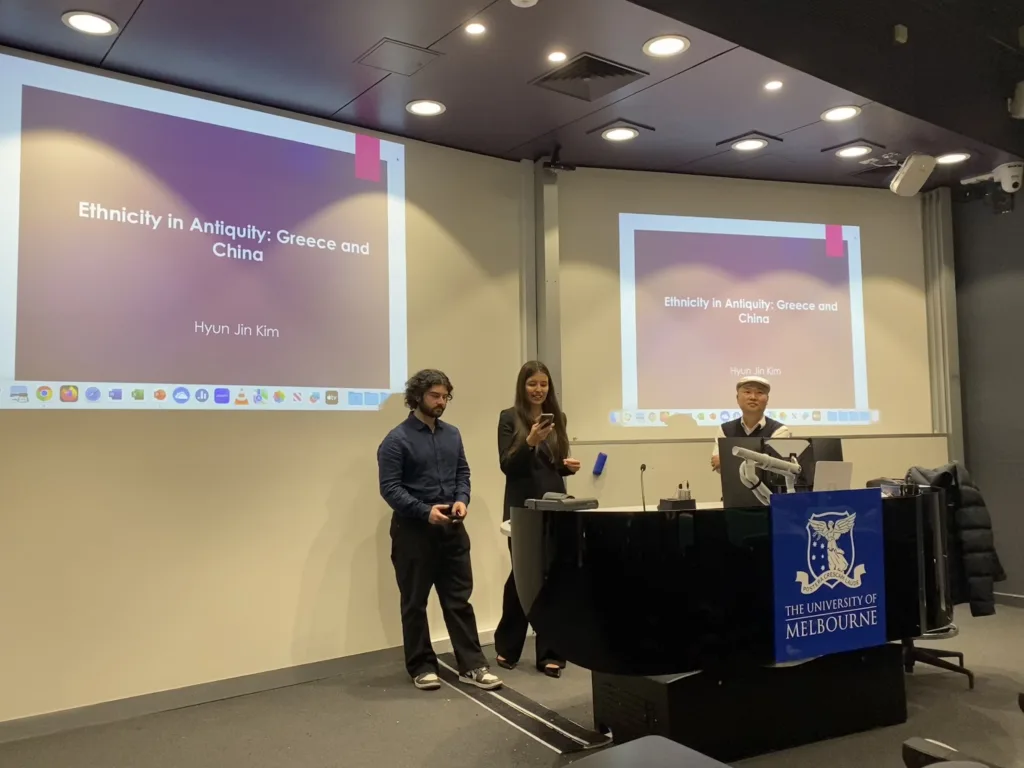
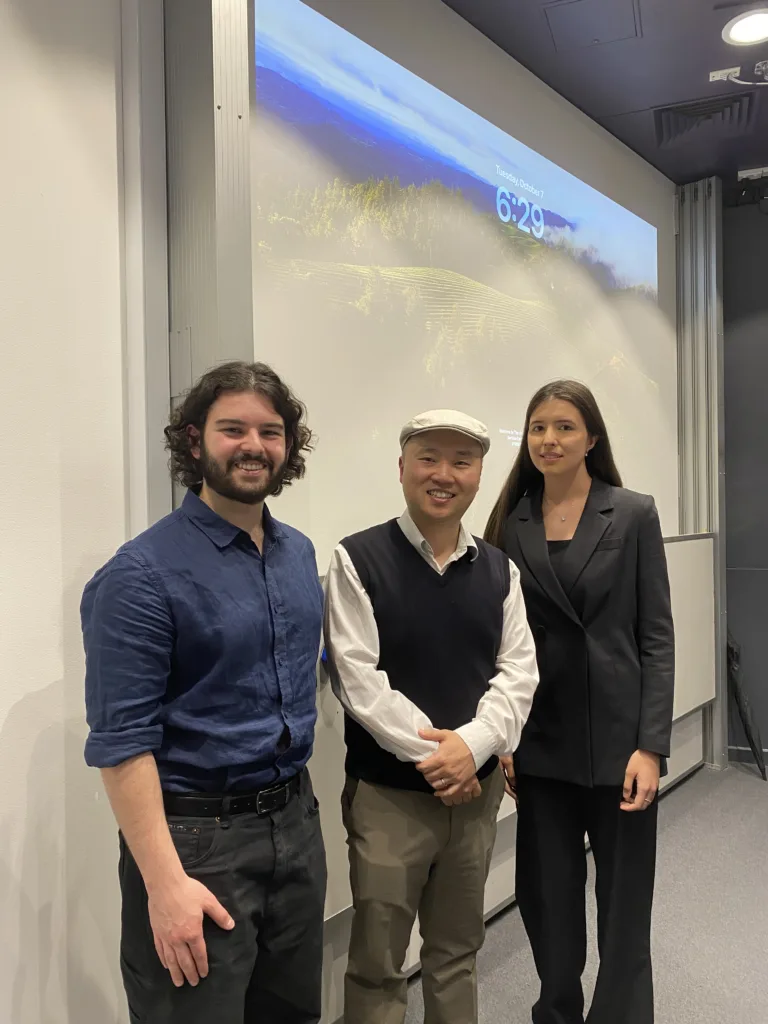
Following a series of successful lectures held in 2024, the Melbourne University Greek Association (MUnGA) invited their members to attend a lecture by Dr Hyun Jin Kim on Tuesday, October 7. 

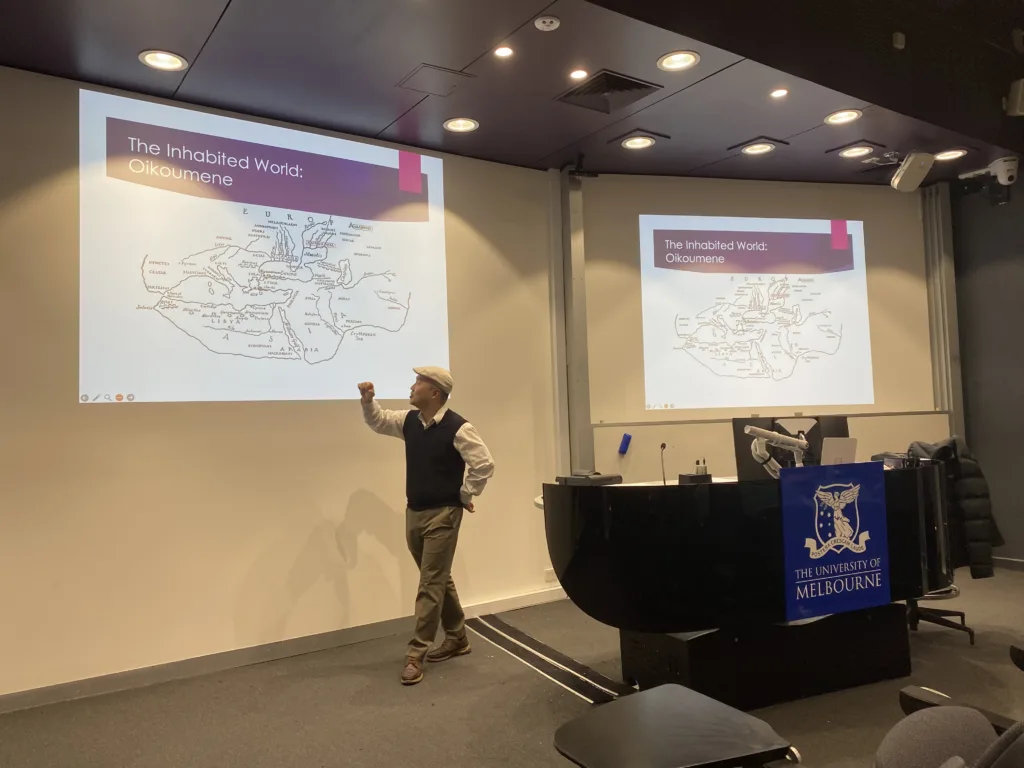
The lecture was titled Ethnicity in Antiquity: Greece and China and explored the representations of foreigners in the writings of Herodotus and Sima Qian. 

Dr Kim studied at the University of Oxford and the University of Sydney, and is currently a Professor in Classics at the University of Melbourne and a Fellow of the Australian Academy of Humanities. 

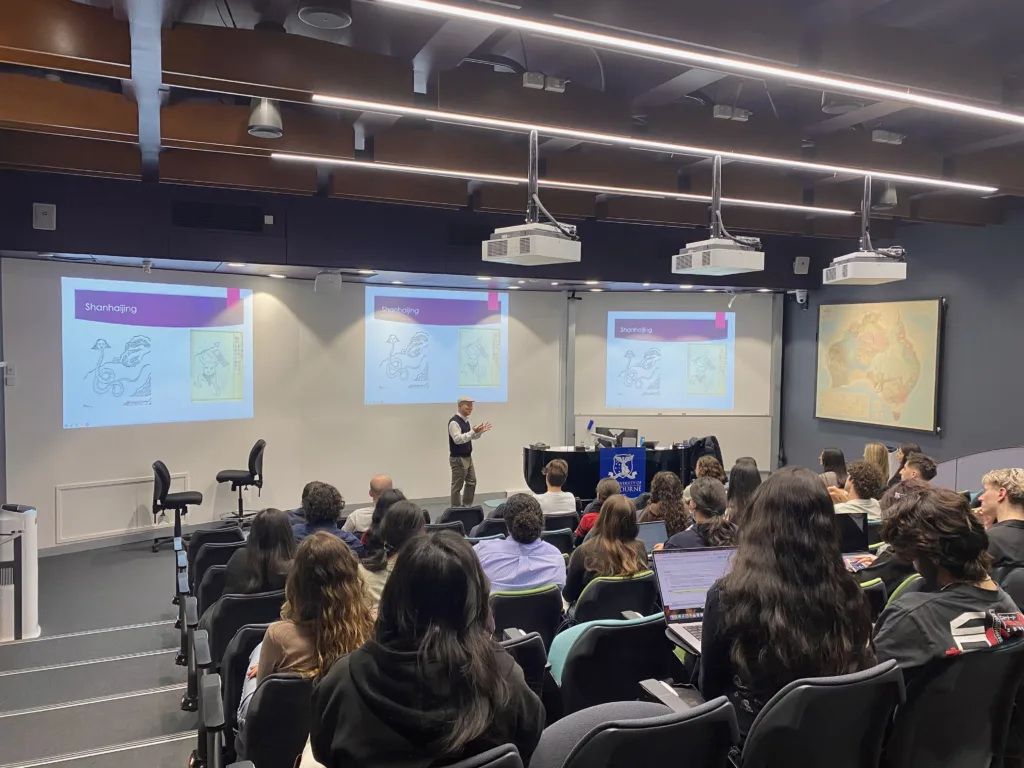
With a deep passion for the topic, Dr Kim carefully dissected the niche aspects of ethnography in the Ancient Greek and Chinese worlds. By comparing these two ancient civilisations, he highlighted the perceptions the Ancient Greeks and Chinese had of their own identities, as well as their views of the people around them.

Speaking to Dr Kim, he said he chose this lecture topic because “there are widespread misconceptions about Greek attitudes toward non-Greeks both among the general public and also in academia.” 

He told The Greek Herald, “Some have argued erroneously that the ancient Greeks invented racism. Nothing could be further from the truth. This talk hopefully has demonstrated that the ancient Greeks were among the most open and cosmopolitan of ancient peoples.” 

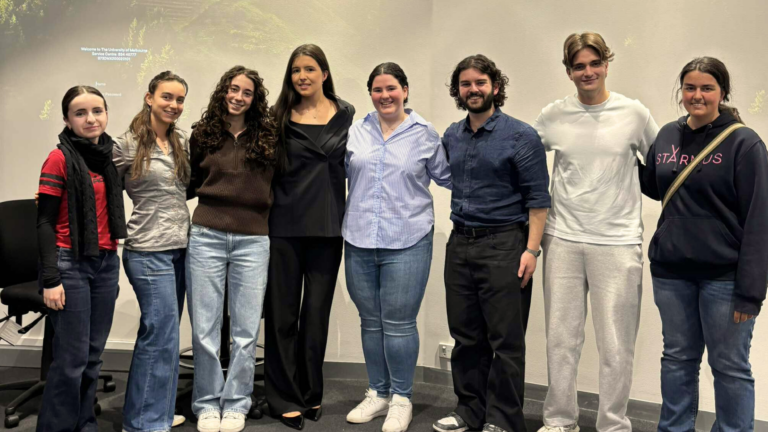
30 attendees at the University of Melbourne tuned in to better their understanding and knowledge of Greece and China in antiquity. 

This was the first MUnGA lecture Arthur Papas has attended and he appreciated the chance to learn about this part of Ancient Greek history. He said, “Not knowing much about the topic, it was an engrossing lecture.” 

The lecture was organised by newly appointed MUnGA Co-Presidents Christina Damigos and Athanasios Pirpiris. They spoke with The Greek Herald about their experience organising the lecture and learning from Dr Kim. 

Christina said, “Dr Kim’s lecture highlights the importance of comparative studies and cross-cultural understanding. It was incredible to gain insight into the complexity of ethnicity, the spread of Hellenism, empires, and geopolitics during antiquity.”

Athanasios added, “We enjoy hosting events such as this lecture as they not only bring Greek youth together but also provide valuable educational insights into our rich history and culture.” 

Considering MUnGA as a space for young Greek Australians to gather, Athanasios said the new committee is striving to “create a welcoming community for Greek youth in universities, promoting a sense of belonging and connection.”

University student clubs hosting these lectures unite young Greek Australians and provide a space to learn about Ancient Greek history from experts in the field. 

‘Greece is for the brave’: Why one man couldn’t stay in Australia despite its comforts

John first went to Australia in his mid-twenties in the 1990s with his Greek Australian wife, whom he met while she was on a working holiday in Greece. 

They returned to Greece a few years later because, as John tells me: “The first two months seemed okay but after that, it became unbearable. Even though I was in a large capital city, it was dead. At 8pm it seemed like everyone was in bed! We’d go to a petrol station to drink coffee! I thought, ‘No way will I live here’.”

John adds that he found Australia to be “primarily a consumerist, materialist society.” He says this contrasts with his philosophy: “Life, not money. Friends to go out with in the evenings as we do in Greece, without having to make plans weeks in advance.”

Originally from a working-class suburb in Athens, John stresses that while finishing his degree in Engineering at a public university in Athens, he lived at home but worked as a waiter and in construction, managing to afford trips abroad “to Europe, Africa, South America and the USA, etc.”

He says, “I saw how other people lived and when they’d ask me where I was from and I’d say ‘Greece’, they’d say, ‘Wow, a Greek. You’re from a huge civilisation’.”

Then, after finishing his degree and military service, he practised his profession in Greece, making good money and even managing to pay off a new car quickly.

“In Australia, though, my wife and I tried to open up a small food business, but we never had any money to go out and enjoy ourselves! That also led us to deciding to go back to Greece again a few years later, with only 500 dollars in our pockets,” he says.

John then describes how it took the couple only a few years to set up their lives in Greece again. “I went back to my profession and my wife worked in a tourist shop. We eventually bought a small block of land, then built a house, had two children – and went back to Australia on trips to visit my in-laws.”

But alas, almost 20 years later, when the Greek crisis hit, the couple, with their then 15- and 16-year-old children, returned to Australia.

I asked him, “Why did you return to Australia since you disliked life there so much?”

He responded: “When the Greek crisis hit, we decided to go back to Australia for our kids’ education, for them to learn better English, plus my wife was homesick. I thought that the education system would be better in Australia, but it wasn’t. Our children encountered bullying because they didn’t seem to fit the ‘woke agenda’ and expressed their views.”

He adds, “Within this culture of ‘wokeness’, I even felt pressure not to say Merry Christmas, but rather ‘Happy Holidays’. Yet when it came to me finding work in my field, I had the door shut in my face. You see, I was aged 50 then, and ‘too old’.”

“It took me almost two years to get my engineer’s licence recognised in Australia. And even Greek Australians who promised to help me find work then ignored me when I called them. I had to work as soon as possible, so I attended a training college and completed a Certificate in Aged Care and worked in this field, which I enjoyed, but it made little money,” he says.

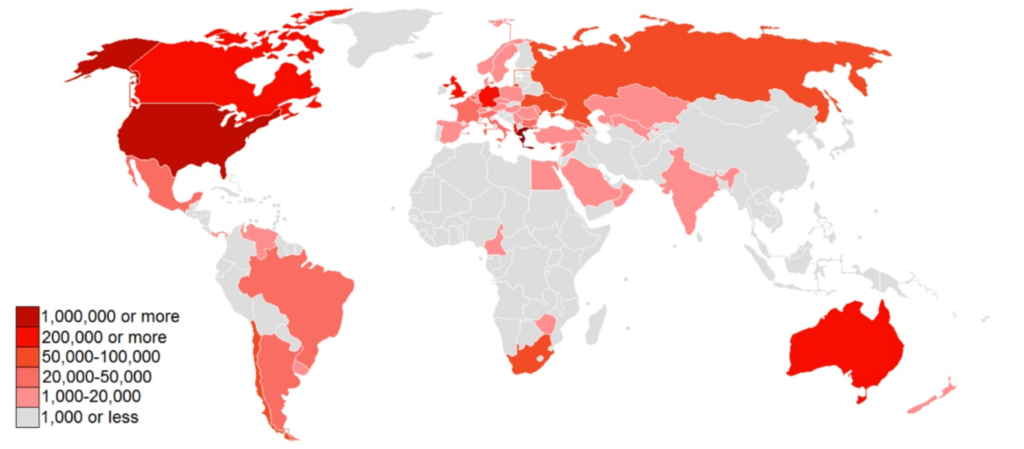
Fifty countries with the largest Greek diaspora.

When asked about the Greek Australian community, John reflects that he found the first generation warm and welcoming, while the second generation seemed to be balancing between two cultures. He observed that their lifestyles and priorities were often shaped by the fast pace of Australian life, leaving less room for the kind of spontaneous social connections he was used to in Greece.

He notes that many people, regardless of background, appear to feel social and financial pressure to maintain a certain standard of living, which can lead to constant work and limited leisure time. For John, this seemed tied to what he perceives as a highly consumer-driven system that keeps individuals focused on earning and spending, often at the expense of relaxation and community life.

He also reflects critically on aspects of Australia’s welfare structure, suggesting that while it provides important support, it may inadvertently create dependency or encourage people to make financial choices based on benefits rather than long-term stability. Still, he is quick to acknowledge that these are complex social issues rather than individual failings.

He then frowns and sighs: “Look, I like Australia – like I like Paris, Rome and New York – for holidays. I couldn’t live there though. And I don’t criticise everything about Australia. Public buildings, parks, landscaping, schools and roads, and bike paths are good, but… houses are cheaply built.”

As our meeting comes to an end, John, a romantic at heart, says: “I have no regrets though. I did it for my wife because I love her.”

Reverting to form, he adds: “The second time in Australia saw us return to Greece again after five years. Even if they gave me 10 million dollars, I wouldn’t stay in Australia. Life is short – you only live once – and here I see the Greek sea, and the sun doesn’t burn! I’m blessed to live in Greece even though it is hard here. You see, Greece is for the brave.”