At 24, George Stamboulidis was moving fast.
Melbourne-raised, forged in the Greek-Melburnian football heartlands of Northcote and Heidelberg, and sharpened at Yale where he studied economics while playing at an elite level, his trajectory was clear. The path was moving upward, but then he pressed pause.
“I had to decide: do I leave Greece, or stay and do my military service?” he says, regarding his professional career in the country. “But then I thought, ‘when else am I going to get this chance?’”
The decision to serve as a conscript came at a cost. He had just signed his first professional contract and was pushing toward his debut in Greece’s second division.
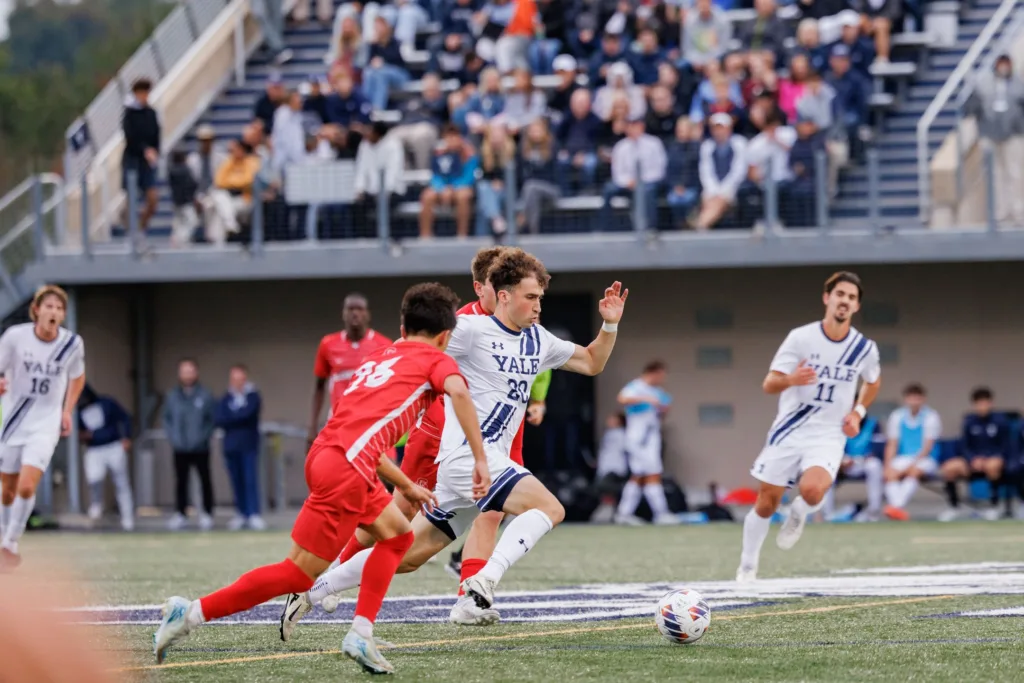
Momentum like that doesn’t wait. “As a footballer, the timing was terrible,” he says plainly. “For my football, it didn’t make sense on paper, but I did it anyway.”
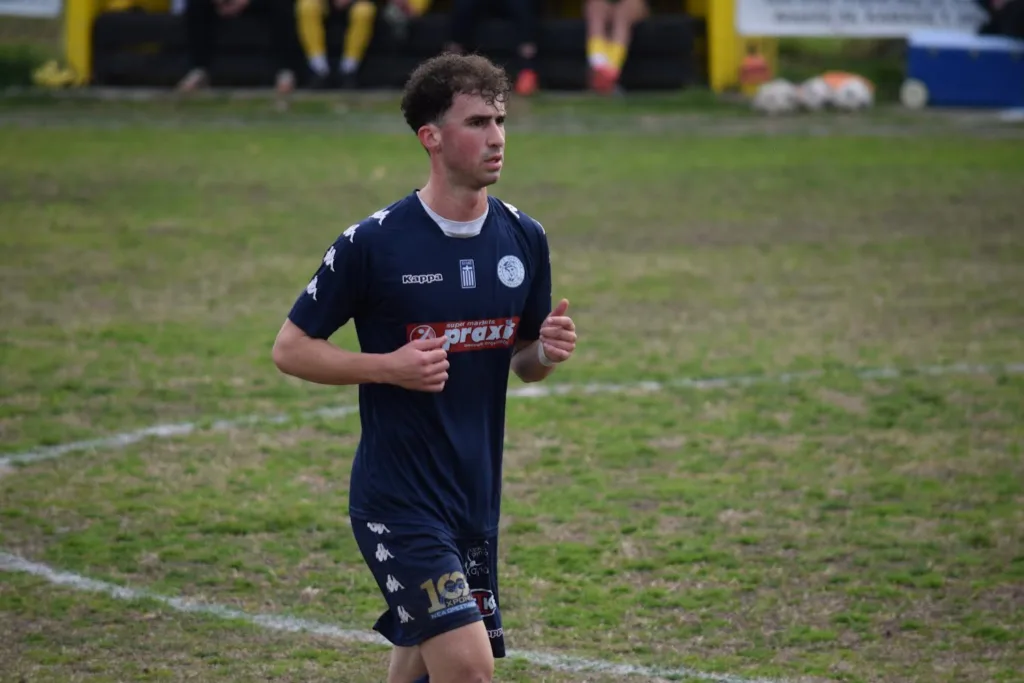
As a diaspora Greek, his service lasted just three months, far shorter than the standard nine to 12 months most Greek conscripts complete. Even so, it was enough to significantly disrupt his first professional season of football in Greece.
Sent to Grevena
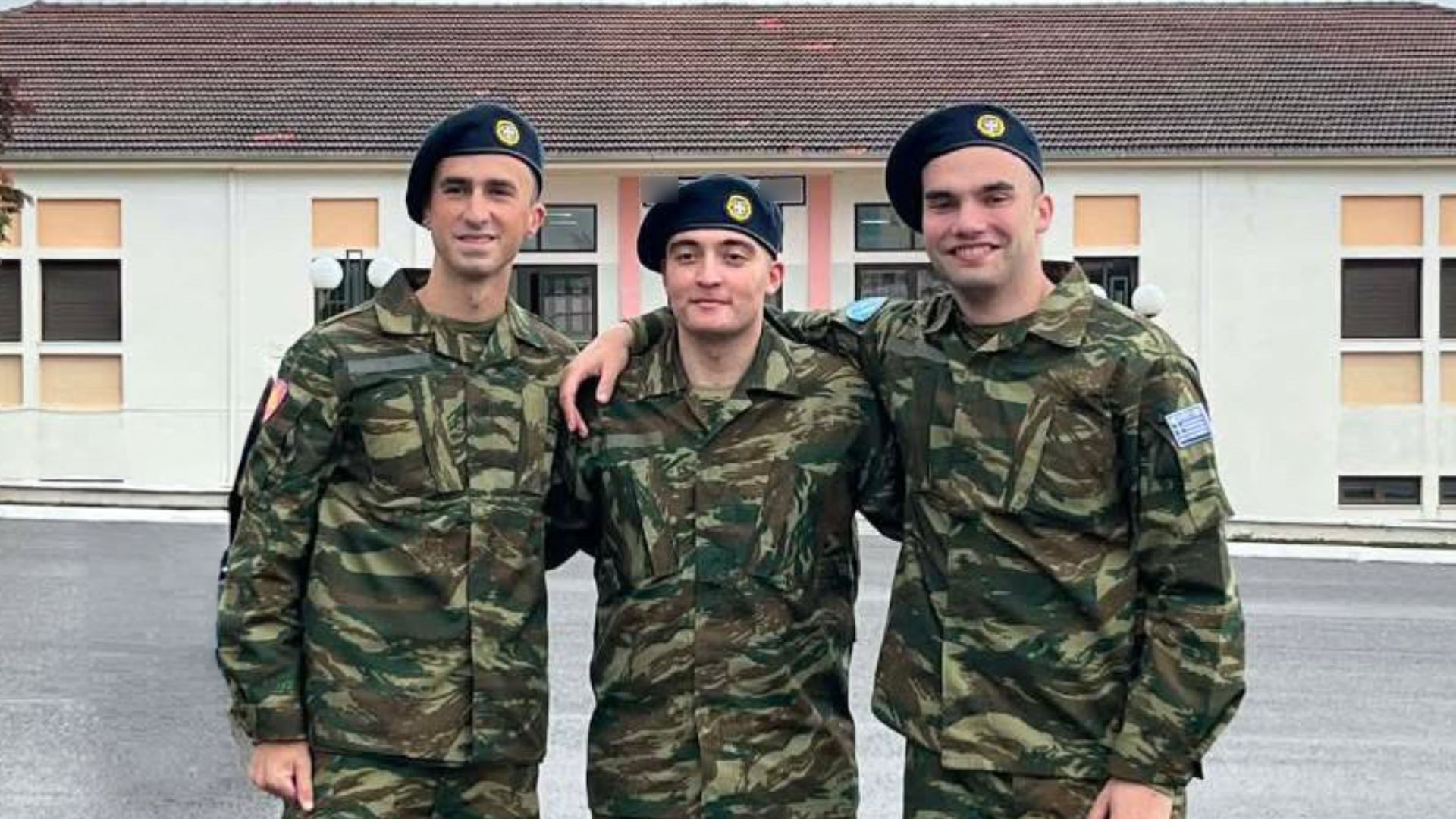
He was sent north, to Grevena. Mountains, cold mornings, and a base that runs on routine.
“Sixteen beds in a room. Old, squeaky bunks,” he says. “But that’s the point. You’re nobody special.”
Days started at 5:30am. Shaving was mandatory. Duties rotated: guard posts, patrols, skopia (guard duty)at the central gate, checking who came in, who left, and when.
“That camaraderie, that was the highlight,” he says. “You realise quickly, everyone’s in it together.”
It showed up in small, unplanned ways: coffees on rare breaks with guys from Thessaloniki, late conversations in the bunk with an architect, a finance grad, a football fanatic, people he says he’d “100% be friends with outside.” In a place designed to push you, those connections stuck.
From ‘Aussie’ to patriotis
Among mostly northern Greek recruits, George stood out.
“Everyone kept asking me, ‘What are you doing here?’” he laughs. “When they hear Australia, they picture something completely different.”
At first, there was curiosity and a bit of skepticism “but once they got to know me, I wasn’t the Aussie anymore,” he says. “I was a patriotis (patriot).”
Football helped, but so did time that allowed him to forge new connections, meaningful friendships.
On his first day on the base, George struck up a conversation with a stranger. Within minutes, they realised they were third cousins.
“I’d met him once as a kid in my dad’s village in Florina,” he says. “Next thing we’re on a four-way call, me, him, our dads, Greece to Melbourne. It was unbelievable.”
Weeks later, it happened again. Same surname. Another connection. Another branch of family rediscovered.
“You don’t expect to find family in a barracks,” he says. “But somehow, I did. Twice.”
The oath
The orkomosia (swearing-in) landed heavier than he expected. Standing with other soldiers, all in freshly pressed uniforms, uttering the same oath pledged through different periods of time in Greece’s history.
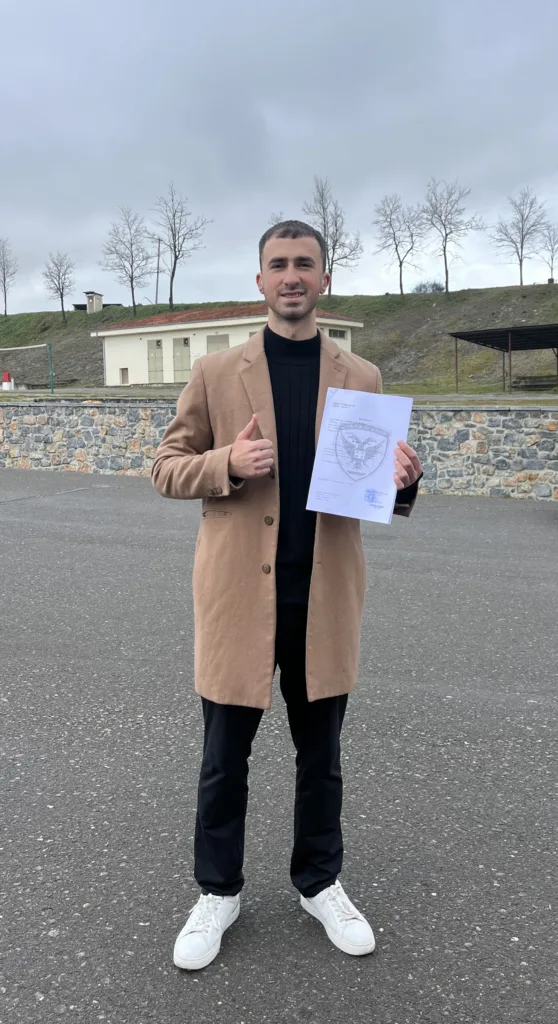
“That was the proudest I’ve ever felt,” he says. “I’m the first since my grandfather to serve.”
Unlike the other soldiers, my family wasn’t there but it didn’t feel like absence. “I felt them with me.”
He also felt proud to be serving in an army that shared a history with Australia through Anzac connections.
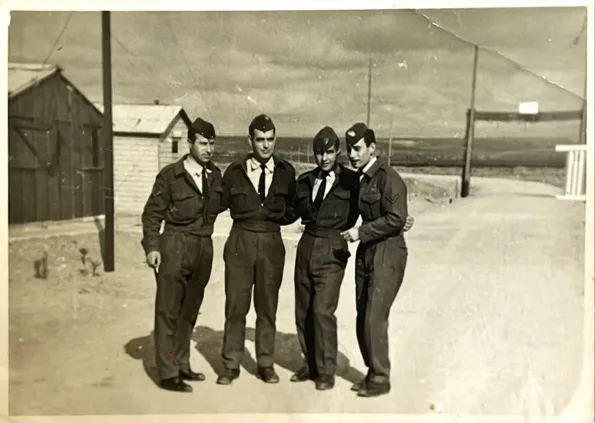
“Greece and Australia have always fought side by side,” he says.
His mother’s side of the family are from Krithia, located at the Gallipoli peninsula, where Australian soldiers fought the hopeless Second Battle of Krithia, resulting in costly assaults by the Anzacs as they moved to capture the village of Krithia and the nearby hill of Achi Baba.
“I have been aware of this shared history from a young age and every year my mother lays a wreath at the Australian Hellenic Memorial at the foot of the Shrine,” he says.
Challenges and surprises
The hardest part wasn’t the discipline but staying match fit.
“I thought we’d be exercising constantly,” he says. “But proper training? That was on me.”
Between the early morning wakeups and rotating duties, he squeezed training sessions into limited leave, often just a few hours in the afternoon to train, eat, wash, reset.
“Balancing that with the army, that was the real challenge.”
The surprise? “The food was good. Proper Greek meals. Fasolada, yiouvarlakia…you weren’t going to go hungry,” George says.
Back, but not the same
Now back in Melbourne, George is working in fintech and playing locally, with plans to return to Greece for the next season for the next step in his football journey. (Just watch this space.)
On paper, the trajectory resumes but something has shifted.
“It grounded me,” he says. “It connected me to my roots in a way nothing else has.”
For Greek Australians considering the same path, he doesn’t sugar-coat it.
“Be ready to step out of your comfort zone,” he says. “It’s not easy but it’s well worth it.”
Because somewhere between the early wake-ups, the guard posts, and the snores of sixteen men in one room, the question of ‘why am I here?’ quietly flips into something else: ‘I’m glad I came.’
