Home Blog Page 212

The man for all jobs: How a Greek migrant turned setbacks into 7-figure success

0

When Christof Mantzanas stepped off the plane in Melbourne on 10 March 2015, he had just $1,000 in his pocket, no plan beyond three months of travel, and very little English.

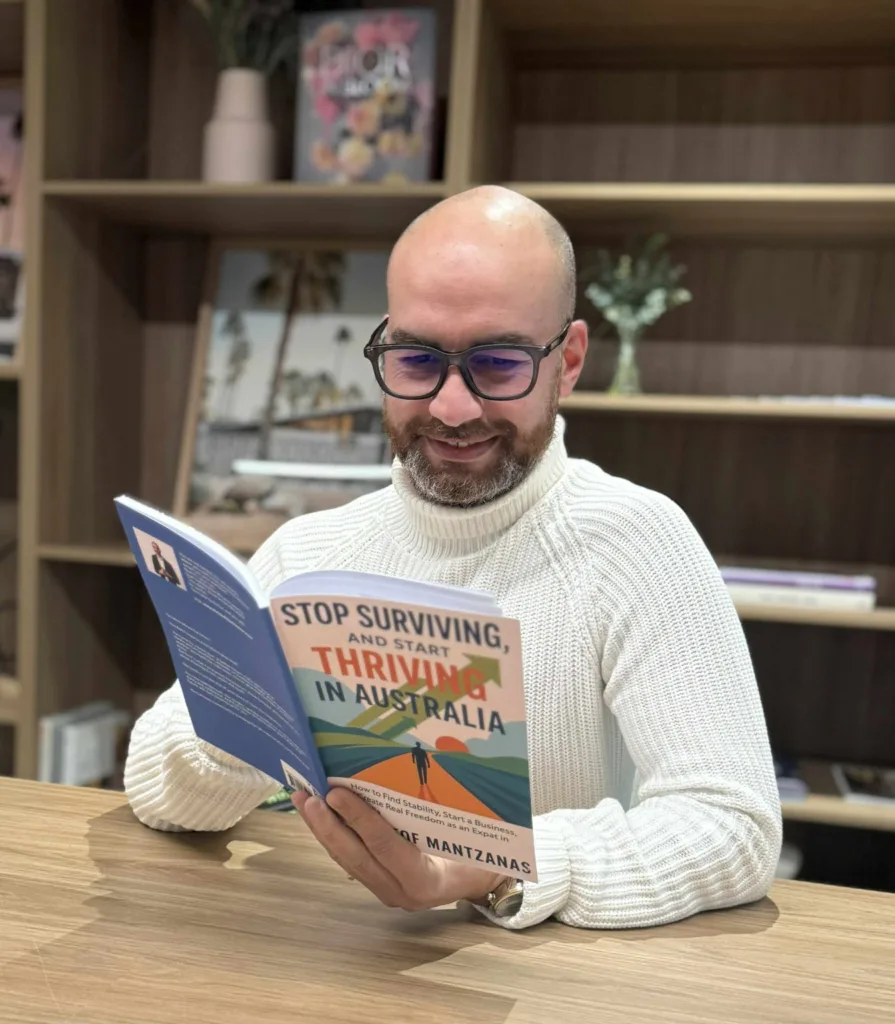
He came with high hopes but could never have imagined that a decade later he would be the founder of multiple seven-figure businesses, a property investor, a mentor to other migrants, and the recent author of Stop Surviving and Start Thriving in Australia.

“It’s a book I wish I had when I first started in Australia, a manual for success,” Christof says. “It offers lessons, tools and strategies for being successful. What I learnt in 10 years is in this book, as a blueprint to help others.”
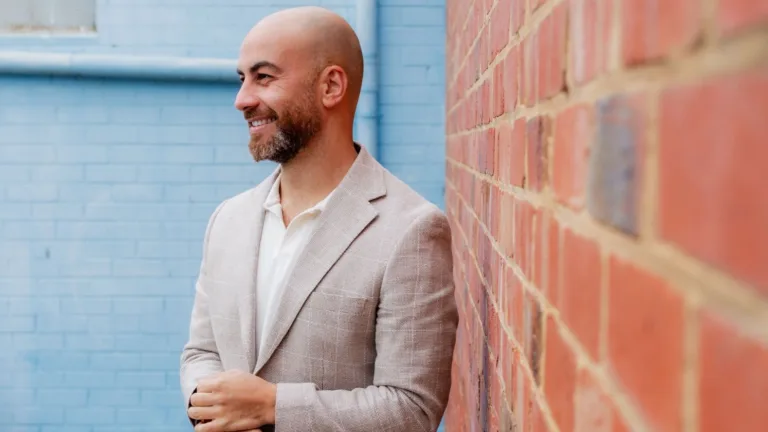
His success was not born of luck, but of persistence and reinvention. Raised in Agrinio, a Greek town left behind after the collapse of the tobacco trade, Mantzanas learned resilience early. Much like the Sinatra song That’s Life, he has been “a puppet, a pauper, a pirate, a poet, a pawn and a king.”

“My best friend said, ‘come and try life in Australia and see how it goes’. I came as a tourist, and here I am still, 10 years later,” he recalls.

Trained in physical education, he took whatever work he could find, starting as a barista at Nikos Cakes in Oakleigh, where he later became manager. His first big leap came in 2018 when he opened a café in Bentleigh. It ended in failure, leaving him $100,000 in debt.

“To pay it back, I worked three jobs, driving buses in Melbourne, serving coffees in the morning, and waiting tables at night,” he says.

The turning point came during COVID-19 when he read Robert Kiyosaki’s bestseller Rich Dad, Poor Dad.

“This book switched my mindset,” Christof says. “I sold my Mercedes, I sold my PlayStation, and invested in Kiyosaki’s six-month course that I finished in three weeks. Within months I bought my first property, then a second one 10 months later. In a year I had two properties.”

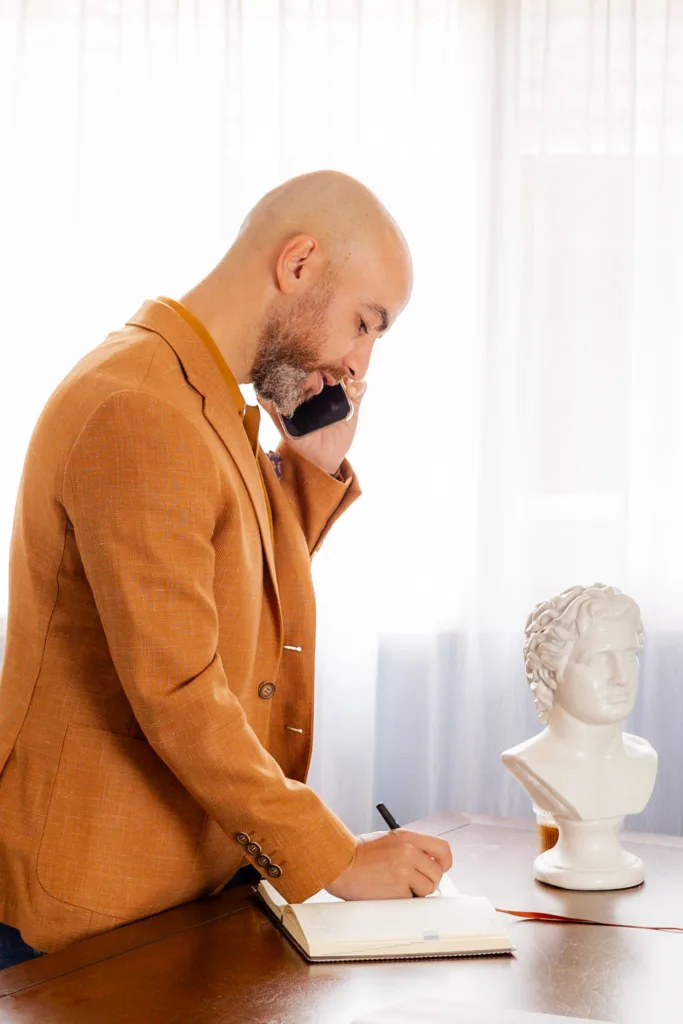
When he lost his bus-driving job in 2021, fear pushed him to start his own cleaning business. Within 18 months it was a seven-figure company. He reinvested the profits to expand into gardening and home maintenance services, now working with 35 aged care providers. By 2022, he was advertising in the Greek Australian press as “a man for all jobs.”
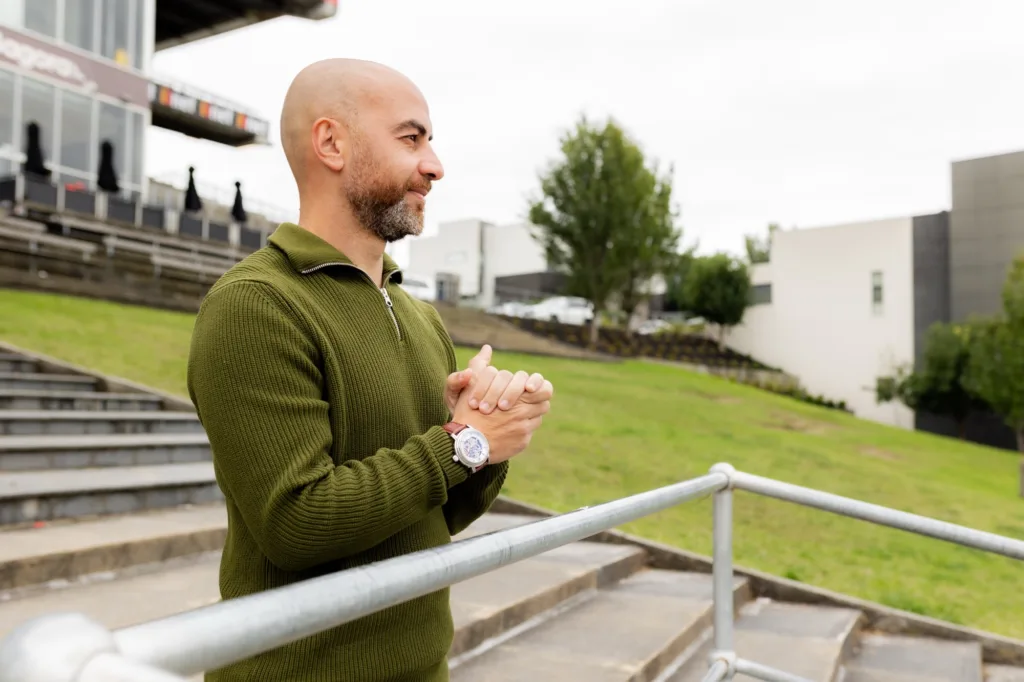
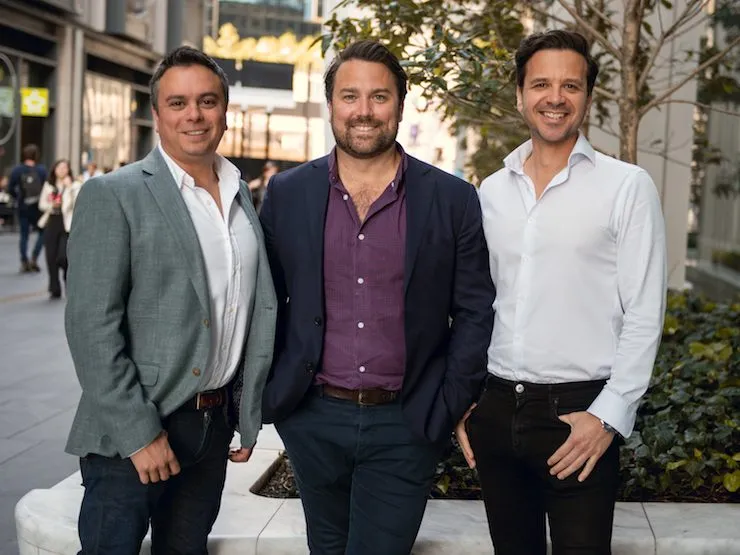
Photo: Biunca Guilfoyle.

Today, Christof also offers business coaching, with a philosophy rooted in self-investment.

“The number one key is to invest money in yourself,” he explains. “When you buy a book or do a course, you’re not wasting money, you’re gaining knowledge. Sometimes it pays off immediately, sometimes years later. But without that risk, you can’t grow. If you want uncommon results, you need to do uncommon things.”

Risk-taking, he says, has become a “personality trait”.

“In the past, I was afraid of what would happen with my money. My first attempt left me $100,000 in debt. Today I take bigger risks, but with knowledge and mentors my risk is only five percent. I use other people’s money to grow, but with strategies and assets that protect me.”

Would his methods work back in Greece? Christof is reflective.

“The system there makes it much harder: bureaucracy, costs, delays. But with what I know now, yes, I could succeed anywhere. Once you have the steps, you can build a business anywhere,” he says.

Mentorship has become central to his work. He recalls one mentee from Bangladesh who was overwhelmed juggling two jobs while supporting family back home.

“Through mentorship, I helped him change his mindset. He started his own cleaning business and completely transformed his life. For me, seeing him succeed brought me fulfillment,” he says.
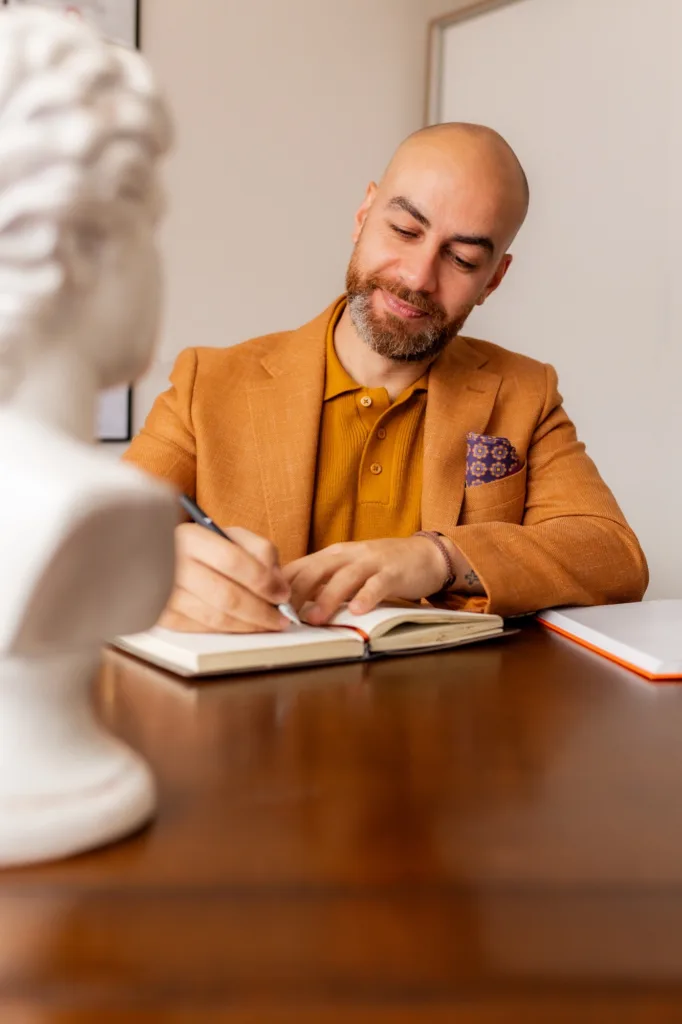
Photo: Biunca Guilfoyle.

Now, a decade on, Christof speaks to The Greek Herald on a drizzly day, driving to collect a new business car. The future looks bright as he reflects on the journey that began with a tourist visa and a single suitcase.

“For me, survival was never about just getting by. It was about creating a life worth living. If I can do it, arriving with nothing, then anyone can,” he explains.
Jimmy’s Kitchen brings authentic Greek hospitality to The Rocks

0

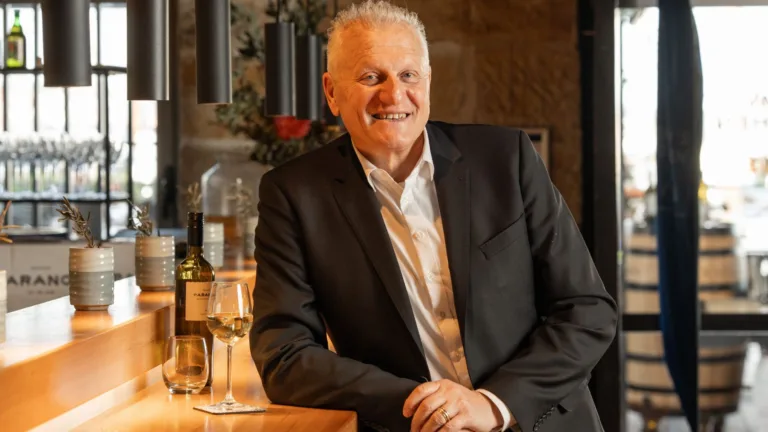
Sydney diners can now experience the warmth, flavour, and soul of a traditional Greek taverna without the flight to Greece. Opening its doors in The Rocks, Jimmy’s Kitchenis an intimate, indoor-only dining destination that invites guests to escape into a world of heritage, hospitality, and heartfelt food.

Jimmy’s Kitchen is deliberately immersive – a sensory journey designed to transport you straight to a hillside taverna in Greece.

With sandstone walls, royal blue and gold accents, and just 22 seats, the space feels both intimate and celebratory, offering diners a rare opportunity to step into another realm and savour Greek hospitality at its most authentic.

Created by Chris Drivas, a hospitality veteran with over 50 years of experience in the industry, Jimmy’s Kitchen is a heartfelt tribute to his late father, Jimmy. Growing up in Greece, Chris worked side by side with his father from the age of seven, learning not just the craft of hospitality but the spirit of it.

“When customers walk through your door, you treat them like they’re coming into your house,” Jimmy would say, a philosophy that underpins every detail of Jimmy’s Kitchen today.

The menu reflects this homage to family and tradition, with two dishes carrying deep significance:

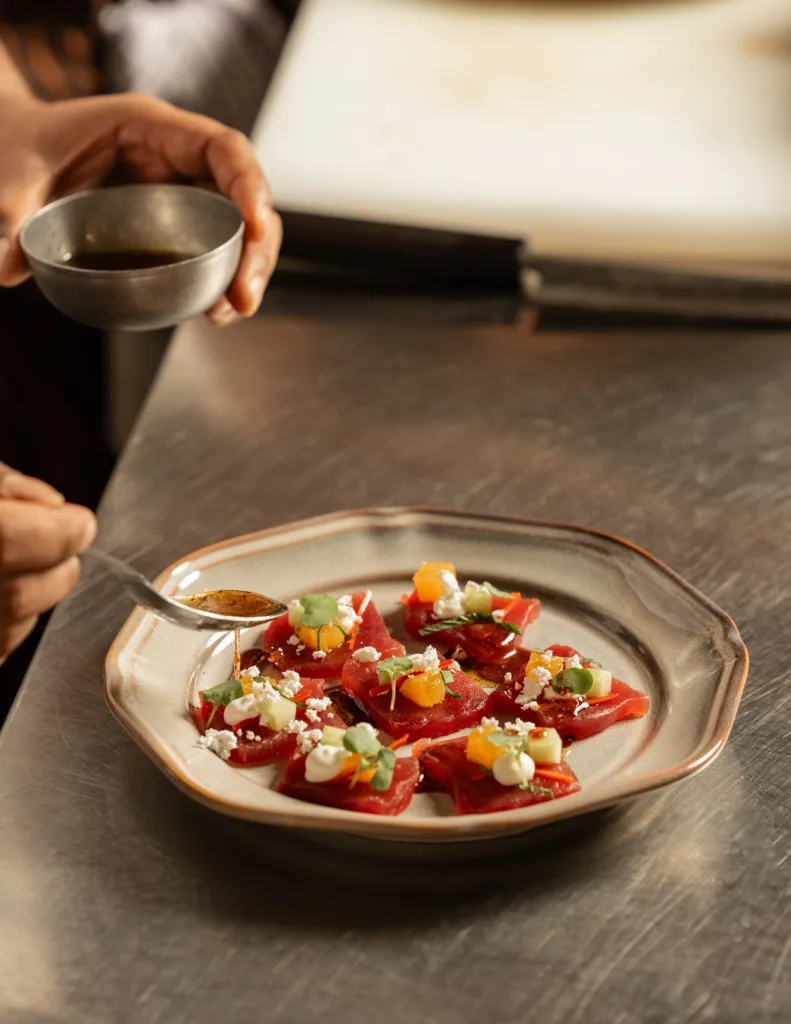
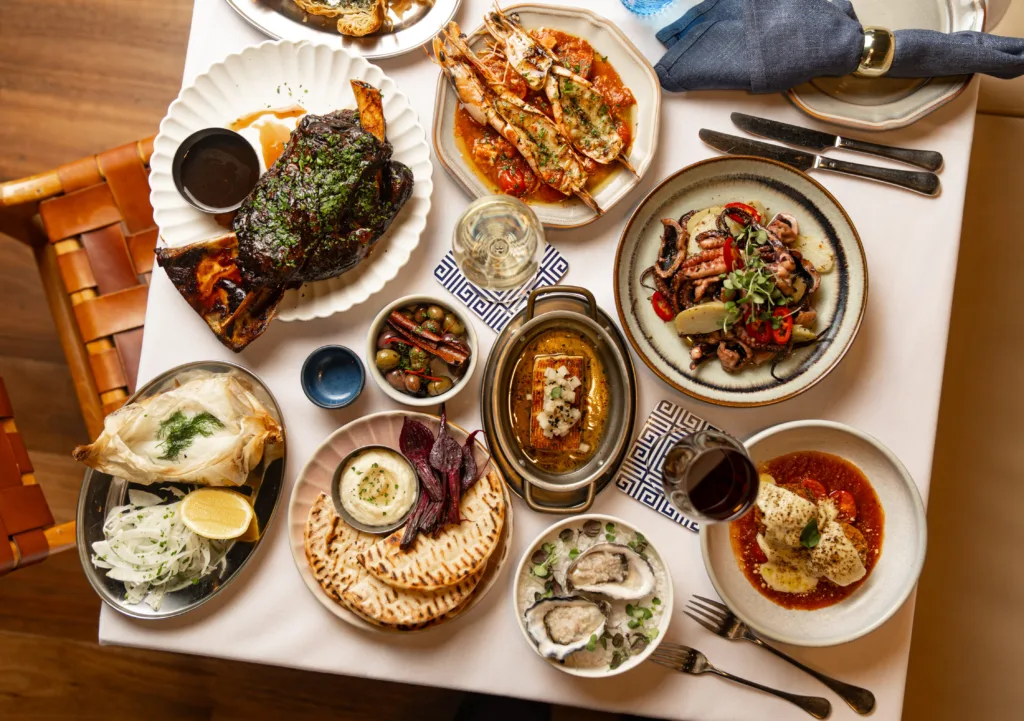
Astakos Kritharaki – orzo pasta cooked in lobster and tomato bisque, celebrating Jimmy’s love for the sea.

Lamb Kleftiko – slow-cooked to perfection, recalling family gatherings and timeless recipes passed down through generations.

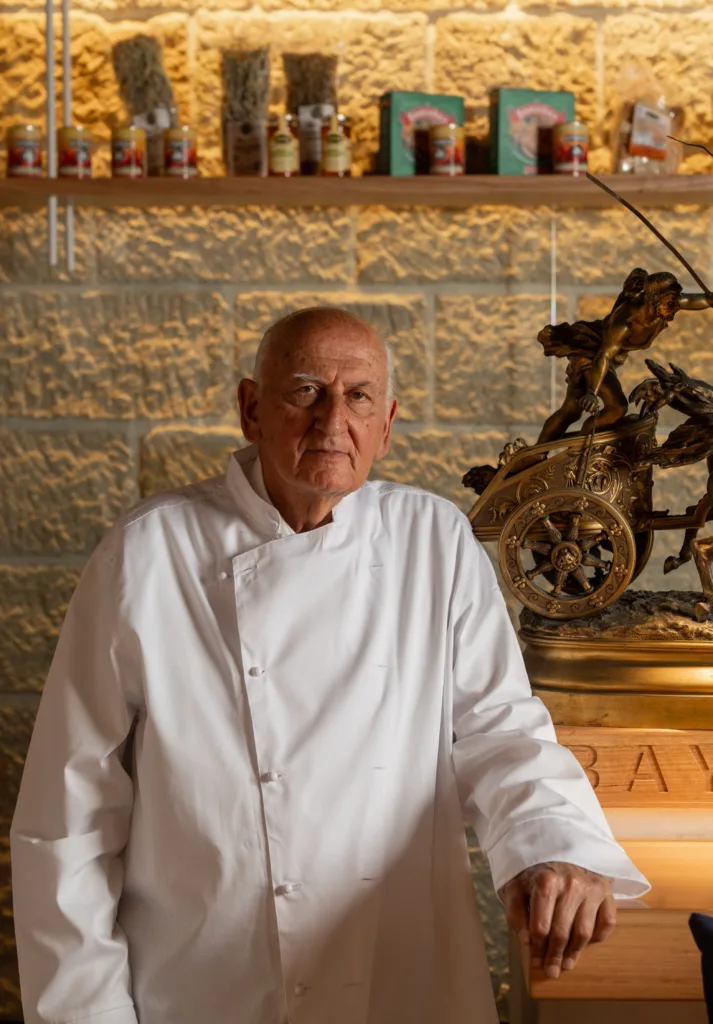
At the helm of the kitchen is Chef Marko Taxidis, who has worked alongside Chris for more than 40 years. Marko’s connection to the Drivas family runs even deeper: he first worked with Jimmy in Sydney in the late 1950s and later became a constant presence in the family home.

Now 82, Marko remains a lively and passionate host, moving between the floor and the kitchen, sharing stories and educating guests about the food and traditions that shaped Jimmy’s Kitchen.

The menu is traditional Greek with modern touches, offering individually plated meals designed for sharing. Entrees range from $8 to $28, while mains start from $35, with the Astakos Kritharaki (market price) a standout.

The drinks list is uniquely and proudly Greek – from crisp Assyrtiko to bold Xinomavro wines, alongside Greek beers, aperitifs, digestifs, cocktails, and mocktails infused with Mastiha, Tsipouro, and Metaxa. It’s a rare opportunity in Sydney to explore the depth and diversity of Greece’s drinking culture.

Whether it’s a romantic date night, a milestone family celebration, or just a gathering with friends, Jimmy’s Kitchen offers more than just food – it’s about connection, comfort, and the joy of sharing.

“It’s intimate, unpretentious, and designed to feel like you’ve stepped into a family kitchen – where the food is real, the welcome is genuine, and every dish brings people together,” Chris says.

Greek Community of Melbourne enhances safety with defibrillator training seminar

0

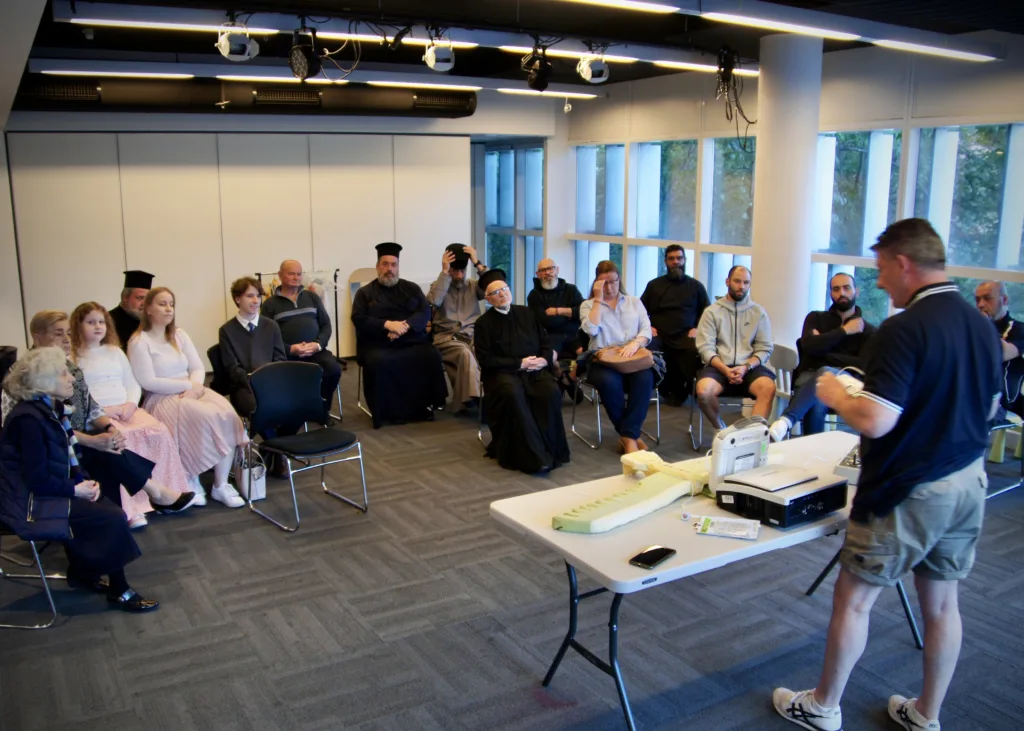
The Greek Community of Melbourne (GCM) took a notable step towards enhancing community safety by organising a defibrillator training seminar at the Greek Centre, specifically tailored for the priests of GCM churches and their dedicated volunteers.

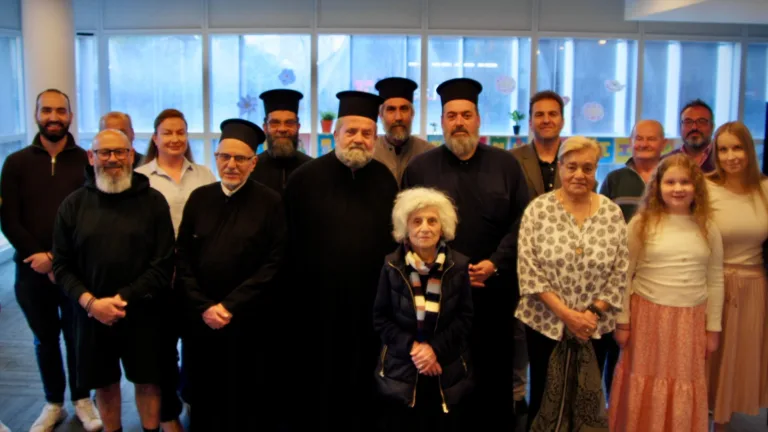
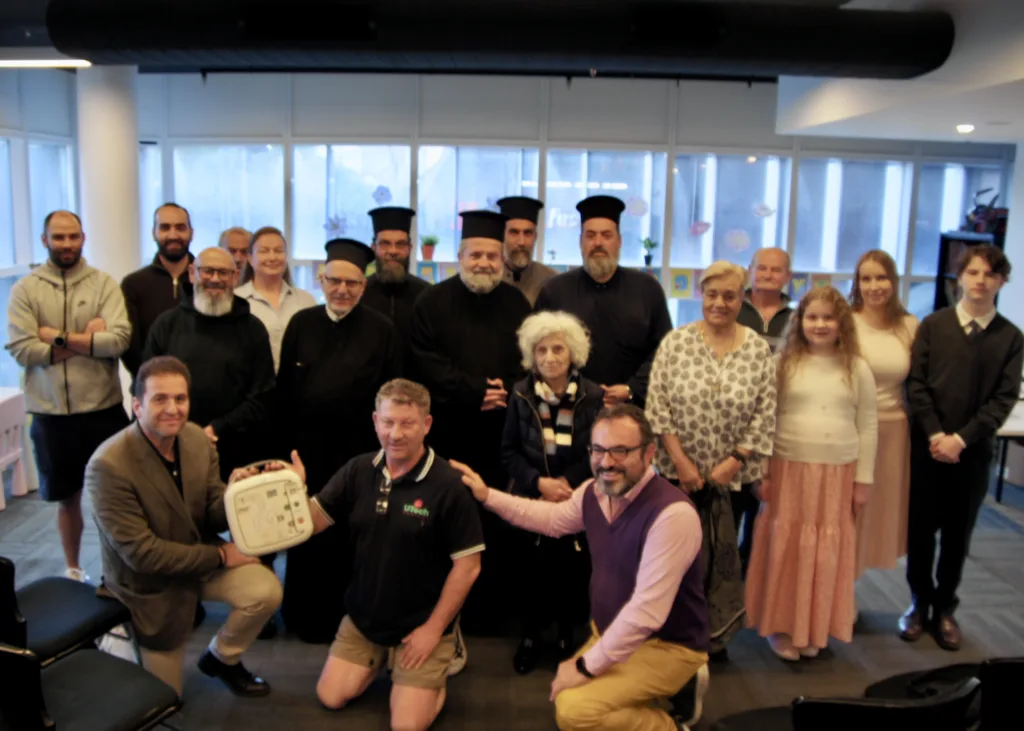
The training brought together priests from the Holy Church of Annunciation of Our Lady, Holy Trinity Church, St. George Church, Holy Church of St. Eleftherios, and Holy Church of St. Dimitrios, along with their devoted contributors.

Among the attendees were Fr Antonios Vanikiotis (The Annunciation of Our Lady), Fr Harris Vezos (St. George), Rev Diamantis Kourabis (St. Dimitrios), Fr Gary Peripetsakis (St. Eleftherios), and Fr Nikolaos Xylouris (Holy Trinity), as well as church committee members and volunteers.

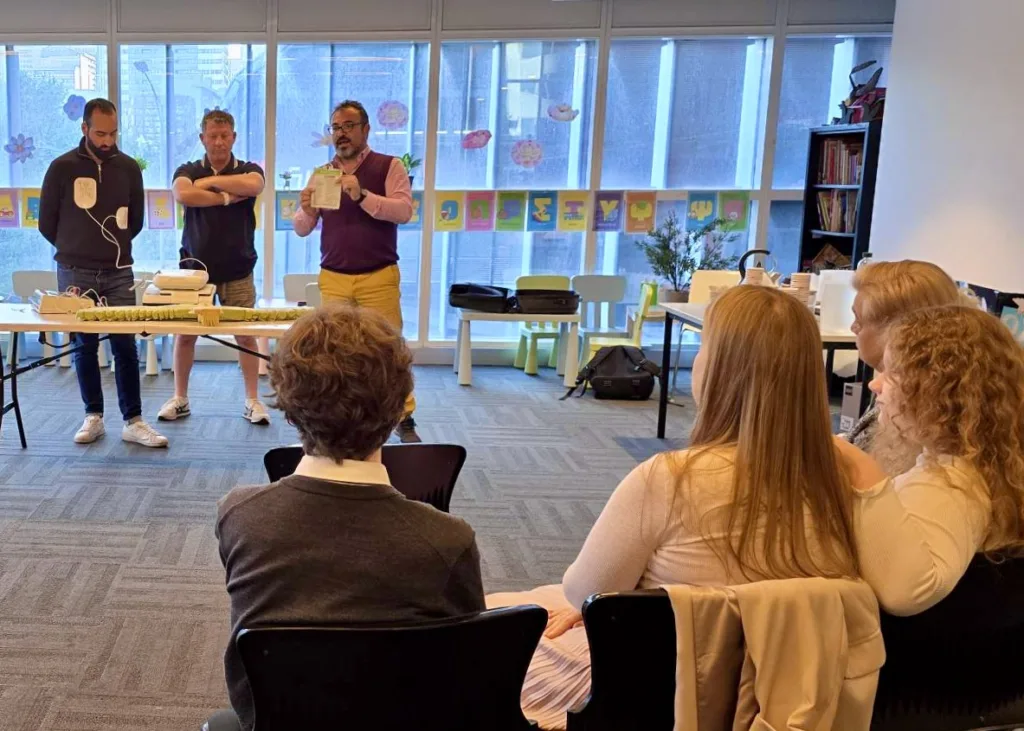
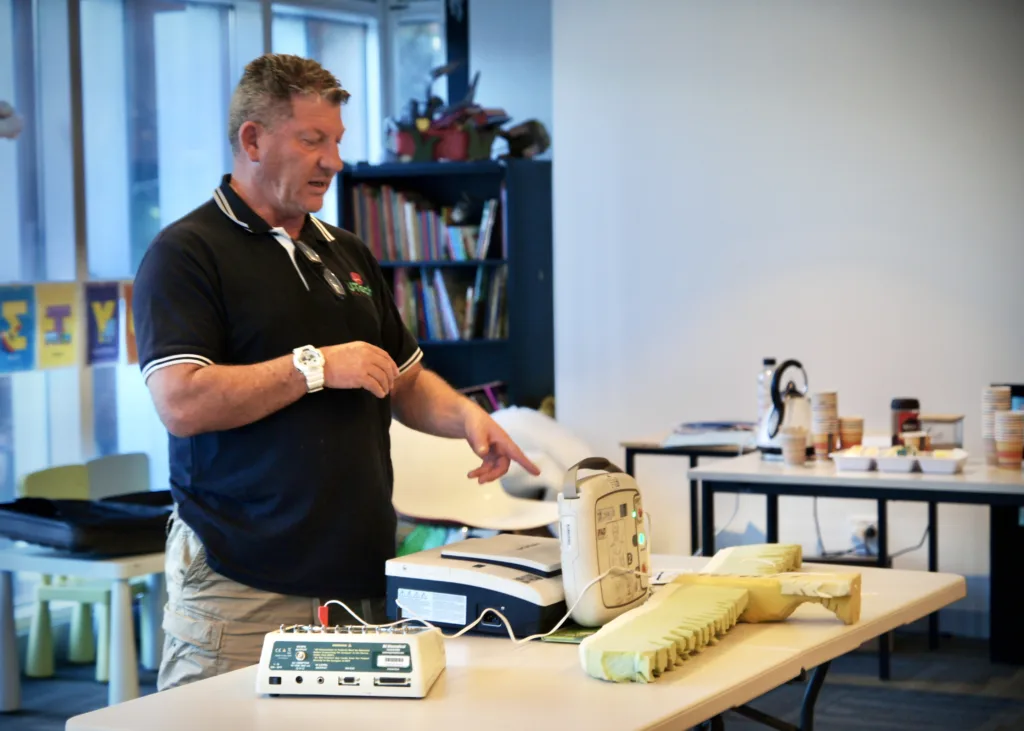
The seminar was conducted Enzo from U-Tech Medical and featured a comprehensive step-by-step guide on utilising defibrillators in emergency situations. The aim was to equip key community members with the knowledge and skills required to respond effectively to life-threatening situations.

The GCM has invested in fitting all GCM churches with automated external defibrillators (AEDs). These devices can be used in conjunction with CPR on individuals experiencing sudden cardiac arrest, delivering an electric shock to restart the heart or restore its regular rhythm. Studies, including those by Dr. Myron Weisfeldt of Johns Hopkins University, suggest that bystander use of defibrillators in the US alone has saved approximately 1,700 additional lives each year.

Nick Koukouvitakis, representing the GCM church committee, and Michael Profyris, church coordinator, expressed their appreciation for the proactive approach, while attendees engaged in practical demonstrations followed by a Q&A session, further enhancing their understanding of this life-saving equipment.

The seminar showcased the strong sense of community spirit and the proactive measures taken by the GCM in addressing the health and safety needs of its members.

SONY DSC

For further information, please contact your local church.

Wills without the Trojan War

0

By Ashlee Chats*

After nearly 15 years in the legal industry, I’ve lost track of how many matters I’ve worked on involving family disputes over estates. Some are minor disagreements, others escalate into full-blown court battles.

However, no story will ever surpass the story of Nick, Nick Jr and Nicole. Nick came in with his two children, Nick Jr and Nicole, to update his Will. I advised Nick that it was best practice for me to obtain his instructions without his children present, so that we could avoid any potential claims of duress or undue influence in the future if his Will was contested. Nick assured me that would never happen to his family. 

I agreed and so I proceeded as usual with taking a detailed list of all of Nick’s assets and liabilities. When I asked Nick how he wanted to divide his assets, he confirmed that he wanted to leave his entire estate to Nick Jr, and nothing to Nicole.  After all, he explained, Nicole had a husband who could look after her.  Whereas, Nick Jr was unmarried and was carrying on the family name – he deserved to inherit the Estate.

You could forgive me for thinking that given his insistence that both children remain in the consultation, that Nick had previously made his intentions known to Nick Jr and Nicole. However, he had not. The resulting fallout was a hysterical Nicole being asked to leave the room, being consoled by her brother who promised that he would never cut her out of what was rightfully hers. 

Nick Sr eventually passed away and I was soon contacted by Nick Jr’s solicitor, who confirmed Nicole was challenging the Will. Tragically, what Nick Sr insisted would never happen to his family, did. 

Unfortunately, Nick Sr’s story is far from unique. We are in the midst of one of the largest wealth transfers in history. However, the life’s work of our parents and grandparents who came to Australia and worked tirelessly to provide a better future, is being eroded by legal fees due to disputes over their estates. To be clear, there is no way to completely prevent a Will from being contested if someone has a legal right to challenge it.

However, there are some ways to mitigate the risk of your Will being contested and keeping your wealth in the family rather than in the Courts.

No. 1 | See a Lawyer and Prepare a Will

Whilst tools like Google and ChatGPT have given us access to more information than ever before, nothing can replace personalised legal advice tailored to your specific circumstances.

Shockingly, over 60% of the population does not yet have a Will. Consulting a solicitor and clearly outlining how you want your estate handled ensures you receive advice that fits your unique situation and, more importantly, formalises your wishes. Will kits are never properly executed, never take into account your personal circumstances and are usually a one-way ticket to the Supreme Court.

No. 2 | Understand if you have an obligation to provide for someone.

The Wills Act provides that spouses and children can contest a Will if they have not been adequately provided for.  For example, Nick Jr and Nicole had an expectation to inherit equally.   

However, if you have a dependant, for example a grandchild that lives with and depends on you, you may have an obligation to provide for them as well. 

If you don’t want to provide for a child or another eligible person for whatever reason, you can have your solicitor prepare a statutory declaration that can be stored with your Will, outlining your reasons for the way you’ve divided your estate.  This is how we ensured Nick Sr’s wishes were documented in the event his estate was contested – which it eventually was.

Most importantly, leaving the child you don’t speak to $10,000 does not negate their ability to contest your Will, despite what the ladies at Church might say.

No. 3 | Get tax advice

Partnering with a solicitor and financial planner helps you protect and grow your wealth for future generations, potentially through family trusts or other tailored investment structures suited to your needs.

No. 4 | Don’t do what Nick did – Speak with your family

Don’t do what Nick did—have those conversations with your children and family about your wishes while you can. Time and again, I’ve seen silence become the seed of conflict. Families don’t fall apart because a Will is poorly drafted, rather because no one ever spoke openly about what it contained or why certain decisions were made. In the absence of that dialogue, people begin to speculate, suspicions grow, and before long a simple estate matter turns into a contested Will. By taking the time to share your wishes and explain them, you are not only reducing the risk of costly litigation but also giving your family the comfort of clarity. Open communication now can spare them uncertainty later, and more importantly, preserve the relationships that matter most once you’re no longer here to guide them.

Families aren’t one-size-fits-all — and neither are the Wills that protect them. Expert advice is essential if you want to keep your wealth in your family and out of the courtroom.

* The information provided in this article is of a general nature only and does not constitute legal advice. Individual circumstances vary, and you should seek personalised advice from a qualified solicitor before making any decisions regarding your Will or estate planning.  All names used have been changed to protect client confidentiality and legal professional privilege*

*Ashlee Chats, Director and Principal Lawyer at Wilckens Roche Lawyers, helps clients in Melbourne’s west navigate complex legal matters with clarity and confidence. Book an appointment on 03 8383 5999.

From tech to health: Greek Australians driving innovation in 2025

Australia’s Top 100 Innovators of 2025 celebrate those who turn setbacks into breakthroughs, and this year, three Greek Australians are among those leading the charge, according to theaustralian.com.au.

Spiro Rokos (right) photο: The Australian

Spiro Rokos is transforming the way Australians handle receipts and loyalty programs. Co-founder of Slyp, he pioneered a system that sends tax-compliant, itemised receipts straight from retailers to customers’ banking apps. Now, Rokos and his team are tackling the loyalty market with an AI-powered app that links rewards to a customer’s credit or debit card. Participating retailers, including supermarket chain Supabarn, gain real-time data to enhance offers and increase sales, while customers enjoy seamless point-of-sale experiences.

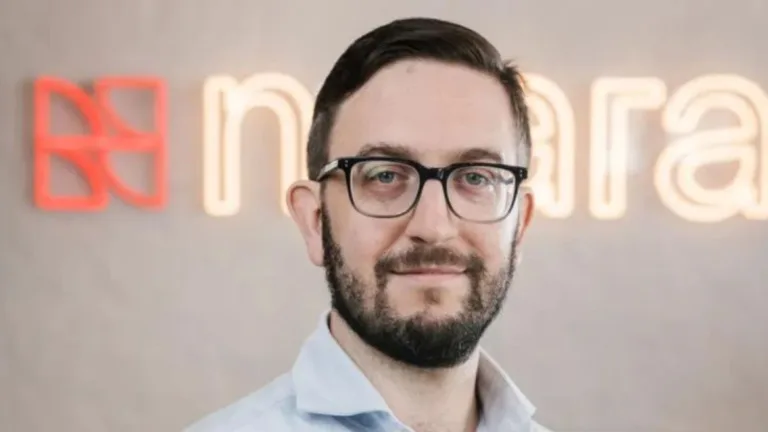
Daniel Danilatos, founder of Neara, is helping utility companies prepare for extreme weather. His startup creates 3D “digital twins” of electricity networks, allowing operators to identify weak points, simulate storm scenarios, and plan preventative measures. Australian providers such as Ausgrid and Endeavour Energy use Neara’s platform to safeguard against natural disasters, while expansion into the U.S., including a deal with Houston-based CenterPoint Energy, positions the company on the global stage.

Kate Lambridis, (right). Photo: The Australian

Kate Lambridis, co-founder of Human Health, is innovating in digital healthcare. Alongside Georgia Vidler, Lambridis raised $10.5 million in 2022 – the largest seed round in Australia for an all-female founder team. Their app collects and organizes knowledge from doctors, scientists, and patients to provide personalized insights into chronic illness management. Currently free, the platform is poised to grow in a digital health industry projected to reach US$275 billion by 2028.

Source: TheAustralian.com.au

Remembering the Battle of Giannitsa

0

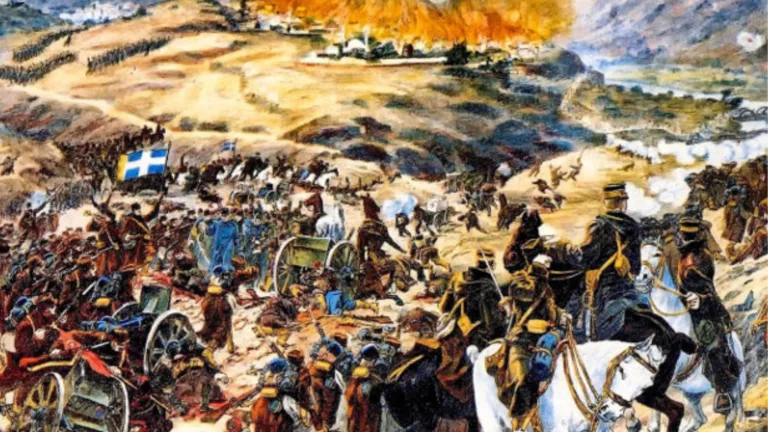
The Battle of Giannitsa, fought on 19 and 20 October 1912, was one of the most significant battles of the First Balkan War. It took place in Giannitsa (then known as Yenidje-i Vardar by the Ottomans) in today’s Pella region, between the Greek army under Crown Prince Constantine and the Ottoman forces commanded by General Hasan Tahsin Pasha. The Greek victory paved the way for the liberation of Thessaloniki on 26 October, according to sansimera.gr

Following the unexpected triumph at Sarantaporo, the Greek army secured control over Western Macedonia and advanced toward Central Macedonia and Thessaloniki. Anticipating a major threat, Tahsin Pasha fortified Giannitsa, a city sacred to local Muslims because it was the burial site of Gazi Evrenos, a distinguished 14th-century Ottoman general.

The battlefield offered significant strategic advantages, flanked to the north by Mount Paiko and to the south by the marshy Giannitsa Lake (drained in 1932), famously described in the Macedonian Struggle and Penelope Delta’s novel The Secrets of the Swamp.

By 18 October, Tahsin Pasha’s army, comprising five incomplete divisions, 13 infantry battalions, 8 cavalry squadrons, and seven artillery batteries, had entrenched on a 130-meter height, controlling the surrounding plain. The Greek army, with five divisions and a cavalry brigade totaling roughly 80,000 men, advanced from the northeast.

On 19 October, frontal attacks by the Greek 2nd and 3rd Divisions, combined with flanking maneuvers by the 4th and 5th Divisions, eventually outmaneuvered the Ottomans. Facing encirclement, Tahsin Pasha ordered a retreat, leaving a rear guard to delay the Greeks. By the morning of 20 October, the rear guard was overcome, marking the Ottoman defeat. Greek forces entered Giannitsa at 11 a.m., burning the Muslim quarter while sparing the Christian neighborhoods.

Greek casualties totaled 188 dead and 785 wounded, while the Ottomans suffered 250 dead, 1,000 wounded, and 3,000 captured. Eleven enemy cannons and numerous flags were seized. Soldiers endured heavy rain, often storming enemy positions with bayonets.

Crown Prince Constantine praised the victory: “The victory at Giannitsa completes that of Sarantaporo and constitutes a new title of honor and glory for the Greek Army.” The Skrip correspondent called it “the grandest and most tenacious battle fought so far,” while King George described it as “unprecedented in magnificence, determination, and bravery.”

Source: sansimera.gr

Sweet simplicity: Niki Louca’s Chocolate Hazelnut Shortbreads

Niki Louca from My Greek Kitchen shares her favourite recipe for Chocolate Hazelnut Shortbreads with The Greek Herald. You can follow her on Instagram @mygreekkitchen for more!

Ingredients:

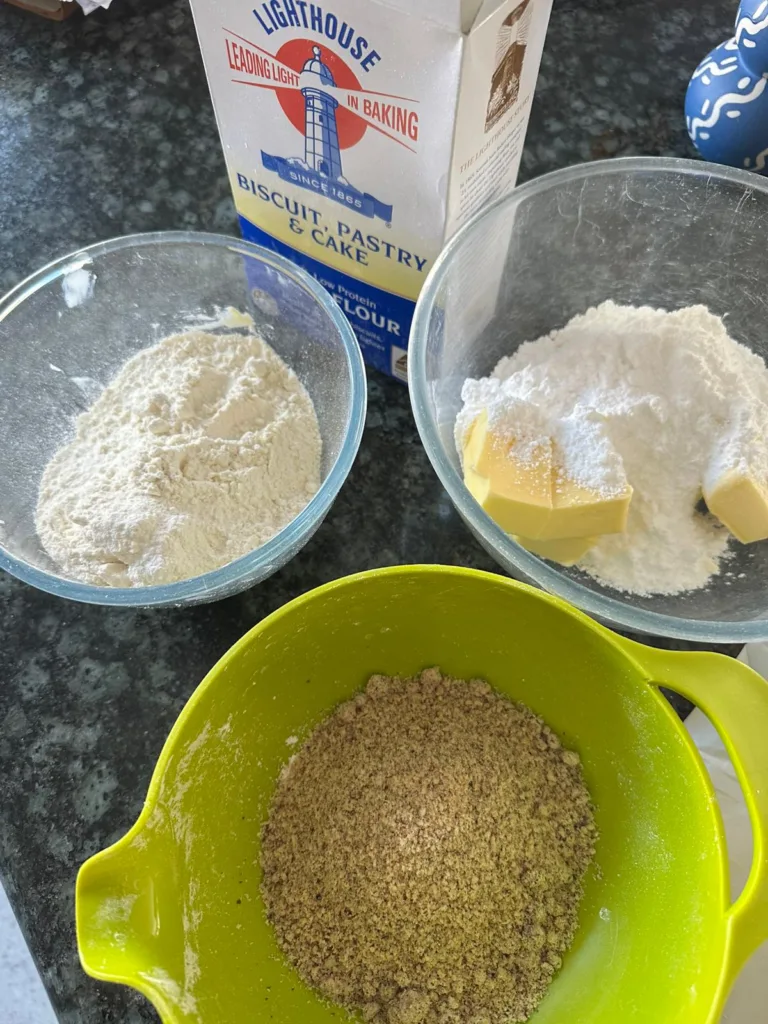
  • 250g unsalted butter at room temperature
  • 120g pure icing sugar – sifted
  • 120g hazelnut meal
  • 230g plain flour
  • Couverture dark chocolate to dip biscuits in

Method:

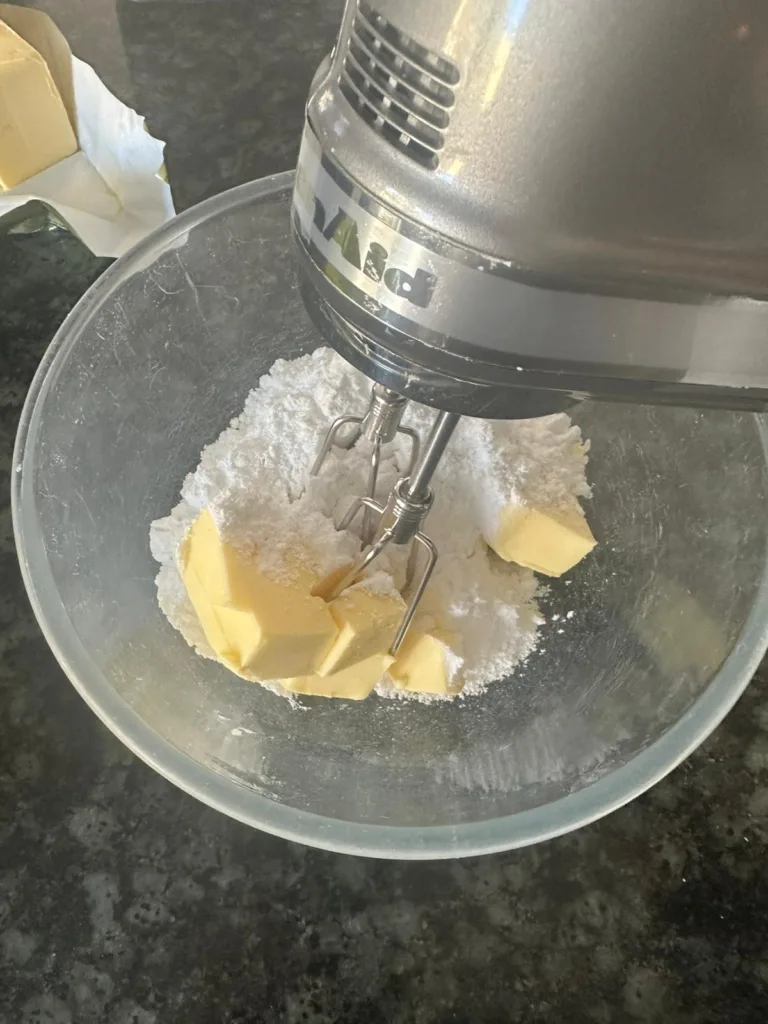
  1. Using an electric mixer, place the butter and sugar beating them together till pale and creamy – about 5 minutes.
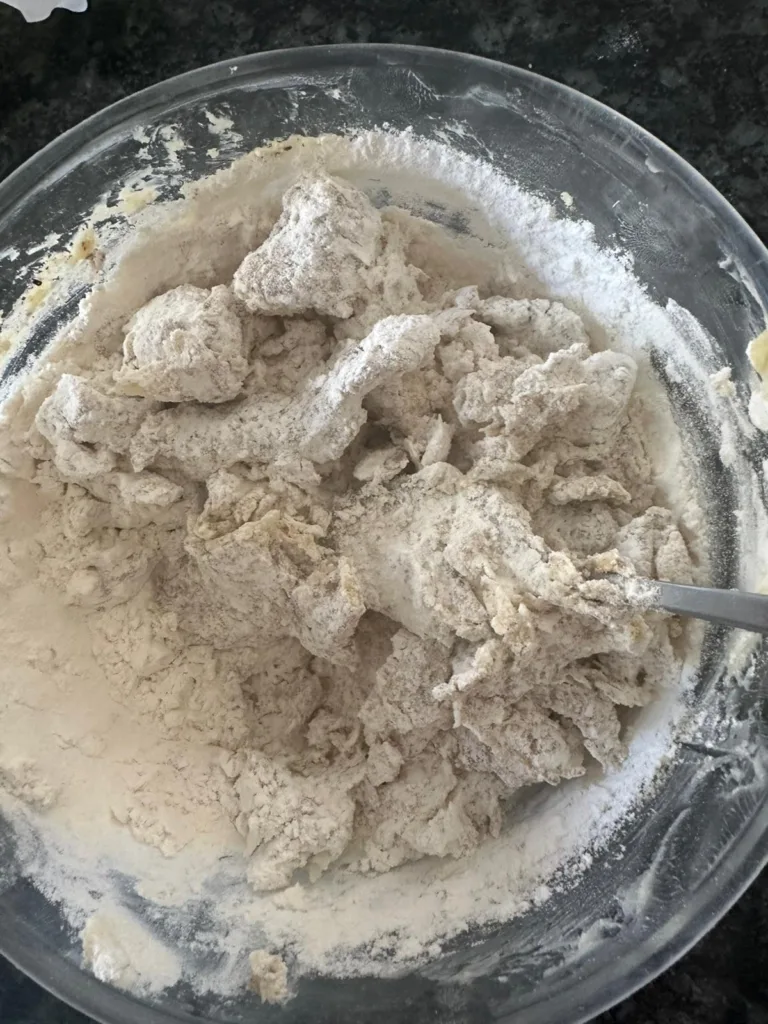
  2. Add hazelnut meat and flour and gently fold through with the butter/sugar mixture.
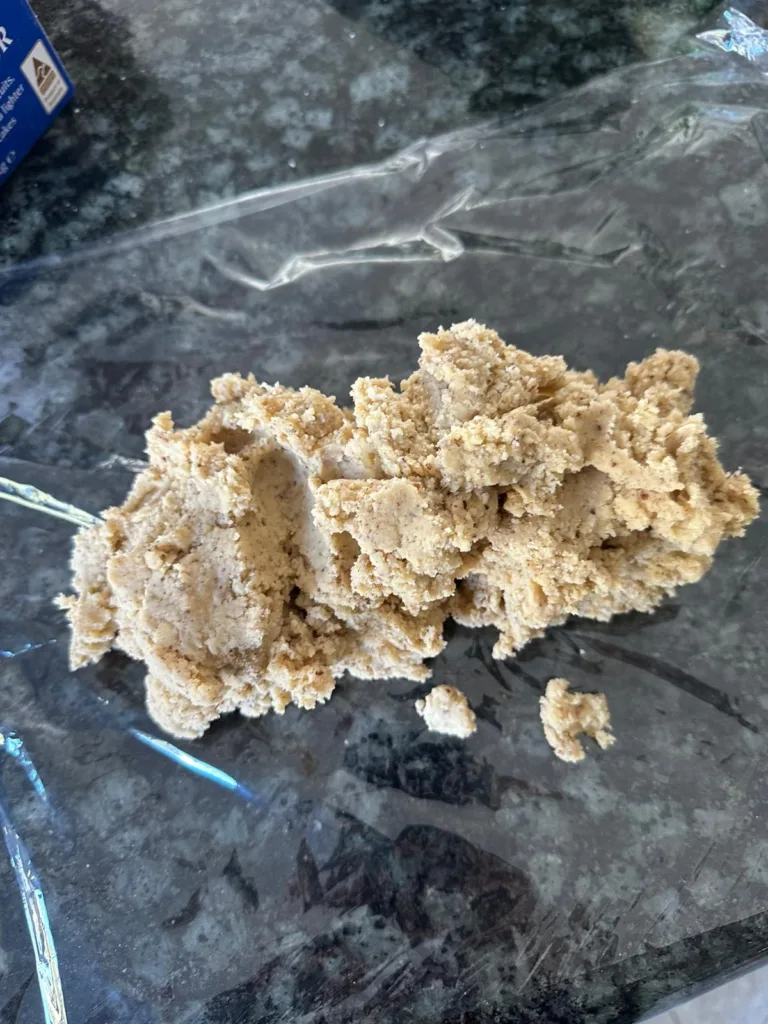
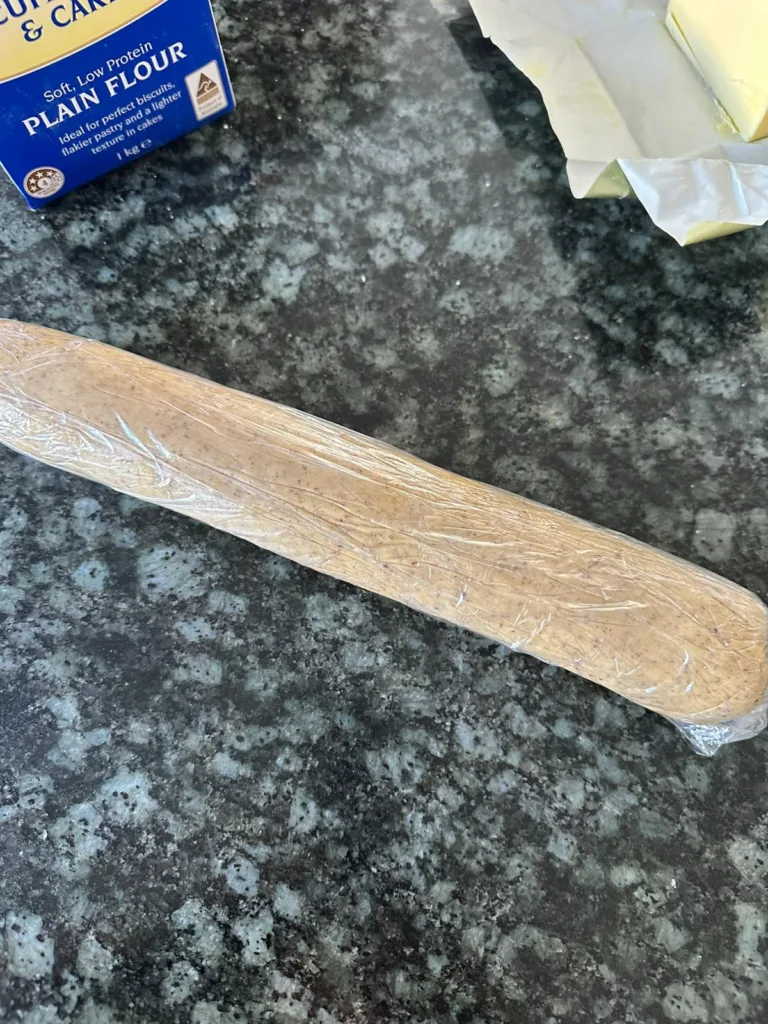
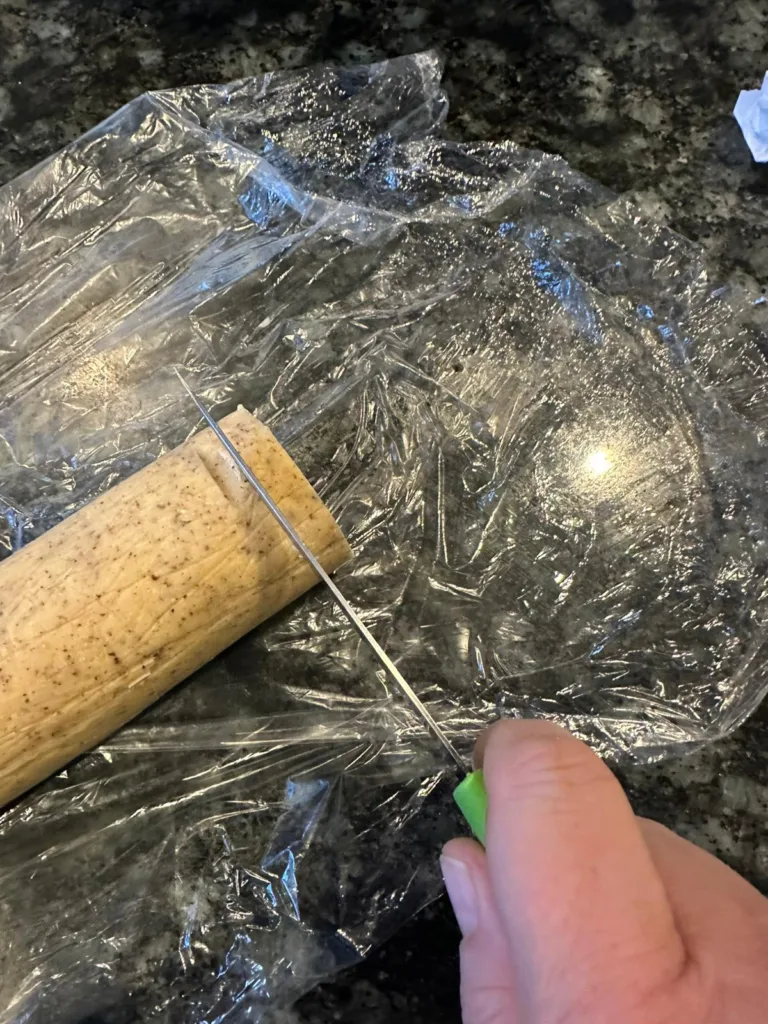
  3. The dough will be a little sticky but that’s perfectly fine.  Take a large piece of glad wrap and put the dough on it.  Roll it into a log, approximately 4cm thick, and tightly wrap it.   Refrigerate for approx. an hour so the butter hardens, which will make it easier to cut.  You can alternatively put the mixture into a piping bag and pipe out the biscuits – if you decide to do this, do not refrigerate dough.  Pipe straight away onto baking trays and cook.
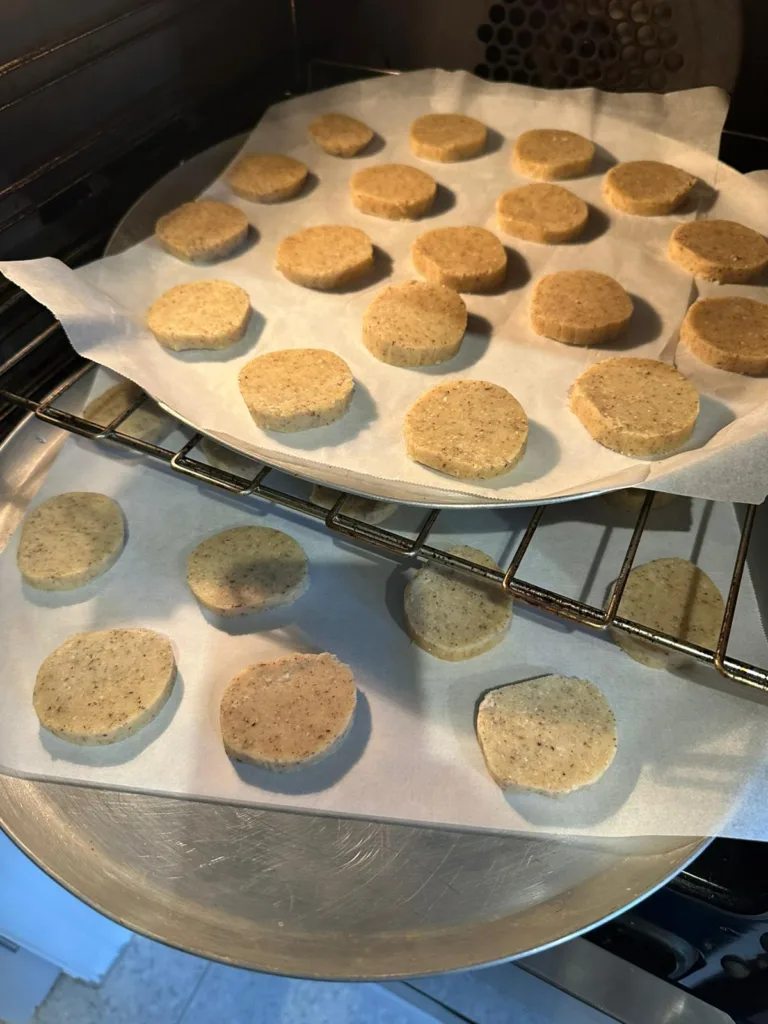
  4. Preheat your oven to 180C fan force.  When the hour or so has passed, remove log from fridge, unwrap from glad wrap and using a sharp knife cut into 1cm thickness discs.  Place them on baking trays with baking paper and bake for 12-15 minutes.  Remove from oven as soon as you see a little colour on the edges of the biscuits. Allow to cool in tray.
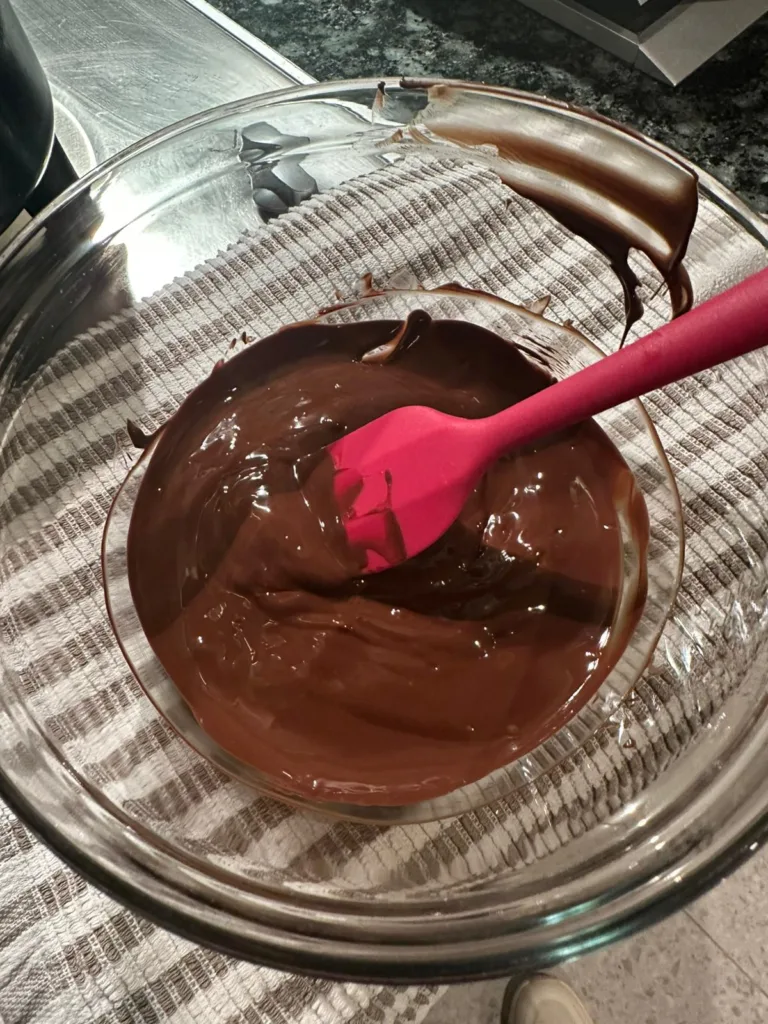
  5. In the meantime, melt some dark chocolate over a pot of simmering water.  Place chocolate in a glass bowl and put bowl over a saucepan with some water.  Make sure the glass bowl does not touch the hot water as it will burn the chocolate.  Once most of the chocolate is melted, remove from heat and stir it till the remainder chocolate fully melts.
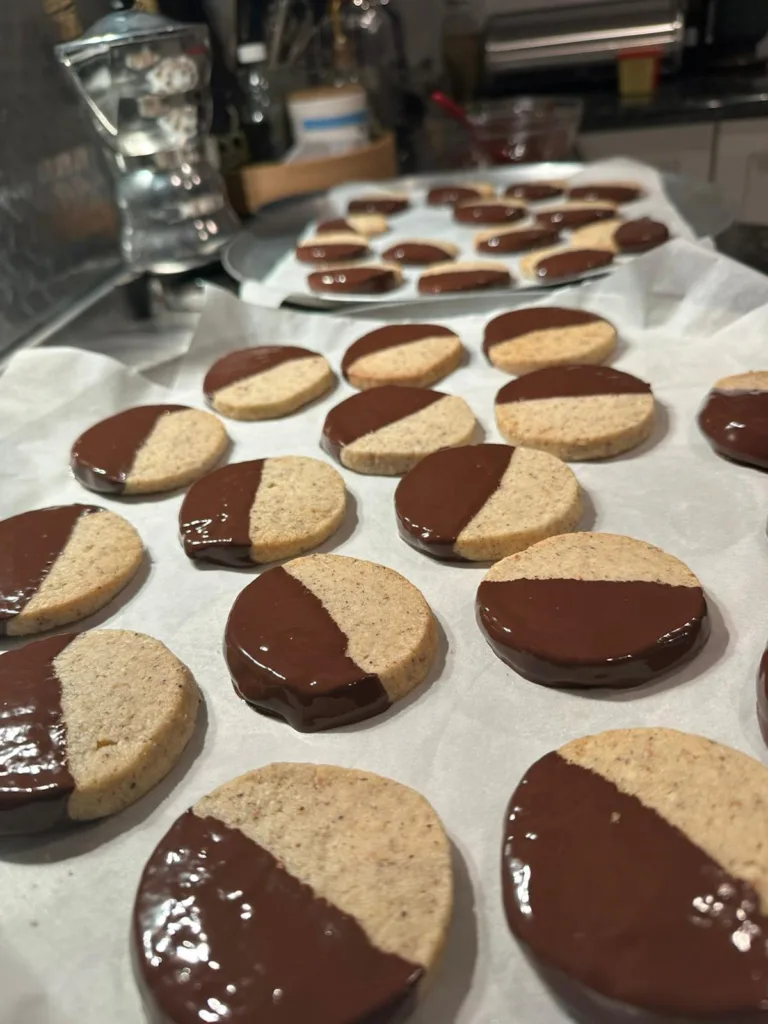
  6. Take the cooled biscuits and dip them into the chocolate on one side (I usually cover half a biscuit).  It’s entirely up to you how much you cover it with chocolate.  Place biscuit back on the baking paper till chocolate has hardened and store in an air tight container.

Niki Louca runs cooking classes in Melbourne. For more or to book classes visit My Greek Kitchen at www.mygreekkitchen.com.au or Instagram @mygreekkitchen. You can email Niki at: niki@mygreekkitchen.com.au.

Greek teen Giorgos Leventidis accepted to top UK university two years before graduating

0

At just 16, Giorgos Leventidis has already earned an unconditional offer from one of the UK’s leading institutions, the University of Bath – two years before finishing high school, according to protothema.gr

Currently a student at Zanneio Model High School of Piraeus, Giorgos’s fascination with mathematics began early. “What led me here was curiosity. I wanted to study mathematics from a very young age – since I was 11,” he says. His father, Professor Giannis Leventidis of the National and Kapodistrian University of Athens, helped nurture that passion through a home library filled with math and physics books.

By age 13, Giorgos was already passing university-level exams “even without attending the lectures, simply because I already knew much of the material.”

To qualify for UK universities, he completed an intensive three-year process involving 18 exams and over 1,000 practice tests. “I was solving problems for two to three hours daily, while also keeping up with schoolwork,” he explains. His teachers’ recommendation letters and the school’s support helped him overcome logistical challenges.

Despite receiving the Bath offer, the family could not secure the €50,000 needed for tuition and living costs before the start date. “Even though I was given this great opportunity, it’s not that simple to start studying there – the amount is overwhelming,” Giorgos says.

He now hopes to study mathematical physics in Greece, ideally at NTUA or EKPA, if local authorities recognize his UK exam results. “Having received this international recognition from a top UK university, why shouldn’t I be able to study in my own country?” he asks.

Giorgos dreams of pursuing a PhD in mathematical physics and one day joining a major research institute like CERN.

Source: protothema.gr

Greece ranked fifth most expensive European destination in 2025

0

Europe remains a dream destination for travelers drawn to its history, culture, and natural beauty — but visiting the continent doesn’t come cheap. A new 2025 study by the HelloSafe platform reveals that Western and Northern European countries are the priciest for visitors, based on the average daily costs of accommodation, dining, local transport, and activities (excluding airfare), according to tornosnews.com.

Greece ranks as the fifth most expensive travel destination in Europe this year, joining several high-cost countries popular among international tourists.

Below is the list of the ten most expensive European destinations in 2025 and what contributes most to their rising travel costs:

10. Norway (€153/day)
Norway’s breathtaking fjords, Northern Lights, and outdoor adventures such as hiking and kayaking make it a spectacular — but costly — destination. High living expenses in cities like Oslo and Bergen, along with elevated food and accommodation prices, push up the total.

9. Italy (€153/day)
From Rome to Florence and Venice, Italy’s cultural treasures and culinary excellence draw millions each year. However, entry to museums and monuments, along with the irresistible appeal of Italian cuisine, add to a significant daily spend.

8. Netherlands (€162/day)
The charm of Amsterdam’s canals, vibrant art museums, and bustling nightlife come at a price. High demand for accommodation continues to drive costs upward.

7. Denmark (€165/day)
Copenhagen’s modern design, Michelin-starred restaurants, and family-friendly attractions make Denmark a sophisticated but expensive stop for travelers.

6. United Kingdom (€165/day)
London dominates the UK’s expenses, with accommodation, transport, and dining ranking among Europe’s highest. Yet its cultural institutions, theaters, and historic landmarks keep it an enduring favorite.

5. Greece (€168/day)
Greece joins the top five most expensive destinations in Europe. Luxury resorts and strong demand on islands like Santorini and Mykonos raise the national average, while Athens remains somewhat more budget-friendly. Costs for ferries, dining, and archaeological sites also contribute to the overall expense.

4. Luxembourg (€169/day)
Though small in size, Luxembourg comes with big-city prices. Its high standard of living, boutique hotels, and gourmet dining make it a high-end European destination.

3. Iceland (€177/day)
Iceland’s geysers, glaciers, and hot springs offer a one-of-a-kind adventure, but the island’s isolation and high cost of living make it one of Europe’s priciest travel spots.

2. France (€181/day)
The magnetic allure of Paris and the glamour of the French Riviera secure France’s spot near the top of the list. Luxury hotels, fine dining, and cultural attractions elevate the country’s travel costs.

1. Switzerland (€241/day)
Topping the rankings is Switzerland — Europe’s most expensive destination for 2025. From Zermatt’s ski slopes to the lakes of Zurich and Geneva, the country’s exceptional quality of service and scenery come with a steep price tag.

Source: tornosnews.gr

Two Greek Australians among NSW’s most influential food innovators

The Good Food Guide’s latest list of trailblazers celebrates the chefs, designers, producers and businesses shaping the future of dining across NSW and the ACT – and among them are two standout Greek Australians: interior architect George Livissianis and restaurateur Timothy Cassimatis.

According to The Sydney Morning Herald, for more than a decade, Livissianis has been redefining what modern hospitality looks like. His work on The Apollo in Potts Point introduced a new language of texture and restraint — “peeled-back layers and raw definition” that have since become hallmarks of Sydney restaurant design. He followed with Cho Cho San, a light-filled, izakaya-inspired space that remains timeless. Each project captures the spirit of its cuisine and creators without falling into cliché. Olympus Dining in Redfern channels a “Greek village” atmosphere through cobblestone floors, neutral tones and bougainvillea — yet without a single olive tree or fishing basket in sight. Meanwhile, Lottie, upstairs, pairs cayenne terrazzo and pink travertine in a seamless invitation to “have a margarita”. Livissianis has become a global leader in the philosophy that less is indeed more.

Cassimatis, meanwhile, stands at the heart of Sydney’s Greek food renaissance. The year 2025 saw Greek cuisine awaken in full force, led by Olympus Dining, Myra’s Kitchen in Newtown, and Homer Cronulla — each reviving the convivial energy of the Athenian taverna. But the movement’s beating heart is Olympic Meats, helmed by Cassimatis, whose contemporary take on one of the world’s oldest culinary traditions is drawing crowds and reshaping how Sydney eats.

Source: The Sydney Morning Herald