The Australian Championship returns this weekend with the highly anticipated Round 2 fixtures, as clubs across the nation battle for early momentum in the new competition.
Heidelberg United chasing back-to-back wins
On Saturday, attention turns to Wollongong, where Heidelberg United Alexander FC will look to secure their second consecutive victory when they face the Wollongong Wolves at 3:00 p.m. at Collegians Sports Centre.
The Bergers, buoyed by a strong opening-round performance, are eager to continue their winning start to the tournament.
Earlier in the day, Marconi Stallions host South Hobart at 1:00 p.m. at Marconi Stadium, promising another intense battle as both sides aim to build early form.
Sydney Olympic gears up for first home match
On Sunday, all eyes turn to Jubilee Stadium, where Sydney Olympic FC will play their first home game of the season against Broadmeadow Magic at 1:00 p.m.
After a disappointing loss in Round 1, Olympic are determined to bounce back and secure their first win of the competition. The club has called on supporters to turn out in force, with a rallying message:
“On Sunday, all roads lead to Jubilee Stadium – from our very first home game, let’s show who Sydney Olympic truly is and the strength of its loyal supporters!”
South Melbourne Hellas Fired Up for Home Clash
Meanwhile in Melbourne, South Melbourne Hellas are ready to host Moreton City at 4:30 p.m. at Lakeside Stadium.
Following their impressive victory over Sydney Olympic in Round 1, confidence is high in the Hellas camp, and another strong performance is expected. Fans are anticipated to pack Lakeside once again, as the club eyes back-to-back wins.
Other matches across the country
Elsewhere on Sunday, Canberra Croatia take on Preston at Deakin Stadium at 1:00 p.m., while Bayswater City meet MetroStars at Frank Drago Reserve and NWS Spirit FC host Avondale at Christie Park, both kicking off at 4:30 p.m.
Have you ever wondered what it would be like to look at a mythological figure in the face?
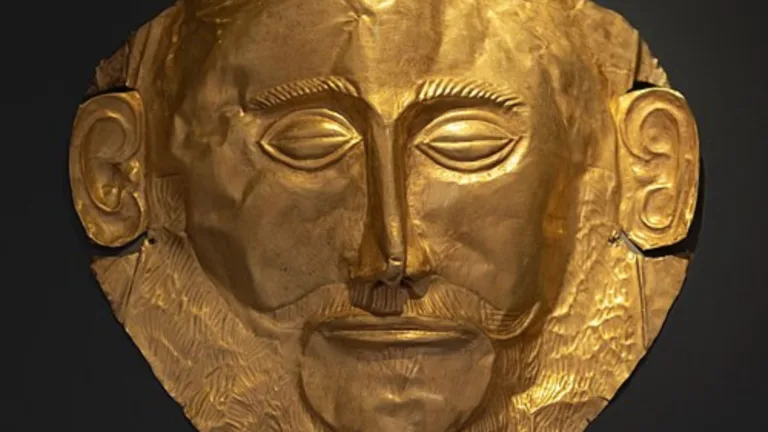
Heinrich Schliemann (1822-1890) asked that same question on the 30 November 1876 at Mycenae in Argolis when he first held this mask made of gold. Starring back at him was a bearded male face. For Schliemann, there was no doubt. He was looking at the face of the legendary king of Mycenae from Homer’s epic cycle The Iliad.
“I have gazed upon the face of Agamemnon,” he telegraphed the King of Greece in Athens; and he would later name his son after the mythological figure.
We now know it not to be Agamemnon, but it is still an extraordinary work of art. Indeed, this very famous object is so iconic that one author has described it as the “Mona Lisa of prehistory” – an image everyone knows.
Schliemann is often described as an archaeologist, but he practised techniques unacceptable to modern archaeology. He began excavations at Mycenae in 1876, after having worked at Troy in the previous decade. His reputation preceded him. Greek authorities insisted that he work under the supervision of Greek archaeologist Panagiotis Stamatakis (c.1835-1885) as a condition of his permit to excavate.
Excavations within Grave Circle A at Mycenae in 1876 found a number of shaft tombs. Presumed to be royal burials, a total of 19 bodies were found, five of which contained death masks including this one from Grave V.
The mask depicts the face of a bearded man, made from a single thick sheet of gold with all of the facial features repousse (hammered). Beneath each ear small holes were created to tie the mask to the deceased face. It weighs 168 grams and is 25 centimetres high. The gold clearly indicates the wealth of its wearer.
Some scholars have questioned its authenticity, accusing Schliemann of fabricating the mask and placing it in the tomb himself. It seems unlikely under Stamatakis’ watchful eyes.
Today, most archaeologists believe the mask to be genuine but to pre-date the era of Trojan War by at least three centuries. Some even date the contents of the grave much earlier to 2500 BCE. Either way, it cannot possibly belong to Agamemnon. Even Schliemann conceded as such later in his life, but by then the name had stuck. Today it has pride of place in the National Museum of Athens.
If you would like to see the death mask locally, the University of Sydney has a modern copy in the Chau Chak Wing Museum – a life-sized electrotype copy manufactured in the 1920s by Emile Gilliéron, the Swiss artist who worked with Schliemann and with Arthur Evans on Crete and oversaw the restorations at Knossos.
AI expert Ross Paraskevas is reshaping education with his creation, TeachingBlox – a learning platform that personalises study experiences for each student based on their interests and learning style, according to dailytelegraph.com.au.
A father of two and board member at Ivanhoe Girls’ Grammar in Melbourne’s northeast, Paraskevas developed TeachingBlox to make learning more intuitive, engaging, and relevant. The program uses artificial intelligence to assess what excites a student and then builds lessons, games, and challenges around those interests.
“TeachingBlox doesn’t just teach content—it learns the child first. Every lesson adapts to who they are, how they feel, and how they learn best,” Mr Paraskevas said.
By gamifying education, the platform encourages students to make progress while developing confidence through small achievements. “It gamifies the journey — as you’re levelling up, you’re earning points, you’re making mistakes and failing,” he explained. The program also identifies “knowledge gaps” and “skills gaps,” helping learners focus on what they need most.
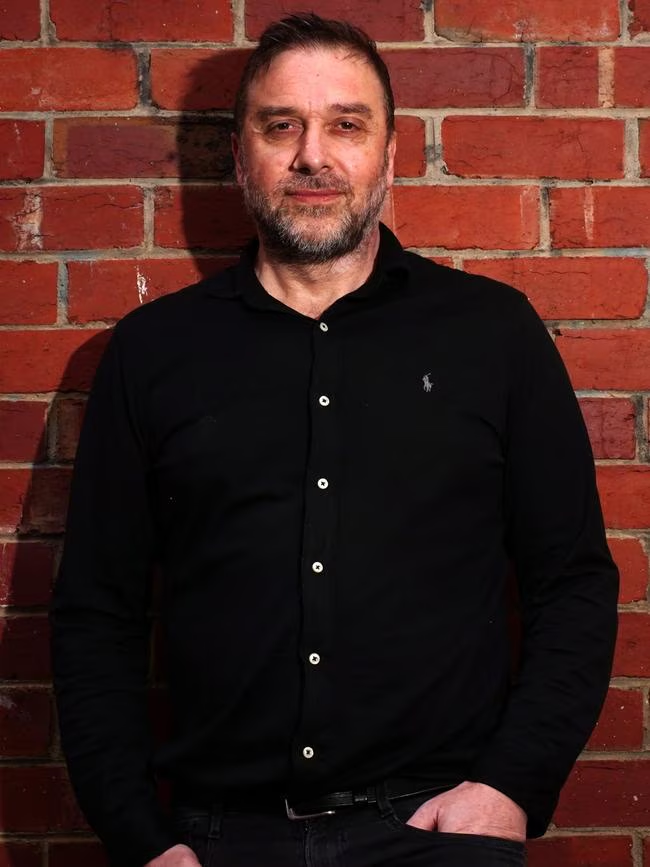
Ross Paraskevas, Creator and Founder of TeachingBlox. Photo: Luis Enrique Ascui, The Daily Telegraph
Since its launch, TeachingBlox has been adopted by students across Australia, with parents reporting remarkable improvements in engagement and academic performance. Melbourne father Paul Richards described the tool as “life-changing” for his 12-year-old son Mason, who attends Yarra Valley Grammar. The platform turned Mason’s love of AFL and cricket into maths and science challenges, boosting his motivation and skills.
Another parent, Emily Segal, said her son’s maths results improved significantly once the program linked problems to his passion for cars. “His teachers told me three months later in his parent-teacher interview that he’s improved in his maths,” she said.
TeachingBlox’s impact is now spreading globally. The platform has attracted attention in India and the United Arab Emirates, where a study is being conducted across five schools to assess how personalisation and gamification affect motivation, engagement, and knowledge retention.
And it’s not just students benefiting from the technology. Adults are also using the system to enhance their own learning. Sydney engineer Alex El-Kazzi said the program helped him retain information more effectively and wished such a tool had existed when he was younger. “I feel like it would have saved a lot of time and money,” he said.
With growing international interest — including from major technology companies keen to collaborate — Paraskevas and his team are positioning TeachingBlox at the forefront of a new era in education, where artificial intelligence adapts to the learner rather than the other way around.
Greece’s two largest cities, Athens and Thessaloniki, have been listed among the most dangerous in Europe, according to the latest Numbeo Crime Index.
The Numbeo Index measures residents’ perceptions of safety and crime on a scale from 0 to 100. In the 2025 rankings, Bradford in England was named the most dangerous city, while France had the highest number of cities included in the top 30, tovima.com, has reported.
Athens ranked 16th with a score of 55.3, and Thessaloniki followed in 23rd place with 52.5 points.
Just two days before the report’s release, an explosion occurred in central Athens outside a building housing agencies affiliated with the Agriculture Ministry. Authorities said the blast was caused by a makeshift device made from small camping gas canisters. It was the latest in a series of similar incidents typically claimed by self-described anarchist and anti-state groups that often target central Athens.
The United Kingdom dominated the top end of the list, with four of the five most dangerous cities being British-Bradford, London, Birmingham, and Coventry.
France had seven cities among the top ten: Marseille, Grenoble, Montpellier, Nantes, Paris, Lyon, and Nice.
Marseille continues to be strongly linked to organized crime, while Paris struggles with ongoing concerns about street crime in tourist areas.
The rankings reflect perceptions of crime rather than verified data, and the index categorizes cities as follows:
When Greek Australian entrepreneur Jono Petrohilos first started out as a personal trainer, he didn’t lead Australia’s top bootcamp – he led the worst. Ranked 75th out of 75 locations in a national franchise, he had every reason to quit. Instead, he decided to learn, grow, and ultimately transform failure into fuel.
“I loved the model,” Jono tells The Greek Herald. “So I committed to making it work. I read every book, listened to every podcast, went to every seminar I could find. Within a year, I went from last place to number one in the country – with a 100% client retention rate.”
That turnaround sparked more than just a successful bootcamp. Other trainers began asking how he did it – and rather than send them off to read a hundred books, Jono built a simple online course showing them step-by-step how to replicate his success.
That course became the foundation of Fitness Education Online, now one of the largest providers of continuing education for fitness professionals in Australia – and quite possibly, the world.
“At first, I thought I’d make one course,” he laughs. “But the demand just kept growing. Over time, it turned into something much bigger than I ever imagined.”
From bedroom startup to award-winning leader
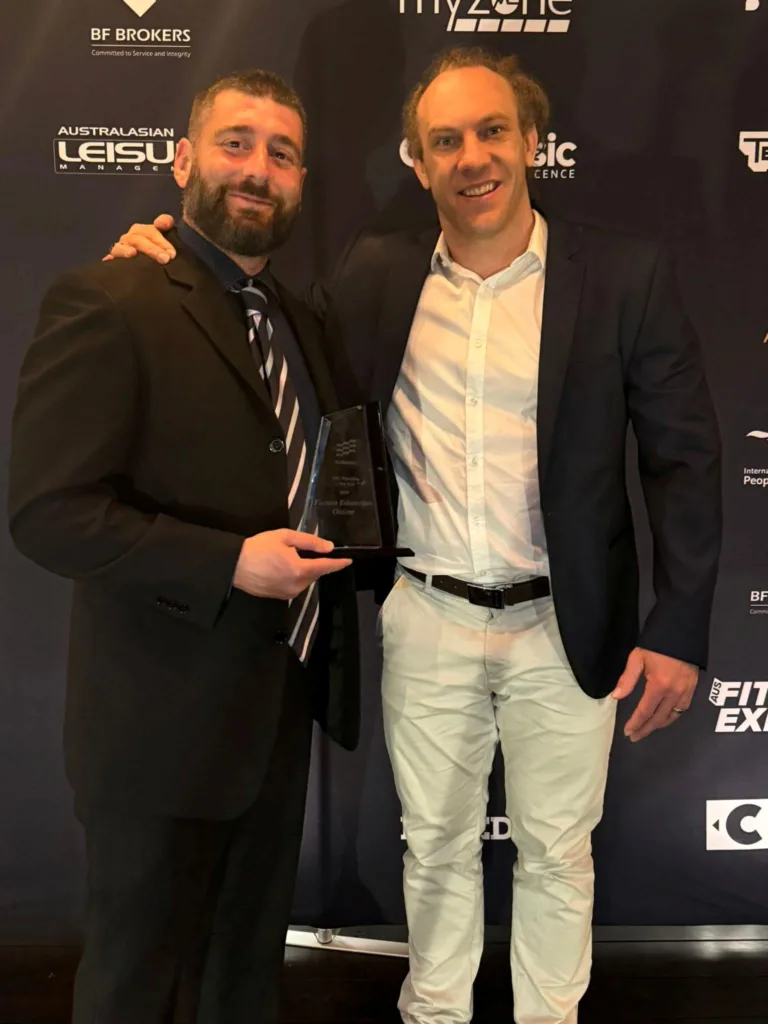
What began as a side project built from his parents’ home has evolved into a global success story. Fitness Education Online has been named CEC Provider of the Year at the Australian Fitness Industry Awards in both 2022 and 2024, and is a finalist for the same title in the UK Fitness Awards this year.
For Jono, these accolades represent more than trophies on a shelf – they’re a testament to persistence, innovation, and belief.
“It means a lot, because this business really started from scratch – just myself and a business partner,” Jono says.
“At the time, I was still living at home with my parents, typical Greek guy in his 20s. So, to go from building something out of my bedroom to winning awards against huge organisations – major colleges, TAFEs, even universities with hundreds of staff and massive budgets – is incredible.’
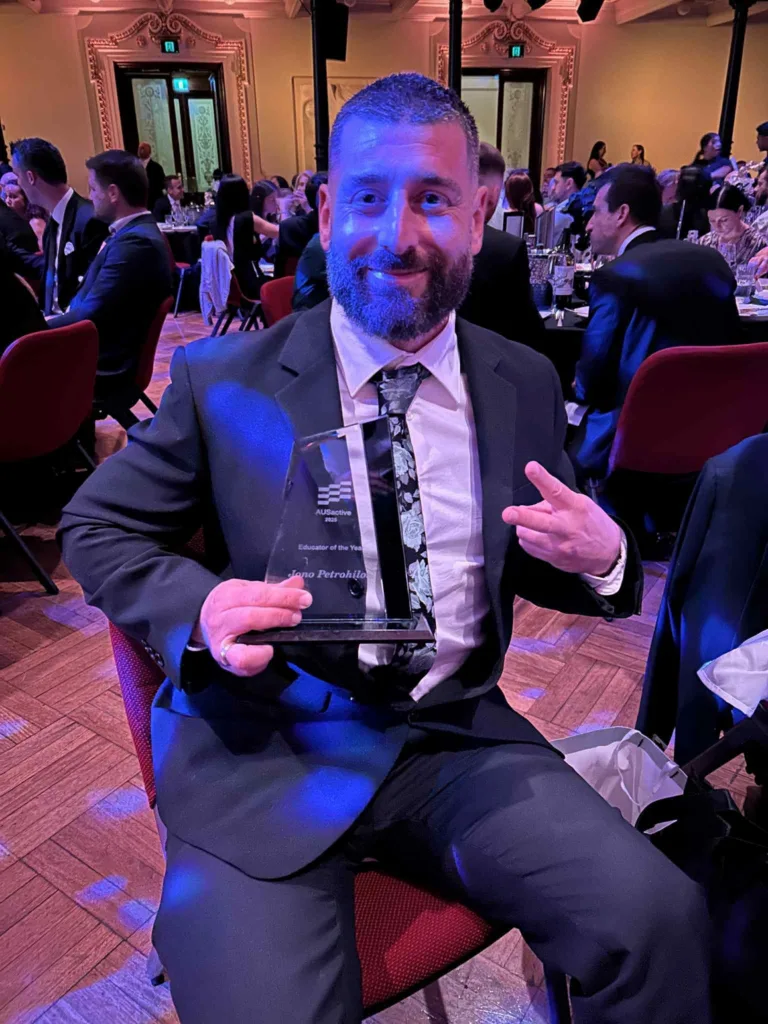
And it’s not just the company that’s being recognised. Jono himself has twice been named Fitness Educator of the Year — first in 2020, and again in 2025.
Ask Jono what makes his courses stand out, and his answer is refreshingly simple: relevance and engagement.
“The fitness industry is always changing. What was in demand 10 years ago isn’t what’s selling now. My very first course was about running a bootcamp – at the time, no one really knew how to do it. Fast forward to today, and bootcamp-style gyms like F45, CrossFit, Fitstop, BFT, and others are everywhere,” he says.
“The key is picking topics that are relevant right now. I can do that because I’m still so deeply connected to the industry. I run the world’s largest Facebook group for fitness professionals, so I see the conversations happening every day.”
Each new course is built around direct feedback from that community. “I’ll literally ask my students, ‘Would this be useful to you?’” he says. “That way, every course is built around real demand.”
Equally important is the way he teaches.
“No one wants to sit through an hour-long lecture anymore. With TikTok and short-form video, if you don’t capture attention in 15 seconds, you lose it,” Jono explains.
“So, I focus on keeping things short, sharp, and entertaining. I use humour, I cut out the fluff, and I work hard to explain concepts quickly and clearly. I think that combination of fresh topics plus an engaging teaching style is what’s helped me stand out as an educator.”
When Greek Australian entrepreneur Jono Petrohilos first started out as a personal trainer. Now, he’s winning awards.
Adapting to the future of fitness
From AI-powered coaching tools to social media-driven marketing, the fitness industry is evolving rapidly – and Fitness Education Online is evolving with it.
Jono’s approach extends well beyond fitness itself. He regularly attends marketing, business, and technology conferences, drawing inspiration from innovations in those fields to develop fresh and effective ways of teaching fitness.
That cross-industry mindset, combined with the company’s flexible course design, keeps Fitness Education Online agile and globally competitive.
“Our courses are designed to be flexible and adaptable. They’re not locked into one clunky system that’s hard to change. If the industry shifts and we need to update or even completely restructure a course, we can do it quickly. That adaptability makes it much easier for us to stay current with global trends while still maintaining high educational standards,” he says.
A Greek Australian work ethic
Jono credits much of his drive to his Greek Australian upbringing – and to parents who instilled in him the value of education and hard work.
“Both my parents were very well educated. My dad was a high school head of mathematics, my mum was a psychologist, and both of them were first-generation university graduates – which was huge for their migrant parents,” he says.
While his siblings pursued traditional academic careers, Jono charted his own path in the fitness industry. Early on, he met a franchise owner managing 75 bootcamps without a university degree – a moment that shifted his perspective and taught him that success can come not only through education but also through initiative, risk-taking, and creating one’s own opportunities.
That mindset continues to define his career today, strengthened by the discipline and commitment to excellence instilled by his cultural background – qualities that guide both his leadership and his teaching.
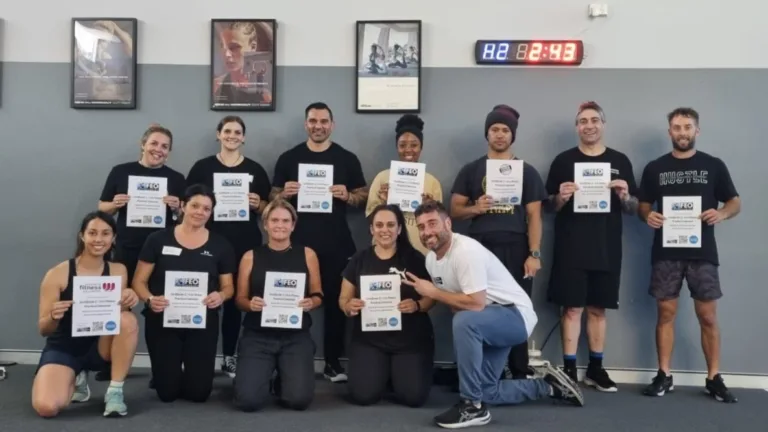
Jono Petrohilos, pictured with a work colleague, is inspired by his Hellenic heritage.
Inspiring the next generation
Asked what advice he’d give to young Greek Australians – or anyone looking to break into the fitness or education industries – Jono doesn’t sugarcoat it.
“Both fitness and education are incredibly competitive industries,” he says. “I was fortunate to get into fitness twenty years ago and education ten years ago – back then, it wasn’t quite as crowded. I wouldn’t want to give anyone the false impression that it’s easy.”
He believes success comes down to three key lessons.
“First, get really good at one thing,” Jono explains. “Before I ever taught other trainers, I became excellent at running my own bootcamp. Too many young people are chasing the ‘get rich quick’ dream they see online, but people will only seek you out if you’re genuinely skilled.”
The second, he says, is to make what you do engaging. “Being good isn’t enough – there are plenty of smart people out there, but if you can’t keep people’s attention, you’ll lose them. Education should be entertaining as well as informative.”
Finally, he stresses the importance of building an audience. “Even the best product or service won’t succeed if no one knows about it. An audience gives you reach and influence – and that’s what turns good ideas into impact.”
Above all, he reminds aspiring entrepreneurs that education should be a launchpad, not a limit.
From local trainer to global educator
From a bootcamp in suburban Australia to global recognition, Jono’s story is a masterclass in resilience, reinvention, and relentless drive.
He’s not just shaping better trainers – he’s helping redefine what fitness education looks like in a digital, fast-changing world.
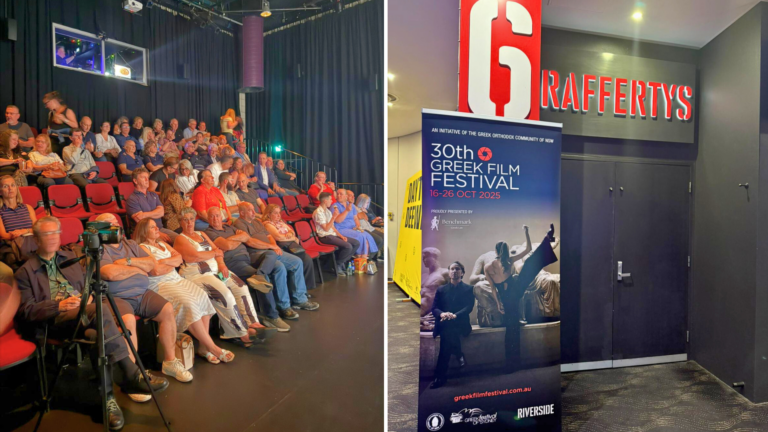
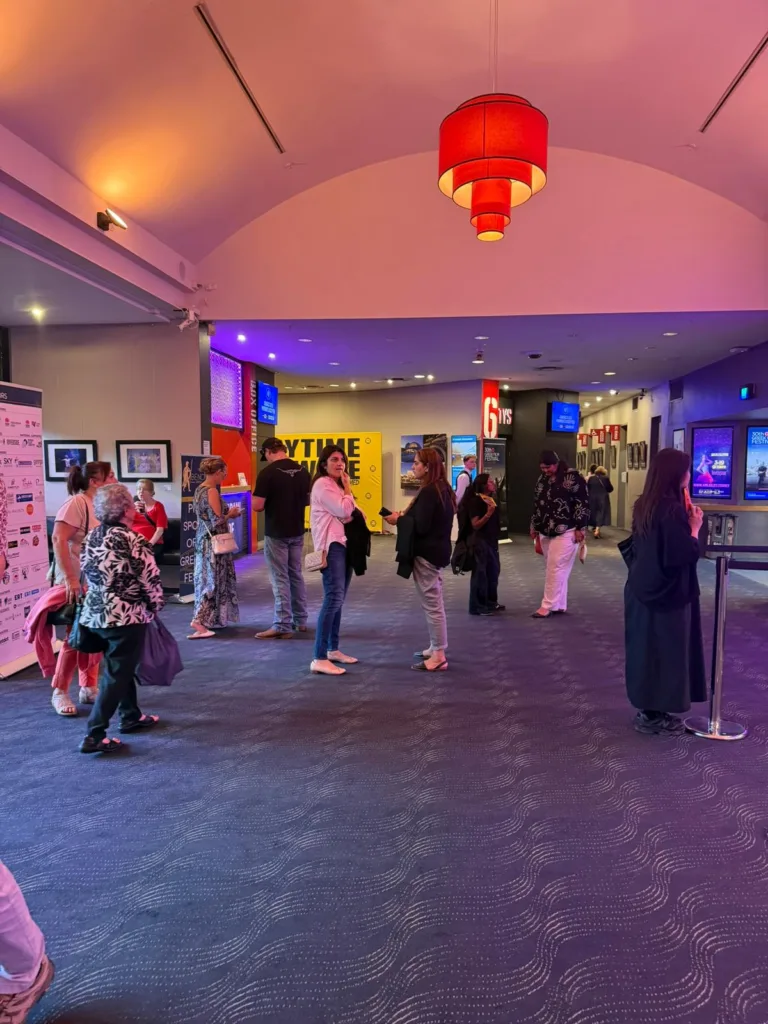
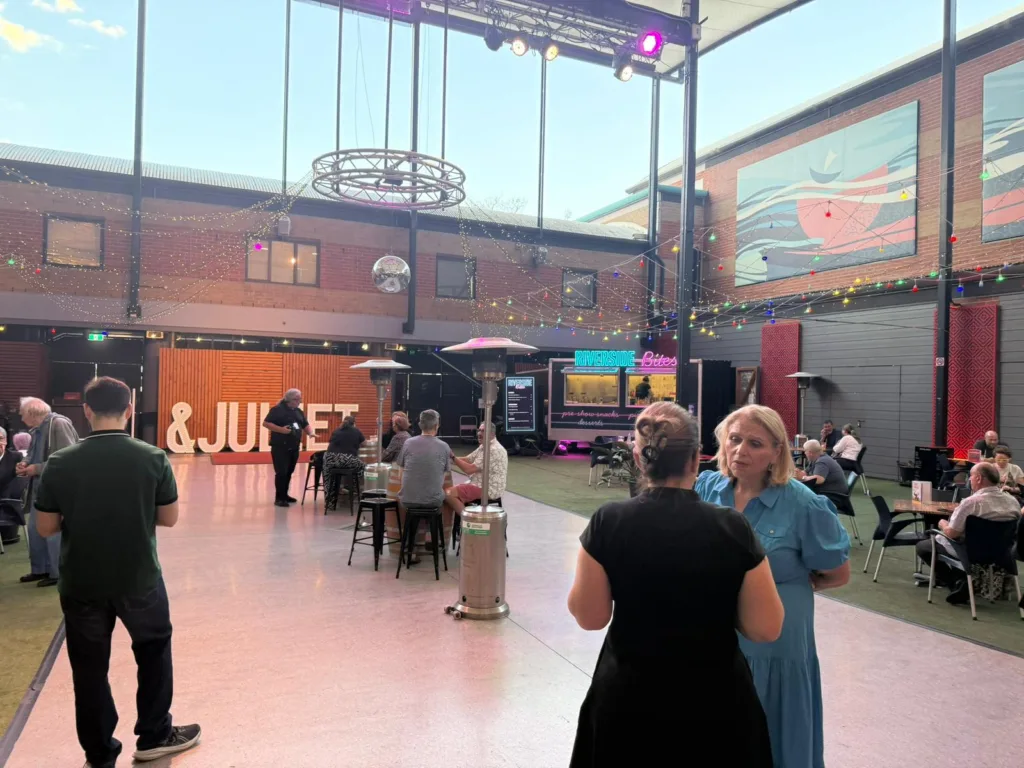
History was made in Parramatta on Thursday, October 16 as the 30th Greek Film Festival of Sydney, proudly presented by Benchmark Greek Law, held its official Western Sydney opening at the Riverside Theatres – marking the first time in the festival’s history that it expanded beyond its traditional inner-city venues.
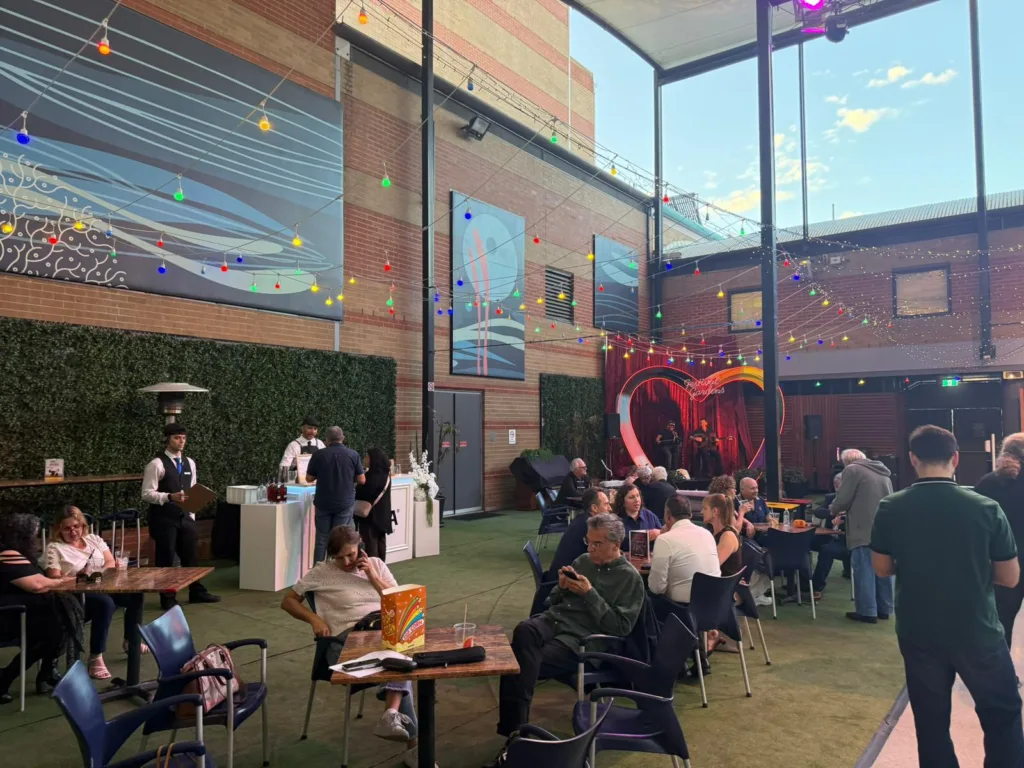
The intimate 87-seat theatre was filled to capacity, welcoming film lovers, community leaders, and special guests for a memorable evening celebrating Greek cinema and culture.
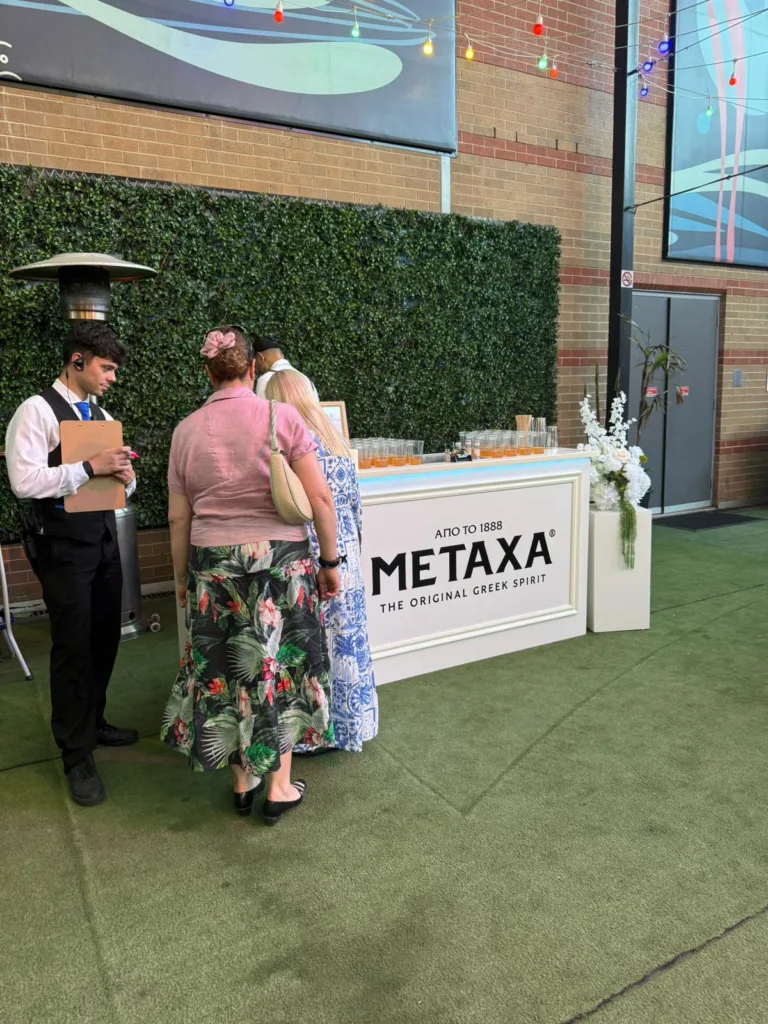
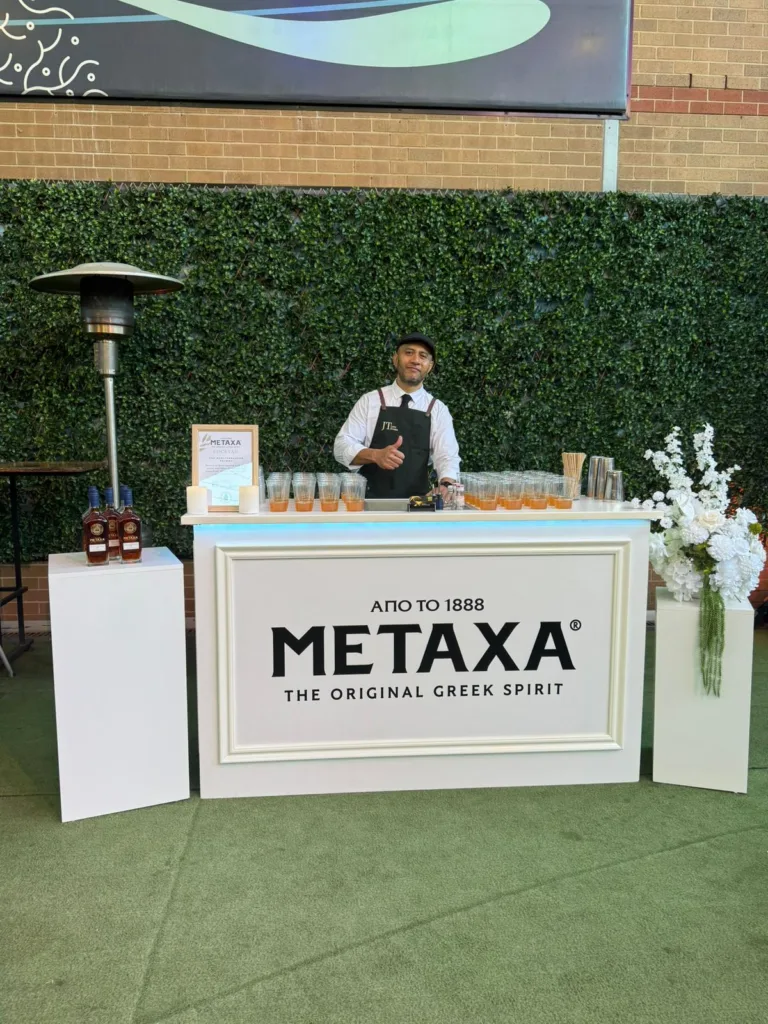
Guests enjoyed Metaxa cocktails before the screening of Kapetan Mihalis, directed by Kostas Haralambous and inspired by Nikos Kazantzakis’ epic novel.
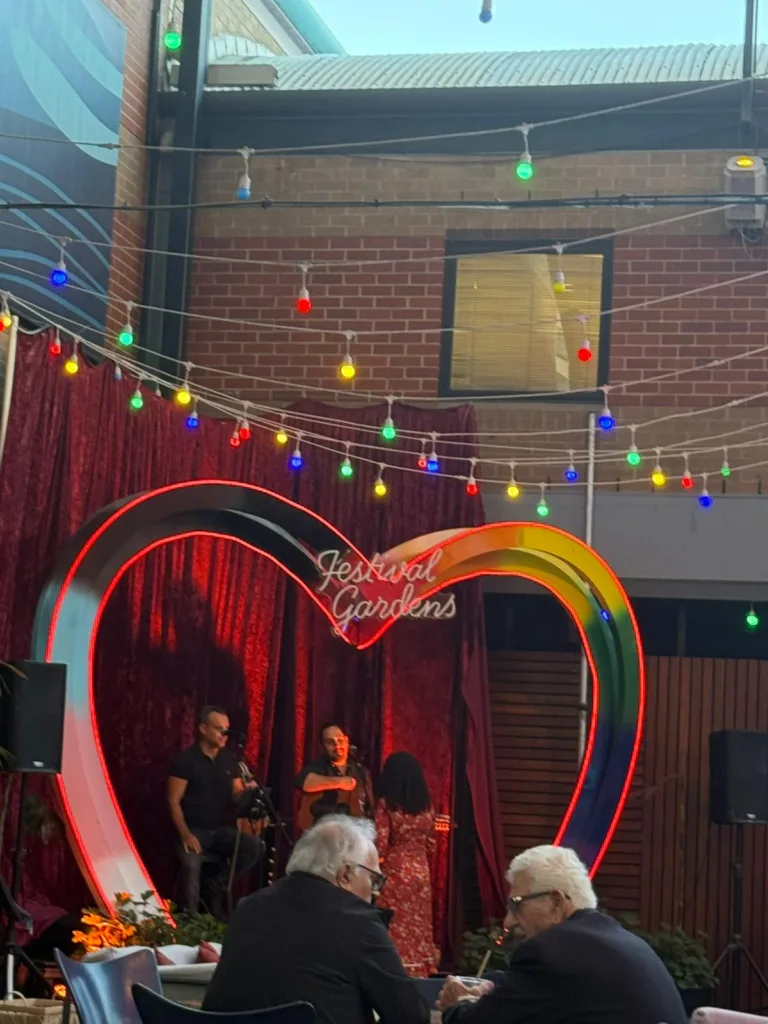
Adding to the Cretan atmosphere, IHO NYX performed live ahead of the film, captivating the audience with traditional sounds.
Among the distinguished attendees were Cr Georgina Valjak and Cr Sreeni Pillamarri from the City of Parramatta, Chair of the Greek Festival and Greek Film Festival of Sydney, Nia Karteris, John Bris and Tina Karayannis of the Greek Festival of Parramatta, and visiting director Kostas Macheras from Greece.
Ms Karteris praised the milestone expansion and said the committee brought the festival to Parramatta in response to strong community demand, ensuring Western Sydney’s Greek audiences could enjoy and celebrate Greek cinema close to home.
The Riverside program features 16 screenings, showcasing a curated mix of anniversary retrospectives, contemporary Greek productions, and family-friendly films.
As the night drew to a close, it was clear that the west had indeed been won – with cinema, community, and culture taking centre stage.
Brisbane Roar’s new midfielder Georgios Vrakas says he would “love to play for Australia” as he prepares for his A-League debut against Macarthur FC tonight.
The 24-year-old playmaker, who has represented Greece at youth level and previously played for Napoli and Atromitos, joins the Roar as a local player thanks to his Australian-born father.
Roar officials expect big things from the “creative, goal-scoring” midfielder, with Vrakas praising coach Michael Valkanis for encouraging attacking football.
Having quickly settled in Brisbane, Vrakas said he feels at home among the country’s strong Greek community and is eager to make an impact: “We’re ready.”
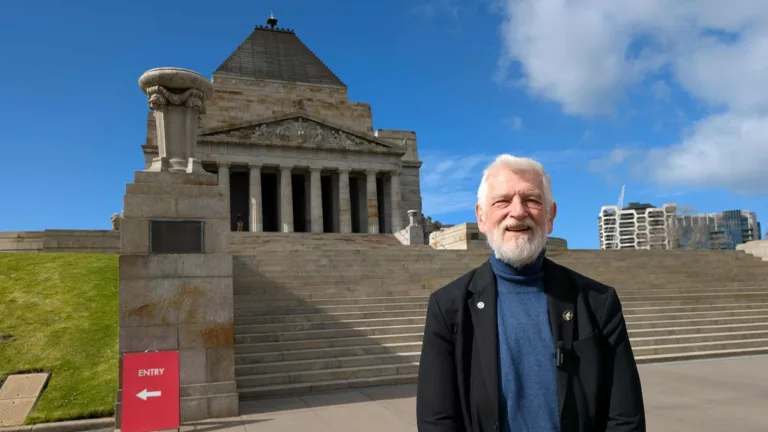
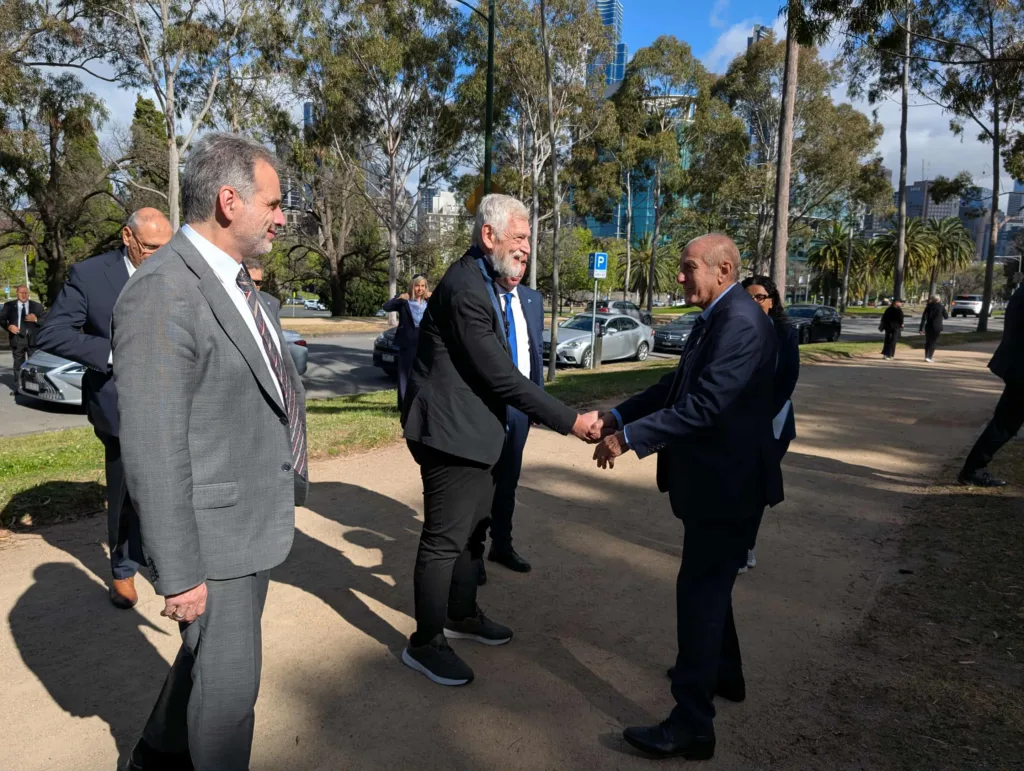
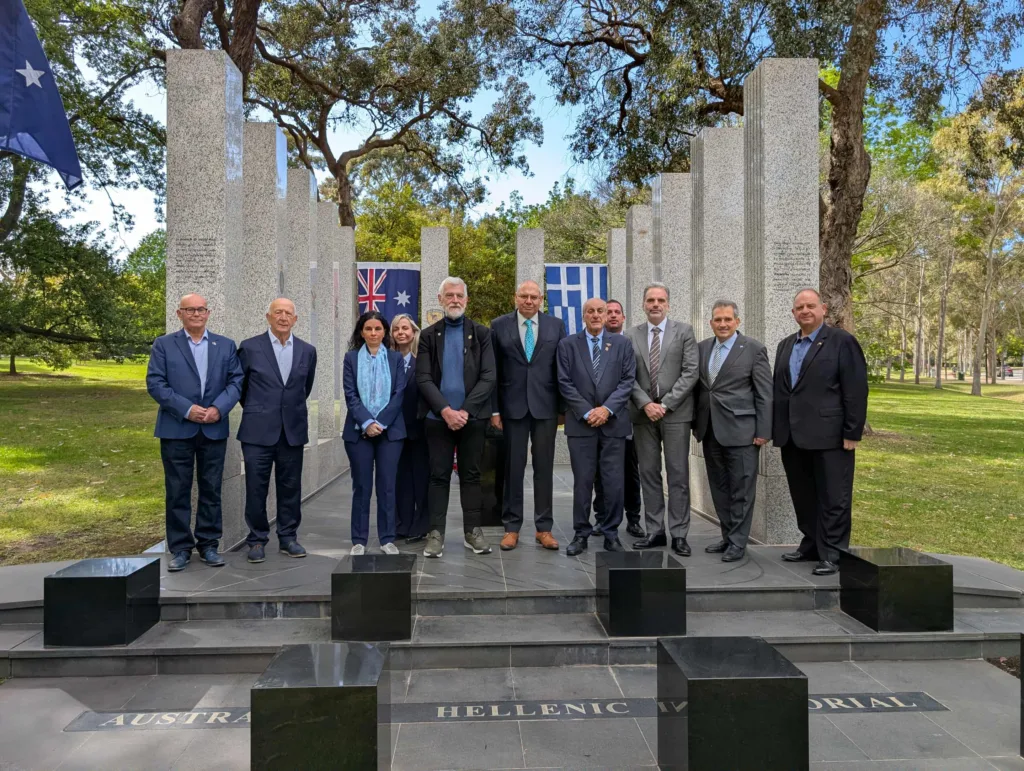
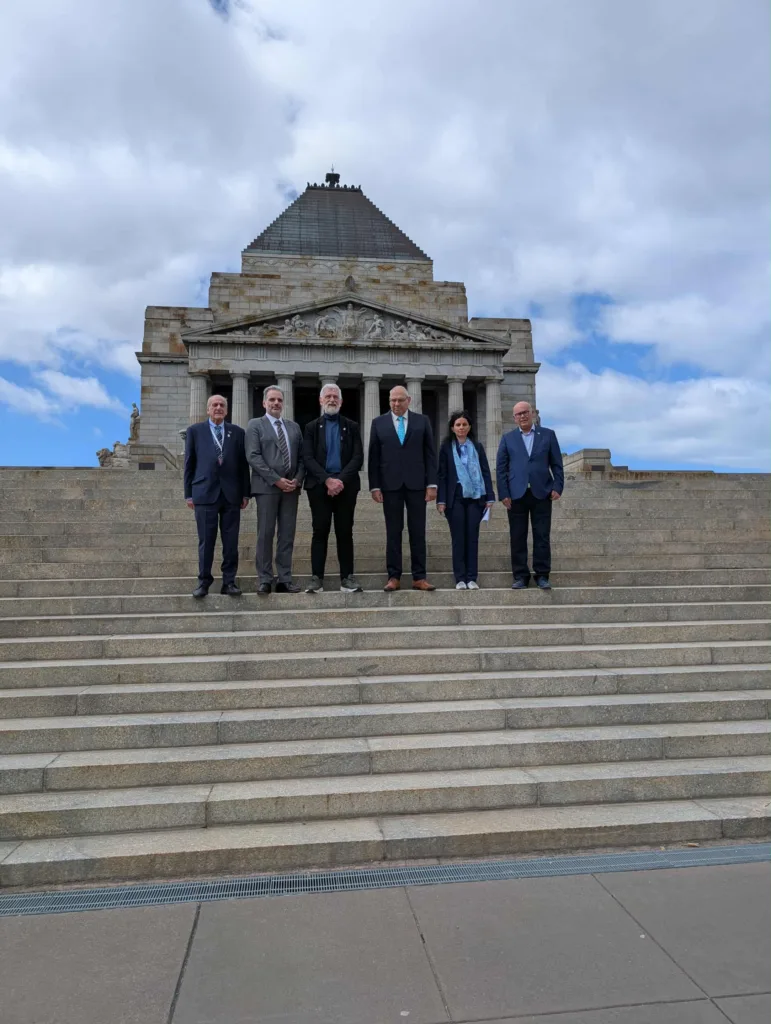
It was a lovely morning at the foot of Melbourne’s Shrine of Remembrance as Australian Hellenic War Memorial (AHWM) President Steve Kyritsis OAM ensured everything was pristine ahead of Greek Deputy Foreign Minister for Greeks Abroad Ioannis Loverdos’ visit.
Patron and AHWM co-founder Pantelis Kalimnakis OAM, AHWM Secretary Peter Andrinopoulos, and AHWM Treasurer Nikolaos Kydas hoisted the flags, chatting about the night before as the sun broke through the clouds.
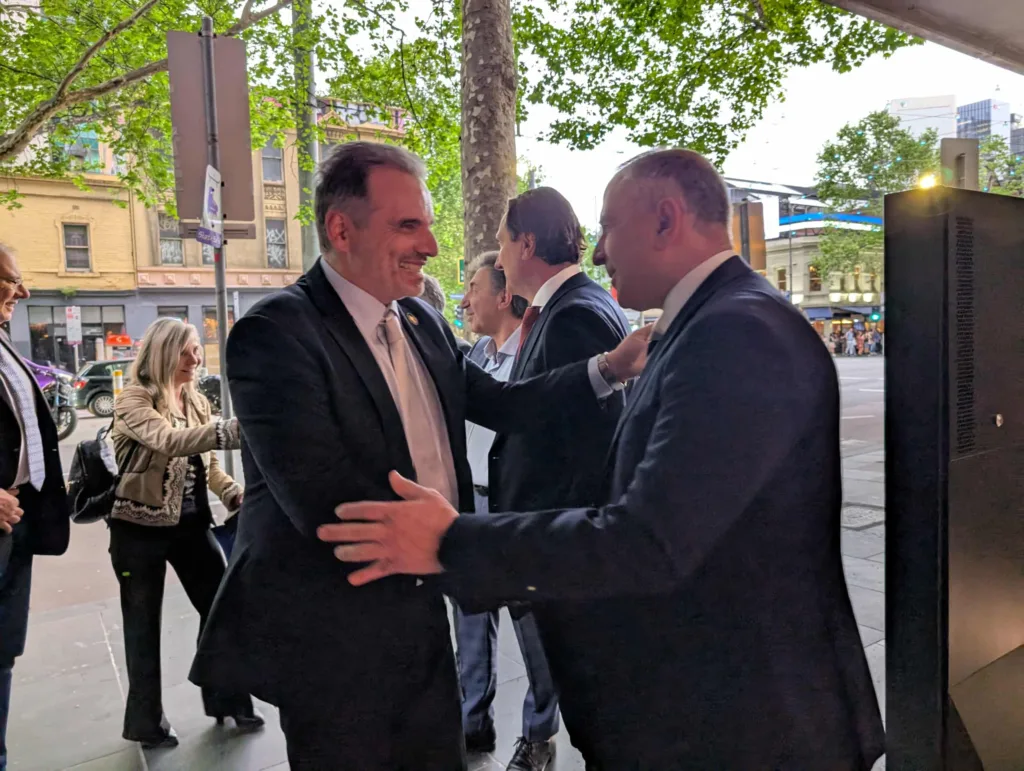
Right on schedule, Loverdos arrived with the Greek delegation – Interior Secretary General Athanasios Balermpas, Citizenship General Secretary Dimitris Karnavas, and Director General for Citizenship Issues Katerina Ouli. They were joined by Greek Ambassador Stavros Venizelos and Consul General of Melbourne Dimitra Georgantzoglou, who ensured the visit ran seamlessly and on time. Her task was not an easy one, as members of the delegation joked that they could happily stay all day.
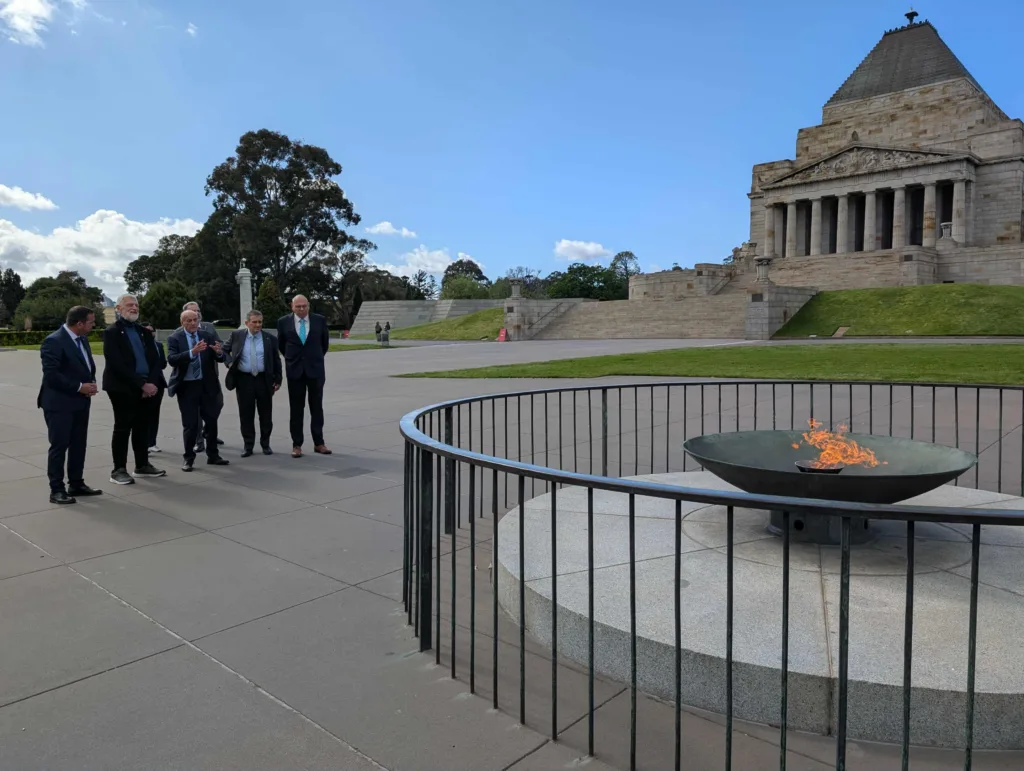
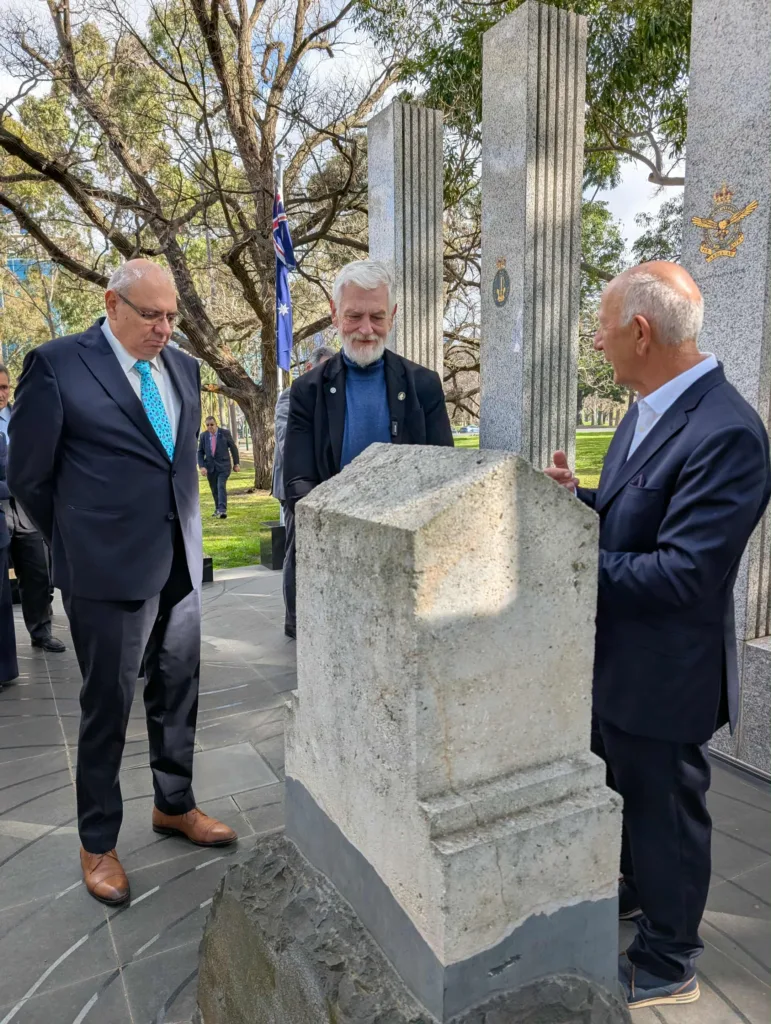
Steve Kyritsis OAM greets Greek Deputy Minister Ioannis Loverdos.In front of the eternal flame.Steve Kyritsis presents the features of the AHWM, steeped in symbolism.
Loverdos shared with The Greek Herald his reflections on Greek Australians during his first visit to the country, touching on questions of identity, language, and the enduring essence of being Greek.
“We preserved Hellenism during Ottoman rule through language and Orthodoxy. Without these, we would have lost ourselves,” he observed.
Asked whether this, his first visit to Australia, had changed his perception of the Greek Australian diaspora, he replied thoughtfully: “I don’t think so. My impression hasn’t changed. I see people who have a deeply emotional bond with their homeland,” he said.
“Their visits (to Greece) are powerful, because more people come now than in the past. You’ve understood that Greece has changed; it’s no longer the Greece of your grandparents’ village. It’s a different Greece, more substantial, less romantic, and that’s a good thing.”
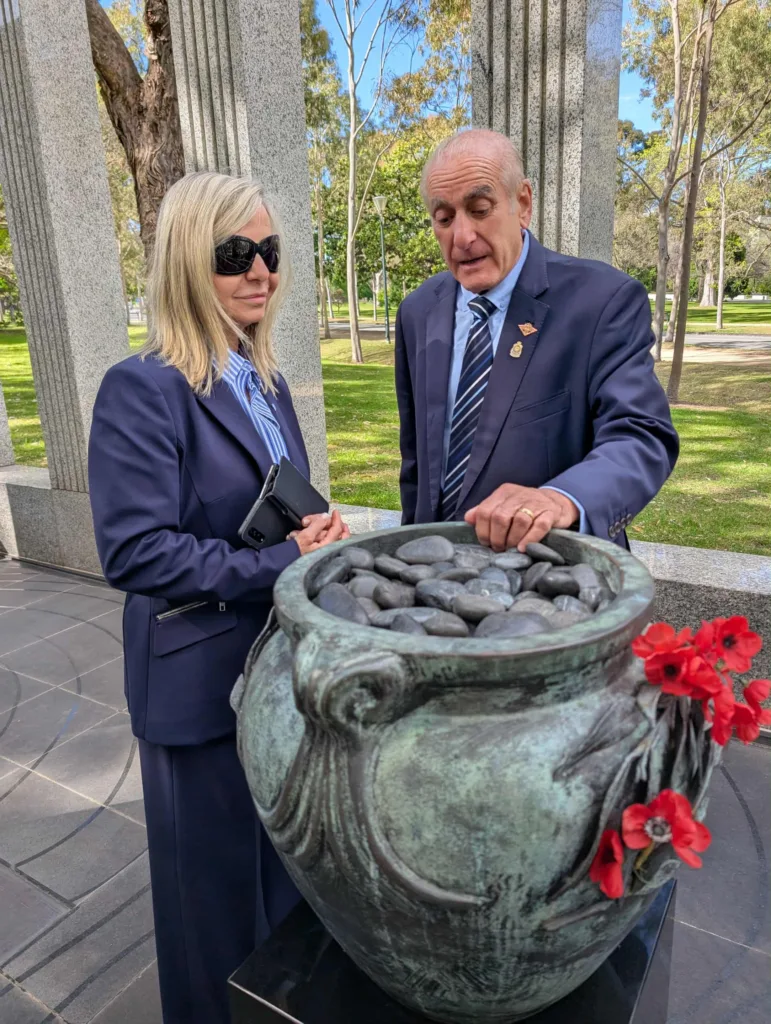
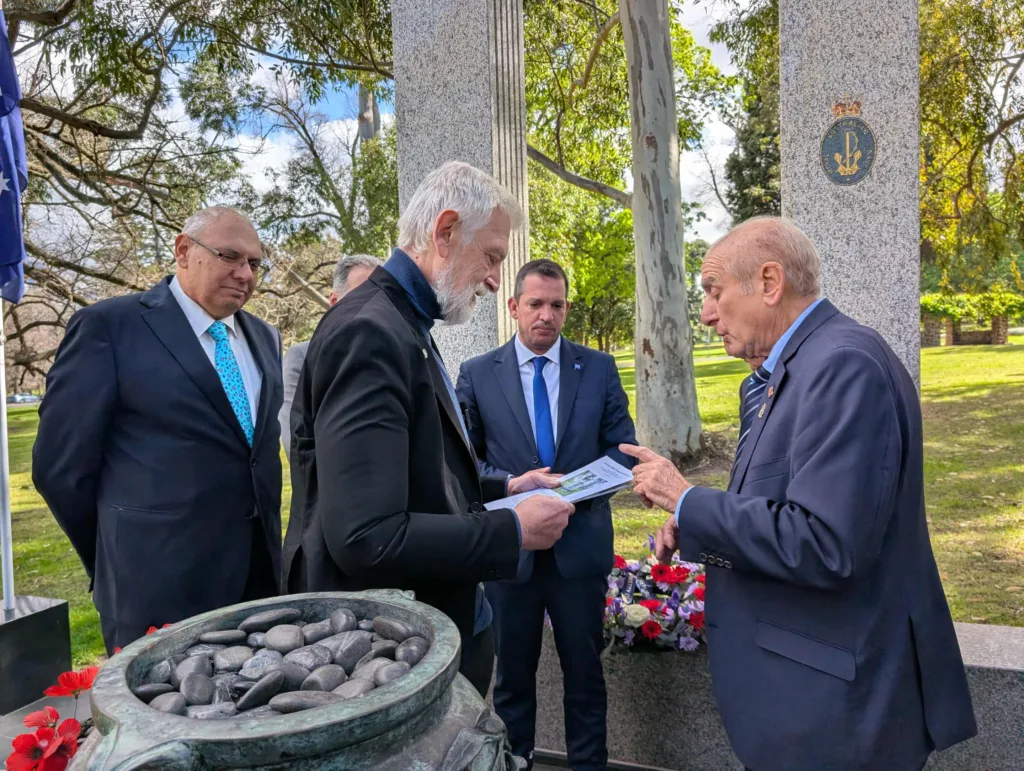
Delegation at the Australian Hellenic War Memorial.Pantelis Kalimnakis, chatting with Ioannis Loverdos and Athanasios Balermpas.Katerina Ouli and Steve Kyritsis.
When The Greek Herald suggested that Greece could engage more actively with influential Greek Australians and philhellenes, creating a lobby, Loverdos nodded in agreement.
“That’s what we want,” he said, adding that he had already met several prominent figures who, despite losing the language, retained a strong ‘Greek consciousness.’
Loverdos also reflected on the complexity of his role, encompassing a wide gammut of Greeks, from new arrivals to post-war migrants and those who may not hold Greek citizenship but still feel deeply connected to their heritage. He lamented the loss of language, but emphasised that Hellenism cannot be measured solely by linguistic ability.
“We meet people born in other countries who may not have documents, but you can tell if someone is truly Greek. That’s why we’re changing the citizenship code, so these people can also obtain Greek nationality,” he said.
The Greek delegation were presented with badges and information about the memorial.
Balermpas, continuing The Greek Herald’s conversation from the previous evening, expanded on this topic, advocating for the rights of diaspora Greeks without citizenship. He confirmed that the proposed Homogeneia (Diaspora) Card, stalled despite being designed for those wishing to reconnect with Greece, would soon be revived. The card would grant privileges such as opening bank accounts, reduced museum entry, and extended stays in Greece as Greeks rather than tourists.
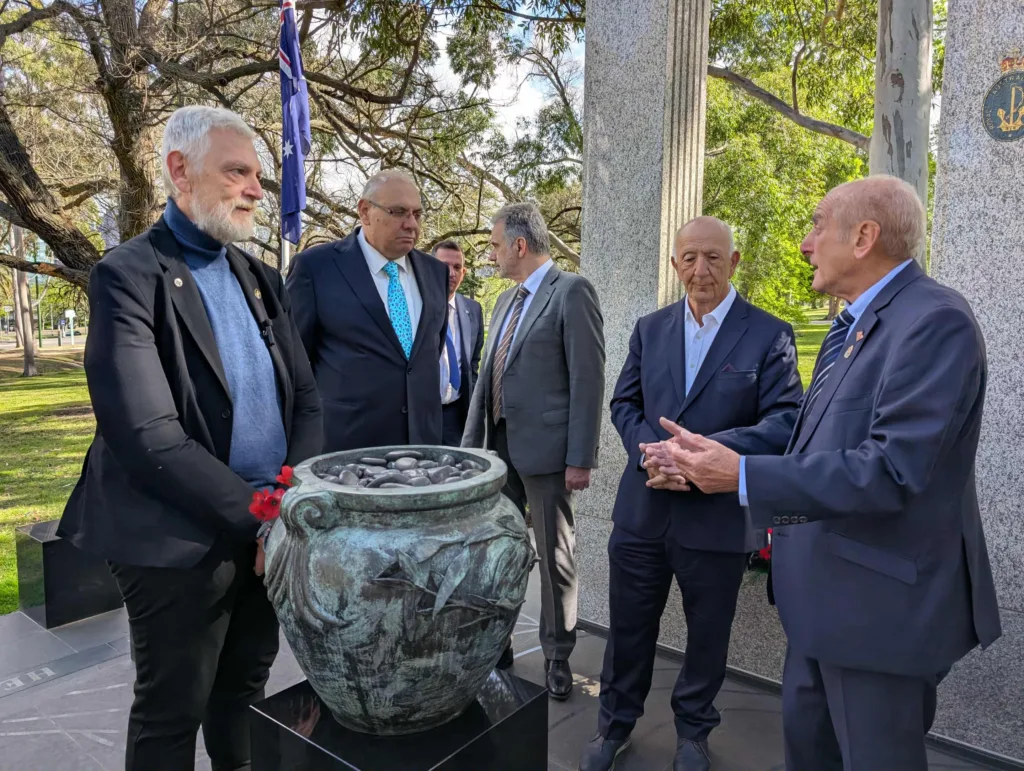
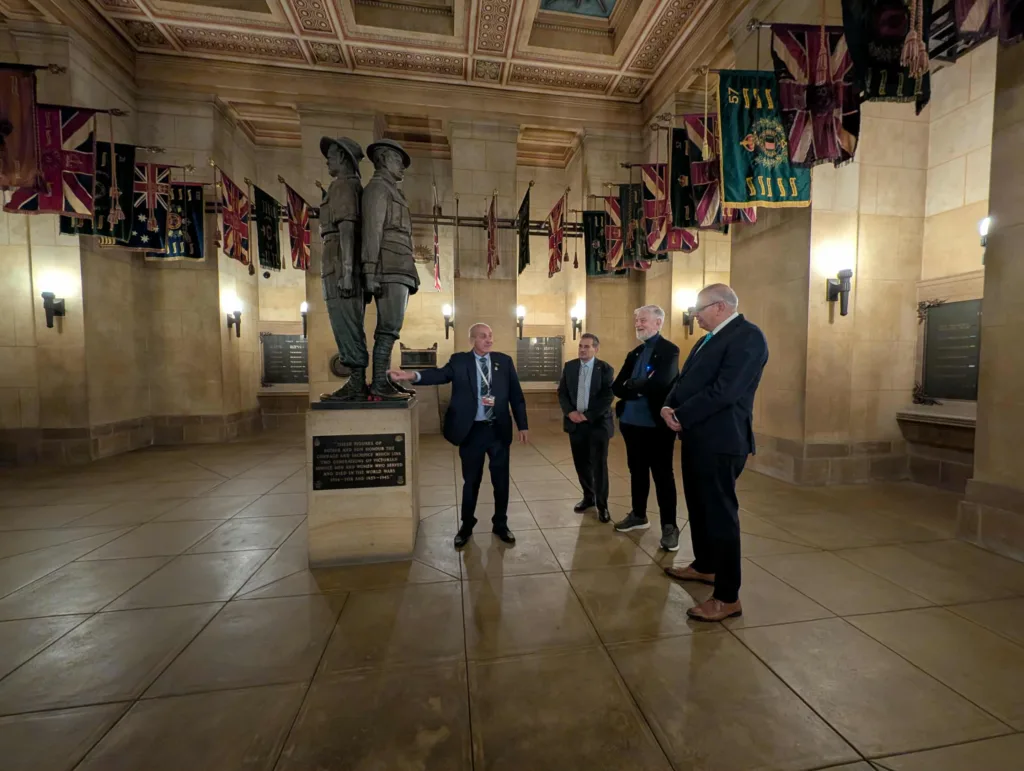
The discussion about citizenship and belonging flowed naturally into the day’s solemn visit to the AHWM. Kyritsis, a veteran and historian, guided them through the twelve granite columns of the Australian Hellenic War Memorial, silent witnesses to the thousands who served in Greece, Crete, and beyond. He recounted the doomed retreat of the Australian Division in 1941, “the greatest catastrophe,” describing how “many were captured alongside British, New Zealand, and Greek soldiers.”
Thinking about Armistice Day.A statue of the unknown soldier and his son, and contemplating the futility of war.
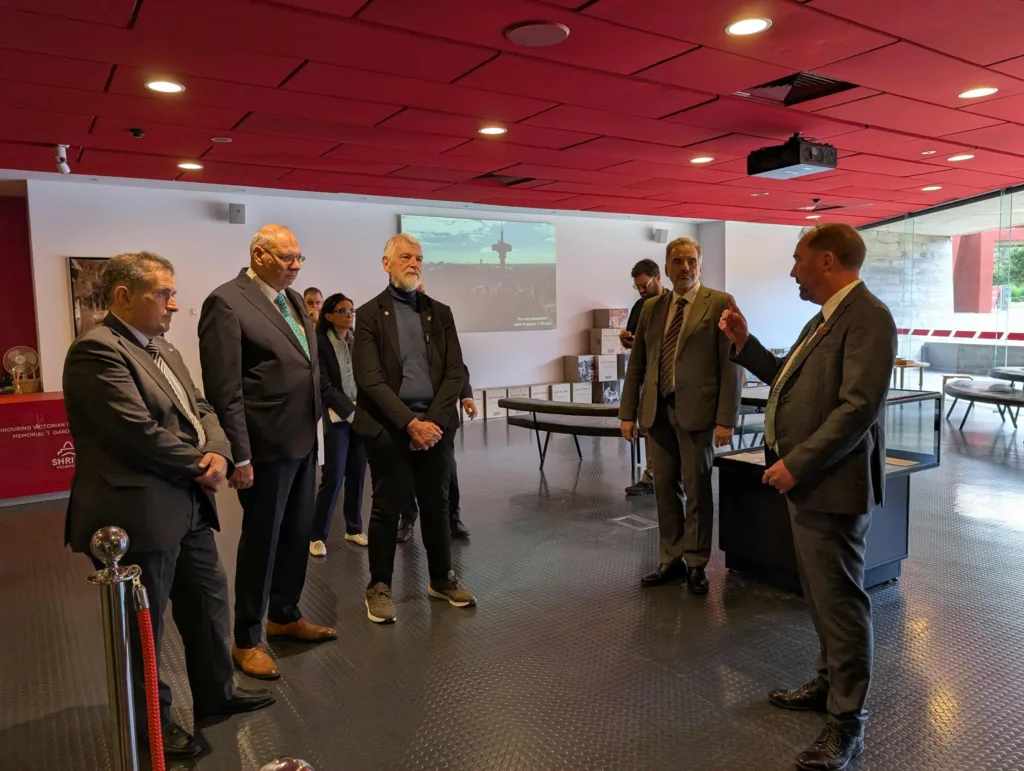
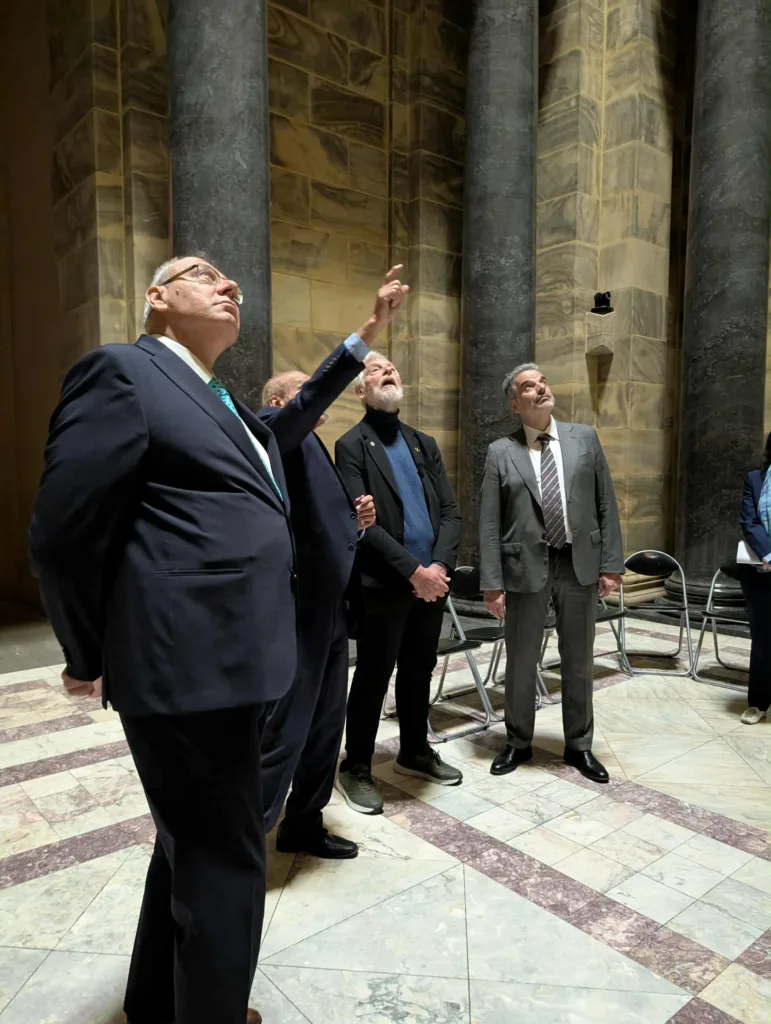
At the Shrine of Remembrance, Loverdos was visibly impressed by the classical geometry and symmetry of the architecture, turning to Ryan Johnson, the Shrine’s Visitor Experience Director, to ask about the Greek influence in its design.
When the Great War ended, Australians rebuilt their communities, drawing on ancient Greek ideals to present a serene, timeless aesthetic that offered solace to the living. The Shrine stands not only as a mausoleum but also as a temple venerating those who served, a structure whose form and function evoke the democratic ideals of ancient Athens: freedom, sacrifice, and the pursuit of peace.
The Shrine’s Visitor Experience Director welcomed the delegation.
The delegation expressed admiration for Australia’s commemoration of conflicts extending beyond Greek campaigns, including Korea, Vietnam, and Afghanistan.
Discussing remembrance, Kyritsis explained the symbolism of the poppy: “It was the only flower that grew in the blood-soaked fields of France after World War I, that’s why we wear the poppy each year.”
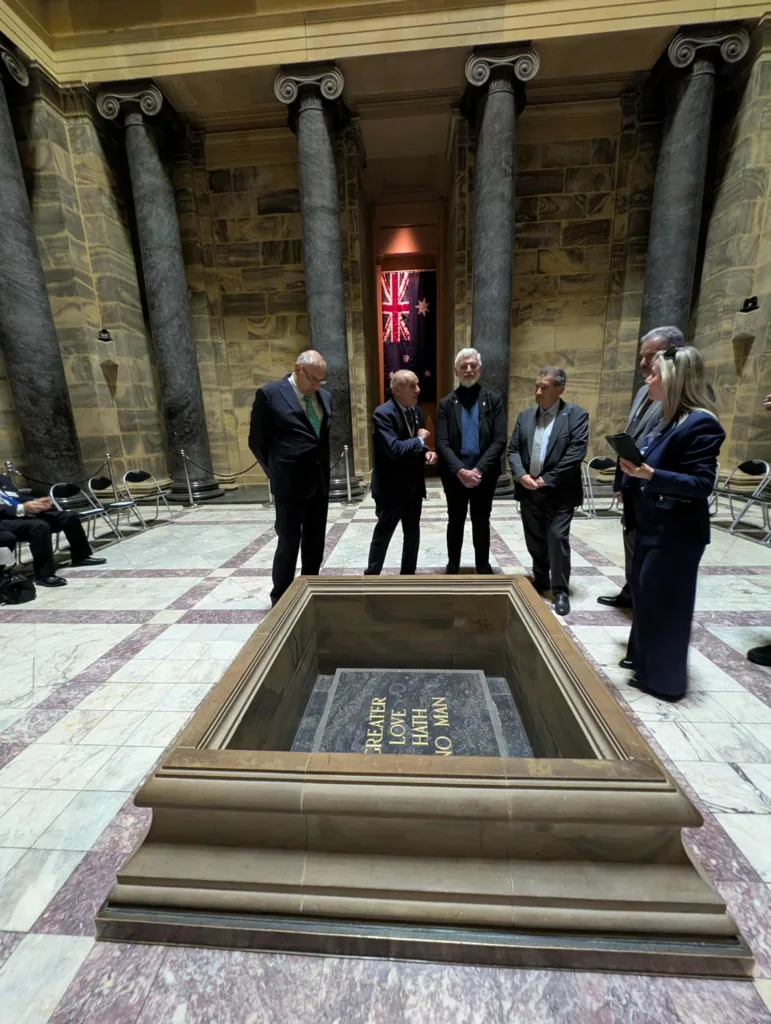
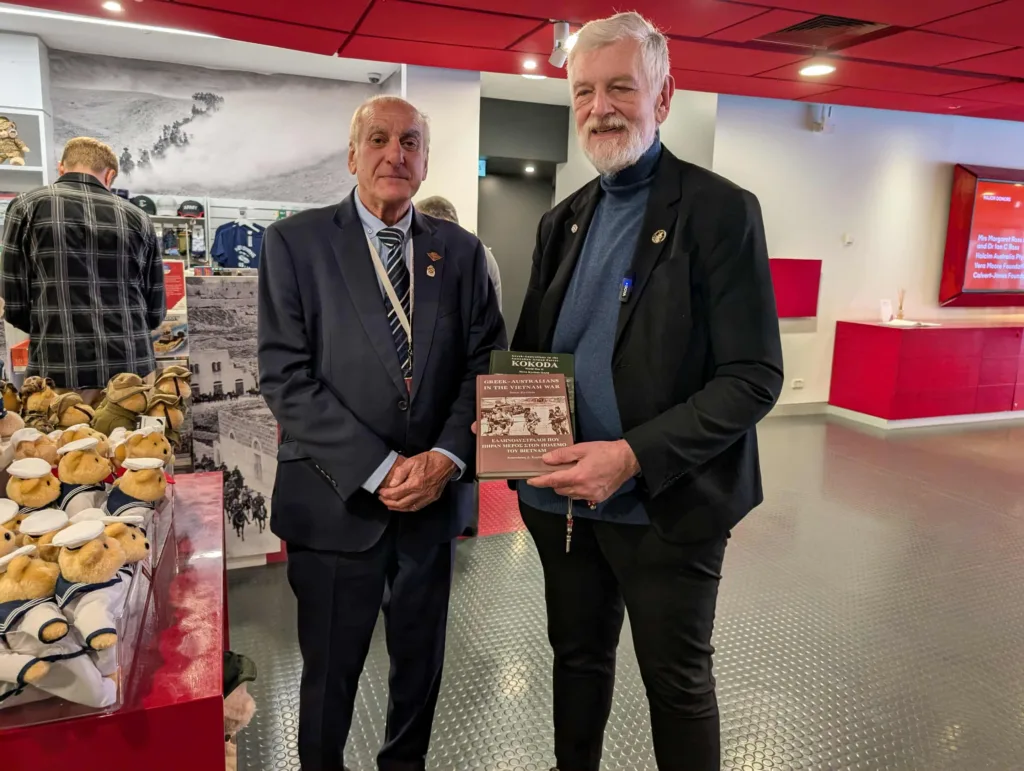
Steve Kyritsis presented Ioannis Loverdos with two of his three books.Gazing at the aperture where a beam passes to illuminate the word Love on the Stone of Remembrance at 11am each 11 November.
Meanwhile, Ouli, who oversees citizenship policy, shared a personal moment inside the Shrine’s crypt – a room steeped in symbolism, where at 11 am each Remembrance Day, a beam of sunlight passes through an aperture to illuminate the word Love on the Stone of Remembrance. Mesmerised by the architectural precision, she revealed that her son was born on 11 November 1998 at 11am, precisely on Remembrance Day.
“I’ll bring him here for his birthday,” she said softly, “to celebrate at the Shrine.”
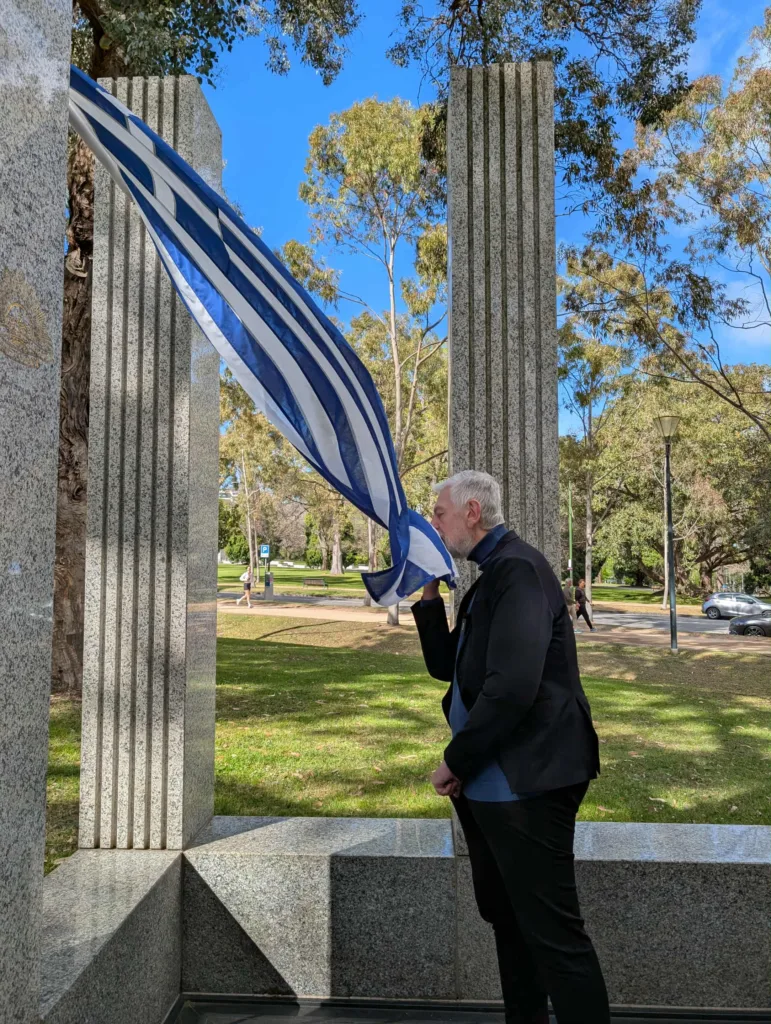
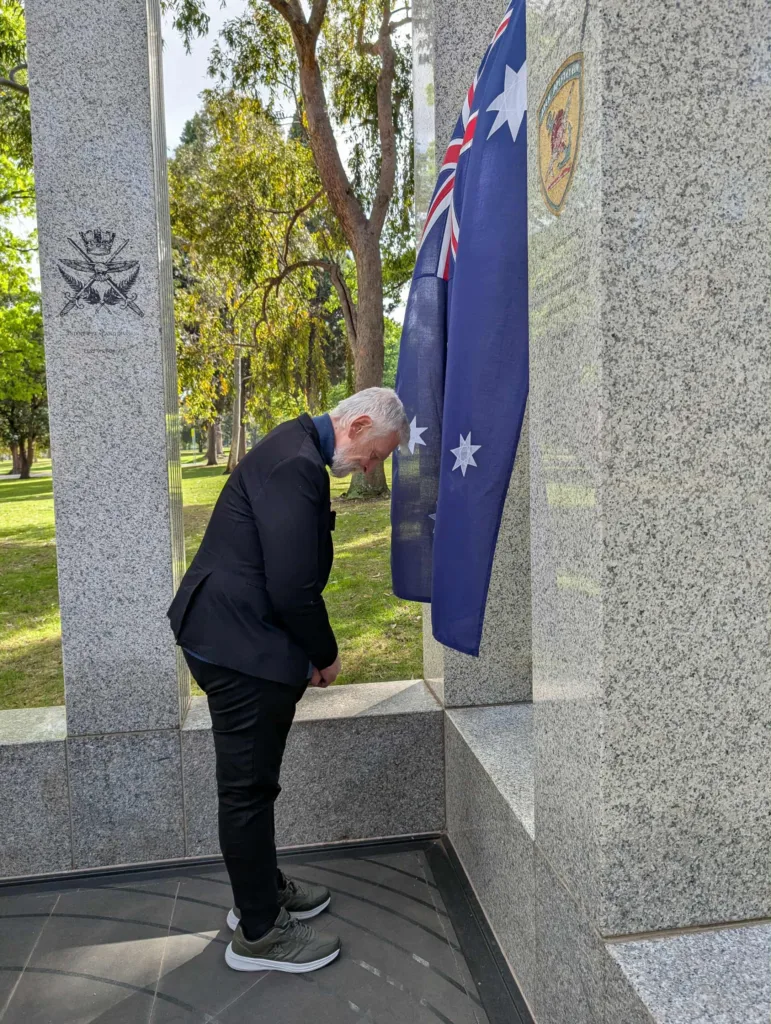
Earlier, Loverdos had laid a wreath at the memorial, bowing before the Greek and Australian flags. The quiet gesture, framed by gum trees and spring light, carried the symbolic gravity of two nations bound by shared battles, and shared ideals of democracy and freedom.
Loverdos kissed the Greek flag.Loverdos bowed to the Australian flag.
*All photos copyright The Greek Herald / Mary Sinanidis
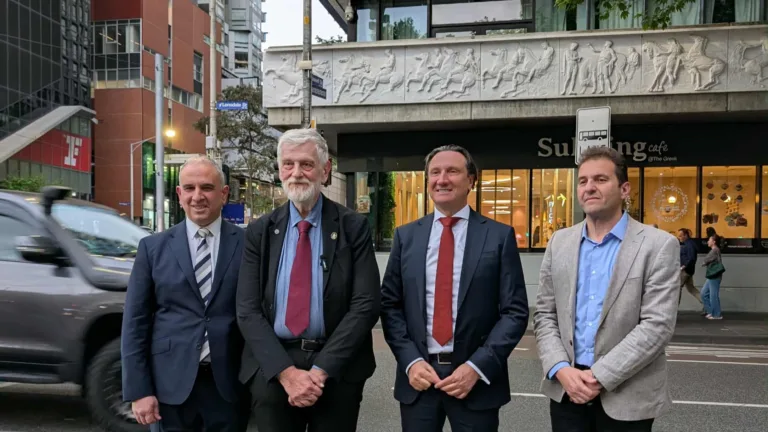
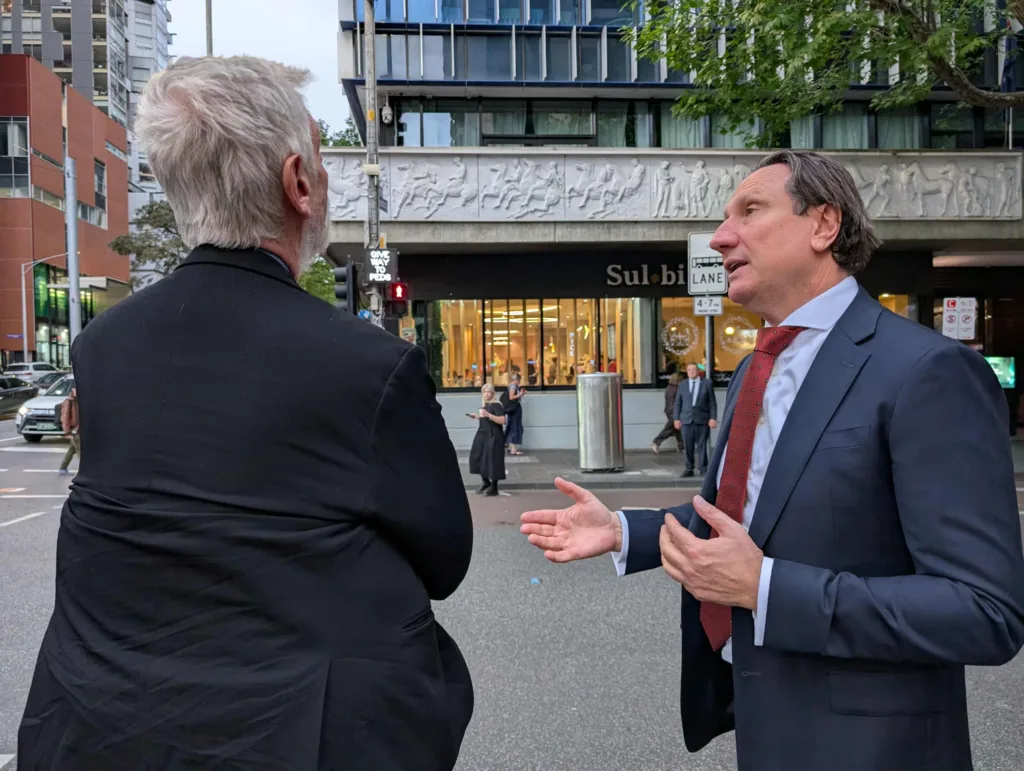
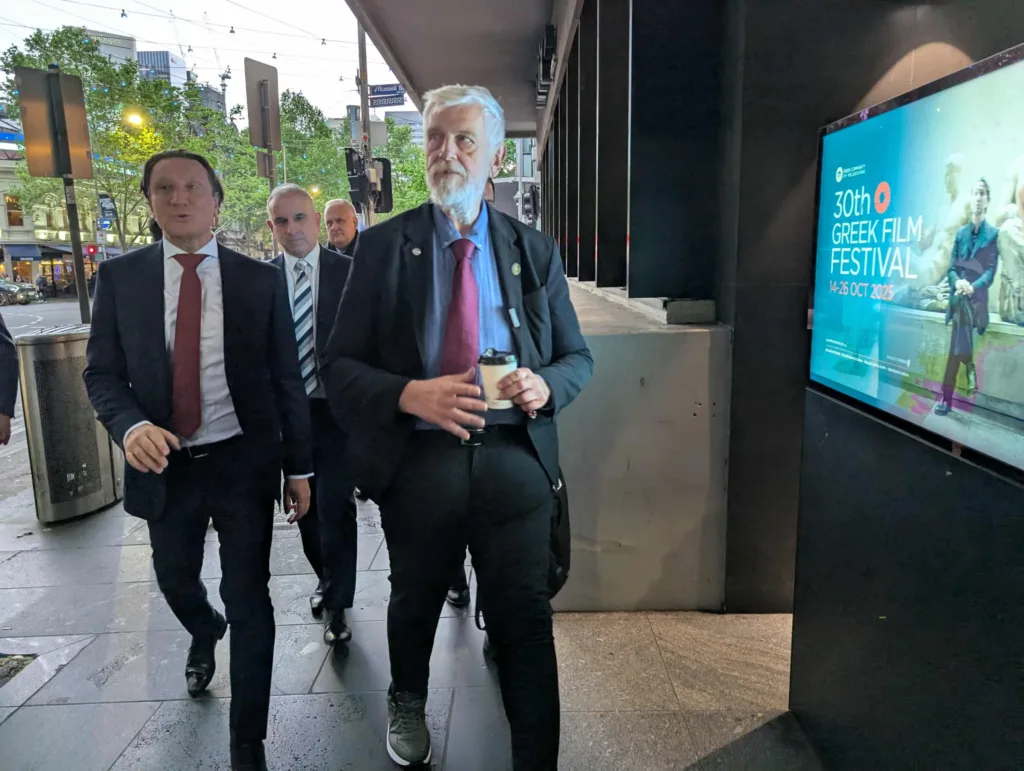
With crowds lining up for selfies and handshakes, it was just as well that Loverdos arrived early at the Greek Centre, giving GCM President Bill Papastergiadis time to offer a tour. Papastergiadis even stopped traffic with his hands as they crossed Lonsdale Street to admire the replica of the Parthenon marbles frieze adorning the building’s exterior.
Admiring the Greek Centre.Bill Papastergiadis shows around Ioannis Loverdos.
At the function in Loverdos’ honour, Papastergiadis highlighted the cohesion of Melbourne’s Greek community. “The most important thing about our community is that we are united, with the Church, our associations, media, and those who provide care and welfare. Together we work to leave something better than what we found.”
Loverdos nodded in agreement: “I was very touched when Papastergiadis said the community is united. Sadly, that is not always common among Greeks abroad. But unity is our strength. Greeks and philhellenes must stand together for the great values that Hellenism represents, from ancient times to today.”
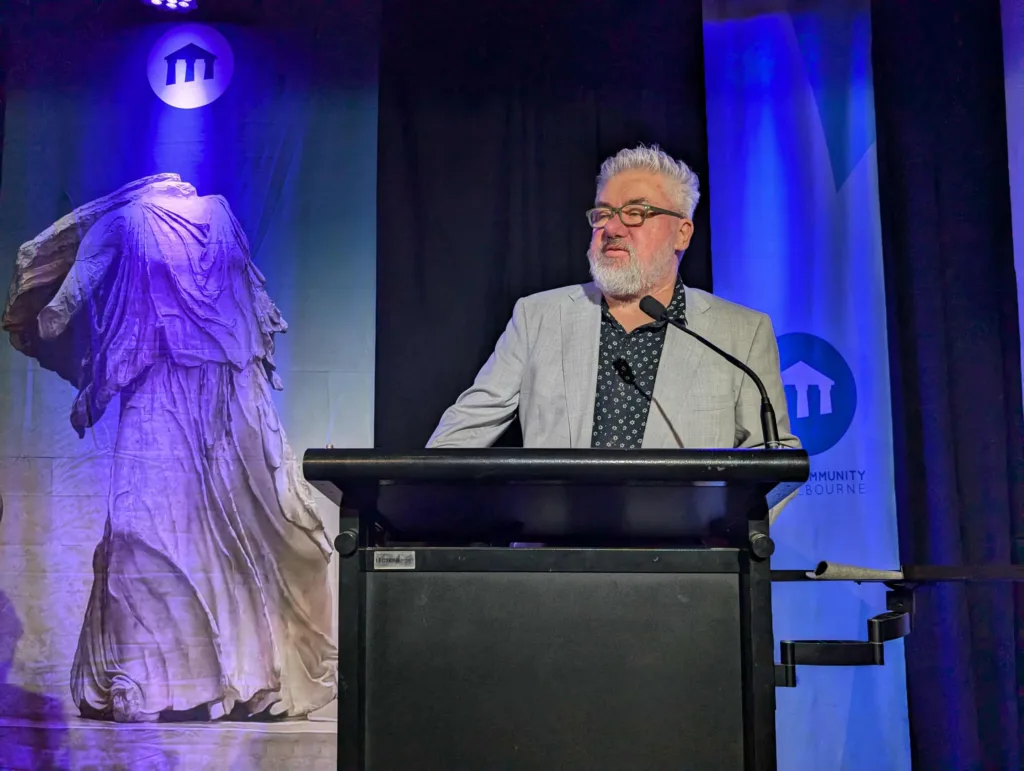
Ioannis Loverdos addresses the crowd.
Battling jetlag but buoyed by affection, Loverdos added: “I don’t care about business; I care about the feelings you showed me. You made me proud to be here as a Greek, as a representative of the Greek state. You are all awesome, and I love you as you love me.”
He reminded the audience that Greece’s essence transcends geography: “Greece is not only Athens or Thessaloniki, not only Mykonos or Santorini. Greece is a civilisation going back 35 centuries of philosophy, medicine, theatre, democracy, and liberty. And you are the bridge between this civilisation and today’s Australia.”
After official photos were taken, Loverdos urged everyone to sing the Greek national anthem, even Julian Hill, Australia’s Assistant Minister for Citizenship and Multicultural Affairs, hummed along.
Assistant Minister Julian Hill and Greek Deputy Foreign Minister Ioannis Loverdos.Assistant Minister Julian Hill.Ioannis Loverdos.
Hill lightened the mood with a story about his Greek and Turkish staffers: “Despina, my office manager for the last seven or eight years, was Greek. She shared an office with my campaign manager, Dillon, a Turkish guy. They had the Turkish and Greek flags, and got on peacefully, as we do in the modern era.”
He laughed, adding that part of the deal was for his Greek staffer to spend six weeks a year in the islands. “I did enjoy my own 50th birthday there, Milos, Sifnos, Athens and the smaller islands. I couldn’t imagine our city without the contribution of Greek Australians in every facet of life.”
Beyond hugs and hymns
Before the cocktail function, the Greek Deputy Minister and his delegates, Ambassador of Greece to Australia Stavros Venizelos, and Consul General of Greece in Melbourne Dimitra Georgantzoglou met privately with community leaders. They discussed cultural and educational collaborations, including youth camps and other partnerships.
Litsa Athanasiadis, Ioannis Loverdos and lawyer Dean Kalimniou.Jorge Menidis, MC for the evening.
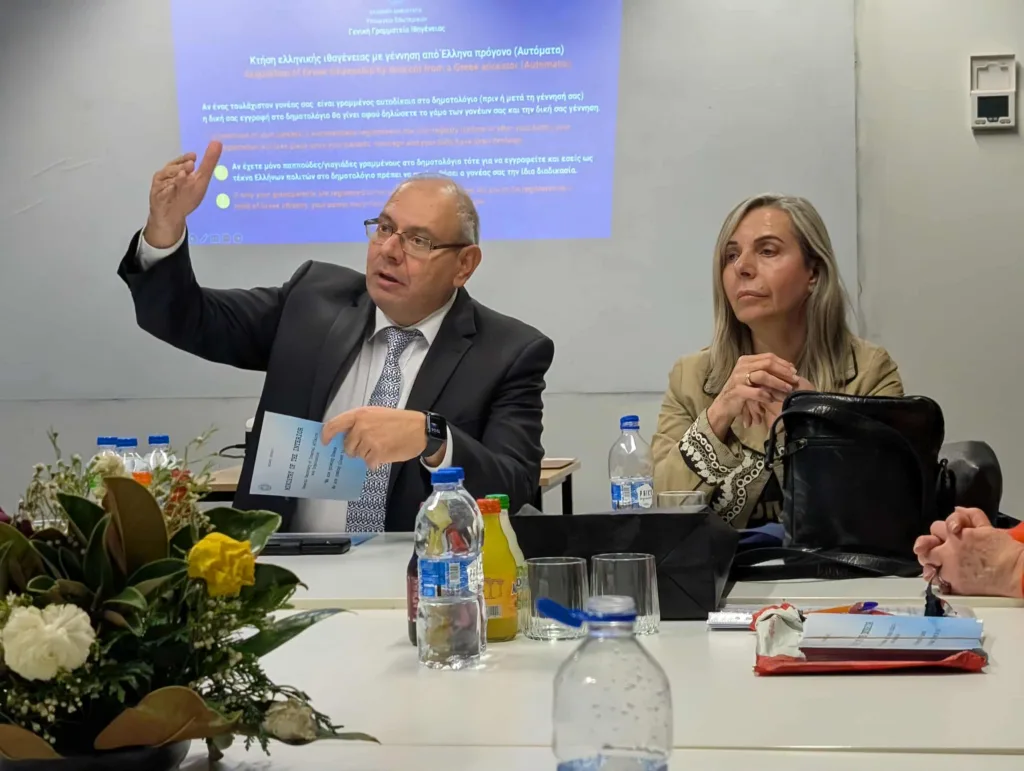
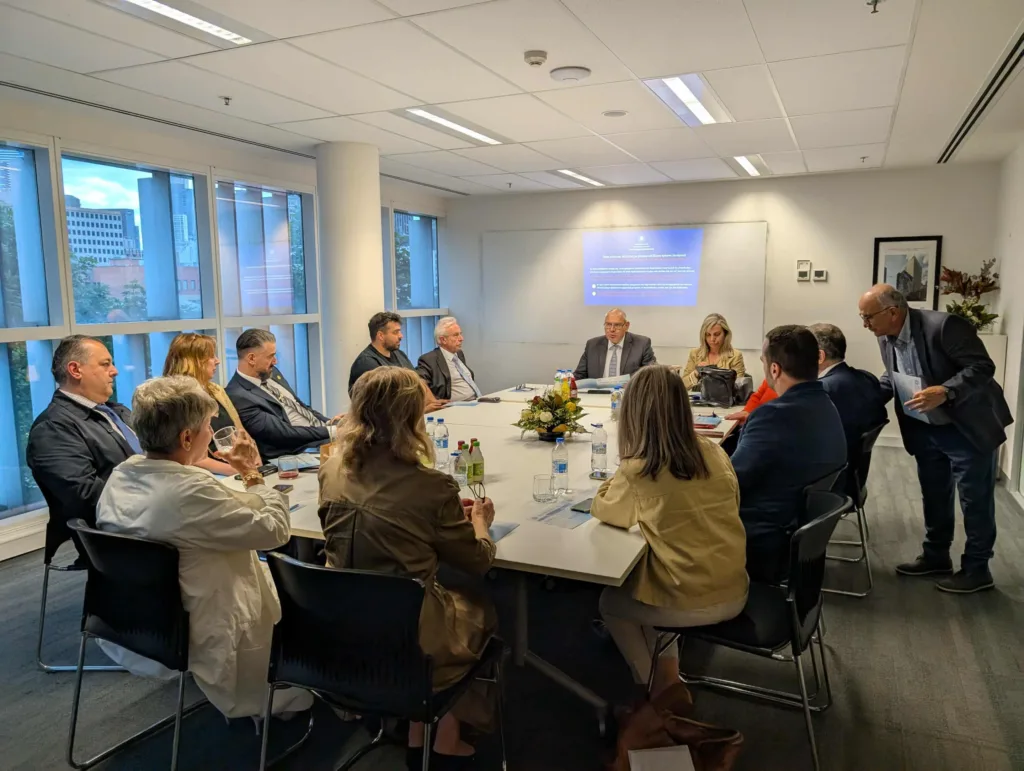
At the same time, a separate citizenship information session downstairs stirred passionate discussion. Secretaries-General of the Ministry of the Interior, Athanasios Balermpas and Dimitrios Karnavos, and the Head of the Directorate-General for Citizenship, Katerina Ouli, outlined plans to simplify the citizenship process through a new online registry for Greeks abroad.
Ms Ouli said: “We are here to listen and inform you about ways to acquire citizenship, and of course, to hear about the problems you face. Many of you are already Greek by right of birth, but your citizenship has not been certified because marriages or births were never registered.”
Athanasios Balermpas and Katerina Ouli.
Attendees raised concerns about poor translation services and Greek-only websites such as gov.gr. One Kastellorizian woman, frustrated by the lack of English, prompted Balermpas to ask, “If you want to be a Greece citizen you have to speak Greek? How can you read the Greek ballots?”
He later clarified: “The reason I am here is to have this feedback.”
Balermpas said English and two other languages, including French, would be added to the system, though no time frame was given. He also addressed confusion around different names in Greek and English documents: “It’s better to have one name for both countries. It’s not illegal to have two, but one is better.”
A small gathering discussing citizenship issues.
When asked by The Greek Herald about Greeks without citizenship who wish to feel Greek, not tourists, when visiting Greece, Balermpas revealed: “We had studied the idea of a ‘Homogeneis Card’ for people who don’t want full citizenship but wish to have Greek status, to open accounts, get low museum prices, and stay as long as they like. It was never implemented, but I intend to raise it again because it’s a good idea.”
As discussions wound down, one thing was clear: Melbourne’s Greeks remain deeply engaged with the future of Hellenism and its Greek politicians.
“You are a living piece of Greece,” Loverdos told the crowd. “No matter the 17,000 kilometres that separate us, in our hearts that distance does not exist.”
The evening ended with Loverdos receiving a plaque and the lasting affection of a diaspora still defining what it means to be Greek in Australia. Distance is sometimes not geographical but lies in the complexities of translation between language, generation, and dual identities: an evolution of who Greek Australians are.
*All photos copyright The Greek Herald / Mary Sinanidis
A South Australian psychologist has been disqualified for three years after beginning a sexual relationship with a police officer she was treating for post-traumatic stress disorder.
The South Australian Civil and Administrative Tribunal ruled that Dr Samantha Angelakis, a clinical psychologist formerly at PsychMed, engaged in professional misconduct after she developed an intimate relationship with Inspector Craig Arthur while he was still her patient in 2019.
The tribunal found that boundaries between the pair blurred during treatment, with flirtatious emails and social meetings occurring before therapy officially ended.
The day after their final session, they met privately, and the relationship soon became sexual. Both later separated from their spouses and married in 2021.
Under the Psychology Board of Australia’s Code of Conduct, psychologists are prohibited from having sexual contact with former clients within two years of ending treatment.
The tribunal found that Dr Angelakis misled the Board to suggest nothing occurred during the treatment period and concluded that she had breached ethical standards.
While acknowledging her rehabilitation efforts and prior good record, the tribunal said her conduct “took advantage of the situation,” stressing that the public and profession must be assured such behaviour will not be tolerated.