Home Blog Page 1278

SA’s community calls on Erdogan to remove troops from Cyprus ahead of invasion anniversary

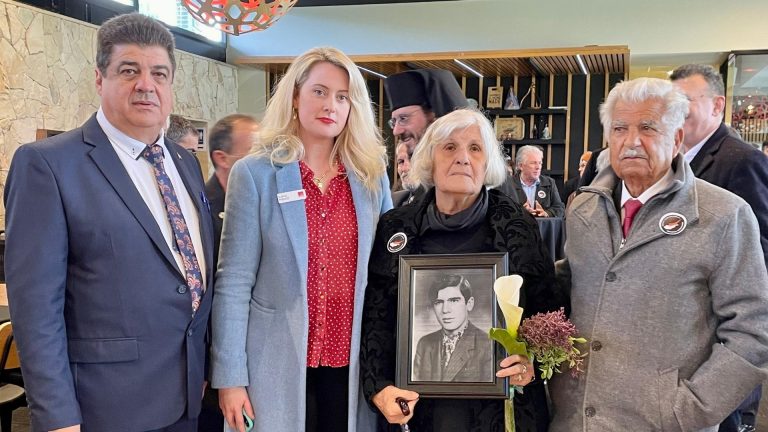
More than 100 members of South Australia’s Cypriot and Greek communities braved the weather on Sunday, July 17 to mark the 48th Anniversary of the Turkish invasion of Cyprus and honour those who fought for freedom. 

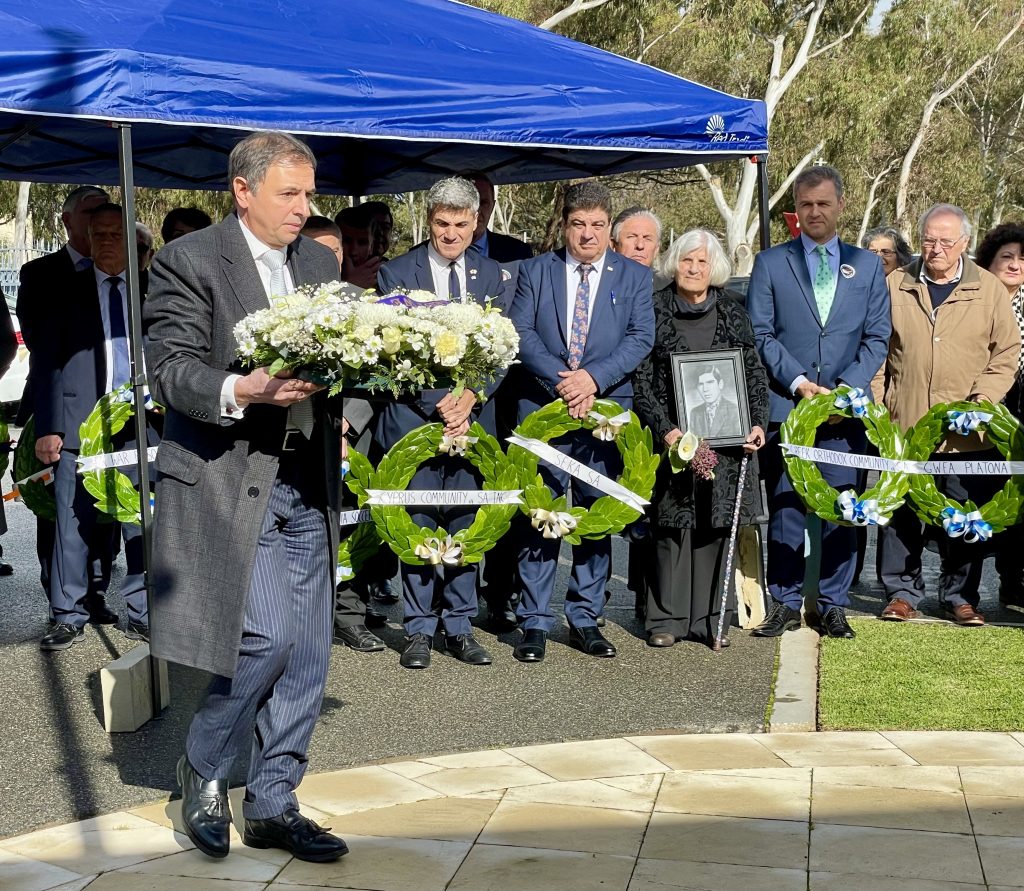
The event, organised by the Cyprus Community of SA and Justice for Cyprus (SEKA SA), started with a memorial service at The Nativity of Christ Church in Port Adelaide and was followed by a wreath laying ceremony and speeches at the Cyprus Community club in Welland. 
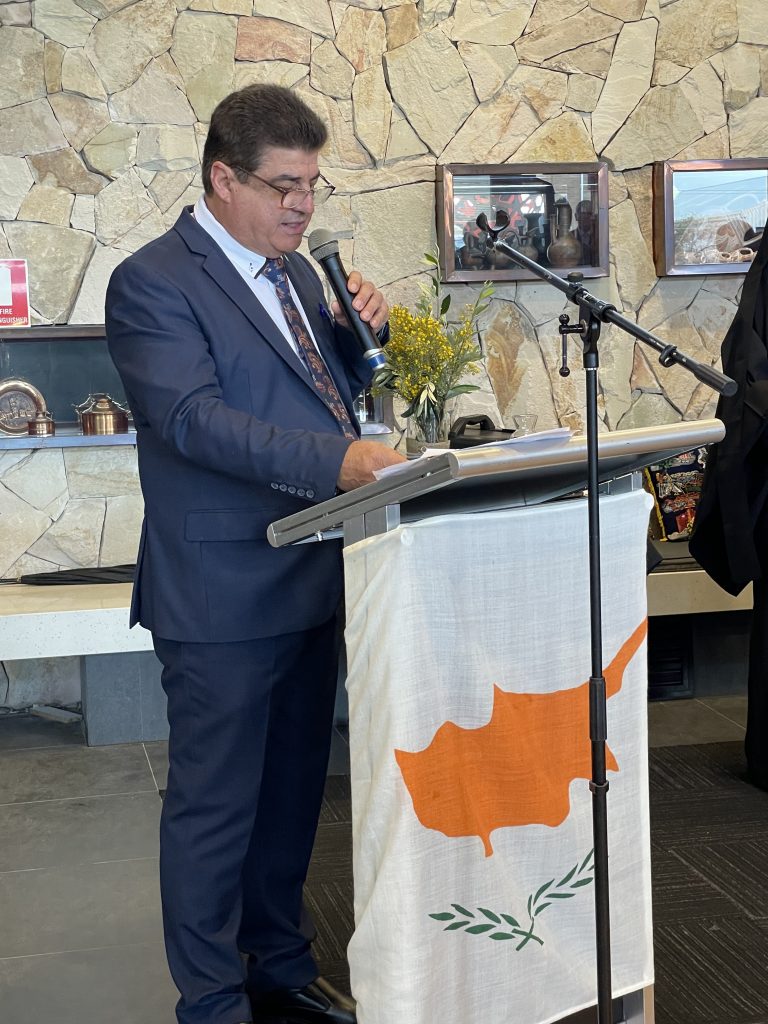
“Our thoughts are with those missing since 1974,” said SEKA SA President, Peter Ppyros, in his speech and commended Australian Prime Minister Anthony Albanese on his recent statement that “he will always stand up for sovereign nations.”

“We, the Australian Cypriots are thankful to the people of Australia for their sympathy and support towards Cyprus. We cannot say however, that the Australian governments have done everything they should have done for Cyprus,” Mr Ppyros said.

“Our federal governments are always keen to take drastic measures and impose sanctions against other nations for a variety of reasons, including Russia for invading Ukraine. I would like to point out to every direction that the Cyprus situation is not any different to that of Ukraine.”
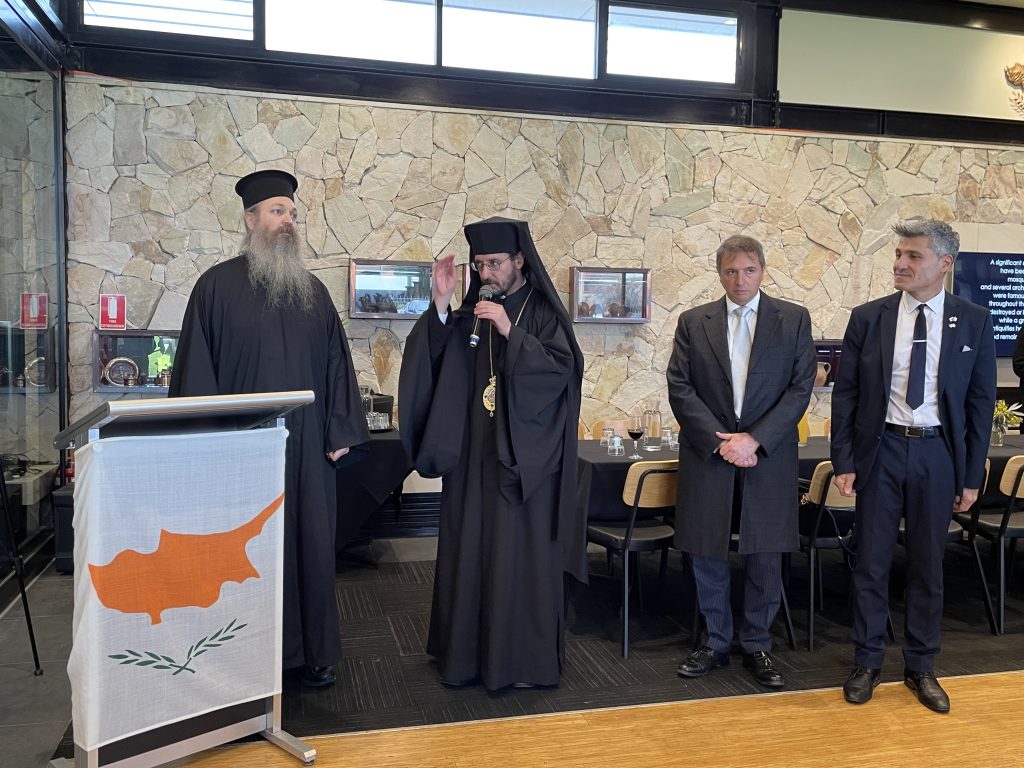
Mr Ppyros called the PM to visit Cyprus and deliver economic and political actions towards Turkey. 

“Turkey must be forced by the international community to withdraw its troops from the island and allow the Greek and Turkish Cypriots to reunite their common homeland as a bizonal, bicommunal multicultural federation based on the UN resolutions,” he said. 

Representing the Premier of South Australia, Peter Malinauskas, member for Adelaide Lucy Hood recounted her visit to Cyprus and made special mention to Australian Cypriot Minister Andrea Michaels and those who made Adelaide home as a result of the invasion. 

“It is stories like Andrea’s and yours here today, that are behind Labor’s long calling for Turkey to withdraw all its military forces from Northern Cyprus and support all UN resolutions calling for the reunification of Cyprus as the Republic of Cyprus,” Ms Hood said.
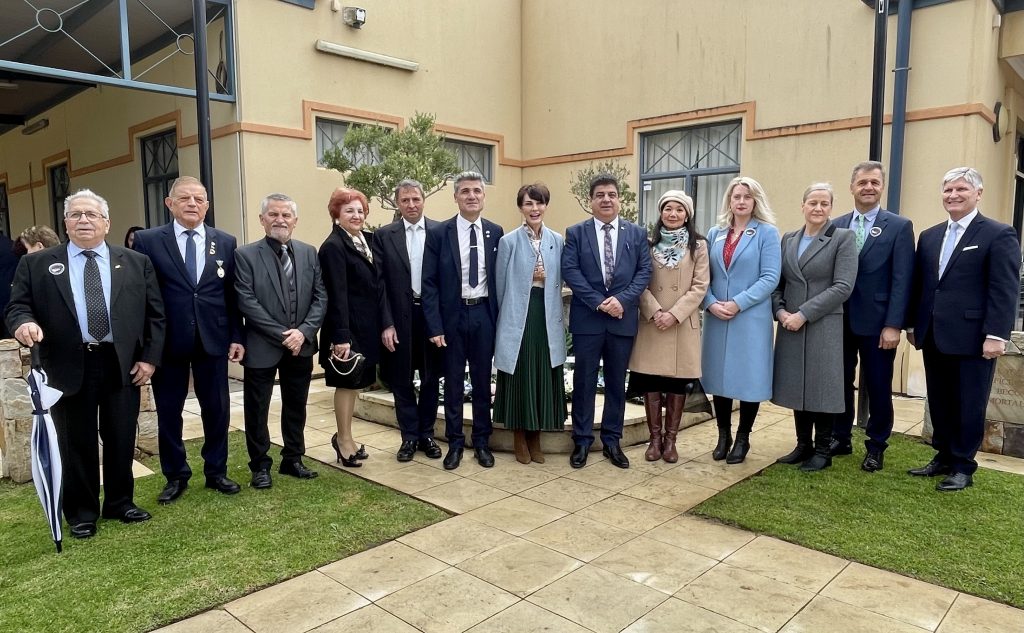
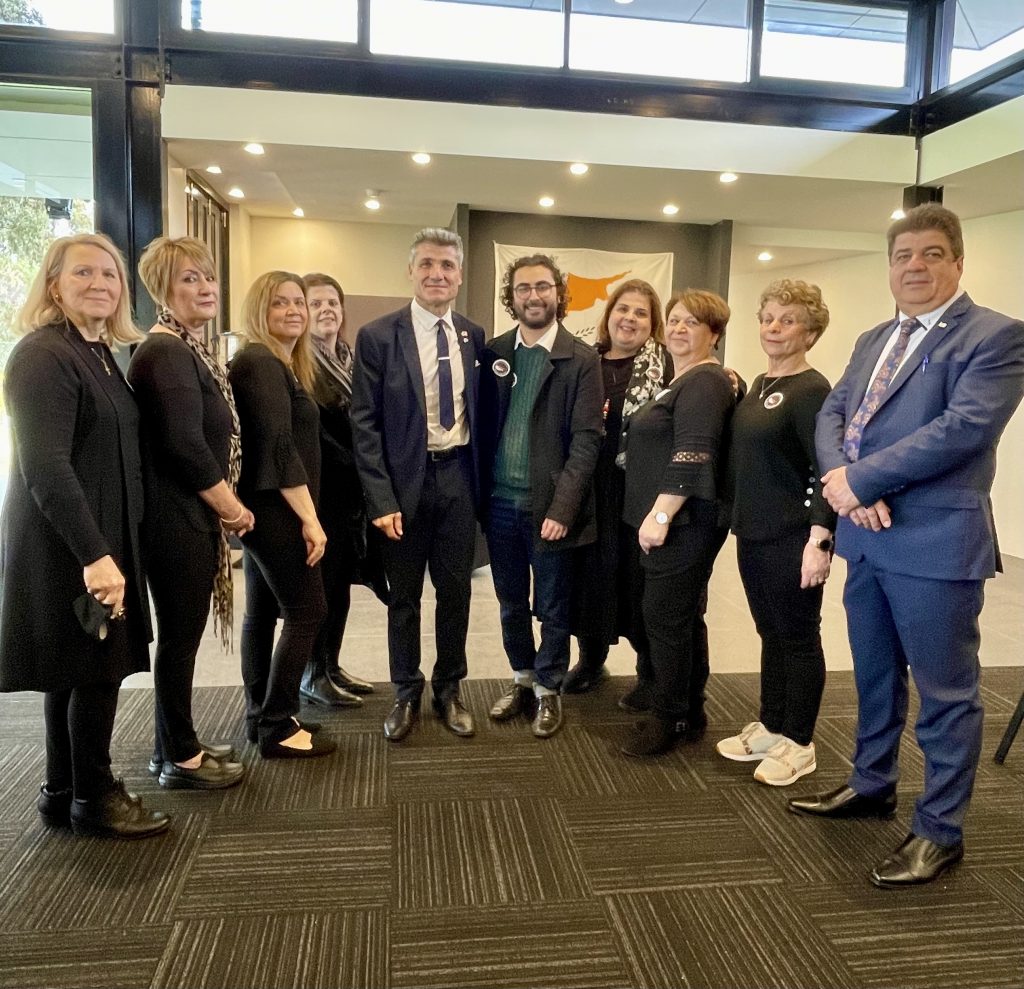
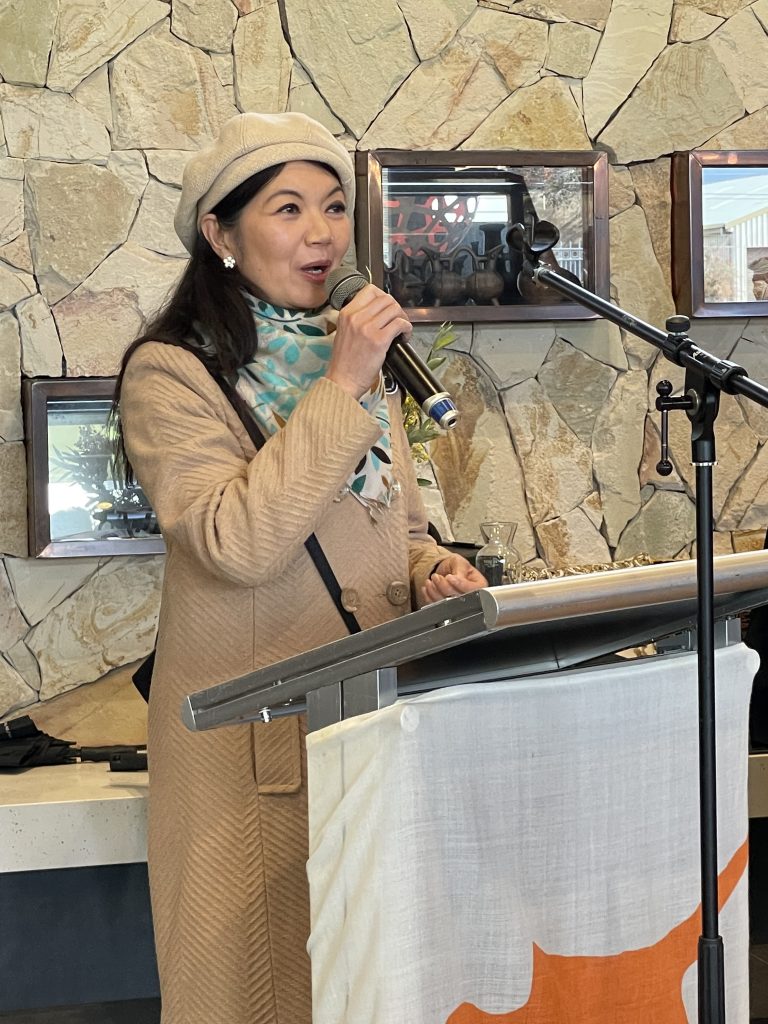
Speeches were also given by Shadow Minister for Multicultural Affairs Jing Lee, who was representing the Leader of the Opposition, by the Consul General of Greece in Adelaide George Psiachas, and the President of SA’s Cyprus Community Andreas Evdokiou in the presence of federal, state, community and religious leaders.

The commemorative events will conclude on Wednesday with a talk on the Current Position of the Cyprus Issue by this year’s official representative of the Republic of Cyprus, Deputy Minister of Shipping, Mr Vassilios Demetriades, who will be accompanied by the High Commissioner of the Republic of Cyprus in Canberra, Ms Martha Mavrommatis.

READ MORE: ‘It’s about sharing our culture’: SA’s Cyprus Community bounces back to action with Winter Festival

Excellence without unscrupulous expediency

By Anastasios M. Tamis*

Man needs to enjoy the appropriate recognition of his social environment as an endorsement of his struggle, as a reward for his contribution to society at large. The appropriate acknowledgment and respect of the achievements of the individual from his fellow human beings is necessary, to have incentives for greater and higher performance. The student, the athlete, the citizen, in general, grows up and comes of age being active in a competitive society.  The continuous effort to become better, to consistently improve our past performance was considered from the Homeric years the ideal result in the life of man. Always excel, outshine and stand out amongst not only of your fellow human beings, but especially of your own self, surpassing previous personal achievements.

Excellence and the pursuit of the best in learning, in teaching, in performance, in everything we do or create as a profession, as a duty, is constantly shaping a better society. The wheel of excellence is the virtue of ambition. The motive of excellence is the ambition, not especially the wealth. The wheel belt is the acquisition of fame, the need we have as people to be loved, to be appreciated, to be respected. We want to be liked, to carry out actions and manipulations that make us happy. We feel self-sufficient when they love us. We feel inner sufficiency when we are praised, rewarded. We feel strong when they recognize our work, our professionalism.

Our society, to cultivate excellence, to create incentives for constant competition without contestation, has created institutions, that attribute distinctions, awards that honor emulation, pursue of excellence, volunteering, social networking activity and charity contribution. Our society has organized bodies and bodies that evaluate the contribution of citizens and reward those who have offered over and above debt, higher than duty. Heads of State, ministries, the Church, the Academy, universities, prestigious cultural and literary organizations, chambers and economic and professional for a and institutions, after thorough and credible assessment and thorough evaluation, reward or recognize with distinctions the quality of the contribution of the individuals or organizations. The assessment must be impartial, honest  and unbiassed. The choice should be strict and fair-minded.

The choice must be cloudless, reasonable, and honest because along with the winner, the body or authority that rewarded the honoree is also judged. Therefore, strict judgment, fair judgment, must have its own criteria, so that excellence is not dishonoured by those who grant them. Unfortunately, selection procedures are often tested by human weaknesses. Important institutions are affected by incomplete and often deceitful reports, by selfish and often fictitious testimonies that constitute a fallacious or artificial image of the candidate to be awarded. There are also institutions which, motivated by political expediency and specific self-interest policies, reward people simply to manipulate and colonize them. Awards of this category and feasibility are essentially a disgrace to the purpose of the award because these awards  have nothing to do with excellence. Specifically, the ultimate goal of an institution that bestows unworthily and artificially an Order or a Medal upon a given person, is not the social recognition of the honoree, but his or her exploitation.  The aim of the institution is to colonize the winner, to abuse and manipulate him.

The ultimate goal of the institution that rewards the incompetent, the incapable,  represents and signifies deception and pretext. The providing authority who honours a person fraudulently, does not reward the virtuous, the noble and the able. It constitutes a treacherous machination.  The aim of the institution is to colonize the winner, to abuse him. There are several high-ranking institutions and their leaders who manipulate the Order and Medal  mechanisms to patronize the recipients , to turn them into their instruments, to enlist them as their courtiers. They hang the ribbon around their necks, with fancy decorations, grand crosses, and other credentials to succumb them to their ambitious plans, to surrender them to their authority. These tactics essentially disgrace and degrade the value of the award, and all those worthy recipients who fairly and with a lot of struggle and enormous contribution acquired it. The allocation of the Orders and Medals to worthy and unworthy, capable, and incompetent, sufficient, and incomplete, sophisticate and unscrupulous constitutes a scandal and ignominy to virtue, transforms the Honours into a mechanism of immorality.

Excellence must be recognized, using adequate, transparent, honest, and impartial criteria. Prizes cannot be subordinated to trivial aspirations aimed at building political bridges and creating armies of opportunists, decorated trailblazers, but also subjugated servants of the shallow aspirations of ambitious leaders. In this case, the attributing authority the Excellence Awards, subdues the praiseworthiness into an immoral and corrupt expediency.

*Professor Anastasios M. Tamis taught at Universities in Australia and abroad, was the creator and founding director of the Dardalis Archives of the Hellenic Diaspora and is currently the President of the Australian Institute of Macedonian Studies (AIMS).

Two Greek Australians named in the CommBank Junior Matildas Squad

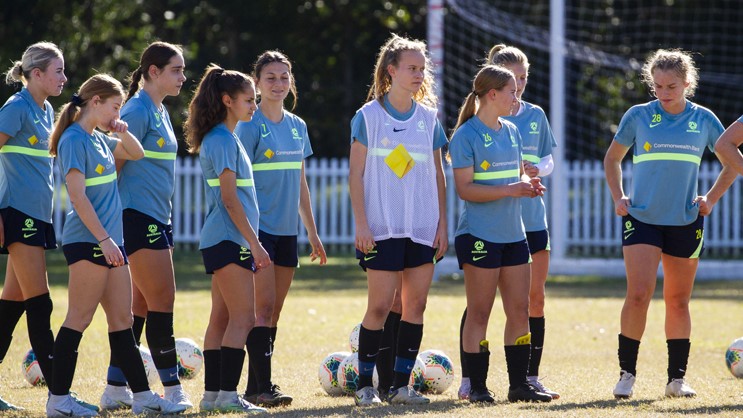
Zoe Karipidis and Peta Trimis have been named in the CommBank Junior Matildas squad to compete at the AFF U18 Women’s Championship 2022 in Palembang, Indonesia.

Karipidis is a defender for the Newcastle Jets and represents Northern NSW Football, while Trimis plays as a forward for the NSW Institute and Football NSW.

The two young Greek Australians will be joined by another 26 players to represent Australia against Malaysia, Myanmar and the Philippines in Group B of the tournament commencing on 22 July 2022.

Head Coach, Rae Dower, selected the final squad following four camps over the past six months. She said the team is “excited about the opportunity to travel to Indonesia” to participate in the championship.

“As a coaching unit, we’re delighted with the depth of talent within this age group,” Dower added.

“The technical quality and game awareness of the players was of a very high standard, and they’ve maintained that level when back with their respective clubs, which presented a welcomed headache when selecting the final squad.”

The tournament will be the CommBank Junior Matildas’ first international activity since their involvement in the 2019 AFC U16 Women’s Championship, where they finished fourth in the tournament three years ago.

It also marks the final Australian Women’s National Team to re-commence international action. 

Source: matildas.com.au.

Fugitive bikie boss Mark Buddle asked to pay bribes to stay in northern Cyprus

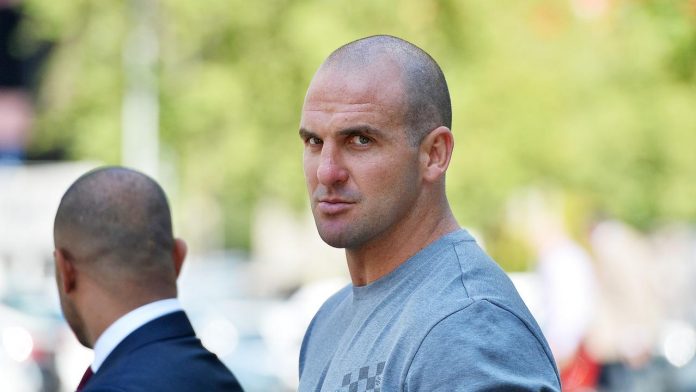
Fugitive Comanchero bikie boss, Mark Buddle, was asked to pay bribes in the Turkish-occupied northern Cyprus to avoid being deported to Turkey, his lawyer has revealed.

According to The Daily Telegraph, Buddle’s lawyer said the bikie boss paid the bribes to stay on the Mediterranean island and be with his new wife, a local woman known only as Ozge.

But in a surprise raid, police captured Buddle on July 9 and he was deported to the Turkish capital of Ankara, where he is currently being processed before an expected handover to Australia.

In an interview published in a local paper, Buddle is said to have revealed how he was taken by surprise by the raid.

Mark Buddle.

“Seven police came through the window and took me to the police station. I asked them what it was, and they said it was a deport decision about me. They didn’t show any papers. I said I wanted to go to court but I was told that the order came from internal affairs …” the paper attributed to Buddle.

In a recent statement made by the interior ministry of the self-declared republic, it was revealed that Buddle had been staying there since last August, with residence granted due to his “high income.”

However early last week, the republic’s police directorate declared Buddle’s presence was “inconvenient in terms of public peace and security.”

Australian authorities are aware of his recent deportation to Ankara and are working on his extradition.

NSW Shadow Police Minister, Walt Secord, said in a statement that the extradition could be a “lengthy process” but “it will send a strong and clear signal to other gang members that they cannot escape overseas and they will be held to account for their activities in Australia.”

Source: The Daily Telegraph.

Greece’s Deputy Foreign Affairs Minister meets with Greek Community of Melbourne youth

0

By Ilias Karagiannis.

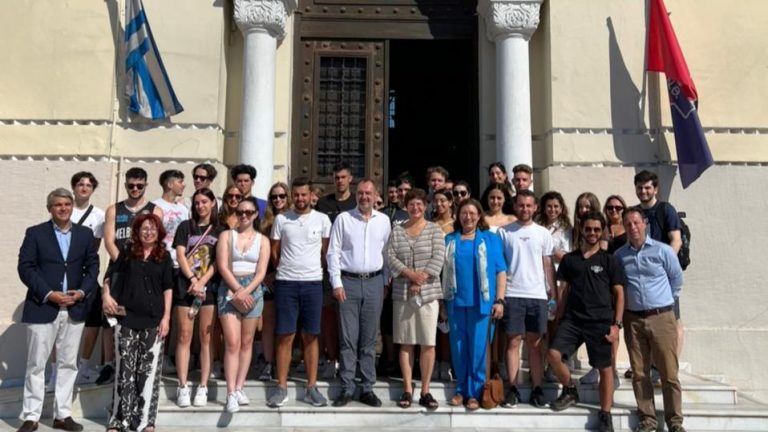
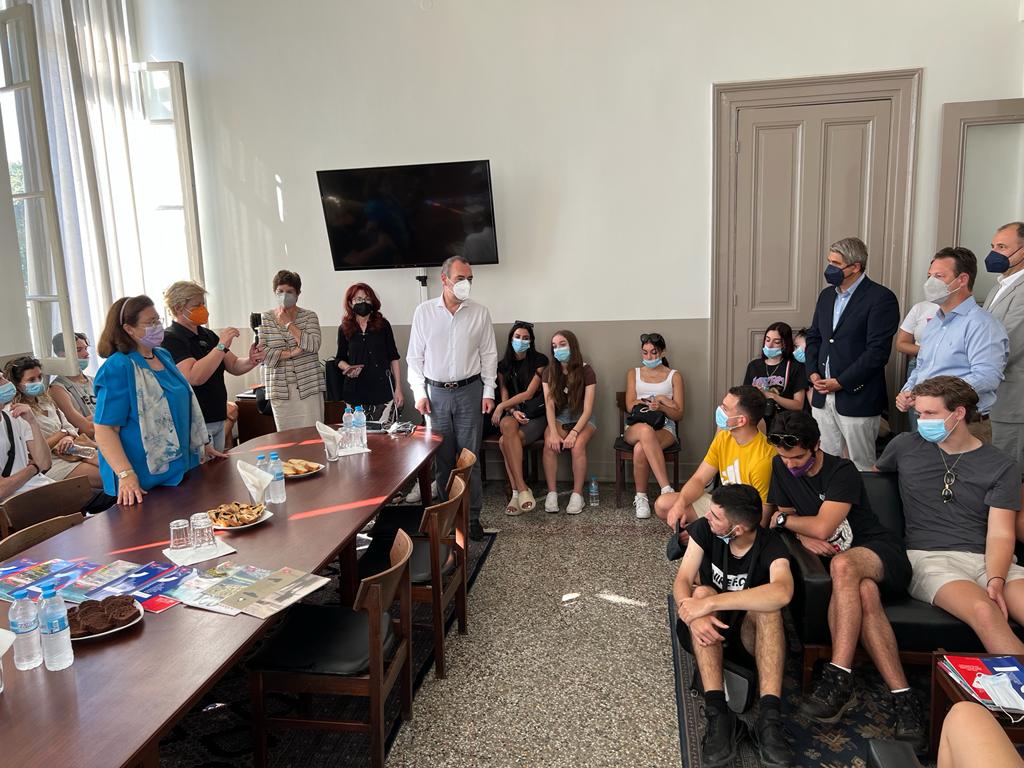
“Hospitality is a key element of the identity of global Hellenism,” Greece’s Deputy Foreign Affairs Minister responsible for Greeks Abroad, Andreas Katsaniotis, said during a meeting with 40 youth from the Greek Community of Melbourne (GCM) at the premises of the Christian Brotherhood Youth in Thessaloniki.

The Greek Ministry of Foreign Affairs and the General Secretariat for Greeks Abroad have reactivated the Global Diaspora Youth Hospitality Program, which aims to strengthen the ties of young diaspora with their country of origin.

Katsaniotis speaking with Greek youth from Melbourne.

The residency programme includes courses on the improvement of the Greek language, lectures on Greek culture and even practice in Greek cuisine.

The activities in the camp will also include guided tours to archaeological sites and museums in Thessaloniki, traditional dance lessons and many cultural events.

The young people who participate in the 12-day summer camp program even attended the 1st Hellenic Diaspora Medical Forum on July 15 this year.

As part of the diaspora program, children from Ukraine will also be able to take part in the near future.

After his visit with youth from the GCM, Mr Katsaniotis said: “At the Ministry of Foreign Affairs we have reactivated the youth accommodation programs of the diaspora.”

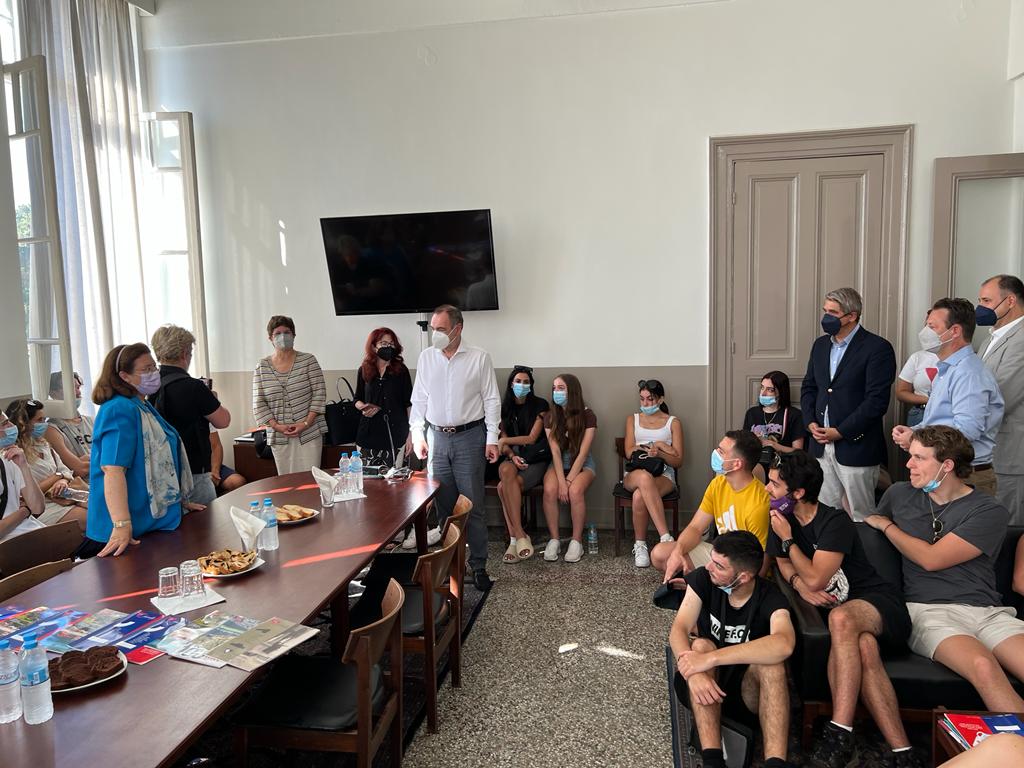
The meeting with Greek youth from Melbourne.

“Already, in collaboration with the Christian Brotherhood Youth of Thessaloniki, we are hosting 40 Greek children from Australia while in the near future we are expecting young people from Ukraine,” Mr Katsaniotis added.

“Hospitality, faith, ties with the homeland are key elements of the identity of global Hellenism.”

The program began on July 9 and will end on July 20.

Thousands forced to flee as wildfires rage across Europe

0

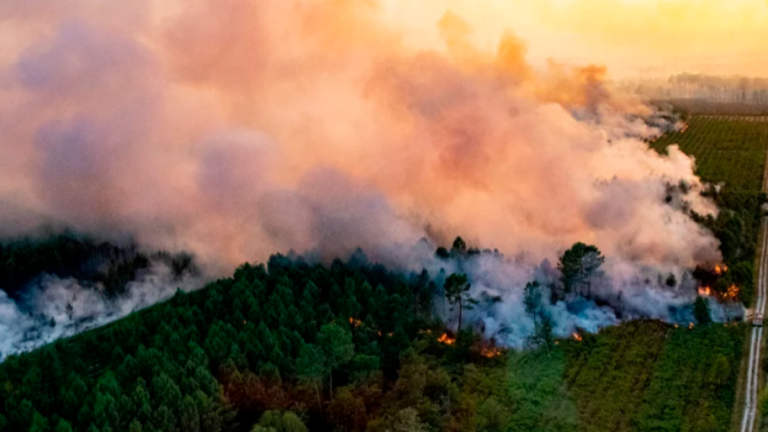
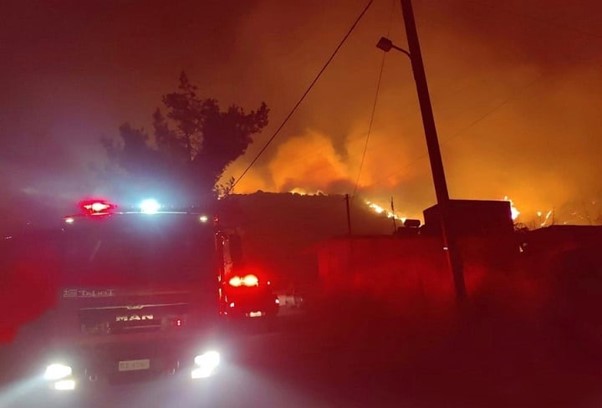
Fire authorities across southern Europe battled on Sunday to control huge wildfires in countries including Greece, Spain and France.

This comes as a heatwave continues to bring extreme temperatures, causing hundreds of deaths across south-western Europe.

In Greece, the fire brigade said on Sunday that 51 blazes had broken out within a 24 hour period.

Over the weekend, Greek fire officials were battling wildfires in the hills around Rethymno in northern Crete, as well as at the municipality of Agios Vassilios. On Saturday, the flames had reached Agios Georgios, where luxury rental homes for tourists were evacuated by order of mayor Giannis Tatarakis.

Fire on the Greek island of Crete. Credit: Hellenic Fire Service @pyrosvestiki / Twitter.

The fight against the flames in Greece has already claimed the lives of two firefighters when their helicopter fell into the sea near the Greek island of Samos on June 14.

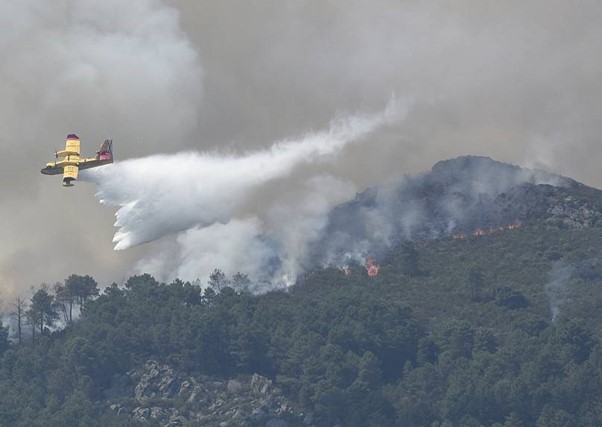
In Spain, more than 600 members of the military emergency unit have been helping firefighters and wildlife rangers tackle dozens of forest fires across the country, where blazes have so far torn through at least 14,000 hectares.

A firefighting plane drops water over a plume of smoke in Ladrillar, western Spain. Photo: Gustavo Valiente Herrero/Europa Press via AP.

In France, wildfires have now spread over 11,000 hectares in the southwestern region of Gironde, and more than 14,000 people have been evacuated, regional authorities said on Sunday afternoon.

French President, Emmanuel Macron, said some 3,000 firefighters backed by water-dumping planes are battling the blazes in southern France, and Greece sent firefighting equipment to help.

“Solidarity is European. A year ago, when Greece was facing terrible fires, we mobilised as Europeans. Yesterday, Greek firefighting aircraft arrived in the south of France to support the work of our firefighters,” Macron tweeted.

In response, Greek Prime Minister, Kyriakos Mitsotakis, wrote on Twitter: “United against the attacks of climate crisis, Greece and France stand side-by-side to protect life and nature, in both countries, but also in our common homeland, Europe.”

Source: The Guardian.

Eight dead in Ukraine cargo plane crash in northern Greece

0

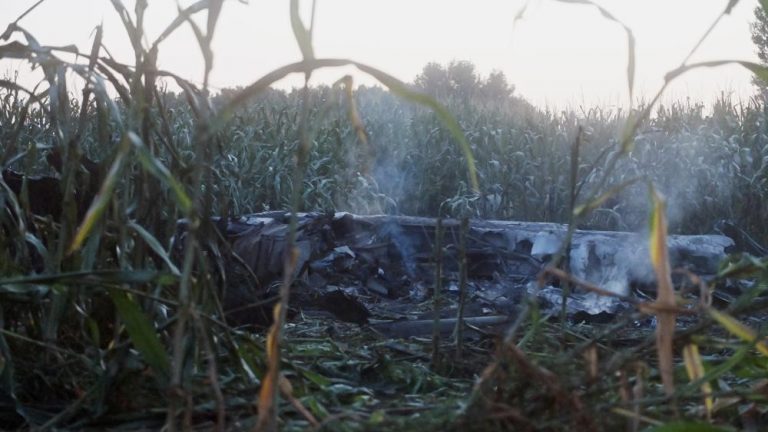
Eight crew members have died after a Ukrainian cargo plane carrying munitions from Serbia to Bangladesh crashed in northern Greece late on Saturday.

Experts investigated the crash on Sunday and found no evidence of dangerous substances, but said there is a lot of ordnance that the plane was carrying spread around the crash site. 

The Antonov An-12 cargo plane from Serbia was being flown by a Ukrainian aviation crew before it smashed into fields between two Greek villages late on Saturday.

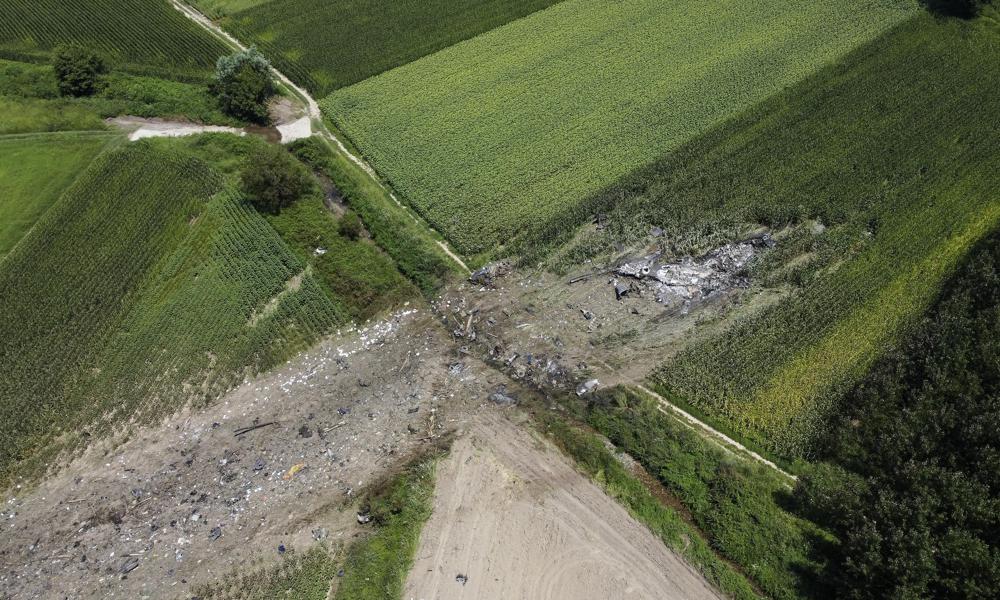
This drone photo shows the site where the AN-12 cargo plane crashed in Palaiochori village near the town of Kavala, in northern Greece, Sunday, July 17, 2022. Photo: AP Photo/Giannis Papanikos.

Minutes before, the pilot had reported engine trouble and had requested an emergency landing. He was directed to Kavala International Airport but never made it there.

Drone images from the scene showed smouldering debris from the Antonov An-12 aircraft strewn across fields.

Serbian Defence Minister, Nebojsa Stefanovic, told a news conference on Sunday the plane had been carrying 11.5 tonnes of products, including mortar and training shells, made by its defence industry.

The Ukrainian consul in Thessaloniki, who arrived at the crash site, told local officials that the eight crew members who were killed were all Ukrainian.

The Greek army’s Special Joint Nuclear, Biological and Chemical Defence Unit cleared two paths on Sunday for Fire Service forensics experts to move in before leaving.

By sunset, that second team had retrieved all the bodies, the commander of the army’s Landmine Field Clearing Battalion told reporters.

In a post on Twitter on Sunday, the Greek Foreign Ministry expressed its deep sorrow over the plane crash.

“Profoundly saddened by the news of the cargo plane crash in Northern Greece, near Kavala. We express our sincere condolences to the families of the 8 Ukrainian crew members who tragically lost their lives in the plane crash,” the Foreign Ministry said in a statement.

Source: AP News.

Christian Louboutin dedicates new campaign to Greece

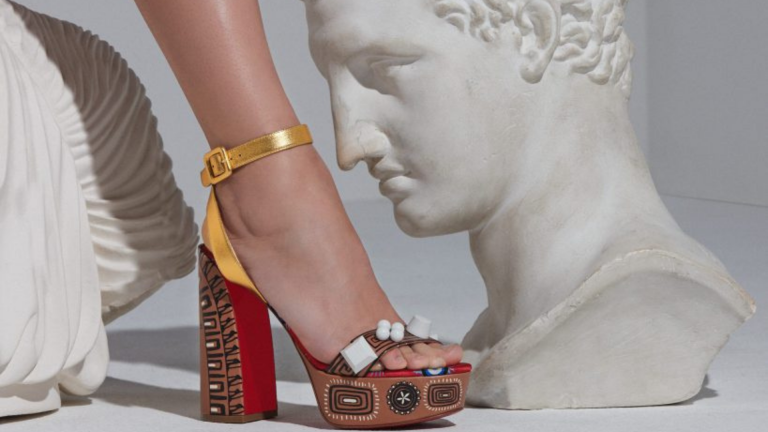
Luxury French fashion brand, Christian Louboutin, who is best known for their famous red bottom shoes, has dedicated their new collection to Greece, calling it a land and sea ode to “the deep blues and brilliant whites.” 

The ‘Greekaba Collection”, which also pays tribute to the rich browns and blacks of Ancient Greek pottery, was designed in collaboration with Greek painted and multimedia artist, Konstantinos Kakanias. 

The new collection embodies all the elements that embody the Greek culture from playful and colourful palettes, to a series of motifs that represent the legacy of the culture in warm earthy tones.

The new collection points to the designers adventures in Athens and the Cycladic islands and is inspired by “Christian’s insatiable love of travel and brought to life by his dear friend Konstantinos Kakanias,” the company said in a statement. 

Greekaba launched in June and includes shoes in white and blue, in honour of the beautiful Aegean,  leather bags with embossed designs, and wicker baskets with tassels, along with backpacks, men’s sneakers and loafers, and sandals and pouches.

It also takes inspiration from the Ancient Greek friezes, the traditional blue evil eye symbol, “the Mati”, that wards off curses or evil spirits, geometric patterns used in Dodecanese embroidery, and other symbols of Greek culture. 

A portion of proceeds from this collection will benefit “Together for Children” (TFC), a Greek non-profit association that works to provide immediate and effective support to children, young adults with disabilities, and their families in need.

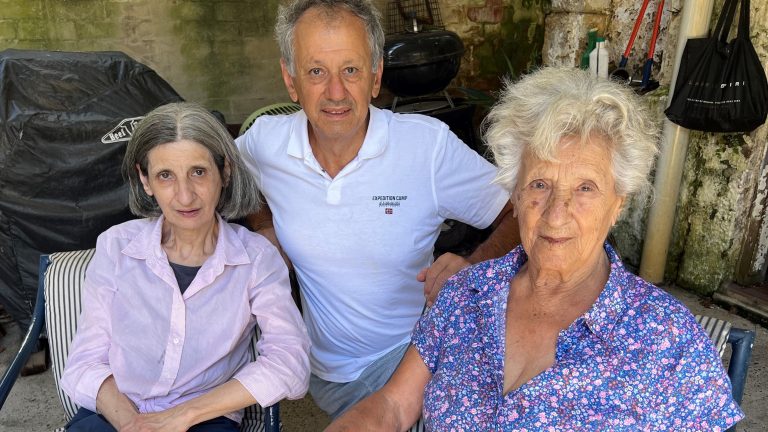
101-year-old Hariclea Psaltis is the oldest member of Australia’s Kytherian Association

In her 101 years of life, Hariclea Psaltis has been a wife, a mother, a grandmother and a loving friend.

Now, she can add another title to her list as well – that of being the oldest member of the Kytherian Association of Australia (KAA).

To celebrate this achievement, The Greek Herald sat down with Hariclea’s son, Cos Psaltis, to hear all about his incredible mum and how she continues to live a life full of love and laughter.

From Kythera to Australia:

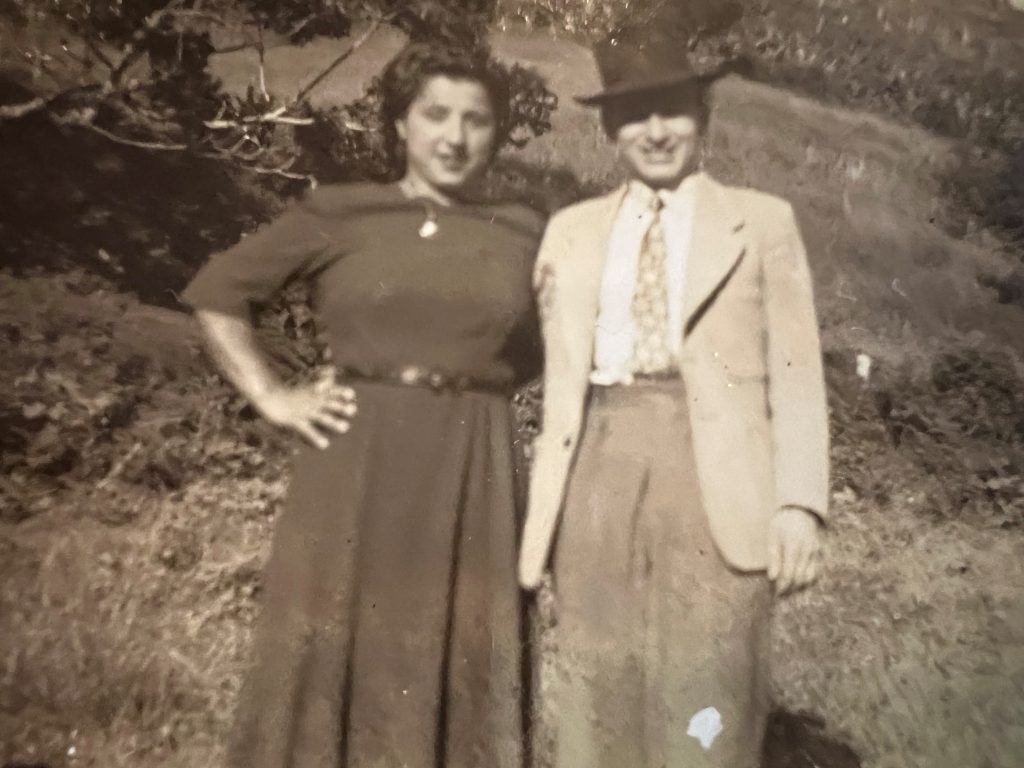
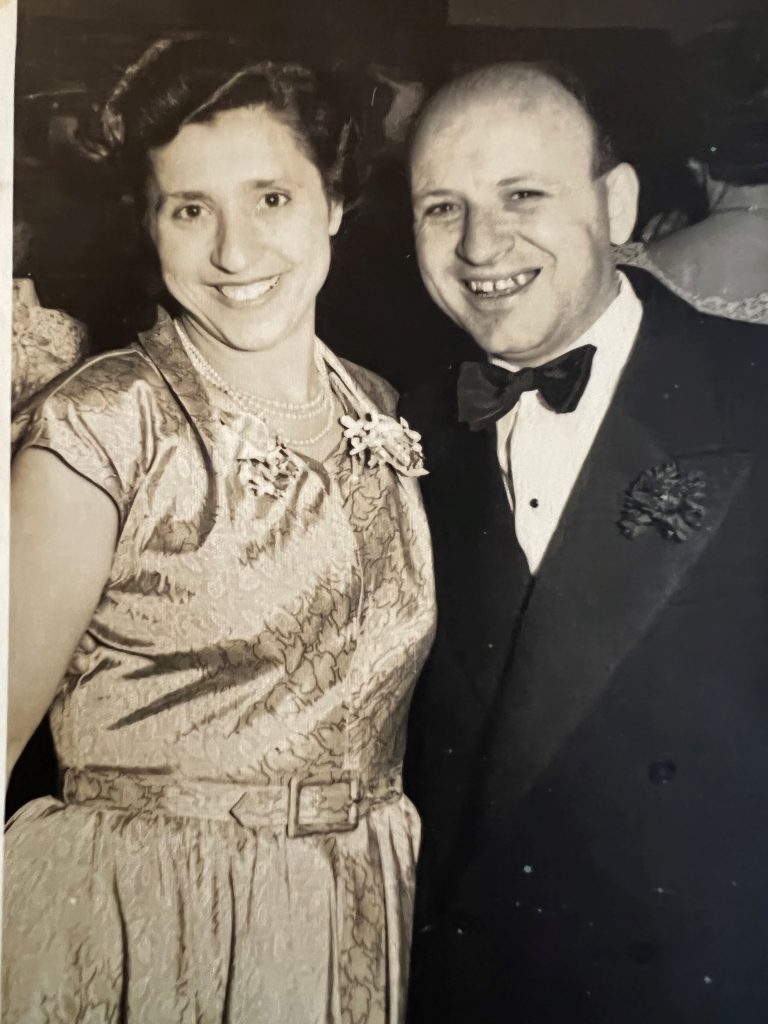
Born in 1921 in Mitata on the Greek island of Kythera, Hariclea migrated by ship to Australia via Egypt in her mid-20s to meet the man who would one day become her husband, George.

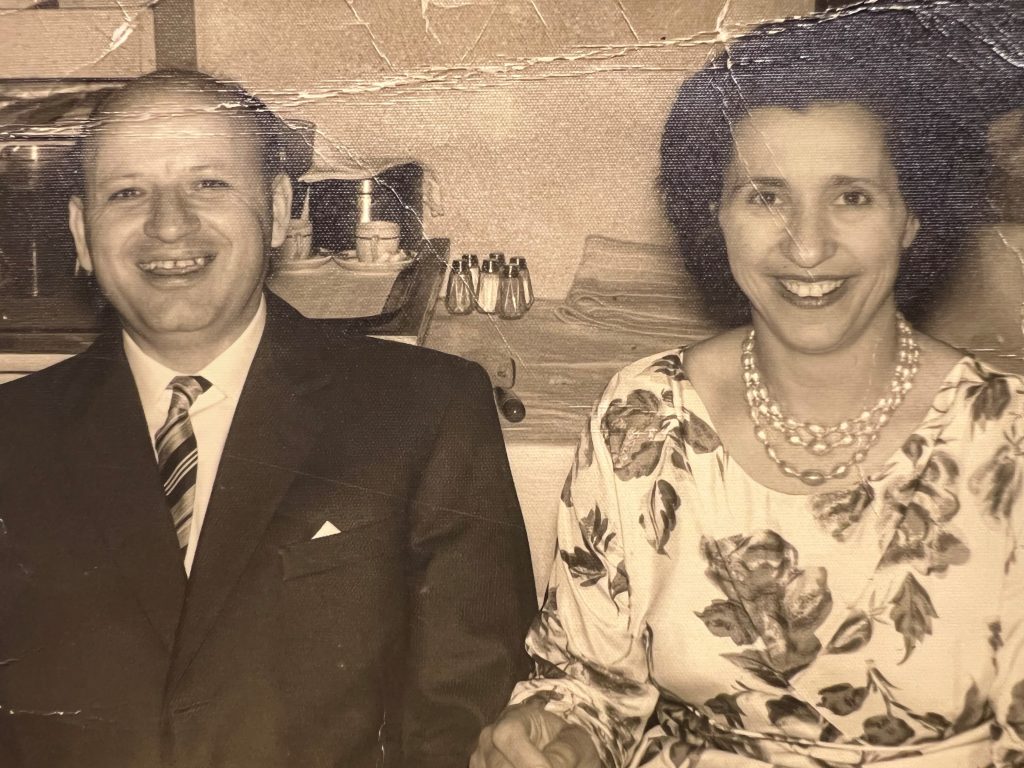
Hariclea with her husband George.

“People asked her, ‘why did you leave to come out to marry someone you didn’t really know in Australia?’ and she said, ‘I wasn’t going to marry anyone on the island’,” Cos says with a laugh.

Ultimately, the decision to have an arranged marriage in Australia was a good one. Hariclea and George grew their family with two sons, two daughters and four grandchildren, and they were also successful business owners.

The couple owned a café in the Sydney suburb of Neutral Bay, before moving to one in Spit Junction. Although Hariclea didn’t know the English language well, she was always willing to help out at the cafés and she was loved by the local community.

“They all liked her. Because it was a café and she used to cook Greek food for us, some of the customers would come in and say, ‘we want to eat what you’re eating’ and she’d let them have it,” Cos explains.

‘She doesn’t look 101’:

Of course, when Hariclea wasn’t helping out at the café, she dedicated the rest of her time to her four children.

The 101-year-old encouraged the children to immerse themselves in the Greek culture and its traditions, and also organised a few trips to Kythera.

“I mean she was a Greek mother but she was good,” Cos says with a smile.

Hariclea and George were very prosperous in Australia.

“You hear about Greek parents being over the top but they weren’t really. They were quite balanced in the end. All I know is that often I’m surprised by what she says in that her thinking is sort of very modern.”

Does Cos believe this more progressive outlook on life is the secret to Hariclea’s longevity?

“She’s always grown vegetables and had a garden and cooked so I think that’s probably what contributes to her health,” Cos answers.

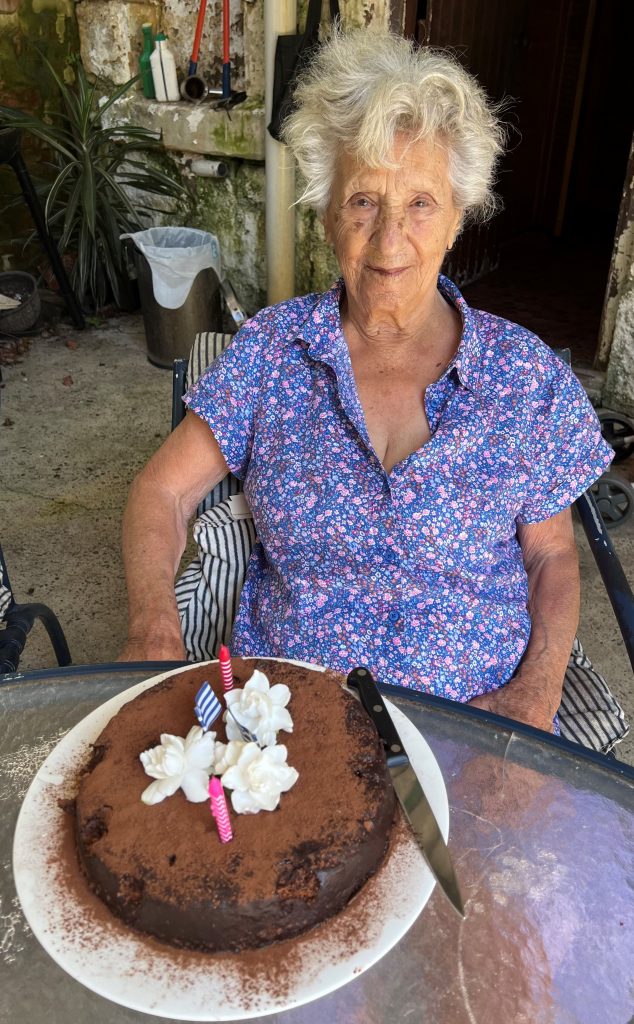
Hariclea on her 101st birthday.

“She’s never smoked, she rarely drank and she’s always active. She’s never been to a hospital either except to have children, which isn’t bad for someone her age.

“She doesn’t even look 101. She looks quite good.”

A glowing outlook for a Kytherian woman whose life story deserves to be told.

How Mytilene captured the heart of Australian designer Claire Lloyd

Claire Lloyd’s affinity with Greece started 17 years ago when she first visited the small island of Lesvos and its capital city Mytilene, instantly falling in love with all it had to offer.

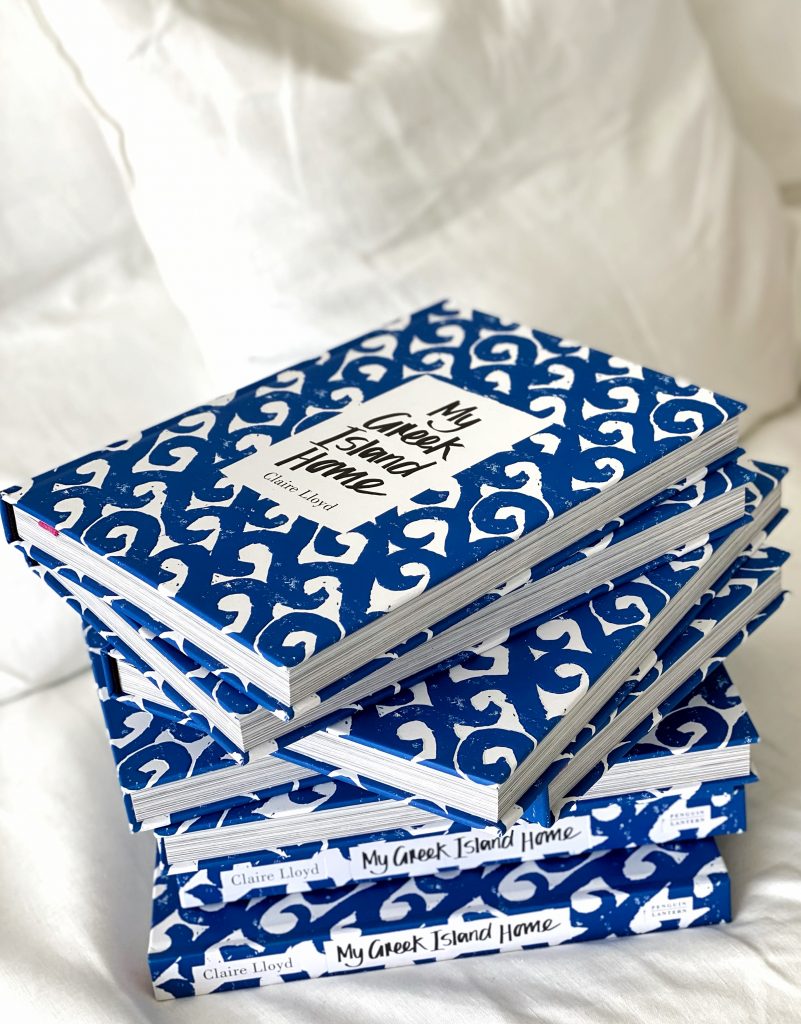
In 2005, during what she described as a ‘crisis of creativity,’ Claire and her husband Matthew made the bold decision to purchase an old priest’s home and breathe new life into it. During these renovations, she documented the journey of refurbishing the home in her book, My Greek Island Home.

In an interview with The Greek Herald, Claire details the thrilling journey of falling in love halfway around the world and the how she feels in her new hometown of Mytilene.

Claire in her home. Photo: Carla Coulson

As an Australian, what would you say was the first feeling of ‘home’ in Greece?

There are definitely some similarities between Greece and Australia – the big open skies, the bright sunshine, the rawness of the landscape and even some of the plant life. But Greece definitely has its own unique vibe.

Greece has a real feeling of ancient history and a deep authenticity.

How do you find the community in Greece has embraced you? How have you tried to embrace them?

We have been overwhelmed by the warmth and love of our village friends. From the moment we arrived here in the village we were welcomed with open arms. 

We would often find bags of fresh produce hanging on our front gate in the morning, having no idea of who to thank for them. Drinks were sent to our table when we visited our local taverna. There have been delicious welcome home meals delivered to our door. We receive many gifts, cakes, flowers, freshly picked herbs or delicious season fruit, gifts when we leave, gifts when we return.

Home Styling by Claire. Photo: Claire Lloyd

One of my favourite things are the big smiles and welcomes from our Greek friends when we return at the end of the winter. It feels like we have truly been missed. We are included in family weddings, baptisms, parties, school functions, pretty much everything really.

We try hard to reciprocate but there is nothing more difficult than trying to be more generous than a Greek. I have Greek lessons and try to speak as much as I can, although I feel constantly frustrated by my limitations. I have learnt though that you can communicate rather well even without language. 

How did the concept for your renovations come to be? What was your main source of inspiration?

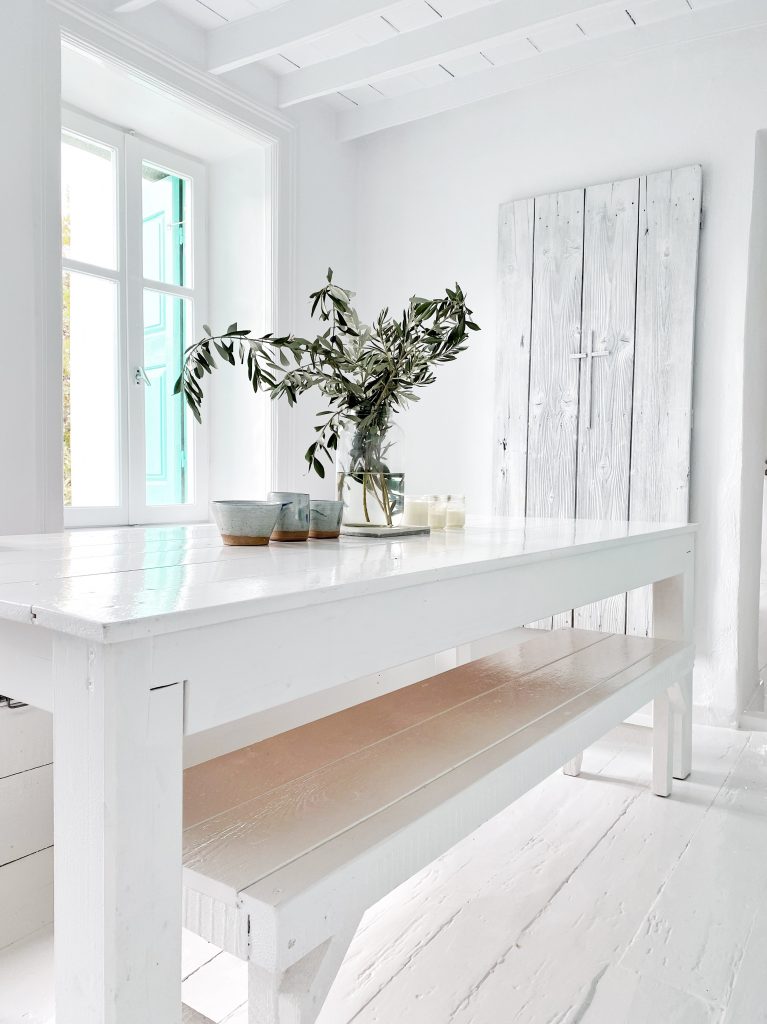
Light and simplicity are always key elements in my work and always my starting point, so the house was taken back to basics and these elements were the starting point. The house was old so alterations needed to be made, an inside bathroom and a working kitchen were both necessary.

For me, it was important that we kept the house as authentic as possible and we did this by keeping various pieces.

Matthew, my artist husband, made furniture in a rustic way to fit with the house. He also found old pieces on the tip that he lovingly restored, they look beautiful in the house. My signature colour is white so it fits perfectly in Greece, and I also chose turquoise for the shutters and various doors, a lovely colour originally used in a part of the house. 

Claire with her husband, Matthew. Photo: supplied/Estella Mason

Your book ‘My Greek Island Home’ has become wildly popular around the world. What do you think resonates with people the most about it?

I think a lot of people are living in big cities where life is hectic and they feel disconnected. Disconnected to nature and to a community. 

My documentation of life in a Greek village gives a peak into another way of life and maybe it provides a little bit of escapism and hopefully inspiration.

What would you like people to know about life on a Greek island, that you think they don’t already know?

Living life simply in an authentic Greek village surrounded by nature and warm-hearted people is enormously rewarding and is a privilege.