Home Blog Page 1279

No regrets when it comes to caring for our elderly

0

By Helena Kidd*

‘You can do it, just walk, move your feet.’

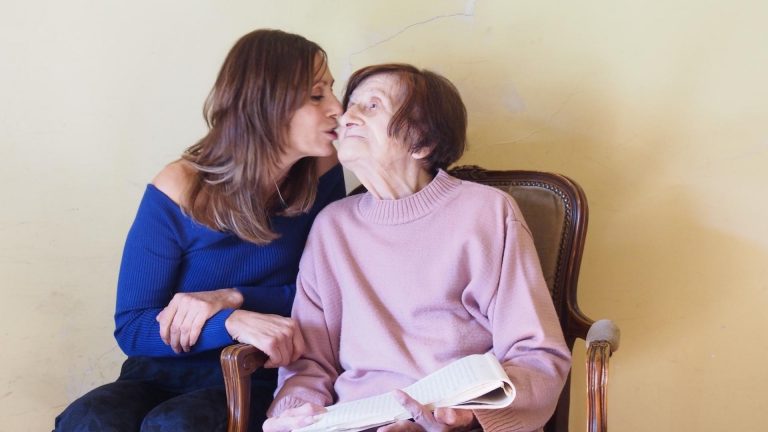
This is what I say to my old mother Maria. Ninety-seven is her number.

The doctor’s appointment is today. My mother has to be there to discuss her medication, chronic back pain and constant dizziness. Her fear of falling to the ground is always there.

‘I feel dizzy, I’m going to fall down, I can’t walk, I can’t go,’ she says.

A morbid wish to be beneath earth’s dark soil – maybe this is how thought forms itself when one is old.

I have given up on dressing her in nice outfits; she prefers to wear the old familiar thin garments that don’t keep her warm. She doesn’t want anything new like a thick wool jumper. She has three coats but wears none.

‘They are too heavy,’ she says when I suggest she covers her cold frame to go out into Melbourne’s fickle weather.
It only takes a few seconds before we move from the front door, one micro step at a time. The seconds turn into minutes, it’s a slow progress.

‘Grab the handrail, Mum, steady yourself,’ I say, words of encouragement.

She pauses at the front gate, a victory. Walking her to my car is my next challenge.

The trip to the doctor’s is the same, time after time.

‘I can’t, I can’t, I can’t go, just leave me, I want to go back inside my house,’ she says.

I cannot turn her around and let her stay in her safe haven today. ‘You have to go; we need to ask the doctor to increase your pain medication. You have to be there, you can’t go back inside, you’re outside now.’ My voice has a tone of frustration and forcefulness to it, almost angry, but I try to remain poised.

It’s like speaking to a naughty child. But this is my frail mother, my old mother. ‘Look there is my car!’ I point to the car.

‘The white one?’

‘No, Mum mine is the brown one.’ She never remembers what colour my car is.
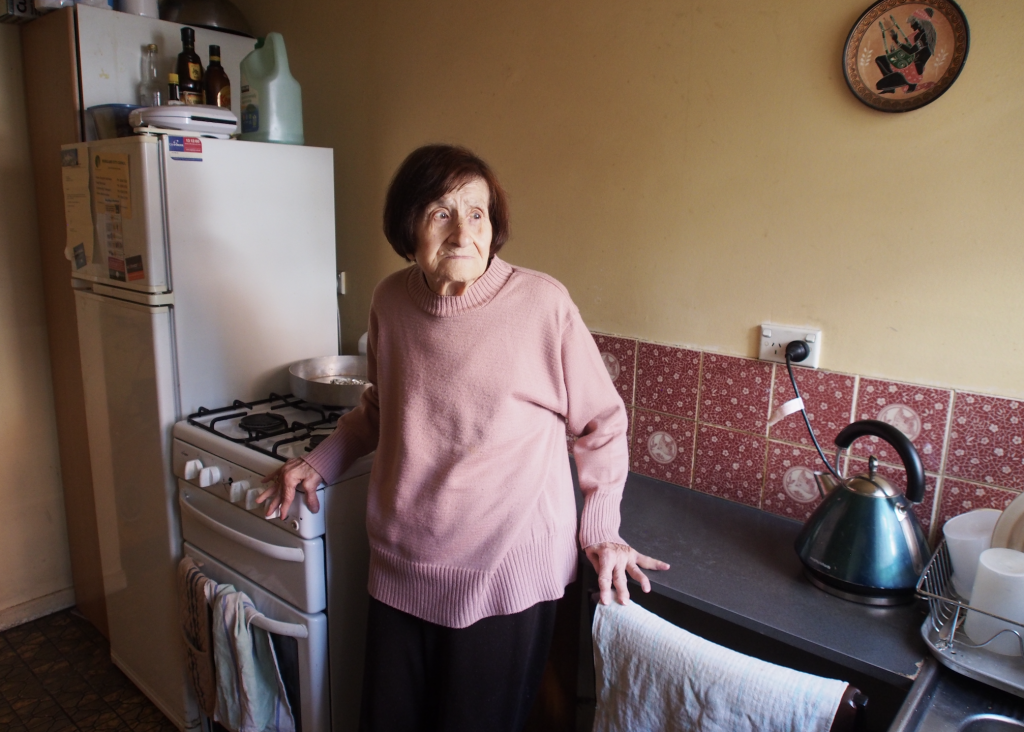
She struggles; her legs are weak, thin to the core, muscle mass a thing of the past. An entire body of loose saggy skin hangs, barren of youthful collagen. Her height is diminishing, her weight far too low, and the back pain is relentless.

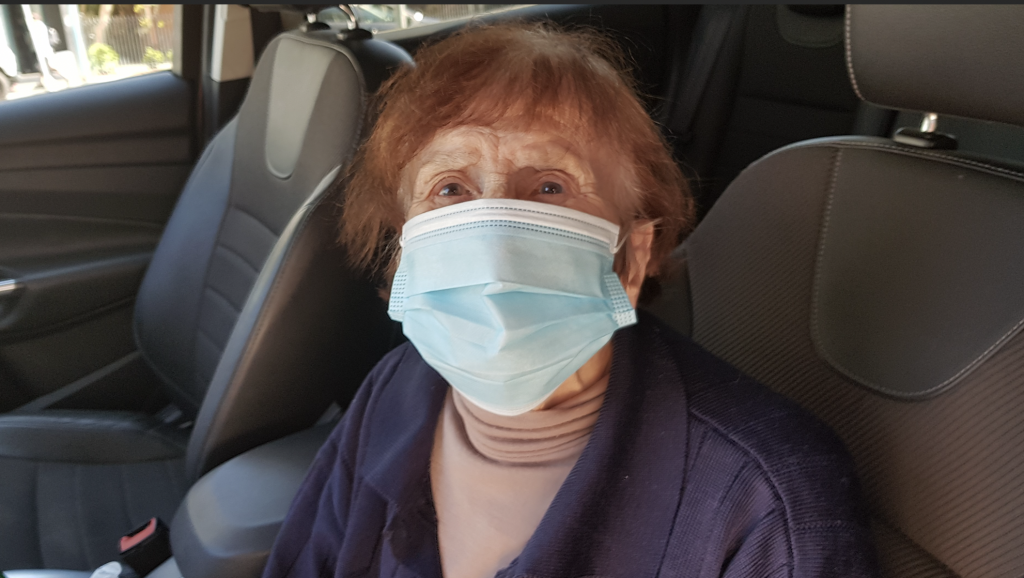
My car is a small SUV, the height of the seat is level with Maria’s bony bottom. I open the passenger-side door while still holding her arm. She swivels from a standing position and plonk! she sits. The scent of clean hair greets me as I place the seat belt around her. I feel her gentle touch on my hand, how cold her fingers are. I place them under her jumper for warmth.

I drive past the doctor’s surgery because all the parking spots nearby have been taken. That’s fine, Mum needs a chance to walk. Lately she hardly moves from her warm bed, where her pain finds relief.

I often say, ‘Let me take you for a walk outside.’

‘Not today,’ she says. It’s always: not today. Movement remains in her past. Myopenia is evident in her bones, osteoporosis is close by.
I take her vinyl handbag as I help her out of the car, slowly, everything is slow now, like a slow-motion movie scene. She grabs hold of me tightly, some strength found for this purpose.

‘I’m going to fall, I’m going to fall, I feel dizzy.’ Her voice is thin.

‘I won’t let you fall.’

Her frail body is stooped. Her head is always lowered towards the ground, her eyes are small slits, the brightness long gone. It is hard to tell where she is looking. Mum where are you looking? ‘Can you see where you’re going?’

She doesn’t reply. With trepidation we continue to shuffle along.

‘Are we close now?’ ‘Yes,’ I say.

We are one person in a three-legged race, but it is no race; we are stuck together, my side against hers.

‘I won’t let you go,’ I say. With my face close to hers, I notice her skin is a strange shade, sallow, blotchy. There are brown clusters on her nose, and two white hairs growing out of a raised mole. Her wrinkles are minimal for her age, her face is drawn with her mouth falling inwards even with new dentures.
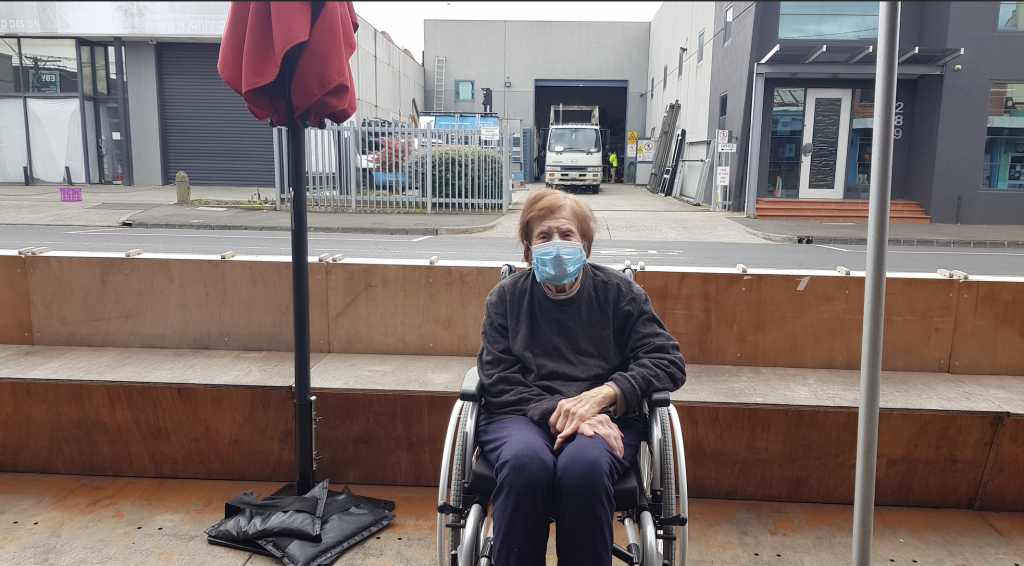
The soft foods I make for her hurt her gums. Her clothes are loose. Scoliosis is inside her worn out body, arthritis is in all the joints. Her lumpy knuckles raising upwards like exposed tree roots, twisted distorted fingers, each one has its own direction. My eyes move back up to her hair, it has a wide band of white regrowth, the brown is barely there. ‘Let me colour your hair today.’

‘Not today, not today, I can’t today…’

I stop gazing at her. We are at the doctor’s building. Mum’s knees buckle while she struggles up the small step.

‘You need to walk more.’ I’m aware that saying this does not help.

We shuffle into the crowded waiting room. A pretty young woman with a kind smile, sitting near the entrance, stands up and offers her seat to my mother. We both thank her. Sitting down is another struggle – it’s done slowly, my mother positioning herself in front of the chair, then she eases herself down to a crouch. It’s painful to watch. When she’s finally seated, I let go of her arm. I place her handbag on her lap.

As I stand beside her chair, I look down at Mum’s feet, she is wearing her velvet slippers, there is a hole in the fabric and her toe is sticking out. In a low voice, I exclaim, ‘Why didn’t you wear your leather shoes?’

‘It doesn’t matter Eleni! I am old now.’

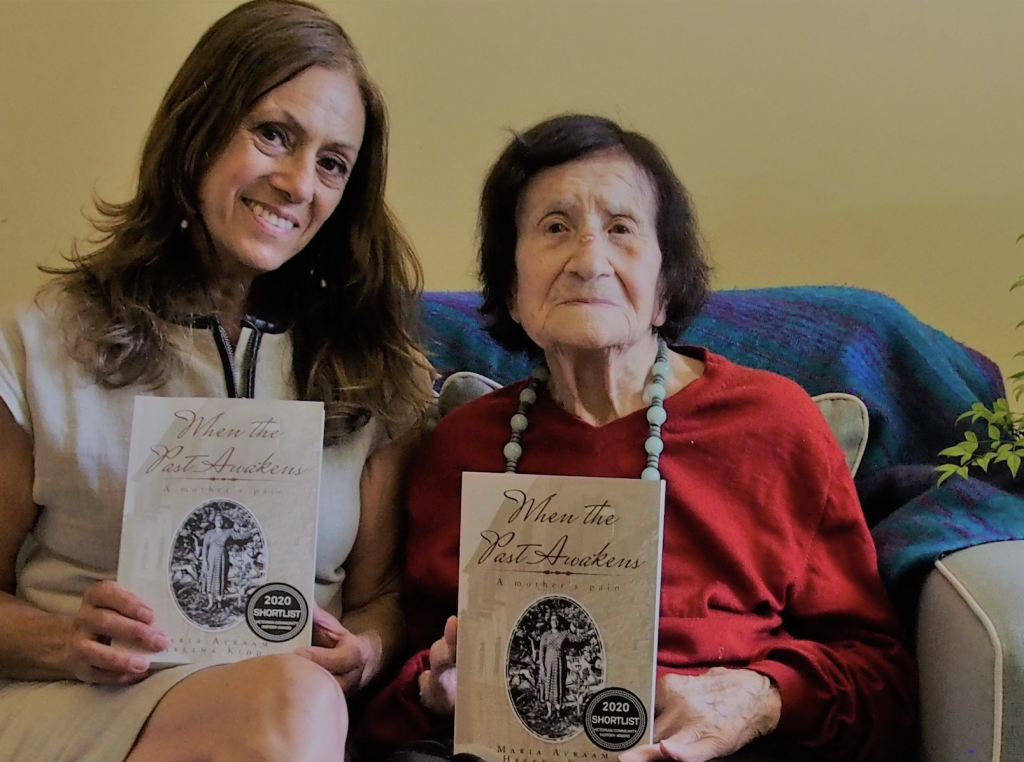
*Helena Kidd is the author of the book “When the Past Awakens: A Mother’s Pain” which can be purchased via the Royal Historical Society of Victoria or Amazon


Natalie Kyriacou named in top 100 Australian innovators list

The Australian have produced their second The List: Australia’s Top 100 Innovators celebrating the Australian entrepreneurs, founders and companies that are helping drive our nation forward.

Making this year’s list is entrepreneur and environmentalist, Natalie Kyriacou OAM.

Kyriacou, who received the Medal of the Order of Australia for her work in the environmental space is a multi-award winner and founder of My Green World, a social organisation dedicated to educating and encouraging positive youth participation to help charitable initiatives in wildlife and environmental conservation.

In a tweet, the founder and PwC management consultant said she was “humbled” to be on the list.

The Forbes 30 under 30 (2018) honouree is also the creator of the mobile game app, World of the Wild, which allows young people to take part in virtual wildlife conservation scenarios.

In addition to being the Australian Director for the Sri Lanka-based animal welfare NGO, the Dogstar Foundation, she is also responsible for the global ban on elephant rides by Australia’s travel wholesaler, Tempo Holidays.

Grammy winner producer Christopher C. King presented with honorary Greek citizenship

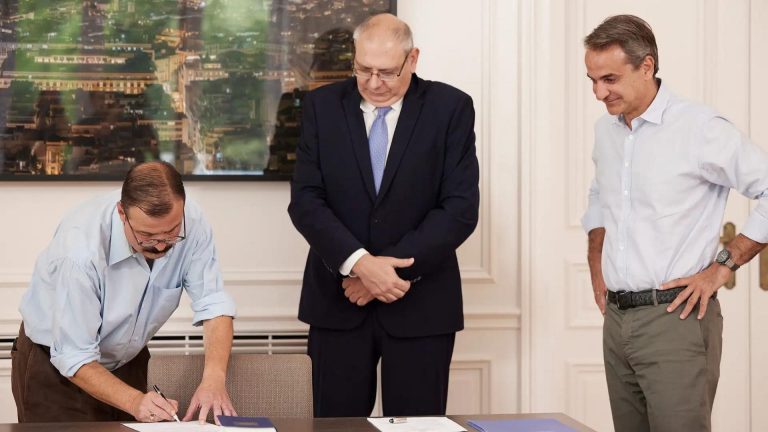
Grammy award winning producer, writer and ethnomusicologist Christopher C. King was presented with an honorary Greek citizenship during a ceremony that was held at the Prime Ministers offices this week with Ministry of Interior’s Secretary General for Citizenship, Athanasios Balermpas.

King is best known for making the traditional music of Epirus and its famous dirges’ known all around the world.

Born and raised in southwest Virginia, King studied philosophy at Radford University and over the course of the last ten years has researched the tradition of ‘Greek demotika songs’, especially in Epirus.

In 2018, W.W. Norton published his book “Lament from Epirus: An Odyssey into Europe’s Old Surviving Folk Music,” and in the book, King, who is now a permanent resident of Konitsa, writes about music as a lament, as a lullaby and consolation and as an integral part of joy and revelry.

The book was named one of the top ten books of 2018 by the Wall Street Journal, and he has presented his work at the New York Public Library, the Gennadius Library of Athens as well as the Odeon Conservatoire in Athens, among other venues.

Source: Ekathimerini

EOC President Spyros Capralos receives highest Japanese honour available to foreigners

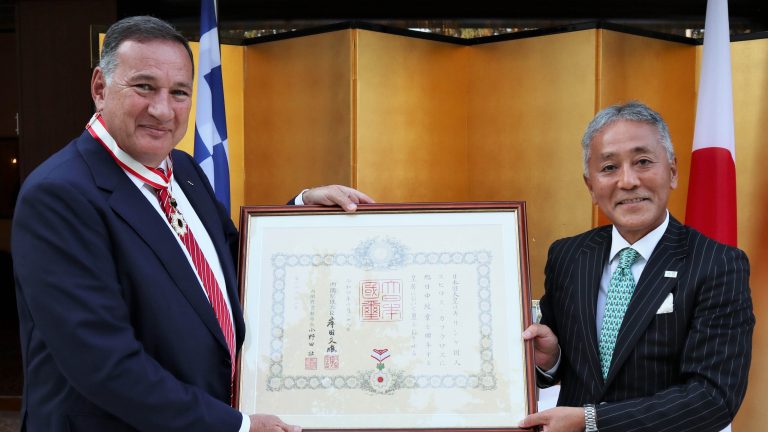
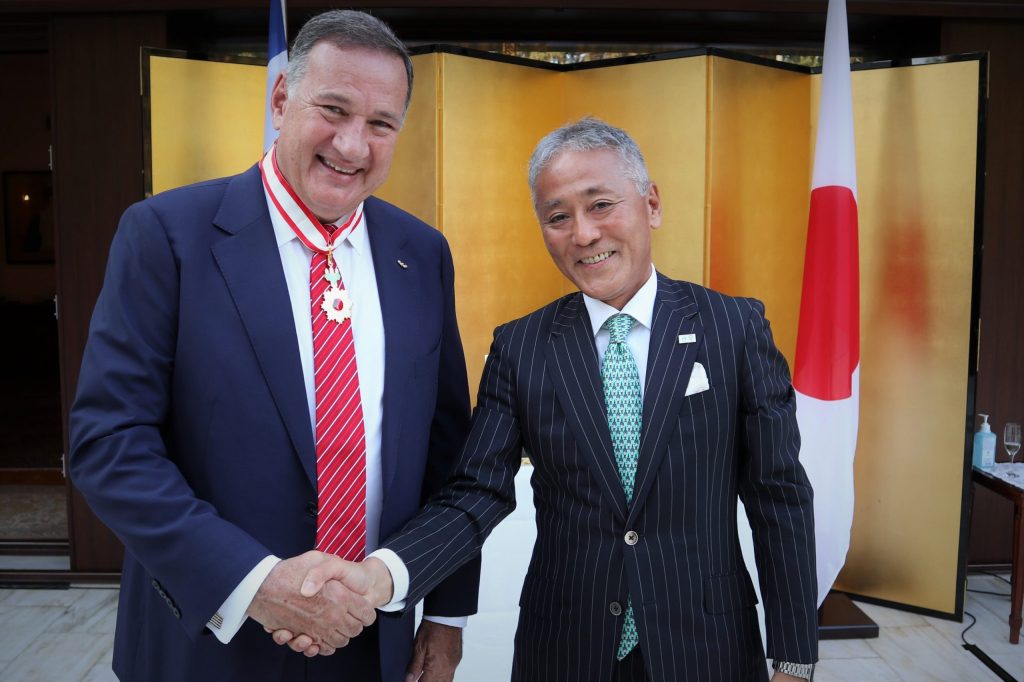
The European Olympic Committees President, Spyros Capralos, was awarded the “Order of the Rising Sun” at Japan’s Embassy in Athens earlier this month in recognition of his excellent work in organising the Tokyo 2020 Olympics and in strengthening Greek and Japanese relations.

The “Order of the Rising Sun” is a Japanese decoration of honour that is awarded by the Japanese government to individuals around the world who have made distinguished contributions to the advancement of Japan.

Capralos was awarded the order by the Ambassador of Japan to Greece, Yasunori Nakayama.

President Capralos, who is also an International Olympic Committee member and President of the Hellenic Olympic Committee, said: “This is a great honour for me. It is something special, as special were the Olympic Games organised in Tokyo.”

“To gather so many people under these difficult conditions is something that only people like the Japanese with discipline, determination and passion for sports can achieve.”

Spyros Capralos was awarded the order by the Ambassador of Japan to Greece, Yasunori Nakayama. Photo: EOC

Speaking at the ceremony, Ambassador of Japan to Greece, Yasunori Nakayama said: “The government of my country decided to award President Capralos as a sign of recognition for his great contribution to the success of the Tokyo 2020 Olympic Games.”

“With his continuous efforts and decisions, the Lighting Ceremony and the Handover Ceremony of the Olympic Flame were successfully organised with safety measures due to the pandemic, while his support for the organisation of the Olympic Games was unstoppable.

“The difficulties we managed to overcome strengthened more the bonds between Greece and Japan and I want to express my gratitude and respect for the efforts he made not only to make the Games happen but also because they were particularly successful,” Nakayama concluded.

SOURCE: European Olympic Committees

Greek Jews petition for Holocaust monument in Thessaloniki

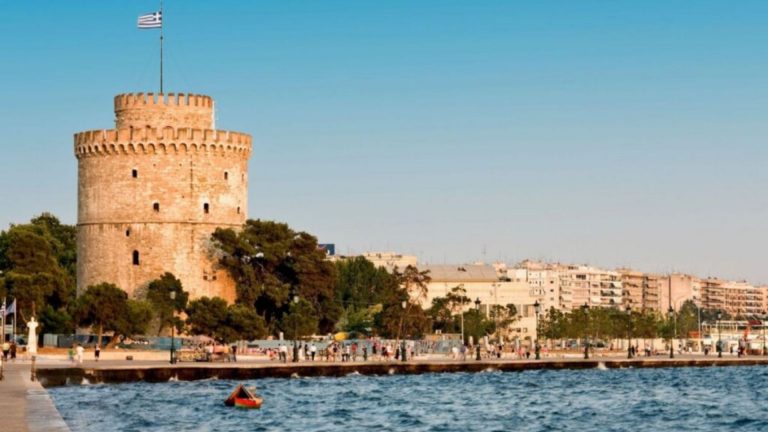
Calls from the Greek Jewish Community have been made to make Thessaloniki Liberty Square a place of remembrance in honour of “Black Saturday” in 1942, where Jewish men were deported for forced labour in the German Army.

The Central Board of Jewish Communities pleaded their case by reflecting on the humiliation and abuse of 2000 men that occurred in Liberty Square on July 11 of that year.

“Eleftherias Square marks the place where the Nazis began to strip the humanity of people born Jewish,” the Board said.

“It is the beginning of the ‘ultimate evil’ that led to the Holocaust of 6,000,000 Jews, including 60,000 Greek Jews, many of whom defended their homeland and fought against the Italian and German occupiers and breathed their last breath in the concentration camps with Greece deeply rooted in their souls.”

The Board went on to appeal to the Mayor of Thessaloniki, Konstantinos Zervas, in the hopes that the square will get the recognition as a historical character and a place of remembrance for the thousands of Jews who were tortured by Nazis.

“It is the responsibility of all of us to make Liberty Square a place of remembrance again,” said the Board.

“The citizens and visitors of the city see the place of martyrdom, remember and learn how easily a society can be led down the path of barbarism if oblivion prevails.”

Source: Israel News

Looted 500-year-old Orthodox icon returned to Cyprus

0

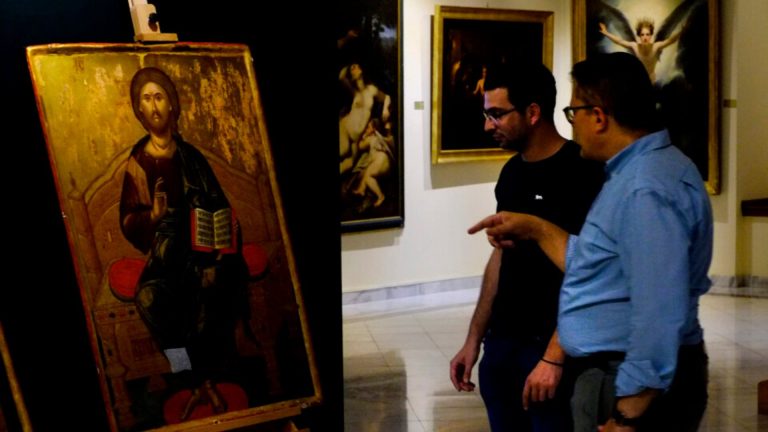
A 500-year-old Orthodox icon that was looted from a church during the Turkish Invasion in 1974 from the northern part of Cyprus has been returned and was presented to the head of the Orthodox Church in Cyprus, Archbishop Chrysostomos.

The icon of the Enthroned Christ has been dated by the Cyprus’ Antiquities Department to around the end of the 15th century to the early 16th century, originally belonging to the 12th century Christ Antiphonitis Church near the northern coastal town of Kyrenia.

The icon was one of many artefacts that were taken and stolen from places that had been abandoned as a result of the Turkish invasion of 1974, that left people displaced from their homes and their country.

Countless icons, frescoes, mosaics and religious artifacts were stolen from churches that were abandoned as well.

Transport Minister Yiannis Karousos presented the church with the returned artefact and said that “efforts to repatriate stolen artifacts are continuing.”

Source: Ekathimerini

Secretary General for Greeks Abroad congratulates Steve Dimopoulos MP on recent appointment

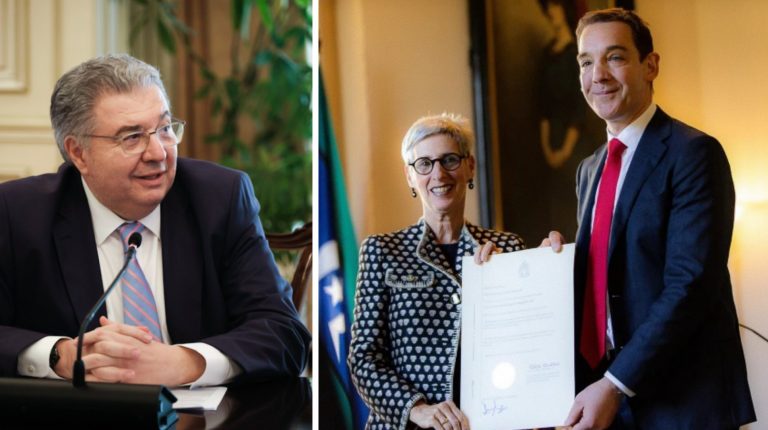
Greece’s Secretary General for Greeks Abroad and Public Diplomacy, John Chrysoulakis, has sent a letter of congratulations to Member for Oakleigh, Steve Dimopoulos MP, on his recent appointment as Minister for Tourism, Sport and Major Events, as well as Minister for Creative Industries of Victoria.

In his letter, Mr Chrysoulakis said: “Your success honours the Hellenic Diaspora, as it proves that Greeks, wherever they are, are a respectable part of local communities with special value, appreciation and recognition.”

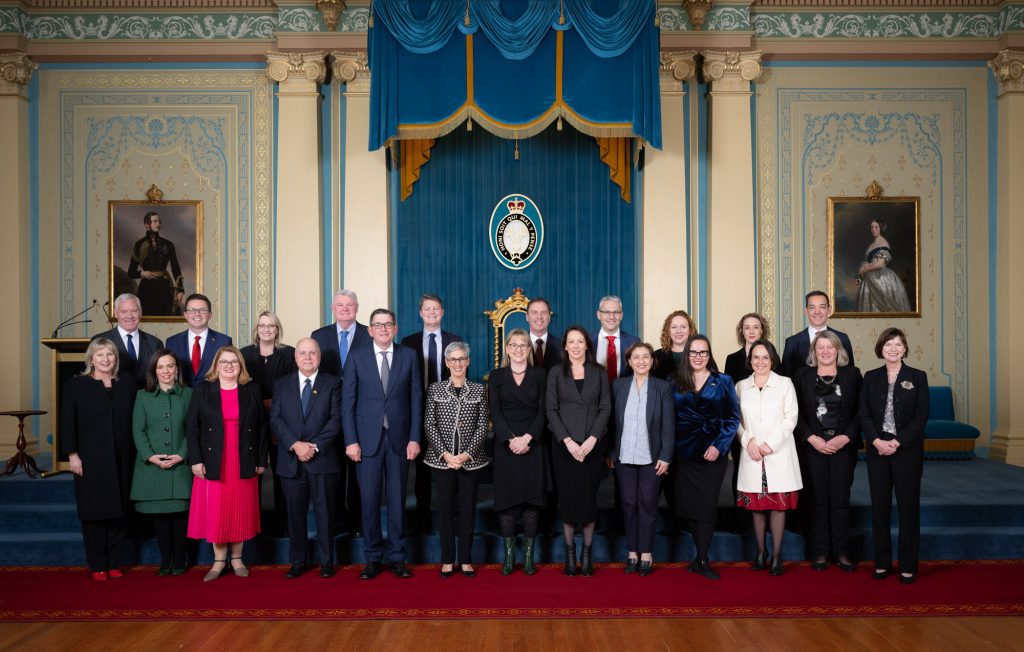
Steve Dimopoulos is part of the Victorian Government’s new cabinet ministry. Photo: Dan Andrews Twitter.

“Your engagement with public affairs since 2014, your repeated election by the local community, as well as the assumption of a series of state and political offices are living proof of both your abilities and knowledge as well as the trust and respect held by your fellow citizens in your person.”

The Secretary General added that given all Mr Dimopoulos has achieved in public affairs so far, he is “absolutely sure that you will continue to serve your fellow citizens in the best possible way.”

“At the same time, I am optimistic that in exercising your duties you will always have in mind the interests of the Greeks of Australia and of Hellenism in general,” he concluded.

READ MORE: Steve Dimopoulos secures top job as Victorian Minister for Tourism, Sport and Creative Industries

Jenny Mikakos meets with Ukrainian families at Greek Council for Refugees in Athens

By Nick Siriodis.

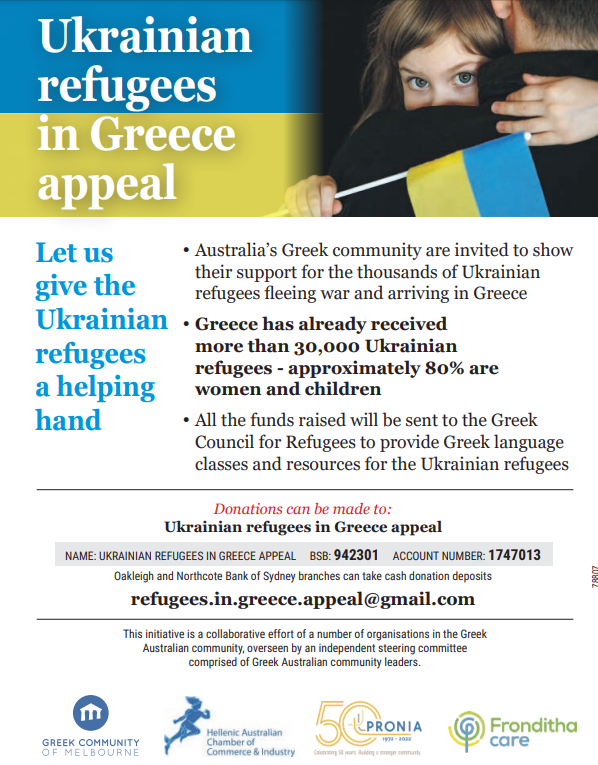
The war in Ukraine is raging and no one knows when it will end. Hundreds of thousands of civilians are uprooted and looking for a chance at life in other countries. Greece has so far welcomed around 40,000 refugees and over 80% are women and children. The men have stayed behind and are defending their homeland from the Russian invaders.

The Greeks of Australia could not watch this injustice and do nothing. They decided to help out in order to provide relief to those Ukrainians who are suffering.

For this purpose, a fundraiser is being held with the cooperation of many Greek organisations and leading personalities of the community and the money raised will be allocated to the Greek Council for Refugees (GCR), in order to finance Greek language learning programs and more. Language proficiency is a critical factor for the successful resettlement of refugees, allowing them to fully participate in Greek society and tap into employment and education opportunities in Greece.

The GCR is a non-governmental charitable organisation that works with the United Nations High Commissioner for Refugees to provide humanitarian assistance to people arriving in Greece. This assistance includes free legal advice, employment programs, Greek and English language courses, as well as training programs. In 2005, the GRC was awarded for its work by the then-President of the Hellenic Republic, Karolos Papoulias.

A special committee has been established to run the fundraiser and on the Board is the President of the Greek Community of Melbourne, Bill Papastergiadis, the President of the Hellenic Australian Chamber of Commerce and Industry, Fotini Kypraios, PRONIA President, Kris Pavlidis, and Fronditha Care President, Jill Taylor-Nikitakis.

The Greek Herald visits the GCR with Mikakos:

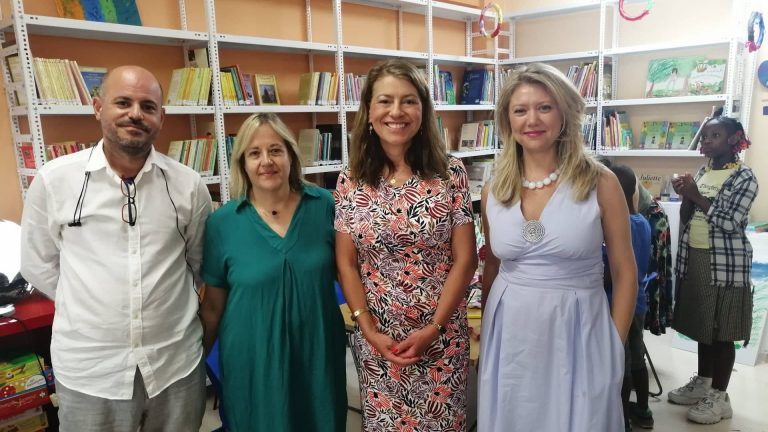
Victoria’s former health minister Jenny Mikakos visited the building that houses the GCR in Athens on Thursday morning.

During her visit, Mikakos was informed about all the actions that take place at the GCR every day, listened to what the Ukrainian families had to say and conveyed the support of Australia’s Greek diaspora.

The Greek Herald was present at the visit and watched as Mikakos spoke with those in charge, listened to their problems and exchanged opinions with them.

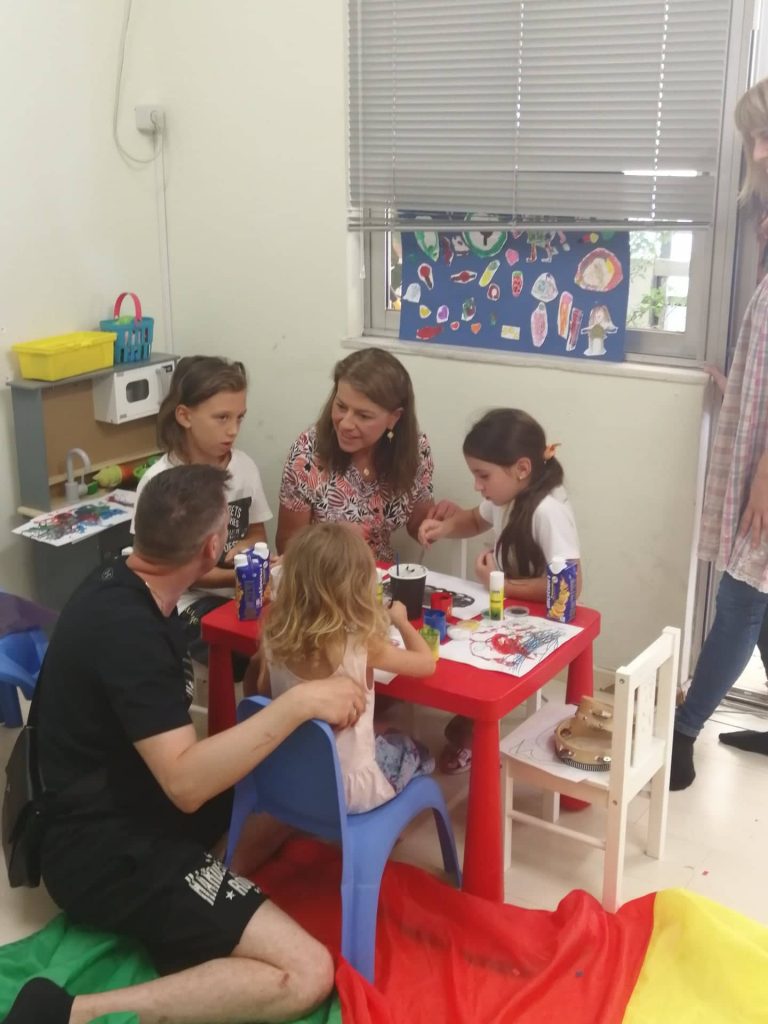
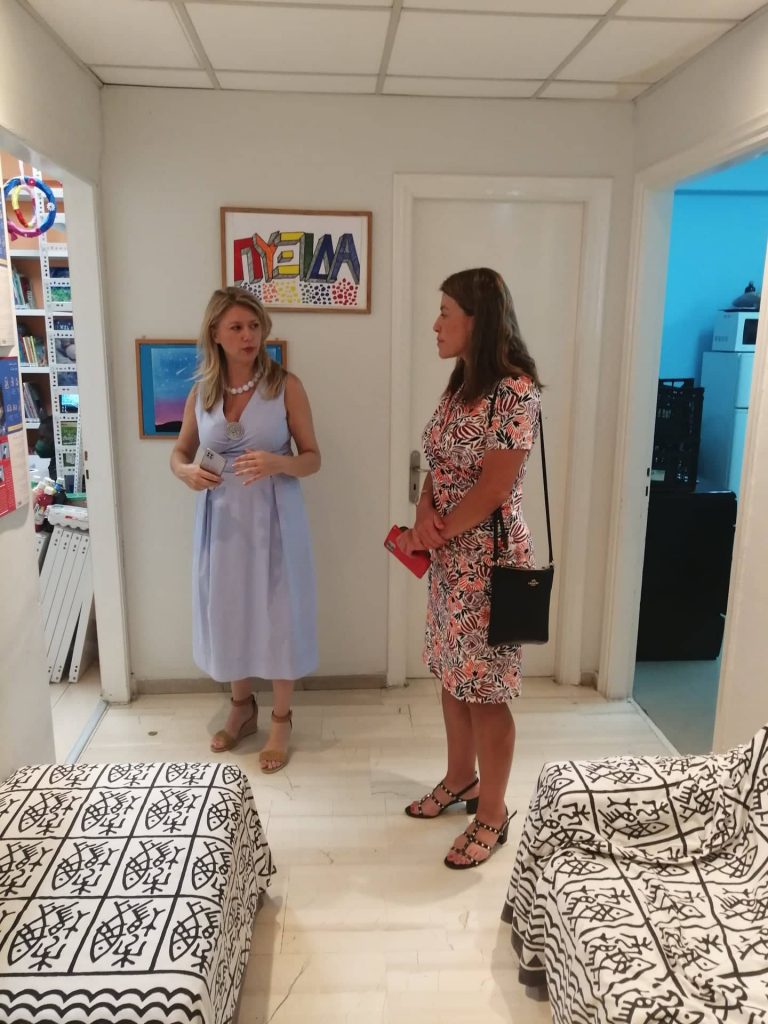
The manager of the PYXIDA Intercultural Center, Anna Mertzani, gave Ms Mikakos a tour of the building and the areas where educational programs are held daily and Mikakos had the opportunity to chat with children and their families.

Mikakos with the children. All photos copyright: The Greek Herald.

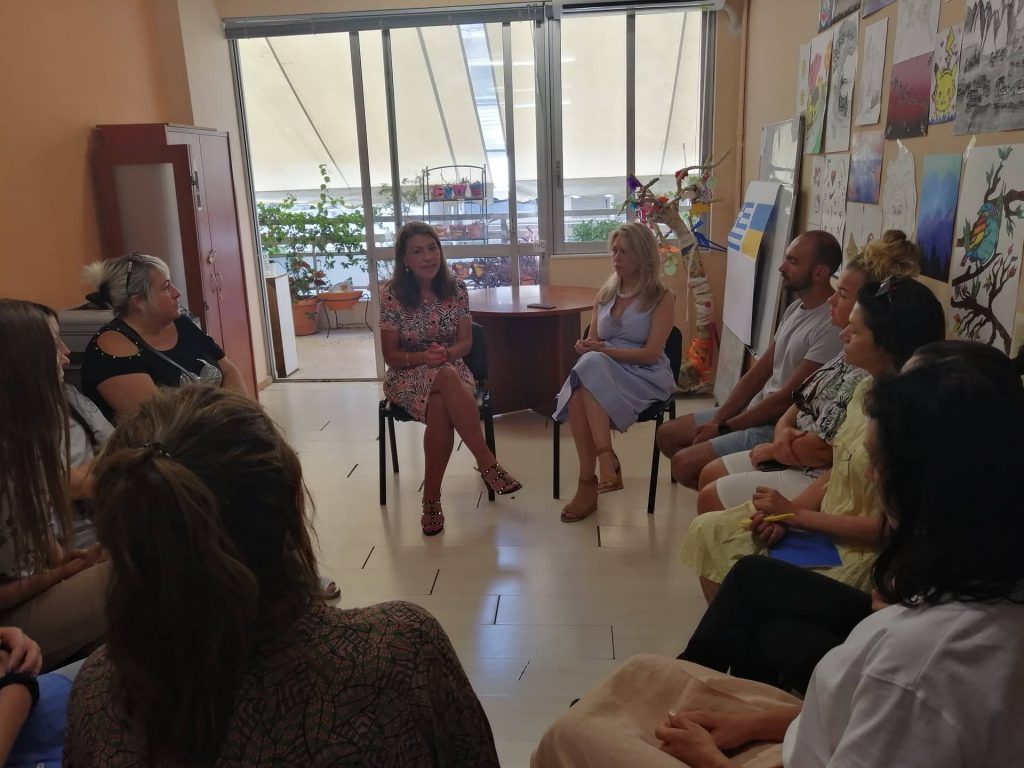
Mikakos spent time with Ukrainian parents who were present and allowed time to listen to everyone’s personal story.

She mentioned that a program with 50,000 jobs in tourism especially for Ukrainians will become available and stressed the need to learn the Greek language.

Mikakos speaking to people at the GCR.

We have raised about $20,000′:

Speaking to The Greek Herald, Mikakos said: “I wanted to personally visit the Greek organisation for refugees and learn more about the programs currently available and the different services they have to offer.

“I had the chance to have conversations with Ukrainian parents who are in great need of finding jobs here in Greece to support their families.

“With the fundraiser, we help them learn the Greek language which will then assist them to find a job and assimilate easier in the society,” she said.

Asked about the response from Greek Australians, Mikakos emphasised: “The fundraiser is going very well and I hope more people from the diaspora will support the cause after this visit.”

A tour of the facility.

“We have raised about AUD $20,000 and we think we’re going to top that and give a little help to this organisation,” she said.

Mikakos with The Greek Herald journalist, Nick Siriodis.

Acoording to the Manager of the PYXIDA Intercultural Center Anna Mertzani the organisation currently serves up to 350 children aged 2 to 18, from at least 22 countries.

Donations can be made to:

UKRAINIAN REFUGEES IN GREECE APPEAL

  • BSB: 942301 ACCOUNT NUMBER: 1747013
  • Oakleigh and Northcote Bank of Sydney branches can take cash donation deposits.
  • For more information contact: refugees.in.greece.appeal@dimitrig

*All photos copyright: The Greek Herald.

Fresh damage to Hagia Sophia’s historic Imperial Gate

0

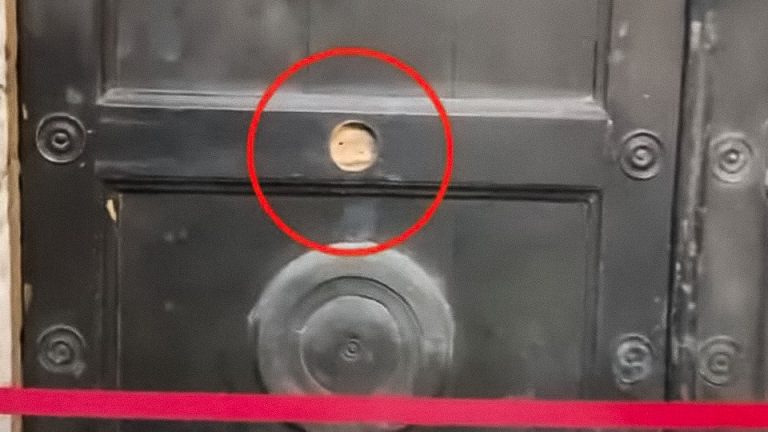
More damage has been caused to Hagia Sophia’s historic imperial gate with one of the metal plates on the oakwood doors appearing to have been pried out.

According to a report by Turkish broadcaster, ATV, the temple has once again been “the target of reckless individuals.”

“In the past, vandals have destroyed the Imperial Gate, the walls and the marbles. And now one of the emblems of the Imperial Gate of Hagia Sophia has been lost,” the report said.

This is the second time in less than three months that the door has been damaged. In April, the Turkish Union of Art History shared a picture on Twitter showing damage to the doors of the 15-century-old gate.

A month later, photos emerged online showing visitors scraping the walls of the historical structure and placing small pieces in their bags as souvenirs.

The Imperial Gate is the main entrance to what was the most important church of the Byzantine Empire and according to tradition, the doors were made with oak from Noah’s ark.

READ MORE: Greek Foreign Ministry condemns damage to Hagia Sophia’s historic Imperial Gate

No more ‘Danish Feta’ EU High Court rules

Twenty years after feta cheese was recognised as exclusively Greek, the European Union’s highest court has announced that Denmark would be breaking the law if it continued to allow dairies to continue to sell and export brined white cheese by the same name.

On Thursday, the European Court of Justice in Luxembourg made the ruling, in effect ending a 59-year era of Danish feta sales.

In Athens, the decision elicited immediate joy, with the head of the Association of Greek Dairy Industries, Christos Apostolopoulos saying: “This is a wonderful day for authentic feta cheese.”

“What Denmark has been doing is a total fraud. The only way its companies can continue selling the product is if they call it ‘white brined cheese’,” he added.

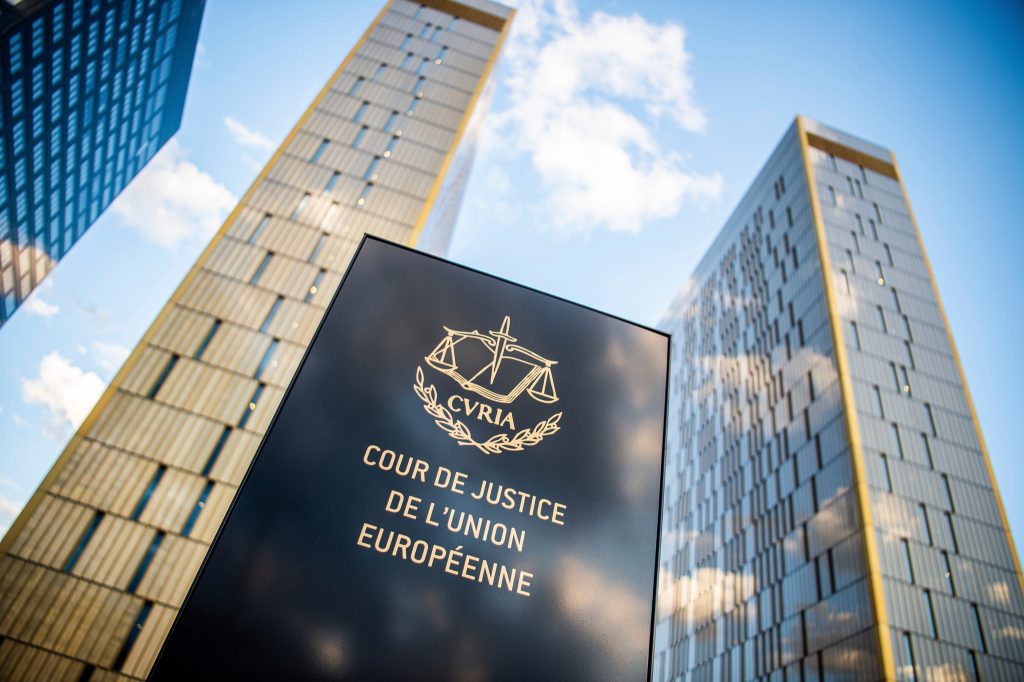
The EU’s highest court, the European Court of Justice in Luxembourg.

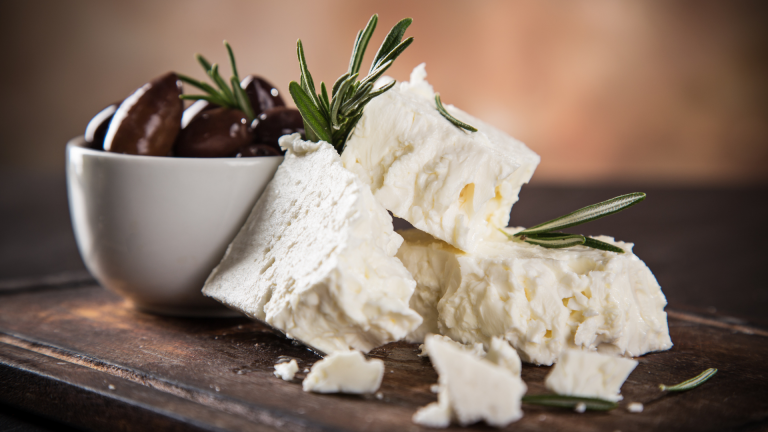
Feta is a traditional Greek cheese made from unpasteurised sheep or goat milk, which since 2002, the EU has declared a “designation of origin” product, meaning it must come from Greece.

Greece maintains several “designation of origin” products, including the kalamata olive.

According to the World Intellectual Property Organisation, Greece is the world’s largest producer of feta, producing 120,000 tons per year and making up 28% of global exports.

Greek exports of the cheese are valued at $200 million euros, providing jobs for more than 300,000 workers.

During the court case, Denmark had argued that feta was a generic name and a prohibition on its cheese exports, which average approximately 85,000 tons annually, would obstruct its international trade.

In reply, the court found that Denmark was in fact hindering the right of Greek producers to a fair income and more broadly failing in its obligations as a member of the EU.

“By failing to stop the use of the designation ‘feta’ for cheese intended for export to third countries, Denmark has failed to fulfil its obligations under EU law,” the court found.