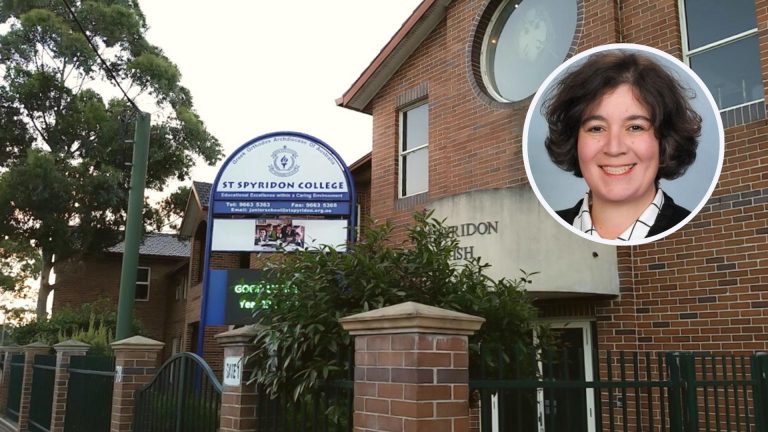
The Principal of St Spyridon College’s junior school in Kingsford, Sydney has announced that she will be leaving her position after 32 years to spend more time with her family.
In a letter obtained by The Greek Herald and shared with parents on Friday, July 29 via the school app, Mrs Aristea Synesios said the COVID-19 pandemic had given her the opportunity to reflect on her life and “prioritise what is important.”
The outgoing Principal said she would miss the children the most as “they have given me so much more than I could ever have given them and I have learned so much from them.”
“Many thousands of children have been welcomed through the gates of the Junior School and I have been privileged to nurture and watch them grow into people of faith and tradition who are making positive contributions in society,” Mrs Synesios said in her letter.
“The greatest reward for me is when a child you have taught returns with their own child or, they are now a teacher of my child. I see them not as my students but as my children and grandchildren and you, their parents, members of my family. This is what makes our school unique.”
The announcement has been met with disappointment by some school parents with a change.org being set up to express their “disappointment, distress and grave concerns” regarding Mrs Synesios’ “sudden and unexpected departure,” and to call for an explanation “from the Parish President and the Parish Board.”
So far, the campaign has been signed by over 720 people.
In response, Head of College, Mrs Amelia Katsogiannis, sent a letter to parents this afternoon thanking Ms Synesios for her service and attempting to alleviate the concerns of some parents.
“I am aware that some parents are concerned at the suddenness of Mrs Synesios’ departure, and that the news has been a surprise. I wish to assure you that we already have the team in place to ensure the very best education and care for your children,” Mrs Katsogiannis said in her letter.
“I thank the many parents who have already expressed their support and faith in my leadership. As the Head of College of our KM1 to 12 school, I will continue to take an active role across the entire College.”
In a statement to The Greek Herald, Parish Board President, Elia Economou, said: “The St Spyridon School community wish Mrs Synesios all the best in the next chapter of her life, and we express our deepest gratitude for her decades of service, to generations of families.”
“While Mrs Synesios’s departure has been sudden, the Head of College, Mrs Katsogiannis, together with Deputy Principal Junior School, Mr Dookie and a range of leading co-ordinators are providing continuity in the education and care of all the students in the Junior school.”
As many of you know, I have been working furiously over the last few years, recording and documenting some truly amazing stories of Cypriot migration. Many of these stories will now feature in my next book which I am designing right now and hope to self-publish in the coming months.
These stories of migration are truly humbling. I remain in awe of the gutsy determination and resilience of these early migrants and by their strength of character. With only blind faith and a desperate hope to guide them, they crossed the oceans in their thousands and sailed to the ends of the earth with barely a penny to their name.
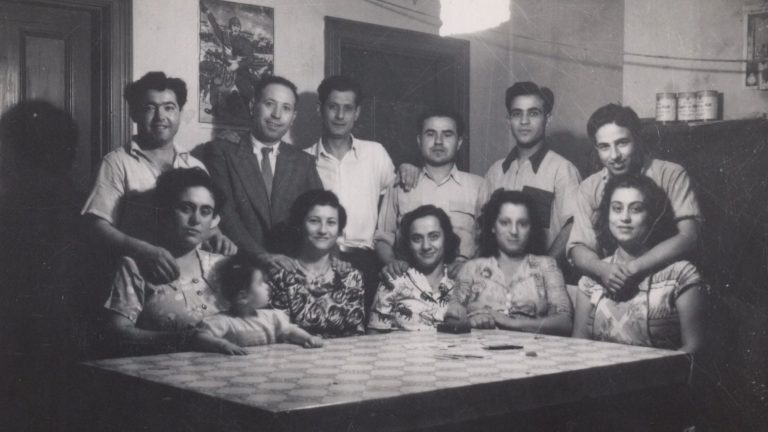
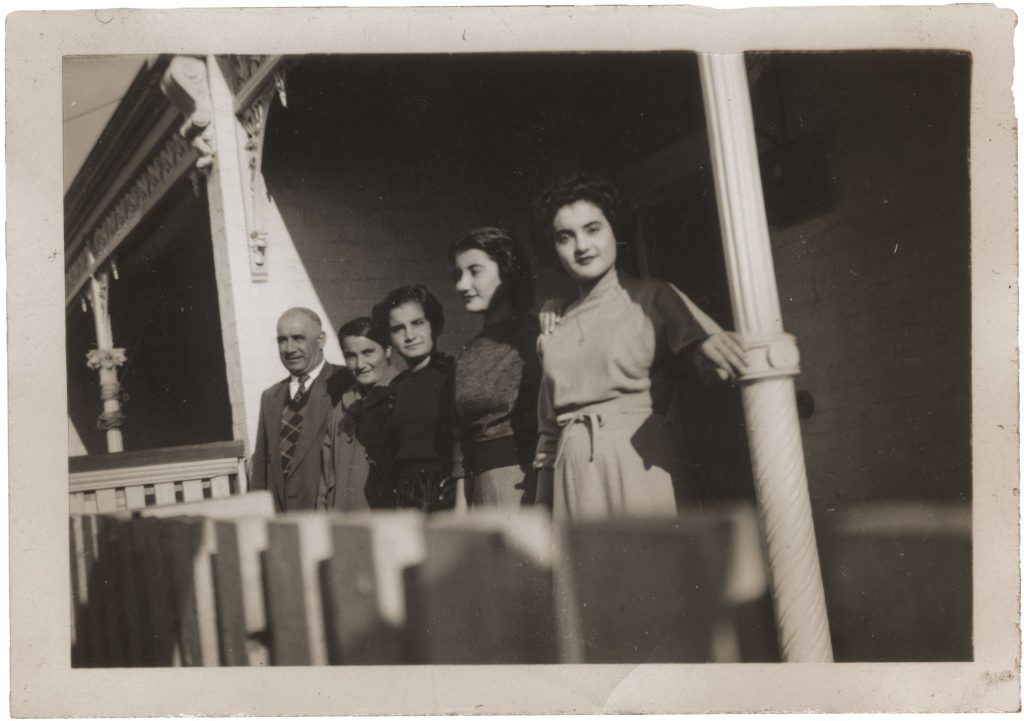
Most of the Cypriots I have interviewed for my next book told me that they left Cyprus after the Second World War to seek a better life and a better future. Many left to find work and financial security to help their families back home. As one man put it. ‘Of course we are happy that we came to Australia. It was the first time in our lives that our stomachs were full. If life was good in Cyprus, we would have stayed.”
Photos: Supplied by Tales of Cyprus
Many of the Cypriot migrants who I had interviewed over the years, told me that they always had intentions of returning to Cyprus. They had planned to stay and work for a few years and then return home to their loved ones. One of the main reasons they did not return home was because of the civil unrest that was brewing on the island during the mid-1950s.
Between 1947 and 1955, seven thousand Cypriots chose Australia as their new home. They paid over 120 pounds for their ship fare with most going into debt to secure the funds. By comparison, Maltese migrants who were also British subjects, paid only ten pounds. Moreover, many Maltese migrants had the advantage of speaking English upon their arrival and having a lot more disposable income. It’s an interesting comparison don’t you think?
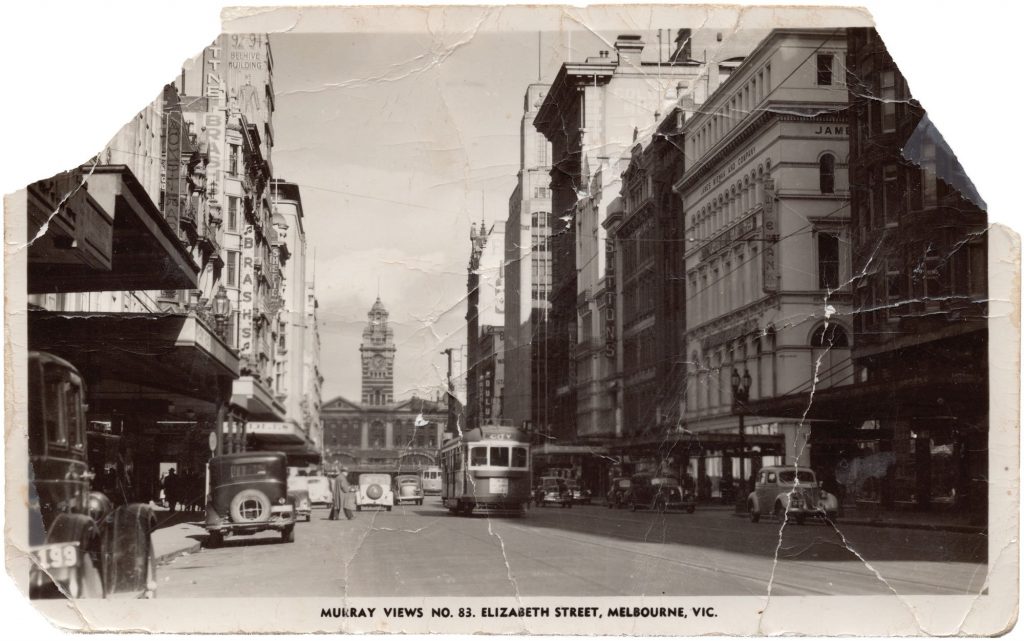
I feel so proud of my Cypriot heritage especially after hearing stories of the incredible comradeship and philoxenia of this remarkable generation of Cypriots. In my hometown of Melbourne, it was common in the 1950s for early migrants to go down to Station Pier to greet and welcome the ‘new’ arrivals from Cyprus. They would ensure they had a place to stay and even helped them to secure a job. How amazing is that!
New Australians like my father would congregate with other Cypriot migrants at Greek cafes and clubs such as the Acropoli and Democritus sharing stories, eating familiar food and debating politics.
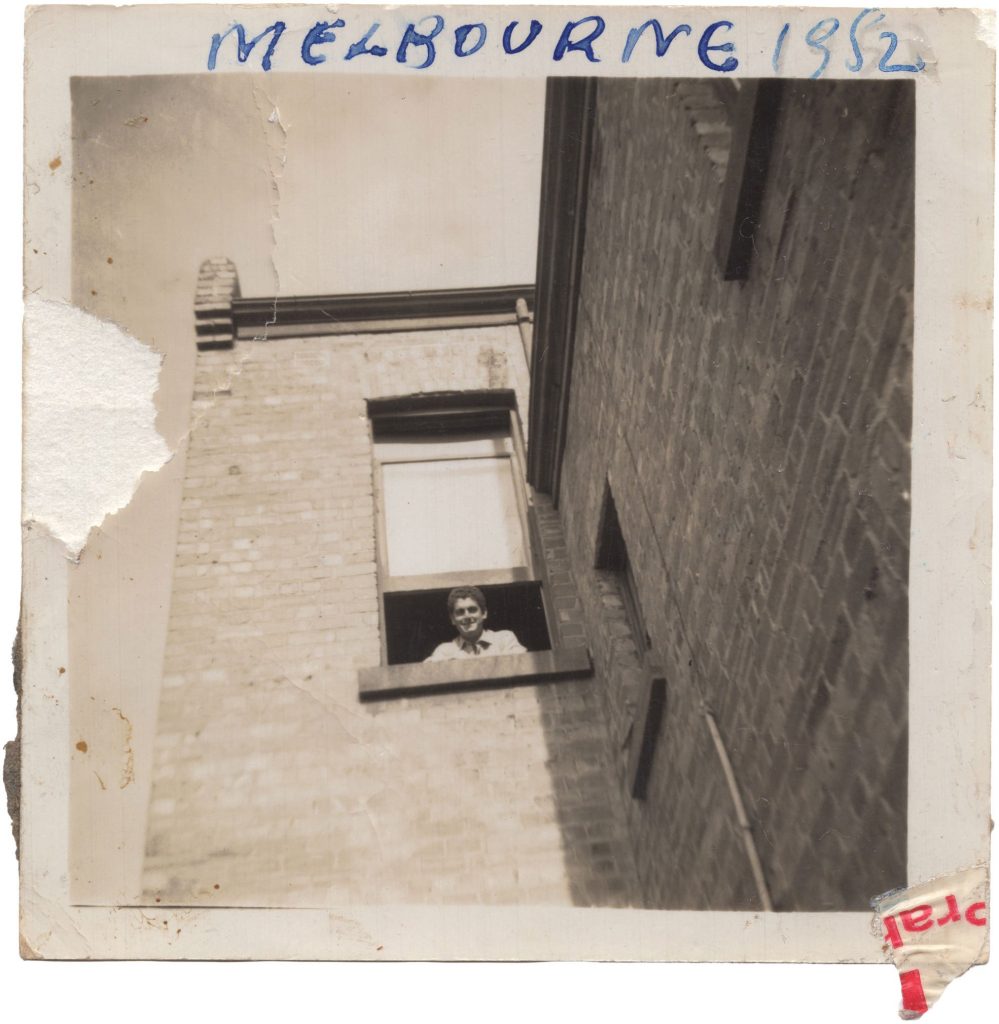
Photo: Supplied by Tales of Cyprus
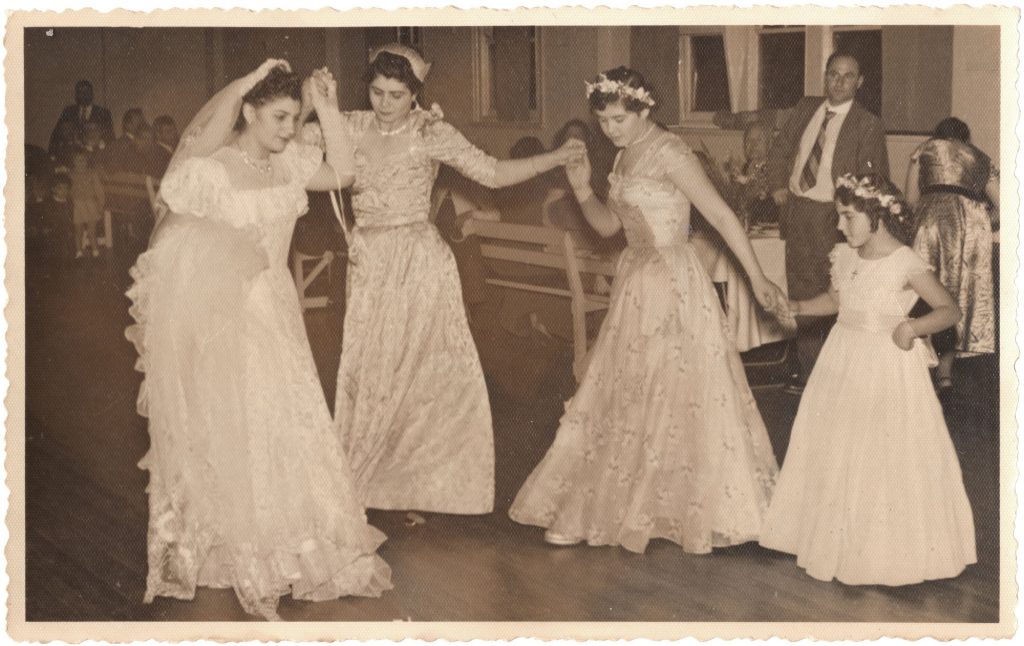
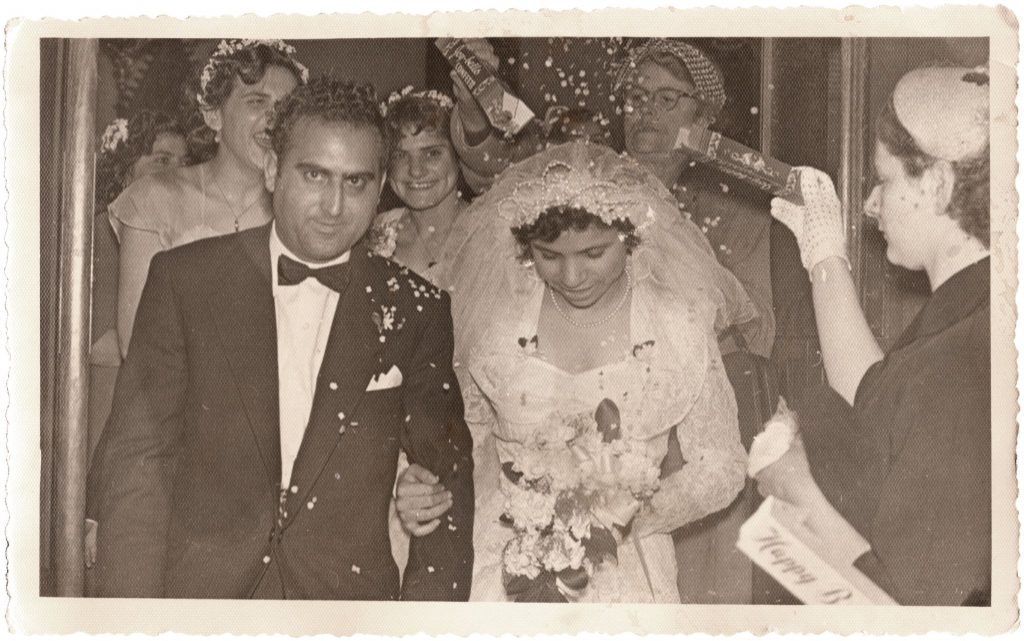
When it was time to settle down and get married, my father would choose a woman from his homeland. Since there were very few Cypriot women in Australia at that time, most men requested a bride to be sent over by ship. Such was the case and the fate of my dear mother.
These mail-order brides (as they came to be known) were sometimes forced to marry complete strangers, since it was their parents who would often arrange the marriage.
Photos: Supplied by Tales of Cyprus
When I was born, my parents sold their cottage in Collingwood and bought a brand new brick-veneer house in the outer suburb of Reservoir (or Resa, as it is affectionally known by the locals). By the time I turned three, my father had converted the front and back yard into a vegetable paradise. He also planted and cultivated a small orchard of fruit trees as well as a pretty impressive grapevine. The chicken coop was at the back of the block. The only thing missing was a donkey and some goats. Needless to say, we enjoyed year-round fresh produce from the garden and ate fresh eggs almost every day.
My mother was also busy converting the interior of our house into a makeshift shrine and memorial to Cyprus. There were handmade embroideries and dollies in every room and countless religious icons and Cypriot keepsakes on every wall. I remember we had a giant map of Cyprus and a framed photo of Archbishop Makarios in our kitchen.
Photo: Supplied by Tales of Cyprus
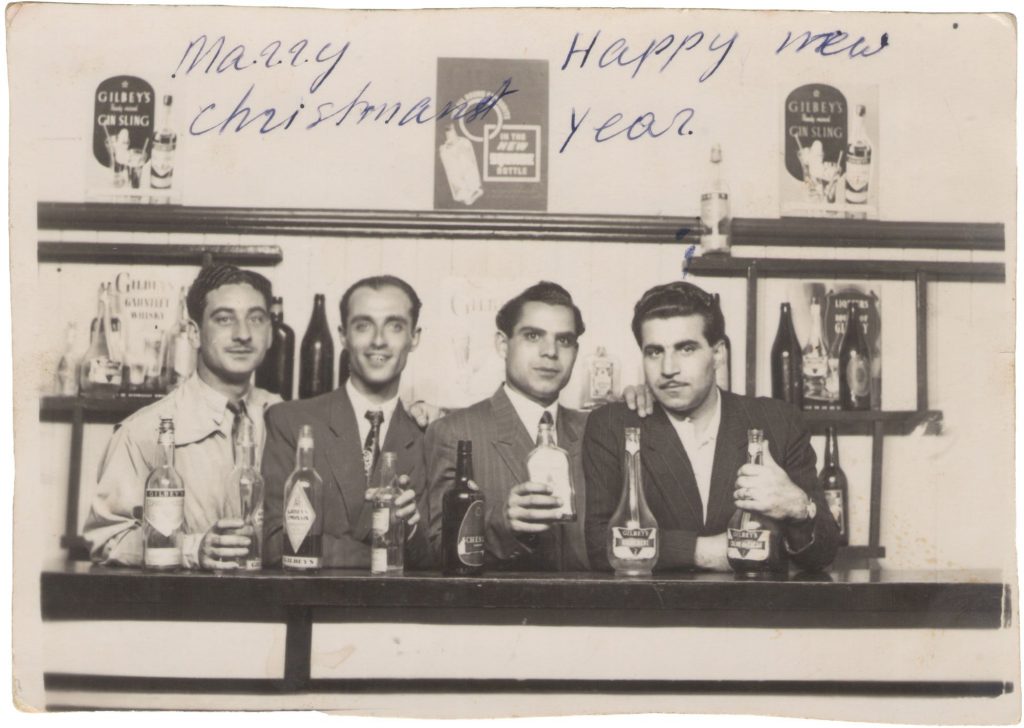
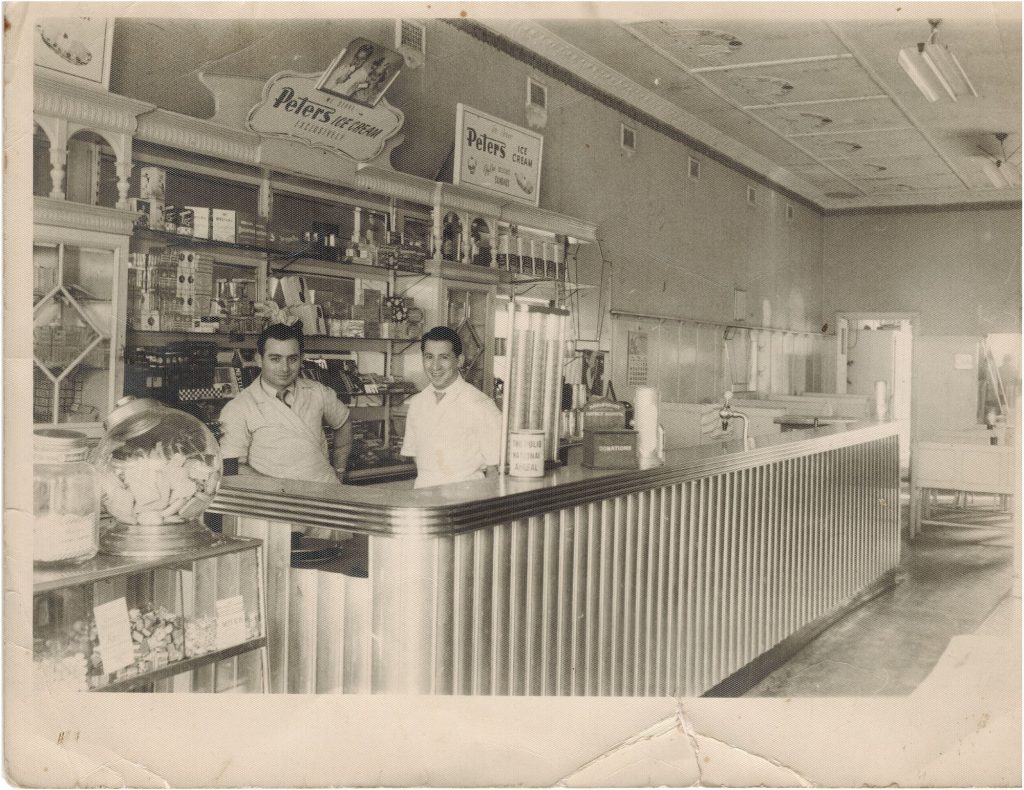
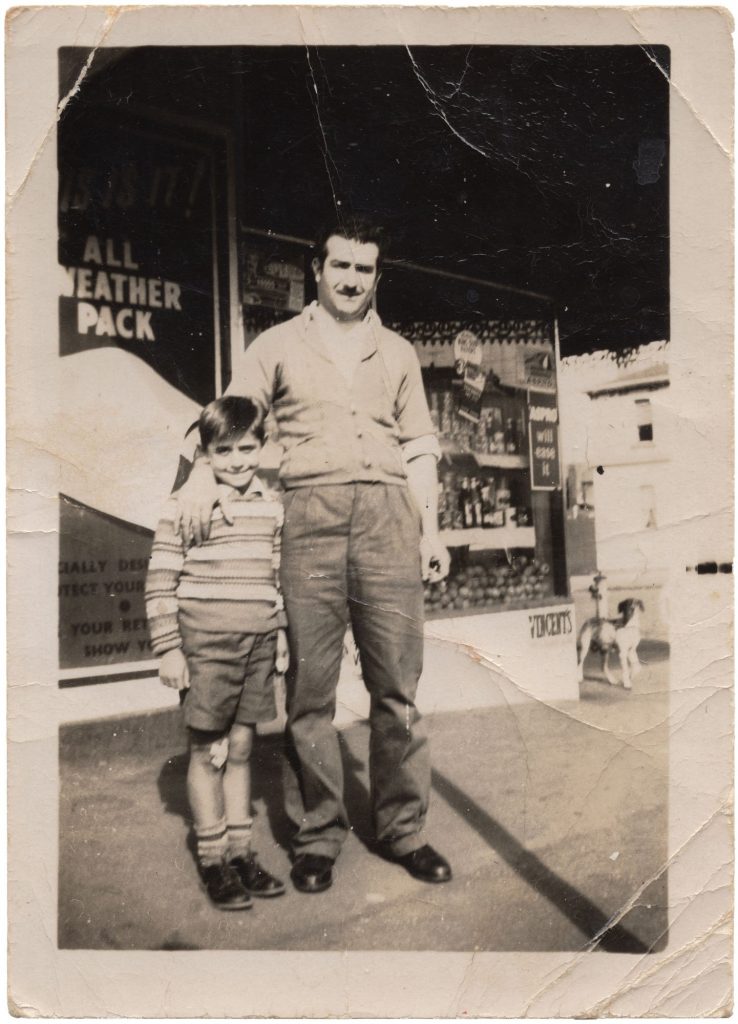
In the first few months or years after their arrival, many Cypriot migrants worked in factories or on farms or in the bush. Quite a few went on to become successful business owners, operating cafes, milk bars, fish and chip shops or becoming professional barbers, tailors and dress-makers.
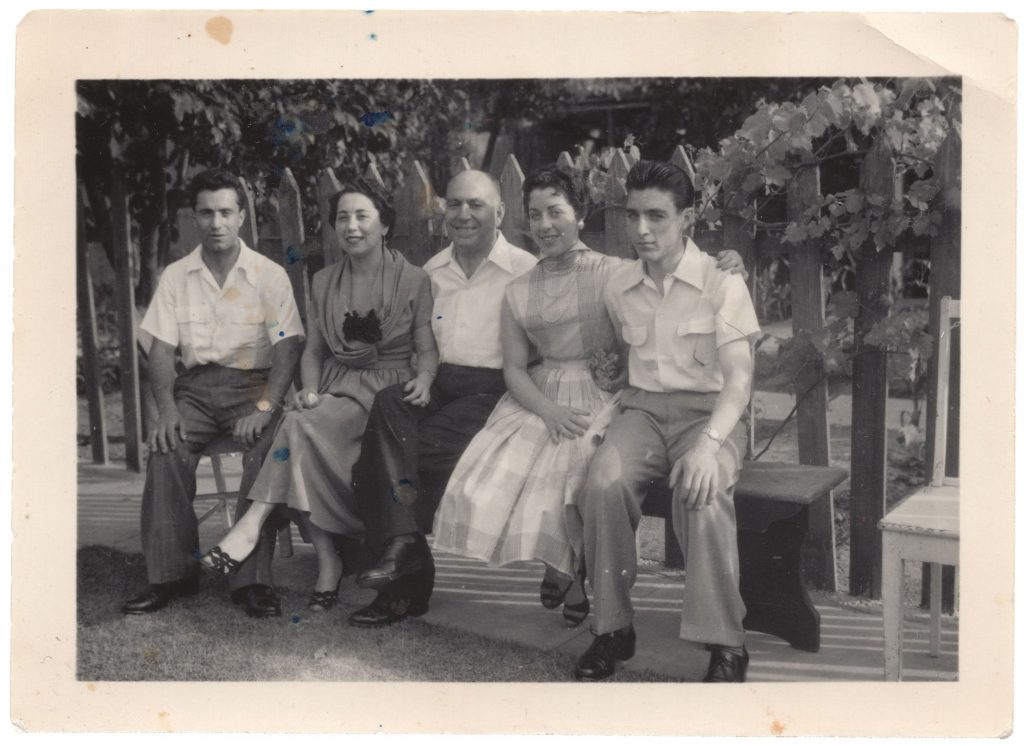
Some migrants went to night school to learn English, others taught themselves or picked up a smattering of words and phrases on the job, so to speak. On Sundays, they would visit each other’s homes or pack a continental picnic and head out to a park or the countryside or any number of the magnificent Australian beaches. Yes, the shops were all closed on a Sunday in those days. Once there, men would get busy cooking the ‘souvla’ or sit together playing cards or ‘tavli’ (backgammon) drinking bottles of VB (local beer) while the women would prepare the Cypriot feast.
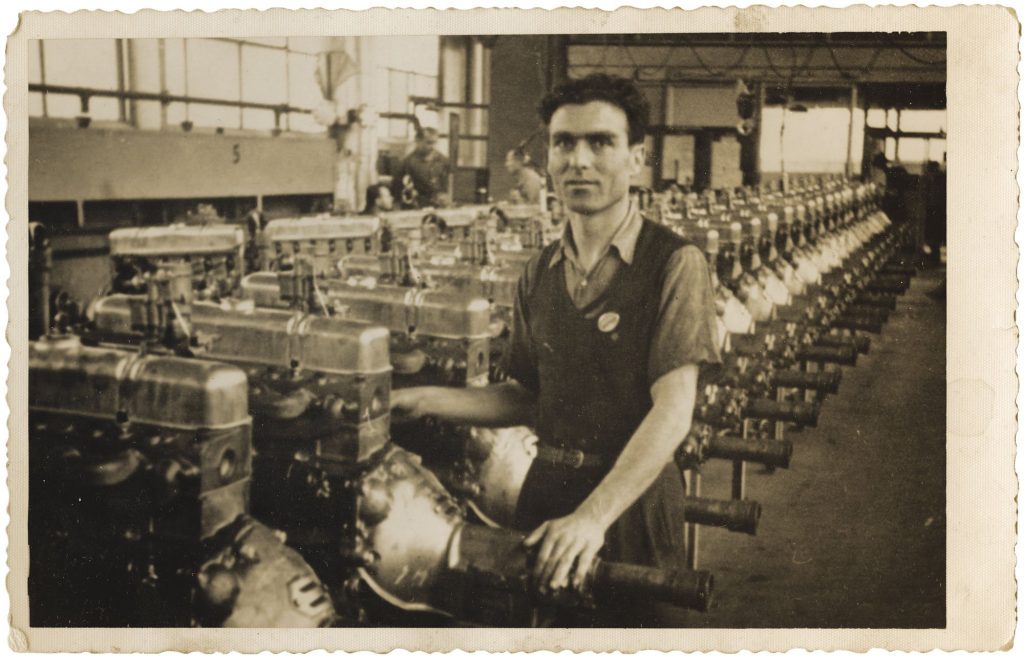
My father worked as a labourer in a factory for most of his life in Australia. He earned enough money to pay off his house and provide for his family. He did okay considering he arrived in Australia with no primary school education, no knowledge of English and only two pounds in his pocket. Other migrants did better. In fact, those who had the foresight to buy properties in the 1950s were able to then sell them a few decades later for 100 times their initial value.
Photo: Supplied by Tales of Cyprus
It wasn’t an easy transition for those post-war migrants. The credit squeeze in the early 1950s created a lot of unemployment. The so-called lucky country wasn’t so lucky for many new arrivals. They found it difficult to secure a job.
Then there was the subtle but ever-present racism. Some of the locals treated the migrants as ‘aliens’ or undesirables. Even my generation, despite being born in Australia were also referred to as ‘wogs’. I remember one hot summer night in 1972, a bunch of skinhead Aussie males (known as Sharpies) ripped down our front fence whilst shouting obscenities about my family. The phrase ‘go home you wog bastards’ was uttered more than once. My father could do nothing but look out at the destruction through the screen mesh of our front door. Thankfully, these incidents were isolated and few and far between.
My father always kept a low profile and tried to stay out of trouble. He was always pleasant with the local Aussies and tried to assimilate with their culture and way of life whenever he was amongst them. At home however, he was a Cypriot, (as we all were) and fiercely proud of it.
My parents always taught me (and my siblings) to love and respect our traditions and customs. The only grief I would receive from my father was when I would visit the Hibberts, our next-door neighbours. He would yell and complain, often embarrassing me in front of them, simply because they were Australian. I guess in hindsight, he was afraid that they might convert me to their way of thinking or perhaps he was afraid I might lose my religion or cultural identity or run away with Carol Hibbert, who was a young teenager blonde girl. Mrs Hibbert was always nice to me. She would always offer me some biscuits or a bowl of tomato soup or a meat pie with sauce. Then I would go home and eat moujendra or tava. I was living a double-life.
Photo: Supplied by Tales of Cyprus
Later as a teenager, my dress code became a source of great misery for my parents, especially my mother. She would rock back and forth whilst slapping her forehead with open palms lamenting the corruption of the youth in Australia. ‘Kyrie Eleison, Kyrie Eleison’, (Lord have mercy), she would cry and make the sign of the cross when she saw me getting dressed to go out.
Despite a bit of racism, I had a wonderful childhood growing up in Australia. In many ways, I took for granted the sacrifices that my parents made to ensure that my sisters and I had a better life – or at least, a better life than the one that they had endured. My father always reminded me that life in Cyprus was once quite harsh and cruel and that many people in his village suffered due to poverty. He was glad for the freedoms and opportunities that Australia could afford his family and proud that we were able to get a decent education and live a more prosperous life.
The Cypriot diaspora in Australia have been successful in maintaining and upholding their culture while at the same time assimilating into the Australian way of life. It has been a wonderful experiment that has enriched this great nation and proved that people from various backgrounds and beliefs can live together without malice or discrimination. Today, the local Aussies mix freely with the peoples from a hundred lands without prejudice or fear.
Photo: Supplied by Tales of Cyprus
Thanks to my parents, I was raised to love both Australia and Cyprus equally. Think about it! One day I would be driving my V8 Holden Commodore to meet my Aussie mates at the pub and the next day and I would be eating the best Cypriot ‘souvla’ at my Uncle Andrew’s house whilst listening to Violaris on his turntable. It was the best of both worlds I guess.
Thanks to my migrant parents, I have had a good education that has allowed me to pursue the career of my dreams. I went from being a timid little boy sitting in the schoolyard with my homemade Halloumi sandwich to becoming a confident and successful graphic designer sipping hot, skinny cappuccinos with the cool kids on Chapel Street in Prahran. Not a bad transition. My career was allowed to blossom because of the love and support of my parents. In other words, I was only able to do the things I wanted to do because they were able to prop me up and propel my forward.
Thanks to my parents I speak two languages. This gift has enabled me to communicate and interview Cypriots for my Tales of Cyprus project. Thanks to my parents I have learned the value of caring for others and becoming a sensitive and caring parent myself. Thanks to them, I view the world with optimism and have gained an enormous respect for my cultural heritage.
Yes, I owe my migrant parents a world of gratitude for they sacrificed so much to pave the way so I can have a better life and future.
Thank you mum and dad. You are, and always will be – my heroes.
*Con Emmanuelle’s second book titled ‘The Corsica: Amazing Stories of Cypriot Migration’, is due to be released at the end of this year. For updates and information follow his Facebook page Tales of Cyprus.
Multidisciplinary artist, Jordan Gogos, has unveiled his first solo exhibition Un/constrainedat the Gallery Sally Dan-Cuthbert in Rushcutters Bay, Sydney and it definitely doesn’t disappoint.
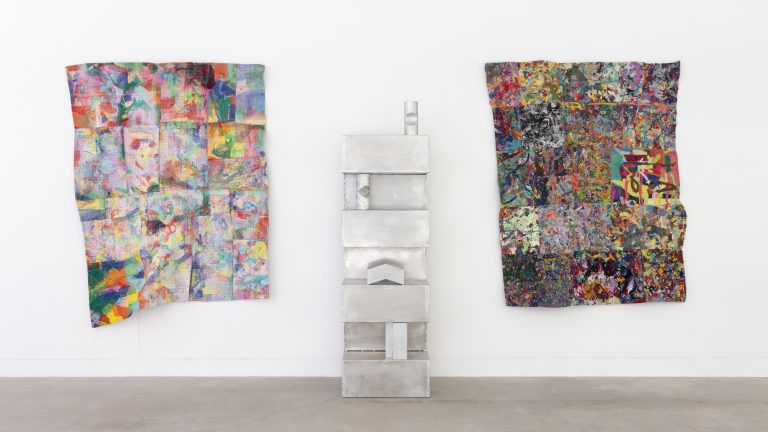
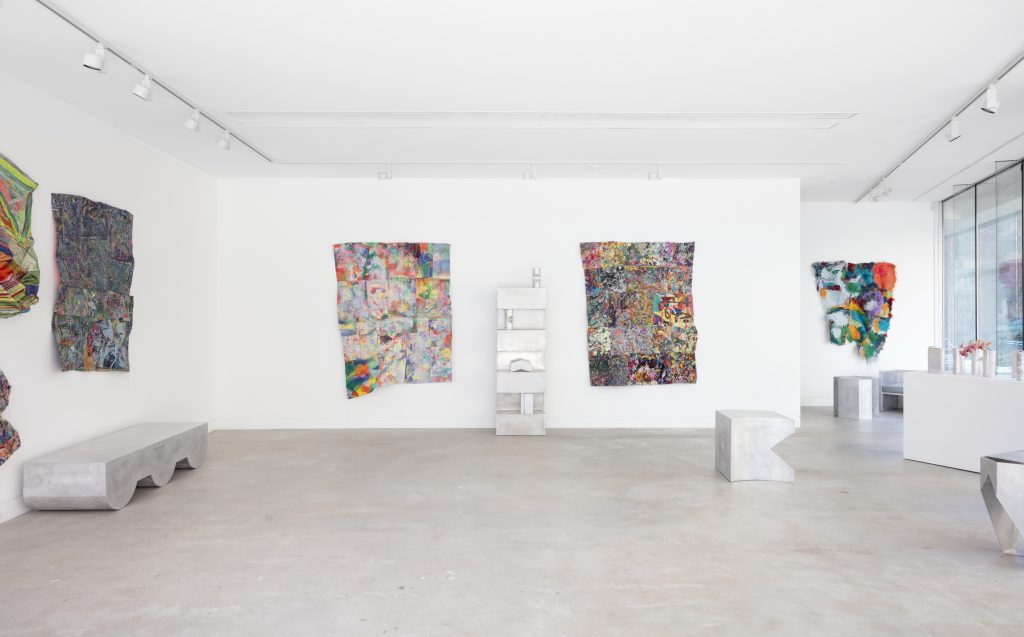
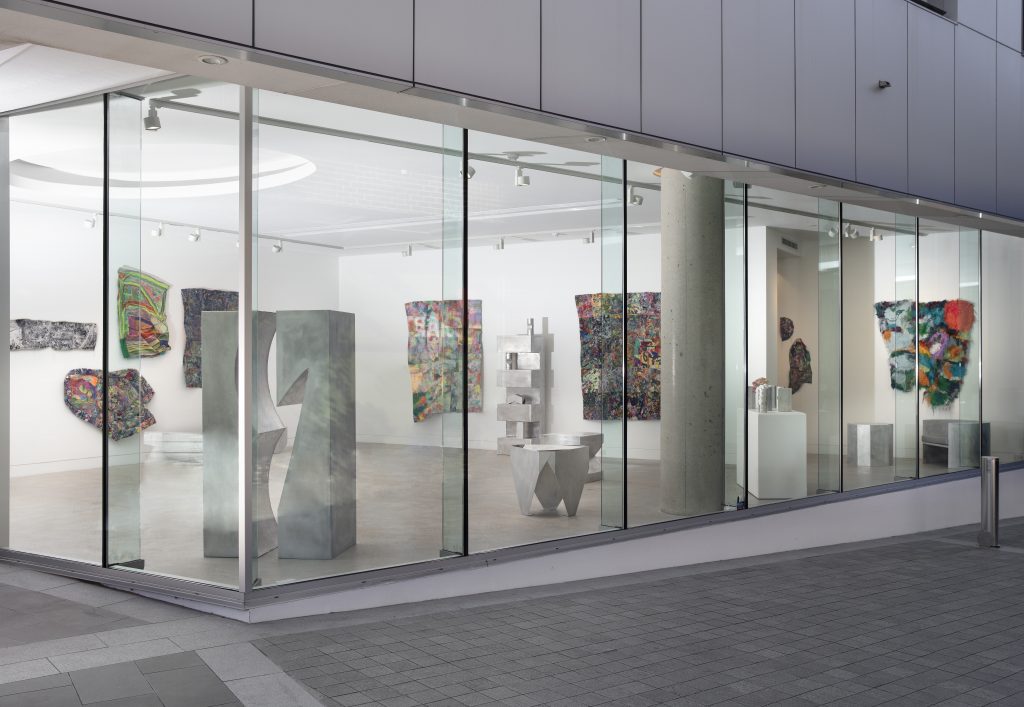
Un/constrained presents Gogos’ elaborate, handmade, embroidered, flat wall art: an intricate series of technicolour, mixed media artworks created in his studio at the Powerhouse Museum.
Gogos’ geometric, sculptural, functional art pieces are also presented alongside the textiles. The art pieces are made from sheets of aluminium, folded and welded into a shape specifically and without the need for hardware.
To mark the successful opening of this exhibition, The Greek Herald sat down with Gogos and this is what he had to say.
Tell us about your exhibition. What inspired it?
Overall, the exhibition, titled Un/constrained, reflects the ongoing, over-the-top intricacies and changes to the work. The only element of constraint is a timeline to stop. I love how delicately art is treated when it’s a ‘final,’ although the process is rough and uncalculated – continually hacking at the material, compressing it, deconstructing and reconstructing endlessly with endless limitations.
The exhibition. Photo by Simon Hewson Photography.
The functional art references, retrospectively, ancient Greek design. There was no or very little, difference in form or construction between furniture used for sleeping, eating or sitting – they all were more so ‘plains’ or surfaces. The objects in the exhibition similarly are monolithic structures with large surface areas, able to be a multiplicity of things.
The objects are named after Greek philosophical words and encompass different design philosophies; Eidos; the Greek word Plato used to designate his “forms” or Dynamis; meaning the power in things, each relating to the objects as equally as each other from a different perspective.
Photo by Simon Hewson Photography.
How does it feel to be holding your first solo exhibition?
It feels reflective, almost like a beautiful year book sign off to where my work, aesthetic and techniques has ended up. Rewinding a few years back, my process whilst still chaotic, loud and open to an element of chance. It has organically developed to become far more refined and detail orientated.
After two fashion week shows, I’ve learnt so much about my materiality but really wanted an outlet to supercharge my practice into something that could sit on walls and for the viewer to really be soaked in. I want my techniques to pivot after this exhibition into something of new terrain but I don’t think it would be possible without an exhibition like this.
Photo by Simon Hewson Photography.
What’s next for you?
I have a few partnerships in the works, going on a small holiday and some really big things (to me) in talks! Each thing is so different to each other and I love it that way.
Un/constrained is running at the Gallery Sally Dan-Cuthbert in Rushcutters Bay, Sydney from July 29 to August 28, 2022.
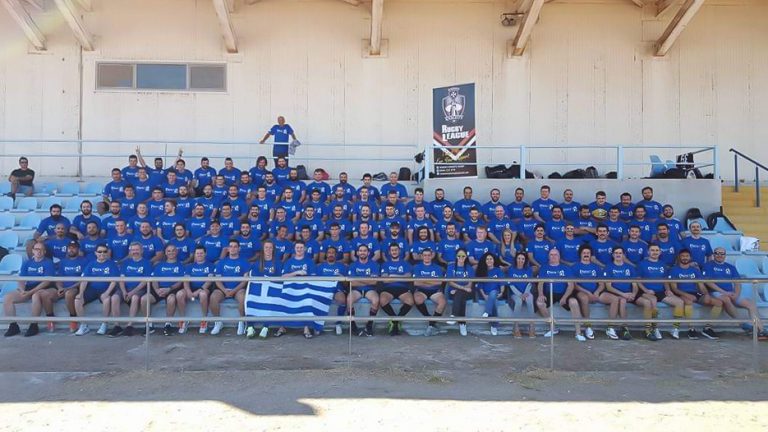
The Greek Ministry of Culture and Sports and its General Secretariat of Sports have officially declared that rugby league has the right to be played in Greece.
This comes following a ten-year battle with the Greek Rugby League Federation (GRLF) to have rugby recognised as a unique and separate sport in the country.
The GRLF can now legally play, advertise and promote matches and are hopeful the decision will improve access to better fields and government funding, and lead to the creation of youth teams, school programs and future government funding.
In a statement congratulating the GRLF, the Chair of the European Rugby League, Dean Andrew said: “It has been a turbulent journey for rugby league in Greece but achieving government recognition as a federation ahead of their participation in the RLWC21 signals a new dawn and provides them with a huge opportunity to progress the sport at all levels.”
— Greek Rugby League Federation (@GreekRL) July 7, 2022
Commenting on the announcement, GRLF president, George Stilianos, said: “This will no doubt leave a great legacy for future generations that will now be free to play the game that they love, without any interference.”
The president also welcomed the news ahead of the men’s world cup debut, commenting it has given them an opportunity to build “both domestically and internationally.”
“We are also excited about legally hosting our first international match in a long time, which will be on September 25 as part of the inaugural Women’s European B championship, when we take on Serbia women in Athens,” he added.
In a tweet, Australia’s Ambassador to Greece, Arthur Spyrou expressed his congratulations to the GRLF, writing: “Outstanding Result! Welcome to the International Rugby League Family!”
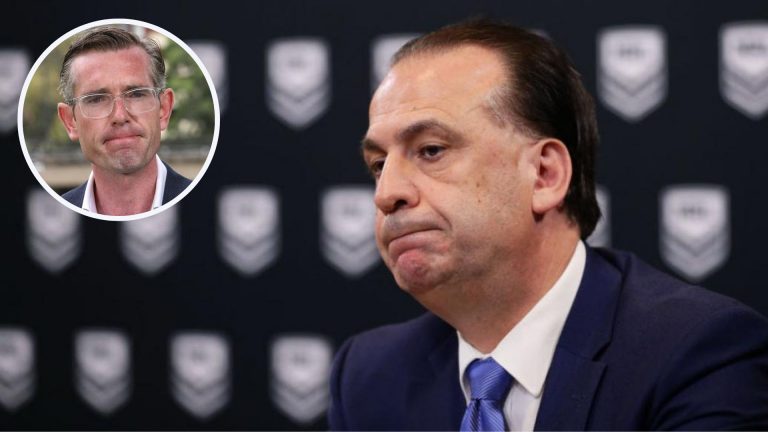
Rugby league boss, Peter V’landys, has accused the New South Wales Premier of using “human tragedy” to renege on a handshake agreement to revamp suburban stadiums.
V’landys said Premier Dominic Perrottet this year promised to upgrade local grounds across the city as part of a deal to keep the NRL Grand Final in Sydney until 2042.
“We shook hands. We looked each other in the eyes and we did a deal,” V’landys told Nine radio this morning.
According to The Daily Telegraph, the Premier has since refused to commit funding to rebuild the stadiums, with flood reconstruction his main priority.
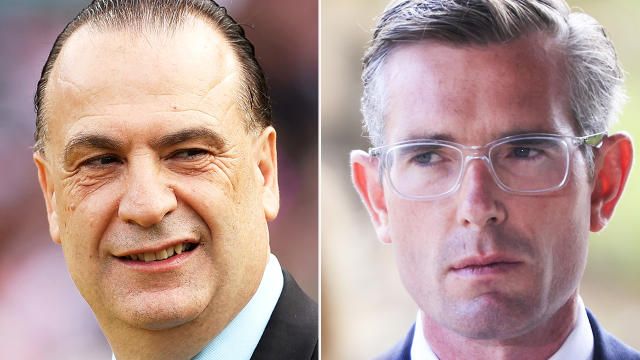
Rugby league boss Peter V’landys (left) has accused NSW Premier Dominic Perrottet (right) of reneging on a deal over stadiums in Sydney.
“The NSW government remains committed to upgrading suburban stadiums, however, following recent natural disasters and the COVID-19 pandemic, it is appropriate that further investment in stadia is staged,” the Premier said.
In response, V’landys is threatening to move the NRL Grand Final from Sydney and he has accused Mr Perrottet of making excuses for backing out of the deal.
“He used other excuses back then [in negotiations] to reduce the amount he was going to spend on these community assets,” V’landys said.
“They’ve left it right until two weeks before we have to sell tickets to the grand final. To use human tragedy to spin themselves out of it is unheralded in my eyes.”
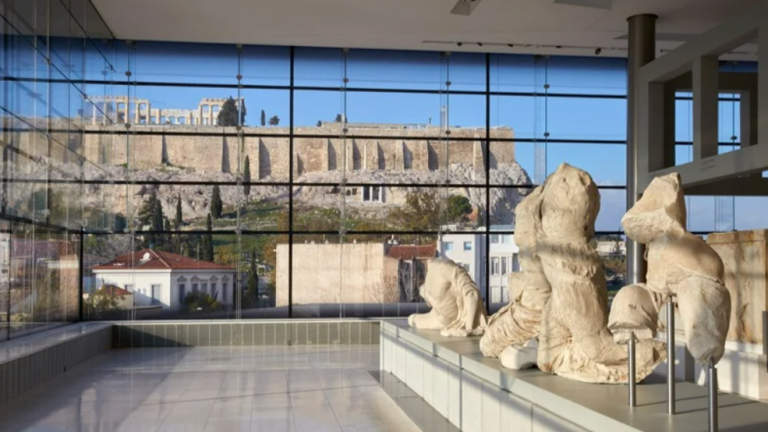
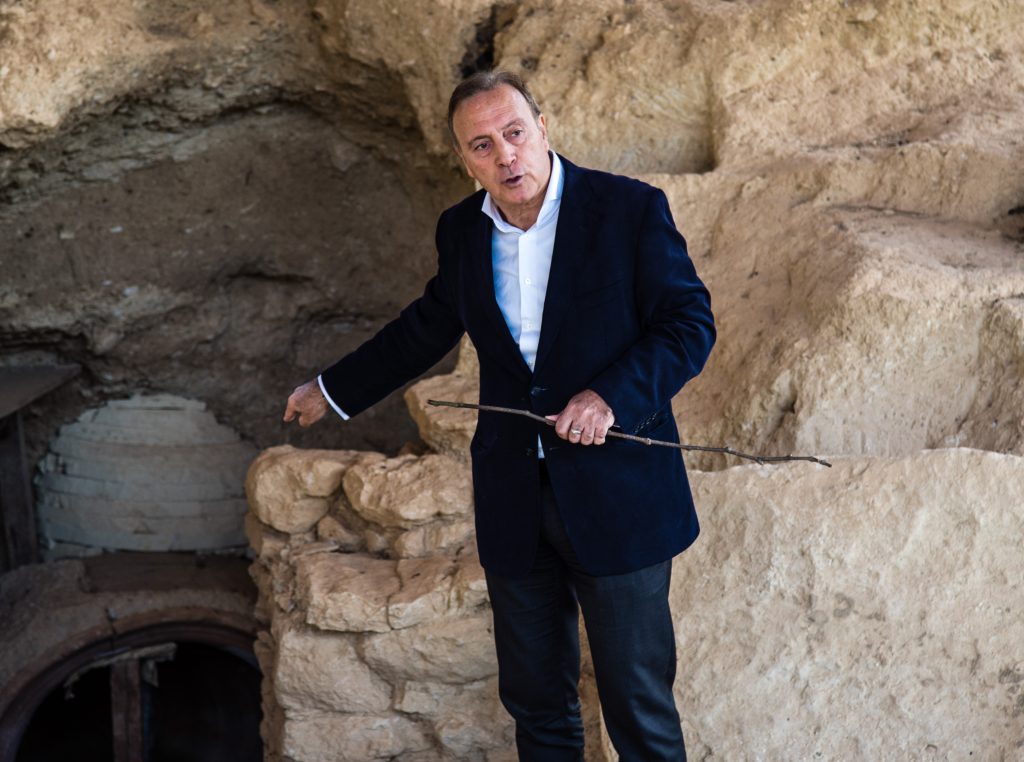
In the interview, Professor Nikolaos Stampolidis said “the issue of the Parthenon Sculptures is not a dispute between the British and the Acropolis museums. It is not even a dispute between the UK and Greece.”
“The reunification of the Parthenon Sculptures to the body they belong to is an international demand for the restoration of the monument that is the universal symbol of democracy.”
Professor Nikolaos Stampolidis.
These statements by Professor Stampolidis come in response to a recent comment by the deputy director at the British Museum, Jonathan Williams, to The Sunday Times.
Dr Williams said the British Museum wanted to “change the temperature of the debate” around the marbles and called for “an active ‘Parthenon partnership’- with our friends and colleagues in Greece.”
“I firmly believe there is space for a really dynamic and positive conversation within which new ways of working together can be found.”
The Parthenon Marbles have long been a source of friction between Greek governments and the Museum, where they have been on display since 1816 after they were ripped off the Parthenon by Lord Elgin.
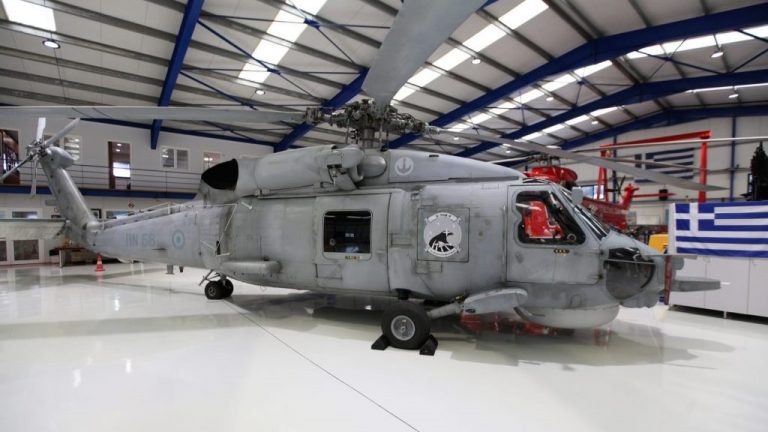
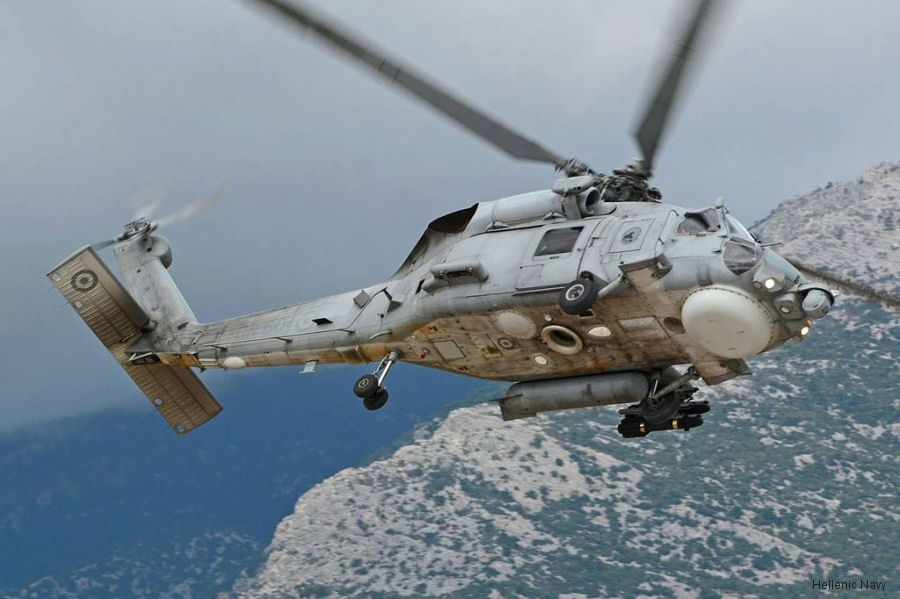
The US State Department has approved the possible sale to Greece of follow-on support for S-70 helicopters, Ekathimerini has reported.
The support package is worth an estimated $162 million and the principal contractor will be Lockheed Martin, Bethesda, MD.
According to a statement by the US Defence Security Cooperation Agency, the Greek government requested to buy follow-on support and sustainment of S-70 helicopters, including spare parts, repairs, aircraft mission system upgrades, and existing radar and sonar obsolescence management, among other things.
US approves potential $162 million helicopter support package for Greece. Photo: Hellenic Navy.
In the statement, the Agency said the proposed sale will “enhance stability and maritime security in the Eastern Mediterranean region and contribute to security and strategic objectives of NATO and the United States.”
Greece has recently signed multiple big-ticket arms agreements, including a deal for drones from Israel, Rafale jets from France, and upgrades to its F-16 fleet from the US.
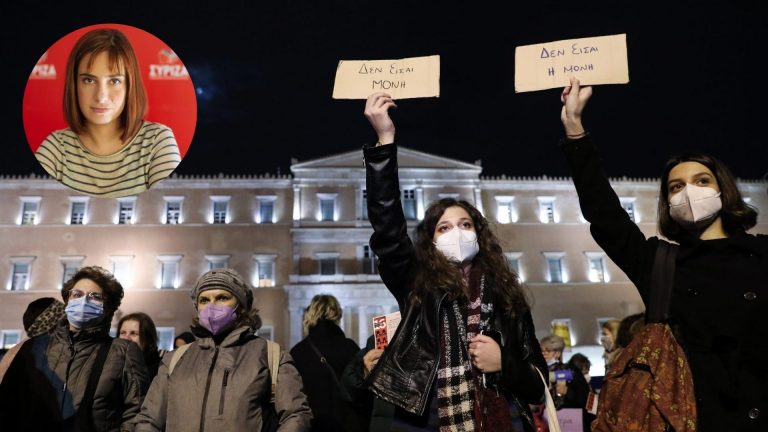
SYRIZA official, Rania Svigkou, said on Tuesday that femicide should be legislated and classified as a specific criminal offence in Greece.
In a post on Twitter, the central committee secretary called for the “creation of a supportive framework for victims of gender-based violence, with hostels, psychological support and legal aid.”
“Above all, social awareness must change. We are already behind,” she added.
Δύο γυναικοκτονίες σε διάστημα 24 ωρών.Να κατοχυρωθεί νομικά το έγκλημα της γυναικοκτονίας, να δημιουργηθεί ένα υποστηρικτικό πλαίσιο για τα θύματα έμφυλης βίας,με ξενώνες, ψυχολογική στήριξη, νομική βοήθεια.Προπαντός, να αλλάξουν οι συνειδήσεις.Έχουμε ήδη αργήσει.#γυναικοκτονίαpic.twitter.com/LhInMmfqS4
— Ράνια Σβίγκου/Rania Svigkou (@rania_sv) August 1, 2022
This statement comes after Greece recorded two femicides in the last 24 hours alone, with two men on the islands of Crete and Zakynthos stabbing their wives to death.
On Sunday, a man in Rethymno, Crete, stabbed to death his 56-year-old wife and mother of four. According to Ekathimerini, the reason for killing was the victim’s decision to divorce her husband, with whom she had been with since she was 16.
Later on Sunday in Zakynthos, a man murdered his estranged wife after she reported him to the police.
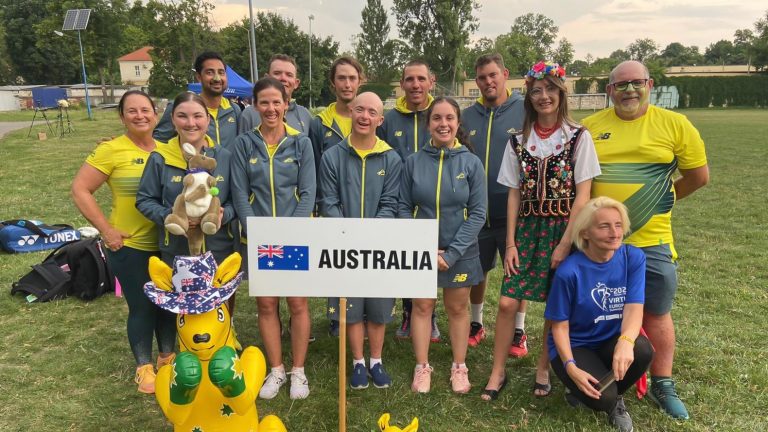
Australia’s nine-person tennis team has been crowned the world champions at the Virtus European Summer Games in Krakow, Poland, winning 11 medals: five gold, two silver and four bronze.
The competition was hosted by the International Organisation of Sport for people with a Disability (IOSD) and took place from 16 to 24 July.
Nineteen-year-old international debutant Andriana Petrakis claimed two bronze medals, one in mixed doubles with Mitchell James and the second in the women’s teams’ event with Kelly Wren.
Speaking with The Greek Herald, Andriana described her delight.
“I feel very cheerful with my two bronze medals and that my team won the World Championship in tennis. This makes me also feel proud and a humble leader for Australia,” the Greek Australian said.
When asked what memories stood out from competing in the international tournament, Andriana said: “Making new friends from overseas, representing my country and playing the best tennis at a higher competitive level”.
In recounting how it came to be that she found herself in Poland, the double bronze medalist revealed: “I have been selected for the Australian team 3 times. Once in 2019 but for health reasons I was unable to attend and in 2020 it was cancelled due to covid.”
“Third time lucky, I was selected in 2022 for the Virtus European Games which became my debut in representing Australia. The next international tournament will be the Global Games which will be held from the 4th to 10th of June 2023 at Vichy, France,” she said.
In a message to young people, Andriana said: “keep shining bright, stay positive for successful learning in achieving goals, stay strong, and never give up.”
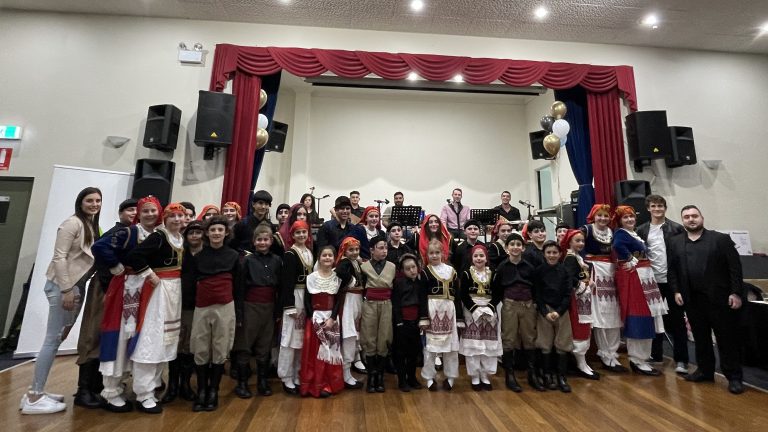
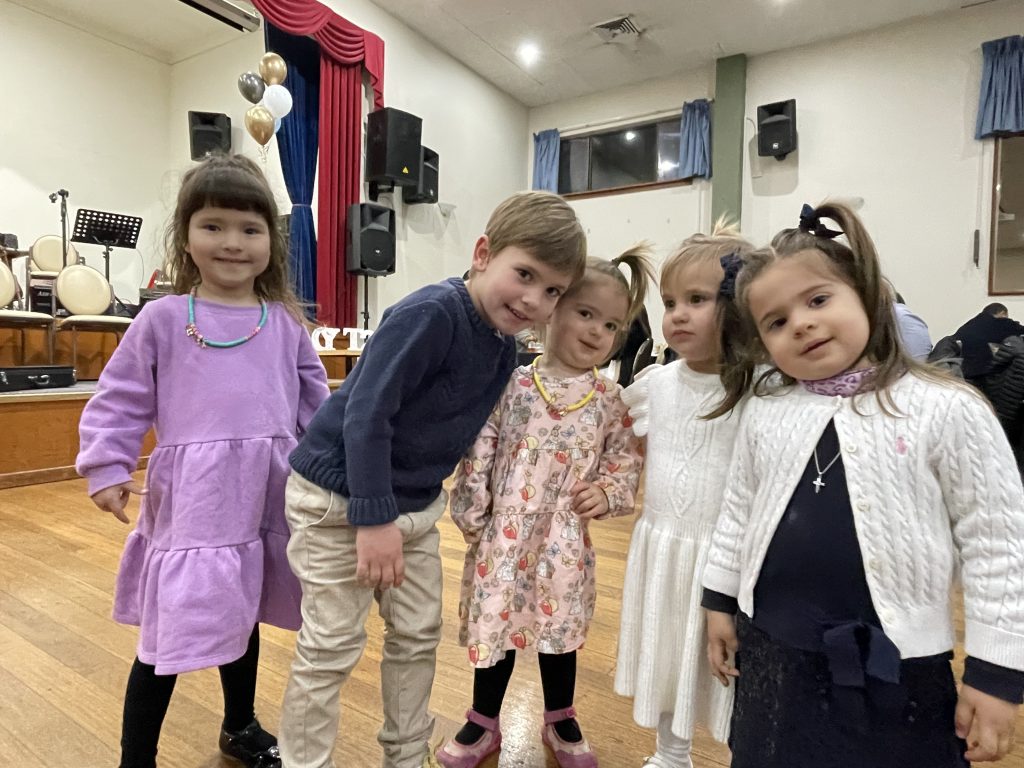
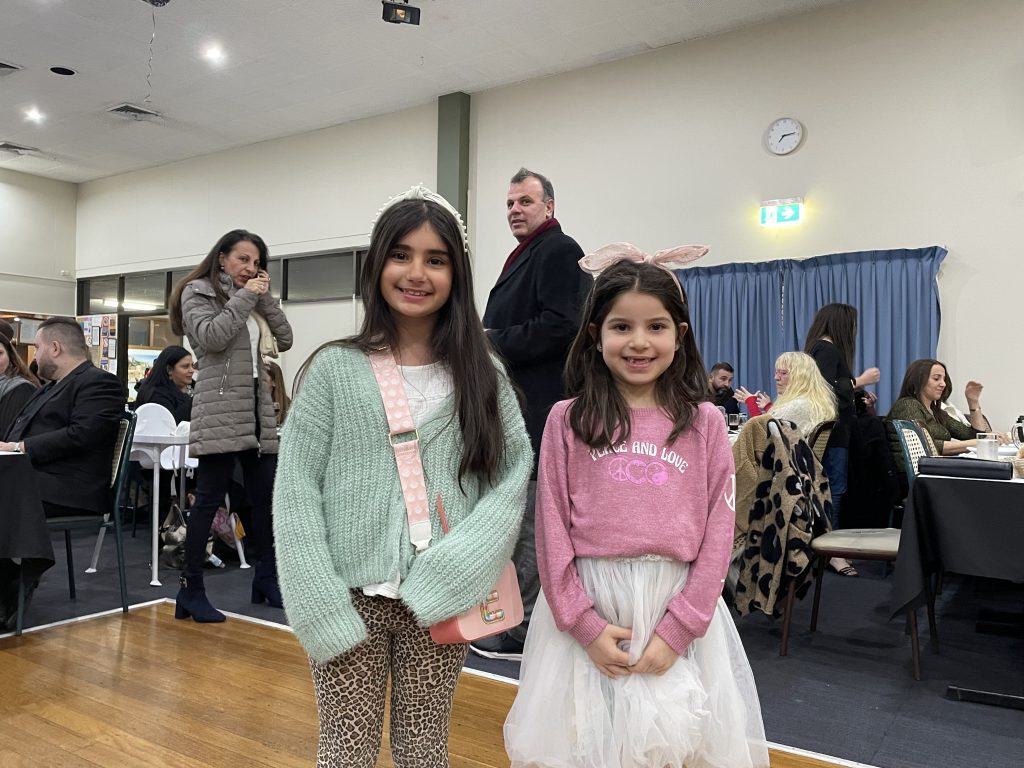
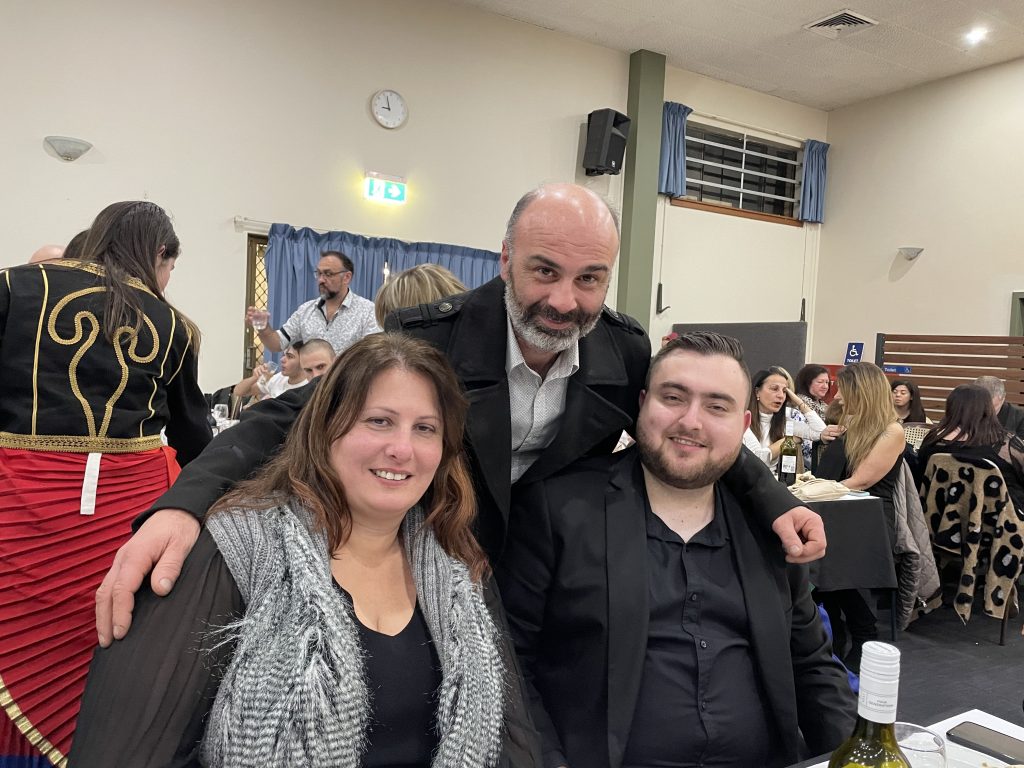
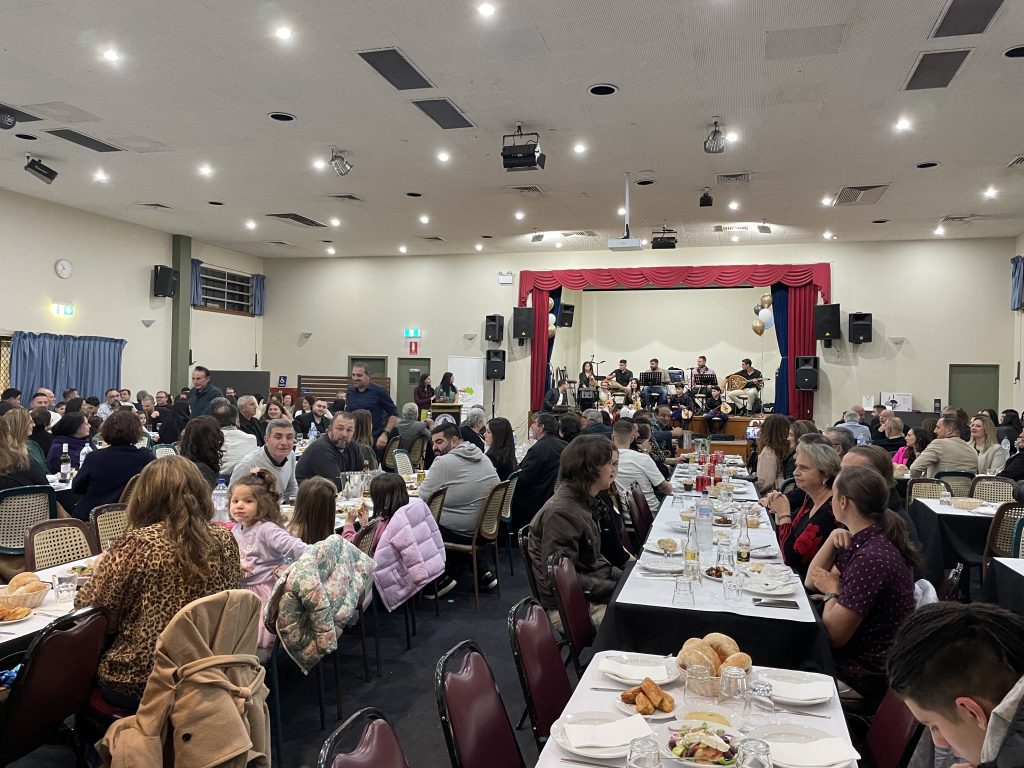
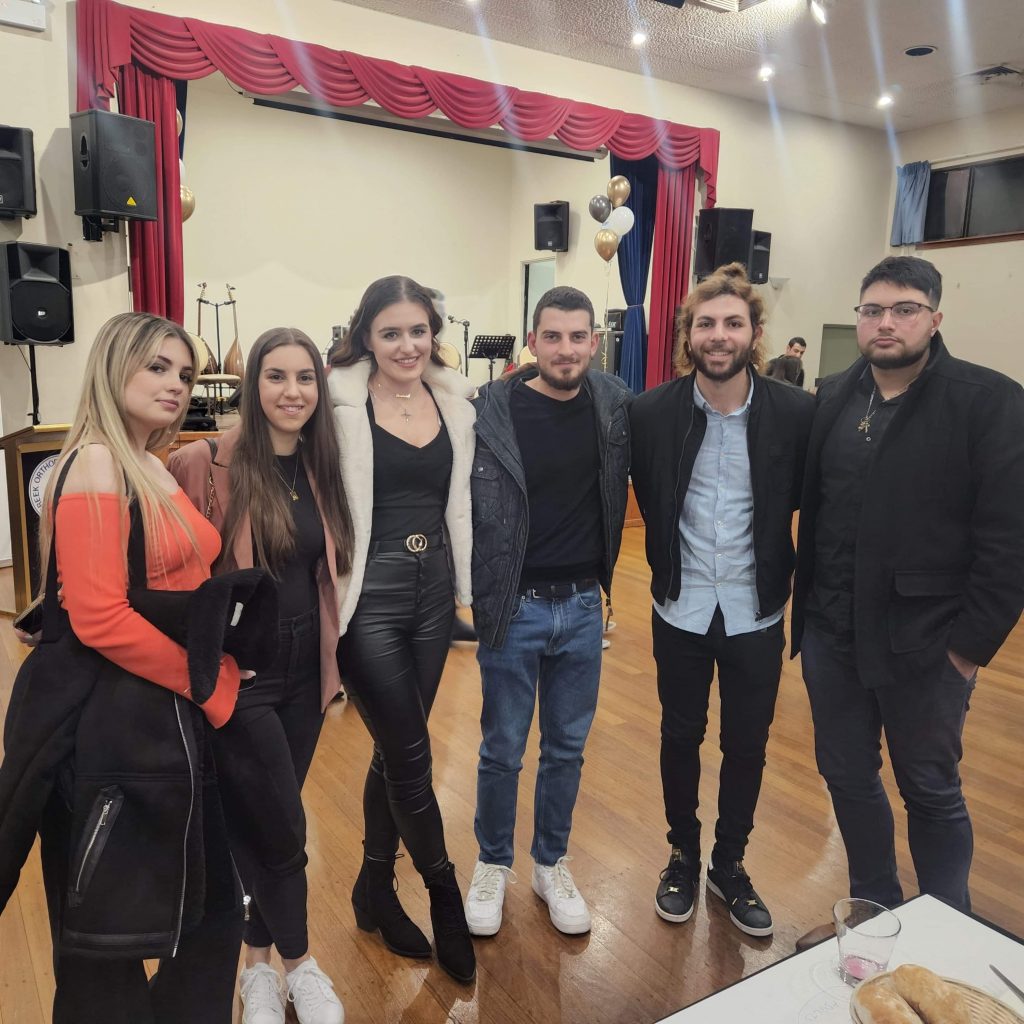
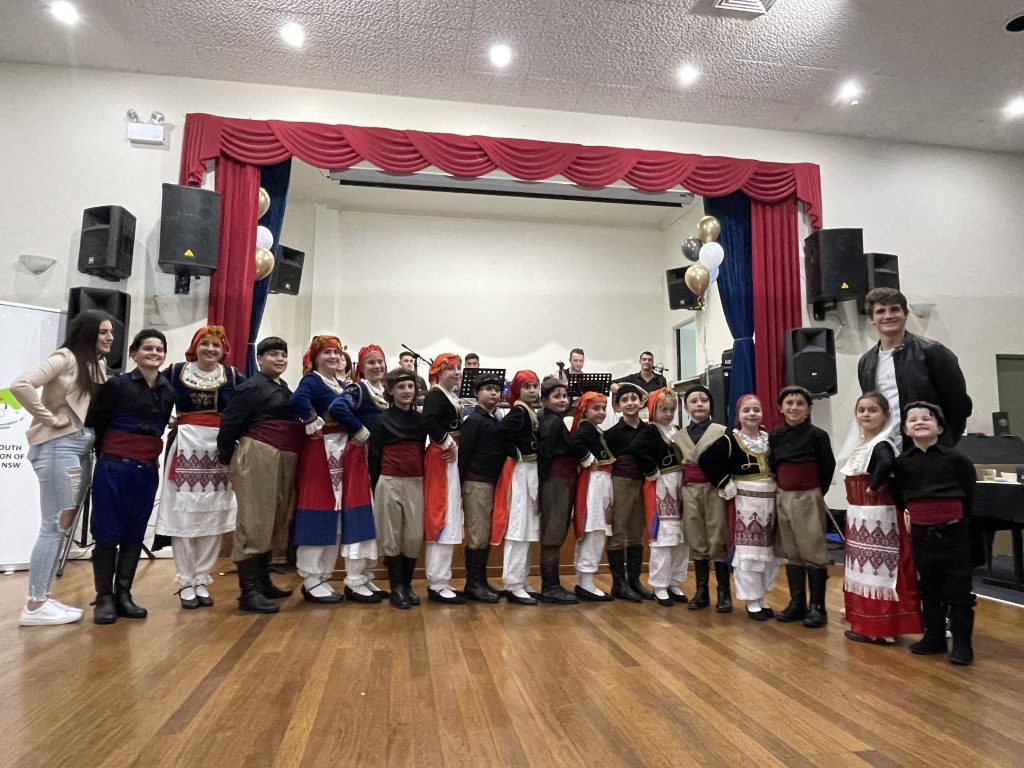
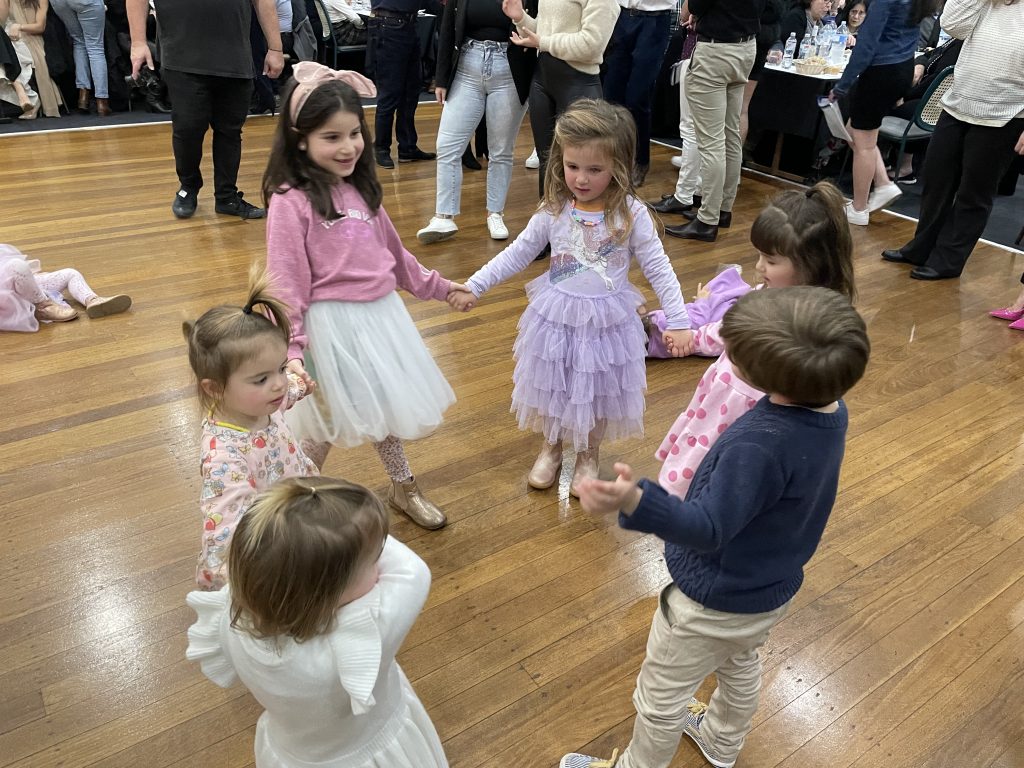
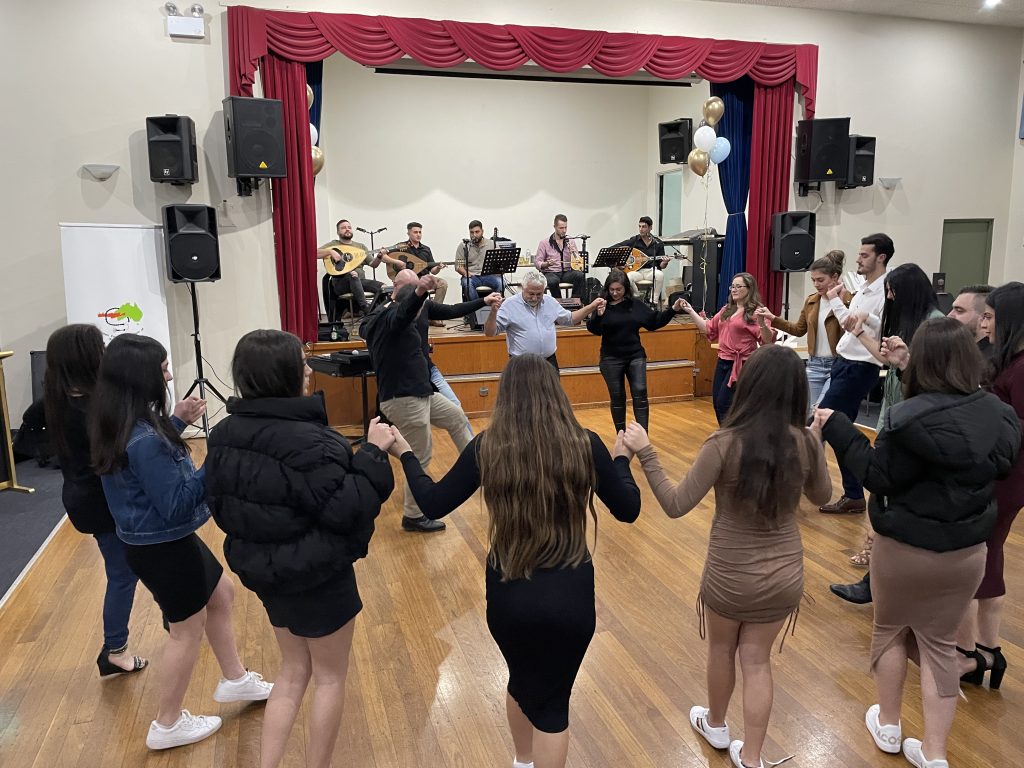
Sydney’s Cretan community came out in full force on Friday, July 29 for a Youth Taverna Night at the Greek Community Club in Lakemba to raise funds for new traditional dancing costumes.
On the night, which was organised by the Cretan Youth Association of Sydney & NSW, a total of $62,108.76 was raised with the help of a number of generous donations such as 20,000 euros from the Region of Crete Government.
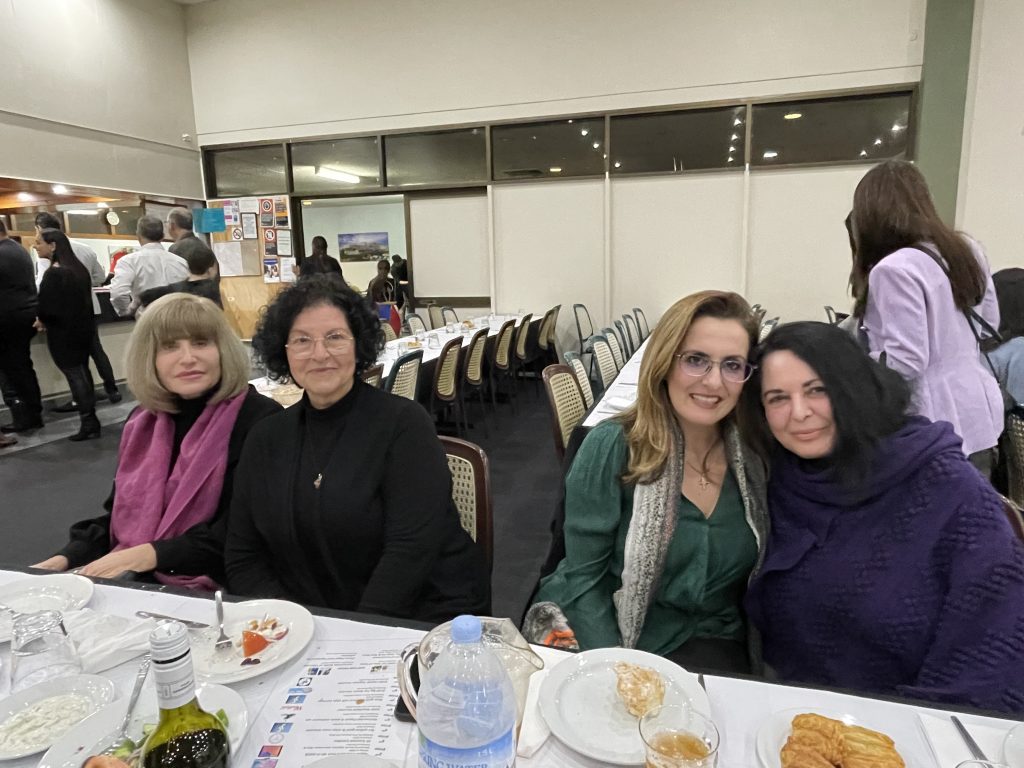
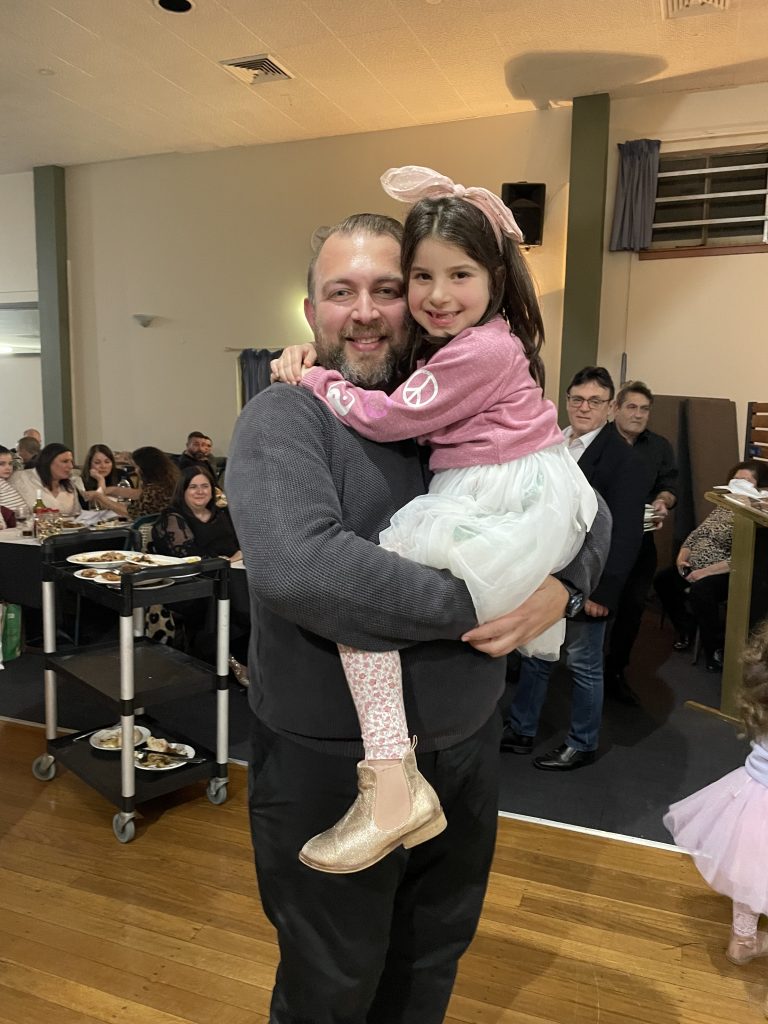
There were over 100 people in attendance at the event, including a number of prominent members of the Greek community.
They were the President of the Athenian Association of NSW, Cathy Valis; the President of the Greek Returned Service League, Peter Tsigounis; the President of Panagia Soumela Sydney, Peter Papoulidis; the President of Pontoxeniteas Sydney, Maria Anthony; representing the Hellenic Lyceum of Sydney, Tella Sorotou; representing the Kalymnian Association of NSW, Peter Tsenkas; and Vasilis Vasilas from Syndesmos Connecting People and Their Stories.
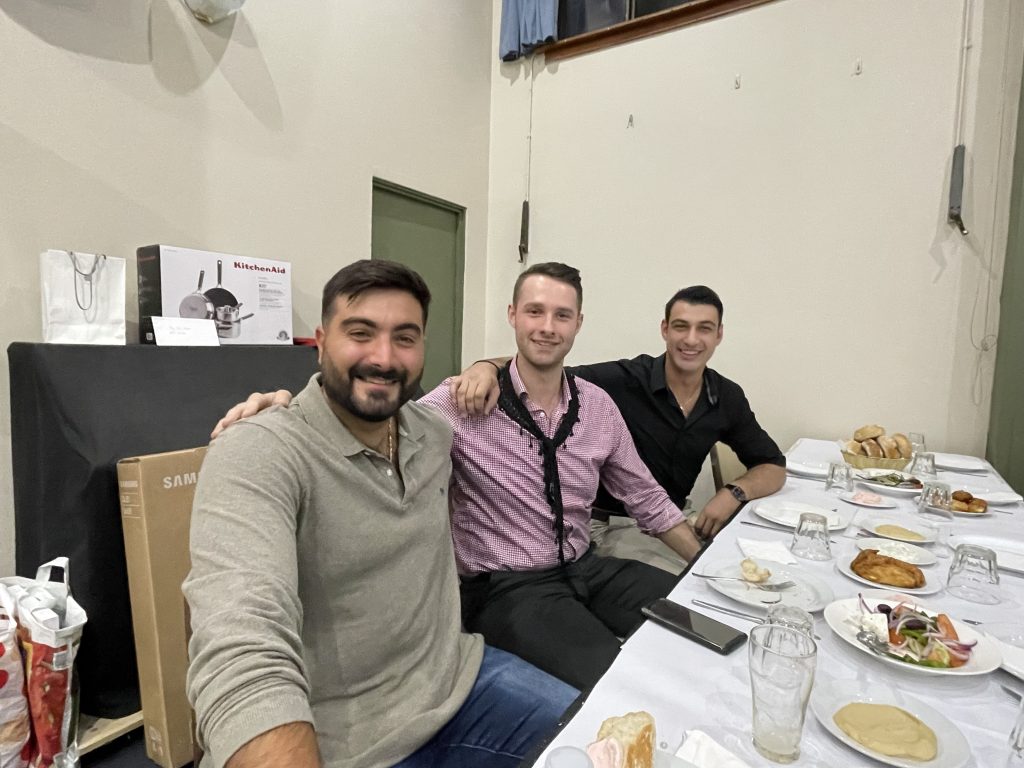
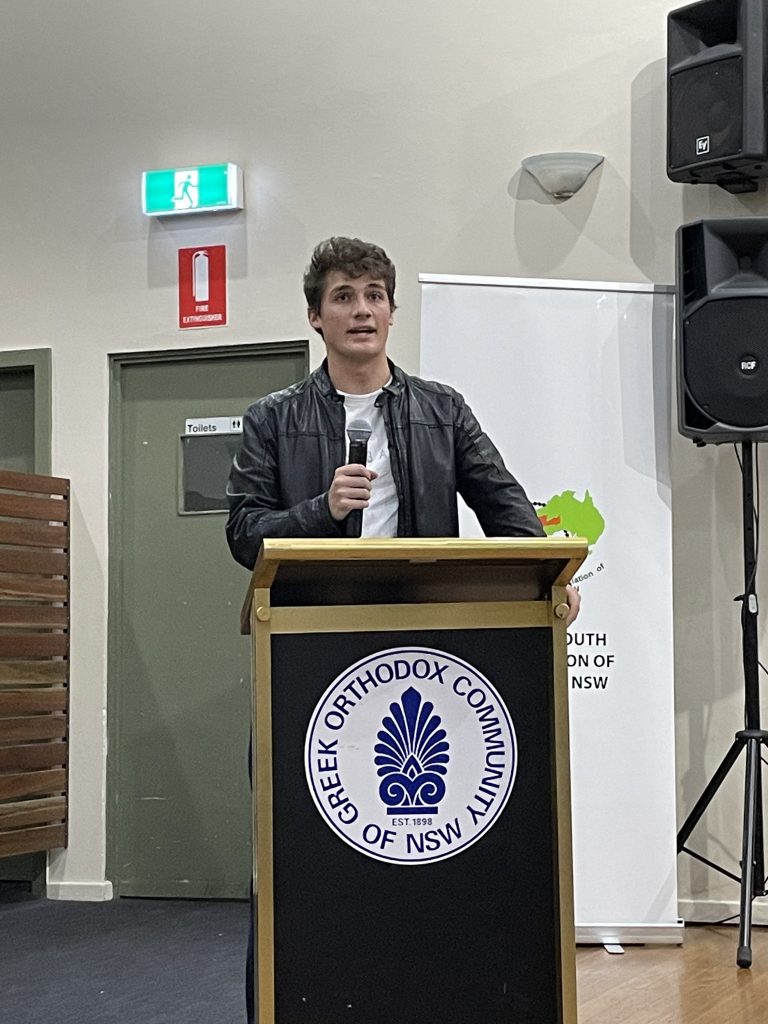
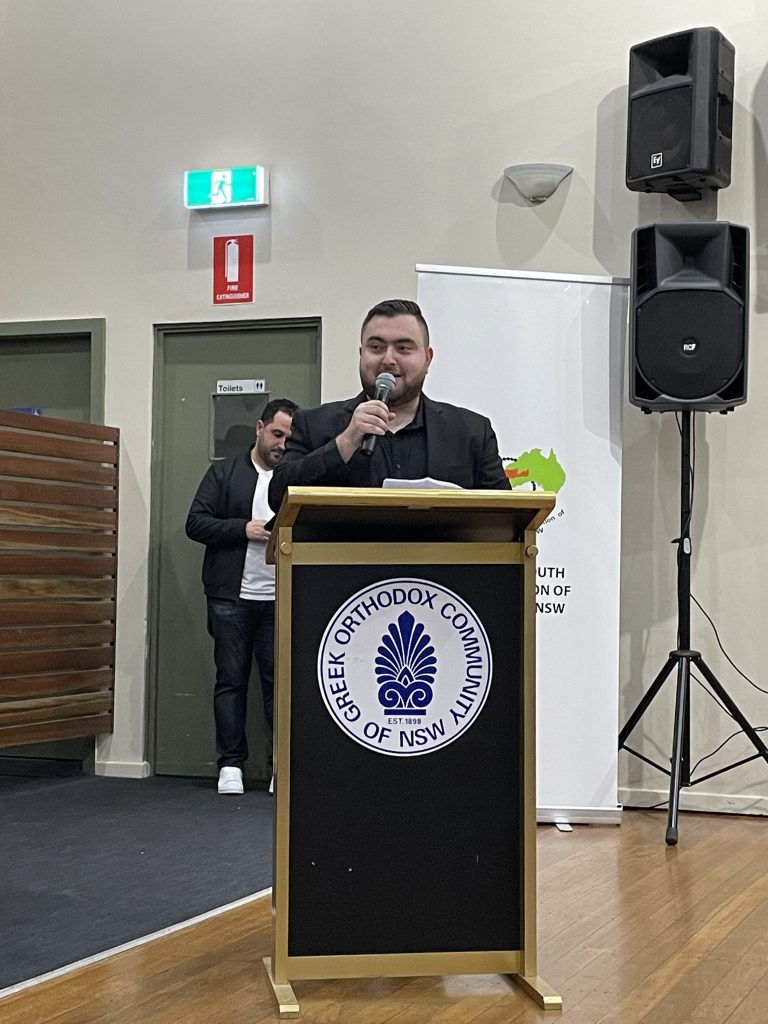
All these attendees, as well as numerous families and youth, enjoyed delicious Greek food as they mingled and listened to speeches by the President of the Cretan Youth Association, Chris Townsend, and the President of the Cretan Association of Sydney & NSW, Terry Saviolakis.
In his speech, Mr Townsend thanked everyone for attending the taverna night and said it was a “true achievement that we’ve received so much money.”
Chris Townsend.Terry Saviolakis.
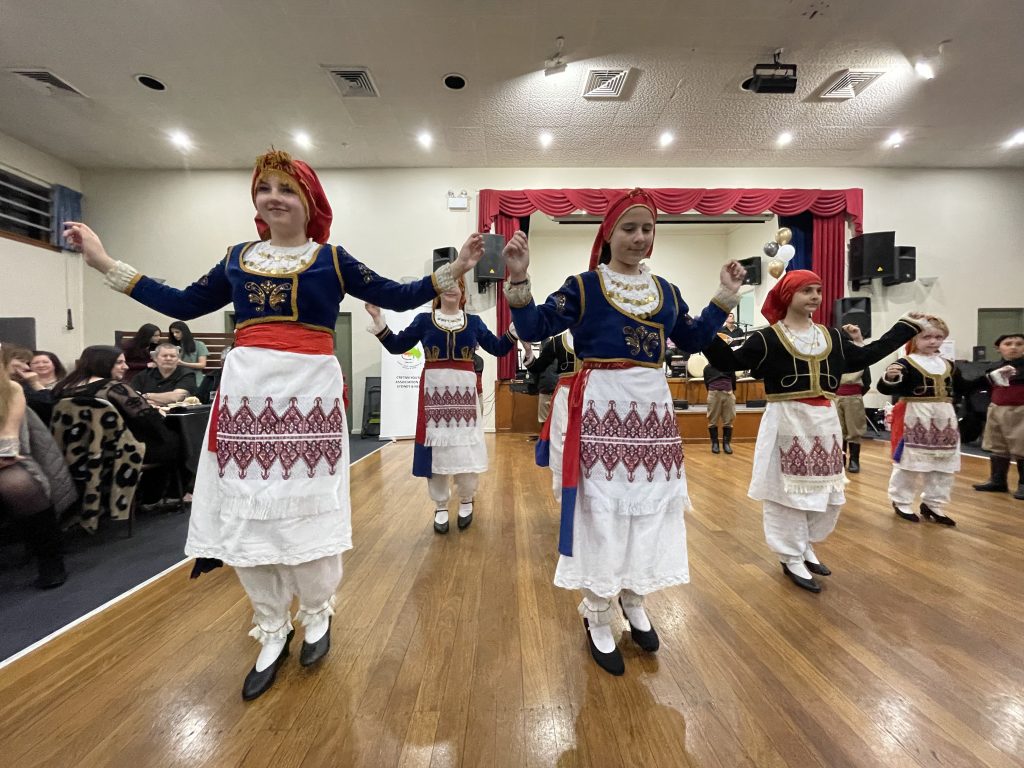
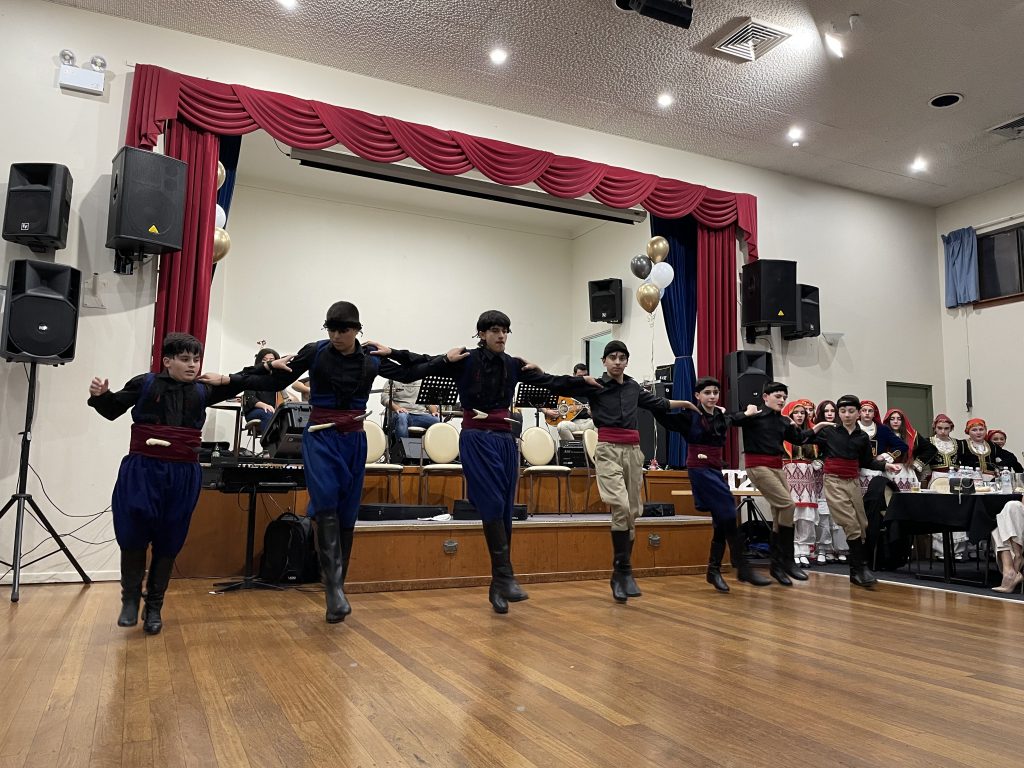
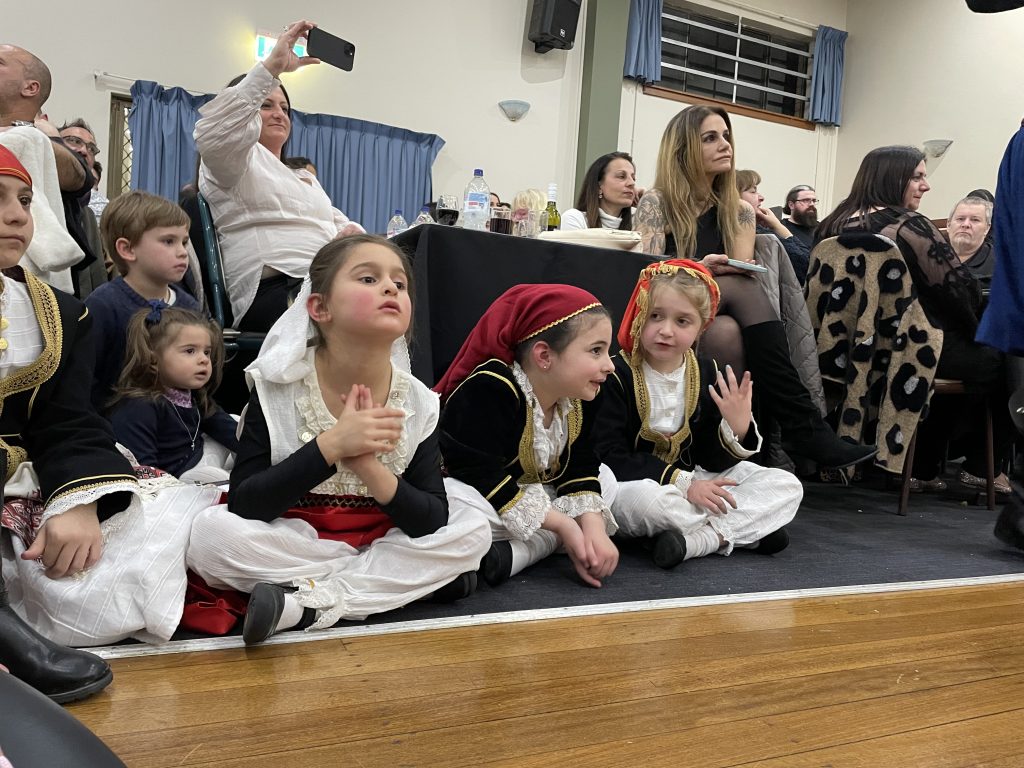
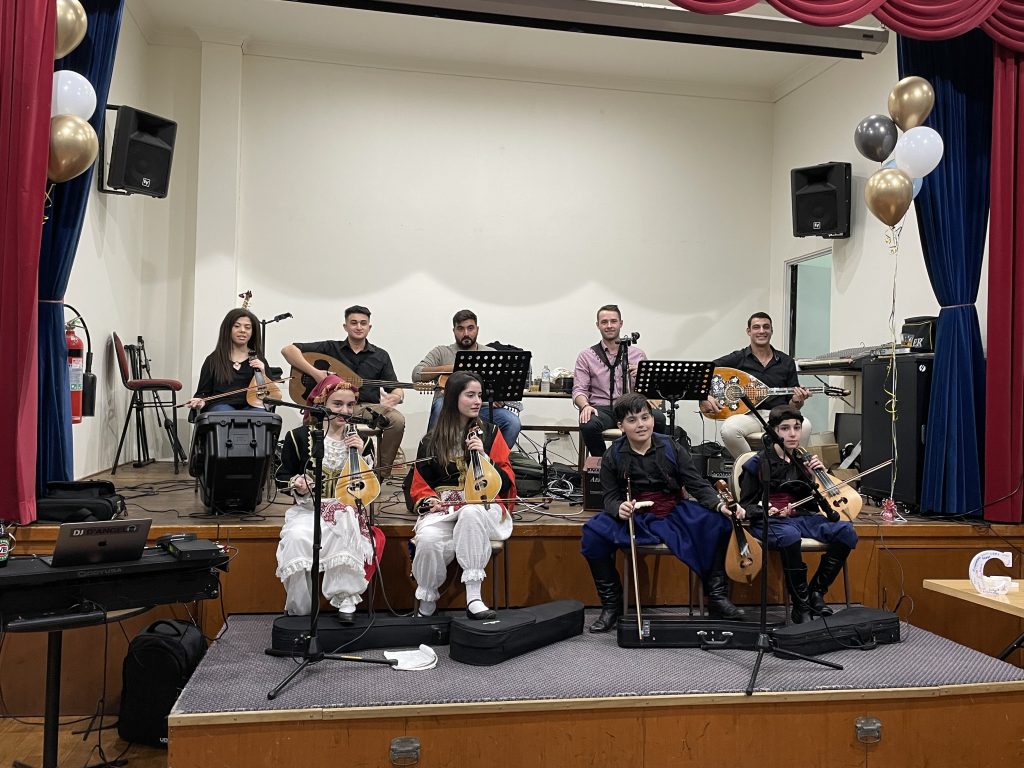
Afterwards, the young dancing group of the Association performed a number of dances to loud applause from the crowd. Youth singing and playing on Cretan instruments provided the perfect backdrop for the performances.
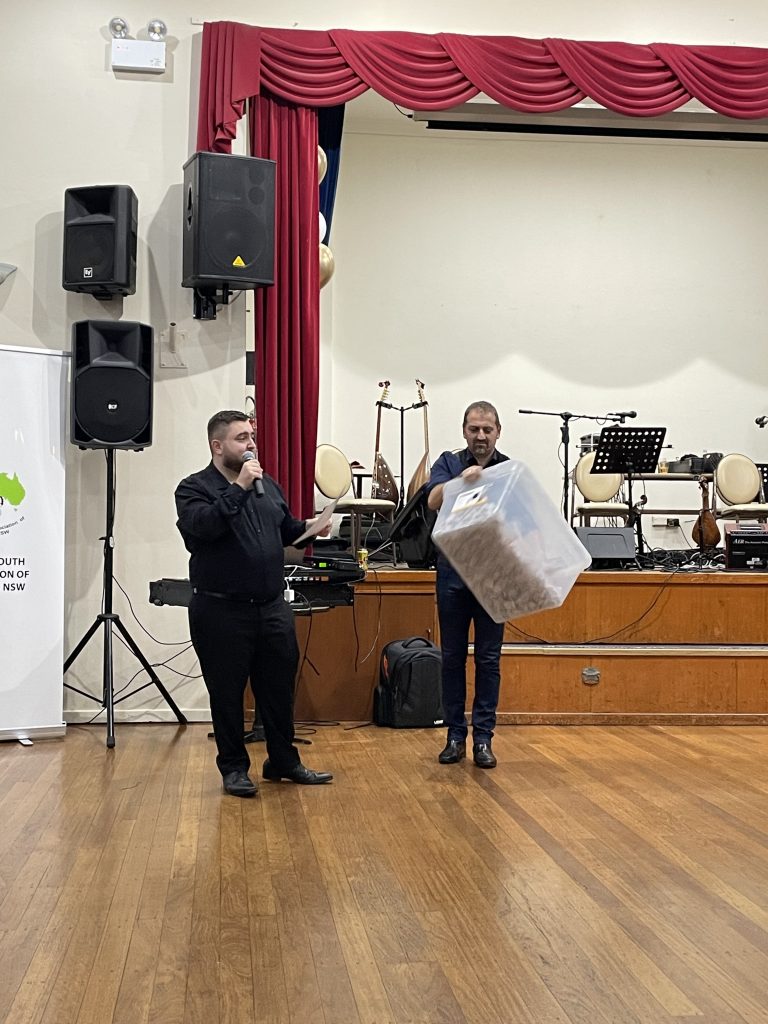
The night concluded with everyone on the dance floor, as well as the calling out of raffle tickets and an auction of a number of Cretan-themed objects.
“We would like to sincerely thank everyone that attended our Youth Committee’s Taverna night fundraiser on Friday night. We thank everyone that gave donations on the night and the overwhelming support from the community,” Mr Saviolakis told The Greek Herald after the event.
“On the night we announced the amazing news that the Region of Crete Government was gifting €20.000 towards the Costumes. We would like to thank the Governor of Crete, Mr Stavros Arnaoutakis and all those who made this possible.
“This sends a clear message to our community: that Crete appreciates all that we do to maintain the Cretan culture in the diaspora. After this amazing news, we are very happy to announce that we reached our fundraising goal.”