Home Blog Page 1103

Carnivalesque customs of Thrace: The timeless value of satire practiced through rituals

0

By: Marina Siskos

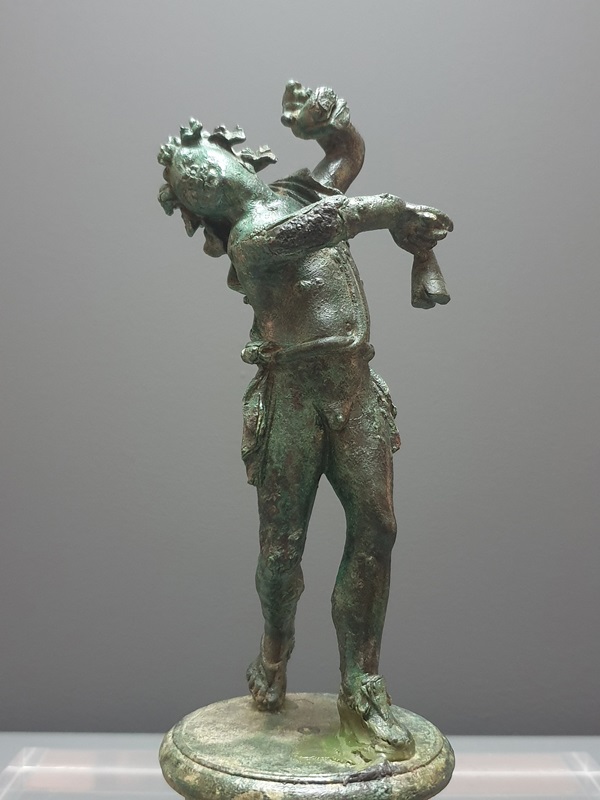
Thrace is Dionysus’s birthplace. Dionysus, or Bacchus, was the god of the grape-harvesting, winemaking, vegetation and fertility. Dionysus was the son of Semeli and Zeus (Moutsopoulos, 2016). Thracian festivities celebrated to this day are sharply reminiscent of Dionysus’s characteristic shenanigans (Moutsopoulos, 2016).

The customs known as Kopek Mpehis and the Monks, as described in narrative skillfulness by the master of ethnographia, Georges Vizeynos, date back to the antiquity. Representations of the carnivalesque customs and practiced are preserved within the daily cultural practice, thus reiterating and revitalizing a set of rituals that remain undying and incorruptible: Landmark customs, Kiopek Mpehis and the Monks, are two outstanding cases. Kiopek Mpehis is a parody of an oppressive institution from the days of the Ottoman occupation and a cultural reference to the quick wit of the Thracian people who dexterously outwitted the conqueror, under his nose. The ritual is climaxed with a symbolic battle and a plea for land fertility.

As Bourdieu (1977) points out, practices can circulate and reproduce culture without their meanings articulated in discourse or consciousness (Fiske).

Carnival customs are observed on the first Sunday of Christian Orthodox fasting, The Tyrian Sunday, alongside most significant Thracian customs (Megas, 2004). The advent of the nighttime signifies the lighting of a great carnivalesque fire (Megas, 2004).

Thracian Customs

In the Kiopek Mpehis custom, outstanding are the elements of satire and the humiliating tricking of the Ottoman conqueror, who is met who resistance raised by the locals (San Simera).

Satire and swindle are the main constituent functions diachronically recreated in the folklore ritual of Kiopek Mpehis and the Monks, another custom described later on, Houhoutos or the King, which are essentially the same practice that refers to the unjust provisions enforced by the conqueror, on the one side, and to the astute resistance, on the other side. The incarnated functions are left intact, irrespective of any occasional, superficial additions and regional differentiations-the name, the roles (dramatis personae), the disguises. Kiopek Mpehis is attributed to be bequest by refugee ancestors and survives as an active memento of the Thracian peoples’ strong social unity, as is evidenced through history (San Simera).

Binary oppositions and the ritualistic plea for land fruition comprise the narrative of the other Thracian custom-the Monks. The perceived relationship between death and resurrection has been an influential one since the antiquity, as observed by Papadopoulos (2011). Frazer, and eminent anthropologist, is cited in Burkert (1997) as follows: “they fathomed the fruitfulness and the degeneration of vegetation, the birth an the death of living creatures as the outcome of the fluctuation of divine powers, male deities’ birth and their demise…They believed that the practice of specific magic rituals would invigorate god, the source of life, in his effort in the struggle of life and death. They ideated that they could reinforce the divine elan, even that they could achieve his resurrection”. In 1888, Georges Vizeynos published his folk culture study titled “The Monks and Dionysus’s worship in Thrace”, in four installments in the weekly paper “Evdomas” (Tahopoulou, 2019).

Vizeynos’s dissertation on the carnival commences dialogically, between the narrator and a fictional character, vested in the role of a skeptical reader (Tahopoulou, 2019). The conversational narration as a literary choice is intentional: it brings together the scientific conclusions and the essence of the carnival. The reflective narration transcends the scientifically established work and initiates a reflective narration of the relationship that covertly binds the scholar to his the subject of his study. The Monks parody the scientific work and defy the conventional boundaries between the literary genres, ad well as the principle of homogeneity in the texts’ register (Pefanis, 2019).

The clashing depiction of the Christian and the bacchanalian monks undermines the sanctity of the monastic life; it is satiric and laughter-provoking. The figure of the Christian monks is parodied and the monks now transform into caricatures of a satiric play …. “Flirting neither in a secret nor a discreet manner, raging, playing foolishly with their prayer beads, crying and yelling, amidst unceasing laughers, they forcefully chased their bacchanalian fellow-aficionados…”.

Meaning

Of the many customs bequeathed from our ancestry, eventually only a few survive. Others fade away, whereas others are systematically repressed by the collective memory. Only the stories that are substantial to our contemporary narrative survive.

Bakhtin and Bourdieu show how the culture of the people denies categorical boundaries between art and life. Popular art is part of the everyday, not distanced from it. The culture of everyday life works only to the extent that it is imbricated into its immediate historical and social setting, says Fiske.

Worshipping rituals are surprisingly long-lived, having admirable versatility and adaptability, so that they ford through the centuries and from religion to religion, preserving their divine-religious core intact, within which lie primordial beliefs and superstitions still not consciously decoded, yet, deep-rooted in the psyche and the habits of laypeople (Terzopoulou, 1997).

The longevity of texts forms a hierarchy within the culture, one usually identified with the hierarchy of values (Lotman et al., 1978).The repetition of ritualistic practices adds interest to the festivities and carries their unique significance for the people. Customs will always be interpreted in the context of contemporary society.

We understand culture as the nonhereditary memory of the community, a memory expressing itself in a system of constraints and prescriptions (Lotman et al., 1978).

Βιβλιογραφία

Βιζυηνός, Γ.Μ. (1888). Οι Καλόγεροι και η Λατρεία του Διονύσου εν Θράκη. Βάλτερ Πούχνερ: Ο Γεώργιος Βιζυηνός και το Αρχαίο Θέατρο.

Burkert, W. (1997). Μυστηριακές Λατρείες της Αρχαιότητας (μετάφραση: Έφη Ματθαίου). Εκδ.: Καρδαμίτσα, Αθήνα, 1994. Ν

Lotman, Y., Uspensky, B., Mihaychuk, G. (1978). On the Semiotic Mechanism of Culture. New Literary History, Vol. 9 (2). Soviet Semiotics and Criticism: An Anthology. Pp. 211-232. The John Hopkins University Press. https://www. jstor.org/stable/468571.

Μέγας, Γ. (2004). Η Απόκρια στην Λαογραφία της Θράκης. Παρατηρητής της Θράκης. https://www.paratiritis-news.gr/news/i-apokria-sti-laografia-tis-thrakis/.

Μουτσόπουλος, Θ. (2019). Ο Σούπερ Διόνυσος στην Ξάνθη.Ένα Παραμύθι για Παιδιά.

Πασόπουλος, Σ. (2011). Έθιμα της Θρακιώτικης Παράδοσης που οι Ρίζες τους Παραπέμπουν στον Αρχαιοελληνικό Πολιτισμό. Θεσσαλονίκη, 2011.

Πεφάνης, Γ. (2003). Η Θεατρική Πλευρά του Βιζυηνού. Η Καθημερινή. Πολιτισμός, H θεατρική πλευρά του Βιζυηνού | Η ΚΑΘΗΜΕΡΙΝΗ (kathimerini.gr).

Σαν Σήμερα. Το Έθιμο του Μπέη. Αφιερώματα. Λαογραφία. Το έθιμο του Μπέη – Αφιέρωμα – Σαν Σήμερα .gr (sansimera.gr).

Ταχοπούλου, Ο. (2019). Ουράνιος Γέλως: Ανατροπές του Υψηλού στην Πεζογραφία του Γ.Μ. Βιζυηνού, Α’ Έκδοση. Εκδ. Παρισιάνου, Αθήνα.

Τερζοπούλου, Μ, (1997). Τα Αποκριάτικα (επιμ. Δόμνα Σαμίου). Κέντρο Συλλόγου Διάδοσης της Μουσικής Δόμνα Σαμίου. Αθήνα, 1997.

Fiske, J. Cultural Studies and the Culture of Everyday Life.

Greek Australian among top real estate rookies in Sydney’s Inner West

The Daily Telegraph has recently listed 10 real estate agents who have made their mark in Sydney’s Inner West with less than five years of experience.

Among the top 10 is Greek Australian, Johnny Botsis, who has been a real estate agent for 2.5 years.

According to The Daily Telegraph, Johnny Botsis’ love for real estate runs in the family, as his mother has also been working in the industry for 20 years.

Botsis told The Daily Telegraph: “I’ve always been a people person and I love being able to speak and meet new people on a day-to-day basis whilst helping them at the same time.”

“I also love that this role is constantly changing — no two days are the same,” he added.

One of his most memorable sales was 85 Prospect Rd, Summer Hill where over 500 people viewed the property over the four-week campaign.

“This was one of those homes where if it came up for sale, you would want to go through and view it. The history behind it and overall grandness of it was amazing,” Botsis said.

“We had people come from all over Sydney to inspect the home. We even had people come and inspect to know more about the man who built and designed it. It was that historic and I feel really honoured to be a part of that sale.”

Source: The Daily Telegraph

New movie on Homer’s Odyssey to be filmed in Greece

Homer’s ancient Greek classic, The Odyssey, will be turned into an epic movie and will be partly shot in Greece.

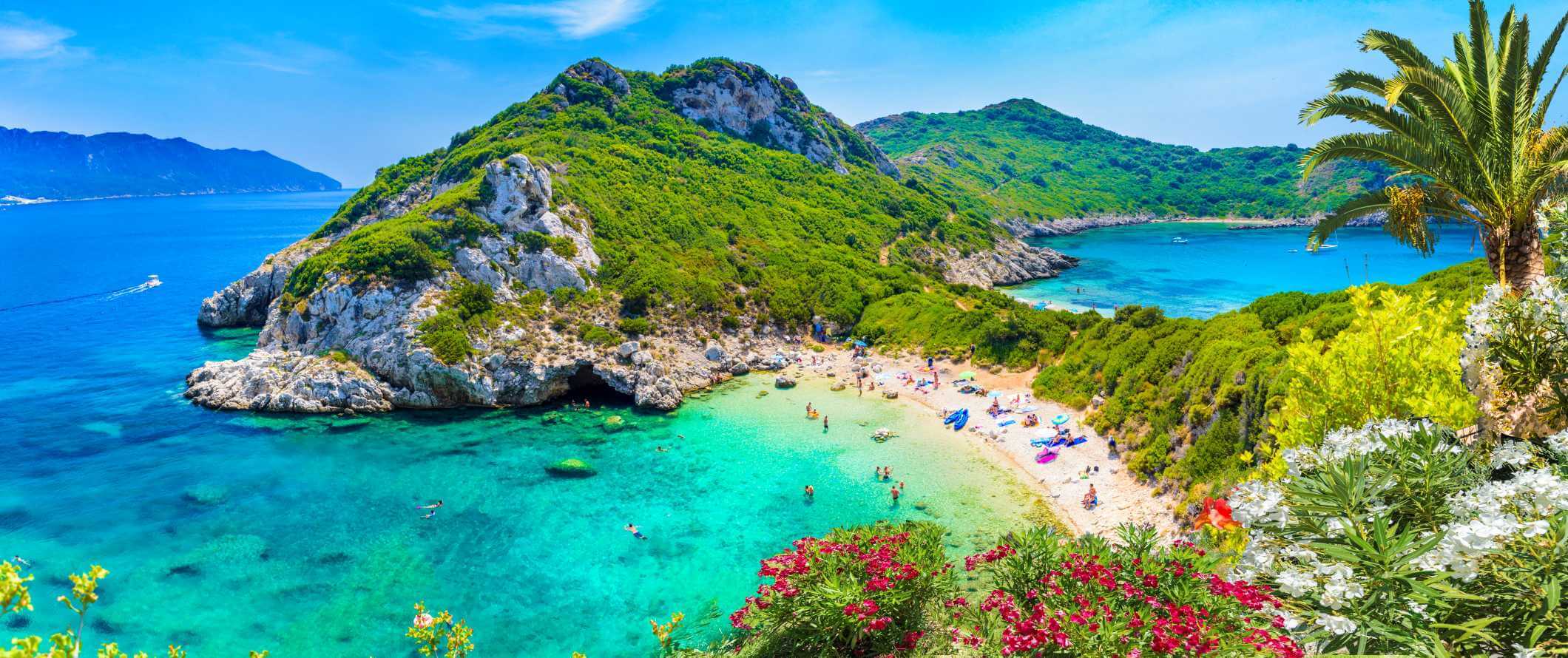
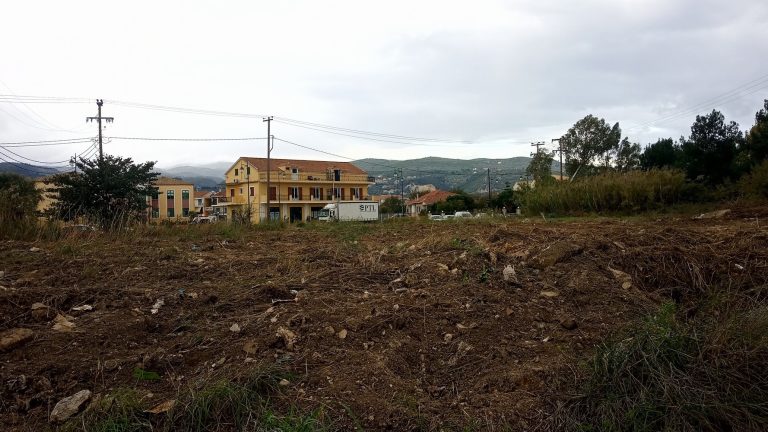
Variety reports production is scheduled to start this spring on the Greek island of Corfu and in the Peloponnese before progressing to Italy.

The film, called The Return, will star Ralph Fiennes as Odysseus and Juliette Binoche as his beloved wife Penelope.

Corfu Travel Guide for 2023: Do, Stay, Get Around, Save, & More!
The Greek island of Corfu.

The Return will be directed by Academy Award nominee Uberto Pasolini and is expected to be in theatres in 2024.

While the movie is set to be filmed in Greece, shots will also be filmed in Italy, UK and France.

Unique Bronze Age clay seal returned to Greece after 100 years

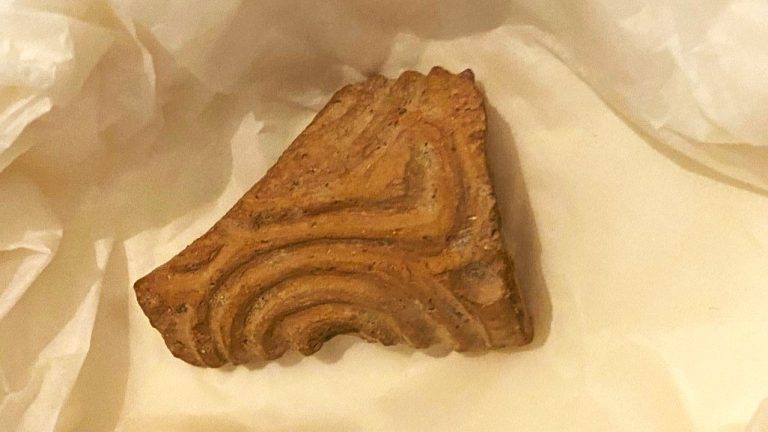
After a century of being in the possession of the Uppsala University Museum in Sweden, a Bronze Age clay cylinder seal of Assini has finally been returned to its birthplace in Argolis, Greece.

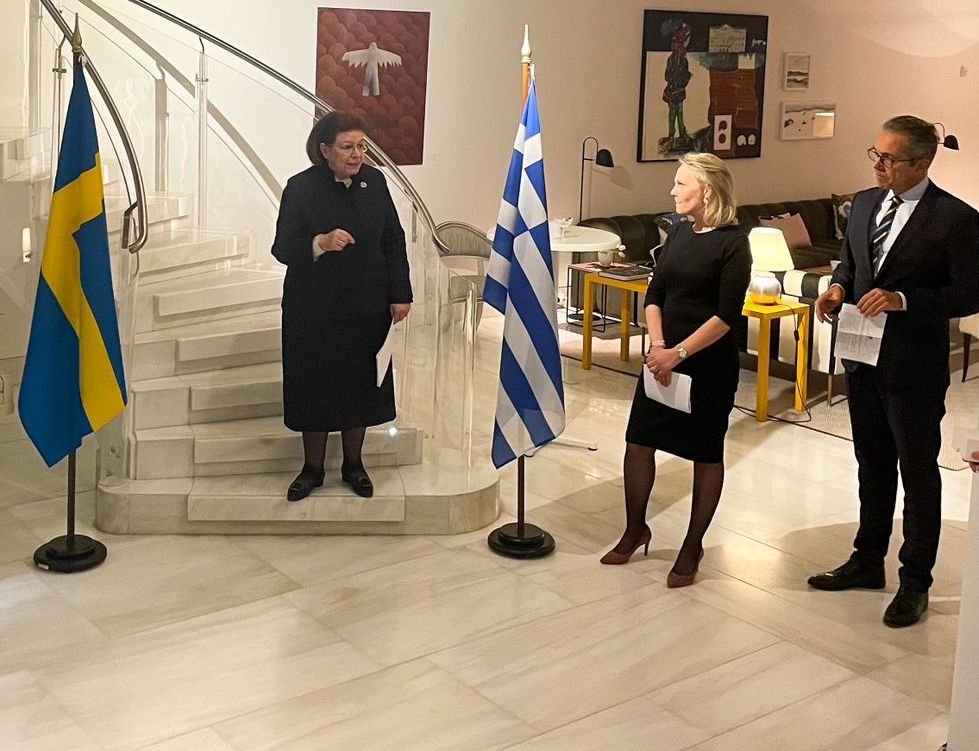
The Swedish Ambassador to Greece, Johan Borgstam, handed over the fragment to the Greek Minister of Culture and Sports, Lina Mendoni, in a special ceremony.

The seal was discovered during an archaeological dig led by then-Crown Prince of Sweden, Gustaf Adolf, and later King Gustaf VI Adolf.

The seal was delivered to Greece’s Culture Minister Lina Mendoni (left). Photo: The Archaeologist.

Permission was granted by both the Greek and Swedish governments for the fragment, which dates back to 4,000 BC, to be given to the Archaeological Museum of Nafplion.

This significant gesture symbolises a national objective – the definitive return and unification of the Parthenon Marbles at the Acropolis Museum in Athens.

The fragment was received by the Greek Minister of Culture and Sports, the Superintendent of Antiquities of Argos, and the Director of the Swedish Archaeological Institute in Athens, Dr Jenny Wallensten.

Source: The Archaeologist.

Alkistis Protopsalti meets with Greek students in Melbourne ahead of Antipodes

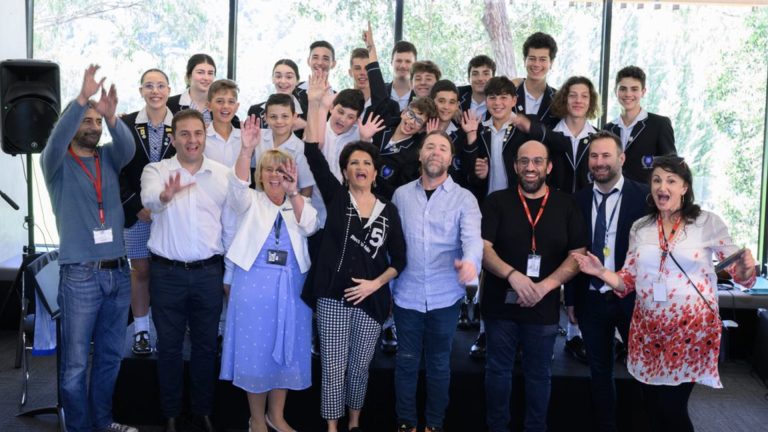
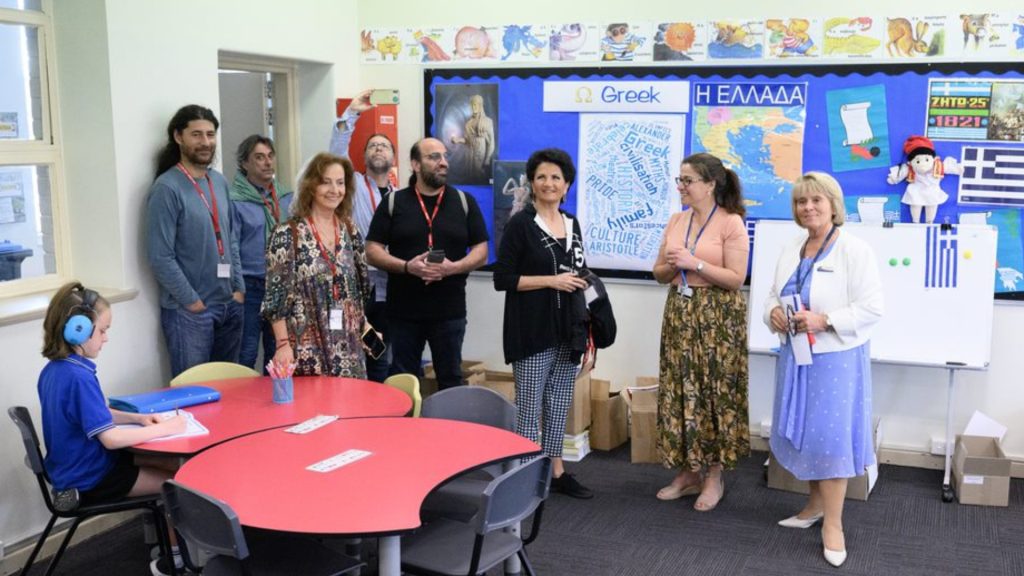
As we are one day away from the Antipodes Festival, Alkistis Protopsalti visited Alphington Grammar school on Thursday, February 23. On hand to welcome her was Dr Vivianne Nikou, Principal of Alphington Grammar.

Dr Vivianne Nikou took the artist with her musicians and showed them around the school premises, pointing out different areas. This included classrooms, laboratories, libraries, playgrounds, and other on-site facilities. During their tour, the principal provided some valuable information about the school’s history, programs, and activities.

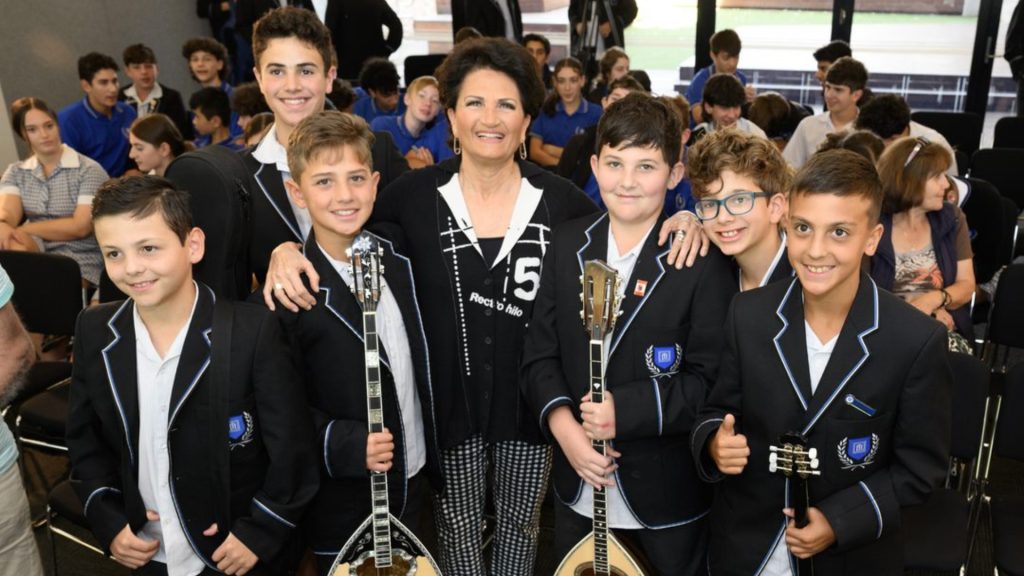
Alkistis was later welcomed by the students at Alphington Grammar School band where they put on a show and sang a few songs for her. The students also had a “Q&A” session with questions regarding her career and achievements. The famous vocalist answered with great joy all of their questions and in return she sang some of her songs as the crowd watched her incredible performance in awe.

Dr Vivianne Nikou shared her enthusiasm for this momentous occasion stating: “The visit was a huge success inspiring all students to maintain their connection to their heritage through music and other creative pursuits.”

“Alkistis Protopsalti is an inspiration for the students and teachers. She has displayed great ethos throughout her career achievements. Her passion in maintaining the Greek language amongst Greeks abroad was also evident,” Dr Nikou added.

Present at the event were also the GCM’s Vice President Anthie Sidiropoulos, Secretary Nikos Koukouvitakis and Principal of the GCM’s Language & Culture Schools Maria Bakalidou. They welcomed Alkistis and talked about her first impressions of the school and the preparations ahead of the Antipodes Festival 2023.

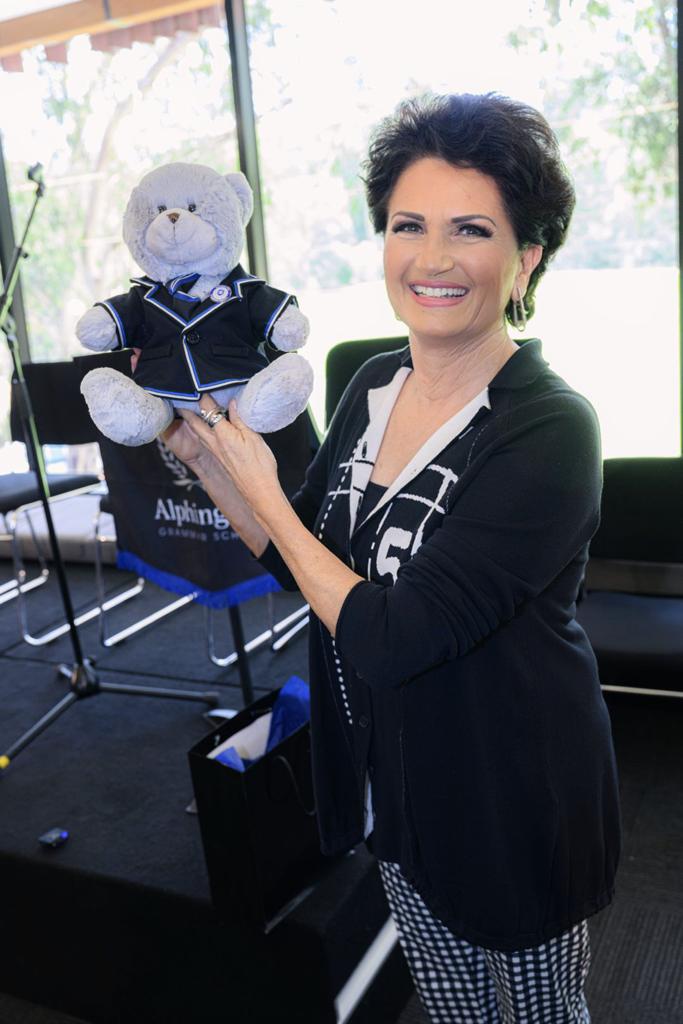
After the event, Alkistis met with the students, took pictures with them and was presented with an Alphington bear and a coffee table book of famous Australian Landmarks.

Alkistis visits the Greek Community of Melbourne’s Language and Culture Schools in Bentleigh

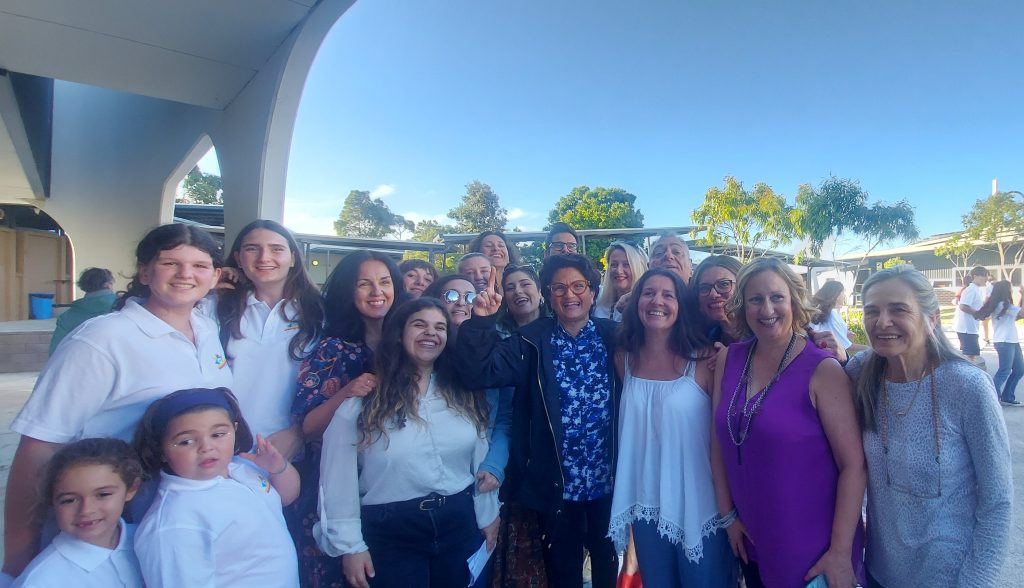
On Tuesday, February 21, Alkistis also visited students at the Greek Community of Melbourne’s Language and Culture Schools in Bentleigh.

During her visit, Alkistis shared with the students memories from her own childhood and experiences from her concerts and travels around the world.

The children did not miss the opportunity presented to them. They asked many questions to get to know Alkistis more and learn about her life and career.

With kindness and patience, she listened and answered all their questions, since, as she characteristically said, she did not want to leave any child complaining.

Alkistis spoke to them about her love for music and the Greek language, about the value of education, as well as the importance of sticking to our goals and the driving force of dreaming big.

The students then surprised Alkistis by singing one of her songs. In return, Alkistis also sang some of her well-known songs.

Alkistis Protopsalti is scheduled to perform on Saturday, February 25 at Antipodes Festival.

Greek island of Lefkada to get new Archaeological Museum

The Greek Culture Ministry has recently approved plans for the new Archaeological Museum of Lefkada with a surface area of 2,460 square meters, according to AMNA.

The new museum, built on the Greek island of Lefkada, will host the island’s antiquities, ranging from the Middle Neolithic period to 1864 when the Ionian island was incorporated into the new modern Greek state.

Greek Culture and Sports Minister Lina Mendoni said in a statement: “Lefkada, an island with a significant wealth of artifacts that are however inadequately presented, will acquire a new archaeological museum with a contemporary museum concept – open and accessible to the public, not just to specialists.”

“A long-standing dream of local society and the relevant Ephorate of Antiquities is now on track to its creation,” the Minister added.

The museum will include both permanent and periodic exhibition halls, storage, conservation labs, and a library and archives.

Architectural pieces that are currently kept in storage will be exhibited in the new museum’s courtyard.

Source: AMNA

Chiliadou beach in Greece named Best European Filming Location

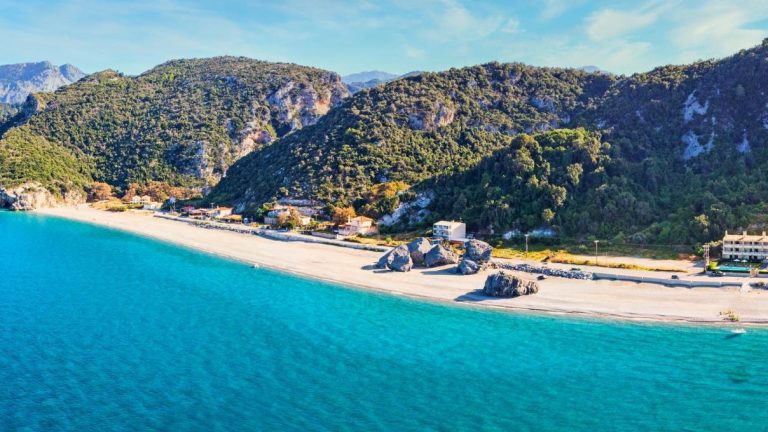
Chiliadou beach, located on the Greek island of Evia, was recently awarded the Best European Filming Location of 2023 by the European Film Commissions Network (EUFCN).

According to EUFCN, Chiliadou beach was chosen as it strayed away from the “usual and more touristic Greece.”

“The vegetation, the high mountains, the sea and the stony beaches, give the island a feel of an ‘unknown and secret place’… The support and hospitality from the local community was also a very big factor,” the EUFCN said in a statement.

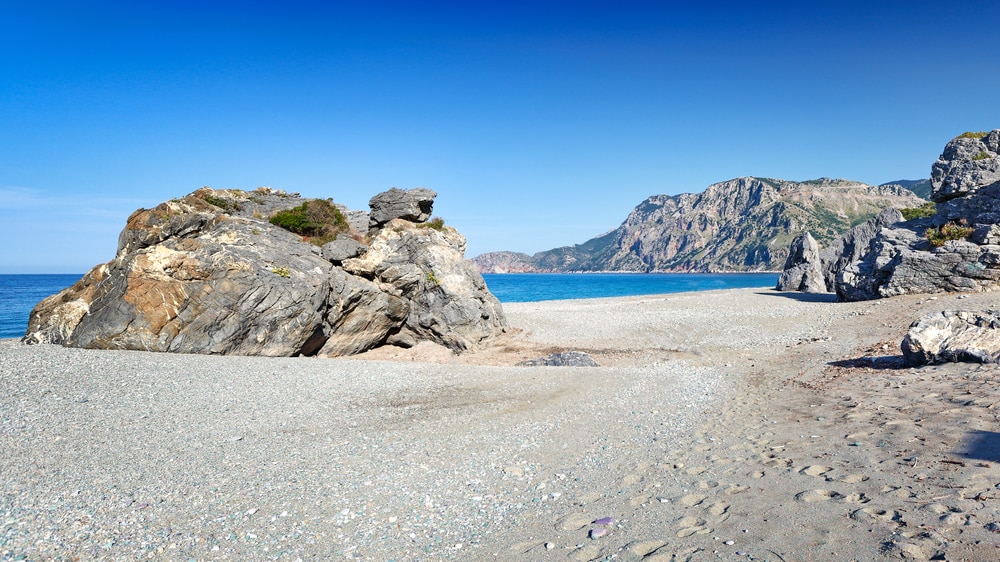
Chiliadou beach has unique features of stony beaches.

The beach is northerly oriented and the natural landscape of huge rocks and forest meets the shore washed by the Aegean sea. It holds deep crystal-clear blue waters and there are many secret sea caves.

Last year, Chiliadou beach was featured in an award winning film, Triangle of Sadness, where the film highlighted the natural landscape.

New Trade Commissioner of Greece in Australia: Double tax deal in final stages

From meeting with members of the Hellenic Australian Chambers of Commerce and Industry (HACCI) to connecting with Sydney’s Greek community, the new Trade Commissioner of Greece in Australia, Chrysa Prokopaki, has only just landed Down Under but she’s hit the ground running.

To mark the occasion of her arrival, Ms Prokopaki gave her first Australian interview to The Greek Herald and spoke openly about bilateral relations and the Double Taxation Agreement that is currently in the works between Greece and Australia.

What has been your impression of Australia so far?

I will not hide from you that I arrived in Australia with intense professional anxiety about how I will cope with the strengthening of bilateral economic relations for a community so established and robust. It should be noted that the office of Economic and Commercial Affairs of Greece in Sydney, Australia has jurisdiction over the whole of Australia and New Zealand (and over the island states of SE Asia).

However, the warm welcome I received from the Greek diaspora and the enormous help I receive every day has allayed all my fears. Therefore, my first impression of Australia is only positive as I have found a friendly and close-knit Greek community willing to work closely with the Consulate.

How would you describe the current trade relations between Greece and Australia?

Greece’s bilateral trade relations with Australia have always been prosperous, with a consistently positive trade balance for Greece. Given the enormous distance between the two countries, the resilience of Greek export businesses in Australia and the accessibility of Greek products to Australian consumers is admirable. In addition, tourism and (marine) transport services account for a large portion of Greece’s transactions from the Australian market. It is worth mentioning that in the year 2022, in the wake of the restrictions of the COVID-19 pandemic, the total volume of commercial transactions between Greece and Australia increased by 13 percent.

At the same time, Greece is among the top 20 countries for investments in green energy projects, a fact that has already been significantly exploited by Australian energy companies (for example, the acquisition of 49% of Greece’s national grid operator by Macquarie for a price of 2.1 billion euros). In the opposite direction, large Greek energy companies, such as Mytilineos SA, have also expanded their presence in the Australian energy market, especially in the field of Renewable Energy Sources.

Certainly, we are experiencing a positive momentum of exports and investments, with an increasingly favourable outlook. For 2023, in a year of significant slowdown for the European economy and even recession in some countries, Greece is predicted to present the third highest growth rate in the Eurozone.

What are your plans to strengthen bilateral trade relations?

Utilising data in relation to the consumer interest for Greek products and services, I envisage the expansion of our target group not only to the Greek Australian community, where the emotional connection is already established, but to the entire Australian market. Greek products and services have a comparative advantage and they can compete – if not in price, certainly in excellent quality – against other countries that have dominated the Australian market (for example, China).

Do you believe there is room for growth in specific areas of the economy? What are they and why?

Greece as a Northern Hemisphere tourist destination with summer holidays opposite to those of Australian residents, can offer, in addition to its given natural beauty, hospitality services and infrastructure which cover the tastes and desires of all tourists from Australia. However, despite the doubling of Australian tourist arrivals from 2016 onwards, the percentage of total arrivals remains at an all-time low (around 1 percent). This area, in my opinion, needs strengthening. But it will definitely be greatly helped by the announced opening of the GNTO Office in Melbourne (looming within this year).

New Trade Commissioner of Greece in Australia, Chrysa Prokopaki.

Greece annually receives arrivals three times its population and has drawn up a ten-year strategy for sustainable tourism. Within 2023, the appearance of increased tourist traffic earlier than the peak season confirms the extension of the tourist season and the emergence of other aspects of the tourist product (diversification/strengthening of thematic tourism). We are therefore convinced that it can be added to the bucket list of even more Australians.

What is the latest on the Double Taxation Agreement between Greece and Australia?

This agreement is a declared priority for both countries. It is in the final processing stage and its entry into force is expected soon. It is estimated that it will have a very positive influence on the economic relations of the two countries, as about 82,000 Australian citizens are holders of VAT numbers in Greece, of which 30,000 also have Greek citizenship.

Do you have a message for the Greek community of Australia?

I want to assure all members of the Greek community that Greece has not forgotten you. Through all the Authorities (Embassy and four Consulates), Greece keeps open all channels of communication between the Community and the homeland, assisting in all matters of your family and personal situation, which are related to Greece.

For the Greek state, the Greek diaspora in Australia act as a connecting link between the two countries and peoples. The Greek Australian community, with its resilience and passion, has co-shaped Australia’s modern society and economy into a very charming multicultural patchwork, passing on principles, values, traditions, morals and customs to modern Australian society. The awarding, every year, of prominent Greeks by the Australian Authorities for their contribution to society, letters and culture, demonstrates the degree of successful integration in their second homeland.

Is there anything else you’d like to say?

I feel the need, before we close this interview, to thank for their undivided help, apart from The Greek Herald, our Embassy in Canberra, the rest of our Consular Authorities in Australia, the Archdiocese of Australia and mainly – due to our daily cooperation – the team of the Consulate of Greece in Sydney, especially the Consul General Ioannis Mallikourtis and the officers of the Office of Public Diplomacy. Also, for their continuous support I want to thank the local chambers, such as Business Sydney and, of course, my predecessor Ms Katia Gikiza.

They say that the first post abroad is always fondly remembered and, thanks to the support of all of the above, I am sure that this will happen!

Jewellery label Aletheia & Phos inspired by Greek nostalgia and heritage

Melbourne jewellery designer Alicia Millan recently sat down with Australian Fashion Journal to talk about the success and inspiration of her label Altheia & Phos.

Having debuted the label 10 years ago after being spotted by Australian influencer and model, Mimi Elashiry, Millan’s jewellery company has become known for its sustainability and Greek-Italian symbolism.

In an interview with Fashion Journal, Millan talks about the spontaneity of the business and how at first it was a “silly little hobby.”

“I created an Instagram page posting crystals I’d bought, including a photo of a crystal bracelet I’d made. Something weird happened. Someone asked if they could buy the bracelet I’d posted. I was just having fun – I already had a full-time job in fashion, but I said yes. And I made more,” she says.

After creating a website and making more hand-made jewellery, Millan says she received a message from leading Australian influencer and model, Mimi Elashiry, where she soon “struck a friendship” and sent her a few pieces.

By 2014 the pair had launched a collection together and within three weeks almost all the jewellery was sold out.

Millan’s label name Altheia & Phos means ‘truth and light’ in Greek. She says it was “indicative” of where she was at in that point of her life: trying to figure out who she was and where she came from.

“I remember calling my yiayia to talk about the brand name with her,” she said. “[I wanted to delve] into my roots and Greek and Italian heritage and culture. Throughout primary and high school, I was never Greek enough, never Italian enough, and never Australian enough. I didn’t really fit in.”

“Now, as an adult, I feel proud that I can embrace it all and feel confident in myself.”

Altheia & Phos is demi-fined jewellery that Millan says “people connect with” because it draws toward the Greek and Italian elements of, “the sky, good olive oil, storytelling, kindness and sensitivity”.

Source: Fashion Journal

Greek sisters celebrate 30 years of handmade chocolate business in Sydney

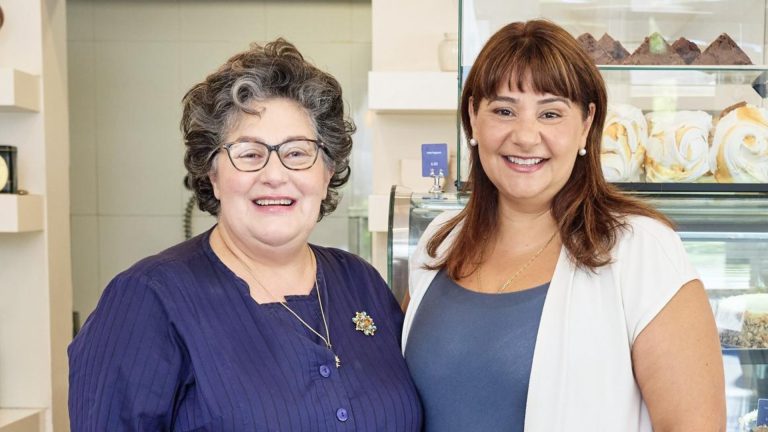
Greek sisters, Katerina Stavropoulos, 64, and Tina Angelidis, 52, are celebrating 30 years running Adora Handmade Chocolates in Sydney.

The chocolate business and name is inspired by their Greek heritage, with ‘Adora’ meaning ‘a gift’ in the Greek language.

In the late 90s, the Greek sisters started the chocolate business in the kitchen of their Sydney home, but they now have stores operating in Newtown, Parramatta, Oatley, Croydon, Sydney CBD and Quay Quater Lanes in the city.

Adora continues to be a huge success, with the business turning over $4 million for 2023, an increase since 2022 when the chocolate business turned over $3 million.

In an interview with News, the pair shared how they were motivated to work from home and with their love for chocolate, Katerina and Tina launched Adora from their own kitchens.

The pair hustled to sell the handmade chocolates by door knocking from business to business, wholesaling to companies and doing weddings.

“We had always complained about the lack of Australian-made chocolates in the city, so to be able to change that was huge,” Tina said.

“It also opened the door to a whole new market. We started selling to corporate businesses in the area and providing petit fours to boardrooms. We were expanding so fast.”

The handmade chocolates were becoming popular by demand, leading Katerina and Tina to open their first store on Homer St in Earlwood.

Now celebrating 30 years selling handmade chocolates to the public, Katerina and Tina have relaunched their first ever product, the Original Ten collection.

Source: News