The ancient Greek device is recognised as the world’s first mechanical computer made in 200 BCE.
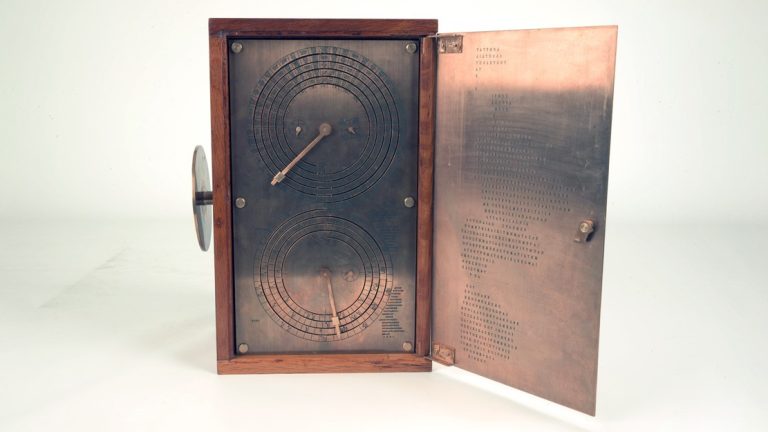
The Antikythera Mechanism.
The Antikythera Mechanism is believed to perform complex and intricate mathematical calculations to forecast the location of the sun, moon and planets.
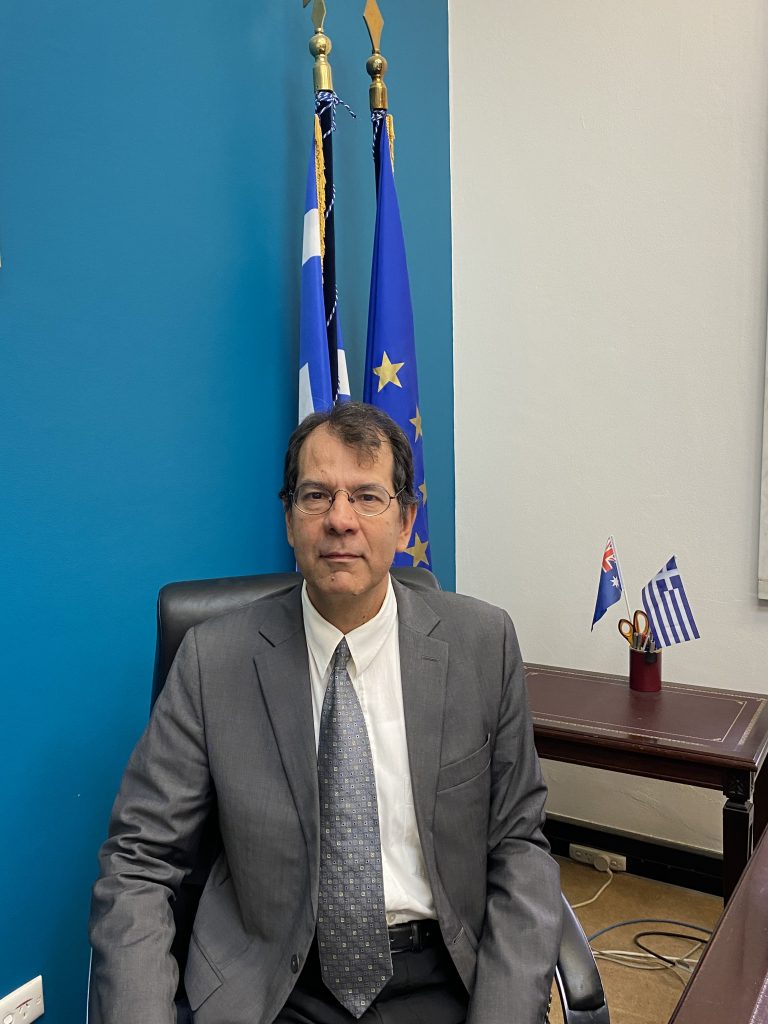
Western Australian engineer Dr Nick Andronis created the replica in 2022 using research such as highly detailed CT scans.
Dr Andronis wanted to replicate, as much as possible, the tools and techniques that would have been available to the ancient Greeks to make the mechanism.
His replica is now going on display at Western Australia’s Boola Bardip museum, with the support of the Consulate of Greece in Perth, Dr Tony Freeth and the National Archaeological Museum of Athens.
Visit WA’s Boola Bardip museum to see the replica made from bronze and sheoak, jarrah, wandoo and Tasmanian pine.
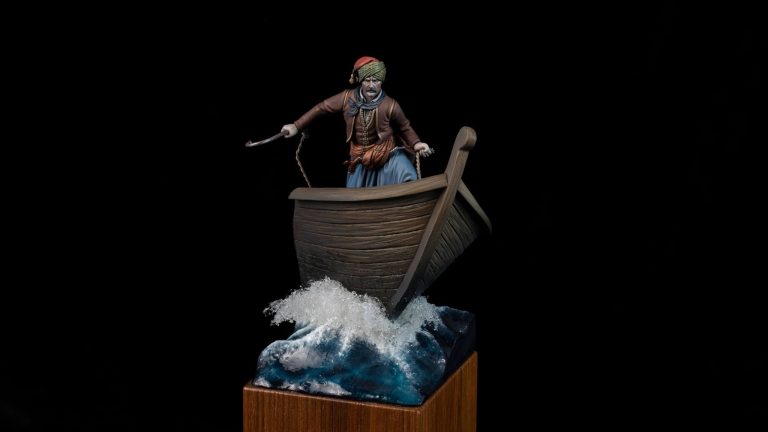
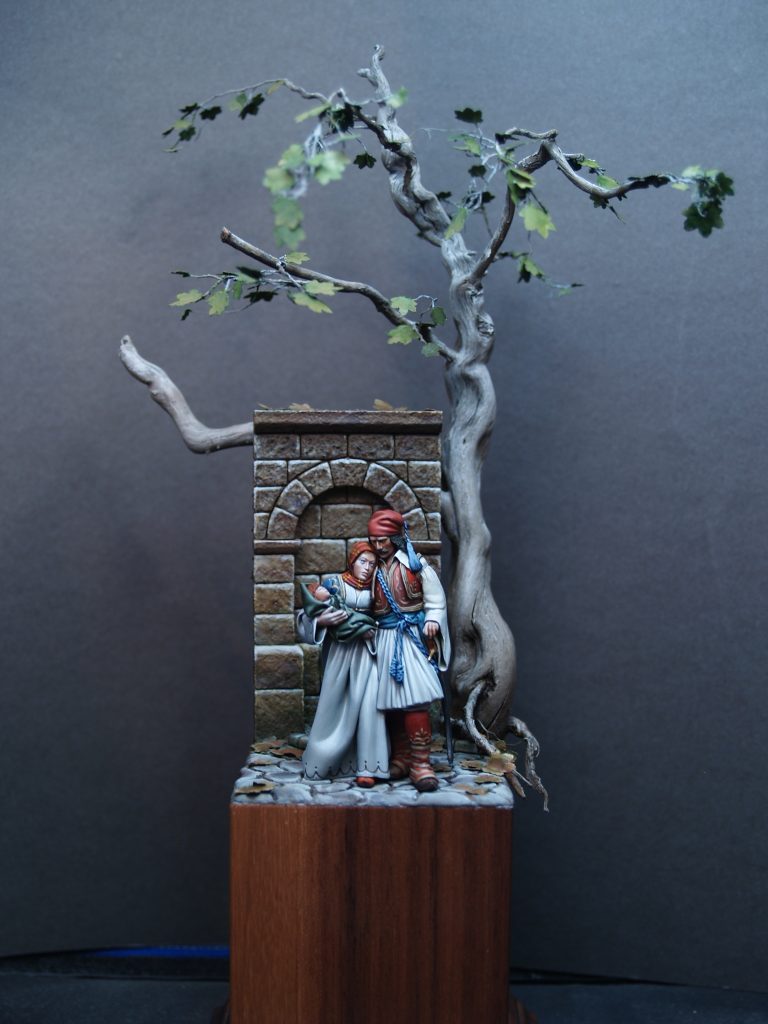
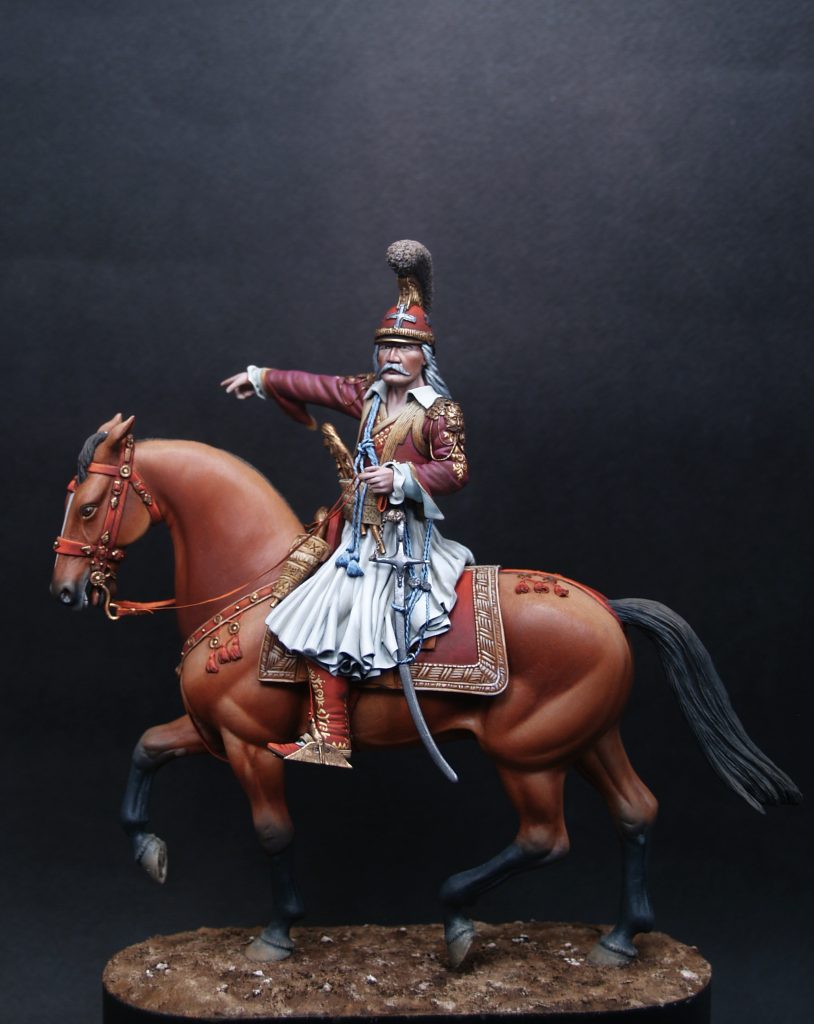
Whether it’s General Theodoros Kolokotronis, Laskarina Bouboulina, Konstantinos Kanaris or any other Greek Revolution hero and heroine, Christos Panagiotopoulos turns them into miniature models crafted with love and devotion.
“It is a big passion, a big love,” Christos tells The Greek Herald from his lab in Athens, Greece.
He remembers clearly the day he saw painted miniatures for the first time in a shop when he was 20 years old.
“I fell in love. It was love at first sight,” he recalls.
For the next 30 years, Christos would be working on them himself.
“It started as a hobby but it evolved into an art and a proper job. I had some talent and with years of work I got better and better,” he says.
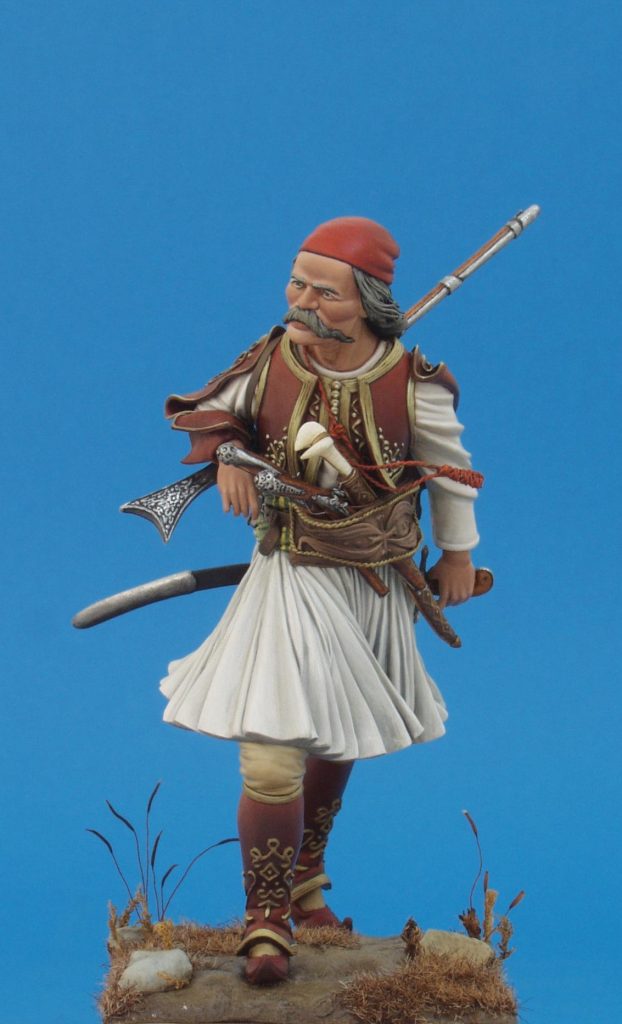
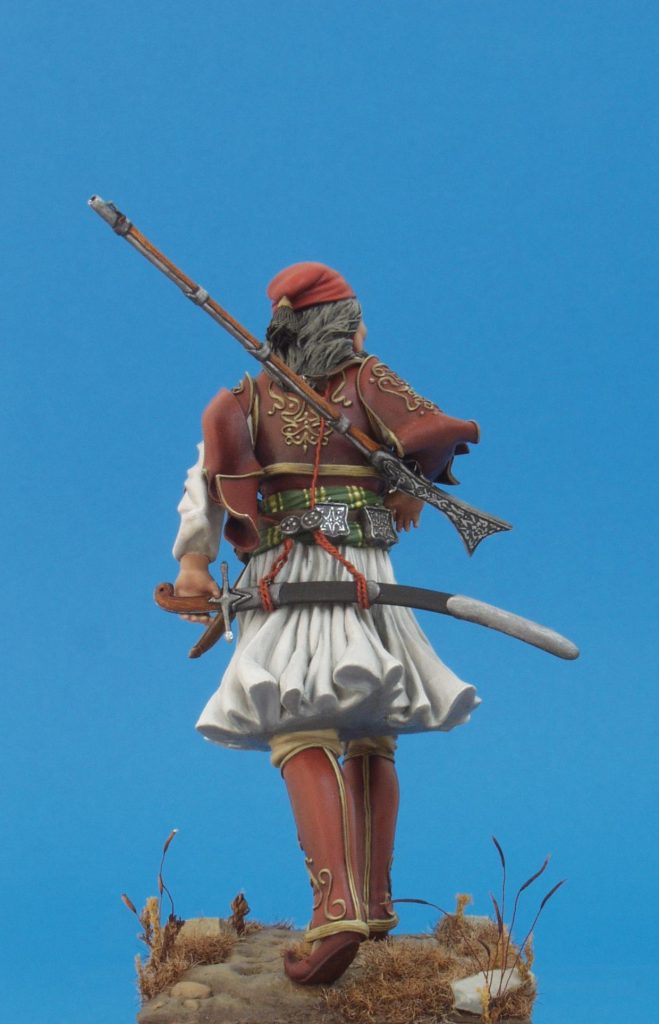
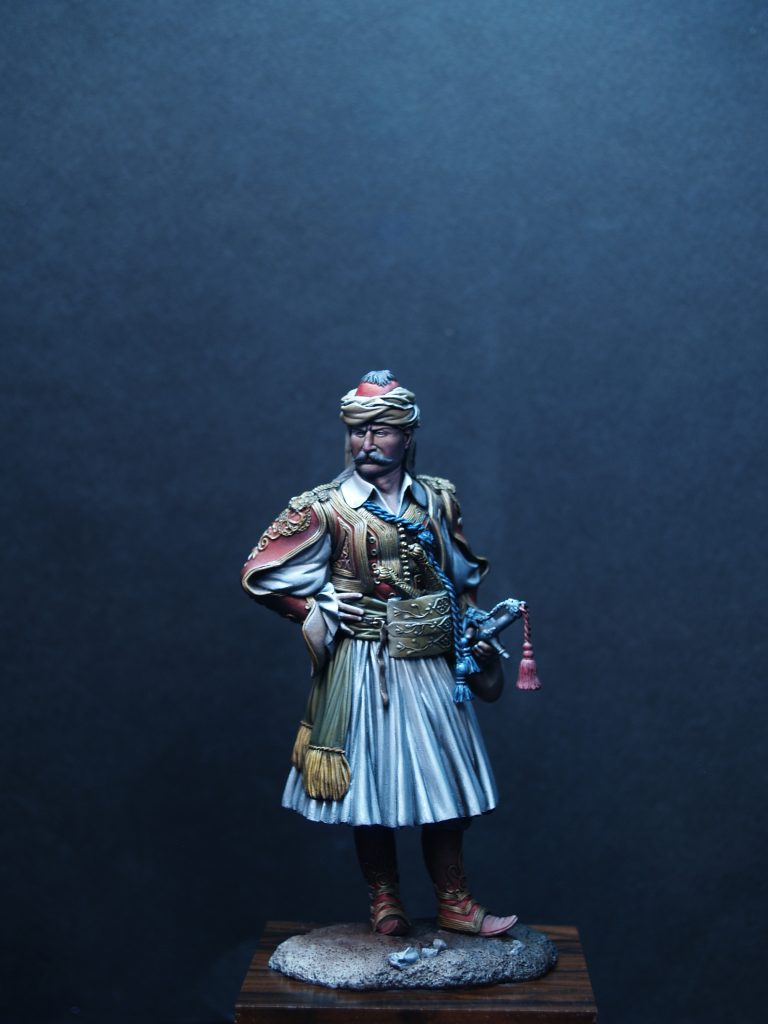
Armatolos.
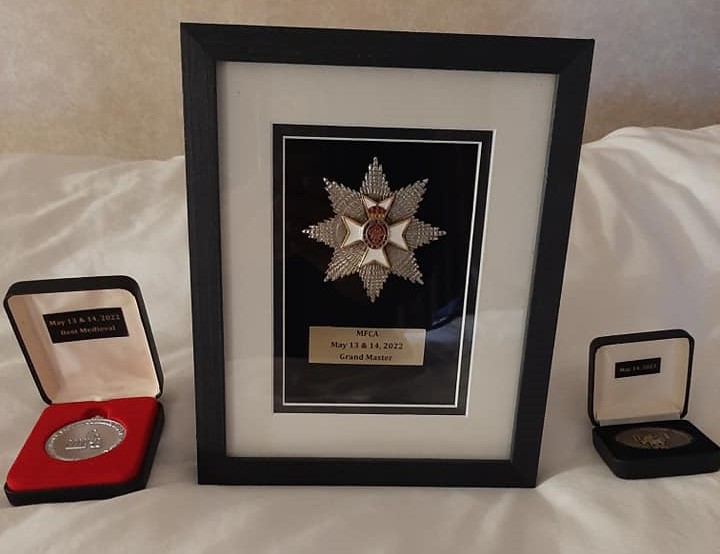
Christos’ creations and miniature models were also recently recognised by a Grand Master Award.
He first started creating Byzantine History figures, transforming already existing miniatures of soldiers from the west or east to Byzantium ones. After that, he started creating miniatures from scratch and then he got into sculpture.
“I am self-taught, I didn’t go to a school. I got better through working and studying,” he says.
“Since I am Greek, the love for Greek history was there from the beginning. I loved the Greek Revolution of 1821 since I was a kid.”
One of the first original models he ever did was a Greek Revolution soldier.
“In the first few years, I started taking part in competitions. In the third year, I entered an international competition abroad. I won an award. Competitions light a fire in you to always try and be better to stand out,” he says.
Christos Panagiotopoulos grand master award.
Back then, there was no internet for Christos to search information about his creations. He used to go to museums, to books and asked around.
“Now you can find easily information, images and paintings. It’s not only about finding the costume, is about combining the colours, creating the environment that you will put the miniature in. It is an art with many different aspects,” he explains.
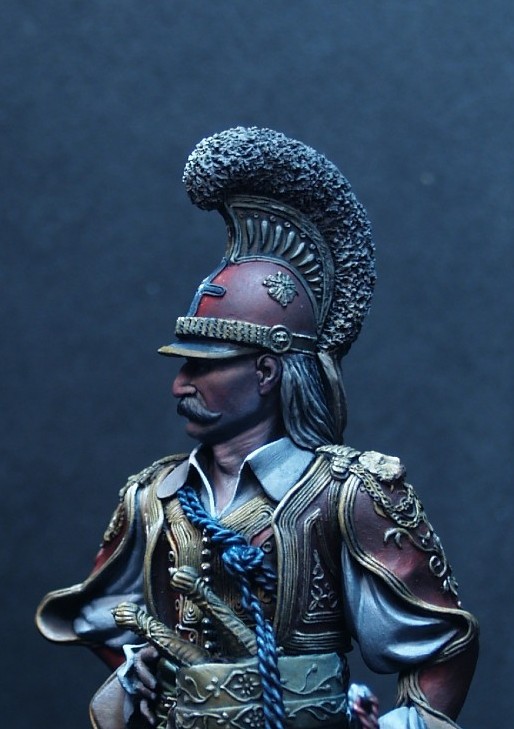
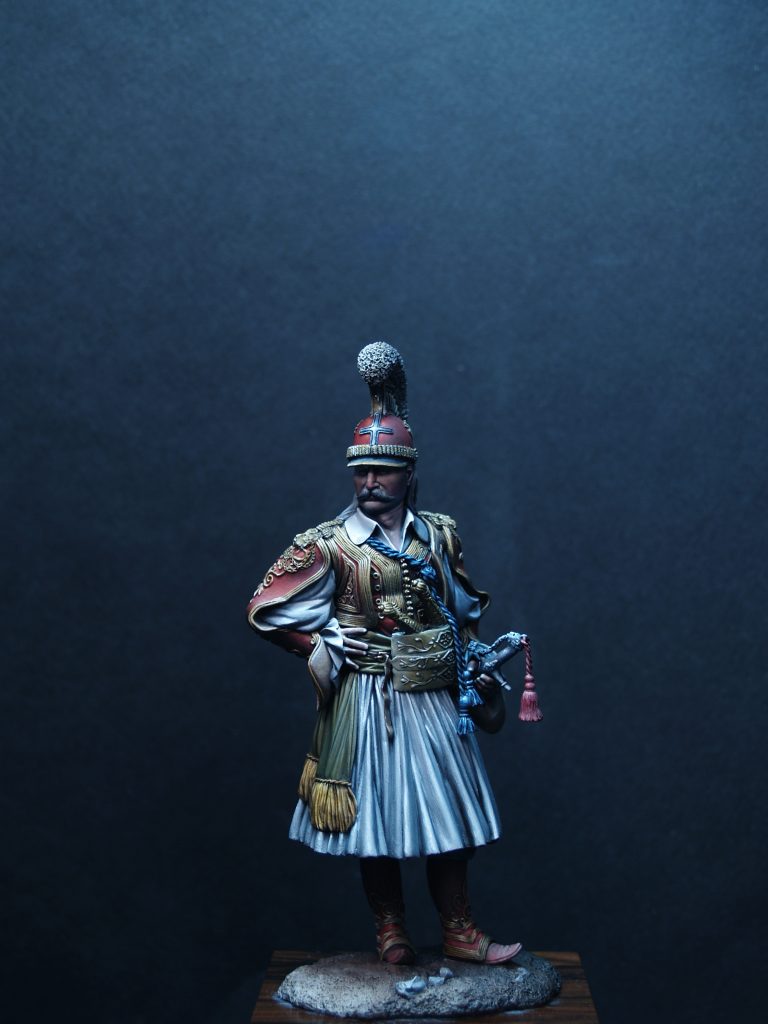
Miniatures of the heroes of the Greek Revolution demand even more time to be made because of their very special costumes. A miniature such as Kolokotronis could take up to 30 days to be created.
Kolokotronis
“Sculping a fustanella takes a lot of time. Every part of the costume is created separately. It also has to do with the soldiers’ movement,” Christos says.
First, Christos shapes the fustanella and then he crafts each strip one by one.
“The sculpture is made from the inside to the outside,” he says. “First you shape the body, then the movement of it, then the bones, the muscles and then you add the clothes.”
When it comes to selling, there are two options – one of making an original miniature that is going to be sold to a collector, or the procedure of creating a model that is going to be copied and recreated before being sold for people to buy it and paint it themselves.
Christos says that when it comes to miniaturists’ communities, the situation in Greece is similar to other countries.
“Our participation in exhibitions outside Greece and communicating with other artists abroad helped us evolve as artists,” he adds.
Asked about the hours he works on his miniatures every day, he laughs, before concluding: “I work from morning till night.”
The Ambassador of Greece in Australia, George Papacostas, and the High Commissioner of the Republic of Cyprus in Australia, Antonis Sammoutis, have issued messages to Australia’s Greek diaspora ahead of Greek Independence Day on March 25.
Message by the Ambassador of Greece in Australia, George Papacostas:
Ambassador Papacostas.
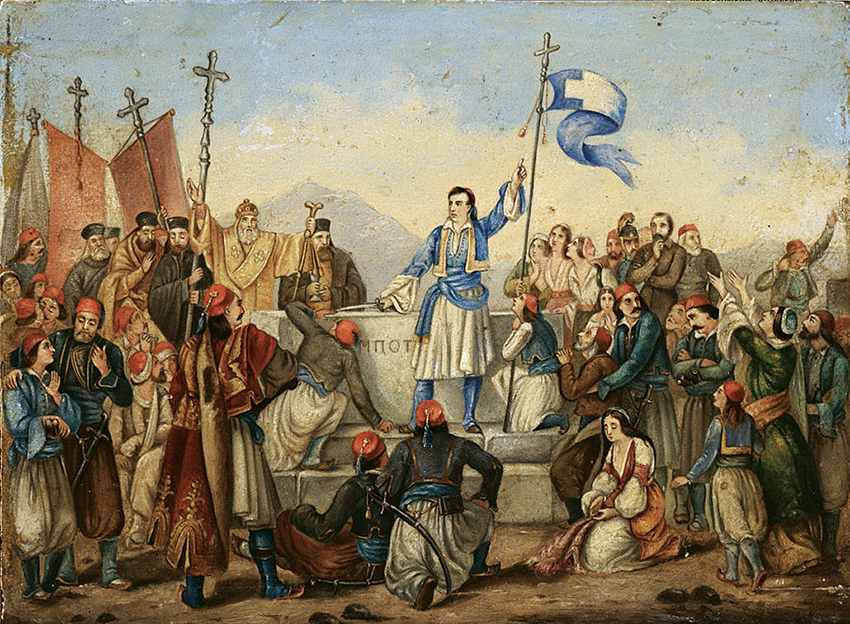
The celebration of the Greek Revolution of 1821 brings to our memory the unparalleled heroism of our ancestors who did not hesitate to sacrifice their lives to ensure the freedom of our homeland.
Their selfless love for the country, their unquenchable desire for the rebirth of our nation, the preservation ofGreek history, tradition and culture, constitute flagship values that exemplify the younger generations who follow the same path of promoting national consciousness, identity and heritage, wherever they are around the world.
The dynamic and timelessness of Hellenism, from antiquity to the present day, are reflected in the best and most eloquent way, in you, dear compatriots, who keep the flame of 1821 unquenchable and are proud of your Greek heritage.
Through your voice and your example, you contribute to the progress of multicultural Australian society and contribute to the promotion and further development of excellent bilateral relations.
Thanks to you, Greece today is democratic, strong, prosperous, peaceful, a reliable member of the international community and a factor of stability, development and trust in international relations.
Xronia Polla! Long Live the Greek Nation, Long Live Greece!
Message by the High Commissioner of Cyprus in Australia, Antonis Sammoutis:
High Commissioner of Cyprus.
With feelings of deep emotion and pride, I celebrate this year for the first time the anniversary of our national day with a very special part of Hellenism, the Hellenism of Australia.
The Greek Revolution began before March 25, 1821. The Greek fighters though, could not help but connect the great uprising with the Feast of the Annunciation. After all, it was Christian faith that kept our national identity pure for centuries, as all the places (with the exception of the Ionian Islands), where Hellenism lived and flourished, gradually came under the control of the Ottomans.
Almost 400 years later, the Greeks became aware that the freedom of their country will come only if they themselves fight with self-sacrifice and self-denial, sacrificing the most precious things they had – their own lives. Encouraged by the spirit of the Enlightenment which spread throughout Europe, and secretly organised by the Friendly Society, they achieved in just a few months what previously would have been unthinkable – to defeat the armies of an empire and regain a state entity of their own. To the first small Greek state were gradually added most of the places where the Greeks predominated in population, and thus Greece was reborn in its historic cradle and took her rightful place among the free nations.
Cyprus joined as much as it could in this great effort. There were hundreds of Cypriots – members of the Society – with the first being the National Martyr Archbishop Kyprianos and others were volunteers who left the island to fight in the Revolution. The Ottoman administration of the island, in an effort to keep the revolutionary flame away from Megalonisos, reinforced its troops and proceeded to the preventive extermination of clergy and property on July 9, 1821. Dozens of villages were erased from the map and hundreds of Cypriots, first of all the Archbishop and the Metropolitans of Paphos, Kitio and Kyrenia met a tragic death at the hands of the Ottomans. Greece never forgot Cyprus and despite the distance, included it with a memorandum of the first Governor of Greece, Ioannis Kapodistrias (whose mother had ancestors who came from Cyprus), in the territories it claimed.
Celebrating today this glorious anniversary in all the countries of the world where Greeks live, they cannot help but reflect on the deeper meaning of their supreme fight for freedom as our national poet has captured in the Anthem. Greeks and freedom are synonymous words. Thus, every country where freedom and democracy have deep roots becomes a homeland for the Greeks and as a homeland they will honour and defend it with their actions.
Message by Greece’s Deputy Defence Minister, Nikos Hardalias:
The anniversary of the Greek Revolution of 1821 is traditionally an occasion for a review of the past, present and future of Hellenism. This creative cultivation of historical memory, as well as the tribute to the fighters of 1821, should never be confused with the sterile reminiscence of the achievements of a previous, glorious generation. On the contrary, it is an opportunity to confirm our national orientation and, driven by the study of one of the most brilliant chapters of our 3000-year history, to confirm the fundamental principles and values that unite us as Greeks, whether we live in Athens or Kastellorizo, in New York or Melbourne.
More than 200 years ago, our ancestors, no longer able to bear the heaviest and unprecedented yoke of tyranny, took up arms against the “horrible Ottoman dynasty,” as it is characteristically mentioned in the preamble of the first Greek Constitution. The entire country turned into a huge battlefield where through the blood and sacrifices of the Greek fighters – chieftains, ordinary fighters, clergy, women, children, intellectuals – the creation of the modern Greek state and the rebirth of Hellenism were sealed.
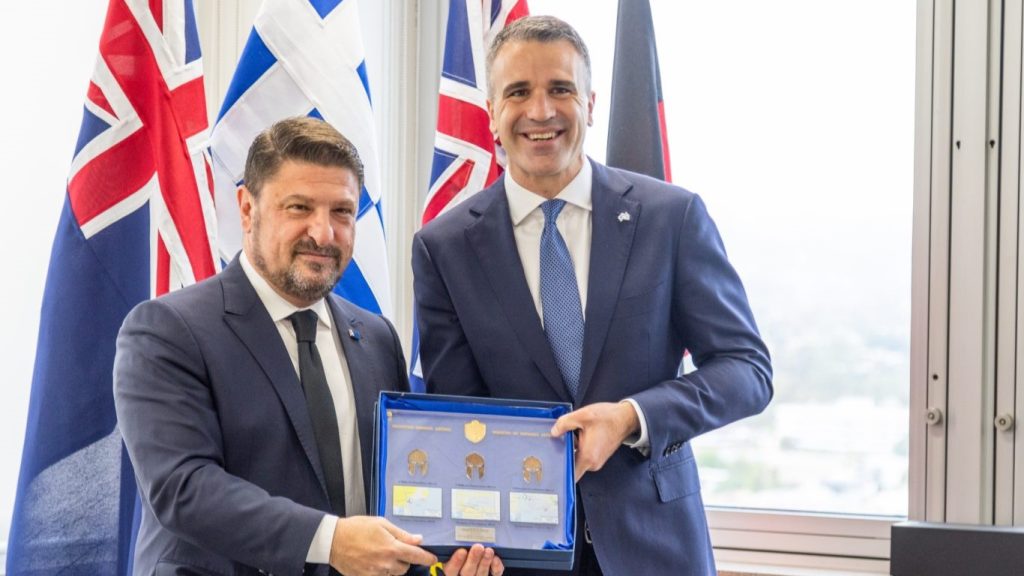
File photo: Greece’s Defence Minister, Nikos Hardalias (left), visited Australia last year and presented SA Premier, Peter Malinauskas, with a plaque.
We did not stand alone in this effort. The Revolution of 1821 began at a bad historical moment for the Greeks. Europe was extremely conservative and oriented towards the preservation of the existing order. It initially chose to condemn the Revolution and turn a blind eye to the Ottoman atrocities. Soon, however, the climate changed thanks in large part to the enthusiasm of thousands of diaspora Greeks and Philhellenes from both sides of the Atlantic, who realised the universality of the Greek struggle. As the emblematic British poet Percy Shelley put it in the introduction to his wonderful work entitled Greece: “We are all Greeks, our laws, our literature, our religion, our arts, have their roots in Greece.”
On this solid foundation – and despite the many storms we passed through in the decades that followed – we grew, became stronger and are still building the motherland. Today’s Greece is very different from the poor, ruined and crippled – but free – Greece of 1830. It is an economically strong state that provides its citizens with a high standard of living and is a member of the most powerful and top alliances in the world. And of course, for some years now, it has been practicing a dynamic and multi-dimensional foreign and defence policy, which includes the building of the strongest Armed Forces in modern Greek history, as well as the active affirmation of the rights provided by the Law of the Sea.
On the occasion of the 202nd anniversary since the Greek Revolution, the Greek state sends a clear message to the Greek diaspora: As in 1821, you are the best “ambassadors” of our homeland and Greece’s “bridge” to strong partners with whom we share common principles and values.
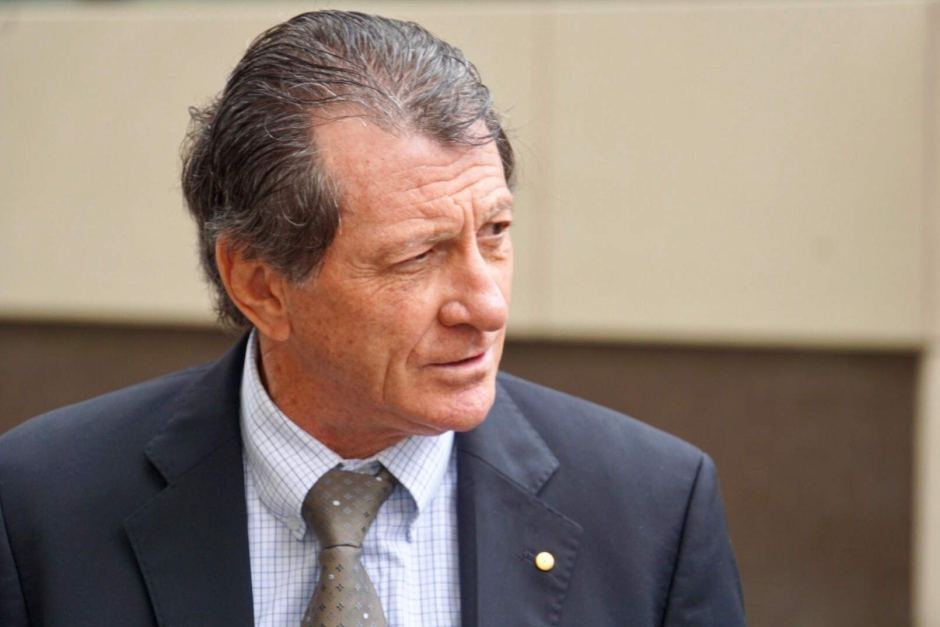
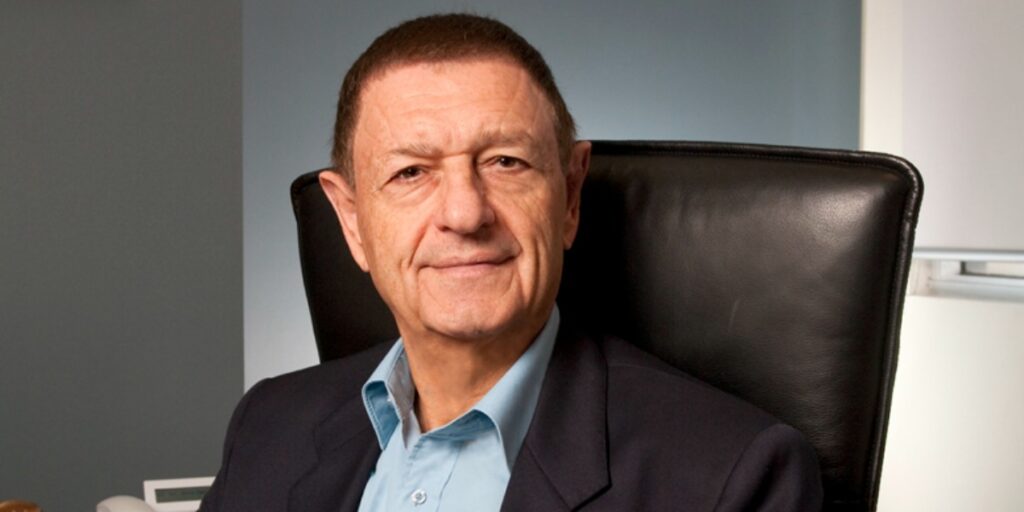
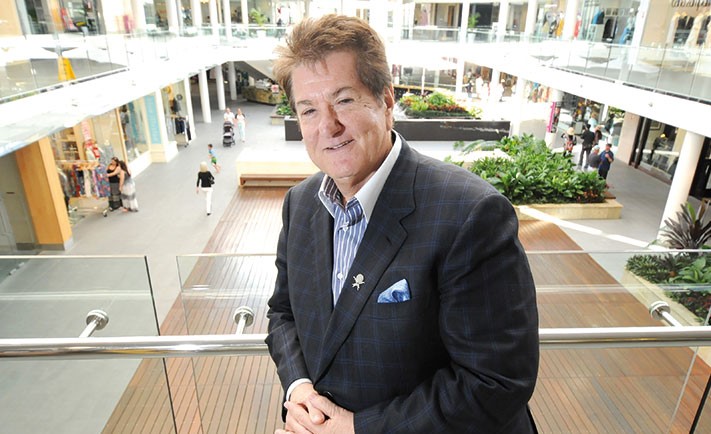
Who are they and how have they become so successful in life? The Greek Herald finds out.
59 – Nick Politis, $2.2 billion:
Nick Politis.
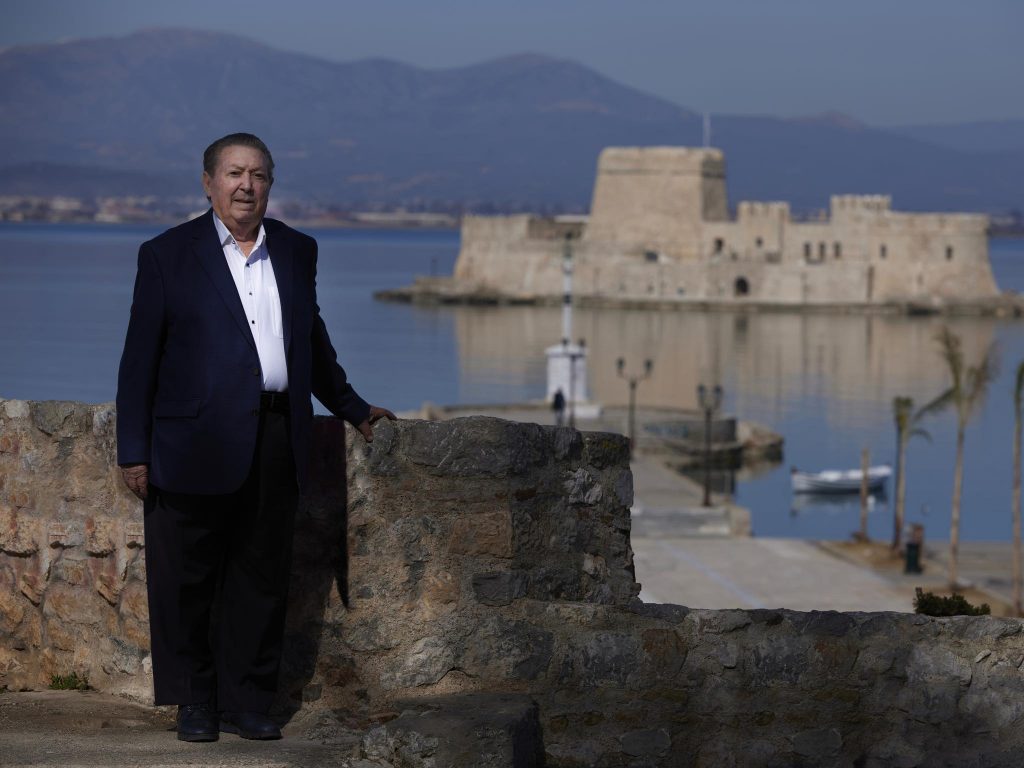
Nick Politis is the Owner of WFM Motors and Director of AP Eagers. He is the most successful car salesman in Australia, with an empire that includes dozens of his own car dealers in Sydney, Melbourne and Queensland. He is also the Chairman of the NRL club, Sydney Roosters.
86/87 – Terry and Arthur Tzaneros, $1.56 billion:
Father and son duo, Terry and Arthur Tzaneros, own ACFS Port Logistics, the largest privately owned container logistics operator in Australia, and freight logistics firm, AGS World Transport. Terry and Arthur started ACFS Port Logistics in 2005 and it now employs more than 1100 people across Australia.
102 – Nick Andrianakos and Family, $1.3 billion:
Nick Andrianakos.
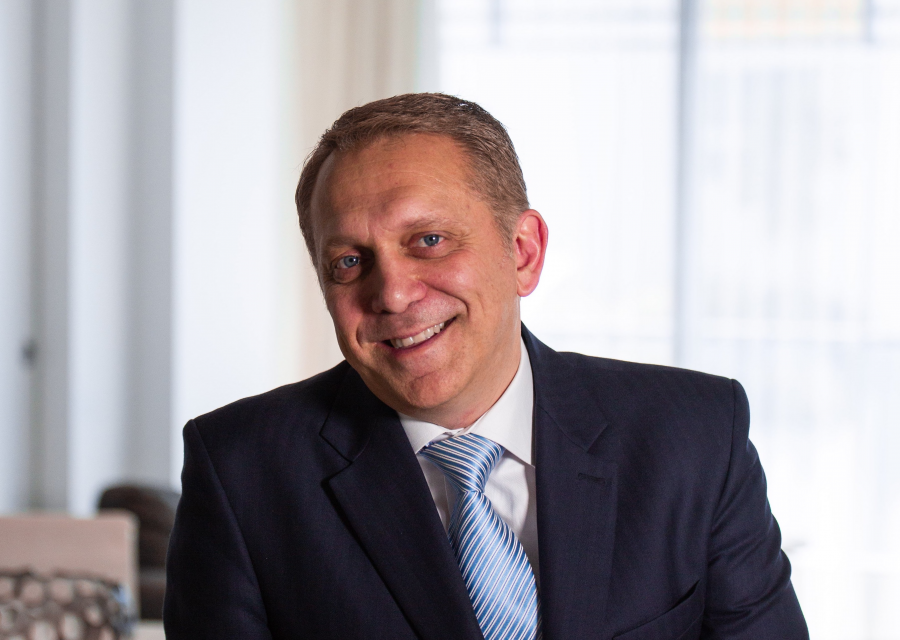
Nick Andrianakos is the Founder of Milemaker Petroleum and Nikos Property. The Milemaker chain comprised 54 sites when it was sold to Caltex in a $94 million deal in late 2016. By then, Andrianakos was already investing in commercial property and crucially he also kept the freehold sites of the petrol stations.
110 – Dennis Bastas, $1.23 billion:
Dennis Bastas.
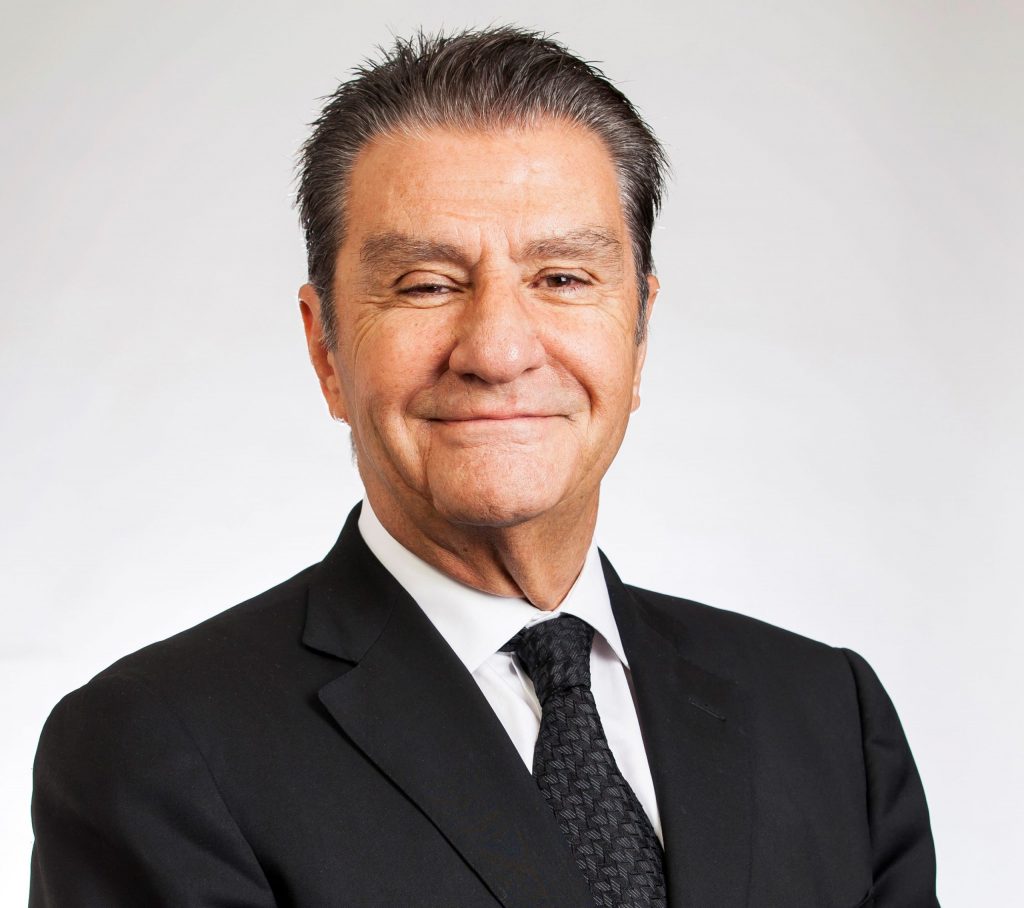
Dennis Bastas is the Founder, Chairman and CEO of Arrotex Pharmaceuticals. Arrotex makes about one-third of the drugs dispensed under the Pharmaceutical Benefits Scheme and turns over $1.1 billion annually. Bastas is also chairman and controls 50 per cent of Juno Pharmaceuticals, which supplies hospitals with drugs used in oncology and surgery, and owns a stake in genomics company My DNA.
114 – Theo Karedis and Family, $1.16 billion:
Theo Karedis.
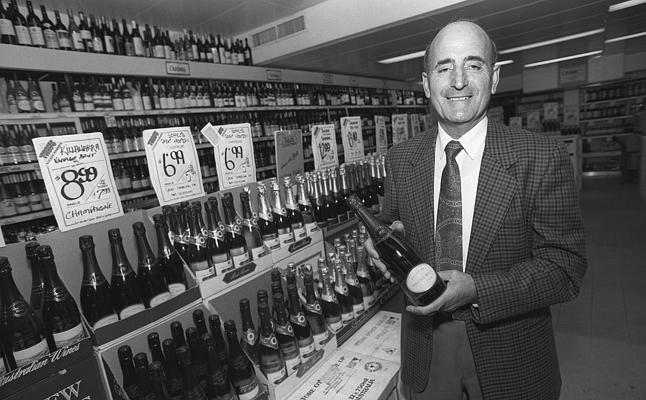
Theo Karedis is the co-founder of Theo’s Liquor and Arkadia Property Group. The Karedis family fortune stems from the Theo’s chain of bottle shops sold to Coles in 2002. Arkadia owns 25 mostly retail properties around Australia.
120 – Nicholas Paspaley and Family, $1.12 billion:
Nicholas Paspaley.
Nicholas Paspaley is the Executive Chairman of the Paspaley Group of Companies. The Group has a pearl retail business, an aviation and marine services division, pastoral and tourism holdings, and a property portfolio. The family last year opened the luxury Wall Street Hotel in New York and also owns luxury apartments it rents out in Aspen.
162 – Spiros Alysandratos, $850 million:
Spiros Alysandratos.
Spiros Alysandratos is the founder of one of Australia’s biggest backroom travel companies, Consolidated Travel. His business sells ticketing technology and services to airlines and travel agents, and also travel insurance products.
167 – Con Makris and Family, $813 million:
Con Makris.
Con Makris is the Chairman of Makris Group and although he has been gradually selling down his property portfolio in recent years, he retains substantial assets on the Gold Coast and shopping centres in Adelaide and Melbourne.
172 – Harry Stamoulis and Family, $767 million:
Harry Stamoulis.
The Stamoulis wealth is found in Melbourne commercial property. Harry oversees assets that include office buildings and distribution centres. The family also supports Melbourne’s Hellenic Museum.
189 – Kerry Haramis, $683 million:
Kerry Harmanis. Picture: Iain Gillespie / The West Australian.
Kerry Harmanis is one of Western Australia’s most successful mining executives and investors, making more than $400 million from the sale of his former nickel play Jubilee Mines to Xstrata in a $3.1 billion deal in 2007. He now has shareholdings in several listed mining exploration companies. He has also set up Mindful Meditation Australia to teach teachers to educate children about meditation and mindfulness.
226 – Ilias Pavlopoulos, $570 million:
Ilias Pavlopoulos (left) and Andrew Chepul.
Ilias Pavlopoulos and Andrew Chepul head one of Australia’s biggest non-bank lenders, ColCap, which they founded in 2006. It has a loan portfolio of more than $12 billion, and more than 260 staff in Australia, the UK and the Philippines. Its brands include Origin Mortgage Management Services, Homestar Finance and Granite Home Loans. ColCap makes annual net profits of about $60 million according to documents lodged with the corporate regulator.
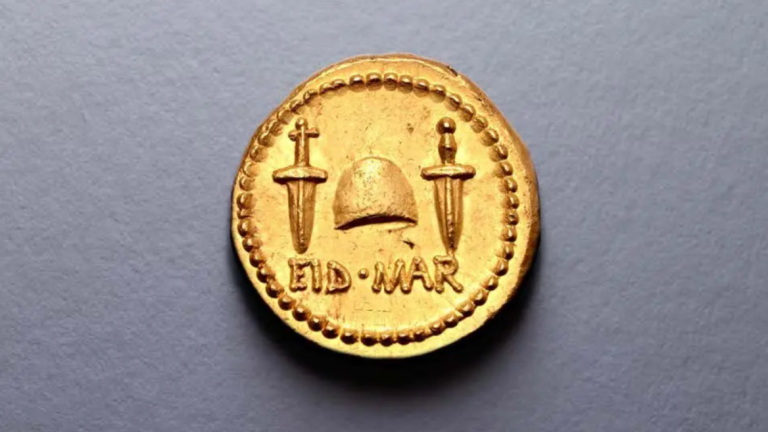
A rare gold coin that depicts the stabbing death of Julius Caesar was returned this week to Greece by investigators in New York, The New York Times has reported.
The NY officials had determined the coin, which is known as the “Eid Mar” and valued at $4.2 million, was looted and fraudulently put up for sale at auction in 2020.
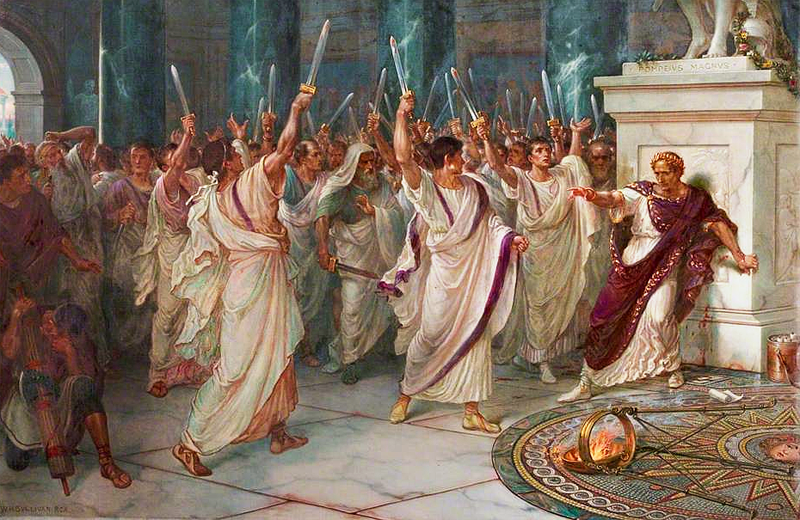
According to the NY Times, the coin features the face of Marcus Junius Brutus who, along with other Roman senators, murdered him on the Ides of March in 44 BC.
The murder of Caesar on the Ides of March in 44 BC.
Historians believe Brutus had the coins minted in gold and silver to applaud Caesar’s downfall. The gold coin is one of only three known to be in circulation.
The coin is one of 29 artifacts returned to Greek officials on Tuesday at a ceremony attended by officials of the Manhattan district attorney’s Antiquities Trafficking Unit and US Homeland Security Investigations, who cooperated on the fraud case.
NY officials said the British dealer who helped arrange the sale of the coin was arrested in January, and the coin itself was recovered in February.
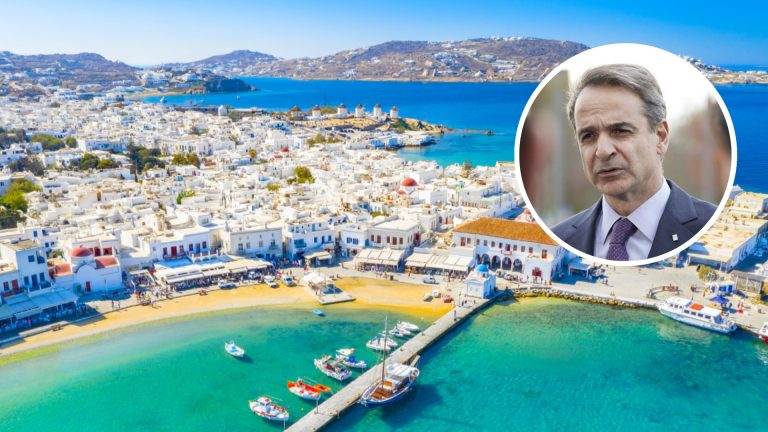
The Greek government has announced it will beef up security and increase urban planning inspections on the island of Mykonos after a rise in instances of mob-style violence.
Greece’s Prime Minister, Kyriakos Mitsotakis, said during a meeting convened on Wednesday that the police force on the island will be strengthened with an additional 100 officers. Special operations tasks will also be implemented.
“There cannot be an island where some people consider themselves to be above the law. This situation must be dealt with firmly,” Mitsotakis said at the meeting.
Δεν νοείται κάποιοι να θεωρούν ότι είναι υπεράνω του νόμου. Την ερχόμενη εβδομάδα, θα μεταβεί στη Μύκονο μικτό κλιμάκιο από Επιθεωρητή Δόμησης, Επιθεωρητή Περιβάλλοντος και την Οικονομική Αστυνομία, προκειμένου να ελεγχθούν όλες οι καταγγελίες για πολεοδομικές παραβάσεις. pic.twitter.com/bJLxF1oAkG
The Greek government has also suspended the issuing of building permits in the off-plan areas of the island.
According to Ekathimerini, inspectors will be unleashed on the island next week, starting from the buildings controlled by the employee of the Ephorate of Antiquities of Cyclades who was recently assaulted.
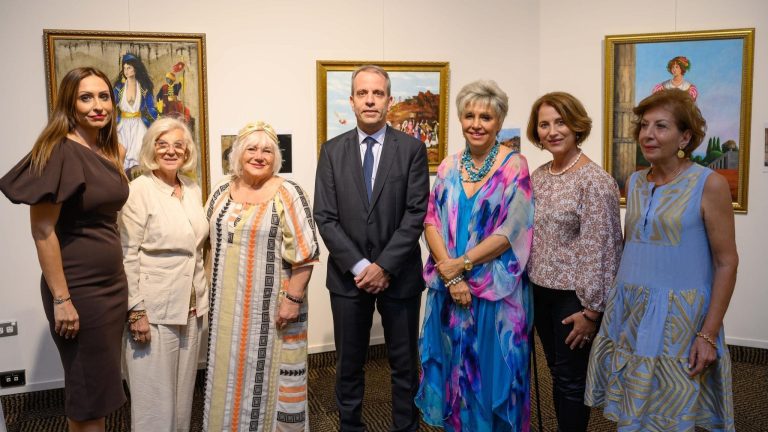
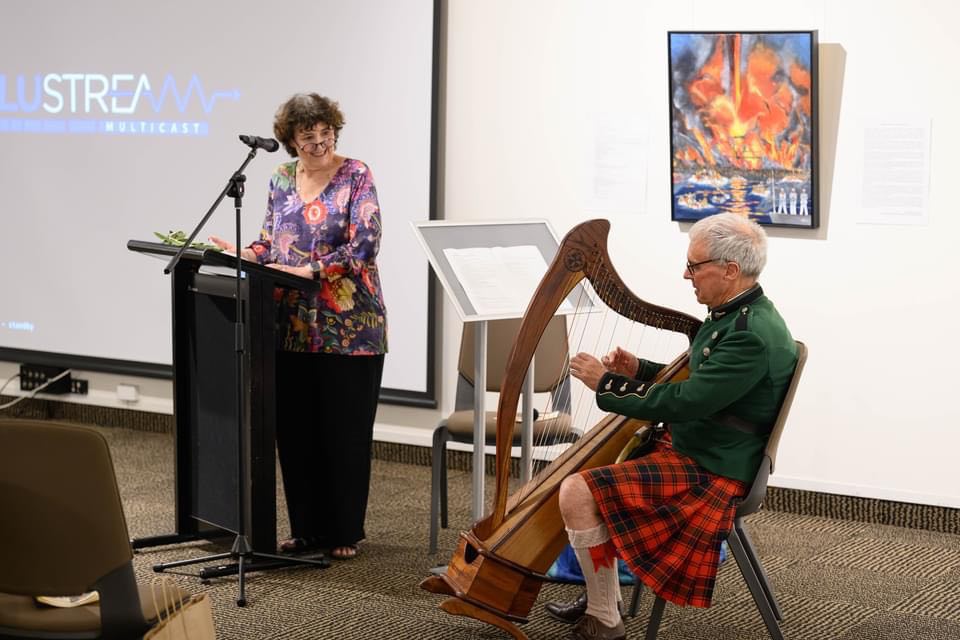
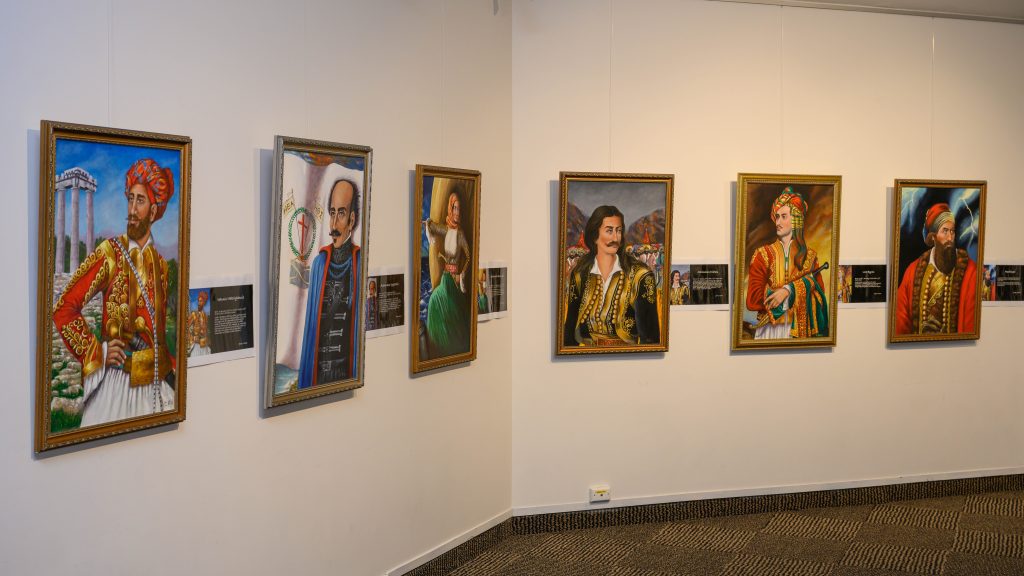
Angela Kiki Konstantinopoulou‘s new art exhibition ‘Ode to Freedom’ has officially opened at the Camden Civic Centre in Sydney’s south west until Saturday, March 25.
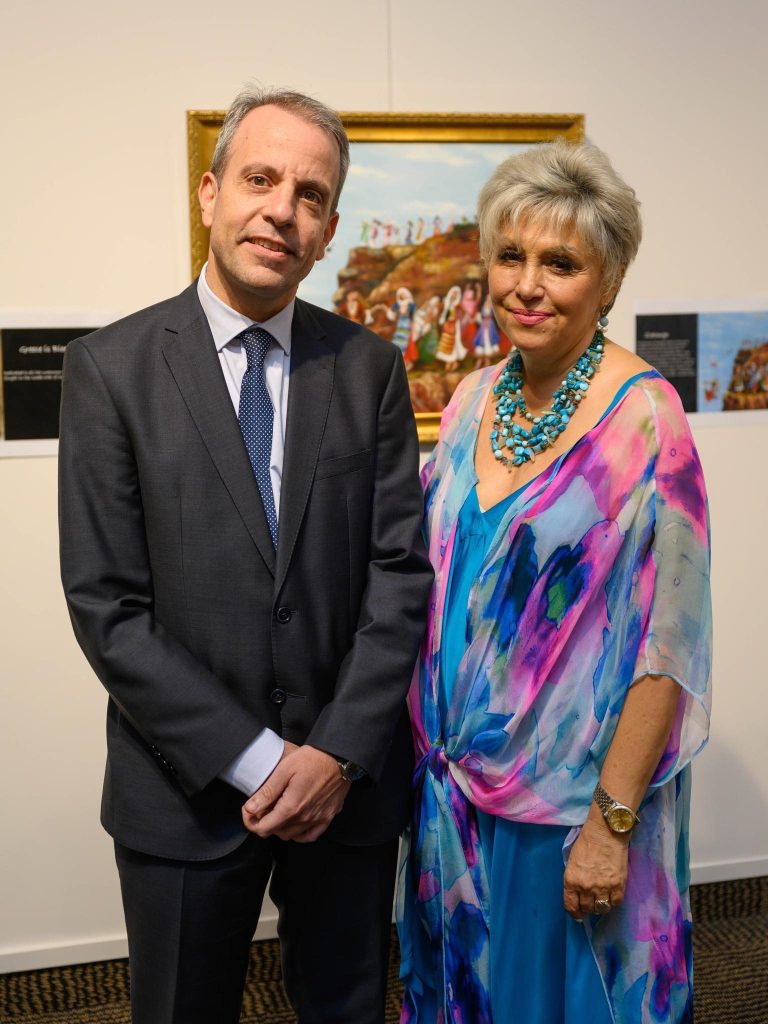
‘Ode to Freedom’ was opened on Tuesday by the Consul General of Greece in Sydney, Ioannis Mallikourtis, in the presence of a number of local Greeks and Presidents of Greek community organisations.
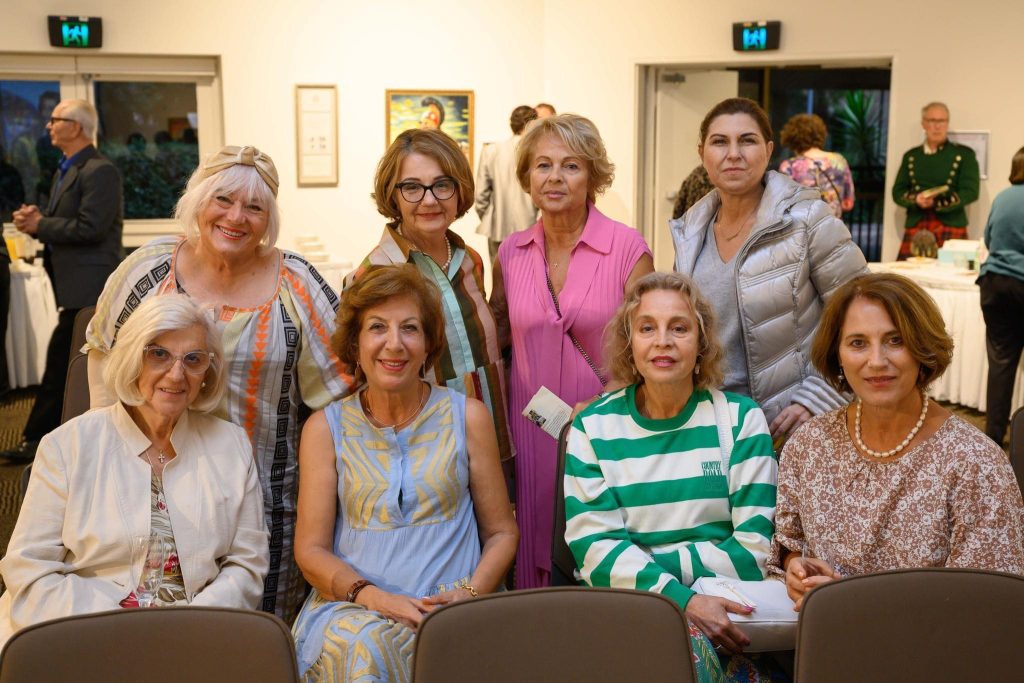
The Consul with Angela Kiki.Official guests.Eleni Eleftherias and a musician at the opening night.
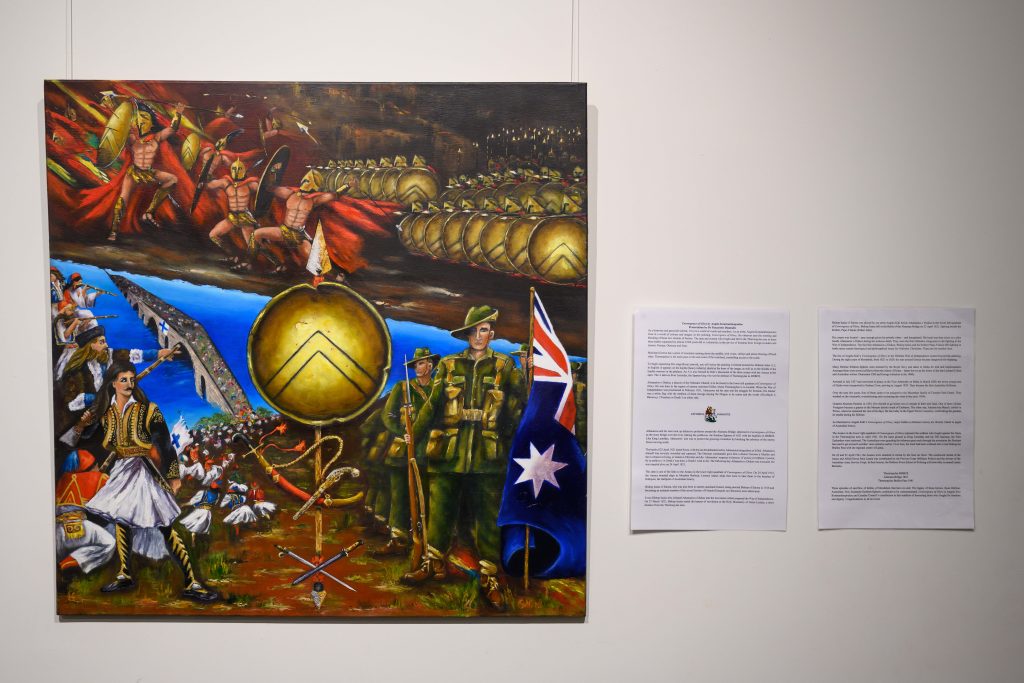
The exhibition includes 16 of Angela’s original works which are inspired by the ANZACs who fought alongside the Greeks during WWII.
One of the features of the exhibition is Angela’s artwork, ‘Convergence of Glory,’ which represents how the brave ANZACs travelled from the other side of the world to fight with the Greeks against the Nazi invaders.
‘Convergence of Glory.’ Photo: Brett Atkins 2023-34.Angela Kiki’s Ode to Freedom Exhibition. Photo: Brett Atkins 2023-34.
“It is a journey to the past, where history teaches of sacrifice, determination, defeat, bloodshed, bravery and hope,” Angela said about her exhibition.
“Freedom is not granted. The legacy of heroes, Hellene, Australian, New Zealander freedom fighters, continues to be commemorated.”
Angela’s exhibition is open at the Camden Civic Centre until Saturday, March 25 from 9am to 12pm.
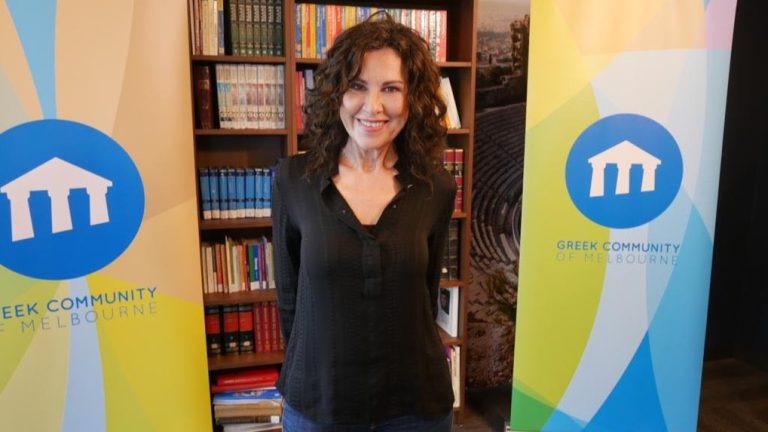
Greek singer Eleftheria Arvanitaki visited the Greek Centre in Melbourne, Victoria today ahead of her performance at the Greek Community of Melbourne’s (GCM) Grecian Ball on Friday, March 24. She will also be performing her iconic songs at the Athenaeum Theatre in Victoria on March 25, before heading to Sydney and Adelaide.
During a press conference at the Greek Centre, Ms Arvanitaki spoke to The Greek Herald and said she has never forgotten the big concerts held in Melbourne with thousands of people on the street.
“Whenever I see Greek people abroad, there is emotion, a thirst for Greek music. And now that there are many young Greeks who left Greece to go abroad, the reactions are even more enthusiastic,” Ms Arvanitaki said.
Eleftheria holding a copy of The Greek Herald newspaper.
“I have sung abroad to people that are not Greeks too and the reactions there are different. While they don’t understand the language, they are charmed by the music and the musicians. At any festivals I have been to abroad, people’s reaction has been enthusiastic.”
Ms Arvanitaki then turned to the question of COVID-19 and how it affected artists abroad.
“Covid brought much turbulency in Greece. We were closed up in our homes, there was no communication with the people. We could not do anything about our work and it was sad. There were many colleagues that experienced this period in a tough way,” she said.
“However, I didn’t stay so isolated from the people. Although the fact that you cannot practice your art costs you. Those who live for the music scene – dancers, musicians, actors, everything that has to do with arts – all of us had a hard time.”
Eleftheria with Bill Papastergiadis, the President of the Greek Community of Melbourne (left).
When asked about rap and ‘trap’ music, which is preferred by young audiences in Greece, Ms Arvanitaki said:
“It is a new way of expression for younger people that listen to rap and are connected with it. But there is a big gap with Greeks of other ages. I believe that rap has a future in Greece and many very good artists are appearing,”.
“I cannot know how it is going to affect our lives or their lives in the future. However it is an art, a very important one, and when there are artists like LEX, or like Giannis Aggelakas, they create a wave that is really important in Greek music.”
Growing up in Australia in the 1970s and 80s as a Greek Australian, I don’t recall very much from back then about March 25th as the celebratory day for Greek Independence. I do have a distant memory from my Saturday Greek school classes of the names Kolokotronis and Karaiskakis, which I later learned were amongst the main heroes of the Greek uprising against four centuries of Ottoman occupation.
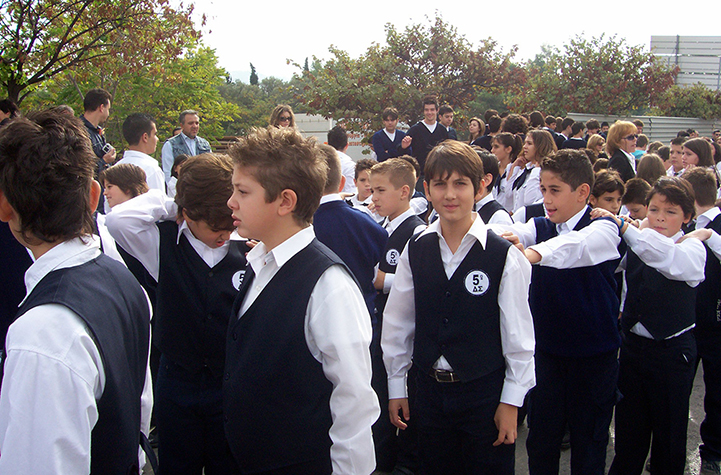
My scant introductions towards Greek Independence Day changed many years later upon moving to Greece and watching my sons take part in marches. Dressed in the blue and white of the Greek flag, they paraded in celebration of the day, alongside other school children in all parts of Greece.
Kathy’s Greek Independence Day celebrations.
These Greek Independence Day celebrations included nationalistic poetry recitals, songs and theatrical performances, as well as military parades with government officials in attendance. This was followed by the day’s traditional lunch of cod and garlic mashed potatoes (bakaliaro kai skordalia). This leading-to-Easter, fasting fare ties in with the Christian interpretation of March 25th as the ‘Annunciation,’ whereby the angel Gabriel visited the Virgin Mary to inform her she would be the mother of Christ – symbolising the dawning of a new era.
Greek Independence Day celebrations in Greece.
A founding figure of the Greek Revolution, Alexandros Ypsilantis, also chose this day as a metaphor from the Christian theme – the dawning of a new era for a liberated Greece, even though his revolutionary fervour began a month earlier in February of 1821 in Moldavia.
It wasn’t until 1938 that the foreign-imposed first King of Greece, the Bavarian Otto, officially instigated the 25th of March as the standardised celebration date for the Greek Revolution’s beginning.
Greece’s eventual independence from the Ottomans, and its recognition as the modern Greek nation, was officially acknowledged and documented in 1830 (Protocol of London) by the foreign ministers of Great Britain, France and Russia, and then amended in a new treaty in 1832. These influential powers decided that the new State must be a monarchy – an outcome not imagined by the majority of the supporters, promoters and fighters of the Greek Revolution. This majority, mainly cosmopolitan, educated Greeks and foreigners, looked to Classical and Ancient Greek humanism as inspiration for a free Hellas, a Republic, while average Greeks wanted to simply break free from Ottoman rule and oppression.
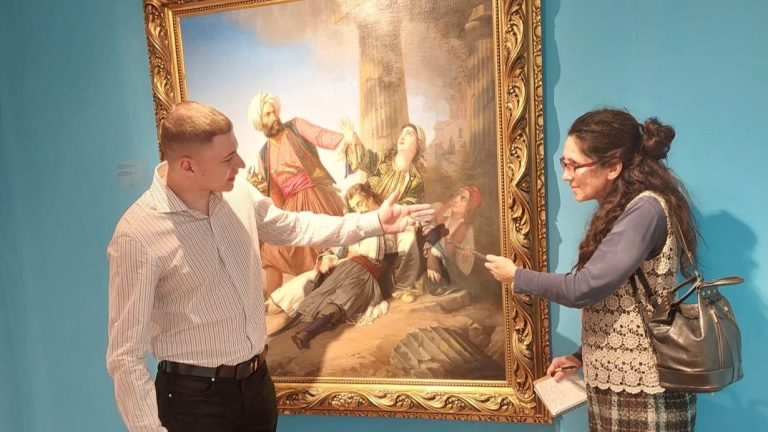
My sporadic knowledge of the core of March 25th and Greek Independence from readings and online searches has never really satisfied me. As a Greek, understanding and viscerally feeling the climate leading up to and during the Revolution has been of the utmost importance to me, which is why I consider myself blessed in discovering the Philhellenism Museum.
The Philhellenism Museum.
A small, state-of-the-art museum (moving to much larger premises in central Athens, Greece around the end of 2024), the Philhellenism Museum hosts art and other collectibles over four floors. Each floor has a theme with corresponding works, from mainly 18th and 19th century artists, that educate and delight the viewer.
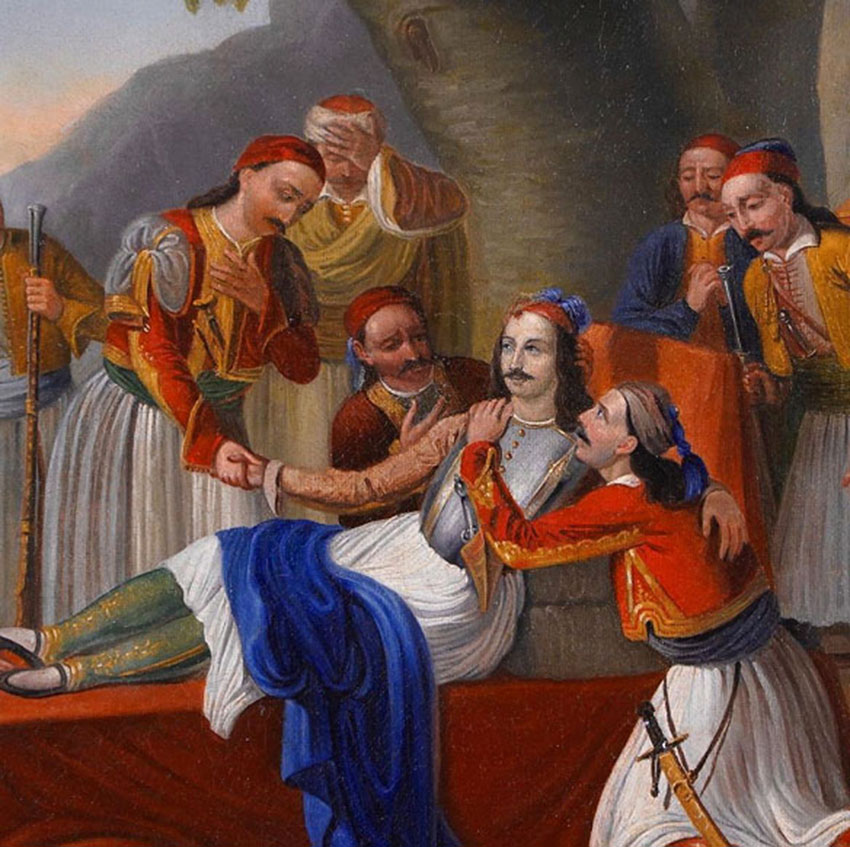
Georgios Karaiskos was a famous Greek military commander and a leader of the Greek War of Independence.
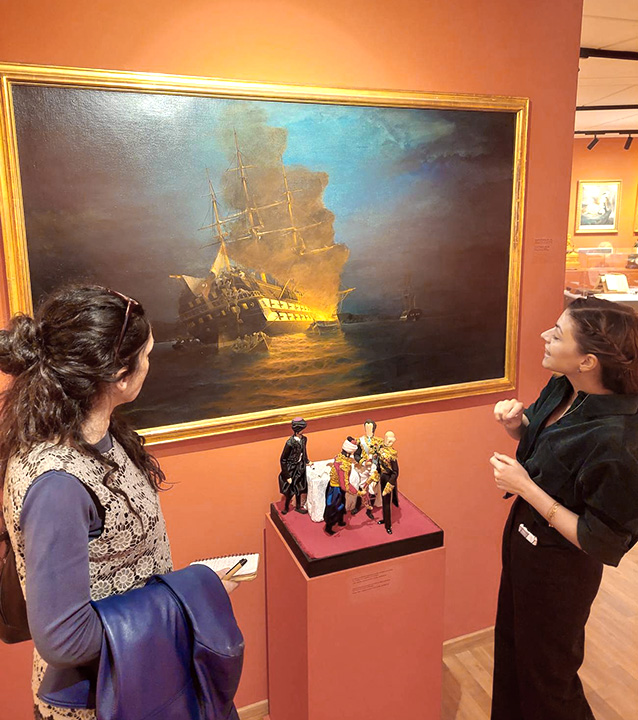
The 3rd floor, painted a moving, fiery orangey-red, houses the Greek Revolution theme. The displays include art showing battle scene enactments to Greek and foreign fighter representations, including a Delacroix and more. I was provided with an all-inclusive sense of understanding the struggle for Greek Independence, culminating from the themes of the other floors and enhanced by the Museum’s curators Electra and Orestis.
Kathy at the museum.
The museum highlights the crucial role the Philhellenes played in assisting the Greeks’ liberation, towards nationhood, in many ways. We see influences of mainly French and German, and also other thinkers and artists who espoused Ancient and Classical Greek ideals in motivating the Greek cause for freedom.
Paintings from the museum.
This included inspiring many from all parts of Europe and beyond – including the USA – to physically fight alongside the Greeks. A commemorative plaque on the wall of the museum has the names of 1600 Philhellenes who fought for the Revolution – apart from the famous Lord Byron.
A painting at the museum.
To Australians, the Greek Revolution or the struggle for Greek Independence – celebrated on March 25 – serves as an important continuation and reminder of a united struggle for democratic values and principles of liberty and self-determination for nation states. It upholds the ideals but also laid the ideological groundwork of respecting human freedom, and fighting against all forms of tyranny and oppression.