By Irene Tsianakas, Member of the Pammessinian Brotherhood of Papaflessas
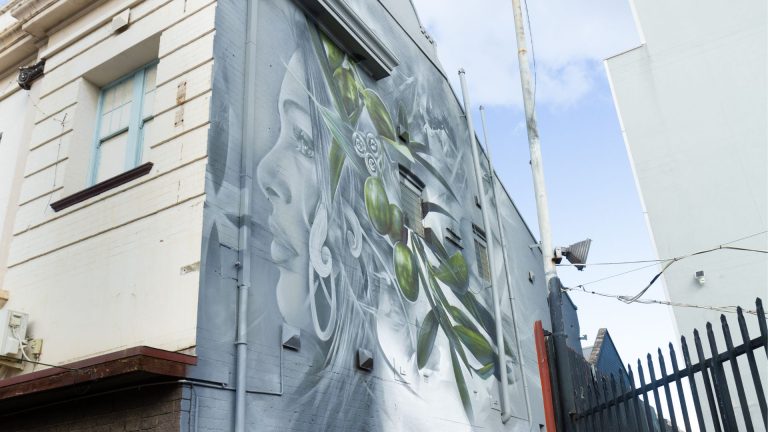
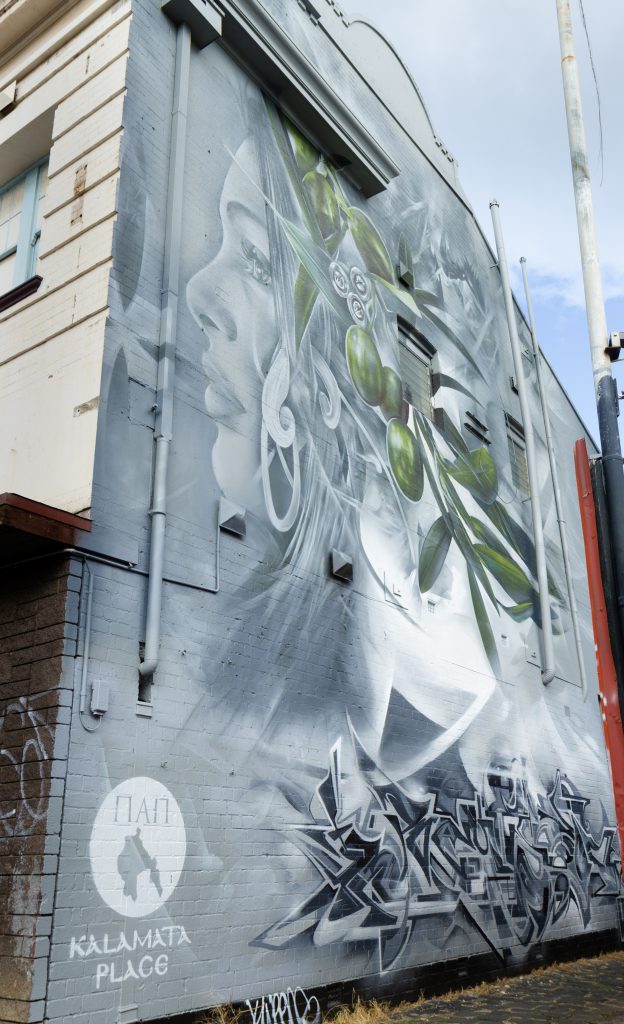
When RESIO, a popular Greek street artist, was tasked with the job of painting a mural for the side of 2 Gooch Street in Thornbury, Melbourne, he was excited. RESIO is Melbourne born and bred and knows well of the Greek migrant experience.
The most famous Greek city for Messenians is Kalamata and it produces the best olives in the world and so RESIO boasts “that it was a no brainer that the olive would be incorporated in the mural.”
His mural depicts a monochromatic greyscale portrait of a Greek Australian muse wearing an elegant olive wreath highlighted in deep green colour in her hair.
RESIO, of course, had to consult with locals to ascertain the breath of the mural. What he did learn was that the city of Darebin has one of the highest concentrations of Greek Australians in Victoria who are vibrant and active with a strong sense of community and pride. There are many Greek Australian businesses operating in Thornbury, including restaurants and cafes. These businesses offer a taste of Greek cuisine and culture and are a popular for both Greek Australians and non-Greek Australians alike.
However, the assimilation of Greek migrants into Australian society didn’t happen without language barriers and discrimination challenges. Greeks persisted through these obstacles and with their warm hospitality and generosity they shared their rich cultural traditions and customs with their neighbours. But their success is clearly attributed to their strong work ethic, and this can be seen through their significant contributions shaping the multicultural and diverse society that Australia is today.
So as RESIO recounts, the olive tree can be seen as a metaphor for the Greek people and their resilience in the face of adversity. The olive tree’s ability to survive for thousands of years in all conditions make is a symbol of endurance, strength and hope for all migrants.
Even the prominent Greek poet Kostis Palamas wrote in his most famous poem The Olive Tree that it has become a symbol of Greece and its identity, who despite their long suffering (alluding to the four-hundred-year occupation under Ottoman rule), endured and prospered. To quote the words of Palamas: “Let us all be the olive tree, firmly rooted in our land, let us all be… standing tall and proud.”
It is a powerful reminder of the value of solidarity, resilience and rootedness and encourages people from all walks of life to embrace these qualities as they work towards their goals and navigate their challenges in life.
The residents of Darebin have welcomed the artwork to Thornbury honouring decades of Greek contribution in the area. It is a beautiful gift for the residents, creating a feeling of belonging through street art.
RESIO is best known for painting the iconic Native American mural for Tonto Cafe in Canterbury, which has become such a landmark for the area. He has recently worked on the NGV project ‘The Temple of Boom.’
The Pammesinian Brotherhood ‘Papaflessas’ is a non-profit cultural and social organisation that focuses on servicing the local and greater Australian multicultural community via the promotion of Messenia, Greek and Australian initiatives in history, community, and social fun.
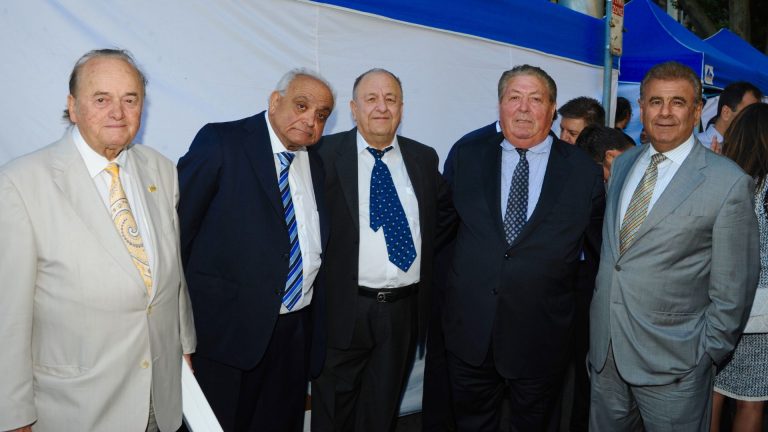
On Monday, April 3 this year at Victoria Government House in Melbourne, the Governor of Victoria, The Honourable Linda Dessau AC CVO awarded a royal distinction and decorated the businessman and benefactor of Hellenism, Andreas Georgiou Andrianopoulos.
This well-deserved recognition comes because of a long-term contribution to the community events of Arcadian Hellenism, but also as a just judgment of many years of contribution and beneficence to various activities of Hellenism, from literature and culture as well as to cancer research.
Andreas Andrianopoulos was judged by his nominators and assessors and their verdict was approved by the Government Council of Distinctions fairly because his contribution was not only generous, but also important and fundamental. His sponsorships and his moral and material benefaction contributed to the creation of new knowledge, the promotion of research, the implementation of learning programs, the publication of books, and the beautification of churches and buildings of the Greek Orthodox Church.
His business evolution undoubtedly impresses. From a taxi, Ririka, having as his motto, that “the wheel must always spin on the asphalt in order to prosper,” he increased their number. He then sold them to invest in petrol stations and then in a chain of petrol stations and later in large station centers with dozens of stores flanking his petrol business. His main skills and virtues have been his way of approaching. His social friendliness, his generosity and his ability to avoid, when he could, provoking reactions and competition.
It had its own principles, its own strategic goals. He was ambitious, curious, unruly, rebellious but also brilliantly inventive, creative, and hardworking. He wanted himself and his associates to possess skills that bring you closer to people, to possess abilities that enhance their insight and establish them in the consciousness of their fellow human beings as reliable individuals. All these were ingredients for success, qualities of a life with goals and expectations. This is how Andreas Andrianopoulos saw himself when he started building his family and establishing his businesses.
It was recorded in the past: The above values accompanied his life: a shepherd boy from Arcadia, who at the age of six tamed Mount Artemisio and its ravines. At the age of eight he guarded flocks of sheep and goats entrusted to him by his family. At thirteen, he ran away from home and fled as an immigrant to Tripoli. He slept on a mattress on the floor, accepted the first blanket to be covered from the harsh cold of the plateau by his comrades Pikerniotes who studied at the Tripoli High School and felt him as their brother.
At the age of fourteen he accepted the hospitality of the pastry chef’s boss who protected him in his home. In his shop, the famous patisserie “Krinos,” Andreas lit the cauldrons of the workshop even from dawn, wiped and helped the master in confectionery, set up an ear and learned from conversations at the tables of the patrons, who took their dessert and coffee, participated, listened, learned, lived the dream of the city.
At the age of 15, he acquired rights to the shop. He became an assistant pastry chef, won the love of his masters and was accepted by the strong and powerful of Tripoli, who gathered to enjoy their dessert with their families. As he came down at dawn from his house for work, he passed by the hotel the Semiramis, the place where King Paul and his entourage used to stay when he visited Arcadia. Andreas stood outside the hotel’s kitchen to breathe the aroma of onion with minced meat prepared for their guests’ breakfast by the cooks. Since he couldn’t afford to enjoy it.
At the age of 16, he was given responsibilities by his pastry shop bosses. He became the purchase manager; he bought the milk and eggs from the farmers who came down from the villages of the plateau; he was responsible for the quality of the milk and eggs, for the price at which he would buy the material. He was now a conductor who was waking him up. Then he met fraternal friends who were studying at the Tripoli Gymnasium from Poletta, Silimna, Pikerni, Palladio and the other villages. They played like children on snowy afternoons, climbed the paddock to watch the football match, and experienced moments of triumph when they could watch a black-and-white movie together.
At the age of 18, he had spread his wings because even Tripoli could no longer fit him. His bosses tried to keep him from leaving the cake shop, offering him gifts and honors, promising him positions.
In his twenties, he immigrated to Australia and found himself living with the Aborigines in the desert of Seduna, repairing train tracks then the trams of Melbourne, later the railways, and then the factories of General Motors with thousands of other Arcadians flocking from the 280 villages of Arcadia, and then came the first taxi. The second, the third and then an abandoned mechanical workshop, a car repair shop with an old petrol pump.
At the age of 25, he had married his wife, Sophia, he drove a beautiful Holden, Ririka, he had his taxis, he met the late Rev. Ierotheos Kourtessis, the photographers of the time, he contracted weddings, with white gloves, hat, suit and tie. He made friends, he laid the foundations of tomorrow.
In his thirties he began the march to triumph. He had set up there in Collingwood the hangout of Greek taxi drivers, who were waiting in queues to put cheap gasoline at a cheap price, to drink their Greek coffee, to discuss their hardships, to talk about the political situation in Greece, about the antagonisms in the Greek community, their ideological conflicts. It was called Andreas’hangout by some.
At forty came the triumph. He was the first to be inspired and introduced cheap petrol in Victoria. Queues of five hundred metres lined up outside the Elgin Street petrol station in Carlton, guarded even by police, the “golden corner” as he was later called. After the third and fourth service stations, then suddenly, the four became eight, and before he was fifty years old, he made ten of them.
All four of his boys (Giorgos, Christos, Nikos and Dimitris), who worked after school in the family business, came to his side. They danced in front of the pumps with other workers, filled cars with petrol, served customers, learned the job, learned its secrets. Eventually, they would all work together with their father. The weddings of his children came, and the relatives from Greece came to testify to his happiness, his social and economic recognition.
At the age of 60, he was the only Greek who had conquered the oil market, conversing with the powerful of the mighty multinational corporations. He took BP’s unnecessary and useless petrol stations and turned them into a source of power and wealth, transformed them, embellished them, gave the stations his own personal colour. And that was twenty, and then thirty, and then fifty, and sixty stations all over Melbourne and around its highways.
In his seventies, he set up petrol centres on the inwards and outwards of the major thoroughfares, department stores, with eight or ten shops each, with amenities and facilities, with laundries and rest rooms for drivers. Large portions of land around them were bought and the first plots were later cut.
For 87 years now, Andreas has been creating, building, dreaming, performing magnificent achievements. He bought the Semiramis Hotel in Tripoli, built a most impressive and votive castle in Pikerni, employed dozens of workers there for years.
In Australia, one success followed another. However, the meaning of life is not the accumulation of wealth. Aristotle said that a man who lives only to accumulate wealth and money should be considered a fool, and he valued him as the last in the social class. But when the man who earns money becomes a social sponsor, a patron of letters, a patron of research and technology, the arts, a custodian of learning and theater, then this rich man rises first in the social class.
Without sponsors there would have been no knowledge, neither the creation of culture and civilisation in Ancient Greece. Without sponsors there would be no Renaissance in Europe. This is how Andreas saw the meaning of his life. Dividends from profits return to humanity, through donations to cancer research foundations, universities, research programs, publications, church establishments. This is how his good and prudent companion Sophia, who left earthly life years ago, perceived her life. This is how his children and grandchildren, who have joined his businesses, live and perceive their business.
This is how the Hellenic Australian Chamber of Commerce and Industry saw the progress of this precious man and honored him three years ago with the Spyros Stamoulis Award for his valuable contribution as an Excellence in Business Conquest and Life Success. This is how he was recently honored with royal distinction. We are proud to share his friendship. His presence makes us all richer, more active, and aware citizens.
With the aging of the Greek Diaspora and the biological exodus of vulnerable Greek immigrants, the models of beneficence and giving, such as Zissis Dardalis, Andreas Andrianopoulos, Byron Theofanis, Tassos Revis, Spyros Stamoulis, Grigoris Kaias, Georgios Stamas, Nikos Theodosiadis (Thyssen) and so many other “Greek-born” benefactors, living and dead, are reference models and worthy models that should show the way of giving and contributing to progress. These models of giving, these individuals who, through the struggle initially for survival and then for their recognition, showed their love to Hellenism, distributing part of their wealth, must be remembered forever, as the Nurturers of the Nation.
Orthodox Easter evokes the closest feeling to holiness. Greek Easter (Pascha) heralds the arrival of spring, hope and the atmosphere around Greece is replete with a rejuvenated sense of joy, community and of course, festivity, celebrating the eternal victory of life over death, through experiencing death itself, just as reverberated in the Resurrection hymn: “thanato, thanaton patisas” (θανάτω, θάνατον πατήσας). Originally, Easter apparently was regarded as commemorating the Crucifixion, but the interpretation was shifted quite early to the Resurrection (Barnett, 1949).
The Holy Week (Megali Evdomada) or the Week of Pathoi (the series of the sufferings and sorrows, representing the days prior to Christ’s crucifixion by the Romans in 30 A.D.) is the week prior to the Holy Easter, starting from Palm Sunday (Kyriaki ton Vayon) up to the Holy Saturday. It marks the final week of Lent, the forty-day period of fasting, prayer and penitence, and of which each day is dedicated to Jesus’ Pathoi (sufferings and sorrows) until the climaxing point of His Resurrection, both in the religious and the folkloric life of the Greeks. Easter is both a holy day for the Christian church and a secular, folk holiday (Barnett, 1949).
The word Pascha itself means “transition, passage, passover, medium,” revoking the passage from death to life. The Easter festival was celebrated quite early in the history of Christianity and developed out of the Jewish Passover feast in which Christ was regarded by the Jewish Christians as the Paschal Lamb (Barnett, 1949). Disputes between Jewish and Gentile Christians about the proper date for celebrating the feast led to a decree issued by the Council of Nicaea in 325 A.D. on the method of dating Easter, which became, and remains, a movable feast: Easter falls on the first Sunday after the first full moon after March 21, the date of the vernal equinox (Barnett, 1949).
Holy Thursday in Epirus
Holy Thursday is the most melancholic day of the Holy Week. It is associated with the preparation and the re-enactment, in the liturgy, of the Crucifixion of Jesus Christ. The Greek Orthodox Church brings to life the events of the Last Supper and Jesus’ last day before he was sacrificed on the Cross, as he dined for the last time with his disciples (Kolasa-Sikiaridi, 2017). The Last Super took place in a house in Jerusalem, wherein Jesus washed the feet of each of his disciples – a slave’s task at the time, an action of humility and Jesus wanted to teach his disciples how to be humble through his own example (Kolasa-Sikiaridi, 2017). Upon the departure of Judas from the dining table, Jesus handed the Sacrament of the Eucharist to his disciples (Kolasa-Sikiaridi, 2017). The events of the trial and the ascension to Golgotha, the hill of His execution, carry significant symbolism for the believers and are the focal points of Holy Thursday.
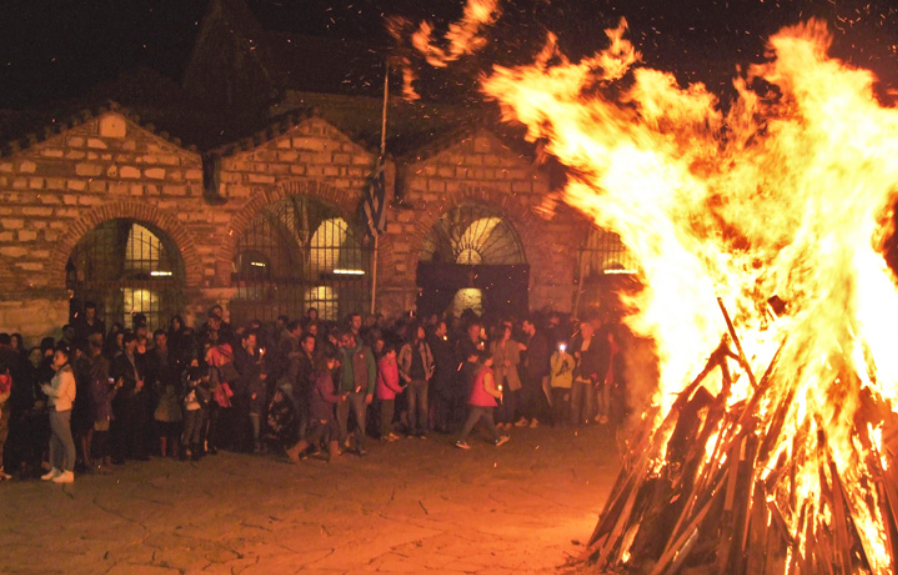
The custom of fire is re-enacted every year in Arta. The flame symbolises the fire that was burning outside the Praetorium as the sentence of the Roman prefect of Judaea was in progress (the toc, 2022). Early in the morning, youths of the St Theodora parish collect woods for the fire that lights in the church courtyard following the Crucifixion holy service. In the past, the wood for the fire was collected from the Arachthos riverbanks. The fire remains aflare for long hours, accompanying the host of believers who revive the rite every year.
Holy Thursday in Epirus
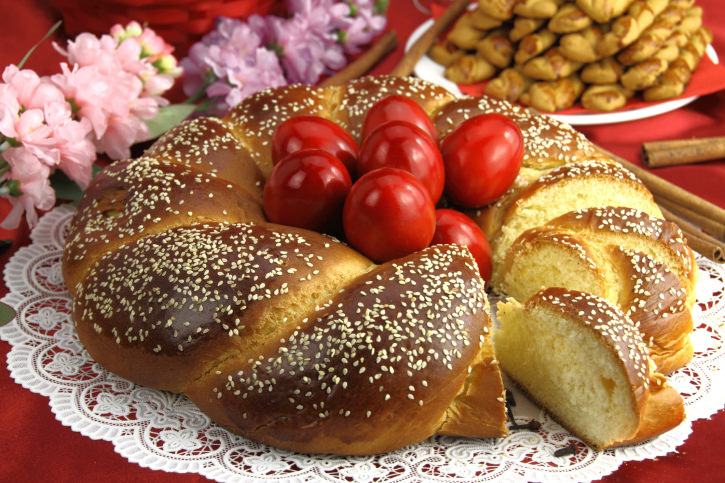
On the same holy day, in secular life though, the spiritual preparation for the Resurrection is underway across the country: Greek households bake the tsourekia (sweet, traditional bread) that date back to the Byzantine days. The delicious aroma of baking tsourekia floats from the Greek flats and usually there is a bit of panic in the market to get equipped with all the ingredients. Tsourekia are also bought in the bakeries. There is gloom and despondency if the tsoureki doesn’t rise enough and turns out heavy and ingestible. Recipes are exchanged and secret ingredients are selectively revealed, promising an unfailing culinary outcome.
Sometimes, an egg is embedded in the tsoureki. The egg occupies, after all, an important position in the customs and beliefs of many nations: by its very nature it is rich in symbolism, “a capsule containing the germ of life” (Newall, 1984). In ancient times, eggs were buried with the dead and drawn on gravestones and only later did they become characteristic symbols of Easter: the church did not oppose it, although customs connected to the egg belonged to pre-Christian tradition in many countries, as the egg provided a fresh symbol of the Resurrection and the transformation of death into life.
Holy Friday in the Cycladic islands
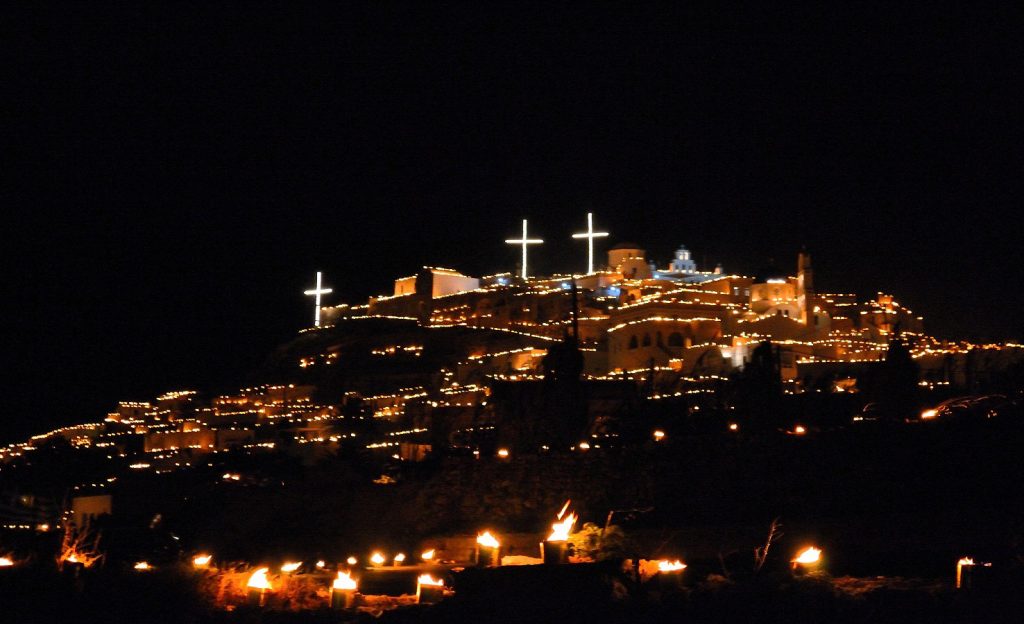
In Santorini, in Pyrgos Kallistis, one of the five castle cities of the island perched atop the highest hill, Holy Friday assumes a suggestive imagery. Children line about 2000 flaming tin cans (tenekedakia) on every wall and rim of every roof. The funeral procession of Epitaph is invested in a unique spirit of reverence (Owen, 2022).
Holy Friday in Cycladic islands
In Syros, the Catholic and the Orthodox Easter is celebrated together, offering a unique experience (HuffPost, 2020), under a special permission of the Pope, as a symbol of brotherhood and unity. On Holy Friday, the Epitaphs of the Catholic community descend from St George’s church, and in Hermoupolis, the Epitaphs depart from the Evangelical church to meet at the Miaoulis Square. In front of the stairs of the city hall, believers mourn and chant, accompanied by the Municipality’s Philharmonic Orchestra and Saint Nicholas’ choir. After all, most Easter customs and rites are shared for the Catholics and the Orthodox in Syros (HuffPost, 2020).
Holy Saturday in Corfu
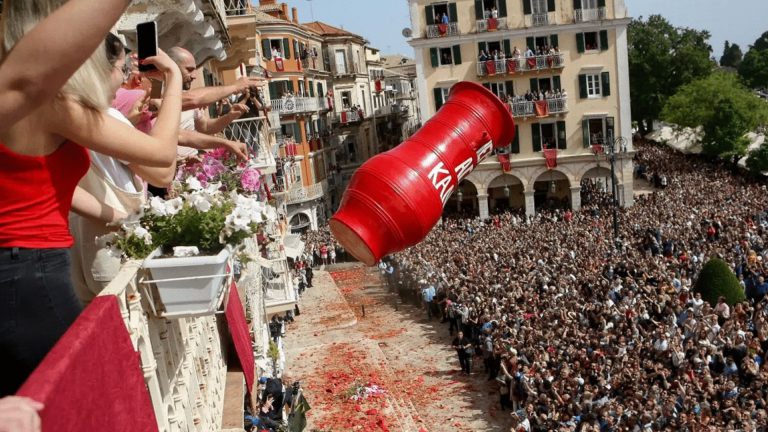
Pascha in Corfu stands out in terms of grandiosity, pomposity and its unique acoustic rite of Mpotides, from every other island of the Eptanisa.
The influence of Western European civilisation is pronounced even in this purely Orthodox occasion (Kontarinis, 2016). Kontarinis (2016) informs that, in Corfu, Holy Saturday commences with an artificial earthquake, a tradition of the Panayia of Ksenon, assimilating the earthquake as mentioned in the Gospel. At 11.00 in the morning, following the service in the Cathedral, the bells start ringing joyously and it is time for the locals to start dropping, from their embellished balconies and windows, the Mpotides, the huge clay jugs, painted red and decorated with red ribbons, characteristic colour of the island of Corfu. The jugs are filled with water with the intent to produce ever more clash and clatter (Kontarinis, 2016).
Easter sweet bread with red eggs
Two concepts underlie the origins of the acoustic ritual: the first explains it as a representation of the evangelical chorale, according to which: “Lord, Resurrect me, so as to smatter them as if they were clay earthenware.” The second, says Kontarinis (2016), is a venetian influence: the Venetians would drop their old cookware in order to make room for the new ones, brought by the new year.
Tradition acts as the glue that coheres society. Even though remembrance and homage to the ancestry can be paid in nuanced, imperceptible ways in everyday life, holy days are landmarks of memory that bring the past to the lived experience of today, thus formulating the unique identity of each generation. Memory structures the self and it is activated in a social setting, observes Halbwachs (1992). It is impossible for individuals to remember in any coherent and persistent fashion outside their group contexts.
References
Barnett, J. (1949). The Easter Festival-A Study in Cultural Change. American Sociological Review, Feb. 1949, Vol. 14, No. 1, p.p. 62-70. Published by: American Sociological Association. URL: https://www.jstor.org/stable/2086447.
Eichler, L. (1925). The Customs of Mankind. William Heineman, Ltd; First Edition (January 1, 1925).
Κονταρίνης, Δ. (2016). Μεγάλη Εβδομάδα στην Κέρκυρα Παρέα με τους «Μπότηδες». Easter 2016-PASXA. Queens College Special Collections and Archives. Contributed by: Aposotolos Zoupaniotis.
Halbwachs, M. (1992). On Collective Memory. Transl/ed. LA. Coser Chicago: University of Chicago Press.
Newall, V. (1984). Easter Eggs: Symbols of Life and Renewal. Folklore, 1984, Vol. 95. No. 1 (1984). Pp. 21-29 Taylor and Francis, Ltd on Behalf of Folklore Enterprises. Ltd. URL: www. jstor.org/stable/1259756.
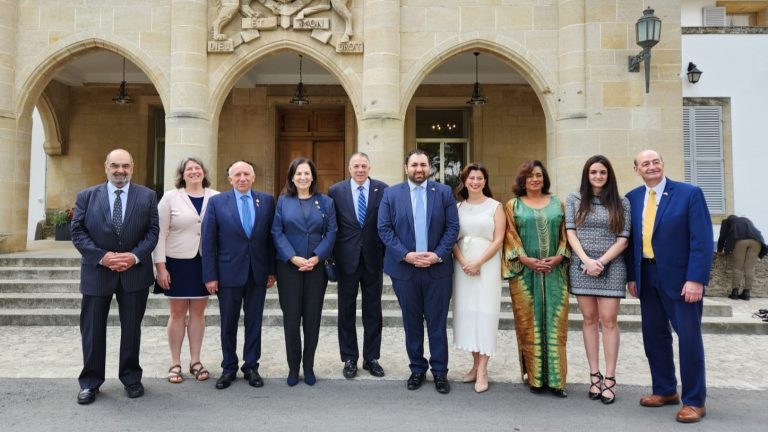
During the meeting with President Christodoulides, a number of issues were discussed including the importance of fostering strong relationships between Greece and member countries of PADEE/WHIA.
Earlier today I had the honor to meet the President of the Republic of Cyprus, HE Nikos @Christodulides, when our delegation of @PADEEWHIA Board Members paid him a visit at the Presidential Palace.
We discussed a range of issues, including the importance of fostering strong… pic.twitter.com/4pksFONQpr
— Hon. Esther M Passaris (@EstherPassaris) April 7, 2023
“We want to know what we can do to help Cyprus from abroad and we want open communication and that is what we hope to achieve after this meeting,” Ms Michaels said after the meeting.
“It is very important for expatriate politicians to have a relationship with Cypriots and the Cypriot government.”
Greek female basketballer, Elena Tsineke, was drafted by the Washington Mystics today and will now play in the WNBA – the top women’s basketball league in the world.
The Greek guard completed the season as the top scorer for the Bulls and in the American Athletic Conference (AAC), averaging 17.9 points per game.
Tsineke recorded double figures in 31 of the 33 games she played and logged 20 points in her collegiate finale against South Carolina on March 19 during the Women’s March Madness.
Tsineke will now begin her professional career with her first game of the 2023 WNBA Season on May 19.
“I am so grateful for this opportunity,” Tsineke said. “(It’s) a dream come true.”
Australian Community Media (ACM) is preparing to sell up to seven mastheads as the newspaper business is dealing with rising print costs and a decline in the advertising market, The Sydney Morning Herald has reported.
In an email to staff seen by the SMH, ACM Managing Director Tony Kendall said the business was in the process of selling seven titles in the NSW central-west and south-west regions.
Papers in the region include The Forbes Advocate, Parkes Champion-Post, The Grenfell Record, Cowra Guardian, Boorowa News, Canowindra News and The Young Witness.
Kendall also told staff he planned to shut down Queensland community titles the Jimboomba Times and Redlands City Bulletin and four Western Australian titles.
ACM was bought by Antony Catalano, with the backing of billionaire Alex Waislitz, in 2018 for $115 million. It publishes titles such as The Canberra Times, The Newcastle Herald and The Land, and today runs about 100 publications.
The initial sale involved 170 newspaper titles and a large amount of property in regional and capital cities. The company has reduced its property portfolio from 26 print plants and buildings across the country to just six.
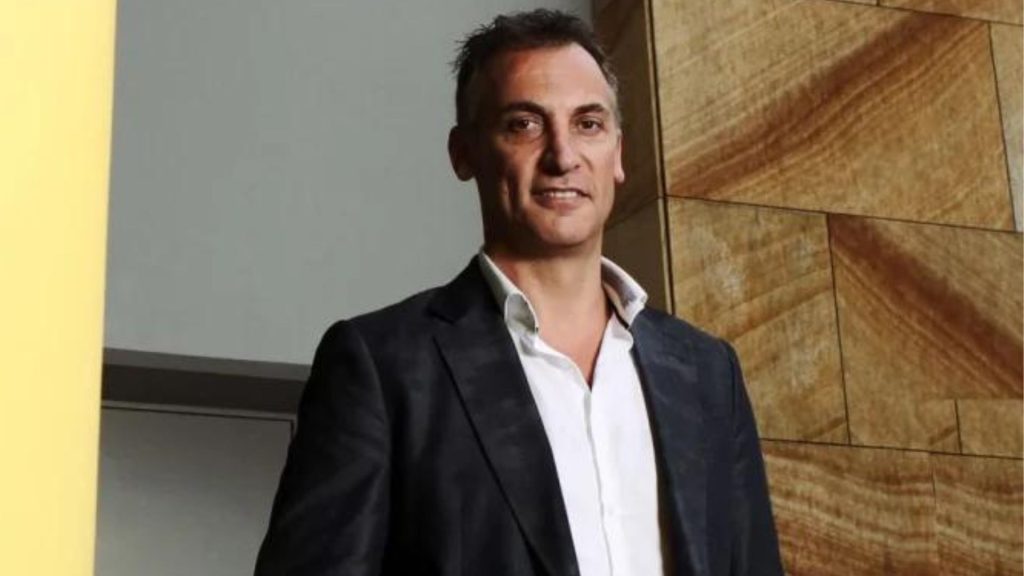
Antony Catalano. Photo: Peter Braig
The most recent closures, which will be completed by April 30, come after increased financial pressure for regional media companies, which struggle to create an income from advertisers and subscribers.
ACM was bailed out by the previous federal government to the tune of $10.3 million due to their difficulties during COVID-19. In October 2022, the Federal Government also provided a $15 million lifeline for over 200 regional and local independent newspaper publishers across the country.
Mr Catalano said the decision to sell some of the ACM mastheads comes thanks to a “significant drop” in government spend.
“Regrettably some smaller publications were at best break even before we bought the business, and the reality of an 80 percent increase in paper costs and a significant drop in government spend made them completely unsustainable in print form,” Mr Catalano told the SMH.
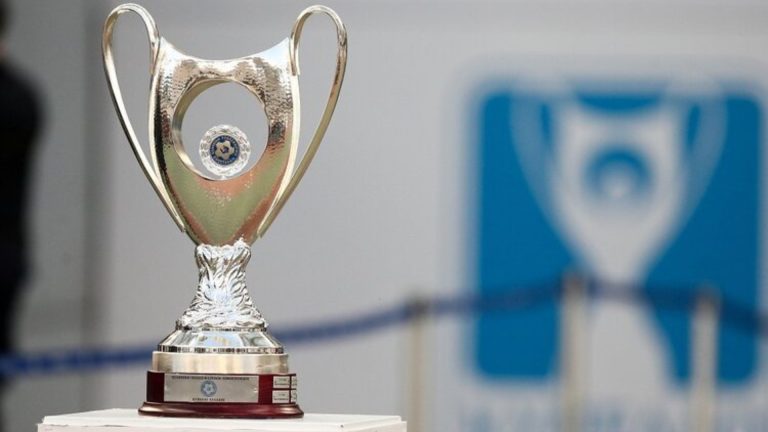
The Hellenic Football Federation (EPO) has announced that the Greek Cup final is scheduled to take place at the GSP Stadium in Nicosia, Cyprus on May 20.
This comes despite a spokesman for the Cyprus Police expressing they have not received any formal notification of such an arrangement.
“We have not received any official information regarding this event, aside from media reports,” Christos Andreou said in an interview with Super Sport FM 104.0.
“We will need to analyse a lot of data, such as whether or not fans will attend and how many, before making any decisions or taking any positions on the matter.”
The GSP Stadium has a capacity of 22,800 seats and is used as home ground by APOEL and Omonia.
It was recently reported by The Greek Herald that the EPO had submitted a request to the Australian Football Federation to host the Greek Cup final in Australia this May. The president of EPO, Takis Baltakos, had sent a formal document to Chris Nikos, his counterpart in Oceania.
Greece’s government has introduced urgent legislation to ban a far-right political party from participating in next month’s general election, Ekathimerini has reported.
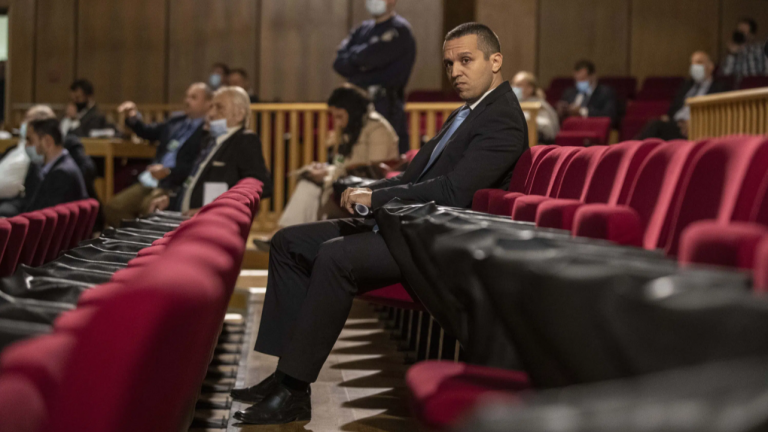
The Greeks-National Party was founded two years ago by a jailed former lawmaker of the extreme right Golden Dawn party, Ilias Kasidiaris.
Kasidiaris found a way to bypass the ban, stepping down from leading the party and allowing a new leader to take his place.
The Greek government has since submitted a new amendment to broaden the scope of the ban, and is calling for a plenary session of the Supreme Court to consider it.
Greece’s government has introduced urgent legislation to ban a far-right political party from participating in next month’s general election.
Earlier, a vice president at the Supreme Court resigned in a legal dispute over the attempt by the government to ban the party.
Judge Christos Tzanerikos, one of 10 serving vice presidents at the court, expressed publicly that he is against the new amendment, describing it as government interference in the judiciary.
It is believed that the participation of Kasidiaris’ party in the elections will play a crucial role, with polls showing a voter support of about 3 percent, which would be enough for it to win entry to the Greek parliament.
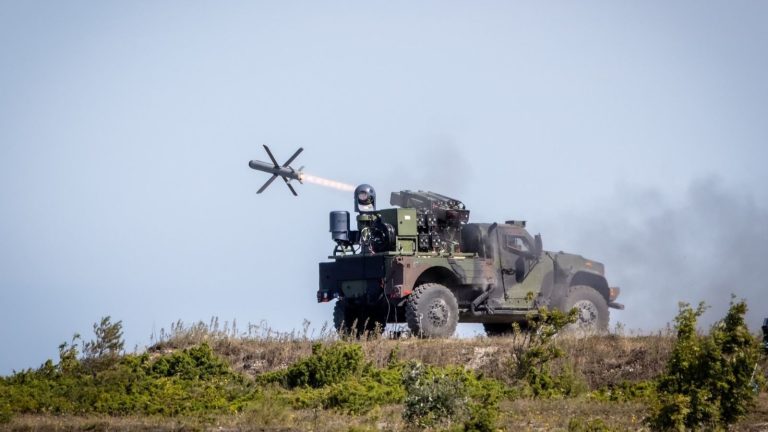
Israel’s Defence Ministry announced on Monday the agreement to sell Spike anti-tank missiles to Greece in a deal valued at around $400 million, according to Ekathimerini.
The Spike is a guided anti-tank missile used by many European Union and NATO countries produced by Israeli state-owned defence contractor Rafael.
CEO of Rafael, Yoav Har-Even, said the Spike missiles “will strengthen the Greek army’s portfolio of operational tools and we expect further expansion through strategic collaborations in the near future.”
Israel’s Defence Minister, Yoav Gallad, added that the agreement reinforces ties between the countries.
A government-to-government defense exports agreement was signed between the Israel Ministry of Defense and the Hellenic Ministry of National Defence to acquire Rafael’s “Spike” missiles. The agreement was led by the IMoD's SIBAT and is valued at approximately 370 million Euros. pic.twitter.com/694lWwu6Xx
Last week Israel and Rafael said they would provide the advanced air-defense system David’s Sling to Finland, after it officially joined the North Atlantic Treaty Organization on April 4.
Finland will receive the defence system designed to intercept ballistic and cruise missiles in a $345 million deal. It still requires approval from the United States, which is involved in the system’s development.
On July 25 (Australia) and August 17 (UK) this year, the third book in Peter Papathanasiou’s outback noir series is set to be released. Titled The Pit, the book sees Detective Sergeant George Manolis on leave and Senior Constable Sparrow is left to investigate a murder allegedly committed by a 65-year-old man 30 years earlier. There’s plenty of twists and turns along the way.
In an interview with The Greek Herald ahead of the book’s release, Peter – who was born in Florina in 1974 and now lives in Canberra – speaks about the first two books in his outback noir series, The Invisible and The Stoning, and the influence of his Greek heritage.
How did you create the main character of your series – Detective Sergeant George Manolis?
Manolis is loosely based on my brothers, but he also has many of my own characteristics. I think that combining a number of real people into one fictional creation makes for a more interesting character.
Do you want to reconnect to your Greek background via the main character in your series?
I wanted to take Manolis on a different kind of adventure in the second instalment and one that was true to his background as a Greek Australian. Because the first book was set in Australia – the country with which I’m most familiar – it only made sense to ground the second one in Greece, which is where I was born and the culture and language with which I grew up.
Peter in Greece.
How would you describe The Invisible?
Detective Sergeant George Manolis returns to his ancestral home in northern Greece to help locate a family friend who has gone missing. This individual is described as an ‘invisible’ in Greece – someone who lives off the grid, without any official paperwork, no drivers licence or phone records or lease or even a library card.
Manolis has to adapt to the old world in order to locate a man who, for all intentions and purposes, doesn’t want to (ever) be found.
Why was Northern Greece the chosen setting?
Partly because of my own background, being born in Florina, and also partly because it is an area of Greece that is not largely seen by tourists, so it was an opportunity to reveal it new readers.
Peter with family in Prespes.
How much research did you do on the area of Prespes?
The Prespes is an area with which I’m very familiar, having visited many times. It is such an interesting region due to its people, history, landscape, wildlife, and border connections with Albania and North Macedonia.
A reviewer described The Invisible as ‘very Greek’ and another reviewer mentioned she learned a lot about Greece. How do you feel about both comments?
I think the reference as ‘very Greek’ reflected the pace of the book as something more relaxed and atmospheric. I always try to help people learn something new in each of my books; given how unfamiliar people are with Northern Greece, I imagine they would certainly learn a lot about it after reading.
How do you find inspiration for crime novels?
I’m often inspired by real world events. For example, the missing man in The Invisible is inspired by a good friend of my brothers in Northern Greece, who lives without any official paperwork.
What do you like about Manolis that you think endears him to readers?
Readers tend to like Manolis because he’s a bit of an everyman trying to fight the good fight in an overwhelming world where bad things can happen.