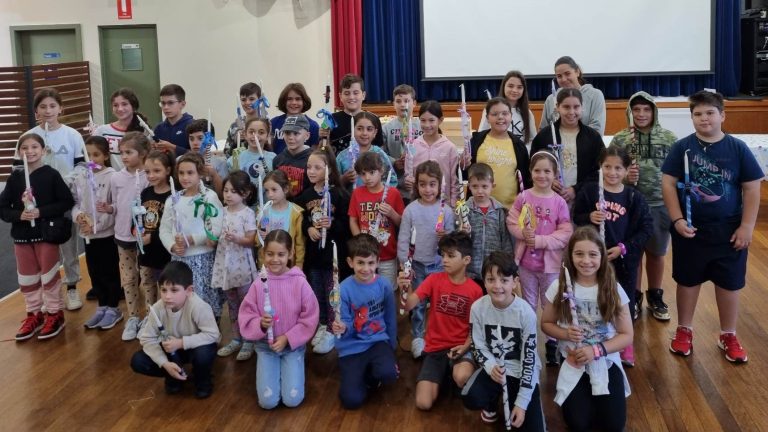
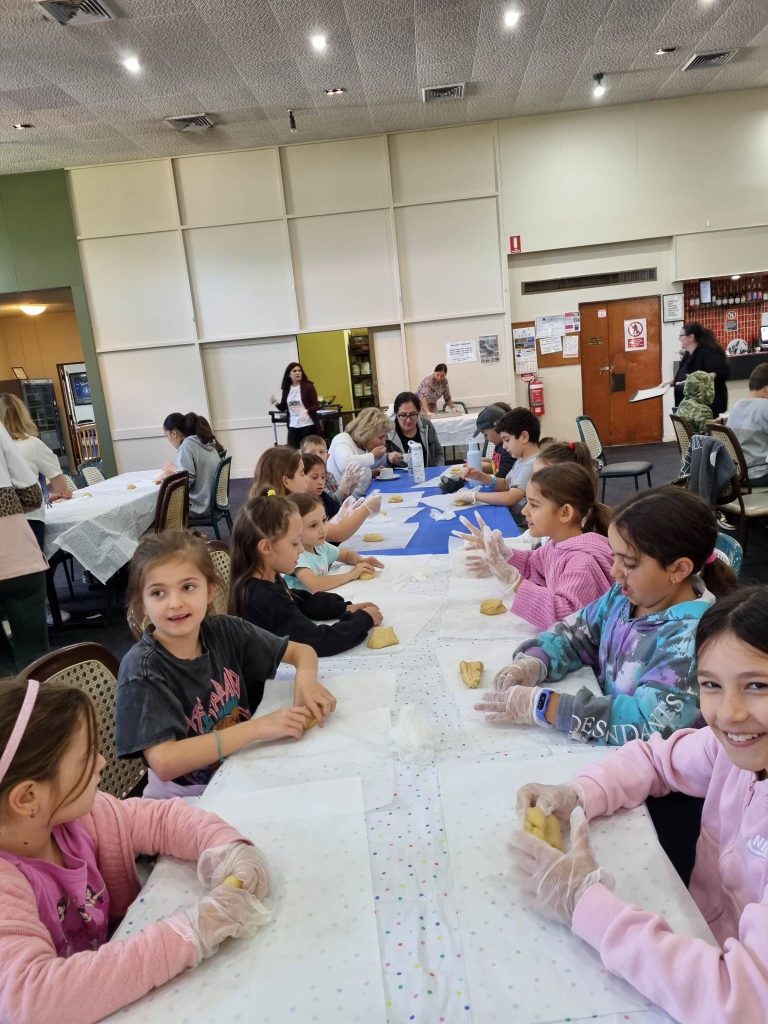
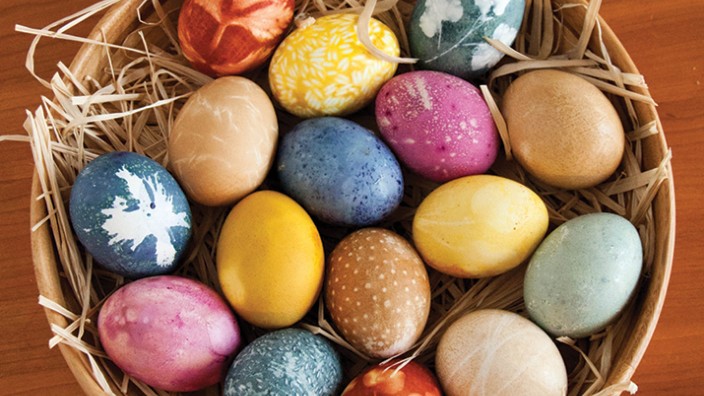
The Greek Orthodox Community of NSW (GOCNSW) Easter school holiday program was a huge hit with students this week. Over 80 students took part in the program on Tuesday and Wednesday.
The program started off with a slide show and video of Greek Orthodox Easter traditions, including the significance of Holy Week, what food is made leading up to Easter, the significance of Lent and red eggs.
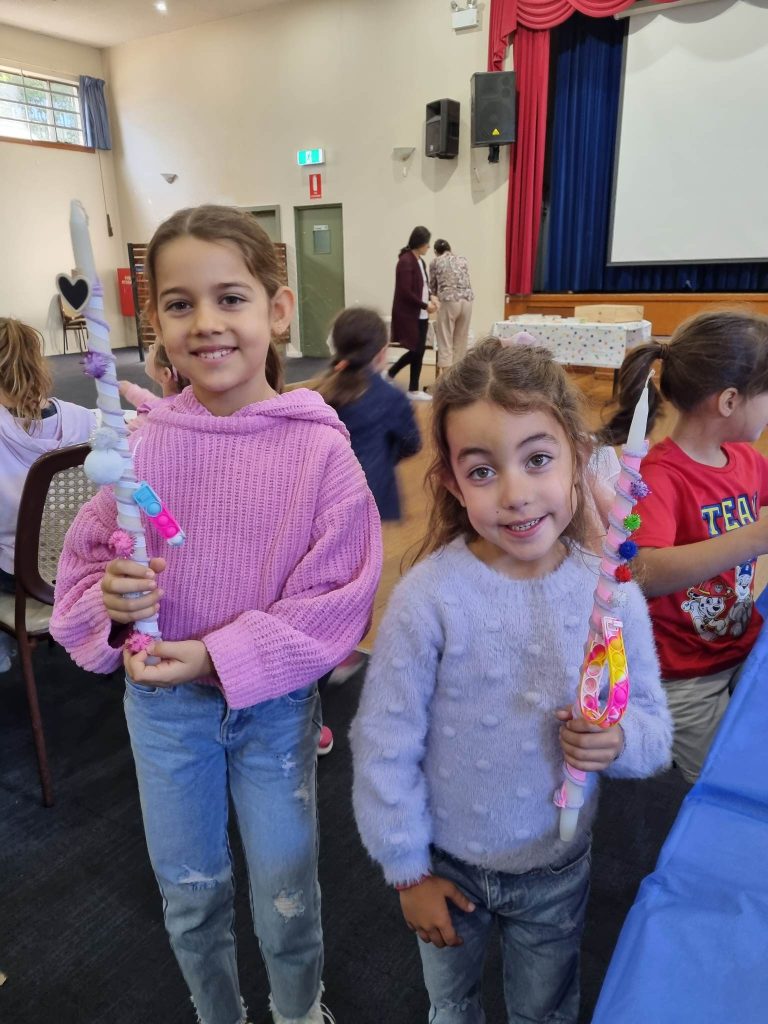
Making lambathes.
Mageritsa, the soup people eat at midnight on Easter Saturday, was also discussed during the program. All the kids said they don’t eat it.
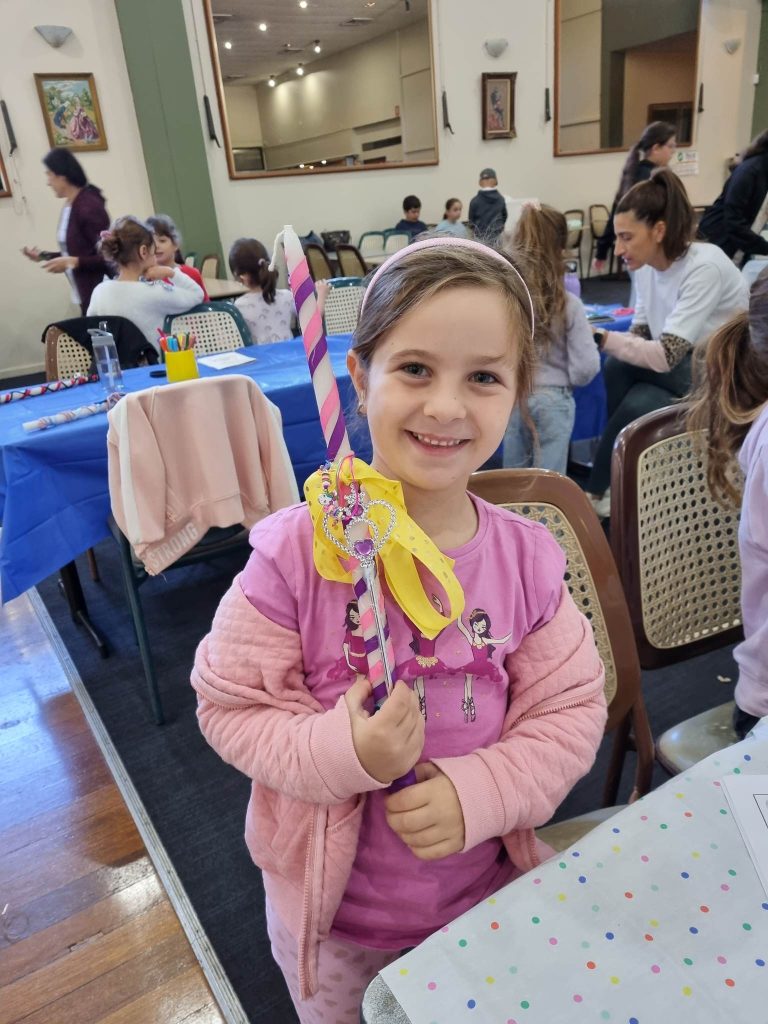
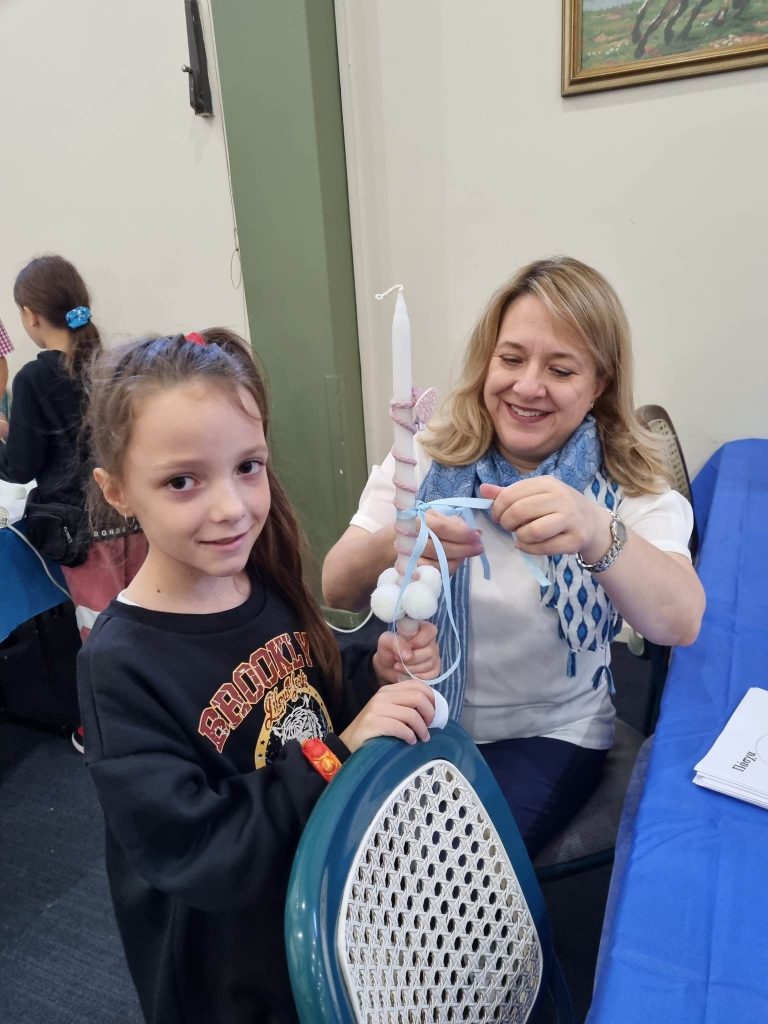
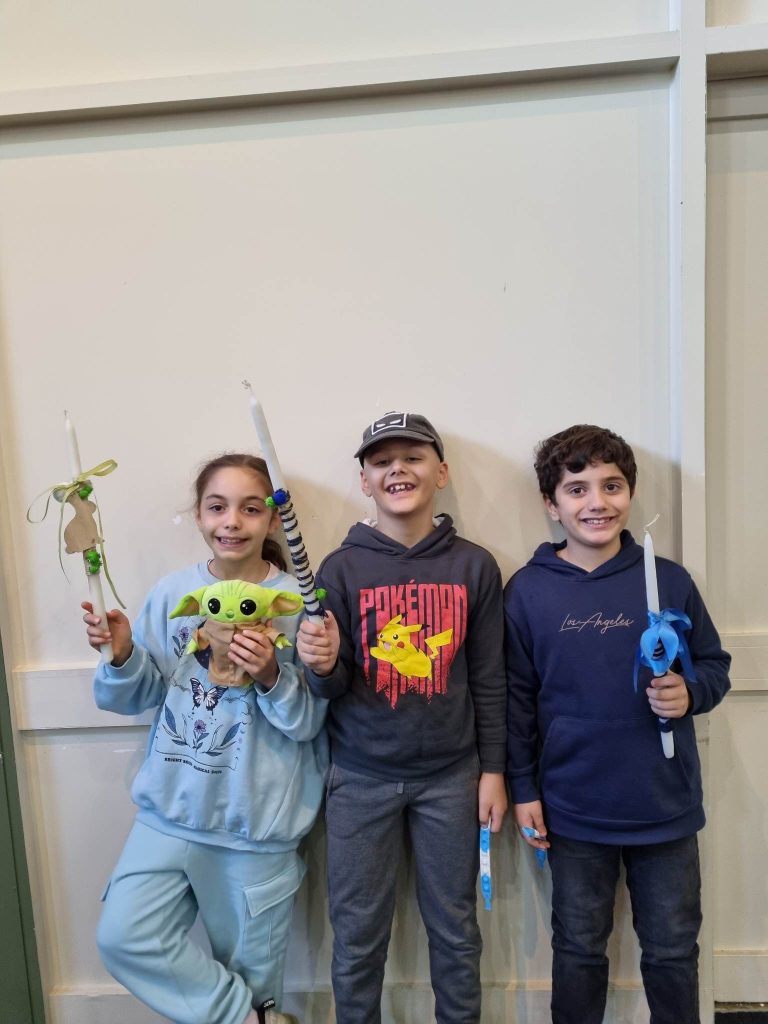
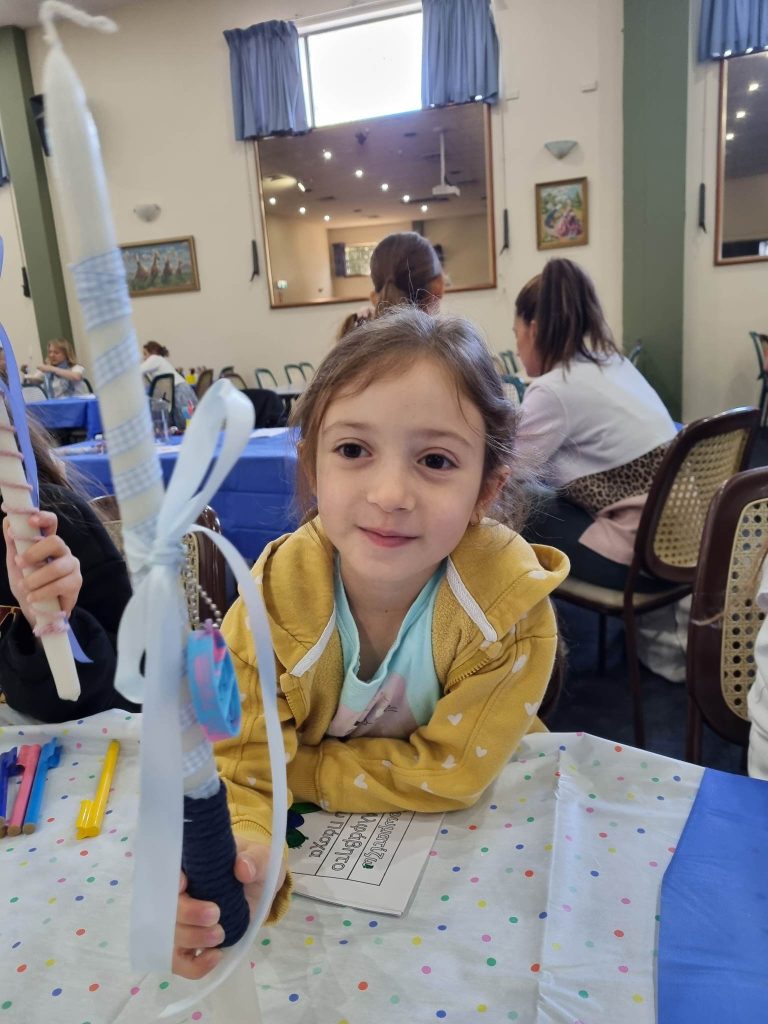
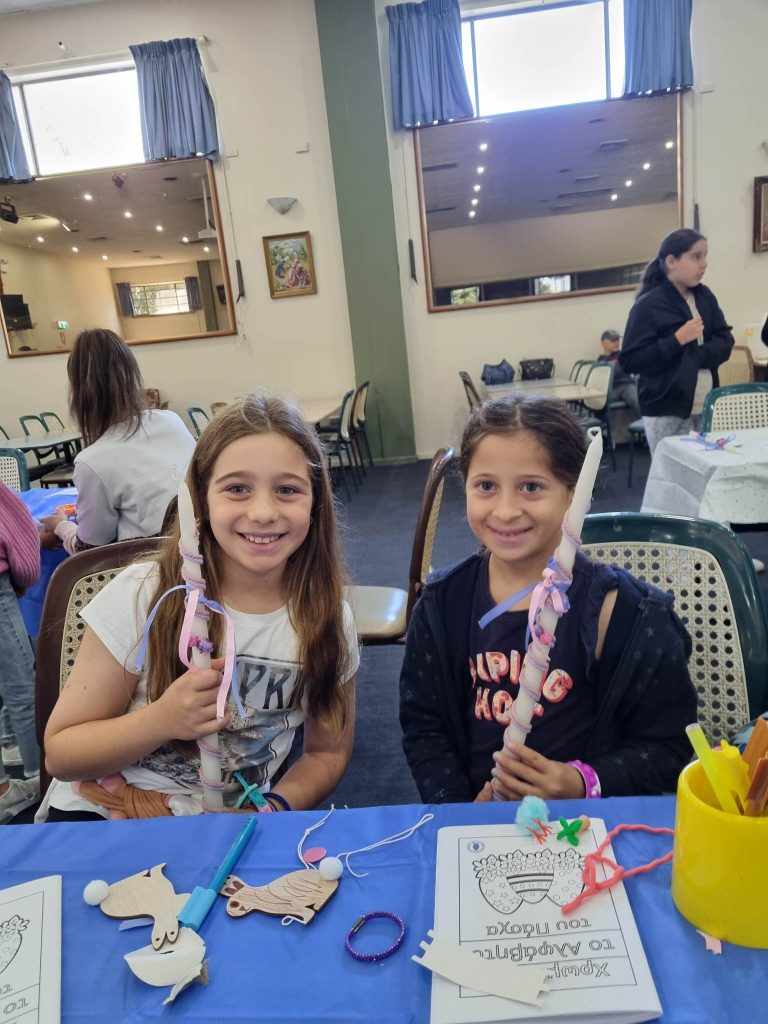
From there, the students, with the help of teachers and parents, got creative and made their own lambathes with colourful ribbons, strings and toys.
More lambathes.
All the students were proud of their beautiful lambathes, which they will proudly use at church on Holy Saturday.
Making lambathes.
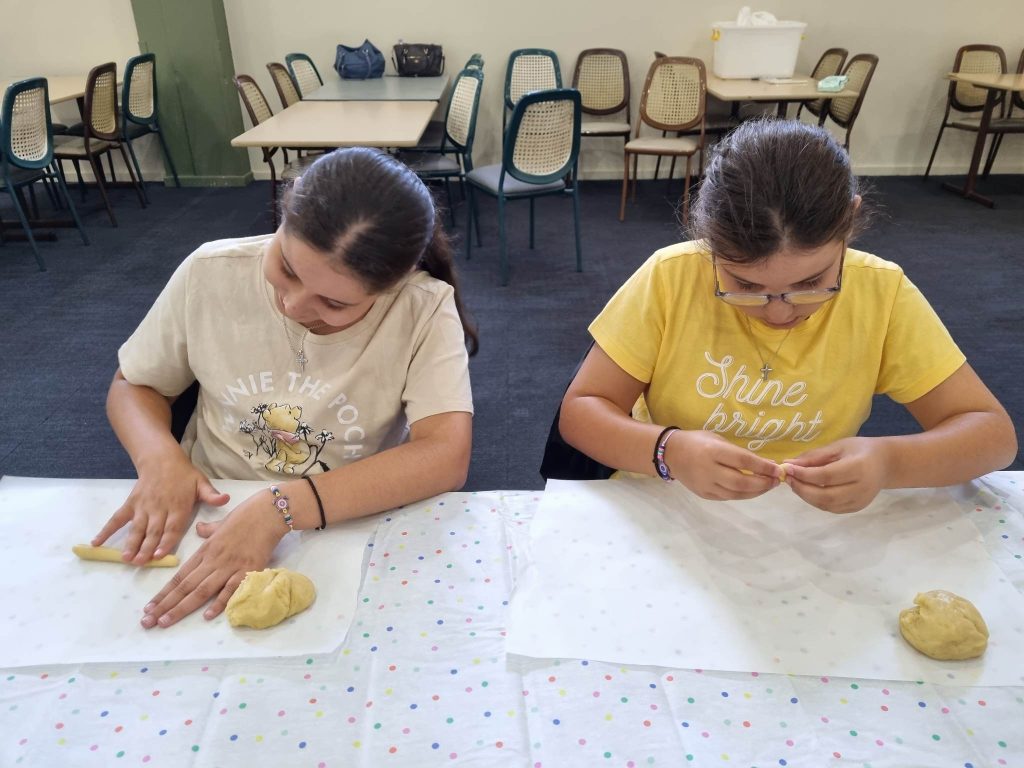
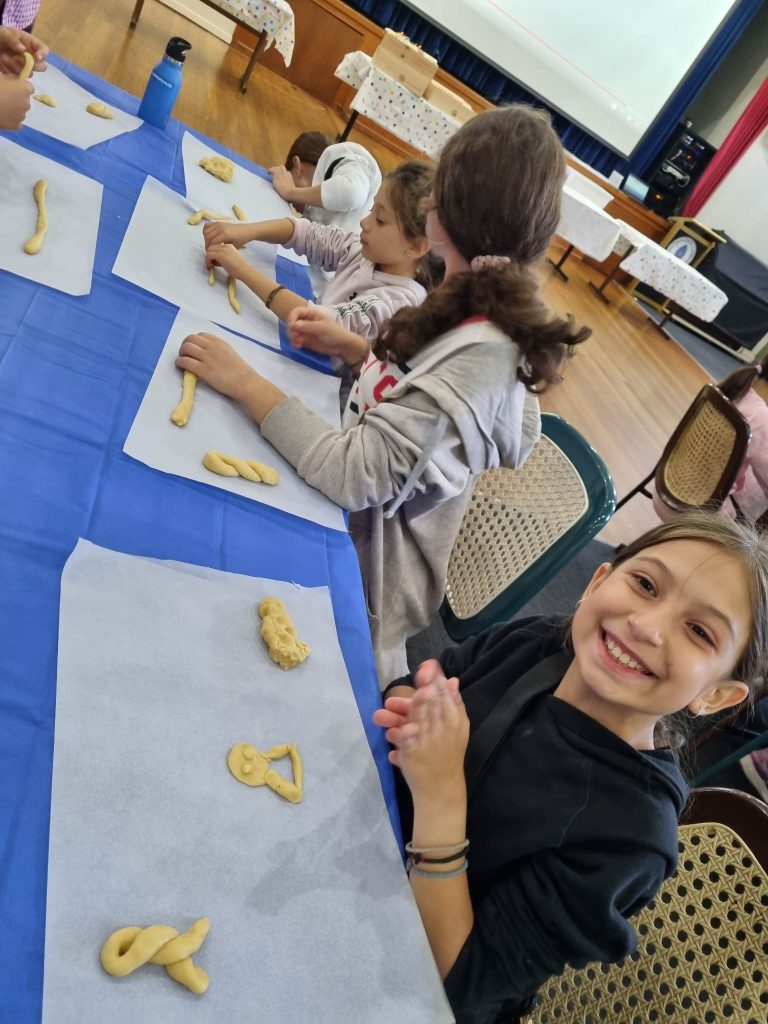
Students then got a chance to make their own koulourakia. They were shown a few creations and got very creative, making different designs.
Making koulourakia.More koulourakia.
Students had lunch and then some dancing to be ready for the Easter Sunday celebration, with dance teacher Paroula Thurban.
The GOCNSW runs Greek School holiday programs every school holidays. Please go to their Facebook page for updates about the next holiday program.
The official program of events for the Battle of Crete commemorations in Sydney, New South Wales has been released. Starting in May, events include wreath laying ceremonies, an annual ball and a documentary screening on the late 105-year-old ANZAC Alf Carpenter.
Here is the full program in English:
Friday, May 12 at 6.30pm – Battle of Crete Cocktail Party
The Cretan Association of Sydney & NSW will hold its commemorative cocktail party at the Auditorium of the Cyprus Community Club, Level 1, 58/76 Stanmore Road, Stanmore. On the night, the guest of honour will be the Chief of Staff of the Hellenic National Defence General Staff, Lieutenant General Georgios Kiriakou, along with several other dignitaries and guests. Please register for this event via info@cretannsw.com.au.
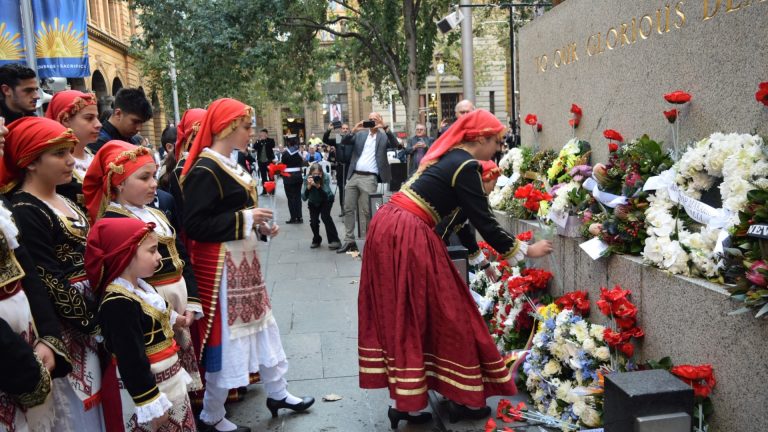
Saturday, May 13 at 1.45pm – Battle of Crete Cenotaph Ceremony
The Annual Wreath Laying Ceremony will be held at the Martin Place Cenotaph Monument in Sydney.
Saturday, May 13 at 6.30pm – Battle of Crete Annual Ball
The Cretan Association of Sydney & NSW will be holding its Annual Ball at 6.30pm at Marrickville Town Hall (303 Marrickville Road, Marrickville). The night will feature performances from all of the Cretan Association’s dancing groups and musicians from Crete. People will be entertained on the night by Antonis Kourakis (Lyra) supported by Anastasis Bouchlakis (lute) and Anastasios Georgakakis (lute).
Tickets are $95 for adults and $55 for children, inclusive of food, entertainment, beer, wine and soft drinks. Tickets can be purchased at www.trybooking.com/CHGST.
Sunday, May 14 at 10.45am – Battle of Crete Anglican Church Service
A Church Service will be held at the Garrison Holy Trinity Anglican Church, 60 Lower Fort Street, Millers Point.
Monday, May 15 at 6.30pm – Battle of Crete Documentary Screening
The Cretan Association of Sydney & NSW will be holding a documentary screening at Palace Norton Street Cinemas, 99 Norton St, Leichhardt. The interesting documentary is called Second Generation ANZAC – The Story of Alf Carpenter.
Tuesday, May 16 at 6pm – Talk by Glenda Humes, Daughter of Captain Reginald Saunders
The Australian Archaeological Institute at Athens will be holding a talk at The University of Sydney, Camperdown, Auditorium 1, Eastern Avenue. The talk will be given by Glenda Humes about the story and life of her father Captain Reginald Saunders who was the first Aboriginal Australian to be commissioned as an officer in the Australian Army.
Captain Reg Saunders fought in the Battle of Crete with the 2/7 battalion and was held refuge by the Zagarachis family for 11 months. Admission is free but bookings are essential. Tickets can be reserved at https://bit.ly/3KSrfdD or by contacting the Australian Archaeological Institute at Athens.
Sunday, May 21 at 9am – Battle of Crete Greek Orthodox Church Service
A Church Service and Doxology will be held at the Greek Orthodox Cathedral of the Annunciation of Our Lady, 242 Cleveland Street, Redfern, to commemorate the anniversary of the Battle of Crete.
For more details please email info@cretannsw.com.au.
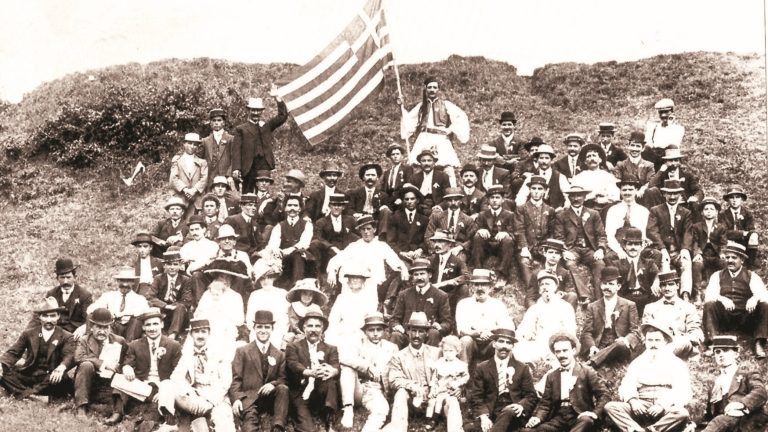
Have you ever wondered how the first Cretan arrived in Australia? Who were those brave people who began a journey into the unknown with no supplies, but with a tenacity for life?
Georgios Dokos arrived in Melbourne in 1848 searching for gold and so the history of the Cretan people in Australia began at that same moment. 175 years later we are telling this story.
In the documentary film, On the Other Side of the World,the history of the Cretans in Australia will be showcased.
The documentary is based to a large degree on the book that was published in 2009 by author and historian, Socrates Tsourdalakis, titled The Cretans of Oceania from the 19th Century. The documentary will also include new research from his second book titled The Cretan Pioneers of Australia that will be published in 2023.
Andriani Aggelidaki, a well-known senior journalist from Crete, travels to Australia searching for the Cretan story. She questions, she thinks, she searches. She meets Cretans who keep Crete alive. An entire Crete on the other side of the world. So in the documentary, the beginning of the history of the Cretans in Australia comes to light.
Andriani meets academics, historians, researchers in Greece and Australia. First, second and third generation Cretans, but also representatives of Crete who keep the “dialogue” with expatriates alive. These are the protagonists of the documentary.
Through human stories, as well as historical, in-depth testimonies, the documentary describe the great history of the migration of the Cretans to the land of Australia and of the migration of the Greeks in general.
According to a press release by the Cretan Federation of Australia & New Zealand, partners and entrepreneurs from Crete and Australia are rallying around the project.
This large project is funded by the Region of Crete and the financial assistance of the Cretan Federation of Australia & New Zealand. The documentary film will be produced by EyeQ Creative Media Productions.
The official screenings will take place in October in Iraklio and Crete and in November in Melbourne and Sydney. For more information at info@stinalliakritoukosmou.gr or at admin@cretan.com.au
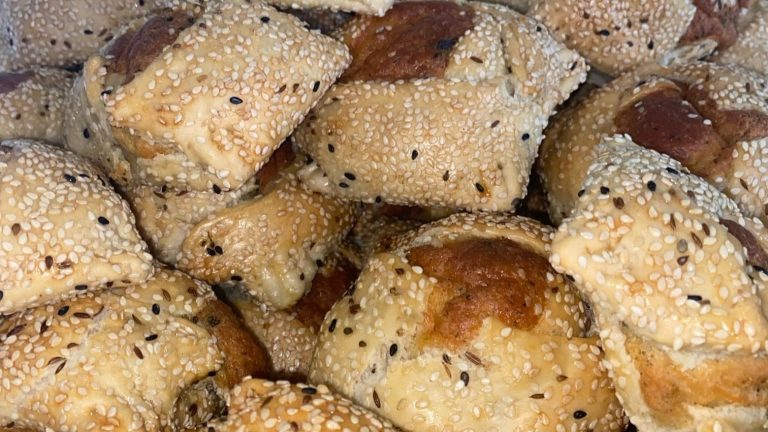
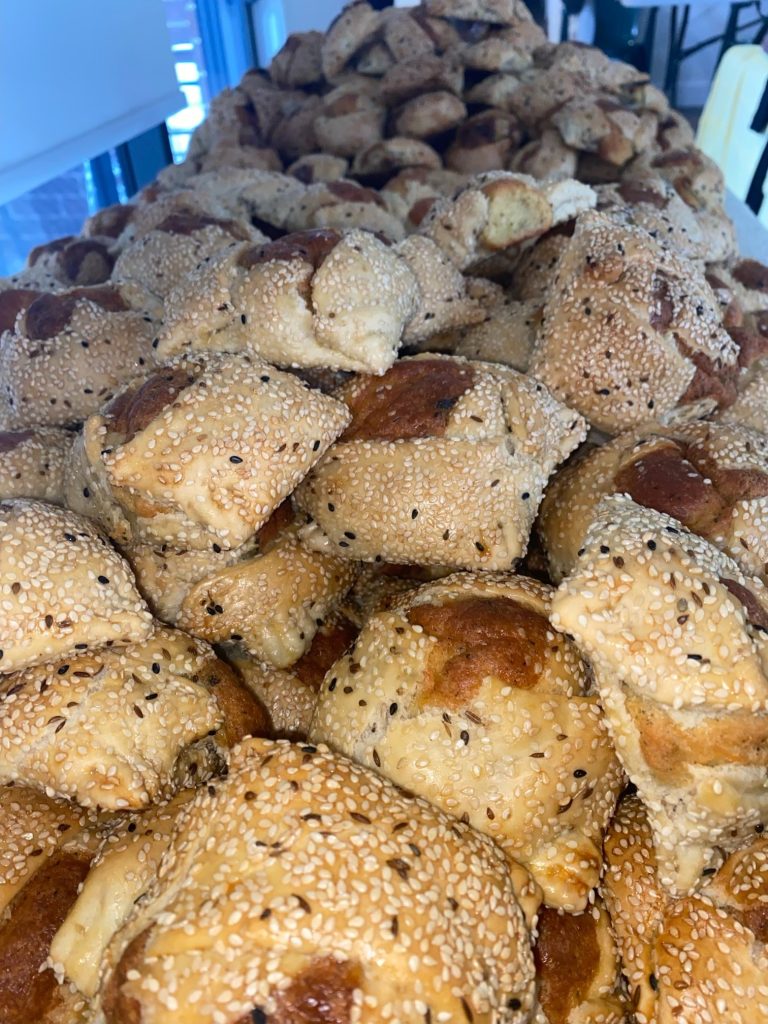
Around this time of the year, the sweet smells of many Easter treats fill Greek and Cypriot kitchens. One traditional Cypriot Easter treat is the pastry of flaounes.
Baked with special flaouna cheese made out of sheep or goats milk, many Cypriots break their fast on Easter Sunday with this cheesy treat!
To make a batch of 12-15 flaounas, follow the recipe below. Check out our Instagram reel for a visual guide too @thegreekherald.
Ingredients:
For the Flauna Dough
500g plain flour
2 eggs
1 tsp baking powder
1 teaspoon Mahlab ground to a fine powder
1 teaspoon Mastic ground to a fine powder
1 teaspoon of sugar
125g butter, melted
1 sachet easy bake yeast
a pinch of salt
A dash of warm milk for kneading (about 80ml)
60ml warm water
For the filling and glazing
500g Flaounas cheese or alternatively 250g haloumi and 250g mild cheddar
1/4 cup semolina
2 eggs
1 tsp baking powder
1 tsp mahlab
1 tsp mastic
1 tsp chopped fresh mint
120g raisins
1 egg, whisked (for the glazing)
1/2 cups sesame seeds (for the glazing)
Homemade Cypriot Easter pastry known as flaounas. Photo: Billie Stefanou/ Supplied.
Method:
1. In order to have the best texture for your flaouna, it is best to prepare the filling from the night before or at least 4-5 hours before baking. This would allow the cheese filling to dry out and be able to absorb more of the “moisture” from the liquid flaouna ingredients.
2. Start off by grating the cheese as fine as you possibly can. Add the beaten eggs, the raisins, the mint, the mastic, mahlab and the semolina and mix thoroughly. Cover it with a cloth and place in the fridge overnight or for at least 4-5 hours before baking.
3. Next off start preparing the dough. The dough is more like a shortbread and not very bread-y hence be careful not to overwork the dough as your flaouna will be a bit doughy. In a large bowl sift the flour, add the salt, baking powder, the mahlab, mastic and mix thoroughly.
4. Add the liquid ingredients to your flaouna recipe mixture which are the butter and eggs and gently mix the flaouna dough with your fingers. Dissolve the yeast in the warm water with the sugar, pour into the dough and then add the warm milk. Be careful for your water and milk to be only lukewarm and not hot as they will kill your yeast!
5. Continue kneading the dough for a few minutes until the texture is firm but not bread-like. If the dough is too wet add a little more flour but be careful not to overdo it as you don’t want the flaouna to have a bread-y texture. Cover the dough mix with some cling film and let it rise for 1-2 hours or until it has almost doubled in size.
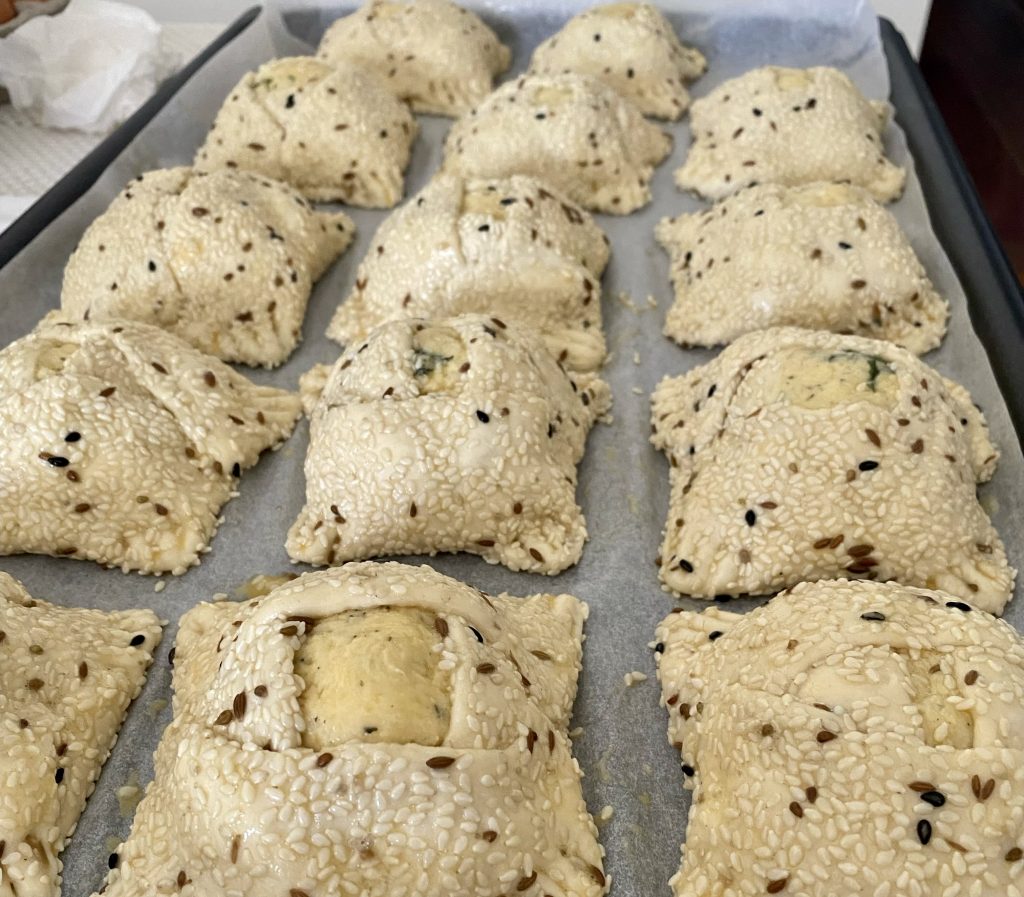
Homemade Cypriot Easter pastry known as flaounas. Photo: Billie Stefanou/ Supplied.
6. Now its time to start assembling your flaouna! Get the filling mixture out of the fridge and add the remaining mixture ingredients. Mix thoroughly and set it aside. Pour the flaouna dough out of the bowl and roll out in thin sheets. Cut into 12 by 12 cm rectangles, about 5 inches in each dimension. Sprinkle the sesame seeds on a small plate with approximately the same size as the flaouna dough rectangles
7. Glaze the outer side of the flaouna dough with the whisked eggs and press it down on the sesame seeds. That will ensure that the seeds are firmly embedded in the dough. Grab a handful of the cheese filling and form a ball. Place in the centre of the dough (sesame seeds facing outwards), glaze the edges with a little more whisked egg and fold, pinching the corners together to form the flaouna shape.
8. Once all your flaouna are shaped, place them on a baking tray lined with grease proof paper, let them rise for about 30-45 minutes and then bake in a pre-heated oven at 200C for about 40 minutes, or until golden brown.
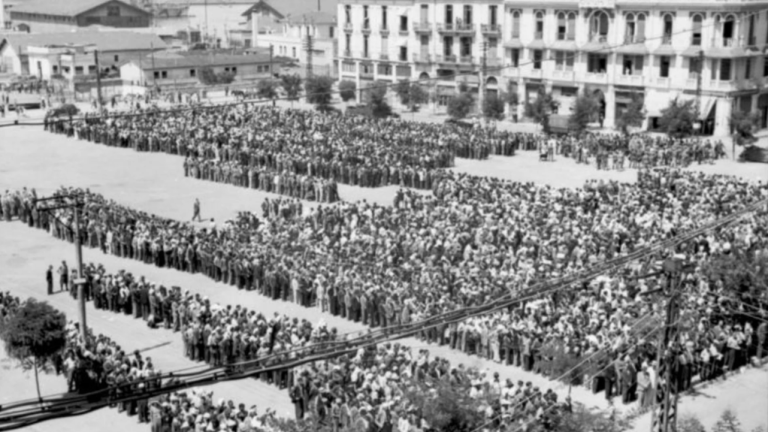
The Consulate General of Greece in Sydney will commemorate the 80th anniversary of the deportation of Thessaloniki Jews with a lecture by Dr Leon Saltiel on Thursday, April 20 from 6pm at The Australian Archaeological Institute at Athens, University of Sydney.
Between 15 March and 10 August 1943, some 43,000 Jews of Thessaloniki were transported to the Nazi death camp of Auschwitz-Birkenau. Of those, less than 1,000 returned back alive. This was a devastating blow to the Jewish population of Thessaloniki, a major and one of the oldest Jewish centres in Europe. The Jews had constituted the majority of the population —and at times even the absolute majority—thus marking the city’s character for centuries.
On the occasion of the 80th anniversary of the deportation of Greek Jews from Thessaloniki to the Auschwitz-Birkenau concentration camp, the Consulate General of Greece in Sydney is organising an event-lecture commemorating the unspeakable tragedy that led to the near extinction of one amongst Europe’s most thriving Jewish communities.
The renowned historian Dr Leon Saltiel, having extensively written on the topic, will elaborate on the topic The Holocaust in Thessaloniki and its blow to a 2000-years-old community.
Dr Saltiel will unfold the history of the Thessaloniki Jews through valuable testimonies of Holocaust victims, as well as the aftermath of this calamity for the Greek Jewish community. Archbishop Makarios of Australia will address a foreword.
Dr Saltiel’s presentation will narrate the long history until the last days of the once prominent Jewish community of Thessaloniki, the overwhelming majority of which was transported to the Nazi death camp of Auschwitz in 1943.
Almost 95 per cent of the 50,000 Jews in Greece’s second largest city did not survive the war, most of them deported and exterminated in German-occupied Poland. The Jews constituted a large percentage of Thessaloniki’s population, with a long presence in the city who contributed to the social, economic, political and cultural life, and their loss has marked the development of the city — and the whole country — to this day.
The event is supported by the Greek Orthodox Archdiocese of Australia and the NSW Jewish Board of Deputies and kindly hosted by the Australian Archaeological Institute at Athens, University of Sydney, at its premises.
Dr Leon Saltiel. Photo: Supplied.
About the presenter:
Dr Leon Saltiel holds a Ph.D. in Contemporary Greek History from the University of Macedonia in Thessaloniki, Greece, and has been a post-doctoral researcher at the Graduate Institute of International and Development Studies in Geneva, Switzerland and the Aristotle University of Thessaloniki.
His publications include The Holocaust in Thessaloniki: Reactions to the Anti-Jewish Persecution, 1942–1943 (Routledge 2020), which won the 2021 Yad Vashem International Book Prize for Holocaust Research, and ‘Do Not Forget Me’: Three Jewish Mothers Write to their Sons from the Thessaloniki Ghetto (Alexandria 2018) in Greek and (Berghahn 2021) in English. He is Director of Diplomacy, Representative at UN Geneva and UNESCO, and Coordinator on Countering Anti-Semitism for the World Jewish Congress.
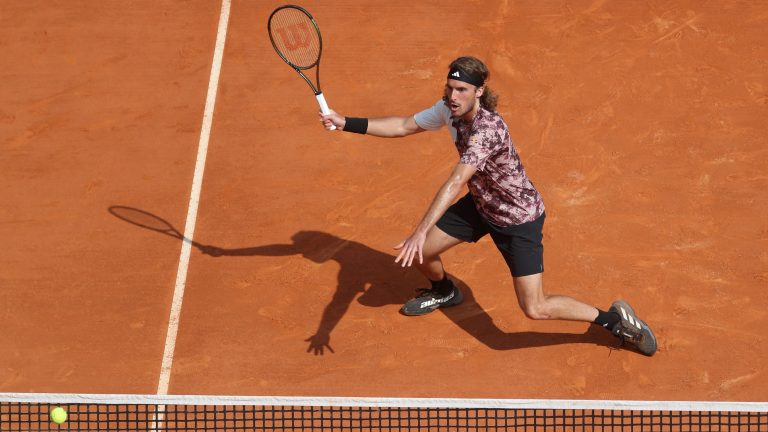
Greek tennis star, Stefanos Tsitsipas, reached the third round at the Rolex Monte Carlo Masters on Tuesday after his opponent, Benjamin Bonzi, was forced to retire due to a wrist injury.
According to a report by ATP Tour, Tsitsipas was savouring his return to the clay courts of Monaco with punishing serves and forehands, but Bonzi was unable to continue beyond 22 minutes, with Tsitsipas leading 4-1 on Court Rainier III.
“A great start out there. A 3-0 lead, I will always take it,” Tsitsipas said post-match.
“Happy to be back on the terre bateau of Monte Carlo. It’s a very unique location during the year and I’m happy this is the time of the year we get to play on these courts. It brings back very good memories.
“It’s very unfortunate what happened out there for my opponent. I wish him the best moving forward.”
Tsitsipas’ Tuesday victory stretched his Monte Carlo winning streak to 11 matches following a third-round loss to Daniil Medvedev in 2019.
Bonzi’s injury denied him an opportunity to fight for what could have been his first Top 10 win against the Australian Open finalist.
Aiming to become the third player to win the Monte Carlo title at least three times in a row, Tsitsipas will now face either Nicolas Jarry or Alexei Popyrin in the third round.
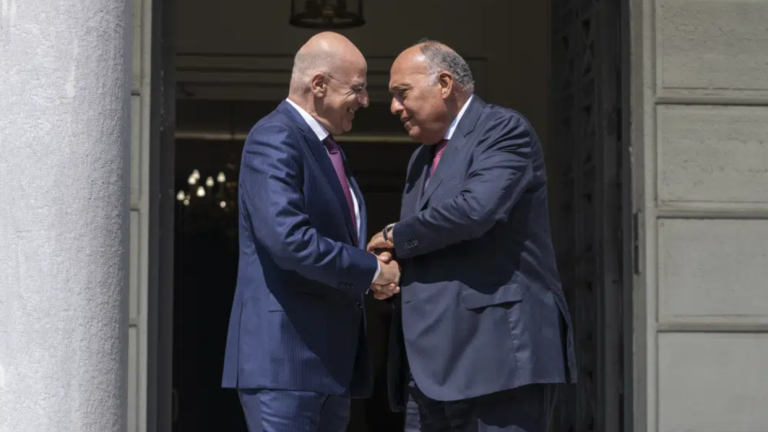
According toAMNA News, the minister issued a joint statement after the meeting and said that at a time when “geopolitical balances are fragile, bilateral relations remain stable, becoming increasingly stronger.”
Dendias stressed the bilateral trade between Egypt and Greece was successful as the value of trade between them has exceeded 2 billion euros.
With #Egypt counterpart Sameh Shoukry we discussed in #Athens further strengthening 🇬🇷🇪🇬 strategic relations in a wide range of areas, including economy, investments, energy, climate change. (1/2) pic.twitter.com/AU1F3kny8O
The Greek Foreign Minister also emphasised the strategic importance of the Greek-Egyptian electricity power project, “GREGY Interconnector,” the EastMed Gas Forum, and the memoranda signed in Cairo in June 2022 between the EU and Egypt, and also those by the EU and Israel.
For his part, Egypt’s Foreign Minister said Greece and Egypt’s relations are of strategic importance and are founded on consistent values and on the principles of good neighbourly relations and International Law.
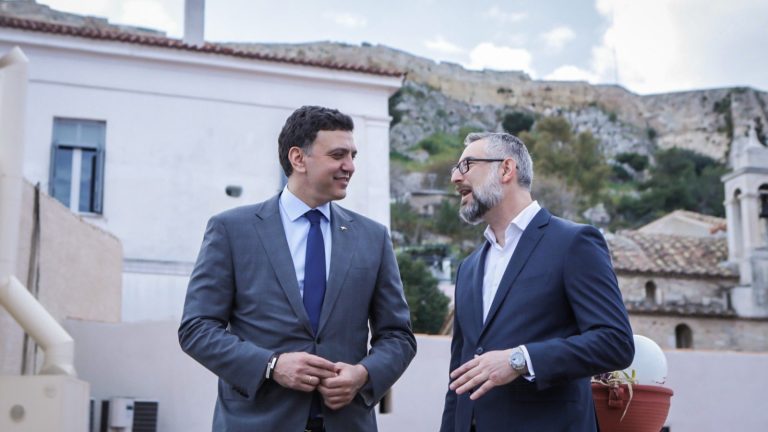
The announcement was made as Minister Kikilias and Ambassador Spyrou walked through the streets of Plaka, Athens on Tuesday.
During the walk, Minister Kikilias called his collaboration with the Australian ambassador “an excellent partnership” and noted he is “very happy that during his tenure we managed, with joint efforts, to reopen GNTO’s office – which was once in Sydney – now in Melbourne.”
“Australia is a very big market and we want it in Greece,” Kikilias added.
Ο πατέρας του κ.Σπύρου ήταν διευθυντής στο γραφείο του ΕΟΤ στο Σύνδεϋ τη δεκαετία του ’70. Αρκετές δεκαετίες μετά, μέσα σε μια “έκρηξη” του τουριστικού ρεύματος στην Ελλάδα, είναι τιμητικό που τον έχουμε εδώ και βοηθάει την προσπάθειά μας. 🇬🇷🇦🇺 pic.twitter.com/RXPpN0mgkF
The Greek minister also noted that Ambassador Spyrou’s father was the director of GNTO’s Sydney office in the 1970s.
For his part, the Ambassador said this summer season will be huge for Australian tourism in Greece and mentioned that 340,000 Australians visited Greece in 2019 “and the trend is going up.”
Greek Orthodox Easter is an opportunity to unite with our families, spend time with relatives we haven’t seen for a while, and enjoy food which evoke memories of our childhood and emotions of love and happiness.
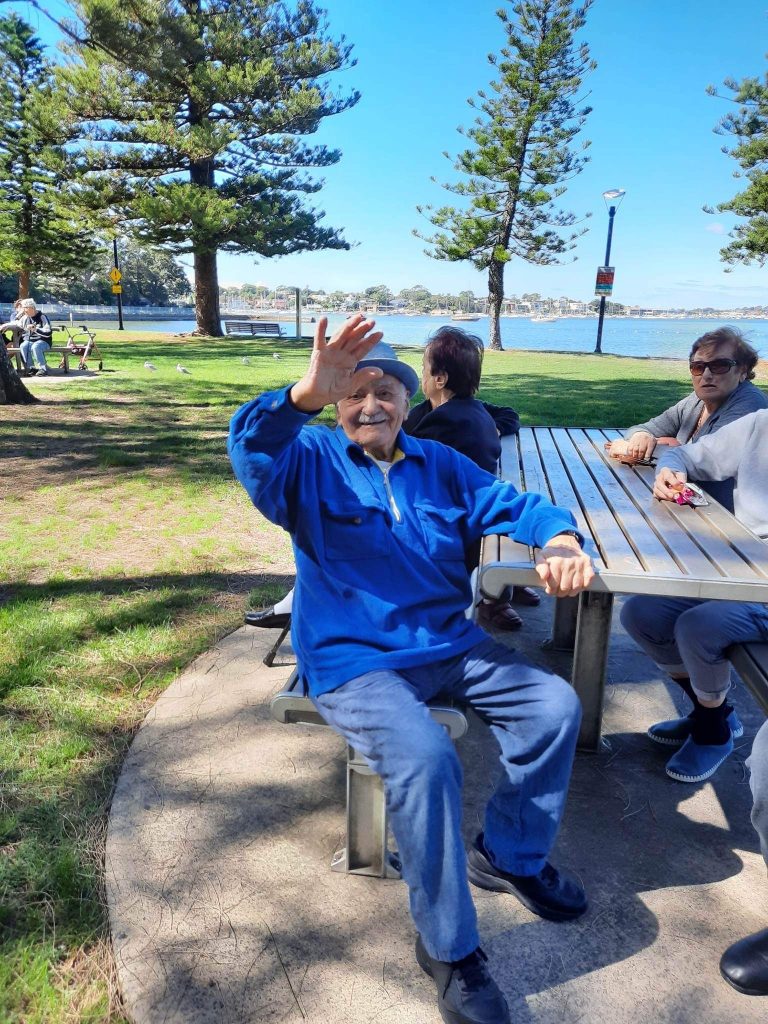
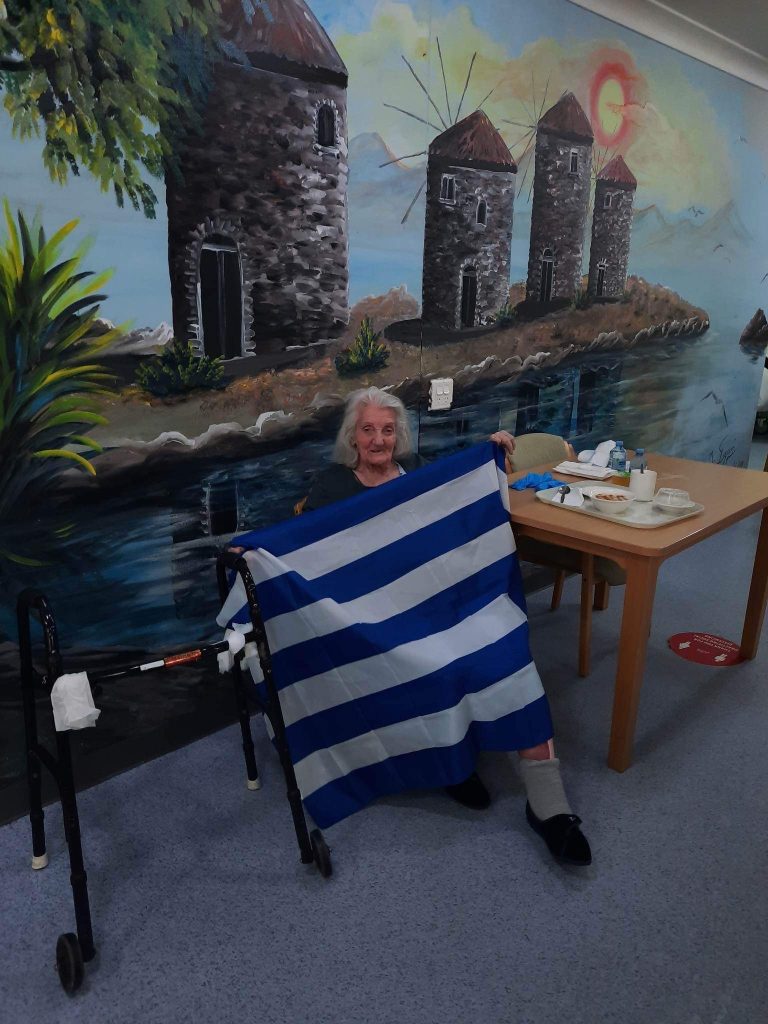
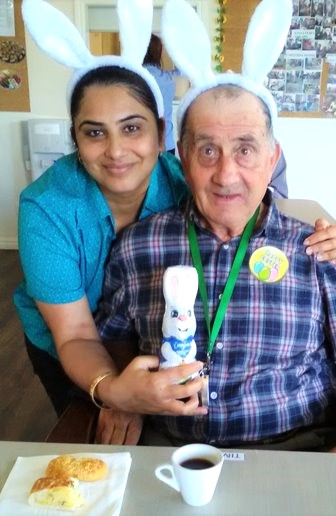
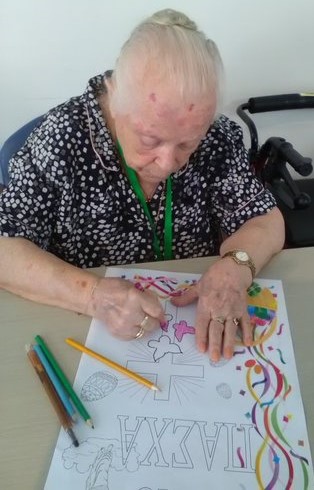
This experience can differ for Greek and non-Greek elderly in aged care around Australia, but many of the facilities and homes do try to get creative to bring joyful moments to the elderly as they celebrate Easter.
This year, The Greek Herald spoke with people from the Greek Community Home for the Aged in NSW, as well as Pronia, Fronditha Care, Grace of Mary Greek Cypriot Elderly Hostel and St Andrew’s Hostel in Victoria, to see how they’re celebrating the religious week.
Greek Community Home for the Aged, NSW:
The Greek Community Home for the Aged is run by the Greek Orthodox Community of NSW (GOCNSW). Facility manager, Katerina Kouris, tells The Greek Herald that Easter celebrations at the home are a special opportunity to rejoice, eat, drink, socialise, and be merry.
“Easter commemorates Jesus Christ’s agony, death and resurrection, symbolising everything is reborn and restored,” she says.
Activities at the home started with Clean Monday’s paper-kite day in the Sydney suburb of Cronulla, followed by ‘Tsiknopempti’ and ‘Apokries.’
Apokries.
“Our residents celebrated with a big BBQ accompanied with live Greek music, dance and wine. We also honoured the 25th of March national holiday by singing the Greek National Anthem and watching Greek TV channels showing the ‘parelasi’ (march) from Syntagma Square in Athens,” Ms Kouris explains.
As Orthodox Easter is the most significant time of the year, Ms Kouris says a traditional fare is planned for elderly residents where they can enjoy red dyed eggs, koulourakia, tsourekia, traditional sweets and of course – magiritsia soup. There will also be visits to the local Greek Orthodox Church to attend “Apokathilosi” service.
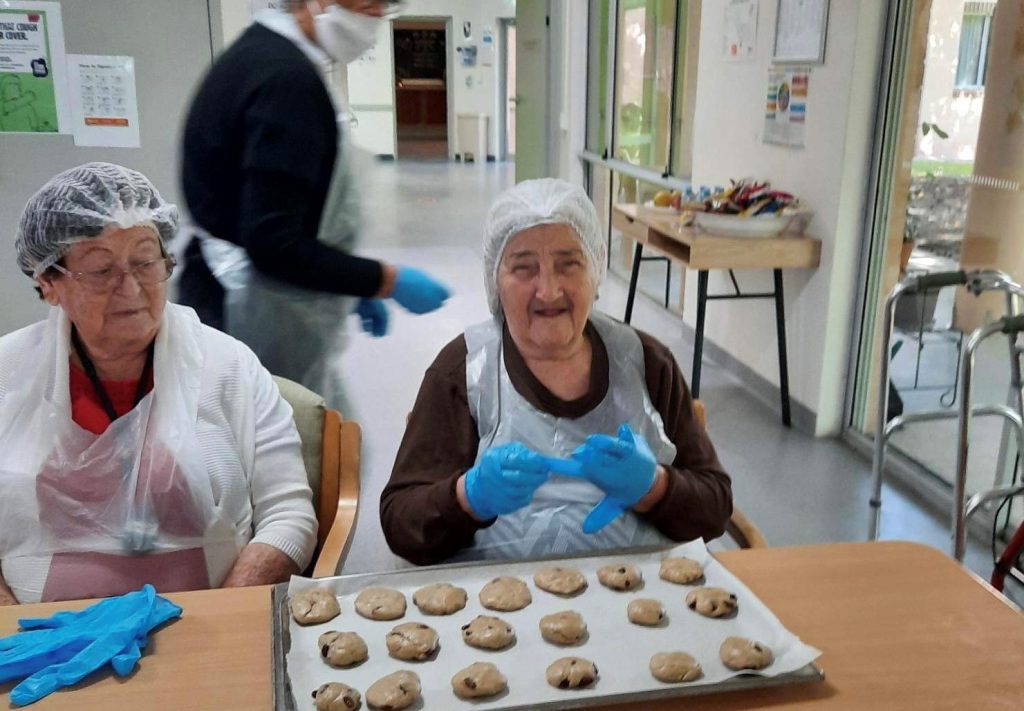
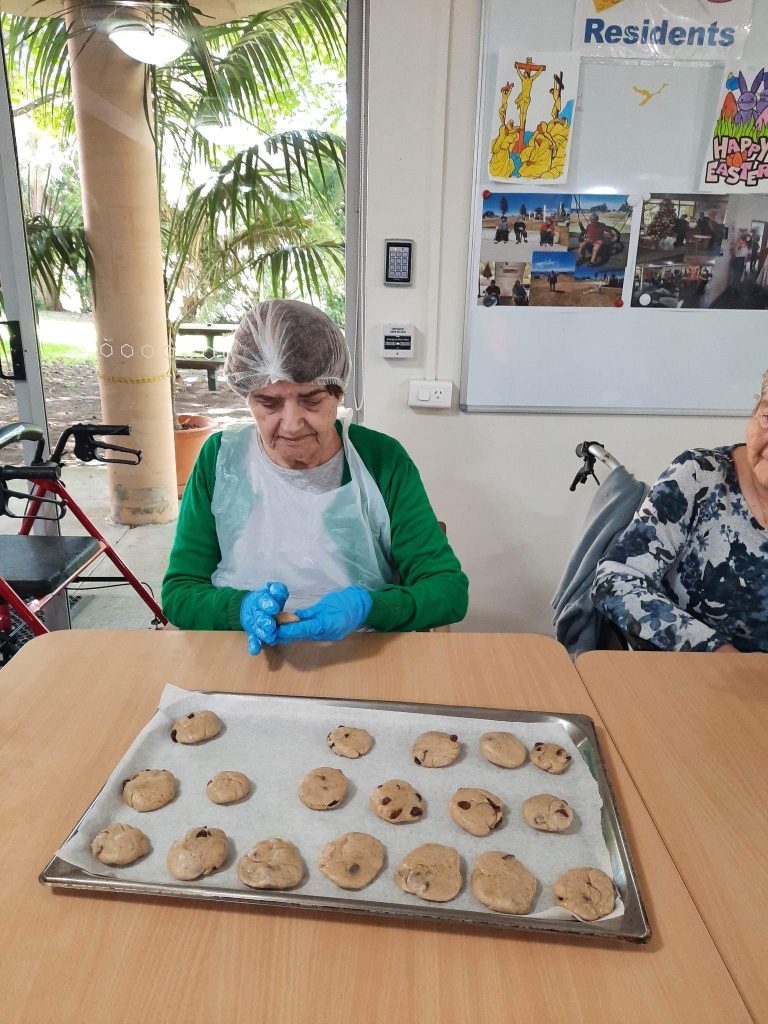
Baking cookies.
“Easter Sunday lunch for our residents will be served with traditional roast lamb, an assortment of baked vegetables, salad plus all the customary accompaniments,” she says.
“We’re certain our residents will enjoy all the culinary delights which Chef Panagiotis and the staff are preparing for our Greek Orthodox Easter.”
Ms Kouris says the schedule of activities enriches the residents’ spirituality for the festive days ahead. There will also be activities including cooking sessions with the residents and decorating with vibrant colours. Chocolate Easter eggs will also be distributed to all the residents on Easter Sunday.
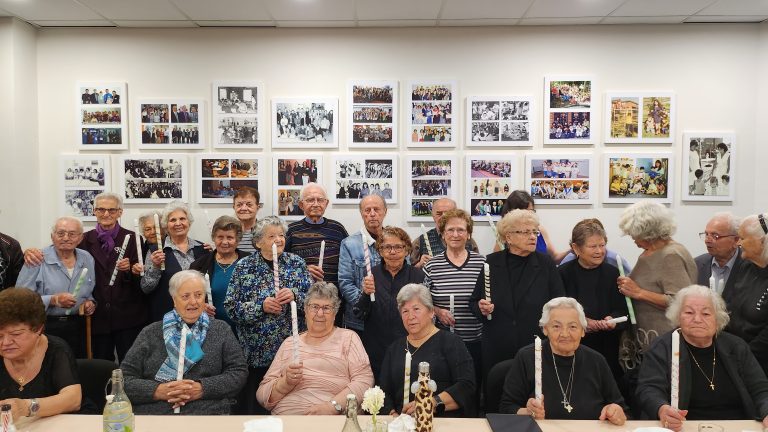
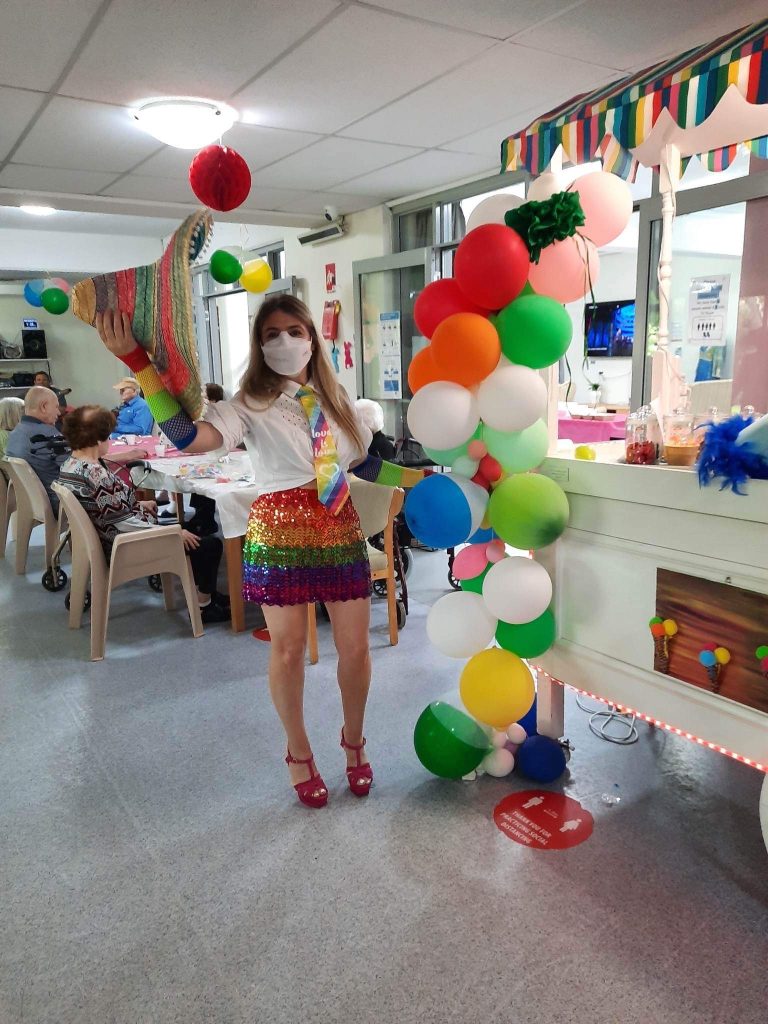
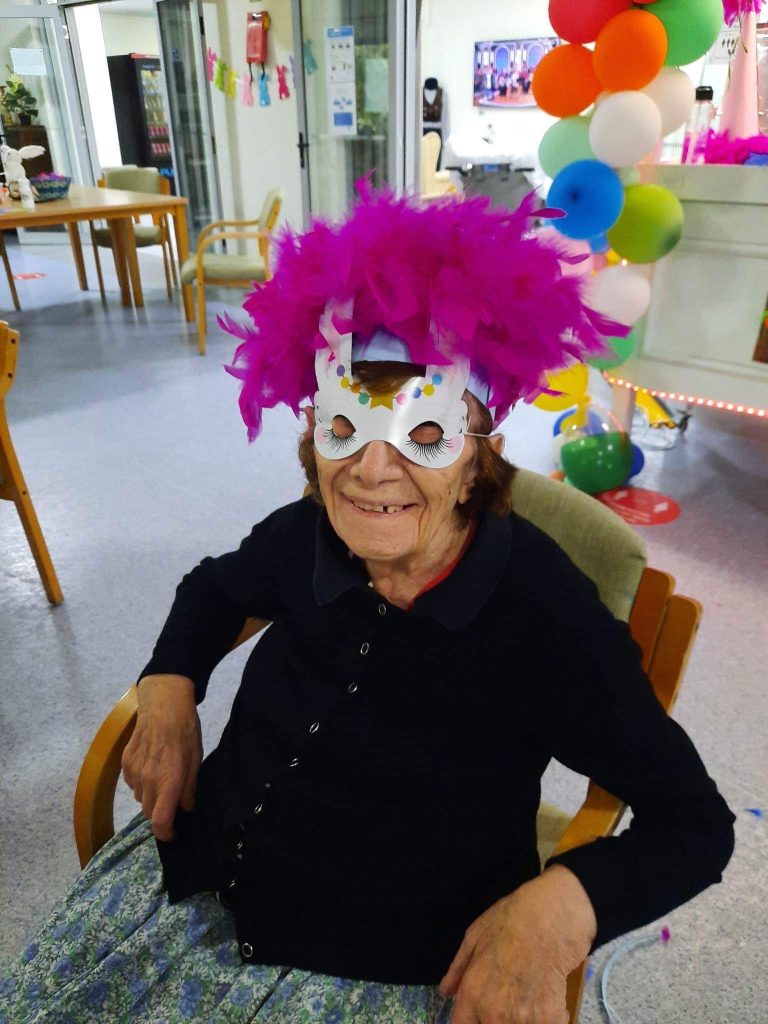
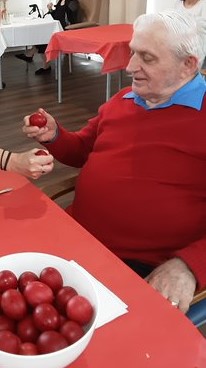
Elderly at the aged care home.
“All these wonderful, sentimental and traditions bring back memories of customary Greek recipes. Our residents share with us their “secrets” for their recipes,” Ms Kouris adds.
“Research has proved that keeping the elderly active in the kitchen can make them feel beneficial again and improves their mood, and we can certainly see this happening!”
Pronia, Victoria:
Like every year in Pronia’s aged care centres in Victoria, preparations for Orthodox Easter have been underway all week.
“Smiles, good mood, imagination… are necessary conditions for a perfect result,” Pronia’s Communications and Community Engagement Officer, Dorothy Hatzopoulos, tells The Greek Herald.
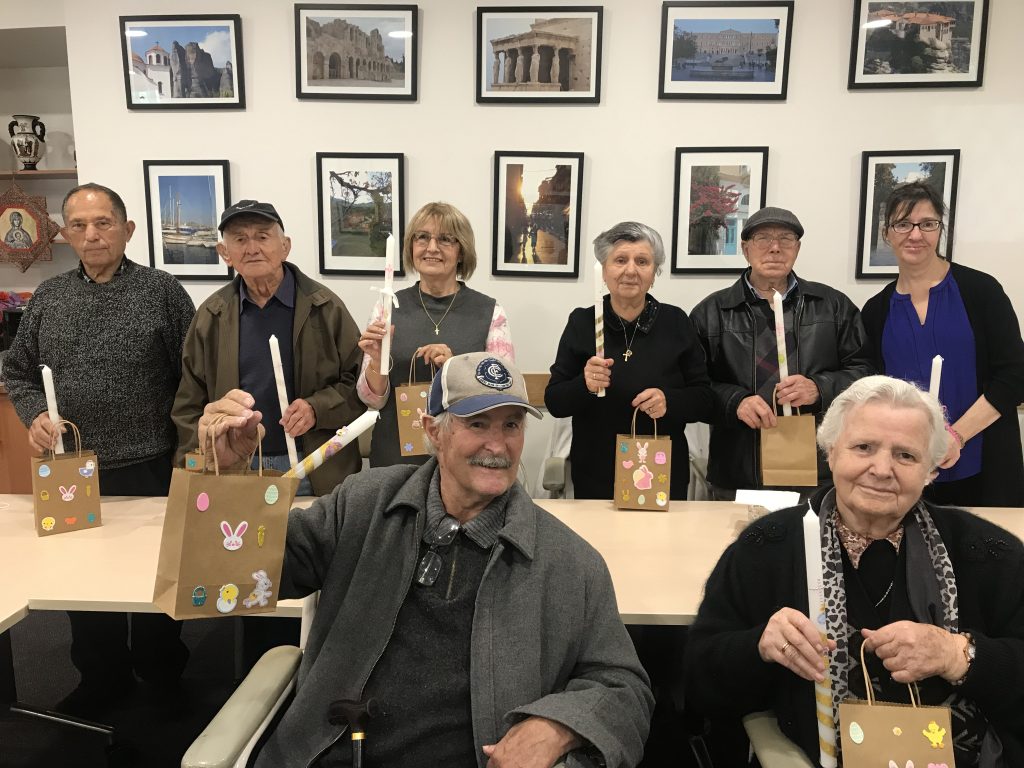
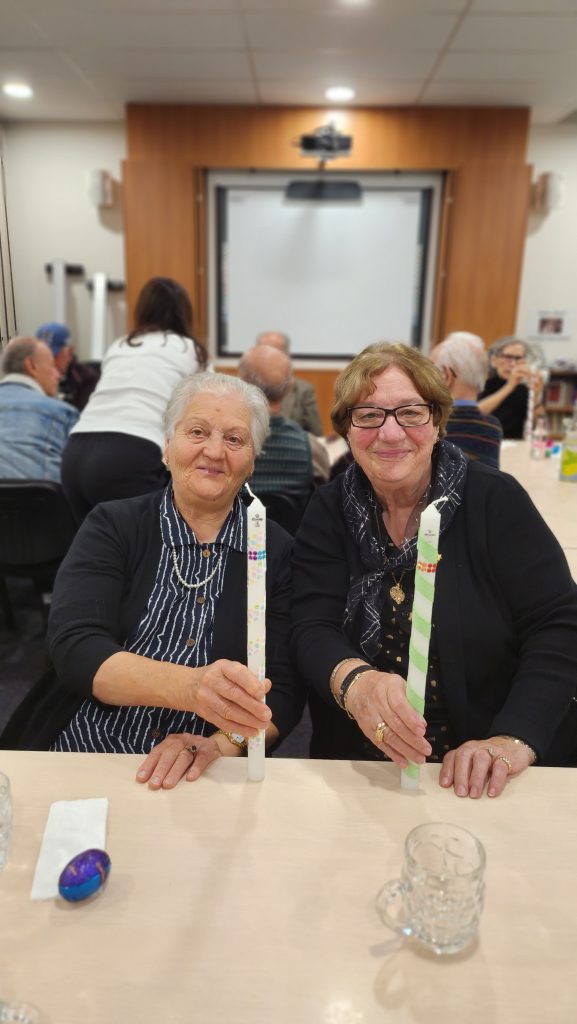
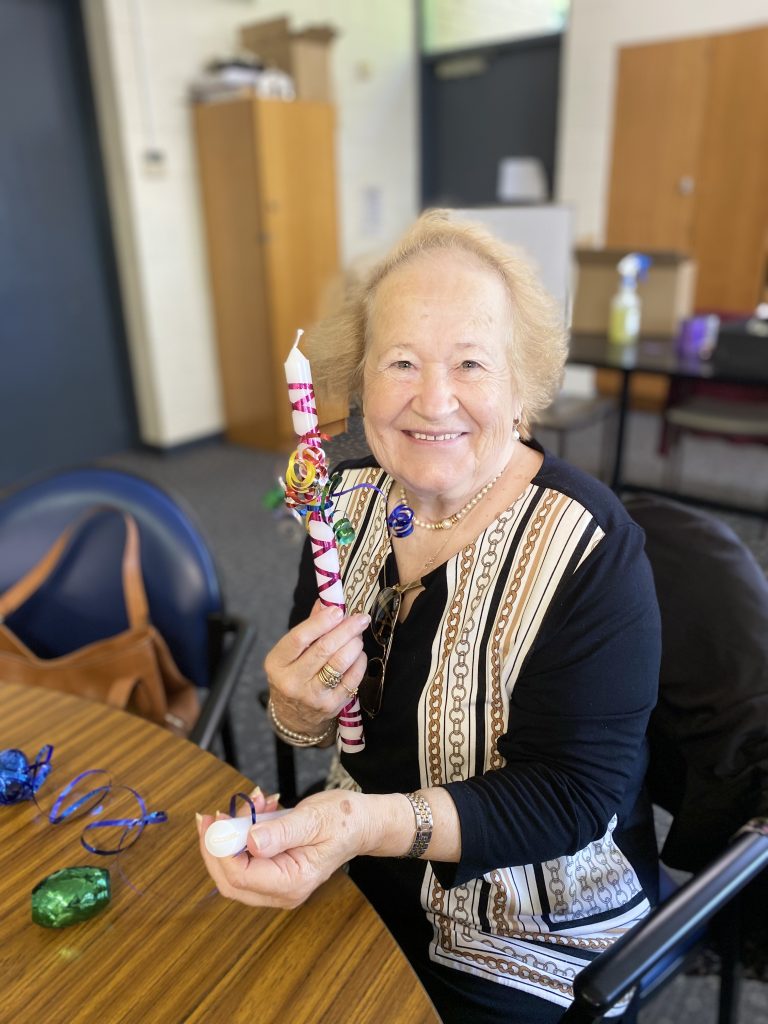
Their first activity was decorating white candles with the residents.
Candle decorating.Candle decorating at Pronia.
“Elderly, carers and staff set up our workshop and made Easter candles, not only for us but also for our grandchildren and friends and for the people who support our every effort,” Ms Hatzopoulos says.
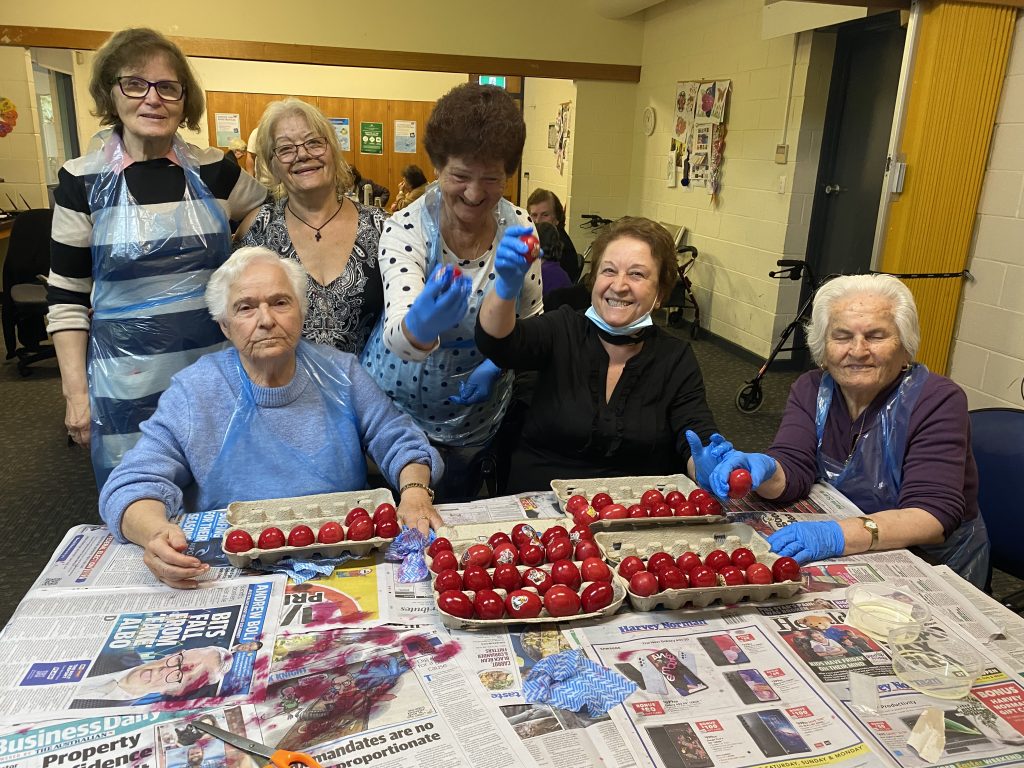
“Next comes the making of the ‘Lambri’ buns and the dyeing of the red eggs. As Holy Week approaches, the menu in the centers is shaped accordingly, offering Lenten food and fasting sweets.”
Dyeing red eggs.
It should be noted that Pronia’s Planned Activity Groups (PAG) centers offer weekly meetings in four suburbs of Melbourne (Brunswick, Clarinda, Sunshine, Balwyn), and for one to participate referral is needed from My Aged Care.
“For many of the senior participants, this weekly outing is the best day of their week. They look forward to it as they meet their friends and spend a day filled with activities, entertainment and good company,” Ms Hatzopoulos concludes.
Fronditha Care, Victoria and NSW:
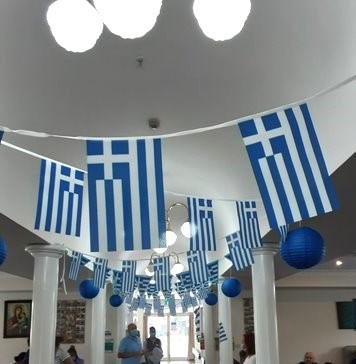
At Fronditha Care, this year’s Orthodox Easter preparations and celebrations will include a church service, the dyeing of eggs and a baking day. Residents will also decorate the cross, wreaths and lambathes, as well as a small Epitaphio.
Celebrations will take place at all of Fronditha’s aged care facilities with music and hymns. Holy Communion will be offered to residents by a local priest.
Easter celebrations will also be held for the Social Support Groups. The corporate office will dye eggs and bake koulourakia and Easter will be celebrated with a BBQ feast featuring souvla meats, live music and Easter candles. Volunteers will man the BBQ at most of Fronditha Care’s facilities.
Grace of Mary Greek Cypriot Elderly Hostel and St Andrew’s Aged Care, Victoria:
Stefanos Vlahogeorgos is the Director of Nursing at Grace of Mary Greek Cypriot Elderly Hostel and St Andrew’s Aged Care in Victoria. He describes Orthodox Easter as the most important and holy day of our Greek culture.
Getting creative.
“We celebrate it according to the tradition and the custom of our elderly,” he tells The Greek Herald.
“This year, as every year, our aged care facilities will be for another time, the focus of attention, especially with the traditional preparations, which include Holy Communion, Sarakosti, liturgies from our priest, egg dyeing, koulourakia, tsourekia, flaounes, kaltsounia and Easter decorations.”
Easter activities.
He says that the hostel’s festivities are known for being unique and for their central role in the life and the faith of elderly people.
“Our grandmothers and grandfathers will live an important Easter in the hug of our home, which will bring them joy, love and mental satisfaction.”
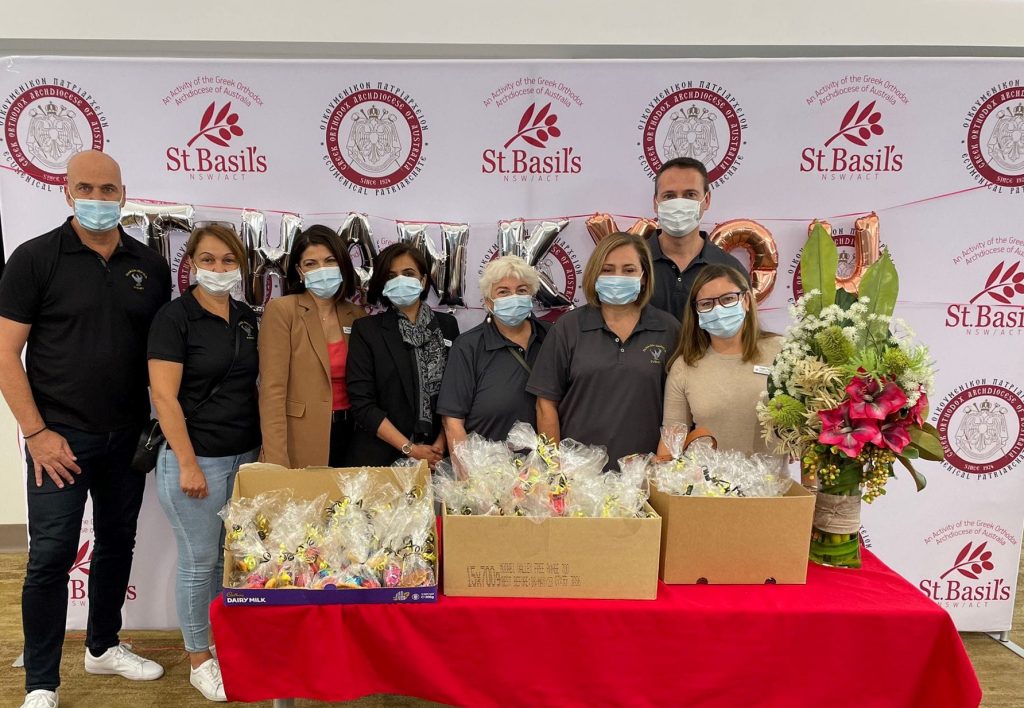
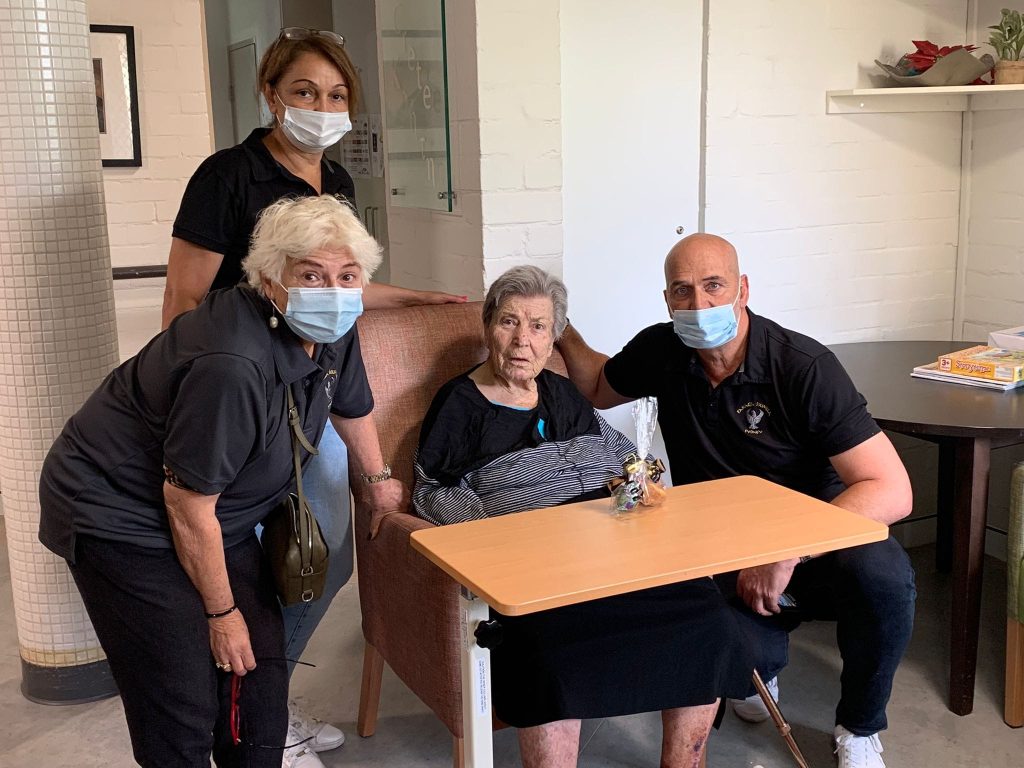
Members of the Pontian Association of NSW ‘Panagia Soumela’ visited St Basil’s in Lakemba, Sydney on April 7 ahead of Greek Orthodox Easter.
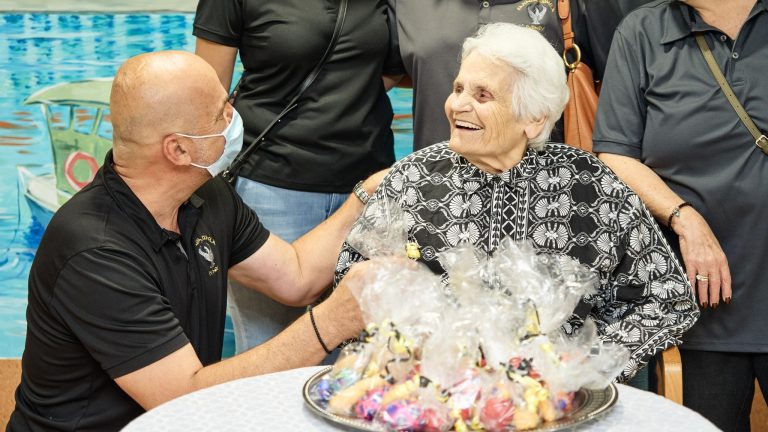
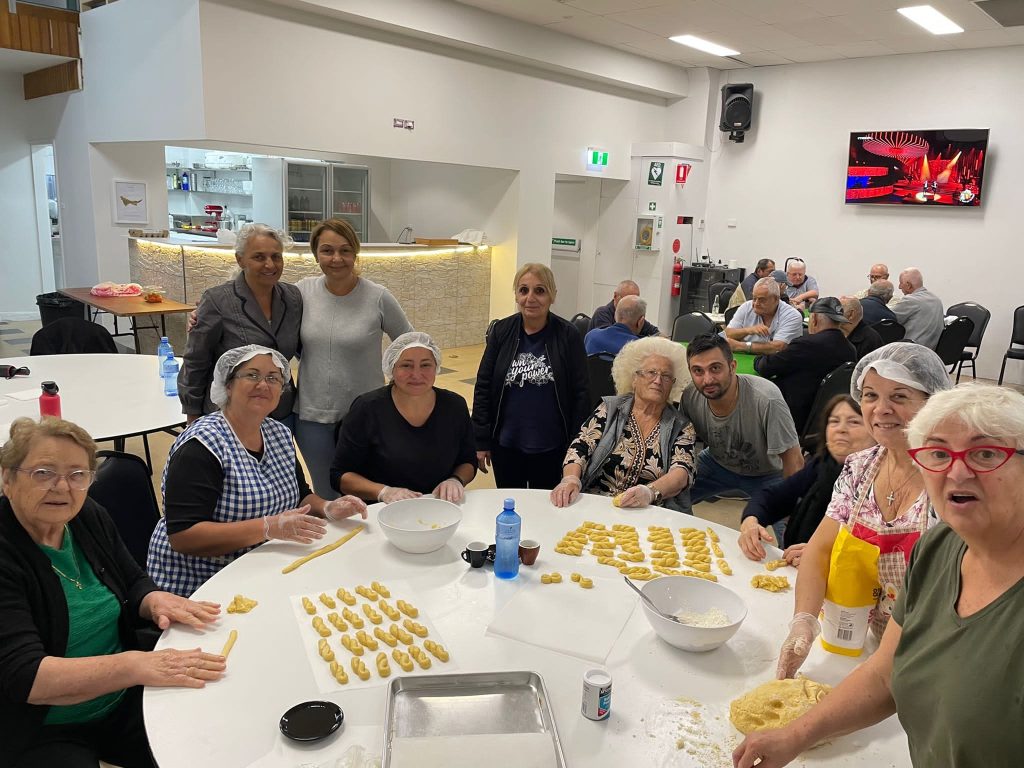
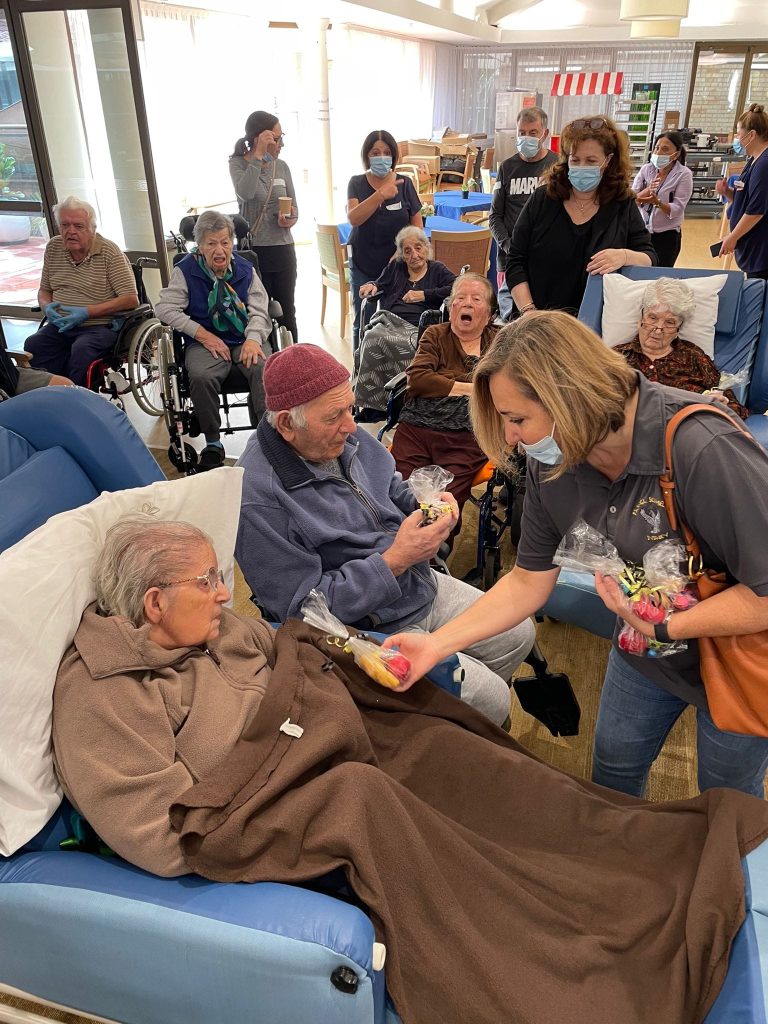
During their stay at the nursing home, Panagia Soumela members talked to the elderly residents and exchanged wishes for Easter. They also distributed gifts which consisted of dyed red eggs, koulourakia and chocolate Easter eggs.
Members of the Pontian Association of NSW ‘Panagia Soumela’
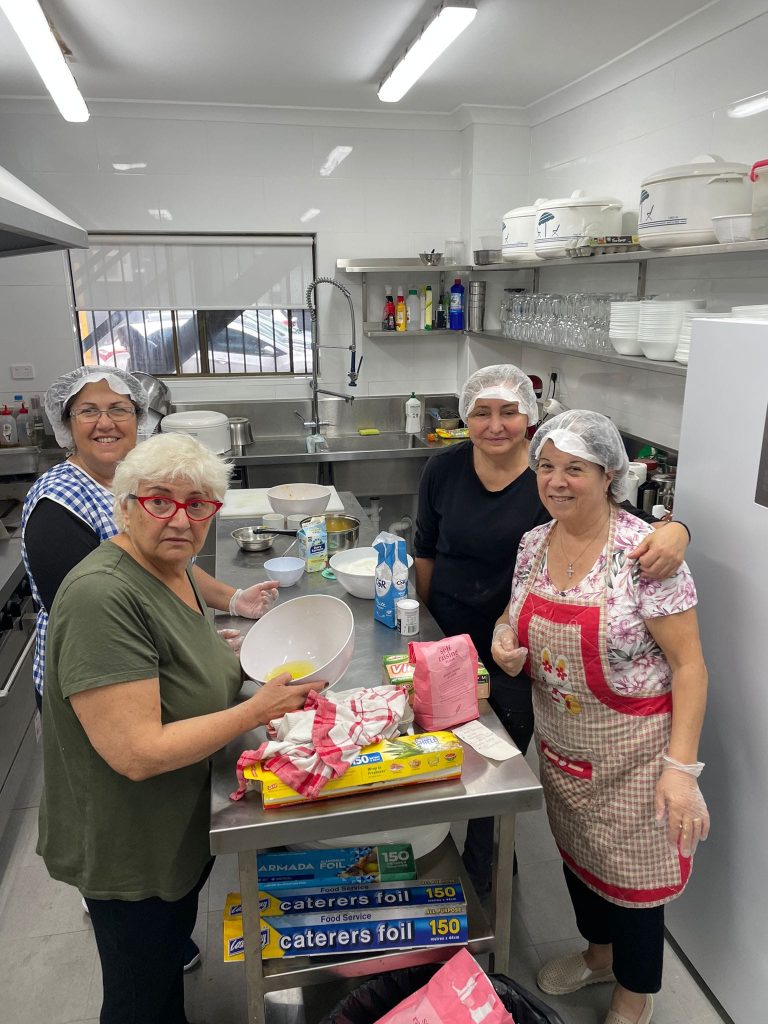
The food was prepared by the senior female members of the Association at their club hall in Hurlstone Park.
Making treats
The elderly residents at St Basil’s accepted their gifts with huge smiles and thanked the Association’s members for visiting them.
Elderly in St Basil’s Lakemba
The Association’s members promised to carry out similar activities in the near future as they are important to provide a sense of connection to the elderly in nursing homes.
St Basil’s also thanked Panagia Soumela for their initiative and expressed a desire to work together with the Association to organise a similar event in the future.