Forget any other tsoureki recipe you have seen and use Yiayia Vaso and Yiayia Kiki’s authentic ‘Yiayia style’ tsoureki recipe. These ladies have been neighbours and friends for over 36 years and through the decades have mastered traditional Greek Orthodox holiday sweets served at Easter and Christmas.
This year, the women from the Sydney suburb of Canterbury are sharing their secret recipe and method with The Greek Herald.
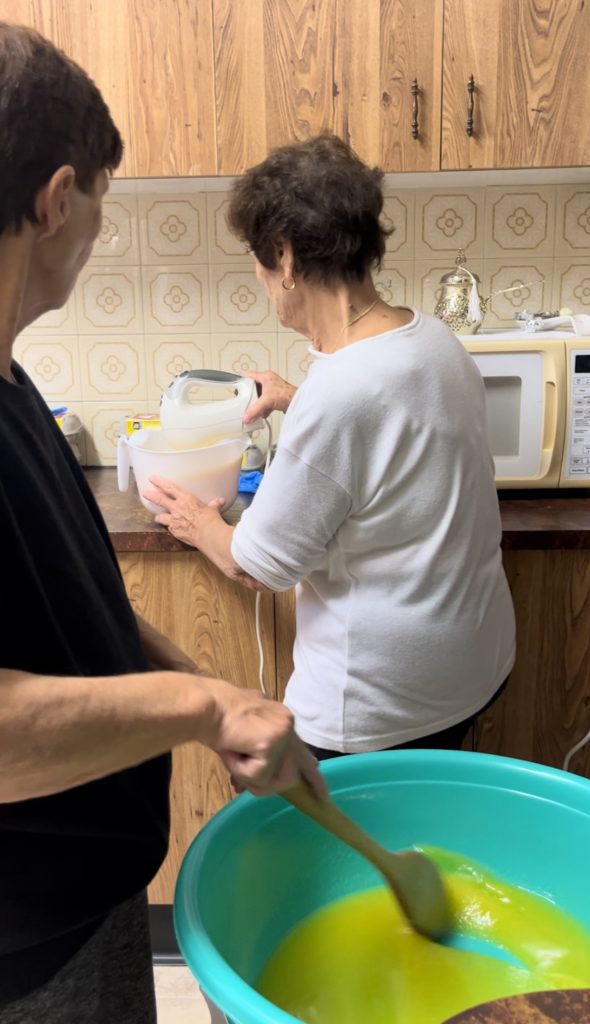
At 6am, Yiayia Kiki walks from her home across the road and joins Yiayia Vaso for what will be a “long day but a good day,” they both tell me.
The pair will make dozens of tsourekia – enough for both of their families to share on Easter Sunday.
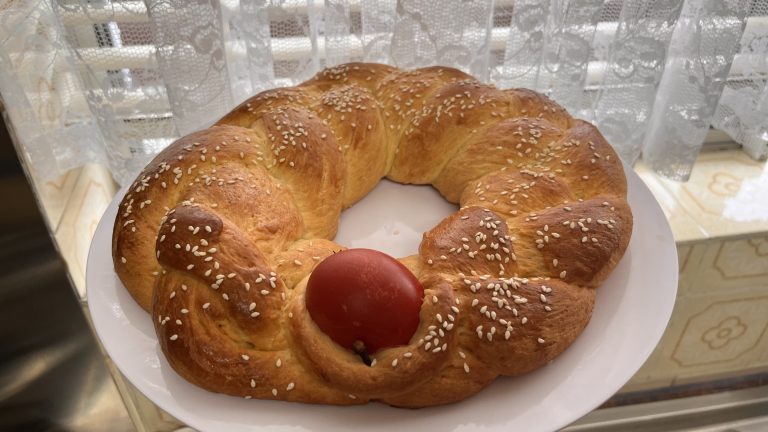
Tsoureki is a sweet bread with three plaits symbolising the Holy Trinity, and many Orthodox Christians enjoy a slice to break their fast on Easter Sunday.
To make a batch of batch of 7-9 tsourekia, follow the recipe below. Check out our Instagram reel for a visual guide too @thegreekherald.
Baked tsoureki. Photo: Pamela Rontziokos
Ingredients:
500 gram butter
1kg plain flour (use as much as necessary)
Mastica
Mehelpi
1 cup orange juice
Water
Caster sugar
Yeast
15 eggs
Oranges
2 cups full cream milk
Canola oil
Boiled eggs, vanilla and almond flakes (to decorate)
3-4 table spoons anthoero
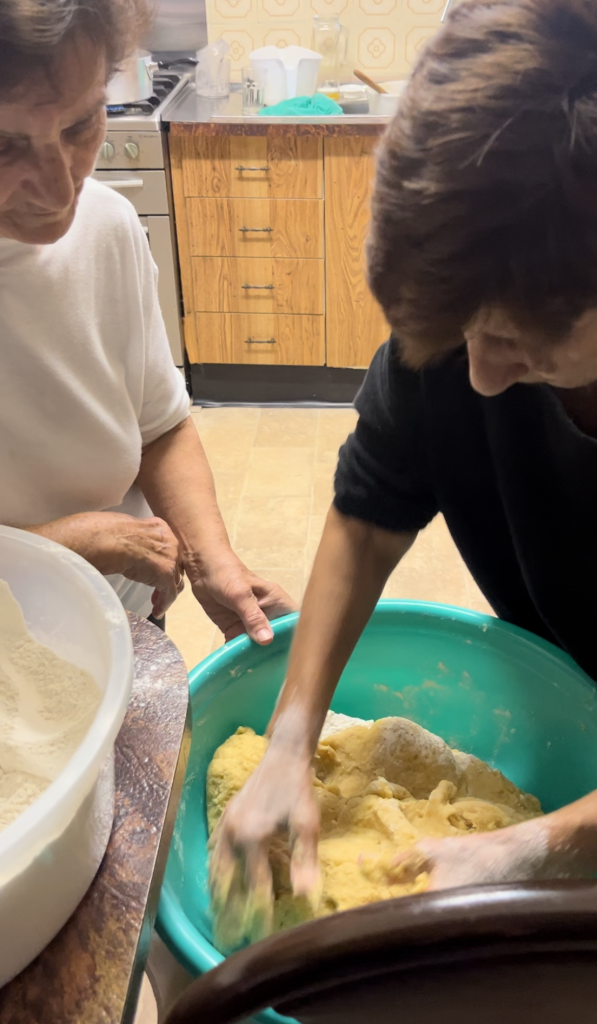
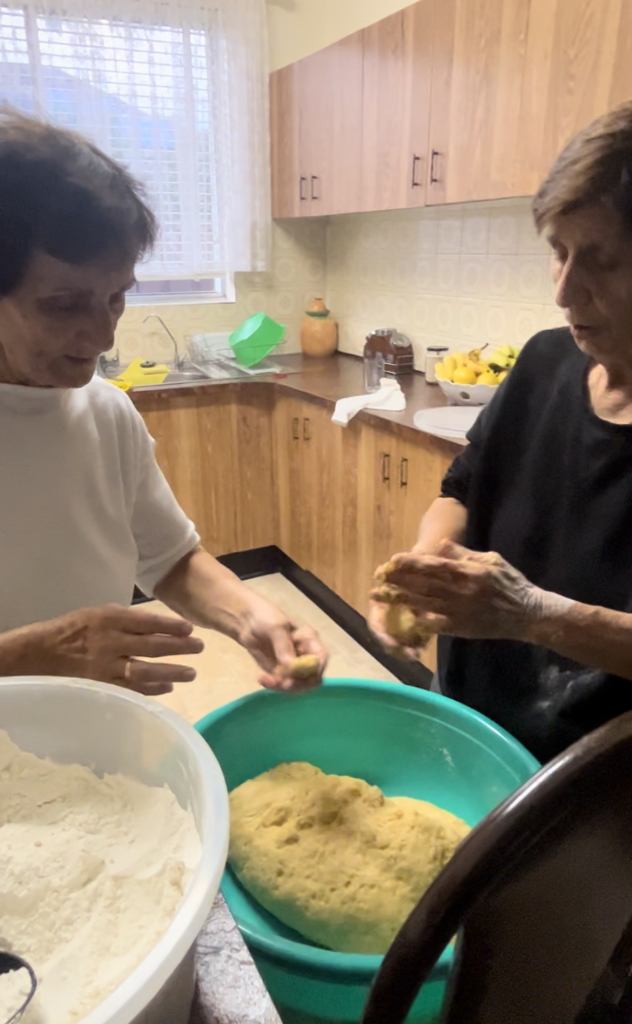
Yiayia Vaso and Yiayia Kiki. Photos: Pamela Rontziokos
Method:
In a food processor, blitz together 2 spoons of flour and 2 spoons of mastica. Set aside.
Prepare one cup of freshly squeeze orange juice and set aside.
Place a pot on a stove and set heat to medium. Place 500 grams of unsalted butter, 1 cup of canola oil, 1 cup of water and 1 cup of sugar. Boil and stir until fully combined.
While the butter mixture is boiling, prepare yeast mixture. In a separate bowl, add 1 cup of water, 5 spoons of yeast and 1 spoon of sugar. Gently stir and set aside.
In an electric mixture, crack 12 eggs and add 2 cups of sugar. Mix until light and fluffy.
Once the butter mixture over the stove has fully dissolved and cooled down, pour into a new large bowl (this will be the finally bowl where all the ingredients are combined). Add the egg and sugar mixture and gently stir.
Then add prepared mastica and flour mixture and 2 table spoons of mahelpi. Pour orange juice prepared from earlier. Pour 2 cups of milk. Add a pinch of salt and yeast mixture. Stir until combined.
Then add 2-3 ladle spoons of plain flour and used your hands to combine. Slowly add a ladle of plain flour every so often until desired texture (here both yiayiades told me there is no measure amount of flour, you have to feel the dough and keep on adding until you reach a soft but firm texture).
Gently knead mixture until it becomes a soft and doughy texture. Make round ball and leave in bowl. Bless the dough by making a sign of the cross with the edge of your hand.
Then, cover dough with a tea towel. With a blanket, wrap the bowl to keep it warm and set it aside for 3.5 hours.
Gently cut a large palm full of tsoureki dough from the large dough mixture. Roll out with hands and make 3 long think even pieces.
Join the 3 long piece at the top together and tightly plait together. You can leave it as is (straight) or join either side to make a circle. Transfer to baking tray and cover with tea towel. Leave to rest for 3.5 hours.
Prepare glaze by cracking 1 egg and two egg yolks in a bowl. Add 3-4 table spoons of anthonero. Whisk together.
Gently brush galze over tsoureki.
Bake in oven on law heat (130 degrees celsius) until golden brown.
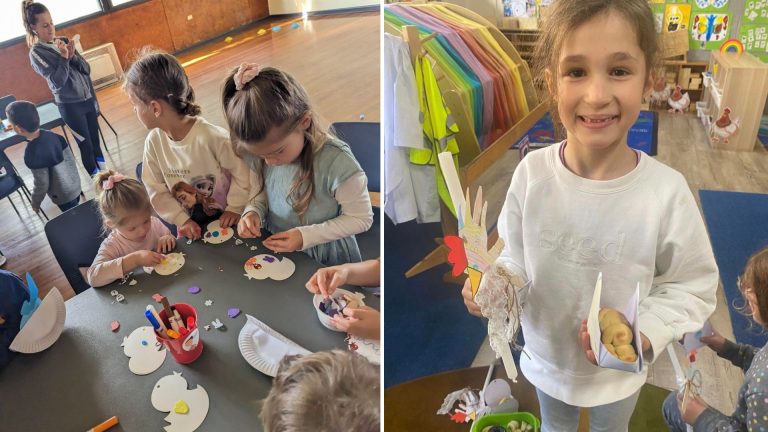
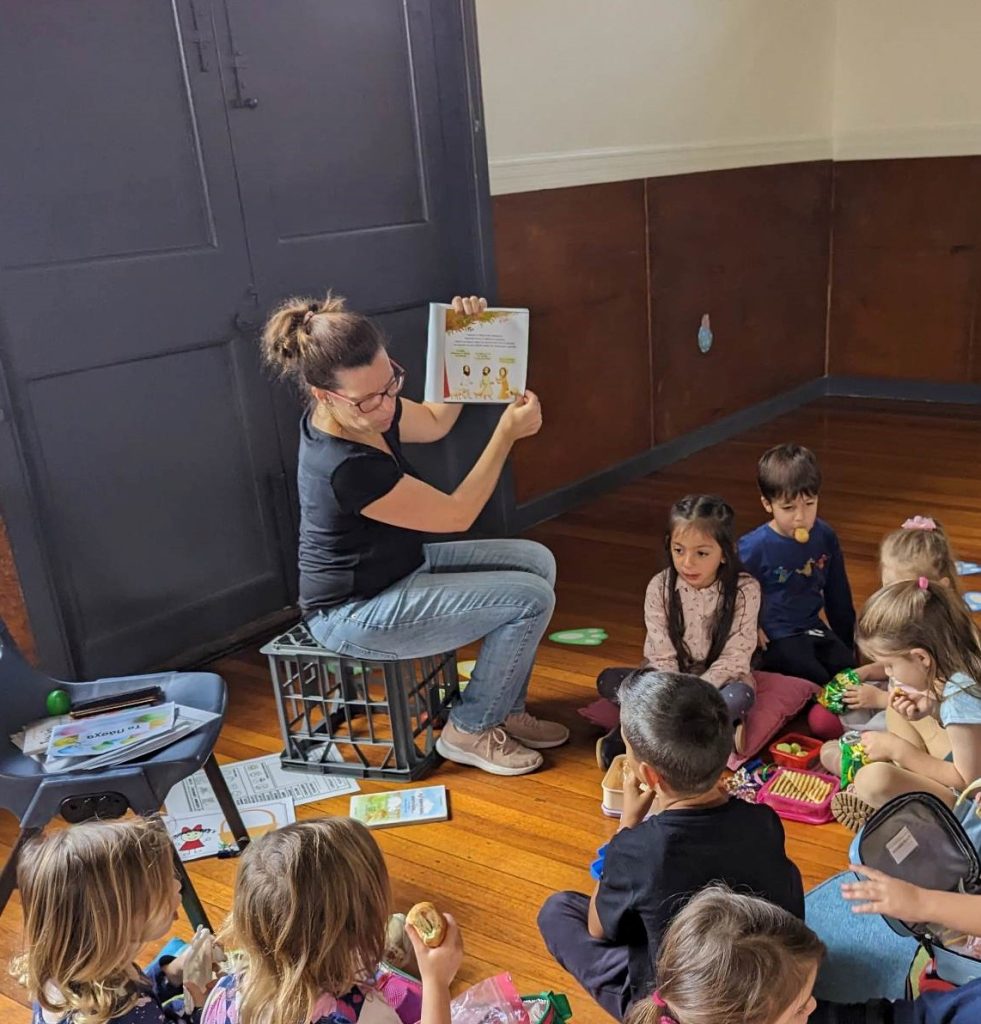
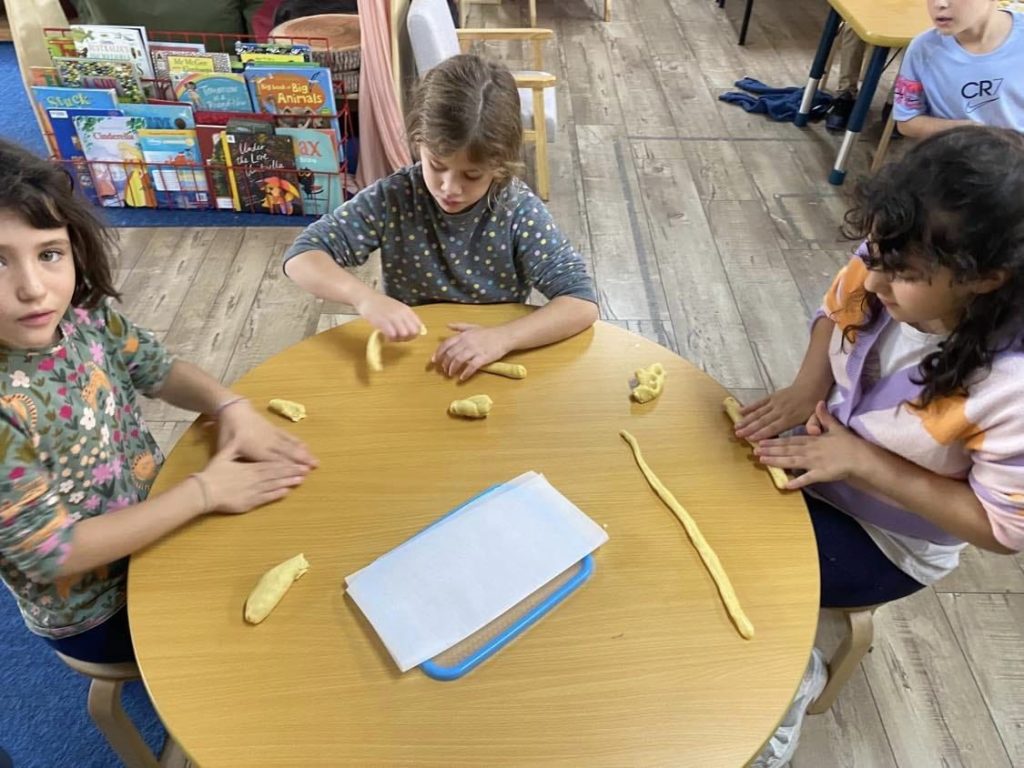
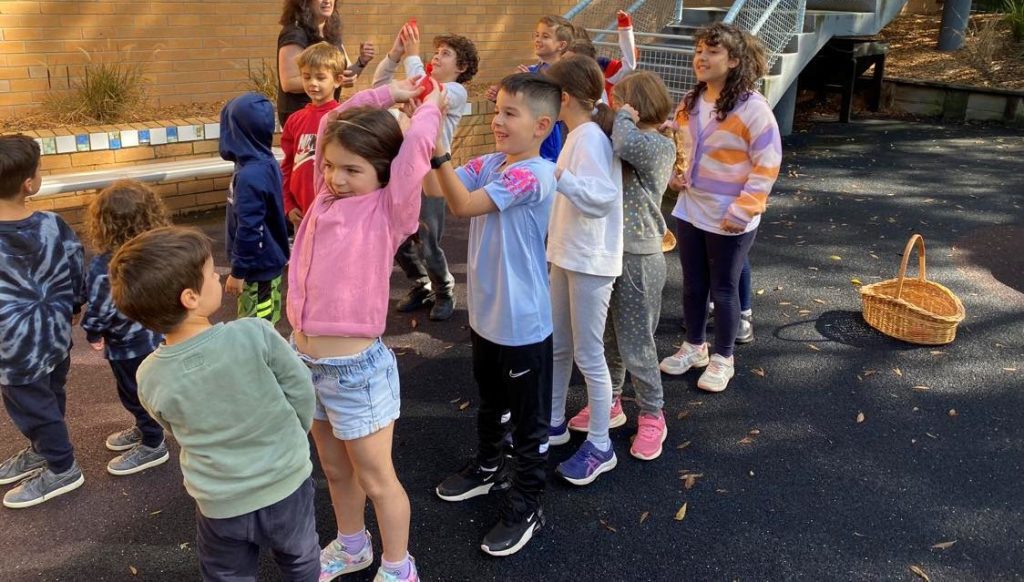
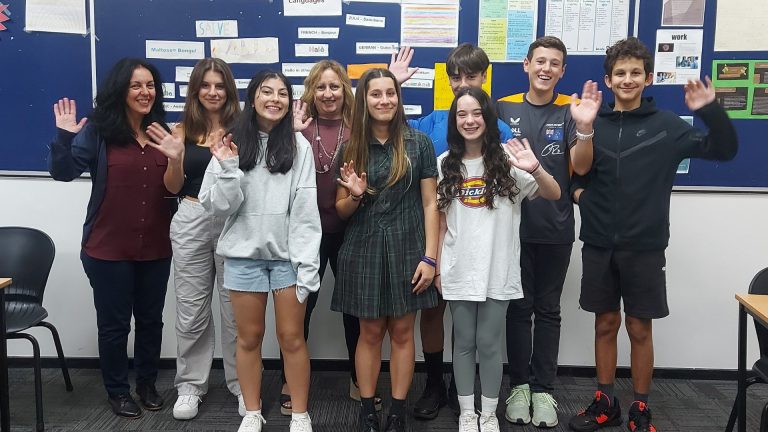
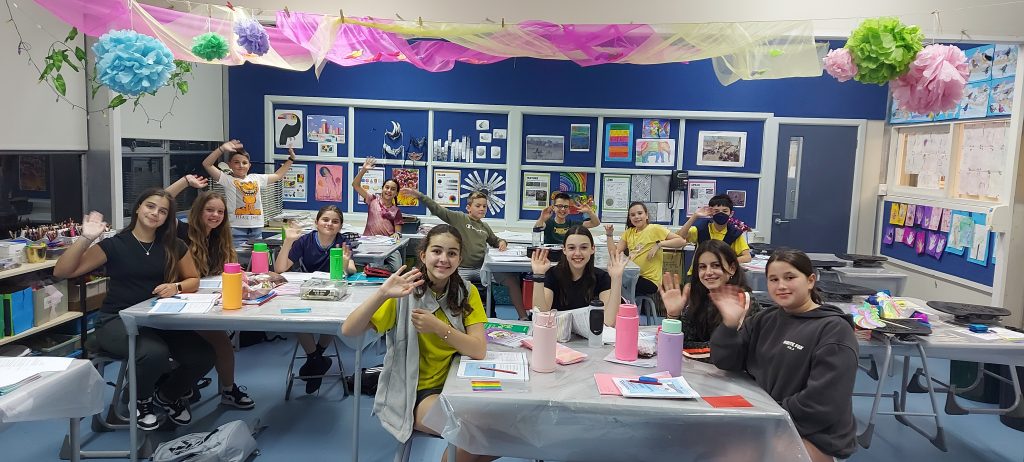
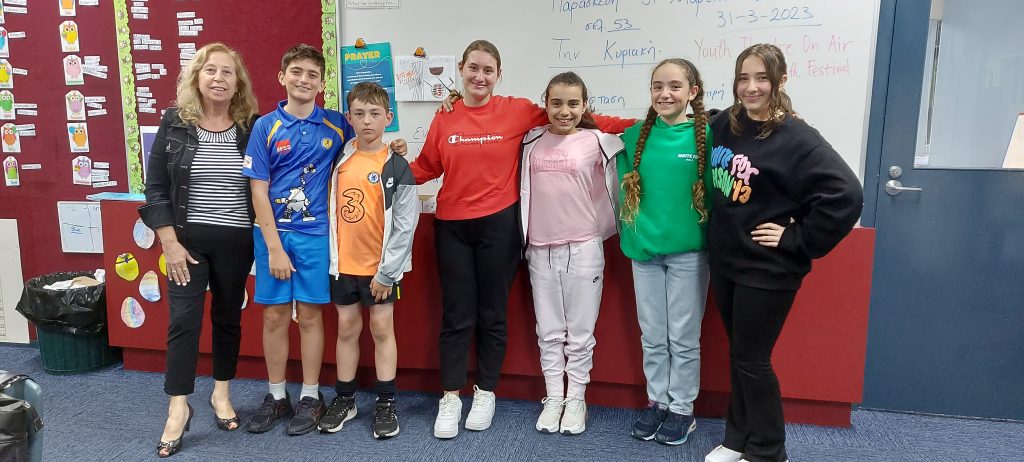
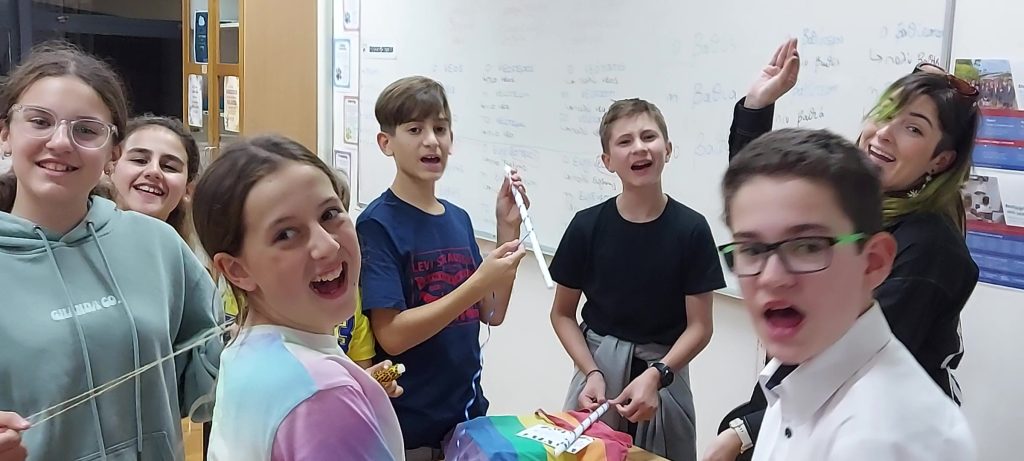
On Tuesday, April 11 and Wednesday, April 12, students from the Greek Community of Melbourne’s Language and Culture schools took part in Easter workshops.
Kindergarten teachers, Vicky Petala and Christina Soumi, organised and participated in the workshops.
Reading Easter stories
Those who participated in the workshops had the opportunity to listen to Easter stories, discuss Easter customs, make related handicrafts and prepare traditional delicacies.
The children’s participation exceeded all expectations, as this workshop gave them the opportunity to experience some of the most characteristic Greek Easter customs.
Easter workshopStudents of Greek Language and Culture Schools
“It was two hours full of Greek language and tradition,” Olga, the mother of one of the students who participated in the program, said.
The Director of the Greek Language and Culture Schools of the GCM, Maria Bakalidou, said: “Easter is the biggest holiday of Greeks all over the world and at the GCM Language and Culture schools we believe that such experiential activities are the best way for children to get to know the importance and beauty of the innumerable Greek customs associated with it. It is our small touch in the collective effort to pass on traditions to the younger generations.”
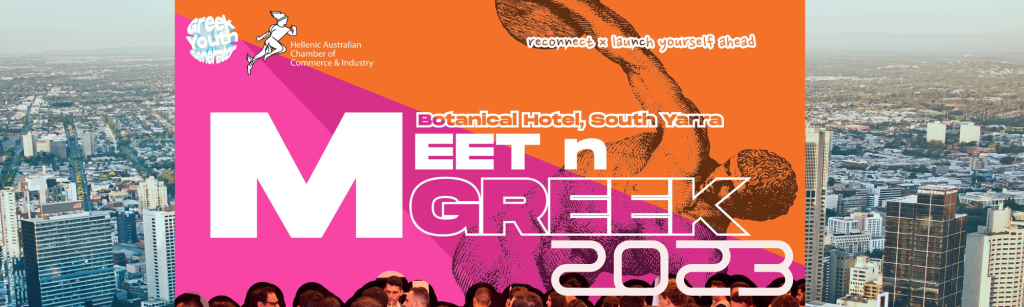
HACCI and the Greek Youth Generator are once again joining forces to welcome the next generation of business and professional leaders into the HACCI Young Professionals Network Mentoring Program for a night of networking and connection, over drinks and delicious food.
This year’s ‘Meet n Greek’ event will take place on Thursday, April 20 in the Botanical Hotel on 169 Domain Road, South Yarra, Victoria, from 6pm until 9pm. Tickets cost $55.
The ticket price includes membership to the HACCI Young Professionals Network and complimentary access to the 2023 mentoring program.
The non-for-profit organisation coordinates unique offerings throughout the year, including their flagship business excellence awards, which celebrate the brightest businesses in the Hellenic Australian landscape.
The HACCI Young Professional’s Network was formalised in 2015 to create networking and involvement opportunities for emerging professionals of the Hellenic community.
The Theater from the Microphone online youth festival has returned for the fourth consecutive year to give children, teenagers and young people from Greece, Cyprus and the diaspora the opportunity to create and present their own radio play.
The festival is the result of the collaboration between the Theatrical Visual Arts Center “Poupoulos” (Thessaloniki-Greece), the Motivation in Arts Foundation (Paphos-Cyprus) and the Creative Drama & Arts Center (Melbourne-Australia).
The goal of the festival is the Greek language, culture and theatrical expression to travel through radio and the internet, wherever there is Hellenism.
The special and comparative advantage of this action lies in its digital nature, which enables collaboration across borders and over distance. At the same time, it is an action open to everyone on the Internet and unites Greek children from different parts of the world.
31 theatrical and narrative plays from Greece, Cyprus, Australia and the Czech Republic have already been submitted to the organisers.
Students
The three categories are:
First Category – CHILDREN
Second Category – YOUTH
Third Category – GREEK DIASPORA
The first two plays from these categories that will be awarded will be broadcast by radio stations in Greece and Cyprus and on the website of the Theatrical Visual Arts Center www.dramacenter.gr.
The jury consists of Dr Stavroula Nikoloudis, professor and coordinator of the Modern Greek Studies program at La Trobe University in Melbourne, the Artistic Director of KTHBE, director/actor, Asterios Peltekis and the radio producer of RIK, educator, Kyriakos Pastidis.
Greek Language & Culture Schools of the Greek Community of Melbourne students
From April 7 to April 14, the public will be able to find the 31 plays posted on the www.dramacenter.gr page and vote.
The Online Opening Ceremony of the festival will take place on Saturday, April 22, 2023 at 5pm (Melbourne time and 10am Greek time) when the awards will also be presented.
Dimitris Batsis, PhD of the School of Fine Arts, Department of Visual Arts and Art Sciences of the University of Ioannina, will speak at the official online Opening Ceremony. Also in attendance will be representatives of Local Government and academia, artists, writers, teachers, school principals and the pupils and students who are taking part.
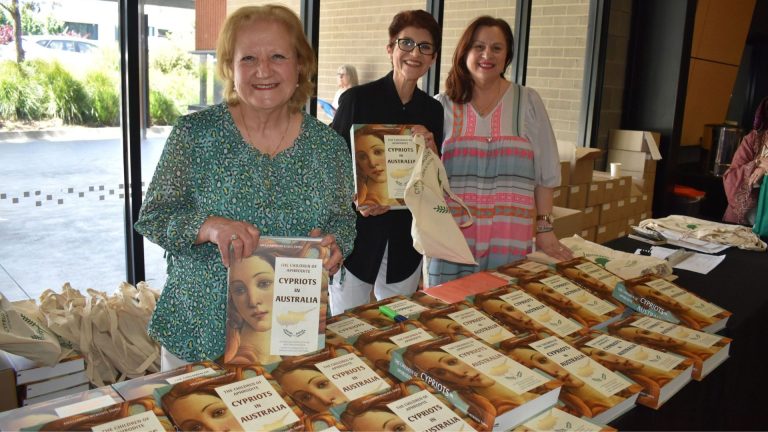
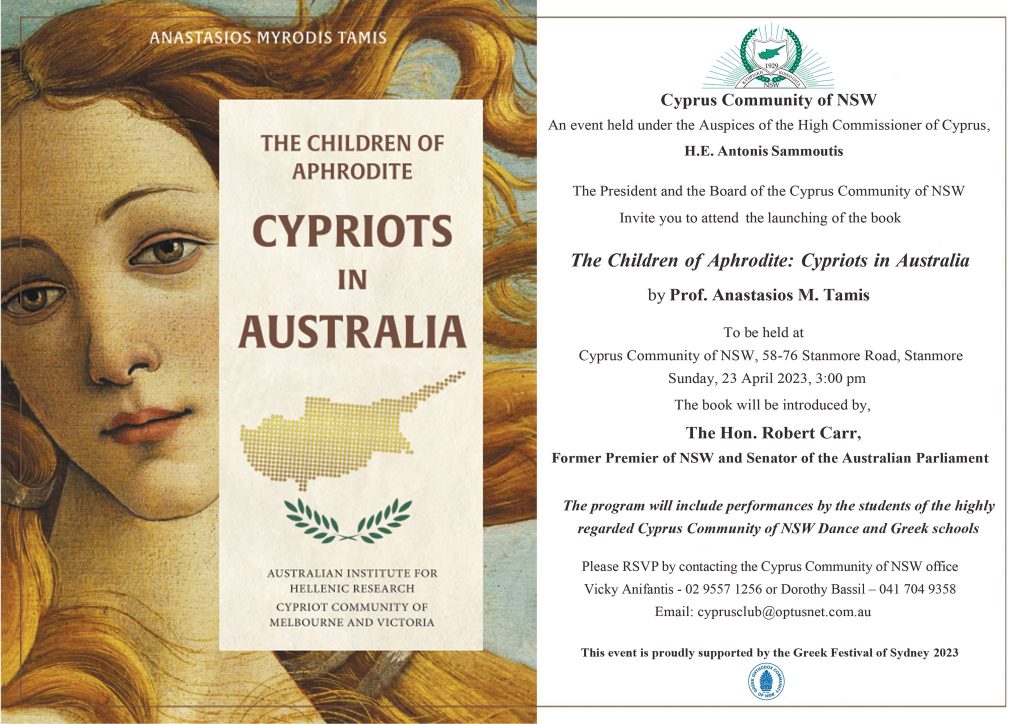
On Sunday, April 23 this year at the hall of the Cyprus Community of Sydney and NSW at 3pm, the former Premier of NSW and Australian Senator the Hon. Bob Carr, will launch the book authored by Professor Dr Anastasios M. Tamis entitled The Children of Aphrodite: The Story of Cypriots of Australia.
The event is organised by the Community of Cypriots within the framework of the Greek Festival of Sydney, and the presentation is under the auspices of the High Commissioner of the Republic of Cyprus in Australia, H.E. Antonis Sammoutis.
The biennial research and publication of the book is the result of the sponsorship of the Cyprus Community of Melbourne and Victoria. It is noted that the Cypriots of Sydney and greater NSW took an active part in the research and contributed in a useful and flawless way to the writing of the book.
The journey of the thousands of Cypriots who discovered Australia and settled in the Green Continent of the South, is described in the study that began in 2020 and was completed in 2021. The book describes the first Cypriot settlements, the first migration in the vast countryside but also in small and large urban centers, in every State of Australia. Their wandering in the forests and plantations, mines and factories is described. They are given the professions they practiced, the adventures they experienced, their achievements and their action. This is followed by their social organisation, their affiliation with unions, their work, their struggles to promote their cultural identity, the pain of colonialism that emerged from their island until 1960 and the 14 years of freedom.
The pioneering leaders, the people who served in the commons, their struggles are being mentioned. It describes the birth of their clubs, their contribution to Cyprus and Australia, their differences and disagreements, the divisions in difficult times. The chapters that follow describe the social and economic development of the Cypriots, the cultural constitution, the class of intellectuals, poets, writers, artists, people of letters and art, trade unionists, workers, relations with Greece and Cyprus, relations with Australia, and their struggles for the national aspiration and vision.
The history of the Cypriot settlement:
More than 150 years have passed since the pioneering Cypriots discovered Australia and almost 100 years since the appearance of their first collective organisations on the vast sugarcane and banana plantations in semitropical Far Queensland.
Young children who broke free from British schooners; inquisitive young people who longed for their adventure and fortune in countries that came out of myth; young children of large and destitute families who had to marry their sisters; destitute young people of large patriarchal families who escaped from the misery and poverty of their villages, to give hope to parents and other siblings left behind on the island; men who abandoned their wife and children to secure them later future and face in the sun; wives who scattered in search of a living in the vast countryside of Australia and stayed for ten and twenty years without seeing their wife and children again; young men, self-exiled of a difficult life and an incorrigible future. All victims of an open life, entangled with revolutions, uprisings, savage exploitation, deprivation and slavery, was the first settlement of the Cypriots of Australia from 1870 to 1930.
Then came the years of persecution, the stone face of the colonialists, the sullen face of the new oppressor, worse than that of the Ottoman that preceded it, a conquest which took the dimension of a sale. Thousands of Cypriots, Turks and Greeks escaped in the interwar period, when the first messages had appeared in the streets and mountains of the island, against the colonialists. However, already by the mid-1920s, the first organised assemblies had been set up and the informal organisations of the Cypriots in Northern Queensland were established.
Greek Cypriots had already purchased large areas, after hard work under the sun that burned the rails of the wagons carrying the sugar cane. They tore the old shirts and dressed the handfuls so that they would not be burned by the sun. They had already set up their first cooperatives and had jointly with partnership ventures bought the first farms, set up the first coffers in that vast countryside, the first bakeries, some had also carried their professions from Cyprus, blacksmith, barber, baker, tailor. Those who had no profession remained in the province, seeking asylum from their compatriots who were already landowners.
The most inquisitive sought their fortune in Brisbane, Perth, Adelaide, Sydney and some, fewer in Melbourne. There they were thrown into the business that did not require a good knowledge of English, nor large funds. They initially became wandering food distributors. They opened kiosks outside train stations, sold fresh fruit, bread in homes, fish in neighbourhoods, cold water in summer, candies at fairs. There after working for a few years for their survival, with a daily wage that counted 16 to 20 hours, in the kitchens of the cafes of their Greek compatriots, they then became kitschomans, then bought their own business, put a watch chain in the vest, wore a hat, left a mustache, wore a shiny pointed shoe, and took a picture next to the first limousines of the cities to send to their loved ones in Cyprus, together with cheques, the currency of hope, as it went down in history.
The war ensued. Thousands of Cypriots enlisted, served in the famous Regiment of Cypriots of the British Army, trained, and fought in Greece, Egypt and later in Italy. They were ordered by the colonialists, they say, as in 1916 in the First World War, their freedom, the right to decide, if they wanted, like the rest of the Aegean islanders to unite with Greece, to naturalise Greeks and not British. They believed it. They were deceived.
Immediately after the war, the mass exodus of Cypriot immigrants began after 1947. Thousands went out. Most in London and Birmingham and others in Australia. Most settled in Melbourne, Sydney, Adelaide, Perth, Darwin, and others dispersed to vast Queensland. In the western suburbs of Melbourne and inland, in Sunshine and Brunswick most of them. Some, a few thousand, took refuge in the coal mines in the Latrobe Valley, and on the Winchelsea plateau, outside Geelong. They gathered here by the thousands and augmented. They mostly married other compatriots from their island (there were rarely extramarital affairs). Cypriots are like Kalymnians. They marry and marry only Cypriots, neither Kalamarades (they do not have much confidence in them), nor foreigners.
The indicator of in-breedings among Cypriots in Australia is the highest compared to any other part of Greece, except for the Kalymnians. Membership archives, and the interviews that took place in recent months, show that 69% of their children married a Cypriot (the general indicator among second generation of Greeks in 2011 was only 38%).
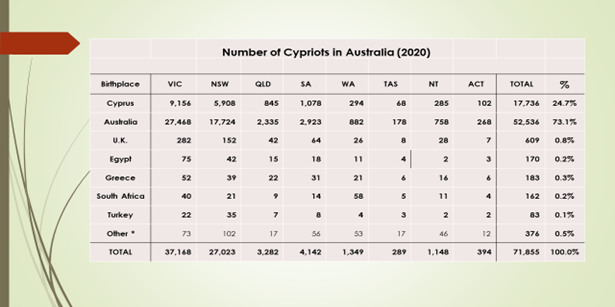
The number of Cypriots in Australia, based on the data of the official Census (2011 & 2016), as well as cross-checks of the variable factors, language, religion, and origin, is estimated at 72,000, of which 13,500 are Turkish Cypriots. Most of them are based in Melbourne, which is the ethnolinguistic centre of Hellenism in Australia.
Data on Cypriots in Australia.
The first organised settlements of the Cypriots took place in Queensland, where Cypriot Hellenism had settled there. 60% of Cypriots had settled in the provincial towns of Babinda, Home Hill, Ayr, Innisfail and Townsville where, since 1924, informal social organisations of Cypriots were already operating, in order to provide mutual assistance, shelter and work. The fact that they were British nationals gave them the right to equal treatment with Anglo-Australians in finding work and the favourable bias.
In many cases, during the difficult years of economic crises and unemployment, many Cypriots accompanied Greek settlers of the time and on the grounds that they were “Cypriots” the employers provided them with work. “Cypriot camouflage” operated even until the 1960s in most Australian states. The informal Cypriot organisations of the province of Queensland, such as that of Home Hill, while initially operating as a Cypriot organisation and founding the church of St Stephen in the early 1930s, later turned into a Greek Community.
The legally established Cypriot Communities were organised in the 1930s in Melbourne, Brisbane and Sydney and a little later in Adelaide. The cause of the founding of the Communities and the social and political rally was the October revolt of the Cypriots in 1931 against the colonialists, but also the deep economic crisis that had wreaked poverty and havoc on hundreds of Cypriot families. It should be noted that at that time community affairs, as well as ecclesiastical and political affairs, were regulated almost exclusively by the economic and social elite of Cypriots and Greeks.
There were those few businessmen, restaurant owners and cafés, mainly landowners with active participation in the early societies of urban cities, who had reason and opinion. Most Greeks and Cypriots were proletarians and peasants. The front-runners were absent, the educated, the professionals. The vast proletariat functioned, without a middle class, without a social backbone, without a bourgeoisie. This social elite laid the foundations for the Cypriot era, created the conditions for the existence of the first clubs that all bore the names of Cypriot heroes from antiquity, and anxiously awaited the arrival of the main body of the Cypriot exodus after 1947.
With the arrival of thousands of Cypriot settlers (they were not counted as immigrants, but as settlers, like British nationals), a strong division arose between the progressive forces that in their majority constituted the new settlers and the conservatives of the pre-war period. The causes that created intense competition and division were many. Initially there was a conflict between old and new Cypriot settlers. Post-war settlers often complained about the lack of protection and care they received from the old ones. Then there was the suspicion aroused against all those who had served in the British Army and had collaborated with the colonialists. After 1955, the liberation struggle reaped these differences.
The EOKA fighters were considered by the Australian establishment, as well as by the British, as “terrorists”, which caused rifts in the intra-community relations of the Cypriots of Australia. This was followed by the intense rupture, the mother of all divisions, the civil war climate of Greece. The leftists and friends of AKEL, the workers’ and peasant proletariat against the conservative forces. When this turned, just before 1960, into a deep and partisan rift between the progressives who raised the flag of the independence of Cyprus and the conservative patriots who supported the Union with Greece, then organisations split, new organisations emerged, and the division even took on the domestic dimension.
The events of 1963-1964, although they initially rallied the Cypriot settlers of Australia, nevertheless caused new ideological conflicts and a new division, expressed after the coup d’état of the Junta and the invasion of the Turks, as “guarantors” of the security of the Turkish Cypriots, whom, however, over the next twenty years they were able to “self-exile” in all the neighborhoods of the world and replace them with settlers of Anatolia.
The two decades that followed 1974-1994 were among the most difficult in the history of the settlement of Cypriots throughout the Diaspora. New clubs were founded because the progressives “blocked” any attempt from the conservative candidates to win even one election. When this was understood, namely that conservatives had no hope of governing the old historical organisations, new associations were founded, “philhellenic” (the term is used in the sense of one who is devoted to the Union with Greece), new clubs were born as Lesches, even as informal organisations. In the end, the Lesches, which were also the opposing ideological awe for the communities, not only did not hurt the communal cause since their leaders were also ardent patriots and anxious to make the other side, the other voice, heard, they too filled the gap and kept their members close to Cyprus. Only the Sydney Club remained alive in the years that followed, mainly because of its large land displacement.
After 1990, the regional Communities of Greeks were established in all major urban centers of Australia, but mainly in Melbourne, where a total of nine organisations operated. Their contribution was very important and remarkable and this is because they did not “step,” did not “intrude,” did not destroy services that were already operating, ministries already offered by the historical community of Cypriots. They caused new openings, turned to social welfare, created nursing homes, welfare centers, schools and sports clubs and thus complemented the offer to society and members. Thus, the offer of the organised Cypriots to the approximately 40,000 Cypriots of Melbourne was completed.
After 2000, many of the children of the first Cypriot settlers came to power. They took up leadership positions, took part in decisions in a Cypriot community where 92% of their members were born in the 1920s, 1930s and 1940s. The inexorable time by now flattened the first generation of settlers. The leaders who had set up the infrastructure have either passed away, or remained helpless in homes and social institutions. The needs of the past do not work. The mutual help, the finding of work, the memory of the village, the need for coexistence and social gathering and common participation ceased to have their old color. The preservation of tradition, customs, cultural heritage, language, and dialects remain the “signs” of navigation, but as cultural events, not as a way of life, as it was in the past.
Book of historical memory:
The President of the Cypriots of Melbourne, Former Minister, Mr Theofanis Theophanous, said: “This book authored by Professor Anastasios Tamis is a historical milestone of remembrance and evaluation. As president and representing the members of my Board of Directors, I declare that this story must enter all the homes of Cypriots, in order to remind their children and grandchildren of the struggle and anguish of the pioneers, the sacrifices of their fathers and grandfathers and to show them their own responsibility towards their identity, but also their debt to our martyred little Great Homeland that is under foreign occupation, captive and bleeding.”
The book will also be presented in Nicosia in August at the initiative of the Australian Ministry of Foreign Affairs as a gift-sample of the cooperation between Australians and Cypriots, within the framework of 50 years of diplomatic relations between Cyprus and Australia.
“It is our pleasure and honour to present this book in Sydney and in this way to honour the memory and sacrifices of the pioneering Cypriots of Australia, who laid the foundations of an organised Cypriot presence in Australia,” the President of the Cyprus Community of Sydney, Mr Andrew Costa, said.
Dr Tamis said: “I thank from the bottom of my heart all those who contributed to the publication of the book. I am fully pleased with the organisation of the presentation of the book by the Cyprus Community of Sydney within the framework of the Greek Festival of Sydney and I am grateful to all those who helped in the research of this book, which is being passed on to future generations of Cypriots as a book of historical reference.”
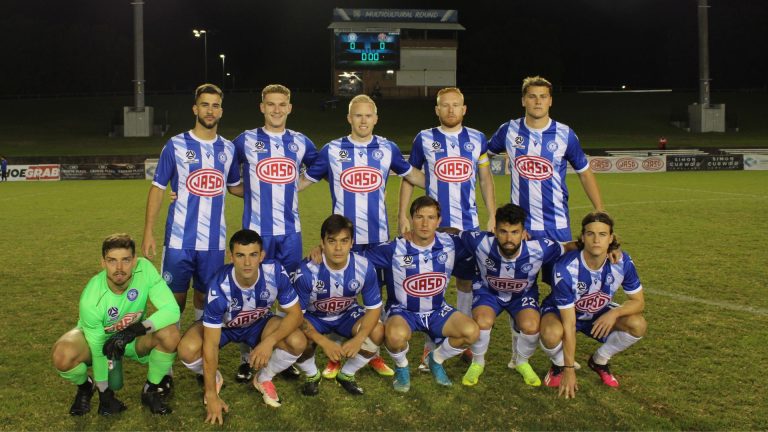
Sydney Olympic FC advanced to the next round of the Australia Cup after defeating Blacktown City 3-1 on Wednesday night. The team came from behind, taking sweet revenge for the heavy defeat in the league with 5-1.
After going behind 1 nil in the first half, Sydney Olympic turned the game around.
Sydney Olympic FC.
Oliver Puflett equalised the score in the 48th minute of the second half. In the 52nd minute, Fabio Ferreira made it 2-1 and in the 76th minute, Puflett scored his second personal goal to propel Sydney Olympic into the next round.
On the day, Andy Paschalidis’ Heartbeat of Football organisation offered heart and health tests for free, with many fans participating.
Heart tests.
Sydney Olympic’s victory comes as Wollongong Olympic also defeated Bankstown United 2-0 to progress to the next round of the Australia Cup.
The number of Greeks living abroad who are planning to vote in Greece’s general election reached nearly 29,000 by Tuesday’s registration deadline, according to ekathimerini.com
Greeks abroad are allowed to vote for a new Greek government, providing they have lived in Greece for at least two consecutive years in the past 35 and have submitted a tax declaration with the local authorities this year or last.
Photo: paron.gr
Earlier this year, The Greek Herald reported that the number of the Greeks in Australia who had registered to vote was 40. Since then, registrations have closed and according to opentv, there was only 162 registered Greeks in Australia.
4,556 voters were reported in the United Kingdom and 1,607 in Belgium, while the overall number of Greeks abroad who applied to vote was 30,617 and the applications approved were 22,008.
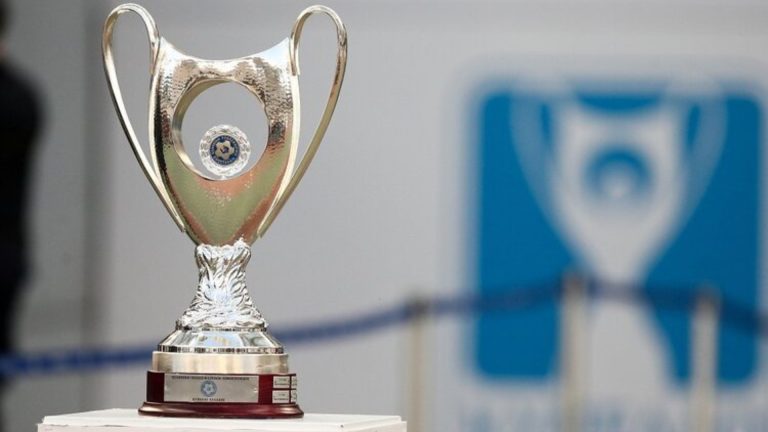
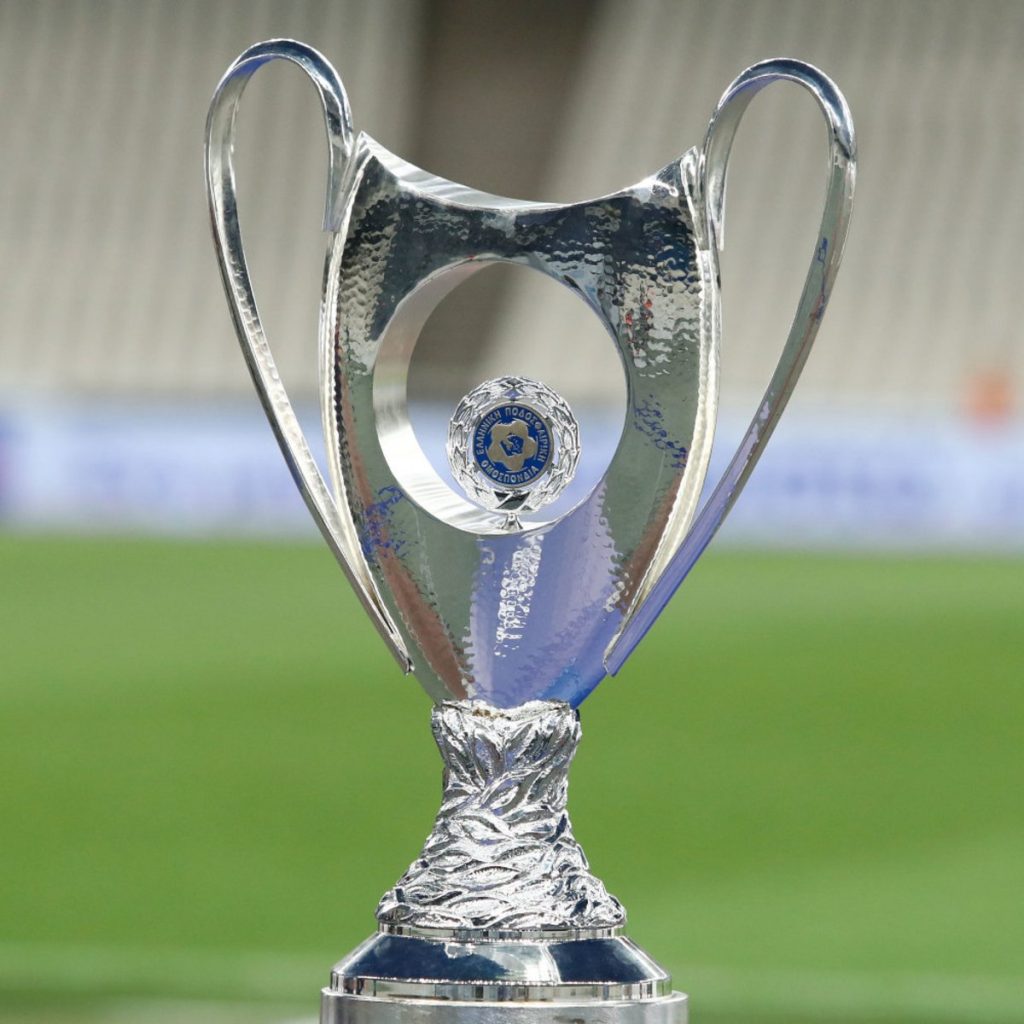
A new twist has appeared in the case of the Greek Cup final, according to sportal.gr.
After various reports claimed the final would take place in Cyprus in May, a statement by the Cyprus Police has denied these claims.
In the statement, the police said that after examining all the data and the danger arising from the final, it decided “not to advocate the holding of the match in question in Cyprus.”
“It is noted that the specific decision of the Cyprus Police was taken with the sole aim of maintaining public order and the safety of citizens,” the statement adds.
Questions now remain around whether the final could be potentially held in Australia. The Greek Herald first reported that the EPO had submitted a request to the Australian Football Federation to host the Greek Cup final in Australia this May.
She will be wearing an electronic tracking bracelet.
The former Vice President of the European Parliament, who was among the first to be arrested, has been in prison since December when she was indicted on charges including corruption and money laundering in the QatarGate case.
Eva Kaili.
The alleged “mastermind” of QatarGate, Antonio Panzeri, and Eva’s partner, Francesco Giorgi, have already been released from prison with an electronic bracelet.
Eva’s Greek lawyer, Michalis Dimitrakopoulos, stated that she “is leaving prison with her head held high and with dignity. She did not confess to crimes she did not commit, and she will fight for her innocence until the end.”
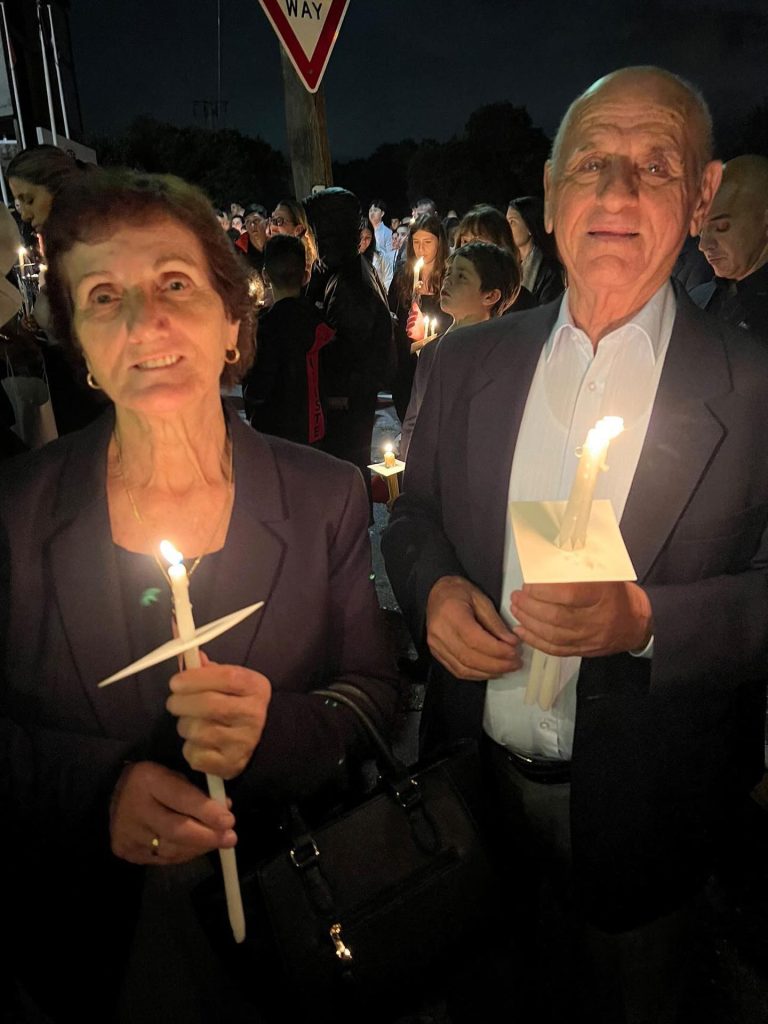
Saturday night. It’s 11:30pm. Greek Orthodox churches across Australia are inundated with yiayiades and pappoudes. Outside the church, the flood of people continues with a wave of young faces, particularly sleepy children clasping onto the shoulders of their mum or dad.
At exactly 12am, the Holy Flame lights up the dark, chilly night as it is shared around the sea of people. Immediately, the crowd shuffles around. One by one, everyone performs the Orthodox Easter ritual of a kiss on the check and declaring ‘Xristos Anesti’ (‘Christ has Risen’).
“Alithos Anesti (‘Truly he is Risen’),” people say in return.
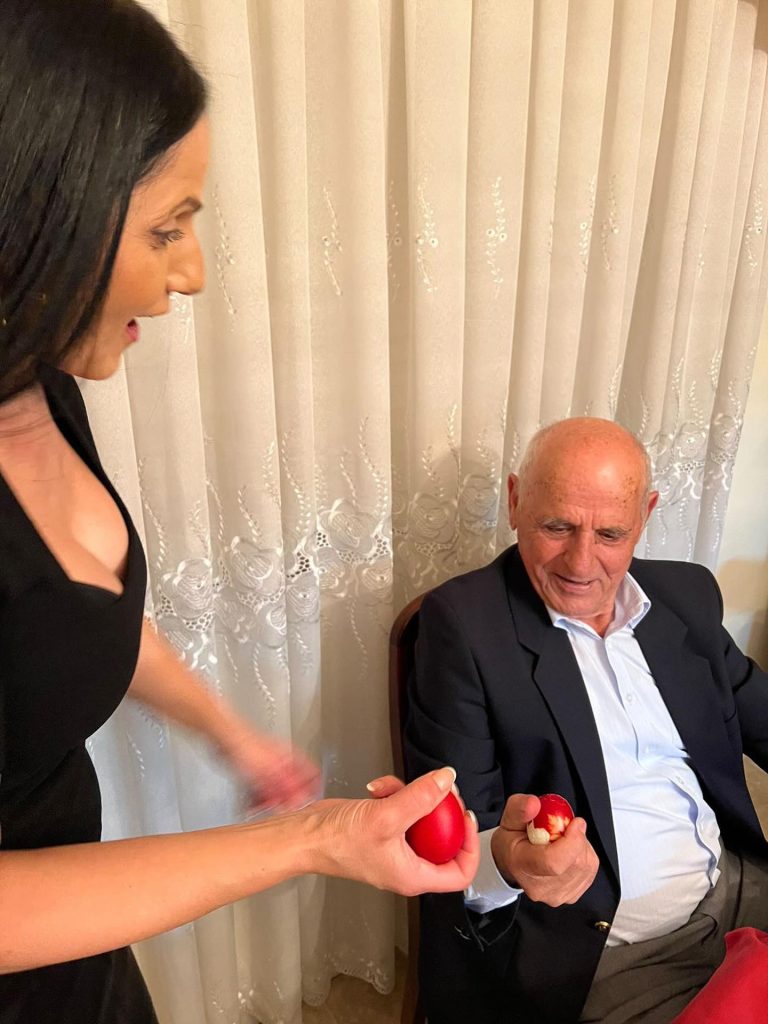
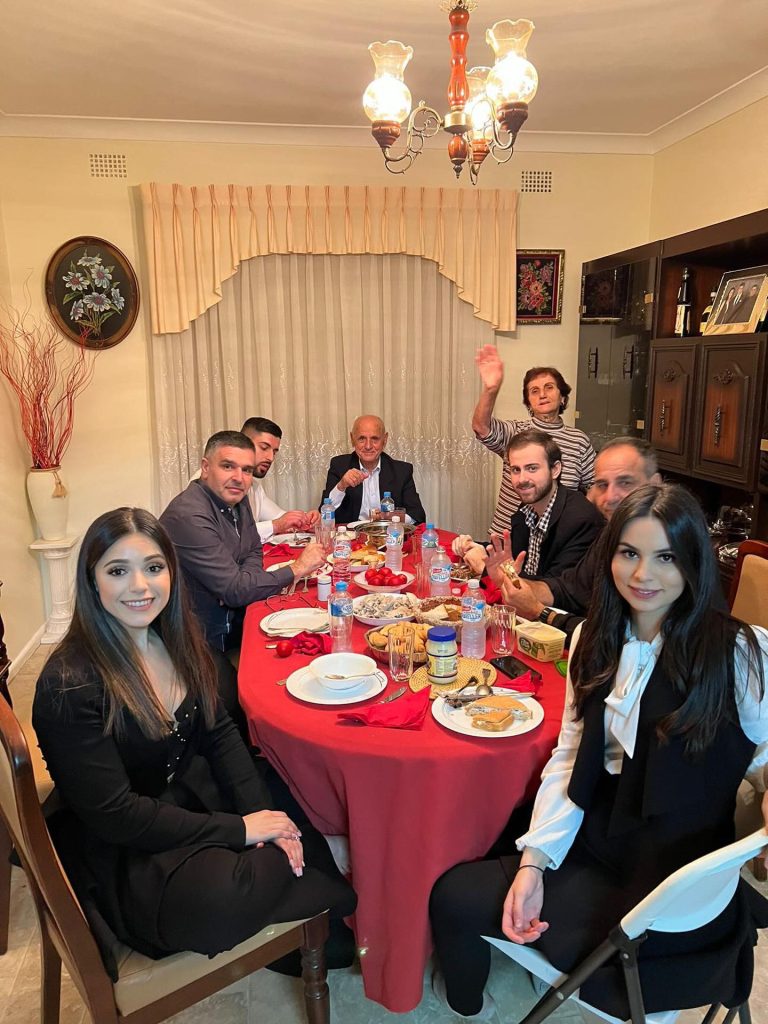
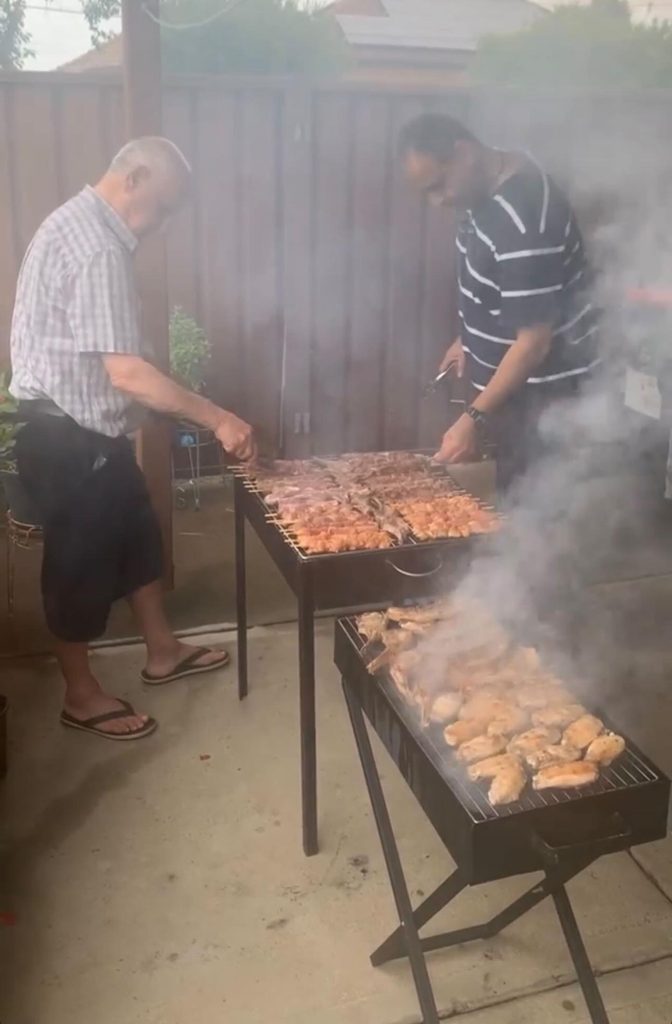
Later, at 1am, Greek Orthodox households are wide awake, cracking red eggs and eating traditional mageritsa. The next day, people find themselves eating again – devouring plates of food filled with souvla, rice, souvlaki, tzatziki, halloumi, Greek salad and pita bread at Sunday lunch.
Orthodox Easter is a week of reflection and time devoted to family and faith. This year, The Greek Herald spoke to some Greek Australians to hear how they celebrate the religious occasion and it’s spiritual meaning to them.
Katherine Sinadinos
33-year-old young mum-of-one, Katherine Sinadinos, tells The Greek Herald her favourite thing about Orthodox Easter is the preparation, particularly during Holy Week.
“It’s a time to reflect and reconnect with God, family and our cultural traditions. I especially enjoy the Good Friday services because they really set the tone of why we celebrate and the ultimate sacrifice that was made for our salvation,” she says.
Both of Sinadinos’ parents were born in Greece and she says that when she was growing up, they always wanted her to understand and carry on the cultural traditions.
“We make the traditional foods like koulouria, lambropites and I help my mum make tsourekia and we dye the eggs on Holy Thursday,” she explains.
Katherine Sinadinos with her husband and son. Photo: Supplied. Raphael Sinadinos. Photo: Supplied.
For Sinadinos, keeping Easter traditions alive in her family and for her one-year-old son, Raphael, is very important, especially since her dad passed away.
“I want my son to understand the meaning behind what we do,” she says.
“It’s not about just having a barbecue with family on Easter Sunday, but rather understand long the sacrifice made for us.
“Keeping the family traditions means we can pass them on to the next generation and keep my father’s memory and legacy alive.”
Nick Andriopoulos
Nick Andriopoulos is another Greek Orthodox faithful who enjoys celebrating Easter.
When The Greek Herald asks what Easter means to him, he responds: “Easter? Easter is about food – the cakes, tsourekia, the sweets!”
“My favourite thing about Easter is gathering with the relatives and cooking the souvla,” he adds.
The 76-year-old from Sydney says Easter in Australia is much different to how he knew it in Greece as a young boy. Back in the post-WWII days, there wasn’t an abundance of food, while Easter is now filled with lots more food and family.
“We go to church, we eat lots of food and I have more family, more grandkids,” he says.
Nick Andriopoulos. Photo:Supplied.
Katerina Isofidis
Reflecting on Orthodox Easter, Katerina Isofidis tells The Greek Herald she makes koulouria “without fail” every year.
The 21-year-old adds that going to church every day during Holy Week, and not just for the Anastasi on Holy Saturday, are traditions she also prioritises.
“I totally understand, when you do get older, you have more work commitments… and you kind of lose track of time and what’s important in the moment,” she says.
“[But] I think it’s very important [to prioritise Holy Week] because if we consider ourselves Greek Orthodox, then it is essential to go to liturgies.”
Katerina Isofidis with her family celebrating Easter. Photo: Supplied.
For Katerina, it’s all about the personal experience of Easter.
“You get to reflect on the atmosphere and everyone around you – that’s more what it is for me,” she says.
Vasiliki Kourtis
What’s Orthodox Easter without yiayia, mum or your favourite theia cooking and ringing you up to remind you about the church services?
Vasiliki Kourtis with her husband Spiro Kourtis. Photo: Supplied.
Vasiliki Kourtis, otherwise affectionately known as Yiayia Vaso, is 79 years old and shows no signs of slowing down. She continues practising Easter traditions every year – from cooking traditional foods to going to church and hosting the family.
“I fast for 40 days. No meat or seafood, no diary, only nistissima (Lenten) foods,” she tells The Greek Herald passionately.
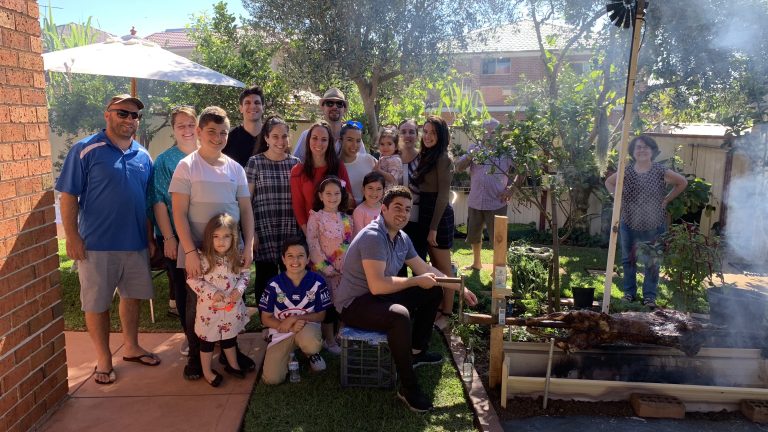
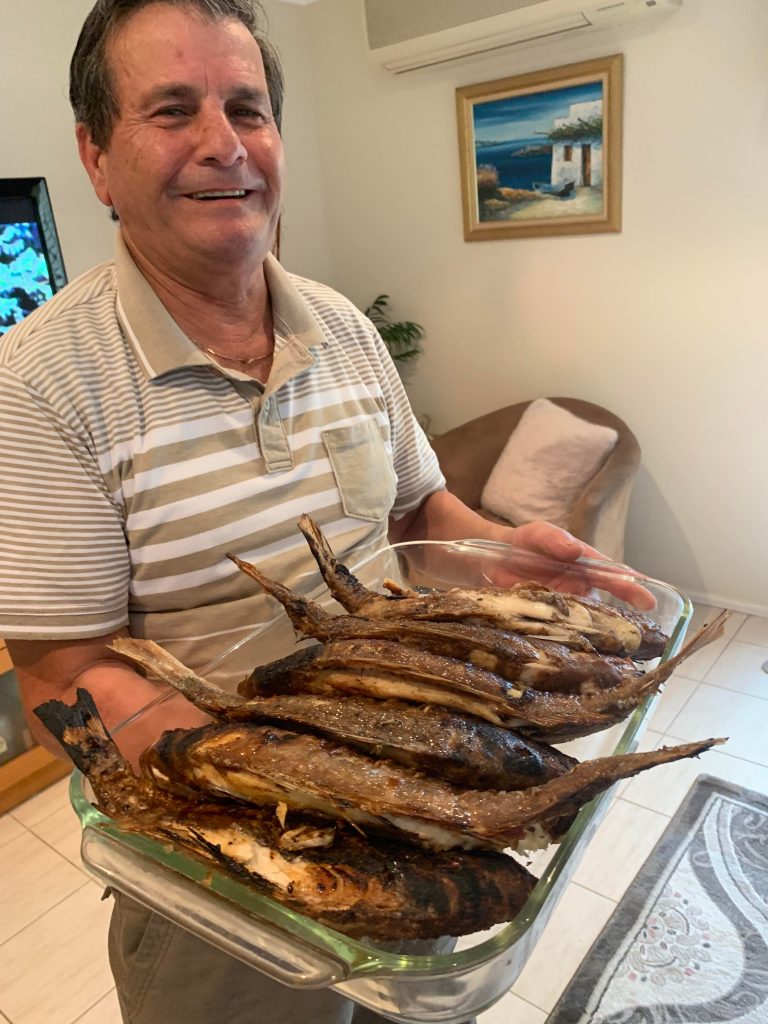
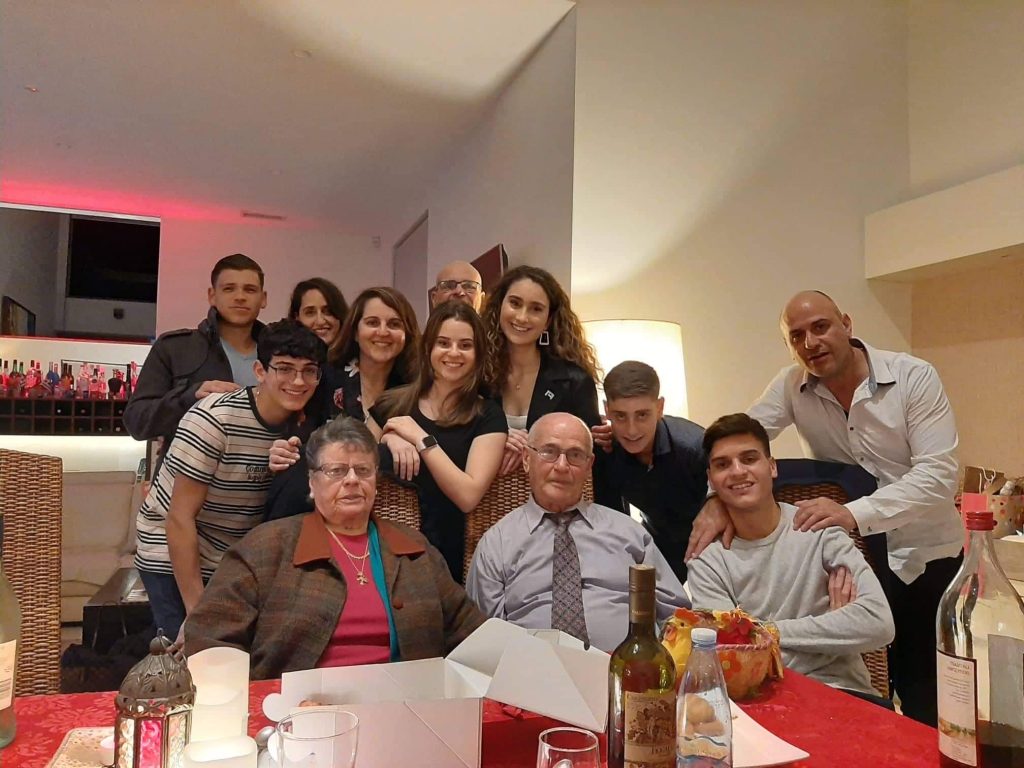
Vasiliki Kourtis’ family celebrating Easter. Photos: Supplied.
“I make tsourekia, dye red eggs with Kiki (a close friend who lives across the road). We wake up very early to make enough for all our family and friends and we make lots of koulourakia.”
Yiayia Vaso says over the years she has learned to appreciate Easter more and develop her preparation style. She says she has reached a point where she has seen Easter as a wife, a mother and a yiayia and hopefully one day as a great-yiayia.
But besides the food, the importance of Easter is “very big” to her and says it is the foundation for the Greek culture.
“As a migrant who left my country, the most important thing is our faith,” she says. “Without faith, there will be no traditions, it leads us back to our roots and our Greek heritage.”