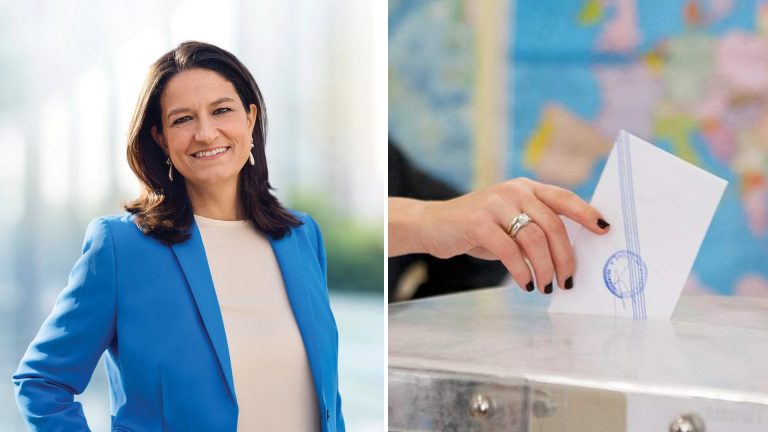
Greece’s Interior Minister Niki Kerameus announced the lifting of restrictions for Greeks abroad to vote in elections, in a letter sent to the diaspora, reported Amna.gr.
Minister Kerameus said in the letter it was a “historic privilege” for her to announce the new legislation, which was passed in Parliament on Tuesday July 25.
“Prime Minister Kyriakos Mitsotakis raised this issue as a strategic priority, and he realised with the first law of the new government of the New Democracy,” Minister Kerameus stated in her letter.
Με ευρεία πλειοψηφία 208 βουλευτών από τη Νέα Δημοκρατία, ΠΑΣΟΚ-ΚΙΝΑΛ, ΝΙΚΗ&Πλεύση Ελευθερίας,λύσαμε έναν γόρδιο δεσμό μισού αιώνα, καταργώντας όλους τους περιορισμούς στην άσκηση του δικαιώματος ψήφου των Ελλήνων πολιτών που ζουν ή βρίσκονται στο εξωτερικό την ημέρα των εκλογών. pic.twitter.com/vdyJJwwgte
“Now, Greek citizens who are registered in the electoral rolls, can vote without any restrictions. By registering on the electronic platform of the Interior Ministry and without any supporting documents, they can exercise their right to vote from abroad.
The reformed platform apodimoi.gov.gr is expected to be running in early September.
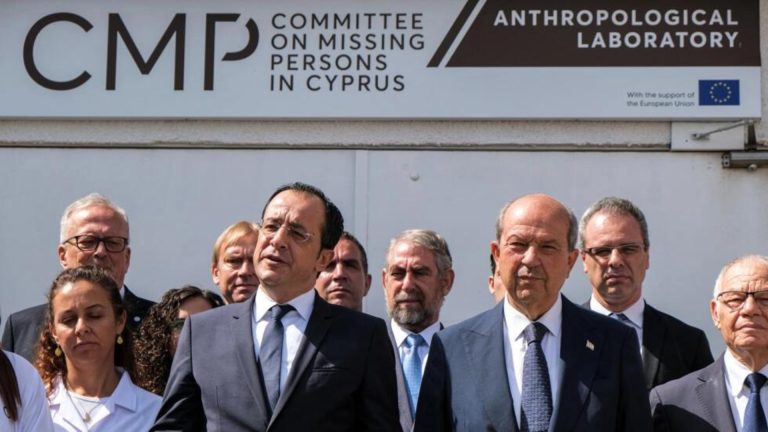
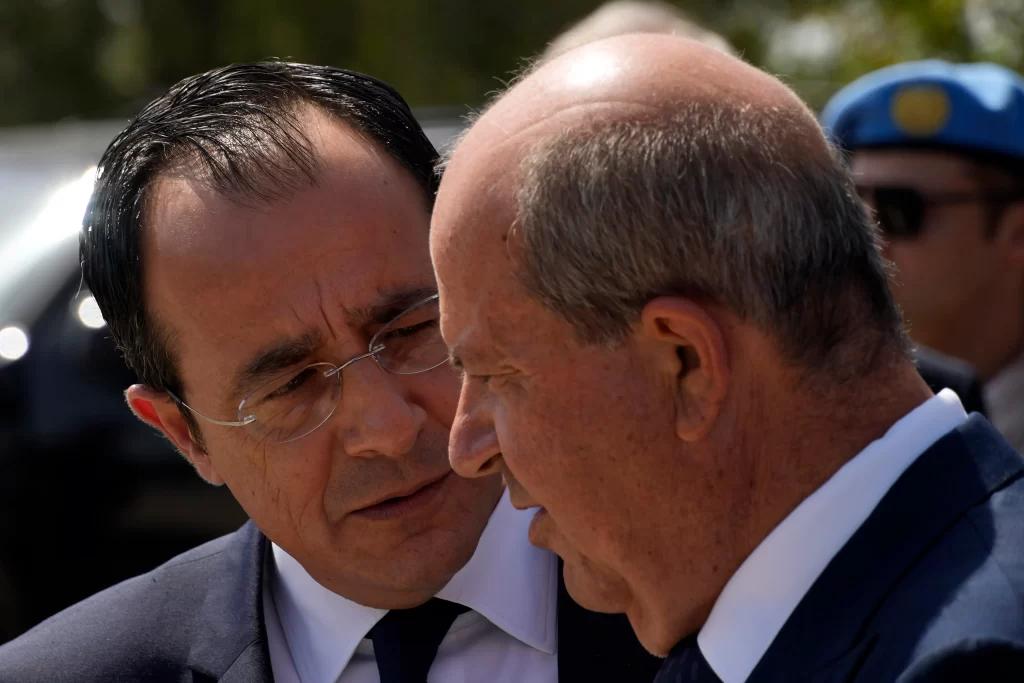
Cyprus President Nikos Christodoulides and Turkish Cypriot leader, Ersin Tatar, have joined forces in an attempt to appeal for missing persons information from the 1960 and 1974 Turkish invasions of Cyprus.
The pair met on Friday, July 28 at the Committee on Missing Persons (CMP) anthropological laboratory.
Christodoulides and Tatar toured the anthropological laboratory and praised the CMP’s work, in which they both deemed humanitarian efforts should be unaffected by political processes, according to Ekathimerini.
Christodoulides said in a statement that all missing individuals need to be located, whether they are Greek Cypriots or Turkish Cypriots.
Tatar told reporters: “This is a humanitarian issue, therefore this is something which is outside politics.”
Cyprus President Nikos Christodoulides and Turkish Cypriot leader Ersin Tatar. Photo: Petros Karadjias
Christodoulides added the appeal to find missing individuals would send a “clear political message” to build trust between the two sides, who have not had direct talks in six years.
Since 2006, the CMP, a UN facilitated body, has been tasked with locating, unearthing and identifying missing persons during the 1960 and 1974 Turkish invasion of Cyprus.
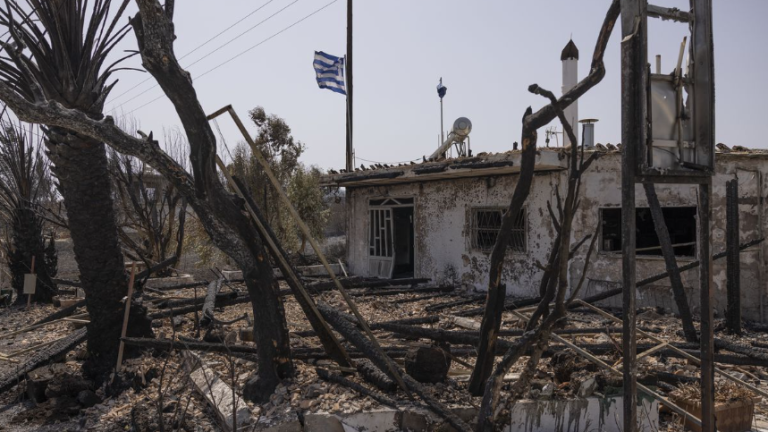
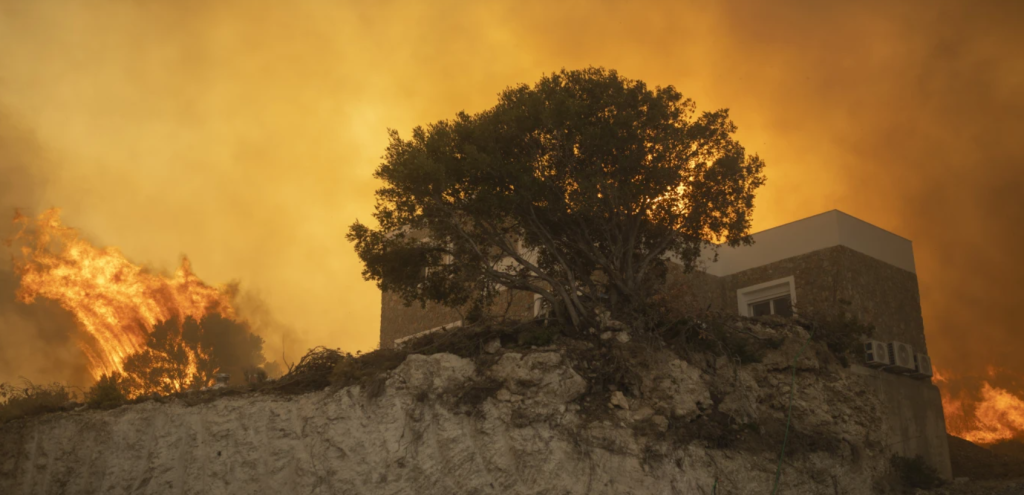
As tourists start to trickle back to the Greek island of Rhodes, officials have started to count the cost of July’s deadly fires on human lives, livestock and the environment.
A wildfire burns in Gennadi village, on the Aegean Sea island of Rhodes, southeastern Greece, on July 25, 2023. Photo: AP Photo/Petros Giannakouris.
This month, fires have been raging across Greece, including on Rhodes and Corfu, as well as outside the capital Athens. Five people have died in the fires, including two firefighter pilots.
The fires were fuelled by three consecutive heat waves, dry conditions and strong winds, causing chaos at the peak of the summer tourist season in Greece.
Greece’s Minister of Climate Crisis and Civil Protection Vassilis Kikilias also confirmed on Saturday that most of the 667 fires that erupted across Greece in recent weeks were started “by human hand.”
The fires in Greece abated on Friday after burning for nearly two weeks but emergency services worked over the weekend to prevent new flare-ups in the central part of the country, where people had fled massive explosions at an ammunition depot the day before.
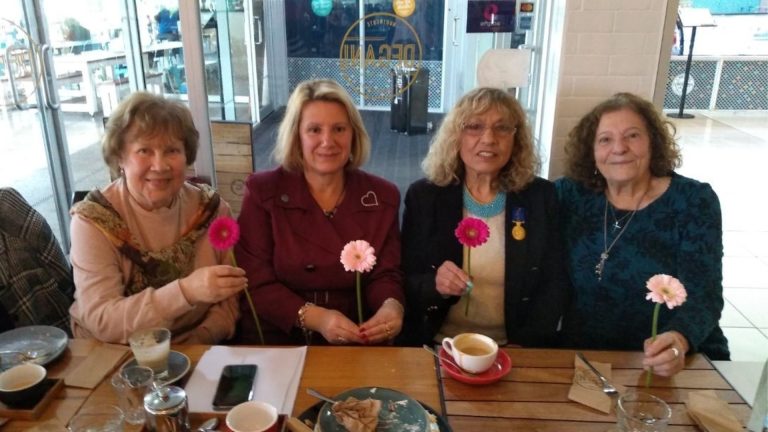
The Hellenic Women’s Federation of Victoria recently celebrated its 20th anniversary at an Annual General Meeting (AGM) on Sunday, July 23 in Melbourne.
At the AGM, founding Federation President, Sofia Mastoris OAM, announced her retirement from her executive position after 20 years.
From the beginning, Ms Mastoris had a dream for more equality for Hellenic women in Australia. It was her view that women, in addition to men, needed to be represented at the Greek events and exhibitions.
As the founder of the Protomagia Festival in Melbourne, which occurs annually on May 1, and many other accolades over the past two decades, Ms Mastoris has made her mark on the women’s Hellenic community in Australia.
The Federation thanked and congratulated Ms Mastoris for her exceptional work in the role of President for the past two decades. Ms Mastoris will remain on the executive of the Hellenic Women’s Federation.
As an active member in the Greek Australian community, Ms Mastoris was also President of the Greek Women’s Community of Whittlesea and City of Whittlesea Citizen of the Year. She organised a multicultural quilt with a patchwork display of different cultures in the City of Whittlesea.
For over 10 years, Ms Mastoris served as a volunteer for the Grace of Mary Aged care facility. She also volunteered for the Cancer Council for over 22 years.
Ms Mastoris was awarded OAM for her services to the Greek Community, including a VMC Award for excellence in Multiculturalism.
With the 2023 Women’s World Cup underway in Australia and New Zealand, all eyes are on the Matildas and their star footballer, Sam Kerr.
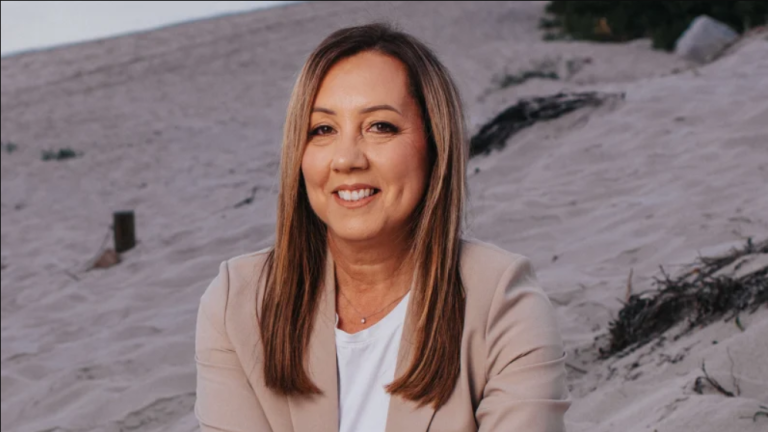
Working hard behind-the-scenes as Kerr’s manager is Greek Australian Nikki White and in an interview with the Sydney Morning Herald (SMH), she detailed how she juggles being a red carpet pro, raising awareness for Heartbeat of Football as a Board Member, and managing a female sporting legend.
When asked what it was like meeting Kerr for the first time after forming her own PR agency, White said: “I knew she was going to be a hard one to crack.”
Niki White with her clients and friends, Caitlin Foord and Sam Kerr.
The Greek Australian was nervous at first when she was asked to take on the job of managing Kerr, as she had never managed an athlete before. But she had one advantage – she loved football.
White told the SMHthat as a Greek Australian, she grew up supporting Sydney Olympic and worked at the club canteen and then supported her kids when they played.
“My biggest thing was: are there many women doing this? And there aren’t,” she said.
Despite this, White persevered and her partnership with Kerr has since blossomed. In fact, Caitlin Foord had also approached White based on glowing reviews from her Australian teammate and good friend.
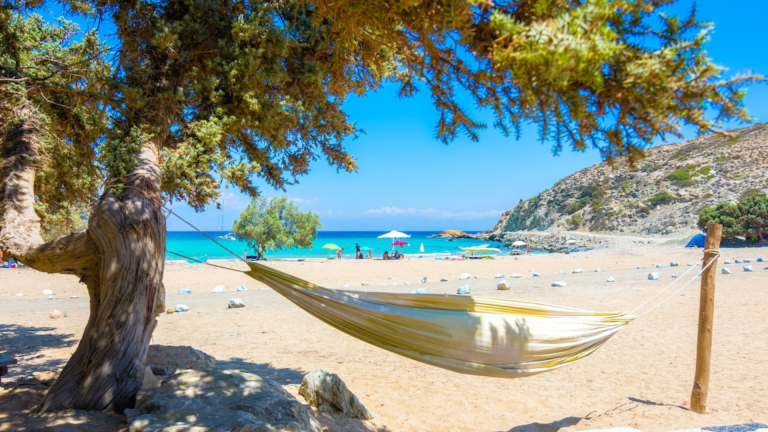
While every year a number of famous islands top the international lists for places to visit in Greece, there is a different side to the country that is waiting to be discovered.
From remote islands to mountain villages and rivers far from crowded beaches, Greece is a lot more than Mykonos and Santorini.
The Greek Herald takes a look at the not-so-obvious part of Greece that you have to discover, and offers you suggestions to live Greek summer in a unique way.
Zogoroxoria:
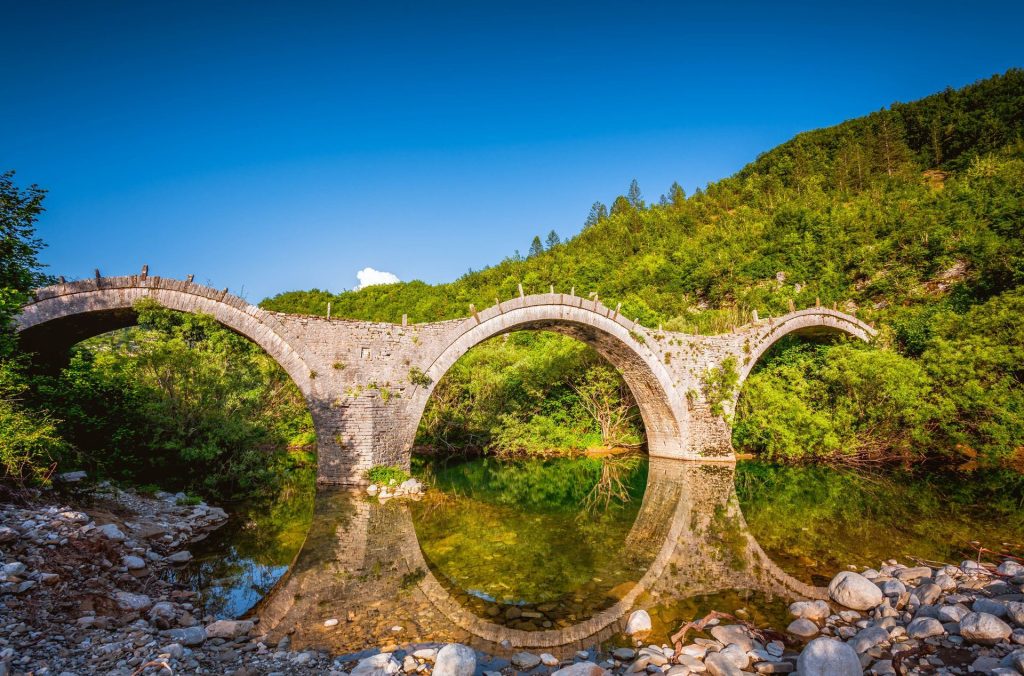
Zagoroxoria. Photo: Greeka
If, for most people, summer in Greece brings first to mind the beautiful islands, the crystal sea and the endless sunny beaches, then it’s time to see the bigger picture. At this time of the year, mountain destinations in Greece are ideal to discover small magical villages, to swim in rivers and to hike amongst the blossoming nature.
Zagori and the small villages in the northwest part of Greece are a must. You can wander in the forests, dive in the rivers, and eat delicious food under the shadow of trees in the village square.
There are 46 stoned villages in Zagori, and their heart lies in those main squares, which are lit up either by traditional local festivities, or by the simple pleasures of a quiet life from the permanent residents.
Instead of the overcrowded famous islands, you can choose to walk through the trails and across some of the 100 stone bridges, breathe in the forests and explore the magic of a destination which might look ideal for winter, but in summer, is transformed into a green paradise.
MountOlympus:
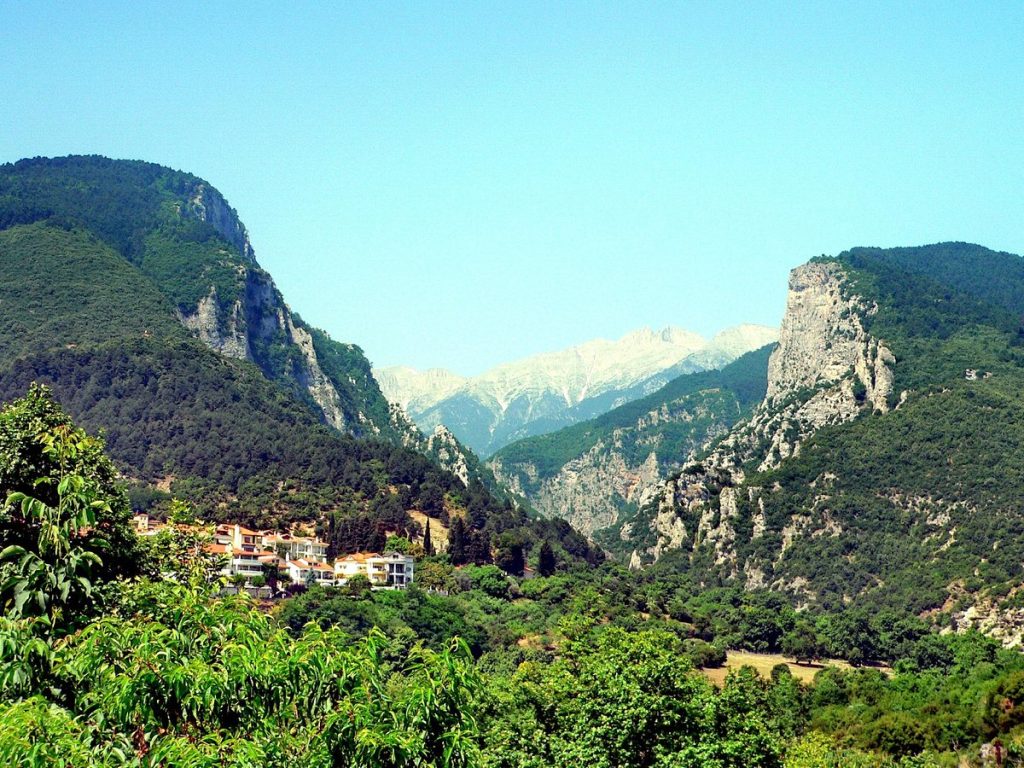
Mount Olympus. Photo: Trip Advisor
The home of the gods is a unique place, but in summer it gets even more special. Located in northern Greece, the highest mountain in the country (2918 meters), Olympus offers a distant destination with low temperatures and peace.
The trails to the mountain start from Litoxoro, Dion or Petra, and there are many spots you can aim for in your trip. If you are in good physical condition you should go to Myticas, the highest spot of the mountain and also see Stefani (Zeus’ throne).
However, you don’t have to go that high. If you are not a fan of trailing, you should visit the beautiful villages of Olympus, Kalyvia, Pythio or Kokkinoplos. Whatever you choose be sure that the combination of colorful trails and nature is going to give you a different journey to remember in the heart of summer. August is the best time to attempt your trip.
Irakleia:
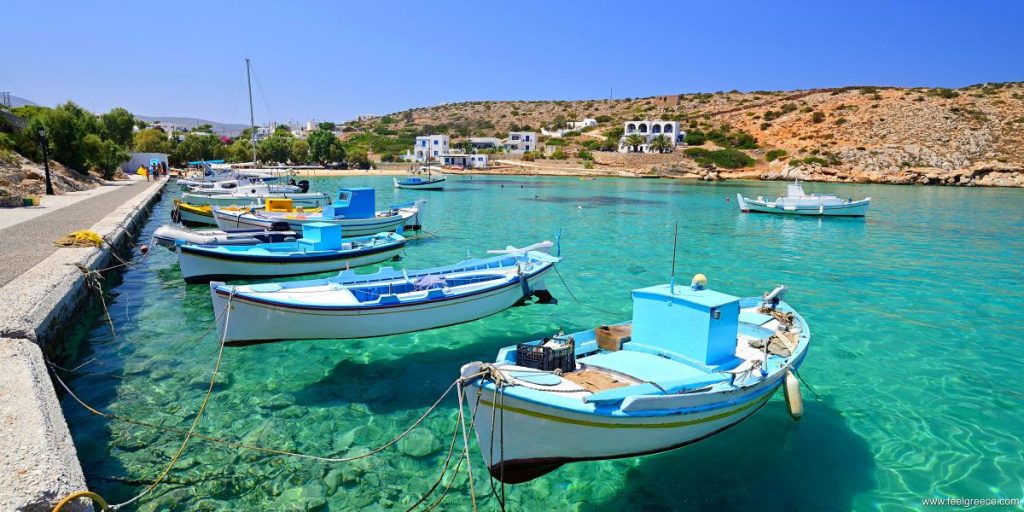
Iraklia. Photo: Feel Greece
Located in the most western part of the Cyclades islands, Irakleia is such a small island that you can walk it all in three days. It has crystal blue seas, peaceful beaches and secret locations, as well as trails for hiking. There are only approximately 150 permanent residents, and the beaches are free, without many people and easily accessible.
The story of a German seaplane wreck between Ios and Hrakleia island is one to follow, as the wreck is lying in the depths of nine meters adding another history dimension to the place. Ideal for relaxing far from the crowd, the small island of Irakleia is an unexpected diamond in the Aegean Sea.
Gavdos:
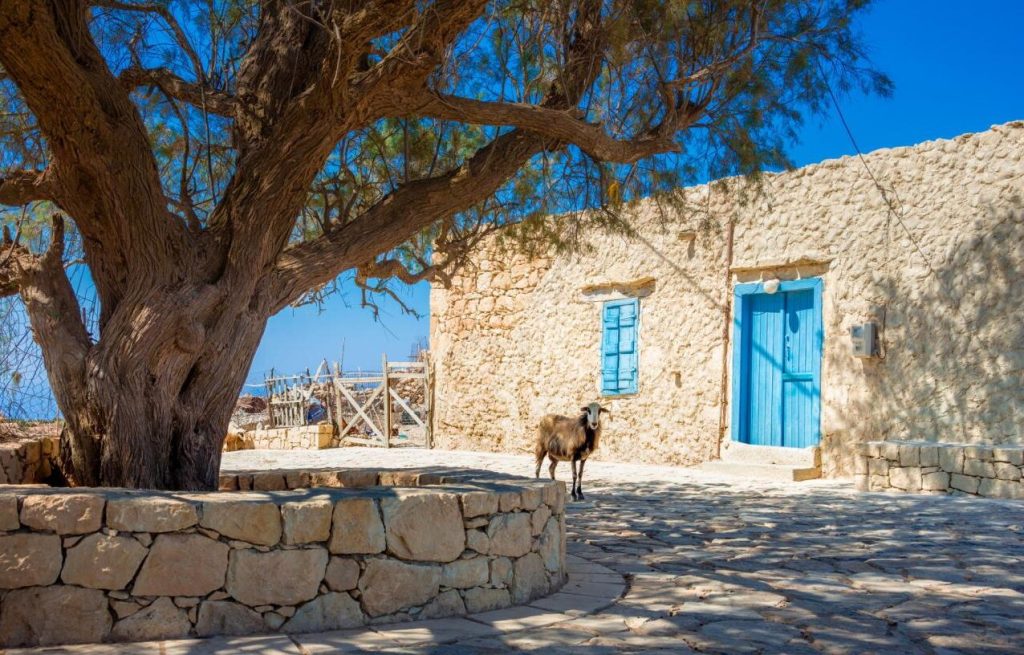
Gavdos. Photo: Feel Hellas
Gavdos is the most southern place of Greece and Europe in general. It has less than 100 permanent residents and in summer is a favourite spot for mainly campers. The island’s port is Karave while Kastri is the most recognised from the four traditional “villages.” Xenaki, Vatsiana and Ampelos are the other three. Gavdos has golden beaches and there is a Venice type of castle, Roman ruins in the Ai-Giannis hill and the “throne” of Trypiti. Overall, a destination worth exploring even if it’s not in the most famous summer destinations list.
Halki:
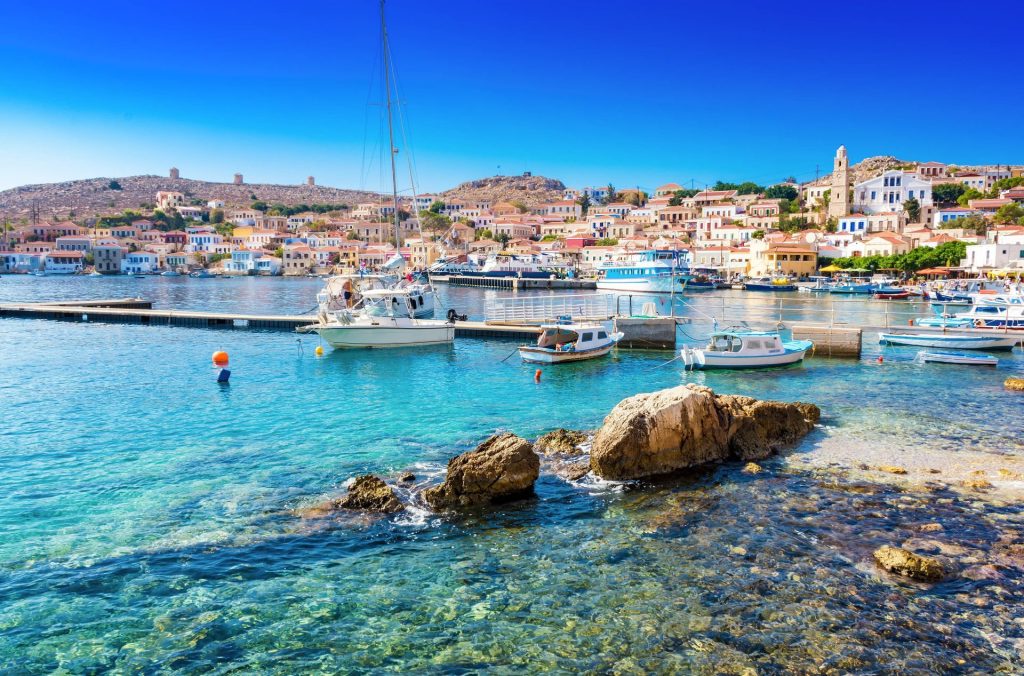
Halki. Photo: Greeka
To the west of Rhodes island, there is a small island called Halki, an ideal destination to relax in the Greek summer. There is a lot of history to it, as it is said the place has been inhabited since the pre-historic times. The island was rapidly developed in the second half of the 19th century with the sponges trade playing a significant role. The windmills of Halki are restored and they are a unique symbol for the island while there are many little churches you can find to visit. Pontamos, is the only sand beach of the island. You can visit Halki either from Rhodes island or straight from Piraeus by ship.
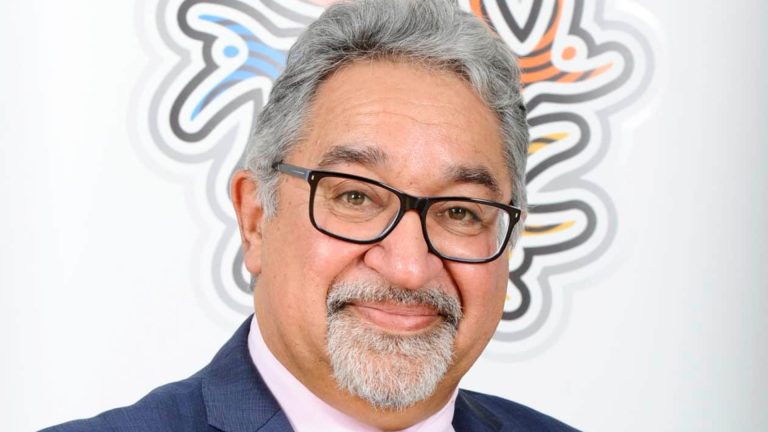
Greek Aboriginal, Andrew Jackomos, has been appointed the inaugural First Nations member on the board of Victoria Legal Aid, reported The Mandarin.
Born to a Kastellorizian father, Alick, and Yorta Yorta and Gunditjmara mother, Merele, who married in 1951 in Australia, Jackomos is from the north-central and south-west Victoria.
The Board of Directors are responsible for ensuring Victoria Legal Aid meets its statutory objectives and duties in accordance with the Legal Aid Act 1978.
Jackomos has been a Principal Advisor of Koori Policies and Strategies with Courts Services Victoria since April 2023.
In previous roles, Jackomos has served as a director, First Peoples engagement with the Victoria 2026 Commonwealth Games and special adviser, and Aboriginal self-determination with the Victorian Department of Premier and Cabinet.
Victoria Legal Aid said in a statement about Jackomos’ new appointed role on the board: “Andrew’s significant experience and knowledge will be an enormous attribute.”
“Andrew’s appointment is an important step towards our ongoing commitment to reflect the diversity of our clients, consumers and community throughout the organisation, including at its most senior levels,” the statement added.
From August 4, five Greek football clubs will be competing against A-League sides in round 32 of the Australian Cup.
The stage is set, with all teams prepared to give everything they have to defeat Australia’s most dominating clubs.
The matches will begin with the Perth-based team Floreat Athena going against the Western Sydney Wanderers (Wednesday, August 9). With the Perth team struggling this season, they are attempting to redeem themselves by striving for victory.
Here are all the Round of 32 tickets on sale so far!
The match between the Oakleigh Cannons and A-League premiers Melbourne City on Sunday, August 13, is set to be huge, with the aim to maximise their effort whilst playing on home ground.
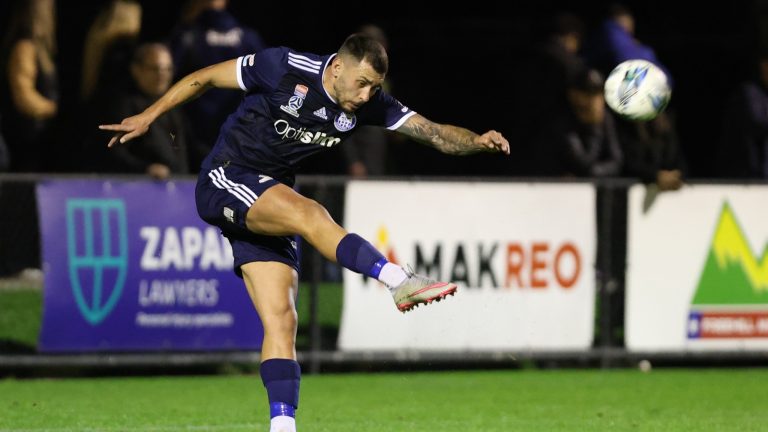
Heidelberg United is also set to face Moreton Bay United (Thursday, August 10), whilst Hellenic Athletic is up against Inter Lions (Thursday, August 10), and Northcote City FC will verse Adelaide United (Monday, August 14).
According to a statement by Football Australia, the schedule for the games will take place on rest days during the FIFA Women’s World Cup.
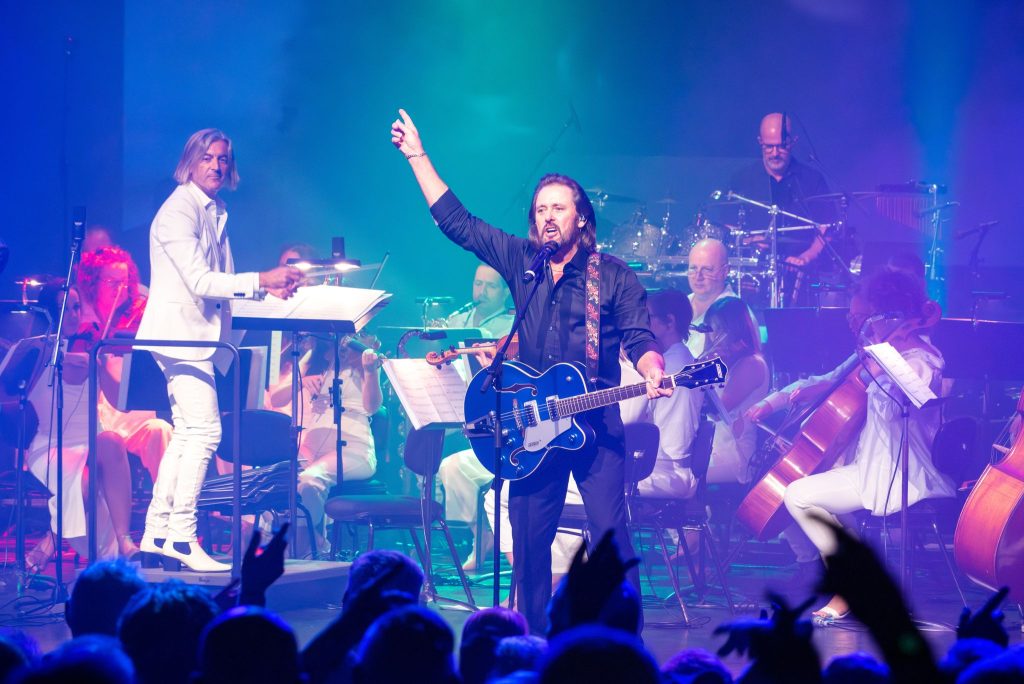
Australia’s premier tribute act, the Best of the Bee Gees, celebrates 25 years on stage in 2023 with a massive national tour accompanied by the 20-piece George Ellis Orchestra and special guests, Colin Petersen and Roslyn Loxton.
These concerts will be packed with international mega-hits and memories spanning the decades from the Bee Gees song book, with orchestral charts as originally recorded by the brothers Gibb.
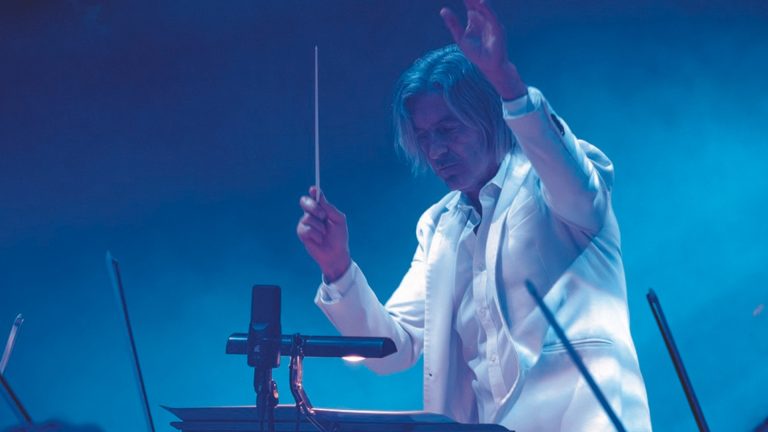
George Ellis.
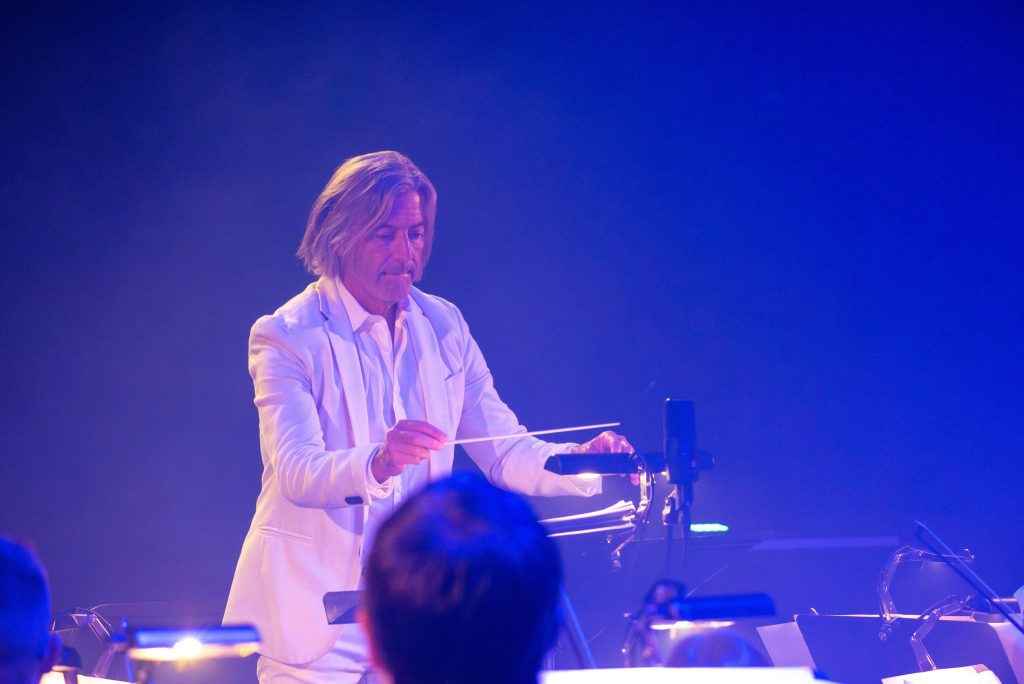
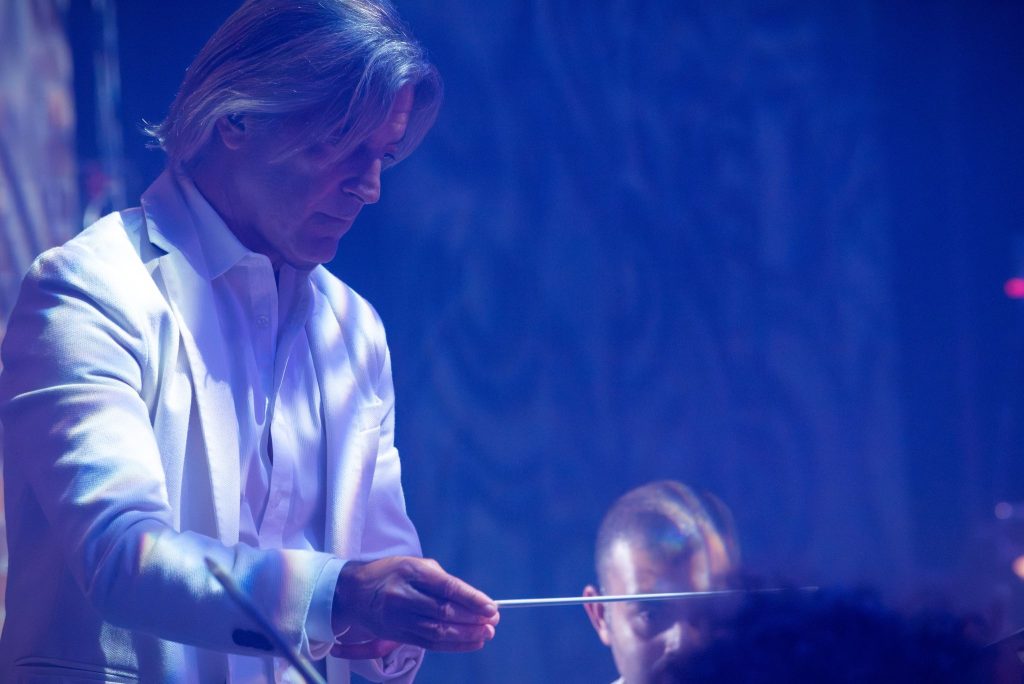
It would be a Tragedy to miss the iconic set list, timeless classics and soaring three-part harmonies performed with a phenomenal orchestra, guided by incomparable conductor, George Ellis.
Songs featured will be Massachusetts, Night Fever, New York Mining Disaster,How Deep Is Your Love, Stayin’ Alive, Grease, Jive Talkin’, Spicks & Specks, Words, To Love Somebody, I Started a Joke, I’ve Got to Get a Message to You, Too Much Heaven, You Should Be Dancing, Heartbreaker, Immortality and so much more.
The Best of the Bee Geesfeaturesglobally seasoned musicians in Creator Evan Webster (Barry Gibb), Musical Director Russell Davey (Robin Gibb), Greg Wain (Maurice Gibb), Ralph Muller (guitar), Brad Poole (Bass) and Greg Loxton (drums).
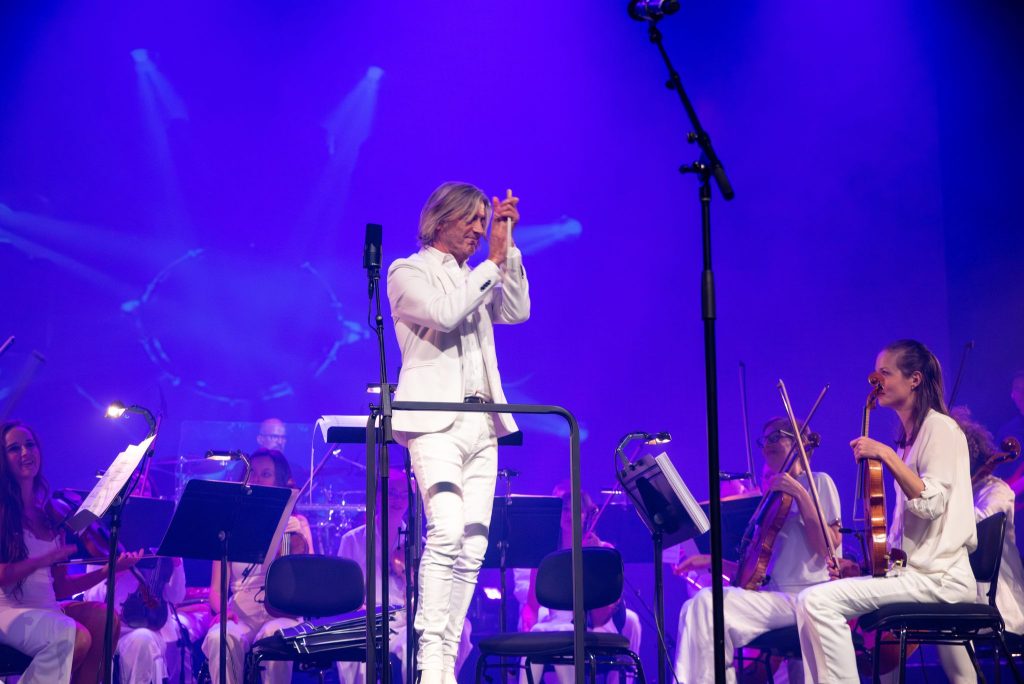
20-piece George Ellis Orchestra and special guests.
When not touring with his own orchestra, George Ellis is the Musical Director of the Australian Session Orchestra. His varied career includes conducting for Queen Elizabeth II, major international festivals, working with Lou Reed and other contemporary artists, and multiple film scores. In 2021, he was the Orchestral Musical Director for the National Rugby League Grand Final entertainment with Kate Miller-Heidke and Ian Moss, and his portrait by artist Evert Ploeg received the 2007 Archibald People’s Choice Award.
George Ellis Orchestra to celebrate the Silver anniversary of the Best of the Bee Gees.
George says: “It is a huge privilege to celebrate the Silver anniversary of the Best of the Bee Gees as they are extremely talented performers and the entire production team is also a highly skilled, well-oiled operation.”
“They are so easy to work with and nothing is too demanding for them. They gladly assist me in every way I need for the orchestra to thrive for these concerts,” Ellis adds.
“It has been an honour to provide the orchestrations and when I reflect on our very first venture – the 2019 Best of the Bee Gees partnership with the full Canberra Symphony Orchestra – I am reminded of the authenticity of the performance, where world class musicians brought the international-hits and beautiful three-part harmonies to a large, enthusiastic and appreciative audience.
George Ellis workedwith the original Bee Gees drummer Colin Petersen and Roslyn Loxton for the 25th anniversary.
“I am delighted to continue the legacy in this 25th year on our final national date for the year at the State Theatre Sydney, and to work with the original Bee Gees drummer Colin Petersen and Roslyn Loxton.”
Special Guest Colin “Smiley” Petersen was essential to the Bee Gees sound. As a bona fide fourth member of the supergroup, he drove their evolution over four albums, and his first-hand anecdotes of performing with orchestras in the studio and on stage in the UK and Europe, are mesmerising.
Colin says: “It’s wonderful that these incredible songs live on through this great show and I am thrilled to add another dimension by sharing my stories.”
Global chanteuse Ros Loxton also shares the stage to perform classics especially written by the Bee Gees for female artists Celine Dion and Barbra Streisand.
The Best of the Bee Gees will traverse the country from July, kicking off at Hamer Hall Melbourne and Thebarton Theatre Adelaide in July, then Perth Concert Hall in September, QPAC Brisbane in October, The Star Gold Coast and Wrest Point Entertainment Centre in November and the State Theatre Sydney in December.
The Best of the Bee Gees will traverse the country from July.
Concert details:
Sunday 23 July 7pm Hamer Hall Arts Centre MELBOURNE. Tickets: artscentremelbourne.com.au, ticketek.com.au & 1300 182 183
In 2023, the science of genetics has debunked the story of the Turks, highlights the waste on the defence spending, concludes both communities in Cyprus are in fact genetically the same people.
Folklore, or story-telling, is a powerful tool to create a sense of nationhood, it gives people more than an identity, it’s who they are.
Turkey is perhaps unique as a nation, a successor to a failed empire, it has never been a nation like France, Portugal, Spain or Holland. Unlike other empires, built overseas, the Ottoman Empire was not built by any external adventure, it literally created its own sovereign lands. No need to go overseas and plunder, they just stayed home to plunder.
Legend, or rather the story telling, says that the “Turkic” people originate from central Asia next to Mongolia, they are closely related to the “Mongols,” they are unique and ancient with a culture that is home grown.
The facts are a little different.
For nearly seven centuries, the Ottoman Empire was not a “Turkic” majority state, the “Turkic” people were generally the minority throughout most of the Empire.
Why?
The lands they settled belonged to others for centuries before the Turkic people left central Asia, so the Turkic people had to make up the numbers, and fast, to dominate the locals. The solution was easy – kidnap, torture and convert young men, fast.
This industrial scale engineering to create a converted Turkic population is legendary. At one point, virtually every administrator, all the elite troops, the tax collectors, architects, naval personal, the entire Ottoman Imperial machine was, not of Turkic background.
When the Ottoman Empire collapsed after World War One, the choices facing the “Turkic” population now spread throughout the Balkans, North Africa and the Middle East was stark, as the local peoples finally got their revenge to cleanse their lands of the ‘Turkic’ people.
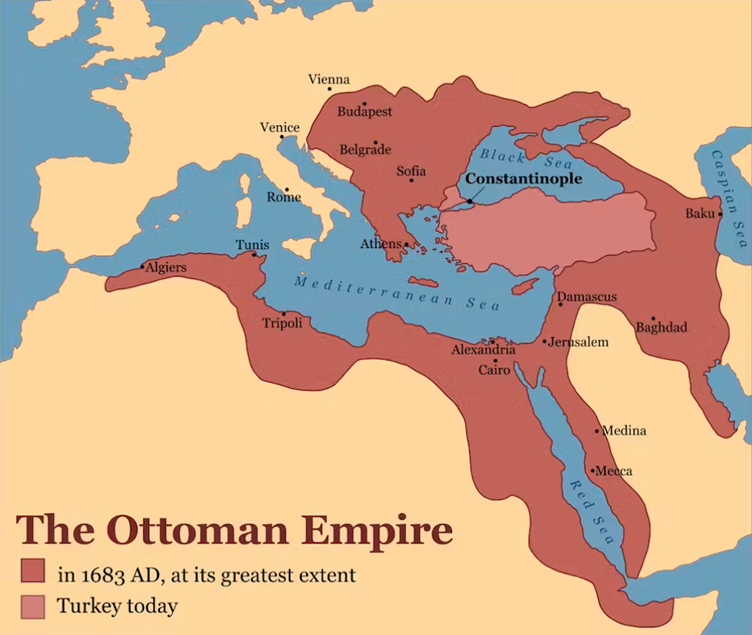
The Ottoman Empire collapsed after WWI.
The Fall of the Ottoman Empire prompted the largest movement of humans in history, surpassed only by Stalin’s purges and the recent Chinese population move from villages to cities.
“Turkic” people felt vulnerable. As a minority, they travel as refugees back to Anatolia, the place the legends say is where they first landed to create the idea of being a Turk six centuries earlier.
Its 1922, the military leader Mustafa Kemal (later self-tilted as Ataturk) was keen to introduce a new written language, a new identity, to re-engineer a new ethnicity, out of the ashes of the Ottoman. This new identity, constructed with the help of German academics, was to become the “Turks” of today.
After 100 years of schooling, media reinforcement, movies, statutes, museums, endless array of storytelling to reinforce the existence of a Turkish nationality, it is still all pervasive.
In 2023, the current leader of Turkey continues to re-write the legend of being a Turk, with ambitions well beyond Turkey’s borders, seeking to find others that appear to be “Turkic” in Syria, Iran, Iraq, China, Greece, Cyprus, Egypt, Gulf emirates and even in Pakistan and India.
The definition of a “Turk” now has global ramifications.
The military build-up, the jailing of Turkic locals who question this narrative, the creation of an authoritarian state with the symbols of religious extremism, an identity aligned with Ottoman brutality and reinforcing its links to central Asia completes the story of “Turkey” 2023.
Since the 1990s, mapping of the human genome has delivered insight into how the human body evolves, functions, becomes ill, and how biochemical engineering makes us who we are for our entire life.
Genetics is blind to the culture and prejudices and bravado of humans. Genetics is real, it has no spiritual or mystique to it, it is something you cannot fake.
Turkic peoples, so goes the story, are direct descendants of the Seljuk and Ottoman hordes who stole the land, murdered the locals and created an empire.
Identity has been and is a major issue in Turkey since the republic was established in 1923 from the ashes of the multi-ethnic, multi-cultural and multi-lingual Ottoman Empire.
Not surprising until 2008, saying something to denigrate – question – “Turkishness” got you two years in prison. Now you go to prison for questioning “the Turkish nation.”
Enter “do it yourself DNA tests,” a simple and fast effective way to have a glimpse into your state of health and the “genes” you carry, your ancestry… The bulk of the DNA test results contradict the “Turkic” story.
DNA Test.
In response, home grown DNA tests challenge the EU / USA per reviewed science articles, Turkey argues that the Turk has a significant amount of Central Asian ancestry. There is no such conclusive evidence in a larger sample size. This proposition is true for samples selected from remote well-known regions which were invaded, occupied and cleansed for well over three centuries, without any interference from outsiders.
Modern Turkey is no longer in that mould. It is a diverse vibrant place, people live among the ruins of many previous empires and peoples, its ‘Turkic’ imposed identity seems foreign in many ways to the architecture of Greece and Roman that litters their towns, cities and backyards.
One of the largest EU studies of genetic traits is “Genetic relationships of European, Mediterranean, and SW Asian populations using a panel of 55 AISNPs.” Published in the European Journal of Human Genetics December 2019, the study found a genetic cluster with Southern and Mediterranean Europe populations which spread towards Caucasus, to Northern Iraq, and Iranians. European dominant genetic markers form the foundation of the peoples of the eastern Mediterranean.
The difference between the science and the Turkey identity story is so dramatically different it has attracted draconian laws to discourage ancestry DNA tests. The most common haplogroup or genetic marker found in Turkey is J2 (24%), which is the dominant and most widespread in the Mediterranean.
It turns out the “Turks” ancestors are likely to be Greek / Italian. It is unlikely that the overwhelming number of Turks are of “Turkic” ancestry. It is more likely that the overwhelming modern Turks share a European ancestry.
What makes all these studies more remarkable is that 700 years of war, forced pregnancies, forced conversions, slavery, harems, industry scale terror to ethnic cleanse Europe, middle east, North Africa, and the generics tell quite a different story.
For Cyprus, the story is even more dramatic.
The largest study ever taken, published and edited by Harvard Medical School, titled “Y-chromosomal analysis of Greek Cypriots reveals a primarily common pre-Ottoman paternal ancestry with Turkish Cypriots”shows that Greek Cypriots and Turkish Cypriots share primarily a common pre-Ottoman paternal ancestry, they are genetically the same people.
The study noted that the surprising lack of genetic variation between Greeks and Turks in Cyprus was due to “From a historical perspective, throughout the centuries, the island’s demographic ratio between Greek Orthodox Christians and Muslim Turks varied. Crypto-Christians were individuals who, in despair, were forced to convert to another religion. They did not fully denounce their faith; rather, practiced it in secret.”
The study found the frequency of Eastern Eurasian genetic markers common with Greeks and Italians more likely to be found in duplicate and triplicate in the Turkish Cypriot sample.
Science once again shatters the divide caused by others. Turns out little divides the Greek and Turks of Cyprus genetically, there are of European origin.
As we approach the July 21, 1974, invasion occupation of Cyprus, we are reminded that the traditional ethnic cleansing techniques perfected over 700 years, changing the names of towns, cities, banning any criticism or thinking inconsistent with the national narrative communes to this day.
Regardless of the brutality, inhuman deeds of the occupiers and their treatment of minorities in Cyprus, they cannot eradicate the science. This must keep them up at night.
Solution, discourage the sale of DNA ancestry tests. DNA make up takes millennium to alter.
Maybe that is why the occupiers are biding their time. 49 years later they hope the imported real “Turkic” genetically proven settlers and will finally create a “Turkish” Cypriot.
Science has given us medicine, the internet, jet travel, and unlocking the human genome.
In Turkey, the locals have had a glimpse of their genome, those in denial, will miss the future science promises for all. Seems the “Turks” are Greeks in denial.