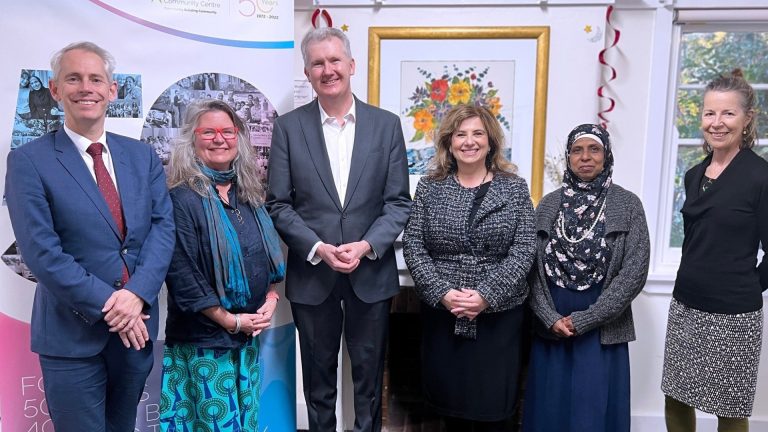
Federal Immigration, Citizenship and Multicultural Affairs Minister, Andrew Giles MP, and Member for Watson, Tony Burke MP, visited the Canterbury City Community Centre (4cs) on July 25 in Lakemba, Sydney.
The 4c is a well established non-government organisation that provides a range of community services in Sydney’s Inner West.
During the visit, Mr Giles and Mr Burke heard about the history of the Centre’s work with the local community, including programs and initiatives implemented in aged care and community services.
CEO of the Centre, Esta Paschalidis-Chilas, thanked Mr Giles for visiting and spoke about his recent work on temporary protection visas.
“Given the diverse community we serve, it was an excellent opportunity to thank the Minister for changes he is implementing around providing permanency to people on temporary protection visas, many of whom live in our local community,” Ms Paschalidis-Chilas said.
“These are people who have been living with uncertainty and stress for many years.”
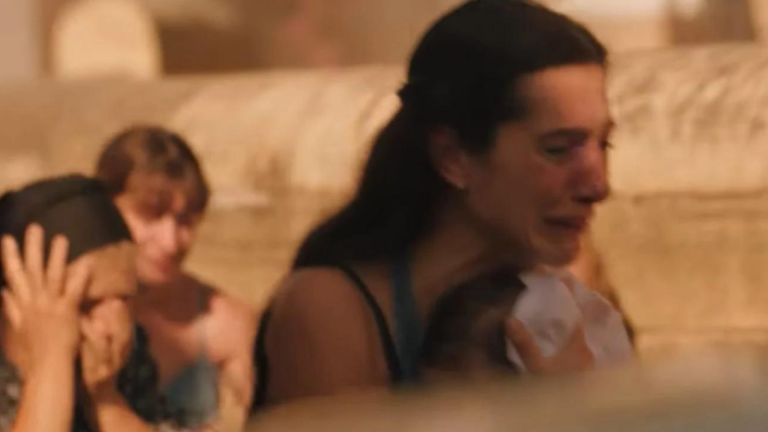
A story based on the tragic events that unfolded in the city of Famagusta, Cyprus is coming to MEGA TV in Greece.
Expecting to premiere in early 2024 on the 50th anniversary of the Turkish invasion of Cyprus, the 24-episode series will focus on the tragic events between a young couple and their missing child.
The story will follow the young couple as they are forced to fight during the Turkish invasion, whilst also continuing to hold hope that their lost baby will be found.
According to Hellas Post, the series will see how the past is tangled with the present and how fate can impact the way people lived during the invasion.
Filming has begun on the series and takes place in Cyprus, Athens and London.
Dr Andonis Piperoglou, the inaugural Hellenic Senior Lecturer of Global Diasporas at the University of Melbourne, will deliver a lecture entitled “Launching ‘Little Greece’: Transcultural Place Naming and Narratives of Migration,” on Thursday, 3 August 2023, 7.00pm, at the Greek Centre, as part of the Greek History and Culture Seminars, offered by the Greek Community of Melbourne.
In early 2021, a precinct in Marrickville, a suburb in Sydney’s inner west, was named ‘Little Greece.’ Marrickville shares a history with many other inner city Sydney suburbs as an inhabited site of migrant settlement and adaptation. Indeed, after the Second World War, many Greeks came to call the suburb home, as did a plethora of other migrant groups from around the world (most notably Vietnamese refugees).
Using this renaming as an entry point into the rich global history of place naming in Greek migration history, this lecture will explore how ethnic community building and the ethnic framing of suburbs share interrelated pasts and presents.
Drawing on notions of “transcultural placemaking,” Dr Piperoglou will argue that this renaming is not only emblematic of how Greeks are viewed as model contributors to contemporary Australian society, but also how the politics of Greek migrant heritage in Australia can fall into the trap of ethnic singularity.
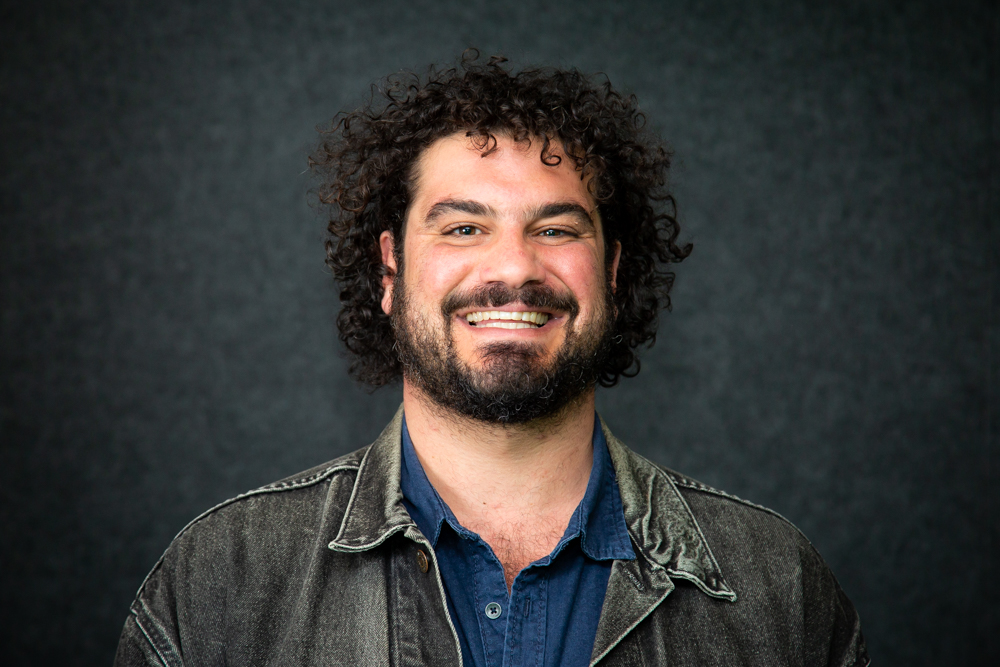
Dr Adonis Piperoglou
By charting the history of the suburb through oral testimonies, diaspora media reportage, as well as street-level visual culture, he will reveal that suburbs in which Greeks settled in large numbers have acted as sites of transcultural exchange, in which many non-Anglo migrants, not just Greeks, laboured and lived.
The lecture will conclude with some observations on how it might be possible to reconsider the history of ‘Greektowns’ in the broader Anglo-world as ethnic neighbourhoods in which Greek migrants interacted and coexisted with a range of other diasporic subjects.
Dr Andonis Piperoglou is the inaugural Hellenic Senior Lecturer of Global Diasporas at the University of Melbourne. Dr Piperoglou is a specialist in migration and ethnic history and has published extensively on Greek migration to Australia. He works on historical connections between colonialism, racism, and migration, as well as human movements between the Mediterranean and the Pacific.
In the School of Historical and Philosophical Studies, he teaches subjects on migration, diaspora, multiculturalism, cosmopolitanism, and globalisation. Currently, Dr Piperoglou is the Vice President of the International Australian Studies Association.
Event Details:
When: Thursday, 3 August 2023, 7 pm
How: Greek Centre (Mezzanine, 168 Lonsdale St., Melbourne)
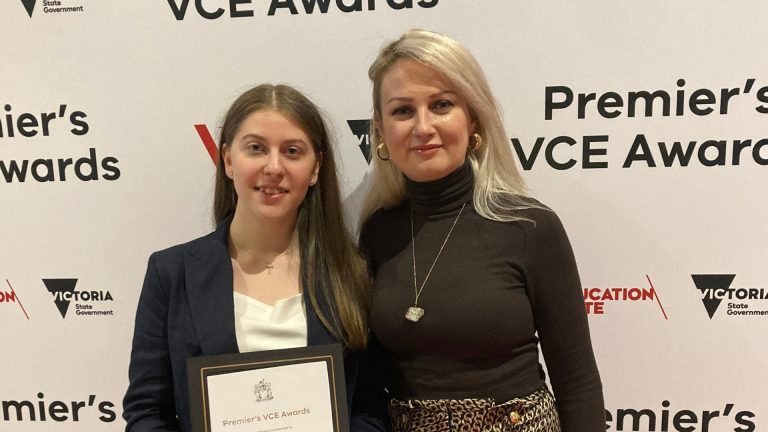
Greek Australian students have been recognised at the annual Premier’s Victorian Certificate of Education (VCE) Awards during a presentation ceremony on Thursday, July 27 at the Convention and Exhibition Centre in Melbourne.
The awards recognise students in Victoria who have demonstrated hard work and outstanding academic results during the 2022 VCE. For the Study Awards, students must have an academic score of 46 or above to be eligible for an award.
Out of the 294 Study Awards presented, at least eleven Greek Australians were recognised for their exceptional dedication and hard work during the 2022 VCE.
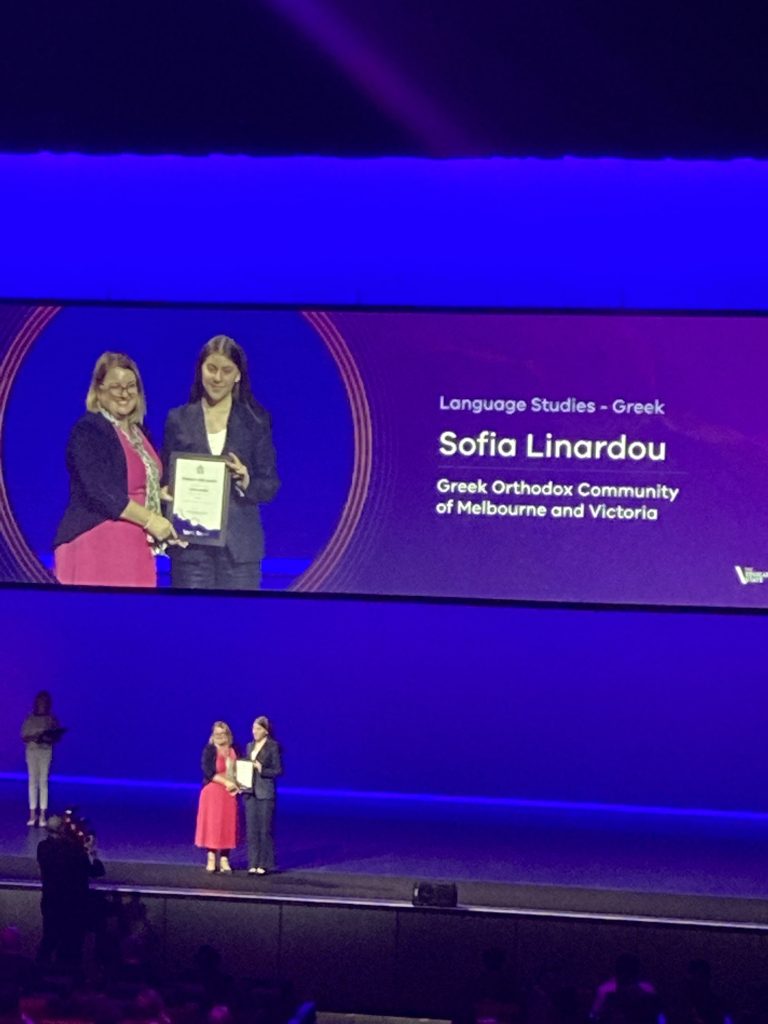
In Greek, Sofia Linardou, a student from the Greek Community of Melbourne’s (GCM) Bentleigh Campus, was recognised for her results.
Sofia Linardou receiving her award.
The GCM extended a warm congratulations to Sofia on her well-deserved recognition and wished her continued success in her academic journey with many more accolades to come.
Another student, Sofia Vlachou from the Victorian School of Languages, was also awarded in the Greek category for her excellence during the VCE examinations.
Jack Voulgaris from Marcellin College and Zoe Vlahos from Melbourne Girls Grammar were awarded in the Biology category.
Meanwhile, Victoria Paitaridis from Haileybury Girls College took away an award for the category Business Management.
Tomas Kiprillis from John Monash Science School was awarded for Mathematical Methods, whilst Gregory Kerdemelidis from Camberwell Grammar School was recognised for Physics.
Two out of the three students awarded for Product Design and Technology were Greek Australians. They were Lily Galanis from Santa Maria College and Elisabeth Sagiadellis from Star of the Sea College.
Myrtali Koutroumpinas from Kolbe Catholic College was among nine students recognised for high excellence in the Psychology category.
Alexander Tsipos from Mazenod College was awarded for Religion and Society, out of three students from other schools in Melbourne.
For the Studio Arts Study Award, student Claire Magris from Victorian College of the Arts Secondary School was recognised.
* Please note the above list includes the names of those who are recognised as Greek. If you know someone else, please email us at greek@foreignlanguage.com.au.
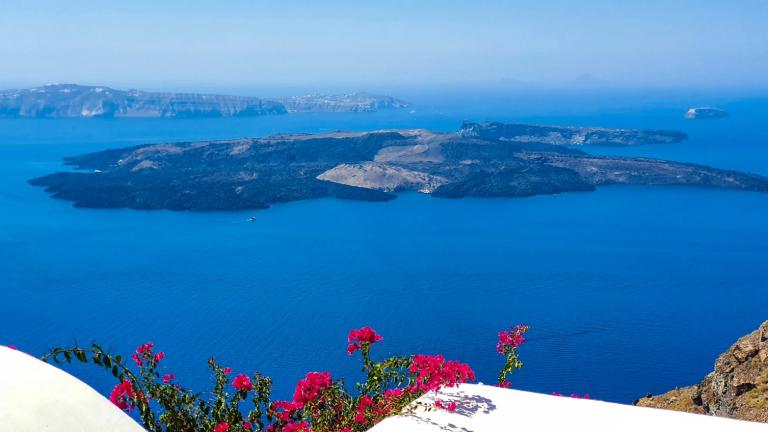
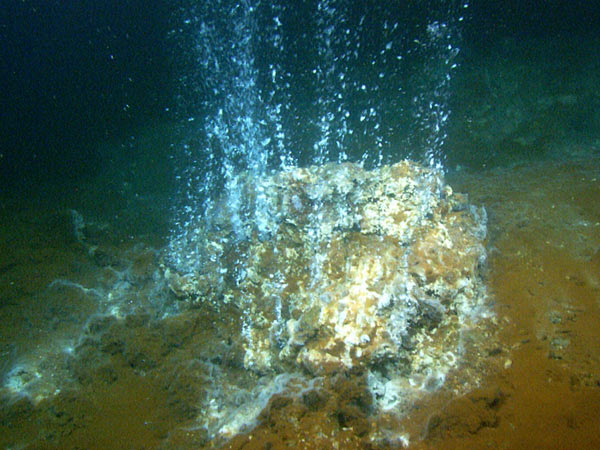
A recent study of microorganisms on the seafloor of Santorini’s largest volcano has unlocked the secrets of how life can survive in extreme conditions.
As part of the study, researchers used samples collected from the volcanos seabed to uncover diverse microbes which had strong adaptation abilities and were resistant to hot temperatures.
Photo: Volcano Discovery
According to a report published by Frontiers in Microbiology, the specific area located on the Santorini- Kolumbo crater produced a unique range of microorganisms which made good candidates for understanding how life can survive in any temperature.
With this study, the hope is to continue to learn more about the seafloor and how the active volcano can help with the understanding of evolution.
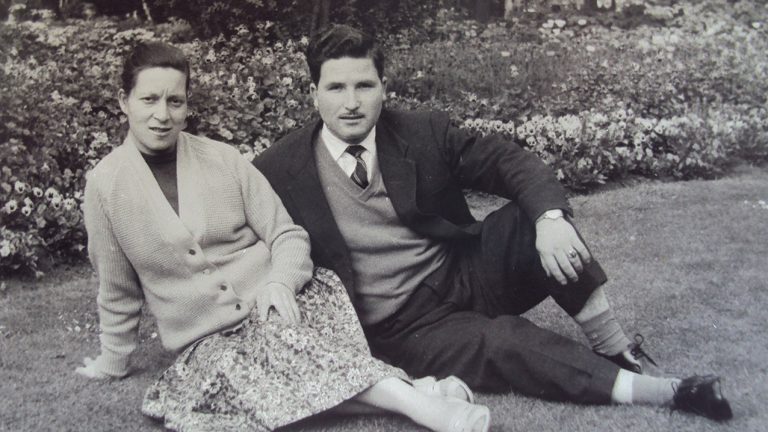
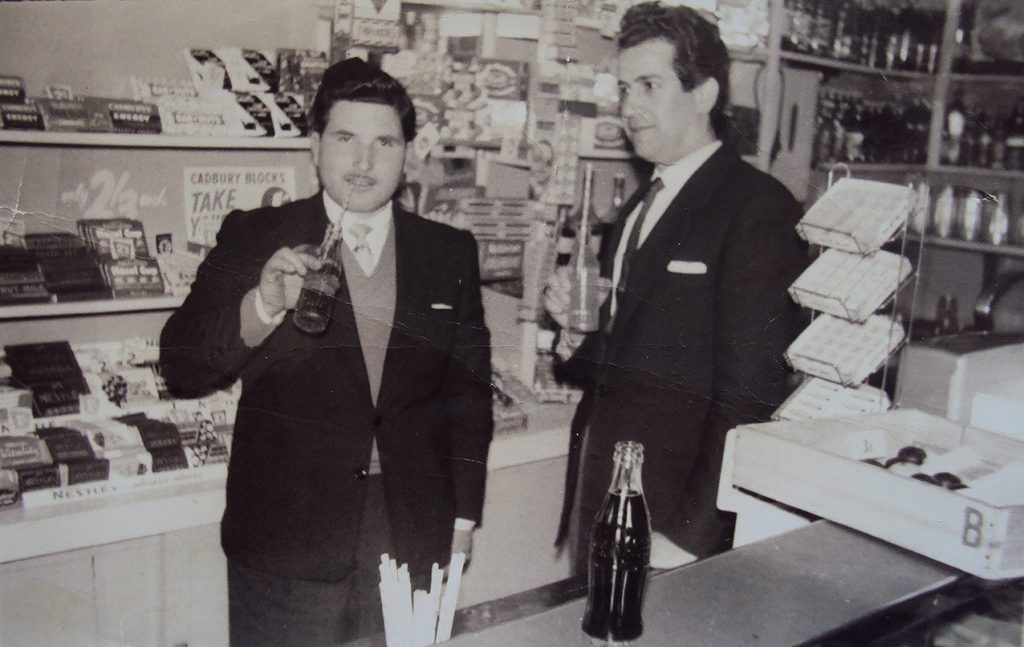
Katina Katakouzinou, now 88 years of age, lives in a peaceful seaside village in the Western Peloponnese. Originally from the island of Lemnos, Katina met and married her husband in Australia in 1958 and moved to his part of Greece in 1965.
“I would’ve preferred to have stayed in Australia. I loved it, but my husband wanted us to return to Greece,” she reminisces.
Katina lived with her brother when she arrived in Australia in 1956, describing these early times as often lonely.
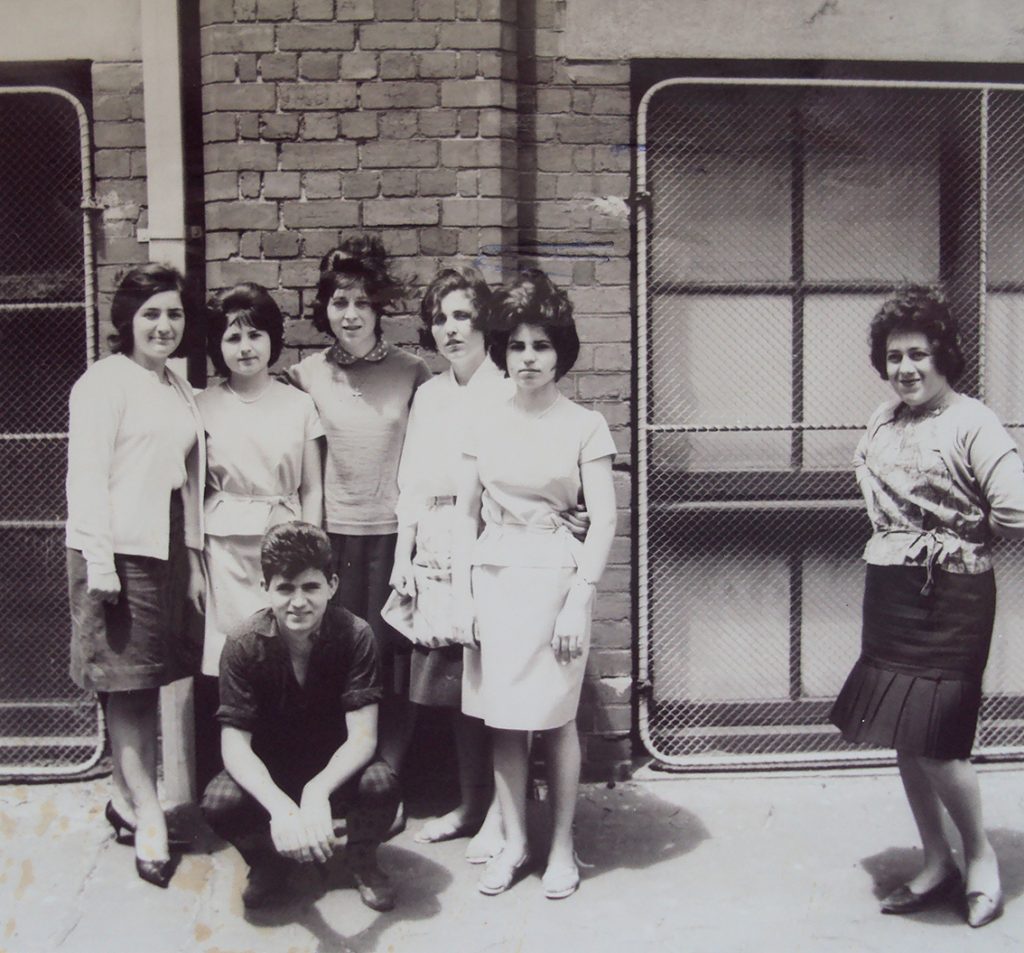
A young Katina in Australia (front left).
“My brother worked all day. I cooked and did house work, but then I’d get bored and just go to the park across the road with swings, and swing myself. I was still a child,” she tells me smiling.
Her ensuing work life in Australia months later brought her much joy.
“My first job was at a big hotel in Melbourne where I would deliver washed sheets from the laundry to the rooms. I worked with only Australian women there and even though I spoke no English, they were so kind, helpful and always polite,” Katina says.
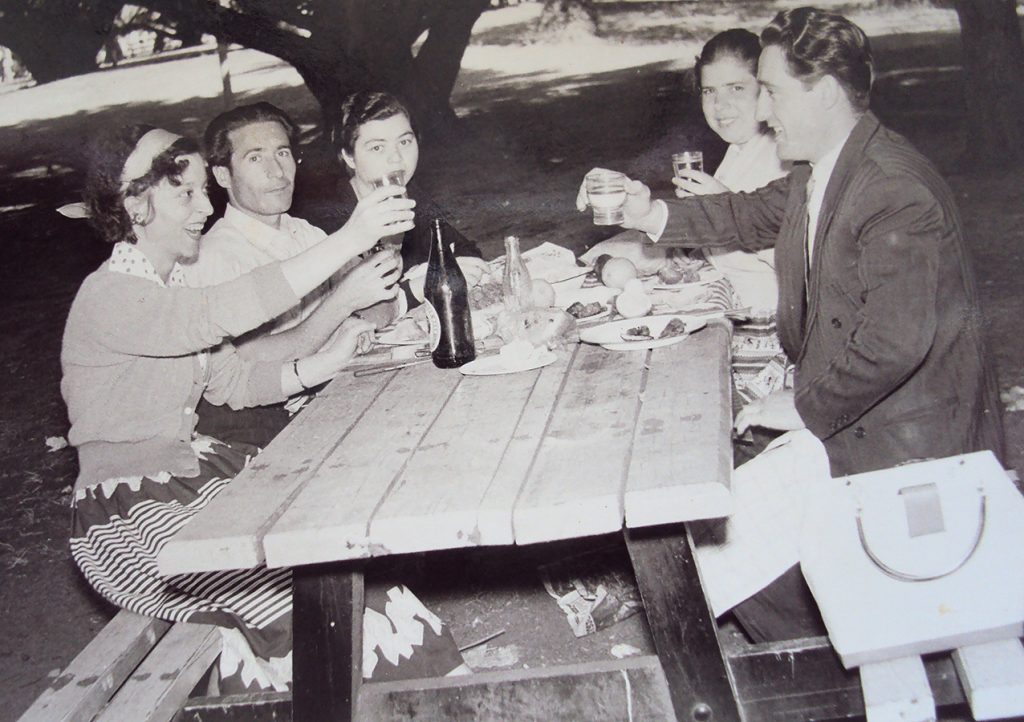
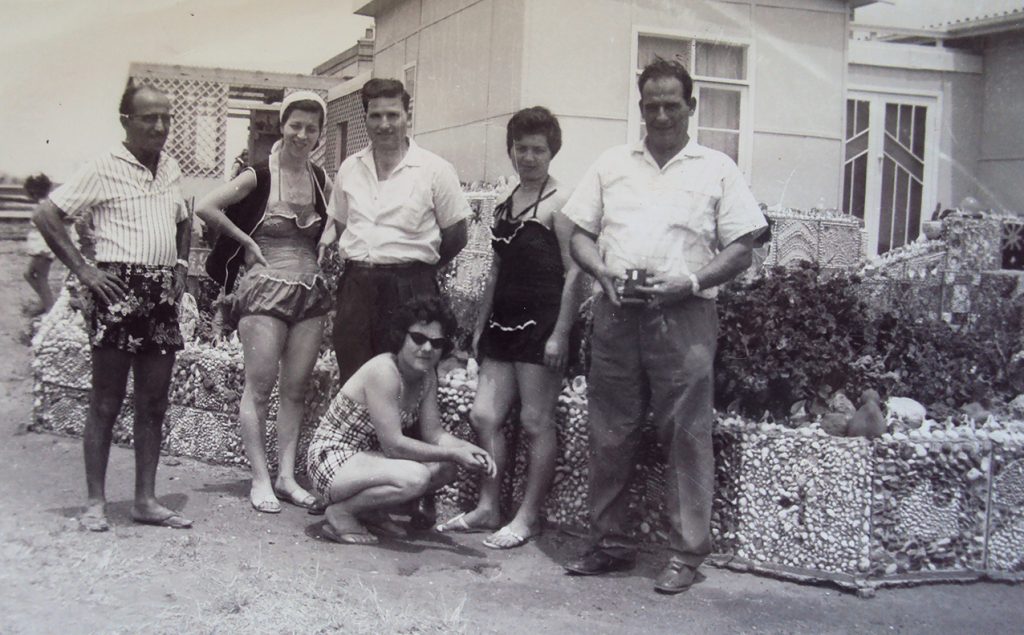
Good times at Phillip Island, Victoria, Australia.
Soon after, through a matchmaker, she met her husband.
“We were invited to dinner at Greek friends of ours and he was there. I liked him, but didn’t want to get married. I said a stern “no way” to my brother, who was by then married and whose wife I think wanted me out of the house, which is natural,” Katina muses in her self-assured and down-to-earth way.
“We had another dinner months later. My husband-to-be was there again, but this time so were two of his sisters, and they were lovely. We got on so well. He was quite suave himself, and something just kind of gelled.”
Laughing half-heartedly, she says: “I still didn’t want to get married because I was enjoying my job and life, but when we raised our glasses of beer during the meal, the matchmaker said, ‘Here’s to the wedding of Katina and John’ and I just raised my glass too, and they took it as a yes!”
“I couldn’t be bothered saying no, as I guess I had already decided deep down,” she adds.
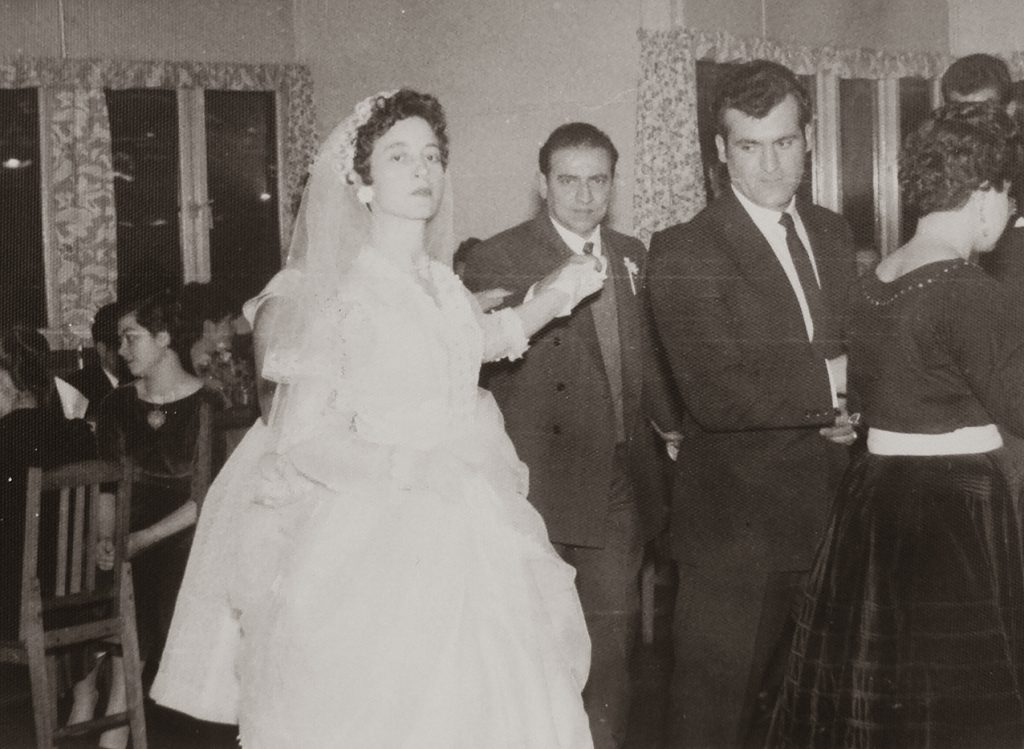
Wedding day.Katina on her wedding day.
“We married, moved in with his sister and her husband, and bought that house all together. Then I went to a new job at an underwear factory and liked that job too. We sold our first house and bought a Milk Bar with a house on top and I worked there with my sister-in-law while the men were at their factory jobs… saving to return to Greece. I found out at the last minute almost. By then I had a five-year-old son and was more than content with my Aussie life.”
Katina’s husband (left) with his brother in law at their milk bar.Katina’s last day at her factory job before moving back to Greece.
On her return to Greece from Australia in 1965, Katina was separated from her sister-in-law with whom she lived and shared their respective child rearing duties, and a great friendship.
“Eleftheria’s husband took her to his village, over 200 kilometres away and I was suddenly stuck in a village with no electricity, with my in-laws, nice as they were, and with no stove to cook on, except an old wood stove outside,” she confesses, continuing stridently: “Well, I told my husband and father-in-law – ‘you get me a gas stove cooker or I’m out of here’ and they did.”
Katina, a mother of a second child at that point, found life in the village very backwards and tried hard to adjust, while waiting for two years for electricity and a work permit for her husband to proceed with his business.
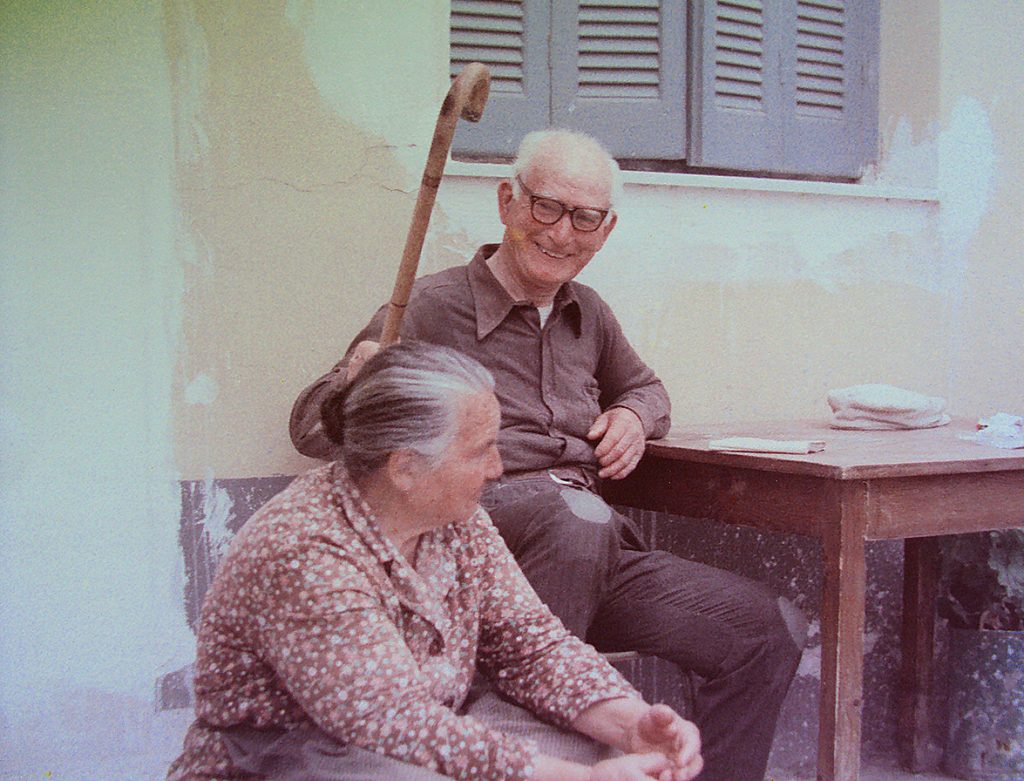
Katina’s in-laws in the 1980s.Katina issued her husband an ultimatum.
At this point in 1967, Katina gave her husband an ultimatum – that she’d be leaving with the kids and hoped he’d join them back to Australia. But, with tickets ready and awaiting at Piraeus port for them to sail away again, the electricity and work permit came through.
Katina tells me emphatically that although her husband agreed to go, even with the positive developments of utilities in the village, his ultimatum made her think deeply.
“He was a good man, a good father and said to me resolutely, ‘I don’t want you to be unhappy, but if we return to Australia, our life and whatever happens will be on you.’ I didn’t want this kind of responsibility and so I agreed to stay in Greece,” she says.
Katina and her husband John
“And we haven’t done too badly at all. Unfortunately, my husband passed away 15 years ago, but he’s close by in our cemetery near the church, on the little hill a ten-minute walk away where I go to light his candle and those of my in-laws and tend to their graves. I still live with my daughter-in-law and son. My children have wonderful partners and children – and I’m a great grandmother now too!
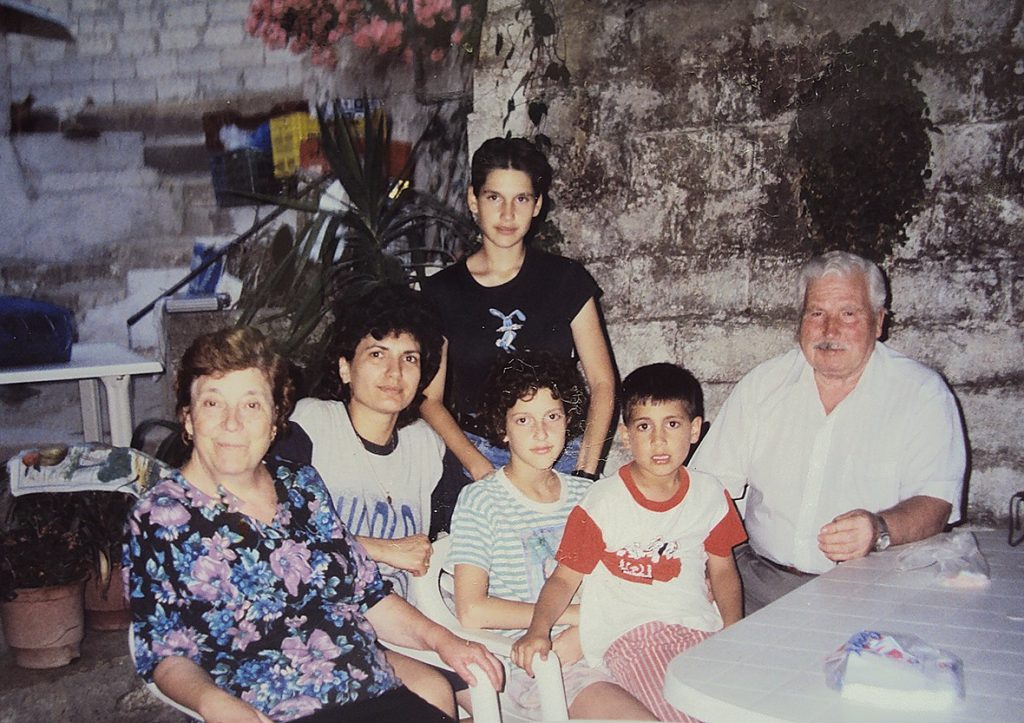
Katina with her kids and grandchildren
“I never feel lonely, and I used to go to the beach daily in summer for years with a group of local friends, but now many have passed away. I help with the cooking and we have a lovely spacious house with a nice view, and visitors from Australia every summer. I guess it all worked out well. I gave it my best, and never complained when I decided not to be selfish and force my husband to return to Australia.”
Katina radiates an earthy warmth and wisdom, as she adds with a gentle smile: “I’m at peace.”
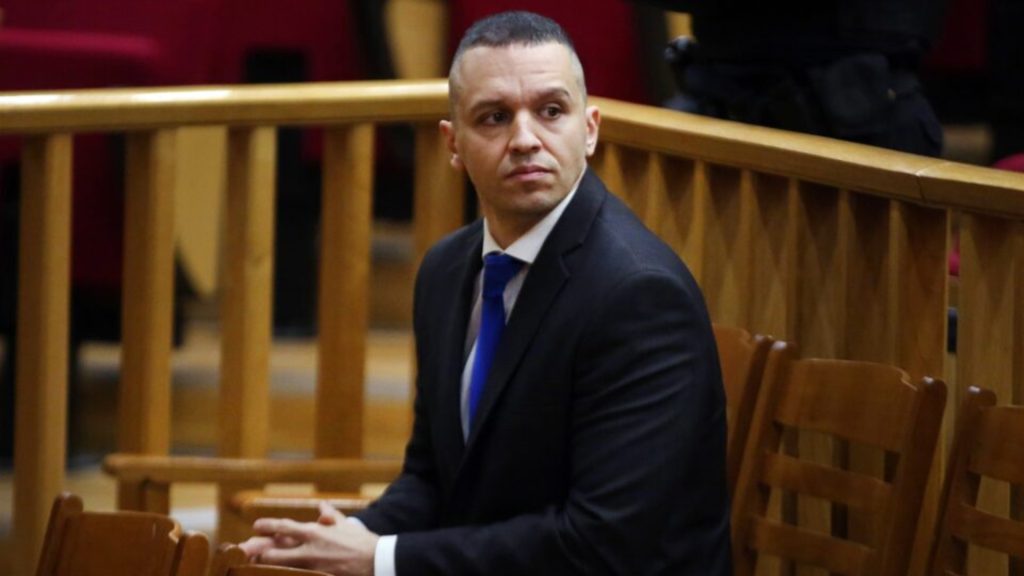
Jailed former Golden Dawn deputy leader, Ilias Kasidiaris, has said he intends to run for mayor of Athens in the October elections.
Kasidiaris’ lawyer, Vassiliki Pantazi, presented a statement by the former Golden Dawn official which said he intends to run with the political party, Free Athenians.
According to Ekathimerini, the Greek government is again prepping a new amendment to ban Kasidiaris from running for the mayorship of Athens. He was also banned from general elections in May 21 and June 25 this year.
Jailed former Golden Dawn deputy leader, Ilias Kasidiaris. Photo: Ekathimerini.
The Supreme Court banned his participation and Kasidiaris backed the far-right Spartiates (Spartans) party. The party secured 13 seats in the 300 member parliament with 4.7% of the votes.
The Golden Dawn party, founded as a neo-Nazi group in the 1980s which later claimed to represent a broader nationalist ideology, was blamed for multiple attacks against migrants and left-wing political activists.
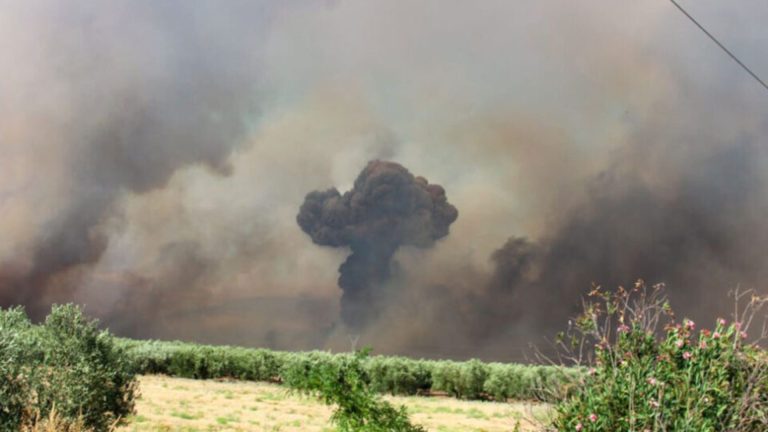
Strong winds caused a wildfire to set off explosions at an air force ammunition depot in central Greece on Thursday, AP News reported.
The massive explosions shattered windows on nearby houses, but there were no deaths or injuries as the Greek fire service had evacuated the depot and surrounding villages earlier in the day.
According to AP News, the wildfire reached the ammunition storage facility where bombs and ammunition for Greek F-16 fighters were stored.
The storage facility is approximately 6 kilometres north of the major military air base in Nea Anchialos town.
F-16 fighter jets at a nearby base have been moved to another facility as a precaution, the Greek air force said.
Fire Service spokesman Ioannis Artopios said 12 villages were evacuated in the Volos-Nea Anchialos area, reported 9News.
On Thursday, Greek firefighters battled flames for a 10 successive day on Rhodes, where officials said the blazes were largely contained. Flare-ups were reported on the island of Evia.
Greece paid its respects on Thursday to the two pilots killed when their Canadair CL-215 plane fighting wildfires crashed on the island of Evia, east of Athens, earlier this week.
The air force named the two officers as Captain Christos Moulas (34) and his co-pilot, Second Lieutenant Periklis Stefanidis (27).
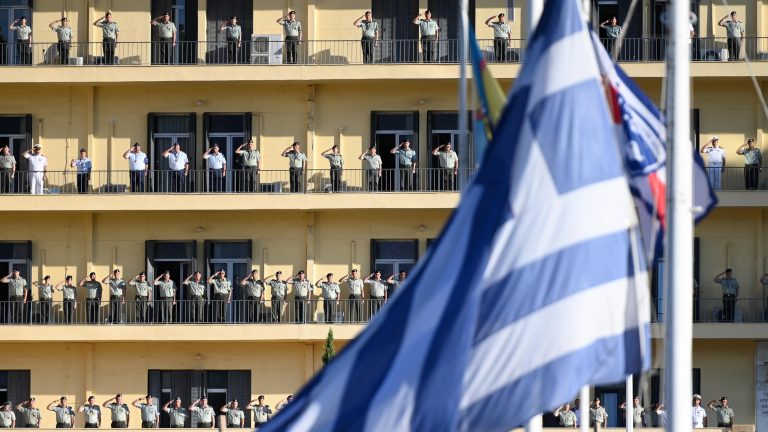
On Thursday morning, members of Greece’s armed forces, including soldiers, Members of the Defence Ministry and Army leaders, attended a solemn flag raising ceremony at the ministry which saw the Greek flag raised at half mast as soldiers stood to attention from balconies.
Από τη σημερινή τελετή έπαρσης της σημαίας σε μεσίστια θέση, λόγω του πένθους των Ενόπλων Δυνάμεων @hndgspio, για την απώλεια της ζωής του Σμηναγού Χρήστου Μουλά και του Ανθυποσμηναγού Περικλή Στεφανίδη, εν ώρα υπηρεσίας, στην Εύβοια.
Later, a memorial service was held at the Holy Church of Panagia in Athens in memory of the souls of the pilots.
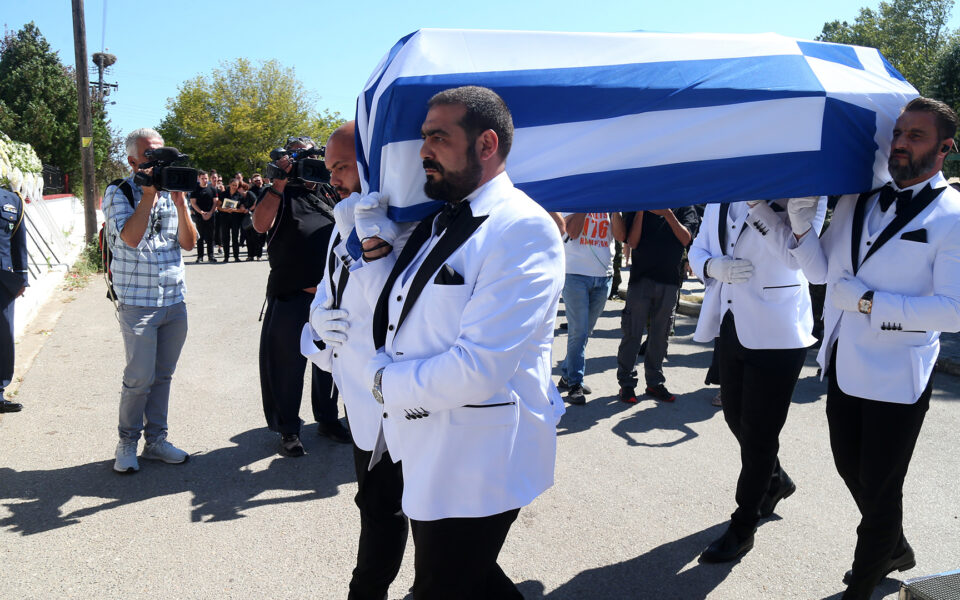
This came after the funeral of Second Lieutenant Stefanidis took place in his hometown of Kilkis on Thursday.
Greece’s Prime Minister Kyriakos Mitsotakis and Defence Minister Nikos Dendias were present for the service, as was an honourary Hellenic Air Force detachment.
The funeral of Second Lieutenant Stefanidis took place in his hometown of Kilkis on Thursday.
The funeral service of Captain Moulas will take place on Friday.
To applause from all sections of Parliament, President Tassoulas said the child will receive financial support in the form of an annual stipend until it becomes 25 years old.
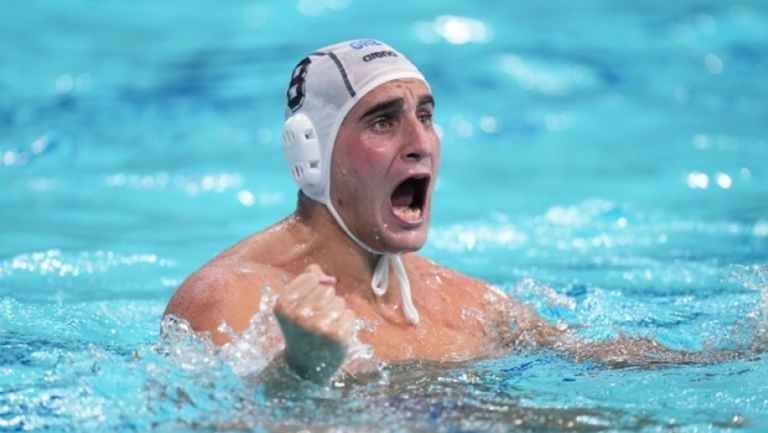
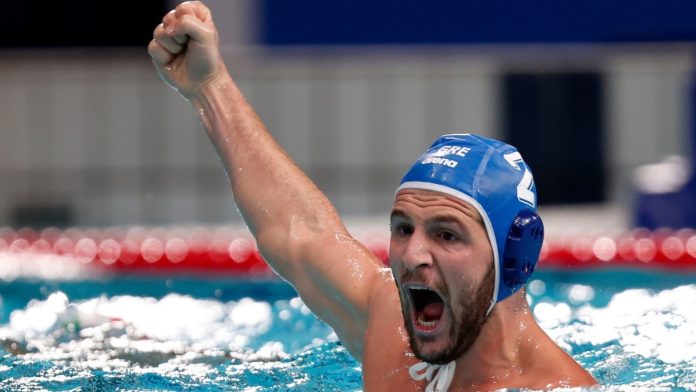
Greece is into its first-ever grand final at the World Aquatics Championship after defeating Serbia 13 – 7 on Thursday night in Japan.
The team’s result also secured their presence in the Paris 2024 Olympic Games. This will be the 17th overall time in Greece’s water polo history that it will play in an Olympic Games and the 12th in a row, since Moscow in 1980.
Greek men’s water polo team claim spot in first-ever world championship grand final.
Their victory against Serbia will go down in history as Greece puts behind them the curse of five lost finals in world championships.
This is also the first time Greece has defeated the Serbians in a major competition and at the same time got revenge for losing to them at the Tokyo Olympic Games.
Greece’s water polo team will now face either Spain or Hungary in the grand final on Saturday.