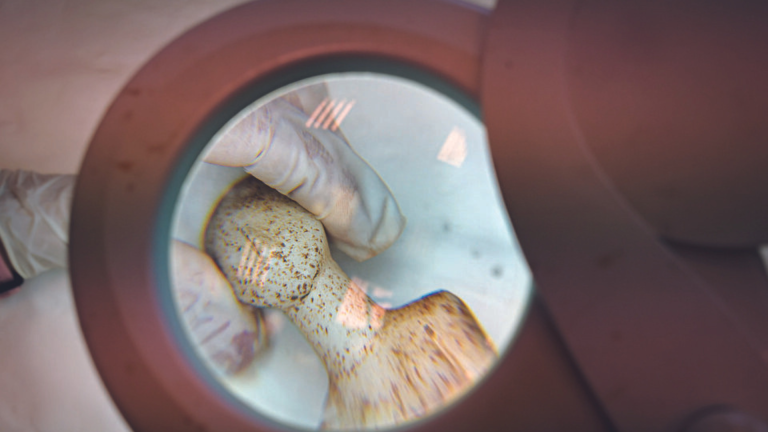
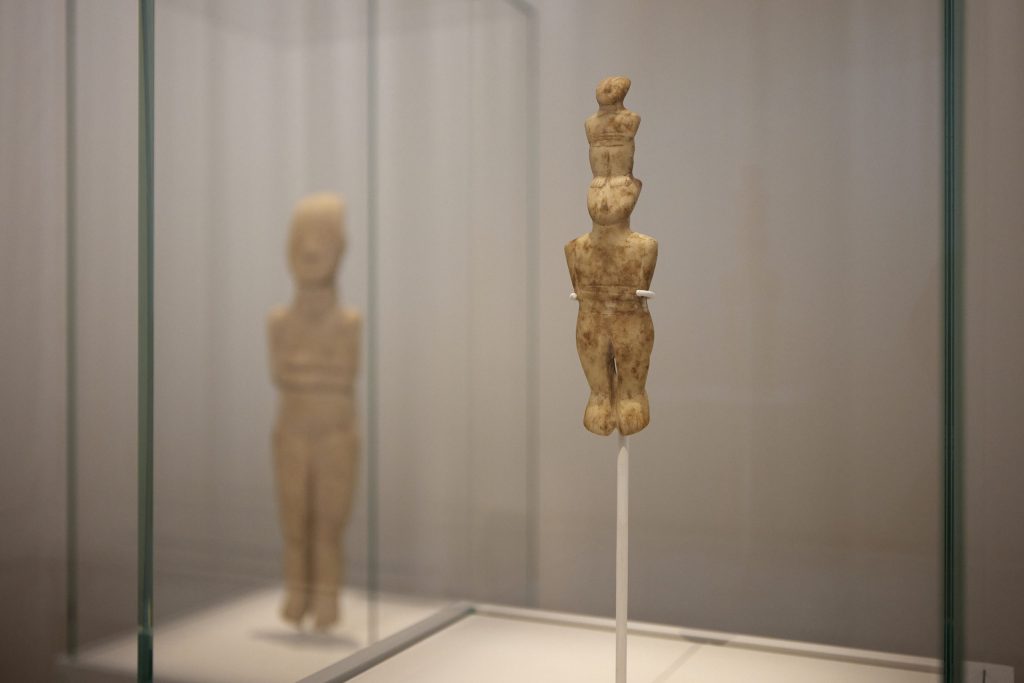
The Aegean Island of Naxos will see the construction of its first state-run museum which will house ancient Cycladic art.
The 8.3-million-dollar project will aim to grow Greece’s need for the return of artefacts which were once removed illegally from the country.
Such artefacts include idols which had previously been taken by US authorities.
Cycladic artefacts located in a museum. Photo: Artnet news.
The head of the Ephorate Cycladic Antiquities Dimitris Athansoulis stated that, looted items which are of Cycladic origin will be brought back to the new Naxos museum, no matter if they had been seized illegally or returned.
— Mubadala Citi DC Open (@mubadalacitidc) August 1, 2023
The 27-year-old Greek-Australian, No.86 in the world, was behind 2-6, 2-4 in the 2nd set, but won the next 4 games and sent the match to a 3rd set.
There he made the decisive break in the 7th game and took a 4-3 lead, to maintain control until the end of the match and complete the upset in the 10th game.
In the second round, Kokkinakis will face Ugo Humbert, No.13 on the board, who qualified with a bye.
A Greek and Cypriot team – Panathinaikos FC and Aris Limassol FC respectively – have progressed this morning to the next qualifying round for the UEFA Champions League.
Panathinaikos FC secure victory:
Panathinaikos FC advanced to the third qualifying round of the football competition after a draw in Athens (2-2) with Dnipro.
The Greeks went through with a 5-3 aggregate after their first win one week ago 3-1 against the Ukrainians.
Panathinaikos will face French Marseille in the next round.
Aris Limassol FC book spot in next round:
Aris Limassol FC continued from where it left off and got another victory against BATE. This time with 5-3 on neutral Hungarian soil and a total score of 11-5 (6-2 the first match).
𝗙𝗨𝗟𝗟 𝗧𝗜𝗠𝗘🏁
Following the victory against Bate Borisov in the second leg as well, ARIS FC secure a spot in European competition group stage.
The greens once again presented very good football and are now waiting to find out their opponent in the third qualifying round of the Champions League.
At the same time, they locked a place in a group of one of the three UEFA competitions for the first time in their history. That is, either the Champions League in the best case, the Conference League in the worst case, or potentially the Europa League.
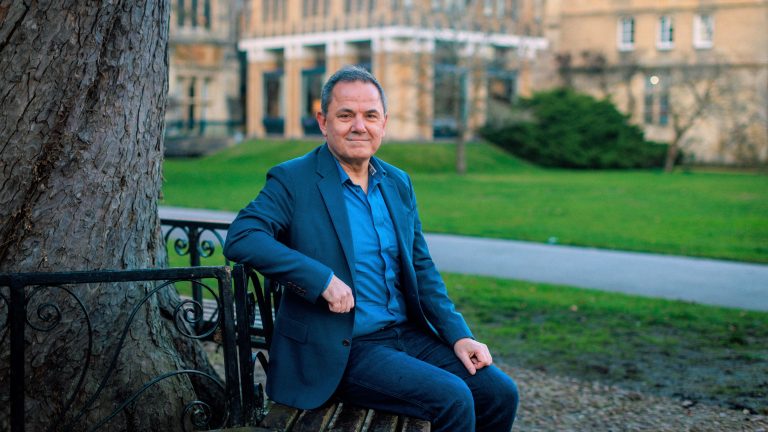
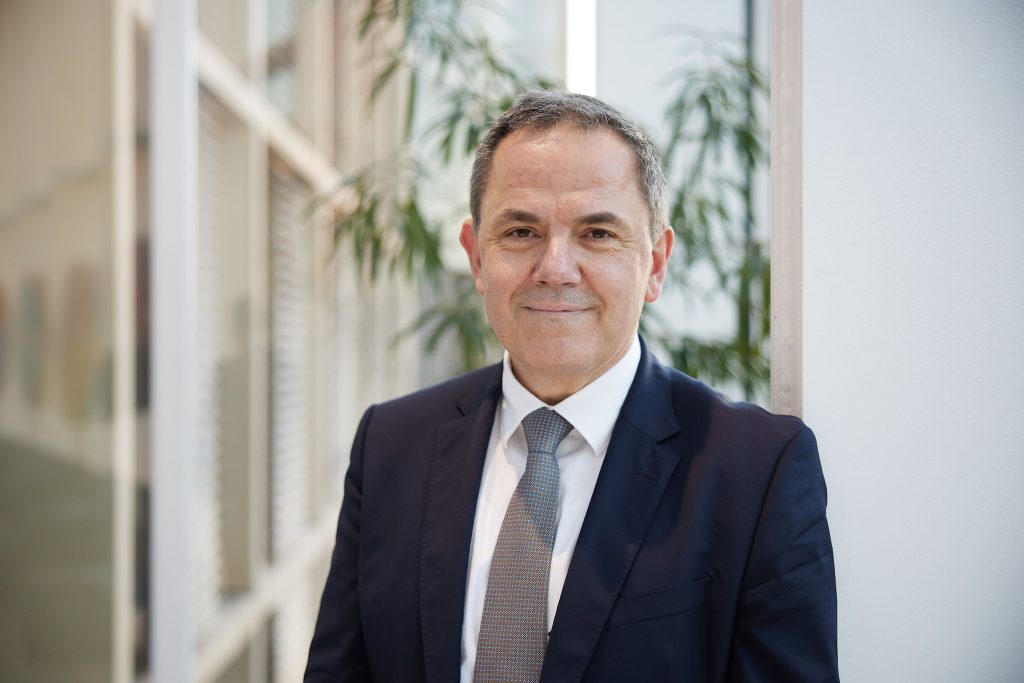
John Tasioulas is a proud member of the Greek community in Melbourne, a Professor of Moral and Legal Philosophy at Oxford University’s School of Philosophy and the first Director of the Institute for Ethics in Artificial Intelligence (AI).
In an exclusive interview with The Greek Herald, Professor Tasioulas speaks about the challenges and opportunities arising from the emergence of AI, as well as the ethics and human responsibility around the emerging issue.
The Prime Minister of Greece, Kyriakos Mitsotakis, recently described AI as the biggest revolution in the history of humanity and emphasised the need to prepare for significant changes in employment and education in the coming years. What are your thoughts on his statement?
I agree that AI seems to have enormous transformative potential, both for good and bad. Whether this will be greater than the impact of fire, the wheel or electricity is something I can’t judge.
But I’d like to shift the perspective of your question somewhat. Instead of talking about us ‘preparing’ for a revolution that is going to happen anyway, as if we are simply passive spectators, we should recognise that how AI develops is a matter for individual and societal choice. For example, whether AI is used primarily to replace humans in the workplace or to subject us to surveillance, or whether it is used to help us develop greater work skills or improve access to health care and so on, is a matter of who gets to make important choices and which values guide those choices.
My own view is that we need to ensure that there is an informed citizenry that is empowered to make these choices for the common good, rather than large corporations or governments that are in thrall to them.
It is widely acknowledged that AI holds immense potential. From your perspective, what do you consider to be the most significant challenges and dangers associated with AI?
The most significant danger associated with AI is that its development and deployment will not be steered by democratic decisions in the service of the common good. That, instead, it will be developed in whatever ways enrich large tech corporations or strengthen authoritarian control by governments. One of the important roles that academic institutions, like Oxford’s Institute for Ethics in AI, can play is to make it clear to democratic publics that they have a choice and to elevate the quality of the public discourse around AI so those choices are well-informed.
At the moment, I fear that this discourse is dominated by the tech industry, which is strongly resistant to regulation and which often seeks to divert attention away from the good and bad that AI-based technologies do here and now to highly speculative scenarios of existential risk based on the future emergence of Artificial General Intelligence (AI systems that equal or surpass human cognitive capacities across the board).
As AI continues to evolve rapidly, what are your thoughts on the ethical implications of advanced AI technologies, such as autonomous weapons or deepfake technology?
The ethical implications are many and diverse depending on the domain of life in question, whether it be warfare or heath care or something else. We need to ask ourselves what role AI can play to enhance the quality of individual human lives and to strengthen rather than weaken our democratic systems of governance. Autonomous weapons systems are a particular challenge, not least because the kind of machine learning approach that is dominant in contemporary AI leads to automated systems that can make egregious errors that no human would ever make. So restricting the use of AI in the military context seems a high priority.
Artificial Intelligence has raised concerns amongst some experts.
Quite apart from the issue of error, there is the fact that the ways in which AI systems arrive at results are often opaque even to their own creators. One issue we will urgently need to confront is whether there are some decisions that should be exclusively reserved to human beings. Maybe there is, in certain domains, even a right to a human decision. I gave a lecture on this topic recently at Princeton University.
Do you believe there should be global regulations or standards in place to govern the development and deployment of AI? What challenges do you foresee in implementing such regulations?
Global regulations are vitally necessary not least because of the acute risk of a disastrous AI arms race among the leading powers, the US and China. But there are serious challenges in the way of such regulations being established. At a practical level, verification is a lot harder with respect to AI technology than, for example, nuclear technology. At a deeper level, we are living at a time of increased polarisation and tension between the US and China. This is a problem far bigger than just AI regulation of course.
But as the example of John F Kennedy shows, when he managed to negotiate the Nuclear Test Ban Treaty with the Soviet Union in the midst of the Cold War and in the teeth of opposition from his own military establishment, it is possible to overcome the obstacles of ideological polarisation and mutual demonisation in order to act for the good of humanity as a whole.
On yet another level, the West has lost considerable moral authority so far as upholding any international law standards is concerned in light of the blatantly illegal Iraq War. So yes, there are huge obstacles to effective global regulation of AI, but we cannot afford to abandon hope.
How can we promote AI literacy and ensure that individuals understand the potential risks and benefits of AI technologies?
We all have a role to play in fostering healthy democratic debate about the risks and benefits of AI. Journalists, for example, need to ensure that they are informing their readers of the impact of AI here and now, such as the dependence of AI technology on the vast amount of digital data created by ordinary people who have no real alternative but to use the online platforms from which their data is harvested, and the deployment of AI for surveillance or to replace humans in the workplace for only small productivity gains, and so on. All too often, however, journalists succumb to the temptation of clickbait stories about an imminent ‘robot apocalypse’ that distracts public attention from these pressing issues.
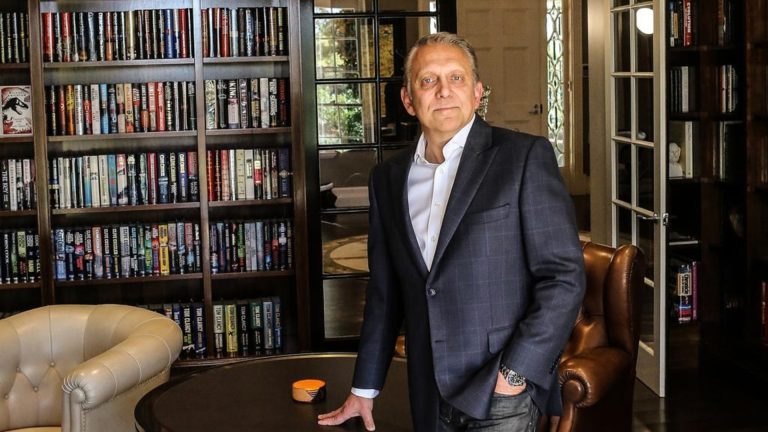
John Tasioulas.
Academic institutions also have an important role to play. The values at stake vary according to the different domains of life in which AI might be deployed, from medicine and law to management and education. So we need genuine experts in these fields to help us grapple with the distinctive challenges in each domain. It’s one question to ask, for example, whether an AI system should be used in cancer detection, another to ask whether it should be used in the sentencing of criminals. Academic experts need to produce rigorous research and then translate it into an accessible format that can feed into democratic deliberation. There are now many good books being published about the social consequences of AI, but one that I would especially recommend is Daron Acemoglu and Simon Johnson’s recent book Power and Progress: Our Thousand-Year Struggle over Technology and Prosperity.
As we are a Greek newspaper in Australia, I would like to inquire about your background and how it has influenced your career.
My parents emigrated to Australia from Dasylio, a small village near the city of Kozani, in the early 1960s. I was brought up in Melbourne and studied law and philosophy at Melbourne University. I came to the UK in 1989 to do graduate study at the University of Oxford and have pursued my career in the UK since then. I do my best to visit both Australia and Greece at least once a year, although the pandemic has made this difficult recently.
I was brought up by my parents to be tremendously proud of my Greek heritage, to regard it as a source of inspiration and strength. I think my Greek heritage played an important role in my choosing the unorthodox path of a professional philosopher. It was a way of affirming my Greek identity growing up in a rather hostile environment which was instructing me, in various way, that this identity was not something to be proud of.
I came across a copy of Aristotle’s treatise The Politics, when I was a teenager, and my interest in philosophy snowballed from there. I still regard myself as an Aristotelian today because I believe that the flourishing of the individual human being (eudaimonia) is central to ethics, and that central to human flourishing is the exercise of our rational powers. This is why AI is such a distinctive challenge – because it is the first time in human history that we have a technology that can perform, across a broad range, many activities that have traditionally required the exercise of human intellectual capacities.
In fact, I am currently engaged in a joint project with Josiah Ober, a distinguished historian of ancient Greece, who is based at Stanford University, that aims to bring an Aristotelian approach to AI ethics. We believe Aristotle’s central ideas offer a powerful corrective to currently dominant approaches that emphasise the satisfaction of subjective preferences or the promotion of economic growth. We hope to hold a conference in Athens on this topic next summer near the newly refurbished site of Aristotle’s ancient school, the Lyceum.
Greek Australian athlete, Nicolas Pozoglou, has signed with Koroivos, a professional basketball club based in Amaliada, Greece.
In a Facebook post, Koroivos welcomed Nicolas to the team.
Nicolas has played with both the NBL and NBL-One. The club also noted his impressive stats as a basketball player.
In the NBL, the 27-year-old played 22 games with the Ballarat Miners team, a NBL1 South club based in Victoria.
Pozoglou has also played with the Australian professional basketball team Perth Wildcats from Western Australia in the NBL for the 2019–20 season, when they claimed their 10th NBL championship.
Arrotex Pharmaceuticals is Australia’s largest generic drug supplier and it has recorded an almost 50 per cent rise in profits in a year to the end of March, the Australian Financial Review has reported.
In an interview with AFR Weekend, Mr Bastas said: “supplying COVID rapid tests to the New Zealand government might count for a third of pre-tax profit growth.”
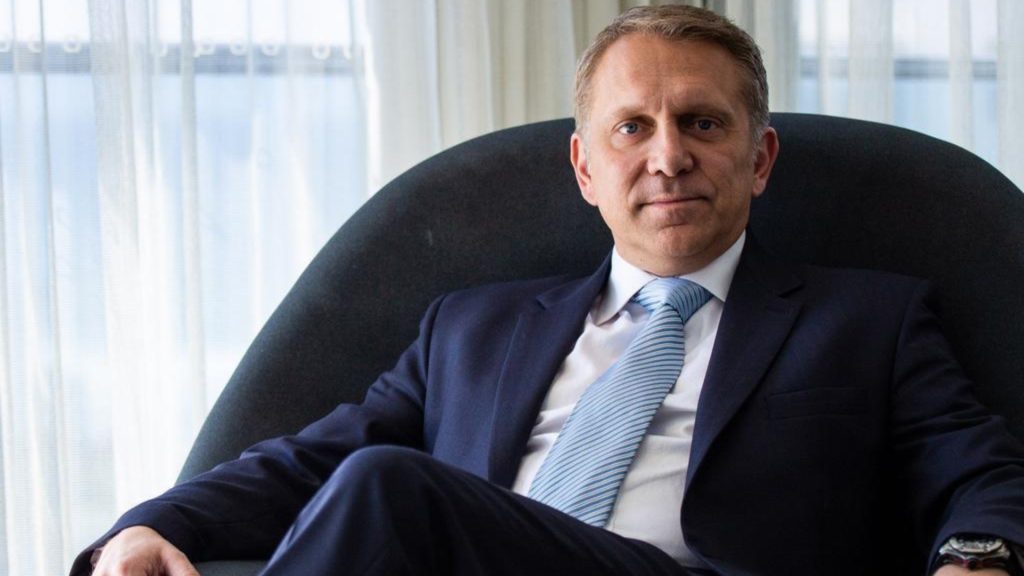
Dennis Bastas.
“The rest is we managed to pick up a bit of new business to become by far the biggest player in the Australian generic pharmaceutical space, and increased our market share to 65 per cent.”
The Minns Labor Government will today introduce to Parliament the Revenue, Fines and Other Legislation Amendment Bill 2023, a series of amendments which promote integrity and help protect government from confidentiality breaches.
The Bill will see individuals, corporations or other organisations hit with multi-million-dollar penalties if they are caught using or disclosing confidential government taxation information.
The NSW Government routinely consults with external representative industry bodies on tax policy and legislation on a confidential basis. The new offence in the Bill carries maximum penalties of $1,109,900 for individuals and $5,549,500 for corporations if they are found to have used or disclosed confidential government information.
Importantly, persons who conceal the breach of confidential government taxation information will be liable to the same penalties.
The amendment will also allow the Chief Commissioner of State Revenue to report the offending individual or organisation to any relevant professional body and publish details regarding the breach.
The bill also amends the Payroll Tax Act 2007 to enhance Revenue NSW’s ability to recover tax debts from ‘phoenix’ operators who liquidate companies to avoid paying their debts.
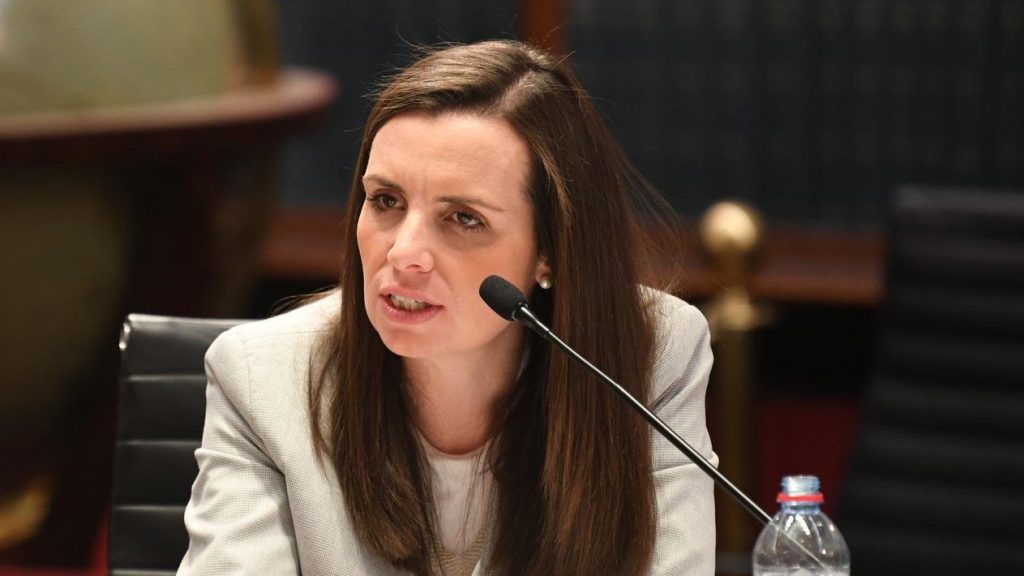
Courtney Houssos made the announcement today.
Phoenix activity is a major concern of Commonwealth and State regulators, not only because of tax avoidance but also because of the harm caused to individuals, businesses and other creditors to whom the debts are payable.
Under the changes, payroll tax groupings will be extended to include companies which are in administration or have been wound up, allowing Revenue NSW to recover their debts from successor companies.
In NSW, the payroll tax revenue leakage from phoenix activity has been estimated at over $85 million.
The Revenue, Fines and Other Legislation Amendment Bill 2023 also introduces a series of changes which promote integrity and compliance and improve the administration of the State’s fines system, including:
A new offence for evading or attempting to evade tax through a deliberate act or omission. The maximum penalty for this offence is $100,000, two years imprisonment, or both.
An increase in penalties ranging from $27,500 to $110,000 for some offences under the Taxation Administration Act 1996, such as providing false or misleading information or wilfully destroying records. This brings NSW into line with current penalties imposed by the Commonwealth and other states.
Creating a new offence for a person who offers or agrees to be falsely nominated, including for driving and traffic offences. While it is currently an offence to nominate another individual, it will now also be an offence to offer or agree to be nominated. The maximum penalty will be $5,500 for an individual, or $10,100 for a non-individual.
Minister for Finance, Courtney Houssos, said in a statement: “The Revenue, Fines and Other Legislation Amendment Bill 2023 modernises penalties, addresses dishonest business practices like ‘phoenixing’ and promotes integrity.”
Ms Houssos said the bill will offer “greater fairness” and “transparency for the people of NSW.”
“These measures ensure integrity remains at the heart of the NSW Government’s tax system,” she added.
Nominations open today for the 2024 Premier’s Multicultural Community Medals, honouring the unsung community heroes who work in the field of multiculturalism in NSW.
Submissions are also open for the 2024 Multicultural Honour Roll, giving posthumous recognition for significant achievements by members of NSW’s vast and diverse society.
The awards program is one of the most prestigious in the State. Medal recipients and Honour Roll inductees are celebrated at a gala awards ceremony attended by hundreds of community members and cultural, faith and political leaders.
There are 12 categories for the awards, including business, local government, not-for-profit and a special category to recognise the achievements of an outstanding and innovative language teacher who instils knowledge and a lifelong love of language and culture in students.
NSW Premier Chris Minns said “these awards recognise not only the incredible leaders in New South Wales right now, but also those who have come before us, whose impact is still being felt decades later.”
“I’m proud to endorse the awards this year and I encourage everyone in NSW to nominate a friend, family member or colleague,” Mr Minns said.
NSW Minister for Multiculturalism Steve Kamper added that the Honour Roll “is an opportunity for us to thank their families for their work in uniting us in a common belief that everyone has something to contribute to our rich social fabric.”
The Securing Faith-Based Places grant program provides $40 million over four years to improve security at religious schools and preschools, places of worship and faith-based community centres.
Securing Faith-BasedPlaces will be an open, competitive and merit-based grants program. From today, eligible organisations can apply for grants between $25,000 and $500,000 to address risks of crime and violence resulting from religious and racial intolerance.
The program will support security infrastructure upgrades, including fencing, lighting, security cameras, traffic barriers, alarm systems, and access controls, as well as engagement of security guards.
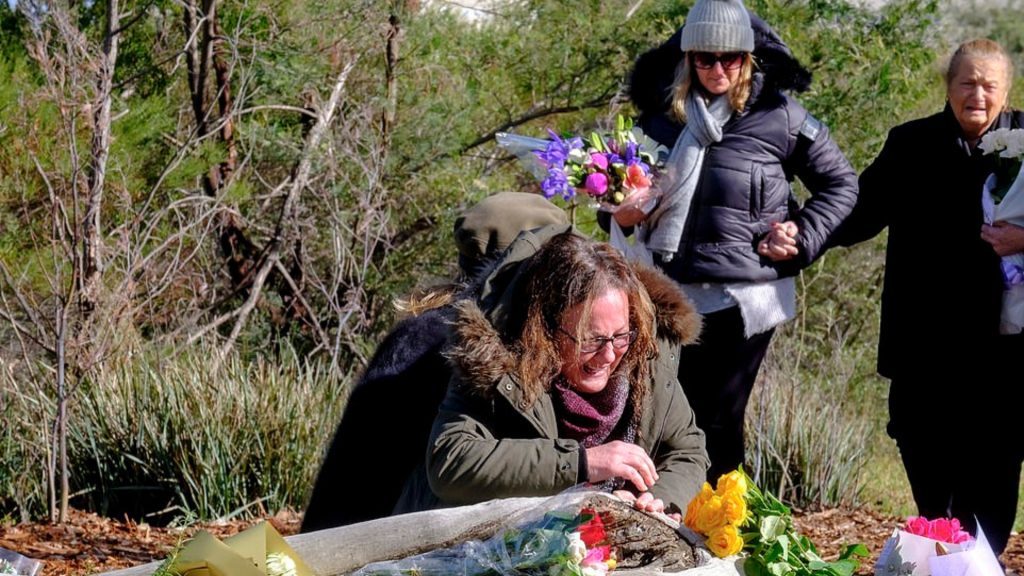
Maxi Antoniou, mother of Courtney Herron, 25, who was killed at a Melbourne park in 2019, has called for the return of her daughter’s stolen jewellery taken earlier this month, 7News has reported.
Courtney Herron’s mum at the site where her daughter was killed in May 2019. Photo: Daily Mail.
On Monday, Ms Antoniou told 7News a thief broke into her Moonee Ponds home in inner-city Melbourne on July 1 and stole her late daughter’s gold cross and Pandora bracelet.
“The value in money is not that great. But the value to myself and my family and my children is priceless,” Ms Antoniou said.
“The violation is just as bad as when Courtney was [killed]. I can’t describe the feeling of having her gone and then this person taking that jewellery.”
Police hope this man can help with their enquiries. Photo: Herald Sun.
Police have released CCTV images of a man they believe can assist with enquiries relating to the stolen jewellery. The man is described as being of Middle Eastern appearance, aged in his 50s, solid build, black and grey hair with a thin goatee, reports 7News.
A Victoria Police spokesperson said: “It is understood the offender slashed the fly screen and kicked in the rear door to gain entry to the property on Hopetoun Street between 4.30pm and 6.15pm on 1 July.”
Anyone with information is urged to contact police immediately.