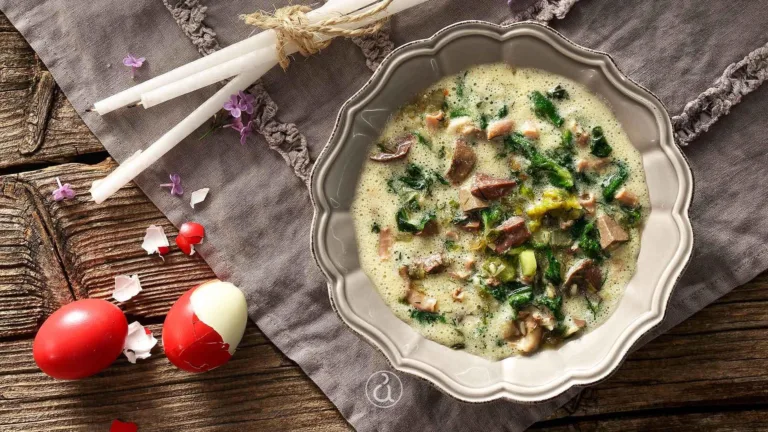
Magiritsa is a unique Greek soup made from lamb offal and romaine (cos) lettuce, garnished with fresh herbs and finished off with a delicious egg lemon sauce (Avgolemono). This traditional magiritsa recipe is the dinner prepared and served in almost every household in Greece on Holy Saturday.
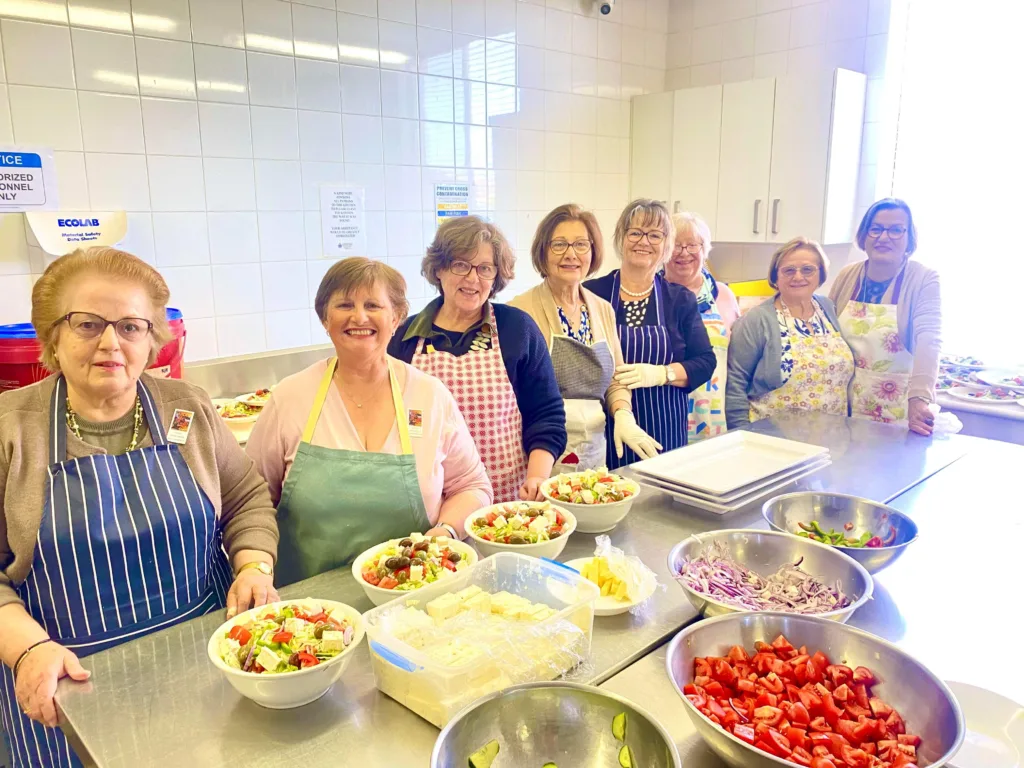
Kiria Vicki Sanidas’ is on the Philoptochos at St Demetrios Greek Orthodox Church. Photo copyright: The Greek Herald / Evelyn Karatzas.
Ingredients:
A neck of lamb
A lamb heart
1 piece of lamb stomach
4 small onions
1 small handful of dill
½ cup of rice
Salt and pepper
3 dried bay leaves
2 litres of water
Method:
In a large pot, put all the meat to boil. Let it simmer until boiling and then change water into another pot
In another pot, put all the meat, bay leaves and enough water to cover them all
Let them simmer on low heat for approximately 2 hours
Take pot off stove to cool
Take meat out of pot and cut it all up into small pieces
Drain and strain the remaining liquid
Then thinly slice onions
Put all thinly sliced meat, rice, bay leaves, dill and thinly cut onions back into the pot altogether, adding the strained water and put on moderate heat, to boil. Leave to the side, once boiled
For the avgolemono
You will need 1 egg + 1 lemon (juiced).
Method:
Beat the egg in a bowl until it’s nice and foamy, and then slowly slowly, add the juiced lemon
Then add in half a cup of the soup broth into the bowl with the egg and lemon, then whisk it all together
Then pour the bowl into the soup saucepan, then it is ready to serve
Note: When adding the half cup of soup broth to the egg and lemon bowl (prior to whisking), make sure the soup broth is not too hot!
The free event will be held in the NSW Parliament Fountain Court & Theatrette, with arrival drinks from 5.30pm to 6.30pm before the official program begins from 6.30pm to 8.45pm.
IMMA consists of 33 members and growing, representing a diverse range of multicultural outlets that reflect multicultural Australians across all generations.
IMMA is giving attendees a rare opportunity to convene and hear a range of speakers discuss the role of multicultural media in public interest journalism. Key questions for discussion include how multicultural media engage with their communities; multicultural media’s relationship with government; what are the next best steps for multicultural media to strengthen its cross-platform journalism; and what does the “public’’ in public interest journalism mean in the multicultural context.
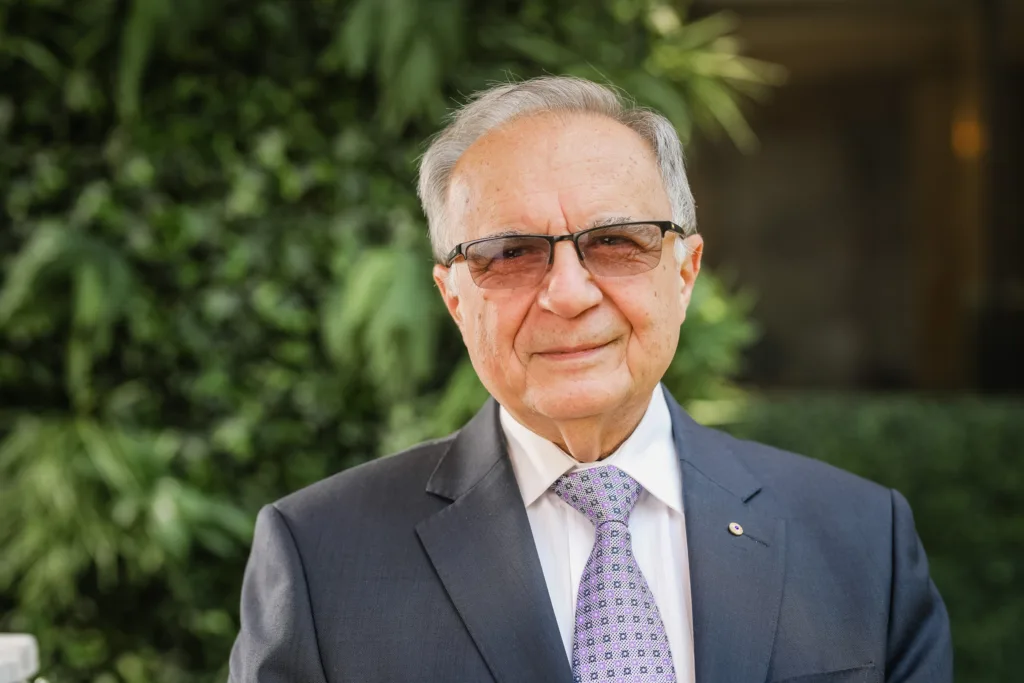
Keynote Speaker on the day will be prominent figure in Australian multiculturalism Dr Stepan Kerkyasharian AO.
Dr Kerkyasharian, a steadfast advocate for multiculturalism in Australia, has served on the National Australia Day Council (NADC) Board since 2019. Over five decades, he has spearheaded initiatives to foster community harmony and inclusion. Notably, as Chair and CEO of the Community Relations Commission of NSW, he drove policy changes benefiting under-represented communities. He also led the Anti-Discrimination Board, championing minority rights. Recognised for his contributions, he has received numerous accolades, including the Order of Australia and the Presidential Medal for “Outstanding Achievement” from Cyprus. Dr Kerkyasharian’s extensive involvement includes leadership roles in various organisations and as a NSW Australia Day Ambassador for over two decades.
Dr Stepan Kerkyasharian will be Keynote Speaker.
The event will also feature a panel discussion, canvassing current issues of government engagement, crisis communications and digital transformation. Panellists include:
David Giang, Managing Director of Vietnamese language newspaper, Chieu Duong (The Sunrise Daily) and Multicultural NSW Advisory Board Member
Wendy Huang, Managing Director of Chinese News and Media Group Pty Ltd & Publisher of the Chinese Herald
Sid Merhi Managing Director of 2ME Arabic Radio
Dimitra Skalkos, Managing Director of Foreign Language Press Pty Ltd and Publisher of The Greek Herald & Ellinis Magazine
Pawan Luthra, Publisher and Founder of Indian Link Media Group
Julius Larobina, Managing Director, Italian Media Corp and Publisher of Il Globo & La Fiamma
Fotis Kapetopoulos, moderator and Secretary of Independent Multicultural Media Australia (IMMA)
Event Details:
What: Diverse Voices, Inclusive Views: Multicultural Media’s Vital Role in Shaping Australia’s Media Landscape
This is a not-to-be-missed opportunity to explore the narrative prowess of independent multicultural outlets, the role they play in bridging gaps in mainstream coverage and their positive impact on cultural maintenance.
An Independent Multicultural Media Australia event.
Despite some positive rhetoric, the Albanese Government is yet to act on a backlog of reforms including to national security laws, freedom of information, whistle-blower protection and defamation.
Rather, a High Court ruled on 8 September 2021 that a publisher in Australia can be held responsible for defamatory comments readers leave on its Facebook pages, in a decision that could have far-reaching consequences for press freedom.
A High Court ruled on 8 September 2021 that a publisher in Australia can be held responsible for defamatory comments readers leave on its Facebook pages.
In October 2022, The Greek Herald received a letter of complaint by a Sydney legal firm acting for the Greek Orthodox Archdiocese of Australia and Archbishop Makarios reprimanding the publication for alleged defamatory third-party comments made on its public Facebook page.
The letter stated that “while The Greek Herald itself may not have uploaded anything which is defamatory of Archbishop Makarios,” the majority of comments on the publication’s Facebook page “represent defamatory attacks against Archbishop Makarios.”
Referencing the High Court decision, the letter also suggested that alleged defamatory comments should immediately be removed and requested that The Greek Herald “closes the comments on future articles to ensure that the same does not happen again.”
In October 2022, The Greek Herald received a letter of complaint by a Sydney legal firm acting for the Greek Orthodox Archdiocese of Australia and Archbishop Makarios reprimanding the publication for alleged defamatory third-party comments made on its public Facebook page.
The Greek Herald does not condone any defamatory comments on its Facebook page whoever they may identify, and subsequently removed the comments the publication deemed to be allegedly defamatory. Comments which were considered public opinion were not removed to ensure the freedom of speech of our readers.
As evident, the High Court ruling has particular implications on freedom of the press and the public, especially for publications such as The Greek Herald which provides its readers access to journalism that remains staunchly independent, and is a platform for healthy debate on topics of interest.
Greece:
Greece is seeing the troubling results of a years-long erosion of press freedom in the country. Photo: Louisa Gouliamaki/AFP via Getty Images.
According to The Guardian, media freedom is declining across the European Union and “perilously close to breaking point” in several countries, including Greece.
An annual media freedom report released by the Civil Liberties Union for Europe (Liberties) revealed Europe’s media landscape continued to be marked last year by heavy concentration of media ownership, inadequate rules on ownership transparency, and numerous threats to the independence and finances of public media.
It also documented multiple instances of threats, intimidation, surveillance and violence against journalists in several member states, as well as restrictions on freedom of expression and access to information across the bloc.
“Media freedom is clearly in steady decline across the EU – in many countries as a result of deliberate harm or neglect by national governments,” Eva Simon, the senior advocacy officer at Liberties, said.
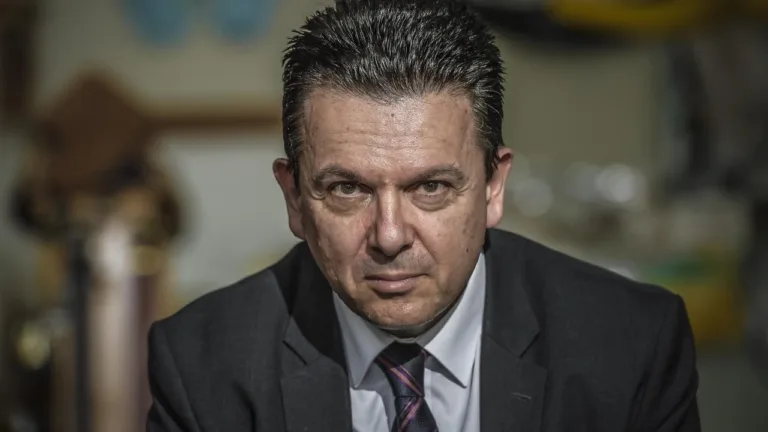
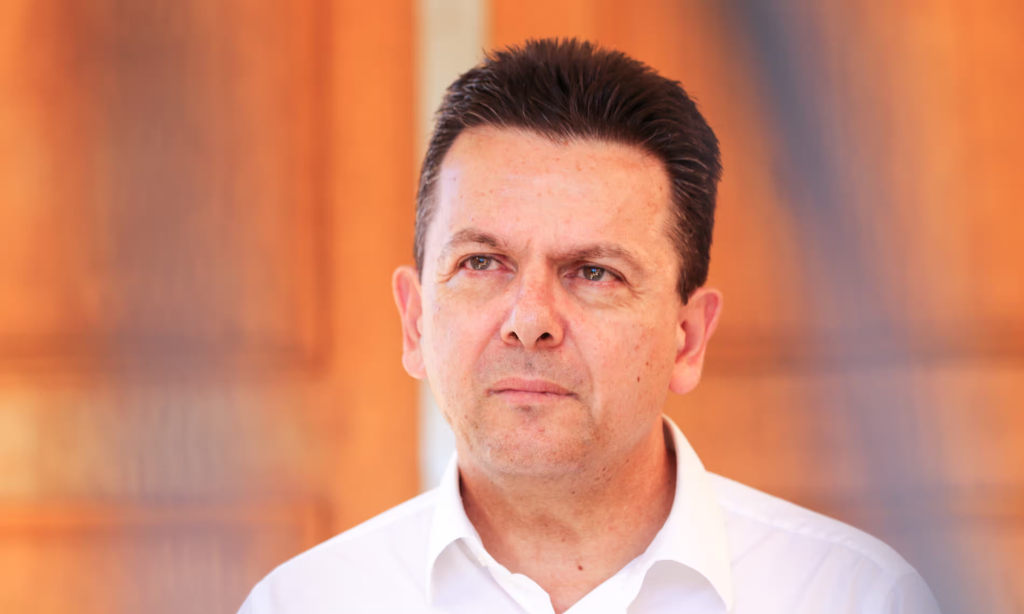
Former South Australian senator and lawyer Nick Xenophon has launched legal action against his former law firm over the continued use of ‘X’ (a “derivative of his name”) in its new business title.
This comes despite Mr Xenophon leaving the firm last year.
According to ABC News, the former senator filed a statement of claim with the Federal Court in March against XD Law and Advocacy Pty Ltd, formerly known as “Xenophon Davis Pty Ltd.”
Mr Xenophon wants the business name to be changed by removing the letter X, and that the respondents pay his costs for the legal proceedings.
Nick Xenophon launches legal action against his former law firm. Photo: Russell Millard/AAP.
In the claim, Mr Xenophon cited examples of media articles where he has been referred to as Mr X.
The legal document also alleged that the firm’s existing partners Mark Davis and Natalija Nikolic breached a deed that was written up when Mr Xenophon left the firm. The deed allegedly required Mr Davis and Ms Nikolic to “cease using the applicant’s name and any identifying marks, symbols or images which associated their firm with [Mr Xenophon].”
In a statement, Mr Davis hit back at the claims, saying he utterly “rejects Mr Xenophon’s apparent belief that he owns a letter of the alphabet.”
According to The Sydney Morning Herald, Mr Jones said Meta has told Australia it will stop media companies and individual users posting news links on Facebook and Instagram if the government uses its laws to force the company to pay for Australian journalism.
“Meta has made it clear they’ll play hardball. So will the government,” Mr Jones said.
Labor fears the $3 trillion firm’s threat would kill off smaller news outlets reliant on social media audiences.
Meta blocked news content, and some emergency services pages, for a few days in 2021 at the height of nationwide border closures and COVID lockdowns as the tech giant negotiated with the government.
The assistant treasurer said he was determined to create a new model to fund journalism that was sustainable and avoided rolling crises after each deal expired.
In response to Mr Jones’ comments, a Meta spokesperson said: “There is no change to publishers’ ability to use Facebook and they can continue to benefit from our free tools and products which they can voluntarily use should they want to.”
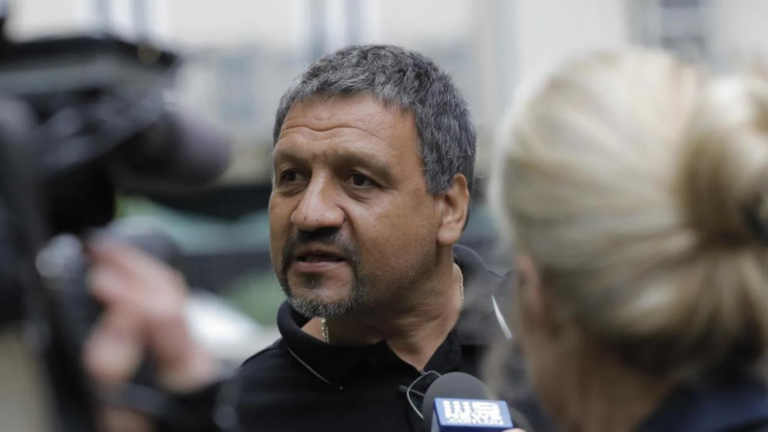
Spiros Vasilakis has expressed his outrage after all charges against Victoria’s Department of Health were dropped on Thursday following the state’s COVID-19 hotel quarantine program.
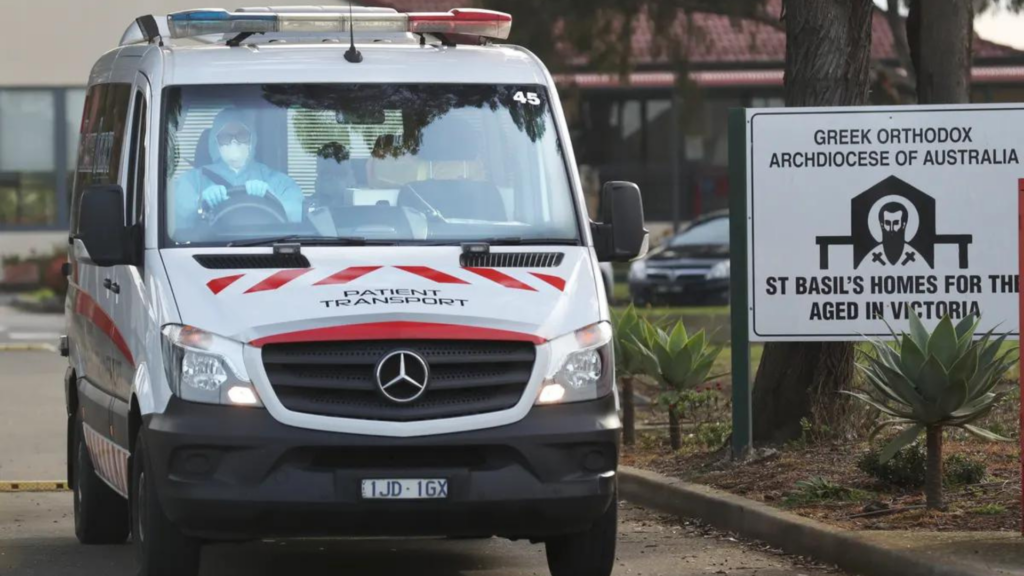
Mr Vasilakis’ mother Maria died in 2020 after a COVID-19 outbreak hit St Basil’s aged care home in Fawkner, Victoria.
Mr Vasilakis told AAP he fears the recent decision that saw the hotel quarantine case dropped could also put other cases related to individual outbreaks – including the inquest into St Basil’s Fawkner – at risk.
St Basil’s aged care home in Fawkner, Melbourne, during the 2020 Covid outbreak. Photo: David Crosling/AAP.
“It’s a joke,” he said. “Those of us who lost family, all of us would just be bewildered and gobsmacked.”
“[It’s] saying no one’s responsible for those lives, when we know there were actual individuals responsible for allowing the virus to spread.”
WorkSafe charged the Victorian Department of Health in September 2021 with 58 breaches of the Occupational Health and Safety Act after a 15-month investigation into the bungled system.
But the case was canned days out from trial after the County Court threw out evidence unearthed during a separate judicial inquiry.
The charges were dropped on Tuesday, with the Office of Public Prosecutions not fighting a bid to abandon the proceedings.
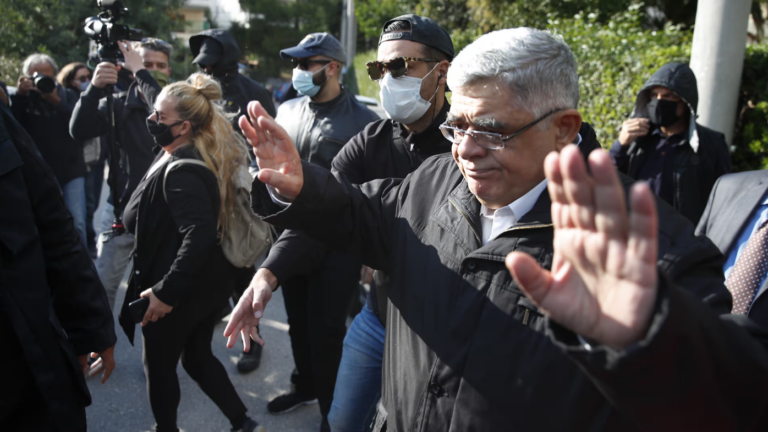
The convicted leader and founder of Greece’s far-right Golden Dawn party, Nikos Mihaloliakos, has been released from prison on parole, four years into a sentence of 13-and-a-half years.
Mihaloliakos, 66, and other members of Golden Dawn were sentenced in 2020 following a high-profile, five-year trial. He was convicted of operating a criminal organisation that posed as a political party, as well as for crimes ranging from violent attacks on immigrants, to weapons offences and the murder of anti-fascist rapper Pavlos Fyssas in 2013.
The convicted leader, who was often seen giving Nazi-style salutes at party gatherings, has been at home since Wednesday, a police source said.
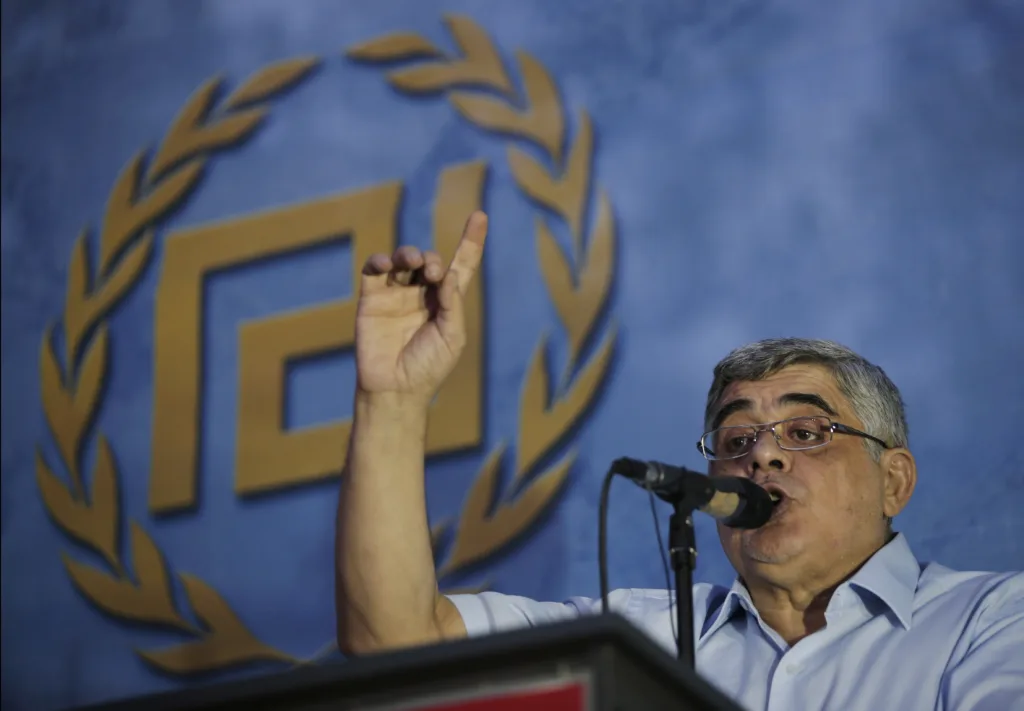
FILE – Nikos Michaloliakos, the jailed leader of the extreme far-right Golden Dawn political party speaks during a pre-election rally, in Athens, Wednesday, Sept. 16, 2015. Photo: AP Photo/Lefteris Pitarakis, File.
His request for parole was approved by a board of judges, who took into account his prison labour and health issues, an official at Greece’s citizen protection ministry told Reuters on condition of anonymity.
Mihaloliakos’ parole restrictions include a ban on travelling outside the greater Athens area and an obligation to regularly check in with a police station near his house, the semi-state Athens News Agency reported.
According to Ekathimerini, the Lamia Court of Appeals Prosecutor intends to appeal the decision of the Lamia Misdemeanor Court, which granted conditional release to Michaloliakos.
Golden Dawn entered the Greek parliament in 2012 at the peak of Greece’s debt crisis, seizing on public anger over painful austerity. The party, however, failed to win a single parliamentary seat in 2019 elections that brought the conservative New Democracy party to power.
The below itinerary includes an overview of the geographical, historical, and archaeological elements surrounding Mount Athos – a place of profound significance. Repetition, as they say, is the mother of learning, so let us delve into this sacred journey.
Holy Thursday, April 26, 2019: Departure from Argos Orestiko
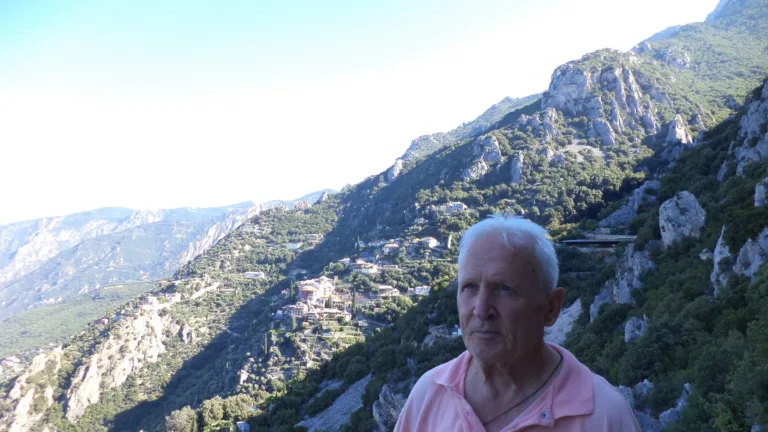
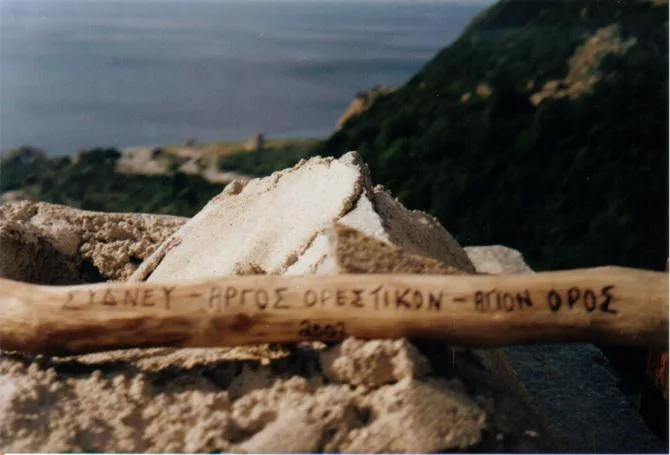
Our party of four, Haris Tsioupas – retired veterinarian, Ioannis Kalivas – mathematician, Constantinos Goudis – attorney at Law, all from Argos Orestiko and myself (born in Argos now from Wollongong) set off on our pilgrimage from the historic city of Argos Orestiko, situated in the ancient region of Maketa—the very cradle of Macedonia. It was here that the words “Macedonia,” “Macedonians,” and “Macedon” originated, albeit through linguistic evolution. Our destination: Mount Athos – Άγιον Όρος.
The Origin of the Name “Athos”
The name Athos traces back to the mythical Giant Athos, who participated in the Gigantomachy alongside the gods of Greek mythology. This epic battle unfolded in what is now Pallini (named after Athos’s daughter) also known as Flegra, the first peninsula of Halkidiki.
En Route via Thessaloniki
Our journey takes us through Thessaloniki, the capital of Northen Greece, a city closely associated with Saint Demetrius who was martyred in 304 AD during the Christian persecution under the Emperor Galerius. The Kamara, a well-known arch in Thessaloniki, commemorates his victory over the Persians in 297 AD.
Ierissos: Ancient Acanthus and Beyond
Continuing our journey, we arrive at Ierissos, once known as ancient Acanthus. This coastal town, along with others like Andros, has a rich history dating back to 655–654 BC. Notably, excavations here have yielded numerous gold Darian coins, relics of the Achamenid dynasty and the reign of King Darius I (521–486 BC). Ierissos serves as one of the two gateways to Mount Athos from where ferries run from Ierissos to the east coast of the peninsular. The other being Ouranoupoli.
Ouranoupolis: Gateway to Mount Athos
Ouranoupolis, nestled on the coast, overlooks the Singitic Gulf also known as The Mount Athos Gulf – Κόλπος Αγίου Όρους – the gateway to Mount Athos. Across the gulf lies the island of Ammouliani, adorned with the islets of Feti, Penna, and Artemis (collectively known as Drenia). Since 1922, Ouranoupolis has served as a refuge for settlers from Asia Minor. It marks one of the two entrances to Mount Athos, the revered ark of Orthodoxy. The other being Ierissos. Located near the harbour is the landmark Byzantine Tower which was built in the 14th century by monks of the Vatopedi Monastery to protect the area from enemy invasions.
A Pilgrimage to Mount Athos: Crossing Borders and Sacred Waters
Our journey begins with the anticipation of a sacred encounter. Armed with our Διαμονητήρια – the coveted Mount Athos Visa – which were waiting for us at the pilgrims’ offices here, we were about to set sail on a path secured over three months earlier at the offices of Mount Athos in Thessaloniki. We purchased our ferry tickets and found a café by the shore where we enjoyed a coffee and spanakopita while waiting for the ferry.
Embarking on the Axion Esti
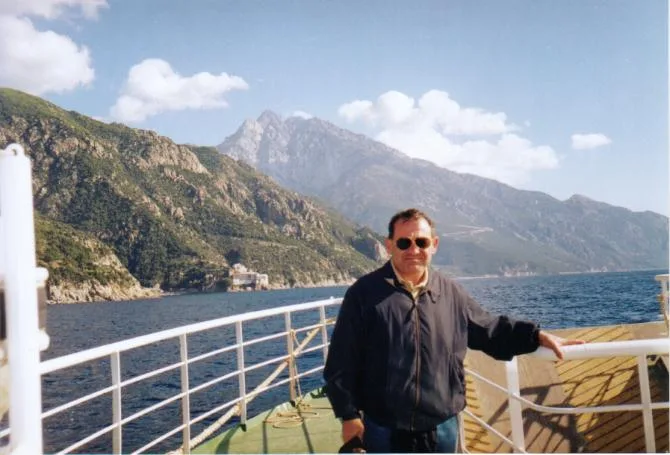
Around 9:45 am, our ferry Axion Esti arrives to carry us away from Ouranoupolis, the mundane threshold, towards a realm where time stands still and earthly concerns fade. As the Axion Esti glides across the waves, we make short stops at the arsanades – the piers of the different monasteries for embarking and disembarking pilgrims. During the passage we see glimpses of the sacred landscape connecting pilgrims to the spiritual heart of Mount Athos. After two hours sailing, we arrive at the arsana for the HM of Konstamonitou for our first night. Here, the stone slab slopes like a tongue into the sea, leading us to the Monastery of Konstamonitou. The shipyard, perched on this ancient stone, awaits our arrival.
The Yellow Sign and the Double-Headed Eagle
A yellow sign catches our eye – a map adorned with the double-headed eagle, a symbol etched into the very fabric of Mount Athos and its churches. Initially single-headed, this majestic bird now reigns supreme across the Holy Mountain. Its transformation occurred after the fall of Constantinople in 1453 when the Ecumenical Patriarchate of Constantinople adopted the emblem of the double-headed eagle to symbolise the Orthodox faith and the unity of the Eastern and Western Roman Empires.
Where Eternity Meets Stone
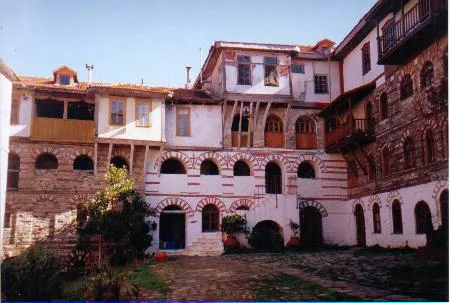
Konstamonitou courtyard.
We hop on the back of an old table-top truck which the monks of the monastery of Konstamonitou have kindly provided for us. It saves us a long and hard trek up the mountain. Our journey unfolds from the harbour along several kilometres of dirt track leading us to the Monastery on Good Friday, April 26, 2019. As the sun reaches its zenith, we arrive for our first overnight stay.
The Monastery of Konstamonitou: A Hidden Gem in the Forest
Nestled in the untrodden forest of Kreivovouni, at the heart of the Athos Peninsula, lies the secluded Monastery of Konstamonitou. Its solitude is intentional – a safeguard against the fearsome pirates who once ravaged the North Aegean.
Archontariki: The Guest House of Stone
In all monasteries, where stone stands as the symbol of eternity, we find the Archontariki – the Guest House. Here, the Archontari and monks extend their warm reception. Coffee, tsipouro and loukoumia grace our arrival, following which, the monks advise us of the times for esperinos (vespers) and orthros (morning matins or prayers) and we are shown to our simple but tidy rooms. This ritual is consistent in all the monasteries with only minor variations.
A Legacy of Centuries
Founded in the 11th century during the reign of Alexios I Komnenos (emperor from 1081–1118 AD, born in 1057), this monastery bears witness to Byzantine history. Some attribute its establishment to Alexios’ daughter, Alexia, whose chronicles echo through time. However, an alternate version suggests that Constantine the Great or his son Constanzas laid its foundations around the 4th century.
Katholikon: A Sanctuary of Devotion
The katholikon, or chapel, adorned with the icon of Panagia Odigitria (Our Lady of Guidance), stands as a tribute to the first martyr, St. Stephen (celebrated on December 27). Within its hallowed walls, icons of historical significance abound. Among them, the miraculous icon of Panagia Antifonitria (akin to Vatopedi Monastery) holds a well-known miracle dating back to 1020.
Esperinos – Vespers
At sunset it is time for esperinos – vespers, so we make our way to the katholikon – the chapel, where the monks have gathered to chant psalms, hymns and biblical passages creating an air of spiritual contemplation. The monks follow the Byzantine tradition of chanting. A melodic form which has been preserved for over a millennium that evokes a sense of heavenly reverence. It is a time for reflection, gratitude, prayer and for seeking divine guidance. The katholikon is in darkness with just a few votive candles offering any illumination. In the dim light, the monks, dressed in black look like phantoms gliding around the katholikon. The chanting together with the fragrance of the livani relaxes and comforts me and time stands still.
Trapeza – Supper
After esperinos it is time for trapeza or supper, the main meal of the day. The dishes are simple vegetarian meals with side dishes of olives, feta cheese, bread, fruit, water – and except for fasting days – a glass of red wine that has been produced by the monks with grapes from the monastery’s own vineyards.
The monks and the pilgrims are seated separately but all partake of the same meal which is eaten in a hushed reverence. The only sound that can be heard is the scraping and clinking of the cutlery and the accompanying voice of a monk reading a passage of scripture. At some point a small metal triangle is sounded and this signifies that supper is over.
The pilgrims stand and wait in silence for the monks who form a guard of honour and bow their heads as the pilgrims exit the dining room. In contrast, after vespers it is the pilgrims who wait reverently for the monks to enter the dining room and be seated before they themselves enter. This ritual is consistent in all the monasteries.
Evening in a monastery
After trapeza some of us enjoy a stroll around the monastery grounds or have a read in the library and then it is early to bed for we know we will have a very early wake up to attend orthros – matins or morning prayer which is followed by the main service.
An early morning summons to prayer
Around 3 am, the pounding of the semantron – a long wooden plank struck with a wooden mallet by one of the monks – summons us to όρθρος – orthros – or matins, the morning prayers which will be followed by the Divine Liturgy, the central service of Orthodox Christianity and celebrated daily by the monks.
Breakfast and then on the road
When the service ends, it is time for breakfast which may consist of a simple pilaf rice or kritharaki (risoni) or sometimes some feta cheese, olives, paximadia, coffee and fruit. Then it’s back to our rooms where we gather our belongings, sling on our backpacks, and set off on the path to the next monastery.
Journey to the Holy Monastery of Dochiariou
On Holy Saturday, April 27, 2019, we embarked on a two-hour trek through the wilderness to the Holy Monastery of Dochiariou where at midnight, we were to celebrate the Holy Resurrection – a moment that would be forever etched in our souls.
H.M. Dochiariou: A Byzantine Marvel
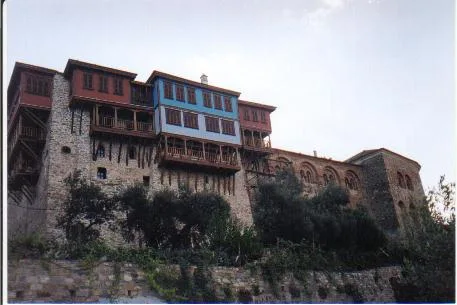
Holy Monastery of Dochiariou.
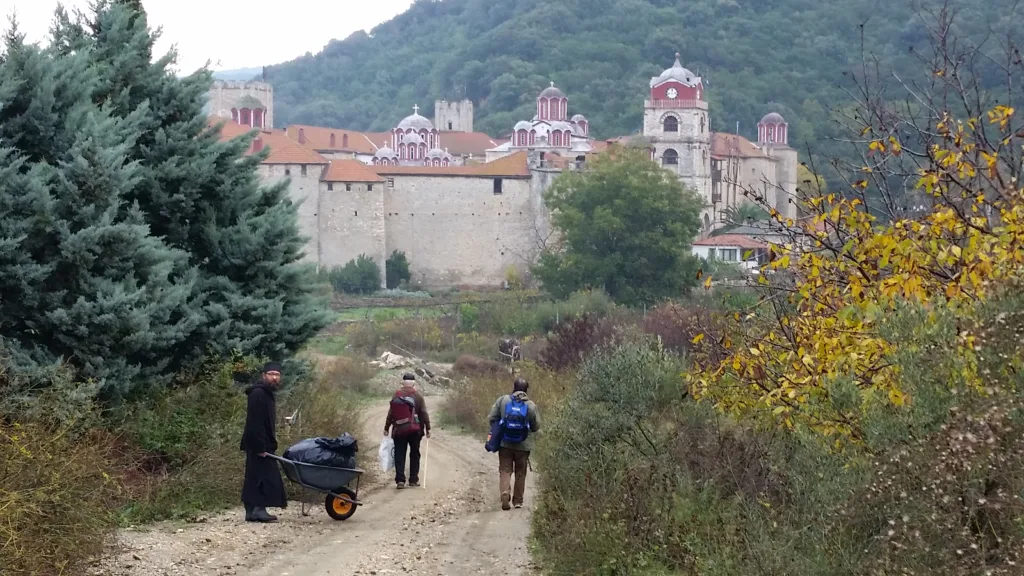
The 11th-century Byzantine building, which underwent renovations between the years 2007–2013, now stands resplendent. Its magnificent tower and gazebo grace the coastal area, their façade transformed over a year. Here, history converges with the present, and the echoes of devotion resonate through time.
The Miraculous Icon of Panagia Gorgoepikoos: A Testament of Faith
During the reign of Andronikos II Palaiologos (1282–1328), the Holy Water of the Monastery flowed freely from a crack in the rocks and continues to do so to this day. A divine sign that echoes through the ages. Here, within a special chapel, the miraculous icon of Panagia Gorgoepikoos (She Who Is Quick to Hear) is enshrined. Faithful pilgrims, seeking her guidance offer their heartfelt tributes.
On Thursday, December 15, 2016, an extraordinary event unfolded here. An 18-year-old mute boy from Skopje, in the former Yugoslavia, while praying before the icon of Panagia Gorgoepikoos, suddenly found his voice. In the presence of the astonished chapel supervisor and a novice monk, the boy spoke—a miracle witnessed by all. Was it the icon’s compassionate gaze that unsealed his lips?
Holy Saturday Worship and Resurrection
On Holy Saturday, April 27, 2019, a multitude of faithful Greeks together with some other nationals, gathered to worship before the miraculous icon of Panagia Gorgoepikoos. Her presence transcends borders and unites hearts in reverence.
Later that evening, after supper, the pilgrims make their way to the katholikon. Our party each grab one of the stasidia that are strategically placed along the side walls of the katholikon and we settle in.
It is a typical Orthodox Easter service which of course will include the Χριστός Ανέστη – Christ is Risen. The service will continue until about 4am so it will be a long night, but a night of spiritual celebration.
Easter Monday April 29, 2019 – Arrival at HM Agiou Dionysiou
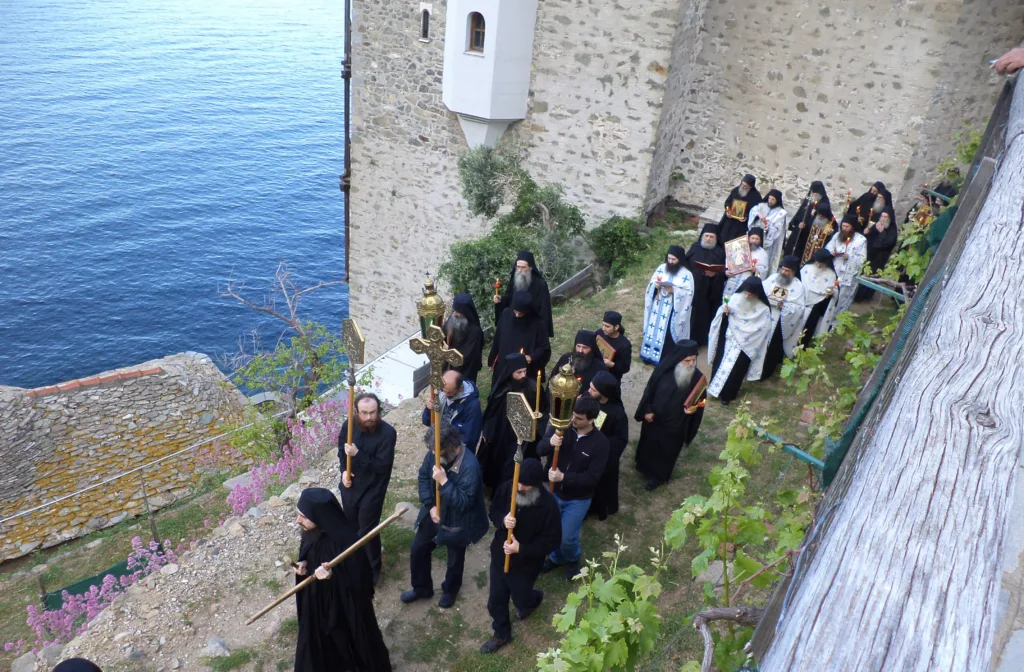
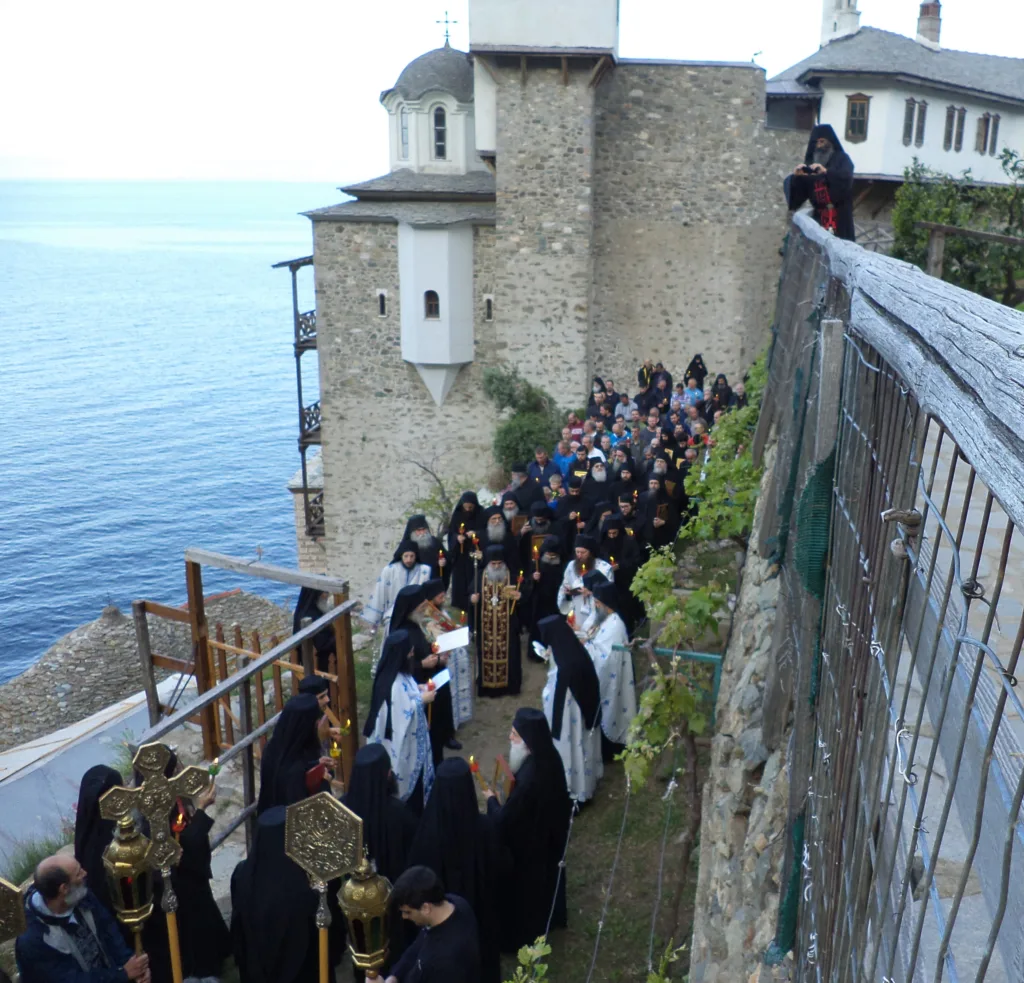
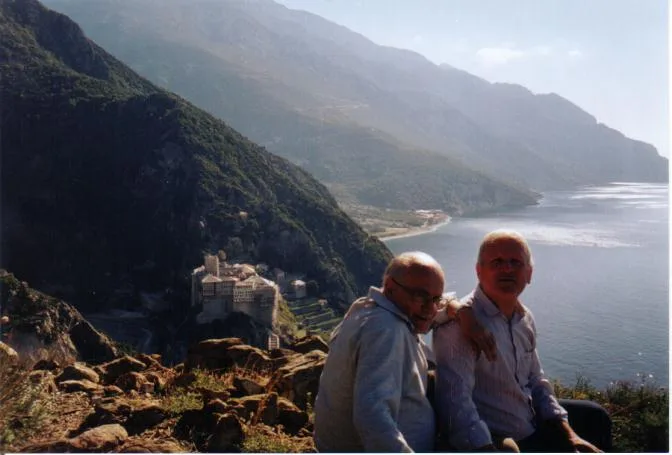
Pilgrims at Agiou Dionysiou.
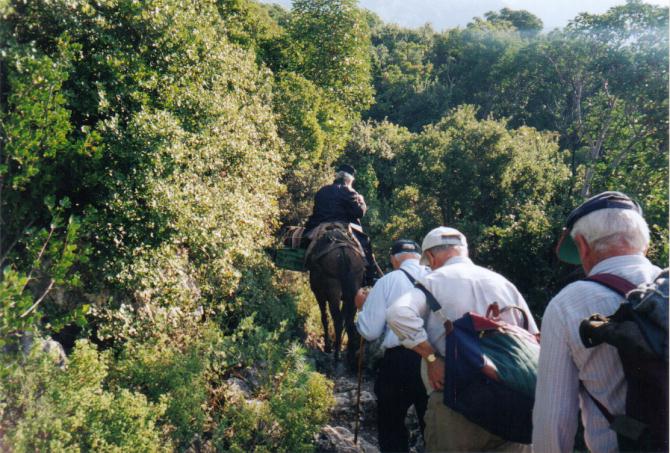
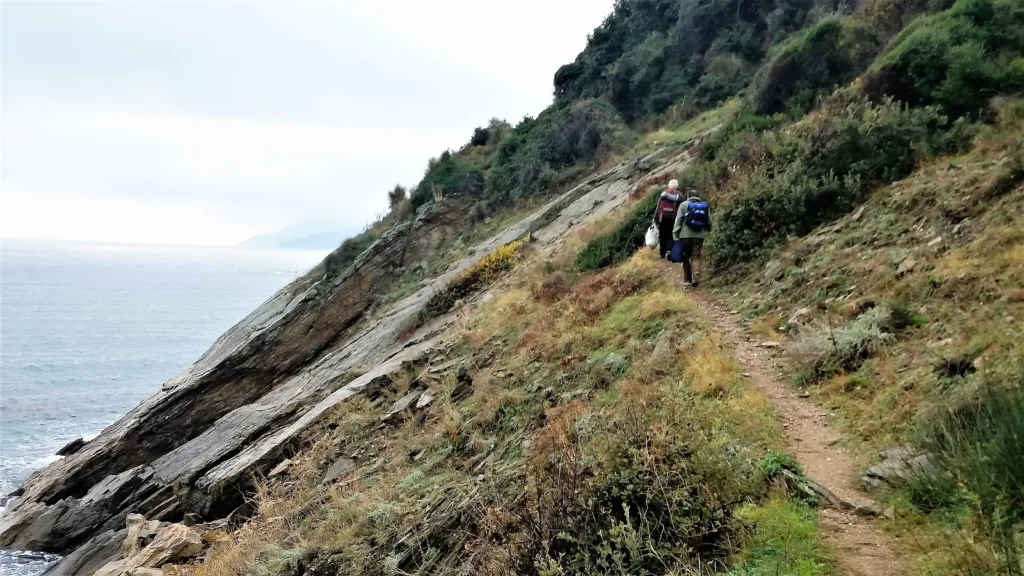
On Easter Monday, we set forth for the Holy Monastery of Agiou Dionysiou, reaching it in a little over an hour and a half. The journey between these monasteries combines spiritual exploration with natural beauty, rugged paths, glimpses of the sea, and moments of serenity as we traverse the sacred Mount Athos terrain. Here, as in all monasteries, the same sacred rhythm unfolds – vespers, refectory, relics for pilgrimage, compline, Orthos, Divine Liturgy, rest, and work.
A Stone Massif on the Edge – A Fortress on the Cliff
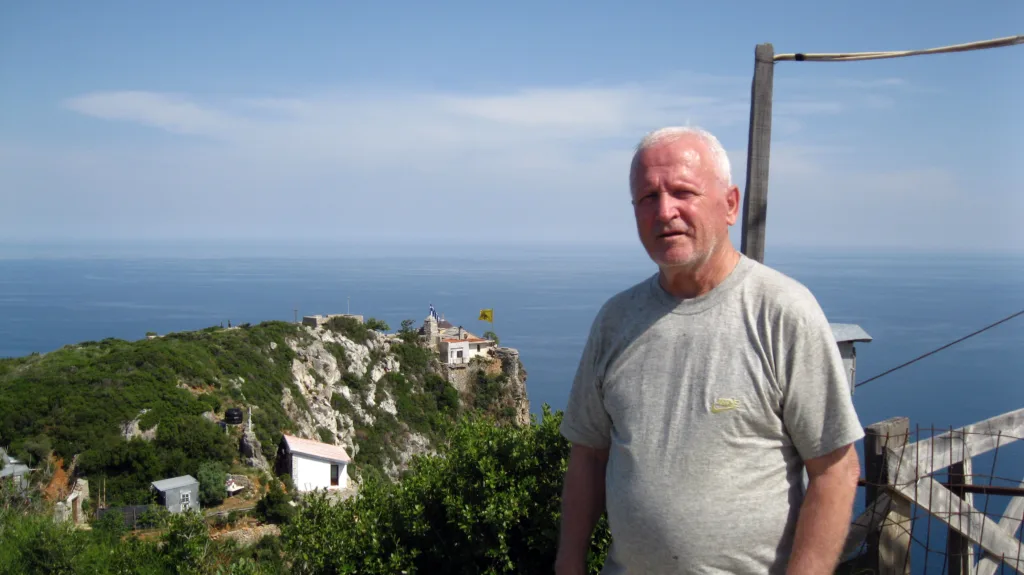
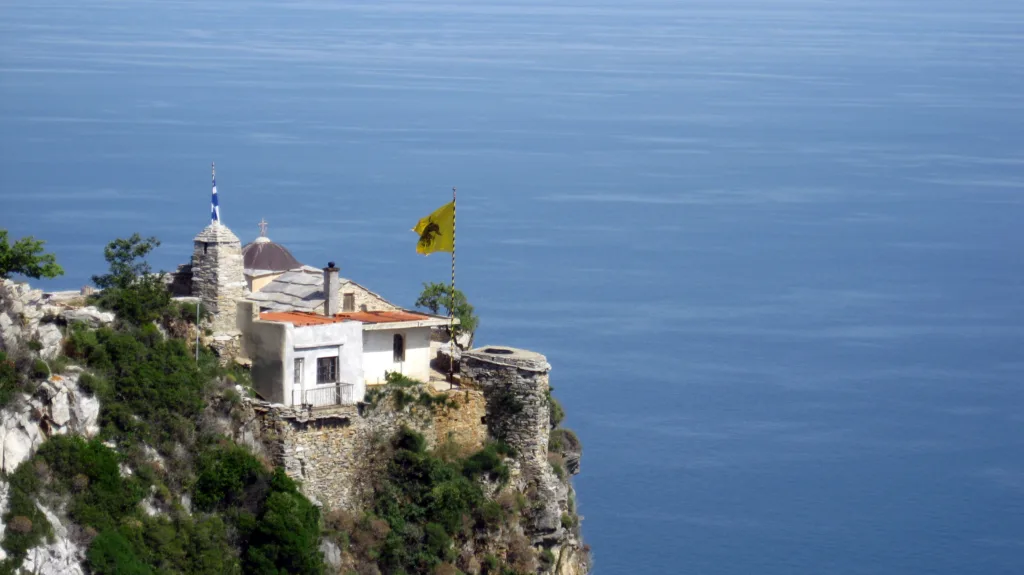
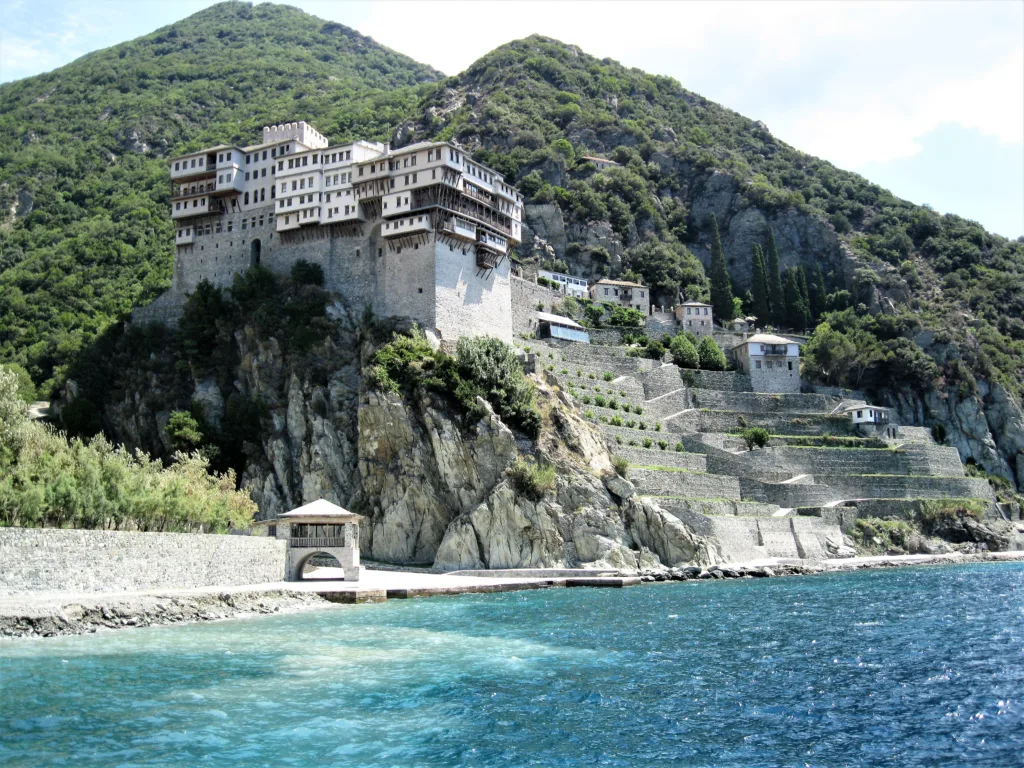
The Monastery stands resolute—a stone massif perched 80 meters above the sea. Its rugged walls, deeply scarred by winter storms. Here, amidst rich fishing grounds and submerged grasslands, the monastery guards its legacy. Below, the waves crash against the cliffs, carving their mark. Antithon, rising to a height of 1042 meters, watches over this sacred region.
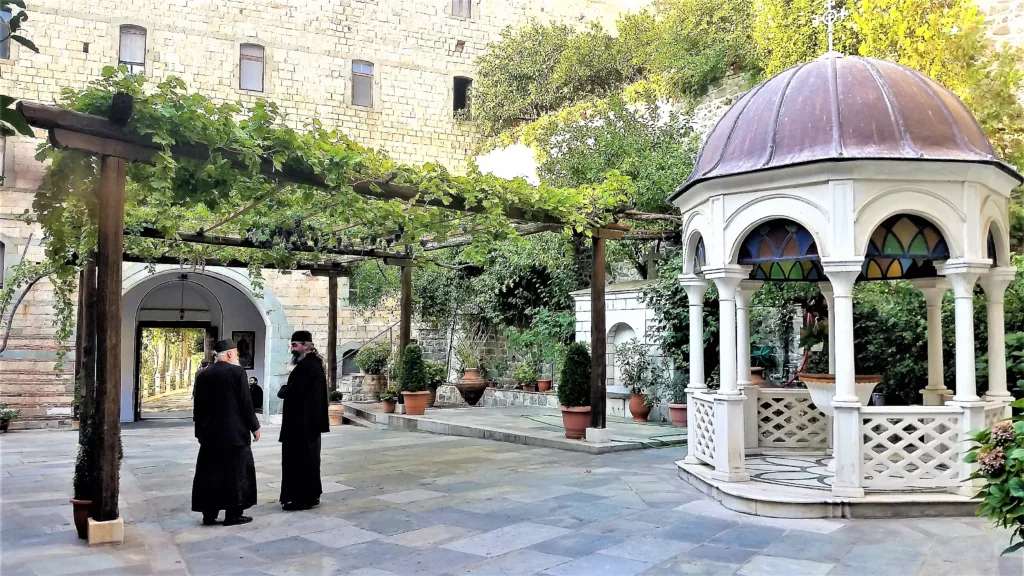
Dionisiou courtyard.
The foundations of the monastery were laid in 1375 by Saint Dionysios of Korisos from Kastoria and was generously financed by Trapezountius Megalo – Emperor Alexios III Komnenos (1349–1390). From its inception, this fortress stood guard against pirate attacks that plagued the North Aegean and Mediterranean. The Byzantine fleet’s decline and seizure by the Ottoman Turks, reverberated here dramatically as throughout Byzantium—an impact felt even today. Within the Monastery of Dionysiou, as in all monasteries, a sacred rhythm unfolds—a timeless dance of devotion. Orthros, refectory, meals, the juxtaposition of relics for pilgrimage, compline, Orthos, Divine Liturgy, rest, and work—all follow the same ancient path.
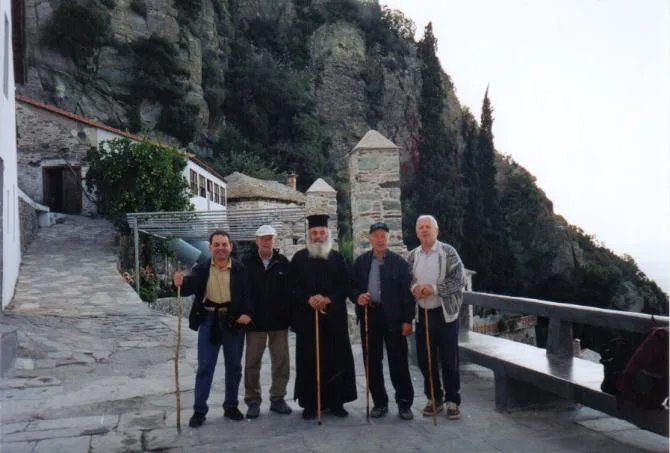
Dimitris and Haris.
Third Day of Easter April 30, 2019 – Onward to HM Agiou Pavlou.
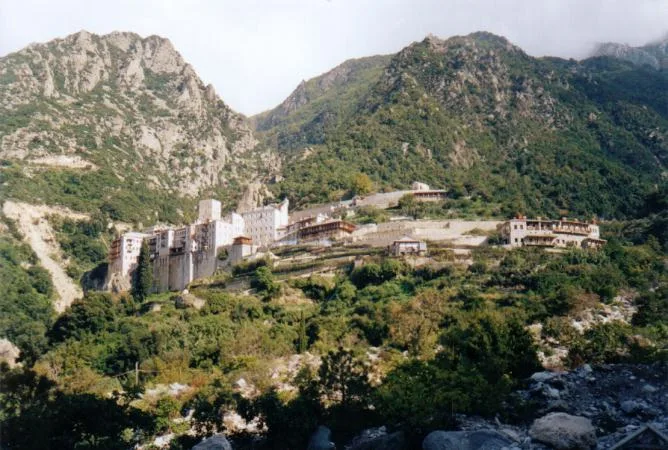
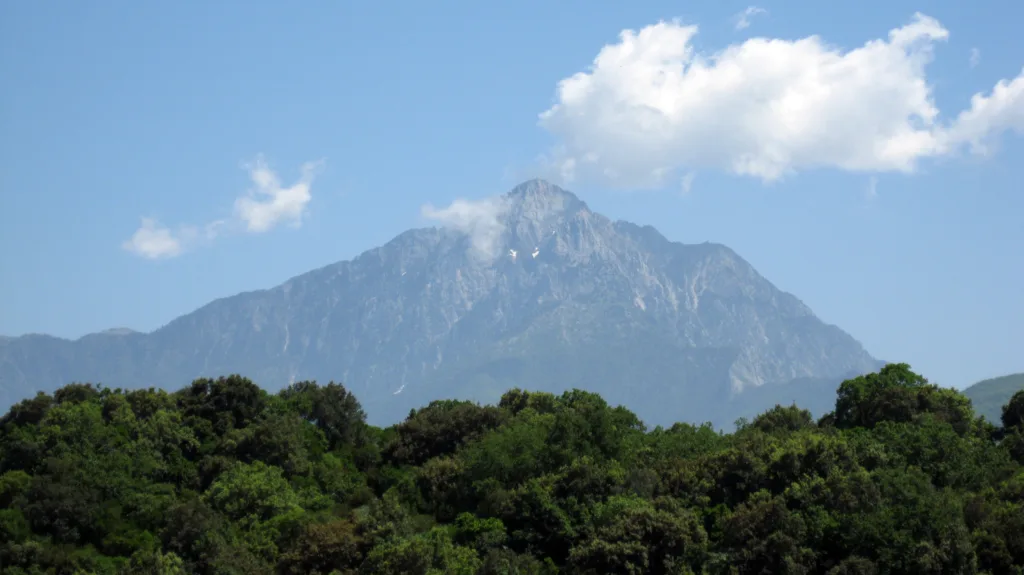
On the third day of Easter, we set forth on a challenging journey by foot. Traversing a difficult path, we arrived at the imposing monastery of Agiou Pavlou. Nestled at the foot of Mount Athos (which soars up 2033 meters), it boasts stepped gardens that cascade down the slope. Further recent landscaping has extended the gardens to the sea, transforming both the courtyard and the monastery itself.
A Name Rooted in Byzantine Legacy
Agiou Pavlou.
The monastery of Agiou Pavlou derives its name from its founder, Pavlos Xiropotaminos—a scion of a Royal Byzantine family in the late 10th century. Built upon the ruins of an ancient monastery dedicated to the Presentation of the Virgin Mary (circa 337), it holds relics associated with the Magi’s Holy Gifts to the newborn Jesus.
Cave of St. Paul: A Hidden Passage
Above the monastery, adjacent to the carriage road leading to the Monastery of Filotheou, lies the newly renovated Cave of St. Paul. In ancient times, this cave was linked with the monastery through a tunnel—a precaution against pirates. A similar network of underground tunnels once existed in Constantinople.
Journey to the Holy Skete (minor monastery) of Agia Anna: A Fragrant Sanctuary
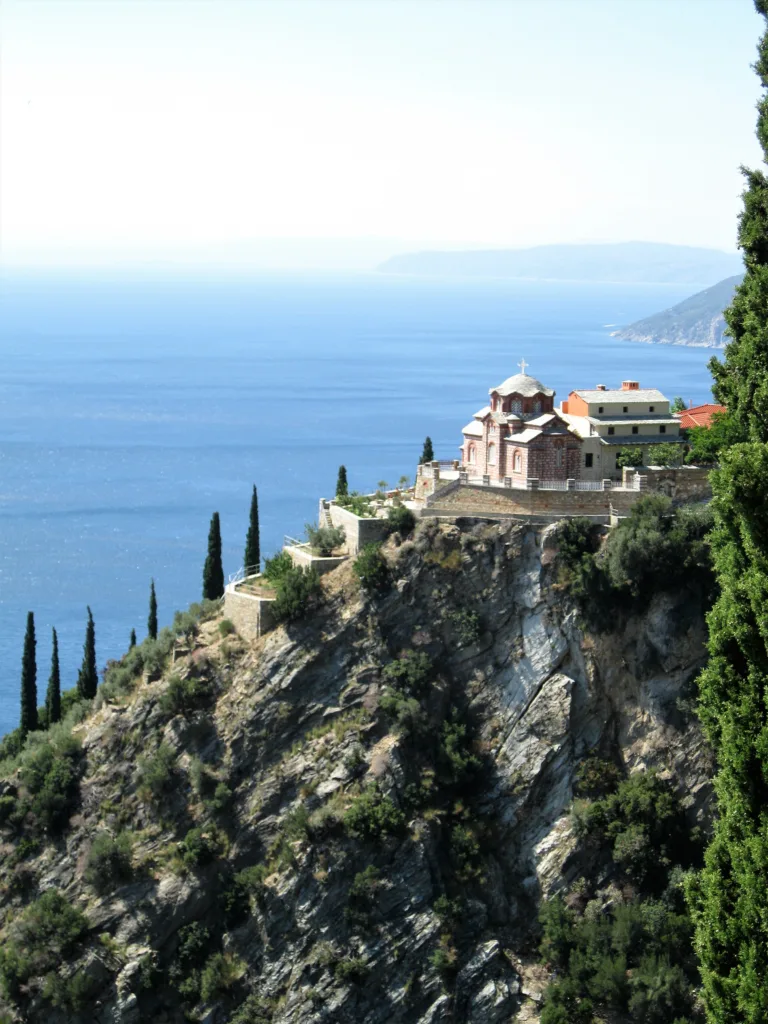
On Wednesday morning, May 1, 2019, at 8:00 am, we embarked on a challenging hour and a half trek from the mountaintop. Passing the New Skete—an annex of the nearby Monastery of St. Paul—we arrived at the Holy Skete of Agia Anna. The Skete, which is an appendix to the Holy Monastery of the Great Lavra, stands as the oldest and largest on Mount Athos—a metropolis of sketes. It comprises 50 kelia (cells) and kalivia (huts) which are home to 85 monks dedicated to their ascetic life.
It is dedicated to the Theopromitor, the Foremother of God, Agia Anna, the mother of Holy Mary. Within its walls resides a relic—an indestructible and unaltered part of Agia Anna’s lower left foot which emits a fragrant blessing to pilgrims.
The Venerable Icon of Saint Anne
Inside the church, in the right chancel (area for the cantors), an icon venerates Agia Anna cradling the infant Virgin Mary in her arms. This sacred image has witnessed countless offerings—votive gifts of gold or silver, adorned with photos of newborns. Many women around the world who were told they were infertile have reported conceiving after praying before one of these icons. A similar phenomenon occurs on Prigiponnisos, an island in the Bosphorus in Constantinople, where barren women both Greek Orthodox and Muslim flock to the church of St. George on the Saint’s feast day, April 23to pay their respects in the hope they will be blessed with fertility and motherhood.
The Left Chancel – Saints of the Skete
Since 1930, the left choir of the church has housed an icon depicting the 16 Saints who excelled as monks in the Skete. Among them is Saint Savvas from Kalymnos, whose icon holds a special place in the beautiful church of Agios Nektarios in our city of Argos Orestikon.
Homeward Bound
On Thursday, May 2, 2019, we bid farewell to the Skete. Descending approximately 2500 steps and landings, we passed the cell of the legendary foresighted monk, Elder Papagiannis near the arsana. Boarding the ferry Agia Anna, we sailed to Dafni reaching it in two hours and from there, in another forty minutes, we were back in Ouranoupoli where we disembarked for the return to the outside world before journeying back to our city, Argos Orestiko.
Monks’ Ministry: Devotion and Grace
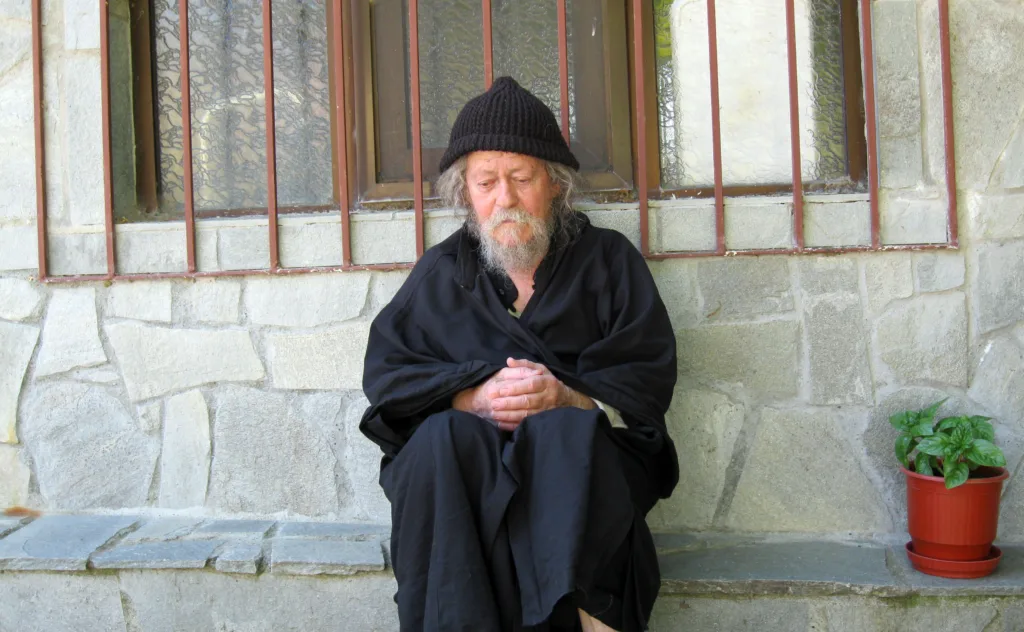
The monks of Mount Athos minister to visitors willingly, their smiles reflecting inner peace. For our sake, they devote themselves to God through prayers, liturgies, and other sacred duties. These revered fathers carry forward the traditions of Orthodoxy and the Greek nation on Mount Athos, embracing deprivations, anxiety, and self-denial.
Monasticism: An Oriental Exercise
Monasticism, primarily of Oriental origin, traces its roots to the 8th-9th century. Resplendent centres, mostly in Asia Minor, embraced mystical monastic life. Bithynian Olympus, where Methodius (born in 815 AD) practiced alongside his brother Kyril (born in 826 AD), exemplifies this tradition. These emissaries to the Slavs, hailing from Thessaloniki, carried forth the legacy of Patriarch Photius (Patriarch from 858–867 AD and 877–886 AD) through their iconic gift to the Slavs – the Cyrillic alphabet. Remarkably, this predates the founding and flourishing of Athos, a creation attributed to Asia Minor’s Saint Athanasios the Athonite who completed the first monastery the Great Lavra (Μεγίστη Λαύρα) in 963 AD with the financial assistance of General Nicephorus Phocas (Emperor from 963–969 AD).
Thessaloniki’s Influence and Refuge
The spiritual development of Mount Athos owes much to the refuge provided by Asia Minor monks and non-monks during the spread of Turkmen groups up to the Aegean. Thessaloniki, situated nearby, in the 14th century, assumed great importance in this regard further intertwining its fate with the Holy Mountain.
Mount Athos: A Spiritual Haven
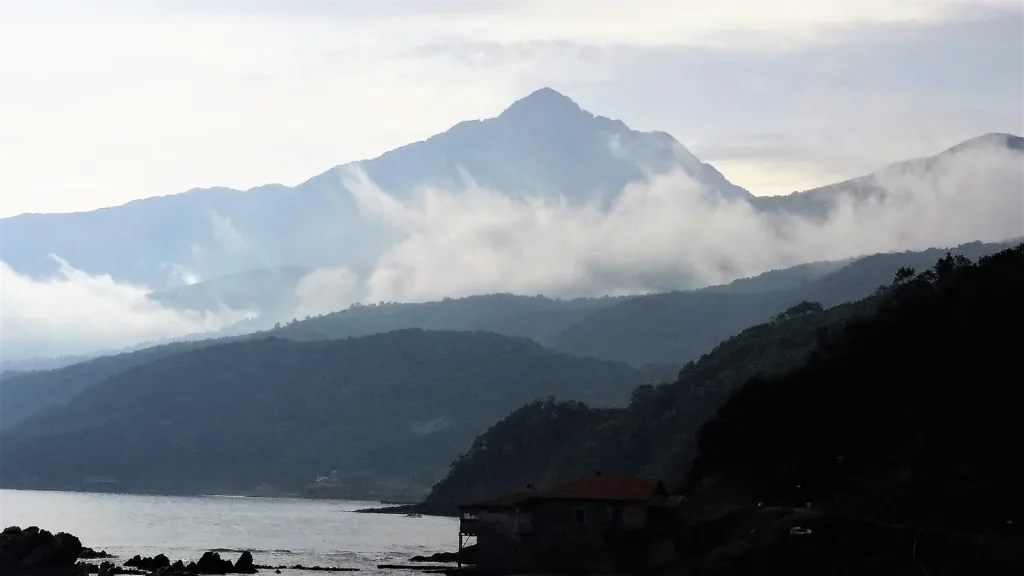
Mount Athos, a place of profound significance, beckons travellers from all corners of the world. This sacred mountain, also known as the “Holy Mountain,” exerts a magnetic pull on the eye and stirs contemplation. Mount Athos is more than a geographical location; it is an essential centre of Eastern Orthodox monasticism. Its allure extends beyond pilgrims to embrace people of diverse backgrounds.
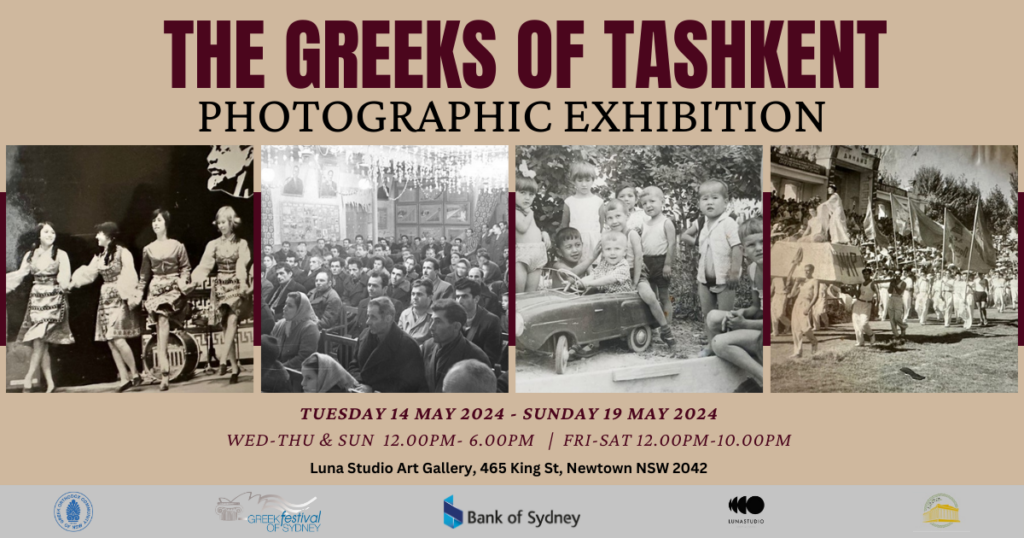
The Greek Festival of Sydney will proudly host two very important events for “The Greeks of Tashkent” as part of its program for 2024.
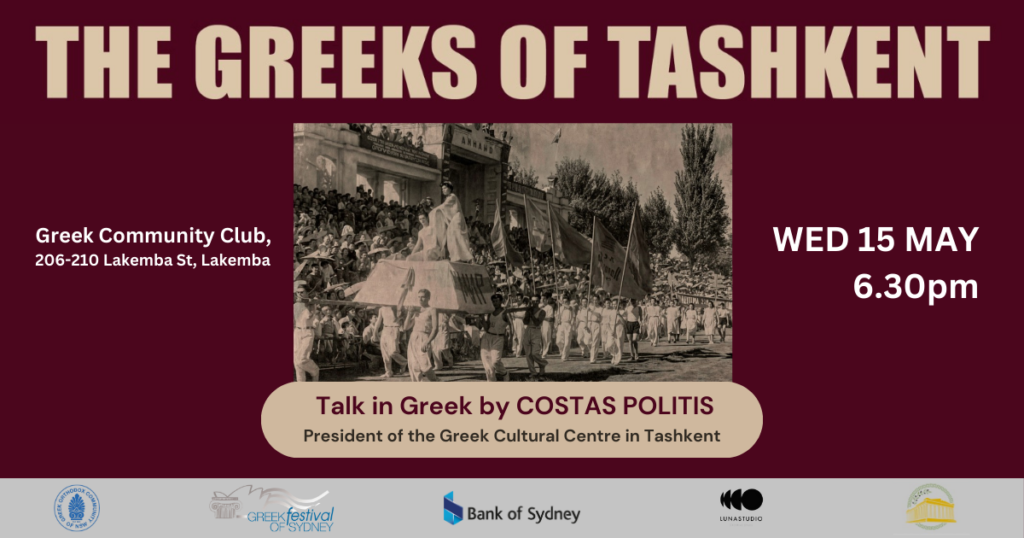
The first is a photographic exhibition presenting rare archival materials, while the second is a talk (in Greek) by Costas Politis, President of the Greek Cultural Centre of Tashkent, who will travel to Sydney especially for these two events.
The Greek Civil War (1946-9) marked the lives of most Greeks and devastated the country. When it was over, 12,000 defeated communist fighters became political refugees taking refuge in Tashkent, the present-day capital of post-Soviet Uzbekistan. They settled in 14 local “Greek towns” and by the 1970s, this exiled community had grown to 35,000 men, women and children. Most of them returned to Greece after the granting of political amnesty in 1981, while some moved to Australia, Canada and the United States following the path of alienation like other members of their families.
Rare photographic material from the archives of the Tashkent Hellenic Cultural Centre will be featured in the photographic exhibition entitled “Greeks of Tashkent” during 14-19 May 2024, at the Luna Studio Art Gallery, 486 King St, Newtown.
Mr Politis, in his upcoming talk (in Greek) at the Greek Community Club (206-210 Lakemba St, Lakemba) on May 15, will delve into the stories of the exiled Greeks of Central Asia, in an effort to portray and research the historical course of a forgotten chapter of the turbulent history of Greece in the 20th century.
“We await with great interest the visit of Costas Politis to Sydney, which will not only give all of us the opportunity to get to know a “forgotten” part of Hellenism abroad, but will also provide the opportunity to strengthen relations between the Greek Orthodox Community of NSW and the Greek Cultural Centre of Tashkent,” President of the Greek Orthodox Community of NSW, Harry Danalis, said.
“We are particularly proud that the Greek Festival of Sydney gives the opportunity to other Greeks of the Diaspora to present the history of their communities through events of quality and intercultural respect,” President of the Greek Festival of Sydney, Nia Karteris, said.
Details of the 1st event:
Event: “The Greeks of Tashkent” – Photographic Exhibition
Dates: Tuesday, May 14| 6.30pm, Wednesday May 15 & Thursday May 16 | 12.00pm – 6.00pm,
Friday 17 May & Saturday 18 May | 12.00pm – 10.00pm, Sunday, May 19 | 12.00pm – 6.00pm
Location: Luna Studio Art Gallery | 465 King St, Newtown, NSW 2042
Entrance: Free (no charge)
Details of the 2nd event:
Event: “The Greeks of Tashkent” – Talk in Greek
Date: Wednesday, May 15, 2024 | 6.30 pm
Location: Greek Community Club | 206-210 Lakemba Street, Lakemba, NSW 2195
Entrance: Free (no charge)
Mr Politis will also join Dr Helen Vatsikopoulos during the Greek-Australian Writers’ Festival on Sunday 19 May 2024 (12:00pm – 12:45pm) for a Visual Story Telling on Greeks of Tashkent at Dr Chau Chak Wing Building, UTS.
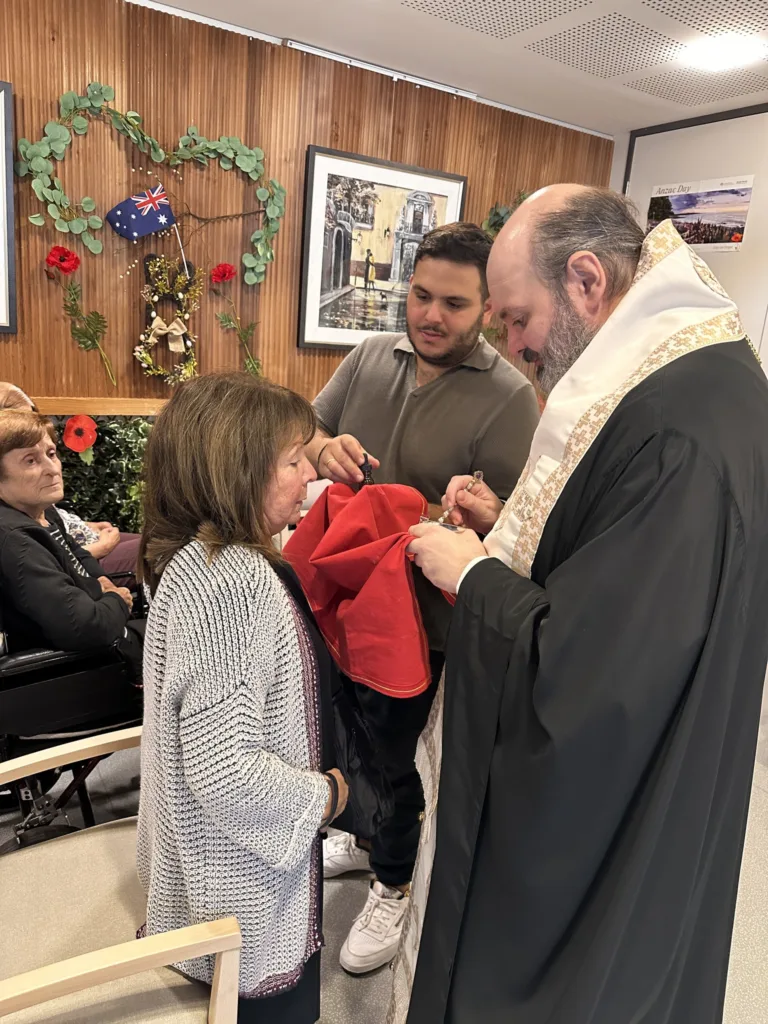
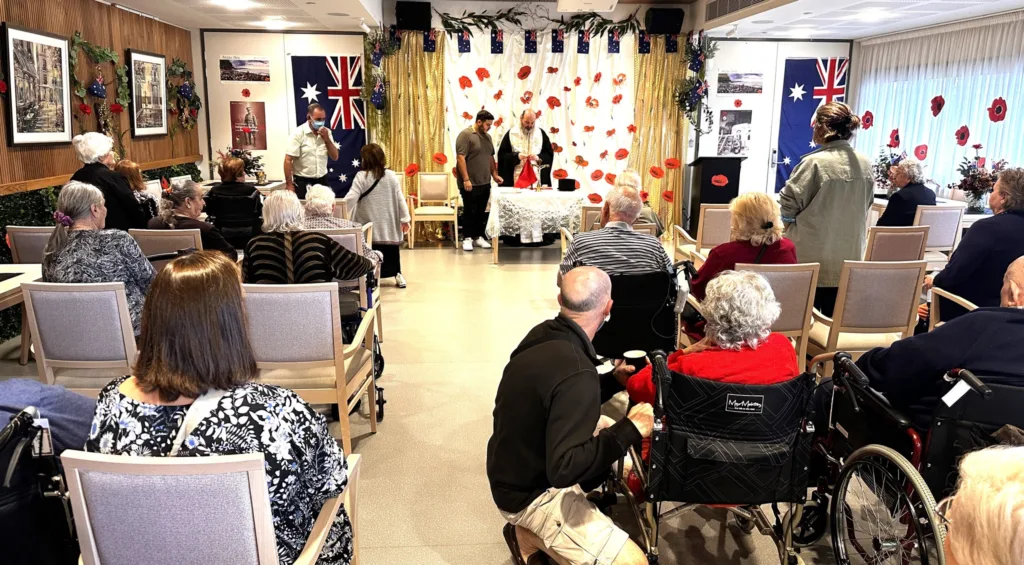
With Orthodox Easter approaching, the Ibis Care community commemorate this significant time in the Orthodox religious calendar.
As we look to Orthodox Easter residents and staff have celebrated with spiritual activities and cultural events in preparation for this important time, explains La Stacey Baramy, CEO of Ibis Care.
“We are proud to support residents in living a spiritual life; encouraging cultural traditions and facilitating activities is very important at Ibis Care,” Ms Baramy says.
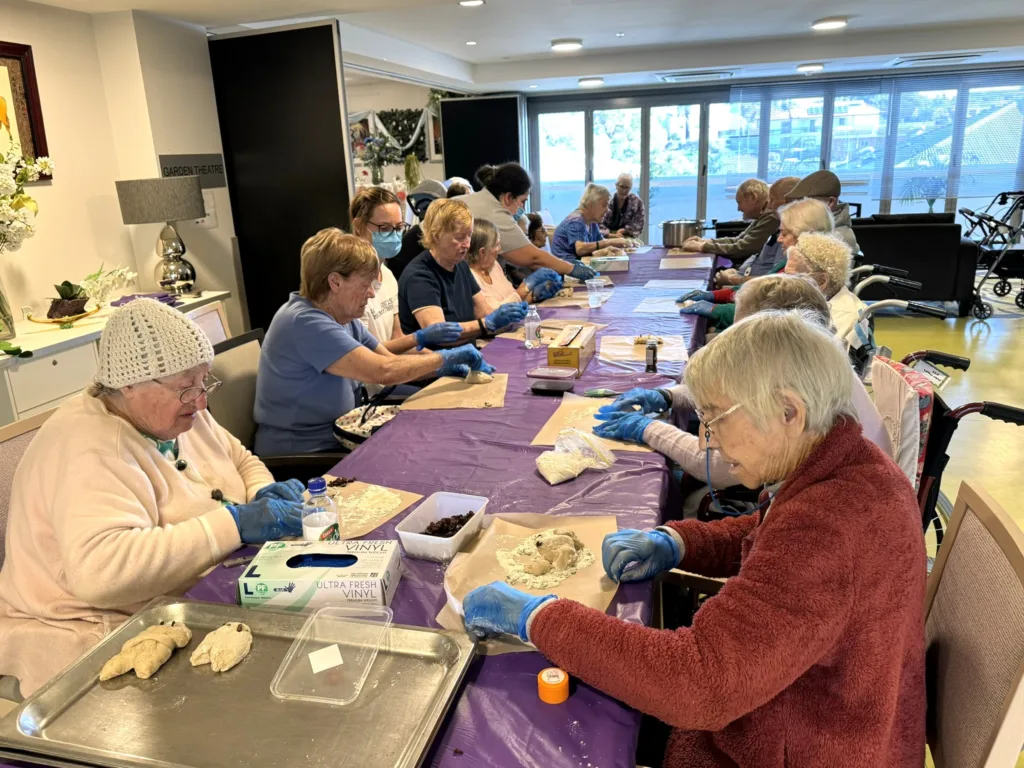
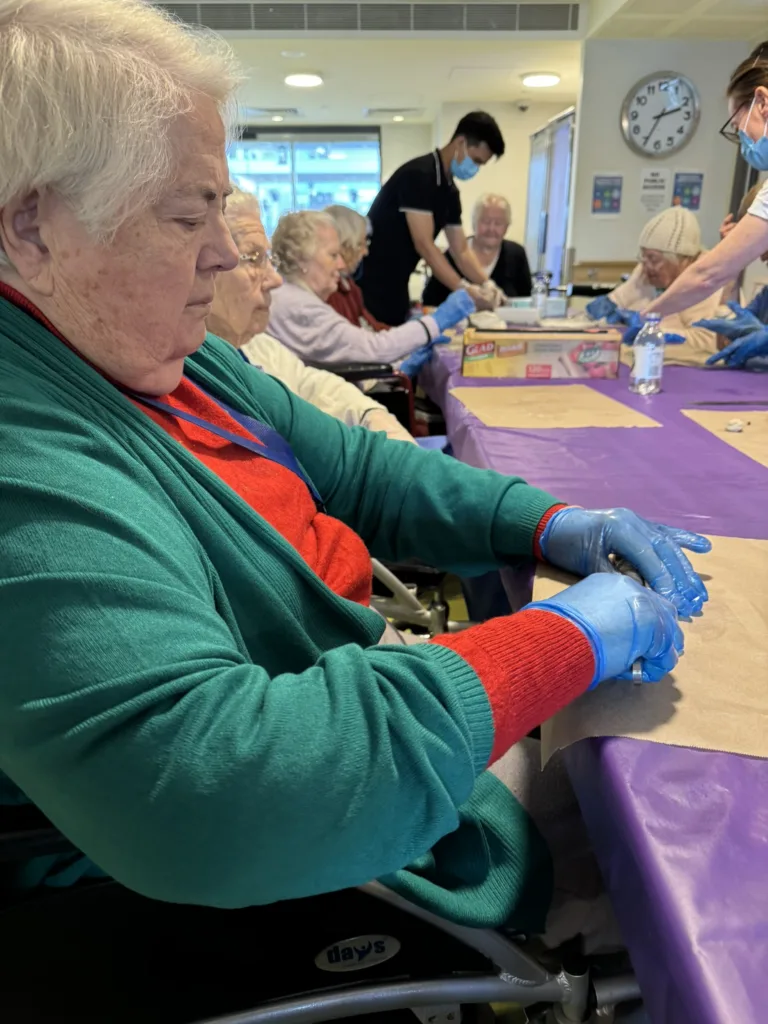
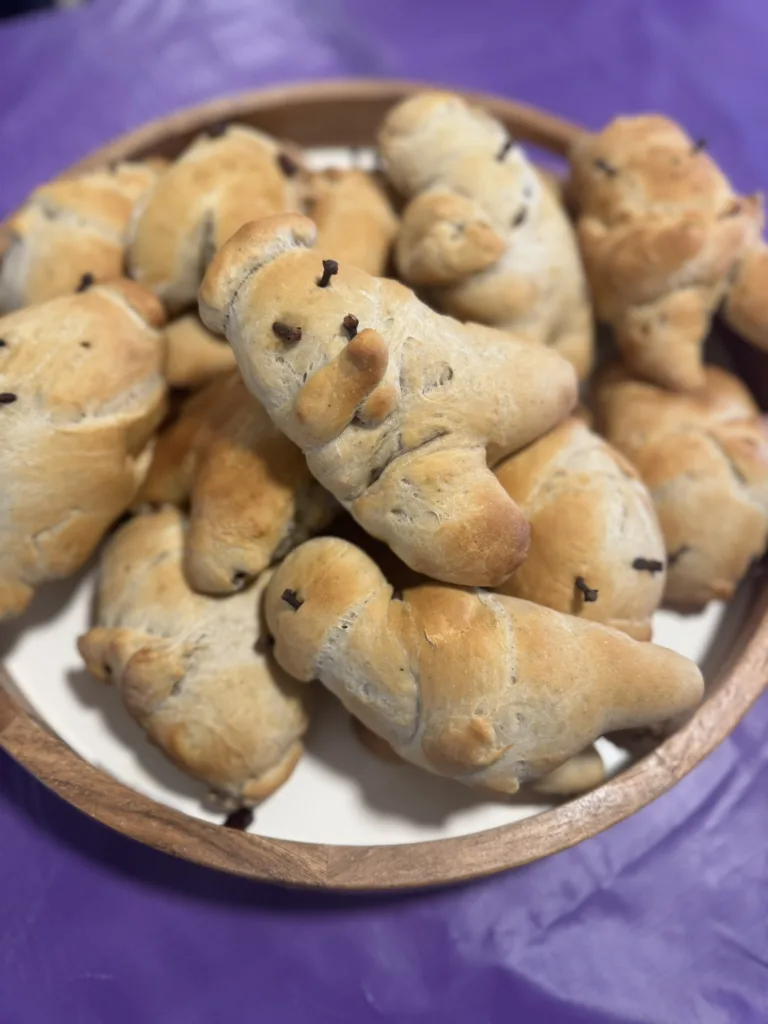
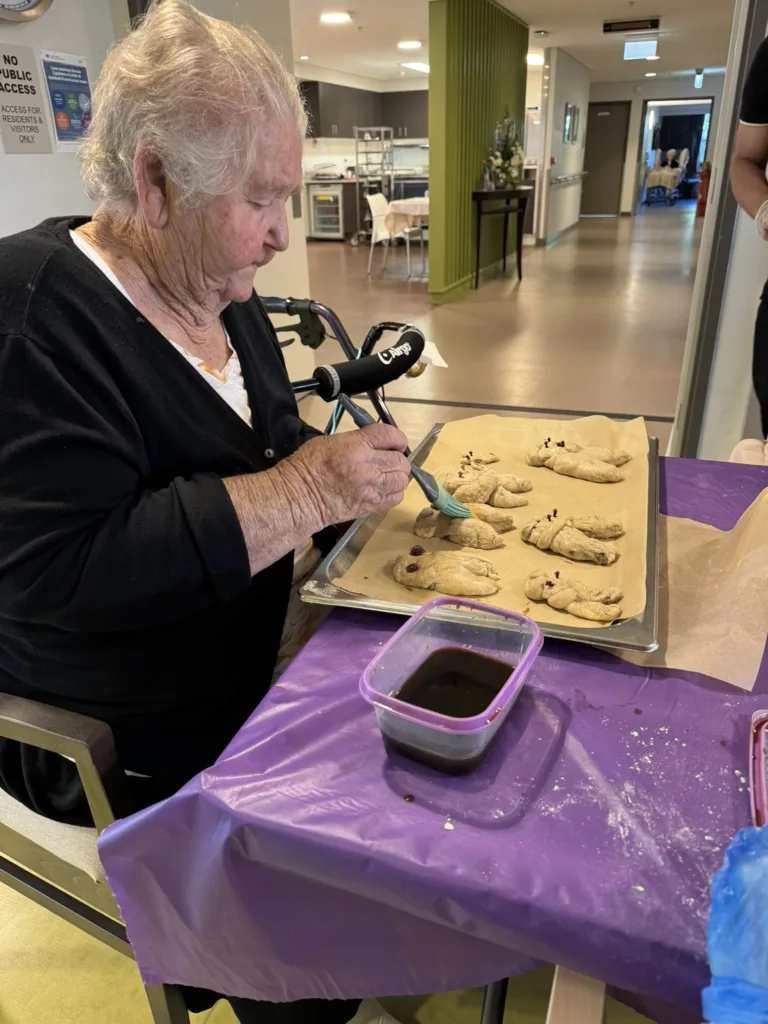
Residents and staff eagerly participate in various events throughout lent including preparing Lazarakia, traditional Lenten Greek Easter bread, constructing the dough into Lazarus that they baked to savour with coffee and tea.
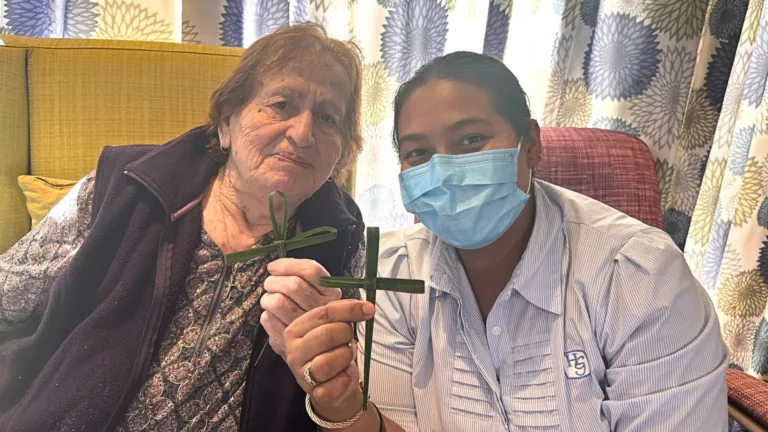
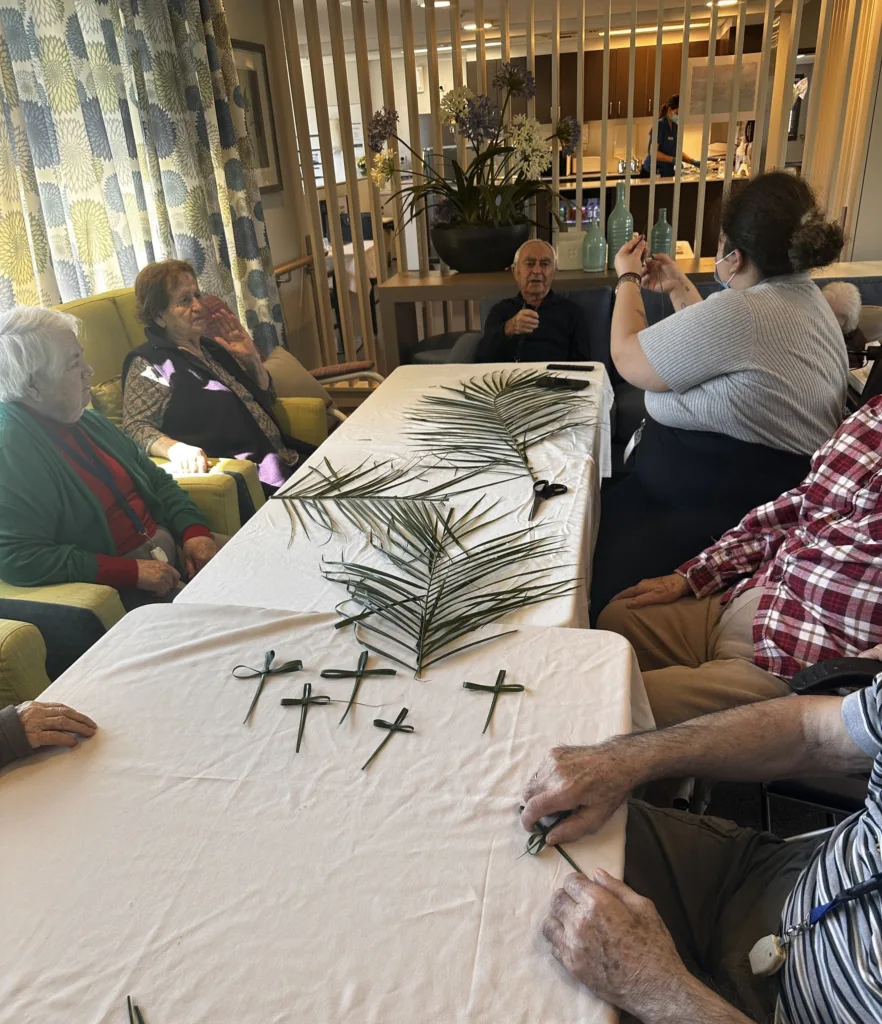
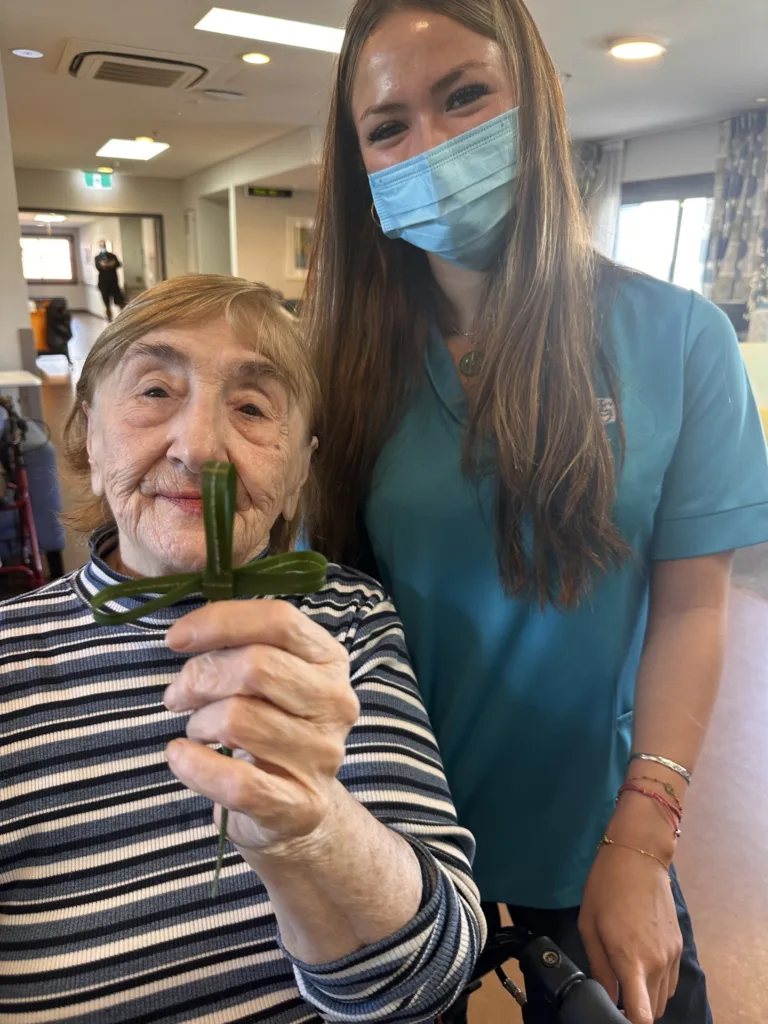
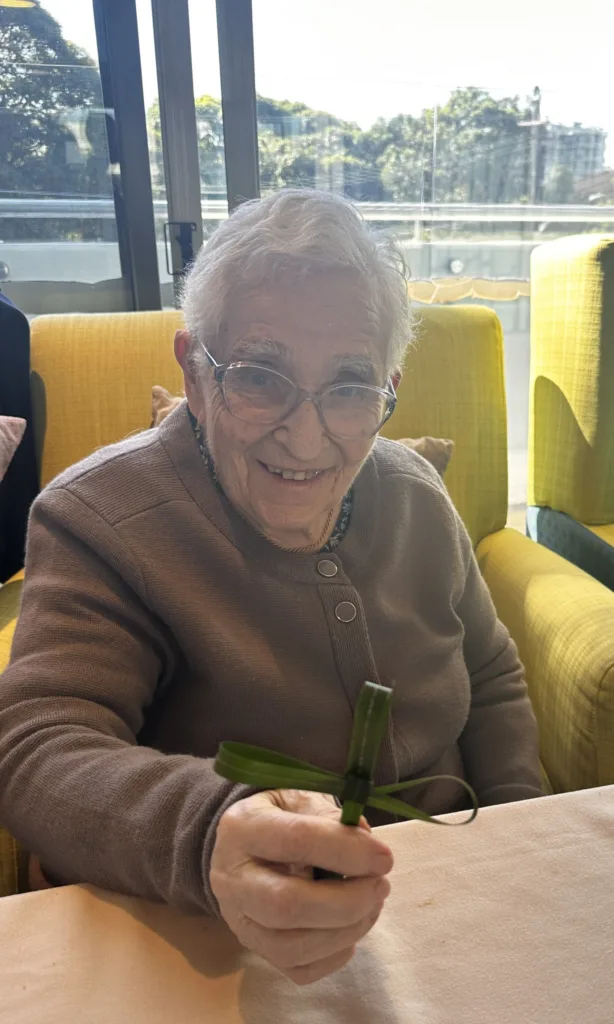
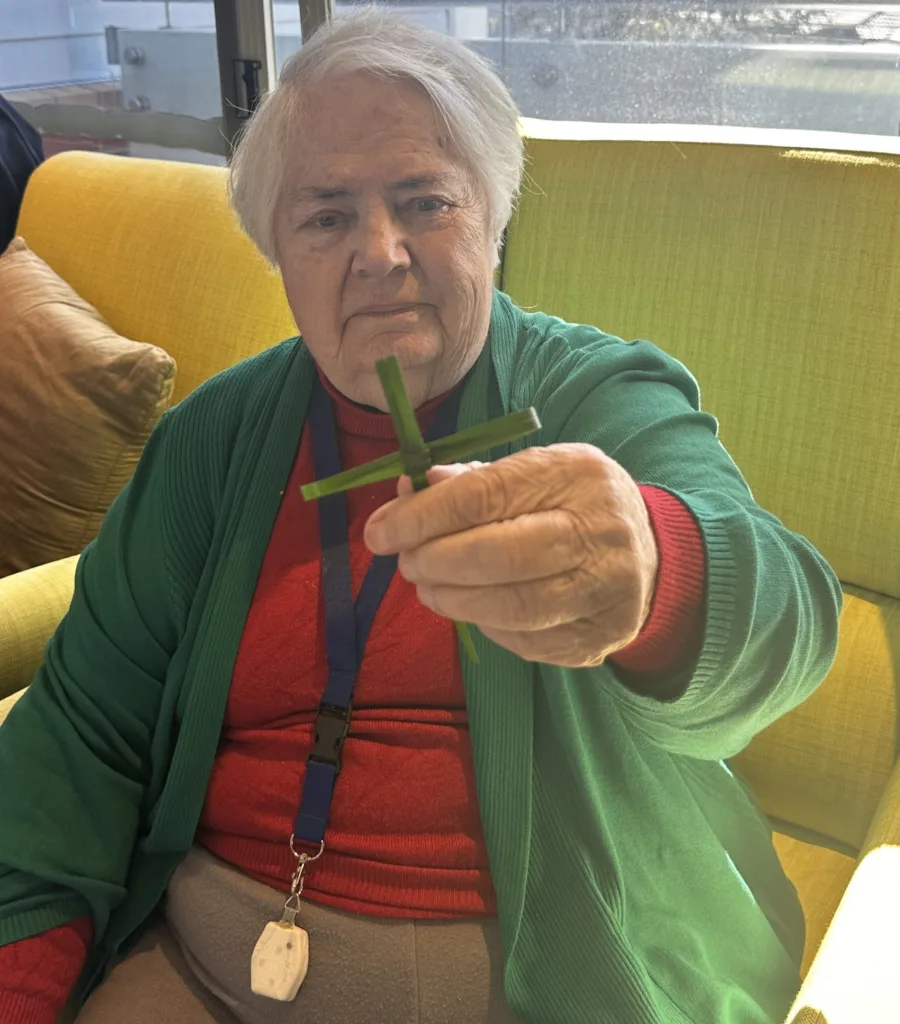
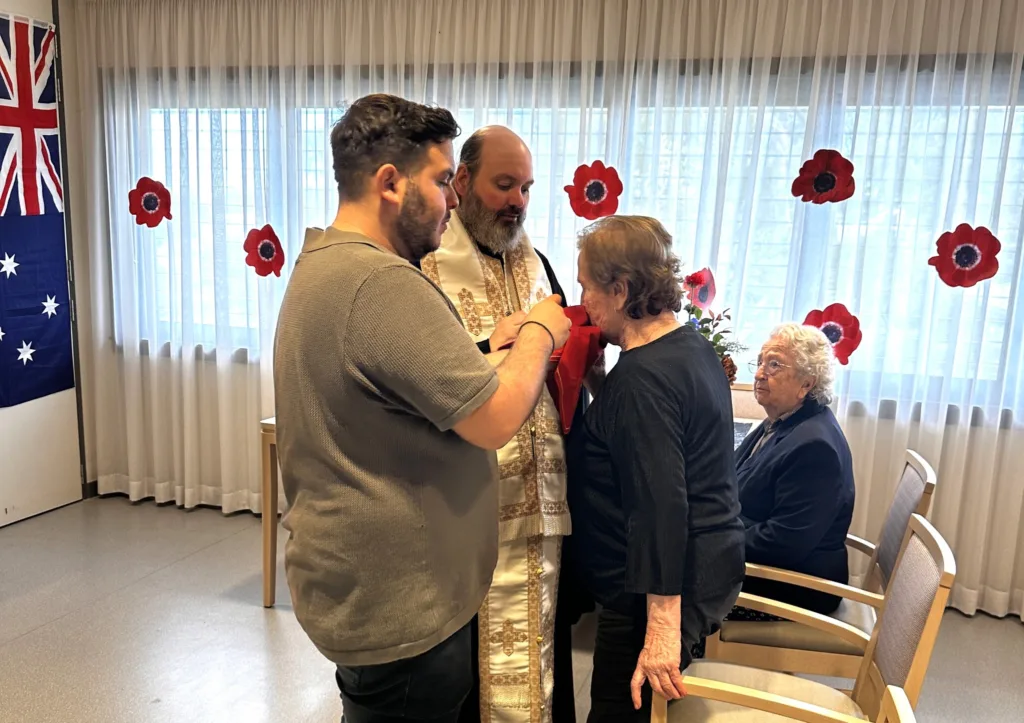
In recent days, residents of Ibis Care Blakehurst received blessings and the offer of Holy Communion and Holy Oil by Bishop Christodoulos of Magnesia. They also created crosses made from palm leaves on Palm Sunday.
“Together, we help residents experience a profound sense of spiritual upliftment and joy through religious events,” Ms Baramy says.
During Holy Week residents will create beautifully decorated candles ‘lambathes’ to light on Good Friday, they will boil eggs and dye them a deep red colour, and will bake tsourekia to enjoy together on Easter Sunday.
“In maintaining a spiritual life, our Greek Orthodox staff facilitate gatherings with meaningful spiritual discussions about Easter. Resident families and friends are invited and regularly involved in the daily lives of their loved ones at Ibis Care,” Ms Baramy adds.
“Ibis Care homes are warm, welcoming and friendly places where every resident is treated with respect, dignity and compassion.
“We pride ourselves on delivering a lived experience that goes beyond clinical needs, defined by moments of fun, family and friendship.”
Ibis Care is looking forward to hosting further Orthodox Easter ceremonies for residents during Holy Week and on Easter Sunday for them to enjoy with family and friends.
about ibis care
Ibis Care support Sydney’s St George and Sutherland Shire communities with residential aged care and independent living accommodation options.
Ibis Care’s residential aged care homes are in Blakehurst, Bexley, Mortdale and Miranda.
Ibis Care homes are warm, welcoming and friendly places where every resident is treated with respect, dignity and compassion. We pride ourselves on delivering a lived experience that goes beyond clinical needs, defined by moments of fun, family and friendship.
Ibis Care’s residential aged care homes each have a strong 4-Star Aged Care Rating by the Australian Government.