Home Blog Page 753

Greek Orthodox Easter between three cultures

By Kathy Karageorgiou

It’s Easter, the most important religious event for Greek Orthodox people all over the world. Greek families come together, in a time of traditional and sacred religious observations. This includes fasting and communion, customary Easter food preparation and church attendance – particularly on the Saturday night celebrating Christ’s Resurrection at midnight, leading into the celebrations of Easter Sunday.

The adherence by Greek Australians to these Easter traditions reinforces our sense of community, and we may take it for granted that Greek Orthodox Easter for Greek Australians is all about Greece and Australia.

There are though, Greek Australians who do not reside in neither Australia nor Greece. Their celebrations of Greek Orthodox Easter have an extra dimension, as they encompass a respective third culture. Two such Greek Australians are Nicoletta Gian, who lives in Germany, and Dimitrios Kara in Thailand.

Nicoletta Gian
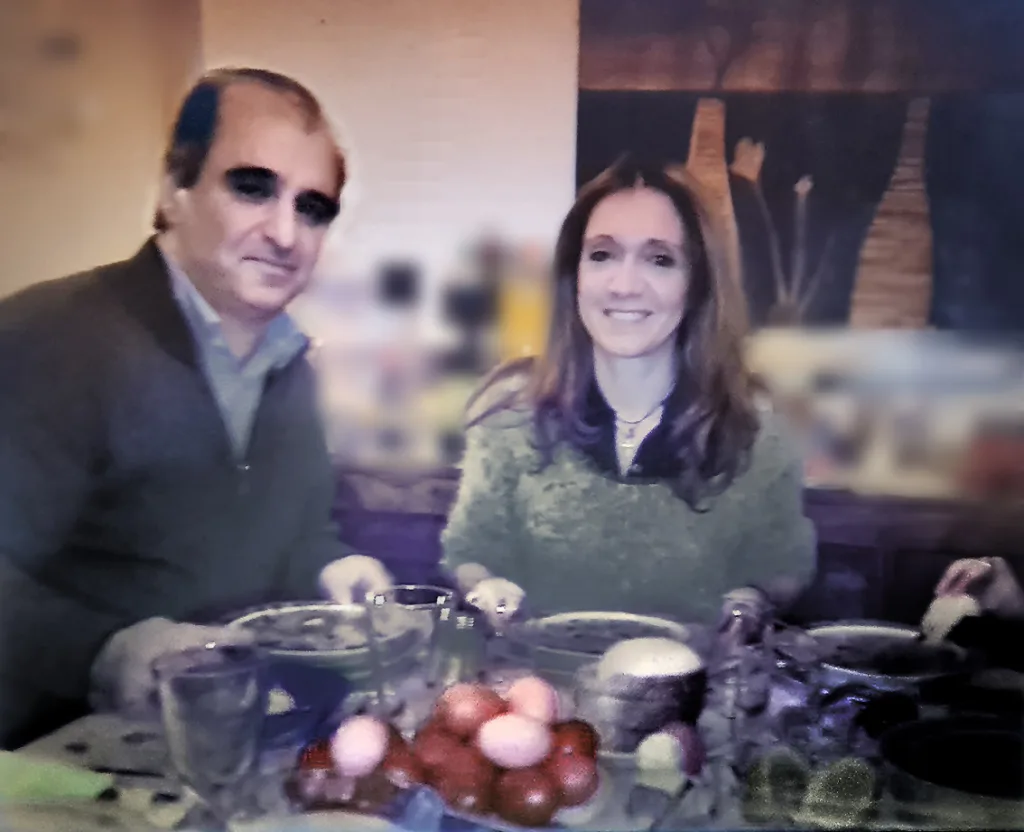
Nicole and Lazarus

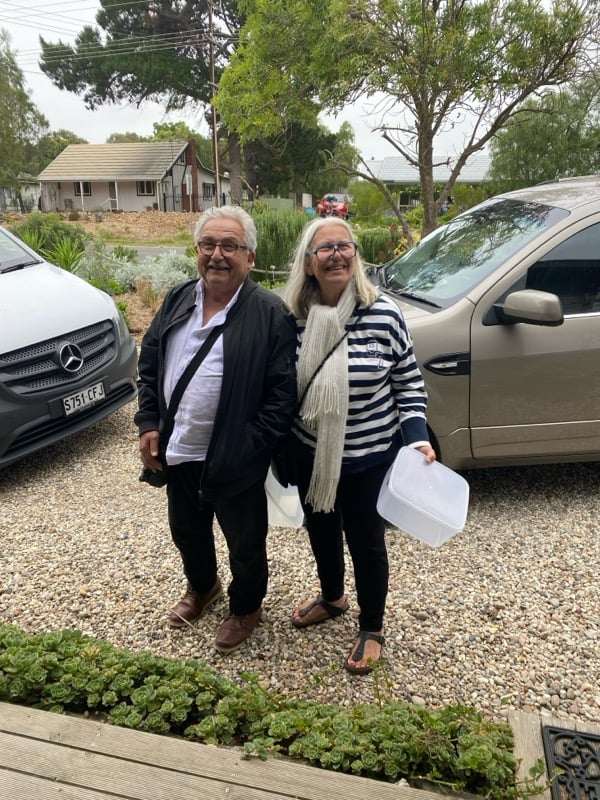
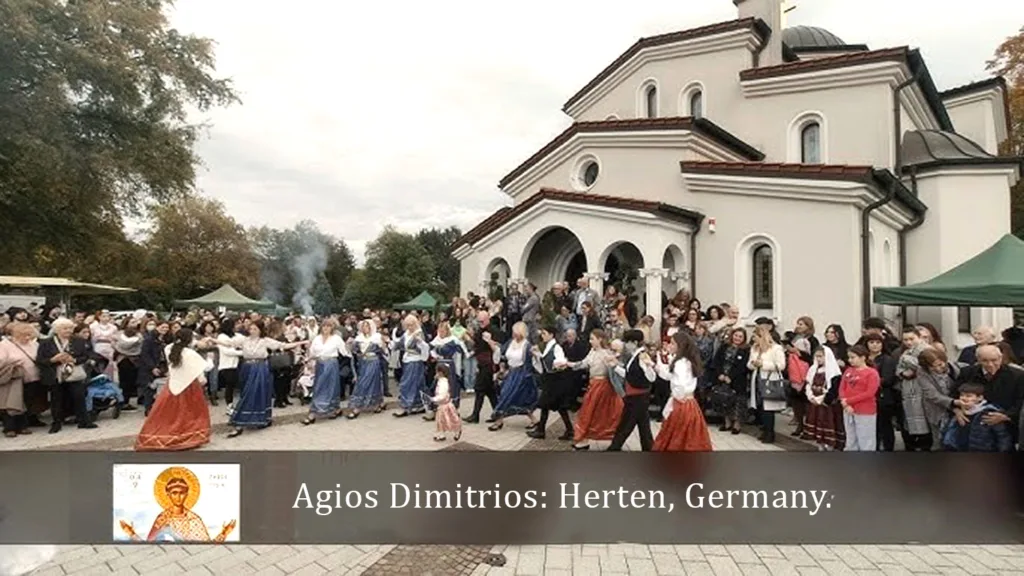
Nicoletta Gian, in her 50’s, has been living in Germany for decades with her husband and daughter. Originating from “a beautiful district of Sydney, New South Wales,” she finished primary school in the 70s, before moving to Greece with her parents and siblings. In Greece, Nicoletta studied further and worked, before moving to Germany in 1993 and marrying her Greek husband. 

She tells me: “Greek families [in Germany] resemble those in Australia. Basically, I felt familiar with the system and the lifestyle in comparison to Greece, which seemed to me like a jungle system.”

As for Greek Orthodox Easter, Nicoletta explains, “the basic rituals, beliefs and traditions are just like in Greece, including fasting mainly during the Holy Week and going to [Greek Orthodox] church services. It’s really soul comforting when attending congregation… Believers, from babies, children and adults, waiting patiently to receive the Holy Communion.”
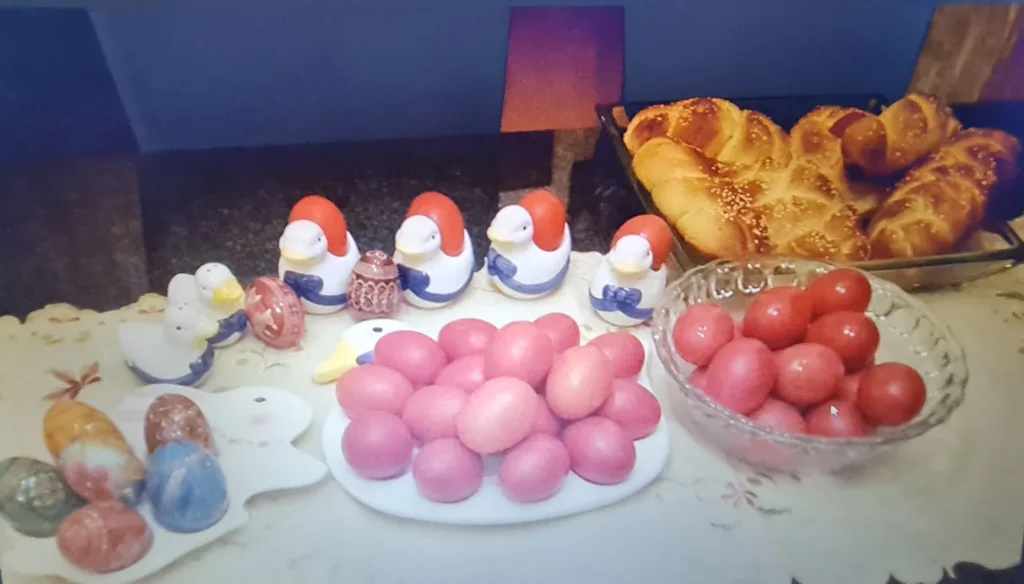
Easter Eggs

Nicoletta discusses Germany’s acceptance of the Greek Orthodox community, describing how walking the Epitaphio around the neighbourhoods includes a police escort and “the atmosphere for me is holy, sacred and very emotional.”

Nicoletta also tells me that “some Greek priests conduct the Divine Liturgy in German too” and notices, as a mum and godmother trying to pass on Greek Orthodox religion and customs to the third generation, that “when they start growing up, they seem to distance themselves from all traditions, though later in life they come back and ask for advice and instructions on how to bake buns, dye eggs and follow Christianity again.”

Nicoletta tells me she is handy in arts and crafts, making candles for her six godchildren, while still getting them “the traditional shoes and clothes with the special Easter candle.”
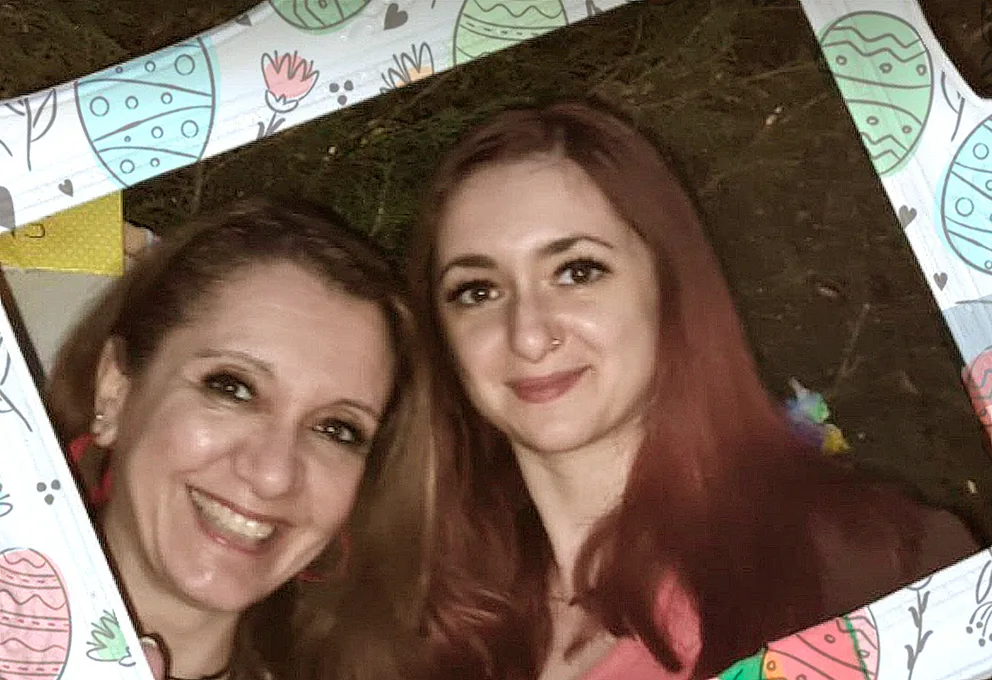
Expanding on her motivation for the upholding of Greek customs, she says: “As a Greek child, I had the opportunity to live a multicultural, traditional, ethnic and spiritual life, first in Australia and then in Greece.
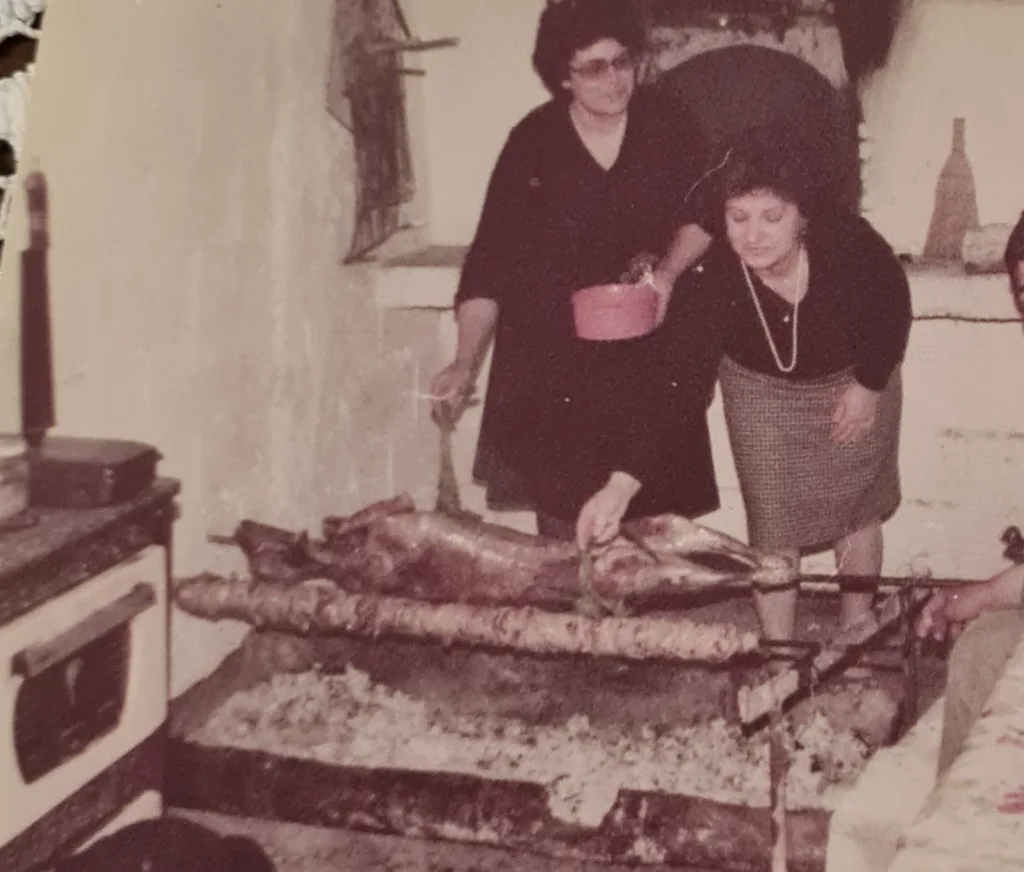
First Easter in Greece

“Determination led me to live and learn from the immigrants in Germany as well… three different cultures, but one religion unites us all over the world through the language of love.”
Dimitrios Kara

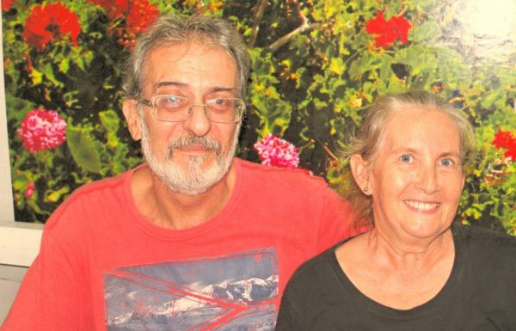
Dimitrios Kara, aged 50, has been living in Thailand for seven years now. He enthusiastically explains, “I fell in love with the land of smiles as they call it, from the first time I visited in 1994. I feel safer here than in Melbourne, and freer than I’ve ever felt before. I decided to leave Australia for a new beginning.”  

Dimitrios adds that he still loves Australia, and is always thankful for the life it provided him and his family when he was growing up, claiming, “but I had come to a stage where I wanted something different. I didn’t want the rat race in my life.”

Alluding to his “beautiful wife” and three-year-old son Ares, he continues: 

“I have made a family here, found work and have many friends. I feel I’m part Thai now and feel at home, but times like Greek Orthodox Easter for example, it’s hard celebrating these occasions away from family in a foreign land.”
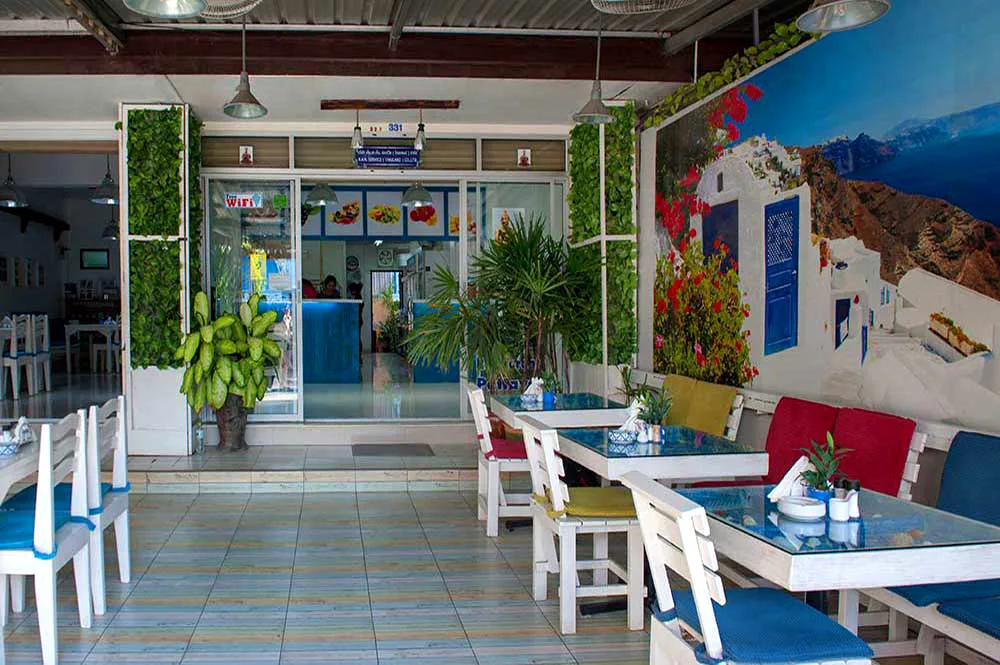
Dimitrios explains that in the city of Pattaya where he lives, amongst a population of about 120,000, there are around ten Greeks, “but we stick together.” He then goes on to talk about his gratitude and respect for the owner of a Greek taverna there – El Grego, owned by a Greek couple from Thessaloniki who “fell in love with Thailand many years ago and have lived here ever since.”

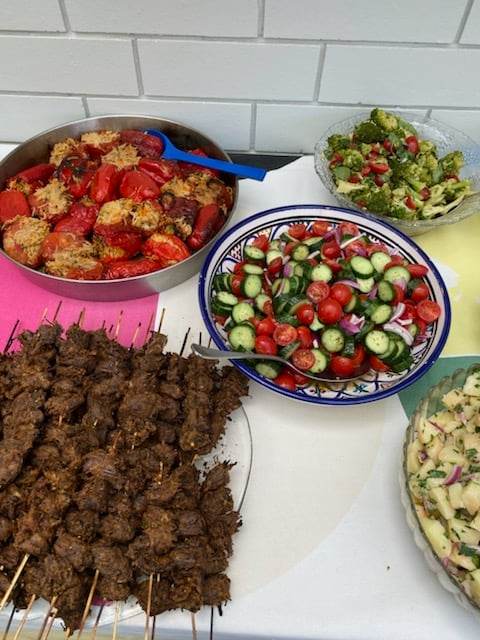
He enthusiastically tells how on Greek Orthodox Easter, Ms Aggeliki the owner, puts on an Easter feast. 

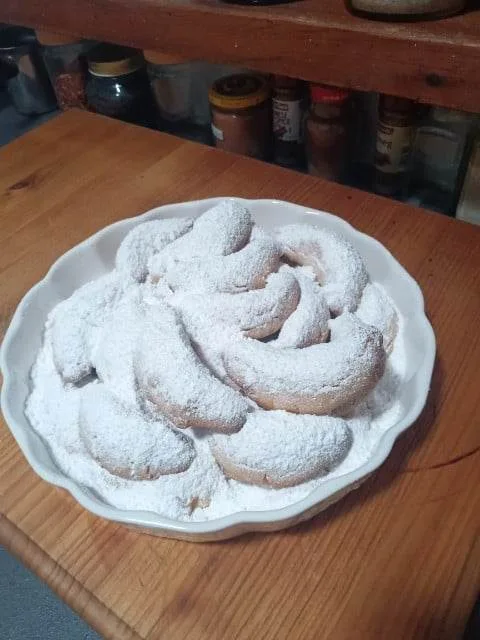
“Traditional Greek food and koulouria, making sure she gives us enough to last the whole year! My son’s godfather Yianni, who’s Greek and lives in Thailand, also comes,” Dimitrios says.

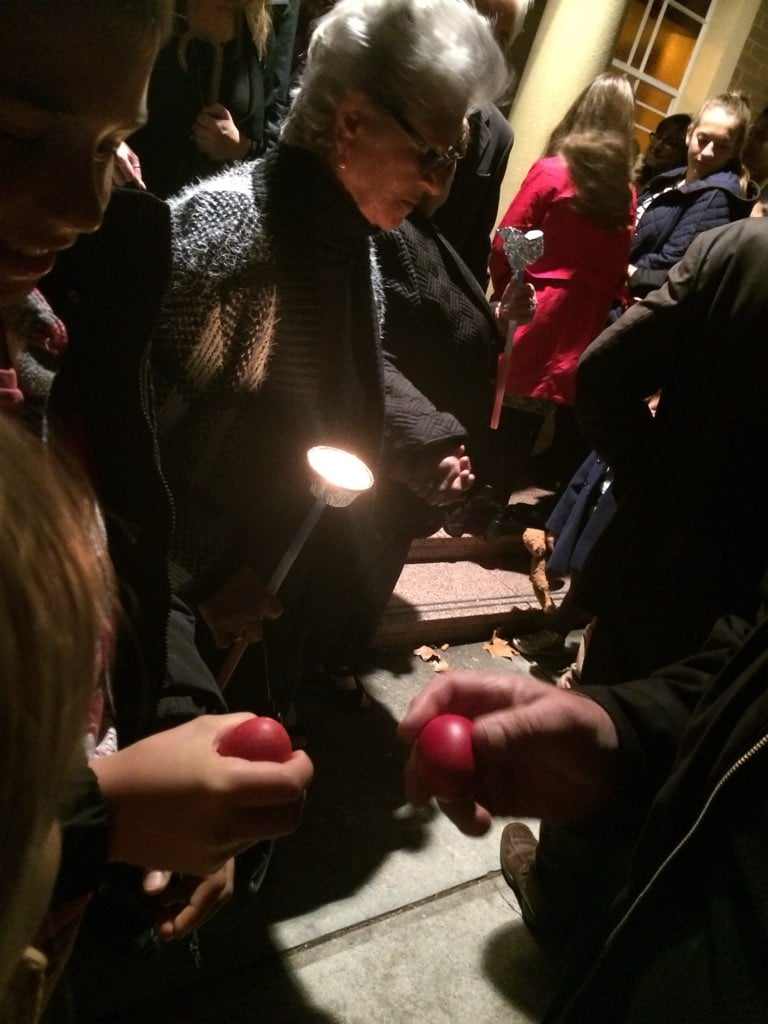
“We have a great day, and are thankful to her for not feeling alone. And of course we keep up the tradition of smashing the red eggs. It’s fun seeing the puzzled look of the Thai people when they see this, but they are respectful of our traditions and love koulouria!
Although Pattaya doesn’t have a Greek Orthodox Church, Dimitrios tells me that he has once been to the Russian Orthodox Church there for Easter, but claims, “it didn’t feel the same for me.” 

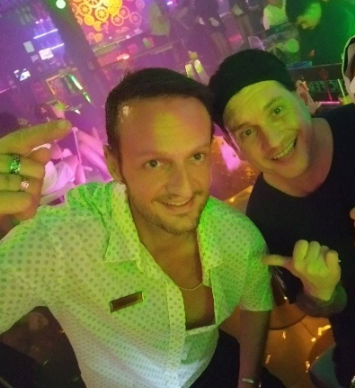
“After our Easter lunch, a group of us Greeks will hit a club in the evening and close our celebrations with a bottle of Metaxa or ouzo.”

Stopping suddenly, and tearing up, he says, “I want people reading this to appreciate who we Greeks are and not take our family gatherings for granted.
“I don’t get a chance to enjoy Easter like I remember, it’s never the same, never.  Growing up in Australia, the best times and best memories I had were celebrating these times with family. I felt joy, excitement; going to church in the morning… then looking forward to friends and family celebrating together. It’s special, it was really special. I miss it, and I really miss my family. 

“I hope to move to Greece soon with my new family. My roots are Greek, my blood is Greek and my heart lies in Greece.”
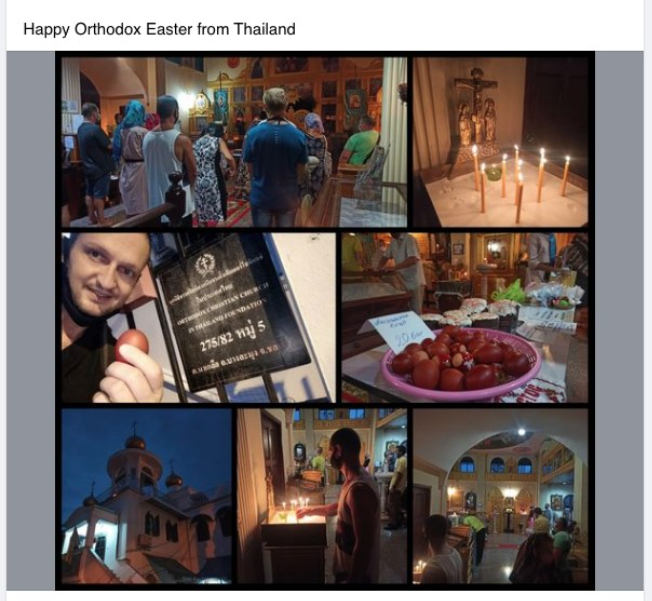
Greek Orthodox Easter seems to enhance the respect and love that we, Greek Australians share towards our Greek roots. This includes the importance we place on family, and on our community’s spiritual core.
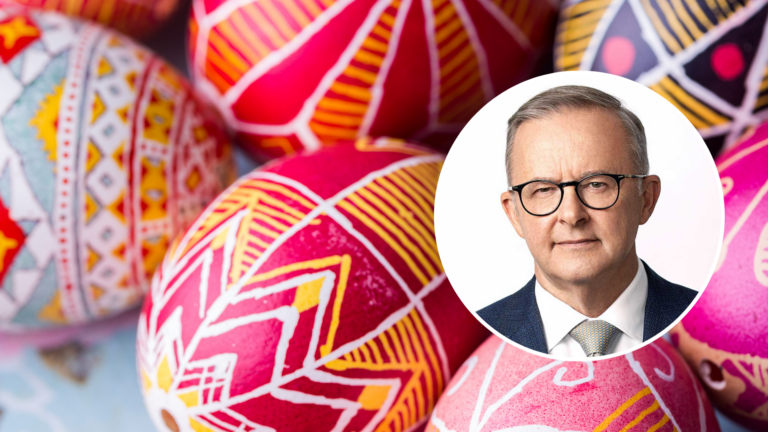
‘A time of reflection and peace’: Australian Prime Minister celebrates Orthodox Easter

Australian Prime Minister, Anthony Albanese, has issued a message to Greek communities across the country to celebrate Orthodox Easter today.

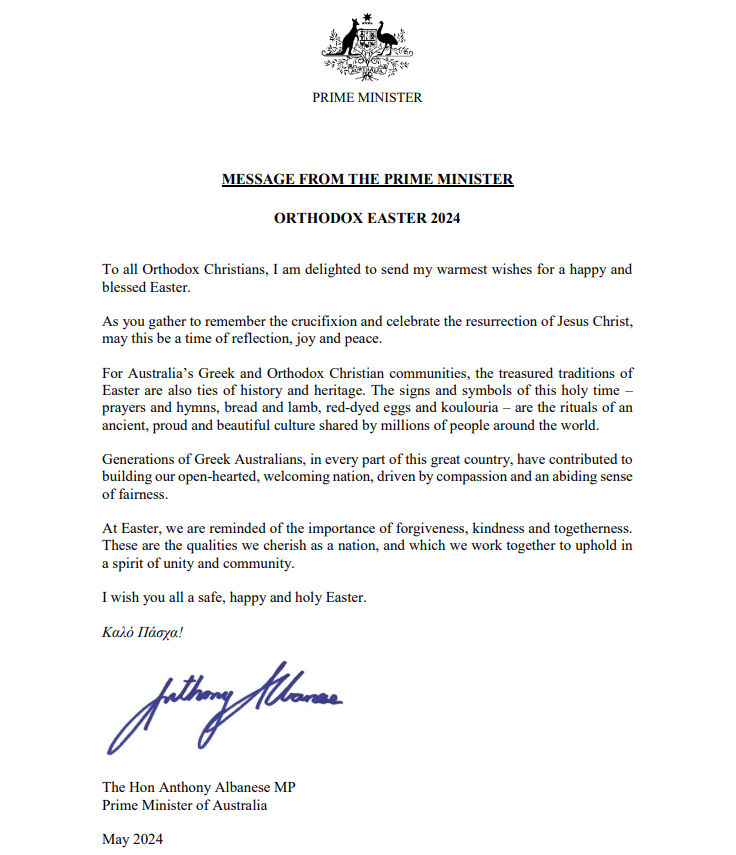
In his message, Mr Albanese said Orthodox Easter was a “time of reflection, joy and peace.”

Full Message:

anthony albanese orthodox easter
Message by Australian Prime Minister Anthony Albanese for Orthodox Easter.

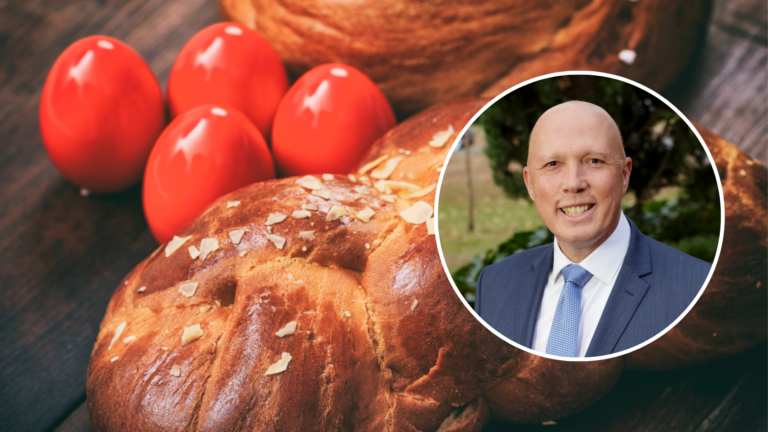
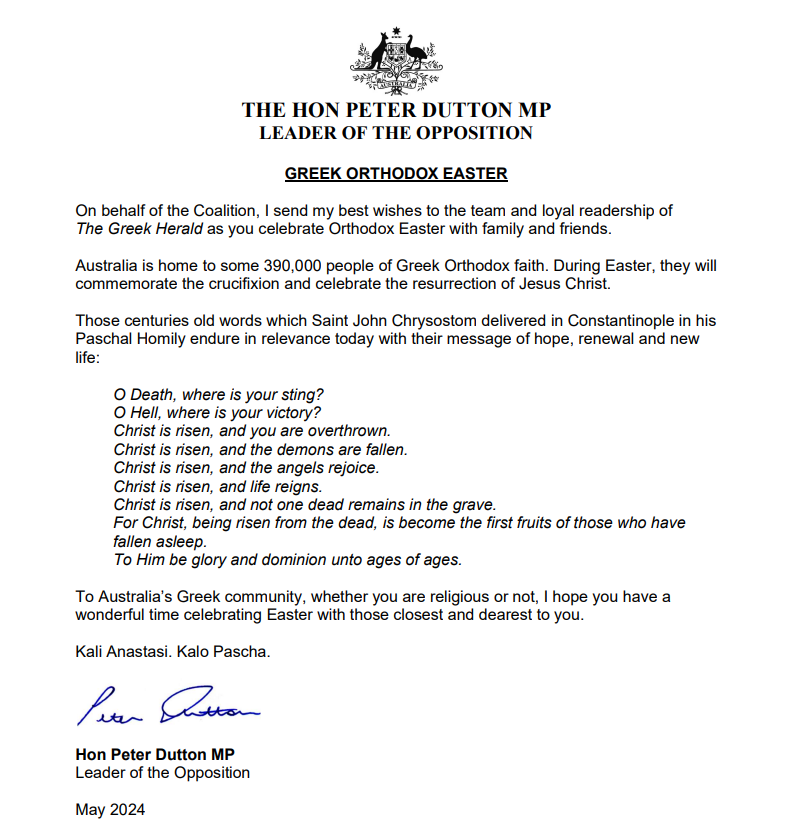
Peter Dutton MP sends message of hope for Orthodox Easter

Australia’s Leader of the Opposition, Peter Dutton MP, has issued a message to Greek communities across the country to mark Orthodox Easter today.

In his message, Mr Albanese said March 25th was an “opportunity to reflect on the proud history and heritage of Greece,” and also thanked all Greek Australians for their hard work and generosity.

Full Message:

peter dutton orthodox easter message
Peter Dutton MP’s message for Orthodox Easter.

Antonia Moropoulou gives insights into restorations at the Holy Sepulchre in Jerusalem

0

By Ilias Karagiannis

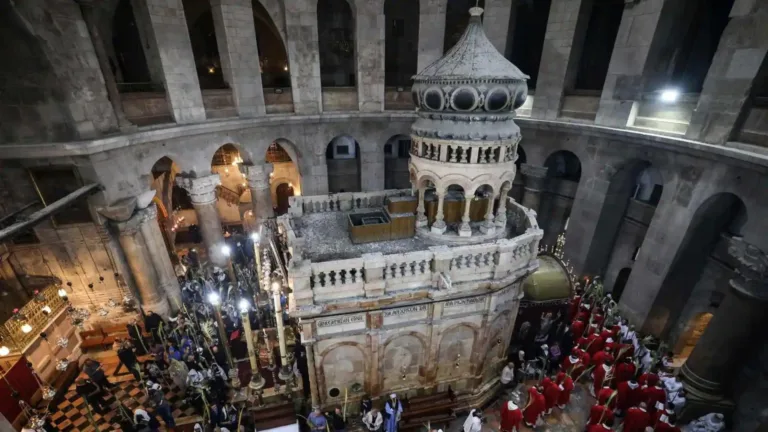
It is the most emblematic monument of Christianity – The Holy Sepulchre in Jerusalem.

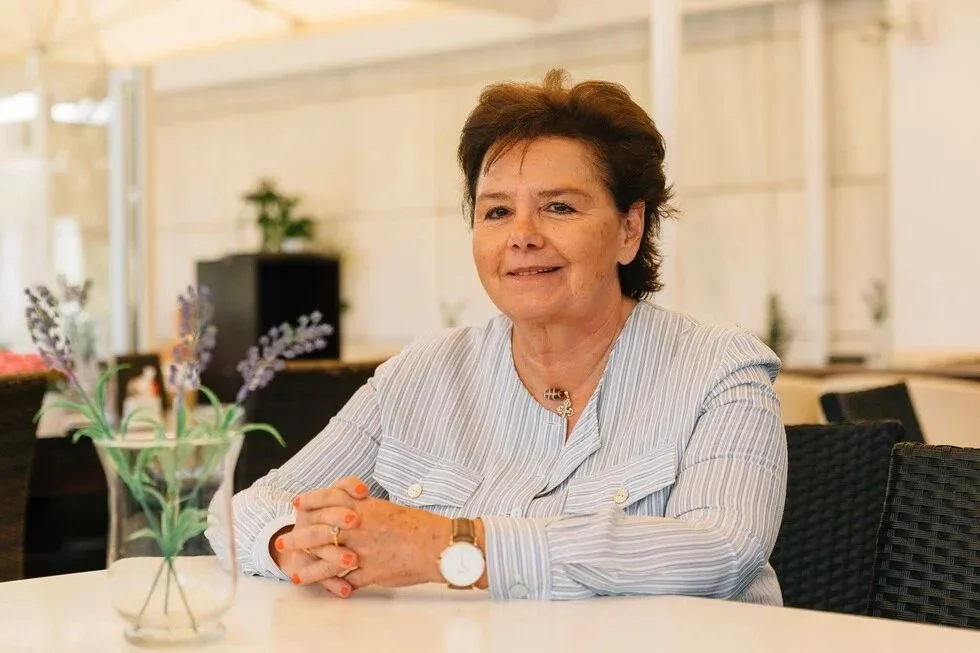
With Orthodox Easter just around the corner, The Greek Herald invites its readers on a journey through time via pictures, seen by some privileged people like Antonia Moropoulou, Professor Emeritus of the National Technical University of Athens (NTUA), and scientifically responsible for the restoration of the Holy Canopy.

Ms Moropoulou talks to The Greek Herald about the unique experience she lived during the process of the restoration of the Holy Sepulchre: A project that was completed in 2017, but will be in Ms Moropoulou’s memory like a tattoo. Indelibly. She even wrote a book, titled “Aspects of Applied Science and technology exploring the value landscape of Technoscience” to encapsulate the knowledge she drew from this sacred adventure.

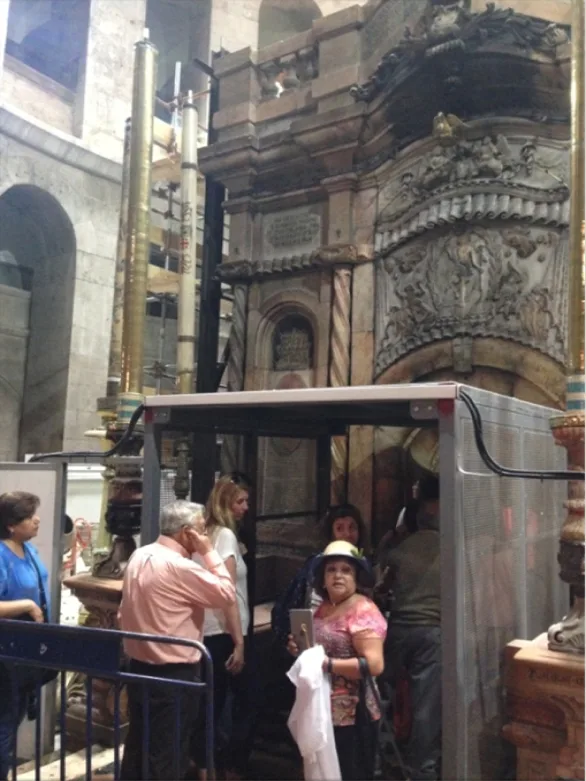
The organisation of the construction site allowed uninterrupted pilgrimage and worship function

“We saw things that no one had seen before. The Holy Sepulchre had not been opened for at least five centuries, and we are the first to use new, high measuring technologies, to be able to diagnose its history and morphology,” Ms Moropoulou says.
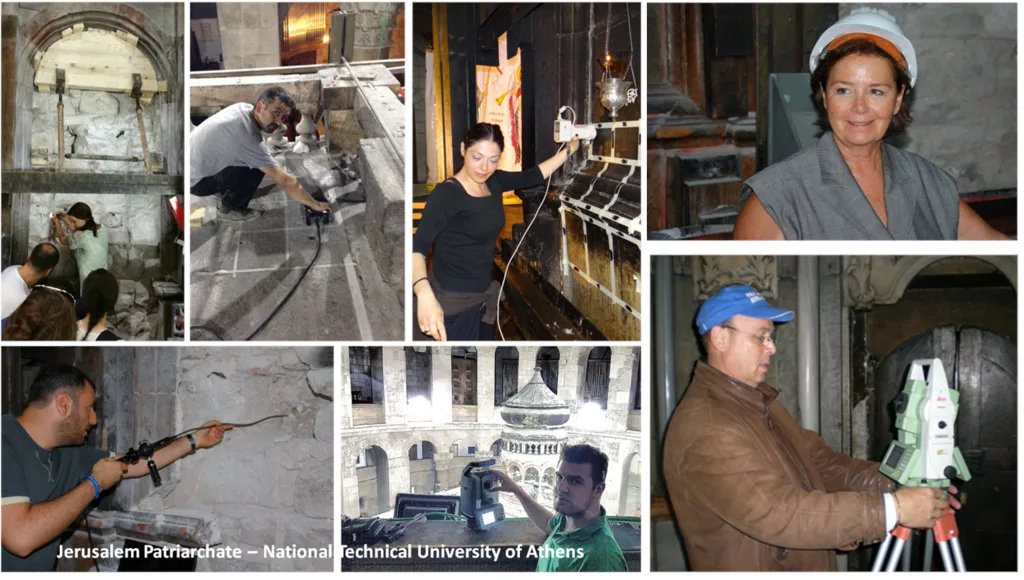
“The Patriarch of Jerusalem, Theophilos III, called me in March 2015, in order to examine and restore the major deformities of the Holy Canopy of the Holy Sepulchre. For this purpose, the interdisciplinary team of the National Technical University of Athens was formed by: Prof. E. Corre, School Of Architecture, Prof. P. Georgopoulos, School Of Rural Surveying Engineering, Prof. P. Moropoulou, School Of Chemical Engineering, Prof. Mr. Spyrakos, An. Prof. Allah. Mouzaki, School Of Civil Engineering.

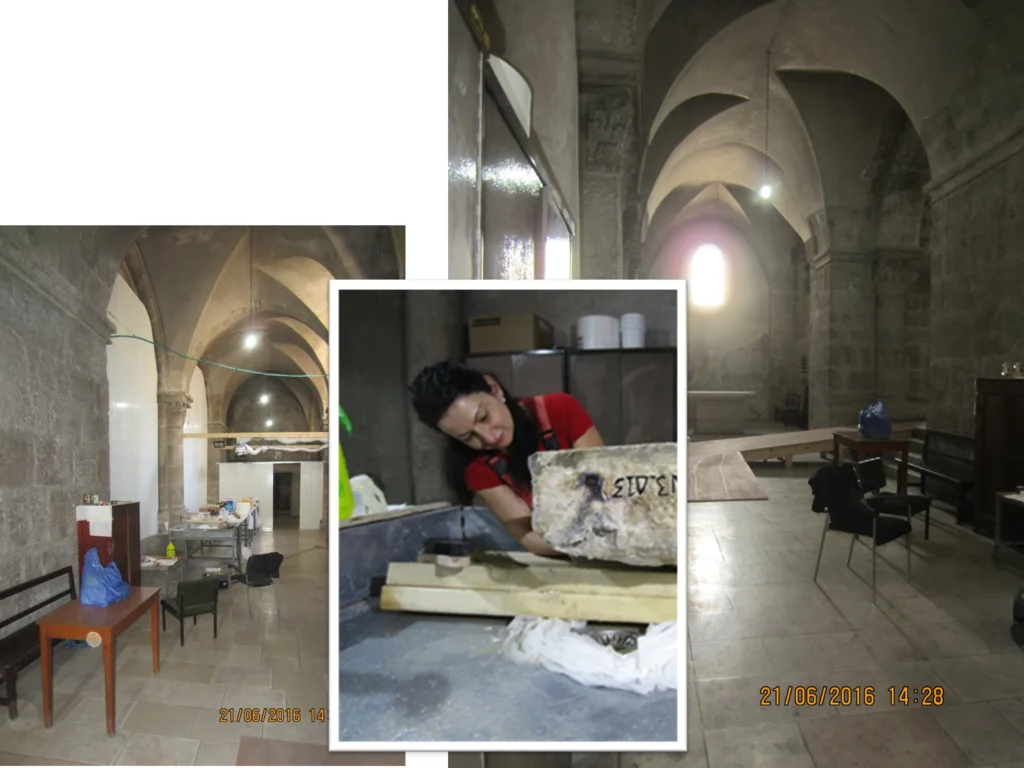
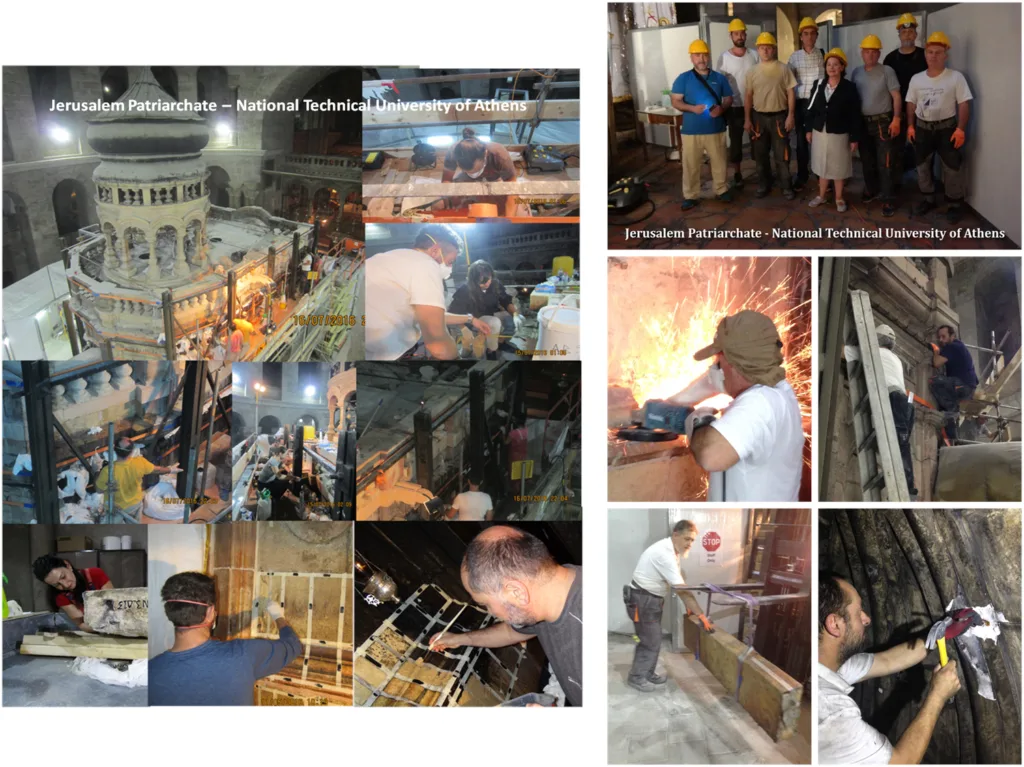
The conservation workshop was installed and operated in the Galleria of Latinos

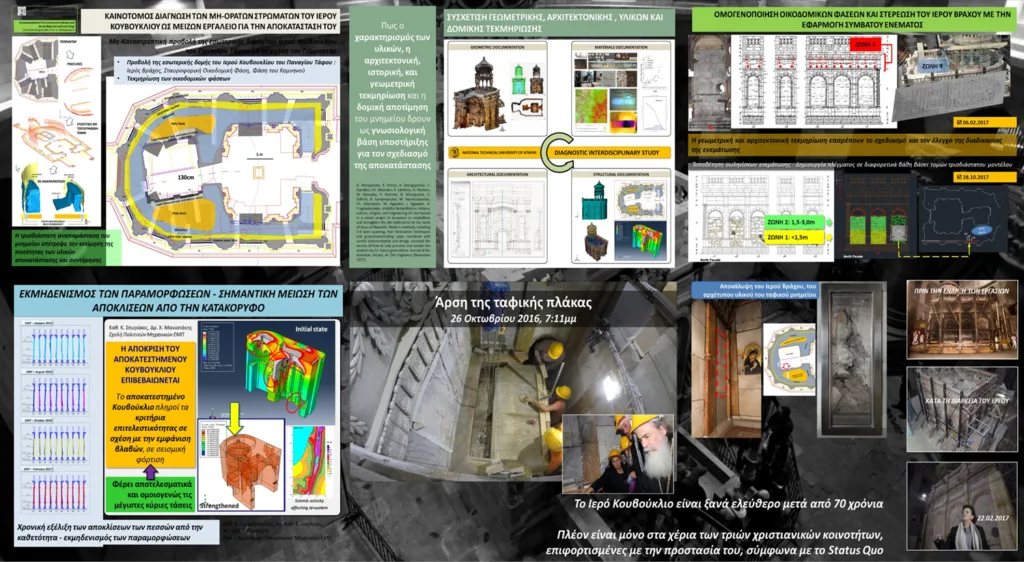
“The diagnostic study and the restoration proposal were completed in early 2016 and presented on March 8 at the Zappeion Megaron in Athens by the National Technical University of Athens, in the presence of the heads of the three Christian communities. With geometric documentation, with three-dimensional models, with characterisation of materials, with on-site measurements, with non-destructive methods, which allowed us to see through the orthomarticulations, we diagnosed the critical state of the structural parts of the monument and formed the proposal for restoration with a sequence of compatible and performative materials and minimally intrusive interventions. Based on dialogue, the historic joint decision of the three Christian communities on March 22, 2016, allowed the project to begin, appointing the head and scientific supervisor, and assigning the NTUA multidisciplinary team the high scientific supervision.”

In two premises of the Greek Orthodox Patriarchate in Rotunda, the Interdisciplinary monitoring and documentation laboratory was installed, in continuous operation under the responsibility of the interdisciplinary team of NTUA.

The Project

Ms Moropoulou settled in Jerusalem with her team to oversee the restoration.

“The construction site was set up so that pilgrims could continuously venerate the Holy Sepulchre, and Christian communities could carry out their devotional functions,” she says.

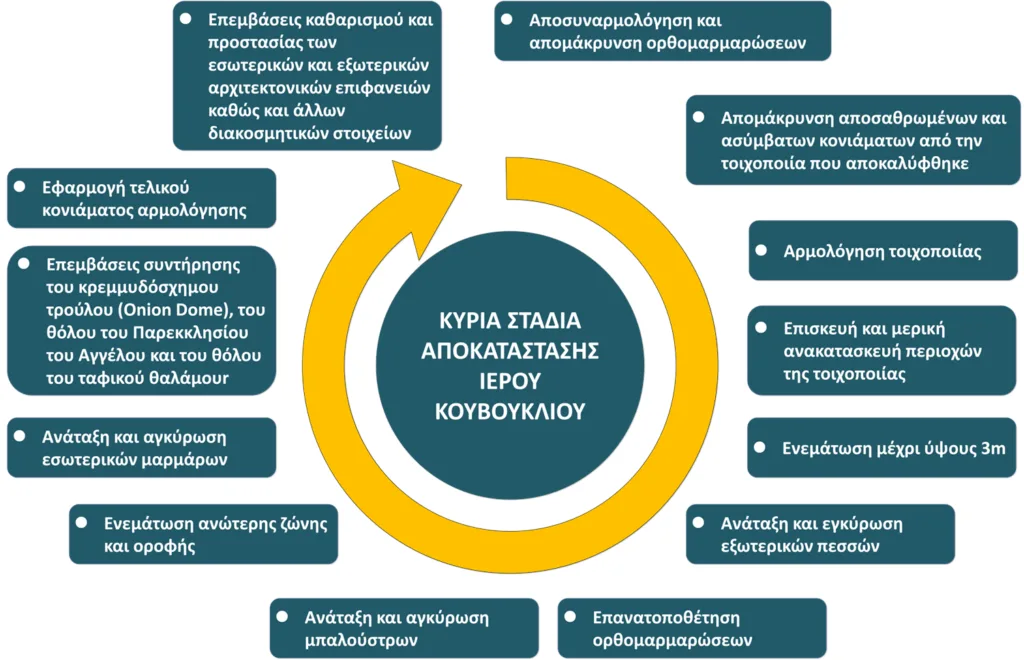
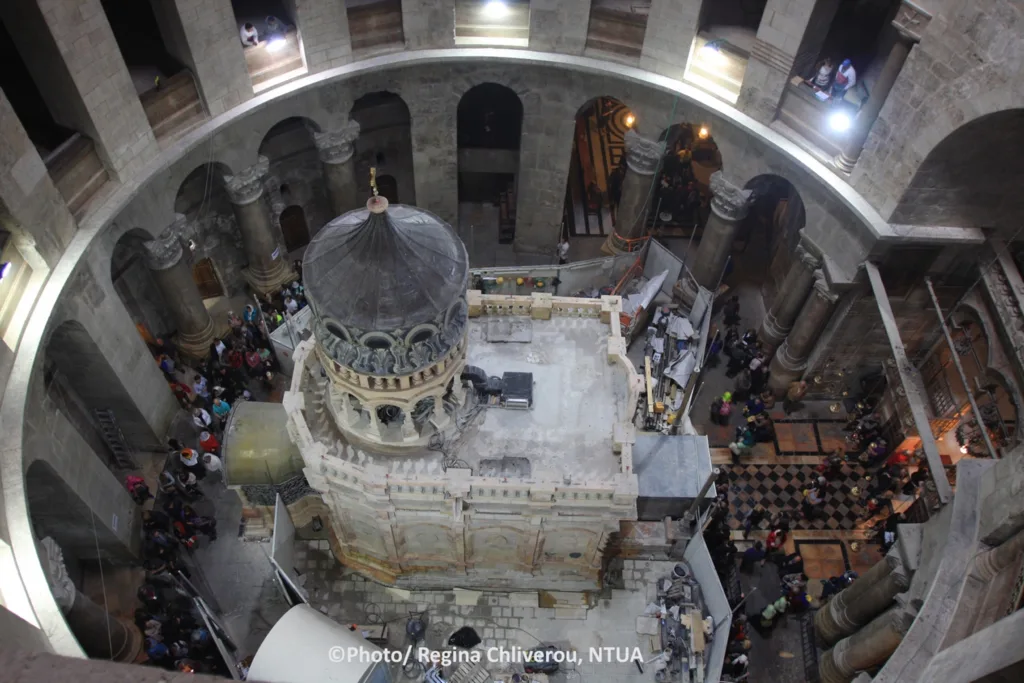
The stages of restoration of the sacred canopy.

“Along with the construction site, the conservation workshop and an interdisciplinary workshop were organised in the Galleria of the Latins so that the interdisciplinary team of NTUA could support the works scientifically, evaluate them and recommend to the project management team, which combined scientific support in decision making with the management of the construction site, as well as religious and administrative management.

Evaluation of materials and restoration interventions

“The restoration of the sacred canopy took place through specific stages. When the coffers were removed, the stones were transferred to the maintenance workshop to be preserved, while, at the same time, the removal of the disintegrated mortars began at the construction site, the restoration of the masonry – up to its partial reconstruction – to proceed with the infilling with compatible grout, in order to unify the different structural phases and mainly to fix the Sacred Rock.

The crews of Greek restorers and the multidisciplinary team work continuously day and night

“When the recrosses were put back, the stones came one by one numbered and preserved from the Galleria of the Latins, mortars and concretions were added, and the sacred canopy closed. Then the dome was restored, after disinfection, with high technology and materials, fastening and maintenance, and of course restoration of its symbolic image, the one that highlighted the holes of diffusion of the Holy Light.

“The internal maintenance of both the Dome of the burial chamber and the chapel of the Angel, allowed the project to be completed internally, with parallel reconstruction of the internal pillars and connection of the orthomarticulations, while externally it was cleaned and preserved, that is, the architectural ensemble was protected and its values were highlighted. When the structural restoration was completed, its integrity was checked.

“We saw that the canopy returned to its vertical position for the first time since 1947, when the British Commission placed the iron cage. We assessed that the materials and the restoration works reinforced the earthquake-proof shielding of the sacred canopy. And then we safely removed the iron cage.”

The restored sacred canopy

The values that surround the sacred canopy

From the Holy Canopy, the Patriarch of Jerusalem transmits the Holy Light to all mankind.

After the interventions of Ms Moropoulou’s team, the Sacred Rock, the archetypal material of the burial monument, became visible for the first time and the “window” that will bring it close to the pilgrims will remain open forever.

“On October 26, 2016, we opened the Holy Sepulchre, after seven – others say five centuries – to protect it from grout. And it was the Holy Sepulchre which protected the whole project and us,” she says.

“The television transmission that night by National Geographic to all mankind brought to the Holy Sepulchre more than two billion, pilgrims mentally with us.

“And we, with the approval of the three primates and the entire priesthood, who anxiously watched the opening of the Holy Sepulchre, were able to take measurements and samples for the first time in history, in order to document the history and morphology of the Holy monument with non-destructive and archaeometric methods and archaeogenetics.

Mrs. Antonia Moropoulou, Professor Emeritus of E.M.P., was responsible for the restoration of the sacred cubicle.

“Thus, we scientifically confirmed that Constantine the Great and St. Helen were the ones who erected and rectified the Holy Sepulchre. At the same time, the archaeometric investigation confirmed the historical development of the monument during the periods of Byzantium, the Crusaders, the Renaissance and the last restoration in 1810 by Kalfa Komnenos Mytilineos, and contributed with the non-destructive control and the three-dimensional documentation to the investigation of the state of preservation of the underground space and the sacred rock up to the depth of the Rotunda.

“The upper dome of the monument was also a black capstone, which today has regained its resurrected colours, while the values of the sacred Kouvoukli were restored, along with the Greek inscriptions that run through the upper frieze and which we uncovered and preserved.

“The Cross of Komnenos – “October 15, 1809 Kalfas Komnenos the Mytilineos made” – was found on the cornerstone on the southeast side of the sacred Kouvouklion and with a gold copy was crowned after photogrammetric simulation, by analogy in the monument the dome.”

Nine months of heart and soul

The work on the restoration of the monument was arduous, says Ms Moropoulou.

“Together with 70 Greek scientists, restorers, craftsmen of various specialties, we worked day and night, in two shifts a day, with our mind, with our hands, with our soul, so that in less than nine months we could deliver the Holy Canopy to the three Christian communities that entrusted it to us, but also to the whole world,” she adds.

The project could not be executed and completed:

– without the three Christian communities and especially the Greek Orthodox Patriarchate of Jerusalem that gave us this unique opportunity

– without the small and large donors from all over the world, who made the impossible possible, with the World Monuments Fund and the Great Benefactor Mika Ertegun

– without the acceptance of all religious communities in Jerusalem, whether Christian or not

– without the actual interest of the authorities of the state of Israel, but also of the Palestinian Authority, as well as the personal interest of the King of Jordan.

“At the ceremony of the handover of the Holy Canopy, on March 22, 2017, the Christian world found itself united and ecumenical, with the unstable Middle East, and with Greece united at the centre. The interdisciplinary team, with its scientific support and respect for the values of this great monument, was the one that during the dialogue with the three Christian communities, in the meetings of the management committee and in the procedures of the project itself, strengthened this unity,” she says.

“But the whole world, as it welcomed, as it commented, as it supported the work, became a bearer of the values of the Holy Sepulchre.

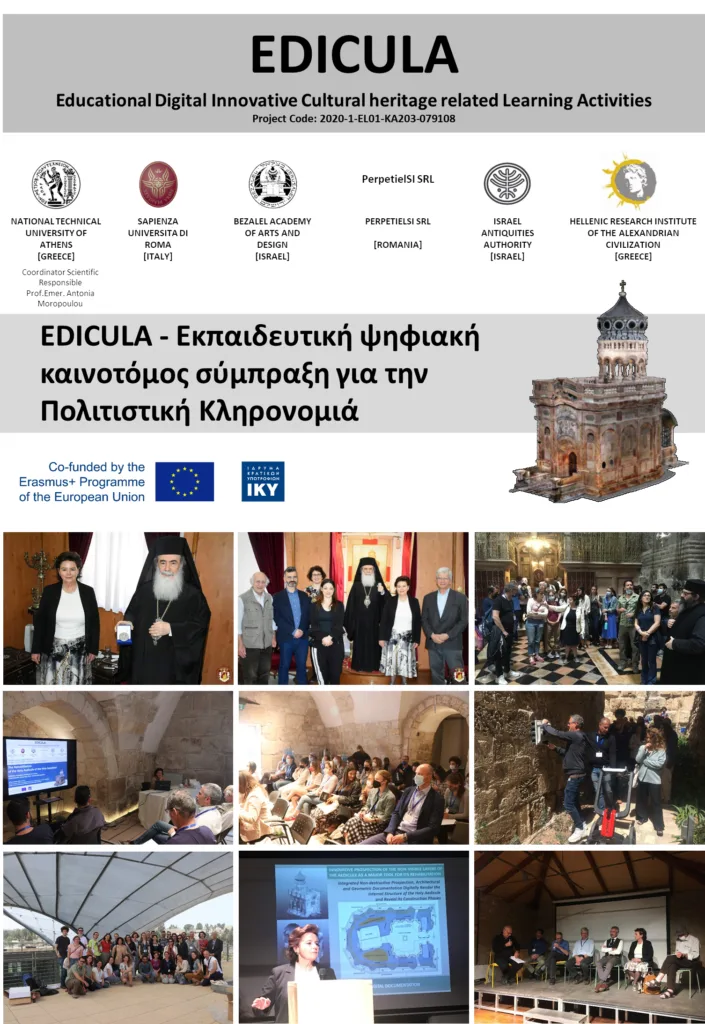
EDICULA-educational digital innovative partnership for Cultural Heritage

“The digital exhibition from National Geographic in Washington, D.C. and in collaboration with the National Technical University of Athens at the Byzantine and Christian Museum in Athens, allowed us to hare our experiences with society and made it a participant in the project.

“The project is over. The investigation continues. Scientists, historians, archaeologists, theologians, sociologists, all over the world based on the data of the project will have a lot to say in the future about the values and history of the monument. But we have demonstrated these values and confirmed them scientifically.”

Cortona lamp mystery one step closer to being solved

0

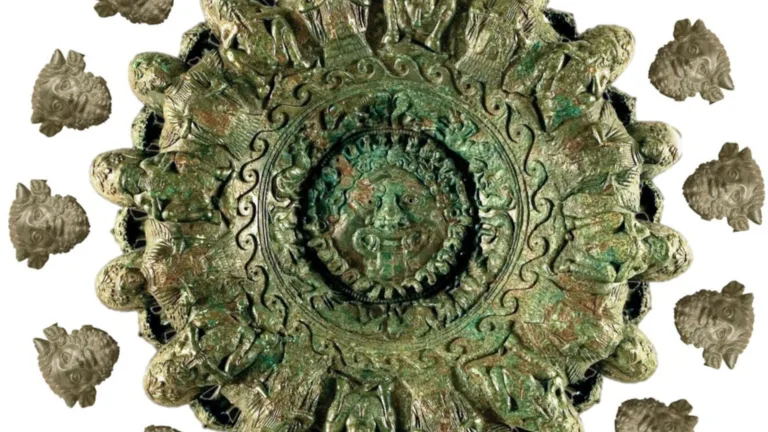
Shrouded in mystery since its discovery in central Italy in 1840, the Cortona oil lamp has recently revealed more insights into its date and purpose, with researchers suggesting the artifact has links to an ancient Dionysian cult.

The 57kg heavy bronze hanging lamp was found in an isolated ditch near the Tuscan town of Cortona along with an inscribed bronze plaque. The object has conventionally been dated to the 4th c. BC but where it was made and what it was made for has been the subject of debate for decades as there’s very little to compare it to.

New research by University of Melbourne PhD student Ronak Alburz and Associate Professor Gijs Willem Tol, however, suggests the artefact is far older than previously thought, dating to the Late Archaic period around 480BCE.

In addition, following a thorough re-examination of the lamp’s intricate decoration, these scholars claim the lamp’s main decorative element – 16 bull-horned figures – have long been mistaken as the Greek river god Acheloos. Alburz and Tol say literary sources and new iconographic evidence indicate the decoration of the lamp represents the Dionysian thiasus, the ecstatic retinue of the Greek god of wine and pleasure.

Their research findings were recently published in De Gruyter’s Etruscan and Italic Studies. Alburz said “the lamp was probably an object associated with the mystery cult of Dionysus. Its decoration represents the Dionysian thiasus, perhaps engaged in a cultic performance in the cosmos of the mysteries in celebration of Dionysus.”

Orthodox Easter recipes and tips by Nicole Papasavas from Stalactites in Melbourne

Lamb was mainly eaten during times of celebration as it is expensive and only usually for special occasions. Orthodox Easter Sunday is a time of celebration and is held in spring in Greece, which is why spring lamb is the obvious choice.

A favourite way to cook lamb is by putting a full marinated lamb on the spit. Depending on each family’s tradition, sometimes the belly of the lamb is stuffed with lemony herbed potatoes and sewn up again, so they slowly cook inside and take on the flavour of the lamb.

Most people do not have a spit, so we try to recreate the flavours in an oven.

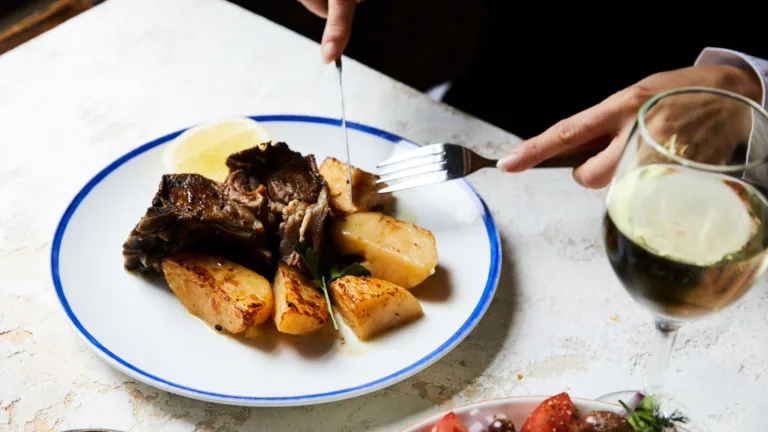
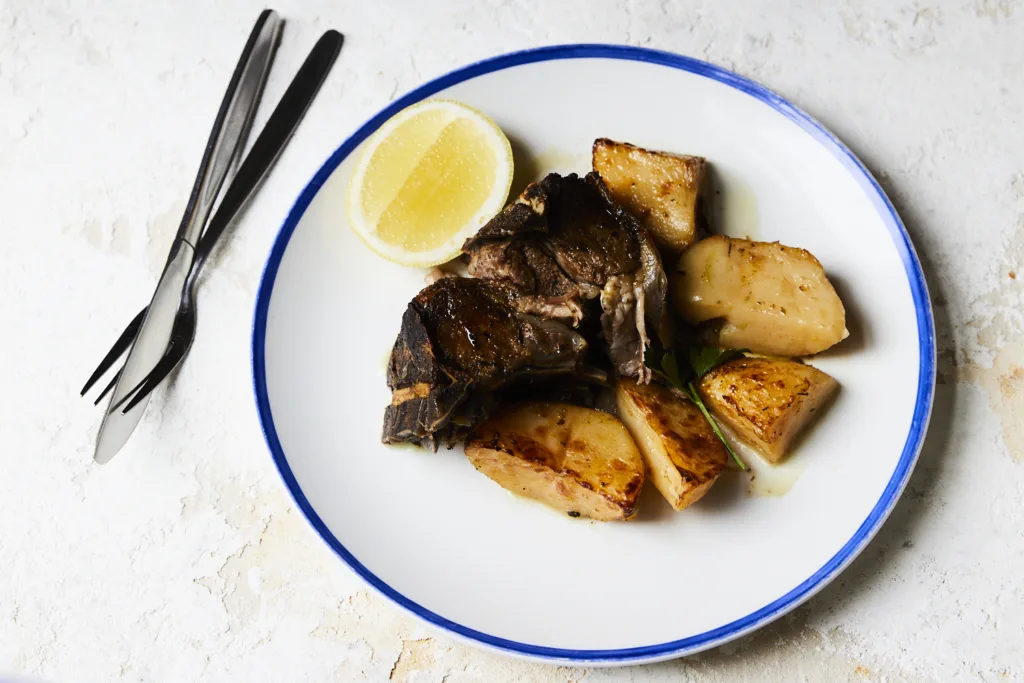
Oven baked lamb and potatoes lemonato

Ingredients

  • 1 full rack lamb with skin, flap etc (or alternatively a leg with bone or lamb shoulder)
  • 500ml lemon juice
  • 1 cup chicken stock
  • 3-5 cups water
  • 6 cloves of garlic cut in ½ or 1/3.
  • 1 1/2 tablespoon mustard
  • 3 tablespoons oregano
  • 1 tablespoon sweet paprika
  • 1 teaspoon cumin
  • 1 1/2 teaspoon pepper
  • 1-2 tablespoon salt (to taste)
  • ½ chopped brown onion
  • 1/2 cup olive oil
  • 1-1.5 kilo desiree potatoes

Method

  1. Lay lamb rack in a large shallow baking tray.
  2. Sprinkle 1 tablespoons oregano, 1 teaspoon pepper, 1/2 tablespoon salt, 1/2 tablespoon paprika, ½ teaspoon cumin over lamb and ½ of the mustard and massage in.
  3. Flip the lamb over and repeat step 2.
  4. Pour 250ml cups lemon over lamb making sure all lamb has lemon juice over it by massaging spreading it while pouring.
  5. Slice slits in lamb and insert ½ cloves of garlic until all used up.
  6. Flip over to the side with the skin flap, this is the side to bake it on.
  7. Chop the onion and sprinkle over meat, pour 1 cup oil over meat and add water to tray until halfway. Bake uncovered for 1 hour at 180 degrees Celsius.
  8. Chop the potatoes into quarters. In a bowl put potatoes and sprinkle 1 tablespoon oregano, 1 tablespoon salt, ½ tablespoon of paprika and 1/2 teaspoon cumin, ½ cup lemon juice, ½ tablespoon mustard and stock, ¼ teaspoon pepper. Mix well.
  9. Add potatoes to baking tray. Submerge the potatoes in the juices from the meat until they are at least half covered. Add water if needed.
  10. Cover with foil and return to oven for 1 hour. 11. Remove foil and return to oven for 1 hour.

Tips

  • Be generous on the spices.
  • Don’t be scared to taste and add more of all the spices or more lemon

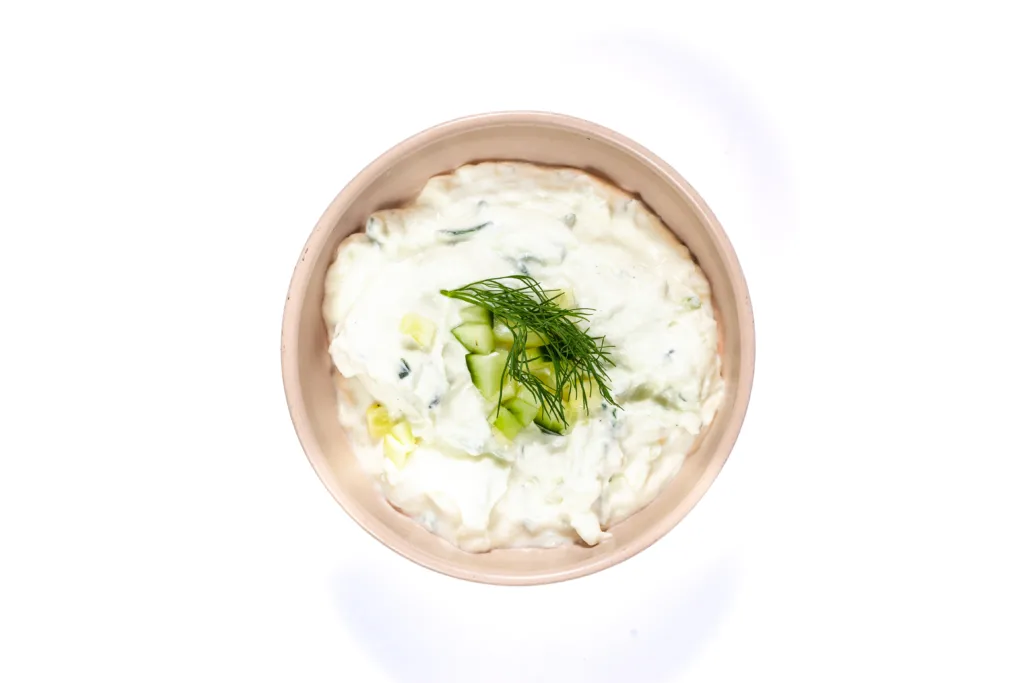
Tzatziki

We make our tzatziki all in house at Stalactites. This includes hanging the yoghurt overnight to strain the water out of it so it’s nice and thick. We make over 1.5 tonnes of tzatziki a week but have adapted the recipe to a small manageable quantity that you can make very quickly.

Ingredients

  • 300 gr Thick Greek Yoghurt
  • Strained 3 Garlic Cloves, Crushed
  • 1 x Small Lebanese Cucumber
  • Grated Sea Salt to taste
  • Pinch of Black Pepper
  • 1 tbsp Vegetable Oil
  • ½ tsp Vinegar

Method

  1. Wash and cut cucumbers in half. Do not peel. Remove seeds if any and grate the cucumbers.
  2. Place in a sieve to drain liquid into a bowl. Squeeze out any excess liquid by placing cucumber in a tea towel and wringing it.
  3. In a separate bowl add strained yoghurt, crushed garlic and vinegar. Add the strained cucumbers to the yoghurt, oil, salt and pepper. Stir until combined. Adjust salt and add extra garlic to taste if required.
  4. Store in fridge.

Greek and Cypriot leaders send messages to mark Orthodox Easter

Greek and Cypriot politicians and diplomats have issued messages to Australia’s Greek diaspora ahead of Orthodox Easter on Sunday, May 5.

Message by Greece’s Secretary General for Greeks Abroad, John Chrysoulakis

john chrysoulakis
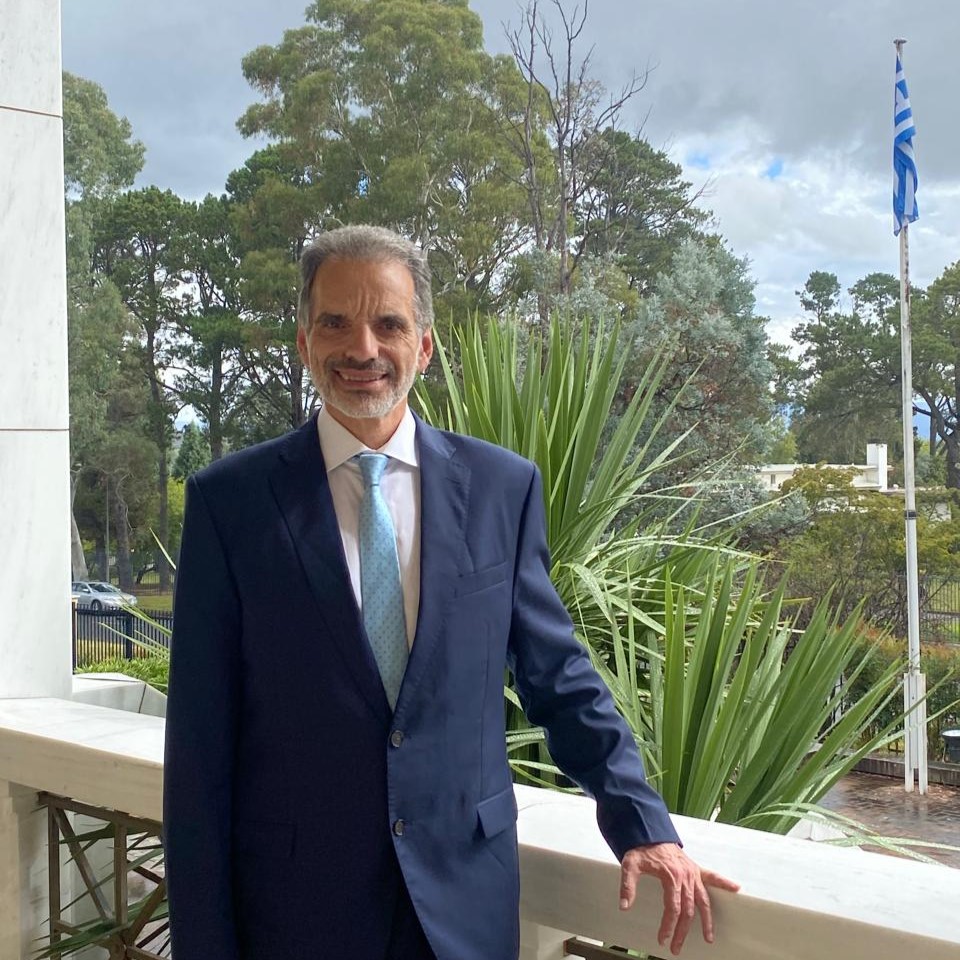
John Chrysoulakis.

Dear compatriots,

On behalf of Greece’s Deputy Foreign Affairs Minister Giorgios Kotsiras, I want to send a warm message for Orthodox Easter.

To the large family of Greek immigrants all over the world, to all of you who stand beside us, especially on the great Christian feast days, we wish you a Kali Anastasi!

This Holy Week, Orthodoxy sends a unique message to the whole world: The triumph of Life over Death. For us Christians, this message is a source of joy and hope. The Resurrection expresses the defeat of darkness, the opening of the heart to our fellow man.

Greeks everywhere in the world are celebrating this year’s Easter by turning to its double message: Of the determination that the Week of the Passion symbolises, but also of the hope that comes from Light of the Resurrection. May the Resurrection mark the rebirth of all our hopes for peace and prosperity.

For all of us, faith is the most basic support and the most important refuge in the difficulties that we inevitably face every day. After all, this is one of the many reasons why Orthodoxy has always been an inexhaustible source of unity and harmony for Hellenism and Greeks, wherever they are.

The Deputy Minister thanks you all for your love for Greece. The contribution of the diaspora to Hellenism was, and still is, truly invaluable. We are proud of each and every one of you. Your overall presence honours both Greece and your new homeland.

We would like to assure you that we are always there for you, making every effort to listen to your concerns and needs. We face all challenges together.

We hope that the coming holy days will bring you all Health, Peace, Enlightenment and Love.

Happy Easter!

Message by the Ambassador of Greece in Australia, Stavros Venizelos:

stavros venizelos
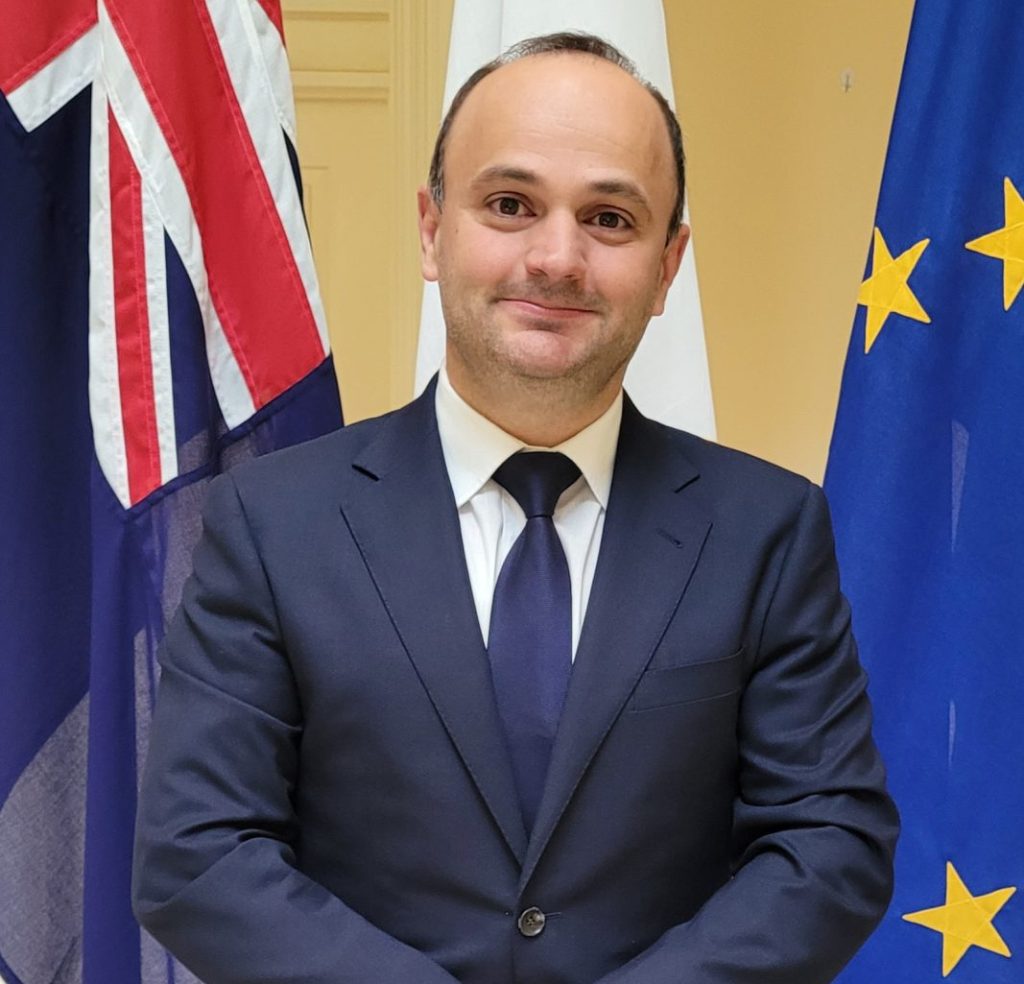
Stavros Venizelos.

I wish that this year’s Easter may give us all strength and joy. Its universal message is first and foremost a message of personal rebirth and love towards our fellow man. The celebration is reviving our hopes for peace and prosperity. I wholeheartedly wish to all Greek friends in Australia, a Happy Easter with your loved ones. Χρόνια πολλά!

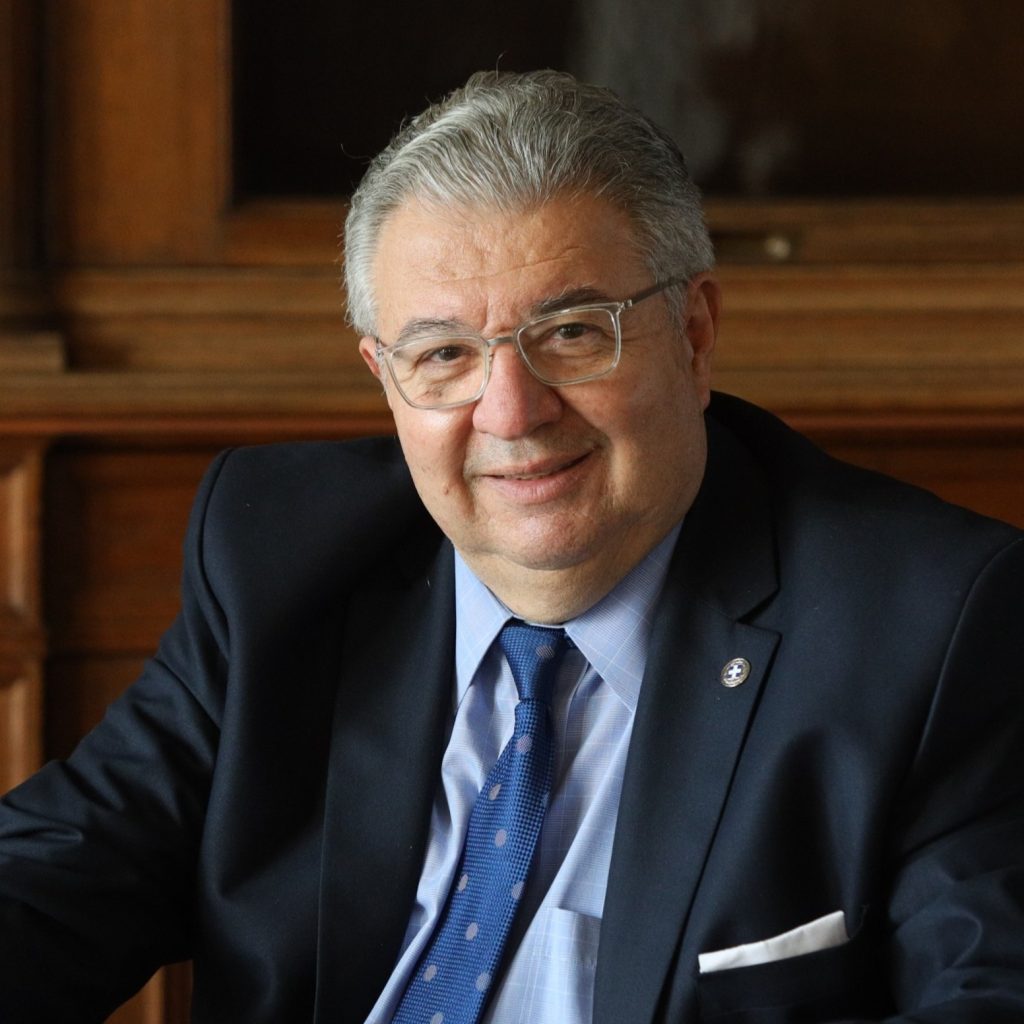
Message by the High Commissioner of Cyprus in Australia, Antonis Sammoutis:

antonis-sammoutis
Antonis Sammoutis.

Dear compatriots,

On the occasion of Orthodox Easter, I address to the diaspora my greetings and wishes for health, family, happiness and every success in whatever you undertake. I still wish, as we experience the Holy Passions and the miracle of the Resurrection, that we are able to all reflect together on how the risen Christ could become the centre of our lives, so that he directs our steps in the right direction.

As believers, we constantly experience the feeling of joy. The sorrow for the Crucifixion of our Lord is always followed by the joy of the Resurrection. It is for this reason that Christians, despite the futility that accompanies worldly things, are naturally optimistic, always anticipating eternal life, at the same time that they transform this optimism into a force for good works, for justice and solidarity with others. It is this optimism that we must keep in the difficult days in which we live, with one war following another, with people becoming inhuman, driven by religious and racial hatred or blind adherence to tyrants, who drive them to their deaths.

We also need this optimism in martyred Cyprus, which has been under Turkish occupation for 50 years. This July, we will all join our voices in finally demanding justice. 50 years of refugees, anguish for our missing persons, trampling of our altars and hearths, destruction of our churches and monuments. Our demand for a solution without foreign troops and guarantor rights is constantly met with Turkey’s refusal. But every new attempt by the international community for a solution, such as the process that started again slowly but surely this year, naturally revives our hopes.

Happy Easter everyone!

New bridge linking Greece and Turkey to be built this year

0

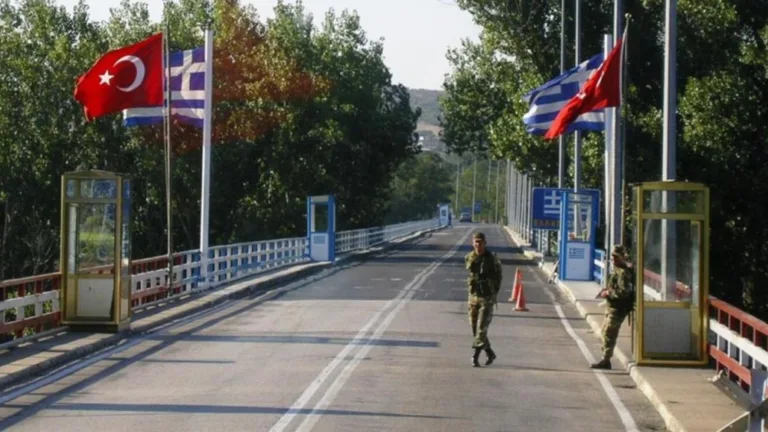
The construction of a new bridge between Turkey and Greece near the Maritsa River marks a significant development in bolstering connectivity and streamlining transportation between the two neighboring nations. The existing bridge proved to be insufficient to meet the growing demand for passage.

According to Anadolu Agency (AA), the bridge to be built over the river would link the two neighboring countries between the Ipsala border gate in Turkey and the Kipi border gate in Greece.

Yunus Sezer, the governor of Edirne province, which borders Greece, along with other officials, visited the area where the bridge will be constructed and said the project will accelerate the crossings between the border gates.

According to dailysabah, the Turkish part of the bridge, nearing completion in the project works, will be constructed by the General Directorate of Highways, while the Greek part will be built by the Greek government.

Photo: Pixabay

The new bridge will be 811 meters long, with four lanes, and a 344-meter span over the river. It’ll help move people and goods faster since the old bridge can’t keep up with all the traffic anymore.

The existing two-lane bridge, built in 1958, facilitates passage over the Meriç River between the border gates but occasionally struggles to handle the increasing vehicle traffic between the two countries.

The announcement of the plans for the second bridge came after President Recep Tayyip Erdoğan’s visit to Athens last year, during which the two countries renewed their will to cooperate in several fields, such as energy and tourism.

Source: dailysabah

Veganism: A new approach to Greek Orthodox Easter cuisine?

By Mary Sinanidis.

As Greek Orthodox Easter approaches, the familiar aroma of roasted lamb, kokoretsi and tsoureki fills most Greek households, evoking memories of childhood.

A vegan for 20 years, social worker Debbie (Despoina) Filippaki says, “Food plays a significant role in our cultural celebrations, evoking memories, emotions, and a sense of belonging; those new to veganism may struggle to belong.”

Debbie says celebrating Easter as a vegan in a Greek Orthodox family can be a unique and rewarding experience that “combines family traditions, cultural celebrations and personal values.” She navigates traditional Easter dishes revolving around meat and dairy products while staying true to her vegan lifestyle.

Her advice is to be patient as it gets easier with time. Apart from an ever-increasing array of meat substitutes, a growing shift in consciousness is also challenging age-old culinary customs as an increasing number of individuals choose veganism.

Antispeciesist Gia Soupos, an outspoken advocate for animal rights, underscores the conflict between the celebration of life and the consumption of animal products during Easter.

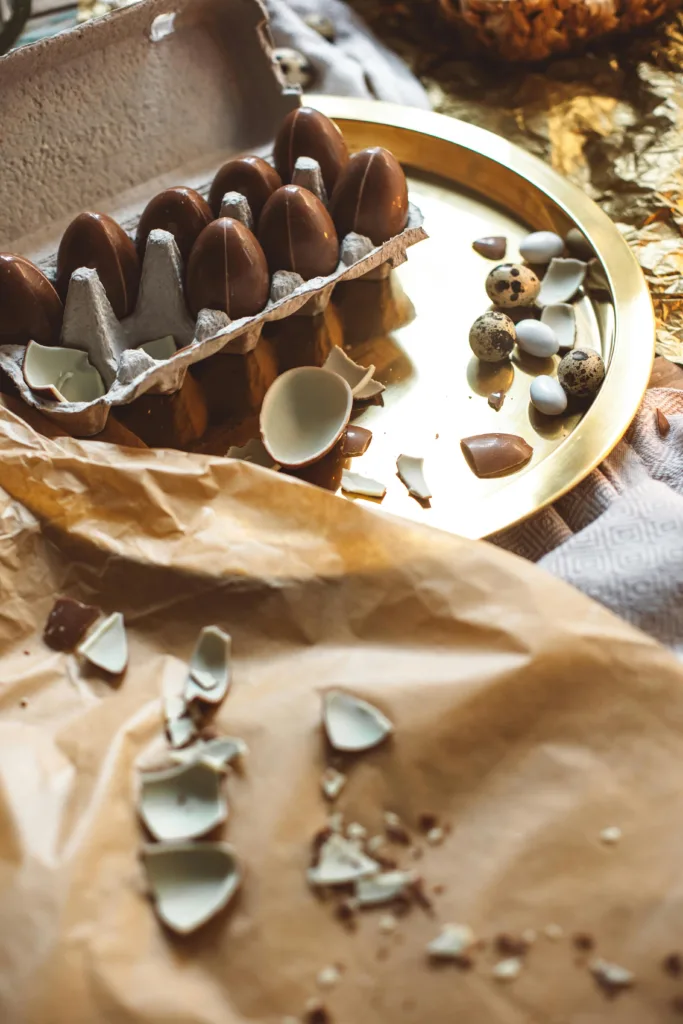
Gia Soupos prefers to crack vegan chocolate eggs instead of red eggs
Gia Soupos prefers to crack vegan chocolate eggs instead of red eggs.

“I find it very challenging to witness people justifying their consumption of the flesh and by-products of other animals at any time, but particularly during Easter,” she says.

As a Greek Orthodox Christian, she has seen a “shift” in recent years as more people are seeing the benefits of veganism.

“I personally find this very encouraging and also feel that being vegan is consistent with living life without harming others – as Jesus would have done,” she says.

Meat-free Easter alternatives

Gia says vegans can celebrate Easter with all the trimmings, while also keeping close to Jesus’ teachings.

“I am very fortunate that my sibling is also vegan and an anti-speciesist. As such, my immediate family are respectful of our moral and ethical choices and we celebrate Easter with all the traditional Easter meals but veganised, including magiritsa,” she says, adding that she goes to mass with her vegan candles, enjoys vegan tsoureki and instead of cracking real eggs the family crack vegan chocolate eggs for a bit of fun.

“The egg industry, whether it is free range, organic or casged eggs, come from exploited hens that are slaughtered after they are no longer productive,” Gia says.

Author, chef and academic Ella Mittas is not vegan but has studied Greek and Turkish cuisine through travel.

“Vegans have nothing to miss out on when it comes to Greek Orthodox Easter feasts thanks to all the dishes we traditionally have surrounding the meat,” she says, adding that her book ‘Ela Ela’ has recipes that are 30 per cent meat-free as there is an entire faction of Greek cuisine known as ladera (oil-based) dishes.

“I am not a vegan but what I enjoy most during the Easter table are the vegan side dishes served with the lamb, dishes like fava and other oil-based dishes (ladera). In Crete, they may serve briam which is like a vegan moussaka layered with eggplant, zucchini and rich in olive oil.”

Like Gia, Debbie enjoys Easter without animal products or by-products.

“I decorate the house with fake eggs. The idea is to be cruelty-free and festive at the same time,” she says.

Debbie says she turned to veganism at high school in Athens at a time when people weren’t too aware of what it was.

“Health concerns and an aversion to animal cruelty were the reasons I decided to live this way. When I  announced it, those around me viewed me with disbelief thinking it would pass,” she says.

Now a way of life, Debbie says, “I really do not need meat, and I’m not at all tempted by its aromas.”

“Adapting classic Easter recipes to be vegan-friendly requires a thoughtful approach that respects the essence of the dish while incorporating plant-based alternatives. For example, instead of lamb, which is a common centrepiece of the Easter meal, plant-based people usually opt for a delicious roast made from jackfruit marinated in traditional Greek herbs and spices. Tzatziki can easily be veganised by using dairy-free yoghurt and cucumbler,” she says.

Navigating through controversy

Despite her family’s acceptance and adjustments, Debbie has found that not all people are tolerant of her choices, and sometimes it is easier for her to make excuses than to explain why she avoids meat.

“Occasionally someone may start asking questions that I try to avoid. I may tell them that I follow a plant-based diet for health reasons to avoid conversations or having to overexplain things. On Wednesdays and Fridays I often just say I am fasting,” she says.

“As a vegan, I often face pressure to partake in these traditional dishes as a way of honouring cultural customs and family traditions. Many Greek Australian vegans celebrate Easter with family and friends who may not fully understand or support their vegan lifestyle, and this often leads to awkward conversations or misunderstandings.”

With close family members she has discussed dietary choices to “set expectations and foster understanding.” While food choices may vary, she accentuates the positive, “emphasising shared values of compassion, sustainability, and health.” These are the values that Debbie says “underpin veganism” – and they are values of Christianity also which help to foster a sense of unity and connection.

“Approaching the holiday meal with an open mind, a spirit of collaboration and a willingness to explore new culinary horizons is very important,” she says.

“To take people out of a difficult situation, I bring my own food to gatherings. When I share with people they don’t even realise it is vegan and are pleasantly surprised.”

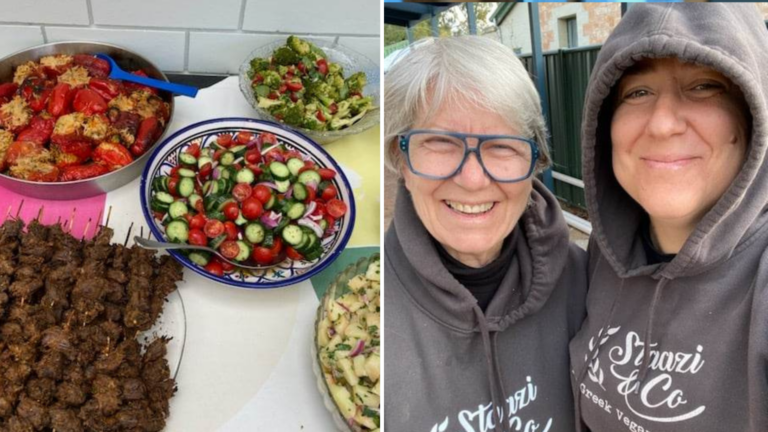
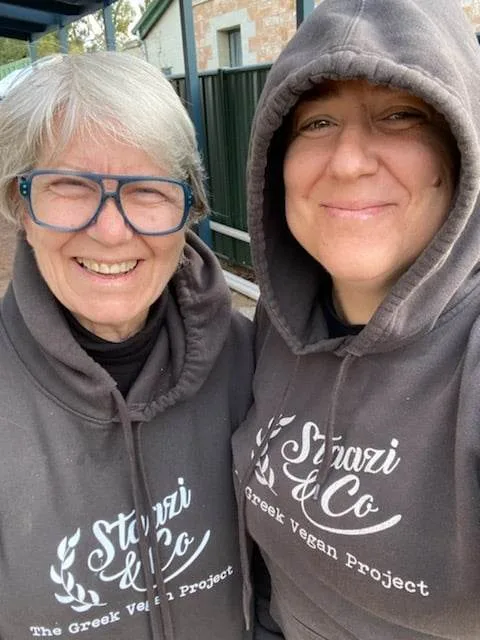
Chef Anastasia Lavrentiadis from Staazi & Co – The Greek Vegan Project restaurant reflects on her journey towards veganism over the last seven years, navigating familial traditions while staying true to her ethical beliefs.

“My family have been very understanding in not just my dietary stance but my ethical viewpoint,” she says, adding that they may follow the traditional meat-eating diet but have shown respect for her choices.

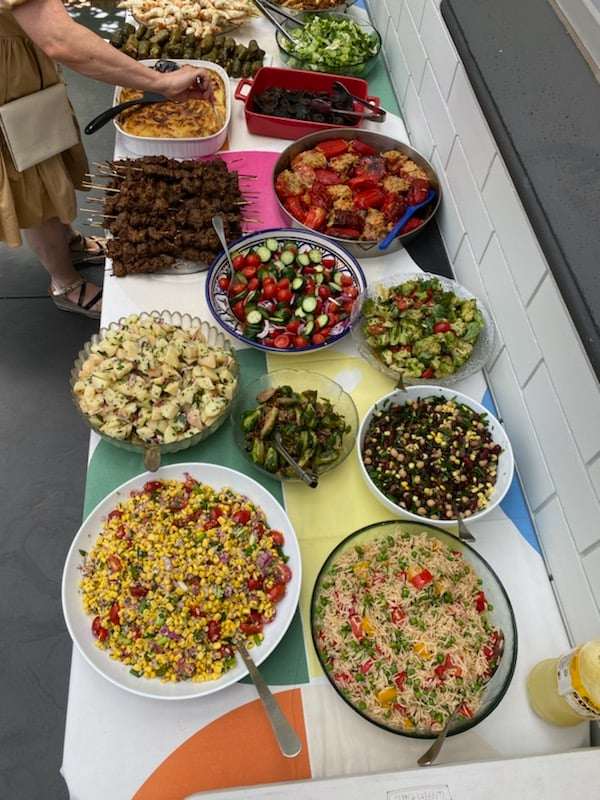
“There is no longer lamb on the spit and we have plenty of vegan dishes, salads and gemista.”

The same does not apply when Anastasia visits her aunt.

“To avoid confrontation, we keep conversations about food minimal,” she says. “Choices that challenge tradition can be emotional but that’s fine.

“With my close family we have been creating new traditions since I began to follow veganism seven years ago.”

Greek roots of veganism

Unlike Debbie and Anastasia, Gia has no problems discussing veganism.

“I find conversations about animal ethics extremely rewarding. Easter is a perfect opportunity to discuss these issues and it is inevitably something people are curious about. I often remind people of the position that Pythagoras took on the exploitation of other animals,” she says.

“Pythagoras, our forefather and a pioneer of ethical veganism, taught his students the important of animal ethics. He believed animals had a soul.”

Gia would like for the Greek population to revere Pythagoras not just for his mathematical and philosophical prowess, but to also embrace his position on animal liberation.

Rebirth of the Greek Easter meal

Heated debates are commonplace at any Greek family gathering at the best of times. When Greeks get together they talk politics, social issues and debates ignite.

Over the years, however there has been more understanding on both sides of the fence as everyone goes on their own journey when it comes to the meaning of life and essence of religion.

Despite some resistance to the rise of veganism, the Greek community is doing all it can to shift to alternatives. By embracing these vegan alternatives and challenging entrenched traditions, people like Gia, Anastasia and Debbie pave the way for a more ethical and sustainable celebration. As Greek Orthodox Easter approaches, the evolving landscape of cuisine reflects a journey towards greater awareness and empathy. From traditional side dishes to vegan innovation, the celebration of life intertwines with a commitment to ethical living, reshaping the narrative of Greek Orthodox Easter cuisine for generations to come.

Orthodox Easter: The symbolic journey of death, mourning and resurrection

By Marina Siskos.

Orthodox Easter is one of the hallmark religious celebrations as it honours the Resurrection of Jesus Christ and by extension, the victory of life over death. At the same time, in the Mediterranean Greece, Easter heralds the arrival of springtime, therefore Easter celebrations are filled with the earth’s symbols of life and revival: wisteria decorations, inclusion of eggs in the culinary customs, spring colours and of course, the holy light.

Palm Sunday omens the initiation of the Holy Week. Beyond the religious significance, Easter is heavily ascribed with much cultural, symbolic and folklore meanings, which vary among the different provinces. All of those are united by the victorious message of life, resurrection and hope. Yet the unique ways that Easter is honoured in different areas of Greece deserves a tribute:

The ritual of the Holy water sink

Holy Thursday in Patmos, finds the locals and the visitors observing the ritual of the Holy water sink. The great march starts from the monastery of St. John the Theologian, and heads to Ksanthos’ Square (πλατεία Ξάνθου), where the minister washes the feet of twelve monks, alluding symbolically to Jesus’ corresponding act of humility and servitude.

Then, on Good Friday, the narrow pathways and the yard of the monastery are ornated with lilac blossoms, making the processing of the Epitaph through the winding pathways of the island, a unique, solemn experience.  

orthodox easter customs
The celebration of Greek Easter is unique in the different parts of Greece. Photo: Christina Papaioannou.

The burning of Judas

In the Orthodox Christian folk, the “clan of Jews” is considered guilty for the Crucifixion of Jesus. Thus, people have established and observe, to this day, the “burning of Judas,” mainly in the province of Thrace. People burn an effigy of Judas, signifying the “burning” of his prevalent character qualities, namely, avarice and cowardness. The burning of Judas takes place on the night of the Resurrection, or alternatively, on Easter Sunday, whereas rarely, it might be observed on the Good Friday. It is believed that the custom of Judas is rooted in ancient, pagan traditions, where people would burn the effigy-personification of the winter in anticipation of springtime. Similar customs are observed in areas of the central and northern Europe.

Symbols and folklore of Greek Orthodox Easter

Easter in Greece is colourfully ornated with the hues of early spring. Many symbols are closely associated with Easter.

The egg has been, cross-culturally, a symbol of fertility, sometimes a symbol of the universe and in any case, it alludes to perfection, wholeness, and fulfilment. Thus, the symbolism of the eggs has provided the perfect case for the signification of the latent life that awaits to be born, from the inside and with the breaking of the cage- the eggshell alludes to the grave.

greek orthodox easter customs2
Photo: Christina Papaioannou.

Fire, in its many variant forms during the celebration of Easter, has been ascribed with one prevalent symbolism. Beyond its elemental force, from the ancient civilisations to modern-day religions, fire holds a special place in sacred ceremonies, signifying the spiritual illumination and the divine connection. At the same time, fore denoted the start of a new life, the purification and the celebratory destruction of the old-as is the case with the burning of Judas.

Holy days are landmarks of memory that bring the past to the lived experience of today, formulating the unique identity of each generation. Memory structures the self, but it is activated in a social setting. All rites, symbols and meanings of Easter carry their value only as long as they are honoured in a communal, collective spirit and this, the element that holds societies and preserves their memory.

With information from: Καπετάνιου, Λ. (2023). Πάτμος. Το Πάσχα με όλη του τη μεγαλοπρέπεια. Η Καθημερινή. 11.04.2023. Πάτμος: Το Πάσχα με όλη του τη μεγαλοπρέπεια | Η ΚΑΘΗΜΕΡΙΝΗ (kathimerini.gr)