Home Blog Page 755

The Cosmos in Cosmopolitanism: Nikos Papastergiadis launches new book in Melbourne

0

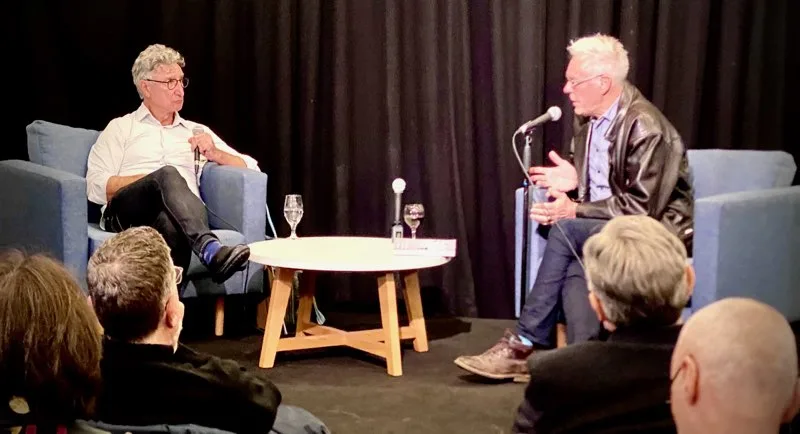
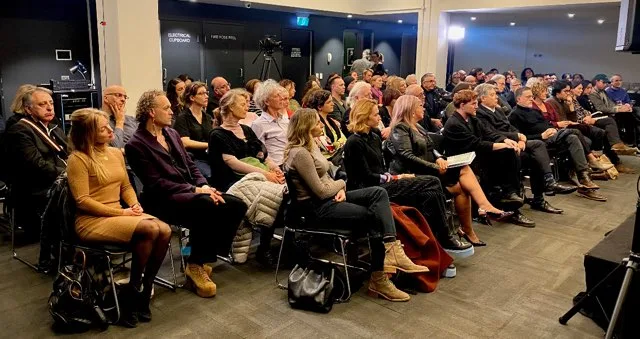
Before a packed house comprising of leading scholars, artists and community members at the Greek Center in Melbourne, Nikos Papastergiadis launched his most recent book. The Cosmos in Cosmopolitanism is published by the world-renowned Polity Press in Cambridge, United Kingdom.

This is the tenth book sole-authored by Papastergiadis and it marks the completion of a trilogy of books on migration, cultural theory, and contemporary culture.

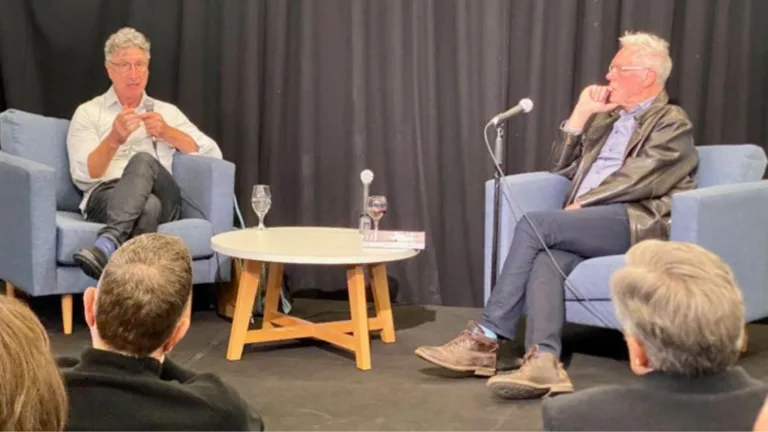
On the occasion of the launch of this latest book, Papastergiadis was joined in conversation with the esteemed author and artist Professor Paul Carter. Together they mapped out the novel pathway that Papastergiadis has taken to widen and invigorate the idea of cosmopolitanism.
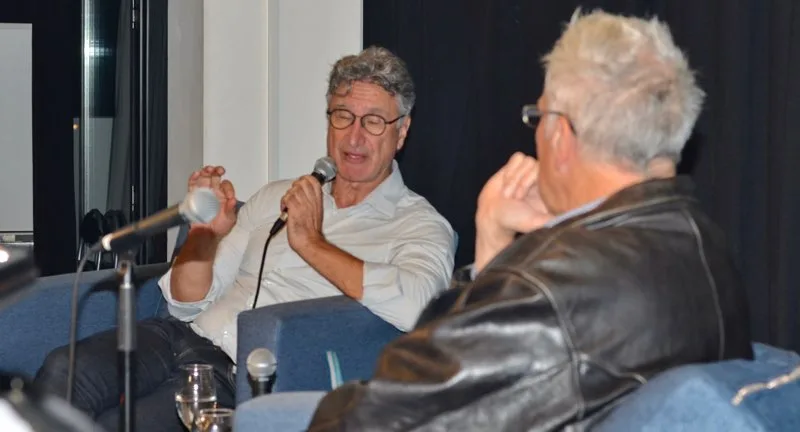
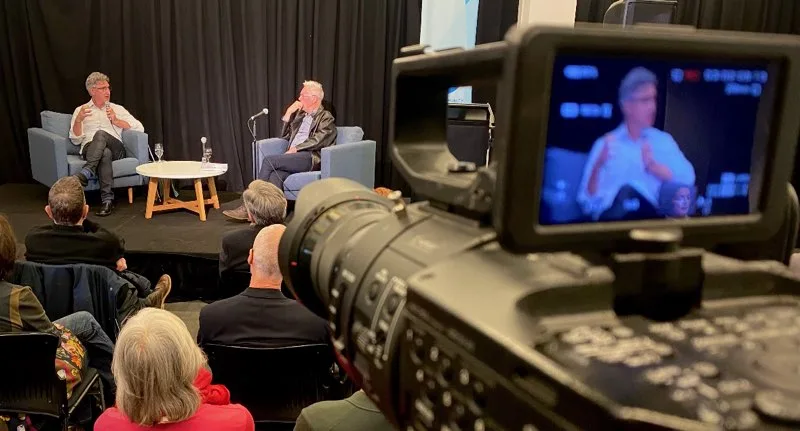
Papastergiadis noted that cosmopolitanism is commonly associated today with the idea that the forces of globalisation could be tempered by new forms of cosmopolitan governance. However, he also pointed out that while this idea was popular among some political theorists in the late 20th century, it seems increasingly unrealistic today.

Rather than discarding the idea of cosmopolitanism, Papastergiadis set out to renew it by examining the ways in which visual artists have explored themes associated with the cosmos. Artists often claim that all humans possess a fundamental capacity to care, create and connect. Some artists also argue that this creative capacity is linked to a dual connection – companionship with others and with the cosmos. The Ancient Greeks claimed that tuning in to the cosmos was the primal source of inspiration.

The great Enlightenment philosopher Immanuel Kant regarded cosmopolitanism as the goal for humanity, but he turned his attention away from the connection to the cosmos and directed it towards the practical rules for peaceful co-existence. However, these two concerns are not in conflict.
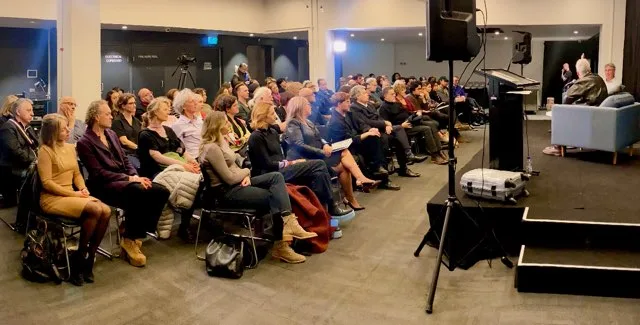
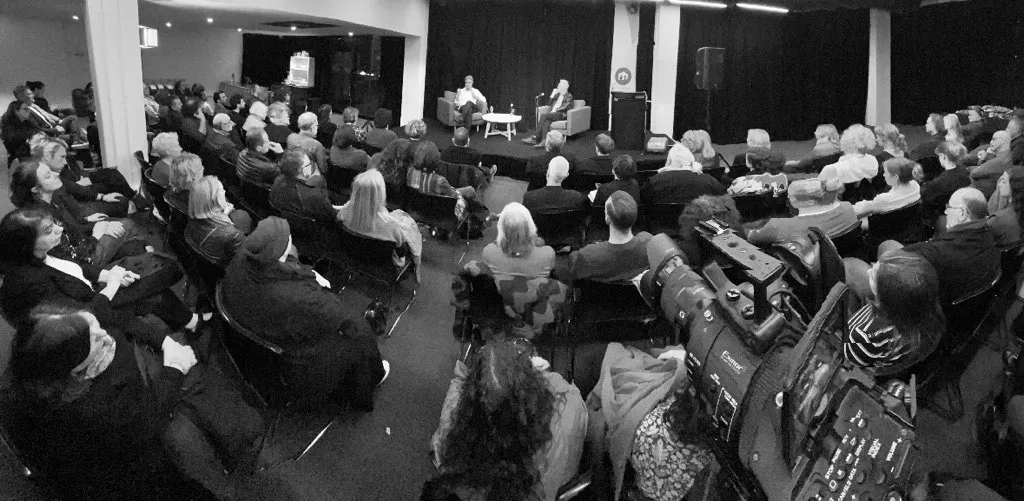
Today a new vision of the cosmos is being developed by artists among others, one that brings together the cosmos and the polis. Scholars from the South are decolonising the mindset which divided the world and split us from our common connections, while others are using art to highlight the existential threats we now face as a species.   

By developing a distinctive form of aesthetic cosmopolitanism, Carter also concluded that this book shows that the idea of the cosmos is more important than ever today, and vital for our attempts to rethink our place as one species among others in a universe that extends far beyond our world.

He showed that the ideas in the ancient archives of Greek philosophy can be used as a starting point for developing sophisticated dialogues on multiculturalism and provide new ways for building bridges with the cosmologies that are embodied in Indigenous cultures.
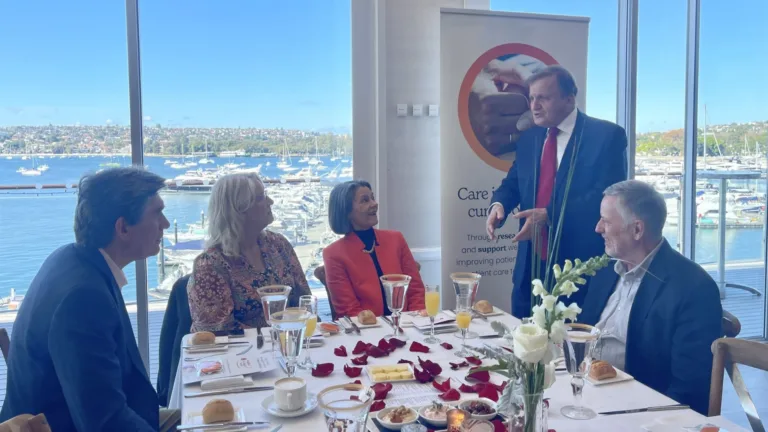
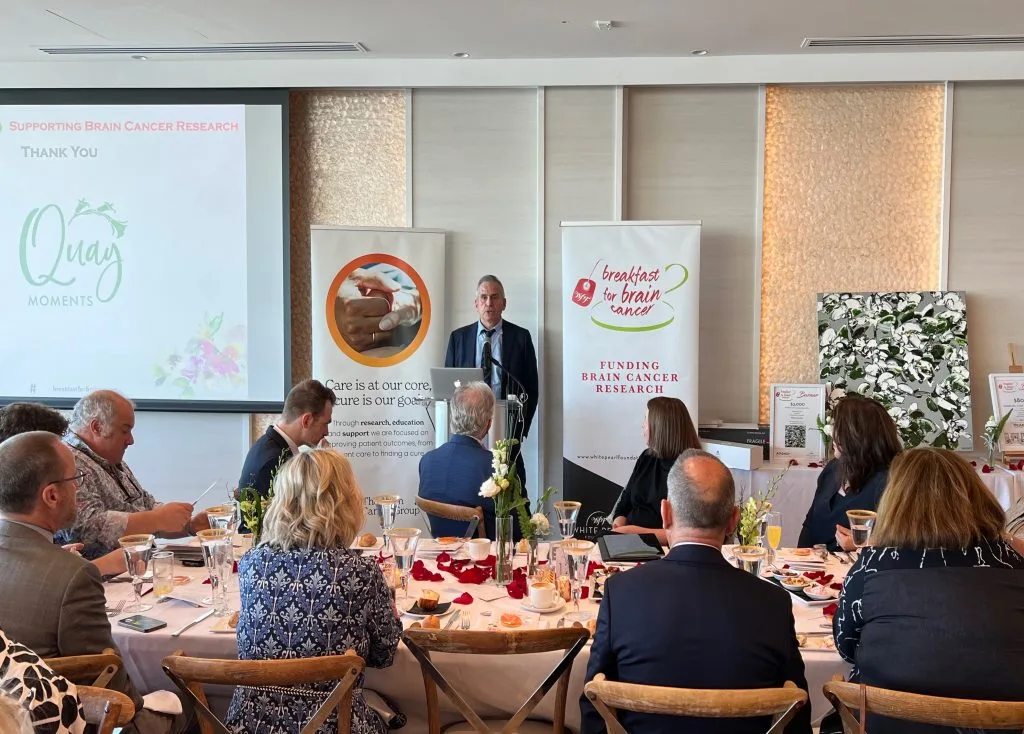
Unite for a cause at the 6th Annual Breakfast for Brain Cancer in Sydney

During Brain Cancer Action Month, friends and supporters of the White Pearl Foundation are uniting once again on Friday, May 24, at the 6th Annual Breakfast for Brain Cancer, in support of brain cancer patients.

Attend a brunch on Sydney Harbour and enjoy award winning food by Zest Catering, in the picturesque and serene setting of the Royal Motor Yacht Club, Point Piper.

As in previous years, this fundraising brunch promises to be a truly enjoyable event, featuring inspiring speakers, a raffle with great prizes to be won, and a variety of donated gifts available for purchase at the Breakfast for Brain Cancer Bazaar.

Breakfast for Brain Cancer.
Breakfast for Brain Cancer last year.

All funds raised will go towards the brain cancer research programme of The Brain Cancer Group.

Brain cancer facts:

  • Brain cancer kills more children in Australia than any other disease.
  • Brain cancer kills more people under 40 than any other cancer.
  • Brain cancer is the second biggest cancer killer of females 0–44 years (after breast cancer).
  • Brain cancer has the highest personal and economic burden of any cancer.
  • Brain cancer survival rates have barely increased in the last 30 years.
  • No risk factors for brain cancer have been identified and no screening procedures are available.
  • Effective treatment options for brain cancer patients are limited and tumours develop resistance to standard therapies.
  • The most common malignant brain tumour, high-grade glioma (HGG) is almost 100% fatal.

Yet brain cancer receives less than 5% of Government cancer research funding.

“We are delighted to be hosting this event again this year and bringing our community together to support brain cancer patients,” a spokesperson for the White Pearl Foundation said.

“We invite everyone to join us for what is sure to be a memorable and inspiring event. Our gratitude goes to our Media Sponsor, The Greek Herald (TGH), and we eagerly anticipate collaborating with their team to ensure another successful event. Book your tickets for May 24th, and we’ll see you there!”

If you’re looking for a way to make a positive impact in your community, you are encouraged to gather family and friends and attend, safe in the knowledge that all funds donated from this event to The Brain Cancer Group go directly to brain cancer research.

The fundraising brunch will be held in the Pacific Room of the Royal Motor Yacht Club, Wunulla Road, Point Piper at 10:30am on Friday, May 24th, 2024. Tickets are available now and can be purchased through www.whitepearlfoundation.org. We hope to see you there.

If you cannot attend but would like to make a donation, please follow the donation link on the White Pearl Foundation’s website.

To offer prizes to the fundraising programme and for all other enquiries, please contact Suzane on 0418 238 723.

Mad Max creator George Miller premieres biggest film to shoot in Australia

Greek Australian film director, George Miller attended the Sydney premiere of his film, Furiosa: A Mad Max Saga on Tuesday, which is now regarded as the biggest film to be shot in Australia.

According to the The Sydney Morning Herald, Furiosa: A Mad Max Saga is the fifth installment in the Australian made Mad Max film franchise, serving as both a spin-off and prequel to Mad Max: Fury Road (2015), with a reputed budget of more than $400 million, on the eve of the local premiere.

Miller was joined by and Furiosa stars, US-born Anya Taylor-Joy and Chris Hemsworth, who both have leading roles in the film.

“In order to sell Fury Road, we had to write Furiosa’s story and Max’s story beforehand so that everyone knew what the story was like,” he said. “The thought was that if Fury Road worked, we might go into Furiosa“, Miller said.

“It took a lot longer than I thought, as these things do, but I have to say it was great to be working with most of the same people that we worked with before.”

Chris Hemsworth seconded Miller’s sentiments, expressing his joy on working with Miller and the Mad Max team.

“There are people who worked on the first film who are still involved in George’s team,” Hemsworth said. “It was honestly the best experience I’ve ever had on set.”

The post-apocalyptic action film has a reputed budget of more than $400 million, on the eve of the local premiere.

Source: The Sydney Morning Herald

Marcus Stoinis named in Australia’s Twenty20 World Cup squad

Greek Australian cricket all-rounder, Marcus Stoinis has officially been named in Australia’s T20 World Cup squad for 2024, with the competition commencing from Saturday, June 1.

According to The Sydney Morning Herald, others featured on the Aussie squad include Travis Head, David Warner, Mitchell Marsh (c), Glenn Maxwell, Tim David, Cameron Green, Matt Wade, Josh Inglis, Pat Cummins, Mitchell Starc, Josh Hazlewood, Nathan Ellis, Ashton Agar, and Adam Zampa.

Yahoo News reported that both Stoinis and teammate, David, who were recently announced as part of the squad, showed their impressive skills and value in the Indian Premier League (IPL), snatching a win by four wickets.

Source: The Sydney Morning Herald and Yahoo News

George Georgiadis’ SA distillery sells to Japanese beverage company

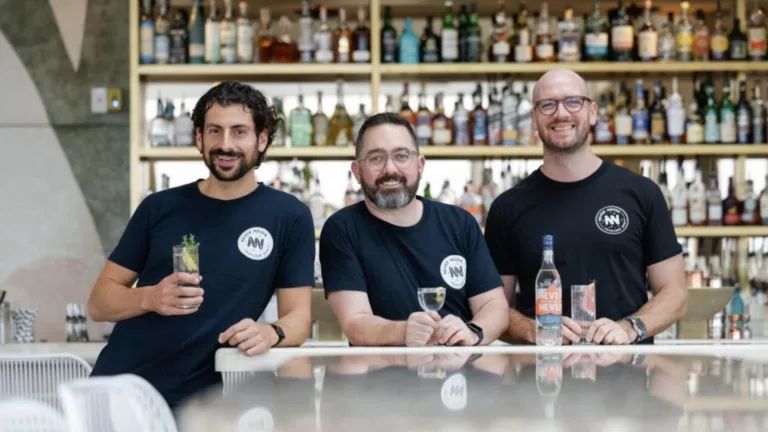
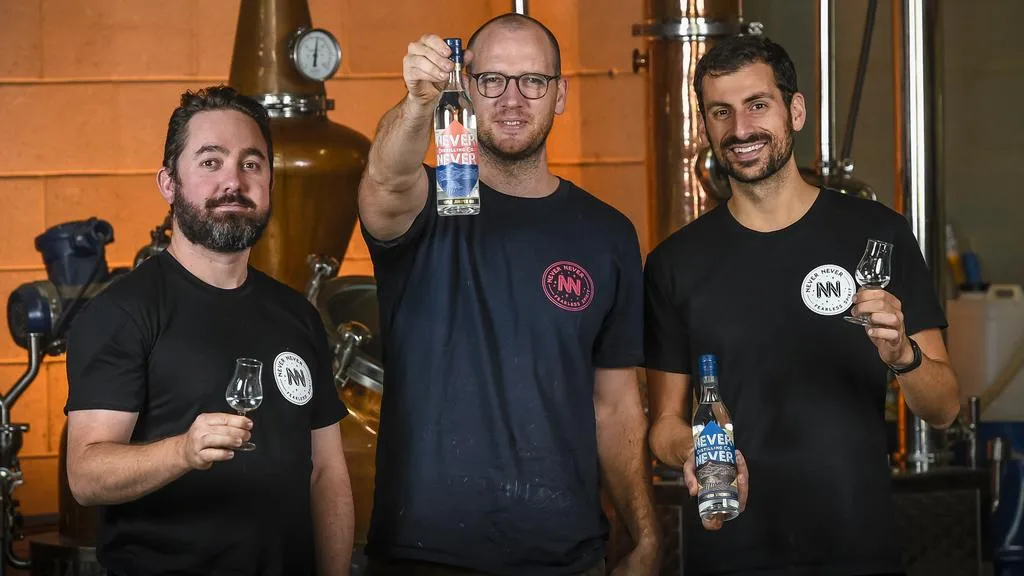
Award-winning McLaren Vale gin company, Never Never Distilling Co, has been bought by Japanese giant, Asahi Beverages for an undisclosed sum.

Launched by George Georgiadis, Tim Boast and Sean Baxter in a 16 sqm Thebarton shed back in 2016, Never Never Distilling has been one of the pioneers of the Australian spirits industry.

Never Never Distilling Co has been bought out by Asahi Beverages. Photo: Roy VanDerVegt.

According to Adelaide Now, co-founder and managing director of the company, Georgiadis said the founders would still stay with the business.

“While this is a game changer for our brand, outside of the support it provides, this won’t change the core of the business,’’ Georgiadis said.

“It’s a day which allows us the opportunities to finally take Never Never and build it into the brand we have always dreamt of. We didn’t start Never Never to be small. Every big brand starts with one or two people with aspirations of greatness, with a passion and commitment to quality flavour”.

Never Never will be sold through Asahi’s alcohol division Carlton & United Breweries.

Source: Adelaide Now

Goodman chief financial officer Nick Vrondas amongst highest paid in Australia

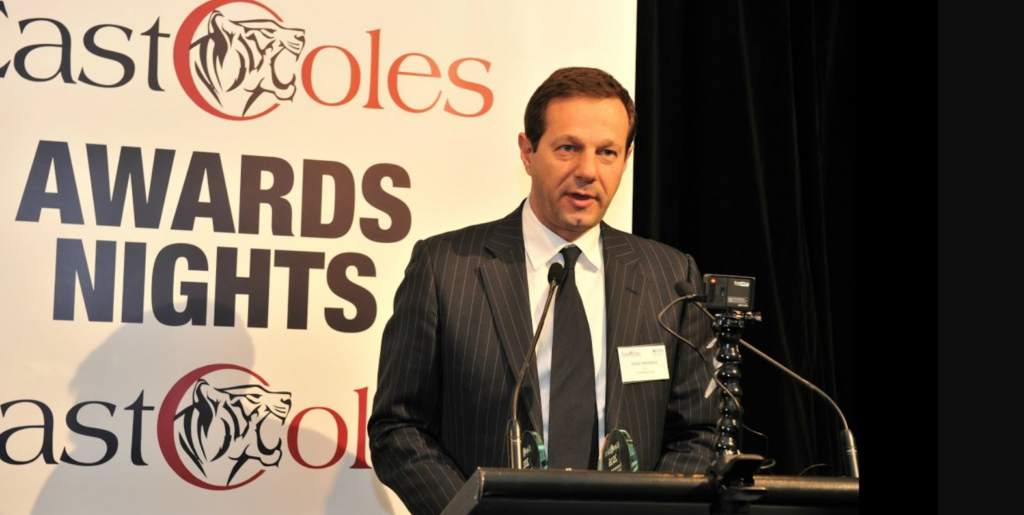
Goodman Group’s Chief Financial Officer (CFO), Nick Vrondas has ranked third on Australia’s list for highest paid CFOs, with a reported pay of $6.75 million.

According to AFR, Vrondas beat out Kogan CFO, David Shafer and Macquarie’s, Alex Harvey when measured on a take home basis, making almost $12 million including bonus and option payments last year.

Nick Vrondas - Best Real Estate CFO - 2016 East Coles Corporate Performance AwardsNick Vrondas - Best Real Estate CFO - 2016 East Coles Corporate Performance Awards.
Nick Vrondas – Best Real Estate CFO – 2016 East Coles Corporate Performance Awards. Photo: Youtube.

The country’s top CFOs continue to enjoy a “breakout period” in compensation and remain in the running for the country’s next CEO spot.

The pay packets of the top 200 CFOs increased by 10% last year, following a 24% increase the previous year, and their median income is now $1.58 million; the compensation increase came despite a drop in ASX300 CEO pay for the first time since the pandemic in 2020, when yearly incentives were heavily reduced.

Source: AFR

Greeks condemn Gaza war in May Day protest

0

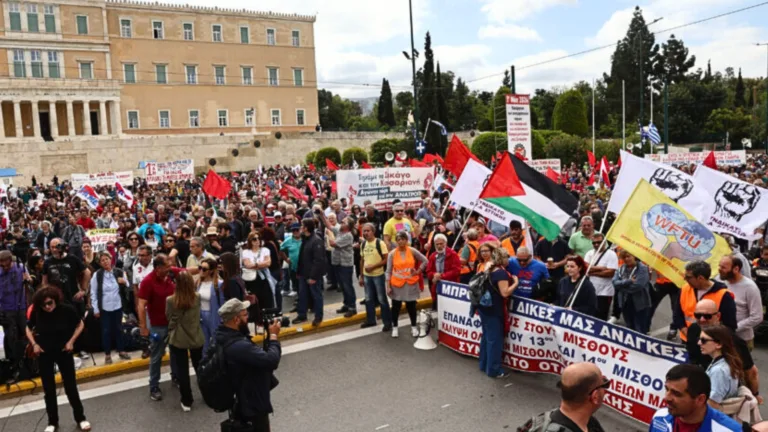
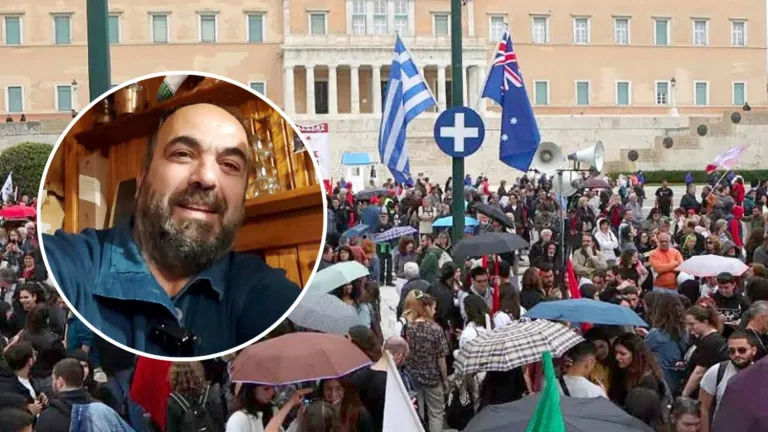
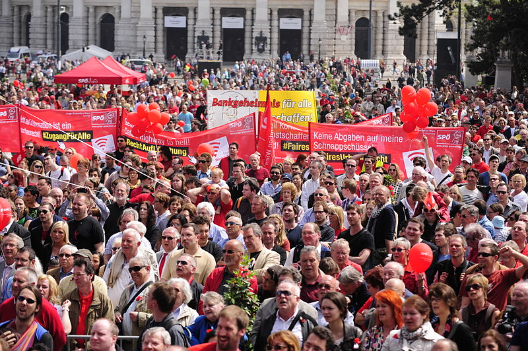
Hundreds of Greek workers marched through central Athens on Wednesday to demand pay rises that would bring their salaries close to the European average and protest against the war in Gaza.

According to Ekathimerini, many of the protestors who had assembled peacefully outside the Greek parliament buildings hoisted Palestinian flags and released balloons in solidarity with Palestinians in Gaza.

“It was our duty not to forget that genocide as the (Labour) day calls,” Marianna Tsagari, 48, who joined the demonstration said.

Protesters in Athens sought salary increases to compensate for a series of wage cuts imposed by past Greek administrations as part of austerity measures in exchange for foreign bailouts that kept Greece afloat throughout its economic crisis from 2008 to 2018.

Greece’s economy has been growing at nearly twice the euro zone rate over the past few years, while the country regained investment grade status after 13 years in the “junk” category in 2023.

Source: Ekathimerini

Red eggs for Orthodox Easter: Symbolism and how to dye them

Every year, Easter is one of the most important religious celebrations in the Orthodox faith.

That being said, one of the most significant traditions associated with Orthodox Easter is dyeing red eggs and then cracking them.

Why do we dye eggs red?

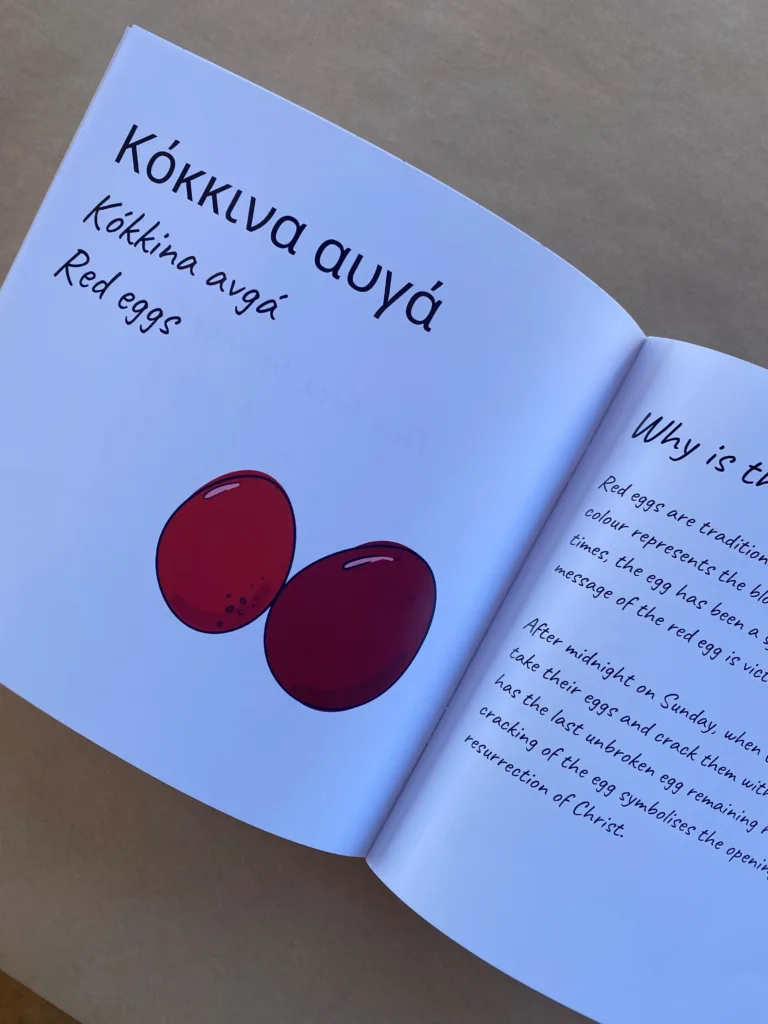
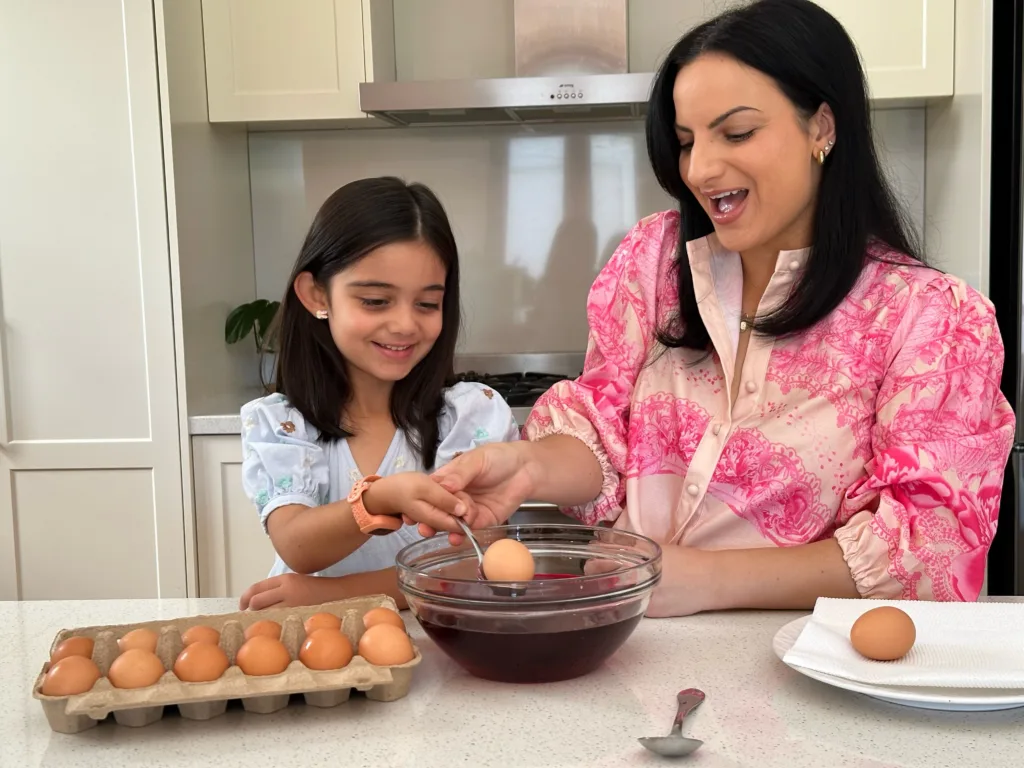
Every year on Holy Thursday, Orthodox Christians boil eggs and then dye them red to symbolise the blood of Jesus Christ. This marks the same day that Jesus Christ invited his disciples to the Last Supper and gave them the mystery of Holy Communion. He gave them bread, which represented his body, and red wine, which represented his blood.

The eggs themselves symbolise the tomb that Jesus emerged from and serve as a reminder of Jesus’ sacrifice for us and symbolise new life. Just like Jesus emerged from the sealed tomb, we crack the eggs to signify new life and Jesus’ victory over death.

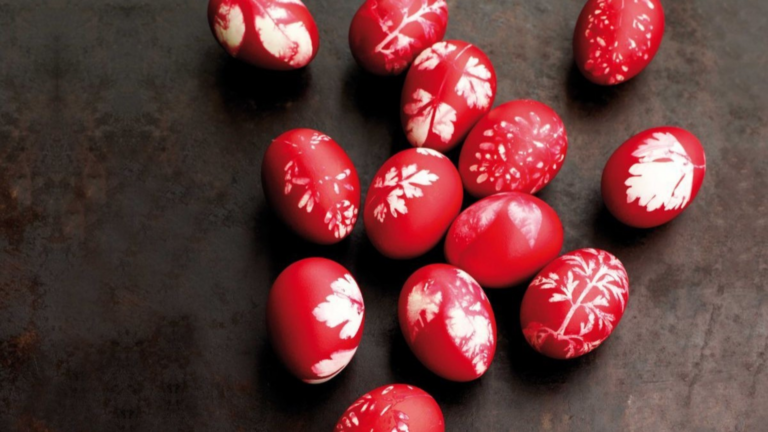
The bright red dye we use represents the blood Jesus Christ shed upon his Crucifixion. However, over the years, we have adapted to incorporating different colours of dyes and embellishments to decorate the traditional eggs.

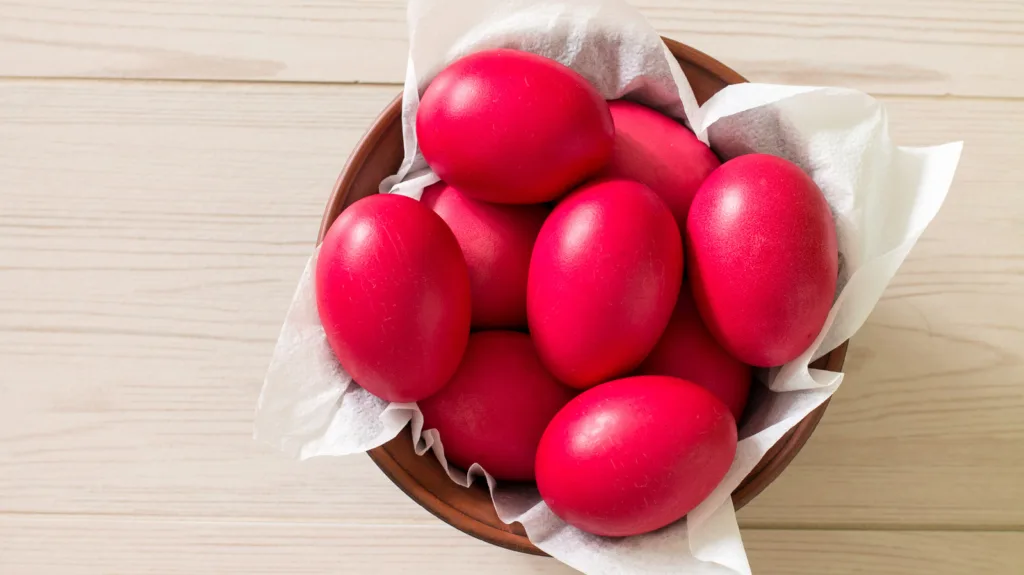
Ceramic bowl with red Easter eggs
Ceramic bowl with red eggs.

When do we crack the eggs?

When it comes to cracking the eggs, we do this on Holy Saturday or Anastasi, where we celebrate Jesus’ Resurrection.

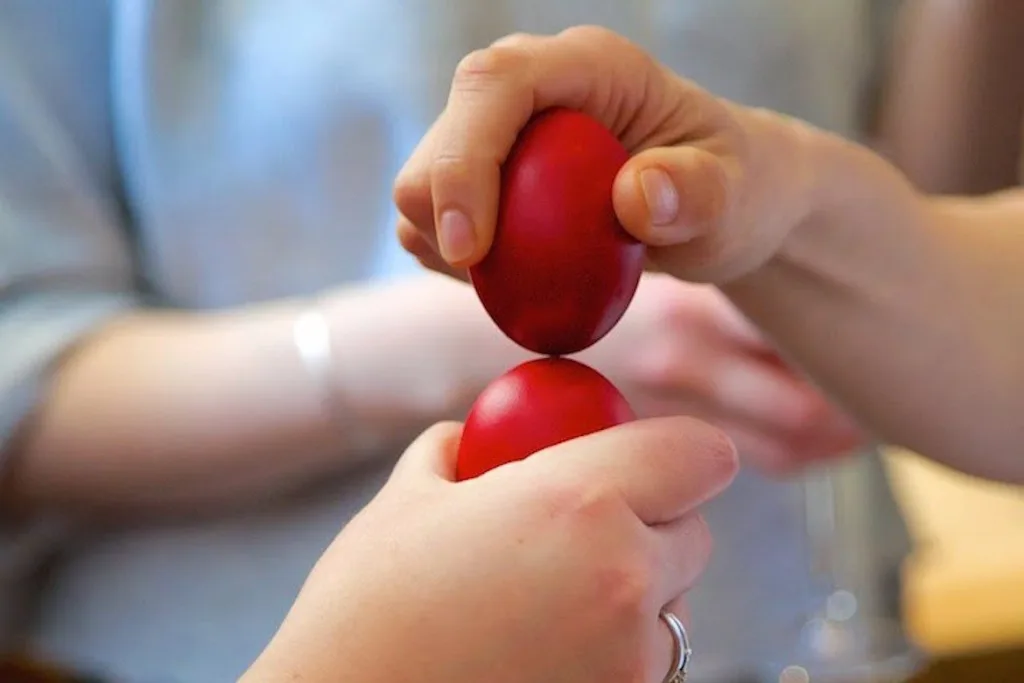
This tradition, also known as ‘Tsougrisma’ – which means ‘clinking together,’ follows a family gathering after midnight mass on Saturday night, where everyone indulges in a delicious feast of meat and mageritsa (traditional Greek Easter soup made from offal) and cracks the red eggs. They compete against one another, to try and crack their opponent’s egg, while keeping their own intact.

While cracking eggs, one person says “Christos Anesti” (Christ has Risen) while the other person responds “Alithos Anesti” (indeed He has risen). Whoever’s egg remains intact is then deemed the winner of the tsougrisma and is believed to have good luck for the rest of the year.

The tsougrisma symbolises the breaking open of the sealed tomb where Jesus was enclosed and believed to be dead. It also highlights a miracle, being Jesus’ Resurrection.

cracking-eggs
The tradition known as tsougrisma.

How to boil the red eggs

Firstly, to prepare for boiling the eggs, make sure you have all the right supplies.

You will need:

  • a carton of eggs (or cartons) – depending on how many you anticipate on boiling
  • white or red wine vinegar
  • red egg dye – or any colour you wish
  • Plastic gloves- which will stop your hands from turning red
  • a pair of stockings
  • any sort of leaves from your garden
  • scissors
  • thread
  • a saucepan
  • a bowl
  • oil

Method:

  1. Firstly, you will need to cut up your stockings into squares (enough to cover a full egg).
  2. Next, grab your chosen leaf and put it vein-down onto the egg. Once you have done this, wrap the egg with the stocking and use the thread to tie it tightly at the back – do this for all eggs.
  3. After this, you will then put all your eggs into a saucepan and let them boil for 10-15 minutes (or longer, depending on how many eggs you boil).
  4. Then, take the eggs off the stove. Using another bowl, fill it with 200 millilitres of warm water, and then mix in 2 tablespoons of red wine or white vinegar and the chosen colour of dye (make sure you wear your gloves for this!)
  5. After this, put the eggs into the bowl of dye to soak up the desired colour.
  6. Repeat this for all eggs, then let them cool down by placing them in the egg carton.
  7. Once they have cooled, remove the stocking and polish with oil to make them shiny.

‘My Greek Guide to Easter’: Stephanie Timotheou launches latest book in Ikoyenia series

By Martina Simos.

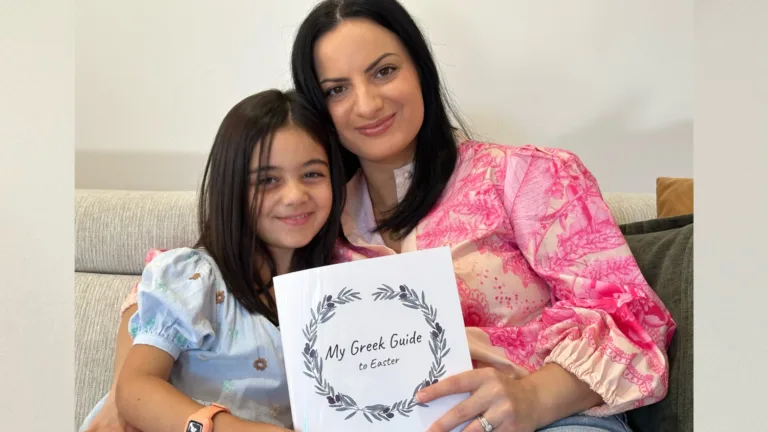
Greek Australian Stephanie Timotheou, 33, was inspired to document traditions that are important to her to pass on to her children. She wrote her first book in the Ikoyenia series – Cooking with Yiayia – while on maternity leave. That was around five years ago.

The young author has just released her 10th book – My Greek Guide to Easter.

Before writing about Holy Week, Stephanie sought explanation from Father Michael who is from the Greek Orthodox Parish of St Dimitrios in Adelaide, South Australia.

She spoke to The Greek Herald about finding time to write in between being a mum, a wife, and having a career in communications.

What do you recall about an early Easter celebration that you remember?

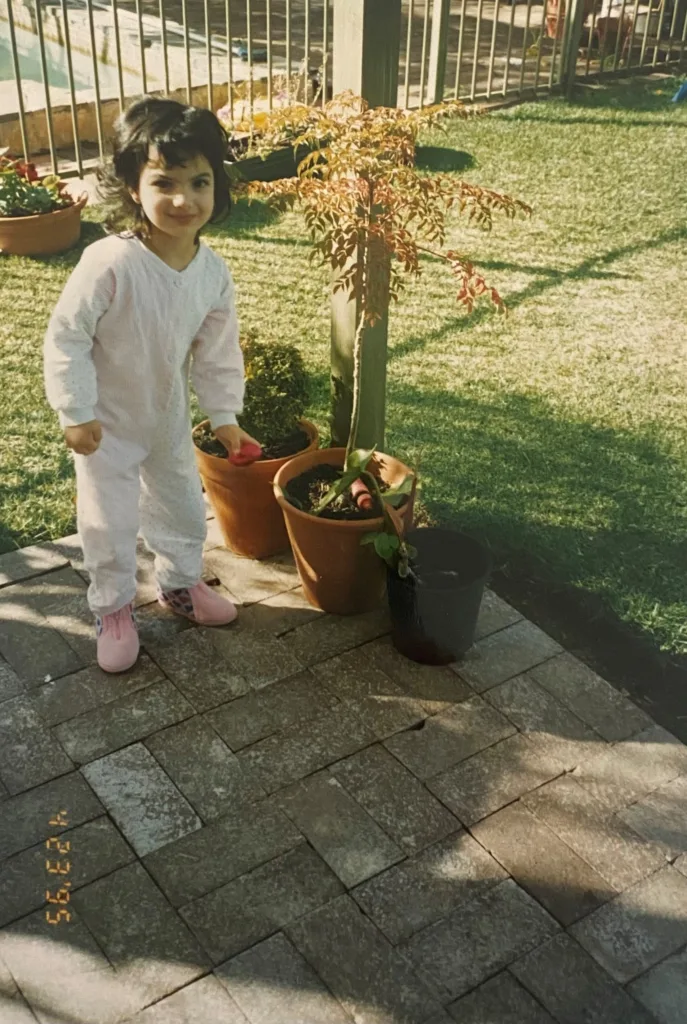
Stephanie as a youngster going on an egg hunt.

There are so many wonderful Easter memories I have as a child, but my favourite would have to be dyeing and cracking eggs with my family. I’ll admit I never fully understood the meaning behind the red egg but, looking back, it was truly special to do this during Holy Week as a symbol of Christ’s rebirth and resurrection.

What part made it memorable?

Simply spending time with family! It was always tradition to do this with my mum and sister and it’s even more special that I now get to do this with my own children. For me, it’s so important to carry down these traditions from generation to generation.

Presvitera and Father Charalambos holding Stephanie and her sister Myri.

Your grandfather was a priest. What memories do you have of him and Easter?

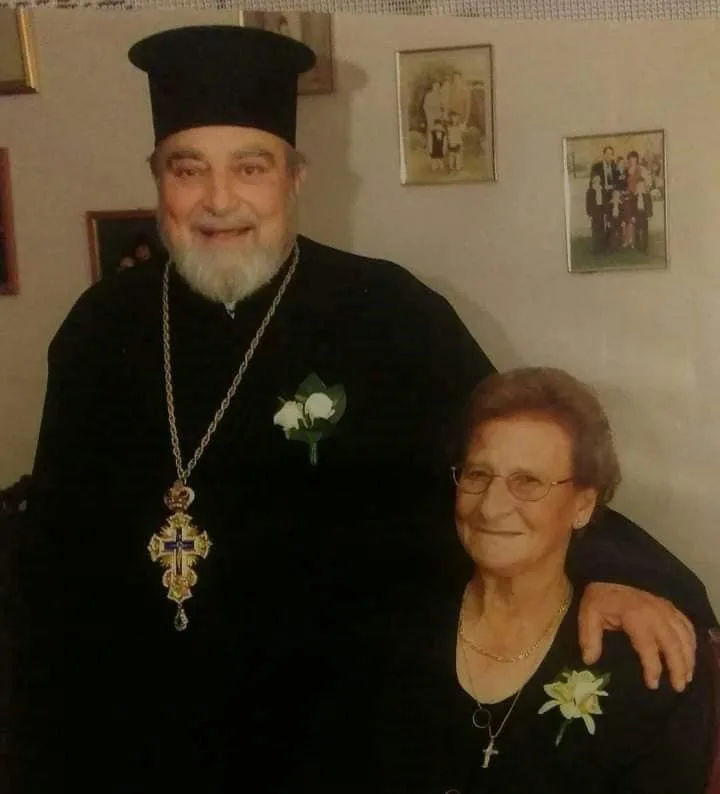
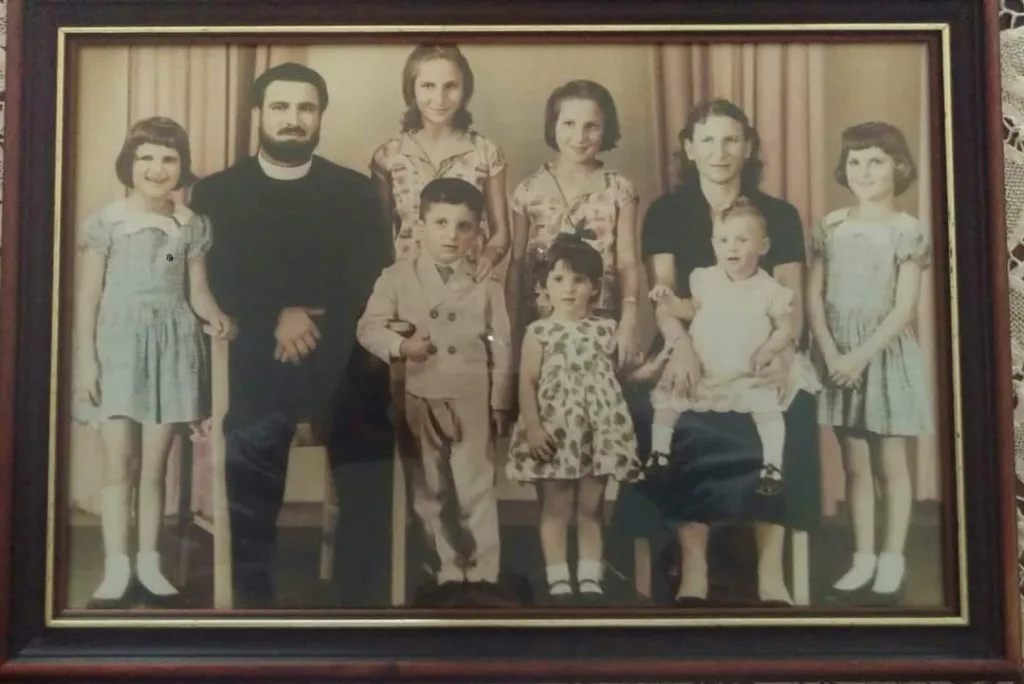
My late pappou – The Very Reverend Charalambos Stratos – undoubtedly made Easter what it was. His children, grandchildren and great grandchildren (more than 50 in total) would gather at his house on Easter Day and the lamb on the spit was perfection.

Stephanie's pappou (Father Charalambos) and yiayia Myrianthi (Presvitira).
Stephanie’s pappou (Father Charalambos) and yiayia Myrianthi (Presvitera).

I have fond memories of big, long tables lining the driveway, under the grapevines. He would always sit at the head, smiling so infectiously at the sheer sight of his family being together. It was pure magic and a moment that will be forever etched in my memory.

Did you think about your pappou when you were writing the book?

Absolutely! He was so true to his faith and lived and breathed the church. This book is a shining example of what he would have been teaching my children if he were still here.

How do you think he would react?

I would like to think he’s proud of everything I’ve done – and continue to do – to keep our Greek culture and traditions alive.

How many books have you written?

It’s actually my 10th book! The latest in the series is called My Greek Guide to Easter and it explains cultural and religious traditions surrounding Greek Orthodox Easter. The book also gives children an easy-to-digest explanation of Holy Week and what happens on each day in the lead up to Pascha.

How long did it take to write?

The book was a work in progress for about eight months. To be honest, I could have done it much quicker but… mum life!

Are there real photos or illustrations in the book?

The book is beautifully illustrated by talented South Australian, Rachel Darling. She has illustrated all my books to-date and has done a tremendous job, especially considering she’s not even Greek!

What kind of research did you do?

I really wanted to ensure everything was accurate, so I reached out to Father Michael who was delighted to assist me. He explained Holy Week in the simplest way possible that would be easy to comprehend for little ones. He is such an approachable and lovely person, so I thought who better to ask?

Describe the sense of Greek pride you feel in keeping the most sacred celebration alive for the next generation.

I am truly honoured! It’s so important to keep these traditions going to ensure our children never lose their identity.

How will you involve your children this year with Orthodox Easter?

Anthea and Stephanie 5
Stephanie (right) and her daughter, Anthea.

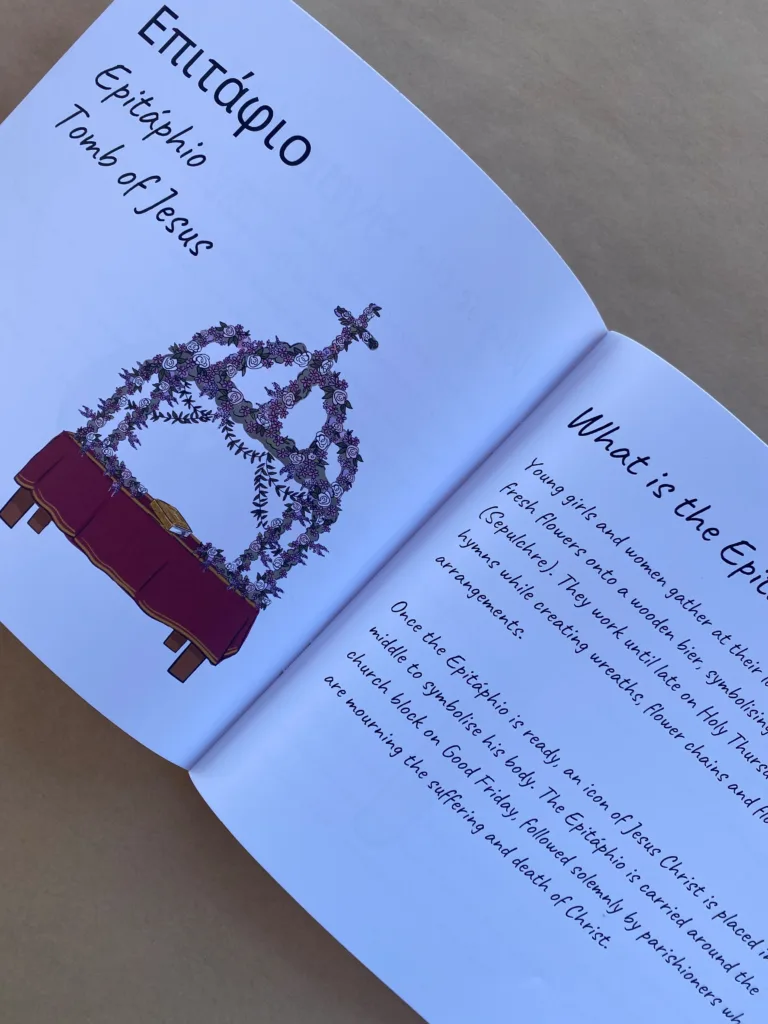
I’m excited to be making koulourakia and dyeing eggs with my two children, aged five and two. This year I’d also love to take my daughter to church so she can help dress the epitaphio with floral arrangements.

Your mum is from a large family. Describe how your very big Greek family manages to celebrate Easter together.

Stephanie's grandparents and their seven children.
Stephanie’s grandparents and their seven children.

Mum is one of seven children and dad is one of four. Combined there would be over 100 people in our immediate family, as some of my cousins’ children are now having children of their own. Unfortunately, this means it’s almost impossible for everyone to be at the same place, at the same time. These days our Easters are much more intimate with a low-key souvla or lamb on the spit.

Have you dedicated the book to anyone?

I haven’t! But I must say, every book I’ve written, I’ve done so with my own children in mind. It’s so important they never forget their heritage.

Lastly, you work full-time, are a wife and mother. How do you juggle?

My secret to the everyday juggle is: coffee, late nights and a very supportive husband and family. I would be lost without them!

How can the book be ordered?

The books can be ordered at www.ikoyenia.com.au

Grigoris Kasitas discusses May 1st Labour Day and his experiences in Australia

By Kathy Karageorgiou.

Grigoris Kasitas, aged 60, was born and bred in Athens, Greece. Keen to talk about May 1st as a celebratory event commemorating Labour Day, he also shares his experiences about his visits to Australia.

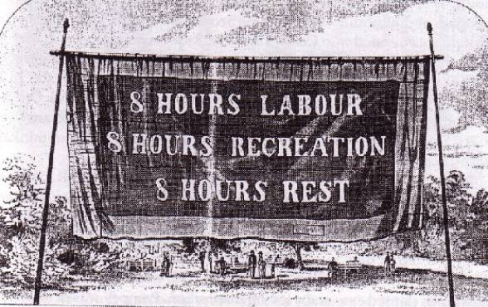
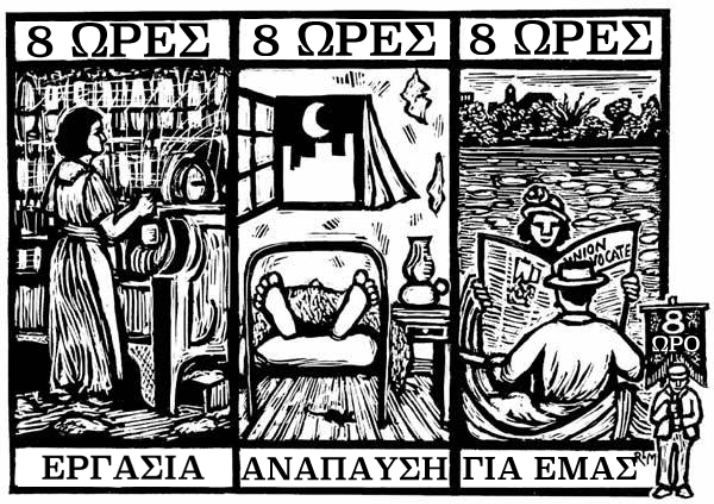
“May Day is Labour Day and not a day of ‘flowers.’ It is a day of homage to the hard-earned rights of workers – to the labour movement managing to reduce the working day to eight hours. Any other version of May 1st is propaganda diverting people from the workers struggle against exploitation,” he enthusiastically explains.

He and his Greek Australian wife try to spend much of their time living in the countryside not far from Athens, commuting back and forth for work.

living in the countryside not far from Athens
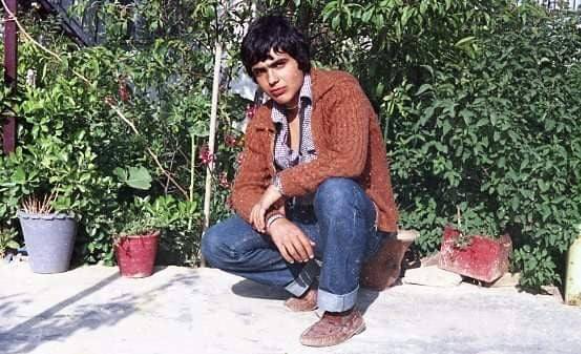
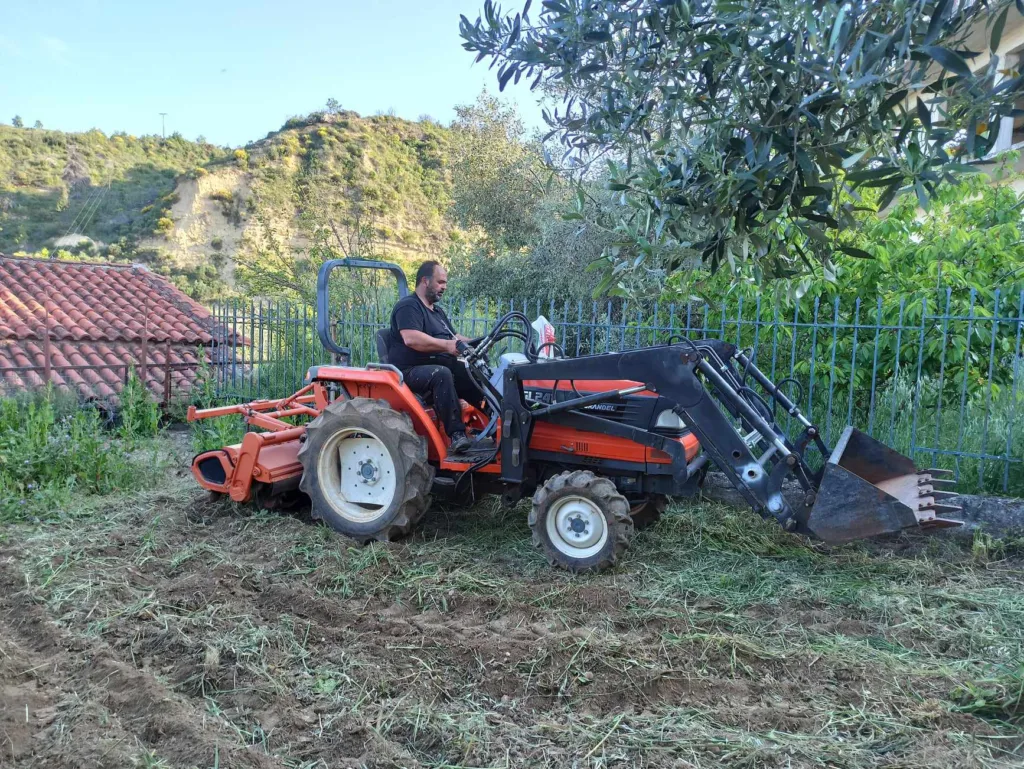
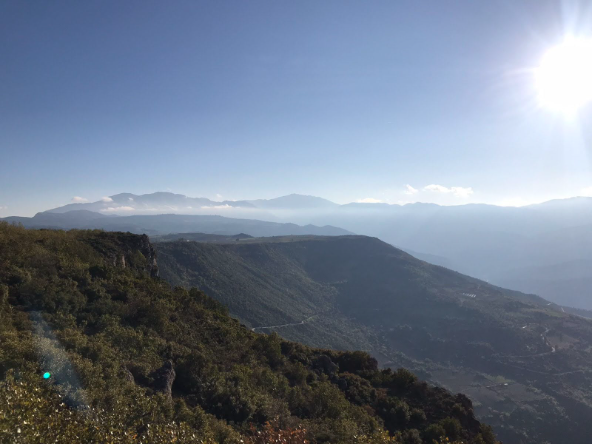
Grigoris enjoys life on the countryside, not far from Athens.

“We work hard and saved to buy a small property in a mountainous part of the Peloponnese.  Athens can be a nightmare – traffic, chaos and air quality’s not great, so I try to spend most of my time in the mountains,” he says.

Alluding to his 2008 and 2012 visits to Australia with his wife and daughter, he says, “Life in Australian cities isn’t as bad as in Athens, because you have peace and quiet. You can’t compare Greece with Australia – it’s like night and day. Greece is so unorganised whereas everything in Australia seems to work – from rubbish collecting, road maintenance, clean streets, as well as the bureaucracy. Even the police in Australia are helpful. I was looking at a map and a policeman politely asked, ‘can I help you?’ They don’t do that here in Greece.  In Australia, the law is enforced at every level and there’s accountability to the people.”

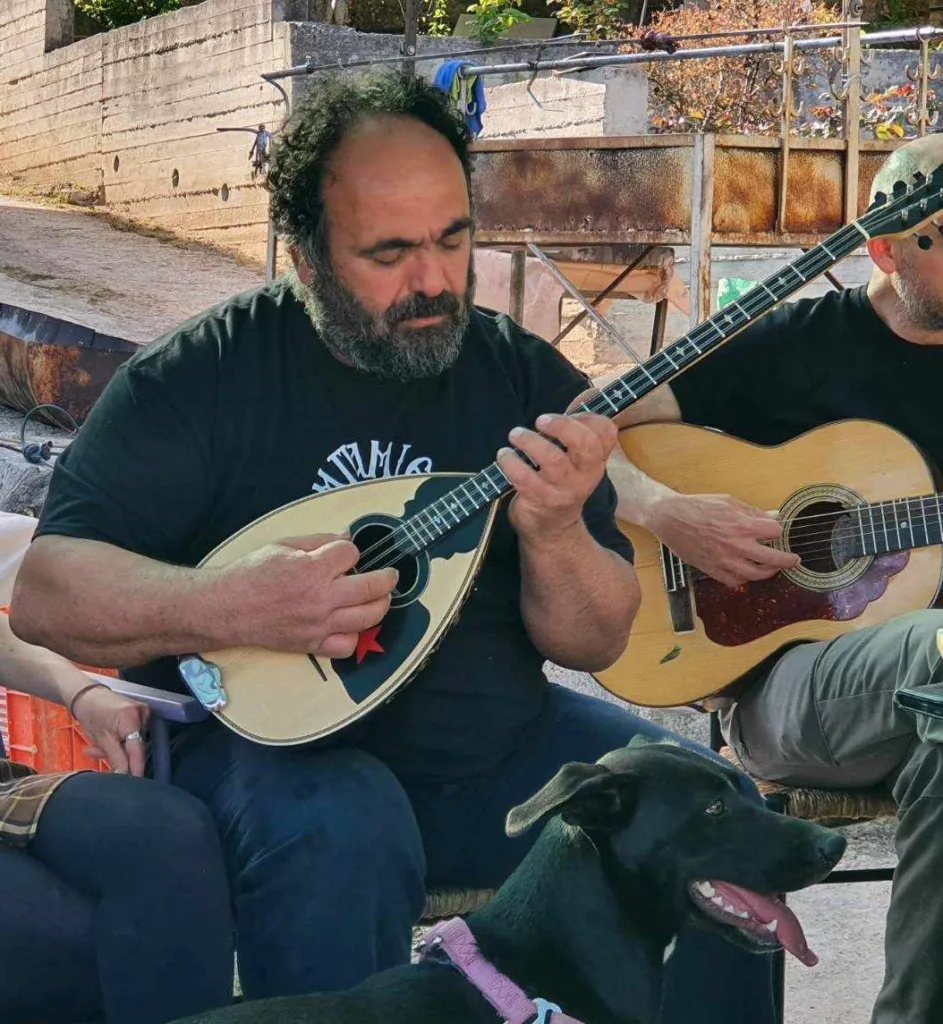
Grigoris playing bouzouki.

I mention that if the police in Greece at times attempt to enact their call of duty, many Greeks consider it fascist and turn against them. Grigori calmly responds, “perhaps that’s because people are angry that the overall system in Greece doesn’t seem to care about its citizens.” 

I’m curious for him to continue, to perhaps point out things that I as a Greek Australian possibly take for granted.

“Getting a tax file number there [in Australia] took 10 minutes! Here, that would be considered a joke… Another reason why celebrating the 1st of May Labour Day is very important – for people to demand better!” he says.

Australia has its problems too – such as crime and inflation, I point out, to which he says, “Look, I’m under no illusions. I know how Australia treated its Aborigines, and that it’s a capitalist country in every way.  It’s also less populous than Europe and rich in mineral wealth, but Australia’s government nonetheless has more humane, social aspects to it compared to Greece. 

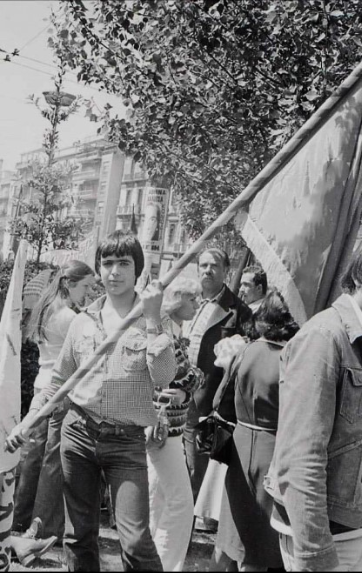
May Day Australia.
May Day, Australia.

“If a Greek steals for example, he usually has a serious reason, like to feed his kids, whereas if an Australian steals, it’s not because he needs to eat! And that’s why acknowledging the 1st of May – Labour Day is so crucial. We have to keep fighting for the dignity of working people and their families.”

Speaking of generations, I ask Grigoris for his views on the Greek Australian community. 

He pauses and says: “The 1st generation are kind and hospitable. That’s the good part of them retaining their 1950s and 60s Greek mentality. But they’re stuck in a kind of time warp… whereby they have extremely conservative values which show in things like their dress sense, their views towards sexuality, and how they brought up their kids. So, it’s hard for the 2nd generation who have to balance two cultures made up of different and often clashing value systems.”

Grigori alludes to the capitalist system getting worse since the Greek crisis starting in 2007, whereby “employment laws and rights began to be ignored, and the fear of unemployment made many workers hostages to unscrupulous bosses.”

He refers to being disappointed upon seeing Greek Australians in Australia “unthinkingly offering themselves wholly to the capitalist system of exploitation, through neglecting to live life.” 

Expanding, he says, “I understand the Greeks went to Australia as migrants for a better life, but many forgot to enjoy life, and young people there are doing the same. They bring their work home, beyond eight hours. They bow their heads, and before you know it, they’re 70, 80 years of age and perhaps they’ve accrued wealth, but… at the cost of their personal life.

Grigoris asserts proudly, “I am a Leftist who did notice that Australia stands with its people and not against them.”