Home Blog Page 740

Hamelin Bay beach: A glimpse of Greece in Australia

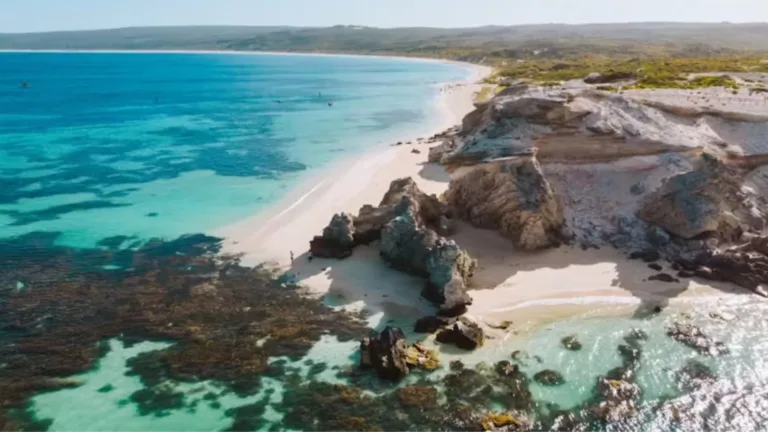
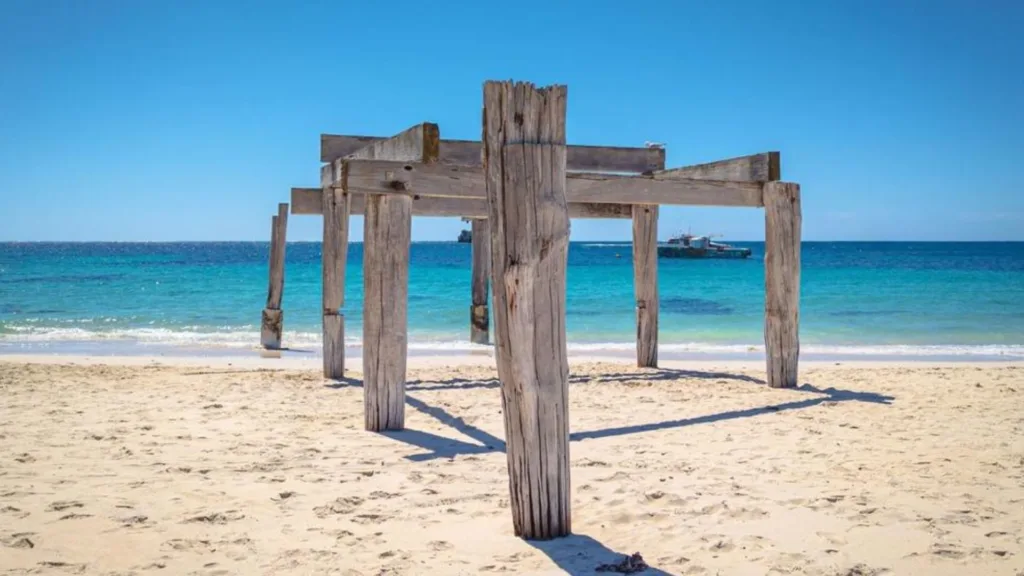
Hamelin Bay Beach in Western Australia has emerged as a hidden gem drawing Australian travelers seeking a taste of Greece without leaving home.

Nestled along the spectacular South West coast, approximately three and a half hours from Perth in the renowned Margaret River region, this beach offers a striking resemblance to the idyllic shores of a Greek island.

According to dailymail, the magical shoreline is peppered with otherworldly angled rock formations to explore and sit under to shade yourself from the WA sunshine.

The bay offers calm and refreshing waters ideal for swimming, snorkeling, paddleboarding, or leisurely boat cruises

The dreamy paradise is famous for its population of sociable stingrays often seen gliding gracefully along the water’s edge. 

Photo: unsplash

With its gleaming white sandy beaches and mesmerizing aquamarine waters, Hamelin Bay Beach creates an enchanting ambiance reminiscent of the Mediterranean. The shoreline is adorned with captivating angled rock formations, inviting exploration and providing shade from the Western Australian sunshine.

British travel blogger Samantha raved about her recent visit to Hamelin Bay calling it ‘The Greece of Australia’.

‘If you’re like me and always wanted to go to Greece, look no further, there’s a lookalike down the road,’ she mentioned in an Instagram post.

‘We went for sunset and sunrise and saw countless stingrays and dolphins, we got so lucky! Hamelin Bay to me is just the most beautiful, magical place.’

Many have been wowed by the natural beauty of the hidden gem with one saying it’s a ‘WA highlight’.

‘What a stunning resemblance to Greece! Those crystal blue waters and rocky cliffs are truly mesmerising,’ one visitor gushed, while another noted ‘One of our favourite spots here in Australia! Gorgeous beach, lots of stingrays and amazing sunsets. We even saw dolphins in the bay!’

Source: dailymail

The Greek shipping tycoons getting rich off Russian oil

0

In June 2022, Greece’s leading shipowners gathered for a conference at the Four Seasons resort in Vouliagmeni, a wealthy suburb south of Athens.

According to forbes.com, only three months after Russia’s invasion of Ukraine, a seismic event shaking the global economy, the country’s maritime leaders offered a perspective diverging from the conventional narrative.

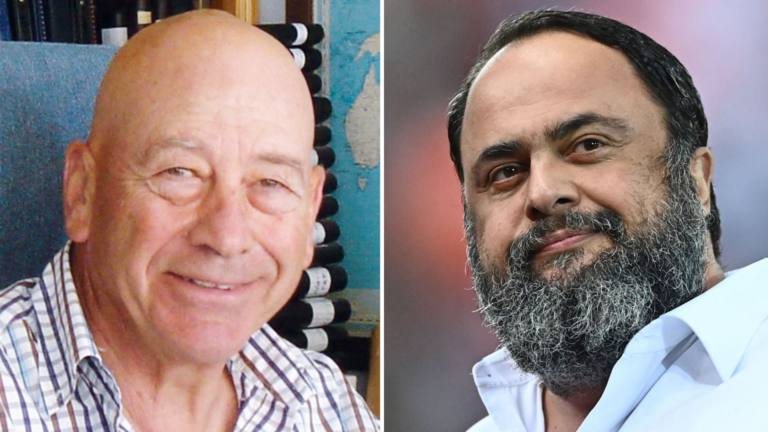
In an article published in Forbes and signed by Giacomo Tognini, it is mentioned that George Prokopiou said “This is a tragedy for humanity, but at the same time it creates opportunities,” while Evangelos Marinakis, the tycoon behind shipping firm Capital Maritime and Trading, added “We need to be able to take advantage of these opportunities.”

It is mentioned that during the same forum, themed “Greek Shipping at the Forefront of Global Trade,” Prokopiou ventured a bold projection: “By the end of the year we’ll see very, very good markets in all segments. I’m very optimistic. Ships will command much higher prices.”

That prediction came true, helping propel both Prokopiou, 77, and Marinakis, 56, into the billionaire ranks as the valuation of their maritime assets surged, and the scope of their maritime empires expanded.

Prokopiou and Marinakis, who are worth $2.6 billion and $3.6 billion, respectively, have ordered 123 new ships worth nearly $13 billion since 2022, according to VesselsValue. Prokopiou’s four shipping firms own 173 tankers including those under construction, 54 more than in 2021.

These tycoons are the latest in a line of swashbuckling pioneers hailing back to iconic figures like Aristotle Onassis and Stavros Niarchos.

According to forbes.com, what’s new about this group, is that the value of their holdings—particularly tankers—has soared by billions of dollars over the past two years, as the war in Ukraine sent shockwaves through global commodities markets and set off a scramble for large tankers needed to ferry oil around the world.

As mentioned, altogether, companies owned by Greek shipping tycoons ordered new ships worth nearly $200 billion and sold 68 older ships for almost $3 billion between January 2022 and March 2024, according to VesselsValue.

Forbes estimates that there are now at least 12 shipping billionaires in Greece, more than at any other time in history. Seven of them are making their debut in Forbes’ billionaire ranks. Altogether they are worth $32 billion—the equivalent of roughly 12% of the country’s gross domestic product.

Source: forbes.com

Delving into the Battle of Crete with the Athens War Museum

0

The Greek island of Crete is renowned for its beauty and ruggedness. Its people’s hospitality and food are also alluring – something which I fondly remember having grown up in an Australian neighbourhood amongst quite a few families from Crete.  In all those years though, I never once heard about the Battle of Crete. My only ‘battle’ with Crete was trying to secure a second or third delicious kalitsounaki that Theia Zaharoula, our neighbour, made.

On a Greek group tour to Crete with my family decades ago, we were led to interesting sites like the Samaria Gorge and Ancient Knossos. One of our sons, then aged six, was so impressed with the island that he vowed, “I will live here in Crete one day.”  And he did so, going on to study at two Cretan universities in Chania and then Heraklion.

I would often visit him and other parts of the island, meeting locals but again, never once did I hear any mention of the Battle of Crete. My husband had alluded to something about Australians and Cretans having a bond due to WWII. In hindsight, I feel rather sheepish that I didn’t bother to look into the Battle of Crete then, so now I’m making up for lost time…

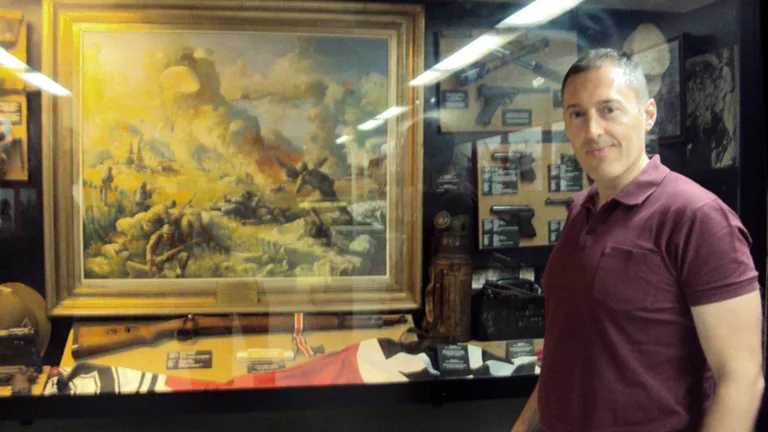
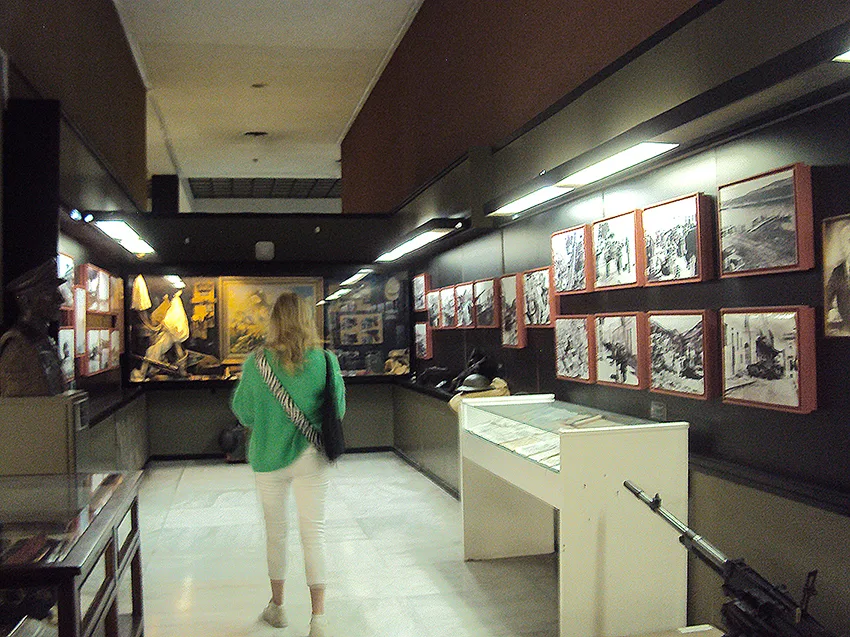
War museum, Battle of Crete section

I visited the War Museum in Athens where I spoke to curator Theofanis Vlachos.

“Greek military history is long and complex so dedicating a section, albeit small, to the Battle of Crete signifies its importance. There is another offshoot of the War Museum near Rethymno at Chromonastiri, which also has relevant artefacts,” Mr Vlachos explains, before further advising me about the battle.

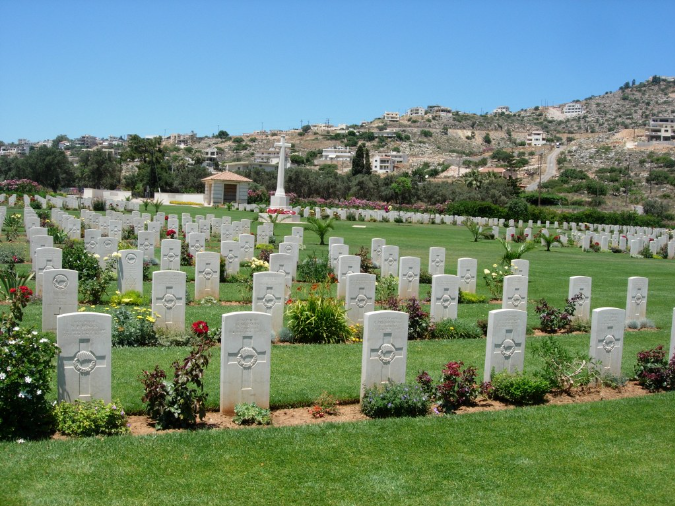
Suda Bay War Cemetery

The Battle of Crete began in 1941 on the 21st of May and lasted for 13 days. Allied forces headed by the British were stationed on the island against Hitler’s invading army of around 22,000 troops. British Intelligence did have an upper hand via their Enigma intercepting machine, leading to discovering Hitler’s plans to invade Crete beforehand. This resulted in Winston Churchill ordering further defensive reinforcements – Australian troops (as well as New Zealander and Greek soldiers), bolstering the Allied forces to 42,000 men.

Australian troops in Crete numbered 6,540 of which approximately 500 were killed, over 900 wounded and almost 5,000 taken as Prisoners of War 1.  Much of this 2nd ANZAC force included the sons of the first Gallipoli ANZACs.

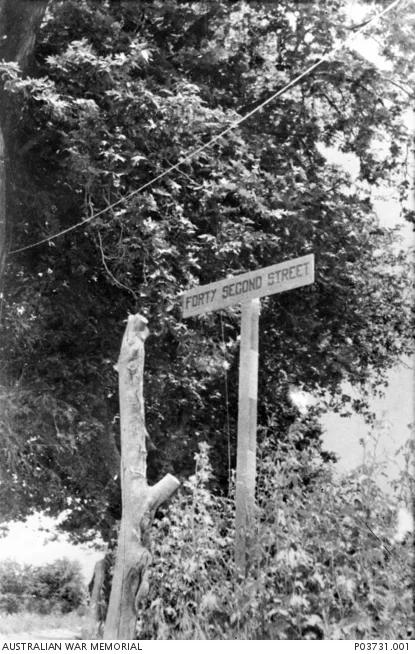
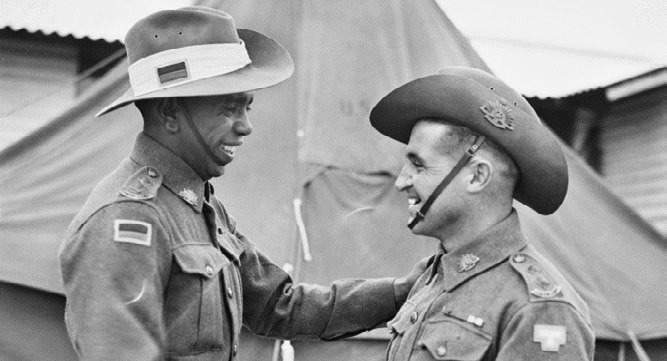
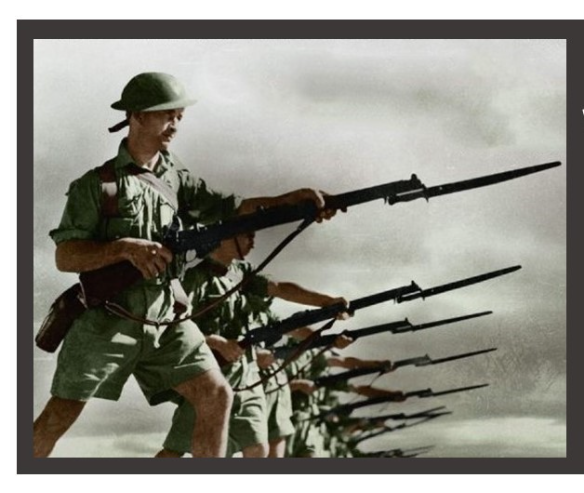
Aboriginal soldier Reg Saunders was involved in one of the many heroic and – as he and another Aussie soldier tell us – dehumanising battles against the German forces; at the Battle of 42nd Street located along the Chania to Tsikalaria road. The Australian and New Zealand force hid in a gully and predominantly using bayonets, lunged at the Germans, causing them to have around 300 casualties.

Captain Reginal Saunders

“I saw a German soldier stand up in clear view about thirty yards [30 metres] away… I can remember for a moment that it was just like shooting a kangaroo… just as remote,” Saunders once said. 

Bayonet

Of this same battle, soldier Johnny Peck claimed: “They didn’t just turn and run, they fought back… he was fairly bigger than me and he got me through the arm but he was dead soon afterwards, the German’s bayonets were nowhere as long as ours… I never felt anything, not even relief.” 2

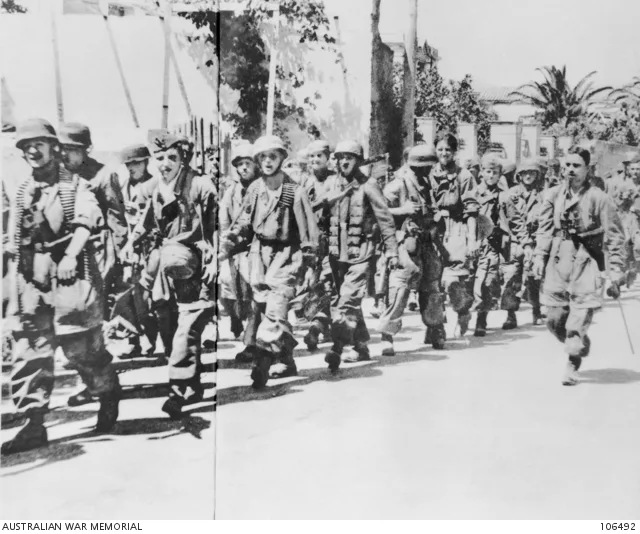
Australian Soldiers marching into Chania

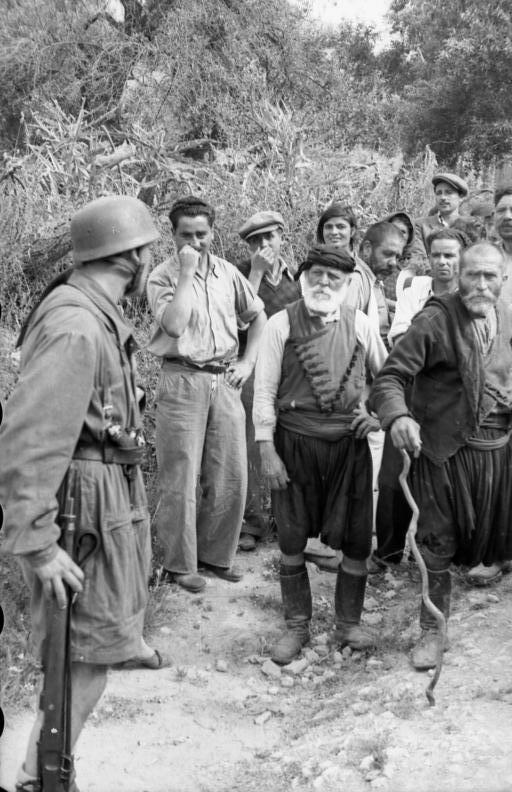
Like many soldiers who were still alive and eventually ordered to retreat from the Germans, both Reg and Johnny went into hiding in Crete and were looked after by Cretan families who courageously risked their lives to help. There are so many factual stories about such incidents, including the monastery of Preveli in Southern Crete where there’s one of the many monuments that pay tribute to the bravery and bond of the Cretans and Australians (and of the other allies).

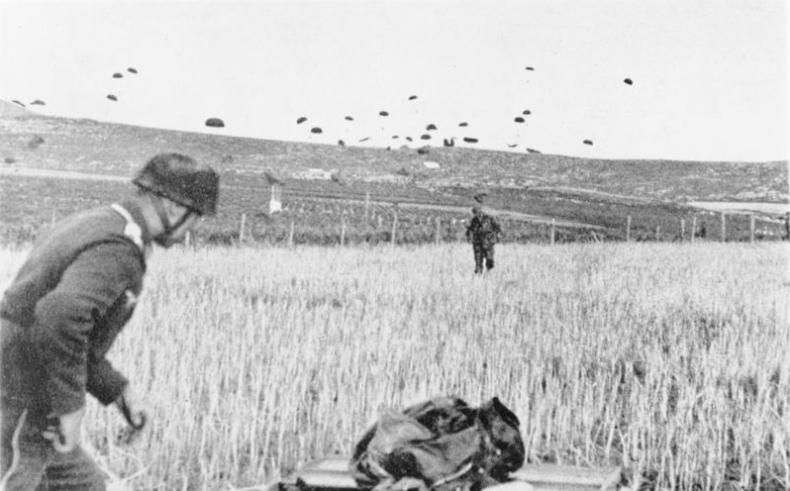
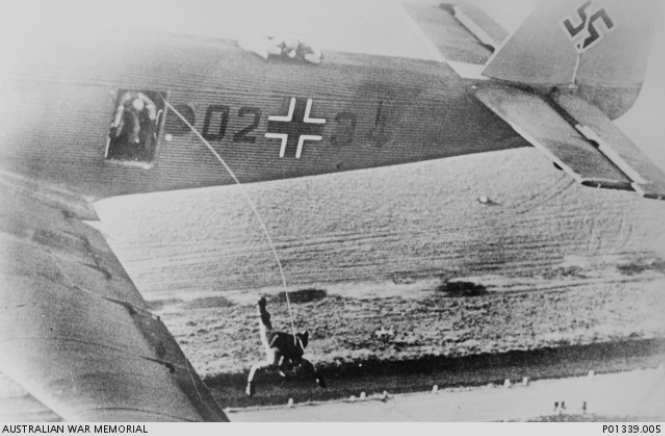
“The Cretan men, women, children and elderly, attacked the German invaders with anything at their disposal, including pitchforks, rocks, rudimentary rifles, dead Germans weapons, etc. This included attacking the German soldiers dropping down in their parachutes. Paratrooping was a unique feature of the Battle of Crete never attempted before in such numbers by an invading army,” Mr Vlachos clarifies.

Parachuters landing

“The German forces took advantage of ‘rules of war’ that deemed a civilian killing a soldier to be murder. This led to exaggerated and brutal reprisals towards the Cretan people, continuing until the Germans retreated in 1945.”

German paratrooper

Germany did officially win by gaining ground in Crete, forcing the Allies who weren’t killed to retreat. But nonetheless, everyone involved in the Battle of Crete – from the Germans to the brave ANZAC forces, the Greek Army and of course, the local Cretan resistance – were victors as well as losers.

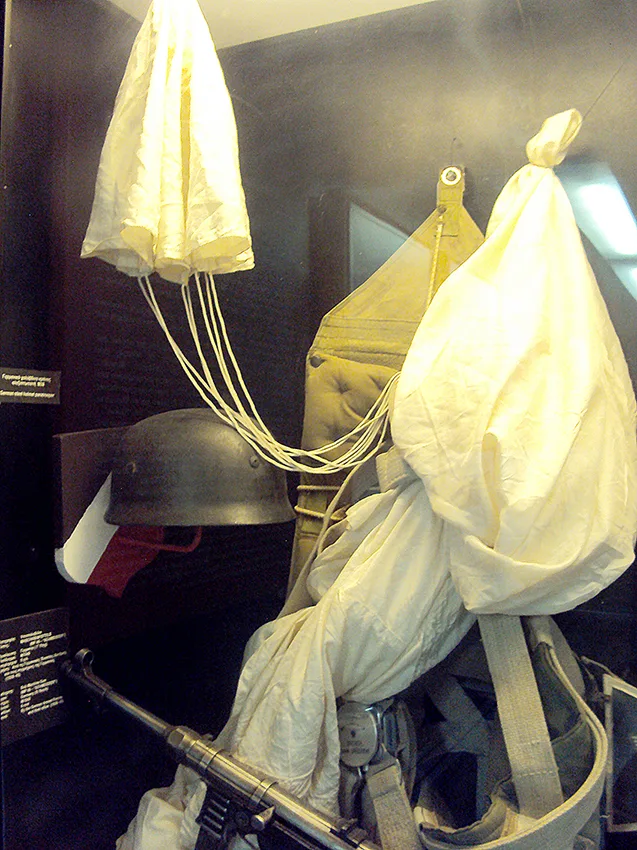
Parachute display

Lest we forget, and strive for peace as an all-consuming, universal goal.

References:

  1. All figures from Gavin Long’s Official Histories (Long, G 1953, Second World War Official Histories: Volume II – Greece, Crete, Syria, 1st ed, Australian War Memorial, Canberra) at pages 315 and 316.
  2. Video lecture by Prof. Monteath, ‘The Battle of 42nd Street | Seminars 2022, Greek Community of Melbourne, 43:02 -43:43)

Preserving tradition: The Psaltries Choir of Melbourne and the beauty of Byzantine music

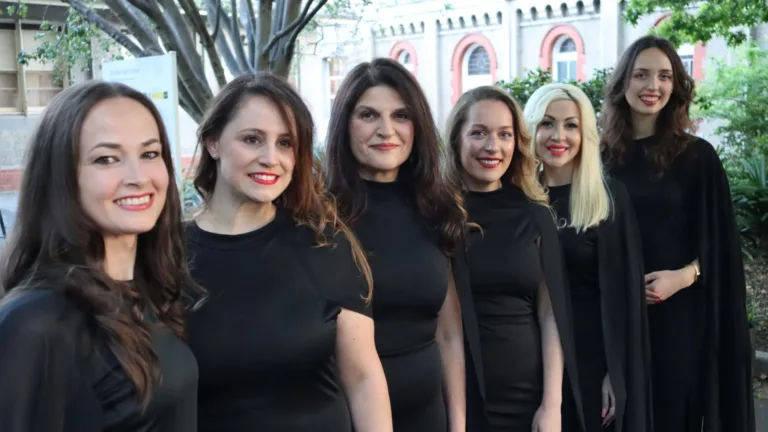
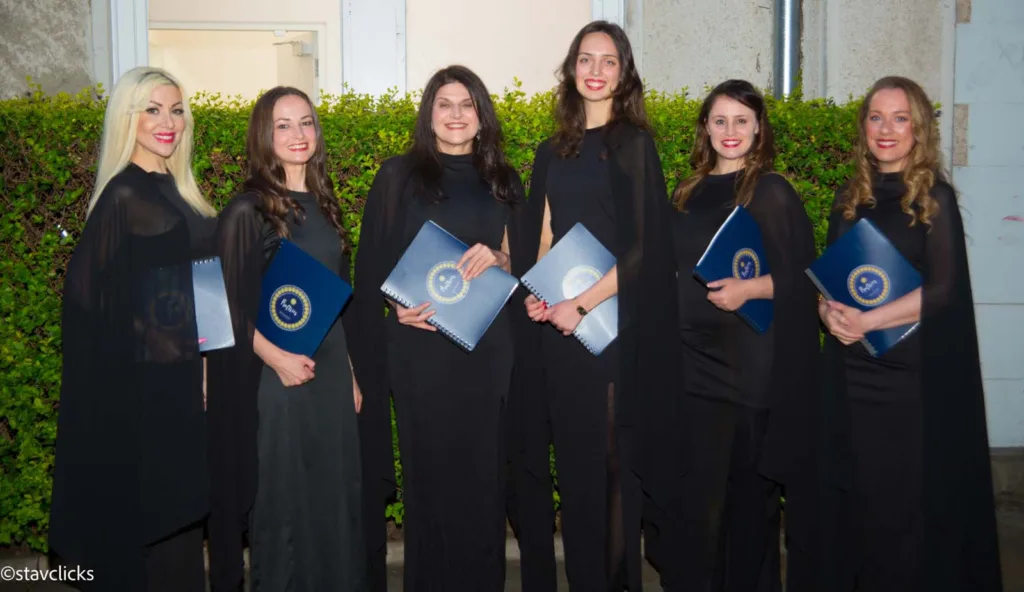
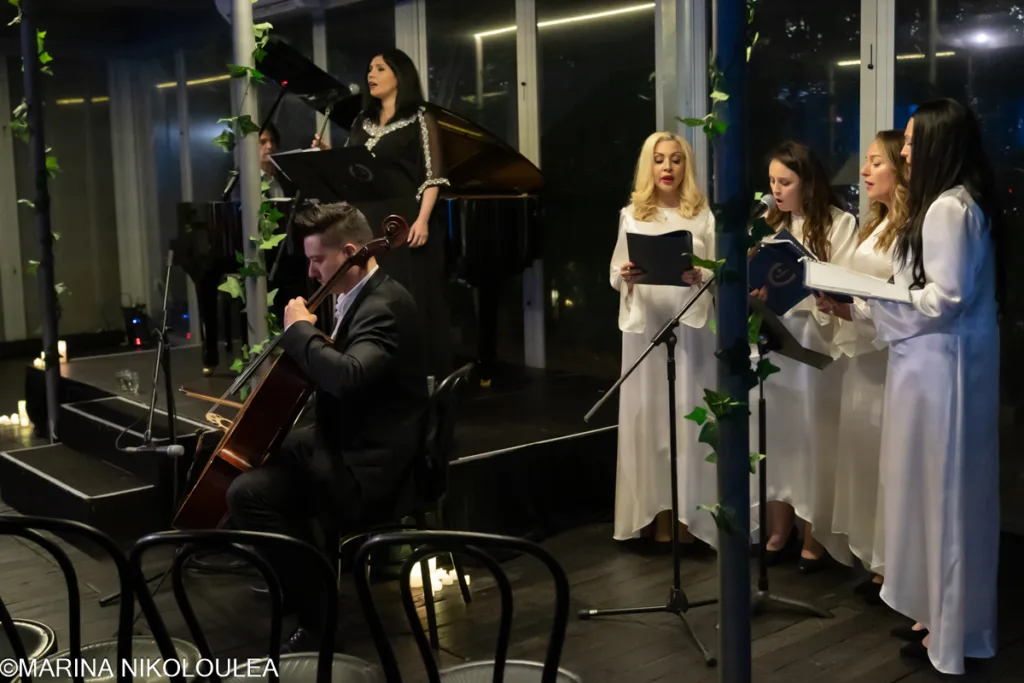
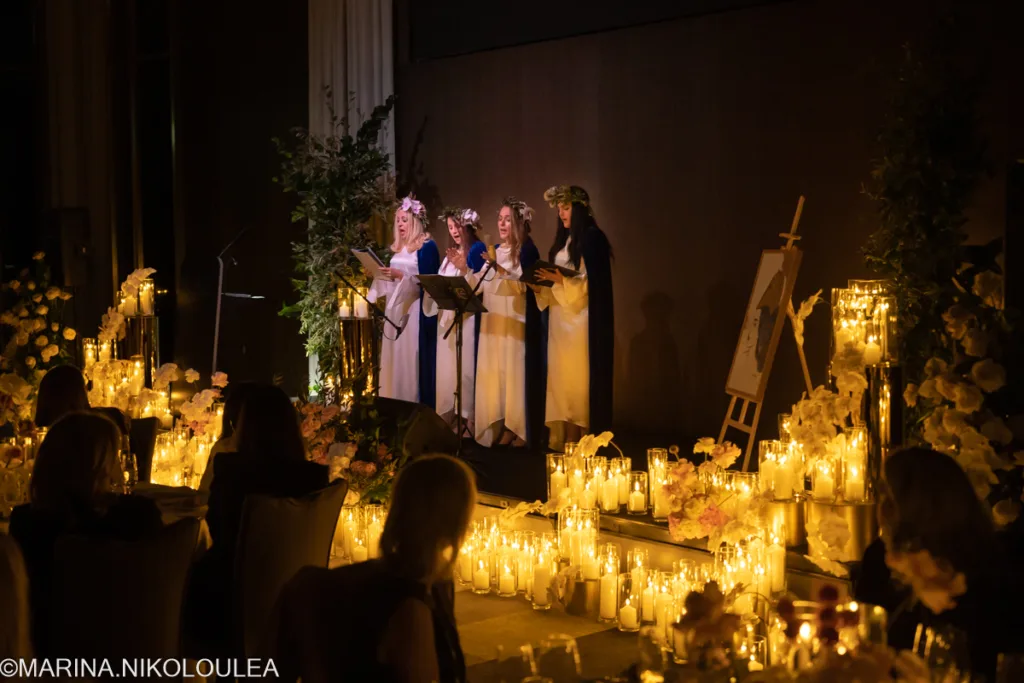
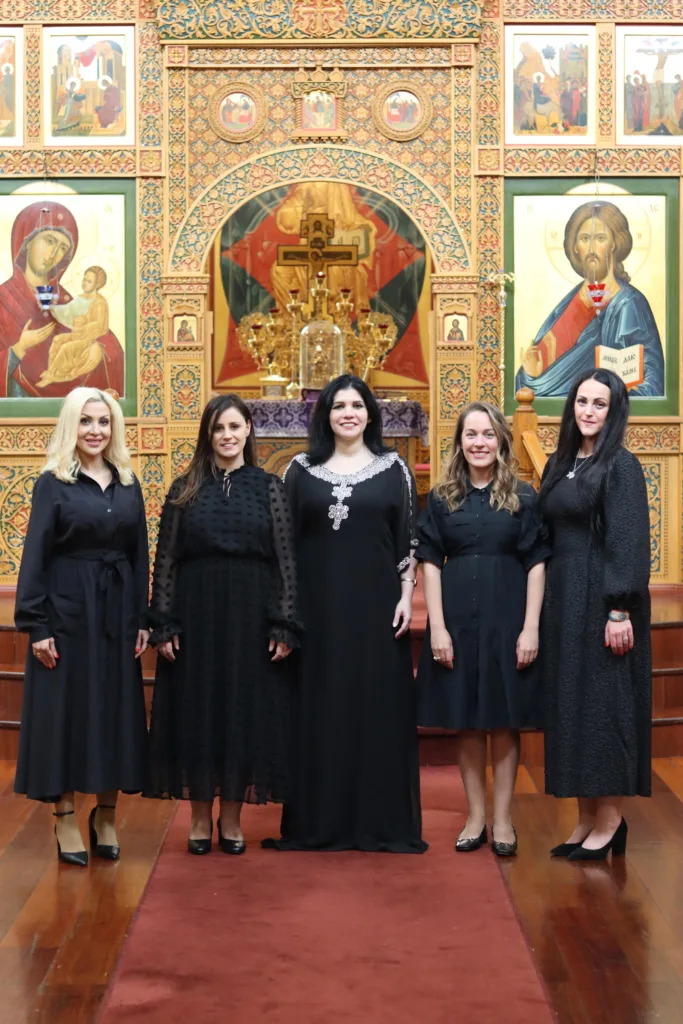
The Psaltries Choir of Melbourne stands as a beacon of artistic excellence and cultural preservation within the realm of Byzantine music. Established in 2022, this esteemed vocal group is a proud member of the Women in Byzantine Music Worldwide Association, the world’s first official and largest platform for women in Byzantine Ecclesiastical Music.

Under the guidance of Professor Nektaria Karantzi, a renowned female Byzantine Cantor and scholar, the choir presents a musical exploration revealing the subtle complexities and deep spirituality of Byzantine music. Through regular rehearsals and classes, Nekatria imparts her expertise and passion to the choir members, nurturing their understanding of this ancient musical form.

Psaltries

The Choir’s local coordination and leadership is overseen by Ioanna Nikoloulea, a dedicated student of Professor Nektaria. Together, they cultivate a deep appreciation for Byzantine chanting, specializing in the dissemination and study of sacred hymns.

Byzantine music is more than a mere composition of melodies and rhythms. It is interwoven with history, theology, and artistry, transcending earthly boundaries and offering a spiritual language that connects the human soul with the divine. Each chant, hymn, and psalm carries centuries-old tradition, reflecting human connection and need for spiritual enlightenment.

At the heart of Byzantine music are the Psaltries—female cantors who embody the essence of this heavenly dialogue. They are not only singers but also custodians of a sacred legacy, preserving and transmitting a spiritual heritage that traces its roots back to the early days of Christianity. Through their voices, the Psaltries bring to life the ancient hymns, transforming them to resonate deeply with the soul.

Psaltries

With Professor Nektaria Karantzi, the Psaltries Choir of Melbourne is fostering a new generation of Psaltries, equipping them with the skills and knowledge necessary to carry forward this ancient tradition. They are not only mastering a musical form; they are becoming stewards of a living tradition—a spiritual legacy transcending time and space.

The future of Byzantine music hinges not only on preserving its past but also on adapting these timeless hymns to resonate with modern sensibilities, ensuring that this musical and spiritual heritage continues for generations to come.

Psaltries

Professor Nektaria Karantzi emphasises that the excellence of Byzantine music lies not only in its musicality but in its spiritual depth. It has power to mystically touch the souls of listeners and transcend all cultural and linguistic barriers.

Reaching out to new generations and diverse audiences, the Psaltries Choir of Melbourne  paves the way for a future that honours the past and embraces the present.

To learn more about the Psaltries Choir of Melbourne and their dedication to Byzantine music, please visit the Women in Byzantine Music website at –womeninbyzantinemusic.com/psaltries-choir-melbourne or nektariakarantzi.com

The Psaltries Choir of Melbourne is amongst many Greek Australian artists who have participated in the GAAD (Greek Australian Artist Directory). An initiative by the Greek Australian Cultural League (GACL), the GAAD celebrates Greek Australian visual and performing artists by showcasing their works and contributions to the Australian arts landscape.  By preserving and promoting the artistic legacy of Greek Australian artists, the directory ensures that their talents are duly acknowledged and cherished, cementing their place in Australia’s artistic narrative.

Psaltries

Interested Greek Australian artists, as well as artists whose work is inspired by Greek culture, can register their profiles by visiting www.gacl.com.au and clicking on the dedicated GAAD section.  For any inquiries related to the GAAD, individuals can either email GACL President Cathy Alexopoulos infogaclm@gmail.com or contact GAAD Co-ordinator Vasy Petros on 0412 242557

*This is a Greek Australian Cultural League Initiative supported by The Greek Herald.

Students celebrate family at Greek Community of Melbourne’s schools

0

As part of the “Be connected” program, which is again taking place this year at the Greek Community of Melbourne (GCM) Language and Culture Schools, students at Bentleigh Campus welcomed their families to their school on Tuesday, May 14. They shared with them a wonderful event dedicated to family.

At Greek Community of Melbourne’s Schools

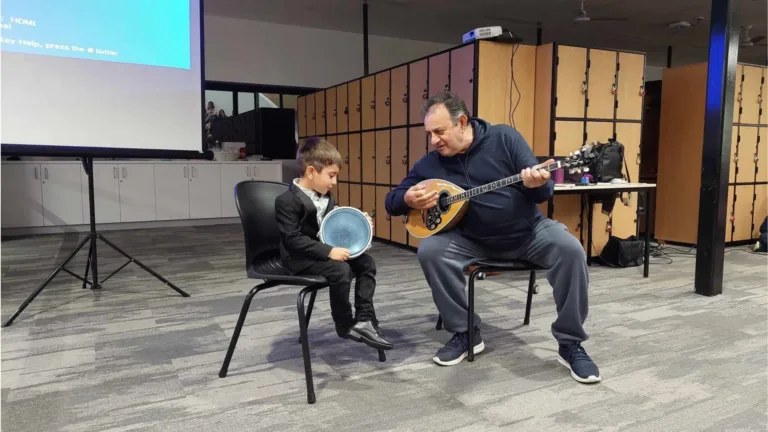
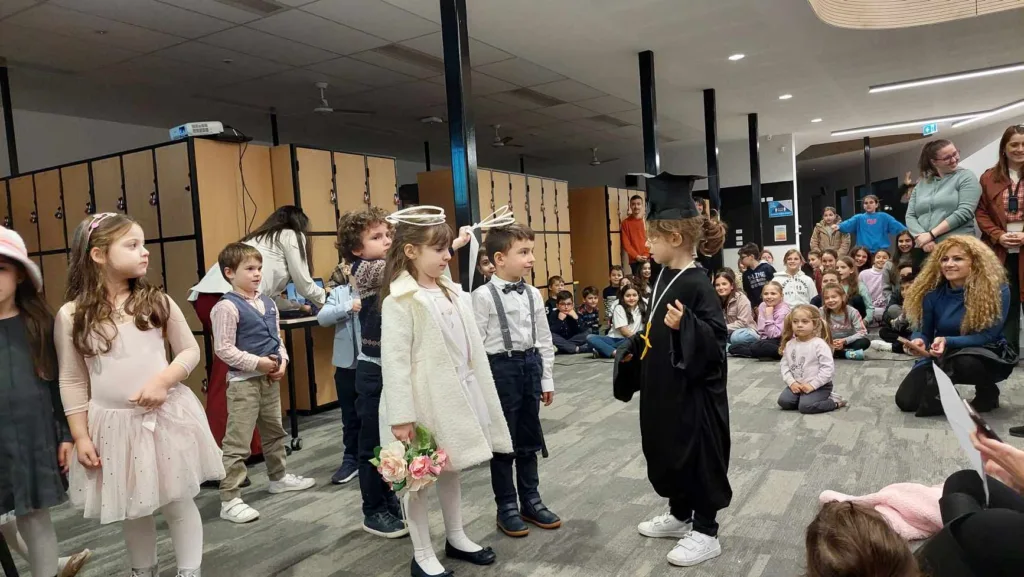
On the occasion of International Family Day, teachers and students prepared a beautiful celebration for the honoured guests of the evening, the grandparents of the students, and celebrated this important institution with a revival of wedding customs, music, games, and educational activities.

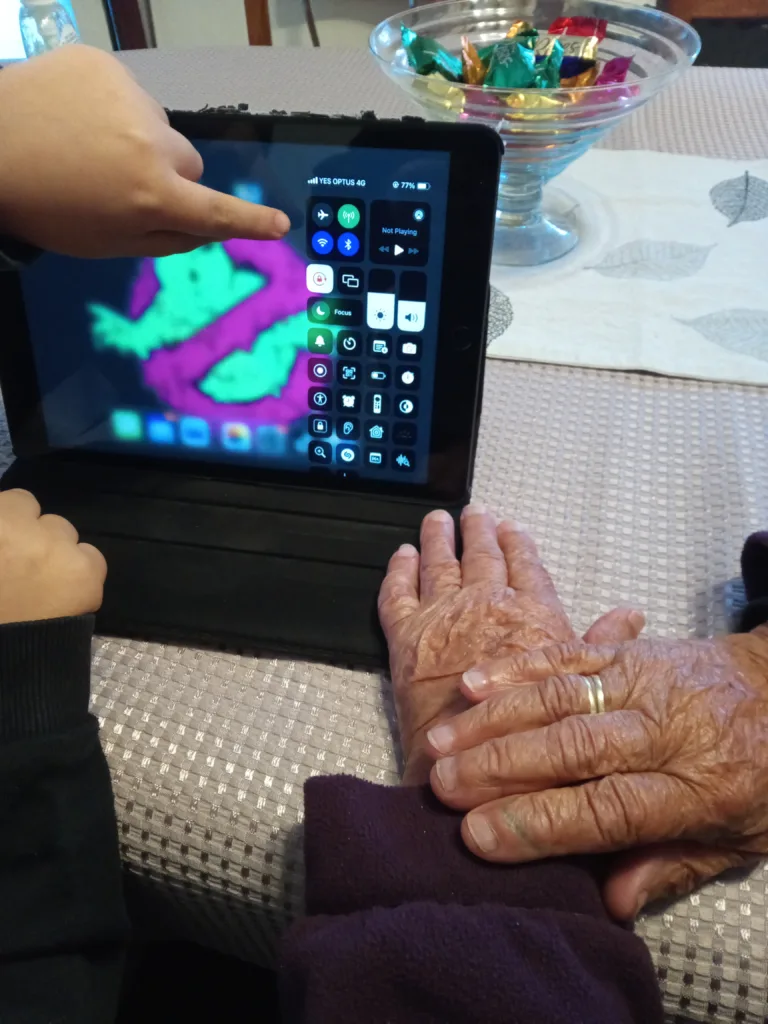
During the event, teachers, students, and grandparents also shared their experiences from participating in the program ‘Bridging Generations – Be Connected,’ implemented by the GCM Schools in collaboration with Christina Ntaliani and the organisations ‘Be Connected’ and ‘Good Things Foundation.’

Bridging Generations – Be Connected

This program, in which students became online mentors for their grandparents, aims to increase the skills and safety of older people when using technology. It is a pioneering initiative with multiple benefits, both for the elderly—who shared valuable time with their grandchildren and became familiar with the internet—and for the students, who cultivated their empathy and practiced their communication skills in the Greek language.

Be connected

The school’s student, Athena D., said: “I explained to my grandfather things he didn’t know about the internet and showed him how to access sites about gardening and health, which he liked.”

“I taught my grandmother how to use Skype to communicate with us, and I taught her how to use a smart TV. I realised that it is difficult to be a teacher after all,” student Daphne G added.

Following the Billy Belly and danger to Greek food in Ecuador

By Billy Cotsis*

In my life, I’ve seen plenty. I’ve had guns, rifles and water pistols pulled on me and others. I’ve been in an earthquake, rescued from a sinking houseboat, car jacked… We actually parted as friends, hugs and my rental car back, though I suspect the car was breaking down and they didn’t want to fix it and then the car broke down!

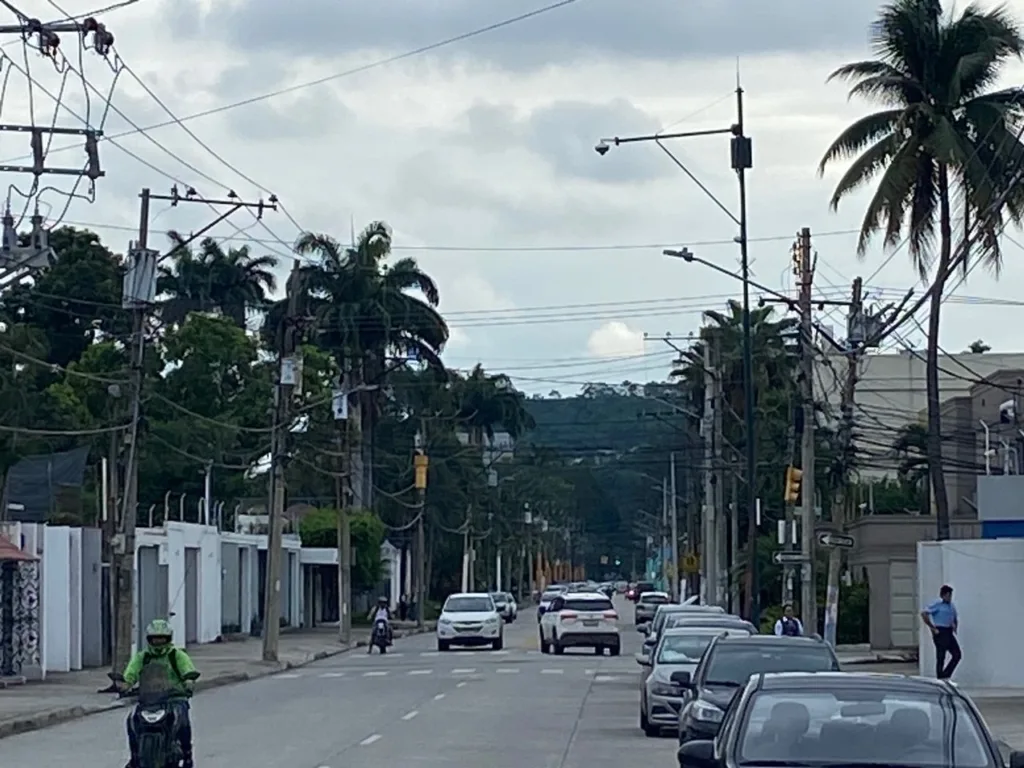
So when a myriad of people told me implicitly in six languages, including Klingon, not to visit the most dangerous part of Ecuador due to gang violence, I listened. Then I accidentally took the plane to Guayaquil, which is in Ecuador.

It was cheaper to continue to said destination in order to get to Colombia despite cutting back on days and besides, I had a friend to visit. I never let people down unless I’m carrying them and their weight is too heavy.

As my Billy Belly will tell you, all roads lead to Greek food and that was the case in Ecuador. For this Griego, soy no Gringo!, I always need my Greek fix.

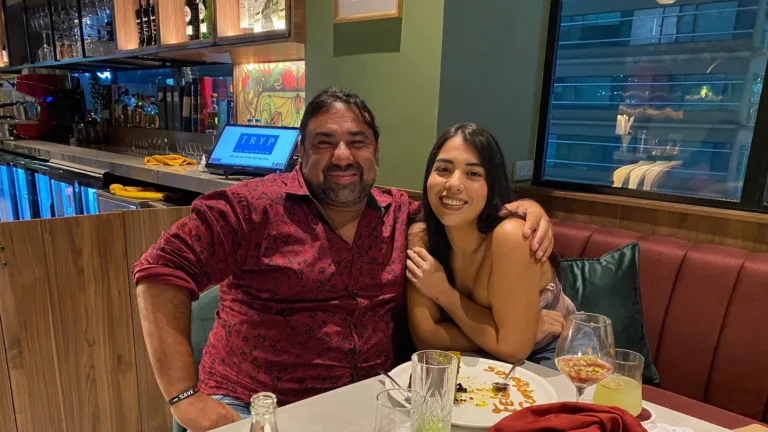
Like many small Latina nations, local Greek populations are small but usually littered with charismatic Greek people promoting Greece/Cyprus and delicious Greek food. Someone like George Poullos in Guayaquil for example can certainly act as a beacon for lost Hellenes like me. The usual friendly and engaging manner of someone like George is reminiscent of every Greek eatery I visit in the Americas. Sometimes these visits become like some sort of long lost reunion.

In Ecuador, Greeks have been visiting since the 1800s, consistent with Greek ships and seamen leaving their mark at many ports.

There are between 50-100 Greeks in Ecuador, mostly in Guayaquil like George, as it has a port.

ecuador greeks

Having eaten saganaki and Griego en salada with a friend at the hotel, safe place to be as soldiers were still patrolling the streets as a precautionary measure, I decided I really needed a taste of Greece. Sure, call me a snob but I needed my Griego fix.

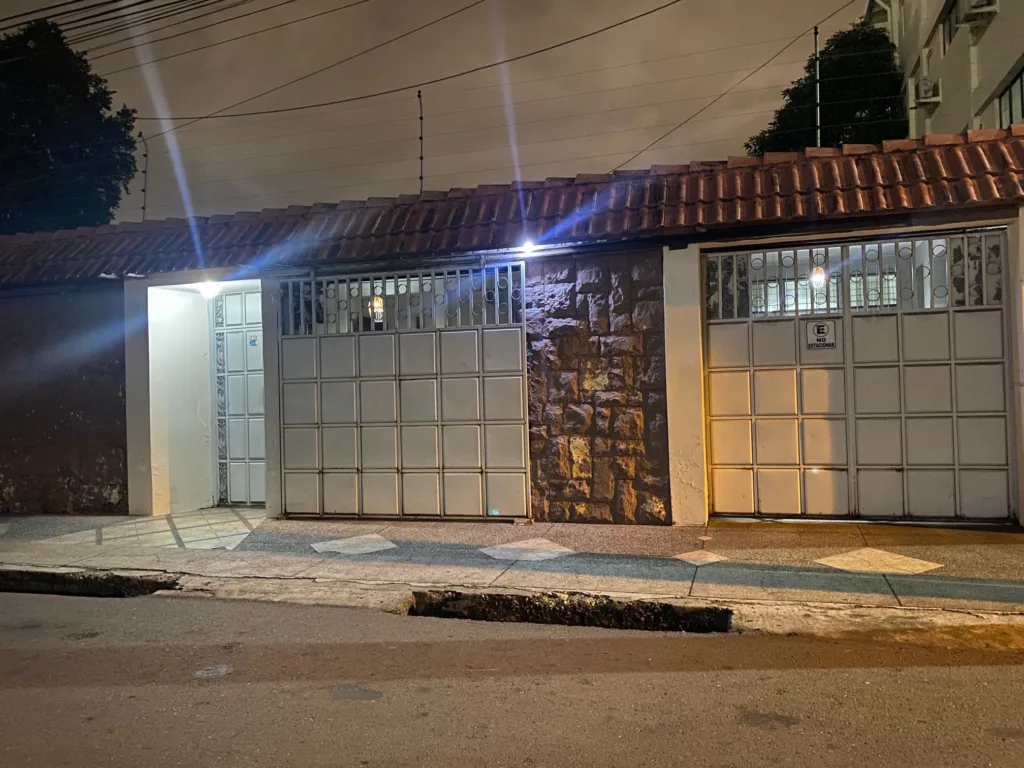
I was excited to learn that there are Greek gyradika! I got into an Uber and lo and behold he found the place… Someone’s casa. I don’t think they were impressed when I tried to Billysplain that they have a gyradiko! Google, you got it wrong again.

ecuador greeks
The gyradiko that was boarded up.

I quickly jumped back into the Uber and we visited the Buena Vista Plaza at trendy Samborondon. After explaining in Spanglish that I was keen to meat and meet the owner, I was told he wasn’t around. Thankfully, quick thinking staff realised I was a Greek Buddha and found the owner. No they didn’t rub my belly.

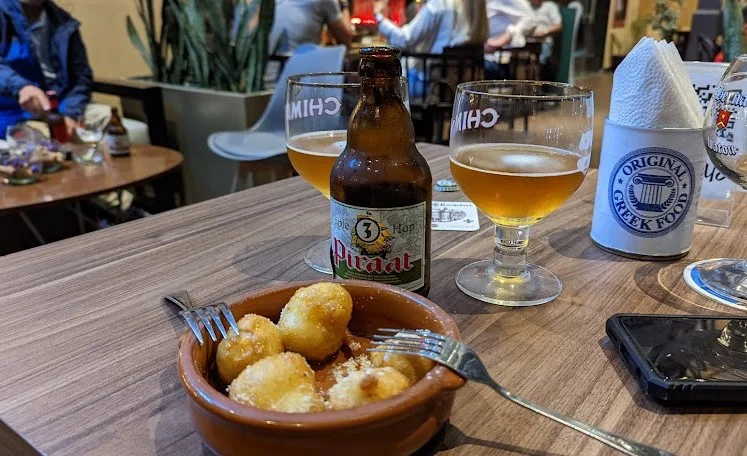
George sat down with me and explained his experiences of Ecuador, his extensive beer collection and confirmed that the Greek presence is small.

He arrived here in 2005 from Cyprus, originally from the village of Deftera, near Leukosia.

His kids, Giorgakis and Melinaki have grown up in Ecuador, adding to the small Greek/Cypriot community. At best there are probably 20 Greek language speakers in the city.

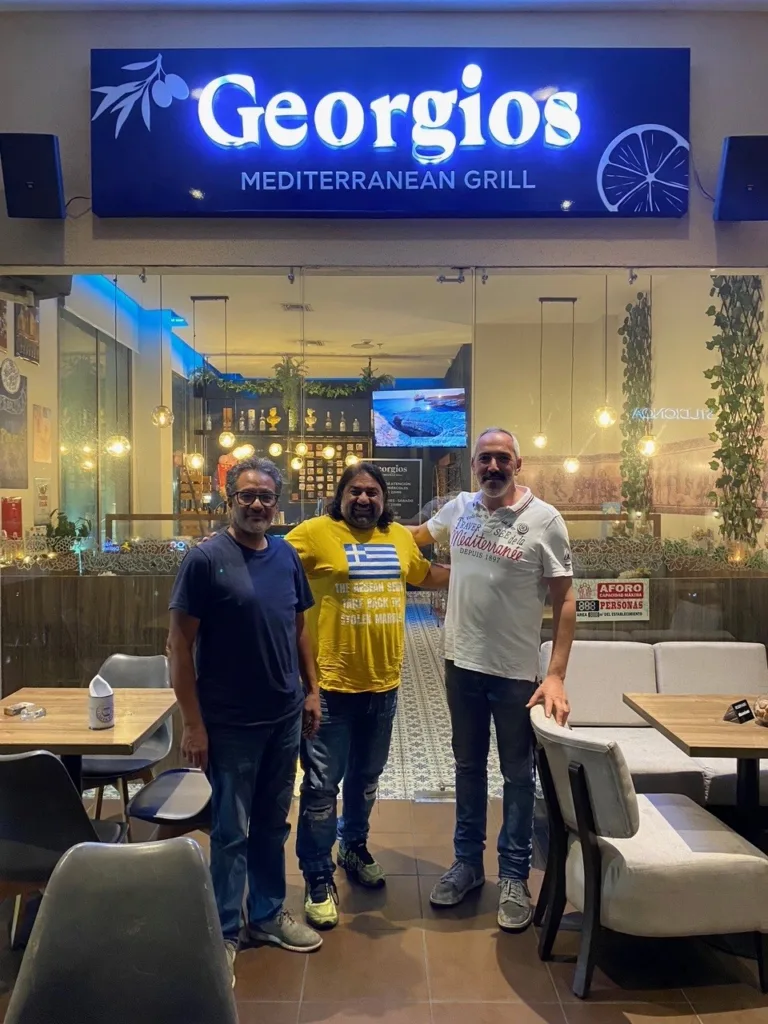
Georgios Mediterranean Grill emerged three years ago during the pandemic. The small but new shopping mall was essentially trying to grow and needed tenants, and George with an eye for culinary delights, even though he is slim and tall unlike his chubby interviewer, took a chance. The restaurant soon become a beacon. He has met many lost Hellenes, like this writer, passing through, as well as Ecuadorians who have Greek ancestry dating back seven generations.

“It becomes like a social club at times,” he explained, as one of his friends and a regular came to join us, Santiago Ortega. A local who also worked on the shop and ended up driving me back to the hotel. Possibly to learn some more Greek words, though he was kind enough to show me some of the historical buildings of the city as curfew approached.

The venue serves as a destination for many on 25 March and 28 October, as well as ensuring there is monthly beer tasting sessions.

Speaking of tasting, the food was undoubtedly the best I had to this point of my trip to the Americas. George has ensured that flavours are to the standards of Greece and Cyprus and my Billy Belly certainly agreed.

ecuador greeks

As we continued chatting, it turns out that George is set to take a step further in promoting Greek food as he has launched a Greek gastronomy tour for Greece. How I wish I was on that tour now!

For those in need of Greek Orthodox sermons as I do to absolve me of my travelling addictions, there is no Griego Church. The Montenegrin Orthodox Church is the closest for the small Greek community.

Ecuador is a place that has little by way of Hellenic treats but as I find in any Latina nation, it’s fun, it’s developing and there’s always someone who can provide Greek and Cypriot food and a chat in Griego!

*Billy Cotsis is the author of The Aegean Seven Take Back The Stolen Marbles

The Pharos Alliance: Greek belongs in Victoria

0

By Joseph Lo Bianco*

It is hard or even absurd to imagine Melbourne without Greek. This is a city about which we have all heard innumerable politicians and community leaders praise as a contemporary jewel of Greek culture.   

Since the mid 1970s I recall regular praises like: “Melbourne has the largest concentration of Greek speakers outside of Europe” and “Melbourne, the biggest Greek city after Athens.”  

Even allowing for the hyperbole of politicians or the campaigning gusto of local community representatives, Melbourne and Greek have had an intimate association for well over a century.  Long enough to be ‘naturalised and normal.’ Melbourne can and should boast of this magnificent connection to Greece, Greeks, and Greek. Most Greeks who came to Melbourne were working people, and they helped build the infrastructure, services, and style of this place, so it is marked with their labour as well as their culture and civility. 

So, it seems almost sacrilegious to pose the question about whether the language of these Australians, might fall silent. Or to assume that while Greek Australians will always live in Melbourne and their contribution will never be erased, it might one day become a city without Greek on its streets, in its schools and homes.  And yet, precisely this fate is quite normal for immigrant languages around the world, including Greek, in the great urban centres of multicultural life in the Americas, Europe, and elsewhere. All the signs show that we are not immune from this process of language attrition, sadly it is happening here too.  

The Pharos Alliance is a community and volunteer response to this challenge. Pharos brings together a range of organisations and individuals to revitalise Modern Greek in Victoria. How did this come about?

In August 2017, Ms Maria Dikaiou then president of the Modern Greek Teachers Association of Victoria, asked me to help the Association research how the Greek language was faring in education and more broadly. The aim was to reflect on the challenges and make recommendations to strengthen provision of Greek. I was delighted to accept Maria’s invitation and worked with MGTAV and its excellent personnel. In February 2020 at Lalor North Primary School, we launched the completed study and moved to create an alliance of interested organisations to address the problems it revealed. What are these problems?

While Greek Australians are justly proud of their language, the language is receding in domains (the settings in which it is spoken), in numbers of regular users, and in the number of school and post-school institutions where it is taught. 

This is a triple retreat: 

  • first a decline in the number of regular users, which is steady but soon will be very sharp with ageing of the migrant generation and the first generation of their Australian born children.
  • second, a decline in the number of learners, especially at the upper levels of schooling and sites where it is taught in a continuous pattern.
  • third, a restriction in the number of settings (social, business, family, and media), where it is the normalised choice for interaction.  

The research revealed therefore that Greek in Melbourne is ageing, declining, and receding.  While this is the common fate of immigrant languages that are not regularly replenished with new arrivals, the full loss of the language is not inevitable; and while it is extremely troubling, expressions of concern are not going to resolve the issue.  

There is a world-wide pattern of language decline of non-official languages, whether immigrant or indigenous, and linguists and the UNESCO agency of the United Nations have documented language loss.  Some 70% of the world’s languages are globally endangered, meaning they are disappearing everywhere, or locally endangered, meaning, like Greek in Melbourne, they are retreating in specific places only, though they retain their homeland vitality. As a result, there is an entire academic discipline devoted to conserve the linguistic and cultural heritage of humanity, and what small actions we take here for Modern Greek form an honourable part of a global move to preserve the diversity and heritage of human culture.

This is the broadest context for our work at Pharos, and while we are aware of this context, we are focused on our specific local challenges. All of us in the Pharos Alliance are volunteers. We are collaborating with the Greek Australian Society to support the creation of a chapter of Pharos in NSW and have had discussions with concerned Greek Australians all over the country. Our ultimate aim is to produce a National Plan to Revitalise Greek, one of the main aims of the original Pharos research I presented to MGTAV.    

We meet monthly to coordinate action. Some issues we focus on are:

  • supporting teachers in schools facing pressure to close an existing Greek program, lobbying to reverse all closure and to encourage new schools to offer Greek.
  • Supporting parents in mixed language homes to find a prominent place for Greek in their homes and raise their children bilingually.
  • Encouraging middle and upper secondary school students to not drop Greek in VCE or Years 11 and 12.  
  • Encouraging the creation of pre-schools and after care services that use Greek.
  • Encouraging the media to report on Greek in Australia in a positive way that supports young people to identify with, learn and use Greek.
  • Ask business and other community bodies to create more Greek language immersion opportunities.
  • Encouraging exchanges with Greece, more government investment, more policy effort, more coordination across sectors etc.

We meet monthly to do this work, we have new research underway, and a symposium scheduled for December at La Trobe University to discuss and consolidate these initiatives.

The work of the Pharos Alliance is built on three principles, which we call COD: Capacity, Opportunity, Desire. We want to increase the capacity or knowledge of the language in the community, we want to expand the opportunities for the use of Greek, and we want to foster more desire and identification with Greek among young people. There is much more to do than we can manage ourselves so we need to find resources to expand our work.

In 2024 one priority is to ensure that students in upper secondary school who are studying Greek will choose to study Greek through Years 11 and 12 of the Victorian Certificate of Education. 

The decline in Greek from its Golden Age in Melbourne of a few decades ago, a period of flourishing and presence, has been steady and occasionally slow. Sadly, slow, and steady declines become rapid once a tipping point is reached, when fewer and fewer families use the language at home, and fewer schools teach it. That tipping point is arriving soon. 

I hope the media will appreciate that only with sustained effort guided by solid research will this decline and retreat of Modern Greek in our city and state be halted and reversed. I invite you to work with us to achieve this goal. Greek belongs in Melbourne.

*Professor Joseph Lo Bianco is Professor Emeritus at the University of Melbourne, and Facilitator of the Pharos Alliance
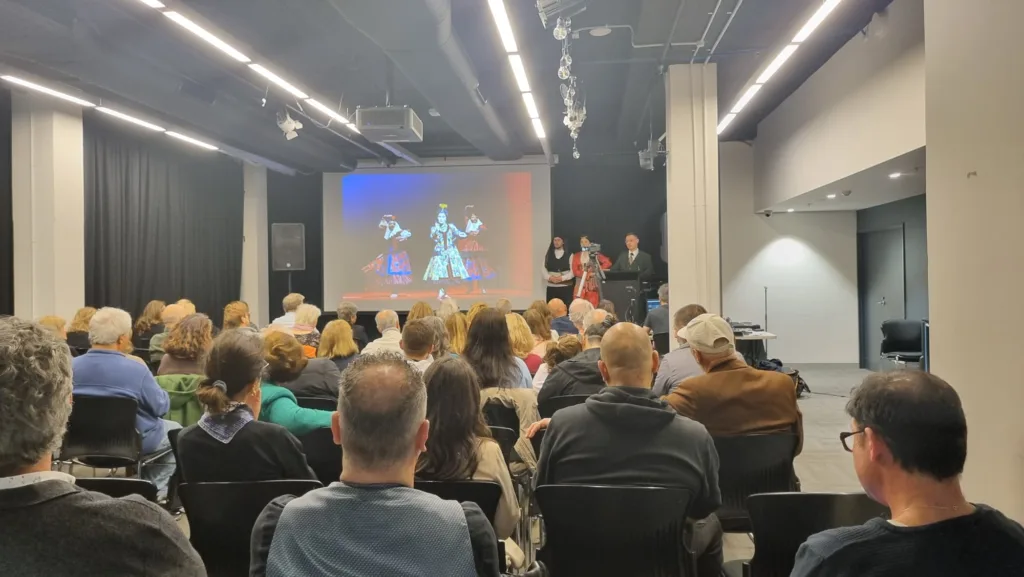
Sydney Greeks enjoy night of olive tasting at new collaborative event

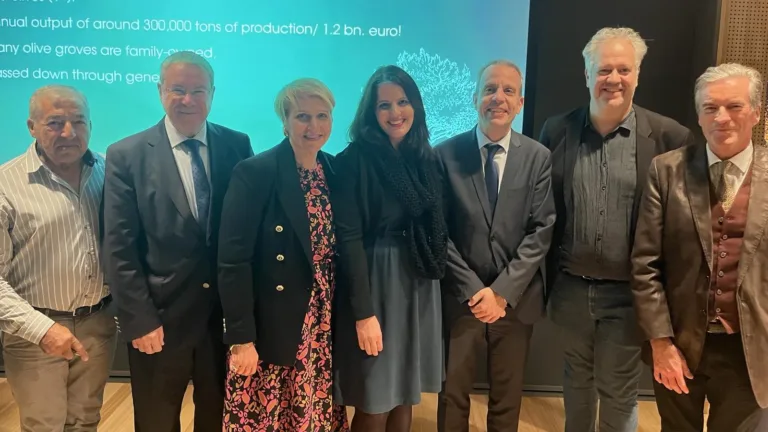
The Greek Festival of Sydney, in collaboration with the Chau Chak Wing Museum and the Office of Economic and Commercial Affairs of Greece at the Consulate General of Greece in Sydney, presented a special event dedicated to the “Sacred Tree: Olive” followed by tasting and sampling on Thursday, 16 May 2024.

Taking inspiration from the multiple symbolism of the Olive, archaeologist Dr Tamara Lewit from the University of Melbourne delivered a lecture on the night titled ‘Liquid Gold: Olive oil in the ancient world.’ The lecture highlighted the historical and archaeological importance of the olive in the Mediterranean region.
This was followed by a speech from the Trade Commissioner of Greece in Australia, Chrysa Prokopaki, on the importance of the olive and its products in the modern Greek economy, culture and identity.

As an interval on the above two speeches, the winner of 1st Greek Youth Creative Arts Competition in the category of Creative Writing aged 19-24, Emily Papagianopoulos, also passionately read out her winning written text entitled “Olive Oil and Cloud Watching.”

The event concluded with tasting and sampling of Greek and Australian products with olive as their main ingredient. Among the Greek companies that offered samples for this purpose were the following: “Archetypon Olive Groves,” “Onar Wellness,” “Lymperis Estate Askra” and “Ophellia – Grolives.”

Dean Kalimniou presents ‘Pontus the Opera’ lecture in Melbourne

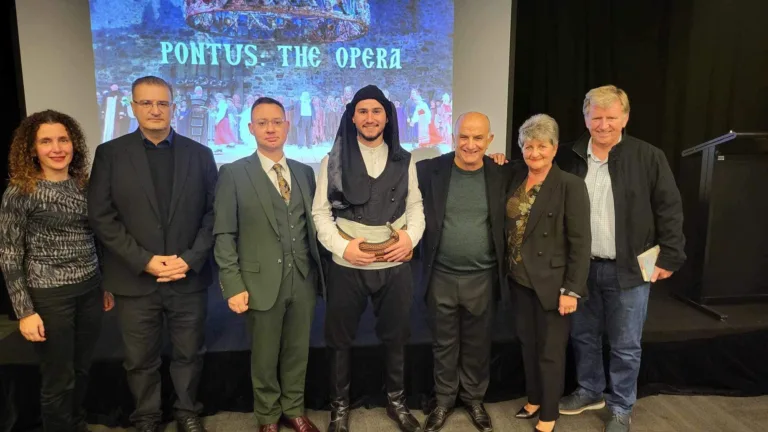
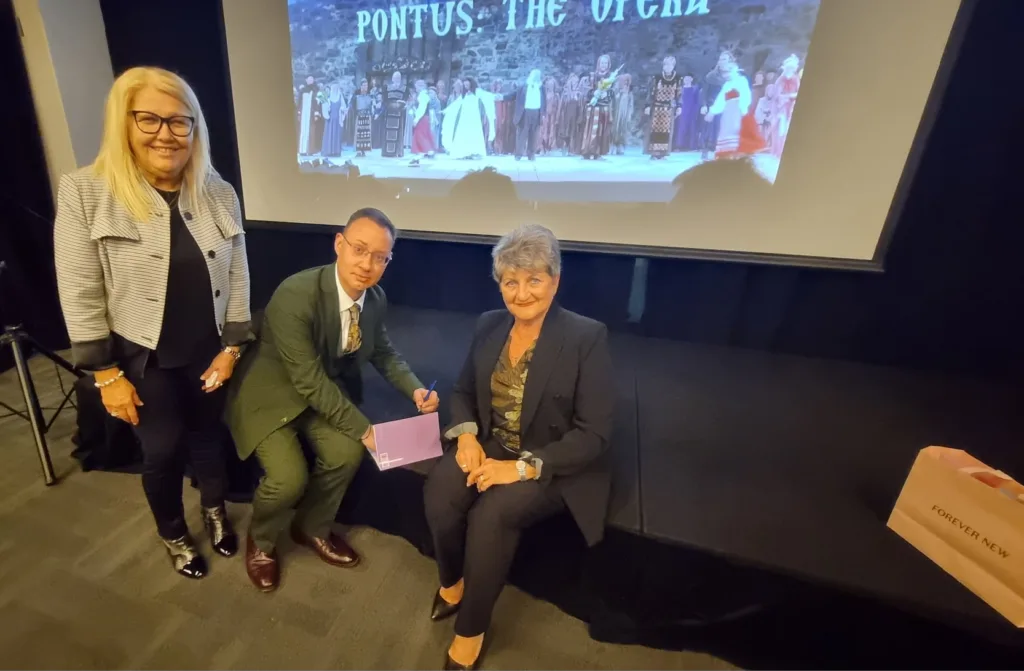
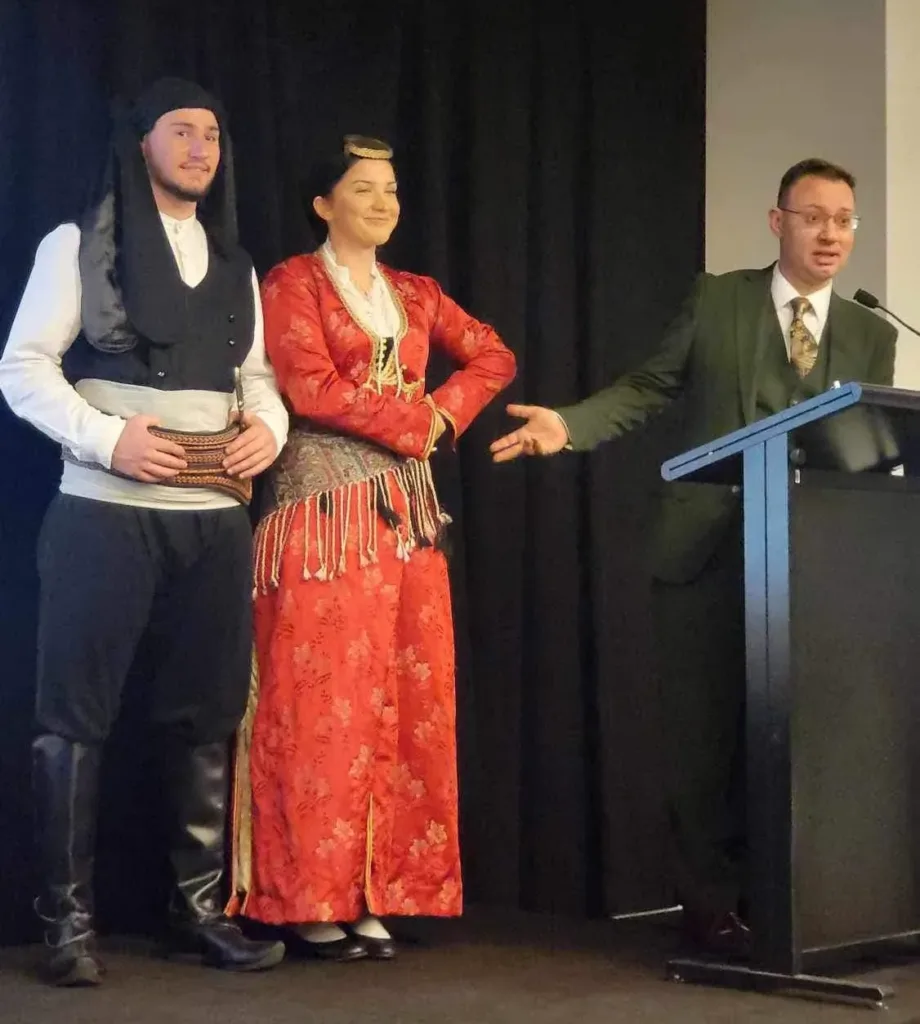
This year’s Pontian Genocide Memorial Lecture, held on 16 May 2024, in a packed Greek Centre in Melbourne, was presented by author, lawyer and Greek Genocide recognition activist Dean Kalimniou.

Kalimniou justified his choice of topic by stating that one can only measure the magnitude of what was lost during the perpetration of one of the greatest crimes against humanity by also considering the cultural heritage of the victims of the genocide.

dean kalimniou pontus of opera (2)

He stated that the inspiration for the choice of topic came from the discovery of a photograph of the Opera House of Trapezounta, constructed by the Greeks of the city in 1912, not long before the commencement of the genocide, a building that confounds the stereotypes of Pontian culture often disseminated both by the Hellenic discourse and Pontian organisations.

dean kalimniou pontus of opera (2)
dean kalimniou pontus of opera

As such, attention was drawn to the popular perception of Pontus within the broader Greek national discourse, often perceived as a secluded enclave with its distinct cultural traits. The lecturer sought to challenge this notion by exploring its historical interconnectedness, demonstrating how Pontus has fascinated the Western psyche, becoming a muse for the creation of opera and classical music.

In a witty examination of the operas of Mozart, Vivaldi, Offenbach and Hesse which are set in Pontus, Kalimniou fascinated the audience through a discussion as to how the stereotype of Pontus as the ‘other’ is both augmented and confounded in such works, leading to an analysis of externally and internally imposed Orientalism and how this affects identity formation.

READ MORE: Melbourne program released for events commemorating the Greek genocide

George Miller’s latest Mad Max film sends crowds wild at Cannes

George Miller’s Furiosa: A Mad Max Saga received a seven-minute standing ovation at its Cannes Film Festival premiere this week.

The film is the fifth instalment in the Greek Australian director’s Mad Max post-apocalyptic action franchise.

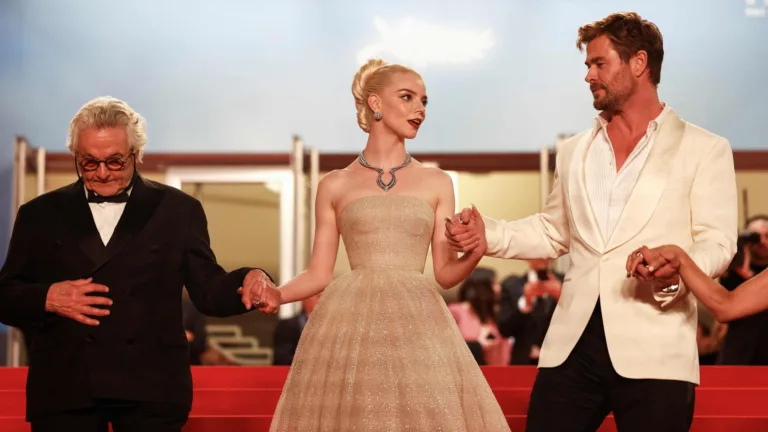
The film stars Australian actor Chris Hemsworth and it was his first time at Cannes. Hemsworth looked on the verge of tears as he stood next to his wife Elsa Pataky in the Grand Lumiere Theatre, taking in the standing ovation.

As the applause continued, Hemsworth and his co-star Anya Taylor-Joy flanked their director, with Hemsworth bestowing a kiss on Miller’s head.

Reviews, which were under embargo until the end of the screening, were mostly positive, praising Miller for an “immersive, spectacular prequel to his Mad Max reboot.”

Furiosa: A Mad Max Saga is an origin story that recounts the life of young Furiosa (Taylor-Joy), the battle-hardened rig driver played by Charlize Theron in his 2015 film, Mad Max: Fury Road.

Source: The Australian.