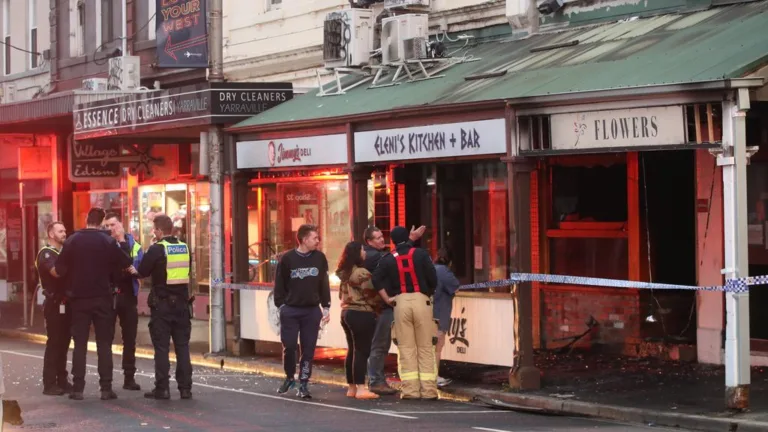
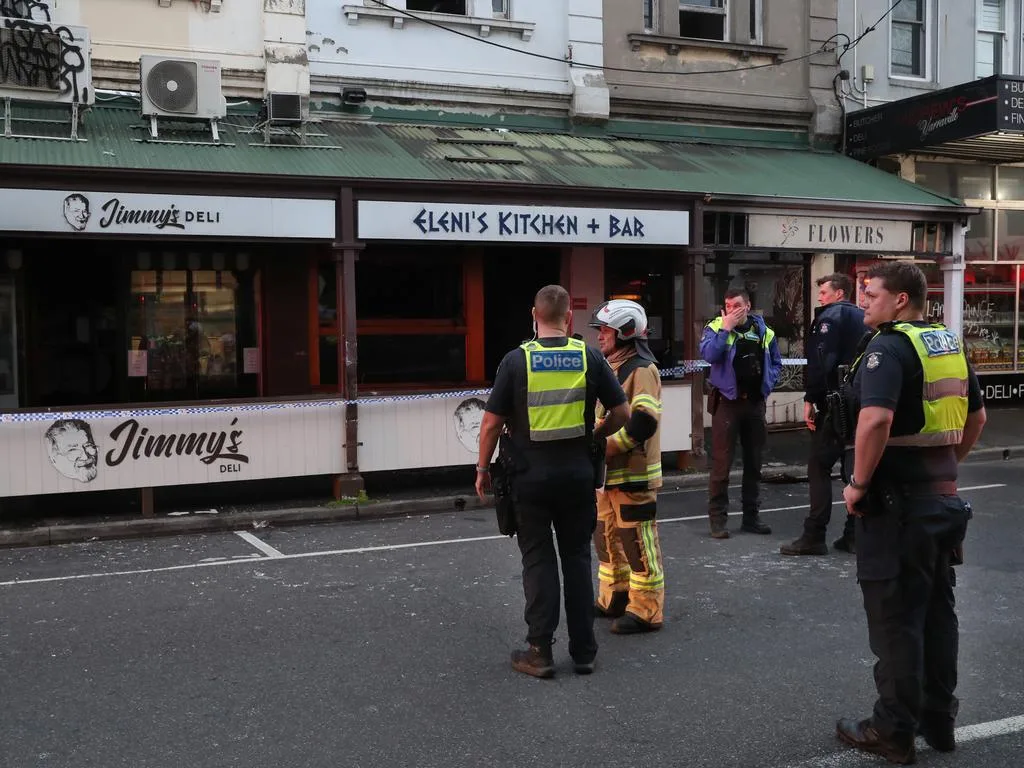
Victoria Police have today confirmed their investigation is ongoing following a fire that destroyed much-loved Greek restaurant Eleni’s Kitchen & Bar in Yarraville on Friday, June 28.
Police officials told The Greek Herald the fire was being treated as suspicious.
Emergency services arrived at the restaurant on Anderson Street about 5am on Friday morning to find smoke spilling out of the double storey building with a shopfront. The inferno also spread to neighbouring Jimmy’s Deli.
Police are treating the blaze as suspicious. Photo: David Crosling.
Fire crews were able to contain the fire and there were no injuries.
The front windows of Eleni’s have been completely smashed and the entire interior is charred. Only one thing remained intact – a photo of Father Antonis Amanatidis, the great-grandfather of the restaurant’s co-owners and sisters Anatoli and Eleftheria Amanatidis.
In a post on Instagram, the sisters said they were “shocked and in disbelief” their beloved restaurant had been partially destroyed by fire. They also thanked first responders as without “their efforts, Eleni’s would be totally in ashes.”
“If there is a positive light in all this darkness it is you our community, the support and love that we have felt from you all, has made us feel that we are not alone. You have all shown once again that Yarraville is indeed the best community in the world,” the sisters added.
“Our promise to you all, is that Eleni’s will be back.”
Anyone who witnessed the incident, has dashcam/CCTV footage or information is urged to contact Crime Stoppers on 1800 333 000 or log onto www.crimestoppers.com.au.
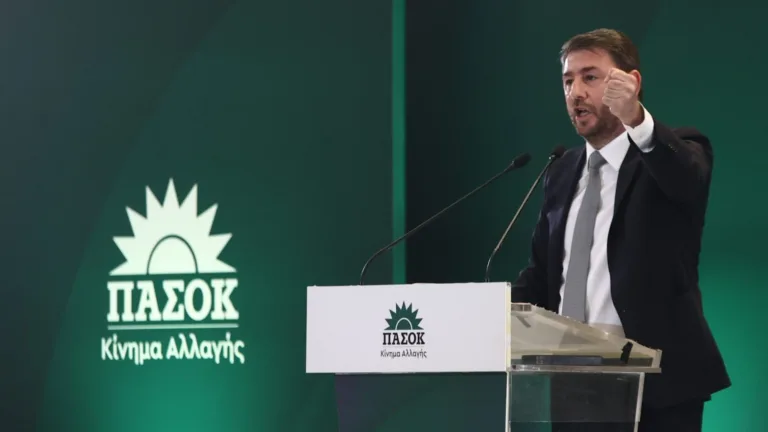
PASOK president Nikos Androulakis proposed a leadership election to be held on October 6 and 13 this year, during his speech at the PASOK Central Committee meeting on Sunday, June 30.
Androulakis emphasised the need to avoid prolonged infighting and declared, “I will not be anyone’s hostage,” criticising party opponents for “behind-the-scenes agreements and a parade of personal ambitions.”
Έχω ξεκαθαρίσει ότι Πρόεδρος υπό ομηρία δεν πρόκειται να γίνω από κανέναν. Είτε εντός, είτε εκτός ΠΑΣΟΚ. Η αυτονομία της πολιτικής από τα συμφέροντα είναι η πυξίδα της πολιτικής μου διαδρομής. Το έχω πληρώσει αλλά αυτό είναι αδιαπραγμάτευτο. Γι’ αυτό λοιπόν οι μόνες σωστές…
— Nikos Androulakis (@androulakisnick) June 30, 2024
Androulakis called for candidate debates and affirmed that he would seek a renewal of his mandate from PASOK members. Reflecting on his tenure, he acknowledged that the party had not achieved all its goals, but noted a significant reduction in the gap between PASOK and the two leading parties, New Democracy (ND) and SYRIZA.
Meanwhile, Mayor of Athens Haris Doukas and Pavlos Geroulanos have announced their candidacies for the PASOK presidency. Doukas has been signaling his intention to run over the past few days, setting the stage for a competitive leadership race.
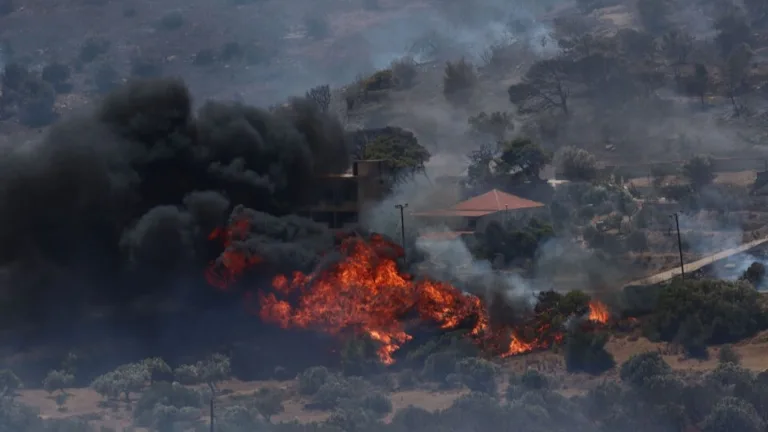
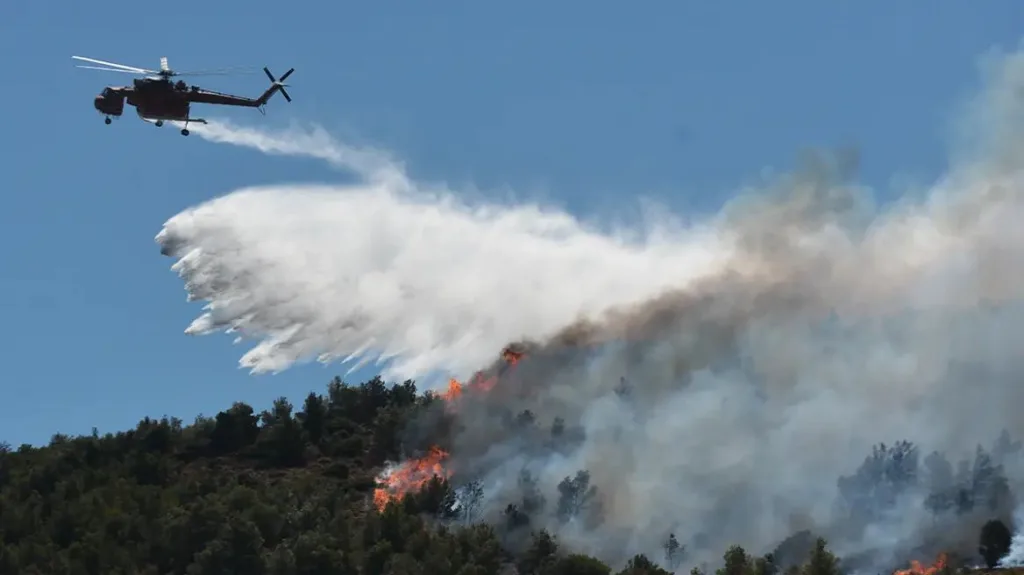
Greece faced a fiery onslaught over the weekend, with multiple wildfires breaking out near Athens and other regions, creating a “ring of fire” around the country.
In Attica, two large wildfires raged on Sunday. The first, near the town of Keratea, began around 1pm and rapidly spread due to strong winds, destroying homes and cars. The fire is advancing towards the town of Lavrio and has already affected both low growth and inhabited areas. Authorities have evacuated residents from several settlements, with 138 firefighters, nine waterbombers, and eight helicopters battling the blaze. Deputy Mayor Athanasios Makrodimitris reported numerous hotspots and called for more aerial support.
In northern Athens, another fire in Stamata prompted emergency evacuation messages, while a separate blaze in the agricultural and forest areas of Soufli in Evros, northern Greece, is also being contained with firefighting efforts underway.
Greece battled weekend wildfires.
Meanwhile, on Serifos island, a large wildfire that erupted on Saturday was brought under control by Sunday. Mayor Konstantinos Revintis described the scene as a “biblical disaster,” with significant damage to the southwestern part of the island. The fire prompted multiple evacuation messages and involved a substantial firefighting effort, including reinforcements from Athens.
In northern Greece, another fire broke out in the Soufli area of Evros on Sunday morning, burning agricultural and forest areas. The fire department deployed 26 firefighters, nine vehicles, three aircraft, and a helicopter to contain the blaze.
These wildfires underscore the urgent need for enhanced firefighting resources and strategies to combat the increasing frequency and intensity of such disasters in Greece.
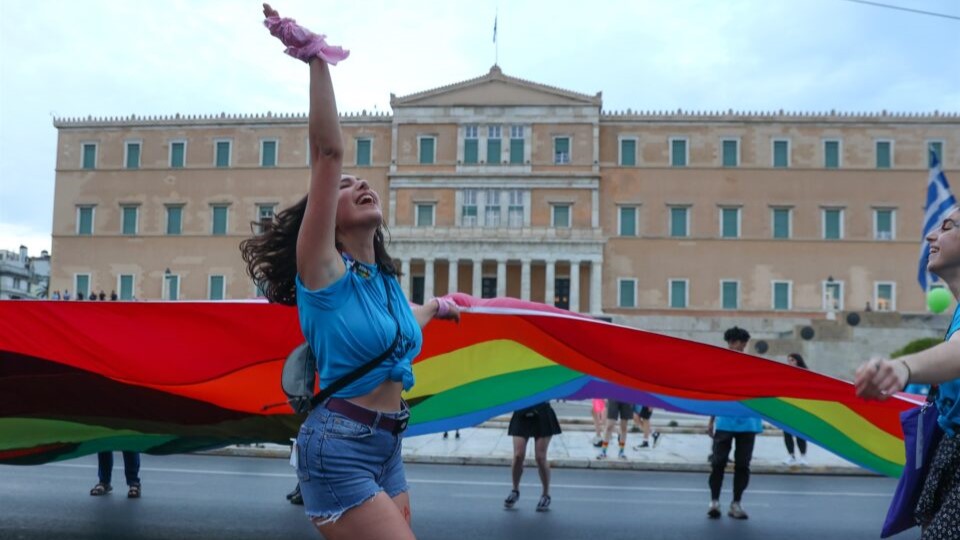
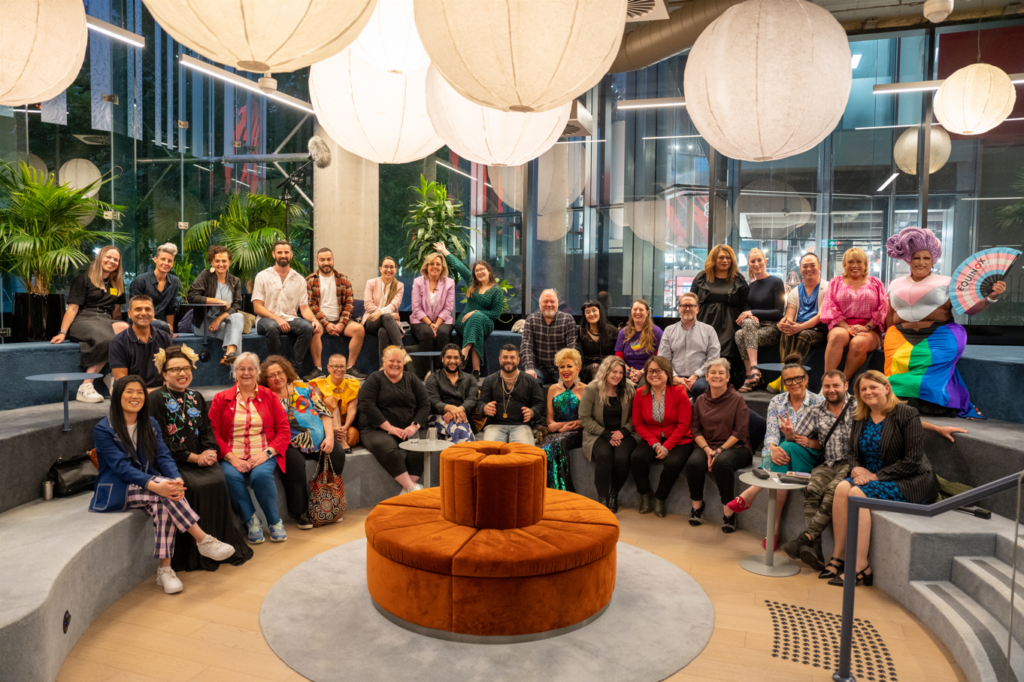
As the world celebrates Pride Month, the Greek Australian community finds itself reflecting on its own journey.
John Tzimas, an administrator of the Greek kai Gay Facebook page, paints a vivid picture of the challenges in the early days.
“In the past there were many. Members felt excluded from the Greek community, experienced difficulties coming out to their families, and felt ostracised by everyone around them,” he says.
“Relationships were difficult when our partners struggled with us not coming out to family and friends. Many of us were forced to live a double life. Fortunately, in 2024 that is not the case for many of us. Negativity still exists, but it is noticeable more on the fringes of the Greek community and in the church.”
A long way from home: John’s story
John, a member of the Greek and Gay Support Network (GGSN), paints a vivid picture of the early days. Formed in 1995, the GGSN’s two groups, the Greek and Gay Group (GGG) for men and the Greek Australian Lesbian (GAλS), were lifelines for those struggling with isolation.
“We were constituted relatively informally and met regularly to discuss issues that were relevant to us at the time, including coming out, families, friends, work, sexual health, religion, etc,” John, who joined the group in 1998, says.
“I discovered my sexuality later in life after being married with two children. Ever since then I have been coming out, and it never seems to end.
“I am very fortunate to have an amazing relationship with my children, my sister, and my mother (father has passed). It wasn’t always easy, particularly in the early years. Fortunately, I had the support of the group, my sister and my friends to guide me through the difficult times. My sexuality is no longer an issue for those around me.”
Now a pappou, John sees how far the LGBTQIA+ community has come from the days when the GGSN was created to help its Greek Australian members support each other given there were no other support mechanisms within the Greek community at the time.
Over the last 29 years, the GGSN has fostered lifelong friendships and achieved significant milestones.
“Thousands of Greek Australians have been supported in some way through our work,” John says. “Our annual dance parties allowed us to enjoy our heritage with Greek music and food in a safe space.”
John also remembers the pivotal moment of the ‘yes’ campaign for marriage equality.
“The celebration of Marriage Equality at the Melbourne Pride March of that year with the banner ‘Και στα δικά μας’ (a wedding salute) remains a powerful memory,” he reflects.
Currently in Greece, John says that life there is not “The Mykonos Experience.”
Same sex marriage passed in Greece earlier this year.
“It is great to see legal recognition rights slowly developing similar to those we have in Australia,” he says, adding that homophobia outside the major centres of Athens and Thessaloniki and party islands like Mykonos is more prevalent than in Australia.
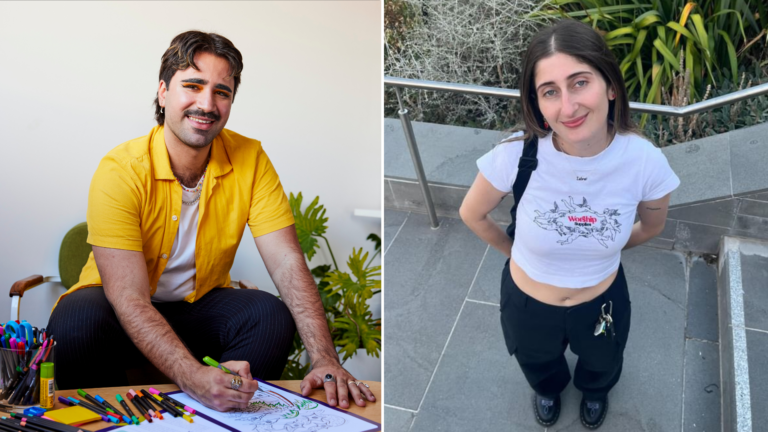
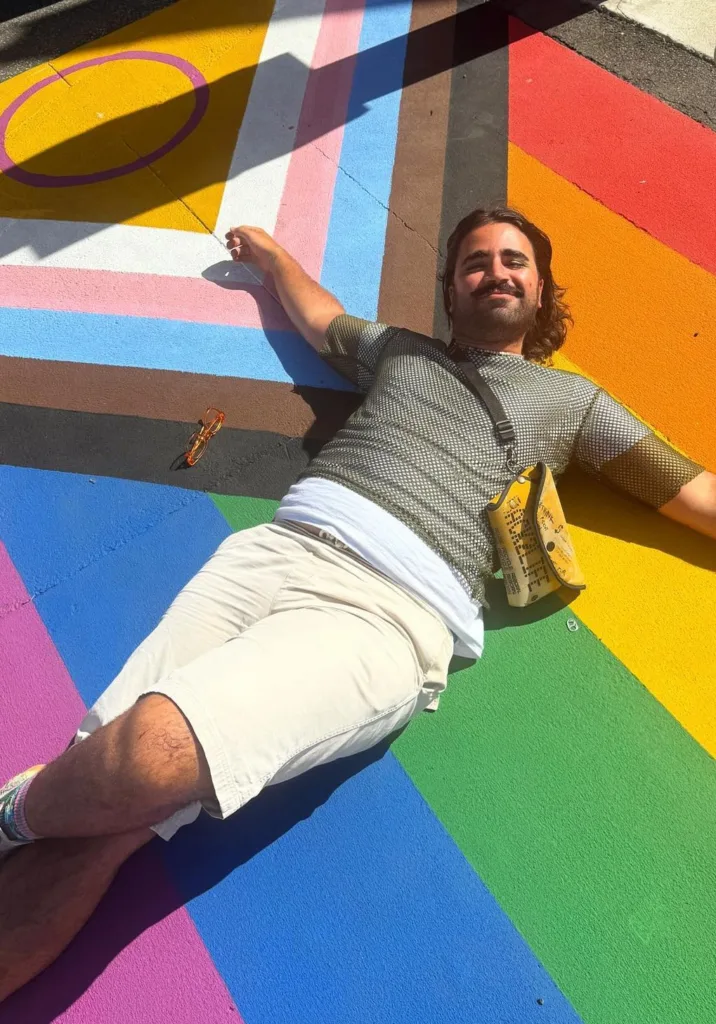
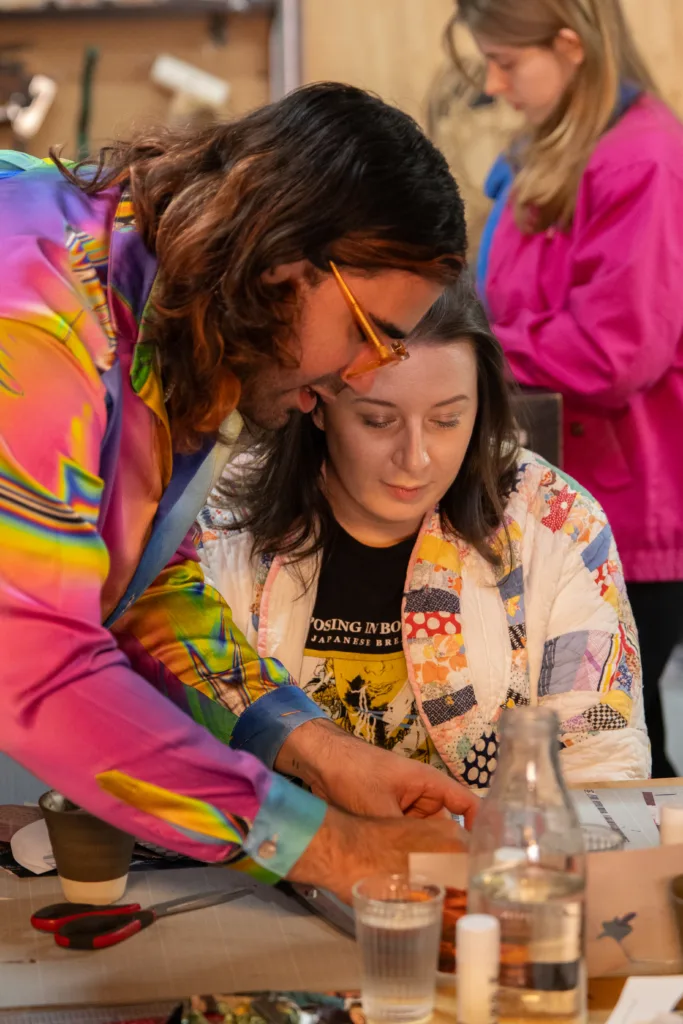
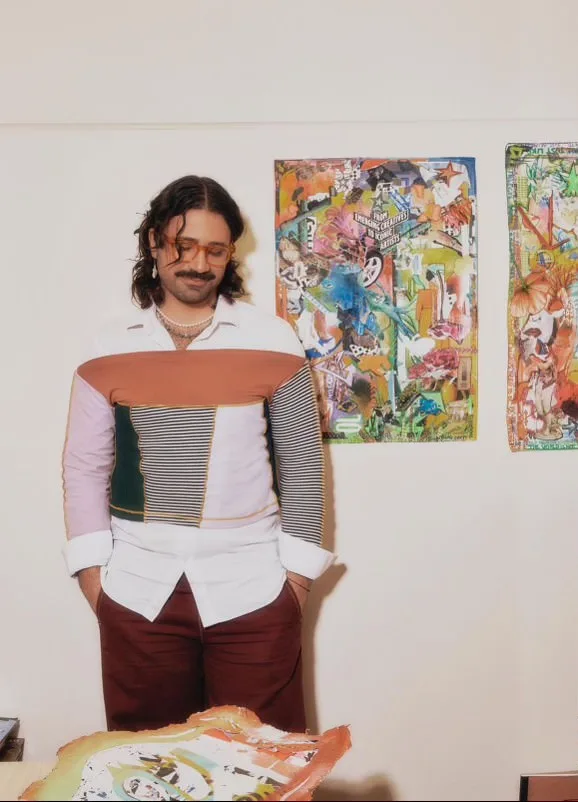
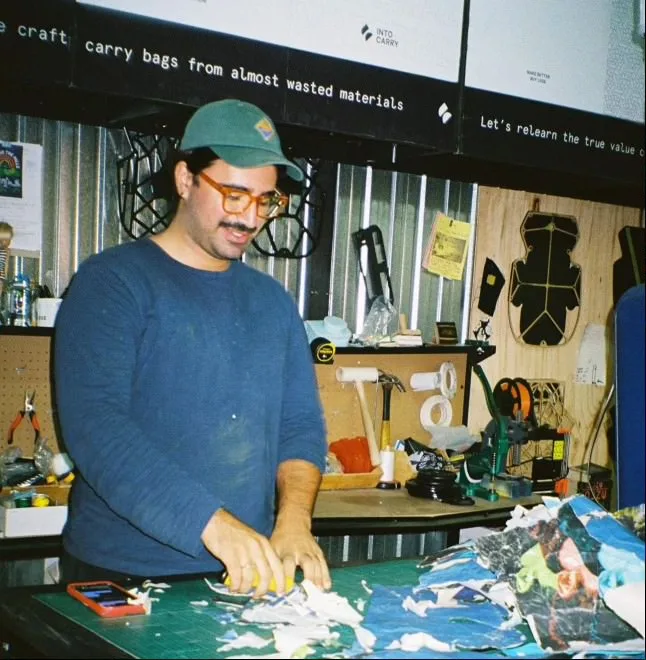
Nicky Tsekouras, an artist and lawyer, says he remembers his uncle struggling with his own sexuality and paving the way for acceptance and inclusion in his own migrant family.
“My uncle is also gay,” Nicky reveals, “and everyone knew this in my family, but this was not necessarily spoken about.”
He remembers the fear and confusion, especially witnessing his uncle’s struggles.
“The first person I confided in about my own sexual identity was my uncle. I sent him a text, and then we went for a coffee. He gave me plenty of advice,” Nicky says, “though I don’t remember much of it.”
Nicky was pleasantly surprised by his family’s own acceptance of him. Not just his siblings, but his yiayia’s attitude was also positive.
“My yiayia was always confident with what I am and who I am and what I do,” Nicky says, adding that his family met him with love and acceptance.
“Apart from my family, I don’t think I ever told anyone else specifically. It all happened organically. I had my first partner at 19 years.”
“The visual arts community is very accepting,” he shares, admitting that things may not have been so easy had he pursued a career in law.
He also adds that Greeks are more accepting of men who are gay these days than they are of women. One woman The Greek Herald spoke with wished to remain anonymous, saying that she is still experiencing family conflict that she does not want to re-ignite for the sake of her child. On a positive note however, she found that her child did have acceptance at Greek school.
Breaking Barriers: Kat’s voice
Greek Australian content creator Kat Zam, who grew up in a small town near Mildura, faced a different challenge.
“There was no representation, and I didn’t even know any Greek gay people growing up,” she says, adding that she did not realise she was a lesbian until she turned 19 years.
Coming out to her family was initially difficult, with anxieties about their reaction.
“My mother is relatively progressive, and we didn’t just stick with Greeks and had friends from all backgrounds growing up,” Kat recalls.
“Mum wasn’t worried about me being gay, but about what yiayia and pappou would say. Another relative told me that my mother was open-minded but worried about how others would treat me. Older generation Greeks can be a bit close-minded and conservative. And she grew up at a time when gay people were bashed and things like that.”
Kat initially found support in the Greek kai Gay Facebook page, but, more recently, finding her voice online has been empowering. Known for her content creation of Greek Diaspora Stories, she began to wonder why her Greek and gay identities needed to be kept separate.
“I was focusing on Greek content but, last year, made a video about being queer,” she says.
The response was overwhelmingly positive, despite “some nasty comments.” From the messages, she understood there was a real community for Greek gay people and she began to organise social events for LGBTQIA+ communities.
Her social media presence has become a beacon for others. Kat’s optimism is infectious.
“There’s a lot of young Greek Australians who are a lot more open-minded,” she beams. “The younger generation is changing, and it’s changing for the better.”
The fight continues: Kyriakos’ perspective
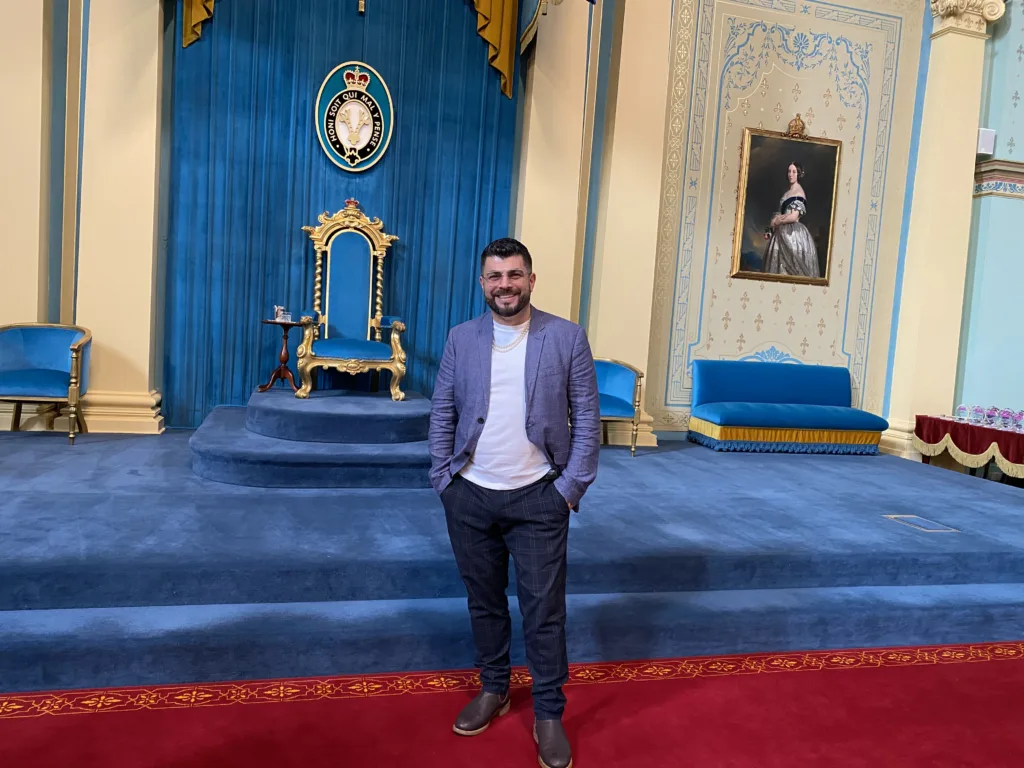
Kyriakos Gold, who identifies as pansexual, highlights the ongoing struggle for acceptance within the broader Greek community.
“The Church,” he states, “is a big barrier for a lot of Greek Australians, particularly those who are more culturally or religiously connected.”
Kyriakos Gold.
He points to Melbourne priest Papa Lefteris who demanded parishioners vote ‘no’ in the same-sex marriage survey and allegedly saying gay people should get shot.
“And yet thousands of Greeks, especially young Greeks, continue to show up for him and support him,” Kyriakos says, and he also adds that the community’s identity is linked to the church and, as a result, this can be exclusionary.
“It’s important for the Greek Orthodox Church to come to the party and actually acknowledge the LGBTQIA+ community.”
Kyriakos adds that he has not always felt safe in the Greek Australian community.
“I have presented at Greek events and felt safer on the stage than off,” he says.
“I faced homophobia. Not open homophobia. When you are successful in what you are achieving you are not an easy target, but there will be subtle homophobia. For instance, you may lose an opportunity and you may not be able to pinpoint why. Little comments, looks, conversations and jokes. Gay people between us have reclaimed words and can make jokes.”
Having a celebrated career and large social media following has helped Kyriakos. Currently in the social impact space, Kyriakos feels that “sexism and homophobia are linked.”
“In men, toxic masculinity drives it. In women, it is religious conservatism. If we don’t achieve equality between the two genders, forget the gays,” he says.
Now aged 48, Kyriakos is established in his career.
A Think Pride an event Kyriakos (centre) presented last year with the support of the Victorian Government.
“It is different when you are younger and you don’t have the words,” he says, also pointing to the internet today as a tool to help people get information.
A watershed moment in Australia came during the plebiscite for the gay community.
“We got to know who our allies and enemies were,” he said. “There was a disconnect between multicultural communities and the broader sector.”
Looking forward: A brighter future
Despite the remaining challenges, the Greek Australian LGBTQ+ community is moving forward with pride. Connections are being fostered, and there is a vibrant community with a lot more visibility.
Kyriakos remains hopeful. “There is a growing acceptance within the Greek Australian community,” he acknowledges.
He concludes with a powerful message: “We are Greek. We are LGBTQIA+. And we belong.”
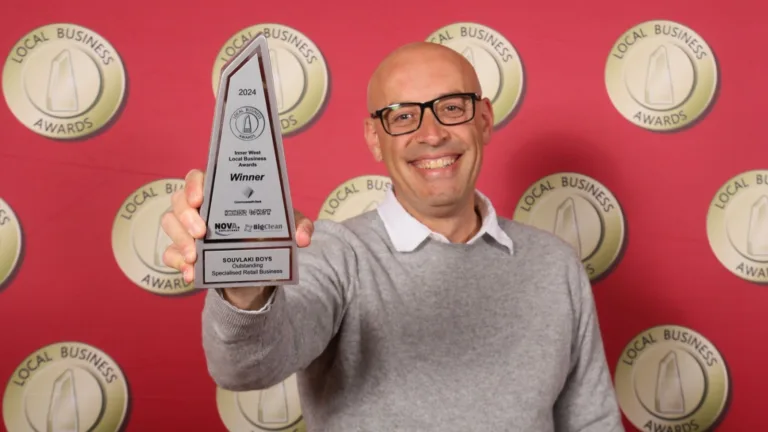
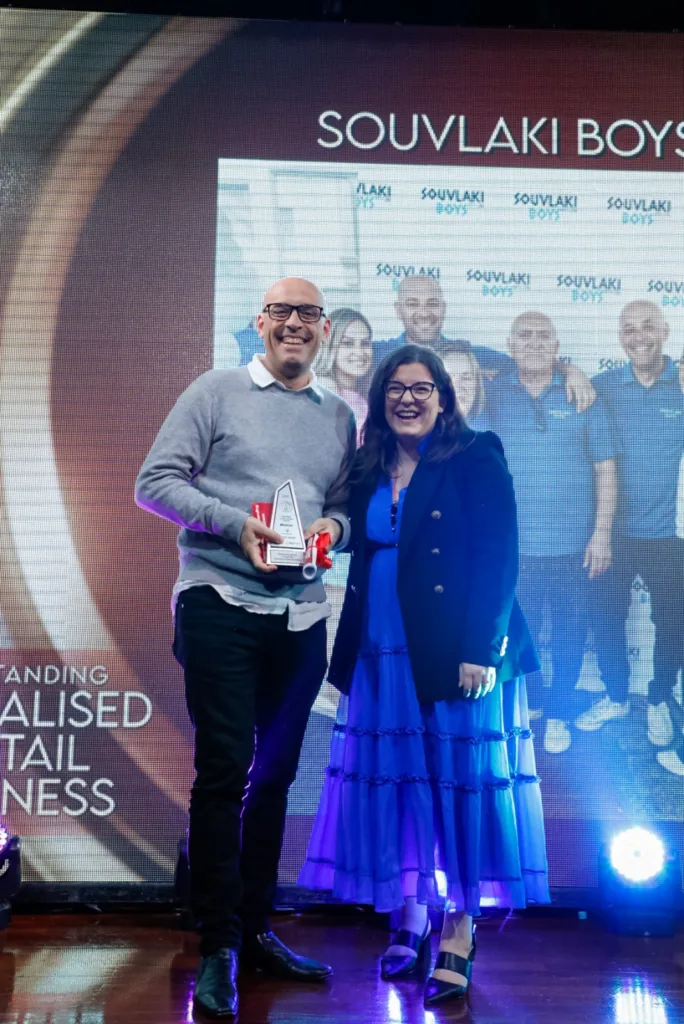
Greek-owned family business, Souvlaki Boys, have won the ‘Outstanding Specialised Retail Business Award’ for the fourth time at the Inner West Local Business Awards.
“It’s unbelievable and such a surreal experience,” co-owner of Souvlaki Boys, Nick Alepidis, told The Greek Herald.
“It’s an honour and a privilege to win. It’s a testament to the business, my father, our staff and our loyal customers who have made the business what it is today.”
Nick’s father, Greg Alepidis, started his business trade in the south-west Sydney suburb of Canterbury as part owner of Advanced Poultry and sold his shares in 2016. Now he has passed on his recipes to Nick and his brother, Arthur, who run Souvlaki Boys.
Arthur (left) picks up the award.
Nick and Arthur opened Souvlaki Boys in the heart of Marrickville, Sydney in 2016 and have gained a loyal following ever since for their lamb backstrap, pork neck, pork belly and chicken souvlakia. In March 2024, they even opened a new store in Marrickville.
Growing up in Melbourne’s inner north, working class suburbs during the 1970s and 80s, I took the many interesting houses there for granted.
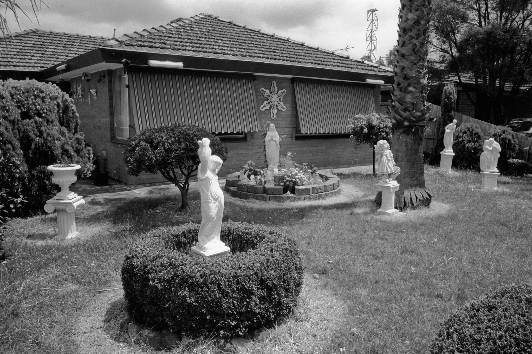
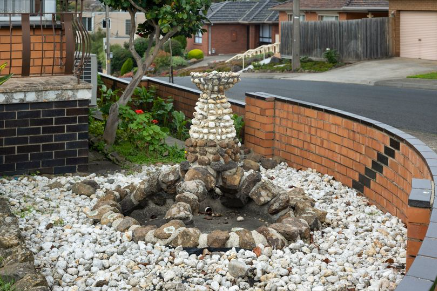
On my walks to and from school for example, my passing glances would sometimes linger slightly longer on a stand-out feature such as Acropolis-like verandah columns or Ancient Greek type statues on front lawns, but it was just aesthetics and didn’t mean anything to me back then.
At some point though, slightly older and ‘street-wiser,’ I figured it out, “Aha! They’re the Greek and Italian houses, and those plainer homes are probably the Aussie ones.”
I’d wince in unison with my peers when we passed one of these ‘migrant’ houses. A mixture of rebelliousness and confusion, inherent in adolescent identity-seeking, informed us that these were not homes of the mainstream Aussie culture.
Jim and Pam
Even if these more ornate homes happened to be ours, how we expressed this adolescent angst inside our homes is a different story.
It was only through eventually being exposed to Europe and to Greece, that I came to appreciate my cultural heritage. This included these homes of my suburban Melbourne, migrant parents’ generation. I realised they were built and decorated inside and out, with love, care and pride – with gratitude.
Hairdresser
Photographer of such homes and more, David Wadelton, puts it to me another way – certainly through his art and this time, through my discussion with him.
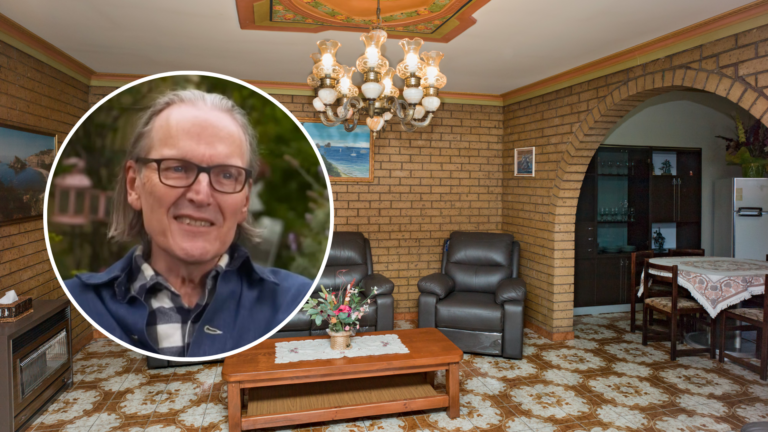
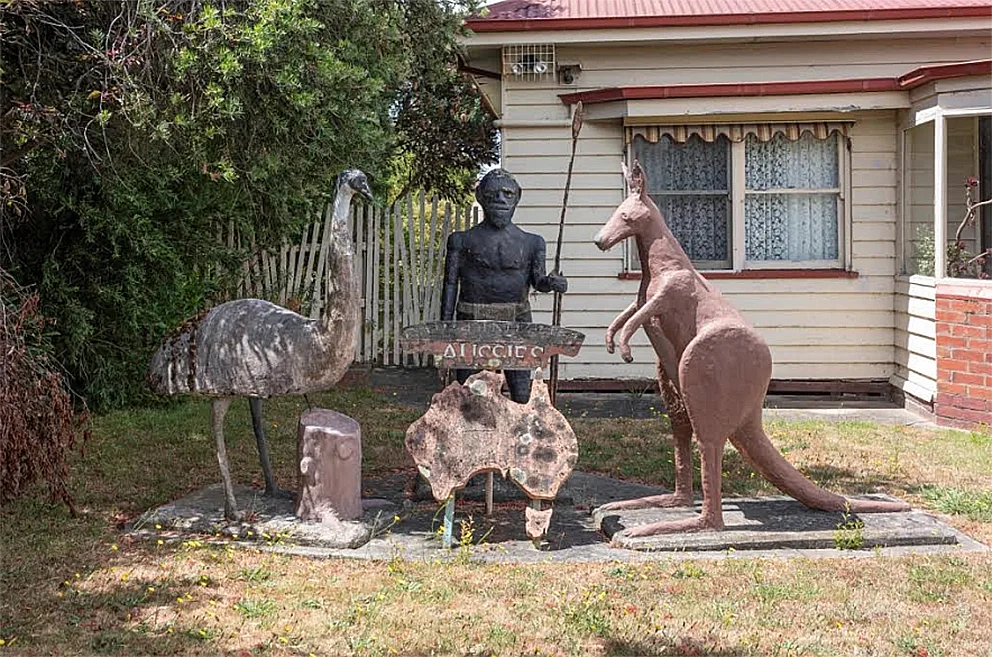
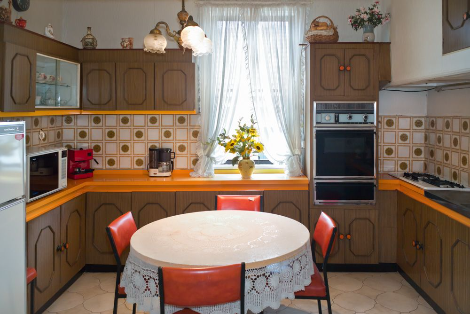
“So much can be read from these properties – from their exteriors and interiors. They’re a time capsule: Souvenirs of the world these migrants came from, incorporating aspects of their new adopted lands. For example, religious-themed memorabilia, alongside seashell and kangaroo adornments,” David says.
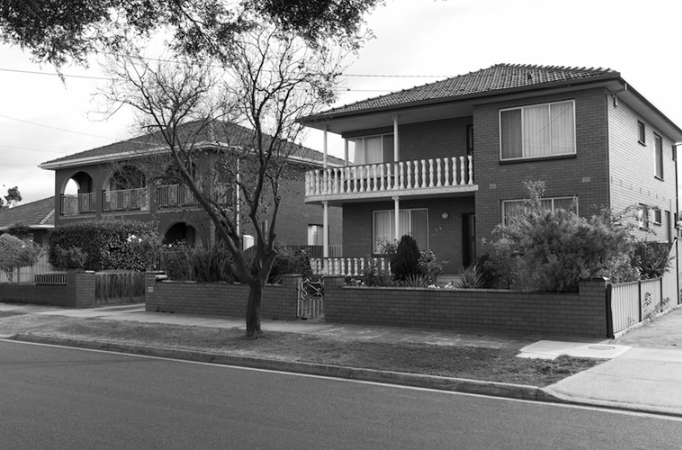
Alluding to his photobook, ‘Suburban Baroque’ (2019 – now sold out), and his new book ‘Front Yard,’ David says: “Much of the Greek and Italian-style décor referencing to the Parthenon and Palazzos, reflect pride of their homeland and new life prosperity, coming from post war traumatised countries. It’s abundant and fascinating, whereas the Anglo-style of décor tended to be more conservative, with things like wallpaper and matching carpet.”
Espresso Bar
David, now 69, came from a Victorian country town and moved to the inner city northern suburb of Northcote, Melbourne in 1974 to attend College, “when the area was inexpensive and working class.” He began photographing what he deemed interesting in his new environment – suburbia’s people and places.
Statues
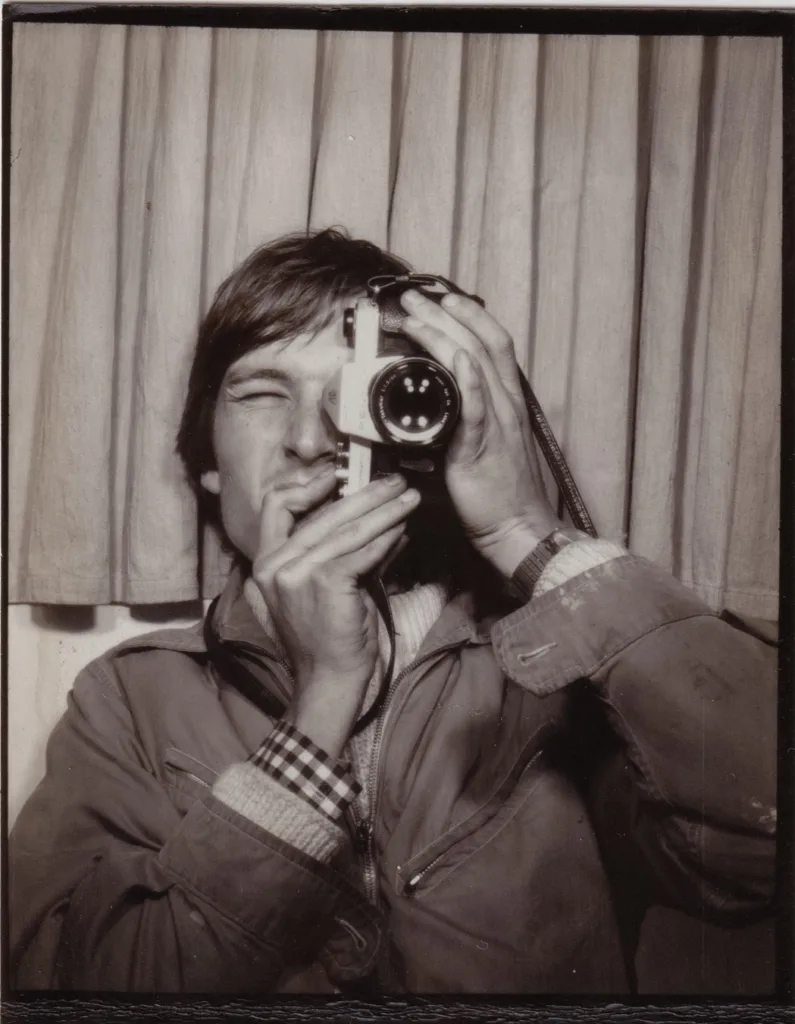
“I initially used a Pentax SLR camera my father gave me, before I bought a second hand M3 Leica camera in 1977. Now I mainly use a digital camera because they’re handier, as you don’t need a tripod or film,” he explains.
Armed with these tools of his trade since the 1970s, he has retained many film negatives of his initial photos which serve as important socio-historical documentation, while continuing to photograph.
Young DavidButcher
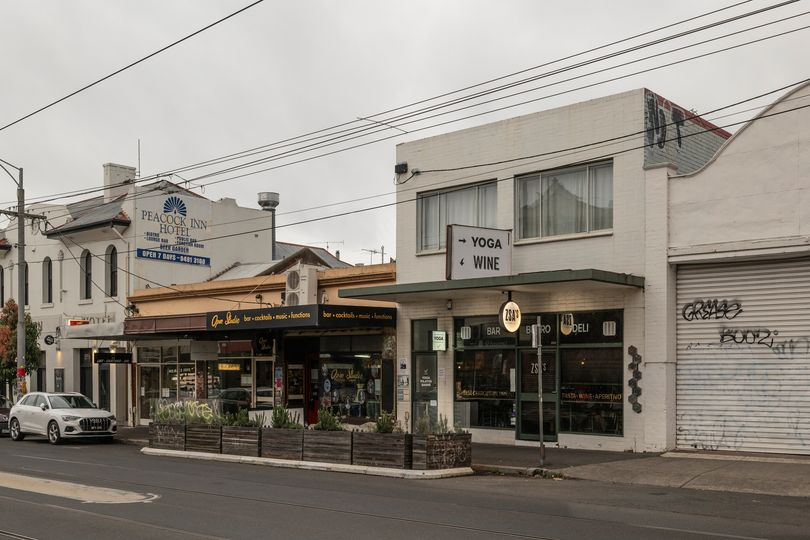
“I’m an Anglo outsider but since I’ve been photographing here, I’ve caught the generational and demographic evolution of the area – its gentrification,” David says.
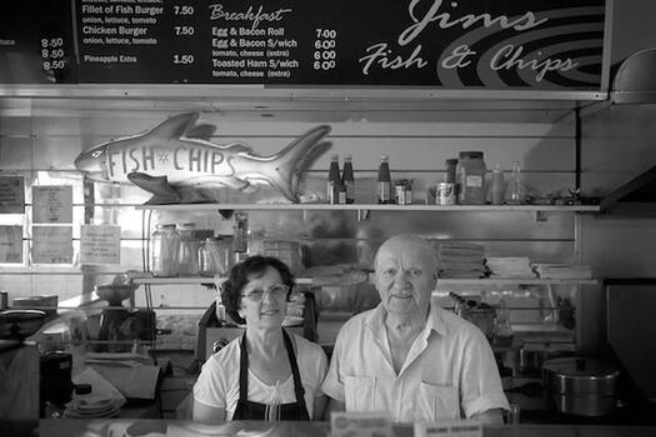
He gives the example of ‘Jim and Pam’s fish’n’chip shop’ with the iconic fibreglass fish sign, as being a marker for gentrification. It closed down in 2014 and is now an Israeli street food place.
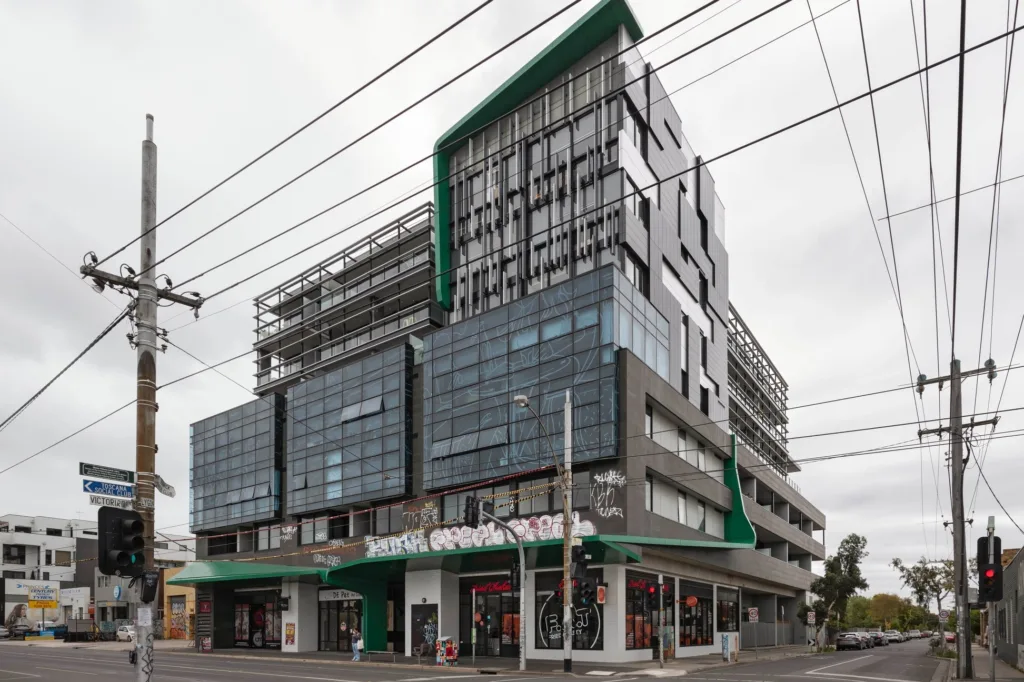
“Gone are the meat works, the tannery, the pottery and the inexpensive workers cottages. There used to be more community life, whereas now it’s more service orientated. There’s still a communal life in these now-gentrified inner city suburbs, but you can’t easily quantify it. You can see the difference elsewhere though where suburbs are more sparsely populated and newer,” he says.
He explains on a practical level that this ‘gentrification’ phenomena are a mirror of many inner city suburbs around the world, like in France, Italy and England (including replacing single homes with apartments).
“We’ve been slow to adapt, and now Melbourne is growing so rapidly, we need medium density living. It’s a bigger city than Sydney at the moment,” he says.
Plaza at night
David’s work has featured in publications such as in The Sydney Morning Herald, The Age, the ABC and others. A few years ago, The Greek Herald, referring to his second book, ‘Small Business’ (a companion to ‘Suburban Baroque’), aptly titled an article on David’s work: “Photo Book showcases legacy of Melbourne’s early European migrants.”
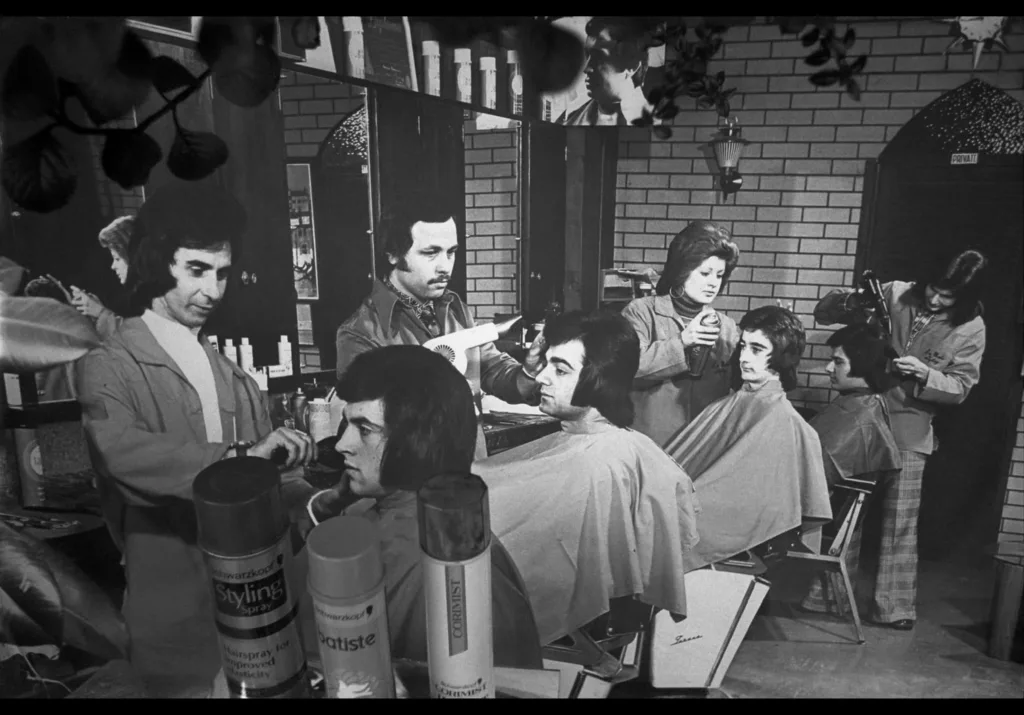
The Guardian wrote that David’s work involves “exploring the role of public culture, the contested nature of public space, and the character and composition of public life,” as part of his exhibits at The Australian Centre for Contemporary Art. The National Gallery of Victoria has also featured David’s work. It very recently showcased his brilliant photo taken back in 1979 of a Richmond hairdresser.
Milk bar
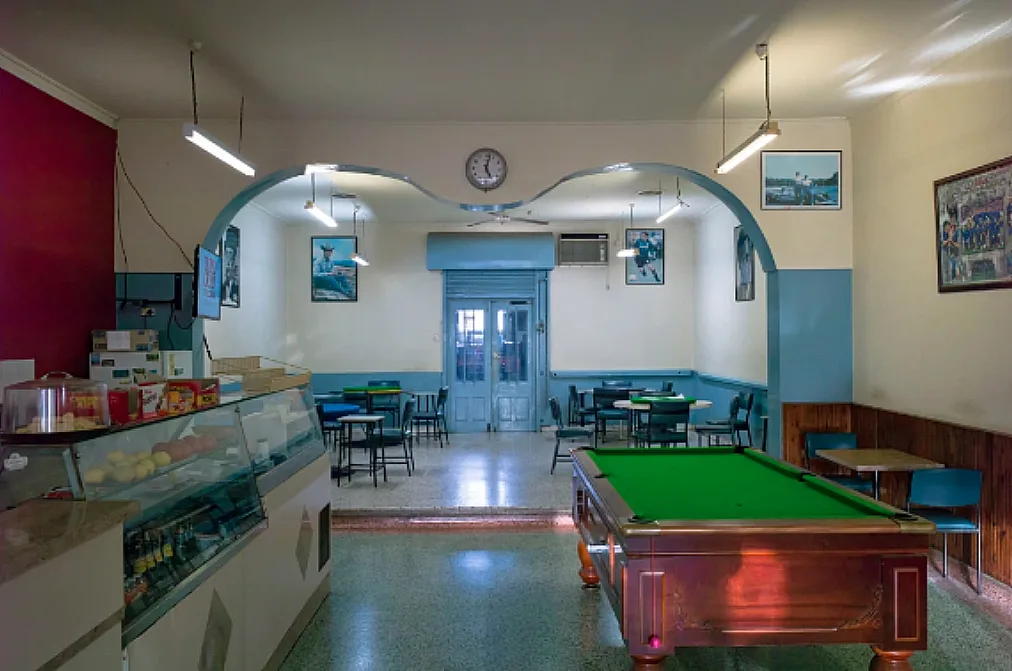
For all his acknowledgement and acclaim, David remains humble and passionate about his art – photography and its inspirations. We discuss the various espresso bars and kafeneia servicing mainly older migrant men that have now closed and been replaced with trendy cafes and bars. Very few have kept aspects of their original style, now catering for a mainly younger and ‘hipper’ crowd.
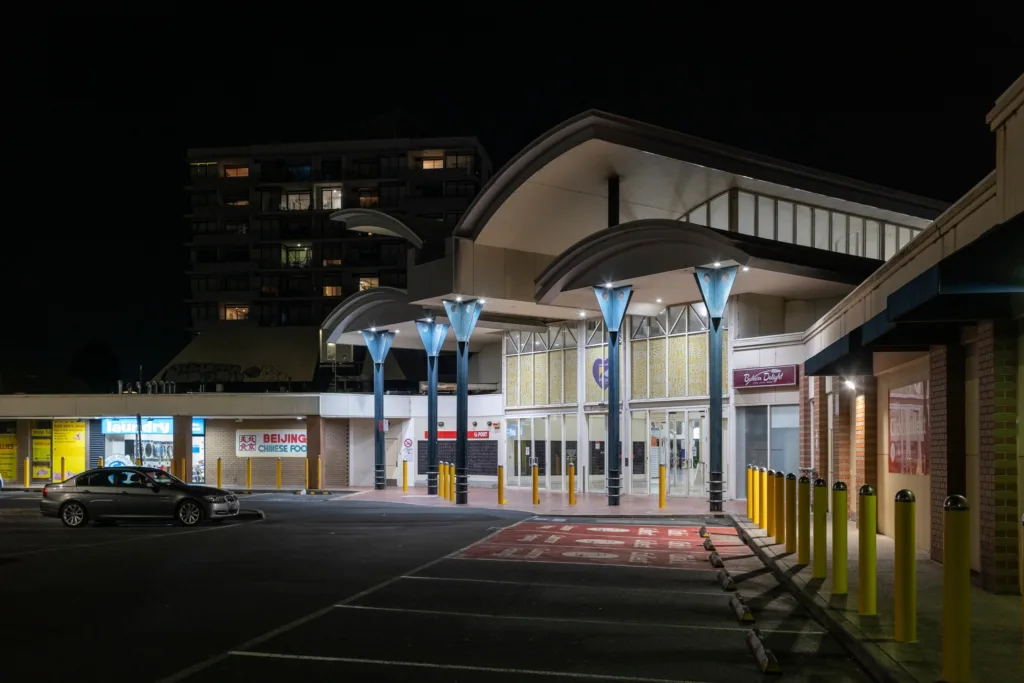
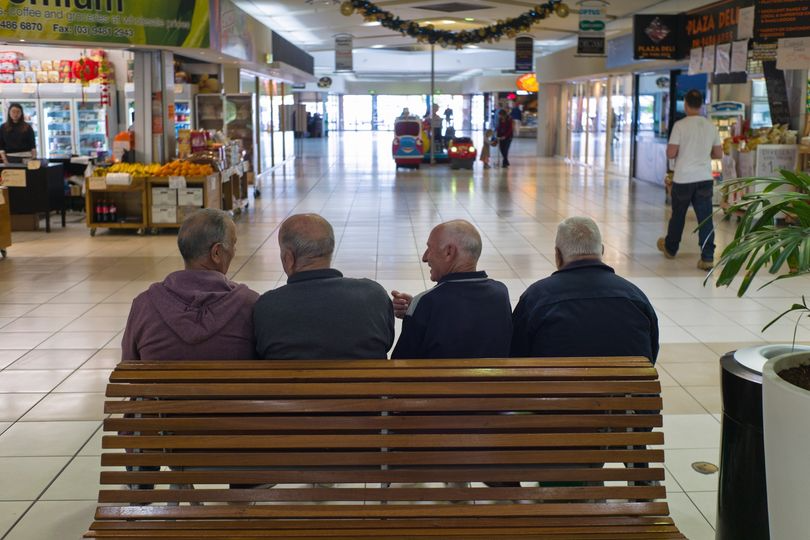
This sees the old patrons creatively adapting, and using the local Northcote Plaza shopping centre, a retro place built in the 1970s, as their hangout and meeting place.
“It’s smaller than the big multi-complex and multi-storied shopping centres and stuck in a time warp which gives it its unique character,” David says.
Aussie frontyard
He cites some experiences where he encountered difficulties in getting a photo.
“I’ve had to build up courage to be a photographer,” he relates.
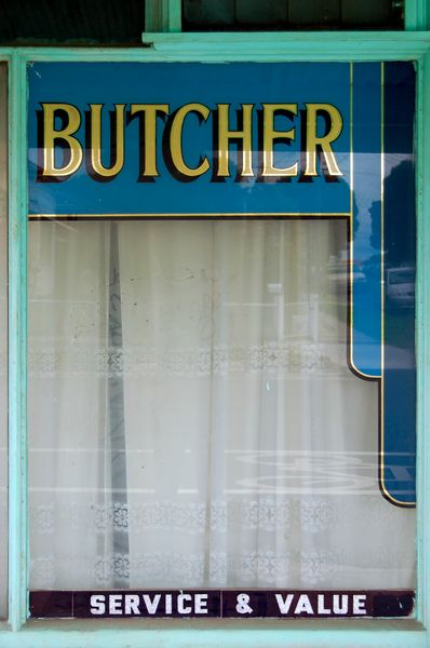
“Years ago, at a butcher shop in the area, the owner kept saying no, but I persisted, while continuing to buy meat from there… until I got the shot!
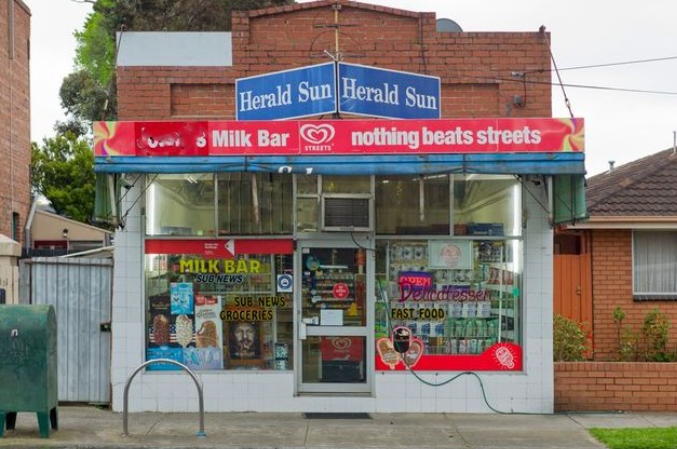
“Then there was the fruiterer, who’s been there since 1956, but was sternly against a photo too, so I walked past and discretely used a long lens. Others are happy to be photographed and even offer to strike poses, like Frank the Greek hairdresser. It’s really up to the person. For example, there was a Milk Bar owner in another suburb that ran out after me yelling, ‘you can’t photograph my shop!’ But then I found out that he’d been robbed and viciously attacked before that.”
This brings me to asking David if it’s getting harder to get suburban street photos now, compared to the old days when there was perhaps an overall more relaxed and secure society.
“There was more affordable real estate back then for example and people escaping difficulties of their former home countries and wanted to show it. But now economic structures are prohibitive of that boldness. Australia and the world is going through a more ‘closed up’, conservative period,” David says.
preston kitichen
Getting back to discussing what he likes best – the ‘grass roots’ aspects of his work – David tells me: “I remember the Milk Bar that used to be around the corner from me. It was a family business and run by such hospitable people, who actually offered me free accommodation in Greece!”
Smiling, he then nostalgically recalls: “There was another Greek couple who owned a shop close by, Lou and Georgia, who were always up for a chat. Lou would complain about land tax. Through their hard work, he and his wife had accrued many properties, for dowries, etc. When Lou died, Georgia moved back to Greece. Neighbours tell me she misses Australia. It’s like that when you have two countries.”
Maybe not such an “Anglo outsider” after all, David helps us all appreciate our parents’ stories of settling in Australia, to say the least.
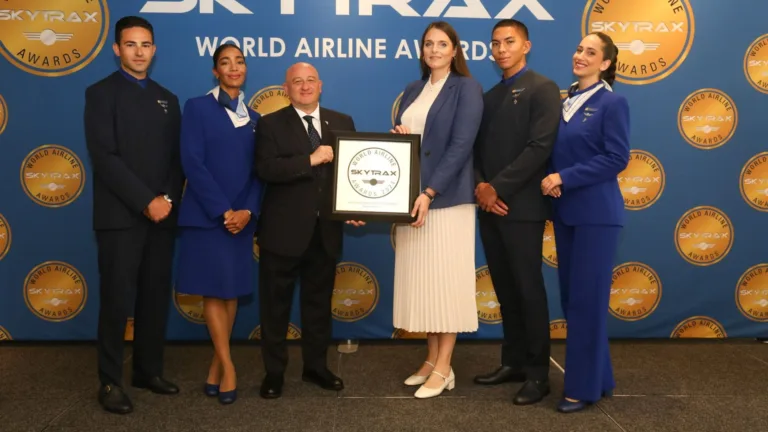
AEGEAN has been named the “Best Regional Airline in Europe” at the prestigious World Airline Awards 2024, for the 13th consecutive year and the 14th overall in its 25 years of operation.
AEGEAN is recognised again for the high quality of service and the unique travel experience offering to its passengers and is awarded the title of “Best Regional Airline in Europe” by Skytrax, the International Airline Rating Organization.
At the same time, it ranks among the best airlines, taking the 2nd place in “The World’s Best Regional Airline 2024” and the 3rd place in the ranking for “The Best Airlines in Southern Europe 2024.”
Mr Dimitris Gerogiannis, AEGEAN’s CEO, commented: “On this occasion of our 25th anniversary, we are proud and honoured to be named the Best Regional Airline in Europe at the Skytrax 2024 World Airline Awards. This 14th win in this category and our 13th consecutive year, is a testament to the unwavering commitment and dedication of our entire team.”
“It is a truly remarkable achievement for us in such a competitive and challenging industry. As we celebrate this anniversary, we are more committed than ever to enhancing our services and providing our passengers with high standards of service and hospitality. Thank you to all our loyal customers and my colleagues for making this success possible,” Mr Gerogiannis added.
Mr Edward Plaisted, CEO of Skytrax, said: “We congratulate AEGEAN Airlines on being named the Best Regional Airline in Europe at the 2024 World Airline Awards. This impressive milestone marks a fabulous 14th win in this category, including 13 consecutive years which is a truly remarkable achievement by an airline in this very competitive global region for air travel.”
I also pointed out that, just as in the first post-war years, no methodical, or systematic approach had been taken by the historical Greek communities and their institutions for the successive arrival of ships with Greek immigrants, resulting the early years of survival to be extremely difficult, whilst organised Hellenism and its institutions were completely unprepared.
Currently, we face persistent problems and enormous and almost unforeseen social changes that await the next generations of Greeks after 1935.
The difference is that in the 1950s, pre-war Hellenism and its institutions (Church and National delegation) were in a primitive state and functioned without serious infrastructure of organisation and constitution; while in 2035, Hellenism has a structured infrastructure, great economic, social and political flourishing, and is undoubtedly considered one of the most powerful communities in Australia. However, this strength depends on whether Hellenism is able to utilise and positively assess the huge fortune and enormous wealth the preceded first generation of immigrants had left behind – the one bequeathed by the previous generation of their parents, after 2035.
The legacy passed on to the children and grandchildren of the first, self-sacrificing, pioneering immigrants, after 2035 consists of remarkable buildings, complexes of buildings, shops, houses, mansions and galleries, clubs, shopping centres, unnecessary nursing homes, plots, stadiums, farms, camps, unfunctioning churches, unclaimed bank accounts and shares, abandoned and grassy factories and many others that were built with much effort and unbearable sacrifices, which were bought and acquired by the organised and community-based Greek immigrants who preceded them. Over 800 buildings and as many property premises, scattered throughout the capitals of the States. Their total value, conservatively, exceeds two, perhaps three, billion dollars.
These buildings, if not properly and creatively utilised, will become dilapidated and collapsed estates, or will be expropriated for immediate needs by the Commonwealth, or even be confiscated by local municipalities if safety reasons arise for the public. Any unclaimed deposits in banks will pass to the Australian Taxation Office (ATO) to be used for other purposes and objectives for the public needs, other than those for which they were collected and deposited. An indifferent, apathetic and uninvolved diaspora of successors is in danger of being held responsible for the leveling that may follow, when in 2050, the members of the Diaspora will experience severe decline and decay.
As the only deterrent solution to the incoming degeneration, I will propose the unification and utilisation of properties over the next ten years and their management in ways and methods that will lead to a dynamic, participatory and well-organised diaspora of Australian citizens of Greek origin, carriers of collectible Greek cultural identity.
I made this proposal in 1990, 1997, 2004 through my publications, as well as articles in Greek and Australian newspapers. The strange and absolutely oxymoronic and “schizophrenic” is that we all agree with the Union, we all know that with a perfectly coordinated, united, consubstantial and unbroken formation, Hellenism in every State of the Commonwealth will be great, it will flourish and be consolidated for the years to come, strengthening not only Hellenism of Australia, but also the homeland of our origin, Greece. Everyone is shouting this, everyone is accepting it, and all our leaders are trumpeting it.
However, when it comes to action, each of us has a face, a voice and a lot of vinegar. The remaining, perhaps for the next ten years, suspicious immigrants who brought in their suitcases both jealousy and envy from our homelands, erupt divisively. Why do you request the property of our clubs to change hands? Will Professor Tamis consume our properties? We will lose what we have built? They throw out irrelevant excuses, sowing fear. With absurdities that their property is supposedly endangered by a possible union, by a coalition of Greek unions. With improbable nonsense and gossip that our properties will be consumed by the historic Communities or even “the priest,” irreverently implying the Ecclesiastical Authority.
However, I would like for a moment our readers to think about the following scenario: To organise a coordinating body in each State, because each State has its own peculiarities, by impartial, entrusted, respectable leaders of Hellenism. This will constitute the Prytaneion (Rectorate), which will administer and plan the issues concerning Hellenism. The State Prytaneion may consist of 15 members, well-represented and well-respected, acknowledging also, the historical role of the Communities and the Church. With the responsibility and coordination of the Prytaneion, in each State, will prepare and draft, with due care, a Strategic Memorandum of Collaboration. Each Prytaneion’ Board will comprise members with expertise on legal, social, demographic, historical, political and economic issues.
In the Memorandum, the Collective Arrangement will be designed, where the legally and administratively secured shares will be named, always proportionately, according to the amount of the financial displacement of each member-entity. Some properties, if productive, will be exploited to make them more profitable. The “red” properties will be sold. The resulting amount will surely exceed many hundreds of millions of dollars.
Half of the capital could be allocated to the purchase of new, comfortable, functional facilities, large buildings, as befits a united Hellenism. The other half of the capital will be remunerated in money markets and banks, and interest rates and equity dividends, which will exceed several tens of millions, will be used to run services for Greeks and their children. With the huge reserve capital, three or four magnificent buildings will be acquired, always based on the decisions of the State Prytaneion, in the capitals of the States, in which the communities of Greeks of the future will operate. These buildings will have cinemas, lecture halls, members’ clubs, welfare and counselling centres, youth and sports centres, youth protection centres, doctors’ offices and clinics for the destitute and the homeless. All costs will be covered by interest rates and government programs. Any surplus will be reinvested in the infrastructure of the Greek Prytaneion in new buildings with new or additional services, such as a special Forum for Greece and its National issues, a Forum for the protection and dissemination of Greek-language education, a Forum for Sports, a Forum for the operation of academic programs and Research, a Forum for the Study and teaching of Greek Culture.
How many of our leaders, who would agree with what we propose above, are or may be ready to say yes to such a Union? How many are willing to abandon suspicion, mistrust, philopsy and take a step forward? How many can see themselves, beyond the narrow borders of their village and periphery, and see the Panhellenic vision, Light and Voice? There are clubs that sit on hundreds of millions of cash which remain inactive. I, boldly, declare to them that their wealth is significant and worthy only if they serve a united, collective and consubstantial Hellenism with a future.
*Professor Anastasios M. Tamis taught at Universities in Australia and abroad, was the creator and founding director of the Dardalis Archives of the Hellenic Diaspora and is currently the President of the Australian Institute of Macedonian Studies (AIMS).
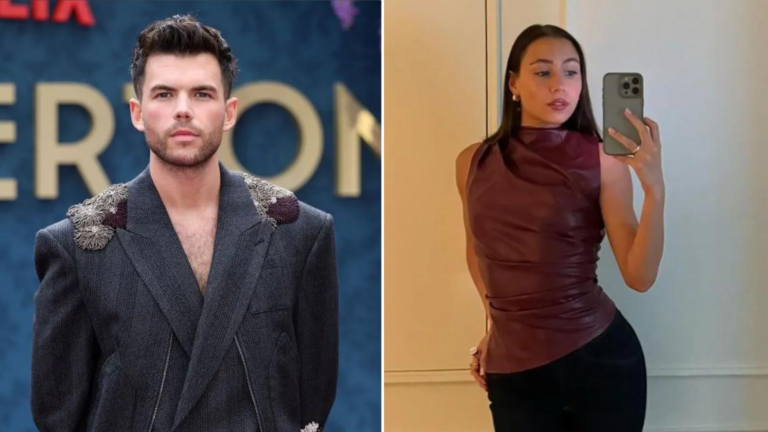
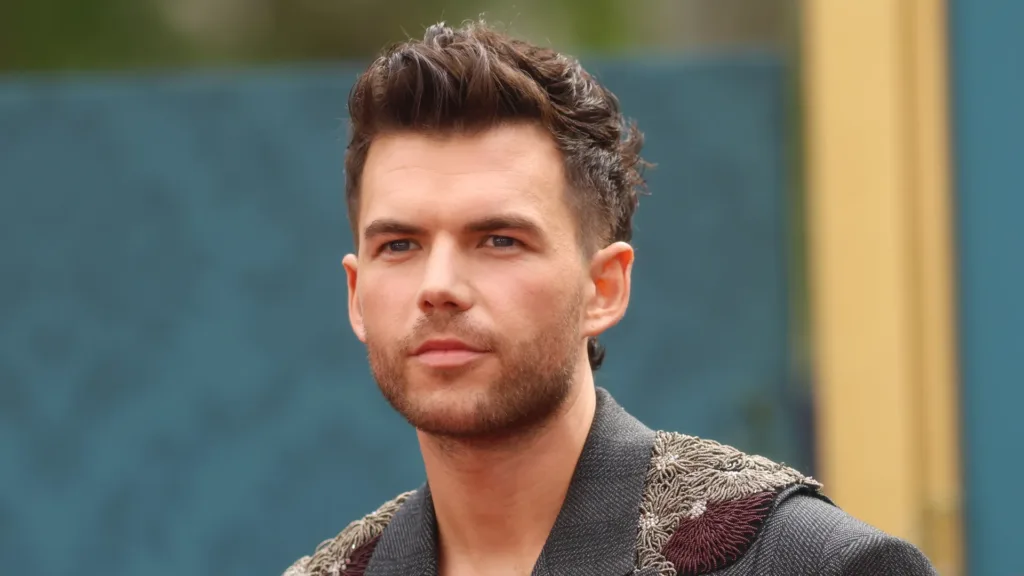
Bridgerton star Luke Newton has seemingly debuted a new girlfriend.
Pedestrian.tv, has identified Newton’s girlfriend as Antonia Roumelioti, a dancer who once appeared on Greece’s Got Talent.
Roumelioti was born in Greece and attended the Wilkes Academy of Performing Arts school in England. Alongside her 2017 appearance on Greece’s Got Talent as a teenager — in which she made it all the way to the finals — Roumelioti’s credits list includes a Peter Pan stage show in England, and background dancing for the British reality show Dancing On Ice.
Photo: Lia Toby
While Newton and Roumelioti’s post-premiere outing is the first time they’ve appeared together in public, rumours of their romance have circulated since the Bridgerton part one premiere in New York last month.
At that time, Roumelioti shared a series of Instagram posts tagged in Manhattan, allowing fans to connect the dots.
Some places have unusual travel rules that will really surprise you. Greece’s most visited monument is among them, according to wionews.com.
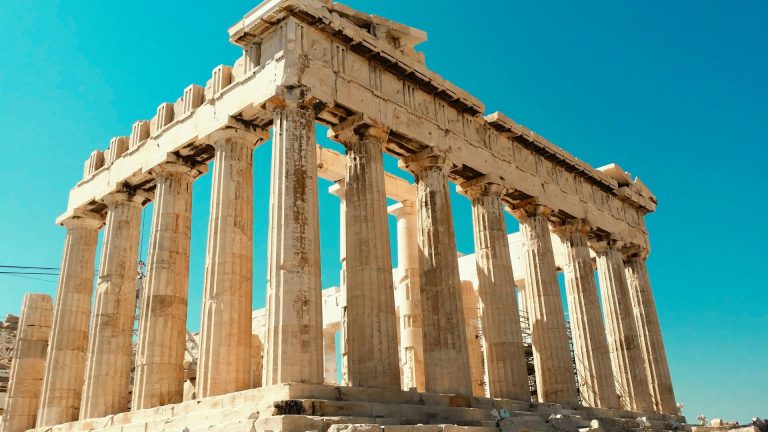
No high heels in Greece’s Acropolis: To protect the ancient monuments visitors are prevented from waring high heeled shoes at the Acropolis in Athens. This rule helps prevent damage to the site’s delicate marble floors.
No chewing gum in Singapore: Singapore has strict rules against bringing chewing gum into the country or spitting it out in public spaces. The law was introduced to maintain cleanliness in the city-state.
Photo: Anastasiya Lobanovskaya
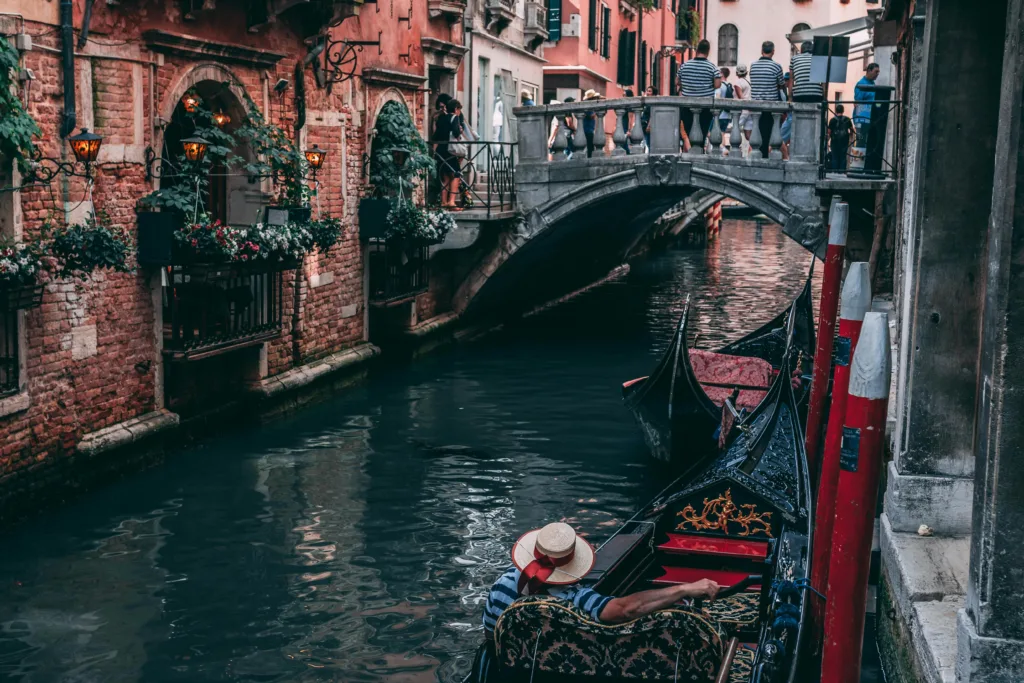
No feeding pigeons in Venice: To combat the spread of disease and maintain cleanness, feeding Pigeons in Venice is strictly prohibited. Offenders can be fined for encouraging the bird population.
In Barcelona it is prohibited to wear a bikini, swimsuit or go shirtless or go shirtless outside the beach areas or you could be fined. This rules aims to promote respect in public spaces.
Picking stones from Canary Island beaches: Tourists visiting Lanzarote and Fuerteventura in the Canary islands must not take sand, stones and rocks from beaches. Doing so can result in hefty fines.