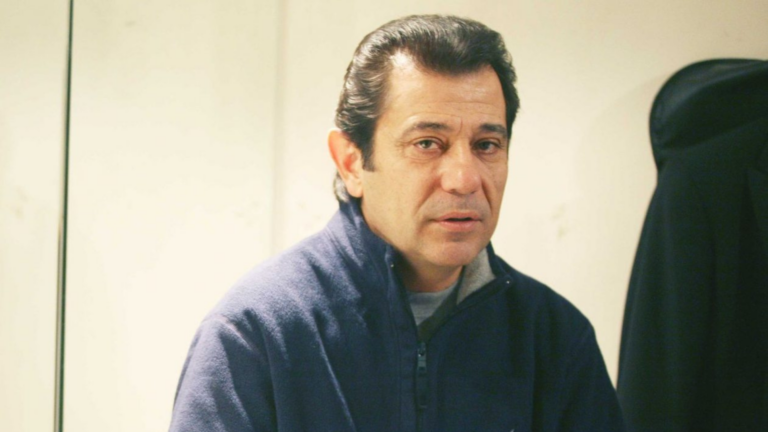
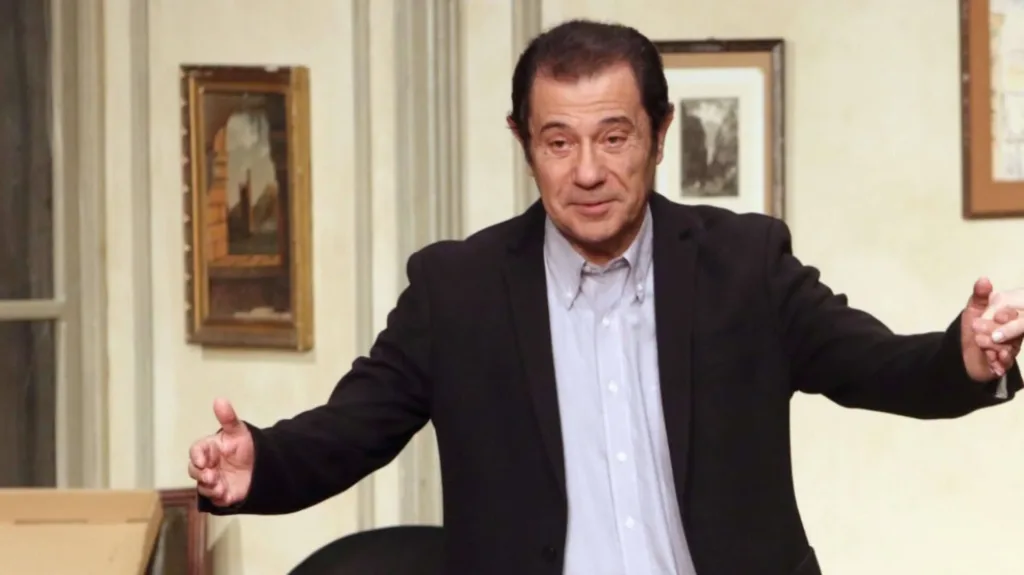
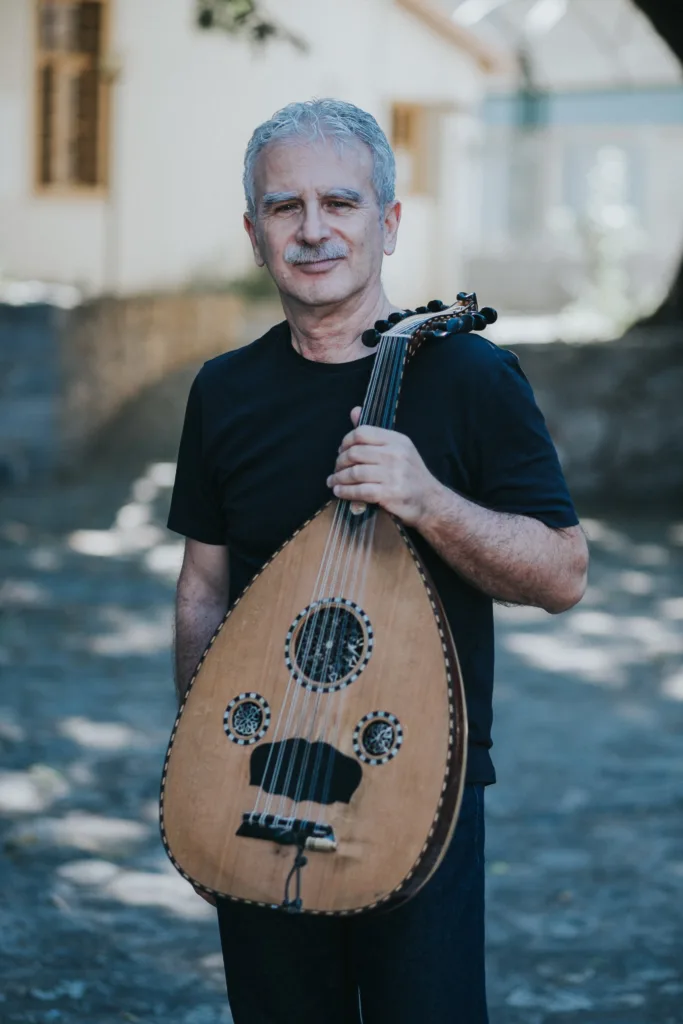
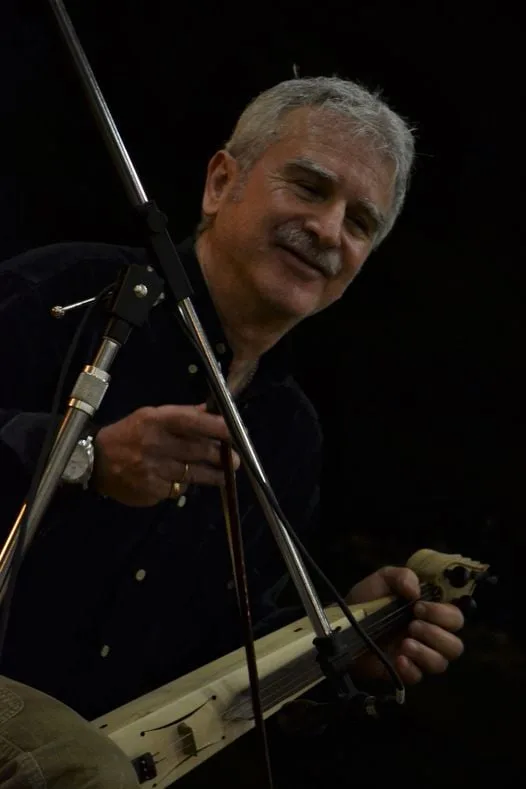
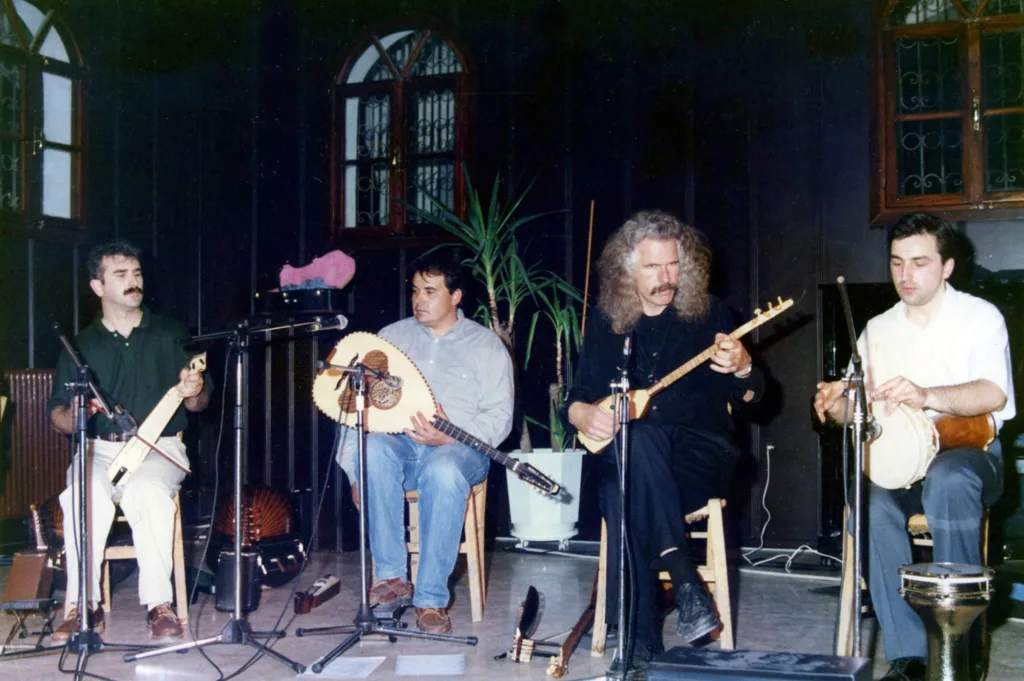
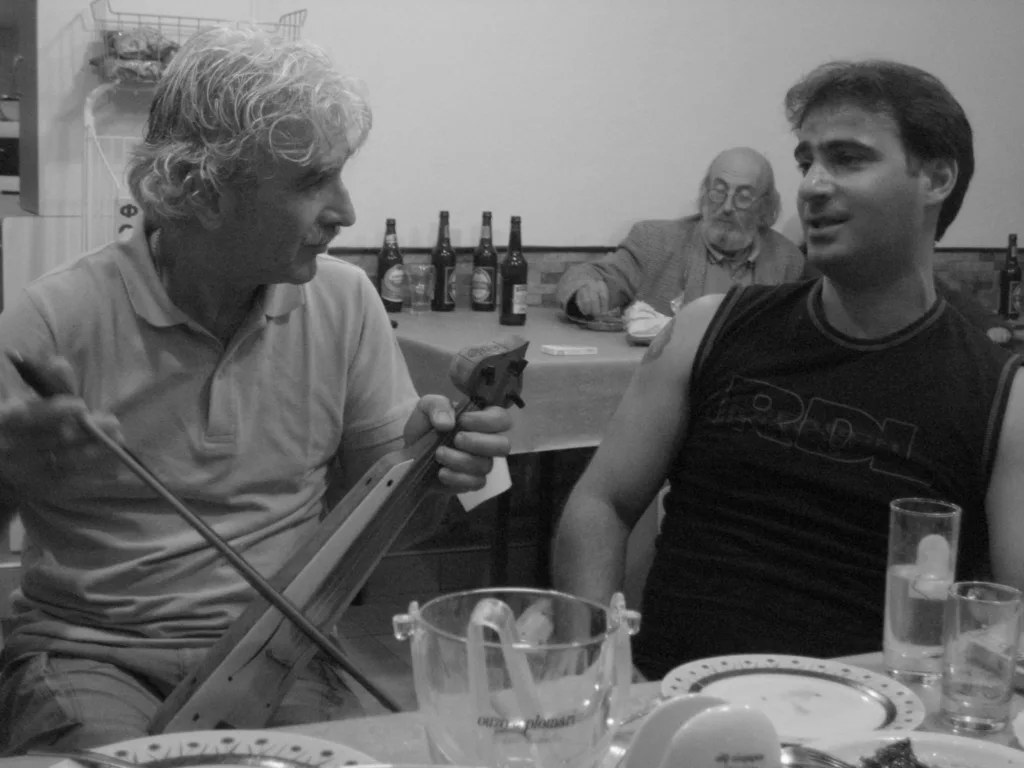
The Greek theatre community is mourning the loss of Danis Katranidis, a distinguished actor who passed away on Sunday, September 1 at the age of 75.
Born in Egaleo on August 4, 1949, Katranidis completed his studies at the Drama School of Athens ‘Giorgos Theodosiadis’ in 1971.
Katranidis’ impressive career began with the National Theatre, where he performed from 1971 to 1978. His versatility shone through as he embraced a diverse array of theatrical forms, from tragedy and comedy to musicals and revues.
Beyond his stage work, Katranidis made significant contributions to radio theatre and education. He shared his expertise as a teacher at the Higher Drama School ‘Iasmos’ and the Theater Workshop ‘Vassilis Diamantopoulos’, influencing a new generation of actors.
Katranidis’ legacy in Greek theatre and education will be remembered and celebrated for years to come.
The Holy and Sacred Synod has unanimously approved the new Constitution of the Greek Orthodox Archdiocese of Australia (GOAA).
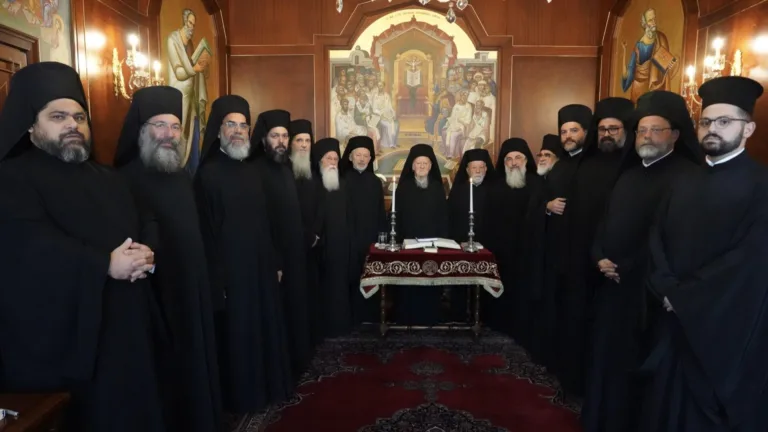
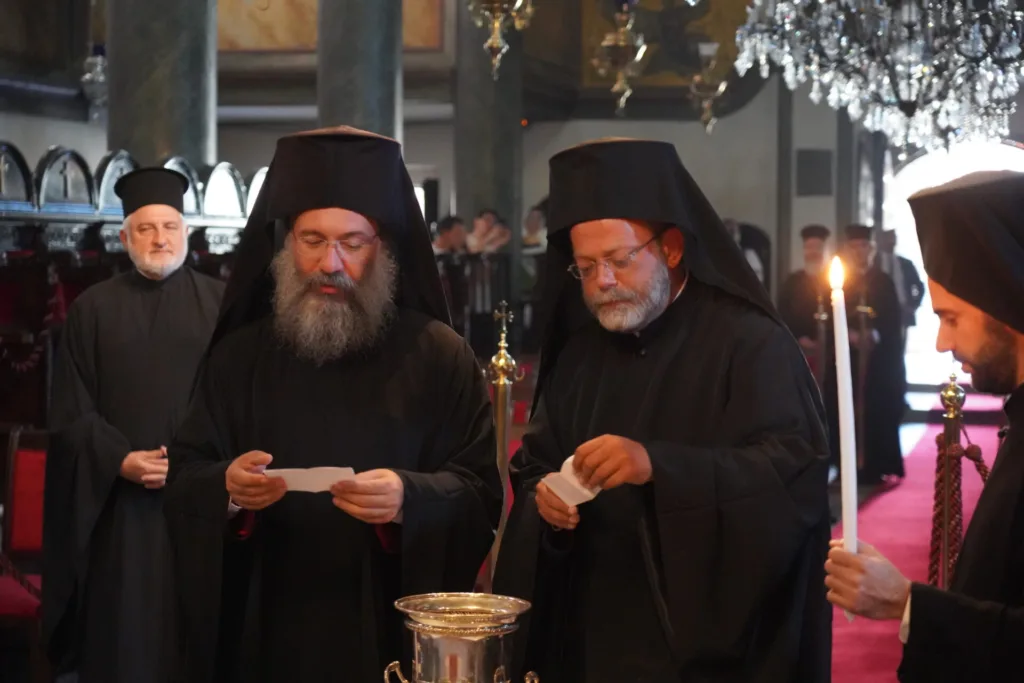
The Constitution was approved by the Holy Synod at a meeting convened at the Phanar in Turkey on Thursday, August 29. The meeting was presided over by Ecumenical Patriarch Bartholomew, and Archbishop Makarios of Australia was also present.
According to a statement after the meeting, the Holy Synod “extensively discussed the issue of the new Constitution.” Archbishop Makarios was invited to participate in the discussion, addressing questions and concerns raised by members of the Holy Synod.
“Following the discussion, Archbishop Makarios received heartfelt congratulations from the Synod members in recognition of his dedicated efforts,” the statement read.
The Constitution was approved by the Holy Synod at a meeting convened at the Phanar in Turkey on Thursday, August 29. Photo: Nikos Papachristou / Ecumenical Patriarchate.
This decision of the Holy Synod comes after the GOAA updated its governance structure in February 2024. The GOAA is now governed on the basis of a Holy Eparchial Synod, with Archbishop Makarios as President and active “Regional Bishops” as members.
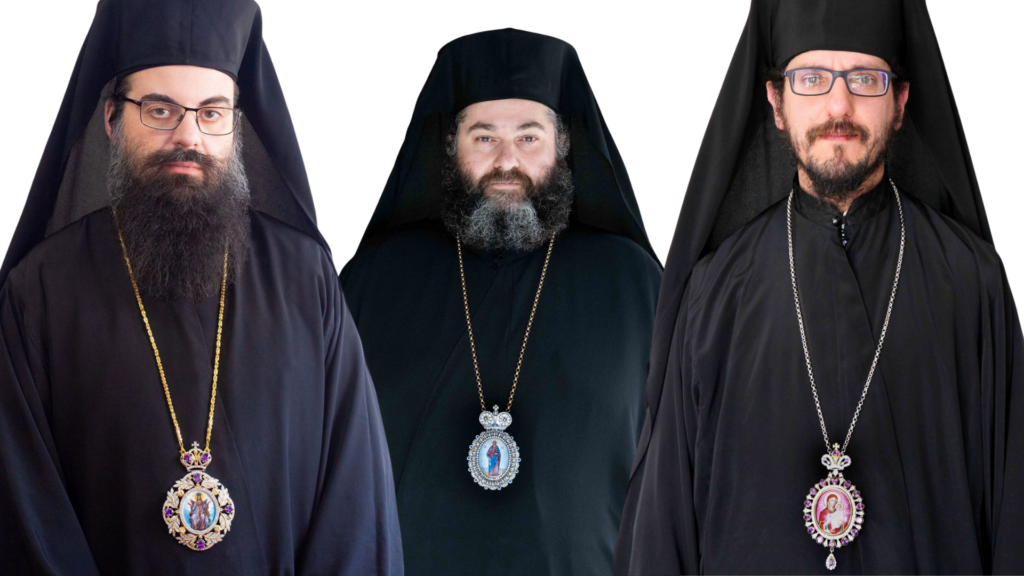
These “Regional Bishops” were selected in July 2024 and look over the newly-established Dioceses of Canberra, Melbourne, Perth, Adelaide, Brisbane, and Chora (previously known as the District of Northcote). The specific appointments are:
Bishop Kyriakos of Sozopolis as Regional Bishop of Melbourne
Bishop Elpidios of Kyanea as Regional Bishop of Perth
Bishop Silouan of Sinope as Regional Bishop of Adelaide
Bishop Bartholomew of Charioupolis as Regional Bishop of Brisbane
Bishop Evmenios of Kerasounta as Regional Bishop of Chora
(L-R) Bishop Evmenios of Chora, Bishop Bartholomew of Brisbane and Bishop Silouan of Adelaide are some of the new regional Bishops.
There are no further details yet as to how the Holy Eparchial Synod will work in Australia.
The model used by the Greek Orthodox Archdiocese of America is concerned with the “life, mission, growth and unity of the Archdiocese.” Its Holy Eparchial Synod deliberates on matters of a canonical nature such as approving ordination of candidates to the priesthood, clergy discipline, and administrative matters related to the parishes and monasteries of the Archdiocese, among many other things.
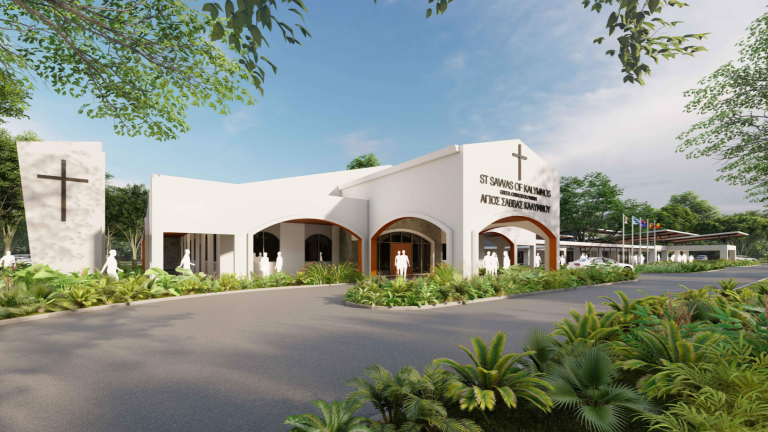
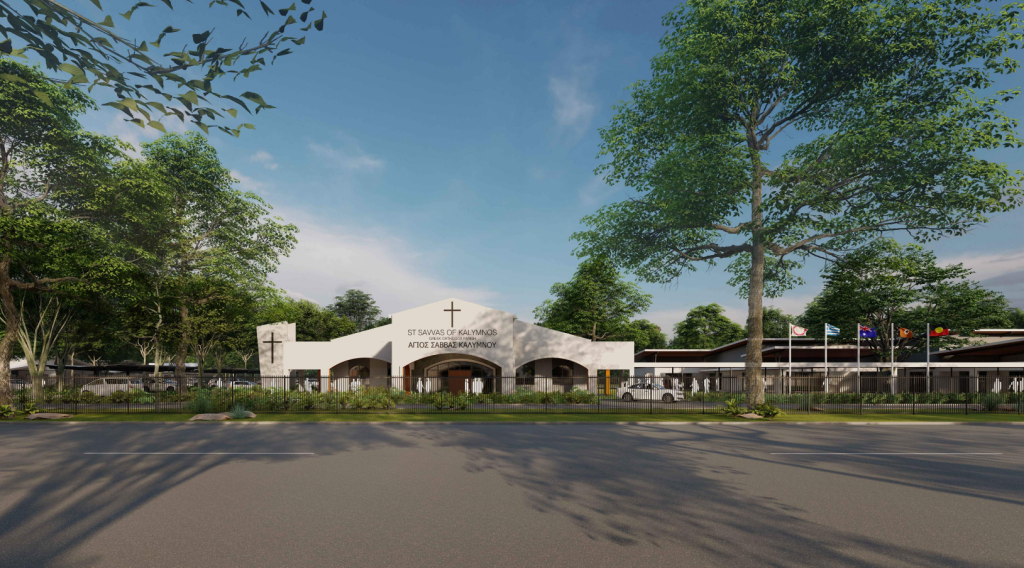
The government of the Northern Territory has granted land for construction of the new St Savvas of Kalymnos Greek Orthodox church in Darwin.
The land is located in the Palmerston area of Darwin and measures 10,067 square metres.
Architectural plans for the new Greek Orthodox parish were first unveiled in March 2023. At the time, Mackillop Catholic College in Johnston served as a base for Divine Services until a permanent location could be found.
The government of the Northern Territory has granted land for construction of the new St Savvas of Kalymnos Greek Orthodox church in Darwin.
With a plot of land now granted to the parish, it plans on building a church, two event halls, auxiliary spaces and a parking space with a capacity for 127 cars.
The Greek Orthodox Archdiocese of Australia (GOAA) has thanked the NT Government for supporting the needs of the Greek Orthodox community in Darwin, and congratulated Parish Priest Father Christos Tsoraklidis, church committee members and parishioners for their hard work.
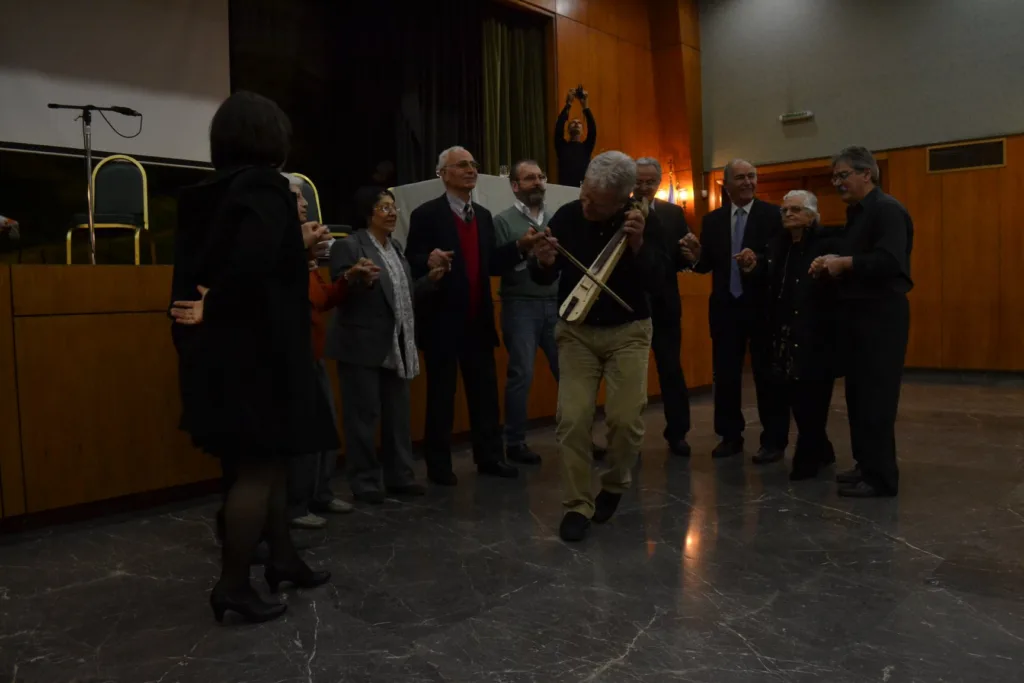
With four weeks until the grand event, well-respected artist and researcher Yiannis Pagkozidis, who has been involved for many decades with matters of folk culture, speaks with The Greek Herald about what people will have the chance to enjoy up close.
Did you always love music?
I would say I loved music since my youth. My father Konstantinos played the Pontic lyra almost daily in our family. So, these melodies became ingrained in me through experience. As my father was a key member of the Pontic association in Komotini, it was only natural that I became involved from a young age, attending various events and festivals in the region. Later, and even to this day, I have been participating in the cultural life of the area, particularly in the realm of folk culture and, primarily, in what is known as “musical and dance tradition.”
So, did your family inspire you to get involved with music?
When there is a musical instrument available daily in the family and the environment is connected to music, dance, frequent festivities, and family name day celebrations, you don’t need to try hard—it just comes naturally. Not always, of course. It also depends on the quality of the relationship with these things and on the general prevailing conditions that are shaped in society concerning our folk culture.
A younger Yiannis Pagkozidis playing lyra with Ross Daly.
How many instruments do you play?
I started with traditional percussion instruments, like the toubeleki and daouli, accompanying musicians playing the lyra at celebrations and organised dances. At first, I would “relieve” the professional musicians when they wanted to take a break. Later, during my studies, I picked up the Pontic lyra, which, as I mentioned earlier, was played daily in our home, so without any formal lessons, the Pontic sounds immediately emerged from the instrument.
Yianni Pagkozidis plays the lyra.
When did you acquire the “bug” for research?
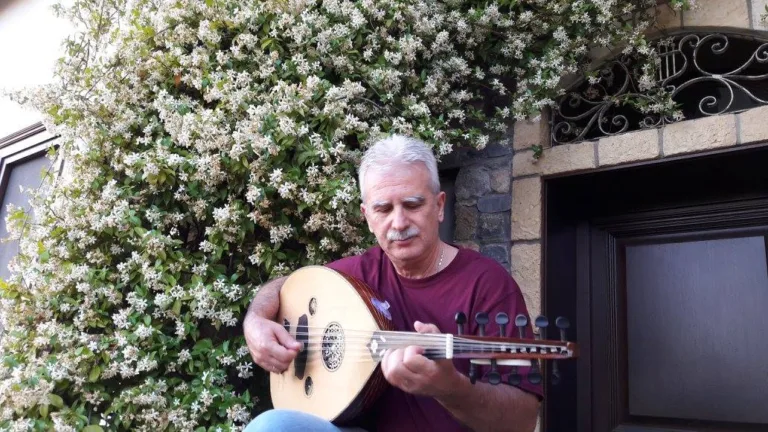
After my studies and military service, when I returned to my hometown of Komotini, the other music of the region, from other refugee and local musical traditions of my multicultural city, began to resonate within me. It wasn’t long before I became acquainted with the oud, through mingling with other Asia Minor refugees, especially the Turkish-speaking Cappadocians of the area who hailed from Kayseri in Asia Minor. That’s when I caught the “bug” for research, meaning the further exploration of these key elements of Greek folk culture, our “musical and dance tradition.” Since then, and to this day, this beautiful and long journey of exploring and engaging with what is called “tradition” continues.
Are there young people today who are involved in this musical tradition?
Fortunately, in recent years, many young people are getting involved, mainly through the hundreds of cultural associations and organisations that exist. What’s important—for me, of course—is how we manage this tradition.
Yiannis Pagkozidis playing the lyra.
Why do we see a rejection of anything traditional in modern Greece?
You pose an important question, one that would take hours to explain. It is also the main topic of my latest research. I wrote an article in a local newspaper years ago, which people can find online. If we were to give it a headline, we would say that the folkloric standardisation of folk tradition essentially alienates and distances people from it.
The most difficult question for an artist: If we asked you to choose just one song as your favourite, which would it be?
Indeed, a difficult question, especially for me, because our musical and dance tradition is so rich that it’s impossible to have just one.
What is the connection of the Zeibekiko with Asia Minor?
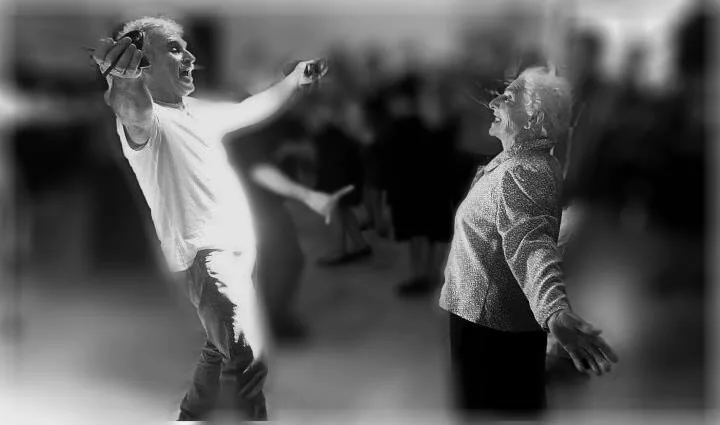
My research into the origins of the Zeibekiko is ongoing. However, it is certain that there isn’t a single Asia Minor Greek whose heart doesn’t skip a beat when they hear and dance a heavy Apdaliko Zeibekiko or Karsilamas.
Yianni Pagkozidis teaching.
What should we expect from the 2nd Zeibekiko Festival in Australia, and is there a message you would like to send to the Greek diaspora?
First of all, I must thank the organiser, Sophia Ventouris, and her organisation, for the opportunity, the honour, and the invitation to be with you in Australia (a first for me) and to meet you in person.
At this festival, according to Sophia’s wishes, following the previous successful first festival with Zeibekiko master Christos Shakallis, I will attempt to introduce those interested to the rhythms of 9/8 (a musical rhythmic term), to the so-called folk-traditional Asia Minor Zeibekikos and Karsilamas, with their “improvisational” character.
I look forward to meeting you all in person, the entire Greek diaspora, the associations, and the people who, among their other obligations, strive to engage with folk culture. Also, to meet my relatives in Sydney, the Pavlidis family.
Will there be seminars on learning Greek dances from Cappadocia and Pontus?
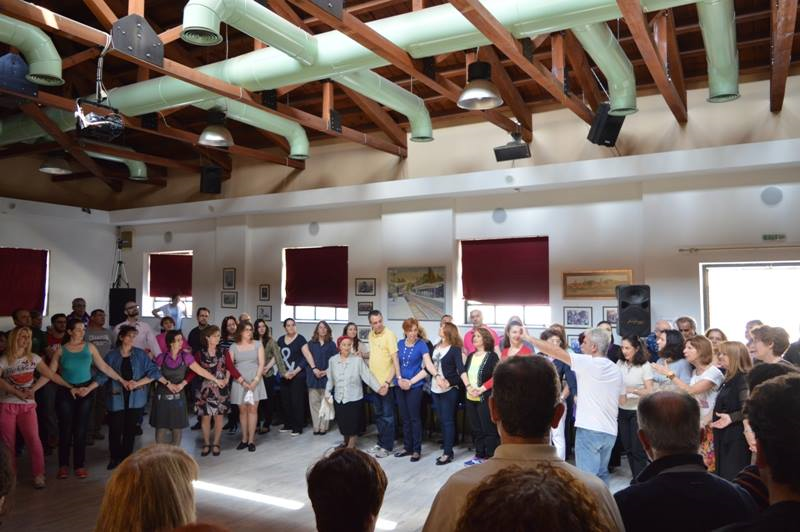
Certainly, there will be a series of activities that Sophia Ventouris is already planning with great love, which will cover almost the entire spectrum—as much as time allows in such a short period. There will be seminars on Greek dances from the wider Asia Minor region. However, we will focus on the dances of Cappadocia and Pontus, and the 9/8 rhythm.
Additionally, Sophia introduced me to two people who are musically active in Australia, among other things—Michalis Platyrrahos and Dimitris Koubaroulis and their musical groups—and together with them, we will have musical concerts, celebrations, etc., where I will also be playing the Pontic lyra and oud during my stay in Australia.
Yiannis Pagkozidis with yiayia Cappodokitissa.
How important do you consider it for a culture to preserve traditions, customs, and practices, particularly for the diaspora in Australia?
I believe there is nothing more important than maintaining the identity of each entity and knowledge of any tradition, especially for the diaspora in a place so far from their homeland. I think it is admirable to feel the love for our homeland and origins, as I understand that inevitable changes occur from generation to generation. I would also say the classic: to maintain the roots of origin and the branches of each generation, because in the coming years, with the so-called “globalisation,” there is a risk of knowing nothing about “where we come from,” and I’m not sure how significant this will be for each of us in the future.
The second Zeibekiko Festival Australia will return with a bang from September 27 this year thanks to Ventouris Productions. Events are being held in Sydney and Melbourne. To book tickets to the Sydney events, click here. To book tickets to the Melbourne event, click here.
If you wish to be a sponsor of this event, or contribute as a performer, business partner or volunteer please call Sophia Ventouris on 0413 114 930. The Greek Herald are proud media partners for this event.
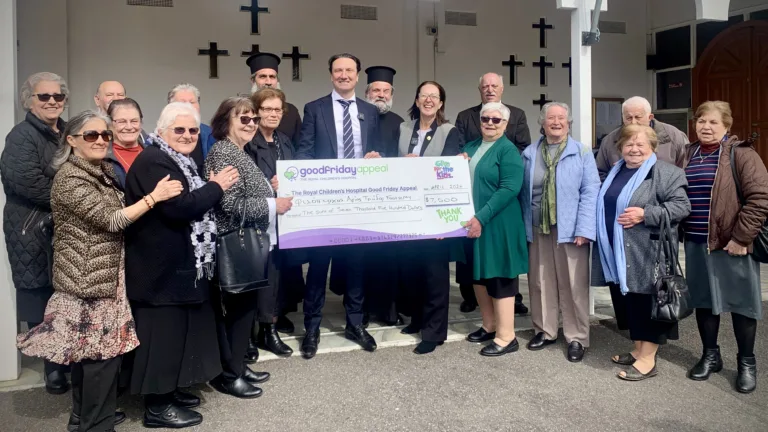
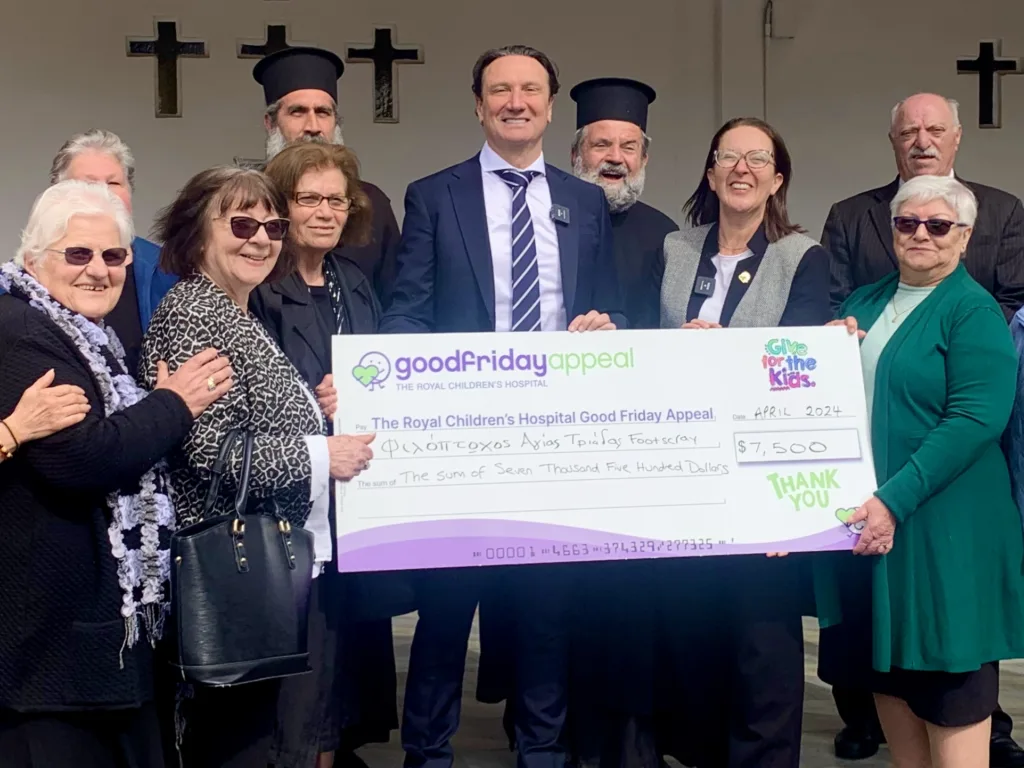
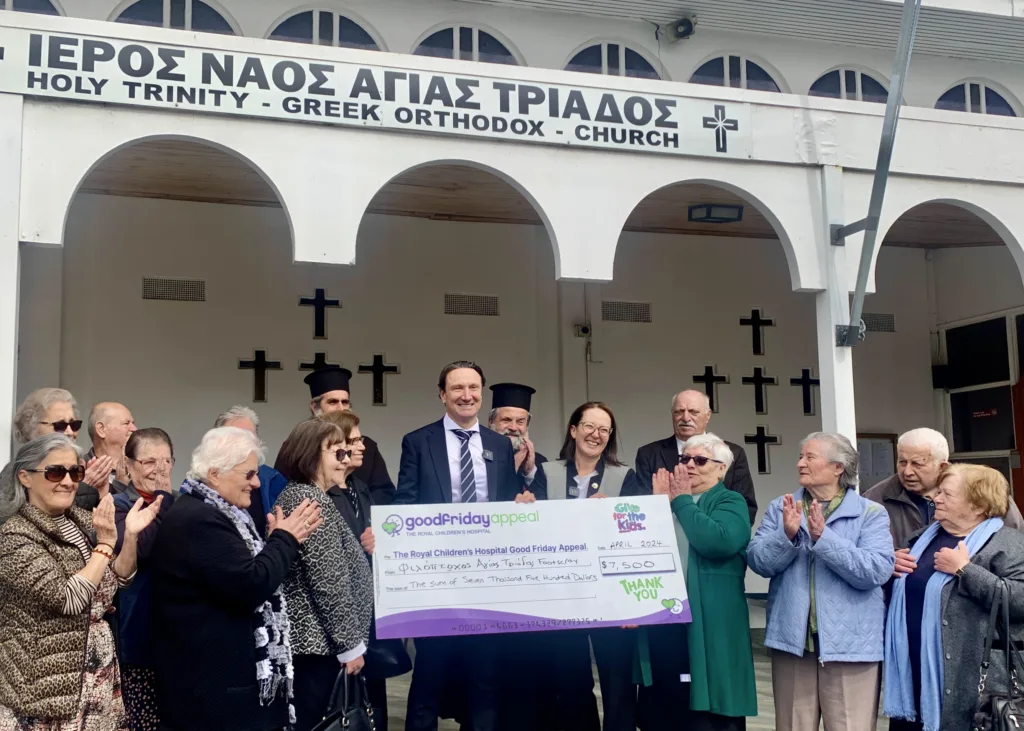
The members of the Holy Trinity Footscray Philoptochos in collaboration with the Greek Community of Melbourne (GCM) made another charitable gesture, raising a significant amount of money in support of the Royal Children’s Hospital – Good Friday Appeal.
The members of the Philoptochos raised the sum of $5,500, to which $1,500 was added from the GCM and $500 from the GCM President, Bill Papastergiadis OAM.
At an event held on Thursday, August 29 at the Holy Trinity Church, a cheque amounting to $7,500 was presented to the Royal Children’s Hospital – Good Friday Appeal officials who organise the well-known fundraiser every year to support the needs of the Royal Children’s Hospital.
Mr Papastergiadis, whilst handing the cheque, stated the following, “This amount is an effort to help the children, not only of our community, but the wider society.”
Mr Papastergiadis congratulated and thanked the ladies of the Philoptochos for their effort.
Claire O’Riordan, spokesperson for the Royal Children’s Hospital – Good Friday Appeal, thanked everyone who contributed.
“It is a great pleasure and honour to be joined by you today and this generous donation, it will make a huge difference to this effort to bring relief to children in need of care,” Ms O’Riordan stressed.
Mr Papastergiadis said: “We are here at Holy Trinity of Footscray with Father Anthony, with Father Nicholas, with the Philoptochos who have raised a significant amount of money. Seven and a half thousand dollars for the Good Friday Appeal, an amount that will not only help the locals but also the wider community where we support, especially our children. We have Claire here, who will be collecting this cheque. We thank her. We thank the whole Philoptochos for their efforts. It’s very, very moving for us.”
“Claire, thank you for being here, Agia Triada Footscray with Fathers Antoni, Father Nicholas and the Philoptochos, who have made a very generous effort in providing and presenting a check to you for $7,500, for this very important appeal. It is for our children, our community and our society,” Mr Papastergiadis said.
Ms O’Riordan replied, “Thank you so much. On behalf of the Good Friday Appeal and the Royal Children’s Hospital, we are so thrilled and honoured to come out here and to see you in person. It makes such a big difference to us. We love coming out into the community and seeing the fundraisers that work so hard. So, it’s a privilege for us. Thank you so much, this money will make a huge difference to the sick kids. We can’t wait for next year.”
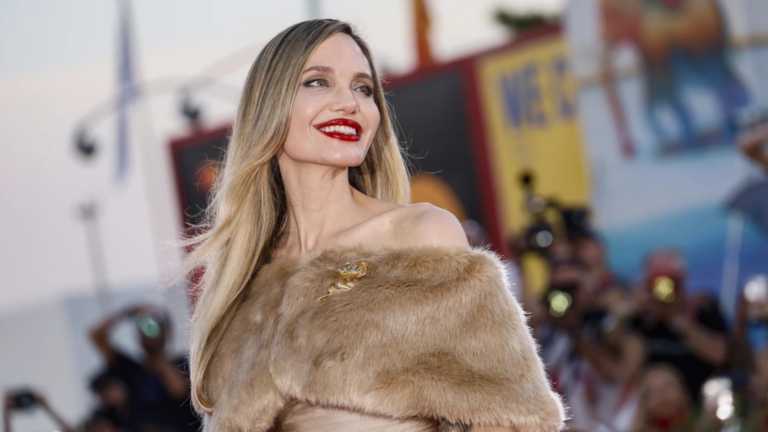
A biopic on legendary Greek opera singer Maria Callas starring Academy Award-winning actress Angelina Jolie, received a 10-minute standing ovation following its Venice Film Festival world premiere on Thursday, August 29.
Maria, directed by Pablo Larraín, is a creative imagining and psychological portrait of Callas who, after dedicating her life to performing for audiences around the world, decides finally to find her own voice, her own identity, and sing for herself. The biopic follows Callas during her final days in 1970s Paris.
Jolie, who plays the opera singer in the biopic, was present at the world premiere in Venice on Thursday alongside fellow cast members Pierfrancesco Favino and Alba Rohrwacher.
After the screening, the crowd inside the Sala Grande stood for ten-minutes and could be heard chanting Jolie’s name. The two-time Oscar nominee became emotional, shedding a tear as she walked down from the gallery to wave at the audience.
In her first public comments to the press about filming the biopic, Jolie said she spent roughly seven months preparing for the challenging role, work that found her training with opera singers and coaches to master the posture, breathing and movement of a singer of Callas’ caliber.
Diving deep into opera provided “therapy I didn’t realise I needed,” she told the press.
“I had no idea how much I was holding in and not letting out,” she continued. “So the challenge wasn’t the technical, it was an emotional experience to find my voice, to be in my body, to express. You have to give every single part of yourself.”
The world premiere of Maria comes after Netflix confirmed earlier this week that it had acquired distribution rights to the film.
A preliminary investigation has been launched by Greece’s Supreme Court into the mass fish deaths in Lake Karla and Pagasitikos Gulf in Volos.
According to Ekathimerini, Supreme Court prosecutor Georgia Adelini has ordered an investigation into why the dam gate leading from Lake Karla into Pagasitikos Gulf was left open and to identify who made this decision.
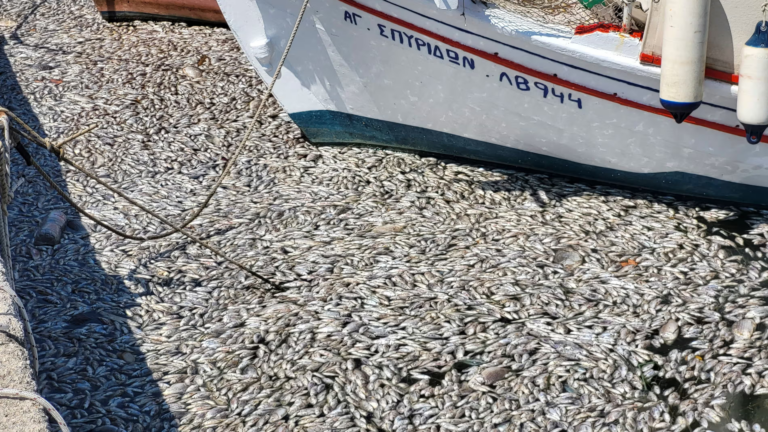
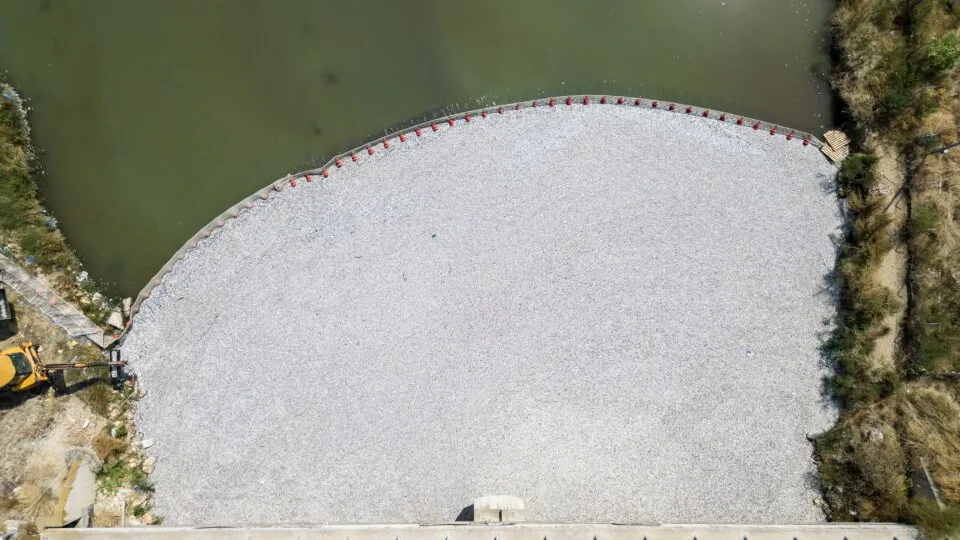
This investigation comes after hundreds of thousands of dead fish poured into a tourist port in Volos this week.
An image taken with a drone shows dead fish gathered in the protective net, at the mouth of the Xiria stream, Volos, August 28. Photo: Nicolaos Hatzipolitis/EPA.
Officials worked fast on Thursday, August 29 to collect the dead fish in trawler nets and load them onto trucks. Authorities reported that over 40 tonnes (40,000 kilograms) of fish were removed.
Experts have linked the situation to last year’s severe flooding in the Thessaly region, which affected rivers and lakes to the north. The lack of a protective net at the river mouth leading into Volos allowed the fish to enter the sea, where the saltwater likely killed them.
The book, titled The Embodiment of a Distant Homeland: the history of the GOCMV from its founding to 1972, was written in Greek by Georgia (Juliana) Charpantidou and published in late 2022.
Sydney-based translator Petros Alexiou has since translated the book, with an English version published recently.
The book focuses on the GCM as the oldest institutional representative of a Greek community in Australia. It follows the GCM’s historical course as it emerged from the late nineteenth century until the early 1970s.
Research was based on primary sources – the Minutes and Archives of the GCM, the National Archives of Australia, the Dardalis Archives of the Hellenic Diaspora at Latrobe University, and Greek and English language newspapers of the time in Australia.
Both the Greek and English versions of the book were published by Themelio Publications in Athens, a notable company with 60 years of experience in the world of books.
A book launch will be held at the Themelio bookstore in Athens, Greece on September 5 at 7pm to celebrate the publication.
The event will be opened by Australian ambassador in Athens, Alison Duncan, while both author and translator, Ms Charpantidou and Mr Alexiou, will be there to field questions.
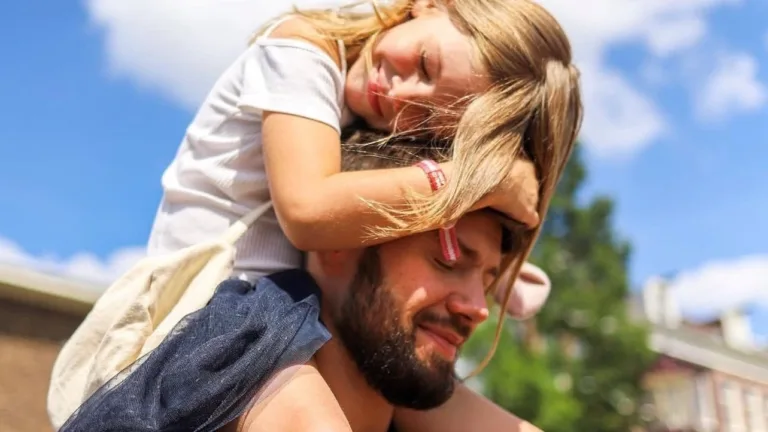
Being diagnosed with cancer, having a daughter and losing your best friend in a motorcycle accident at the tender age of 26 is a lot to go through for an average person. For 36-year-old Leonidas, those events in 2014 forever altered the course of his life.
The Greek Herald sat down with the half-Dutch, half-Greek father to discuss his inspirational comeback story.
Leonidas, can you tell our readers about yourself and where you are from?
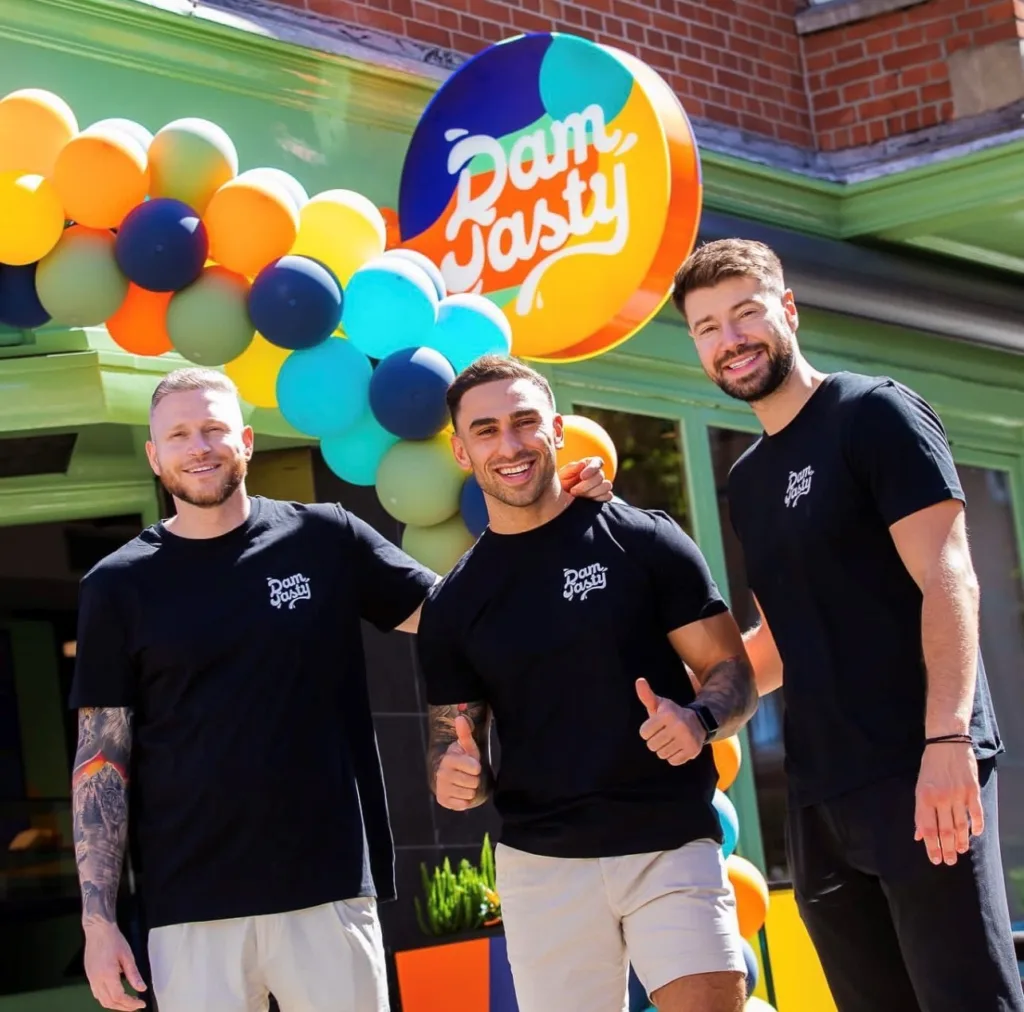
I am a 36-year-old hospitality business enthusiast from Amsterdam. Born and raised here by a Dutch mother and Greek father. Hospitality is in my blood I think because of my Greek heritage. My dad always had Greek restaurants and from a young age I loved welcoming people and sharing our culture with them.
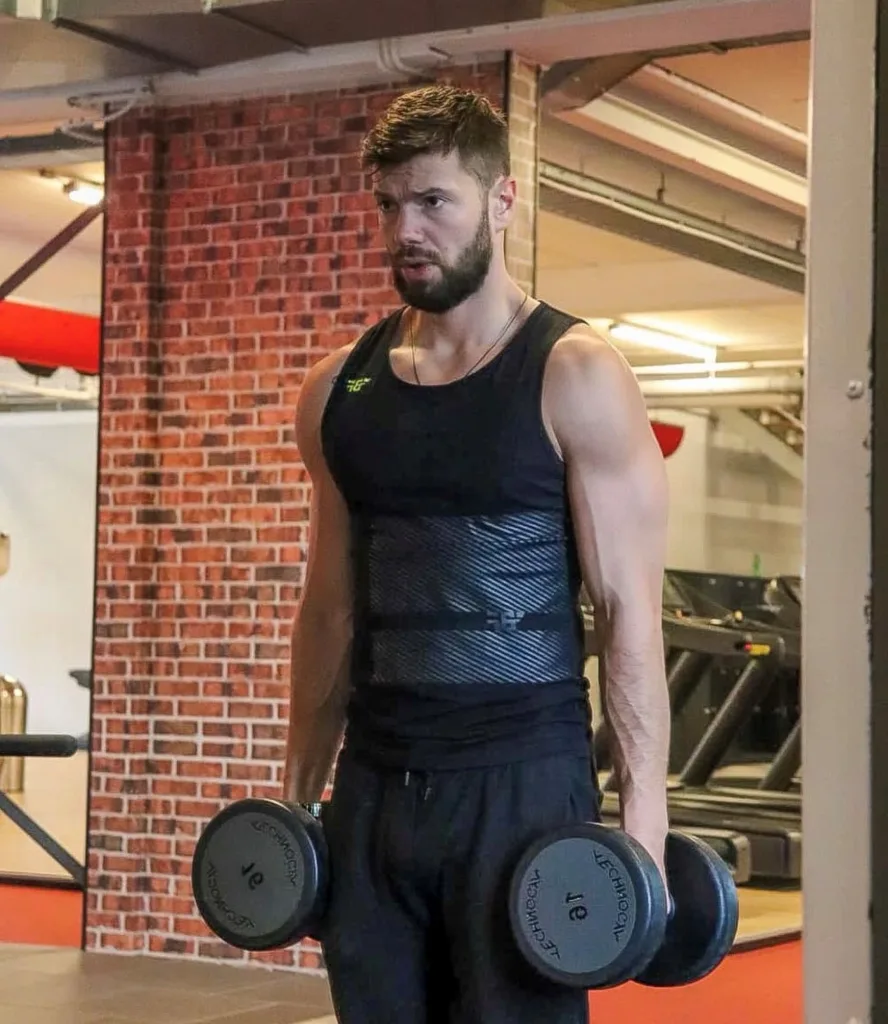
Besides that, I have a big passion for fitness, nutrition and overall, a healthy lifestyle. This may be an answer to the hospitality sector which contains long days and nights, and often quick, unhealthy food choices. I decided to do things differently so became fitter but I also coach a lot of people, helping them with their fitness goals and becoming a better version of themselves overall.
You have overcome cancer. What was the experience like for you?
It was surreal. I was 26 at the time, just had a daughter, and just lost my best friend in a motorcycle accident and then that happened. It gave me an overall weird taste of life and death and how everything is so fragile. Luckily after surgery, I was clean, so I was right on time with it.
The first year was just overcoming the shock. I had check-ups every three months for almost five years after and that always reminded me of how things could’ve gone, and still the risks that remained. Overcoming cancer is a process but in general, I was able to recognise it very early on, so I always held on to the idea that it could’ve been so much worse. Still, every check-up or conversation or reminder was difficult. Sometimes I was crying like a baby when I had to do the scans because I was scared, and other times I held on to a feeling like ‘You Only Live Once’ (YOLO). I could’ve been gone. Surreal like I said, and it still is.
What would you say to another young father who has been diagnosed with cancer?
Go for your health and if you manage to survive it, keep that as a priority. You now have a small human being depending on you and that should be the biggest motivation to keep you going every day, no matter how tough it gets, or pessimistic things might seem.
How has fatherhood changed you as a person?
Yeah, like said, I now have a small human being calling me Dad! So, I had to give it my best. That changed me for the better, for sure. I’ve always been a responsible person, but this made me realise that I had to get my things together at an early age.
Would you like any more children?
I think so, yes! But there’s no hurry.
How do you balance being a father and running a cafe?
That is always a challenge. Restaurant business in general is difficult for social life but on the other hand, it gives a lot of freedom if you plan it right.
How important are fitness and health to you and why?
It’s priority number 1 for me now, because if this isn’t in order, the rest is always so much harder. If I work out and eat well, I sleep better and am more energised and positive on all my other projects. It keeps me sane in a hectic, chaotic and often unfair world and I advise everybody to prioritise this. If you do it right, it will make you a better partner, entrepreneur, parent, employee, child, sibling, etc.
What are some goals you are working on and where would you like to be in five years?
I’ve worked and invested a lot in the past few years. Last year I unfortunately lost my father and that made me realise life is short. Therefore, this year I’m still working hard on some things but travelling is going to happen for sure this winter. I want to see several parts of the world and from there decide if indeed I want to stay in Holland forever or move anytime in the upcoming years. Of course, Greece will always be the Patrida/father land, but more for retirement.
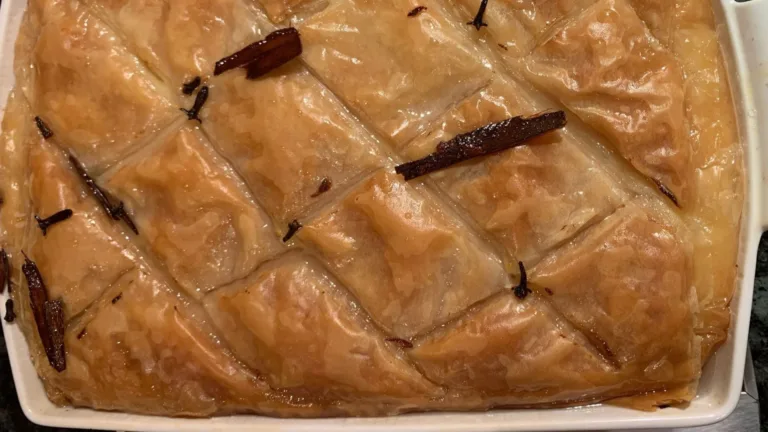
Niki Louca from My Greek Kitchen shares her favourite recipe for galatoboureko (semolina custard pie) with The Greek Herald. You can follow her on Instagram @mygreekkitchen for more!
Ingredients:
1 packet Antoniou filo pastry
oil for brushing
1 ¼ cup semolina
½ cup sugar
2lt full cream milk
5 eggs lightly beaten
3 tablespoons butter
1 tablespoon vanilla extract
Syrup:
3 cups sugar
3 cups water
1 piece of orange peel
1 cinnamon stick broken up
3-4 cloves
Method:
Preheat oven to 150C.
Prepare the syrup first. Add all your ingredients together and bring to the boil. Reduce the heat and gently simmer for 5 minutes.
Cool your syrup.
In a medium sized pan, over medium heat, add the milk, sugar, eggs, vanilla, butter and in a steady steam the semolina. Stir constantly until thickened.
Once thickened, remove from heat and allow to cool slightly till you prepare the filo pastry.
Using an ovenproof dish, brush the base of dish with a little oil. Take a filo pastry sheet and brush it with a little oil. Place another sheet on top of that one and repeat the process 2 more times (in total you should have 4 sheets).
Take the 4 oiled sheets and place them on the base of dish. You should have excess over hanging the dish. Leave them as they are, as they will become your lid.
Repeat step 7, but once done lay the filo pastry on the other side of dish, so the excess is over hanging on the other side.
Take one more filo sheet, oil it and fold it in half. Place this one on the top end of your dish and again, allow excess to overhang. Repeat process with the bottom end of the dish.
Pour your cooled custard into the dish and even out. Take the excess filo at the top of the dish and fold in inwards. Do the same for the bottom end. Now fold in one side of the excess filo sheets and then the other. You should have created an envelope as such, where all sides are secured and the custard is in the middle.
Brush the top layer of filo with oil. Take a sharp knife and score the custard into diamond shapes.
Bake in a pre heated oven 150C for about 30-40 minutes or until golden brown.
Once cooked, take it out of the oven and immediately pour 2/3rds of the cold syrup over it. Allow it to be absorbed and top up as required. The custard should not sit in a puddle of syrup – this will make it too sweet. Top up only if the base of dish is not “wet”. Remove the cinnamon sticks, orange peel and cloves from syrup.