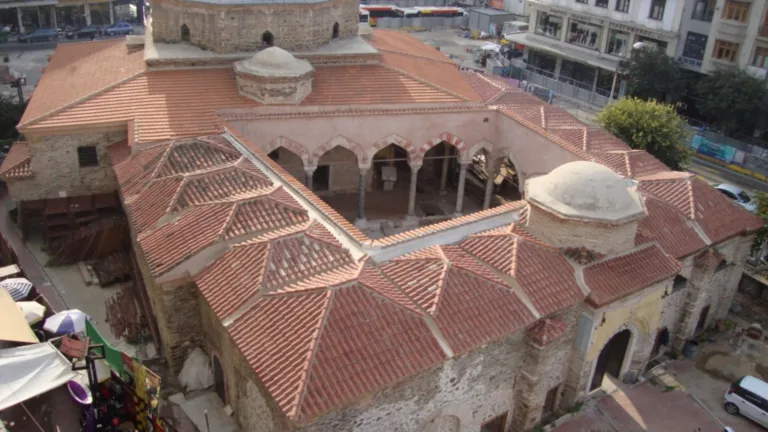
Thessaloniki’s historic Hamza Bey Mosque, commonly known as the Alkazar, is set to be handed over to the city early next year, according to Culture Minister Lina Mendoni during an inspection of the ongoing restoration work, ekathimerini.com has reported.
The €11 million restoration project is funded by the Recovery and Resilience Fund and is being carried out by the Ministry of Culture’s Byzantine and Post-Byzantine Monuments Restoration Department in collaboration with Thessaloniki’s antiquities ephorate.
Due to extensive wear, modifications, and past interventions, the restoration of this significant monument, the oldest Ottoman mosque in Thessaloniki, presents a complex and demanding challenge.
“Over the past six years, we have implemented projects and initiatives in Thessaloniki totaling more than €100 million from EU and national funds. This reflects our commitment to preserving the city’s rich heritage,” Mendoni stated.
Built in 1467 by Hafse Hatun, daughter of military commander Hamza Bey, the mosque is situated at the intersection of Egnatia and Venizelou streets. For decades, its peristyle courtyard was home to the Alkazar cinema, a name still deeply embedded in the city’s collective memory.
The mosque was officially designated as a historical and archaeological monument in 1926.
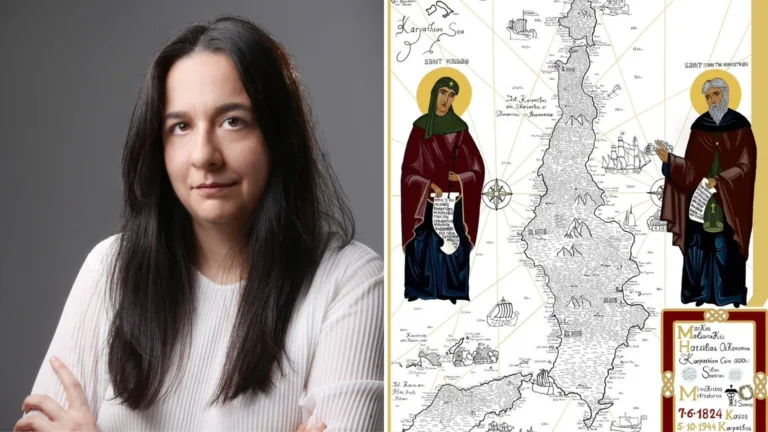
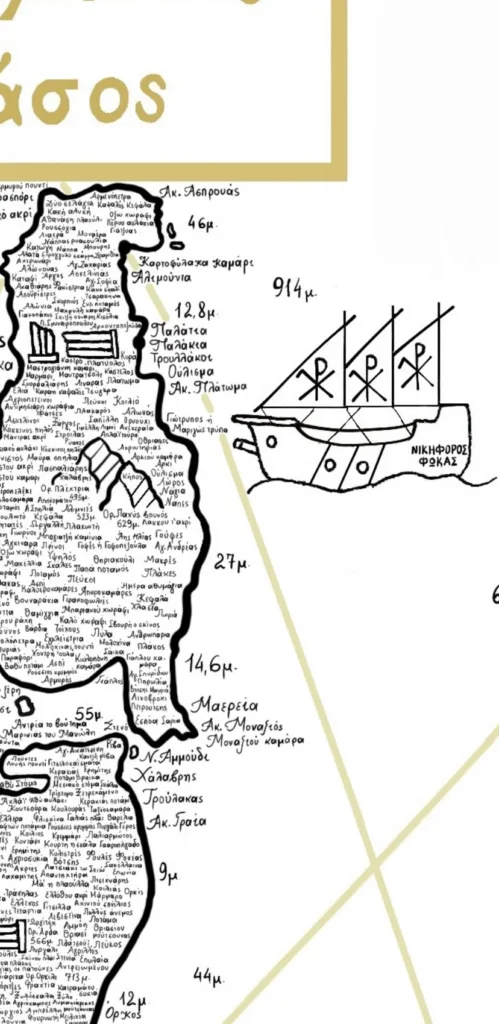
Introducing Maria Konstantina Andrianopoulou, the Greek author and researcher from Athens, Greece with a passion for Greek history. Maria recently spoke with The Greek Herald to reveal her latest project – a comprehensive map developed to showcase two significant Greek islands.
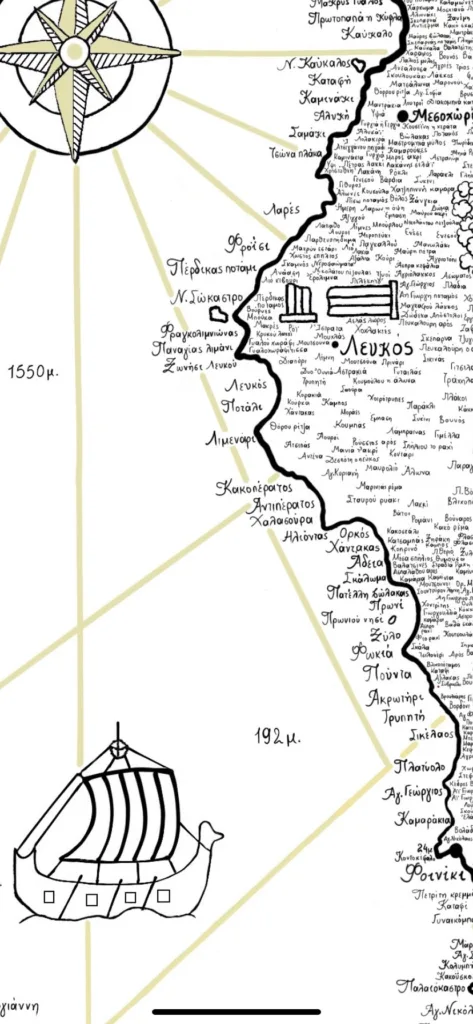
“It is a bilingual map, both in Greek and English, and records over 2900 toponyms,” Maria told The Greek Herald.
“The map serves as a cultural and historical record, which documents significant dates and individuals who have shaped the history of Karpathos and Kasos.
“Its purpose is to ensure that these names are not forgotten over time, and to remind us of the islands’ linguistic heritage.”
What does the map feature?
Maria shared that her map not only features the two Greek islands, but their surrounding rocky islets, as well as some significant names in Karpathos’ and Kasos’ history.
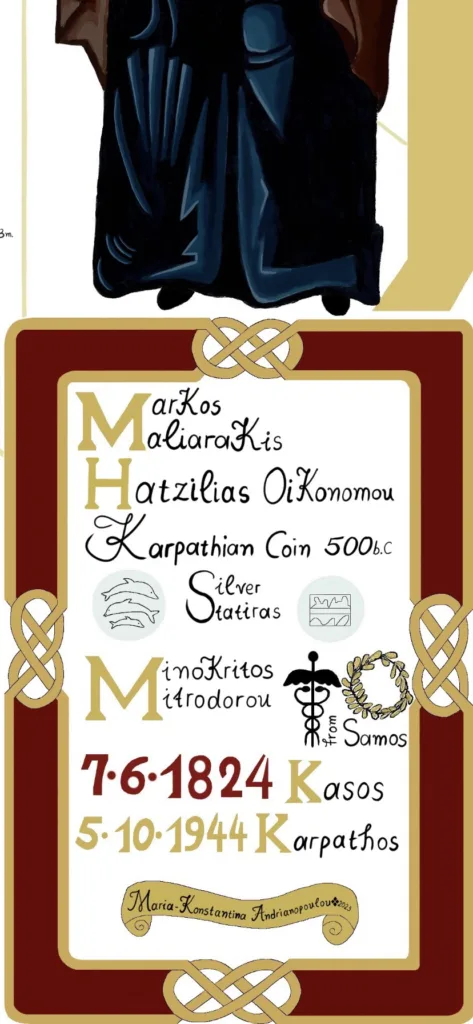
“The map also includes mountain heights and sea depths of the islands, and an ancient silver coin of Karpathos,” she said.
“As well as this, I have depicted the names of heroes of this time including Markos Malliarakis and Hatzilias Economou, as well as the two local saints of the island – Saint John of Karpathos and Saint Kassiani.”
Some of the other details carefully depicted on the map include the Kasos Holocaust, the historic naval battle off the coast of Karpathos, and the Byzantine emperor Nikephoros Phokas’ fleet that expelled Saracen pirates from the islet of Saria.
“The map aims to preserve and highlight the unique legacy of Karpathos and Kasos for future generations,” Maria added.
The influence and the map-making process
Maria said she initially decided to create the map as she saw a lack in maps and information about Kasos and Karpathos.
“I was inspired by the historic map created by Rigas Feraios, who played a pivotal role in the Greek War of Independence,” she said.
“I then wanted to create my own map, as I had never seen anyone do anything like it in Greece before.”
Maria said she began making the map during the summer of 2022 and completed it in August 2023.
“I did a lot of research to begin with and not only about the toponyms, but about the history, the culture, the religion and the geographical locations,” Maria said.
“It was not an easy process either. Although I did enjoy it, I also found it very difficult, because you have to check and double check all your information and the placements and be very careful.”
The mastermind behind the map shared how it felt to see her work be completed after many months of hard work.
“I’m very happy that I have finished it,” Maria said.
She added that she entered her map in UNESCO’s European Cultural Contest, Europa Nostra Awards and made it all the way through to the second stage.
Maria’s plans for the future
Maria revealed what she hopes to achieve from creating her map.
“I now hope to publish it, so many people will have the opportunity to have this map and learn more about Kasos and Karpathos,” she said.
“I would then love to see it be used in schools in the future, as this map serves both a visual and educational tool. I also hope it inspires local authorities and cultural organisations to actively engage in the preservation of the two islands’ history.
“The map captures the essence of these islands, and by documenting these toponyms and the stories behind them, it ensures that future generations can learn about them and appreciate their roots.”
Maria said she hopes to publish her map sometime next year.
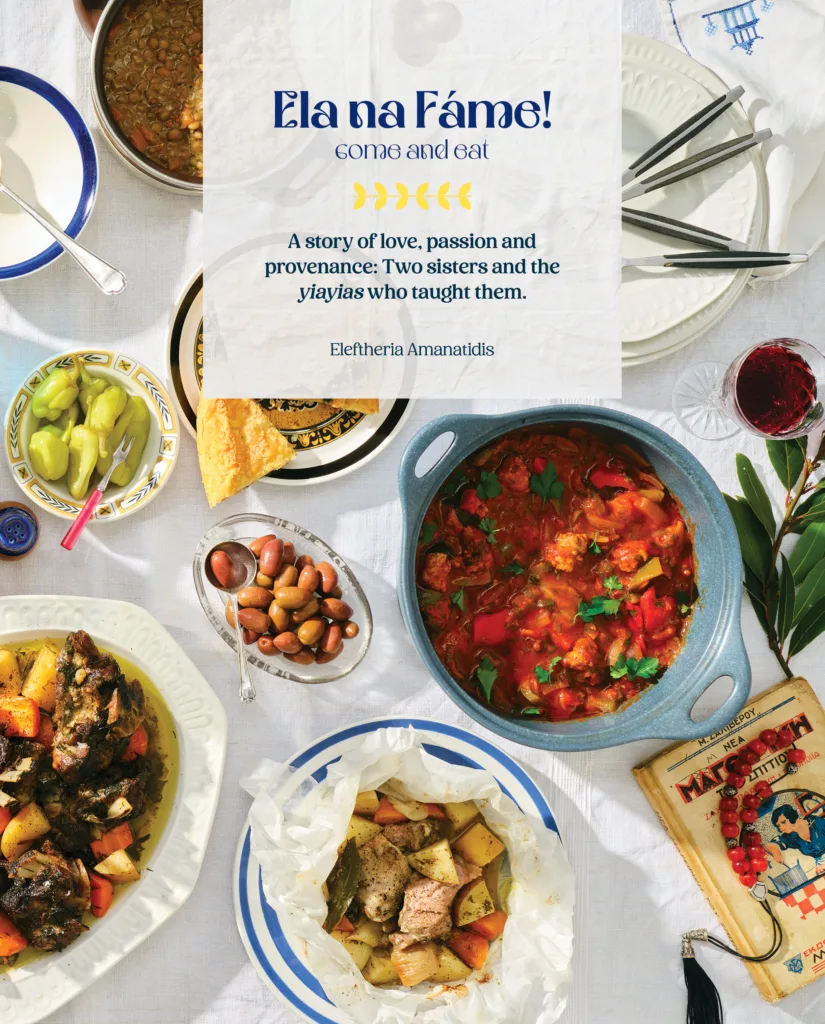
In the heart of Yarraville, where the aroma of traditional Greek cuisine has wafted through the streets since 1971, Eleftheria ‘Thierry’ Amanatidis unveils her debut book, Ela na Fáme! (“Come and Eat”) – a captivating blend of recipes and stories that celebrates the powerful lineage of women who built a Melbourne food dynasty.
With the growing popularity of food memoirs and a resurgence in Greek cuisine, Ela na Fáme arrives at the perfect moment for food lovers and home cooks alike. More than a recipe collection, it brings together over five decades of family stories, paying tribute to three generations of strong-willed Greek women who transformed food into a language of love, resilience, and cultural identity.
“This book is more than just recipes – it’s my life,” says Thierry. “It’s the story of my Greek heritage, my love for my family, and my deep gratitude for the three extraordinary women who shaped not just my life, but the food and culture of an entire community.”
Eleftheria and Eleni
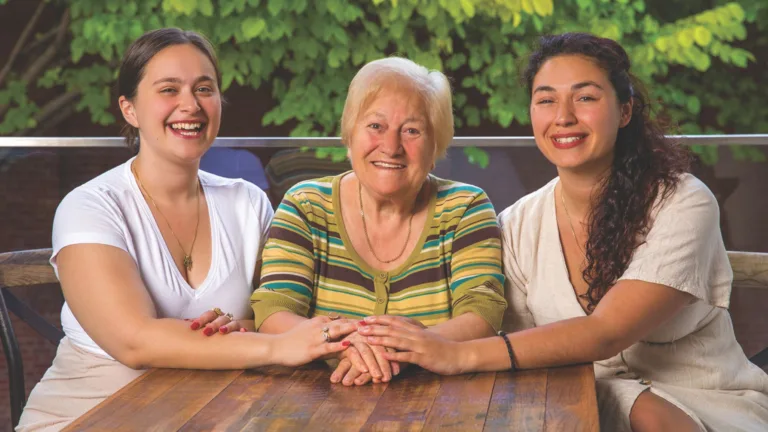
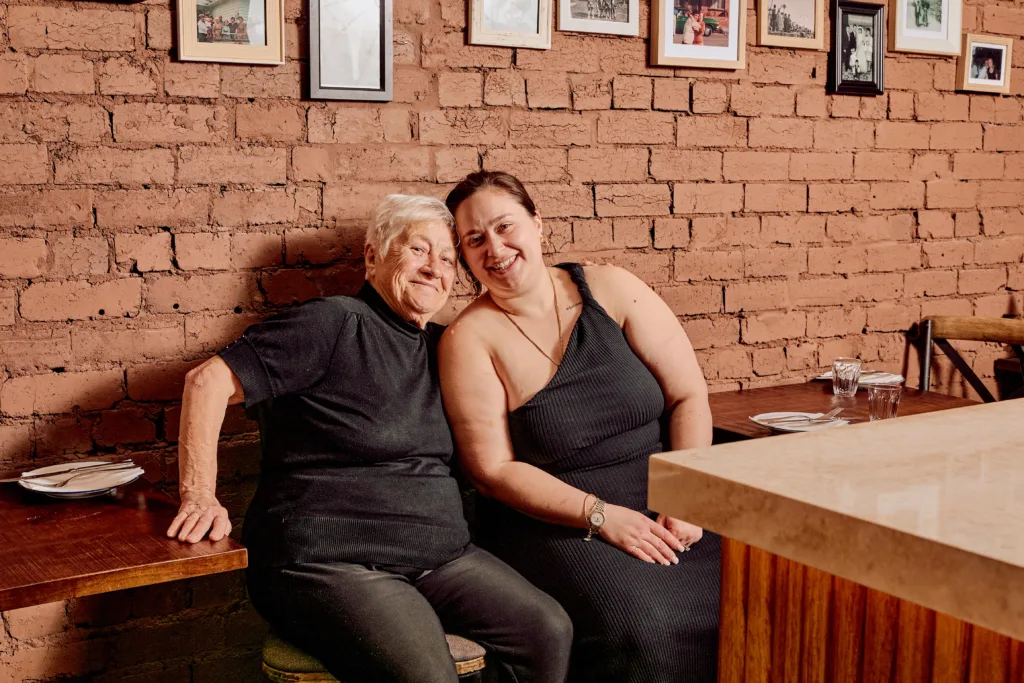
Raised by her mother Parthena and two yiayias (grandmothers), Eleni and Eleftheria, Thierry has carried their strength and passion into her own career as the co-owner and driving force behind three thriving hospitality businesses in the inner-western Melbourne suburb of Yarraville.
Eleni’s Kitchen + Bar, named after Thierry’s yiayia Eleni, made history as Yarraville’s first Greek restaurant when it opened in 1971. Known for its warm hospitality, high-quality produce and authentic Greek cuisine, the kitchen is helmed by Thierry’s mentor, acclaimed Greek chef Christos Katopodis, who spent 16 years as head chef at Jim’s Greek Tavern. In 2024, a devastating fire forced the restaurant to close for four months, but it returned stronger than ever, reclaiming its place as a Melbourne icon.
Next door is Jimmy’s Deli, a tribute to Thierry’s pappou (grandfather) and home to Melbourne’s legendary half-kilo “New Yorker” pastrami sandwich; and Cakes by Thierry, which showcases Thierry’s artistic and culinary talents through custom cakes and traditional Greek sweets.
Ela na Fáme! shares cherished family recipes that are accessible to home cooks of all levels, organised into Meze (appetisers), Mains and Sweets. Beyond familiar classics like spanakopita and moussaka, readers will discover northern Greek delicacies like gemista (stuffed capsicum and tomatoes) and lamb kleftiko (“stolen lamb”, cooked in individual parcels with vegetables). For dessert lovers, there’s plenty to try – including Thierry’s personal favourite, rizogalo (rice pudding).
Each recipe comes to life through personal anecdotes that transport readers to the bustling family kitchens of Thierry’s childhood, where she and her sister Natalie learned to cook from their yiayias. Rich with photographs, family stories and characteristic Greek humour, the book paints an intimate portrait of an immigrant family whose food became their identity.
Yarraville itself emerges as a character in this narrative – the setting where multiple generations of Thierry’s family established cafés, restaurants, and even a butcher shop, creating a hospitality legacy that continues to flourish. “Ela na Fáme! isn’t just about Greek food,” says Thierry. “Every family, regardless of background, understands how food connects us to our past and nourishes our future – it’s a universal language that transcends cultural boundaries.” Ela na Fáme! will be available online and in-store at Eleni’s Kitchen + Bar and Jimmy’s Deli from 17 April 2025, with national shipping available.
Many parents ask this question, and the short answer is that there is a lot you can do. Even if you or your partner, or both of you, or even if no one in your immediate circle is confident and fluent in Greek, you can still support and encourage your child’s Greek language skills, interest and attitudes. I will describe some ways to do this below and extend these tips in later articles.
The first thing to keep in mind is that your attitude as much as the language input, makes a big difference. The second point to make is that the suggestions below are the fruit of a lot of research from across the world. Some of the suggestions might seem simple or obvious, but they are all the outcome of careful thinking and study.
English and bilingualism
It is important to keep in mind that however much time you devote to Greek at home your child is likely to be dominant in English. That is the reality of Australia; although we are a multicultural and multilingual society, English is the common and shared language and dominates most aspects of life here. This means that no amount of effort or time you devote to Greek at home will detract from your child’s knowledge of English. This makes Greek ‘additive’, you are extending and adding to their skills, talents, abilities and cultural horizons, and it is this attitude that you need to instil in your child as well.
However, promoting Greek at home in an English dominated society is working against what we call language shift, the tendency of language loss across the generations. Children feel the pressure to belong to peer groups and you need to keep this in mind and foster a desire in them to identify as a bilingual Greek Australians, proud of their Greek heritage and seeing Greek language knowledge as a key part of this heritage. When you are promoting Greek at home you are promoting bilingualism.
What are some practical ways to support Greek language at home?
I will set out some principles first, and then some specific suggestions and then what I call the family language plan.
Principles
To achieve the best results, you need consistency, frequency and positivity. Research shows that with small children predictability is central to learning. In practice this means that children will expect that at a certain time of day, or in a certain activity, or with a certain person, they will be hearing Greek and expected to use Greek in reply.
Praising and encouraging your children to value and use Greek naturally is important, as is the idea that they will hear the language in a natural way. You will need to create events, settings or situations in which Greek is the normal and expected language and your children will get used to the fact that they will be addressed in Greek and are expected to at least understand it, and over time to reply in Greek.
Three approaches
Greek language needs to have a consistent, predictable and regular presence in your daily life. A useful way to think about it is that Greek needs to be associated with a person, a place or an activity, on a regular basis, every week, and preferably every day.
Person
If only one parent speaks Greek, then they should be the regular user of Greek in the home, for as much of the day as possible. This is called the One Person One Language (OPOL) model. OPOL was first devised in Belgium in the early 20th century and has been the subject of a lot of research. There are many variations, but the simplest way to do it is as follows: parent A uses Greek to all the children and to their partner all the time and parent B uses English.
If both parents speak Greek and you want to create a full immersion in the language at home this is of course ideal, however it is also useful in this case to create a family language plan, so the children know what’s expected. OPOL can be varied to include babysitters, elderly relatives, friends and neighbours, older siblings, and so on but the basic principle is that there is extended long term use of one language for all needs and communication in the home.
You don’t have to be rigid or inflexible; there are many occasions or situations in which it might be necessary to break the OPOL pattern, but what research has found is that this should be discussed with the children as a temporary deviation from the family language plan. Because the other parent is using English (in some cases it might be a different language, say Spanish) so the reality is that everyone develops multilingual listening and reading skills, but a sharpened focus on Greek with at least one parent.
The parent using Greek should aim to vary the subject of what they discuss with the child, and occasionally you can even introduce (not teach) new words or expressions, to help the child participate actively in conversation. The focus should also be regular normal conversation, doing what is normally done at home.
2. Place
A version of OPOL is place or location. We can call this OLOL, one location one language. This might be a room in the house and all the activities that occur in that room, and ideally both parents use only Greek, and the children agree in advance to do so. If you vary the activities and what is discussed the range of language input can be enriched, otherwise the location shapes what language the children hear, and this might over time become too narrow.
Like OPOL this approach of having a room or setting or other place devoted to Greek will need to be frequent and regular so it becomes predictable to children, especially small children, and should be enjoyable and use multimedia materials. It could be a TV room and be planned for a certain time every day or every two days and marked in different ways. In some bilingual families small children do this by what they wear, maybe a hat, or by other family specific routines.
3. Activity or Time
The third main way is activity or time centred, such as mealtimes, TV watching, sport, visits or bedtime routines. With activity and time-based Greek support it is also important that these are varied, so that different topics are discussed, and you can use the OPOL method, or everyone becomes an equal learner/user for those activities.
Getting started
Different methods will suit different your families and you can vary these, but what is a key thing to do is to discuss and agree on the strategy, and this is done by a family language plan. You can make it very informal; some families have found that making it semi-official, like a family conference in which children and adults agree on strategies, and roles etc. can be useful.
A contract might involve: We will try to use Greek and only Greek on Thursdays. If we run out of words, we hold up the card that says ΠΟΙΑ ΕΙΝΑΙ Η ΛΕΞΗ ΣΤΑ ΕΛΛΗΝΙΚΑ; and try to not use English. But if we do use English occasionally that is not a drama.
Families have shared rules and arrangements, and the family language contract quickly becomes like brushing teeth, putting on seatbelts, sitting down for meals at set times, whatever rules your family has adopted. The reason this helps is because it asks children to participate in decision making, to feel they are being listened to and that the commitment to support Greek is shared by all, even by the English-speaking parent in OPOL. One commitment that works in many families is that older children become ‘champions’ for the language, and agree to help younger ones, and to review and think about how the contract is working every so often.
At Pharos we run regular seminars for parents titled Raising Bilingual Children. You are very welcome to join our next seminar on Sunday 8 June, 1:30pm-5:30pm. It is free of charge.
*Joseph Lo Bianco is Professor of Language and Literacy Education at the Melbourne Graduate School of Education. He is also the President of Pharos Alliance, dedicated to preserving Greek language in Australia.
By Anastasia C. Miliou, Attorney at the Supreme Court*
The roots of the Greek family are deep and transcend time. Second and third generation Greeks born abroad keep the customs and tradition of Greece and even speak the Greek language, but this doesn’t mean that Greek citizenship is a matter of course.
The way in which someone can get Greek citizenship isn’t very difficult, but neither is it widely known.
We can begin by finding the last ancestor born anywhere in Greece whose birth certificate can be traced. If the ancestor is a father or a mother, then the process is very easy. If the ancestor is a grandfather or great-grandfather, then the search can go as far back as there is a birth certificate.
If we have a birth certificate, then we can proceed to gather the rest of the paperwork needed. For instance, if the grandfather was the ancestor born in Greece then it is necessary to find the religious marriage certificate of that relative (if he is male we need the marriage to be orthodox religious, if she is female the marriage must not be orthodox religious), regardless as to whether the marriage took place in Greece or abroad, followed by the birth certificate and marriage certificate of the parent whose lineage is Greek followed by the citizenship applicant’s own birth certificate.
The documents need to be in their original forms, officially translated in to Greek. The applicants need to sign a series of documents required for Greek citizenship at the embassy of their place of residence. All the documents are then gathered and sent to the region where the Greek ancestor lived. From there, an act certifying Greek nationality status is sent with a file to the relevant municipality for enrolment. As soon as the applicant is enrolled at the Municipality, Greek citizenship and a passport become a matter of course.
Minors automatically receive citizenship parallel to the parent who has a right to it. If they become of age they need to submit a different application.
If any certificate is missing there is the way of naturalization but in that case the applicant will be interviewed at some point by the Council in Greek language and he/she must know about Greek history and the present political, financial and social situation in the country. This procedure takes more time but the final result is the same.
Anastasia C. Miliou is an Attorney at Law at the Supreme Courts with experience in international law and a large clientele in both Greece and abroad. Her telephone number is 6945028153. If you would like questions answered as part of her articles in English online, you can e-mail her at natmil@otenet.gr or visit www.legalaction.gr
Greece developed a rich array of traditional, popular, and art music, which diasporic Greeks took with them. In Greek American communities, music has been an essential component – linking the past to the present, the distant to the near, and bonding members with an embrace of memories and narratives.
Between 1896 and 1942, an estimated 2,000 recordings were made in America, and thousands have since appeared. They encompass traditional music from all regions, and emerging urban genres, stylistic changes, and songs of social commentary.
This talk profiles the scope, practice, and development of Greek music in America with attention to its relationship to ethnic identity.
BIO
Dr Tina Bucuvalas is Director of Florida Cultural Resources, Inc., the President of the Greektown Preservation & Heritage Association and has held various curator roles over the years in Florida.
Dr Bucuvalas is the author, co-author, or editor of Greek Music in America (2019), Greeks in Tarpon Springs (2016), The Florida Folklife Reader (2011), Just Above the Water: Florida Folk Art (2004), and South Florida Folklife (1994). She is currently working on an ethnohistorical book about the largely Greek-led international sponge trade.
She also has published dozens of essays and curated many exhibits. Bucuvalas conducted extensive fieldwork over several decades with most groups in Florida, as well as with Native Americans in Arizona; ranchers in Wyoming; various groups in Maine, California, New Jersey; Isthmus Zapotec in Mexico; and sponge workers in Cuba, the Bahamas, Greece, Australia, and Turkey. She holds a PhD in Folklore from Indiana University and an MA in Folklore & Mythology from UCLA.
Event Details:
When: Thursday 10 April 2025, 7pm (8am UK time, 10am Athens time, 4am New York time)
Speaker: Dr Tina Bucuvalas
Seminar: Greek Music in America
Where: Online – Facebook/YouTube
Language: English
Sponsors: Anthi Sidiropoulos in Memory of Michael Harris
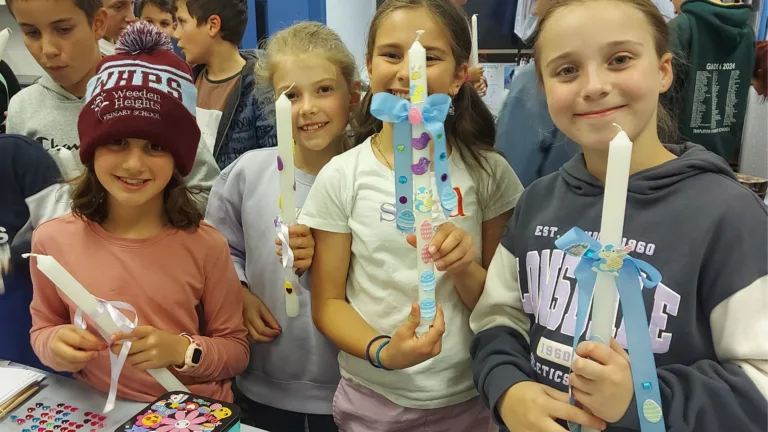
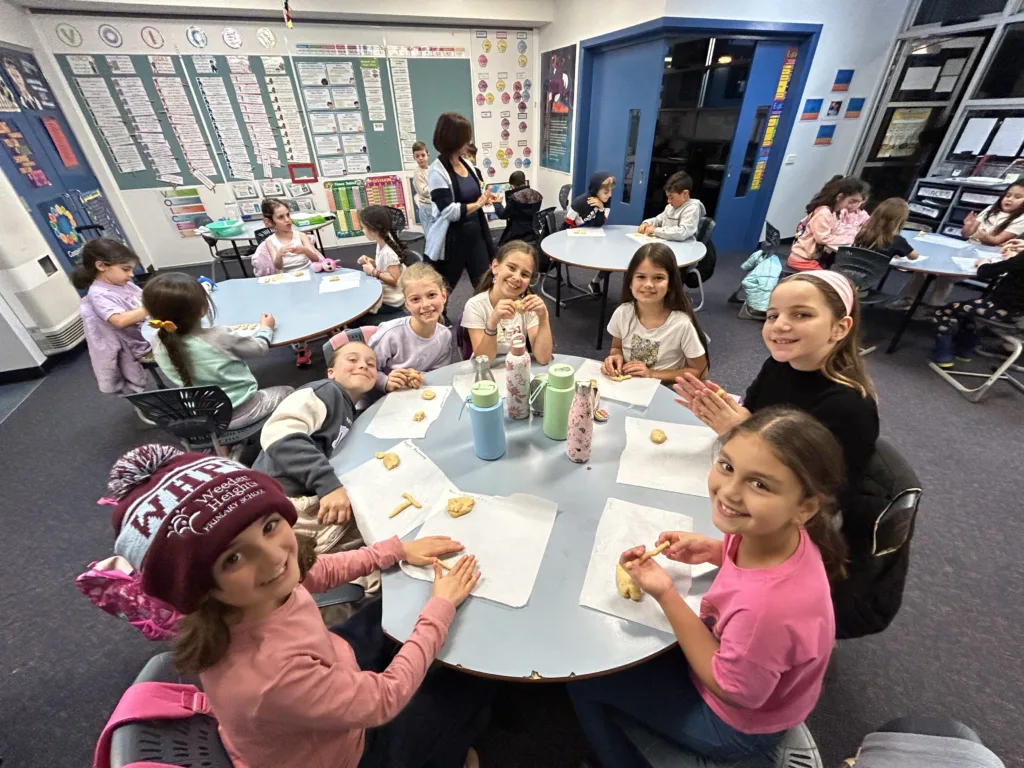
During the Easter holidays, the schools of the Greek Community of Melbourne (GCM) have organised a fun and creative program for children aged 4-10 years old.
This program combines tradition with creativity, offering children a unique opportunity to experience the magic of this great celebration.
The program will take place at three different locations and on different days:
Thursday, April 10 – Balwyn North Campus: Belle Vue PS, 20 Highview Rd, Balwyn North
Monday, April 14 – Huntingdale Campus: Huntingdale Hall, Germain St, Oakleigh South
Wednesday, April 16 – Greek Centre (CBD): 168 Lonsdale Street, Melbourne
Participants can choose to attend either the full six-hour program (9:00 a.m. – 3:00 p.m.) or a three-hour session (9:00 a.m. – 12:00 p.m.).
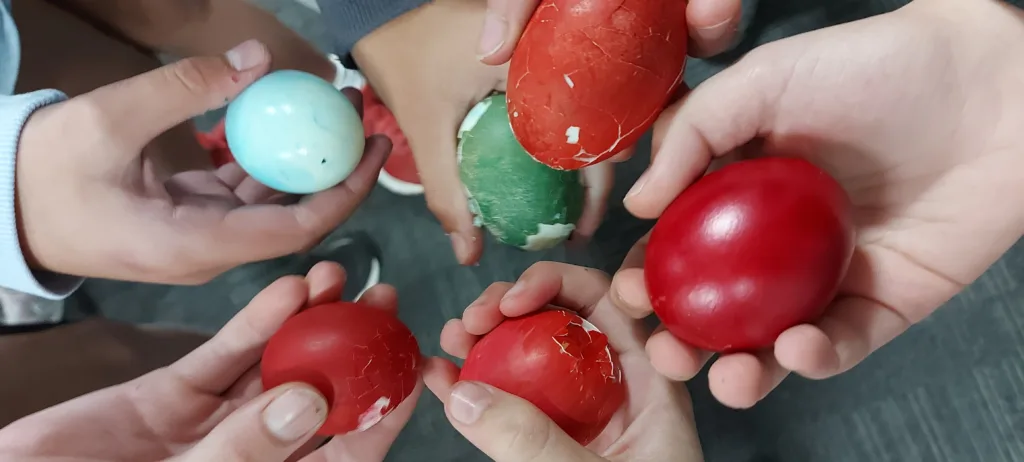
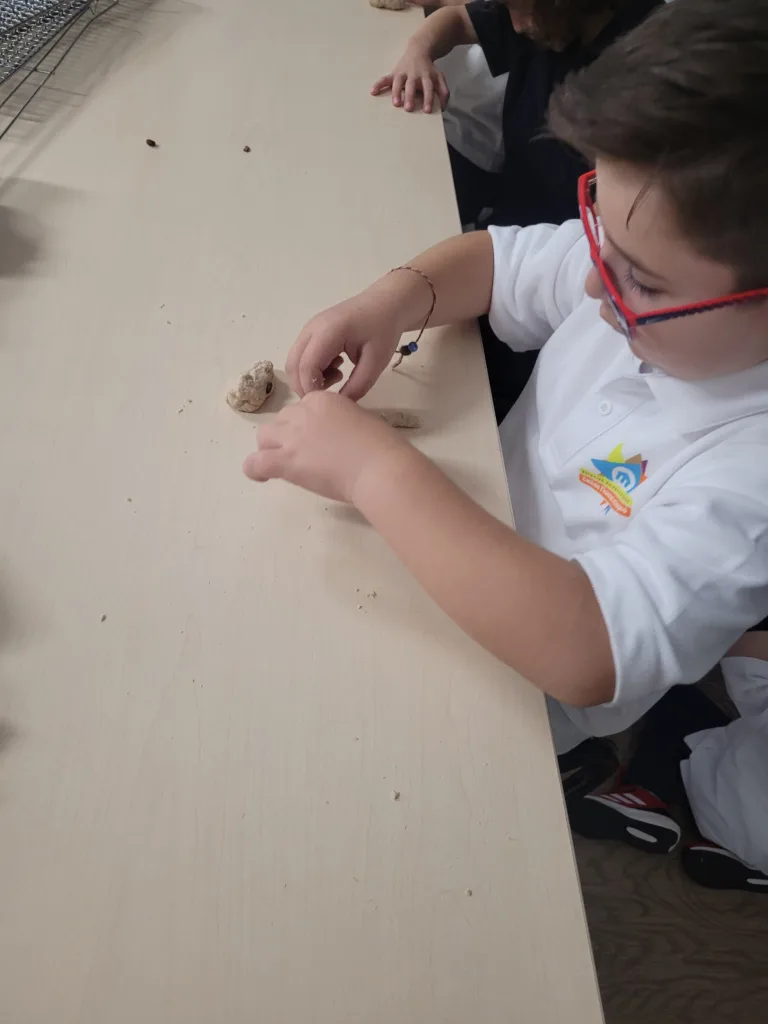
The workshop includes reading Easter stories, learning traditional Easter songs, cooking traditional Easter treats, and engaging in creative crafts and hands-on activities.
The program aims to combine learning, fun, and creativity while bringing children closer to Greek Easter traditions and folklore. Through this experience, children will develop both emotionally and creatively.
An agrifood startup company contest affiliated with the third Cretan Lifestyle Conference helped promote young agrifood entrepreneurs in Greece. At an Innovation Symposium that preceded the larger conference, five young finalists gave brief “shark-tank pitches.” Experts from business and industry served as judges at the conference venue near Heraklion.
As conference organizer Dr. Stefanos Kales of Harvard University and the Hellenic Center of Excellence for Health & Wellness emphasized, “it is important to promote youth in academia, business, and innovation, because the food and products of tomorrow come from young people.”
Smart Agro Hub S.A. and Industry Disruptors Game Changers helped the conference organizers coordinate the competition in the autumn of 2024. With 13 applications received, representatives of the top five startups were invited to introduce their businesses to the judges and other experts at Grecotel’s Amirandes Resort.
Young Greek Agrifood Entrepreneurs Make Impressive Pitches
Competition judge Rafi Taherian, Retired Associate Vice President of Yale Hospitality, announced that Teapsule won first prize. Teapsule makes home-compostable organic herbal tea capsules that are compatible with Nespresso machines. Taherian and the other judges praised Teapsule for its innovative, useful, healthful, and environmentally sustainable products, for promoting an authentic local Greek specialty, and for already demonstrating its ability to succeed. This startup also placed third on the 30 under 30 list for Forbes Greece.
Teapsule was created by Nikitas Kefalogiannis and Ilia Ioannidi, who currently run the startup on their own. Their invention was inspired by a desire to prepare sleep-inducing chamomile tea quickly and easily when Kefalogiannis needed it to overcome insomnia in the middle of the night. Their Nespresso machine suggested a solution, although extensive R&D was needed to make it work with herbal tea.
Kefalogiannis and Ioannidi explained that these capsules are filled with minimally processed herbs from Mount Psiloritis in Crete. Offering six unique flavors, Teapsule provides convenient, consistent results in less than a minute. Its inventors and many others believe their tea tastes even better than typical herbal infusions, which take seven to nine minutes to brew.
Ioannidi surmises that the excellent flavor is “due to high quality herbs and pressure and lower water temperature,” which leaves no bitterness. Teapsule provides a “sweet, delicate, aromatic” result that has already been embraced by some of the finest restaurants in Athens and abroad. Teapsule’s motto encourages tea-drinkers to “taste your connection” to nature by drinking this herbal tea.
All Agrifood Entrepreneur Finalists Are Winners
At the agrifood startup company competition, the second prize winner was ManaGi, which promotes high quality Greek food and beverage products on global markets. At the same time, ManaGi provides various services to both producers and international buyers. They enable buyers and consumers to order directly from producers across borders in their online portal.
The other start-up contest finalists included iMPACKD, a spinoff of the Agricultural University of Athens, which collects, curates, and analyzes “research-grade” data for food manufacturers and retailers in Greece and the Balkans.
Fertile Land provides guidance to farmers so they can use less input to grow more, both in soil and with hydroponics.
Cerelco, a digital platform that connects buyers and sellers in the agrifood sector directly, also offers logistics, quality control, financing, statistics, and advice. This makes it the only business in Greece and the Balkans to provide this type of complete service.
Young Entrepreneurs Hear from Experts
The startup competition event also featured a presentation and open discussion with Phil Kaferakis, president and CEO of IFMA, the Food Away from Home Association. He emphasized the importance of brand ambassadors and “boots on the ground” even as technology becomes more important in the supply chain.
After announcing the first and second place winners, Taherian reminded the audience that all five presenters were winners who would benefit from additional mentoring. They had all demonstrated that they “already had a solution that was far above the others.”
Rather than bemoaning the imperfections of the world today, these innovative young agrifood businesspeople in Greece focus on tackling problems using their energy, intelligence, and understanding.
*Originally published on Greek Liquid Gold: Authentic Extra Virgin Olive Oil (greekliquidgold.com). See that site for recipes with olive oil, photos from Greece, agrotourism and food tourism suggestions, and olive oil news and information.
Lipsi has secured the number one spot among Greek destinations offering alternative activities for British travelers, according to the well-known travel blog Jonny Melon.
Following closely in the rankings are the Western Cyclades, Athens, Santorini, the Saronic Gulf, and Meteora, according to protothema.gr.
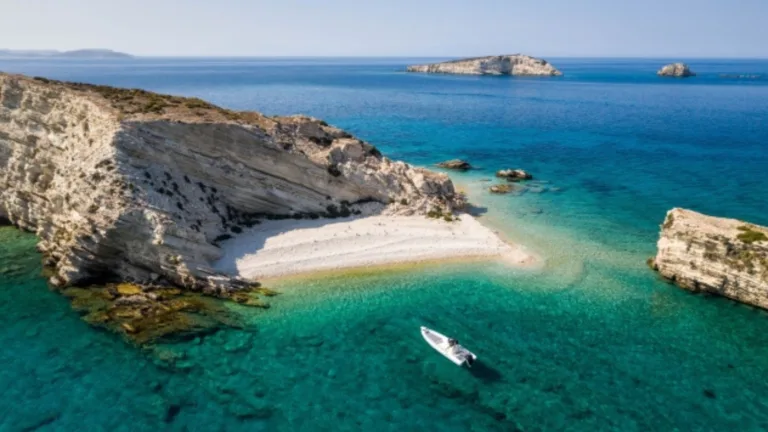
As highlighted in an extensive feature on Calypso’s island, “Lipsi offers an exciting escape in Greece, with numerous nature trails, picturesque churches, beaches with turquoise waters, and exotic islets.”
During the same period, Lipsi was also ranked among the top ten Greek islands for sailing excursions, as announced by the professional website deyachting.net. This hidden gem of the Dodecanese is described in the feature as a “small island with a big heart.”
“Lipsi has a dedicated following of nature and adventure lovers from abroad that continues to grow. Italy, the UK, France, and Germany are just some of the markets that in recent years have shown increasing interest in visiting the island outside of peak season for alternative activities. As part of our effort, we invite influencers and opinion leaders to convey the uniqueness of our destination to niche-interest audiences,” stated Fotis Mangos, Mayor of Lipsi.
Notably, 2024 marked another record-breaking year for ferry arrivals to Lipsi. A previous record was set in 2023, while in 2022, the island exceeded its 2019 benchmark for ferry traffic, recording a 25% increase in visitors compared to 2021.
Noticed it’s been a little darker in the mornings lately?
That’s because daylight saving time is coming to an end—meaning earlier sunrises but evening commutes in the dark.
Here’s everything you need to know.
When Does Daylight Saving Time End?
Daylight saving time ends this Sunday, April 6.
At 3am AEDT, clocks will be set back one hour to 2am.
Do We Gain an Hour When Daylight Saving Ends?
Yes!
Since the clocks are turning back, residents in affected states and territories will enjoy an extra hour of sleep. Mornings will stay darker for longer, while evenings will have more daylight.
Most devices—like smartphones and laptops—will update the time automatically. However, some appliances, such as ovens, microwaves, and analogue clocks, may need to be adjusted manually.
Which States Observe Daylight Saving Time?
Daylight saving is observed in:
Australian Capital Territory (ACT)
New South Wales (NSW)
South Australia (SA)
Tasmania (TAS)
Victoria (VIC)
Does Daylight Saving Time Affect Sleep?
Yes, it can impact sleep patterns, but the biggest disruption happens when clocks move forward—which will take place on October 5 this year. Losing an hour in spring is generally harder to adjust to than gaining an hour in autumn.
According to the Sleep Health Foundation, “falling back” in autumn is much easier on the body, and most people adjust after just one night.