Home Blog Page 220

History reborn: South Melbourne and Sydney Olympic kick off Australian Championship

0

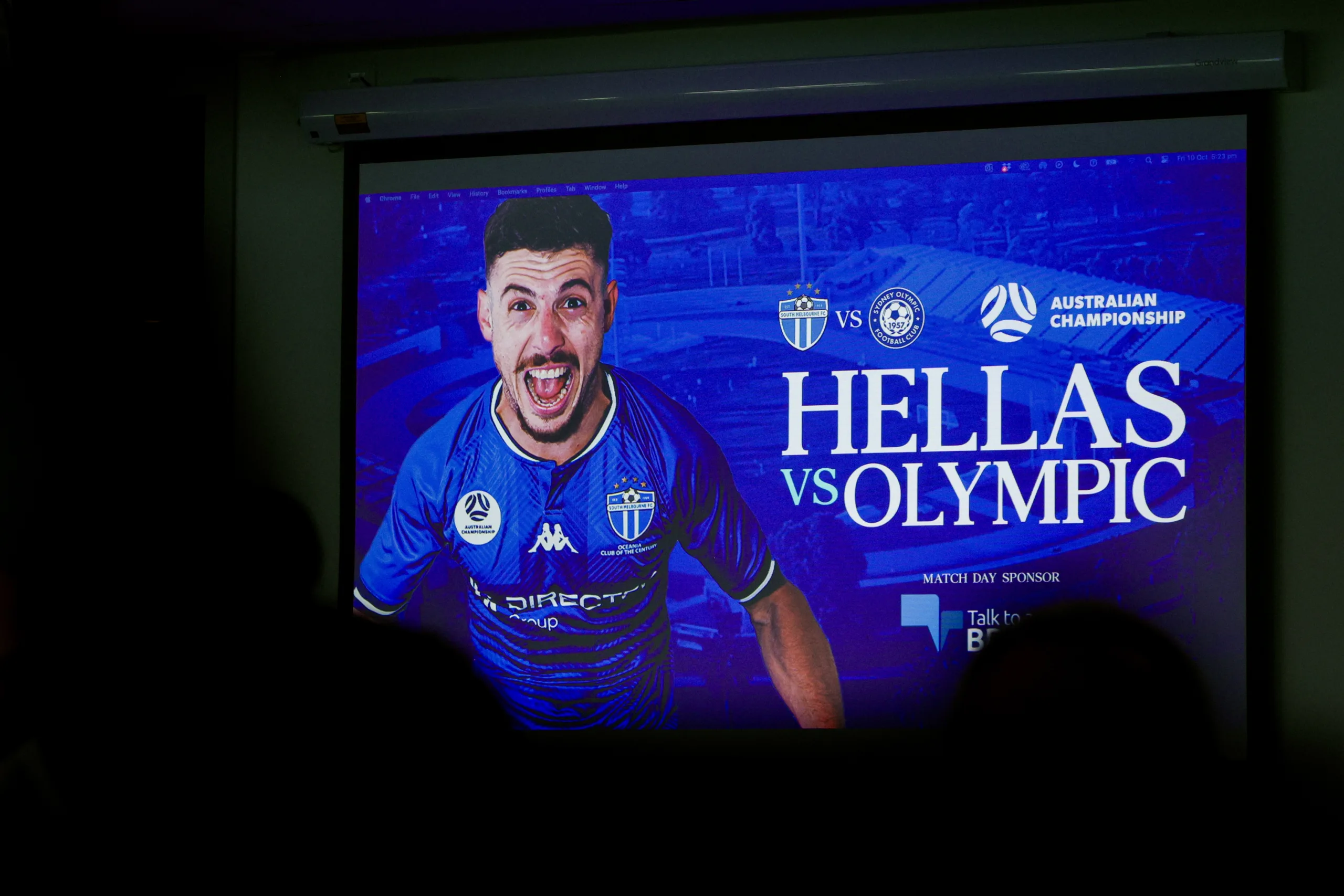
Football history was made on Friday, 10 October 2025, at Lakeside Stadium, as South Melbourne FC and Sydney Olympic FC went head-to-head in the opening match of the new Australian Championship – the nation’s long-awaited second-tier football competition.

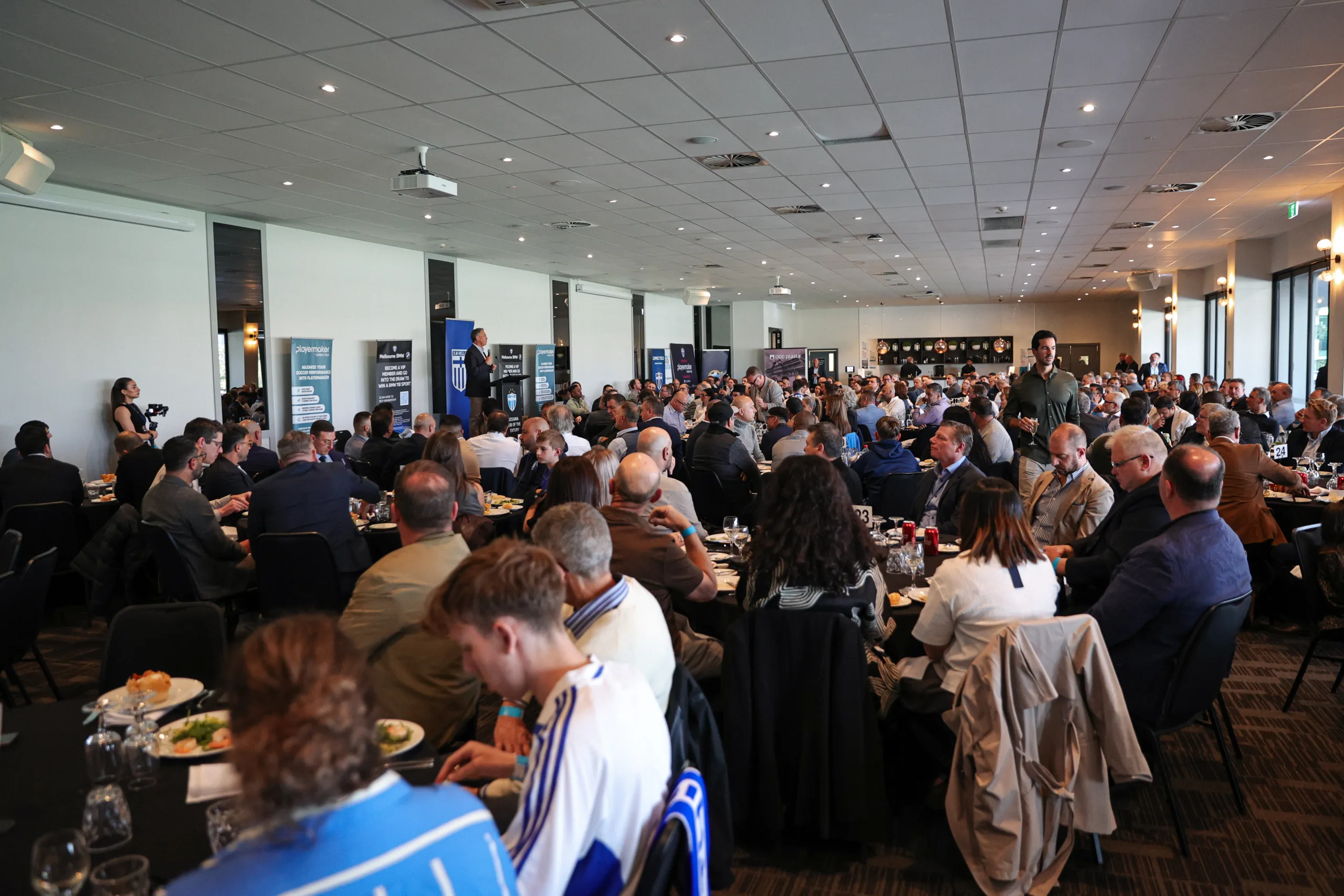
The occasion marked the long-anticipated return of two of Australia’s most storied community clubs to the national stage, a milestone celebrated before kick-off with a pre-game dinner attended by political, sporting and community leaders.
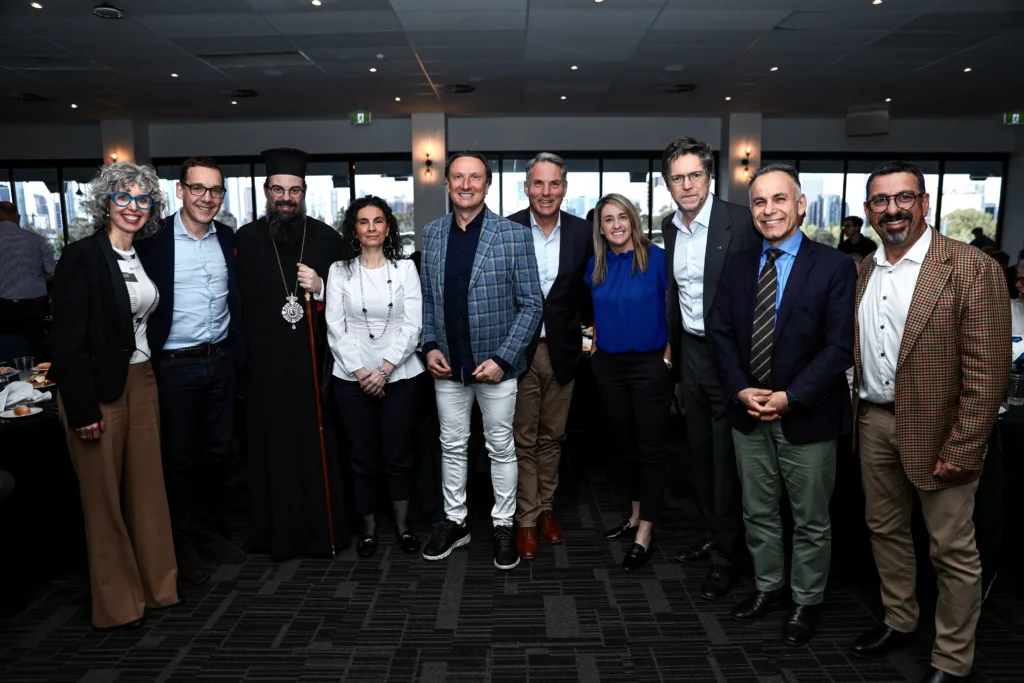
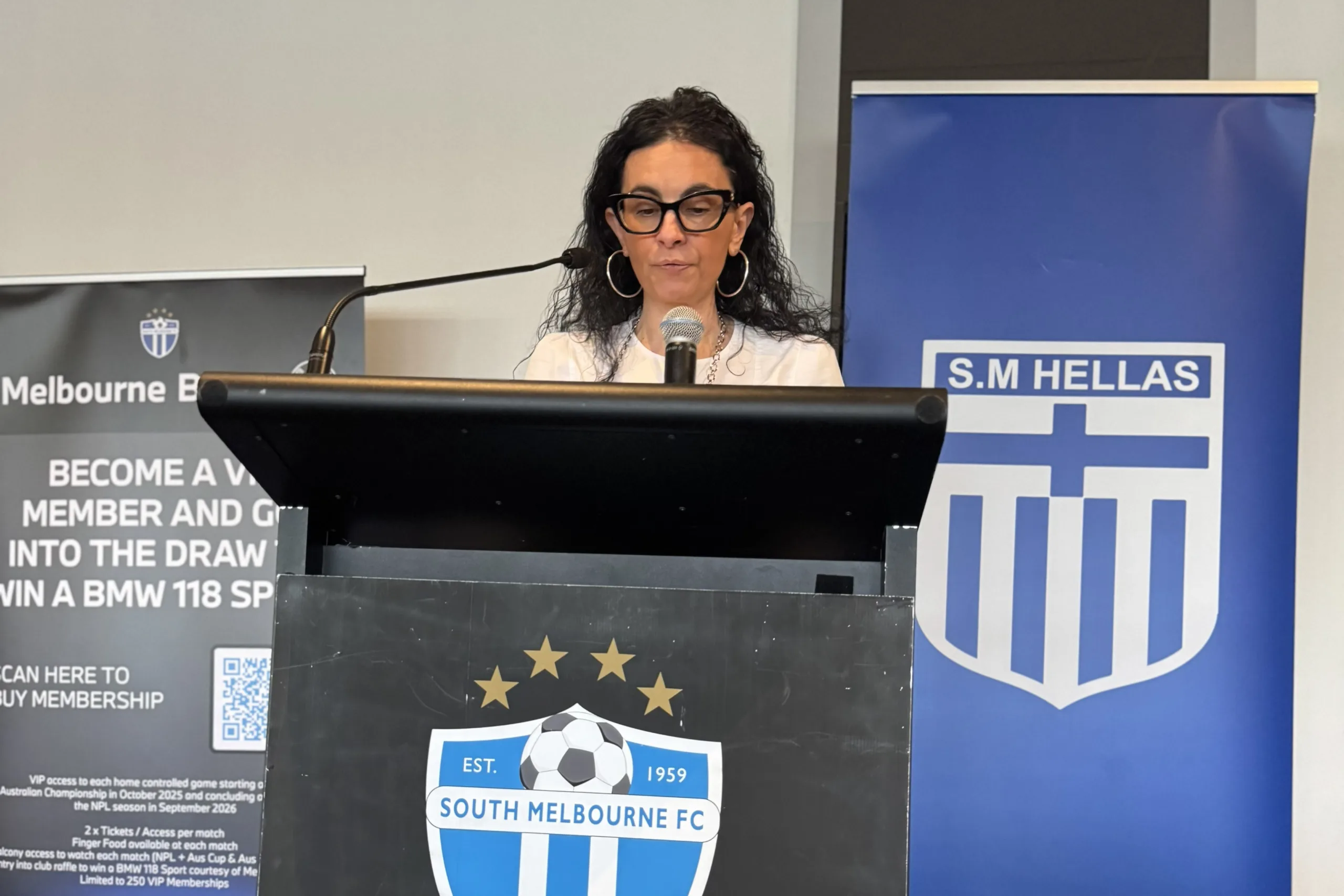
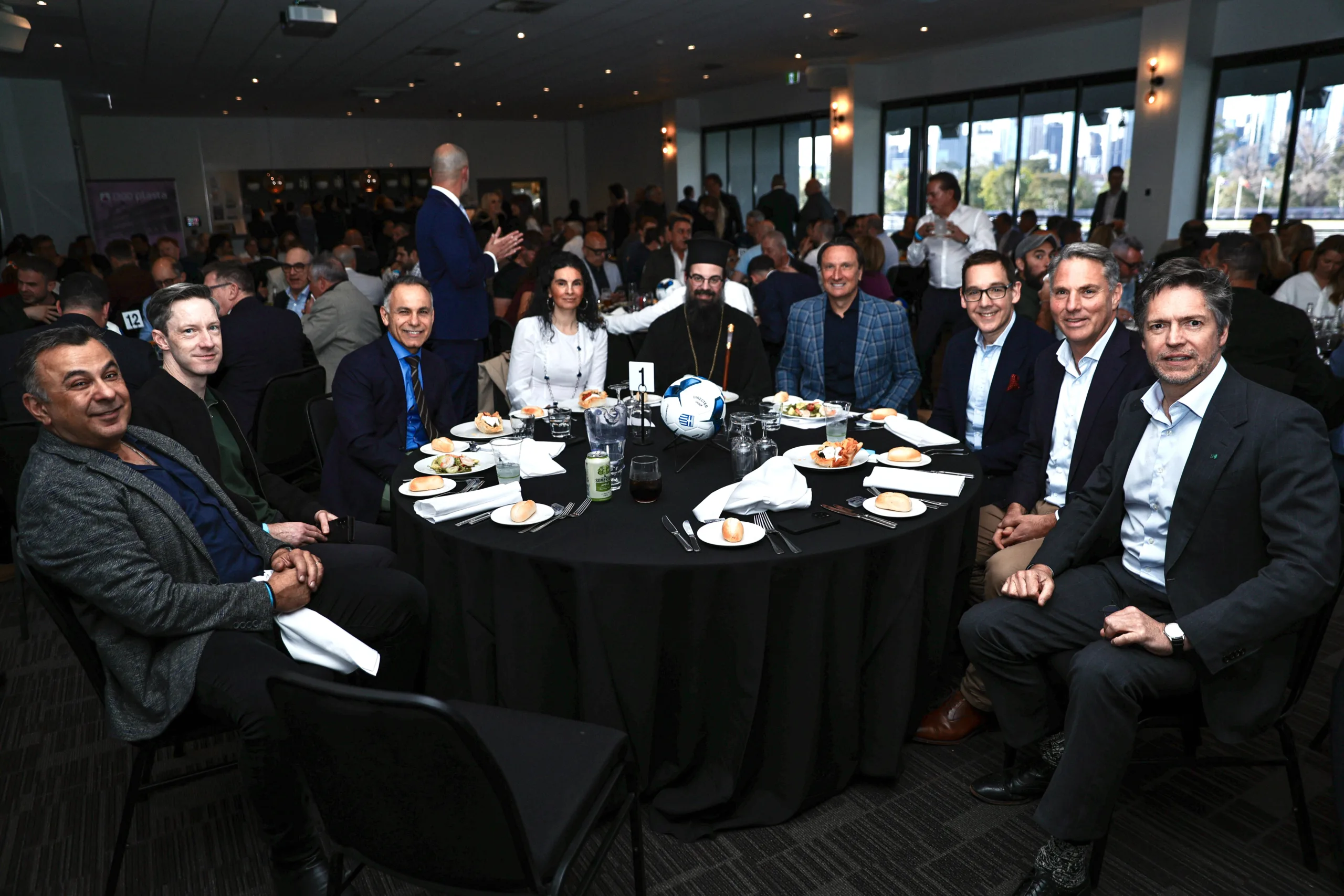
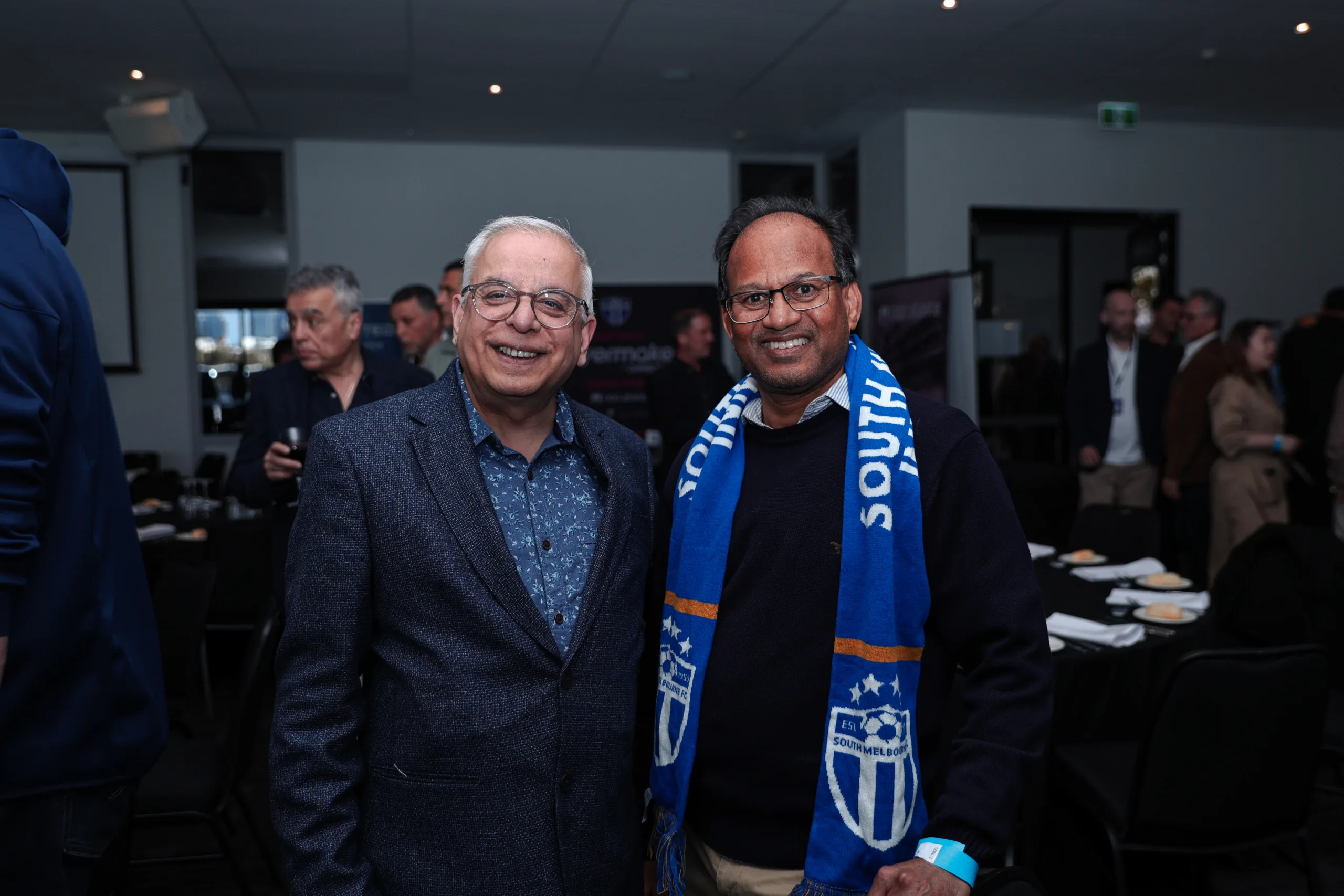
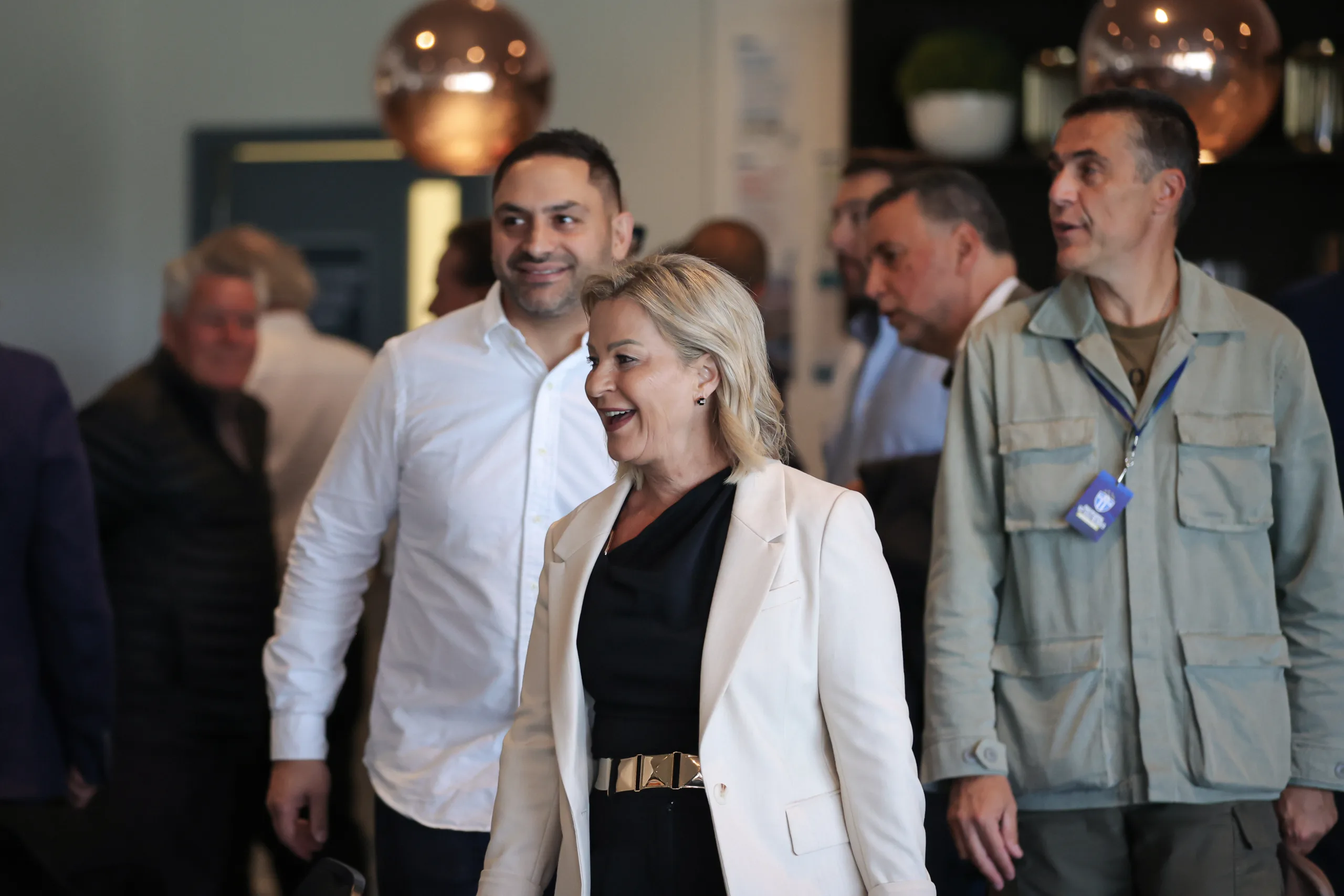
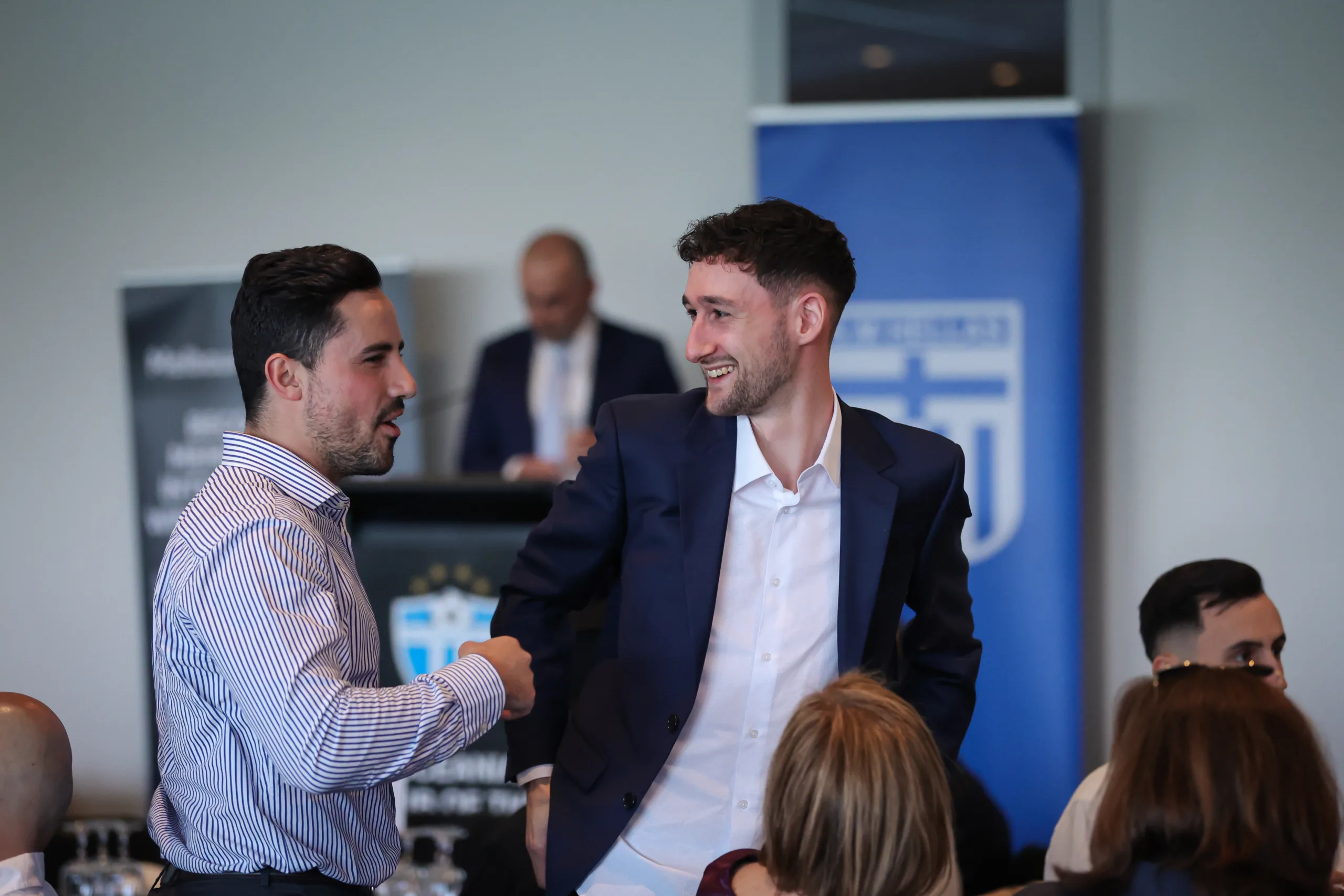
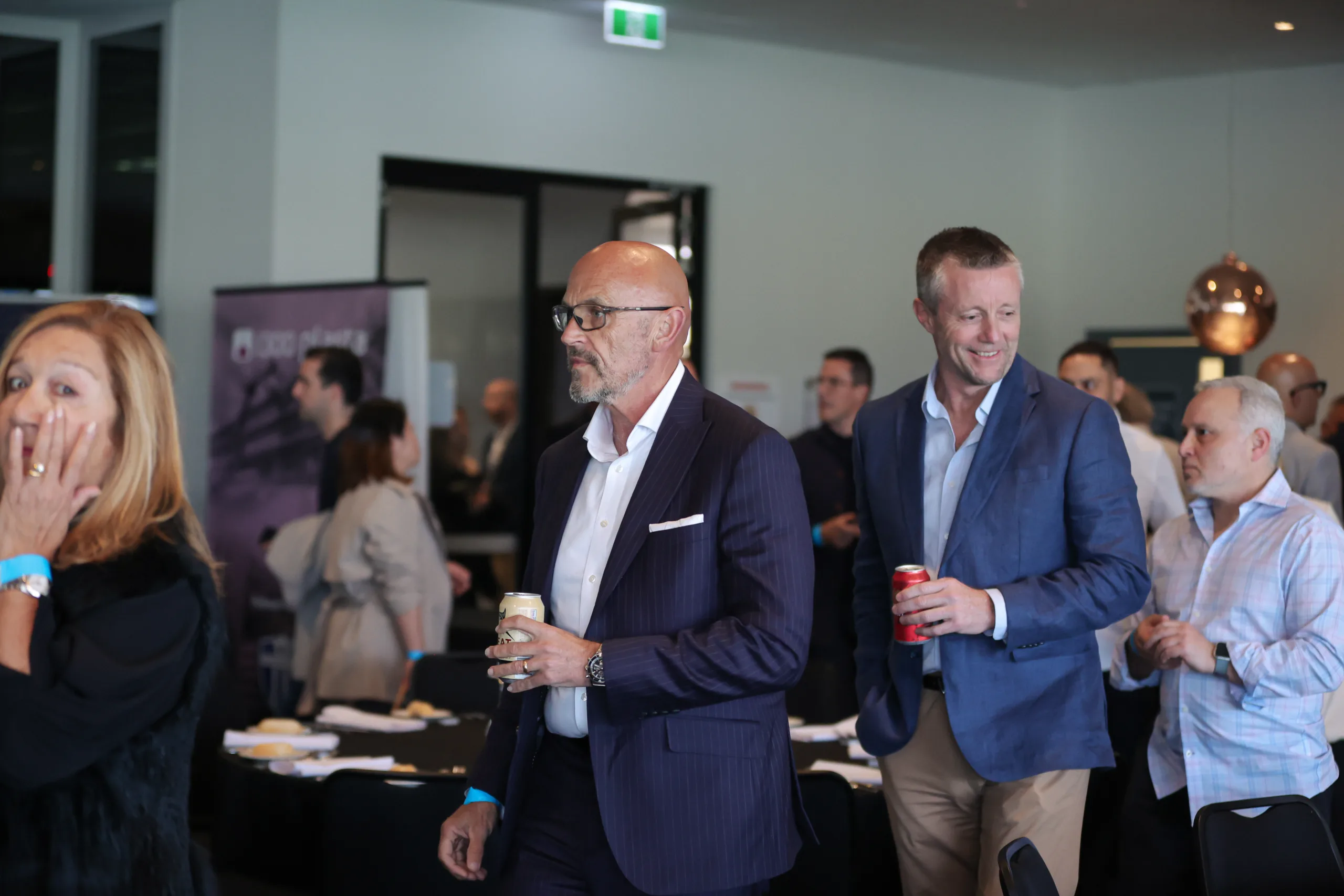
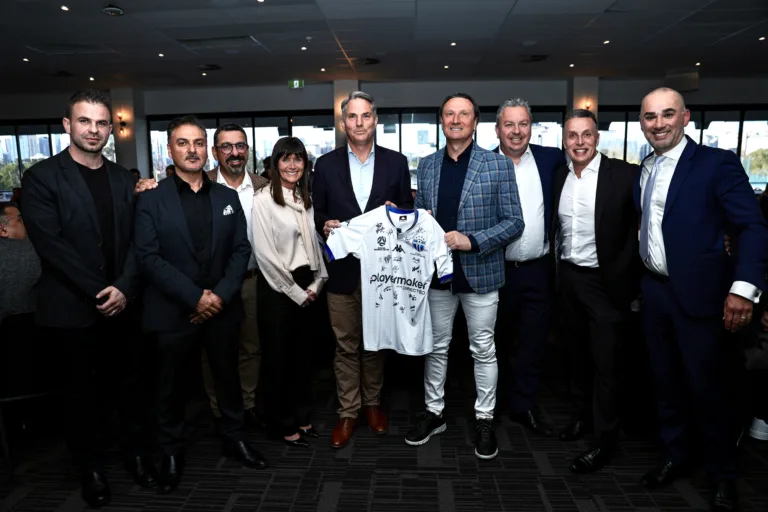
Dignitaries and football leaders at the Australian Championship launch event at Lakeside Stadium. Photo credit: Steph Surbevski / South Melbourne FC.

A night of pride and passion

The evening began with a packed dinner reception overlooking the pitch, hosted by emcee Nick Duggal, who paid tribute to the generations of volunteers and supporters who have built South Melbourne into one of Australia’s most enduring football clubs.

Among the special guests were Deputy Prime Minister Richard Marles, Victorian Minister for Sport Steve Dimopoulos, Lord Mayor of Melbourne Nicholas Reece, Member for Albert Park Nina Taylor, former Victorian Opposition Leader and Member for Hawthorn John Pesutto, Consul-General of Greece in Melbourne Dimitra Georgantzoglou, and His Grace Bishop Evmenios.
They were joined by Football Australia Interim CEO Heather Garriock, Chair Anter Isaac, Football Victoria Chair Dr Angela Williams, and Sydney Olympic President Damon Hanlin.

In a passionate address, Deputy Prime Minister Richard Marles described the night as “a significant step forward for Australian football,” noting that the new league would provide “so many more opportunities for young players” and bring “community-based passion” back to the national stage.
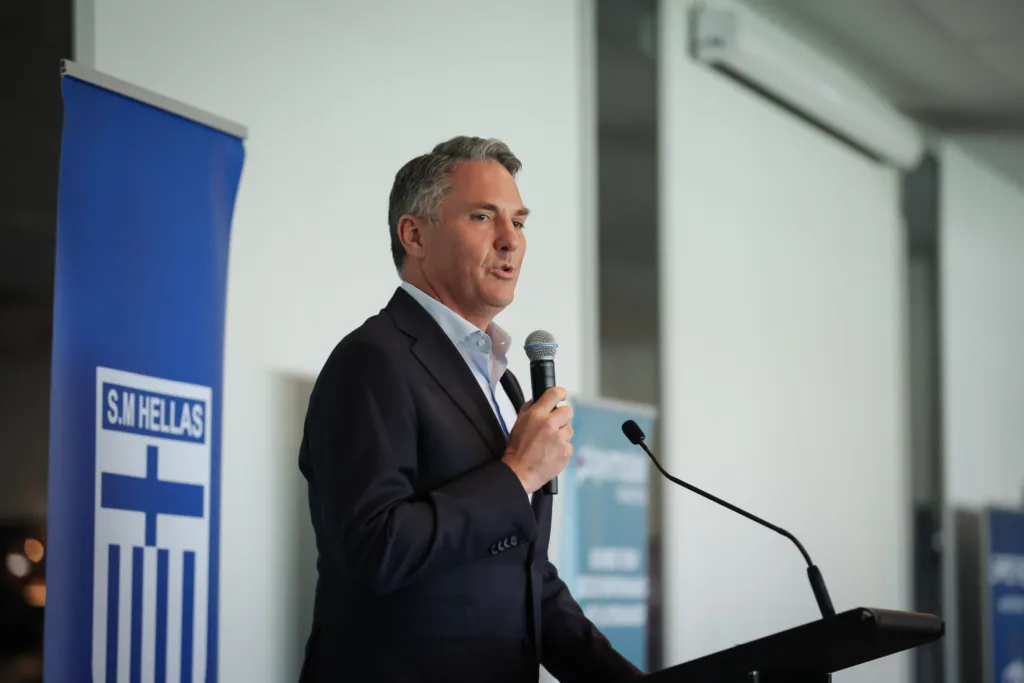
Deputy Prime Minister Richard Marles. Photo Credit: Steph Surbevski / South Melbourne FC.

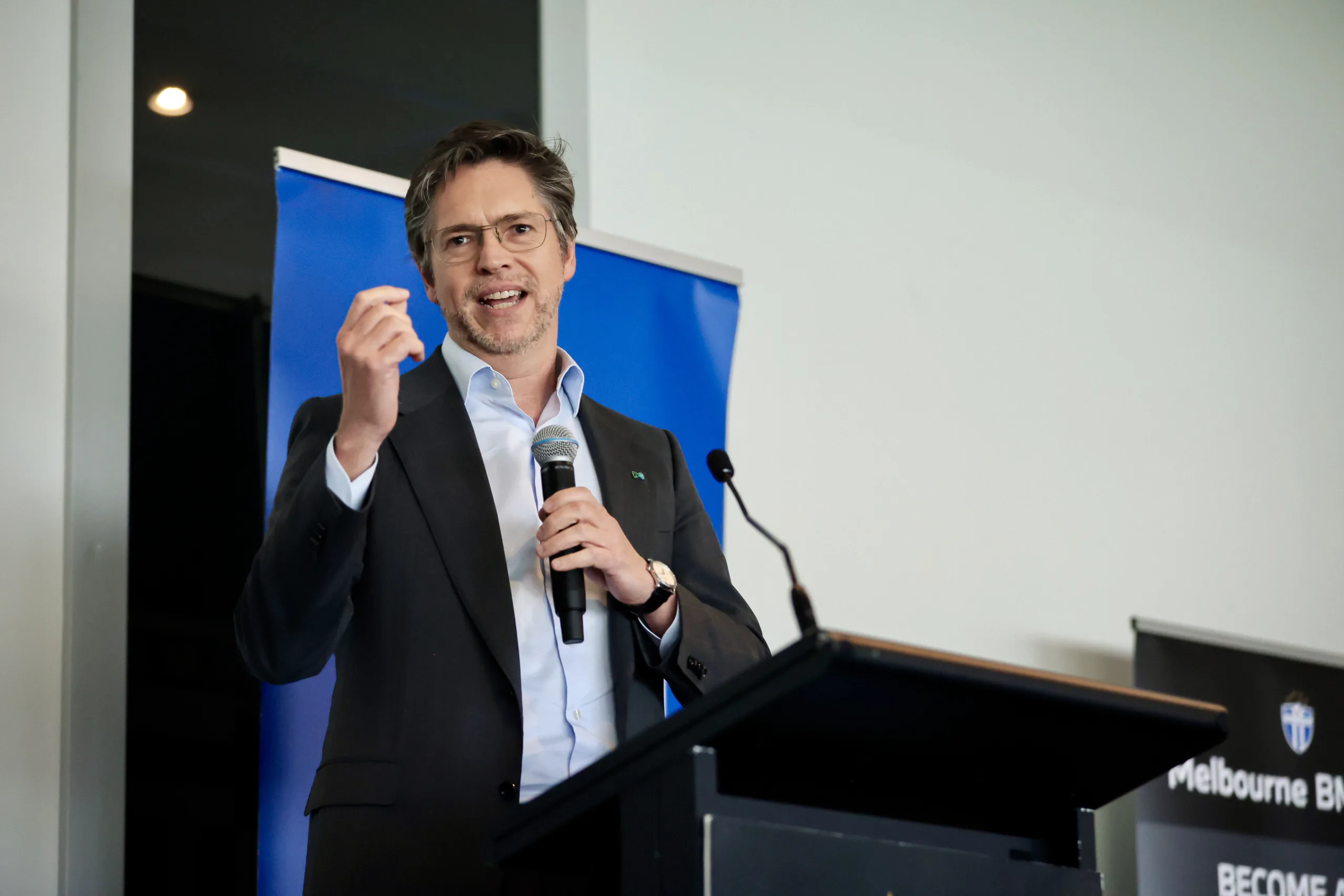
Lord Mayor Nicholas Reece spoke of South Melbourne’s deep roots in the city’s sporting identity, calling it “a club that represents the beating heart of multicultural Melbourne,” before leading the room in a spirited “Go Hellas!”

Minister Dimopoulos called the competition “long overdue,” adding that clubs such as South Melbourne and Sydney Olympic had “pioneered this game before it was fashionable” and now rightly belonged in a national league.
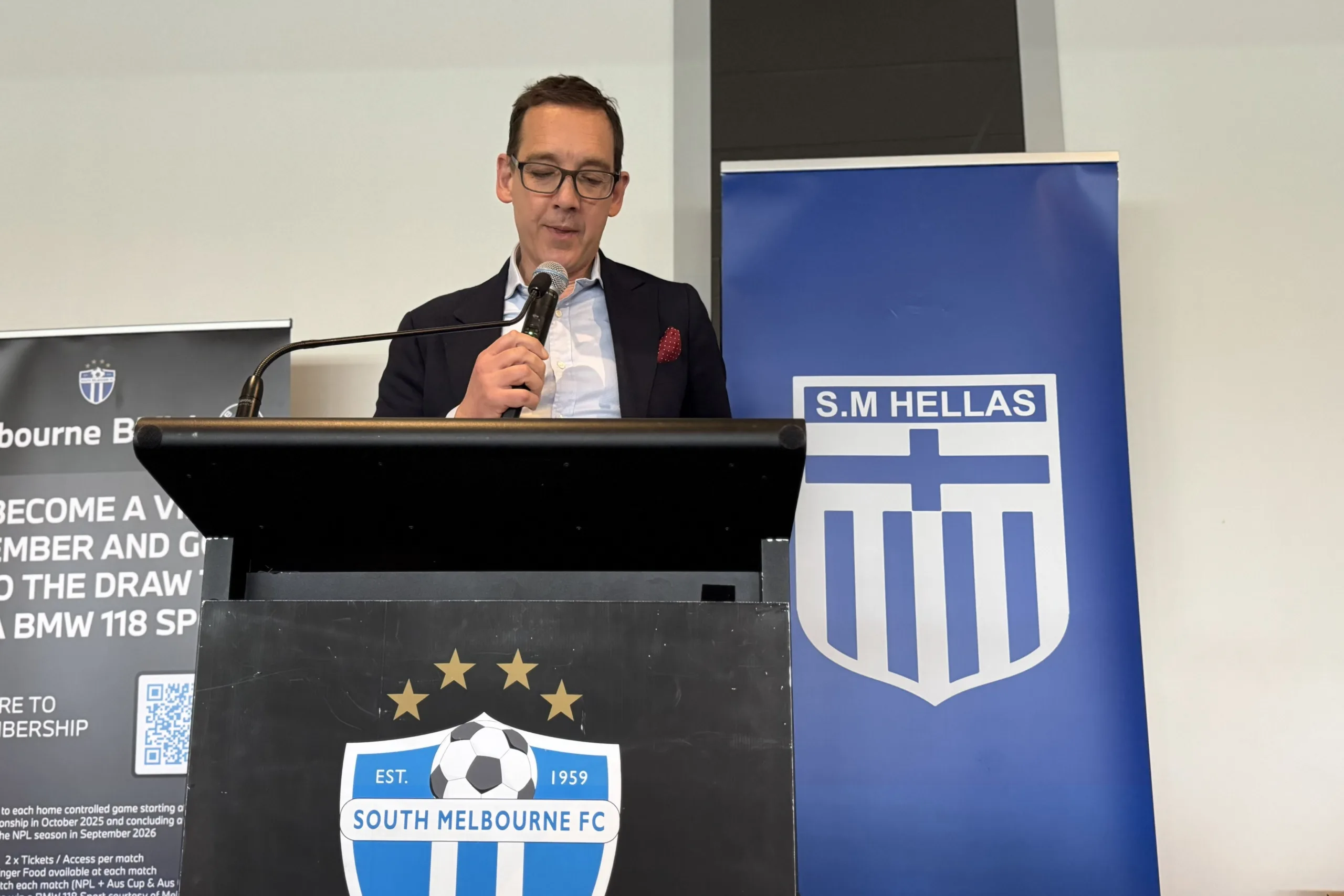
Steve Dimopoulos MP. Photo: The Greek Herald.
Lord Mayor Nicholas Reece. Photo credit: South Melbourne FC.

Acknowledging a legacy

Nina Taylor praised South Melbourne’s proud history and its ongoing contribution to Australian football, noting that the club has “represented Australia on the world stage before, and continues to lead the way for the next generation of players.” She also highlighted South’s upcoming participation in the Oceania Professional League, calling it “another exciting chapter in the club’s international story.”

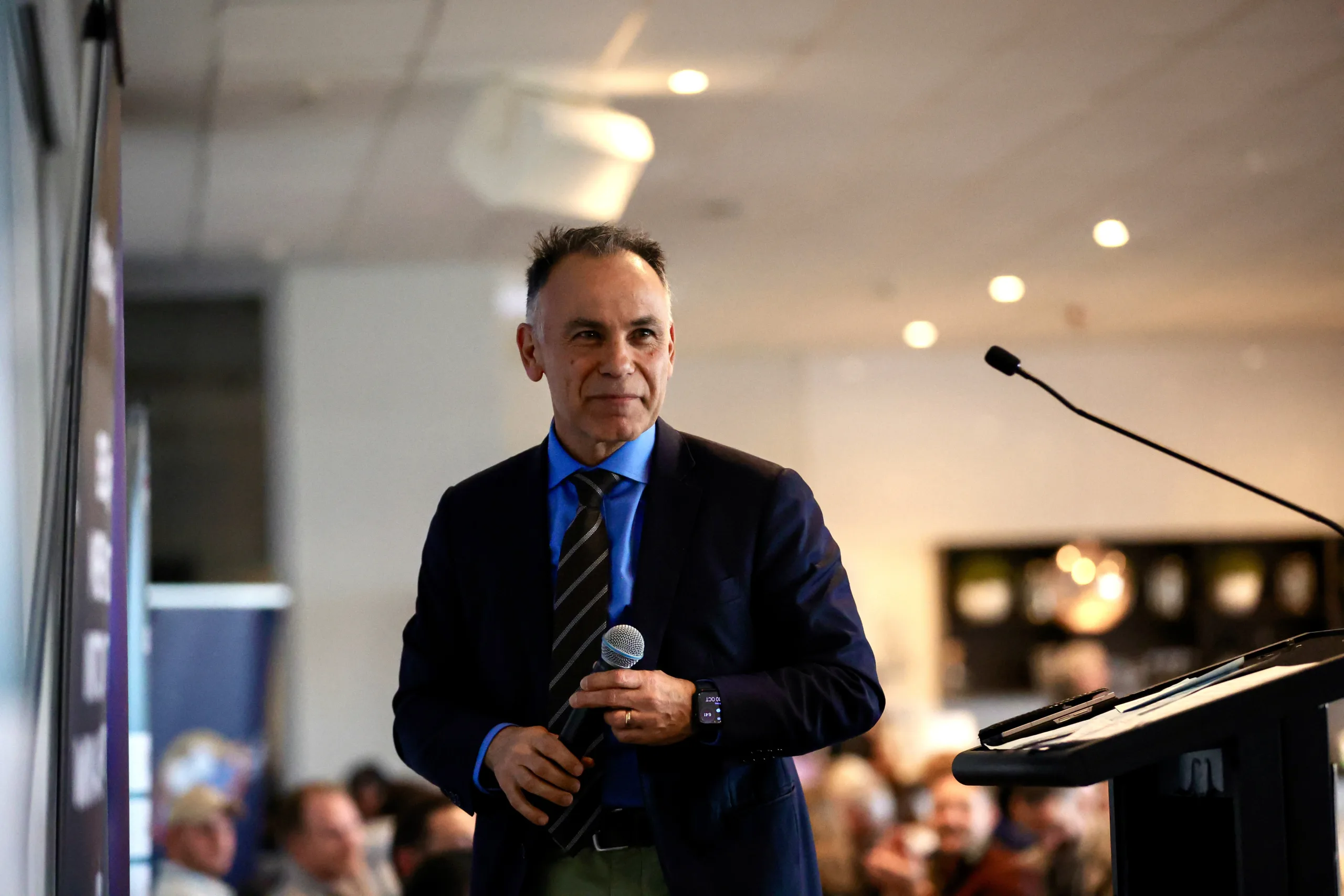
John Pesutto echoed the sentiment, saying the club’s grit and determination mirrored that of the Greek migrants who founded it in 1959. “You can’t understand Melbourne,” he said, “without understanding this iconic club and this iconic ground.”

Consul-General Dimitra Georgantzoglou commended South Melbourne Hellas as “a reflection of the Greek Australian culture of its founders” and praised the blue-and-white emblem as a lasting symbol of community pride.
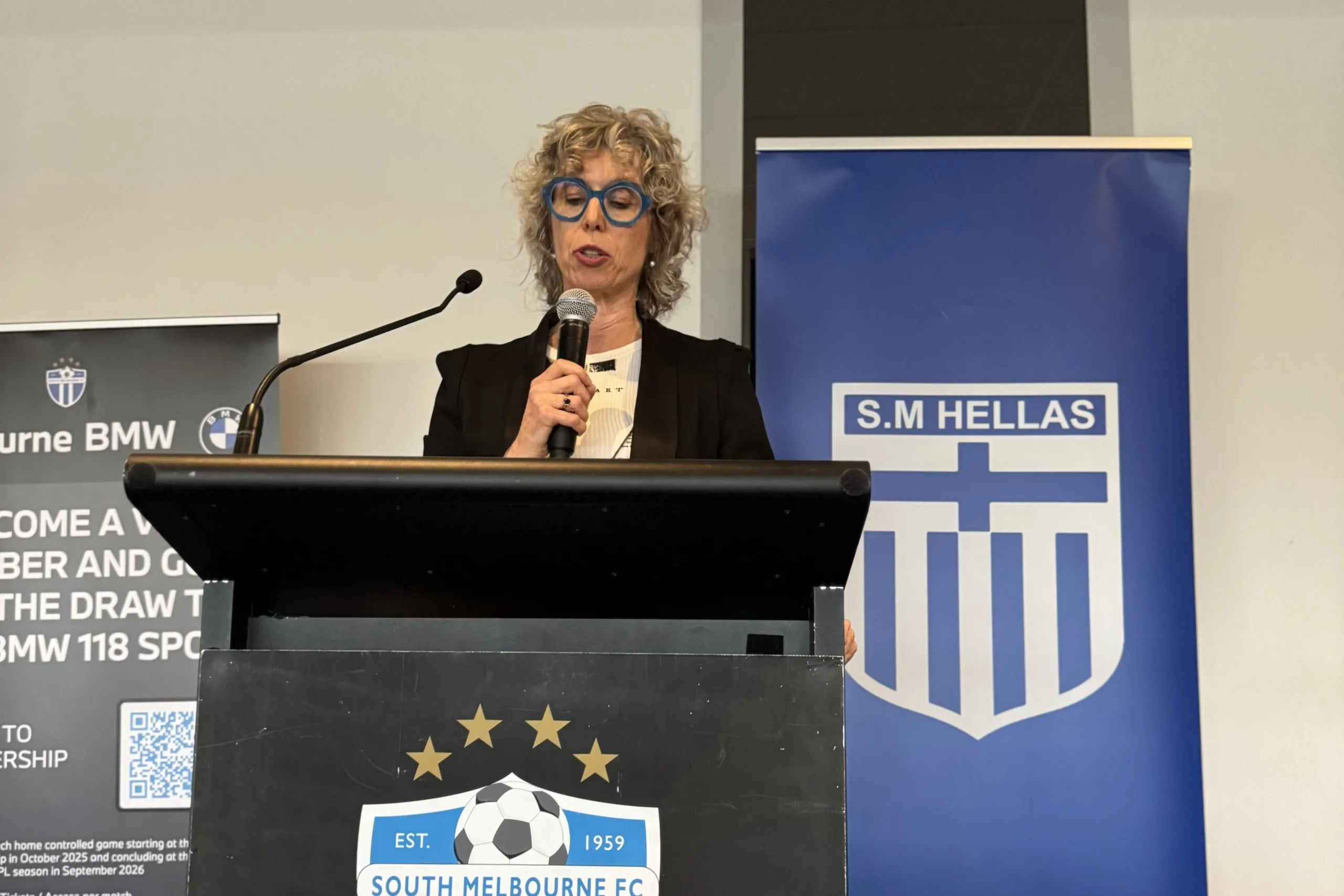
Nina Taylor. Photo: The Greek Herald.
John Pesutto. Photo: South Melbourne FC.
Dimitra Georgantzoglou. Photo: The Greek Herald.

Football Australia’s vision

Heather Garriock confirmed the permanence of the competition, “When I stepped in, there were reports this wouldn’t happen. But under the leadership of Anter Isaac, I can tell you – this competition is real. It’s the start of something very special.” Garriock described the Australian Championship as the missing link in Australian football’s pathway, “From grassroots to NPL, from NPL to A-League, to our youth national teams, Socceroos and Matildas – it’s now a seamless pathway for all.”
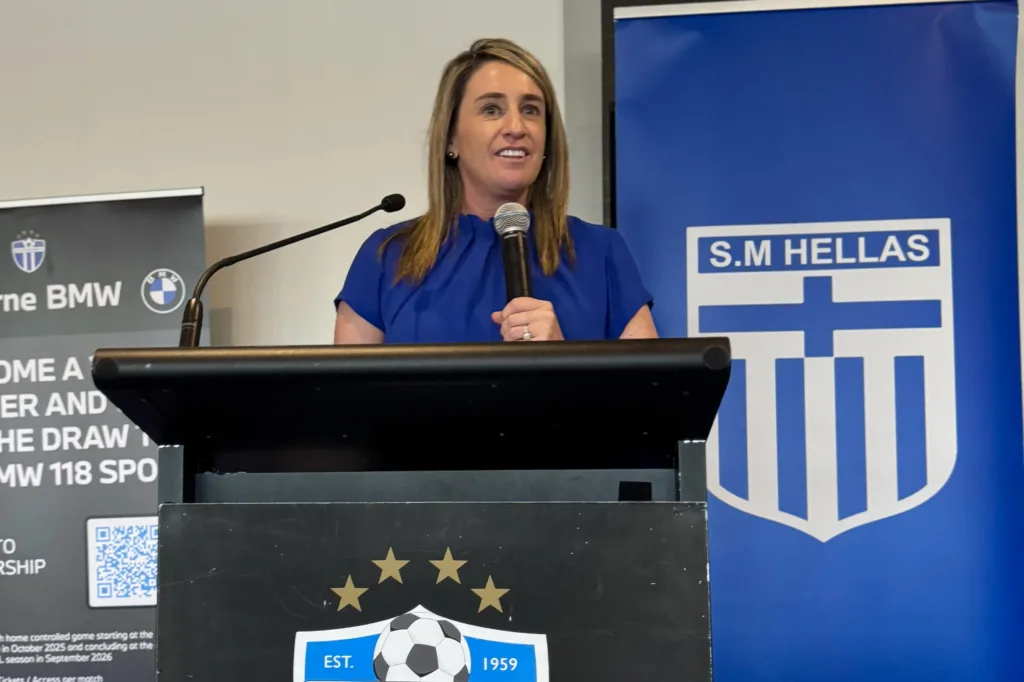
Football Australia Interim CEO Heather Garriock. Photo: The Greek Herald.

A defining moment for community football

President Damon Hanlin spoke about the significance of the occasion, describing the competition as “a turning point for Australian football – a step toward restoring a true football free market where legendary community clubs can once again rise based on merit and performance.”

He added, “For too long, the game’s great community clubs were held back. Now, rather than being left to perish, clubs like ours and yours finally have the chance to rise, to compete, and to reign supreme once again on performance and nothing more.”
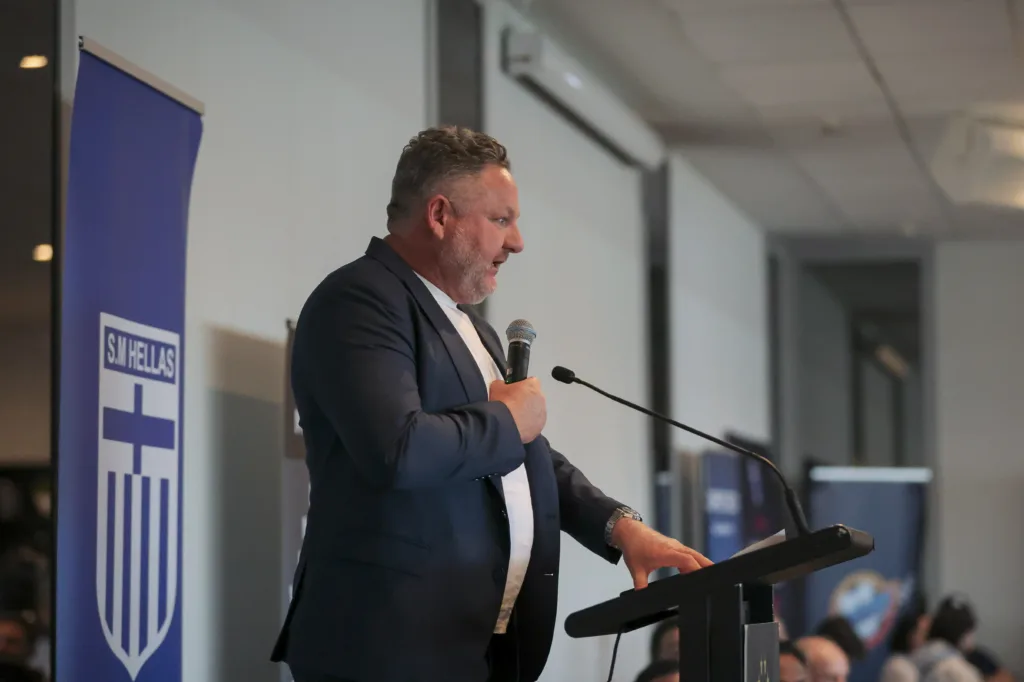
Sydney Olympic FC President Damon Hanlin. Photo credit: Steph Surbevski / South Melbourne FC.

Leaders united in football

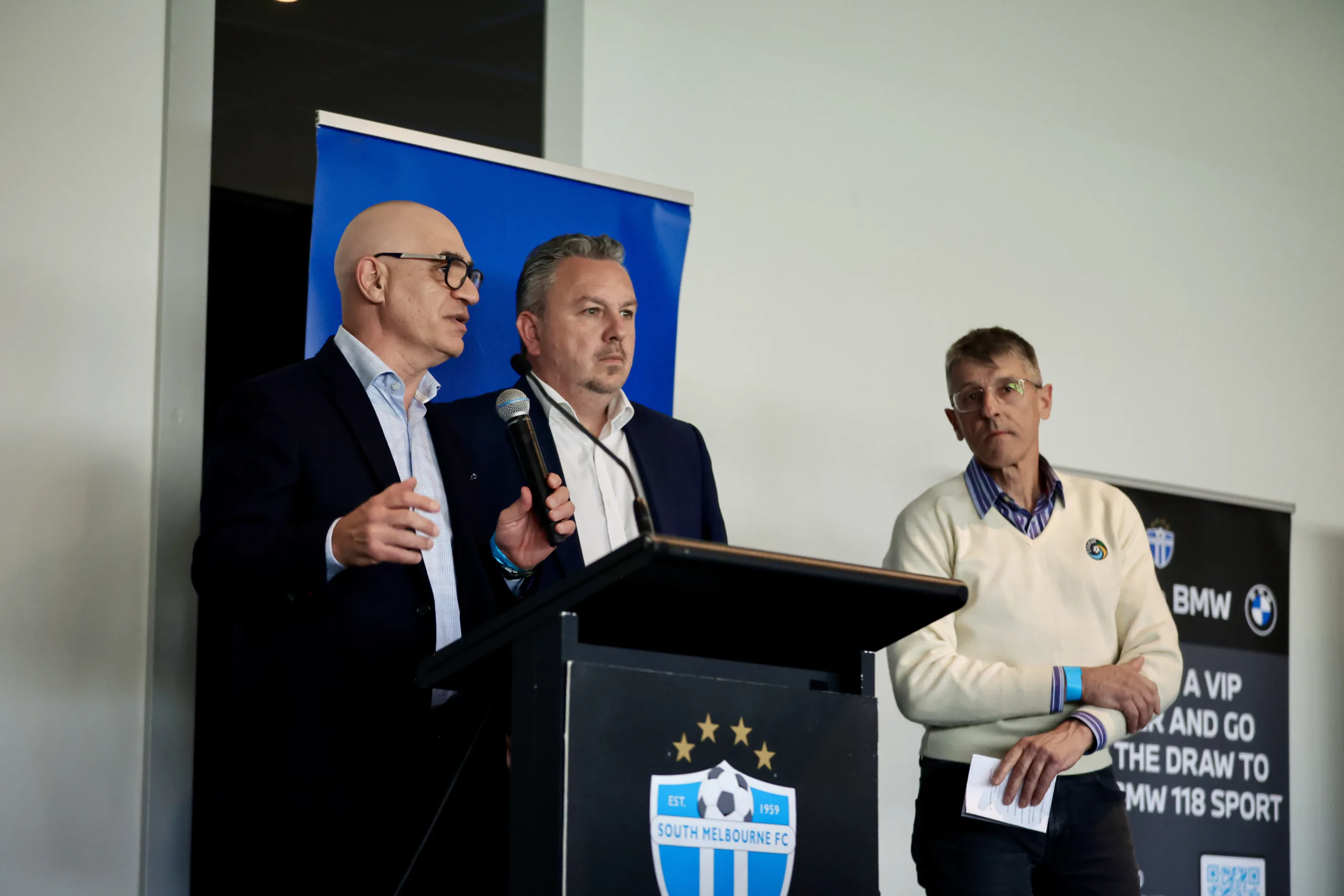
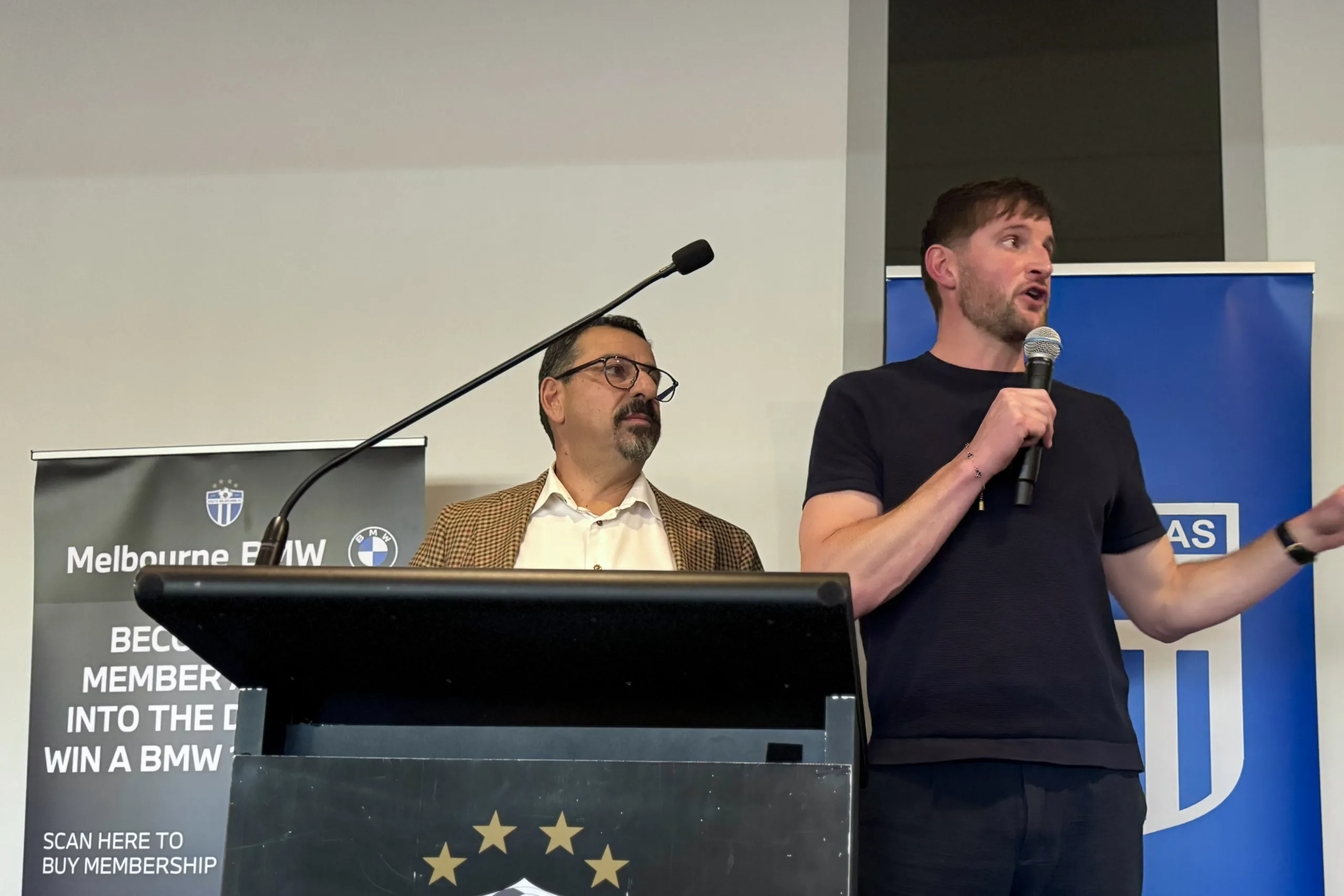
Closing the formal speeches, South Melbourne Co-Presidents Bill Papastergiadis and Andrew Mesourouni stood side-by-side to thank supporters, sponsors, and all levels of government for backing the club’s return to national competition.

Papastergiadis described the moment as “the cusp of a new era,” while Mesourouni reflected that “tonight represents the start of a new chapter built on unity, respect, and shared purpose.”
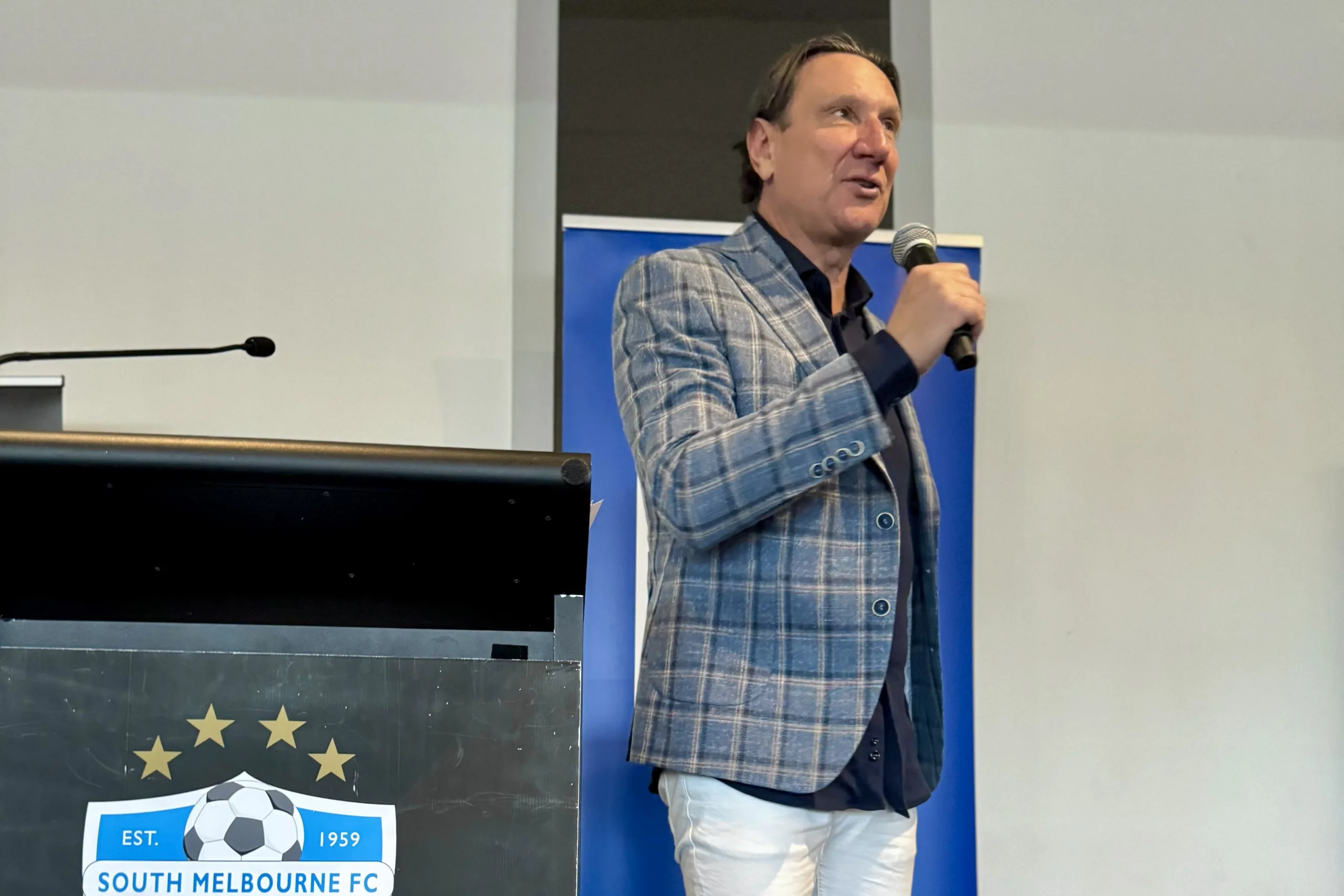
Bill Papastergiadis. Photo: The Greek Herald.
Andrew Mesourouni and Andy Brennan. Photo: The Greek Herald.
L to R: David Basheer, Peter Kokotis and Danny Moulis. Photo: South Melbourne FC.

Both men reaffirmed the club’s belief that “the national and international stage is where South belongs,” with Papastergiadis announcing that South Melbourne will also compete in the upcoming Oceania Professional League in 2026. The club then honoured former player Andy Brennan, recognising his 143 appearances and leadership both on and off the field.

Q&A and kick-off

Before the 7pm kick-off, SBS commentator David Basheer hosted a Q&A session featuring Danny Moulis, former Sydney Olympic player, and Peter Kokotis, Football Director at South Melbourne.
The discussion reflected on the historic rivalry between the two clubs and the significance of their renewed national presence.

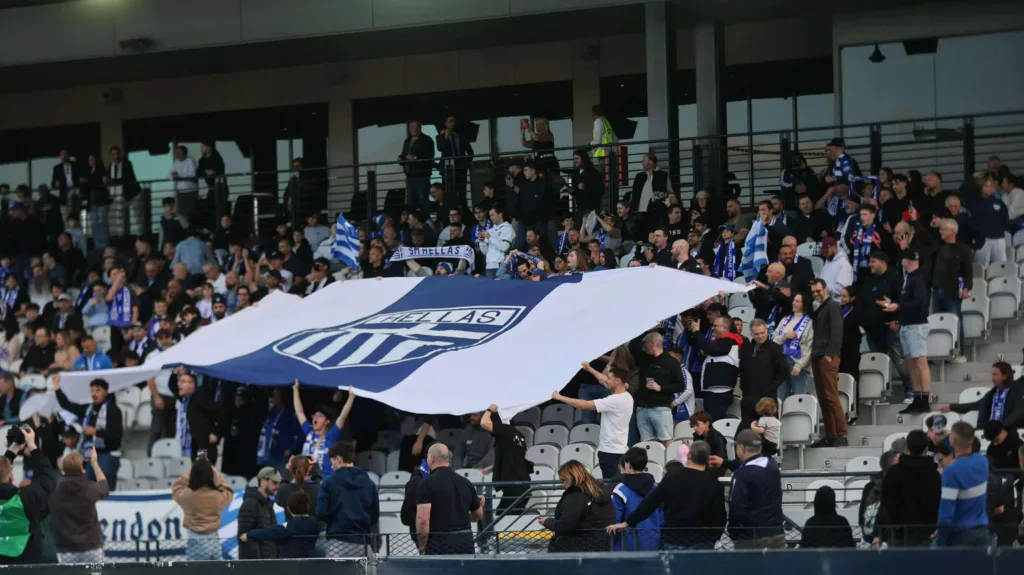
As the sun set over Albert Park and fans filled the grandstands, chants of “Hellas!” and “Olympic!” echoed across the stadium – a reminder that, for Greek Australians across the country, this was more than just a football match. It was a renewal of identity for two great footballing institutions – and the beginning of a new chapter for the game in Australia.
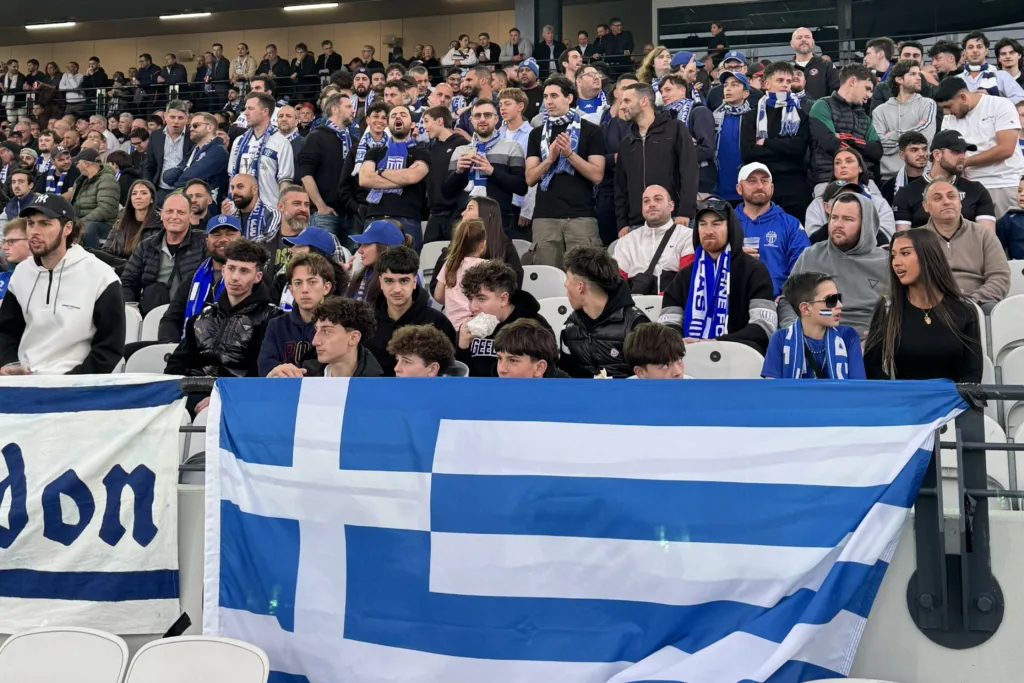
South Melbourne and Sydney Olympic fans filled the grandstands at Lakeside Stadium. Photo: The Greek Herald.
Photo Credit: Steph Surbevski / South Melbourne FC.

South Melbourne triumph over Olympic in Australian Championship kick off

The much-anticipated Australian Championship kicked off in spectacular fashion on Friday night, as South Melbourne edged past Sydney Olympic 3-2 in front of a passionate crowd at Lakeside Stadium.

South Melbourne snuffed out Olympic’s early lead on the stroke of half-time before surging ahead shortly after the break. Olympic struck back through another sensational goal, only for the hosts to seal victory with a late strike worthy of the occasion.

Full-time: South Melbourne FC 3 – 2 Sydney Olympic FC

The match began cautiously, with both sides intent on avoiding early mistakes. Olympic showed promise early and were rewarded just 12 minutes in when debutant Ali Auglah unleashed a superb long-range strike that skipped past South keeper Javi Lopes and nestled into the bottom corner.

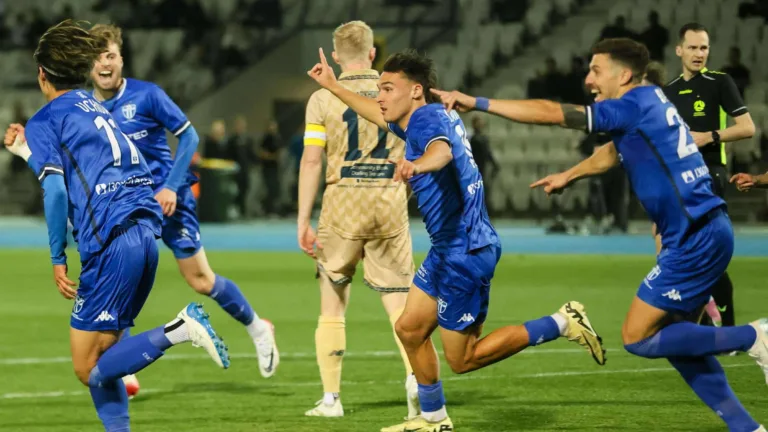
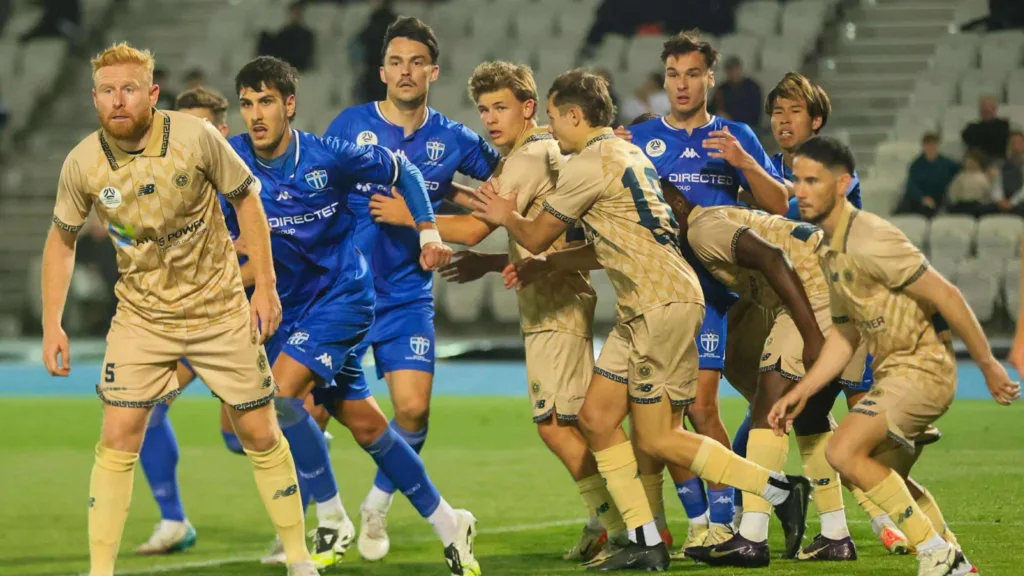
The home side responded with a string of set-pieces, coming close through Sebastian Pasquali and Nahuel Bonada, before Marco Jankovic headed narrowly wide from a corner. Olympic’s Ryan Fuetz tested Lopes again with a low drive in the 40th minute, but South finally found the breakthrough on the cusp of half-time when Yuki Uchida capitalised on a loose ball to fire home.

Action heats up at Lakeside Stadium as South Melbourne and Sydney Olympic clash in the Australian Championship opener.

The sides went into the break level, setting up a tense second half. Within ten minutes of the restart, Oliver Lavale slid in at close range to give South the lead after another scrappy exchange inside the box.

Olympic came agonisingly close to equalising when Fuetz curled a shot against the far post in the 67th minute, but the hosts continued to press, forcing several saves from Jack Gibson.

In the 83rd minute, Fuetz produced a moment of brilliance to level the score once more – a dipping strike from distance that soared into the top corner. Yet, just four minutes later, Jordan Lampard restored South’s advantage with a stunning side-footed effort into the top left, sealing the win for the home side.

As the final whistle blew, chants of “Hellas!” and “Olympic!” echoed across Albert Park – a reminder that for Greek Australians everywhere, this was more than just a football match. It was a renewal of identity for two great footballing institutions, and the beginning of a new chapter for the game in Australia.
A passionate crowd turns out in force for the historic first round of the Australian Championship.

Source: Football Australia

Greek film festival turns 30 with a Stellar Line-Up of Award-Winning films

The Greek Film Festival is celebrating a major anniversary this year – 30 years of bringing Greek stories to Australian screens.

To mark the occasion, the 2025 Festival will feature more than 100 screenings across an exciting mix of acclaimed titles from Greece and Greek filmmakers from all over the world.

Screenings take place across Melbourne at The Astor Theatre, Palace Cinema Como, Palace Balwyn Cinema and Pentridge Cinema.

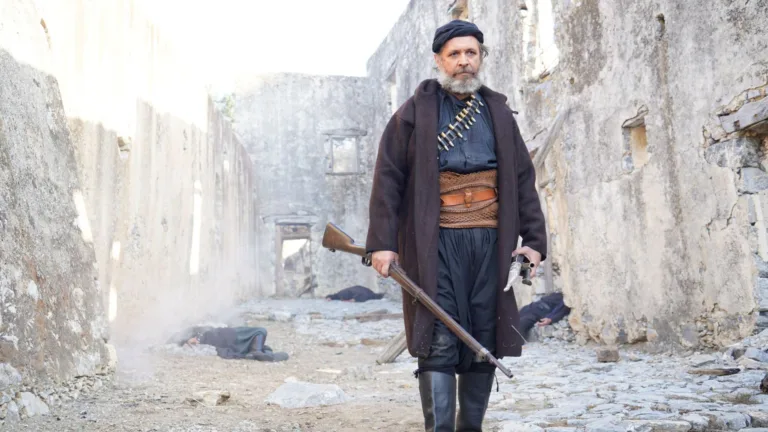
Alongside the latest Greek cinematic releases, we have delved into the Festival’s library of features and selected some of our favorites from the last 30 years, that will be presented alongside this year’s standout releases. Features including Brides, A Touch of Spice, Safe Sex and The Flea, were all standouts at previous festivals. They are presented alongside some of the best releases of the year including Stelios, Maria and the Homeric inspired The Return, which in turn compliment the newest cinematic releases premiering at the Festival including the Opening Night Kapetan Mihalis, Greek Mothers Never Die, and the world premiere of the Australian made The Kink.

Since its launch in 1993, the Greek Film Festival has become a significant landmark in the Greek Australian cultural calendar, celebrating the creativity and diversity of Greek filmmakers while strengthening cultural ties between Greece and Australia.

Presented by the Greek Community of Melbourne, the Festival continues to grow each year, attracting cinephiles from all backgrounds.

With international hits, local premieres and plenty of opportunities to celebrate, the 30th anniversary Festival promises to be one to remember.

The Greek Film Festival opens on Tuesday 14 October with KAPETAN MIHALIS and runs until Sunday 26 October.

Don’t miss this celebration of Greek cinema – explore the full program and book your tickets now at Melbourne – Greek Film Festival 2025.

Summer School for Greek Language teachers in Australia

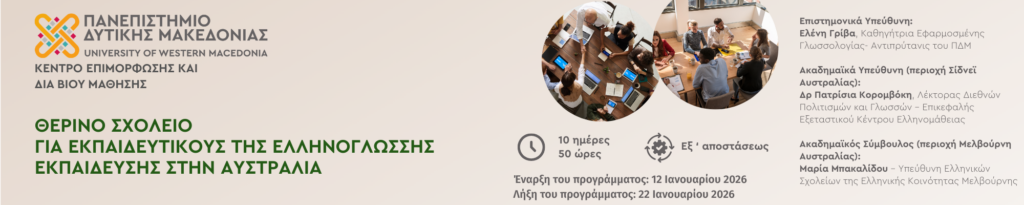
For the first time in Australia, a specialized online summer school will be held for teachers of the Greek language in the diaspora. Running from 12 to 22 January 2026 during the afternoon (AEST), the intensive professional development program will provide teachers with the latest tools, strategies, and resources for teaching Greek as a second or foreign language.

This initiative is delivered by the Centre for Training and Lifelong Learning of the University of Western Macedonia, with the aim of strengthening and supporting educators who keep the Greek language and culture alive across Australia.

The program is led by a distinguished academic team: Professor Eleni Griva, Professor of Applied Linguistics and Vice-Rector of the University of Western Macedonia, (Scientific Coordinator); Dr. Patricia Koromvokis, Lecturer in Global Cultures and Languages, in the School of International Studies of Macquarie University, and Head of the Greek Language Examination Centre at Macquarie (Academic Coordinator for Sydney); Maria Bakalidou, Principal of the Greek Community of Melbourne Schools (Academic Advisor for Melbourne).

The program will offer a comprehensive training framework including:

  • Contemporary approaches to teaching Greek as a Second/Foreign Language, with a focus on oral and written communication and intercultural competence
  • Practical methods for designing and producing engaging teaching materials
  • The use of digital tools and artificial intelligence (AI) to enhance language learning

On successful completion, participants will receive a Specialised Training Certificate (50 hours, 2 ECTS) along with a Europass of acquired skills.

This summer school is a landmark opportunity for Greek language educators in Australia to enhance their teaching expertise, share experiences with colleagues across the country, and develop innovative tools for teaching in multicultural classrooms.

For full details and to register, please visit: University of Western Macedonia – Summer School

Children’s week at the Greek Community of Melbourne

0

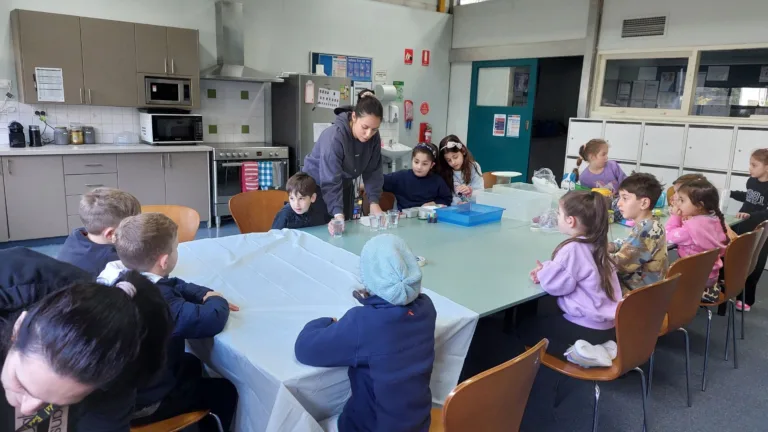
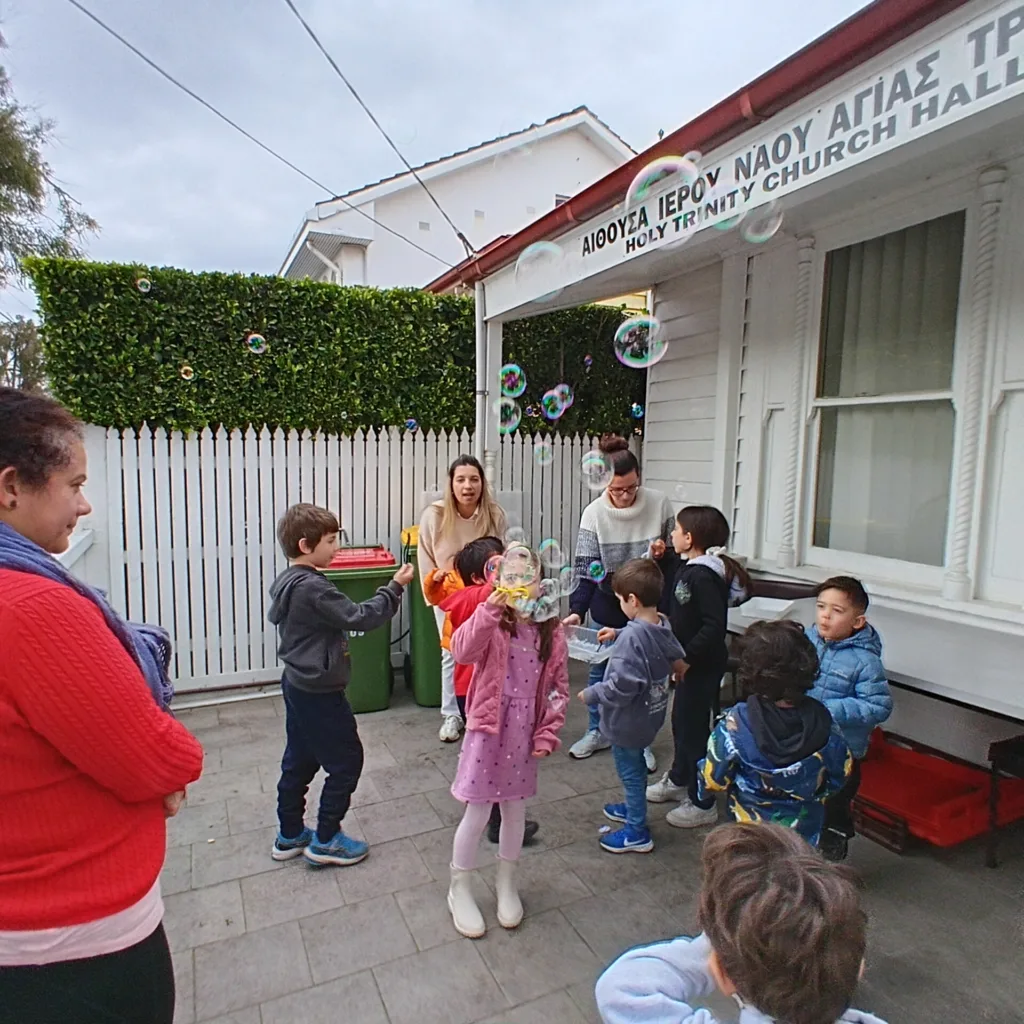
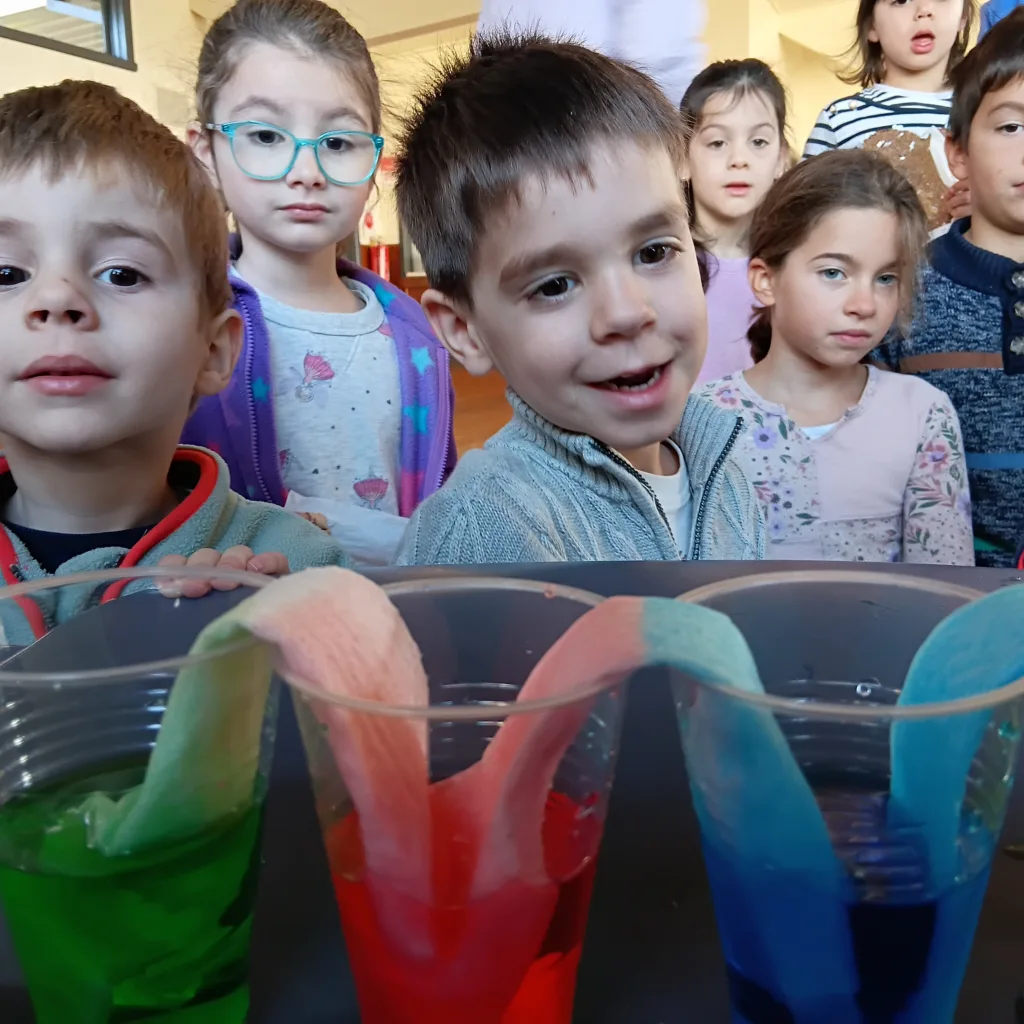
As part of Children’s Week 2025, the Greek Community of Melbourne Schools are taking part in the celebrations organised by the Victorian Government from 18 to 26 October, with a free creative workshop for children aged 3–8 years, themed “My Rights, My Voice.”

Children’s Week is celebrated every October across Victoria, recognising and promoting the talents, skills, achievements, and rights of children. Each year, thousands of children participate in activities that highlight the importance of childhood and empower young voices within the community.

The Greek Community’s workshop will take place on Saturday, 18 October 2025, from 1:30 to 2:30 p.m. at the Greek Centre, and will include a series of interactive activities designed to encourage creativity, self-expression, and collaboration. Through play and creative learning, children will have the opportunity to share their ideas and talents, express their voice, and learn more about their rights in an engaging and supportive environment.

The Principal of the Greek Community Schools, Ms Maria Bakalidou, stated: “Children’s Week is a powerful reminder that children are both our present and our future, and they deserve to grow up in an environment of respect, care, and equal opportunities.”

For more information and bookings, please visit the Greek Community of Melbourne’s website or contact the Community’s central offices.

Get Online Week at the Greek Community of Melbourne

0

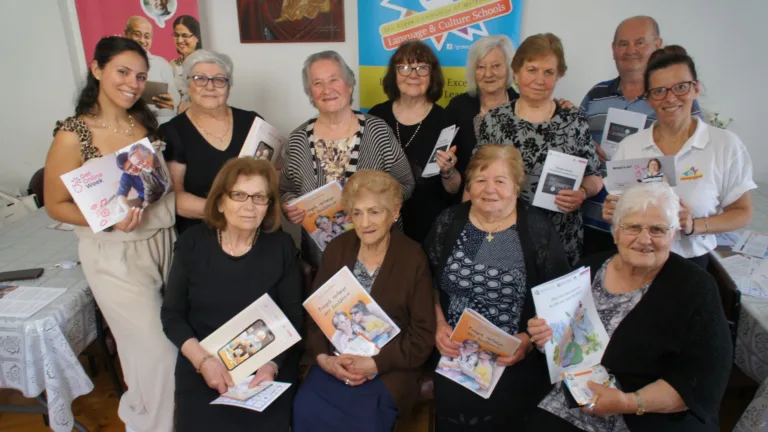
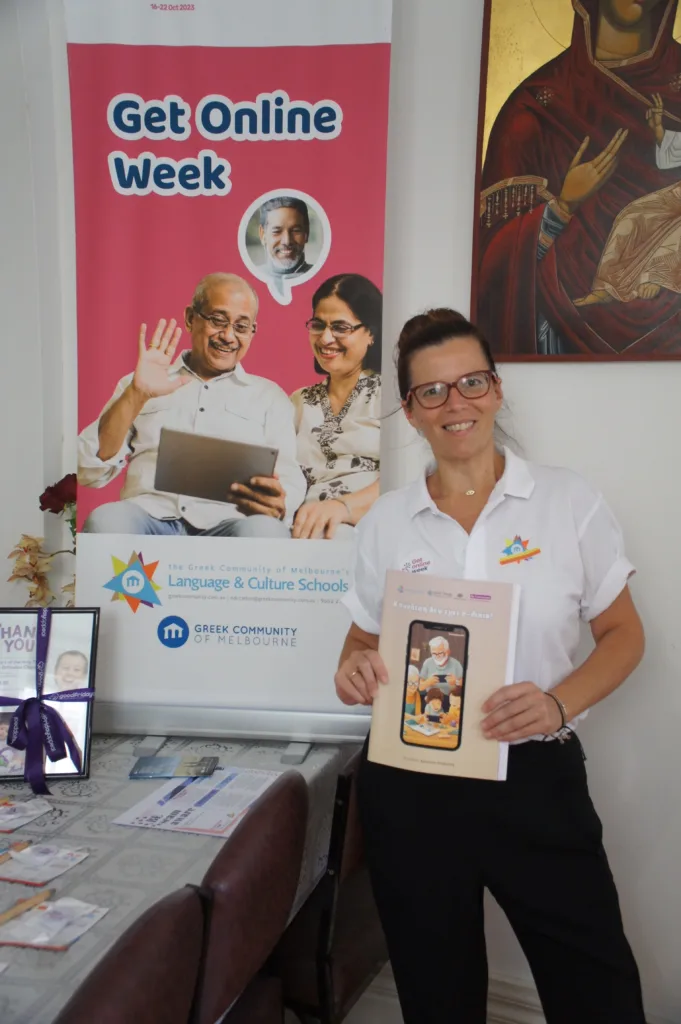
As part of Get Online Week 2025, the Greek Community of Melbourne and Victoria will proudly join Good Things Foundation’s national campaign to close the digital divide and empower people to feel safer, more confident and included in the online world.

Between 20–26 October 2025, the Greek Community will host a series of free digital skills workshops in Greek for adults aged 50 and above. These sessions will offer hands-on support to help participants use technology with confidence, from navigating smartphones and tablets to managing online safety and accessing essential digital services.

Get Online Week is a national celebration of digital inclusion, encouraging people of all ages and backgrounds to improve their digital literacy, connect with others, and thrive in an increasingly online society.

Mrs. Christina Soumi, Digital Mentor of the Greek Community Schools, stated: “Technology should be accessible to everyone. Through these workshops, we aim to ensure our older community members feel confident, connected, and included in the digital world. At the same time, involving our students in these sessions fosters valuable intergenerational connections, where young people can share their knowledge, develop empathy, and strengthen community bonds across generations.”

For more information and to find your nearest session, please visit the Greek Community of Melbourne’s website or contact the head office.

St Benedict School in Mt Torrens rejects screens, embraces ancient Greek philosophy

At St Benedict School in Mt Torrens, digital screens are nowhere to be found. Instead, students immerse themselves in the timeless teachings of Plato and Aristotle, embracing an education rooted in Ancient Greek philosophy, according to townsvillebulletin.com.au.

The school is part of the growing classical liberal education movement, which emphasizes the philosophical, historical, and literary foundations of Western civilization. Established in early 2024 by members of the Catholic Church of the Holy Name, St Benedict has grown to around 50 students from reception to Year 5.

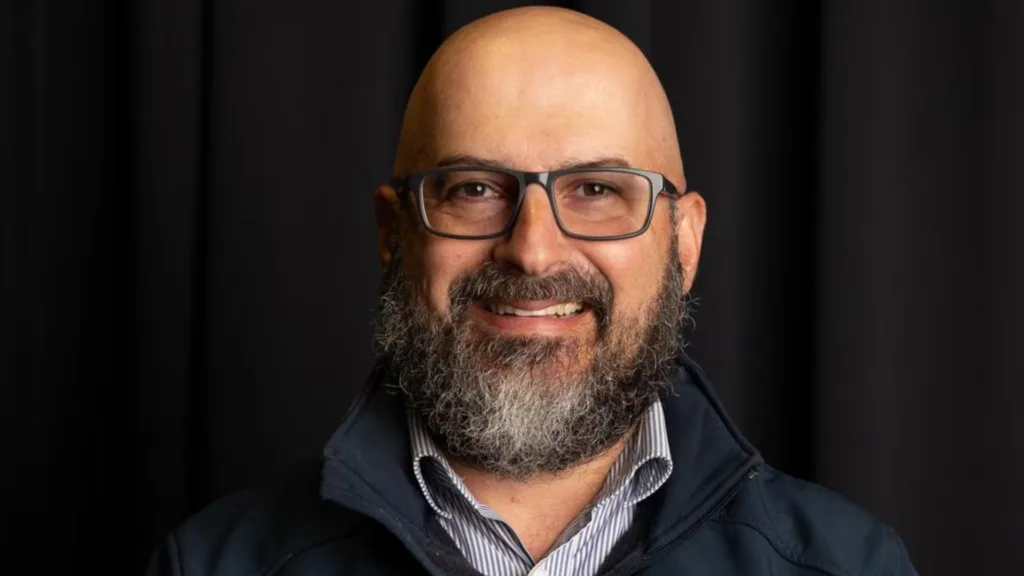
Principal Fernando Farrugia, who will speak at a national conference on classical education in Adelaide, said, “We don’t want to prepare the students just for the next test, we want to prepare them for life.” While students still follow the Australian Curriculum, including maths and English, classes focus on traditional skills like handwriting and conversation rather than computer use.

“A lot of people say ‘well why are you drawing on things that are old fashioned?’ but I say actually it’s timeless,” Farrugia said. “What we’re doing is not rejecting the modern world, we believe we’re grounding the students in things that last so they can thrive even more in today’s world.”

St Benedict School principal Fernando Farrugia. Photo: townsvillebulletin.com.au

Without screens, he believes teachers and students can build “a consistent relationship without a screen in the middle.”

Year 5 students Penny, Amba and Lucy say the approach fosters engagement and “deep conversations.” Amba adds it helps them practise “being obedient and showing humility, perseverance and discipline.”

Conference organiser Dr Kevin Donnelly described the movement as one that seeks “beauty and wisdom and truth” through an education that is “intellectually rigorous, morally grounded and emotionally and spiritually enriching.” He argues Western education has “lost its way,” while classical learning restores teachers as subject experts guiding students toward essential knowledge.

Source: townsvillebulletin.com.au

Greece’s stolen treasures find a digital voice in UNESCO’s Vanishing Museum

0

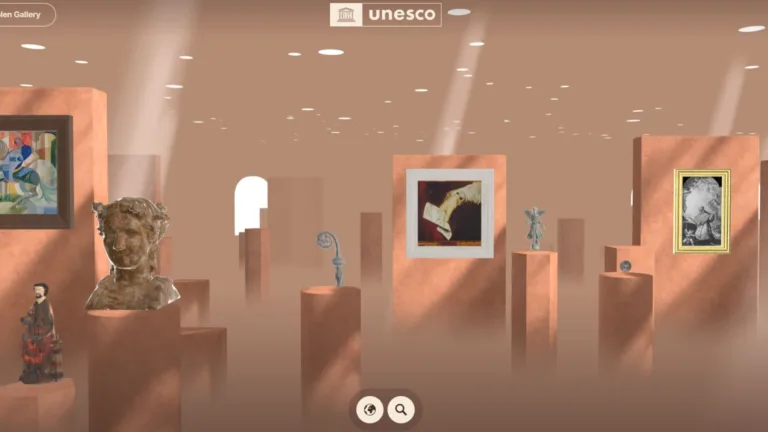
UNESCO’s Virtual Museum of Stolen Cultural Objects, launched at MONDIACULT 2025 in Barcelona, offers a new way to confront cultural loss – including Greece’s long struggle to reclaim its stolen heritage, according to tovima.com.

The digital museum exists everywhere at once, displaying looted artifacts until restitution is achieved. Unlike traditional museums, its goal is to disappear. Each time a stolen piece is returned, its digital twin vanishes – a symbolic act of justice. “When an object comes home, a story can begin again,” reads the welcome message in the Return and Restitution Room.

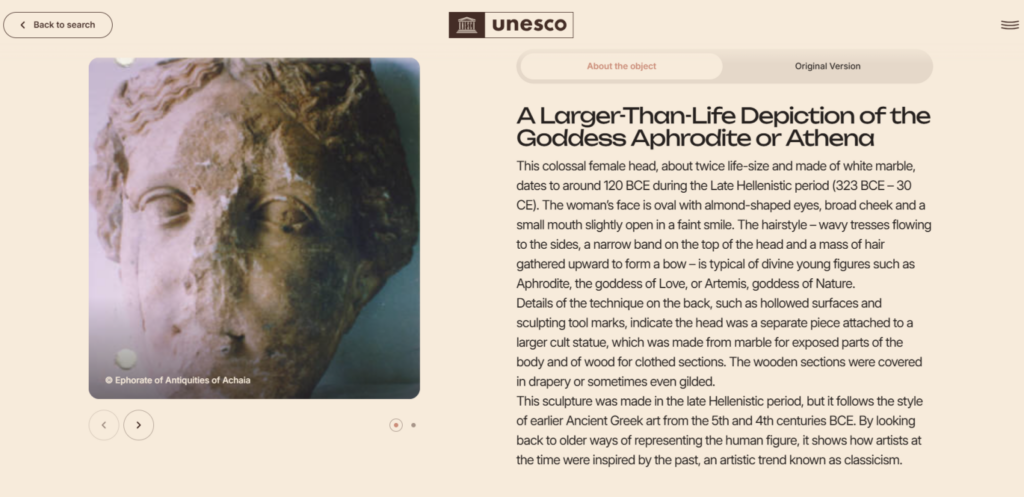
Among the 277 registered artifacts, nine come from Greece, each telling a story of artistry and displacement. A bronze cauldron and figurine from Olympia recall offerings once made to Zeus; two Theran vessels from prehistoric Akrotiri trace early Aegean craftsmanship. The Cyclades contribute marble female figures from Naxos and Paros – icons of the islands’ minimalist beauty – alongside a limestone goddess statuette linked to ancient Thera. Most striking is a colossal female head from Aigeira, thought to depict Aphrodite or Athena, her serene smile surviving centuries of silence.

Designed by Francis Kéré, the virtual museum resembles a digital baobab tree – rooted yet global – where VR and 3D modeling bring displaced objects back into view.

For Greece, this project is more than preservation; it is a call for return. As UNESCO notes, restitution is about more than ownership – it restores “knowledge, cooperation, and renewed dialogue.”

Source: tovima.com

Michael Tassis included among SEQ’s leading hospitality bosses

With 11 venues already thriving and a twelfth on the way, Michael Tassis has cemented his place as one of Queensland’s most dynamic and prolific restaurateurs, according to goldcoastbulletin.com.au.

The 44-year-old father of three began his journey in hospitality at just nine years old, buttering garlic bread in his family’s Gold Coast restaurant. After training as a chef and working his way through kitchens across the state, Tassis eventually branched out on his own.

His first independent venture, George’s Paragon at Brisbane’s now-demolished Eagle Street Pier, set the stage for a series of successful venues that helped redefine the city’s dining scene. His portfolio now includes Massimo, Opa, Fatcow, Rich & Rare, Longwang, Yamas, Stilts, Mulga Bill’s, Fosh, Dark Shepherd, and Pompette — each with its own distinct flavour and style.

Next on his list is Aunty, a contemporary Asian restaurant in Fortitude Valley, which continues his signature blend of quality, creativity, and atmosphere. But for Tassis, the work never stops — he’s always chasing the next “opportunity.”

Beyond his restaurants, Tassis has expanded into the beverage industry as co-owner of the popular alcohol brands Ariane and Sunny Days Distillery, whose products are now stocked in over 5000 venues across Australia.

From buttering bread to building an empire, Michael Tassis embodies the entrepreneurial spirit driving Queensland’s culinary renaissance.

Source: goldcoastbulletin.com.au

EU to replace passport stamps with biometric border system

0

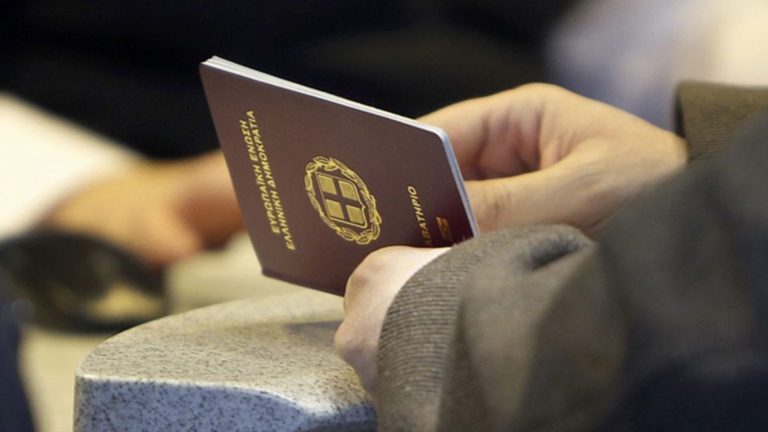
The European Union is preparing to phase out traditional passport stamps for non-EU travelers, introducing a new digital border control program called the Entry/Exit System (EES), according to ekathimerini.com.

Starting on October 12, the EES will be gradually implemented across the 29 Schengen countries — including 25 EU member states, as well as Switzerland, Norway, Liechtenstein, and Iceland. Ireland and Cyprus, which are part of the EU but not the Schengen zone, will continue manual passport checks.

The new system will record facial images, fingerprints, and travel details electronically, eliminating the need for physical stamps. According to the European Commission, the EES aims to make border checks faster and more secure while helping authorities track overstays and irregular migration.

Upon arrival, travelers will register by answering standard border questions, creating a digital record valid for three years. Future visits will only require biometric verification, streamlining re-entry for registered travelers.

The EU expects the system to be fully operational by April 2026, although some delays are anticipated as border officers and travelers adjust to the new technology.

The EES is part of a broader effort to modernize Europe’s border management. It will be followed by the European Travel Information and Authorization System (ETIAS), an online pre-travel authorization that non-EU visitors will need once the EES is fully in place. Together, these initiatives represent a significant move toward a fully digital and security-focused European border experience.

Source: ekathimerini.com