Greek Australian defender Nectarios Triantis has earned his first call-up to the Greek National Football Team, joining Ivan Jovanovic’s squad for the upcoming World Cup qualifiers against Scotland and Belarus.
Born in Sydney to Greek parents, the 22-year-old rose through the A-League ranks, earning a move to Europe.
After standout performances with Hibernian FC in Scotland, he transferred to Minnesota United for €2.5 million earlier this year.
From club to country🇬🇷
Nectar Triantis has earned his first call-up to the Greece men’s national team (@EthnikiOmada) ahead of their latest 2026 World Cup Qualifiers. He joins the squad to face Scotland on Nov. 15 and Belarus on Nov. 18. pic.twitter.com/vWCSvlbrr1
Having represented Australia’s U20 and U23 teams, Triantis chose to get his Greek citizenship in August, making him available for selection by Greece’s national team – a decision that unites his Greek heritage with his international ambitions.
His inclusion marks a proud moment for the Greek Australian community, as he dons the blue and white.
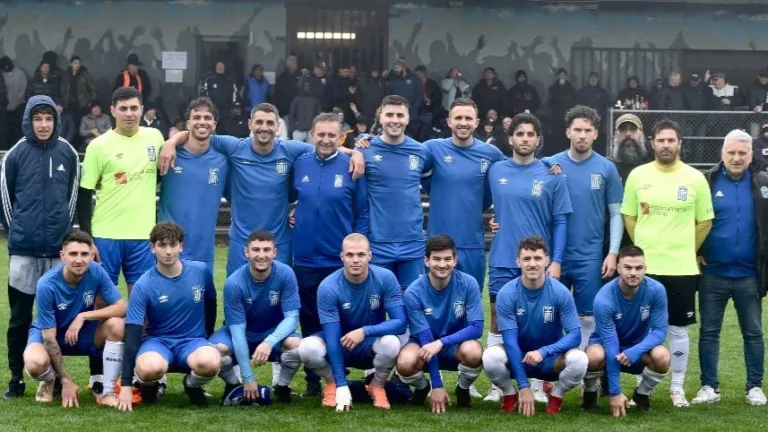
Team Greece has advanced to the semi-finals of the All Nations Cup after a thrilling 3-2 victory over Chile.
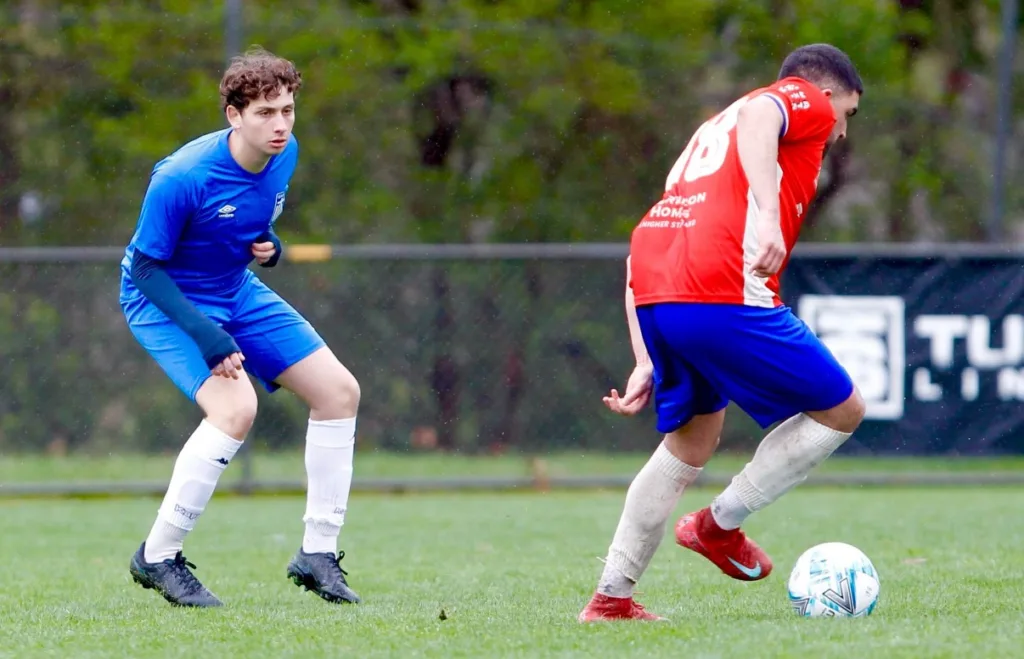
The match was played in very wet conditions but Greece asserted their dominance in the first half with numerous opportunities created. They only took a 2-1 lead into the main break.
They added another goal early in the second half to take a commanding lead and despite a late goal by Chile in the 83rd minute, Greece held on until the final whistle to advance to the next stage of the tournament.
Greek Community of Melbourne (GCM) Board member, Michael Karamitos, was full of praise following the win.
“Our boys were amazing today in very difficult playing conditions and up against a tough opponent in Chile,” Karamitos said.
“Their skill and determination were immense and we, as a Greek community, are very proud of their efforts throughout the duration of the tournament. We are very excited at the possibility of once again winning the Cup as we did three years ago. I wish the team all the best for the semi-finals.”
Greece coach George Katsakis was ecstatic following the match.
“The lads definitely played their hearts out today and got the result they deserved. As the tournament is progressing, our team is becoming stronger and stronger and we now look forward to the semi-finals,” Katsakis said.
GCM President Bill Papastergiadis had the following comments following Greece’s thrilling victory.
“Congratulations to our coaches George Katsakis and Kon Tangalakis for managing our team and getting us to the semi-finals,” Papastergiadis said.
“We as a Community are proud of all their efforts throughout the duration of the tournament and we now eagerly await the semi-final next weekend. I wish the team the best of luck. I encourage our Community to come and support the boys in what I’m sure will be a spectacular conclusion to a wonderful tournament.”
The gears of Greece’s cumbersome bureaucracy seem to have finally begun to turn – albeit belatedly – resulting in the long-awaited operation of the GNTO office in Melbourne now being only a matter of time.
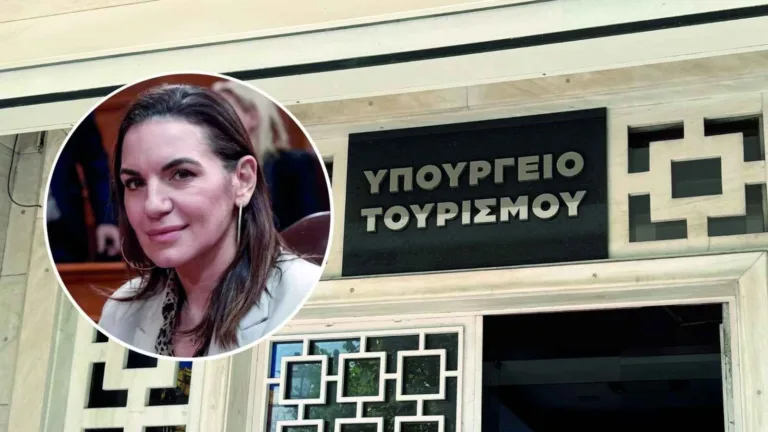
As revealed by Greece’s Minister of Tourism, Olga Kefalogianni, in her written response to PASOK–KINAL MP for Lasithi, Katerina Spyridaki, the GNTO employee appointed as Head of the new Overseas Service is already in Melbourne and assumed duties on 3 November.
The office’s headquarters, as clarified in the Minister’s written response, will be located at the Consulate General of Greece and not at the Greek Centre of the Greek Community of Melbourne (GCM), as had been proposed in the past.
She stated: “It should be noted that, for reasons of institutional propriety, the first appointment of a Head customarily takes place within the Embassy or the Consulate General, so as to ensure institutional integration and seamless cooperation with other Greek authorities abroad.”
With the appointment of the Head, what now remains is the staffing of the GNTO office with one Deputy Head position and two employee positions, who will work at the Consulate General.
Although Mrs Kefalogianni did not specify the exact opening date, her response signals the completion of a long and arduous process that has repeatedly occupied the Greek community.
She also noted that the Ministry is always attuned to the requests of Greeks in Australia. “In any case, it should be emphasised that the Ministry of Tourism always listens to the requests of the Greek diaspora in Australia and seeks solutions to satisfy them, aiming for a continuous and fruitful cooperation to strengthen Greece’s image in Australia and to develop relations between the two countries.”
The formulation of a strategy to attract more tourists from Australia is now entering its final phase.
“As part of the importance attributed to the GNTO service in Australia, a strategy has already been developed for attracting the said market and action plans have been drawn up by the Ministry of Tourism and the GNTO in order to increase its share within our country’s inbound tourism markets,” the Minister wrote.
“The existence of a large and strong Greek diaspora in Australia constitutes a valuable channel for promoting Greek tourism and represents a specific target audience according to the 2025–2028 Marketing Plan, which was drawn up by the Ministry of Tourism and implemented by the GNTO, with Australia included among the long-distance target markets.
“Therefore, in terms of planning, the necessary framework has been established and, as for the implementation of actions, the GNTO’s Central Service has already undertaken initiatives to promote Greek tourism, which will continue through the locally operating Overseas GNTO Service.”
What Kefalogianni’s response reveals
The written response of the Minister of Tourism to the PASOK MP provides a detailed description of how the current situation was reached.
The GNTO maintained an office in Australia until 2013; however, as part of the country’s memorandum obligations and the upper spending limits set by the Medium-Term Fiscal Strategy, which led to expenditure cuts, its operation was suspended.
According to the document, the re-establishment of the Overseas GNTO Service in Australia was deemed to be of strategic and national importance, as it strengthens both tourism promotion and bilateral relations with Australia, New Zealand, and other Oceanian states.
The Minister recalls that since 2014 there has been a Memorandum of Understanding between Greece and Australia that promotes cooperation in matters of youth mobility and “Work and Holiday Visa” programmes, contributing to closer acquaintance between the two peoples. In this context, the re-establishment of the office was also considered a symbol of Greece’s reconnection with the new generation of Greek Australians.
The years-long delay in reopening the GNTO office in Melbourne had caused deep disappointment within the Greek community, as revealed in a series of reports by The Greek Herald.
The President of the GCM Bill Papastergiadis, had expressed his disappointment with the repeated delays by the Greek government, stressing that despite successive announcements and written assurances, “no substantial progress has been made.”
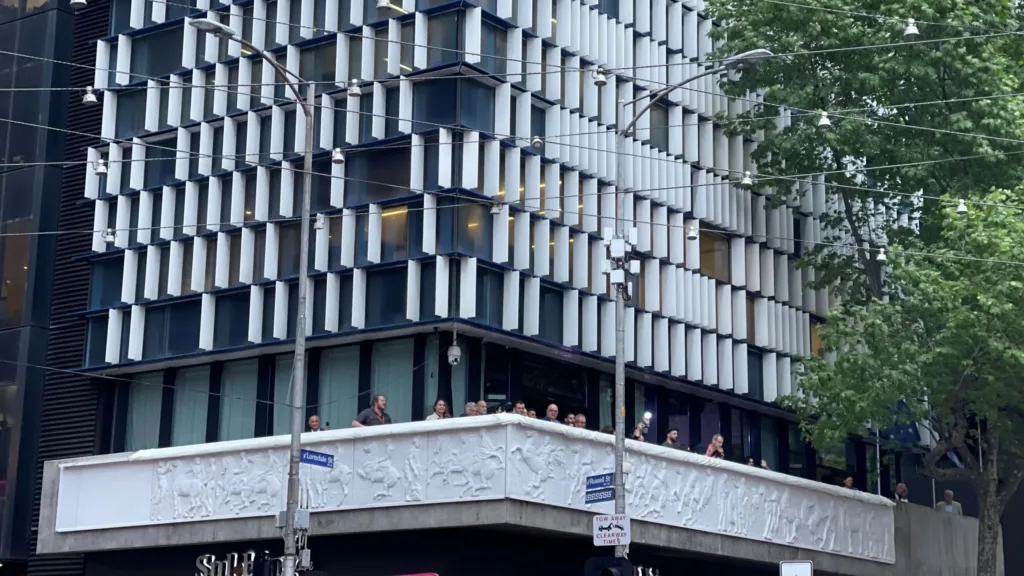
In the most recent correspondence of March 2025, GNTO Secretary-General Andreas Fiorentinos had confirmed that the office would be housed in the Community’s building on Lonsdale Street, in the centre of Melbourne; however, that plan did not proceed.
The Community had offered free space for two years at the Greek Centre, along with staff and logistical support, considering the location ideal and symbolic for promoting Greece.
Instead, the Ministry of Tourism decided that the office would be based at the Consulate General of Greece in Melbourne.
Nevertheless, the official response of Minister Kefalogianni appears to close the endless cycle of waiting, with the GNTO now formally returning to Australia after twelve years of absence.
For the Greek community, the operation of the GNTO office represents a symbolic reconnection between the homeland and the Greeks of Australia.
After years of anticipation, the opening of the office signifies Athens’ intent to institutionally strengthen its ties with one of the most dynamic Greek communities abroad, giving new substance to the relationship of trust and mutual support that binds it to the diaspora.
Billionaire Adrian Portelli has submitted a formal expression of interest to acquire the debt-ridden Derrimut 24:7 Gym chain, following the appointment of administrator Stephen Dixon of HM Advisory.
Founder Nikolaos Solomos had previously sought Portelli’s help to stave off an ATO wind-up over a $12.53 million tax debt, handing control to Dixon earlier this week.
Portelli told The Advertiser he withdrew from an earlier rescue deal because he “couldn’t get a straight answer from anyone,” but now views the gym’s administration as a chance to “buy the whole f–king lot” and “save an icon, save jobs, save the brand.”
“I’ll be doing this, it’s not a money play,” he said, adding he is ready to bid against other interested gym owners.
The Federal Court adjourned a wind-up hearing to November 28, with creditors warning they had seen no evidence the chain could repay its debts. Portelli’s bid could now determine the gym’s future.
West Australian Opposition Leader Basil Zempilas has urged his federal Liberal colleagues not to abandon their net zero emissions by 2050 target, warning that “only mugs” would ignore the lessons from two election defeats in WA.
Speaking on Radio 6PR, Zempilas said keeping a commitment to climate action was both “smart and sensible,” reflecting public expectations around protecting the environment.
“To turn your back on it completely would not be smart,” he said.
His remarks put him at odds with several federal Liberal figures, including Andrew Hastie and Ted O’Brien, who have withdrawn support for net zero as the party considers dropping the policy.
Zempilas, who narrowly retained his Churchlands seat in March, said recent election results showed voters cared deeply about climate issues. “I know what I saw in those elections,” he said.
The WA Nationals are also reviewing their stance following their federal counterparts’ decision to scrap the target.
The Victorian Coroner’s Court will reopen its investigation into the 2011 death of Louisa Ioannidis, after new evidence raised doubts about whether the 24-year-old drowned or was the victim of foul play.
Ioannidis was found dead in Darebin Creek, about 450 metres from her Reservoir home, wearing a pink dressing gown and jeans. Her death was originally ruled “consistent with drowning,” with no inquest held at the time.
Deputy State Coroner Paresa Antoniadis Spanos confirmed the review following new expert reports suggesting the initial investigation may have overlooked signs of possible strangulation and domestic violence.
Ioannidis had been living with her partner Youseff Asaad, described in court documents as the last person to see her alive amid a “volatile” relationship involving arguments and abuse.
Her brother, Tass Stouraitis, has long campaigned for the case to be reopened, gathering more than 25,000 petition signatures and citing fresh evidence, including lower water levels at the time and new autopsy reviews.
In a parliamentary statement, MP David Limbrick praised Stouraitis’ persistence, saying he “has never given up on his sister and will never let her be forgotten.”
A new hearing will be held in the Coroner’s Court of Victoria at a later date. No charges have been laid in relation to Ioannidis’ death.
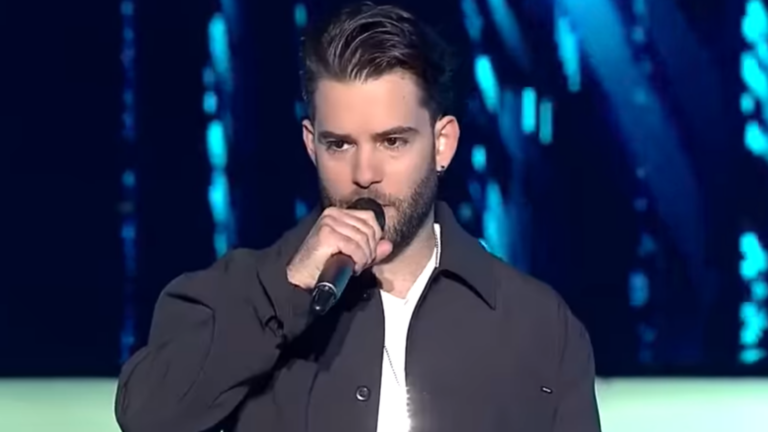
Melbourne-born singer Apostolis Kasparpidis has captivated audiences on The Voice of Greece, earning a four-chair turn from judges Panos Mouzourakis, Christos Mastoras, Giorgos Mazonakis, and Helena Paparizou with his moving performance of “File” (Friend).
Kasparpidis, whose father was born in Greece before migrating to Australia, chose to join Giorgos Mazonakis’ team, saying the decision reflected the artist’s experience and identity in Greek popular music.
“All four coaches wanted him,” reported the show, as Mazonakis welcomed the Greek Australian singer to his lineup alongside Stratos Kypros and Giorgina Michanou.
Now in its 11th season on SKAI TV, the Greek Australian community is watching proudly as Kasparpidis advances in The Voice of Greece.
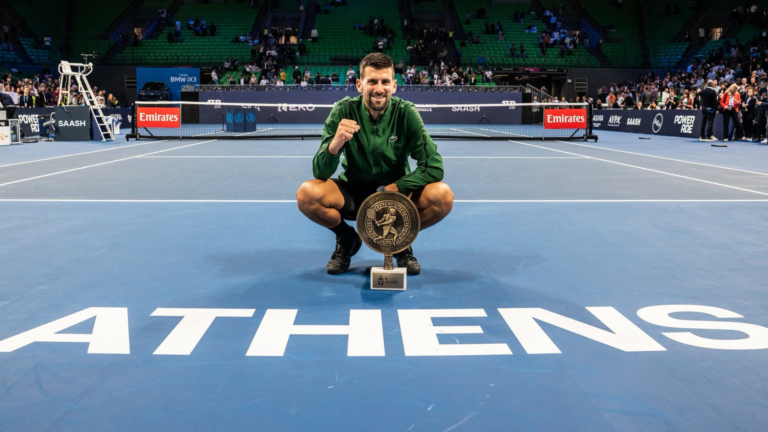
Novak Djokovic marked a milestone victory in Athens on Sunday, November 9, winning the first-ever Hellenic Championship 250 and becoming the first tennis player in history to claim titles in 20 different countries.
In a thrilling three-hour final at the Telekom Centre, Djokovic battled back to defeat Italy’s Lorenzo Musetti 4–6, 6–4, 7–5, securing his 101st career title and celebrating with trademark emotion, tearing his shirt in front of an ecstatic crowd.
“It’s like my home,” Djokovic wrote later on social media, dedicating the win to his Greek supporters.
He wrote further, “I dedicate the victory to the amazing people of Greece. You support me, you support tennis and you make me feel like this is my home. A victory that I feel very special as my family was here. Gratitude also to all those who made this beautiful new tournament so special. Thank you for everything.”
I dedicate this win to the wonderful people of Greece. You support me, you support tennis, you’ve made me feel at home 🙏🏼. Huge gratitude also to everyone who made this beautiful new tournament so special. Σας ευχαριστώ, για όλα
He also congratulated Musetti for a “fantastic performance and tournament,” calling his future “bright.”
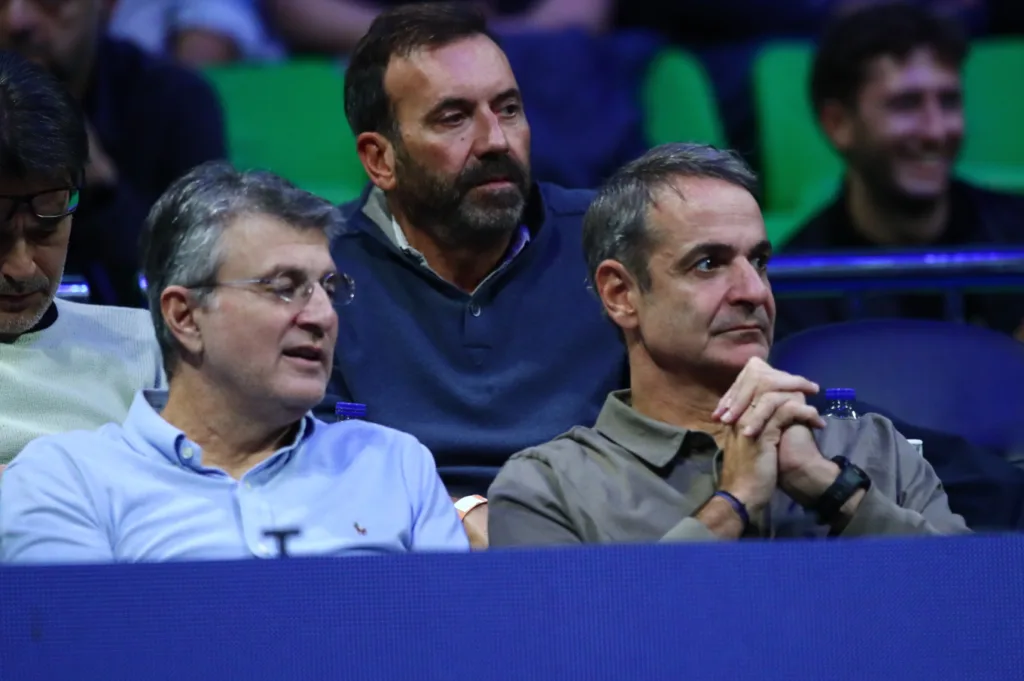
The event marked Greece’s first ATP tournament in 31 years, drawing packed crowds and a host of notable attendees.
Among them were Prime Minister Kyriakos Mitsotakis, who also attended Djokovic’s semifinal, Health Minister Adonis Georgiadis, and Olympiakos BC president Panagiotis Angelopoulos.
Greek tennis star Stefanos Tsitsipas was also present, sidelined by injury but eager to support the historic event.
“This week Greece hosted its first ATP tournament since 1994 – the first since I was born,” Tsitsipas said.
“Even though I could not participate, I enjoyed from the stands the triumph of Novak Djokovic.”
With the roaring success of the inaugural Athens tournament, Greece’s return to the global tennis stage appears firmly underway.
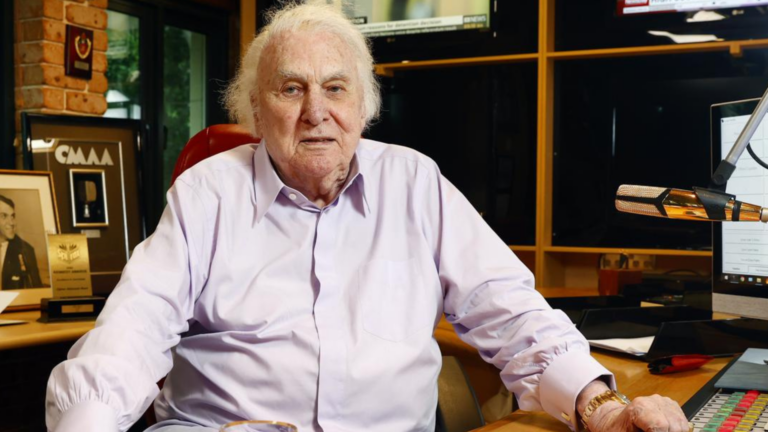
Political leaders, celebrities and fellow broadcasters have paid tribute to Australian radio icon John Laws, who has died peacefully at home at the age of 90.
Laws’ family confirmed his death in a statement on Sunday night, saying he had been in “good health and even better spirits right up until the last few weeks.”
They described him as a beloved “father, grandfather and uncle,” remembered for much more than his fame behind the microphone.
NSW Premier Chris Minns called Laws “a towering figure in Australian radio whose voice resonated across the nation for more than seven decades,” adding that the state would offer his family a state funeral.
Prime Minister Anthony Albanese described him as “an iconic voice and so much more,” praising his ability to hold “genuine conversations” and saying, “I don’t think there’ll be another like him.”
John Laws was an iconic voice and so much more.
Generations of Australians trusted and respected him for telling it straight, digging deep and giving his guests and his listeners a chance to be heard.
John was always a thoroughly prepared and thoughtful interviewer – and…
Actor Russell Crowe remembered Laws as “a wise mentor, mischievous mate and a very good friend,” while fellow broadcaster Ray Hadley called him “the king of radio.”
Alan Jones said Laws could “read the pulse of the nation when few politicians can,” and Opposition Leader Sussan Ley hailed him as “a true pioneer of broadcasting.”
Known as the “Golden Tonsils,” Laws’ 71-year career shaped modern Australian talkback radio. From his start in Bendigo in 1953 to his long stints at Sydney’s 2UE and 2SM, he became a national voice for millions of listeners and a powerful figure in political and cultural life.
Laws received the OBE in 1974, the CBE in 1978, and multiple Hall of Fame honours, leaving behind a legacy that, as Ley said, “will echo for years to come.”
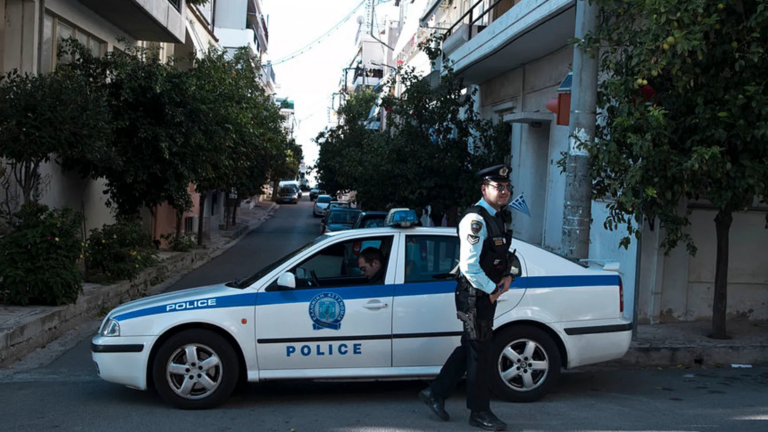
The Greek government has announced a sweeping crackdown on organised crime in Crete following a deadly shooting in the village of Vorizia that left two people dead and at least six injured, including a child.
Citizen Protection Minister Michalis Chrysochoidis unveiled the measures at a press conference in Heraklion, pledging tougher penalties for illegal gun ownership and a permanent deployment of an elite organised crime unit on the island.
The unit, part of Greece’s Directorate for the Fight against Organised Crime, often compared to the FBI, will focus on dismantling criminal networks and curbing endemic violence.
“The glass is overflowing … no more bullies and local mafias in Crete,” Chrysochoidis declared, blaming “delinquent and anti-social behaviour, criminal groups that loot, bullies who think they are above the law, and rats in the state coffers who steal the fair labour of citizens” for the island’s unrest.
Prime Minister Kyriakos Mitsotakis, addressing the issue in his weekly review, called the Vorizia killings “a painful reminder of the work that remains to be done as a society,” describing the week as one “stained with blood” on his home island.
Crete has faced recurring gun violence in recent years, often tied to family disputes, property feuds, and organised criminal activity.
New legislative measures detailing enhanced penalties for illegal weapons are expected to be presented to parliament in the coming days.