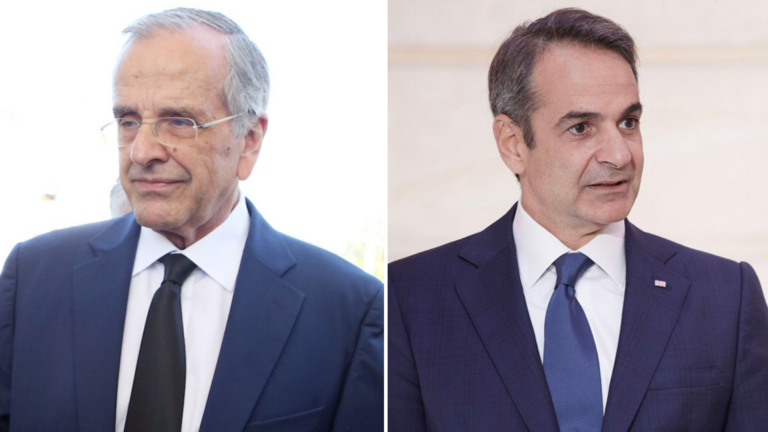
Former Greek prime minister Antonis Samaras has launched a scathing attack on Prime Minister Kyriakos Mitsotakis, accusing him of transforming New Democracy into a “personal party” and straying from its ideological roots.
“He seized the opportunity to turn New Democracy into his own personal party,” Samaras told Antenna TV, adding that the party now bears “only the name” of New Democracy.
Samaras said his differences with Mitsotakis are “political and value-based,” not personal, and criticised the government’s policies on foreign affairs and gender issues as inconsistent with the centre-right.
“The problem is that Mitsotakis can’t stand the right, the centre-right, or the history and grassroots base of New Democracy,” he said.
“That’s why he has turned it into a hybrid of Simitis-era PASOK.”
Samaras also addressed his expulsion from the party in November 2024, claiming Mitsotakis had long sought a reason to remove him.
“It’s the first time in the party’s history that a former prime minister and party president has been expelled,” he said.
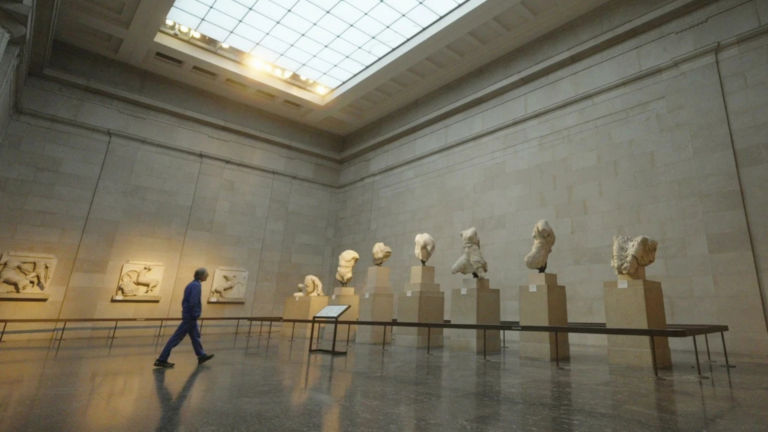
A new documentary, The Marbles, claims to prove “beyond any shadow of a doubt” that the Parthenon Marbles were stolen, according to director David Wilkinson.
The film re-examines how 19th-century diplomat Lord Elgin removed the Parthenon Sculptures from Athens while Greece was under Ottoman rule, arguing that he did not legally acquire them, calling it “the greatest heist in art history.”
Featuring actor Brian Cox, historian Dominic Selwood and solicitor Mark Stephens, the documentary questions the legitimacy of the Ottoman “firman,” a document said to have granted Elgin permission to take the marbles.
Wilkinson said no such record exists in Ottoman archives despite decades of research, adding: “There would be a record in Istanbul … and they can find nothing.”
However, classical archaeologist Dr Mario Trabucco della Torretta dismissed Wilkinson’s bribery allegations as “wrong in historical terms,” arguing the only reference to “presents” appears years later and that archives may have been destroyed during the Greek revolution.
The British government purchased the sculptures from Elgin 200 years ago and placed them in the British Museum, where they remain.
The museum says discussions with Greece over a “Parthenon Partnership” are “ongoing and constructive,” though the British Museum Act 1963 still prevents their legal return.
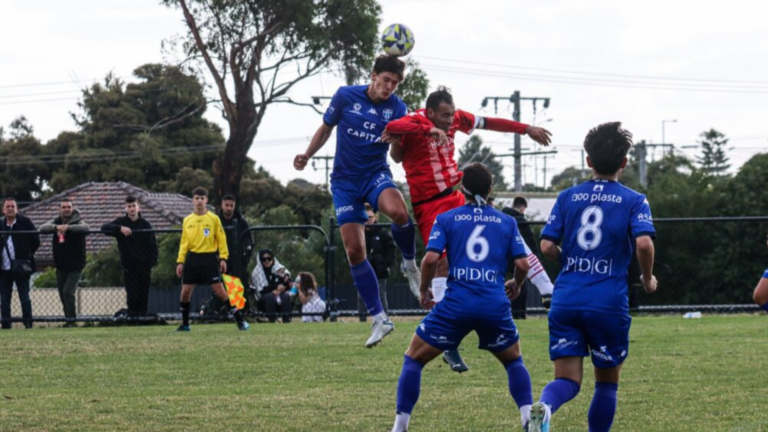
The Greek Community of Melbourne (GCM) has announced the 4th annual Greek Community Cup.
Kicking off on Friday 15 November and running until 7 December, the tournament will be hosted by Mill Park Football Club, bringing together Greek Australian football clubs and fans for another exciting celebration of skill, community and sporting spirit.
Following the success of the previous Greek Community Cup held in January, which featured fierce competition between top National Premier League (NPL) sides including Heidelberg United, Oakleigh Cannons FC, and reigning champions South Melbourne Hellas, this tournament promises another round of thrilling matches.
The Greek Community Cup continues to champion sporting excellence, camaraderie, and community connection. It provides clubs with an excellent pre-season opportunity to trial new players and build momentum ahead of the regular season, while strengthening bonds across generations through shared passion for the game.
Each team will play at least four games, with standard matches played in two 35-minute halves, and the final series matches extending to 45-minute halves. The winning team will receive The Greek Community Cup trophy, with players receiving medallions and prize money for winning clubs.
The tournament also welcomes sponsorship and financial support opportunities for those wishing to contribute to this growing community event.
For team registration, tournament schedule, please visit: Greek Community Cup.
Poetry often expresses our histories. Recovering poetry can also act as a counter-form of history making. For those living in diaspora, poetry recovers “lost worlds” that encapsulate shared experiences that have been blurred, or altogether buried, under canonical framings of the past.
The interplay between poetry and diasporic expression offers an entry into multiple histories. In this sense poetry that emanates from diaspora provides a sense of belonging to more than one history, to more than one time and place.
Indeed, poetry, as penned by Greek Australian Patrick White Awardees, Dimitri Tsaloumas (1994), Antigone Kefala (2022), and П. O (2024), gifts those living in diaspora permission to express belonging to both here and there, now and then.
This year’s 2025 Tsaloumas Memorial Lecture will explore how poets writing from diaspora have grappled with the omnipresent weight of pain and displacement from a land or community, of being an outsider in a new one.
Taking the form of an inter-generational dialogue between poets, writers and scholars, “Poetry, History and Diaspora: Echoing the Past, Poeting from the Present”, will explore the layered ways that poetry captures both lack and excess, loss and separation, while also providing refreshing possibilities for adventures of identity, reimaginings of traditions, and reworkings of affiliations.
Panellists include Nikos Papastergiadis, Angela Costi and George Mouratidis. Chaired by Andonis Piperoglou.
Bio:
Nikos Papastergiadis is an Honorary Professor at the School of Culture and Communication at the University of Melbourne. He was formerly a Visiting Professor in the School of Art, Design and Media, at Nanyang Technological University, Singapore. Chair of the International Advisory Board for the Centre for Contemporary Art, Singapore. Co-chair of the Cultural Advisory Board for the Greek Centre for Contemporary Culture, Melbourne.
His current research focus is a project on photography and memory, as well as another on the transformation arts precincts. His publications include Modernity as Exile (1993), Dialogues in the Diaspora (1998), The Turbulence of Migration (2000), Metaphor and Tension (2004) Spatial Aesthetics: Art Place and the Everyday (2006), Cosmopolitanism and Culture (2012), Ambient Perspectives (2014), On Art and Friendship (2020), The Museums of the Commons (2020, The Cosmos in Cosmopolitanism (2023).
His new book the John Berger and Me: A Migrant’s Eye, was published in 2024. He is also the author of numerous essays which have been translated into over a dozen languages and appeared in major catalogues such as the Biennales of Sydney, Liverpool, Istanbul, Gwanju, Taipei, Lyon, Thessaloniki and Documenta 13.
Angela Costi is a poet and writer with a background in social justice, law and community arts. Since 1994, her creative gatherings, including plays, short fiction and essays, have been published, performed, awarded, broadcast and translated. The author of six poetry collections. Her recent chapbook is Adversarial Practice, published in Cordite Poetry Review, which was commended in the Wesley Michel Wright Prize 2024. She received the High Commendation for Contribution to Arts and Culture, Merri-bek Award 2021. She is known as Αγγελική Κωστή among the Cypriot Greek diaspora. She lives on unceded Wurundjeri land.
Dr. George Mouratidis is an early career researcher, poet and translator. He is a Fellow of the Literary Studies program in the School of Culture and Communication at the University of Melbourne, where he writes on the literature of the Beat Generation and Counterculture. He co-founded the literary magazine Kalliope X in 2020 for which he was director and poetry editor and is currently a committee member of the Melbourne School of Literature (MSL) where he teaches Beat poetics. Works include his translation of poet Nikos Nomikos, Noted Transparencies (Owl Press, 2016) and his debut collection of poetry, Angel Frankenstein (Soul Bay, 2018).
Andonis Piperoglou is the Hellenic Senior Lecturer in Global Diasporas at the University of Melbourne. He is a specialist in migration history and has published extensively on Greek Australia. His is editor (with Francesco Ricatti) of Researching Migration on Indigenous Lands: Challenges, Reflections, Pathways (Springer: 2025) and his book, Making Greek Settlers: Racial Inclusions and Exclusions in White Australia, will be published with the University of Illinois Press in 2026. In the School of Historical and Philosophical Studies, Andoni teaches subjects on migration and diaspora.
Event Details:
When: Thursday 13 November 2025, 7pm
Panel Discussion Speakers: Professor Nikos Papastergiadis, Angela Costi, Dr George Mouratidis, Dr Andonis Piperoglou
Seminar: Tsaloumas Memorial Lecture: Poetry, History and Diaspora: Echoing the Past, Poeting from the Present
Where: The Greek Centre for Contemporary Culture, Mezzanine Level, 168 Lonsdale St., Melbourne
Language: English
Joint event between the Greek Community of Melbourne and the Greek Australian Cultural League
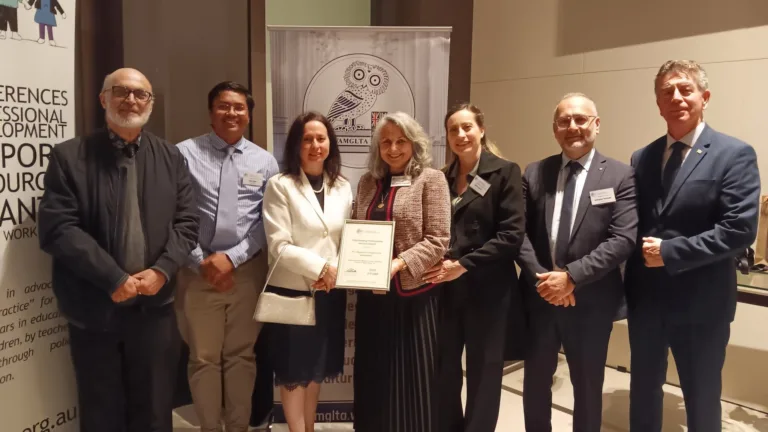
The West Australian Modern Greek Language Teachers’ Association Inc. (WAMGLTA) has proudly announced that its Chairperson, Dr Angela Evangelinou-Yiannakis, has received the Professional Teaching Council of Western Australia (PTCWA) Outstanding Professional Service Award for 2025.
The award was presented during the PTCWA Presentation Ceremony at the Westin Hotel in Perth on 29 October, by PTCWA Patron Dr Colin Pettit and Minister for Education Sabine Winton.
Dr Evangelinou-Yiannakis was recognised for her exceptional leadership and long-standing contribution to the teaching and promotion of the Greek language in WA.
As founding Chairperson of WAMGLTA for the past nine years, she has played a key role in advancing professional standards, supporting teachers, and fostering cultural engagement within the Greek community.
Her work includes leading the annual “Speak Greek in June” campaign, representing WAMGLTA at major cultural events such as Greek National Day commemorations and the Battle of Crete service at Kings Park, and actively contributing to professional education forums including the PTCWA Presidents’ Forum and MLTAWA State Conference.
Among those attending the ceremony in her support were the Hon. Consul of Greece in Perth, Eleni Georgopoulou, Professor Tanya Fitzgerald, Dean and Head of the Graduate School of Education at UWA, and members of the WAMGLTA committee and wider Greek community.
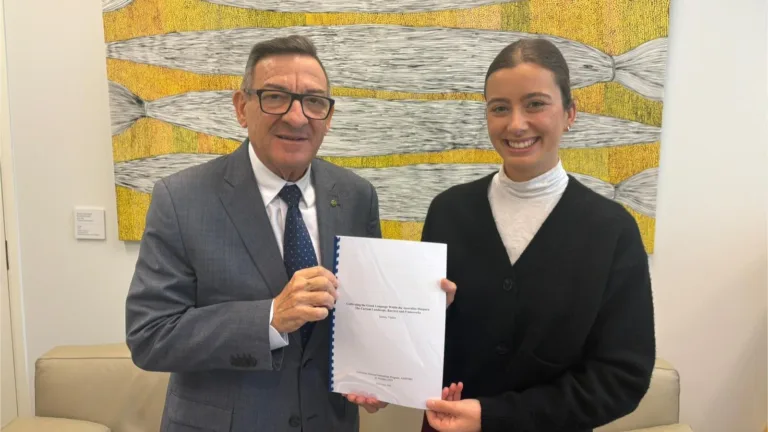
Steve Georganas MP, Federal Member for Adelaide, has commissioned a landmark report on the preservation of the Greek language across generations in Australia and was tabled in the Federal Parliament on Tuesday, 4 November.
The report was undertaken by Dimity Vlahos who is completing her internship with Mr Georganas. Ms Vlahos is part of the Australian National Internship Program from the Australian National University (ANU).
“Cultivating the Greek language within the Australian diaspora looked at the landscape, the barriers that exist and the frameworks of the Greek language in Australia,” Mr Georganas said.
The report not only looked at the Greek language in Australia but also how it faired compared to other Greek diasporas, such as the USA and Canada. The report showed evidence that the maintenance of the Greek language in Australia faired much better than our counterparts.
“This is promising news and very positive for the Greek language in Australia, it shows that the hard work and effort from Greek communities, churches, Community Schools and educators is working,” Mr Georganas said.
Greek migration has played a foundational role in forming modern Australia, with the Greek language serving as a key threat connecting generations of Greek Australians. However, recent studies show a concerning shift from Greek to English, particularly among young generations. This shift manifests in hybrid forms such as “GrEnglish” or “Greeklish”, where English words are interwoven into Greek speech.
“Community languages like Greek are more than just words. They’re about belonging, identity, and intergenerational connection,” said Mr Georganas, a second generation Greek Australian.
“Preserving multilingualism strengthens social cohesion and deepens Australia’s understanding and approach to multiculturalism.”
The report examines generational differences in language use, noting that while first generation migrants often maintain fluency, second and third generations may lack emotional attachment to the language.
This phenomenon, known as the “3-G Problem,” refers to the decline of minority languages within three generations. Remarkably, Greek defies this trend, with a 21% retention rate among third-generation Greek Australians.
Community centres, particularly Greek Orthodox churches, play a vital role in sustaining language and culture. These institutions foster belonging and support language schools, many of which are non-profit and community-led.
In South Australia alone, over 40,000 people claim Greek ancestry, and the state offers a wide range of language learning options.
“Protecting the Greek language is essential to maintaining cultural identity and ensuring that future generations remain connected to their heritage,” Ms Vlahos said.
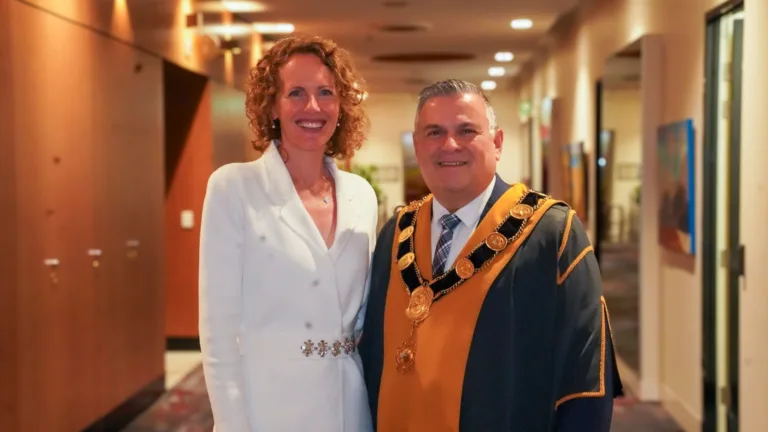
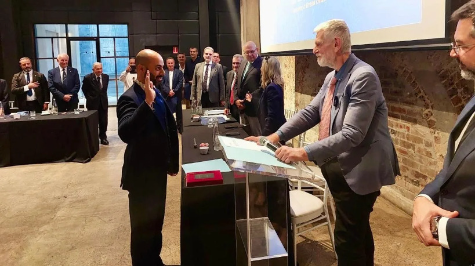
Councillor Jim Grivas has been elected the new Mayor of Manningham, at the Annual Meeting of Council on Thursday 6 November.
He was unanimously chosen by his fellow Councillors to lead Manningham Council for the coming year, alongside Councillor Deirdre Diamante, who was elected as Deputy Mayor.
In his acceptance speech, the Ruffey Ward Councillor and Manningham resident of more than 25 years said it was a great privilege to serve the diverse community as Mayor.
“With this privilege comes a responsibility: as custodians of Manningham, we must ensure we leave our city stronger, more inclusive and better prepared for future generations,” Cr Grivas said.
Strengthening community engagement, enhancing sustainability initiatives and supporting local business and innovation will be a focus for Cr Grivas during his second Mayoral tenure.
He returns to the role after serving as Manningham Mayor in 2013/14, and as a previous Councillor in the 2012-16 Council term.
“Our community is at the heart of everything we do – and I am looking forward to working with my fellow Councillors to leave a legacy that we all can be proud of,” Cr Grivas said.
Newly elected Deputy Mayor, Cr Diamante, congratulated Cr Grivas on the appointment, and spoke of her commitment to continuing to work together to get the best outcomes for Manningham.
“I’ve lived in Manningham all my life, and my goal is that it will be a place that my children and grandchildren will know and love in the future,” Cr Diamante said.
Manningham Council CEO Andrew Day echoed the sentiments of Council and congratulated the new Mayor and Deputy Mayor on behalf of the organisation.
Councillors thanked Cr Diamante for her service as Mayor over the past year – including her commitment to supporting local businesses, residents impacted by the North East Link Project, and older adults.
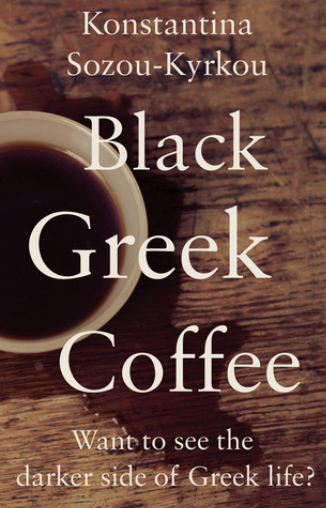
I came across a book of short stories in English by author Konstantina Sozou-Kyrkou, called Black Greek Coffee, whose cover includes the subtitle “Want to see the darker side of Greek life?”
“Perfect,” I thought, for this writing of my ‘A Darker Side of Greece: Part II’ article. See Part 1 here.
Upon finishing the book’s 23 moving and relatable short stories, I decided to refer to a few that resonated with me in the sense that they reflect some growing ‘trends’ universally perhaps, but to me, in my long-lived experience in Greece, reveal a “darker side” of life in Greece today.
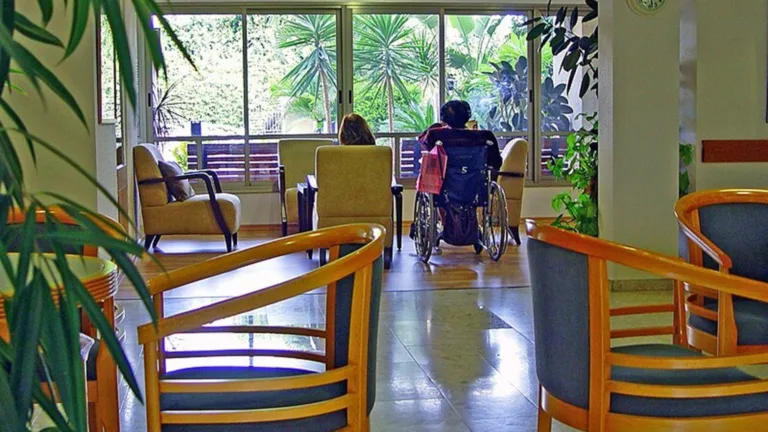
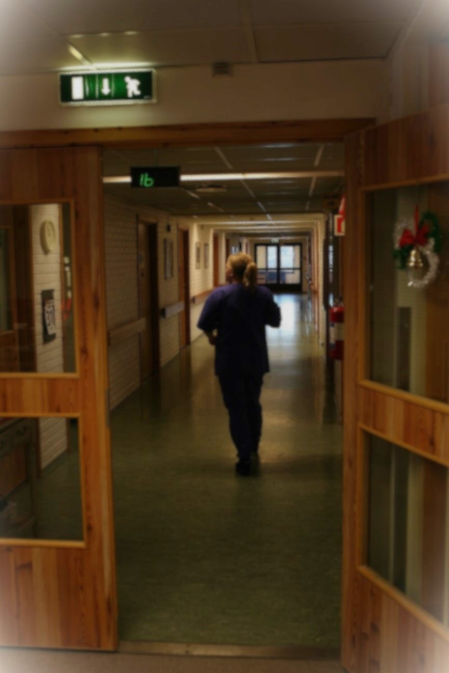
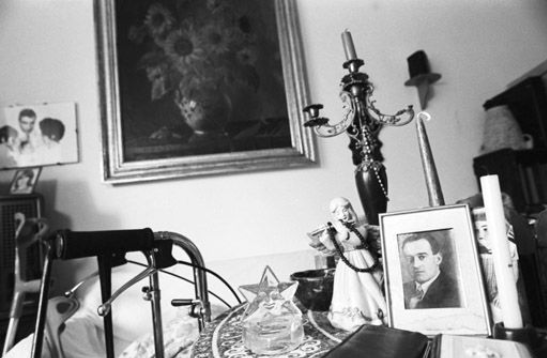
One of the book’s short stories, “The Stubborn Beaker,” has as its heartbreaking theme an elderly person in a nursing home (I won’t give spoilers). This practice of immediate family not being able to look after elderly parents in Greece is increasing, and apart from employing mainly foreign workers in-house to look after them, nursing or care homes for the aged are on the rise.
An aunt of mine with mild dementia ended up in nursing homes in Athens. Her son worked abroad, while his wife in Athens had a job and their young child, as well as her own mother, to look after.
At first, my aunt was in a decent, though expensive, establishment whose location was on a very busy road, where even its small rear courtyard gave off whiffs of traffic odours and noise.
Upon visiting my aunt there once, I noticed that her hair had greyed immensely and was unkempt, whereas in the past she’d go to the hairdresser’s every week to maintain her stylish coiffure. Even aged 75 she had naturally dark brown, almost black, hair of which she was very proud.
I asked my aunt if she’d like her hair dyed and styled, and then spoke to the nursing home manager. After all, the nursing home’s fancy brochure claimed a hairdresser was employed there regularly. I stressed that her hair colour was to be the way she wanted it, as it was when she had been first admitted: in her natural dark brown-black.
Greek foreign minister in Australia
It took a few more visits for me to mention this again, while also noticing my aunt’s dementia worsening. The staff reassured me “the doctor was aware and looking into it.”
When I went back to visit her, her hair was still unkempt, but a bright burgundy colour! It really didn’t look like a hairdresser’s work. Her dementia had further worsened. I wonder what really went on there most hours, as they did seem understaffed.
In her next nursing home – which was cheaper – my aunt was bedridden with bedsores and potentially heavily medicated. I made a fuss and threats. They had no wheelchair to take her around since she was weak and could no longer walk, so I bought her one. They were also understaffed and though I visited and called and complained almost daily, things weren’t changing. I never managed to see her in the wheelchair. She died not long after.
The next short story I chose, titled “It’s a Girl,” refers to a father being very upset that the second child is born female (he already has a daughter). He ignores the child and is grumpy, to say the least, towards his wife, which leads to him unofficially ‘adopting’ a neighbour’s teenage son as the son he never had, feeling that at last he can bring up a male according to his macho belief system.
The boy disappoints him after being put in a difficult situation to prove his masculinity through hunting (a bit of a spoiler).
For me, this story brings to mind online “influencers” such as Andrew Tate, whom many young men have grown up following. Tate espouses that “a man’s true obligations are protection and provision.”
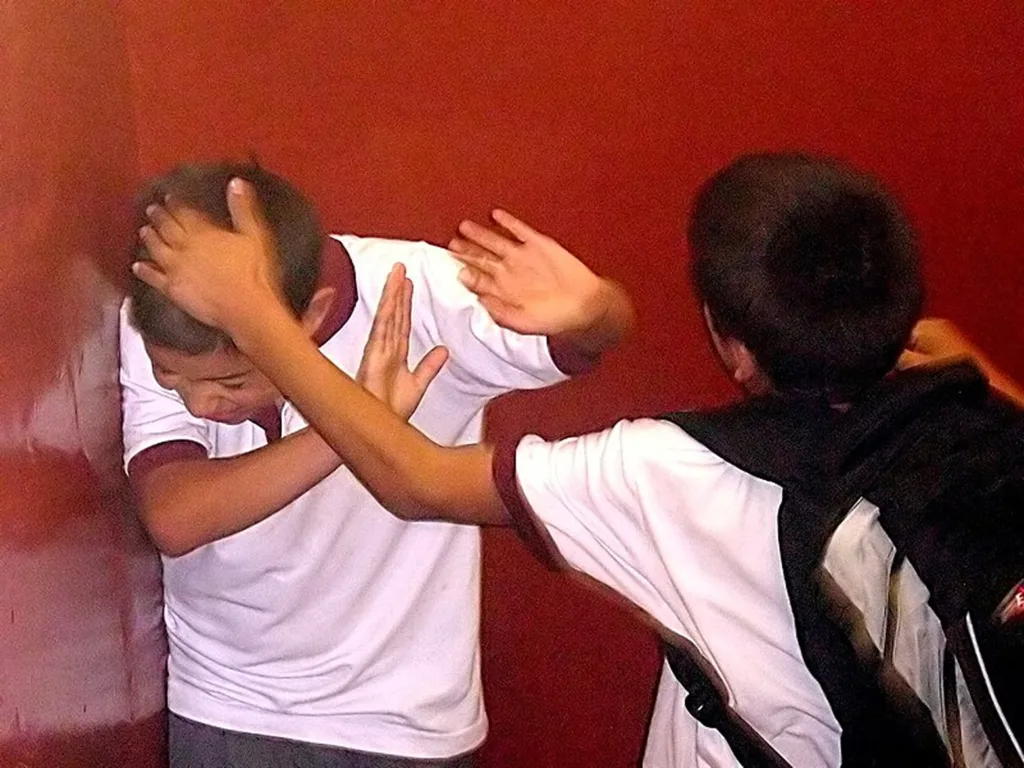
Strange sorts of social media blabberings from people such as Tate cause expectations for young men, creating confusion and much psychological pressure and pain. Not encouraged to express their feelings, in case they seem ‘weak,’ young men often resort to ‘gang’ violence amongst themselves – a relatively new and unfortunately common phenomenon now in Greece.
Furthermore, many young men in Greece don’t want to marry because they feel a threat and subsequent disadvantage in that if a woman leaves them “she has more rights and gets everything – kids, house and money.” Along similar lines, wages here in Greece are generally low, as is the birth rate, and thus young men feel disempowered and bitter, unable to afford their own home let alone start a family.
Issues of misogyny can also become manifest in scenarios of negative social media messaging (see incel culture too) for young men, combined with being in an insecure economic environment which leaves little hope for future betterment. This affects young women too, who are aware that pornographic-type sites are often marketed as money-making, empowering prototypes.
All this, in the context of busy parents working and trying to make ends meet, sees constant mobile phone access becoming the cultural purveyor of ‘life’ for youth. Fortunately, the Greek way of life includes strong community ties and not just in a nuclear family setting.
The important roles of extended family relationships too cannot be underestimated. Furthermore, recognising and advocating for responsible roles of government, teachers, the Church, and of our Greek community as a whole are also fundamental. Such ethical guidance in wisdom, self-respect and kindness offers a counterbalance to forces of exploitation and darkness, by instilling hope that all is not lost.
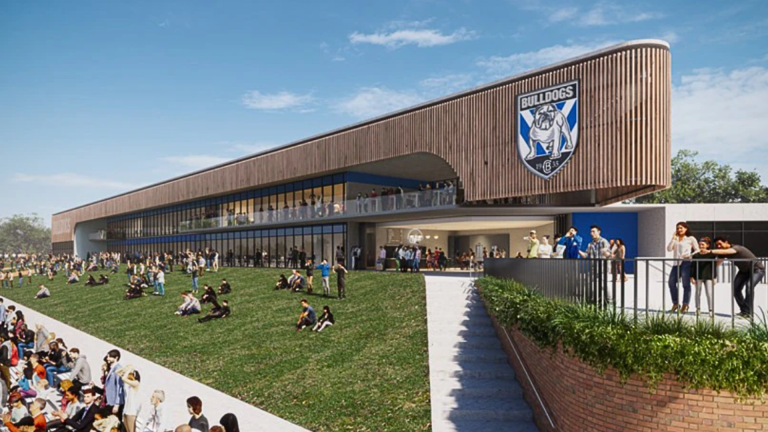
Liberal Member for Miranda Eleni Petinos accused the “TikTok-loving” minister of ignoring the lease paperwork for 140 days, while Canterbury-Bankstown Councillor Harry Stavrinos urged the government to “honour its $40 million pledge.”
Hoenig’s office told The Daily Telegraph the delay was due to an initially invalid council proposal, but confirmed a decision is now imminent. Temporary construction works have been approved while the lease is finalised.
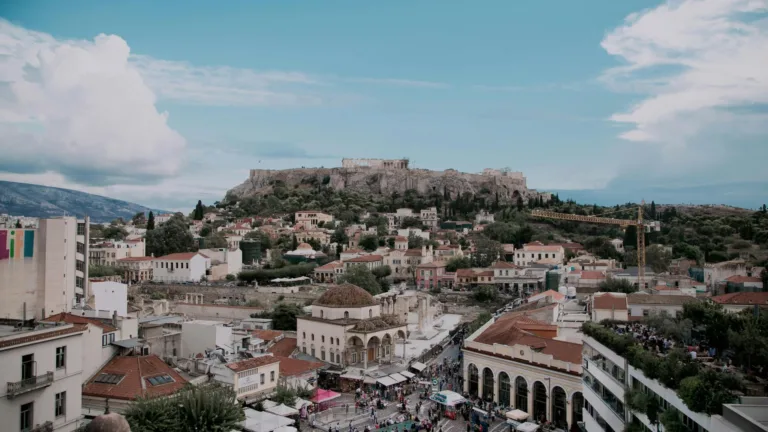
Athens has achieved two major accolades on the European tourism scene, reaffirming its position as one of the continent’s premier cultural and travel destinations, according to tovima.com.
At this year’s prestigious World Travel Awards-considered a global benchmark in the tourism industry-the Greek capital was named Europe’s Leading Cultural City Destination and Europe’s Leading City Tourist Board.
In the first category, Athens triumphed over some of Europe’s most celebrated cities, including Paris, London, Prague, Rome, Venice, Dubrovnik, Edinburgh, Lisbon, Porto, and Palma de Mallorca. In the second, it outperformed major rivals such as Madrid, Lisbon, Rome, London, Berlin, and Batumi.
These latest distinctions add to a growing series of international awards Athens has received in recent years. In 2023, the city was recognized as the World’s Leading Cultural City Destination and Europe’s Leading City Break Destination, solidifying its reputation as one of Europe’s most attractive urban getaways.
According to the Athens-Macedonian News Agency, this new success is the result of a united effort among residents, tourism professionals, and cultural contributors who bring life and creativity to the city every day.
Mayor Haris Doukas noted that the honors reflect Athens’ ongoing transformation-where history meets the modern era, culture merges with everyday life, and tradition harmonizes with innovation.
With a clear vision for sustainable development and cultural excellence, Athens continues to strengthen its presence on Europe’s tourism and cultural map-an open, forward-looking, and confident city that proudly embraces its identity while captivating visitors from around the world.